



Trading Routine and Daily Structure: The Operating System That Separates Consistent Futures Traders from Everyone Else
Overview #
Most traders spend years hunting for the perfect setup, the edge that's going to flip the switch. They add indicators, tweak entry rules, paper trade new systems. For consistent futures traders, the difference isn't strategy — it's architecture. It's the daily operating system that runs underneath the strategy.
A trading routine is the time-blocked structure that governs how you move through each trading day: what you review before the market opens, how you monitor during the session, when you're permitted to trade, how you capture what happened, and how you decompress and extract lessons afterward. It's not a ritual. It's not a psychological warm-up. It's an operational framework that makes execution reliable and improvement measurable.
Discretionary futures trading is cognitively expensive. You're pattern-matching against dynamic markets, managing risk in real-time, and making high-stakes decisions under uncertainty — all at the same time. Without a structured operating system, decision quality degrades fast — research on ego depletion and decision fatigue shows cognitive performance drops sharply over time without structured breaks [14], making architecture essential, not optional.
The following is the architecture of that operating system, broken into components that you can build, track, and improve over time.
Key Concepts #
Quick reference for the operational terms used throughout this article — each is explored in depth in its respective section below.
| Term | Definition |
|---|---|
| Routine Architecture | Time-blocked daily operating system structuring workflow from pre-market through post-session debrief |
| State-Based Planning | Adapting your session plan to the current market regime and your own cognitive/emotional state |
| Decision Gating | Non-negotiable pre-conditions a trade must pass before execution — setup, risk, time window, news embargo |
| Run-Rate Limits | Automatic stop-conditions that end trading when consecutive losses or daily loss thresholds are hit |
| Adherence Score | Percentage of trades that met all decision gate criteria before entry — a process metric, not P&L |
| R-Normalized Results | Performance tracked in risk units (R-multiples) rather than raw dollars |
| Error Categorization Taxonomy | Five-category system for classifying trading mistakes by root cause, not just outcome |
| Periodization | Deliberate cycling between hard weeks (full intensity) and light weeks (reduced size/hours) |
How It Works #
1. Routine Architecture: The Daily Operating System #
The best way to understand routine architecture is as a separation of duties. Three different cognitive modes need to happen in sequence, and they can't overlap without degrading each other.
Pre-Market Mode — Analysis, planning, context-building. No execution, no live P&L watching. This is decision-manufacturing mode.
Session Mode — Execution against the plan. Minimal fresh analysis. Trust what was built pre-market and execute with discipline.
Review Mode — Post-session audit. No new decisions. Pure capture, categorization, and learning extraction.
When traders collapse these modes — analyzing during the session, making fresh decisions mid-trade, reviewing while the market is still open — all three degrade. Analysis gets polluted by recency bias. Execution gets second-guessed. Review becomes rationalization.
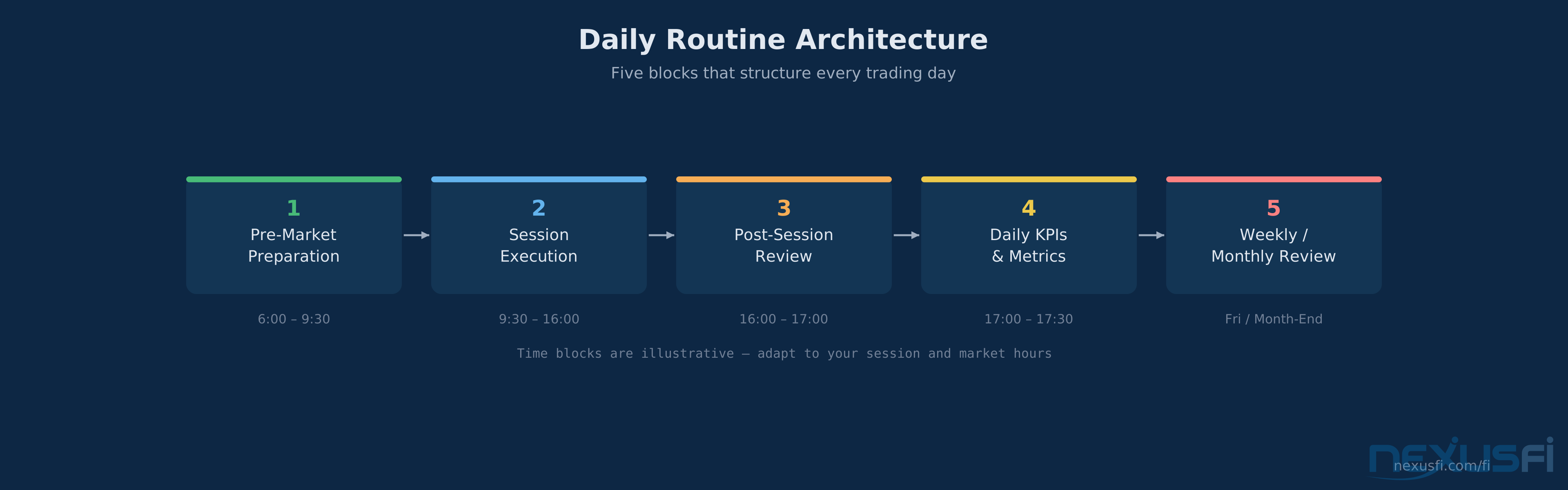
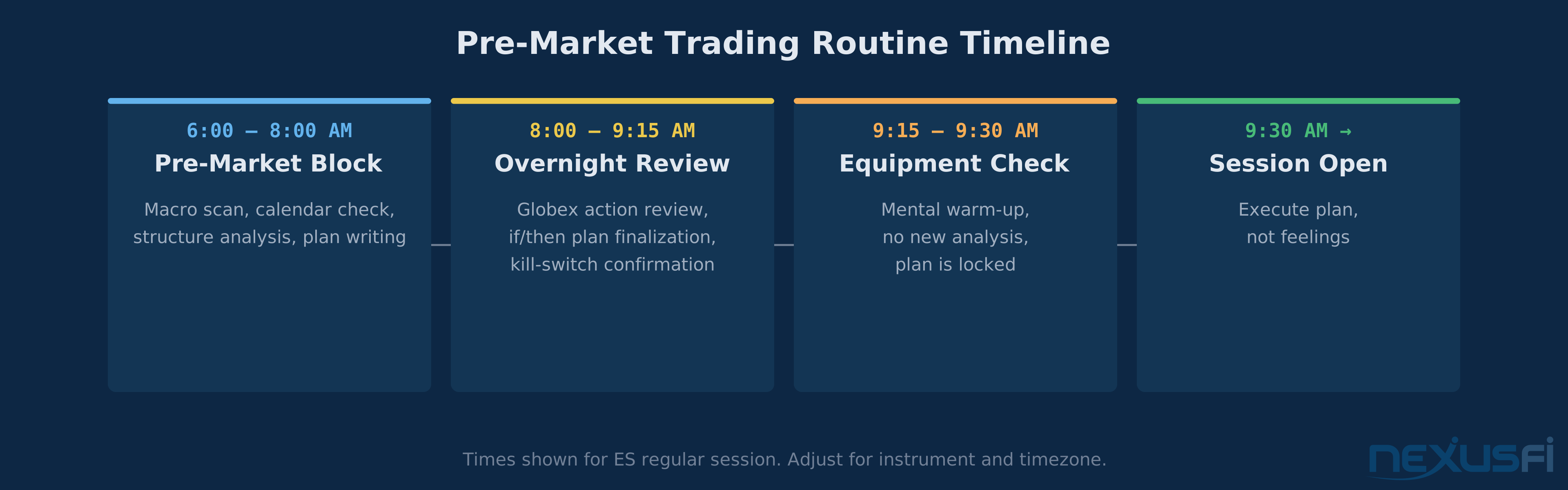
Here's a specific time-block example for an ES day trader working the regular session:
6:00 AM — 8:00 AM: Pre-market block (macro scan, calendar, structure analysis, plan writing). Full focus, no distractions.
8:00 AM — 9:15 AM: Review overnight globex action. Note any gap levels. Finalize if/then plan. Kill-switch rules confirmed.
9:15 AM — 9:30 AM: Equipment check, mental warm-up, coffee. No new analysis. Plan is locked.
9:30 AM — 11:30 AM: Primary session window. ES open through mid-morning consolidation. Full size permitted.
11:30 AM — Noon: Mandatory break. No screens. Walk, eat, decompress.
This is one template. The specific times flex based on instrument (CL has different session dynamics than ES, and NQ's opening volatility often compresses into the first 45 minutes more aggressively than ES). The principle doesn't flex: pre-market, execution, review. Three separate modes, sequential, with hard boundaries between them.
2. Pre-Market Preparation #
Pre-market preparation is where consistent traders build the day's decision framework. It's not warm-up. It's manufacturing. By the time the open bell rings, a prepared trader has already answered the questions that will tempt underprepared traders to improvise under pressure.
Step 1: Macro and Calendar Scan
Check the economic calendar for scheduled releases during your trading window. FOMC days, CPI, NFP, GDP — these change the volatility and behavior profile of the session. An ES trader who doesn't know that CPI drops at 8:30 AM before an 8:45 AM entry on a level is operating blind. High-impact events require a hard embargo rule: no entries within X minutes of the release. 15 minutes pre-release and 10 minutes post-release is a common minimum for liquid instruments like ES and NQ.
For CL, the EIA Petroleum Status Report (10:30 AM ET, Wednesdays) is the dominant scheduled volatility event. CL traders who ignore this get caught in the spike. It's not bad luck — it's bad preparation.
Step 2: Overnight and Globex Context
Overnight price action leaves data. Globex session high/low, gap from prior close, overnight volume profile, failed breakouts, acceptance above or below key levels — all of this provides structural context for where price is likely to stall or break during the regular session.
Write down the key levels. Not in your head — on paper or in a trade journal. The act of writing forces specificity. "Around 5250" is not a level. "5248.75 — yesterday's high, tested three times overnight, rejected twice" is a level.
Step 3: Market Structure Pre-Check
Identify prior swing highs and lows, yesterday's high/low/settlement, key value areas from volume profile if you use market profile, and any significant gap levels. For ES and NQ traders in the NexusFi community, this style of structured pre-market review is well-documented. As @CenFlo notes in their post on [Study prep for the Emini] [5], the FT71-style daily prep process — building a structured framework of levels and context before the open — is one of the most consistently referenced approaches among professional emini traders. The structure isn't the trade. It's the context that makes the trade legible.
Step 4: Volatility and Liquidity Assessment
Not all sessions trade the same. ATR (Average True Range) for the recent period gives you a baseline. If ES has been averaging 30 points of range per session and today the expected move on options pricing implies 45 points, that's a regime shift — stops, targets, and position sizing all need to adapt. Liquidity matters especially at key times: open and close have the deepest order book, lunch is thin, and economic releases create temporary liquidity vacuums. State-based planning means your approach adapts to the expected regime of this session, not last week's conditions.
Step 5: The Written If/Then Plan
This is the non-negotiable output of pre-market prep. The written plan must specify: key levels, directional bias, specific trigger conditions for entries (if X happens, then I take Y trade at Z level with A stop and B target), and what would invalidate the bias.
@shortcreeker's FIO Journal on NexusFi demonstrates this rigorously. In their [pre-market review post] [3], they work through CL, ES, and GC structure simultaneously before each session, building explicit if/then frameworks across instruments. The specific output is a written plan, not a mental checklist. Mental checklists bend under pressure. Written plans either match conditions or they don't.
Step 6: Daily Risk Budget
Before the session opens, define: maximum daily loss in R-multiples (commonly 2R), maximum contracts per trade, maximum number of trades in the session, and the kill-switch condition that ends the session immediately if hit.
This isn't defensive thinking — it's professional resource allocation. Your capital is the production asset. Protecting it from catastrophic drawdown isn't timid, it's mandatory. As @Price Action Ripper's journal by tturner86 demonstrates in their [pre-market checklist posts] [4], building explicit risk parameters into the pre-market process removes the decision from the heat of a bad session — where it's always made wrong.
3. During-Session Discipline #
The session is not the time for new analysis. The session is for executing the plan with discipline, monitoring within the defined structure, and applying run-rate limits without negotiation.
Batched Monitoring vs. Constant Staring
Constant screen monitoring is a trap — it creates noise, triggers pattern-seeking on meaningless fluctuations, and accelerates decision fatigue. For ES, volatility concentrates in the first 30--45 minutes, around the 10:00 AM data window, and into the close. The 11:30 AM--12:30 PM window frequently turns dead. Monitoring intensity should match this rhythm.
Decision Gating in Practice
A decision gate is a checklist that a potential trade must pass before execution. The gate runs before every trade, regardless of how obvious the setup looks. Common ES decision gate items:
- Is the setup structure present (e.g., pull-back to support in an uptrend, with volume confirmation)?
- Is the stop placement defined and within the session's average ATR parameters?
- Is the reward-to-risk at minimum 1.5:1 at the defined target?
- Is the current time within the approved session window (not during the dead zone)?
- Is the account within run-rate limits (no kill-switch triggered)?
- Is there a high-impact news event within the next 15 minutes?
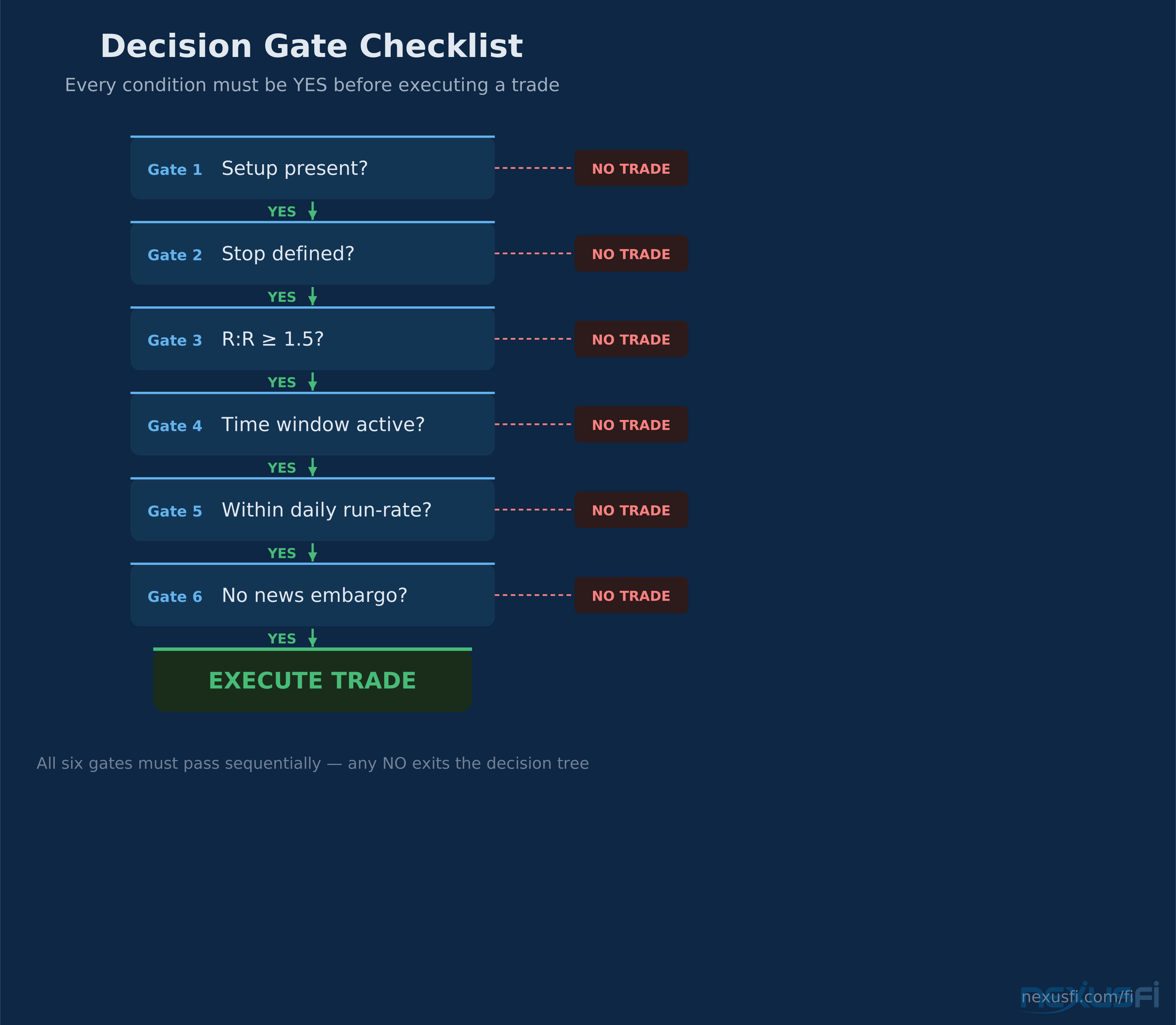
A trade that fails any gate condition doesn't get taken. Not because the setup isn't valid — but because consistency requires that the same process runs every time. As @Big Mike wrote in his [day trading method thread] [1], the morning routine and structured approach to each trading day is foundational — not the entry signal itself, but the consistent framework that makes signals actionable versus impulsive.
Run-Rate Limits as Hard Rules
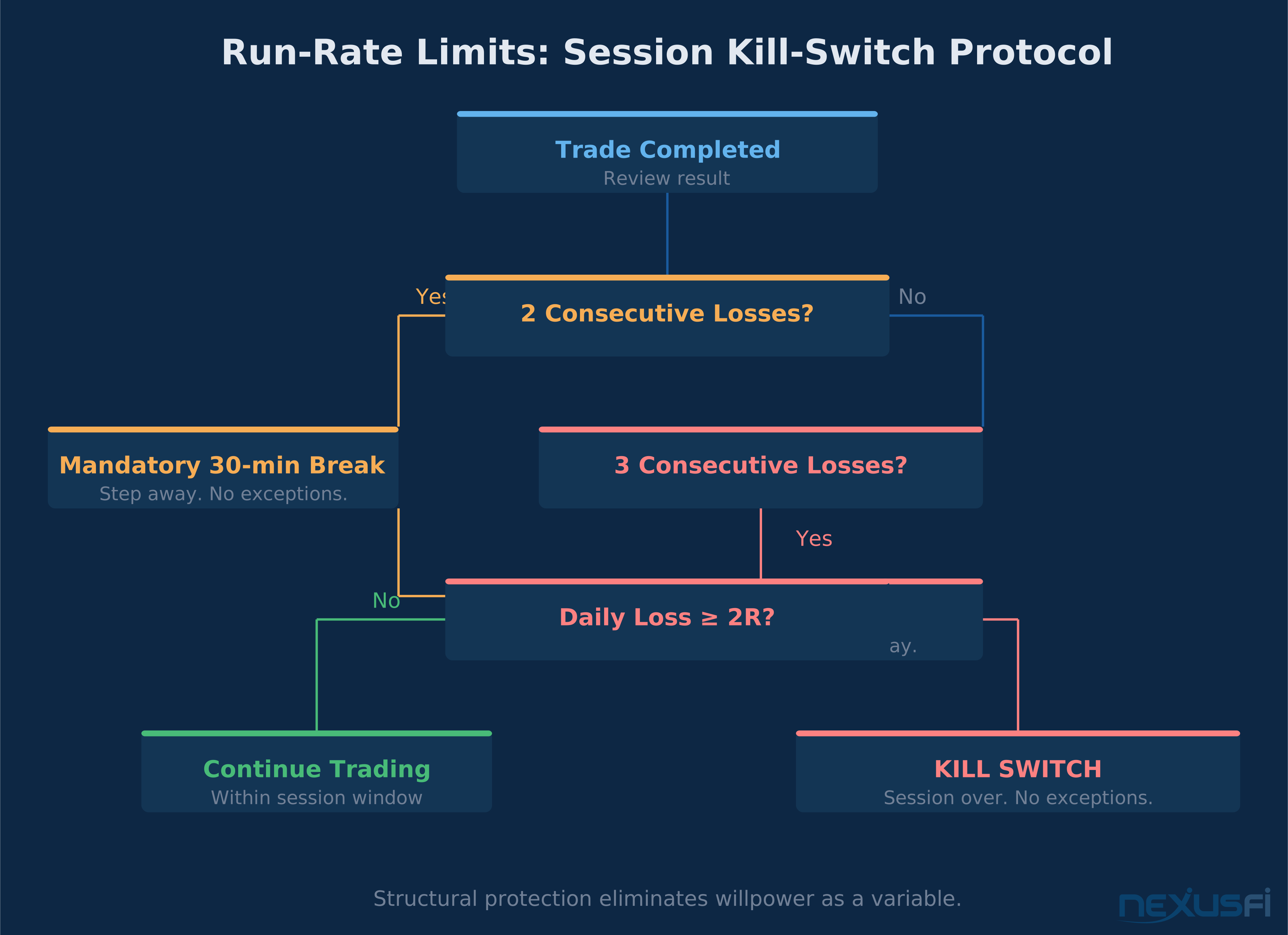
Run-rate limits protect against the most common session destruction pattern: adding losses to losses. The solution is structural, not motivational. Pre-define the conditions that force a stop:
- 2 consecutive losing trades → mandatory 30-minute break before any additional trades
- 3 consecutive losing trades → session ends, regardless of remaining time
- Daily loss hits 2R → kill-switch, session over, no exceptions
@SoftSoap's NQ Path on NexusFi captures this in their [daily preparation checklist post] [2]: skipping the routine, especially the personal state assessment, correlates directly with session days where run-rate limits get violated. The limit itself isn't the protection — the routine that puts you in the right headspace to honor the limit is.
Energy Management During the Session
Decision fatigue is measurable. @TropicalTrader's "80% Psychology" thread documents in [their analysis post] [9] that decision quality starts degrading after 4--5 hours of active screen time — shorter for traders making dozens of micro-decisions per hour. The solution is structured micro-breaks: 25-minute monitoring blocks followed by 5-minute off-screen breaks. @hondo69 documented this in their [Trading Psychology thread] [12] — regular breaks, including physical movement, reset attention and reduce emotional volatility. Without hard time limits, the marginal trade at hour 5 almost always underperforms trades in hours 1--2.
4. Trade Review Process #
The trade review isn't optional. It's the learning engine. Without it, you're accumulating experience without extracting lessons, which means you're not improving — you're just repeating.
Immediate Post-Trade Capture
Every trade gets a record within 5 minutes of close. The record must include: timestamp of entry and exit, instrument, direction, entry price, exit price, stop distance, target, actual P&L in R-multiples, rationale at entry (what did you see?), and execution quality (1--5 scale: did you execute the plan?).
Capture while the trade is fresh — the brain rewrites memory to fit outcomes. What you thought before the outcome is the data that matters.
Plan vs. Outcome Audit
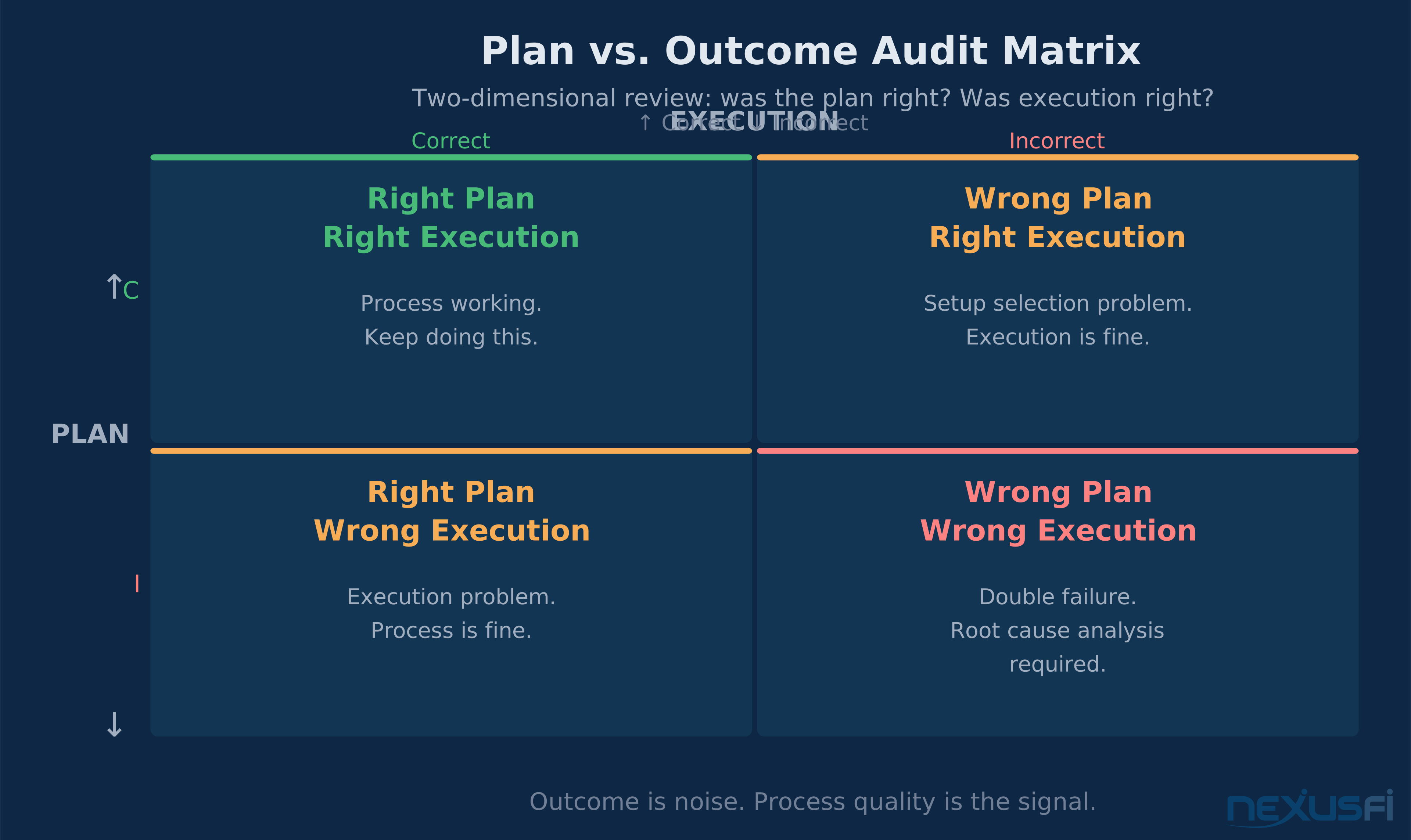
Every trade gets a two-dimensional review: was the plan right, and was execution right? This creates four categories:
- Right plan, right execution → Process working
- Right plan, wrong execution → Execution problem, process is fine
- Wrong plan, right execution → Setup selection problem, not execution
- Wrong plan, wrong execution → Double failure, needs root cause analysis
The most common post-trade mistake is conflating outcome with process quality. A losing trade on a correct setup, executed perfectly, is data. A winning trade stumbled into by breaking rules is a liability. Outcome is noise. Process quality is the signal.
Error Categorization Taxonomy
Every trade that results in a loss, or that underperforms much relative to plan, gets categorized into one of five error types:
1. Setup Quality Error — You took a trade that didn't meet your setup criteria. Maybe the pull-back was shallow and you talked yourself into it. Maybe you chased after missing the entry. The setup itself didn't qualify under your defined rules.
2. Execution Error — The setup was correct, the trade was justified, but execution was poor. You entered at market when you planned to enter on a limit and paid extra slippage. You moved your stop before it was hit out of impatience. You sized down at the last second because you felt uncertain.
3. Risk/Stop-Distance Mismatch — Your stop was placed too tight relative to the ATR of the instrument, guaranteeing a stop-out on normal noise. Or your sizing was too large relative to your stop, making a small adverse move a material P&L event.
4. Premature Exit or Late Entry — You got the direction right but either entered late (after confirmation you didn't need) or exited early (before target was reached because of emotional pressure).
5. Emotional/Attention Lapse — You broke a rule because of emotional state. Traded during a non-approved window because you were bored. Held past your stop because you didn't want to be wrong. Added size after a losing trade to "make it back." These are state-driven violations.
As @bobwest's Trade Journal shows in their [analysis of mechanical vs. discretionary approaches] [8], consistent discipline isn't about eliminating judgment — it's about identifying which judgments belong in the routine and which need to be hardcoded. 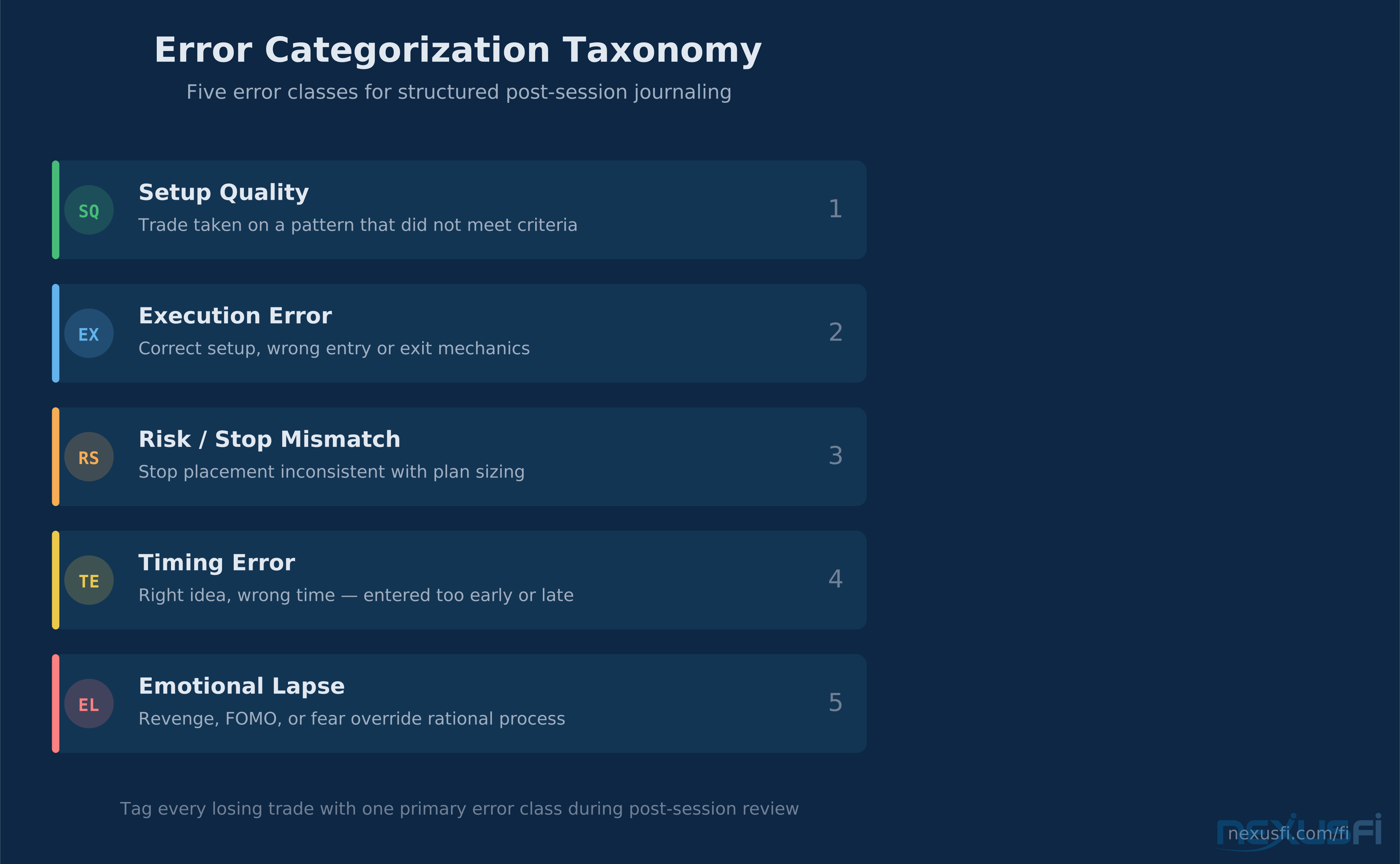
Error categorization makes that distinction operational.
5. Daily Performance Tracking #
What gets measured gets managed. What gets measured in the wrong units gets managed toward the wrong goal.
R-Normalized Tracking
Tracking P&L in dollars anchors your psychology to nominal figures irrelevant to edge size. A $500 day looks decent or tiny depending on account size — neither tells you whether the process worked.
Track in R-multiples. If defined risk per trade is $200: a $600 gain is +3R, a $200 loss is -1R. For a system with 40% win rate, average 2R winners and 1R losers: EV = (0.40 × 2R) + (0.60 × -1R) = +0.20R per trade. Now you can measure whether actual results match theoretical edge — and if they don't, identify why.
Adherence Score Calculation
8 trades taken, 6 pass all gate criteria, 2 fail (one during a non-approved window, one with stop distance outside volatility parameters). Adherence score = 6/8 = 75%. If the 2 failures were losers, you have direct evidence of the cost of rule violations. If they were winners, you have a different problem — tolerating protocol drift reinforced by random outcome, which will accelerate the drift.
An ES Scalper's Daily Scorecard
A practical daily scorecard for an ES short-term trader might look like this:
| Metric | Target | Actual |
|---|---|---|
| Trades taken | 4--8 | 6 |
| Adherence score | ≥90% | 83% |
| Net R-result | n/a | +1.4R |
| Avg winner | ≥2R | 2.1R |
| Avg loser | ≤1R | 0.9R |
| Win rate | n/a | 50% |
| Kill-switch triggered | No | No |
| Energy/focus rating | n/a | 7/10 |
| Error category violations | 0 | 1 (type 1) |
| Pre-market checklist completed | Yes | Yes |
The scorecard doesn't say whether it was a good day or bad day based on dollars. It says whether the process ran correctly. That's the only data that predicts future performance.
6. Post-Session Routines #
Post-session is not optional. It's where the day's data gets processed into actionable information. It's also the decompression that prevents trading state from bleeding into personal life, which is where burnout begins.
P&L Reconciliation
Match your broker statement against your trade journal. Identify any discrepancies. Check gross P&L vs. net P&L after commissions. Commission drag is a real cost that belongs in the performance calculation — a day that looks profitable gross may look different net, and your edge calculation needs to account for it.
Market Structure "What Changed" Note
Write one paragraph (or three bullet points) on what the market told you today that it didn't tell you yesterday. Did price respect the key levels you identified, or did it rip through them? Did the volatility match the expected range, or was it a different regime? Did the news trigger move price the expected direction or the unexpected direction?
This note is cumulative market intelligence. After 3 months of these notes, patterns about when your edge works and when it doesn't will become visible.
Decompression Protocol
After post-session work is complete, execute a deliberate transition out of trading mode — a walk, gym session, or non-market conversation. Traders who skip decompression carry their P&L emotional state into the evening and into the next pre-market session, which degrades the quality of analysis that follows.
As @snax discusses in their [Crossing the Abyss journal] [7], the review isn't just data capture — it's the mechanism through which experience becomes skill. Without it, experience accumulates without conversion.
Not Ruminating
Review extracts a lesson and closes. Rumination replays the outcome without extracting the lesson, activating the same stress response as the original event. When review is done, it's done — the trade is archived, the lesson is logged, move on.
7. Weekly and Monthly Review Cycles #
The daily review captures data. Weekly and monthly reviews synthesize it into adjustments.
Weekly Review Protocol
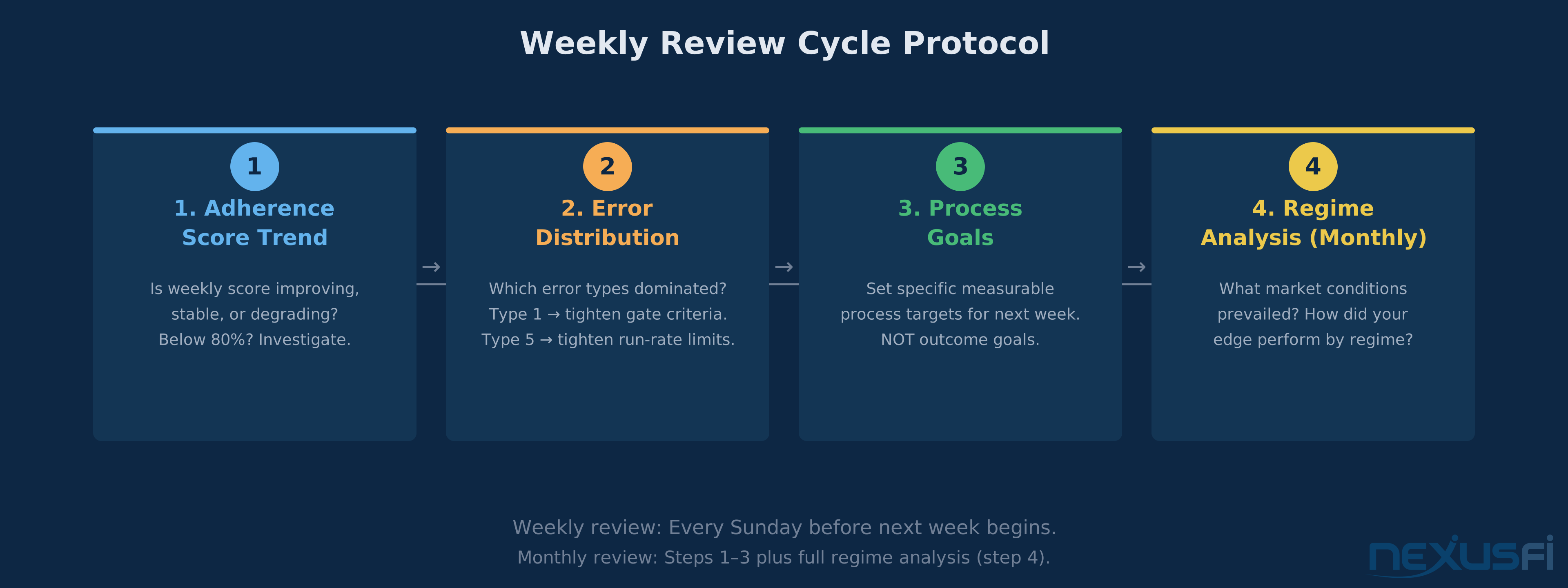
Every week, typically Sunday before the following week begins:
- Adherence score trend — Is the weekly adherence score improving, stable, or degrading? If it's below 80%, why? Which gate criteria are getting violated most often?
- Error category distribution — What types of errors dominated the week? If 70% of errors were Type 1 (setup quality), the decision gate needs stricter setup criteria. If 70% were Type 5 (emotional/attention lapse), the session structure needs more aggressive run-rate limits.
- Process goals for next week — Specific, measurable: "Increase adherence score from 75% to 85%." "Take zero trades in the 11:30 AM--12:30 PM window." Not outcome goals. Process goals.
As @scorp outlines in the [Discipline → Consistency → Success thread] [6], sustained discipline isn't willpower — it's a structured system that makes disciplined behavior the path of least resistance. The weekly review is the feedback loop that keeps the routine calibrated.
Monthly Review Protocol
Monthly reviews operate at a higher level of abstraction:
- Regime analysis — What was the dominant market regime during the month? Trending, ranging, low volatility, high volatility? How did your approach perform in that regime vs. previous regimes?
- Strengths and weaknesses by condition — In which market conditions did your edge perform best? In which did it underperform? This identifies where to focus during similar future conditions and when to reduce exposure.
- Performance vs. theoretical edge — Compare actual results to the theoretical expected value of your edge. If theory says +0.20R/trade and actuals show +0.05R/trade, the gap represents a drag from execution errors, rule violations, or edge degradation. Find it.
@Mtype's [Discipline, Focus, Habits thread] [13] addresses habit formation in trading — the monthly review is where habits get assessed against performance data and the routine evolves based on evidence, not anecdote.
8. Sustainable Habits vs. Burnout #
Trading burnout is real, common, and destroys accounts. The symptoms look like bad trading before they announce themselves as burnout.
Periodization: Hard Weeks and Light Weeks
Athletic training has known for decades that continuous maximum-intensity training produces inferior results — a principle Tudor Bompa formalized as periodization theory in 1963 [15]. Trading follows the same principle. A structured cycle:
- Weeks 1--3 (Hard): Full session windows, full position size, complete routine adherence
- Week 4 (Light): 50% position size, shortened session windows (primary only), simplified pre-market
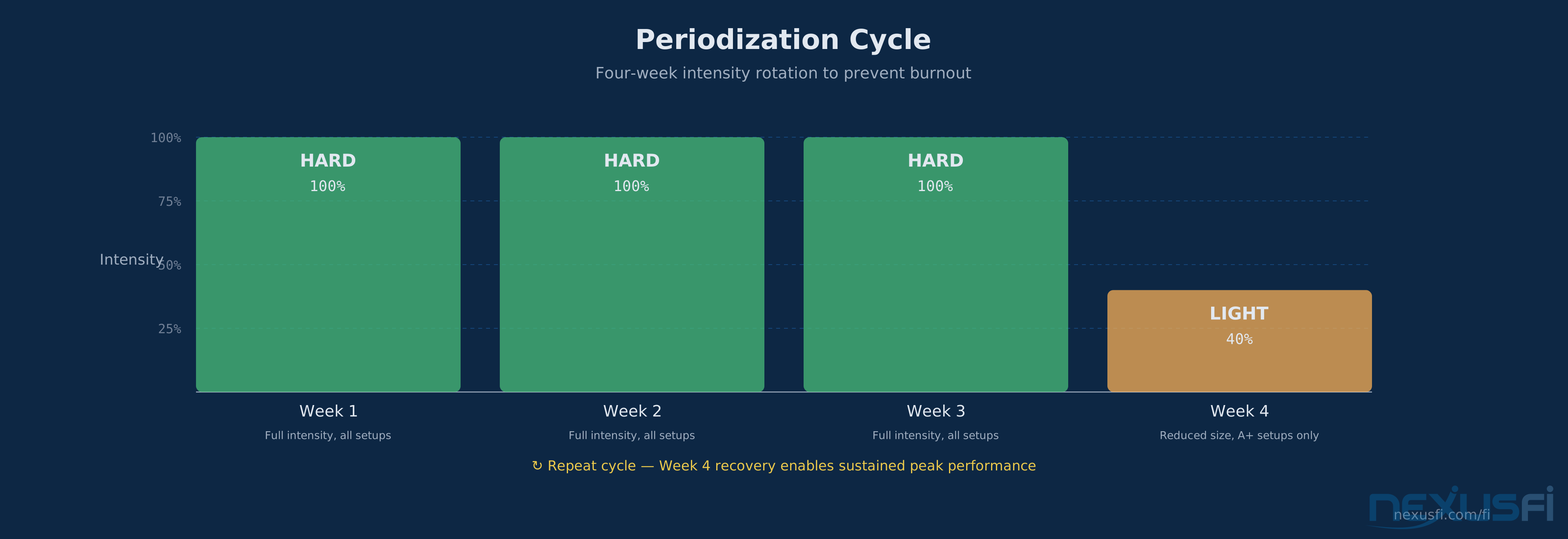
The light week is intentional recovery built into the operating system. A trader running maximum intensity for 8--12 consecutive weeks is building a system that will break. As @ZviTradingCoach emphasizes in their [time allocation discussion] [10], the key is to allocate trading time deliberately rather than letting it expand without boundaries — deciding specifically which times of day, how many days per week, and committing to that structure.
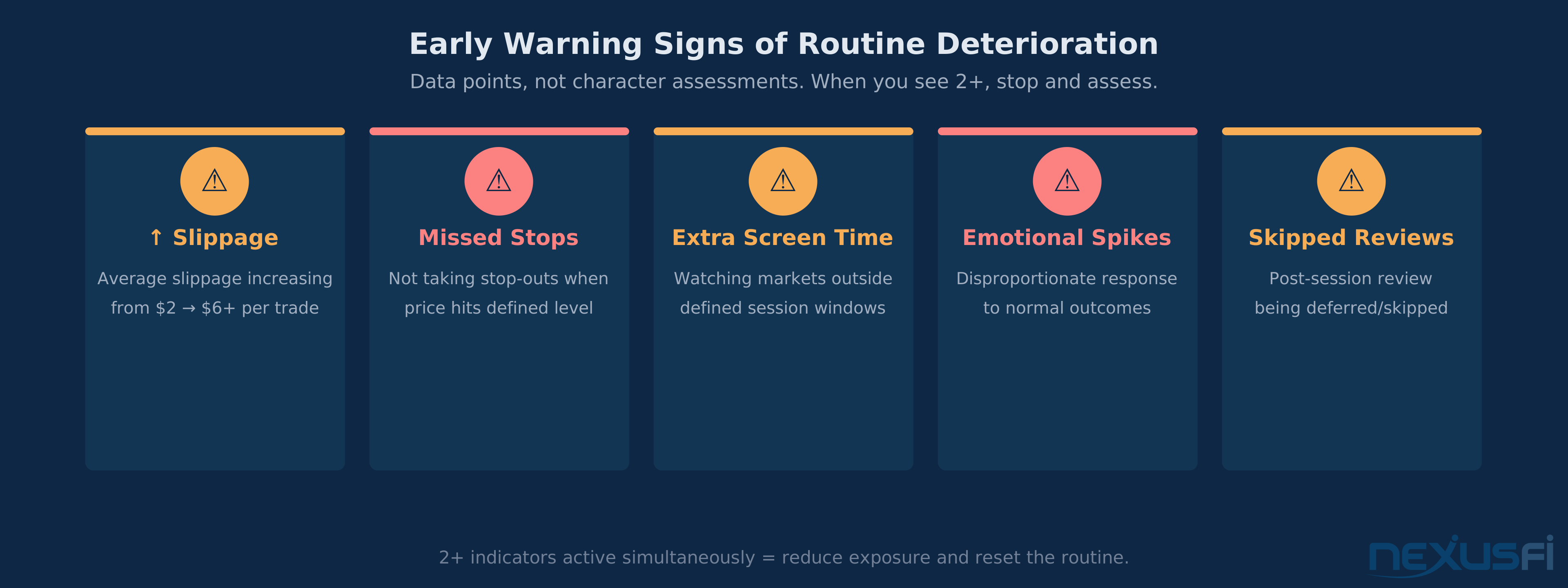
Early Warning Signs of Routine Deterioration
These are data points, not character assessments:
- Increased average slippage — If your average slippage per trade increases from $2 to $6 over a two-week period, you're entering worse. Emotional state affects execution timing.
- Missed stops — If you're consistently not taking stop-outs when price hits your defined stop level, you're rationalizing in the moment. This is a diagnostic, not a judgment.
- Escalating screen time — If you're watching markets outside your defined session windows, you're leaking attention and likely making impulsive decisions during un-structured time.
- Emotional spikes — Disproportionate emotional responses to normal trading outcomes (punching desks, extended post-loss self-criticism, euphoria after winners) indicate that the decompression protocols aren't working.
- Review omission — "Just this once, I'll skip the post-session review." Once becomes twice. Twice becomes the norm. The review disappears, and the feedback loop with it.
As @creamyyy's [discipline thread] [11] notes, peak trading occurs early when battery (cognitive and emotional) is full. Battery drains. When it's low and you're still trading, you're not in a state to recognize that you're in a bad state. That's why the rules exist: to protect against the moment when you can no longer protect yourself.
No-Trade Days as Deliberate Protocol
A designated no-trade day once per week or once every two weeks is not weakness — it's structural margin. Use these days for extended market structure review, replay-based simulation of the week's trades, or targeted skill development. One no-trade day that prevents a revenge-trade spiral saves more than the revenue foregone.
Common Failure Modes #
Routine Drift #
Routine drift is the gradual erosion of the defined routine without a conscious decision to change it. It's death by a thousand accommodations. The pre-market review goes from 2 hours to 45 minutes to "I'll just check the levels quickly." The post-session review goes from 45 minutes to "I'll do it tomorrow." Each individual accommodation seems reasonable, which is what makes drift undetectable from inside it. The protection is the weekly adherence audit — if the adherence score is trending down over 3 weeks, drift is occurring.
Review Omission #
The post-session review is the first casualty of a bad day and the first thing cut when the week gets busy. Both patterns ensure that the periods when you most need feedback loops are the periods when you eliminate them. Review omission compounds: a week of skipped reviews means losing patterns that started Tuesday are still running, unidentified, on Friday.
Risk Rule Bending #
"This time is different" is the most expensive phrase in trading. Stop adjustments, size increases mid-trade, extensions of session windows "just for one more trade" — these feel like judgment calls in the moment. They're not. They're risk rule violations driven by state-based decision-making that the routine exists precisely to prevent. The rule bending never happens when things are going well. It happens when the account is down and emotional activation is highest — exactly when cognitive resources are lowest. The solution is structural: physical kill-switch protocols (logging off the trading platform, leaving the trading station) prevent the most destructive override scenarios better than willpower does.
Late-Day Impulsivity #
The open and the close have the liquidity and directional conviction that make short-term trading viable. Late afternoon, especially after 2:00 PM with no structured breaks, is a cognitive fatigue trap. Trades taken after 4+ hours of session time are disproportionately Type 5 errors (emotional/attention lapse). The fix isn't discipline at 2:30 PM — it's a session window rule that hard-stops before decision quality degrades.
Checklist Theater #
A checklist completed mechanically without genuine engagement is worse than no checklist — it creates false confidence while providing none of the benefit. The signs: checking boxes in under 30 seconds per item without looking at the data, having the same answers every day regardless of changing conditions. The solution is periodic checklist audits: for each item, ask "am I actually using this information, or am I going through the motion?" Remove items that don't change behavior. A 10-item checklist genuinely engaged outperforms a 30-item checklist performed as theater.
The Math That Settles the Argument #
For traders who want to see why routine adherence is worth the operational overhead, here's the calculation.
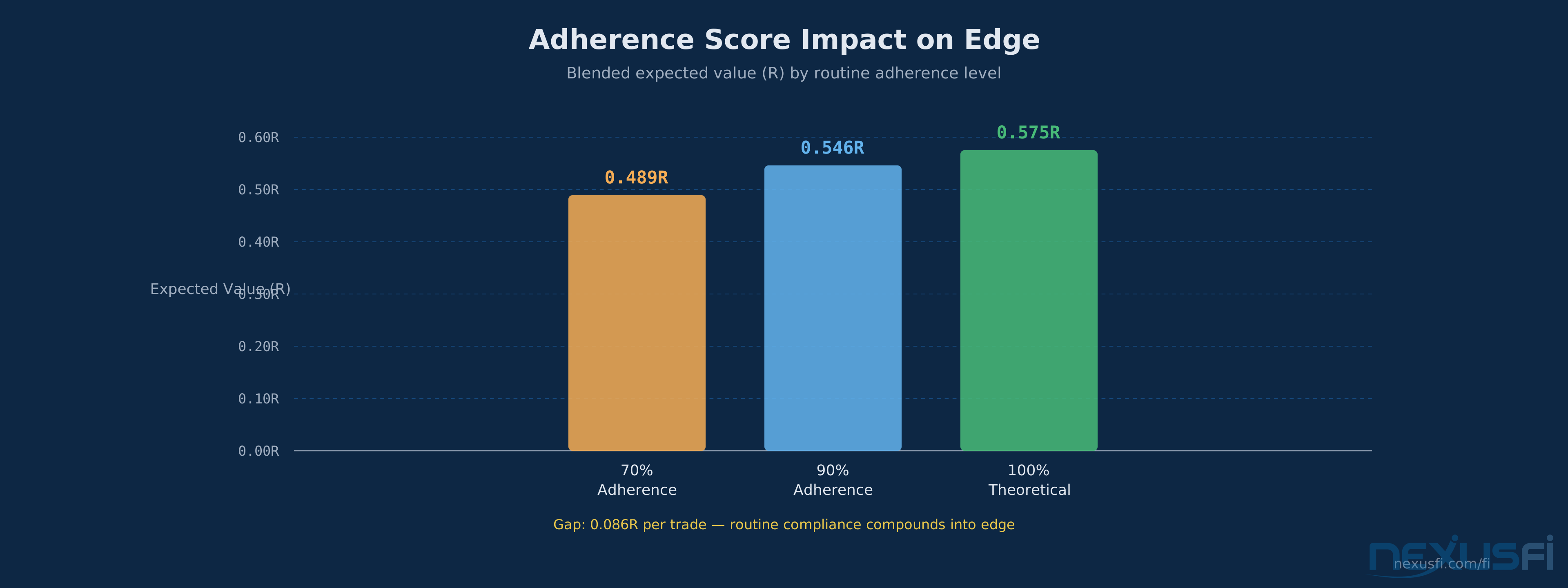
Assume an ES trader with a defined edge: 45% win rate, average winner 2.5R, average loser 1R. Expected value per trade = (0.45 × 2.5R) + (0.55 × -1R) = 1.125R — 0.55R = +0.575R per trade. Solid edge.
Now assume this trader's adherence score is 70%. 30% of their trades are taken outside the decision gate — setups that didn't fully qualify, trades in the dead zone, size violations.
If non-adherent trades perform at 50% below the edge (a conservative estimate — research on judgment degradation under stress suggests it's often worse), the blended expected value drops:
- Adherent trades (70% of volume): +0.575R × 0.70 = +0.4025R
- Non-adherent trades (30% of volume): +0.2875R × 0.30 = +0.08625R (half the edge)
- Blended EV: +0.489R per trade
That's a 15% edge reduction from 30% rule violations — $1,150 destroyed per 100 trades at 1R = $200, or $11,500/year at 1,000 annual trades.
Now flip it: bring adherence from 70% to 90% with a solid routine:
- Adherent trades (90% of volume): +0.575R × 0.90 = +0.5175R
- Non-adherent trades (10% of volume): +0.2875R × 0.10 = +0.02875R
- Blended EV: +0.546R per trade
Moving from 70% to 90% adherence recovers ~$5,700/year at these assumptions. The routine is the delivery mechanism for the edge.
What to Do Tomorrow #
Tomorrow morning, 90 minutes before the market opens, write the following on paper: the three most important levels in your instrument today, the directional bias based on overnight and globex context, two if/then scenarios with specific entry triggers, and your session's maximum daily loss limit in R-multiples. Define what will end your session. Define your approved trading window. Close the paper and don't open it again until the market opens — then execute against what you wrote, not against what you feel in the moment.
After the close, before you do anything else, score the session. Did you follow the plan? What was your adherence score? If you took any trades outside the gate, categorize the error by type. This review takes 20 minutes. It is the most important 20 minutes in your trading development, not because it changes today's P&L, but because it starts the feedback loop that changes next month's P&L.
The traders who build consistent careers in futures aren't the ones with the best entries. They're the ones with the most rigorous operating systems. The routine is the architecture of consistency. Build it deliberately.
Knowledge Map
Prerequisites
Understand these firstReferences This Article
Articles that build on this topicCitations
- — Big Mike's day trading method and advice (2009) 👍 75“Some more random thoughts of my own: Why do some traders treat trading so lightly? Let me be specific. You wake up late, roll out of bed, and climb into your office chair. Probably still in your underwear, not showered, no breakfast, etc.”
- — SoftSoap's NQ Journey - from SoftSoap to SoftGold (2016) 👍 29“So I've been on the fence about starting a journal on NexusFi for the last couple of months. Mainly due to the fact that I am not a disciplined trader yet, and some days my performance embarrasses me.”
- — FIO Journal Challenge - September 2018 edition w/TopstepTrader (2018) 👍 19“https://nexusfi.com/trading-journals/45210-shortcreeker-s-trading-journal.html#post690323 Shortcreeker's Trade Journal https://content.screencast.com/users/Shortcreeker/folders/Snagit/media/03a17cad-a0fd-4906-b398-4357e1574f31/09.04.2018-12.12.”
- — Price Action Ripper's Journal (2014) 👍 4“Here is my pre-market checklist of items that I look at and am aware of before the opening bell. 1. Review Economic Calendar 2. Check Daily Chart for Macro Picture (Trend/Range) 3. Check C Section of previous Session for END OF DAY Momentum 4.”
- — Study prep for the Emini (2017) 👍 4“Check out some of the journals and specifically this one: https://nexusfi.com/trading-journals/27543-dts-pre-market-prep.html DT has a great premarket write up and is very detailed on the ranges.”
- — Discipline -> Consistency -> Success (2011) 👍 14“"One important key to success is self-confidence." - Arthur Ashe I lost the edge. I was a self-confident, consistent, successful trader. But at some point, months ago, I started to lose focus on my trading.”
- — Crossing the Abyss: An Adventure Guide by Snax (2021) 👍 8“Great questions, josh and Massive l! When I started this journal, I had so many things that were going wrong that I thought it might be useful to break the problem down into smaller problems, so I would take some number of trades, like a set of 30 tr...”
- — Trade Journal (2016) 👍 12“A near-mechanical midset I have gone back and forth over time about how "discretionary" trading should be. I recently did a post on it, arguing in favor of a judgment/discretionary based contextual read instead of more rule-based decisions.”
- — Finally Turning the Corner, tha "its 80% Psychology" thing... (2020) 👍 8“Ouch, messed up. Confession time: so I traded well all morning, was really patient and honouring my per trade limits, then in the last hour went from being up 250 on the day to -250 for the day..”
- — how many hours per day do you watch the market? (2022) 👍 5“As someone who is "trying to balance work and trading" - try the other way around: ALLOCATE. Decide how much time you're *comfortably* able to allocate to trading on a regular basis. Be specific - which times of day, how many days a week.”
- — Discipline problems (2023) 👍 9“I recently watched a webinar. There was a very interesting take on discipline which I'd never considered but makes perfect sense to me. Discipline is just understanding that you have a limited amount of self discipline available.”
- — Trading Psychology and How The Mind Works (III) (2010) 👍 15“I've discovered a few little tricks that help my trading: 1] Take Regular Breaks When the market allows, I get up and walk around. Maybe do a few push ups. This helps clear my mind, and when I come back to the computer my mind can focus much better.”
- — Discipline, Focus, Habits (2017) 👍 7“Originally I intended to start this journal after the new year, but why wait? Why not start now? A part of me really wishes to do this in a private manner or to post it somewhere in my trading journal, and I have tried both many many times but the fa...”
- Baumeister, Vohs, & Tice — The Strength Model of Self-Regulation: Conclusions From the Second Decade of Willpower Research (2018)
- Tudor O. Bompa & Carlo Buzzichelli — Periodization: Theory and Methodology of Training (6th Edition) (2019)