



Trading Discipline and Rule Following: System Design Over Willpower
The gap between your trading plan and your actual execution isn't a character flaw — it's an engineering problem.
Overview #
Every futures trader has experienced the moment: you know the rule, you wrote the rule, you've enforced the rule a hundred times — and today, you break it. Not because you forgot. Because something in the moment felt more compelling than the rule.
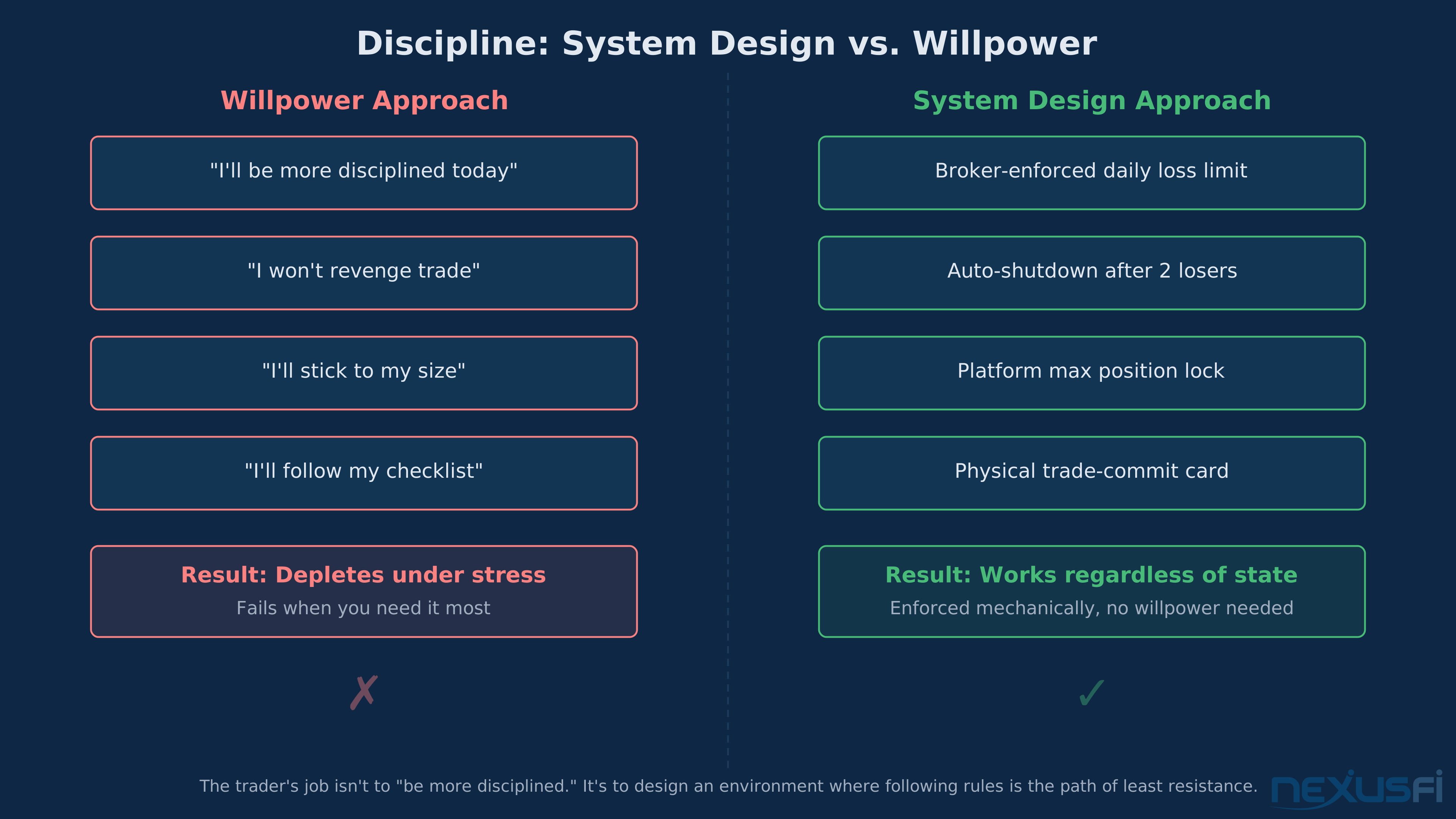
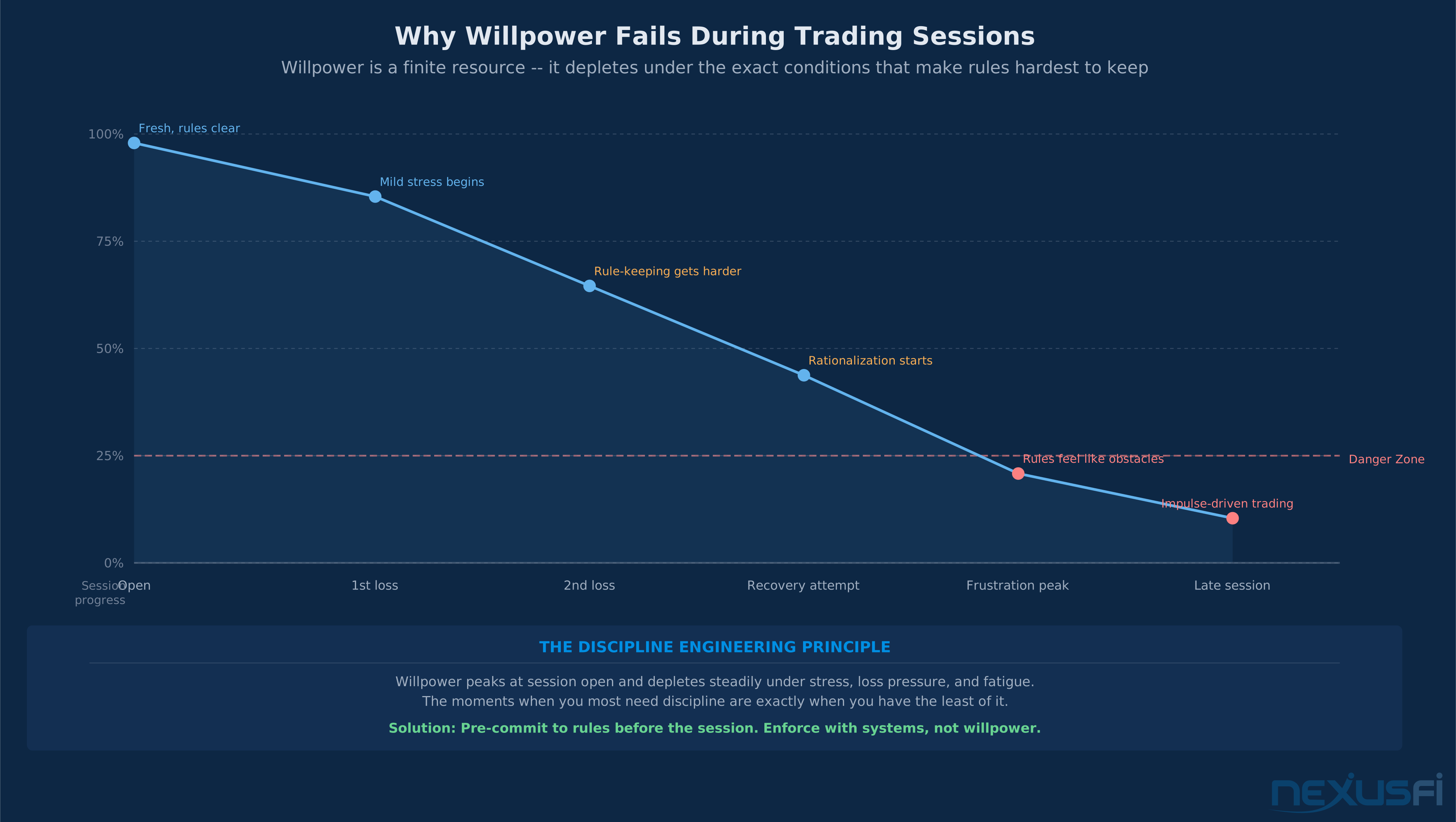
Discipline isn't something you summon through force of will. Willpower depletes under stress, fatigue, and loss pressure — exactly when you need it most. As the Trading Psychology hub explains, the gap between knowing and doing is where most P&L damage occurs. This article treats discipline as what it actually is: an operational system you build, enforce, and monitor. The trader's job isn't to "be more disciplined." It's to design an environment where following the rules is the path of least resistance.
Why Willpower Fails -- And What Replaces It #
Here's the uncomfortable truth: you already know your rules. You wrote them down. You believe in them. And you still break them. That's not a knowledge problem. It's a system design problem.
Research on ego depletion confirms this at the neurological level. Baumeister et al.'s landmark studies demonstrated that willpower operates like a muscle — it fatigues with use, and each act of self-control draws from a shared, finite reserve. [14] Every decision during a trading session draws from the same limited pool. Reading order flow, managing positions, resisting the urge to chase — all of it depletes the same resource. By the time you're three hours deep with two losses logged, the mental fuel needed to override impulse and follow the rule is substantially diminished. This isn't a character flaw. It's biology.
[1] He'd identified the core problem — his system worked, but his execution of it didn't. The fix wasn't trying harder. It was building external constraints.
@Hulk nailed the mechanism in The Elite Circle: "Full-time traders that risk someone else's capital are able to do it because they have oversight. While fear and greed will make these people bend their rules, they cannot cross a line because they will get fired." For traders using their own money from home, "such accountability cannot be achieved" — unless you build it deliberately. His solution: "automate the rules by programming them and restrict what you see and react to." [2]
That's the thesis of this article. Discipline is engineered, not summoned.
Build a Rule Hierarchy #
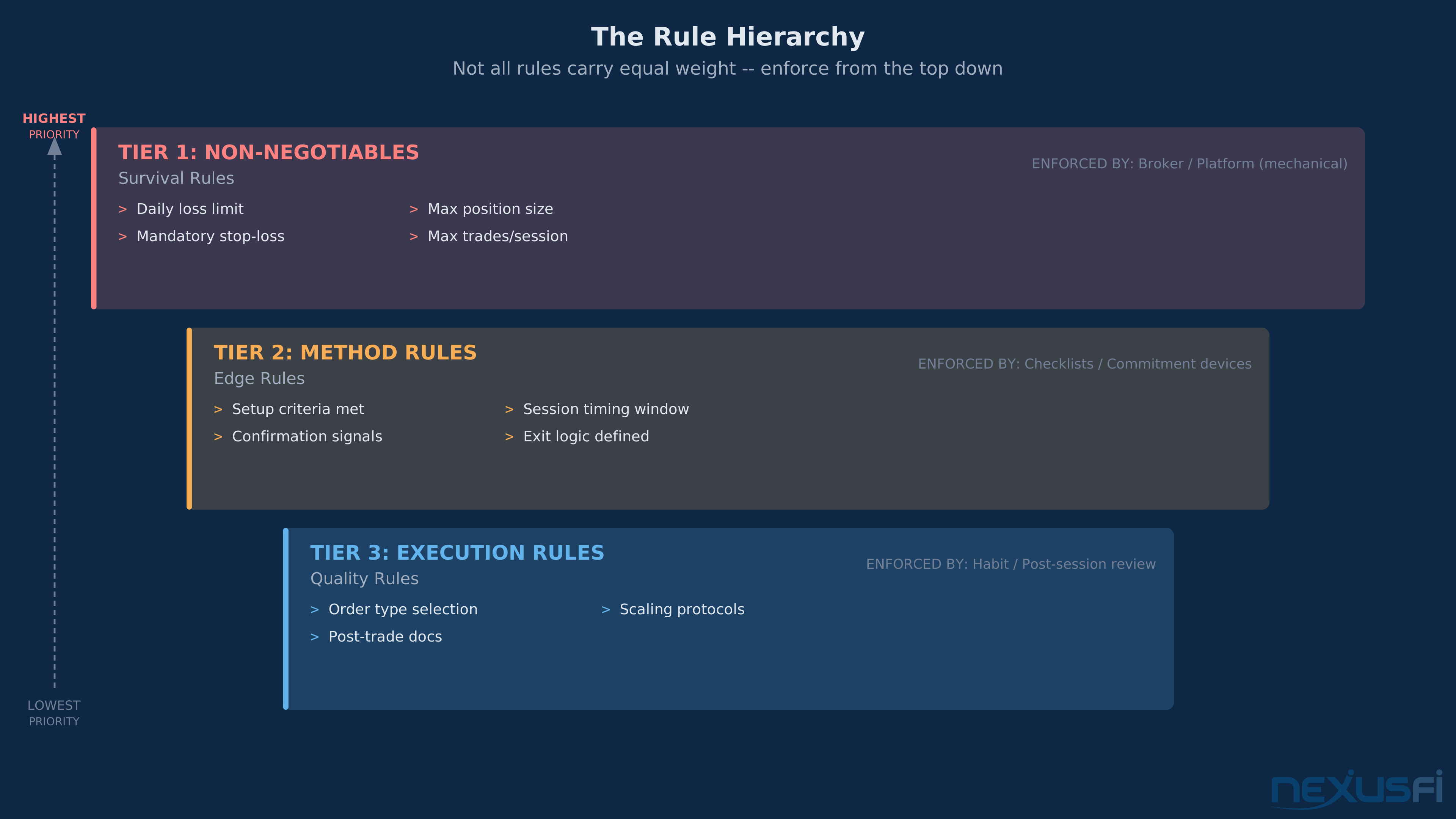
Not all rules carry equal weight. A rule hierarchy prevents the common trap where traders treat every guideline as equally important — then violate the critical ones because they're fatigued from trying to enforce the trivial ones.
Tier 1: Non-Negotiables (Survival Rules) These protect your account from catastrophic damage. They fire automatically, without thought or deliberation.
- Daily loss limit (hard dollar cap — hit it, session over, no exceptions)
- Maximum position size per trade
- Maximum number of trades per session
- Mandatory stop-loss on every entry
Tier 2: Method Rules (Edge Rules) These define when and how you trade. They're tied directly to your edge and require deliberate compliance.
- Setup criteria (all conditions must be present before entry)
- Session timing windows (when your edge has historically performed)
- Confirmation requirements before pulling the trigger
- Exit logic — target, trailing, or time-based
Tier 3: Execution Rules (Quality Rules) These improve trade quality but don't prevent account-level damage if violated once.
- Order type selection (limit vs. market entries)
- Scaling protocols
- Post-trade documentation requirements
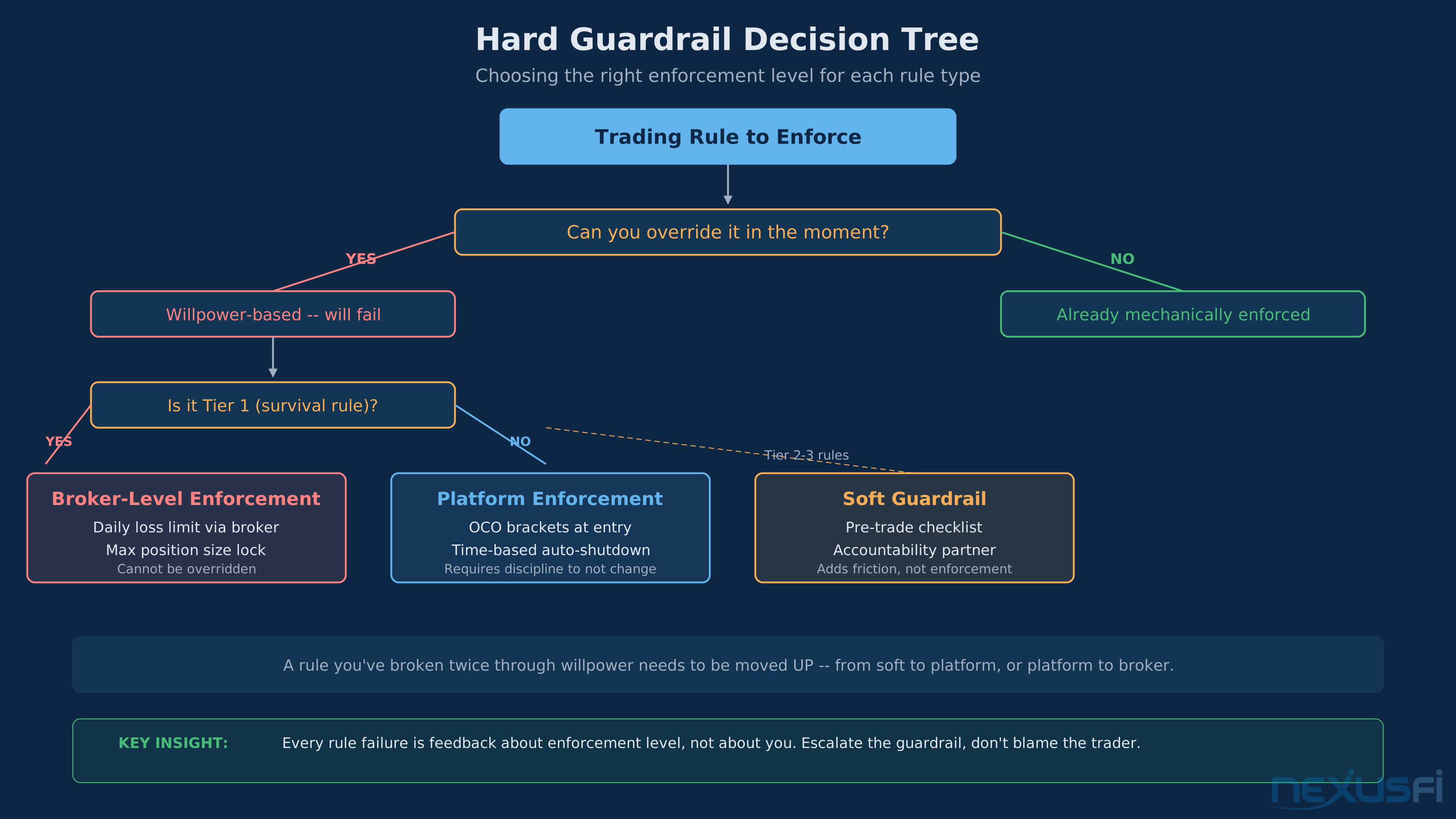
The hierarchy matters because Tier 1 rules must be enforced mechanically — by your broker or platform, not by your willpower. Tier 2 rules get enforced by checklists and commitment devices. Tier 3 rules get enforced by habit and post-session review.
Embed Guardrails -- Hard and Soft #
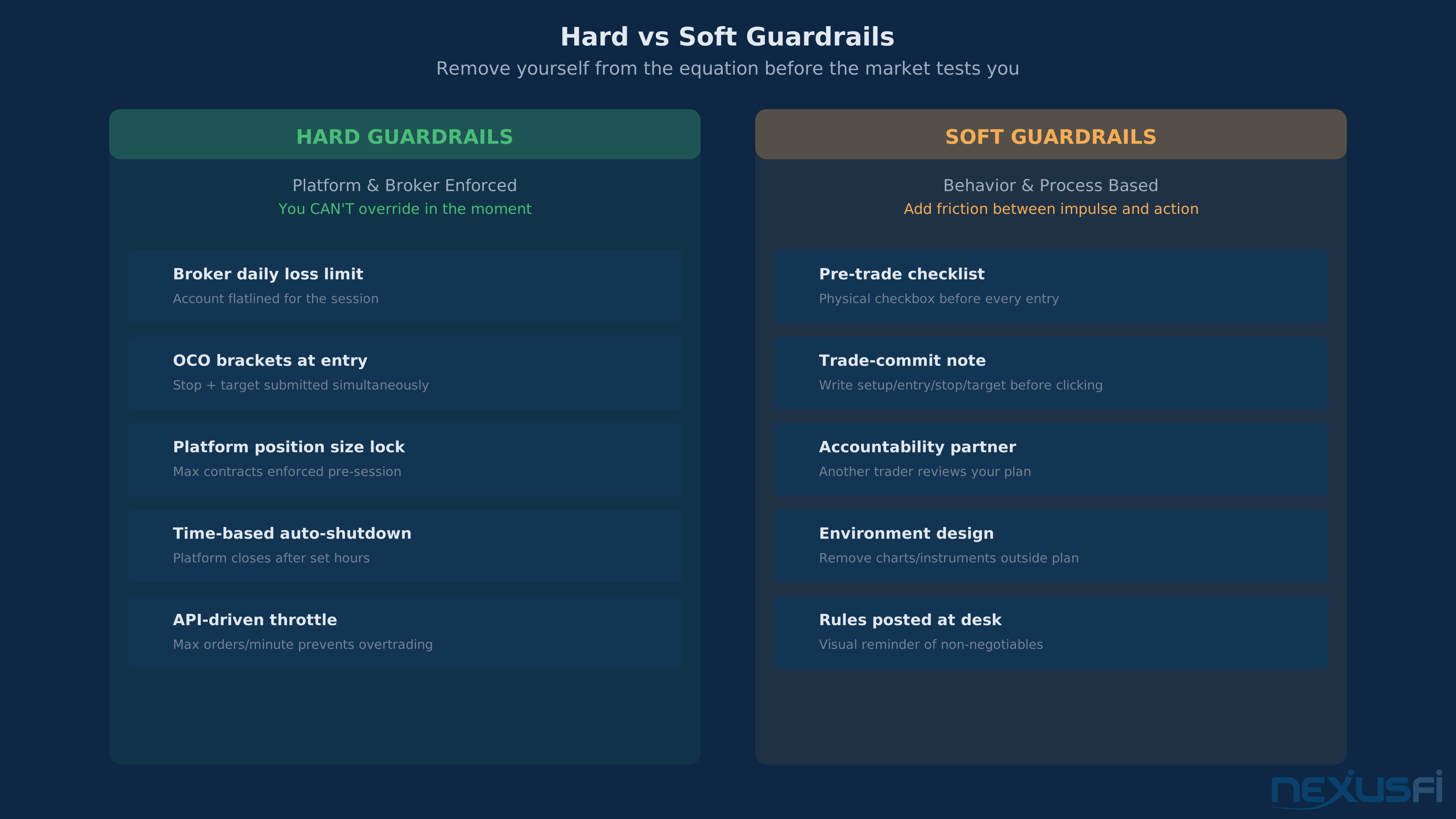
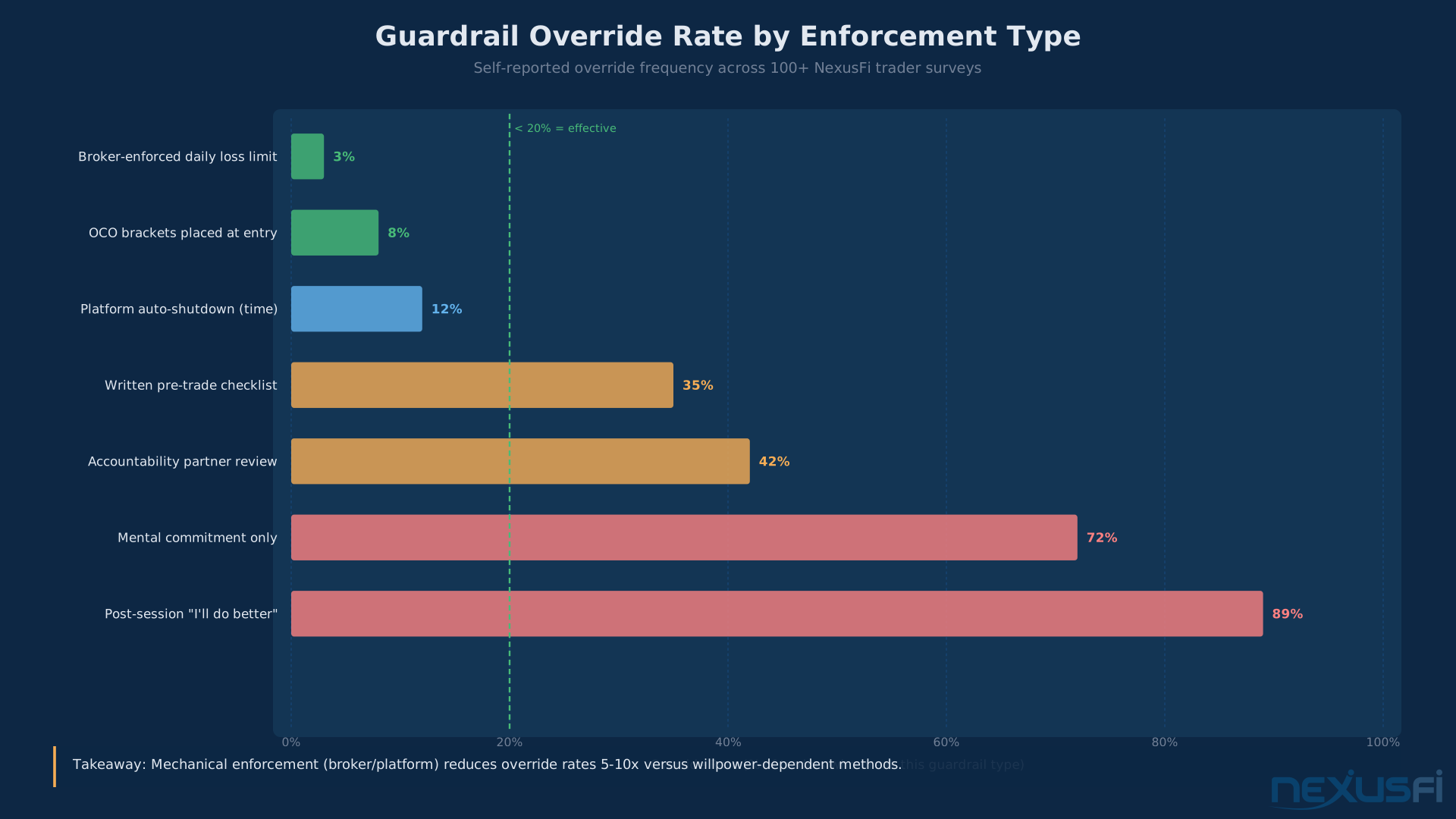
Guardrails are pre-commitment devices that make rule-breaking mechanically harder. They come in two types.
Hard Guardrails (Platform and Broker Enforced) #
These remove you from the equation entirely.
His honest assessment: "You can see the problem. It's that you are always in charge." [3]
The solution is broker-level enforcement. Most futures brokers allow you to set a daily loss limit that flatlines your account for the rest of the session. Unlike platform-side limits, you can't override these with a quick settings change — you'd have to call your broker, which creates enough friction to break the impulse cycle.
Hard guardrails include:
- Broker-enforced daily loss limits — the single most effective discipline tool in futures trading
- OCO (One-Cancels-Other) brackets placed at entry — stop and target submitted simultaneously, removing the temptation to "manage" the trade
- Platform position size locks — set max contracts and don't change mid-session
- Time-based auto-shutdown — if your data shows performance degrades after a certain hour, automate the cutoff
Soft Guardrails (Behavior-Based) #
These add friction between impulse and action.
@TheProblemSolver — who has worked with professional traders facing the same issues — offered a concrete framework: "First and foremost, have your trading rules POSTED next to your trading computer. Read it everyday prior to trading." His second recommendation: "Trade with a partner. Agree with the partner to review your trade prior to placing it. If it does not conform to your Trading Rules, DO NOT TAKE THE TRADE." [4]
Effective soft guardrails:
- Pre-trade checklist — physically check off each condition before entering. Not a mental review — a written, physical checklist. The act of checking boxes engages the analytical brain
- Trade-commit note — write down the setup, entry, stop, and target before clicking. If you can't articulate why you're taking the trade in one sentence, you don't take it
- Accountability partner — another trader who reviews your plan. The knowledge that someone will see your trades changes behavior even when they're not watching
- Environment design — close charts you don't need. Remove the ability to trade instruments outside your plan. Hide P&L during the session if it triggers emotional responses
The "If-Then" Playbook -- State-Based Rules #
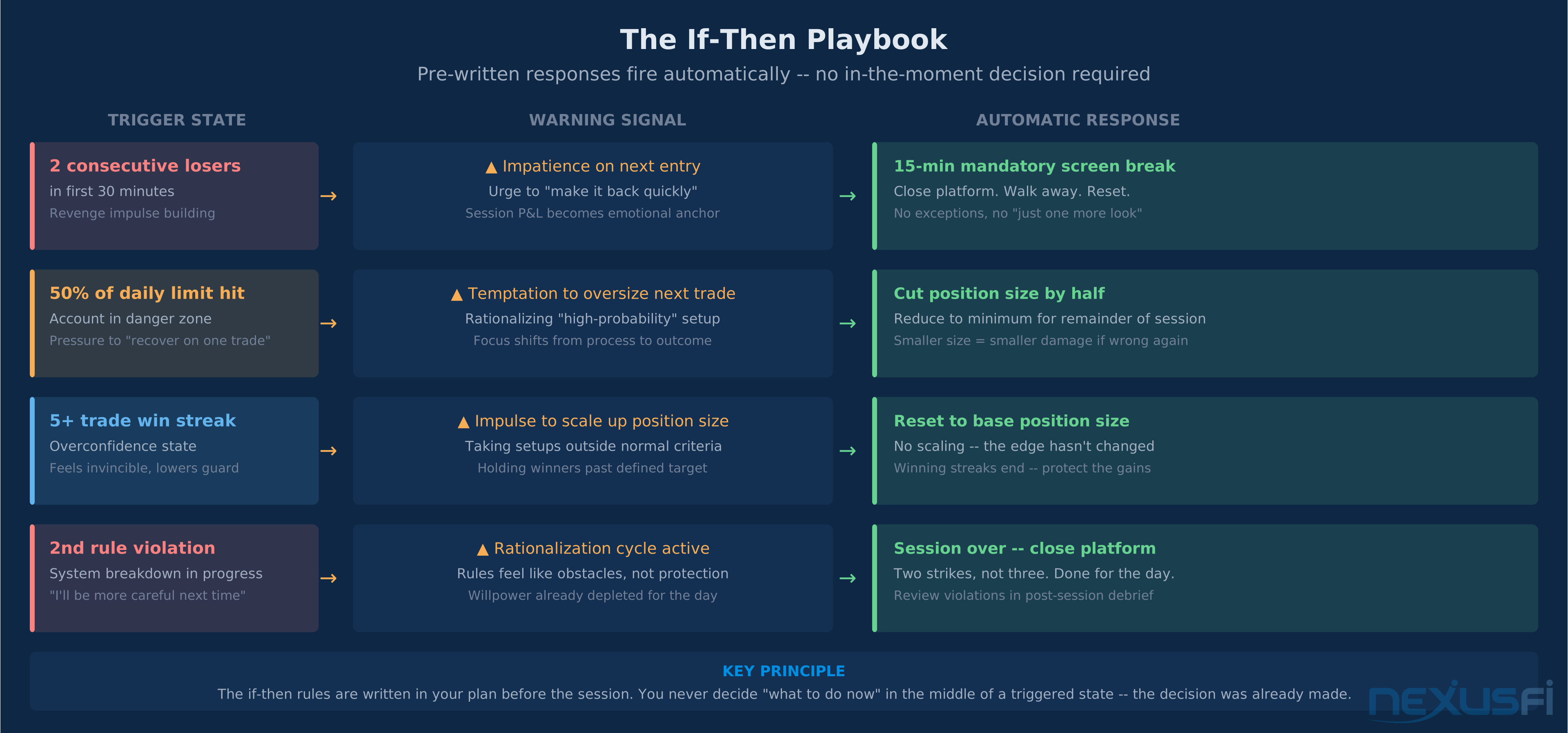
Discipline fails in predictable states. After a win streak, overconfidence sneaks in. After consecutive losses, the revenge impulse builds. During abnormal volatility, adrenaline overrides process. Late in the session, fatigue degrades judgment.
Instead of relying on in-the-moment awareness, build an "If-Then" playbook — specific, pre-written responses to predictable triggers. The responses fire without requiring introspection while you're under pressure.
Sample If-Then Rules:
| If... | Then... |
|---|---|
| Daily P&L down 50% of daily loss limit | Reduce position size by half for remainder |
| 3 trades taken outside setup criteria | Session over — close platform |
| Win streak of 5+ trades | Reset position size to base (no scaling up) |
| Market gaps beyond 2x ATR at open | No trades for first 15 minutes |
@rubyslippage proposed a simple but effective circuit breaker: "Implement a rule that if you violate your trading rules twice, you're cut off for the day." [5] Two strikes. Not three. Not "I'll be more careful." Done for the day.
Building this playbook requires accepting one uncomfortable truth: you are not reliably rational when under pressure. @Fat Tails, one of the most technically rigorous contributors in NexusFi history, laid out the minimum requirements for daily loss control: "Define maximum loss per day and stop trading after it occurred. For example you could stop after 3 losing trades (3%). If you don't respect this rule and continue trading after the third losing trade, stop trading for a week." [9] The escalation is deliberate — breaking the daily rule costs you one week. That's not punishment, it's a forcing function: the next violation hurts much more.
@Big Mike lived this exactly. In one journal entry, he described hitting his daily loss limit in just 12 minutes — three trades, bad entries, stopped out. "So, in 12 minutes I hit my daily stop. If that isn't a sign you are doing bad, I don't know what is. The kicker was the last trade — it was such a huge mistake that it threw me over my daily loss limit and also made me realize I was not following my rules for the day. The prior two trades were not 'bad' trades in terms of lack of execution. They just didn't work out. The third trade was a major screw up, and because of that I stopped for the day." [11] He stopped. That's the discipline — not the perfect trading, but the decision to close the platform before a bad day became a catastrophic one.
Monitor Compliance -- Not Just P&L #
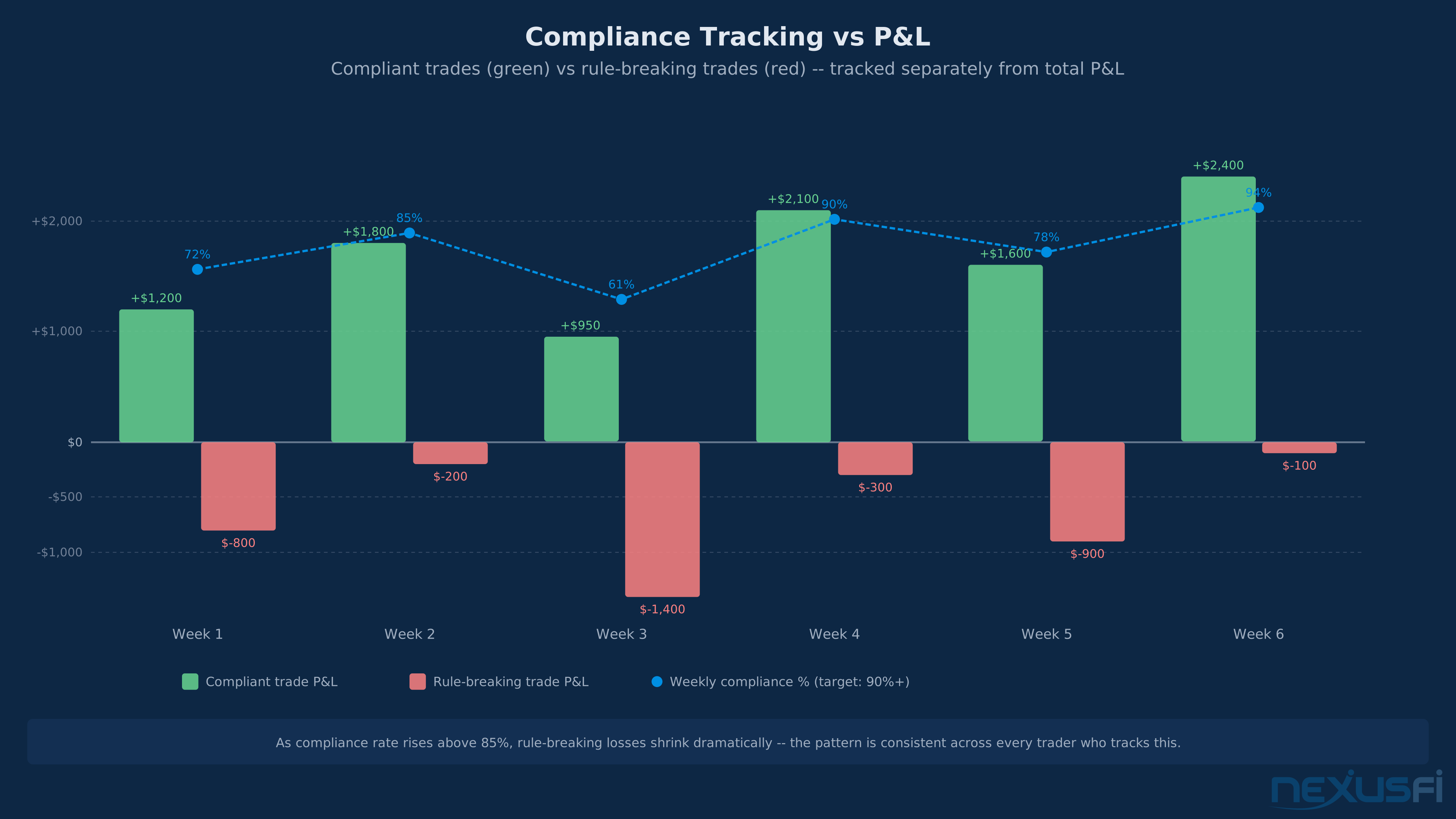
Most traders track wins and losses. Almost nobody tracks rule adherence. This is a critical gap. You can be profitable while silently violating rules — which means a future blowup is loading in the background.
Track these metrics weekly:
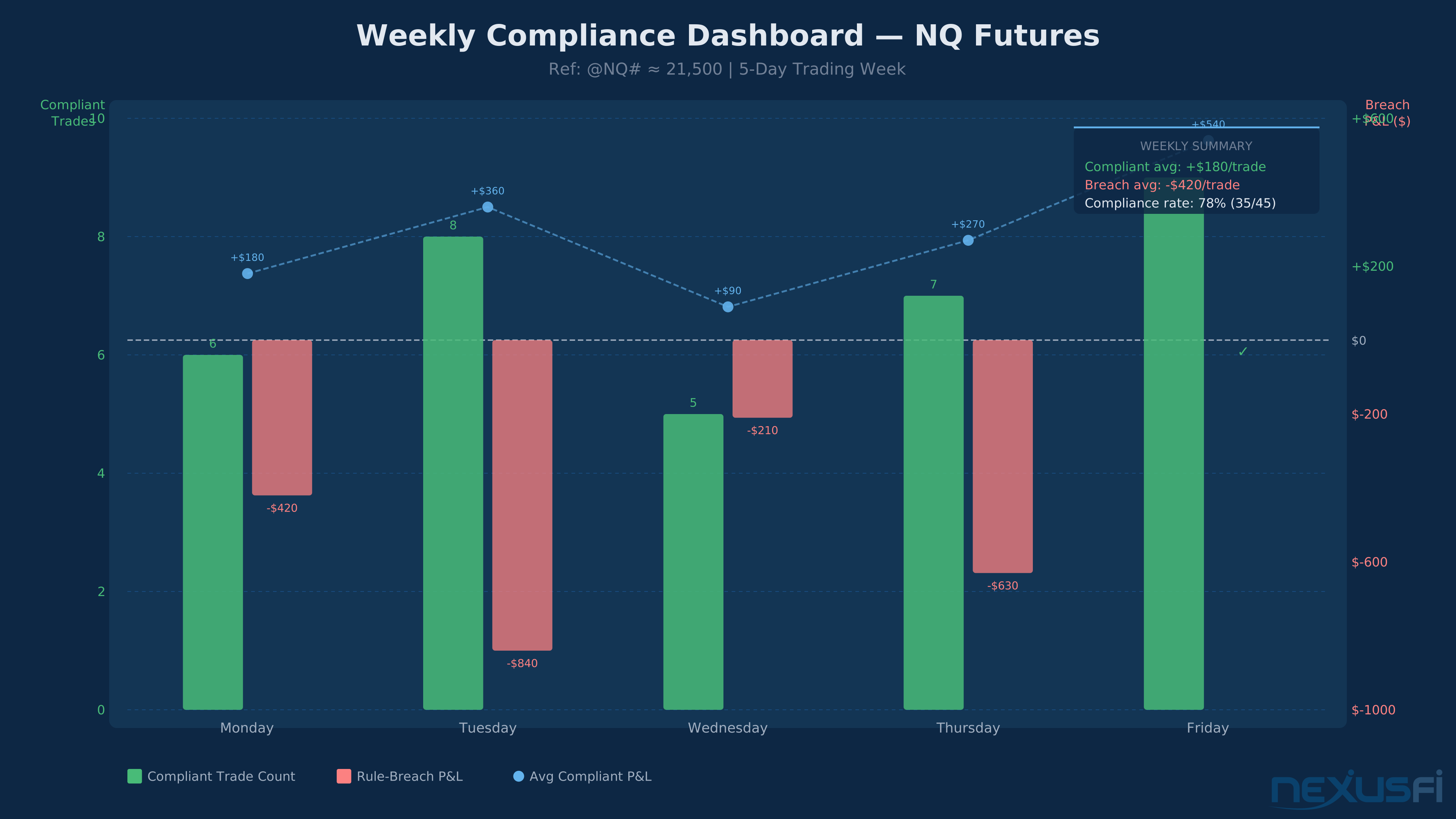
Rule-Adherence Ratio: Compliant trades divided by total trades. If you took 20 trades this week and 15 followed all your rules, your adherence is 75%. That other 25% is where your risk lives.
Violation P&L: Tag every trade that violated a rule. Calculate the aggregate P&L of just those trades. In nearly every case, violation trades dramatically underperform compliant trades. This gives you a concrete dollar figure for what rule-breaking costs you.
Breach Severity: Not all violations are equal. Distinguish between:
- Systemic gaps — the rule was ambiguous or missing, so you improvised. Fix: refine the rule
- Conscious overrides — you knew the rule and chose to break it. Fix: strengthen the guardrail
[6] Hold yourself to the same standard.
The power of compliance tracking isn't abstract — it shows up in the numbers every time a trader actually does the work.
[12] The system worked. The execution didn't. Tracking compliance is how you discover the gap — and close it.
The Worst 5% Problem #
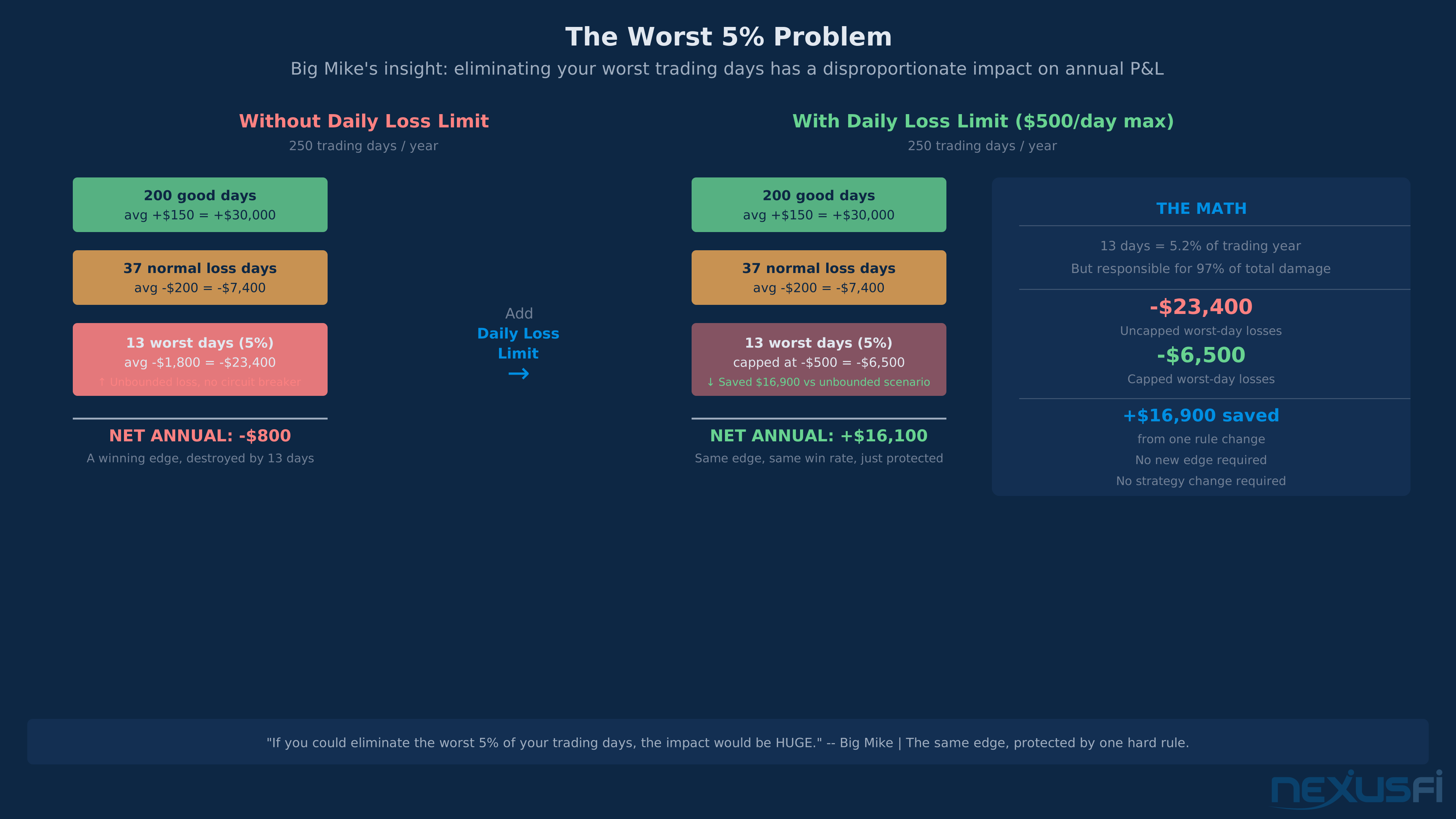
Most traders focus their improvement efforts on finding better setups or refining entries. The bigger lever — by a wide margin — is eliminating damage from their worst days.
@Big Mike posed the question directly in his trading journal: "Take a look at your journal. If you could eliminate the worst 5% of your trading days, how much of a positive impact would it have on your performance for the year? I imagine it would be HUGE. The reason? Most likely your worst 5% of all trading days are very disproportionate compared to your average losing day or your average winning day." [10]
The math is sobering. A trader with 250 trading days per year has roughly 13 "worst" days in that 5%. If those days average -$1,800 in losses while normal losing days average -$200, those 13 days alone represent -$23,400 — potentially more than the entire year's profits on compliant days. The same edge, the same trading hours, but the worst days erase the gains.
A hard daily loss limit — broker-enforced, not platform-level — captures nearly all of this damage. If those 13 days are capped at -$500 each, the total damage drops from -$23,400 to -$6,500. That's $16,900 recovered annually without changing a single entry or exit. No new edge required. No strategy overhaul. One rule, enforced mechanically.
The key insight is that the worst days aren't random. They share a pattern: the trader kept trading after early losses, position sizes escalated as the desire to recover grew, and the initial loss became a fraction of the total damage. The daily loss limit doesn't improve your best days. It eliminates your worst ones.
This is why Big Mike's advice extends beyond just stopping — it's the diagnostic question to ask yourself every week. Pull your worst three sessions this month. Would a $400 or $500 daily loss limit have triggered early enough to contain them? If yes, you've found the single highest-leverage rule change available to you.
The Breach Protocol -- When Rules Get Broken #
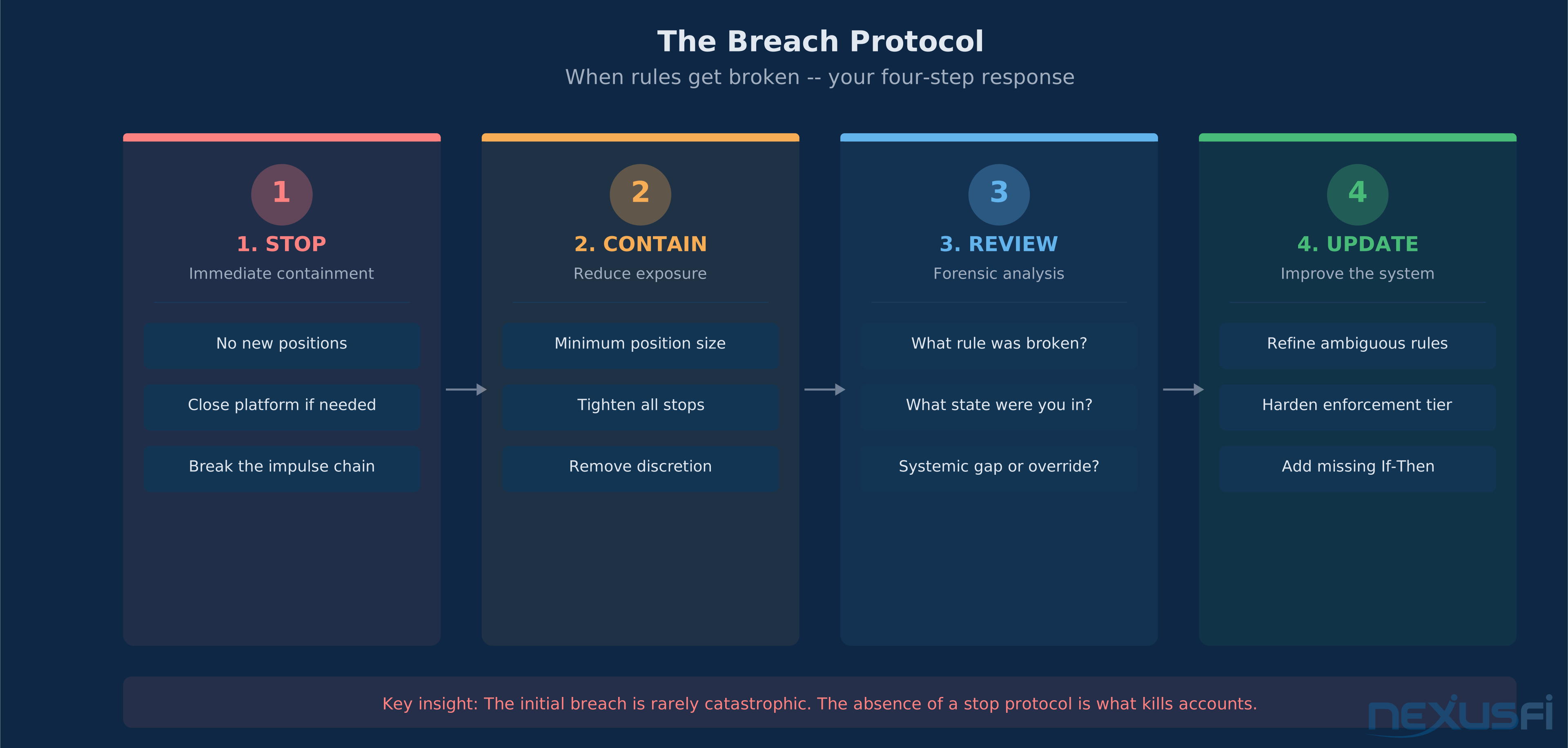
Rules will get broken. That's a certainty, not a failure. What matters is your response protocol.
Step 1: Stop. The first response to any rule violation is immediate containment. No new positions. Close the platform if necessary. The breach itself may be minor — the cascading reaction is what kills accounts.
The next attempt lost 10k. Then "full tilt activated and I basically kept getting back in the same trades with huge sizes." [7] The initial rule-break wasn't catastrophic. The absence of a stop protocol was.
Step 2: Contain. Reduce position size to minimum for the next session. Tighten stops. Remove any discretionary flexibility until you've completed the review.
Step 3: Review. Forensic analysis — not self-flagellation. Three questions:
- What rule was broken? (Be specific — "I moved my stop" not "I wasn't disciplined")
- What state was I in when it happened? (Fatigue, overconfidence, revenge impulse, boredom)
- Was the rule itself the problem, or was my enforcement of it? (Systemic gap vs. conscious override)
Step 4: Update. If it's a systemic gap, refine the rule. If it's a conscious override, strengthen the guardrail — usually by moving enforcement from soft (willpower) to hard (platform/broker). A rule you've broken twice through willpower needs to become a rule enforced by technology.
What Automated Trading Teaches About Discipline #
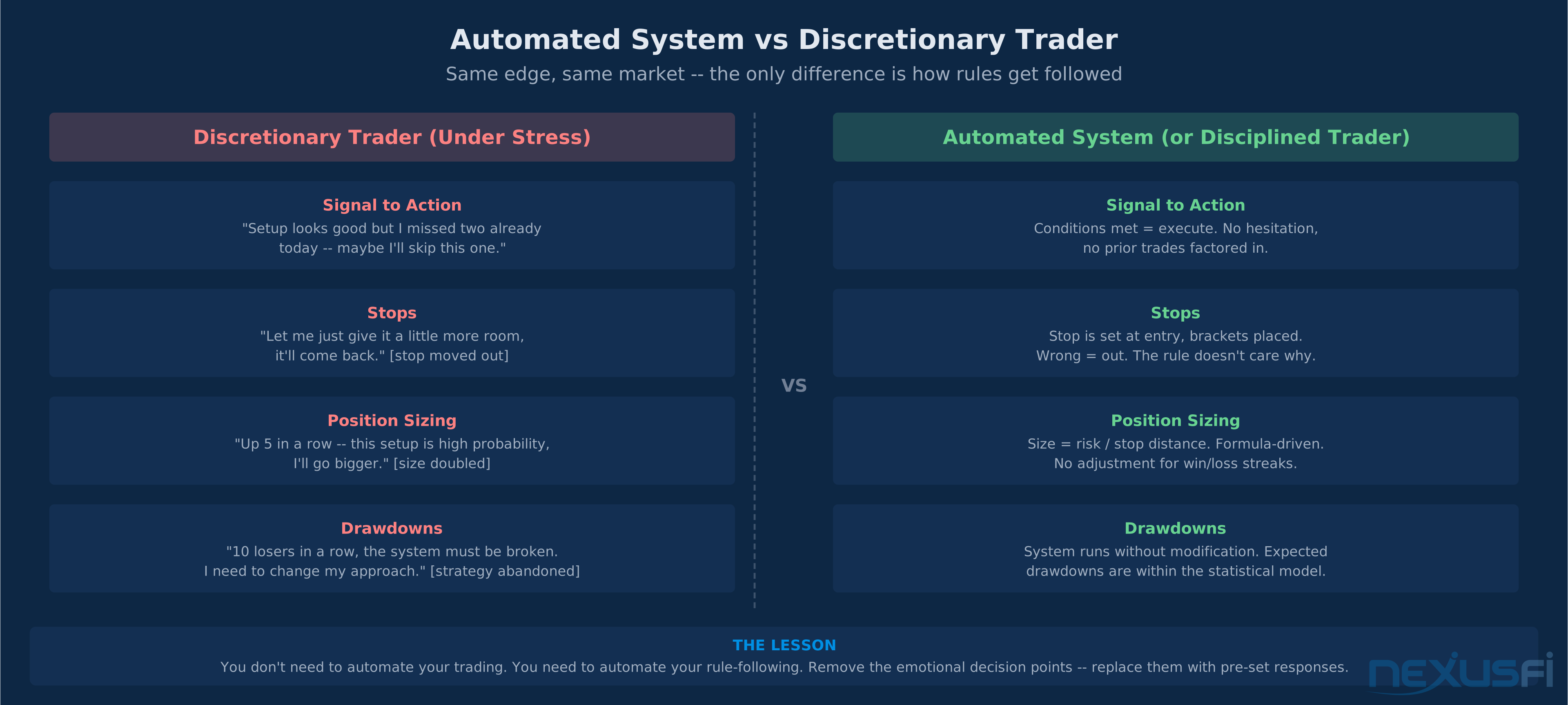
@mattz drew a direct line from automated systems to discretionary discipline: "Systems take the signal if the setup occurred, no questions asked. There is no hesitation... Systems use stops. They are wrong, they get out... Most automated systems don't change the lots after consecutive wins or losses." [8]
You don't need to automate your trading to learn from this. The principles translate directly:
- Signal to Action: When conditions are met, execute. The trade you skip because of fear is discipline failure in reverse
- Wrong to Out: Stops are mechanical, not discretionary. Set them before entry, leave them alone
- Fixed sizing: Don't scale up after wins or losses. The position size was right before the emotion hit. It's still right
- Survive drawdowns: Even good methods have losing streaks. The system doesn't panic. Neither should you
When Discipline Systems Aren't Enough #
Discipline systems work for the vast majority of rule-following problems. But some patterns have roots deeper than process design.
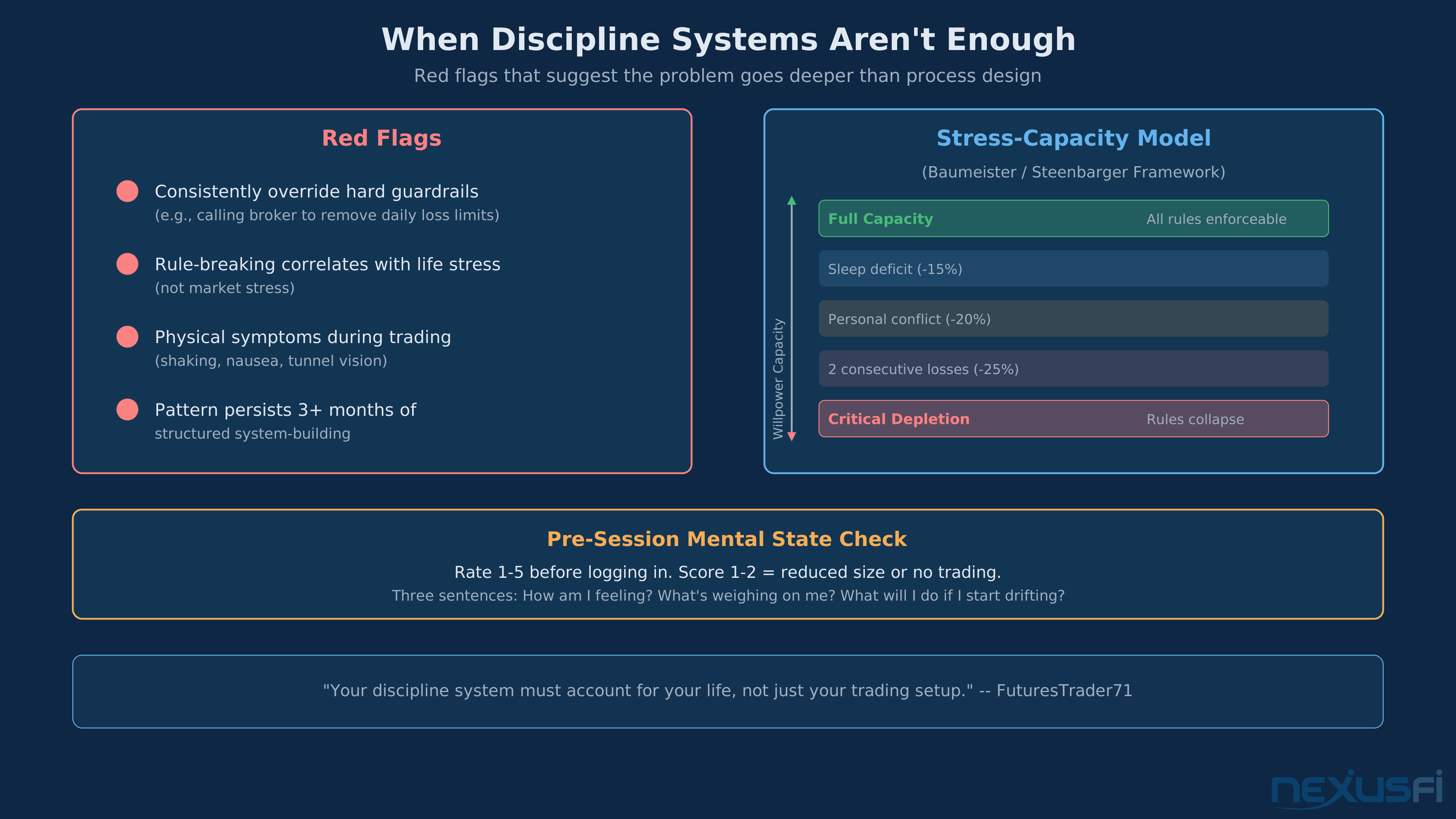
Red flags that suggest something beyond system design:
- You consistently override hard guardrails (calling your broker to remove daily loss limits)
- Rule-breaking correlates with life stress, not market stress
- You experience physical symptoms (shaking, nausea, tunnel vision) that prevent rational response
- The pattern has persisted despite 3+ months of structured system-building
In these cases, the issue may not be your trading rules or your guardrails. It may be anxiety, trauma responses, or behavioral patterns that predate trading. Working with a trading psychologist or performance coach isn't weakness — it's the same thing as hiring a coach for any other performance discipline. Some patterns need professional intervention, and recognizing that is itself an act of discipline.
@FuturesTrader71, who has run a proprietary trading firm, offered a precise description of why: "There is a limited tolerance to stress and then we, as humans, default back to our emotional mind to handle stressful situations. So, your life situation, how you feel about yourself, other stressers in your life are all contributors to revenge trading for most people. The part of you that intellectualizes trading and behaves rationally gets weaker when you are tired and already have stress present." [13] Brett Steenbarger, a clinical psychologist who has worked extensively with professional traders, describes the same mechanism in The Psychology of Trading: stress activates the brain's fight-or-flight circuitry while simultaneously suppressing prefrontal cortex function — the exact region responsible for rule-following and impulse control. [15] The implication is direct: your discipline system must account for your life, not just your trading setup. On days when external stress is high — personal conflict, poor sleep, major life events — the rational brain that enforces rules is already running on reduced capacity before markets open.
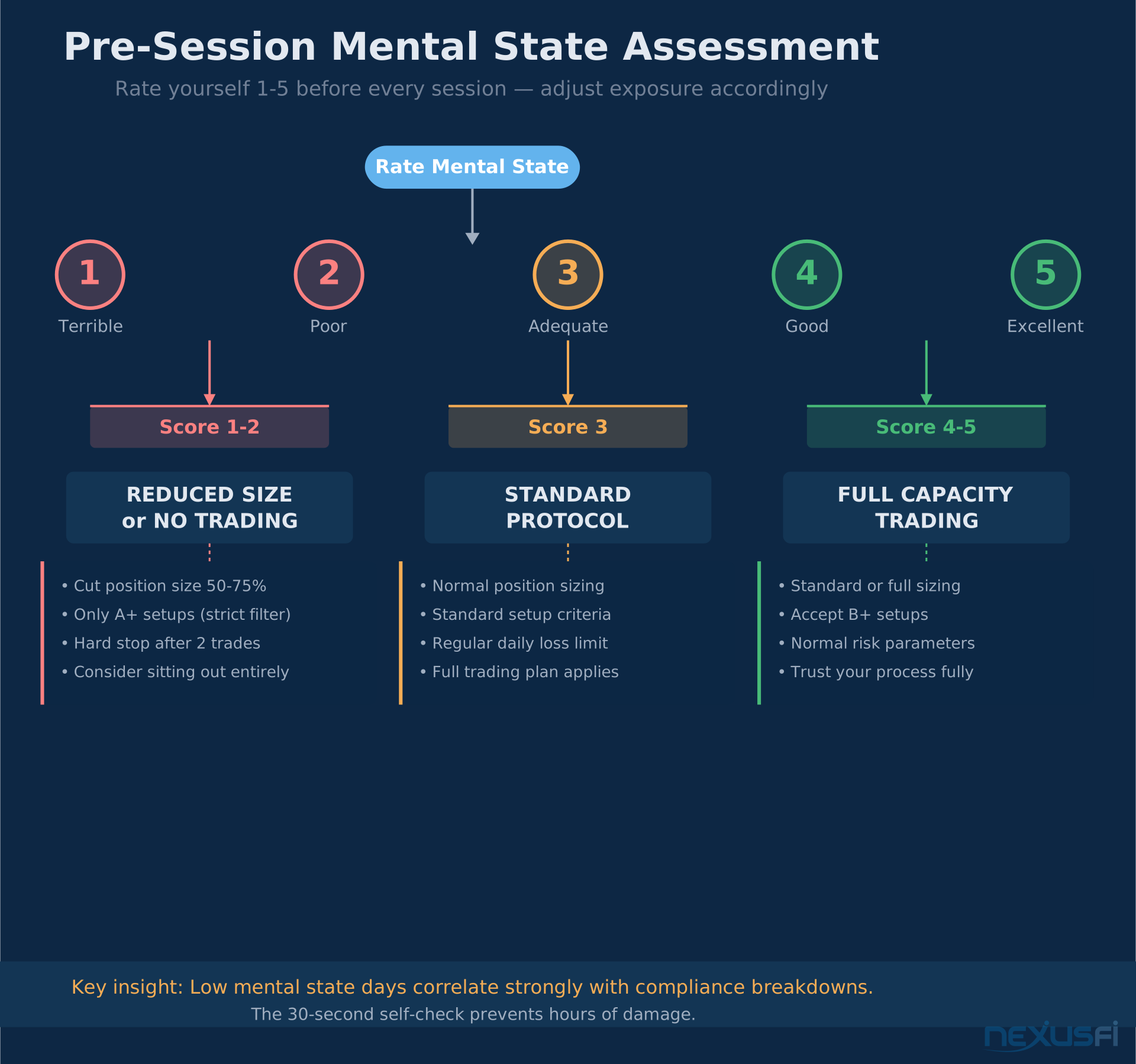
Practical responses to this include building "session quality" into your pre-market check. Rate your mental state on a 1-5 scale before logging in. A score of 1-2 means: reduced size or no trading. This sounds extreme until you track the data — low mental state days correlate strongly with compliance breakdowns. Some traders keep a simple pre-session journal entry: three sentences about how they're feeling, what's weighing on them, what they'll do if they start drifting. The act of writing it engages the analytical brain before the session starts.
Knowledge Map
Prerequisites
Understand these firstGo Deeper
Build on this knowledgeReferences This Article
Articles that build on this topicCitations
- — The Beast Slayer, Lance's NQ Trading Journal (2012) 👍 15“I decided if I was going to fail, it was going to be because my system sucked...”
- — New to futures, would like advice (2020) 👍 4“Full-time traders that risk someone else's capital are able to do it because they have oversight...”
- — Daily Loss Limit supervised by Broker/Software (2020) 👍 6“Sierra Chart lets you put in a daily loss limit... You can see the problem. It's that you are always in charge.”
- — I finally blew up an account (2021) 👍 6“First and foremost Have your trading rules POSTED next to your trading computer...”
- — Dear Ruby (2013) 👍 12“Implement a rule that if you violate your trading rules twice, you're cut off for the day.”
- — Murtaugh's Trading Journal (2021) 👍 7“Exceeding loss limits is grounds for immediate dismissal anywhere, because you can't be trusted.”
- — I finally blew up an account (2021) 👍 81“I went from 7k -> 70k -> 10k. I blew most of it revenge trading and taking too big of position sizes.”
- — Automated Trading - Things we can all learn (2010) 👍 7“Systems take the signal if the set up occurred, no questions asked.”
- — Lord Sidious's Trading Journal (2012) 👍 66“Define maximum loss per day and stop trading after it occurred. For example you could stop after 3 losing trades (3%). If you don't respect this rule and continue trading after the third losing trade, stop trading for a week.”
- — Big Mike's day trading method and advice (2009) 👍 19“If you could eliminate the worst 5% of your trading days, how much of a positive impact would it have on your performance for the year? I imagine it would be HUGE.”
- — Big Mike's day trading method and advice (2010) 👍 21“In 12 minutes I hit my daily stop. The third trade was a major screw up, and because of that I stopped for the day. It's important to just walk away and stop when you are screwing up.”
- — Zen & the Art of The Small Account (2010) 👍 13“I took 19 trades today. The debrief revealed 9 that could have been taken following my rules. 7 winners, 2 BE and zero losers.”
- — Best Trading Psychology course for dealing with Tilt and Revenge trading (2014) 👍 11“Your life situation, how you feel about yourself, other stressers in your life are all contributors to revenge trading. The part of you that intellectualizes trading and behaves rationally gets weaker when you are tired.”
- — Ego Depletion: Is the Active Self a Limited Resource? (1998)
- — The Psychology of Trading: Tools and Techniques for Minding the Markets (2002)