



Paper Trading and Simulation for Futures: What Sim Can and Can't Teach You Before You Risk Real Capital
Overview #
Paper Trading and Simulation for Futures: What Sim Can and Can't Teach You Before You Risk Real Capital
Paper trading is the training ground every futures trader passes through — and the place where more bad habits form than most traders realize. The gap between simulated and live execution is where accounts go to die, not because simulation is useless, but because traders mistake simulator profitability for market readiness.
This article breaks down what simulation actually does, what it fakes, how to use it properly for both strategy validation and execution skill-building, and how to transition to live trading without giving back the edge you developed on paper. If you've been profitable in sim and wondering why live results don't match, the answer is almost certainly in these pages.
What "Paper Trading" Actually Means in Futures #
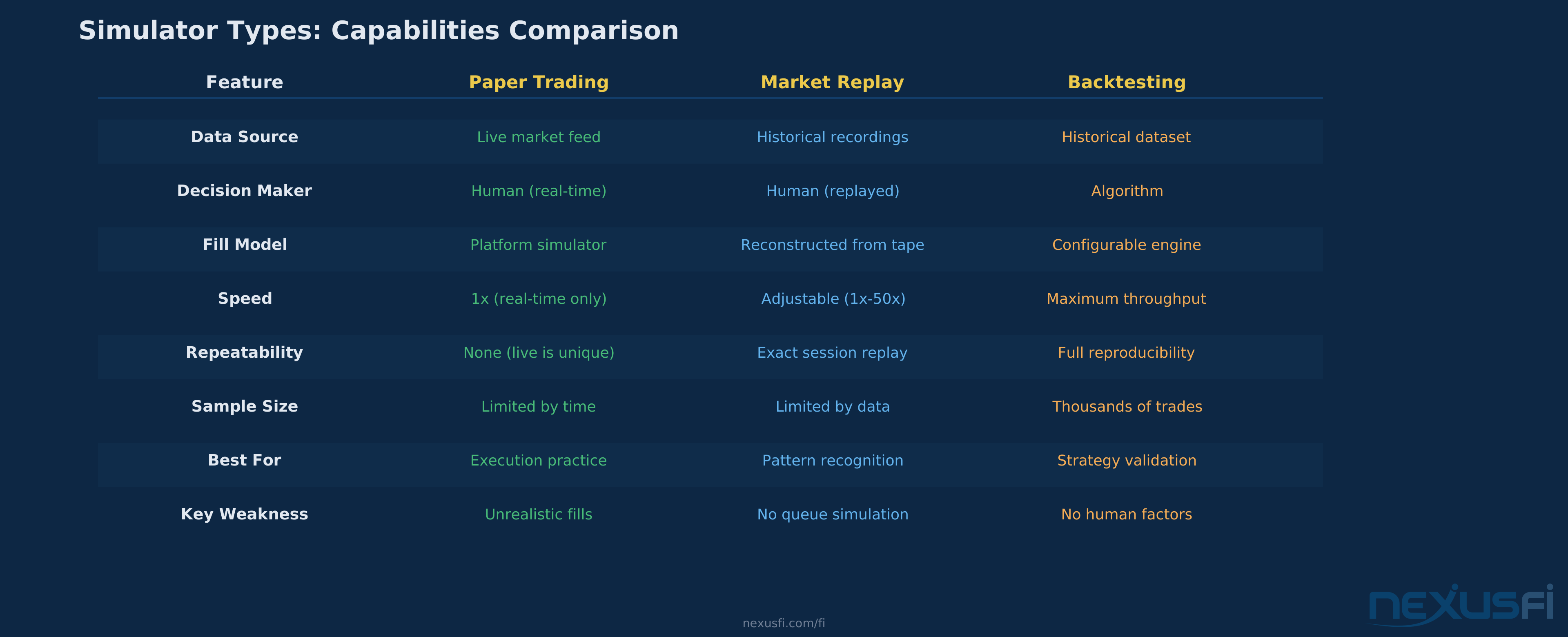
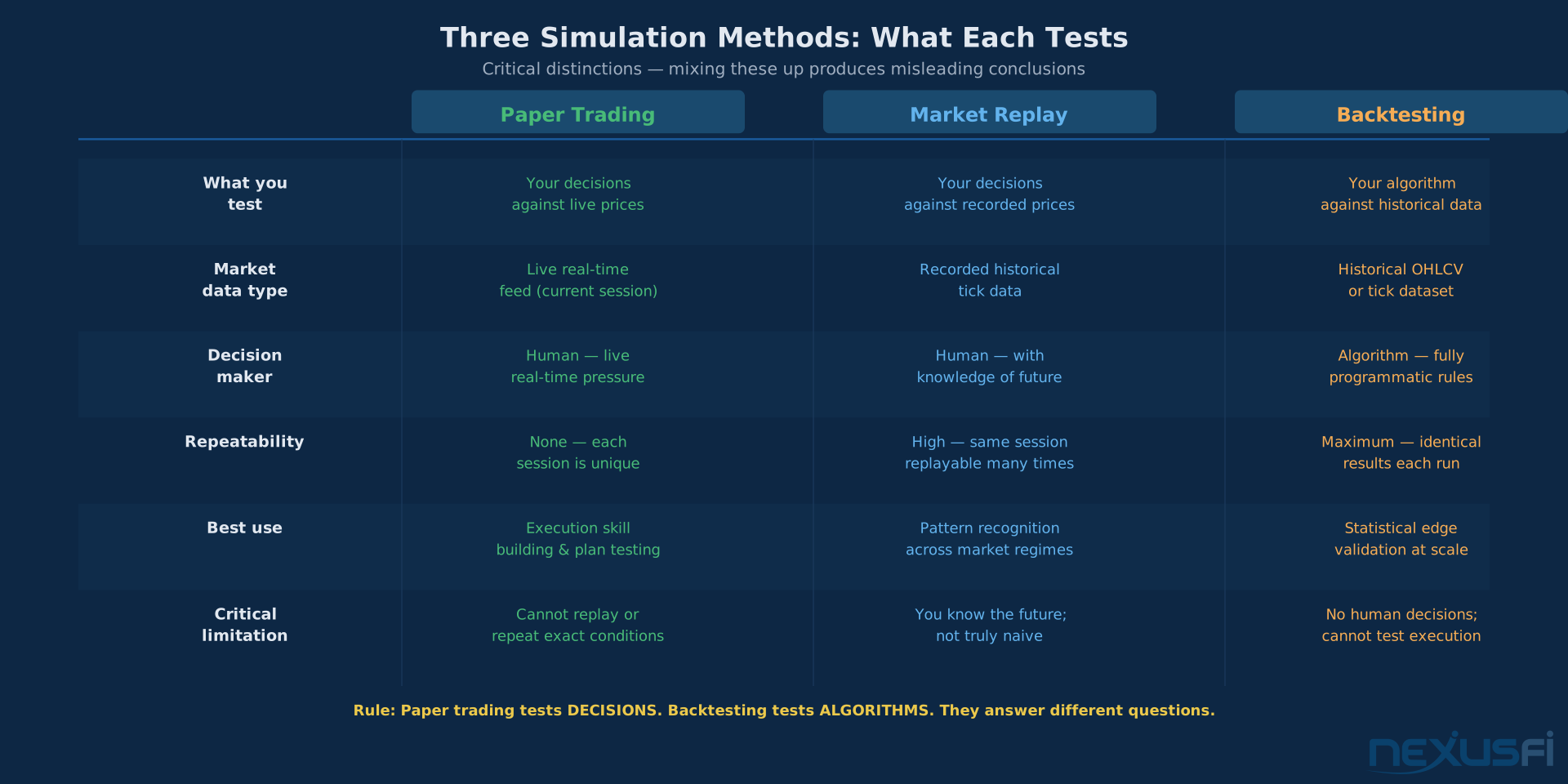
Three terms get used interchangeably in futures trading, and they shouldn't be. Each is a different activity with different strengths and failure modes.
Paper trading means making real-time trading decisions with virtual fills against a live market data feed. Your broker or platform shows real bid/ask prices, real depth-of-market, and real time and sales — but your orders never touch the exchange. The platform simulates what would have happened if your order had been real. This is the most common form of practice for discretionary traders.
Market replay means playing back recorded historical market data and executing against it as though it were live. NinjaTrader's Market Replay is the most widely used implementation — you download historical tick data for a specific session and trade it in simulated real-time. The advantage is repeatability: you can replay the same session multiple times to test different approaches. The disadvantage is that your fills are reconstructed from recorded data, not from live market interaction.
Backtesting means running a programmatic strategy against historical data to generate a statistical performance record. This is an offline, model-driven activity. No human decisions happen during a backtest — the algorithm processes every bar or tick according to its rules and produces a result set. Backtesting is covered in dedicated Academy articles on backtesting trading strategies and walk-forward analysis.
The critical distinction: paper trading tests your decisions against live conditions. Market replay tests your decisions against recorded conditions. Backtesting tests your algorithm against historical data. Mix these up and you'll draw the wrong conclusions from your results.
Simulator Types: What's Under the Hood #
Not all simulators are created equal, and the differences matter enormously for futures traders. The fill model your simulator uses determines whether your paper results have any predictive value for live trading.
Broker-Provided SIM Accounts #
Every major futures broker offers a simulation account that connects to a real-time data feed. You see the actual ES bid/ask, the real NQ depth, live CL prints. Your orders enter the simulator's internal matching engine rather than the exchange.
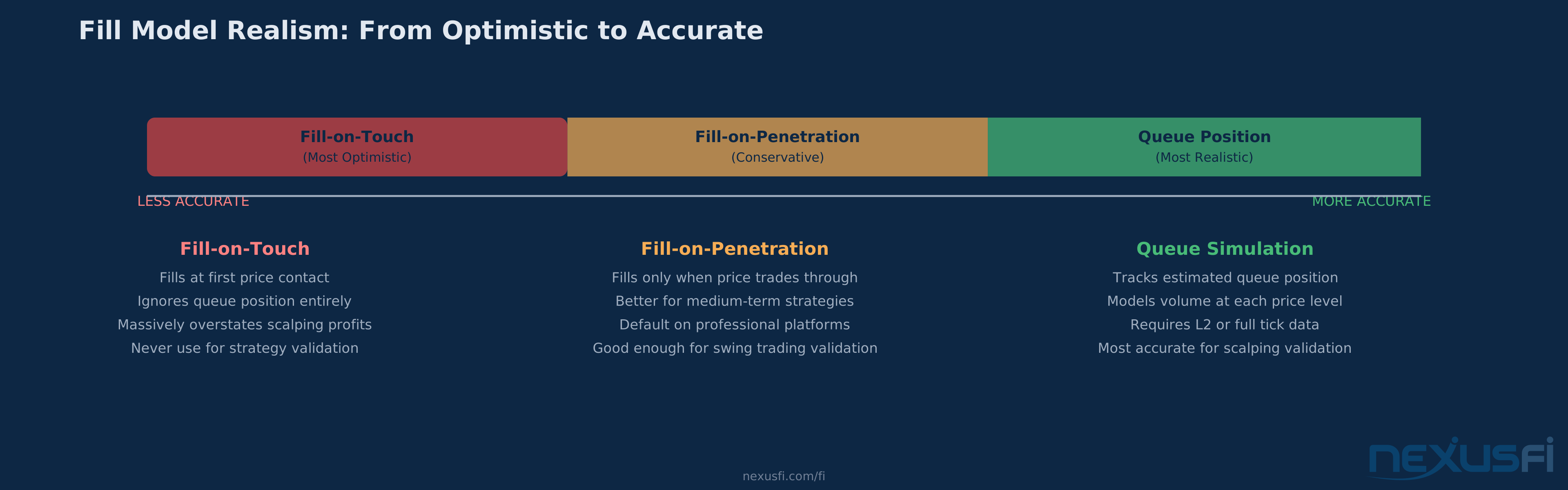
The critical variable is how the simulator decides when you're filled. There are three common approaches:
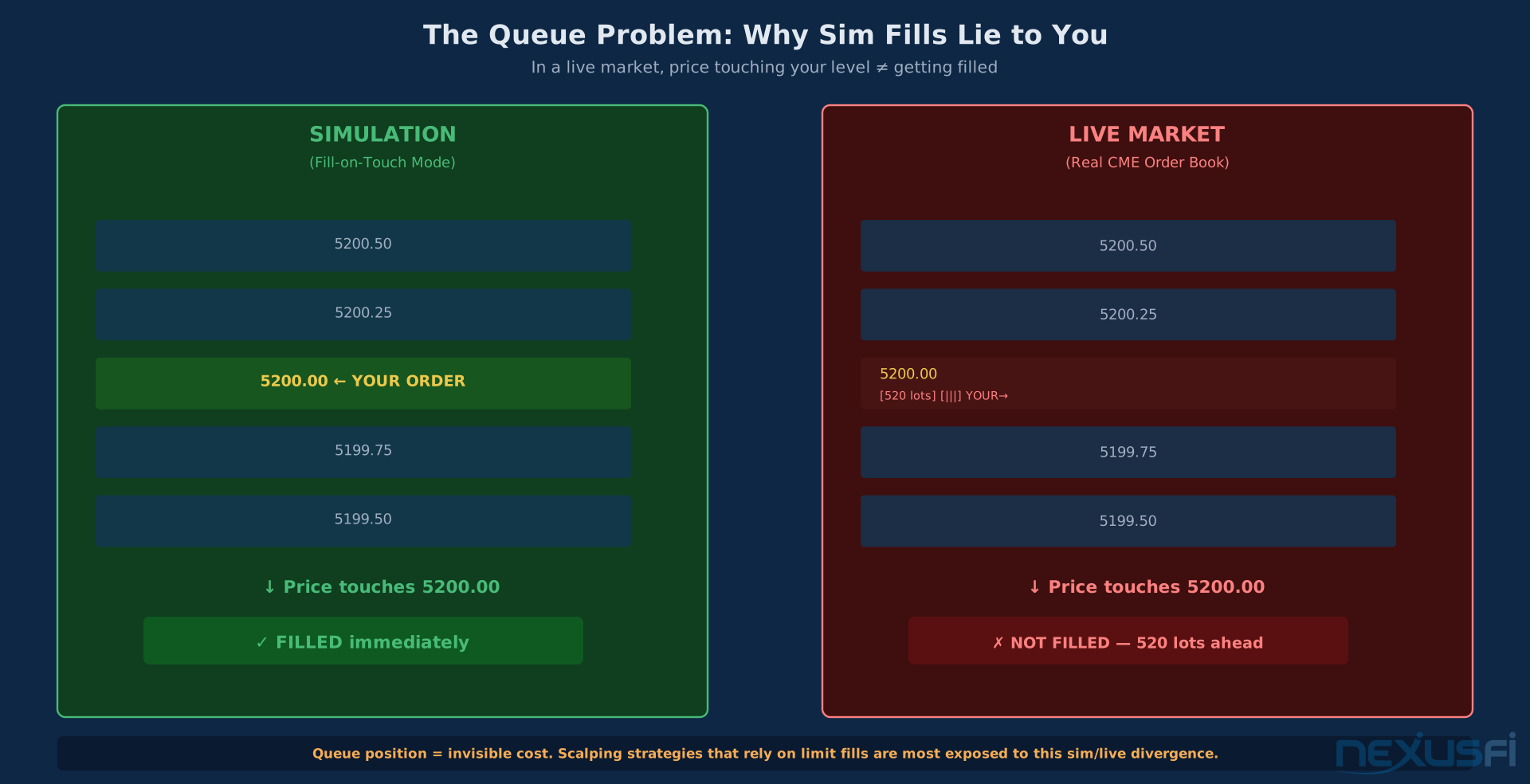
Fill-on-touch (optimistic): Your limit order fills the moment price touches your price level. This is wildly unrealistic for futures. In a live market, your order joins a queue behind every other resting order at that price. Price touching your level means someone else got filled — not you. As NexusFi member
([NexusFi post] [1])
Fill-on-penetration (conservative): Your limit order fills only after price trades through your level — meaning the market traded at least one tick beyond your order price. This is more realistic for liquid products. Most professional-grade platforms default to this mode or offer it as a setting.
([NexusFi post] [2])
Queue-position simulation (realistic): The simulator tracks estimated queue position based on volume traded at each price level. Bookmap is one platform that processes every order in the feed to estimate whether you would have been filled. This is the gold standard for simulation accuracy but requires tick-level or L2 data and significant processing overhead.
Market Replay Systems #
Market replay eliminates real-time pressure by letting you practice against recorded sessions. NinjaTrader offers 90 days of free replay data for major futures contracts — no broker account required, which makes it the most accessible entry point for new futures traders. @andby on NexusFi called it the "best paper trading solution" specifically because of this low barrier to entry. ([NexusFi post] [9])
The key limitation of replay: your fills are reconstructed from recorded prints, not from live order interaction. The replay engine doesn't know where your order would have sat in the queue because it only has the tape — not the full order book state at each moment. For discretionary practice, this matters less (you're training pattern recognition and decision-making). For strategy validation, it matters enormously.
Bar-based replay aggregates ticks into bars before processing, which loses intra-bar sequencing. If your entry and exit occur on the same bar, the engine must guess which happened first — and most engines guess optimistically.
([NexusFi post] [2])
Tick-based replay preserves the actual sequence of trades and can reconstruct price movement within each bar. This is substantially more accurate for strategy validation. Range and volume bars built from tick data maintain correct sequencing. Minute bars do not — they're already aggregated.
Fill Realism: The Execution Gap That Breaks Edges #
This is where paper trading produces the most dangerous false confidence. The gap between simulated fills and live fills isn't a rounding error — it's the difference between a profitable system and a losing one, especially for strategies that depend on small moves.
Limit Order Fills: The Queue Problem #
In a live futures market, your limit order to buy at 5200.00 in ES joins a queue behind every other resting buy order at that price. If there are 500 contracts ahead of you and only 200 trade at that level before price bounces, you don't get filled. Your simulator probably gave you the fill.
Market microstructure research on limit order books confirms the mechanics: in FIFO (price-time priority) markets like ES, queue position carries measurable value — orders at the back of a thick queue face significant non-execution risk even when price touches their level, and that positional value can rival the bid-ask spread itself.[12] Standard simulators ignore this entirely, treating your limit order as if it's always first in the queue.
This matters most for:
- Scalping strategies targeting 2-4 ticks. If your sim gives you fills you wouldn't get live, those small wins vanish.
- Thick products like ZN (10-Year Notes) where the order book is deep. There might be thousands of contracts resting at each price level. Getting to the front of that queue takes time — something sim ignores entirely.
- Fading strategies where you're buying into selling pressure. The very fact that price reached your level means sellers are aggressive, and your limit buy has the worst possible queue position.
For thinner products like NQ, the queue problem is less severe.
([NexusFi post] [1])
Market and Stop Order Fills: Slippage #
Market orders and triggered stop orders get filled at whatever price is available when they reach the exchange. In simulation, most platforms fill these at the last traded price or the current bid/ask — with zero or minimal slippage. Live markets are different.
@kevinkdog, who trades systematically across multiple futures markets, quantifies the reality: "I get slippage of some sort in every market, there is no market that is slippage free. It varies from a tick or two on markets like ES to multiple ticks on markets like HO and KC." He's measured as much as $2,000+ slippage on a single Gold contract during thin Sunday night liquidity. ([NexusFi post] [4])
For strategy validation,
([NexusFi post] [2])
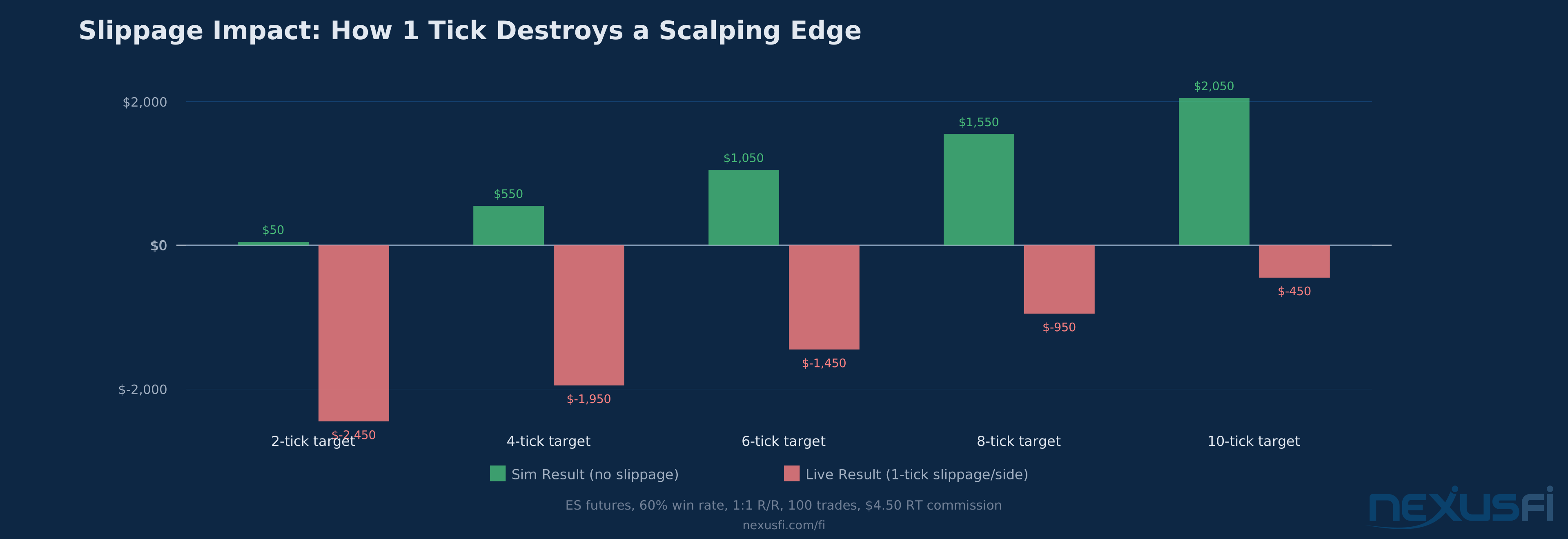
Here's the math that matters. Suppose you're scalping ES with a 4-tick target and 4-tick stop. Your sim shows 60% win rate across 100 trades:
The Slippage Math — 4-tick scalp, 60% win rate, 100 trades:
- Sim result: (60 × 4 × $12.50) − (40 × 4 × $12.50) = +$1,000
- Add 1-tick slippage per side: Entry costs 1 tick, exit costs 1 tick. Every trade loses 2 ticks ($25) to slippage. 100 trades × $25 = $2,500 in slippage.
- Adjusted result: $1,000 − $2,500 = −$1,500
The sim showed a profitable strategy. Adding realistic slippage turned it into a loser. This is why
([NexusFi post] [3])
The News Event Problem #
Fast-moving markets during economic releases or geopolitical events produce the worst slippage and the most unrealistic sim fills. During a non-farm payrolls release, ES can move 20+ points in seconds. Your sim will happily show you entering at the exact price you wanted. Live, your market order might fill 5-10 ticks from where you intended.
([NexusFi post] [2])
Commission and Fee Impact #
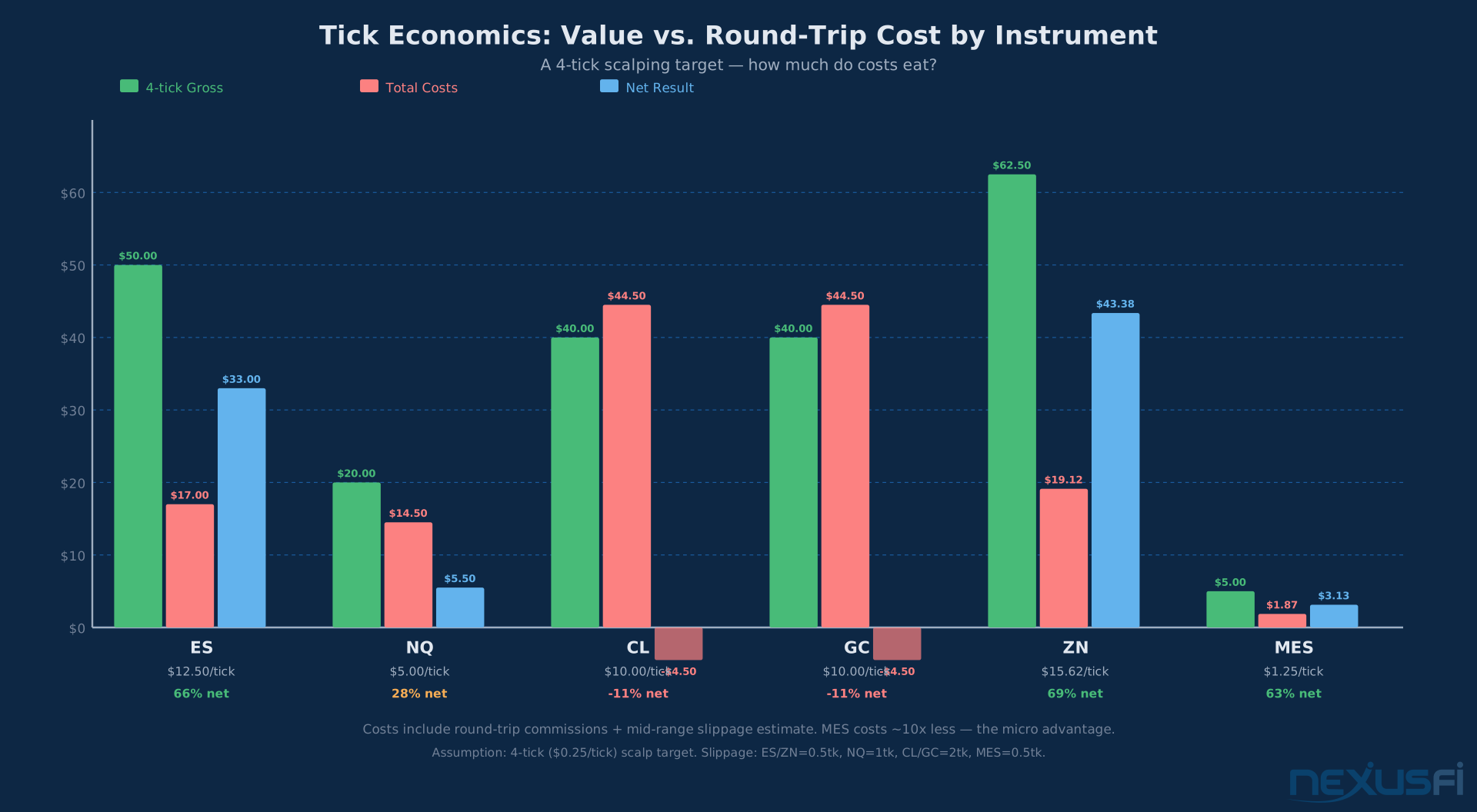
Simulation accounts typically don't deduct commissions. Over hundreds of trades, this distortion compounds. For ES, round-trip commissions plus exchange fees run roughly $4-5 per contract at most retail brokers. On a 4-tick scalp ($50 gross per contract), that's 8-10% of gross profit — per trade.
For micro contracts (MES, MNQ), the fee impact is even more proportionally significant. A 4-tick MES scalp is $5 gross, and commissions are typically $0.50-1.00 round-trip. That's 10-20% of every winning trade consumed by fees alone.
Contract and Cost Realism #
Beyond fill quality, simulation often ignores futures-specific mechanics that affect live profitability.
Tick Economics by Product #
Every futures contract has a minimum price increment (tick size) and a dollar value per tick. Your strategy's profitability depends on the relationship between your average win in ticks, the dollar value of those ticks, and your costs per trade.
| Product | Tick Size | Tick Value | Typical Slippage | Round-Trip Cost |
|---|
|
| ES | 0.25 | $12.50 | 0-1 tick | ~$4.50 |
|---|---|---|---|---|
| CL | 0.01 | $10.00 | 1-3 ticks | ~$4.50 |
| GC | 0.10 | $10.00 | 1-3 ticks | ~$4.50 |
| ZN | 1/64 | $15.625 | 0-1 tick | ~$3.50 |
| MES | 0.25 | $1.25 | 0-1 tick | ~$0.62 |
Simulators that don't model these costs produce equity curves disconnected from live reality. Before trusting any sim result, multiply total trades by realistic per-trade costs and subtract from the bottom line. For complete contract specifications on the most commonly simulated instruments, see the E-mini S&P 500 guide.
Session Times and Roll Effects #
Futures trade nearly 24 hours. Liquidity isn't uniform across that window — the spread widens and depth thins dramatically outside Regular Trading Hours (RTH). If your sim strategy shows great results during Extended Trading Hours (ETH), verify that the fills would have been achievable with the actual liquidity available at those times.
Contract rollovers introduce another sim-specific trap. Continuous contract data used in backtesting and replay stitches multiple contract months together, which can create artificial price gaps or hide real ones. Your sim strategy may trade through a roll boundary without penalty. Live, you'd need to close one contract and open another, incurring additional commissions and potential slippage.
The Psychology Gap: Why Sim Profitability Doesn't Transfer #
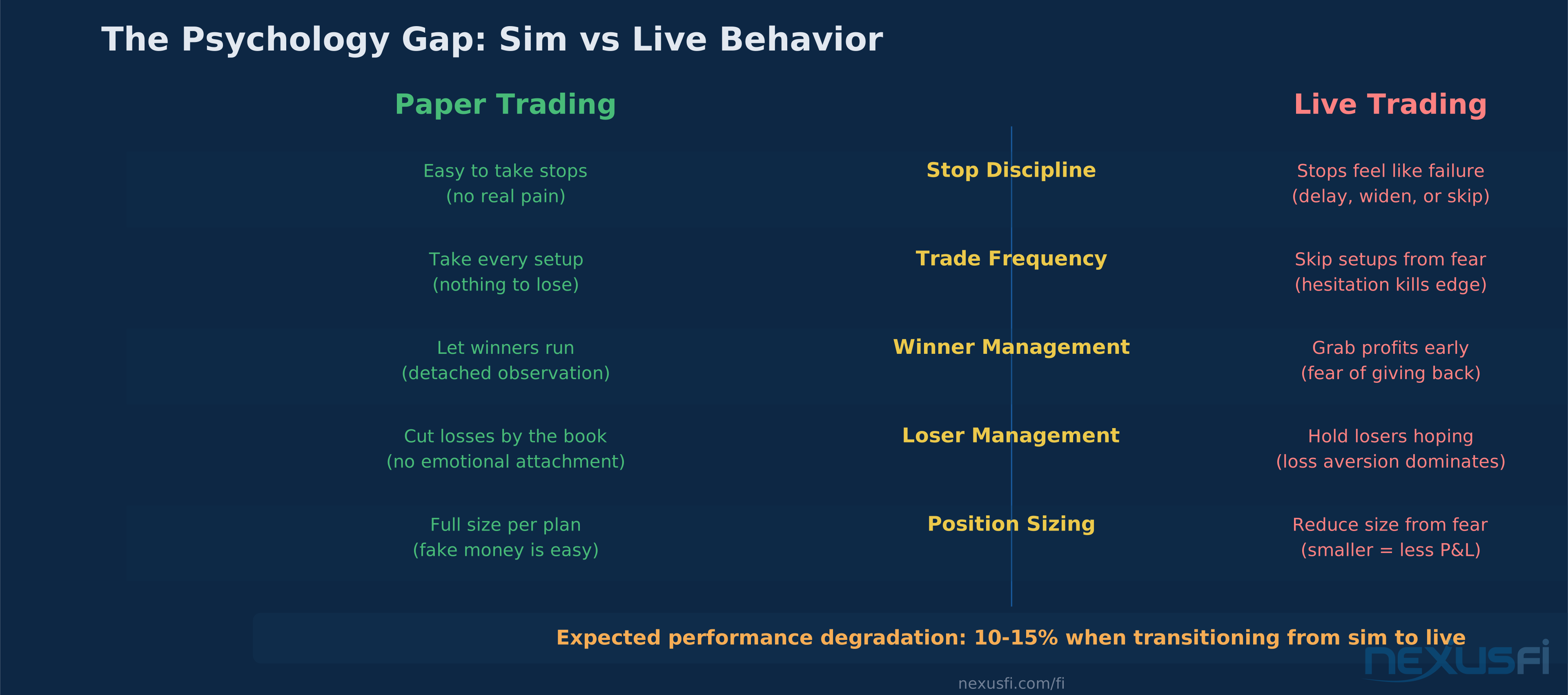
This is the section most paper traders skip and every live trader wishes they hadn't. The psychological difference between simulated and live trading is the single largest source of performance degradation when transitioning, and it has nothing to do with your strategy.
The Absent Fear Response #
When you're paper trading, a 10-tick drawdown against your position is an abstract number. You observe it analytically. When that same 10-tick drawdown represents $125 per contract of real money — money that took you hours to earn at your day job — your body activates a stress response that changes how you make decisions.
What really happens when real money hits the screen.
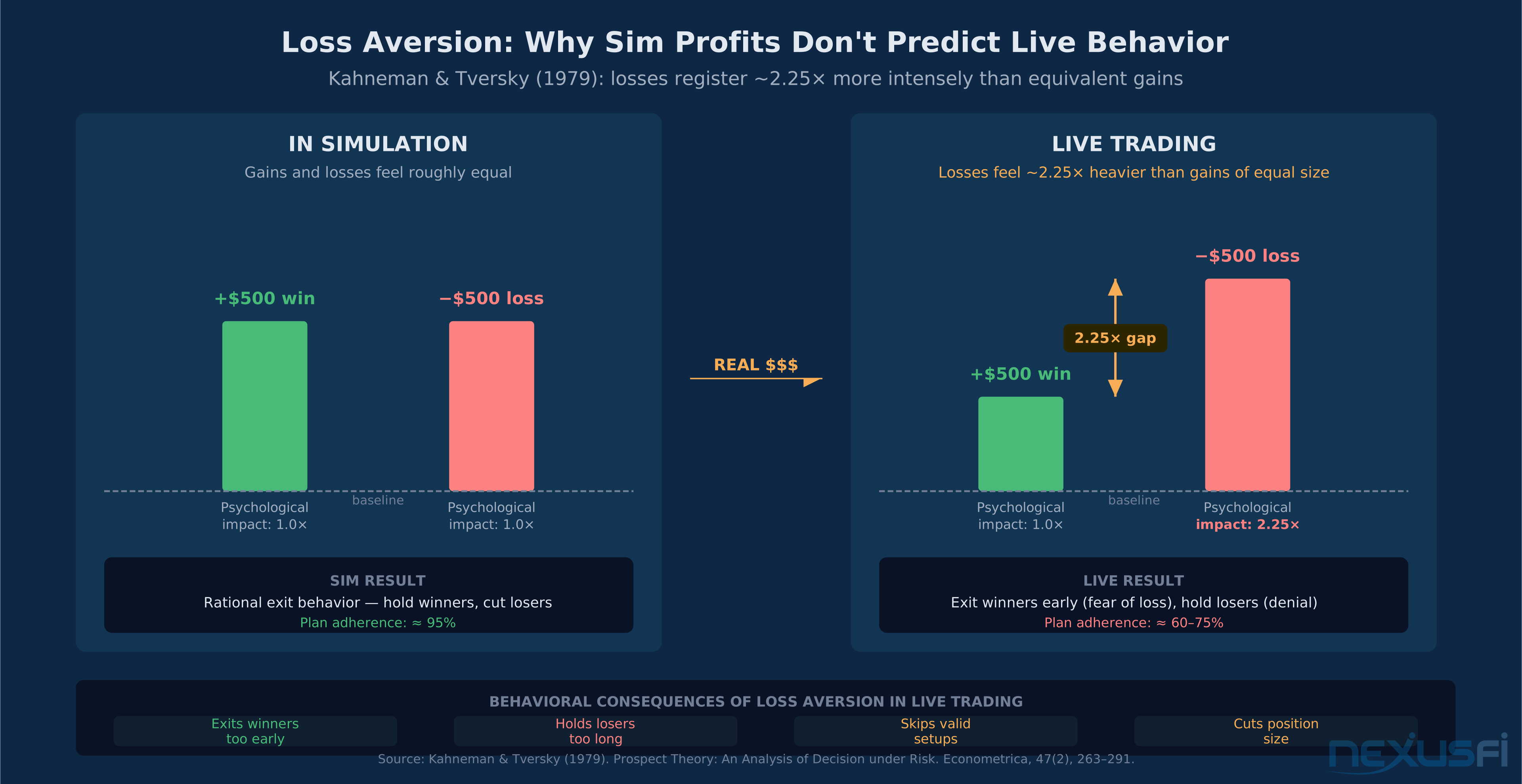
Premature Winners #
You grab profits early because the fear of giving them back is visceral. A clean setup that calls for holding to a 10-tick target gets closed at 4 ticks because the gain feels real and fragile. Sim taught you to hold. Real money teaches you to flinch.
Holding Losers #
You hold losing trades because admitting the loss feels worse than the hope of a reversal. Your stop is set and the plan is clear — but with real money on the line, that exit button gets harder to press. The asymmetry is felt, not reasoned.
Skipping Valid Setups #
You skip valid setups because the fear of being wrong overrides your trading plan. After two consecutive losses, the third clean setup appears and you watch it work from the sidelines. The trade was there. The rules said take it. Your psychology said wait.
Sizing Down #
You trade smaller than your plan dictates, reducing expected returns even when your edge is present. If your plan says 2 contracts and fear says 1, you've pre-discounted your own strategy before the market has a chance to play out.
This behavioral pattern has a documented psychological basis. Kahneman and Tversky's landmark prospect theory research established that losses register approximately twice as intensely as equivalent gains — the brain's value function is steeper for losses than for gains.[11] Paper trading keeps this asymmetry dormant because there's nothing real at risk. When real capital is on the line, the same hardwiring that makes humans naturally loss-averse begins distorting entries, exits, and position sizing.
([NexusFi post] [6])
The Overconfidence Trap #
Paper trading success breeds a specific form of overconfidence that's toxic to live performance. You've seen your equity curve climb for weeks. You've nailed entries and exits. You feel ready. Then you go live and discover that the market doesn't care about your sim equity curve.
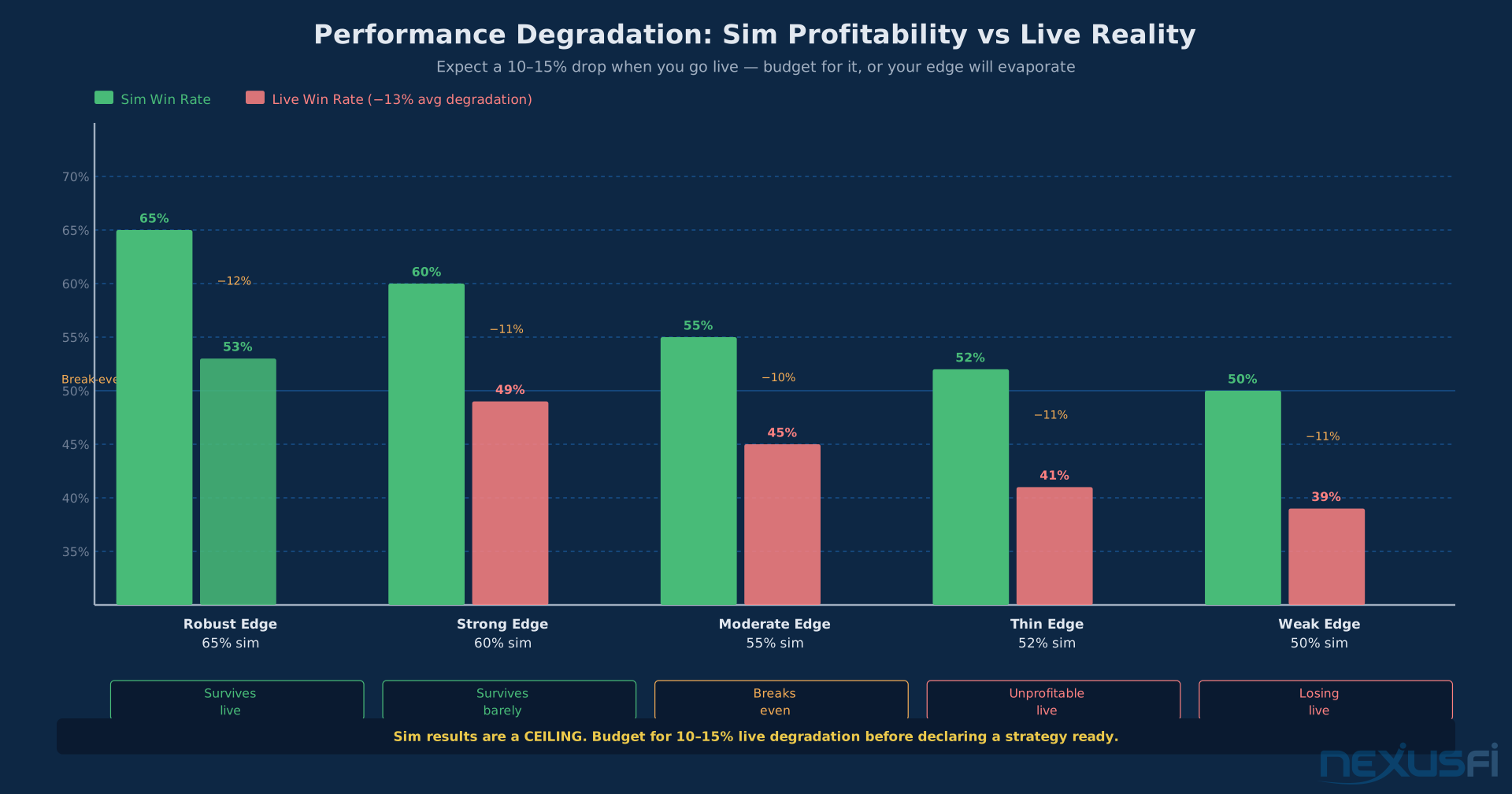
@Jaguar52, a veteran NexusFi trader, quantifies the expected performance degradation: "Fills and your psychological reaction to real loss are the main reasons why you will lose 10 or even 15% off the top of your performance on initial trading with real cash risk in the market." He recommends your sim win rate exceed 70% specifically to create a buffer for this inevitable live performance drop. ([NexusFi post] [5])
That 10-15% isn't a permanent penalty — it's the cost of calibrating to live conditions. But if your sim edge is only 10% to begin with, live trading will erase it entirely. Your sim must produce strong enough results to survive the transition tax.
Discipline Under Illusion #
Paper trading can build bad habits that masquerade as discipline. Without real consequences, it's easy to follow your trading plan perfectly. "I always take my stops" means something different when those stops cost you nothing. The real test of discipline is whether you take the stop when it hurts.
The converse is also true: some behaviors that look like discipline in sim are actually absence of pressure. Sitting through a 20-tick adverse excursion in paper trading doesn't prove you can sit through it live. It proves you can sit through it when it doesn't matter. Different game entirely.
Mitigating the Psychology Gap #
You can't eliminate the psychology gap in simulation, but you can narrow it:
Enforce hard rules identically. Daily loss limits, maximum position sizes, maximum number of trades per day — apply these in sim exactly as you would live. If your live plan says stop trading after losing $500 in a day, stop your sim session at the same threshold.
Journal decision quality, not P&L. Score each trade on whether you followed your process, not whether it made money. A profitable trade taken outside your setup criteria is a failure. A losing trade taken perfectly is a success. This reframes your feedback loop away from money and toward execution quality.
Use real capital benchmarks. Rather than treating sim dollars as play money, mentally assign each sim dollar the same weight as a live dollar. Track your sim account as though it were your real account. Some traders find it helpful to calculate what their sim P&L would translate to in real commission costs alone — even that small dollar connection changes behavior.
The psychology gap is unavoidable tuition. @Jaguar52 puts the typical cost at 10--15% of sim performance. A strategy with a 55% sim win rate might settle at 45% live after real fills, real emotions, and real consequences apply. Build your sim edge large enough to survive the transition tax before putting capital at risk.
The Transition Playbook: Paper to Live Without Blowing Up #
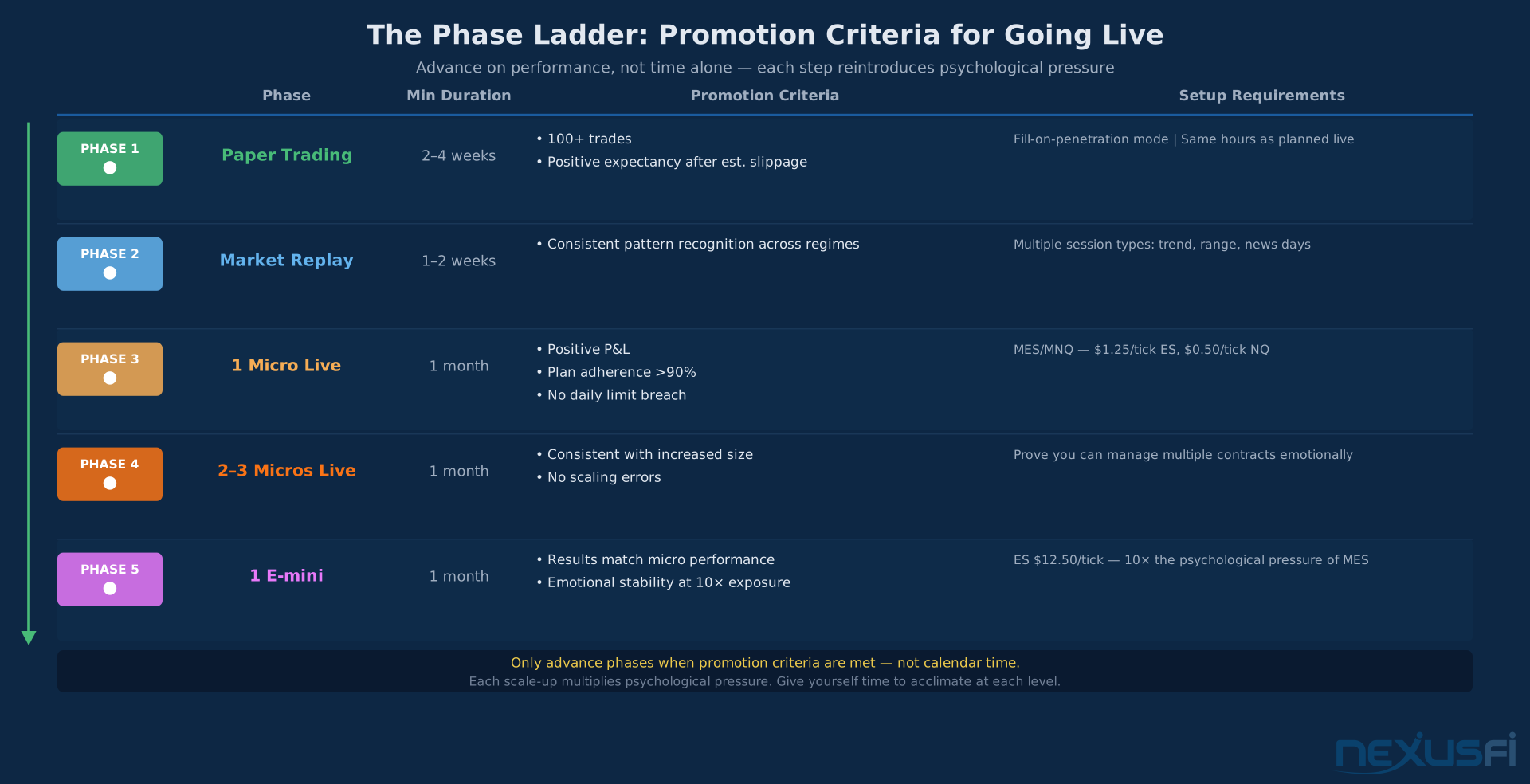
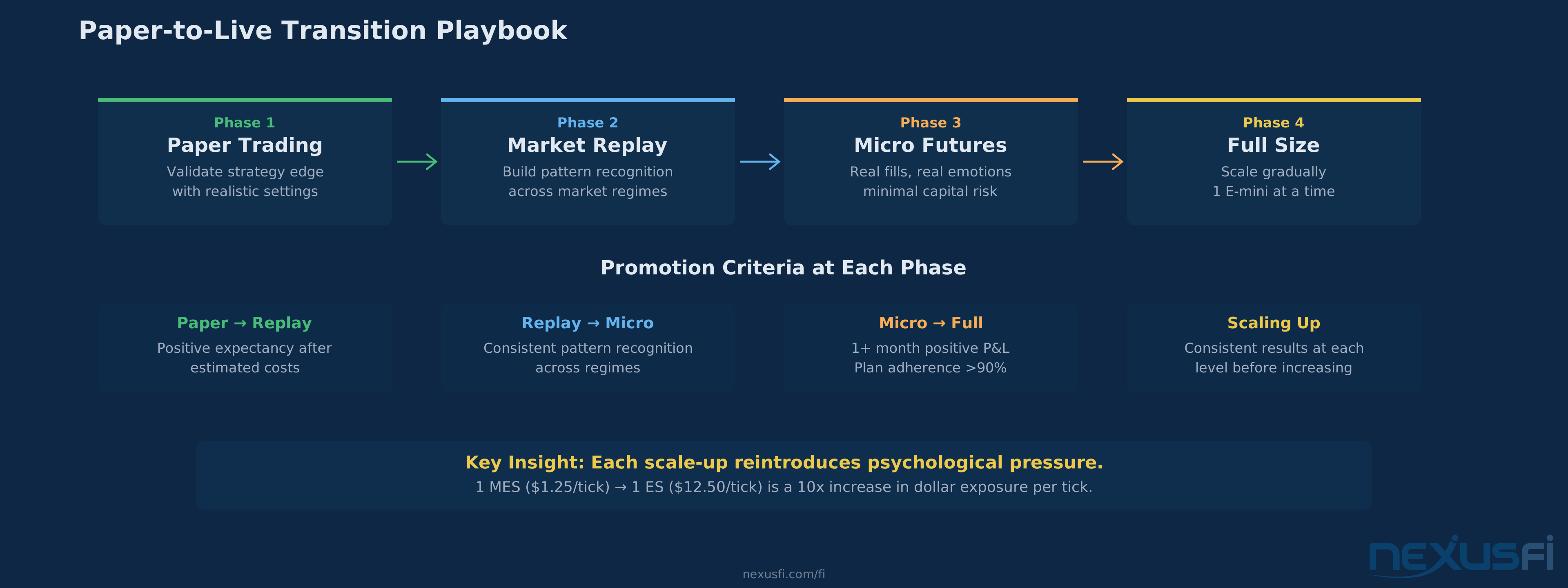
The transition from paper to live trading is the highest-risk moment in a futures trader's development. Get it wrong and you destroy capital. Get it right and you preserve your edge while calibrating to live conditions. The NexusFi community has evolved a phased approach that minimizes tuition costs.
Phase 1: Paper Trading with Realistic Settings #
Before anything else, configure your simulator for maximum realism:
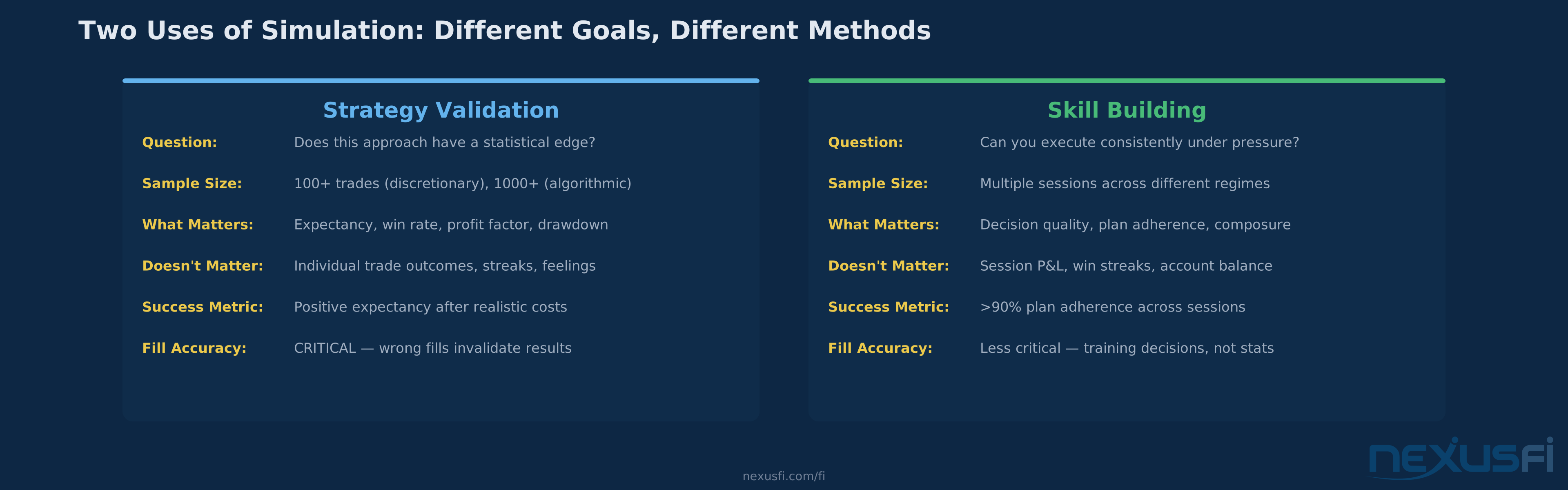
- Set fill mode to "fill on penetration" or equivalent — never fill-on-touch
- Enable commission deductions if your platform supports it
- Use the same position sizes you plan to trade live
- Apply your complete risk management rules (daily loss limit, max positions, etc.)
- Trade during the same market hours you'll trade live
This phase is for developing and validating your trading plan. You're answering one question: does this approach produce a statistical edge under realistic-ish conditions? Track at least 100 trades before drawing conclusions.
([NexusFi post] [2])
Phase 2: Market Replay for Pattern Recognition #
If your platform supports market replay, use recorded sessions to accelerate pattern recognition. Replay specific session types: trending days, range-bound days, news events, low-volume sessions. This builds experience with different market regimes faster than waiting for them to occur in real-time.
The key discipline here: don't cherry-pick sessions. Replay consecutive sessions, including the boring ones and the ones where your approach doesn't work. You need to know what your setup looks like when it fails, not just when it succeeds.
Phase 3: Micro Futures — Live Trading with Training Wheels #
Micro futures (MES, MNQ, MCL, MGC) are the bridge between simulation and full-size live trading. At 1/10th the contract size of standard E-minis, they let you experience real fills, real slippage, real commissions, and real emotional responses — at a fraction of the capital risk.
The performance transfer is real: "I found that the performance of the markets I traded live was pretty much the same as paper trading with the caveat that you do get slipped a tick or two." ([NexusFi post] [7])
@ZviTradingCoach frames the mindset correctly:
The micro phase answers the question that sim can't: can you execute your plan when real money is at stake?
For traders building from limited capital, @Pa Dax on NexusFi suggests a practical psychological reframe: set your monthly drawdown limit to match the amount you saved each month to build your trading account. "Psychologically, you forget about worrying about the 25K cause you're only worried now about whether your trading is costing you the monthly 1K or not." This reframe reduces the psychological weight of each trade to a manageable figure rather than a large percentage of life savings. ([NexusFi post] [10])
Phase 4: Scaling to Full Size #
Only after demonstrating consistent live profitability with micros should you scale to standard E-mini contracts. The scaling should be gradual:
- 1 micro — prove you can follow your plan live
- 2-3 micros — prove consistency across multiple contracts
- 1 E-mini — step up to full tick value ($12.50 for ES vs. $1.25 for MES)
- Multiple E-minis — scale position size within your risk parameters
([NexusFi post] [8])
Each scale-up reintroduces psychological pressure. Going from 1 MES ($1.25/tick) to 1 ES ($12.50/tick) is a 10x increase in dollar exposure per tick. Your body notices. Give yourself time to acclimate at each level before moving up.
Promotion Criteria #
Don't advance phases based on time alone. Use objective criteria:
| Phase | Minimum Duration | Promotion Criteria |
|---|
|
| Paper Trading | 2-4 weeks | 100+ trades, positive expectancy after estimated slippage/commissions |
|---|---|---|
| 1 Micro Live | 1 month | Positive P&L, following plan >90% of trades, daily loss limit never breached |
| 2-3 Micros Live | 1 month | Same as above with increased size, no scaling-related errors |
| 1 E-mini | 1 month | Performance consistent with micro results, emotional stability at 10x exposure |
Common Pitfalls: The Failure Modes of Paper Trading #
1. Fill Optimism #
The prop firm industry learned the consequences the hard way — as @matthew28 notes, "Topstep for instance had a problem with sim traders exploiting the sim environment to reach the profit targets, which is why they brought in a rule where they could reset an account they considered to be 'sim abuse.'" ([NexusFi post] [1])
Fix: Switch to fill-on-penetration mode. Alternatively, manually subtract 1 tick from every limit entry and add 1 tick to every limit exit when calculating your results.
2. Infinite Capital Mentality #
Sim accounts often come funded with $100,000 or more of virtual capital. This creates unrealistic position sizing behavior. You take trades with 5 ES contracts because your sim account can absorb the drawdown. Your real $15,000 account cannot.
Fix: Set your sim account balance to match your planned live account. Apply the same margin requirements and daily loss limits.
3. Ignoring Transaction Costs #
A strategy that averages 2 ticks per trade in ES sounds profitable: $25 per contract per trade. But after $4.50 in round-trip commissions, that's $20.50 net. Add 1 tick of realistic slippage and you're at $8.00 net. That's a 68% reduction from the sim result. Across 10 trades per day, the difference between $250 (sim) and $80 (live-realistic) is the difference between a viable strategy and a marginal one.
Fix: Subtract commissions and at least 1-tick slippage from every trade in your sim results before evaluating profitability.
4. Strategy Overfitting to Replay Data #
Replaying the same 5 sessions until you've memorized every move doesn't validate a strategy — it curve-fits your brain to historical data. You'll "see" setups that only exist because you know what happens next.
Fix: Never replay the same session more than twice. Use fresh sessions for each practice round. @Big Mike's rule for automated strategies applies to discretionary practice too: "Any result set spanning less than 2 years of trades is probably majorly curve fitted and worthless." ([NexusFi post] [2])
5. Sim-Only Order Management #
Some order types behave differently in simulation than live. Bracket orders, OCO (One-Cancels-Other) groups, and trailing stops may fill differently or experience different latencies. Your sim might execute a complex bracket perfectly while the live version introduces delays or partial fills.
Fix: Keep order management simple during the transition. Use basic limit and stop orders until you've confirmed how your broker handles more complex order types with real money.
6. Treating Paper P&L as Predictive #
As covered in the psychology section above, expect at least 10-15% performance degradation on the live transition — and that's the average. Some traders experience much worse, especially those whose sim edge is thin or whose trading style relies on precise fills. A 55% win rate in sim might become 45% live if queue position and slippage degrade just a few percent of trades.
Fix: Your sim results are a ceiling, not a floor. Budget for at least 15% performance degradation when projecting live results from sim data. If your sim strategy doesn't remain profitable at 85% of its simulated performance, it's not strong enough for live trading.
Strategy Validation vs. Skill Building: Two Different Uses of Simulation #
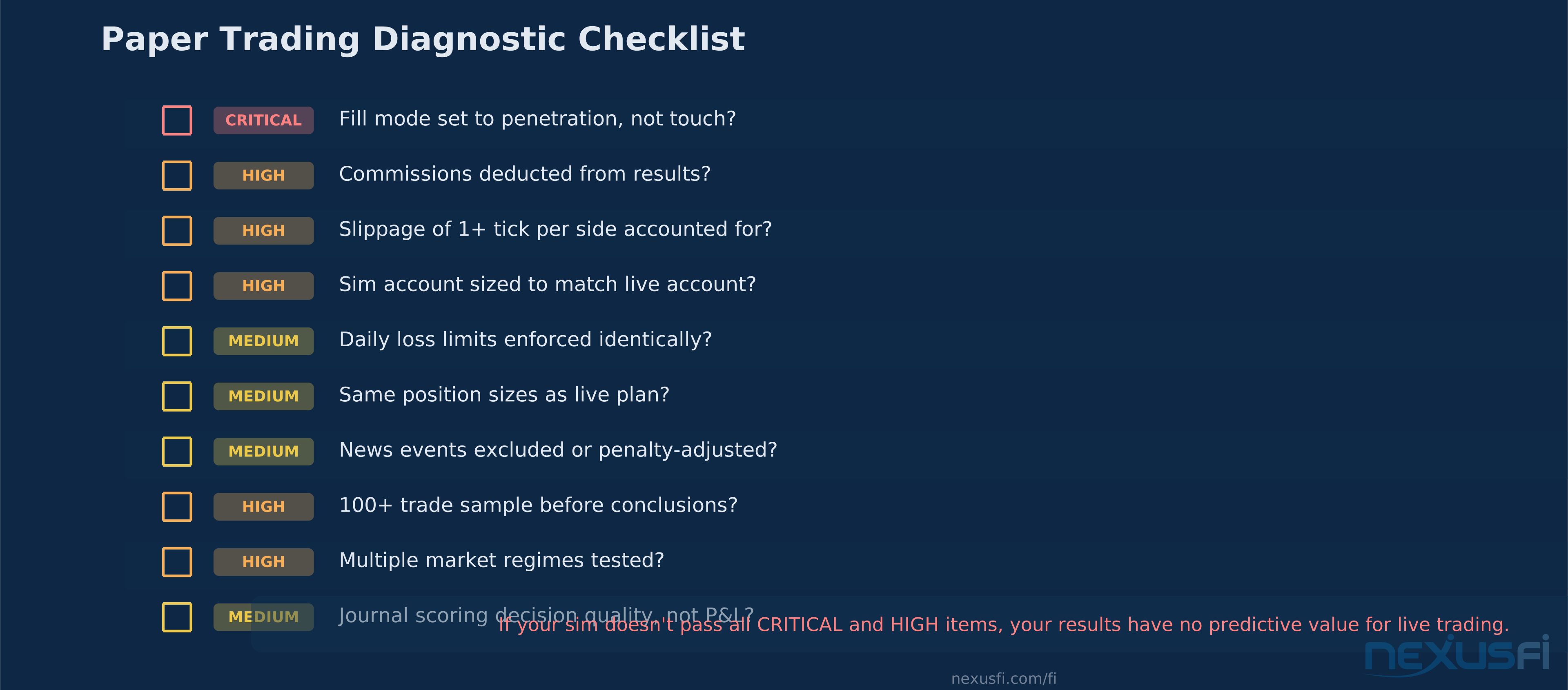
Experienced traders use simulation for two completely different purposes. Mix them up and you'll draw the wrong conclusions from your results.
Strategy Validation #
Question: Does this trading approach have a statistical edge after realistic costs?
What matters: Sample size, diverse market conditions, realistic fill assumptions, accurate cost modeling. Target minimum 100 trades for discretionary strategies, 1,000+ for automated. One question: does this approach have a real edge, or is it noise?
What doesn't matter: Individual trade outcomes, streaks, or memorable wins. A strategy is valid or invalid across the sample, not on any single trade.
Skill Building #
Question: Can you execute this trading plan consistently and correctly under time pressure?
Method: Practice entries, exits, position management, and risk control across multiple sessions. Focus on process metrics: did you enter when your setup appeared? Did you take your stop when it was hit? Did you manage position size correctly?
What matters: Decision quality, execution speed, plan adherence, emotional composure. The goal is the ability to execute correctly under real-time pressure — can you do the right thing when it counts?
What doesn't matter: Profitability of individual sessions. You can execute perfectly and lose money. You can execute terribly and make money. Process, not outcome, determines readiness.
When Traders Confuse the Two #
The most common failure mode: a trader uses sim for skill building (practicing entries and exits) but draws strategy validation conclusions from the results. "I've been profitable for three weeks in sim, so my strategy works." Three weeks of discretionary trading might represent 30-50 trades — far too few for statistical validation, but enough to build confidence that may be unjustified.
The reverse is also dangerous: validating a strategy through rigorous backtesting but skipping the skill-building phase. Your strategy is proven to work. But can you execute it? Under pressure? When it's losing? After three stops in a row? Strategy validation proves the strategy works. Skill building proves you can work the strategy.
How to Choose a Simulator #
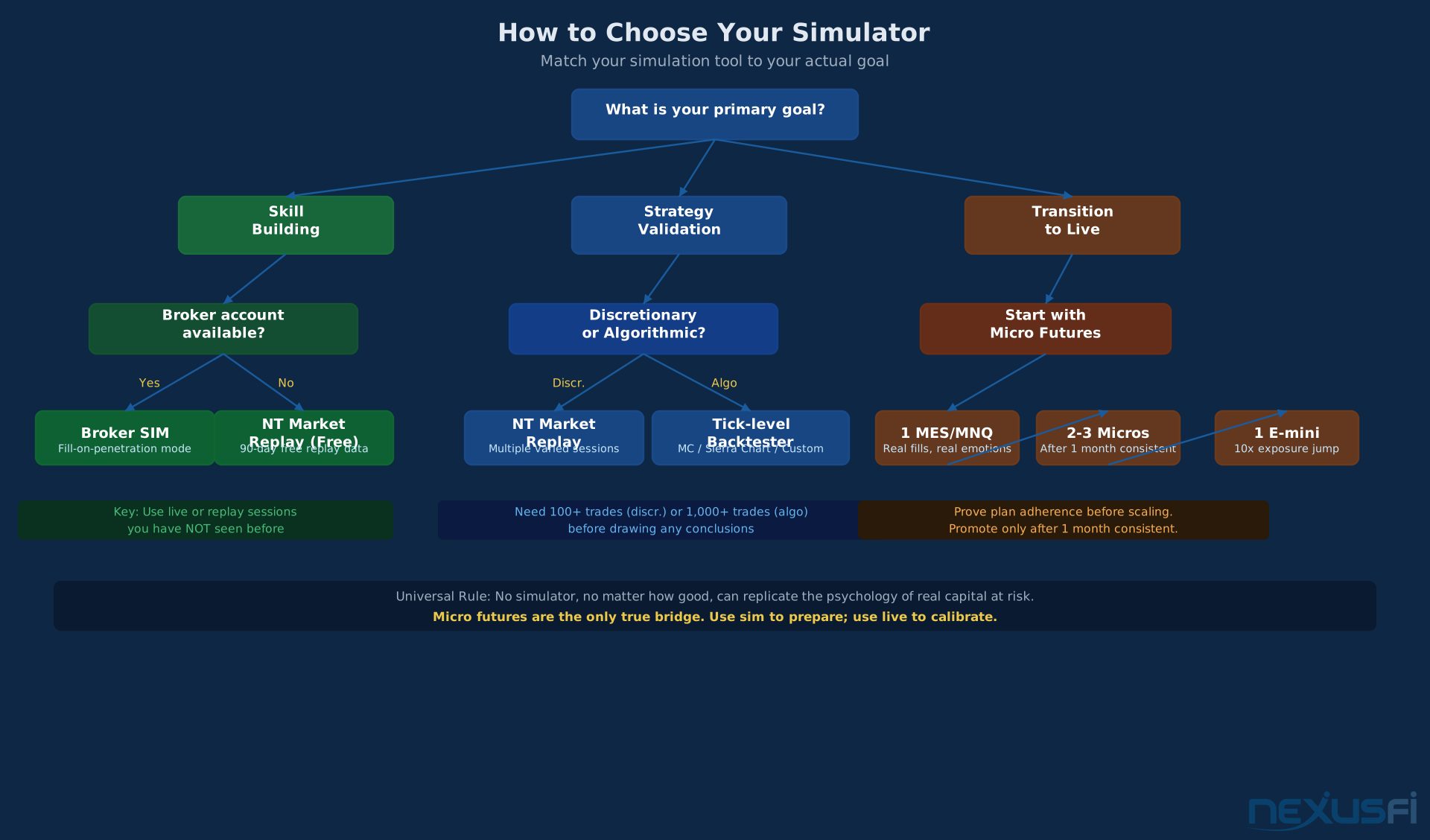
Not every simulator serves every purpose. Here's a decision framework for futures traders:
For Discretionary Skill Building #
Best: Broker-provided SIM with live data feed, set to fill-on-penetration mode. NinjaTrader SIM, Sierra Chart SIM, or your broker's native simulator all work. Why: Real-time price action is what you're training against. Fill accuracy matters less when the goal is pattern recognition and order management practice.
For Strategy Validation (Discretionary) #
Best: Market replay with tick-level data. NinjaTrader Market Replay is free and accessible. Why: You need to test across multiple sessions and market regimes. Real-time sim only gives you today's market. Replay gives you hundreds of sessions.
For Strategy Validation (Algorithmic) #
Best: Tick-level backtesting engine with configurable fill models and slippage settings. MultiCharts, Sierra Chart, or custom event-driven frameworks. Why: Automated strategies need thousands of trades for validation. Fill model accuracy is critical — the wrong fill assumption can make a losing strategy look profitable. See the dedicated Academy article on strategy optimization for parameter tuning methodology.
For Transition to Live #
Best: Micro futures on a live account. Why: No simulator, no matter how good, replicates the psychological reality of live trading. Micro contracts are the lowest-cost way to experience real market interaction. One MES contract with a 10-tick stop risks $12.50 — less than a month of exchange data fees.
The Bottom Line #
Paper trading is a necessary step in futures trading development — but it's a step, not a destination. The traders who extract the most value from simulation are the ones who understand exactly what it can and can't tell them.
It can tell you whether your approach has a structural edge. It can train your pattern recognition and order management. It can build the mechanical habits of plan execution.
It can't tell you how you'll react to real losses. It can't replicate queue position, realistic slippage, or the emotional weight of capital at risk. It can't substitute for the experience of having skin in the game.
Use simulation deliberately. Set it up as realistically as possible. Track your results honestly. And when the data says you're ready, take the step — one micro contract at a time.
Knowledge Map
Prerequisites
Understand these firstGo Deeper
Build on this knowledgeReferences This Article
Articles that build on this topicCitations
- — NexusFi Discussion (2023) 👍 5“Some were optimistic and filled you on first touch...”
- — NexusFi Discussion (2011) 👍 10“Make certain you aren't using fill on touch...”
- — NexusFi Discussion (2019) 👍 4“If your strategy does not depend on very small moves...”
- — NexusFi Discussion (2023) 👍 6“I get slippage of some sort in every market...”
- — NexusFi Discussion (2013) 👍 4“Fills and your psychological reaction to real loss...”
- — NexusFi Discussion (2021) 👍 13“For many, sim is a trap...”
- — NexusFi Discussion (2021) 👍 7“Start small -- first 1 micro, then 2, then 3...”
- — NexusFi Discussion (2021) 👍 8“The initial purpose of beginning live trading...”
- — NexusFi Discussion (2013) 👍 1“Best paper trading solution: Ninja Trader...”
- — NexusFi Discussion (2018) 👍 24“Psychologically, you forget about worrying about the 25K cause you're only worried now about whether your trading is costing you the monthly 1K or not.”
- Kahneman, D. & Tversky, A. — Prospect Theory: An Analysis of Decision under Risk (1979)
- Moallemi, C.C. & Yuan, K. — A Model for Queue Position Valuation in a Limit Order Book (2016)