



Loss Aversion in Trading: Why Your Brain Sabotages Every Stop and How to Fix It
Overview #
Loss aversion is the single most destructive cognitive bias in trading. Not overconfidence, not recency bias, not FOMO — loss aversion. It's the reason traders hold losers too long, cut winners too early, and size positions based on emotion instead of math. The research is clear and the numbers are brutal: the pain of losing $500 hits roughly twice as hard as the pleasure of gaining $500. That 2:1 asymmetry, first documented by Kahneman and Tversky in their prospect theory work, distorts every trading decision where money is at risk.
In futures trading, where leverage magnifies every tick and P&L updates in real time, loss aversion doesn't just erode edge — it weaponizes your own psychology against you. A stock trader battling loss aversion burns through commissions. A futures trader battling loss aversion burns through margin. The damage path is faster, steeper, and harder to recover from.
[1] That "irresistible pull" is the core problem. That's why it's so dangerous.
This article breaks down the mechanics of loss aversion, how it manifests in live trading, why futures amplify the effect, and the systematic approaches that actually work to contain it. The goal isn't to eliminate the bias. The goal is to build a process where the bias can't reach the controls.
Key Concepts #
Loss aversion — the tendency for the psychological impact of a loss to be approximately twice the impact of an equivalent gain. A $1,000 loss produces roughly twice the emotional response of a $1,000 gain. This is a neurological reality, not a character flaw.
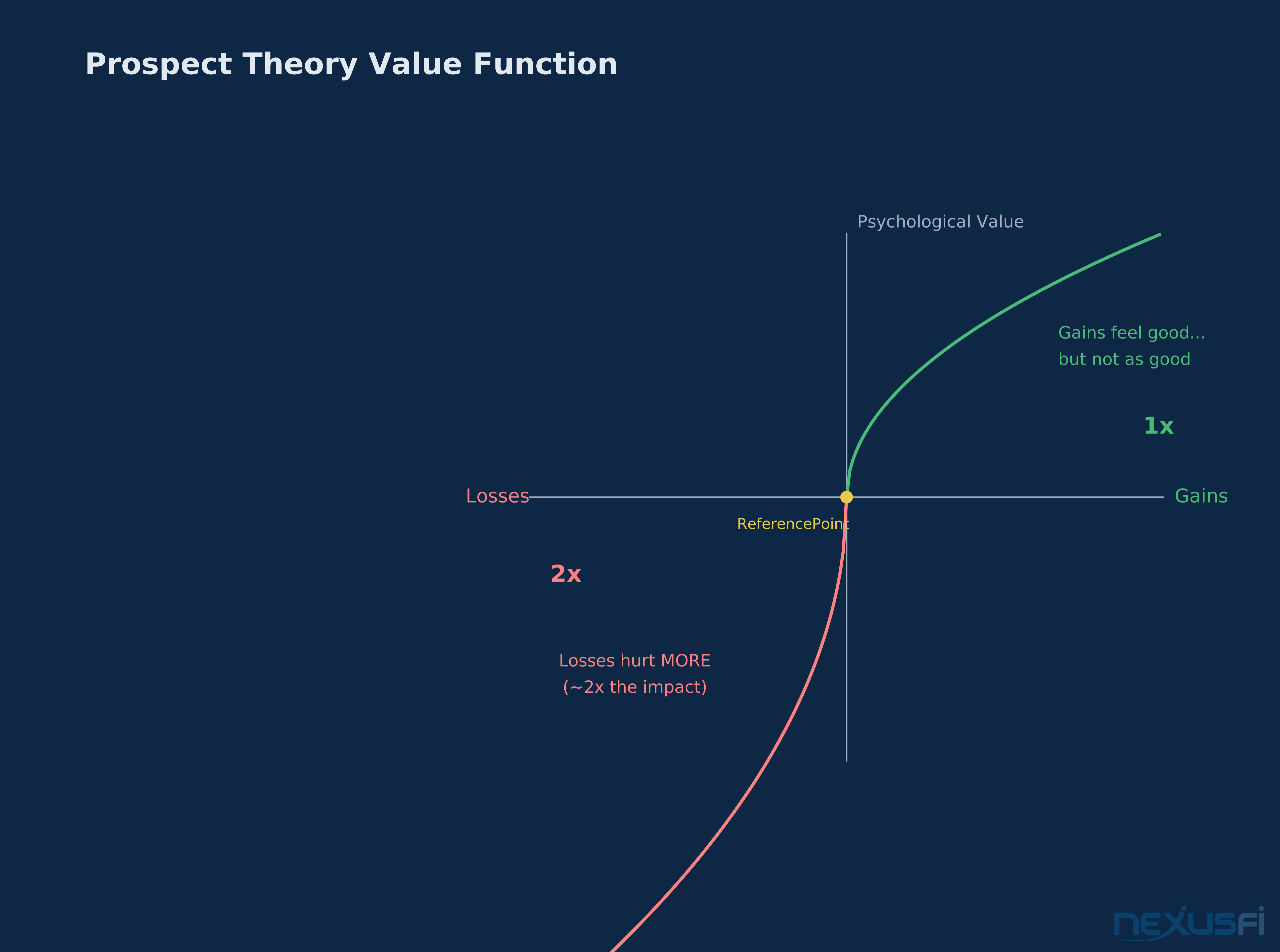
Prospect theory — the behavioral economics framework developed by Daniel Kahneman and Amos Tversky showing that people evaluate outcomes relative to reference points (not absolute values) and weight losses more heavily than gains. The value function is S-shaped with a sharp kink at the reference point.
Reference point — the anchor against which traders evaluate gain or loss. Common reference points include the entry price, the day's breakeven level, the session high-water mark for P&L, and the account equity peak. Changing reference points mid-trade is one of the primary mechanisms through which loss aversion distorts decisions.
Disposition effect — the well-documented tendency to sell winners too early and hold losers too long. First described by Shefrin and Statman in 1985, the disposition effect is loss aversion's most visible fingerprint in trading data.
Myopic loss aversion — the amplification of loss aversion that occurs when traders evaluate their portfolio too frequently. Coined by Benartzi and Thaler, this explains why tick-by-tick P&L monitoring makes loss aversion worse.
How Prospect Theory Distorts Trading Decisions #
Prospect theory has three core mechanisms that matter for traders:
The value function is kinked. Small moves around the reference point (your entry price, your daily breakeven) produce disproportionately large emotional responses. A trade going from +2 ticks to -2 ticks "hurts" more than a trade going from -20 ticks to -24 ticks, even though both are 4-tick adverse moves. This is why the breakeven level becomes such a psychologically loaded threshold — crossing it in either direction produces an outsized emotional spike.
Losses carry roughly 2x the psychological weight. This isn't metaphorical. Research on professional traders confirms the asymmetry. Locke and Mann (2005) found that even professional futures traders hold losing trades longer and maintain larger positions on losers. The bias persists despite experience, training, and financial sophistication.
Probability weighting is distorted. People overweight unlikely outcomes and underweight likely ones. In trading, this shows up as an irrational fear of low-probability tail events while simultaneously underestimating the probability of normal stop-outs. The result: stops set too wide, profits cut too short.
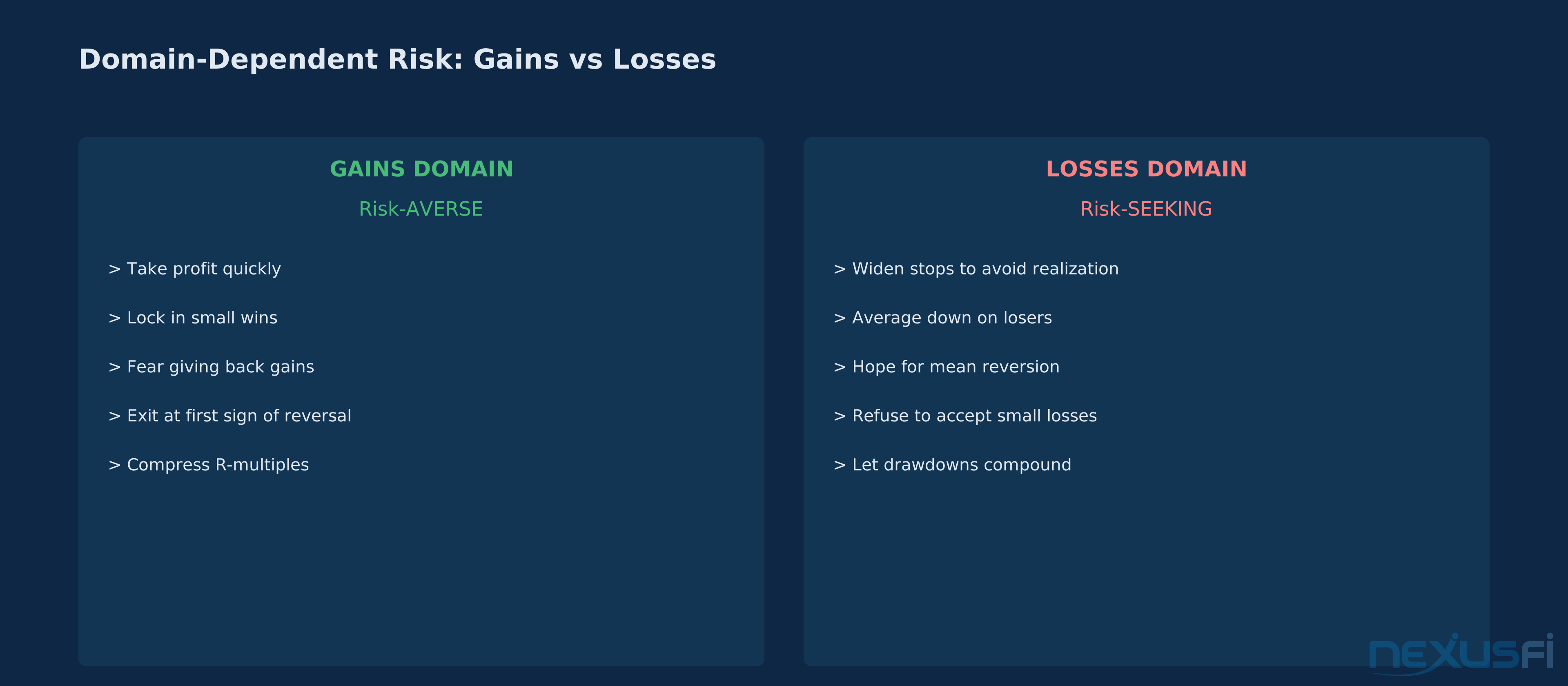
@tigertrader connects this directly to trading behavior: "If you offer a subject a sure gain versus a gamble, they choose the sure gain. But offer a sure loss versus a gamble, and they choose the gamble. It's not only about timeframes — it's about trade management, and how traders behave when faced with probabilities." [4] That asymmetry — certainty-seeking in gains, risk-seeking in losses — is the engine behind most position management errors.
The Four Manifestations in Live Trading #
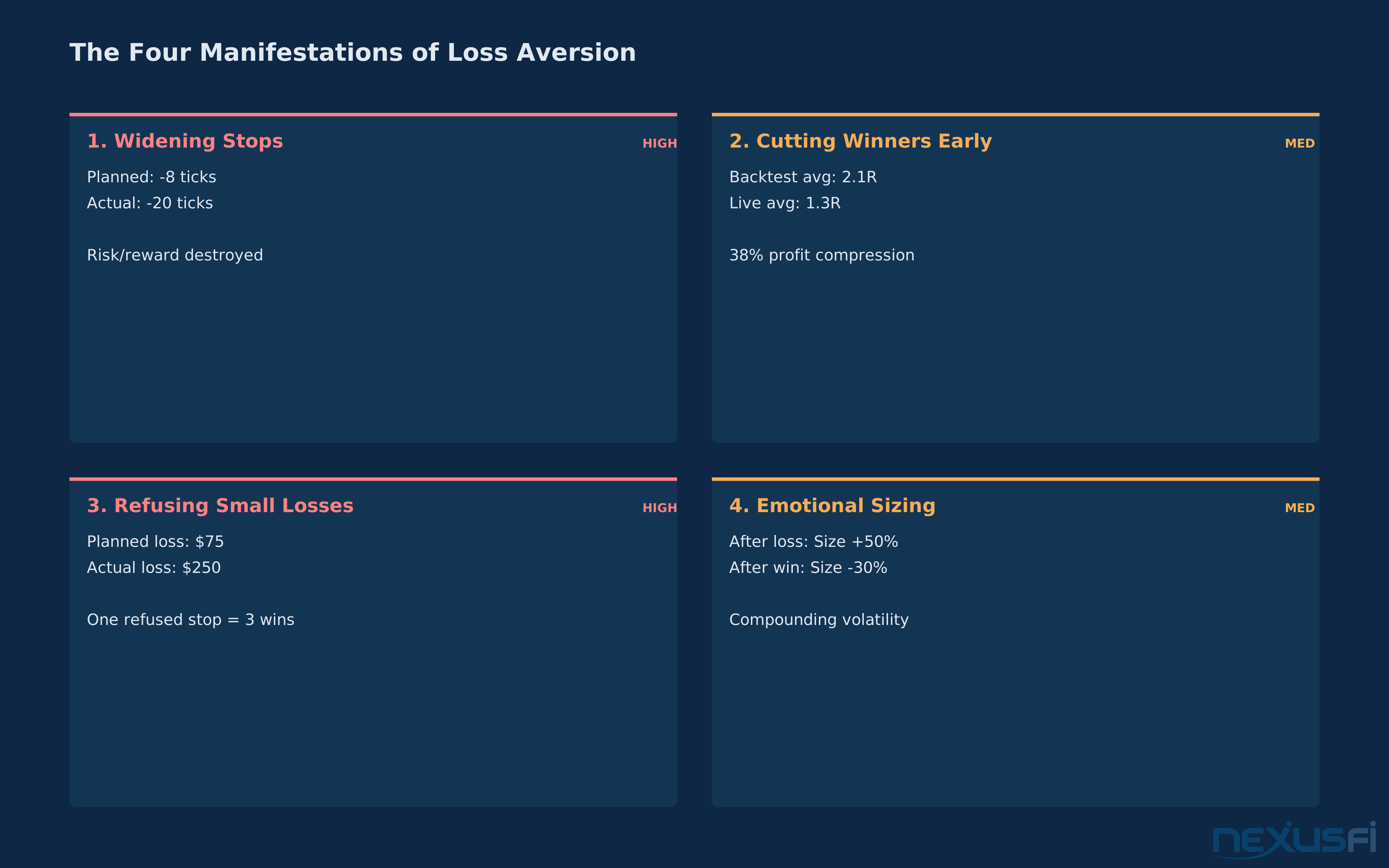
1. Widening Stops on Losing Trades
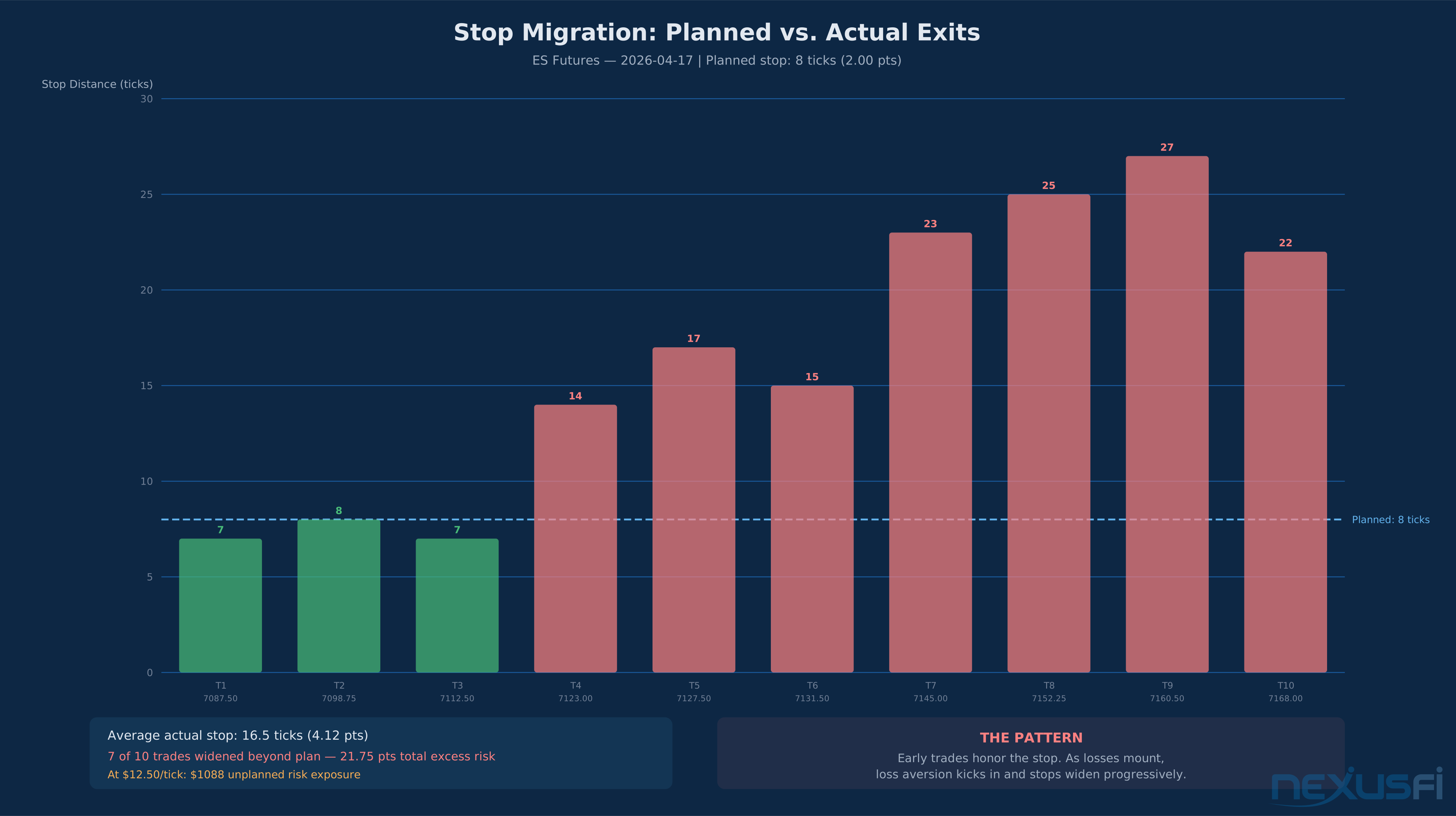
When a trade moves against you, the unrealized loss becomes psychologically real. Your brain treats the stop-loss as a decision to crystallize that pain. To avoid the pain, you widen the stop — or remove it entirely. The rationalization is always the same: "I'll give it more room." "This is just noise." "It'll come back."
@Fat Tails lays out the progression explicitly: "There are various stages of dealing with loss aversion: moving your stop loss a bit further, doubling your position to make it easier to break-even (Martingale approach), overtrading and revenge trading, cutting profits short to avoid that they become losses." [5]
The math is unambiguous. A stop placed at -8 ticks based on market structure has a defined expected loss. Moving it to -16 ticks doubles your maximum loss and destroys the risk/reward ratio the trade was built on. Even if the wider stop occasionally "saves" a trade, the expected loss tail grows disproportionately. You're not managing risk — you're trading against your own thesis.
In futures specifically, this is compounded by microstructure: trend persistence, liquidity withdrawal around stop clusters, and volatility expansion after major levels break. "Giving it room" often means "giving it room to move further against you in accelerating fashion."
2. Cutting Winners Too Early
Once a trade is profitable, the reference point shifts. Now you're not thinking about the original setup thesis — you're thinking about the open profit. And loss aversion kicks in from the other direction: the fear of watching that profit disappear feels identical to the fear of taking a new loss. So you close it. Too soon. Every time.
With losers, you're risk-seeking (gambling on recovery). With winners, you're risk-averse (taking the certain gain). Both systematically destroy expectancy. The quantitative signature: average winner size runs much below backtest expectations. Win rate looks fine, but R-multiples skew toward small wins and occasional large losses.
3. Refusing Small Losses
This is loss aversion in its purest form. The stop exists. The market hit it. And the trader just... doesn't take it. The internal narrative writes itself: "It's just a wick." "Volume's drying up, it'll reverse." "The real level is 4 more ticks away."
[7] That gain is the avoidance of emotional pain. Your brain is treating the small realized loss as worse than the potential large unrealized loss — which is mathematically insane but psychologically consistent with prospect theory.
The practical consequence in futures: a planned 6-tick stop becomes a 20-tick drawdown. One refused stop on an ES contract turns a $75 loss into a $250 hole requiring three winning trades to recover.
4. Position Sizing Based on Recent P&L
Loss aversion interacts with recency bias to produce state-dependent position sizing. After a loss, the trader either sizes up aggressively ("I need to make it back") or sizes down fearfully ("I can't afford another hit"). After a win, they might over-lever on "house money" confidence or reduce size to "protect gains." None of these adjustments are based on the actual setup quality or market conditions.
The result: compounding errors. Doubling size after a loss then taking another loss puts you down 3x planned risk. Halving size after a win then catching a runner captures half the profit. The equity curve becomes jagged because sizing tracks emotion, not rules.
Why Futures and Day Trading Amplify Loss Aversion #
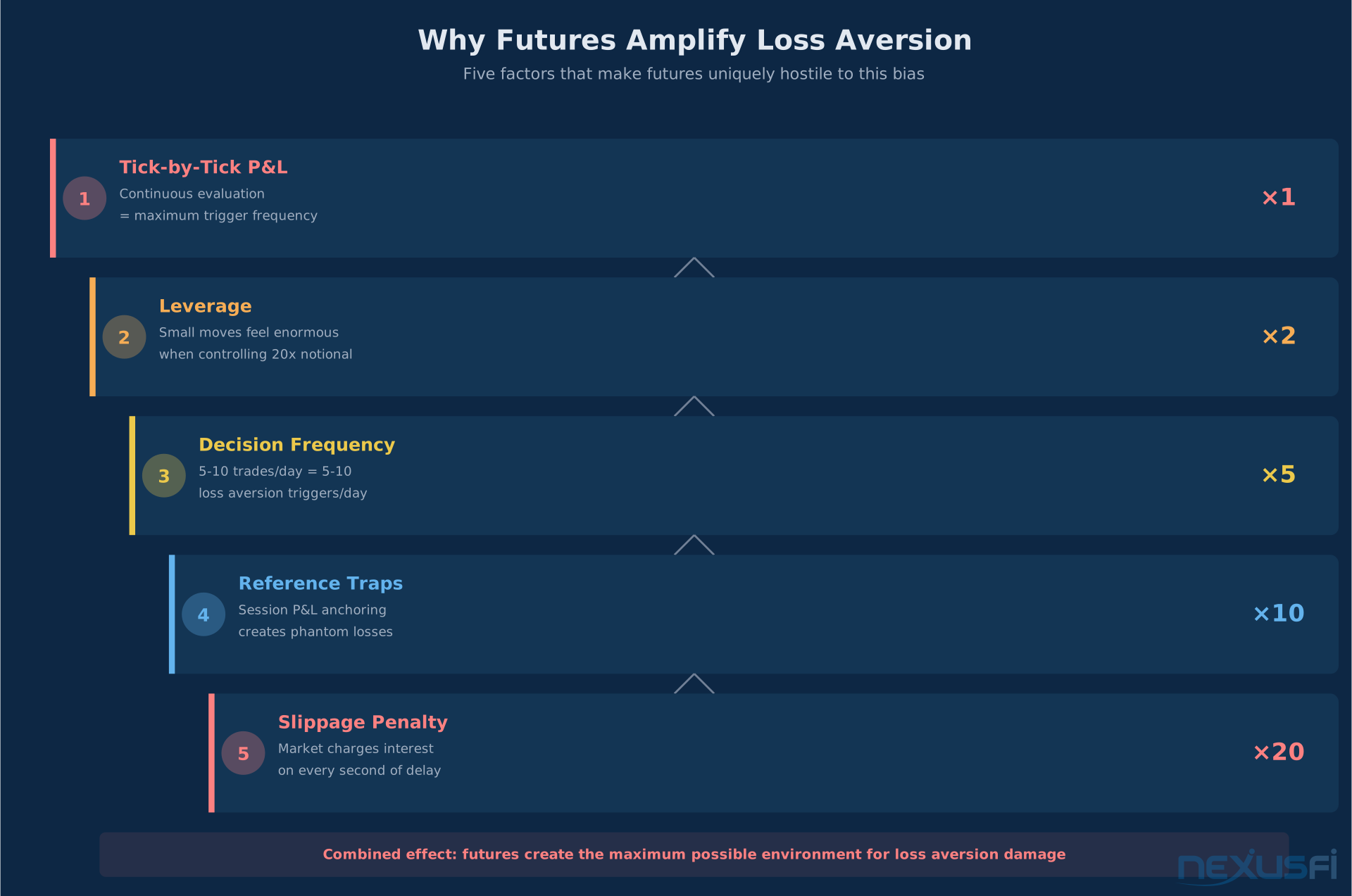
Loss aversion exists in every market, but futures trading creates uniquely hostile conditions for this bias:
Continuous mark-to-market. Stock investors can avoid looking at their portfolio. Futures traders watch P&L update every tick — maximum evaluation frequency. Benartzi and Thaler's research confirms: more frequent portfolio evaluation leads to worse decisions.
Leverage amplifies emotional magnitude. Controlling $250,000 of ES notional with $13,000 in margin means a 4-point move is a $200 swing — 1.5% of margin. The loss aversion multiplier applies to experienced magnitude, not percentage, so leverage makes every tick feel more significant than it is in risk-adjusted terms.
High decision frequency. A day trader making 5-10 trades per session has 1,000+ annual opportunities for loss aversion to trigger. Miss a stop, widen another, cut a winner short — cumulative damage can dwarf the intended risk budget.
Session psychology creates reference point traps. Going from +$400 to +$50 feels like a $350 "loss" even though you're profitable. That reference shift triggers loss-averse behavior — closing positions to "save what's left" rather than following the system.
Slippage reality punishes delay. In fast futures markets, liquidity evaporates around stop clusters and volatility expands after key levels break. A 30-second delay during a momentum move can cost 5-10 extra ticks. The market charges interest on indecision.
The Diagnostic Dashboard: Detecting Loss Aversion in Your Data #
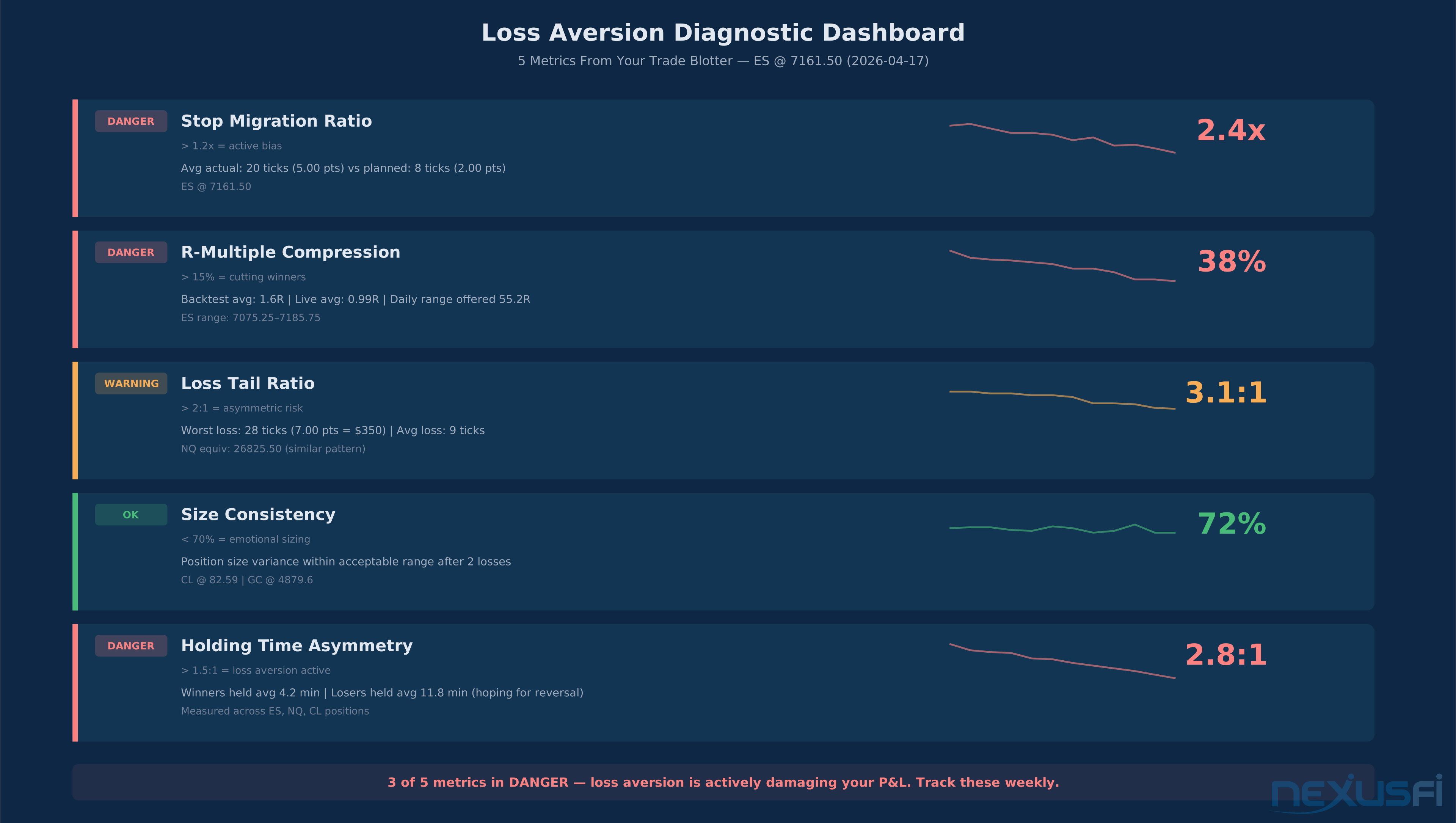
Loss aversion hides behind rational-sounding adjustments. "I gave it more room because the setup was still valid." "I took profit because the momentum was fading." The way to cut through the rationalization is to measure specific behavioral signatures in your trade data:
Stop migration rate. Compare your planned stop distance at entry to your actual exit distance on losing trades. If the actual is consistently wider than the planned, you're widening stops. Measure this as a ratio: actual_stop_distance / planned_stop_distance. A ratio above 1.2 indicates systematic stop migration.
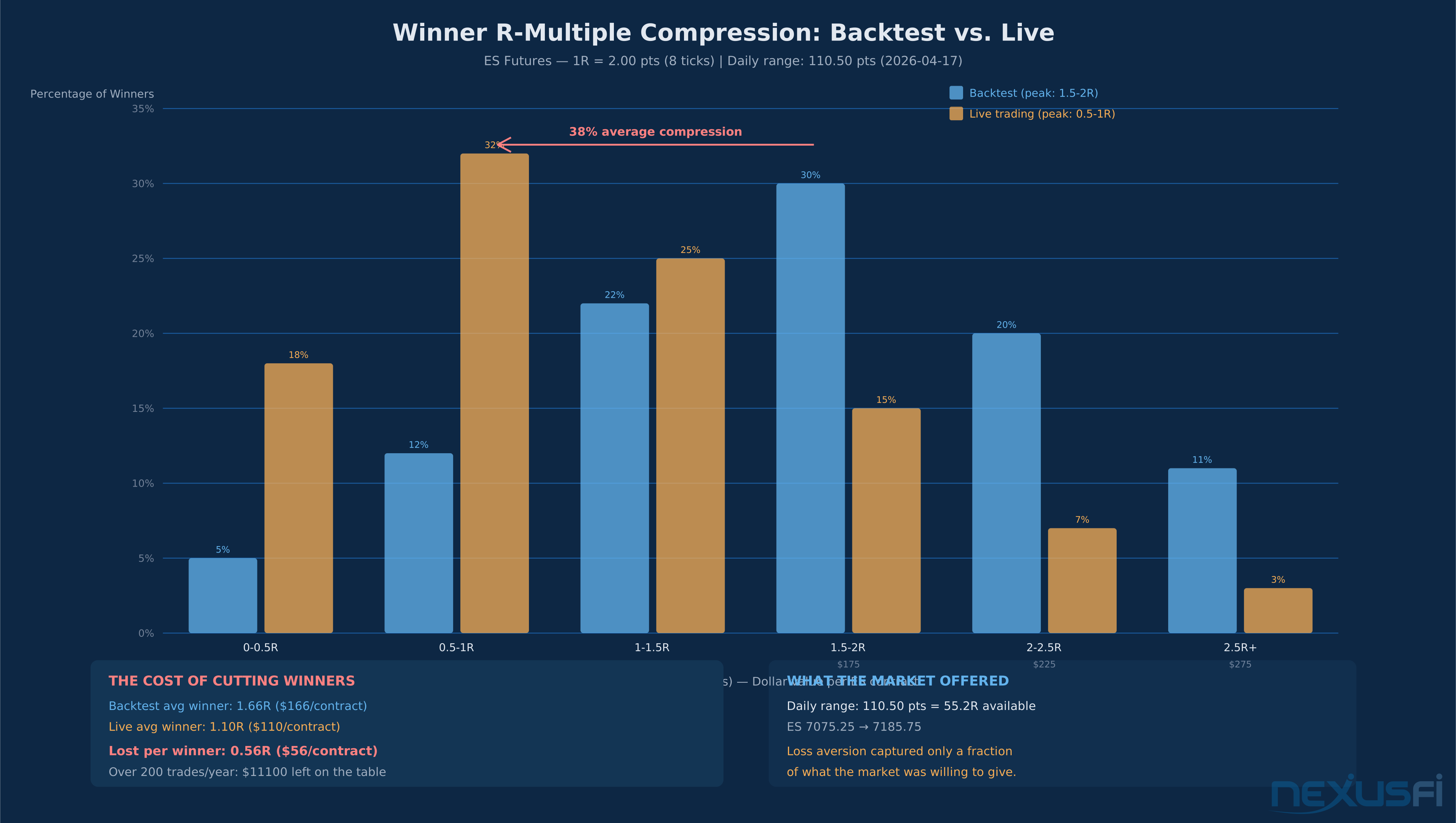
Winner R-multiple compression. Compare your average winner size (in R-multiples) to your strategy's theoretical expectation. If your backtested strategy shows average winners at 2.1R but your live results show 1.3R, you're cutting winners 38% short. That compression alone can turn a profitable system into a breakeven or losing one after costs.
Loss magnitude distribution. Plot your loss sizes. In a disciplined system, losses cluster tightly around the planned stop distance. If your distribution has a fat right tail — occasional losses 3x, 5x, 10x the planned size — you're refusing stops. One 10x loss erases ten winning trades.
Size consistency after losses. Track your position size relative to the previous trade's outcome. If you systematically increase size after losses (revenge sizing) or decrease after wins (gain protection), the sizing is emotionally driven. The correlation between recent P&L and subsequent position size should be near zero in a disciplined system.
Holding time asymmetry. Compare the average holding time on winners versus losers. If losers are held much longer than winners, you're exhibiting the disposition effect. The healthy pattern depends on your strategy, but equal or shorter holding times on losers (because stops are hit mechanically) is the target.
[9] — that process of proving the edge to yourself through data is exactly how you build the confidence to take stops mechanically.
Systematic Remedies That Actually Work #
You cannot willpower your way past loss aversion. Professional traders with decades of experience still exhibit the bias. The solution is engineering your process so emotional reactions cannot reach the controls.
You cannot eliminate loss aversion through willpower, motivation, or experience. Professional traders with decades of screen time still exhibit the bias. The solution is engineering your trade process so that emotional reactions have fewer opportunities to interfere with execution.
Pre-Commitment: Remove the Decision at the Moment of Stress
Bracket orders at entry. The most effective single intervention. When you enter a trade, immediately attach OCO (One-Cancels-Other) orders with your stop and target. This offloads the exit decision from your emotional brain to the mechanical system. The trade either hits the stop or the target — there's no "should I adjust?" moment.
[10] The point: match your system design to your psychology, then automate the execution.
Structure-based stop placement. Determine your stop location from market structure — volume profile nodes, VPOC levels, ATR-based distances, logical support/resistance — before entry. The stop represents the point where your trade thesis is invalidated. It has nothing to do with how much you're willing to lose and everything to do with where the market proves you wrong.
Written invalidation points. Before entering, write down: "This trade is wrong if price reaches [level]." That written commitment creates a psychological anchor harder to rationalize away than a mental note.
Fixed Risk Sizing: Decouple Size from Emotion
Position size should be a function of three variables: account equity, planned stop distance, and maximum risk per trade. That's it. No adjustment for recent wins, recent losses, "feeling confident," or "playing it safe."
The formula: Position size = (Account equity × Risk%) / Stop distance in dollars. If your account is $50,000 and you risk 1% per trade with a 10-point ES stop, that's $500 / ($50 per point x 10 points) = 1 contract. Same formula after a winning day. Same formula after a losing day. Same formula whether you feel great or terrible.
This removes the revenge sizing and gain-protection sizing that loss aversion drives. The position size tracks your equity curve mechanically, not your emotional state.
Session-Level Controls: Circuit Breakers for the Brain
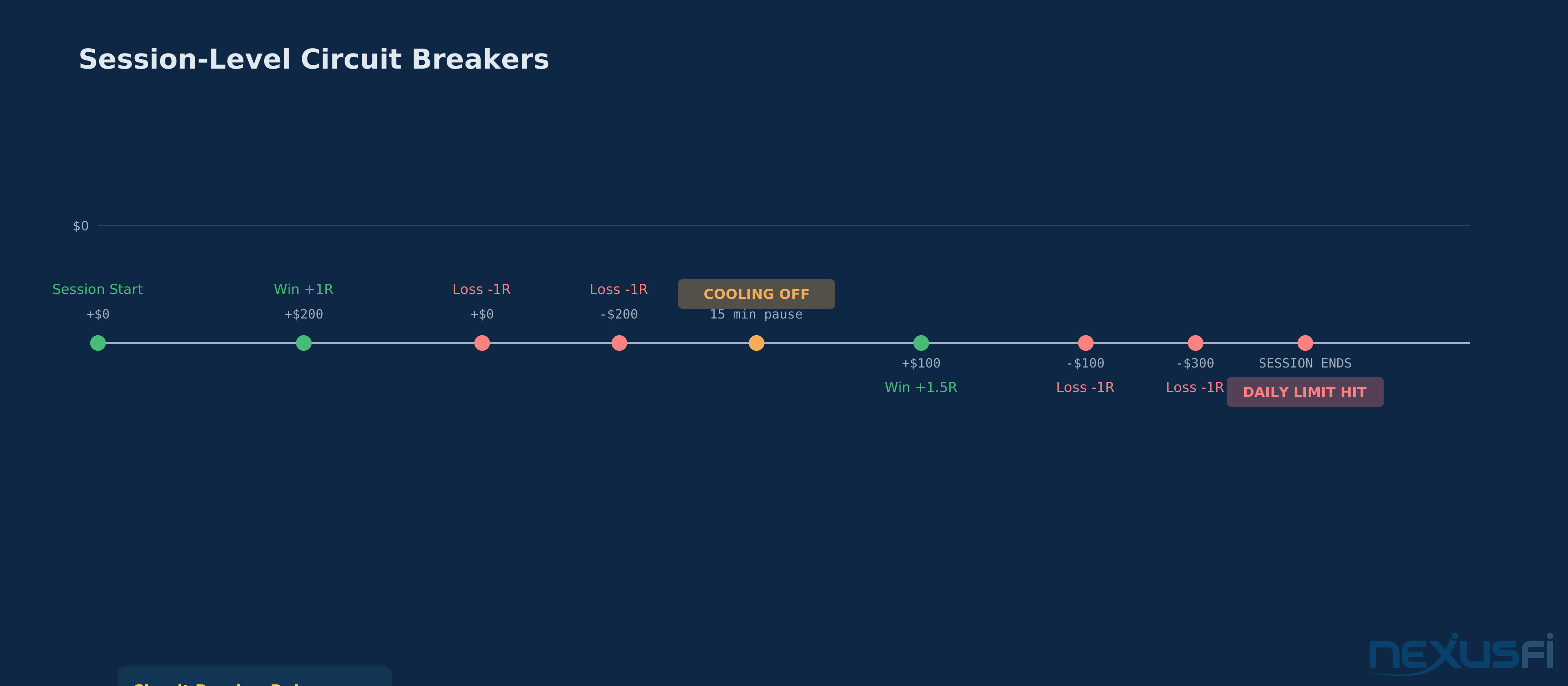
Daily loss limit. Set a maximum daily drawdown — either as a dollar amount or a number of R-multiples. When you hit it, you're done for the day. Period. This prevents the revenge trading spiral where one bad trade triggers increasingly desperate attempts to "get it back." Most professional futures traders use daily loss limits between 2-3% of account equity or 3-4 R-multiples.
Cooling-off rules. After two consecutive stop-outs, enforce a mandatory pause — 15 to 30 minutes, or until the next clean setup that meets all entry criteria. This breaks the emotional chain between losing and re-entering.
[11] Structured simplicity constrains the damage loss aversion can do.
Trade count limits. Define the maximum number of trades per session based on your strategy's expected setup frequency. If your method produces 4-6 quality setups per session, set a hard cap at 8. This prevents the overtrading that loss aversion triggers when you're trying to "make back" earlier losses.
Post-Trade Review: Measure Process, Not Feelings
Track R-multiples instead of dollar P&L. When you evaluate performance in risk units rather than dollars, you shift your mental model from "am I winning or losing money?" to "am I executing the plan?" A -1R loss is a successful trade if the stop was placed correctly and hit cleanly. A +0.3R win might be a failure if you cut a 2R runner short.
Decision audits. At the end of each session, classify every exit as either "rule-based" or "discretionary." Track the P&L separately for each category. In most traders' data, rule-based exits much outperform discretionary exits — the numbers make the case for automation more persuasively than any psychology book.
Weekly behavioral review. Set a fixed day and time for reviewing process metrics. Don't review daily — daily fluctuations trigger exactly the myopic loss aversion you're trying to avoid. Weekly reviews smooth the noise and reveal genuine patterns.
[12] The answer is loss aversion, and the weekly review is where you confront the data.
The Pre-Session Anti-Loss-Aversion Checklist #
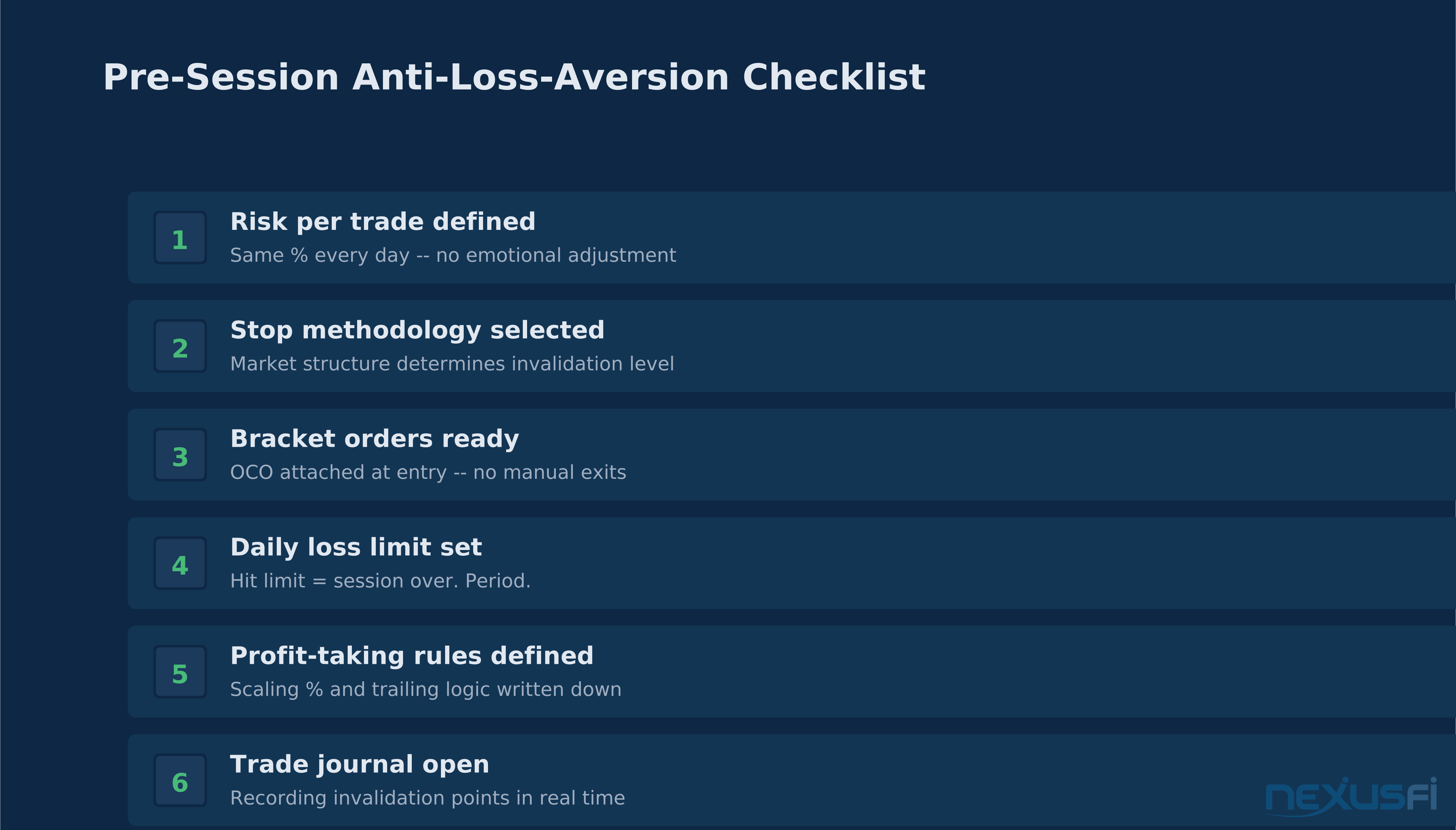
Run through this before every trading session. It takes two minutes and it removes most of the decision points where loss aversion strikes:
1. Risk per trade defined. What percentage of equity am I risking per trade today? (Same as every other day.)
2. Stop methodology selected. Where will I place stops — and what market structure determines the invalidation level?
3. Bracket orders ready. Am I attaching OCO orders at entry? If my platform supports it, are the brackets templated?
4. Daily loss limit set. What's my maximum drawdown for the session? What happens when I hit it? (Answer: I stop trading.)
5. Profit-taking rules defined. What are my scaling percentages and trailing logic? Written down, not memorized.
6. Trade journal open. Am I recording invalidation points and exit reasons in real time, not from memory after the session?
If any of these isn't set before the first trade, the session doesn't start. Full stop.
When Loss Aversion Signals Something Real #
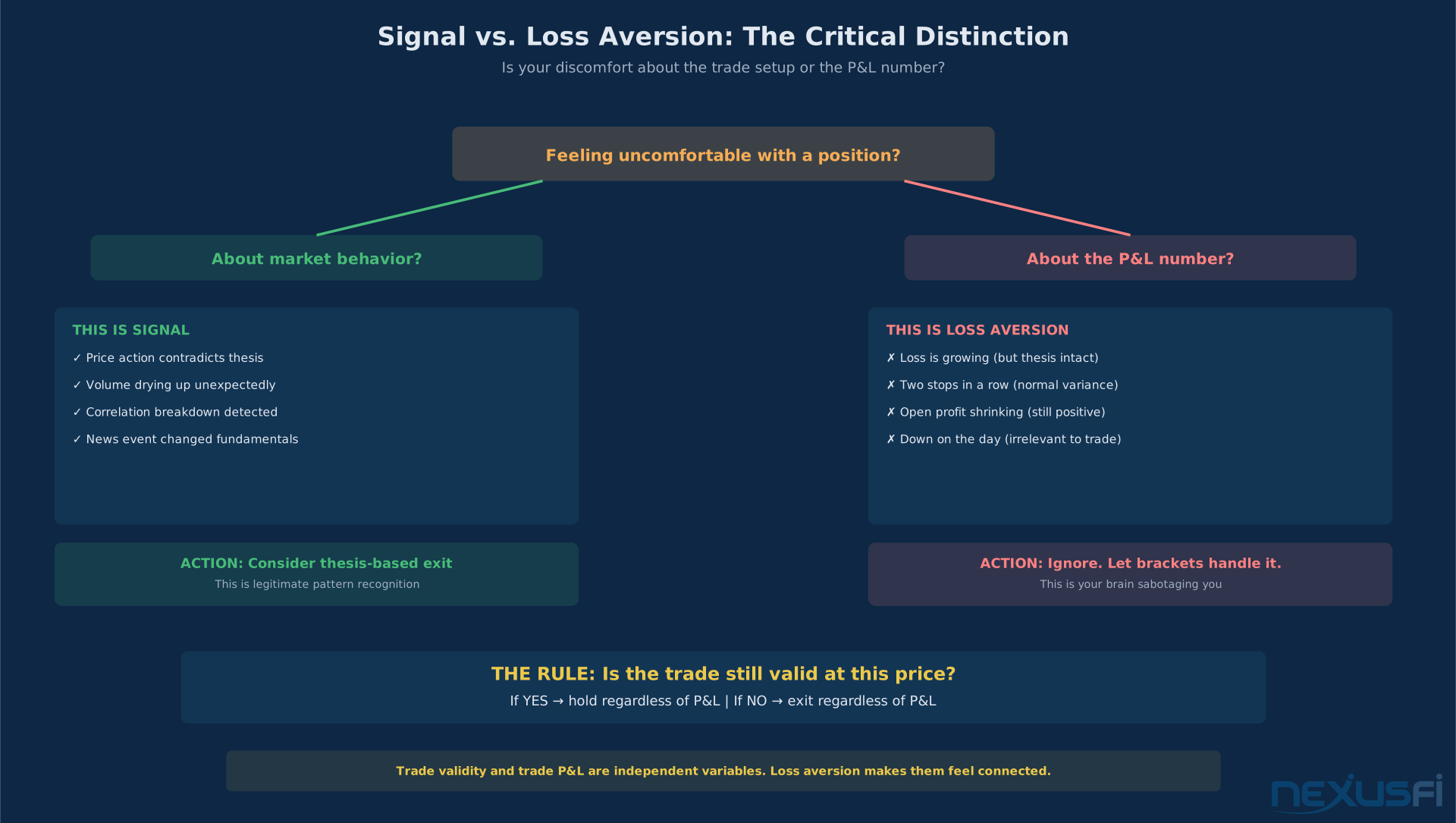
Loss aversion isn't always wrong. Sometimes the discomfort is legitimate pattern recognition — your subconscious processing information your conscious mind hasn't articulated. The question: are you responding to the trade setup or to the P&L number?
If your discomfort is about market behavior (price action doesn't match the thesis, volume is drying up), that's signal. If it's about the P&L number (the loss is growing, you just had two stops in a row), that's loss aversion. Signal-based discomfort might justify an early exit. P&L-based discomfort should be ignored — that's what bracket orders handle.
[13] — the cost of ignoring loss aversion's impact on position management. Build the system before the catastrophic loss forces the lesson.
The Deeper Problem: Trading Against Your Own Thesis #
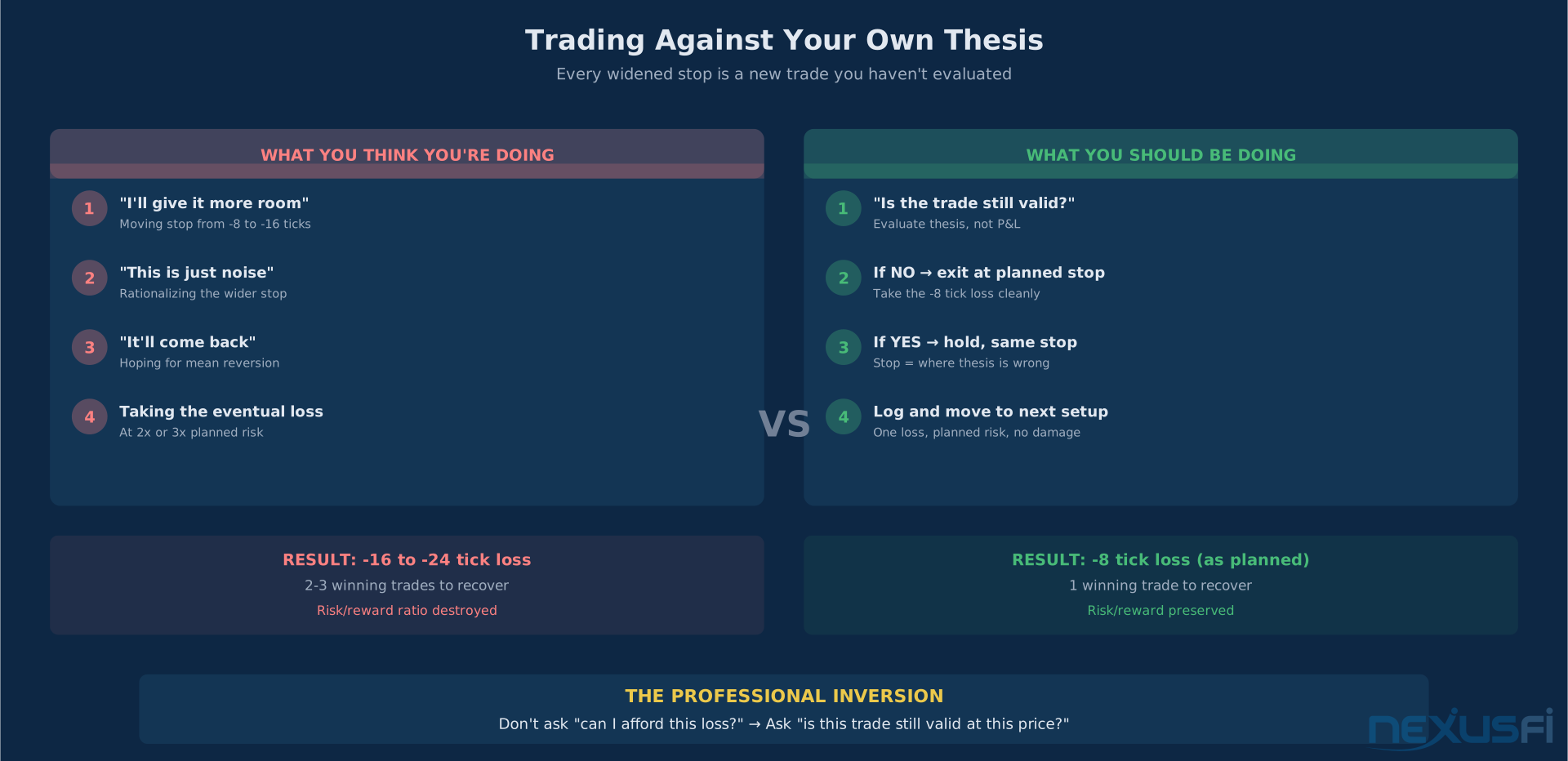
Every time you widen a stop, you're making a new trade — one that says "from this new stop level, the expected value of holding is positive." But you haven't evaluated that trade. You haven't run the numbers on the new risk/reward. You're not making a trading decision — you're making an emotional decision dressed up as trade management.
The professional approach inverts the intuition. Instead of asking "can I afford to take this loss?" — which triggers loss aversion — ask "is this trade still valid at this price?" If the answer is no, exit regardless of the P&L. If the answer is yes, hold regardless of the P&L. The trade's validity and the trade's current P&L are independent variables. Loss aversion makes them feel connected. Systematic process keeps them separate.
Building Your Loss Aversion Containment System #
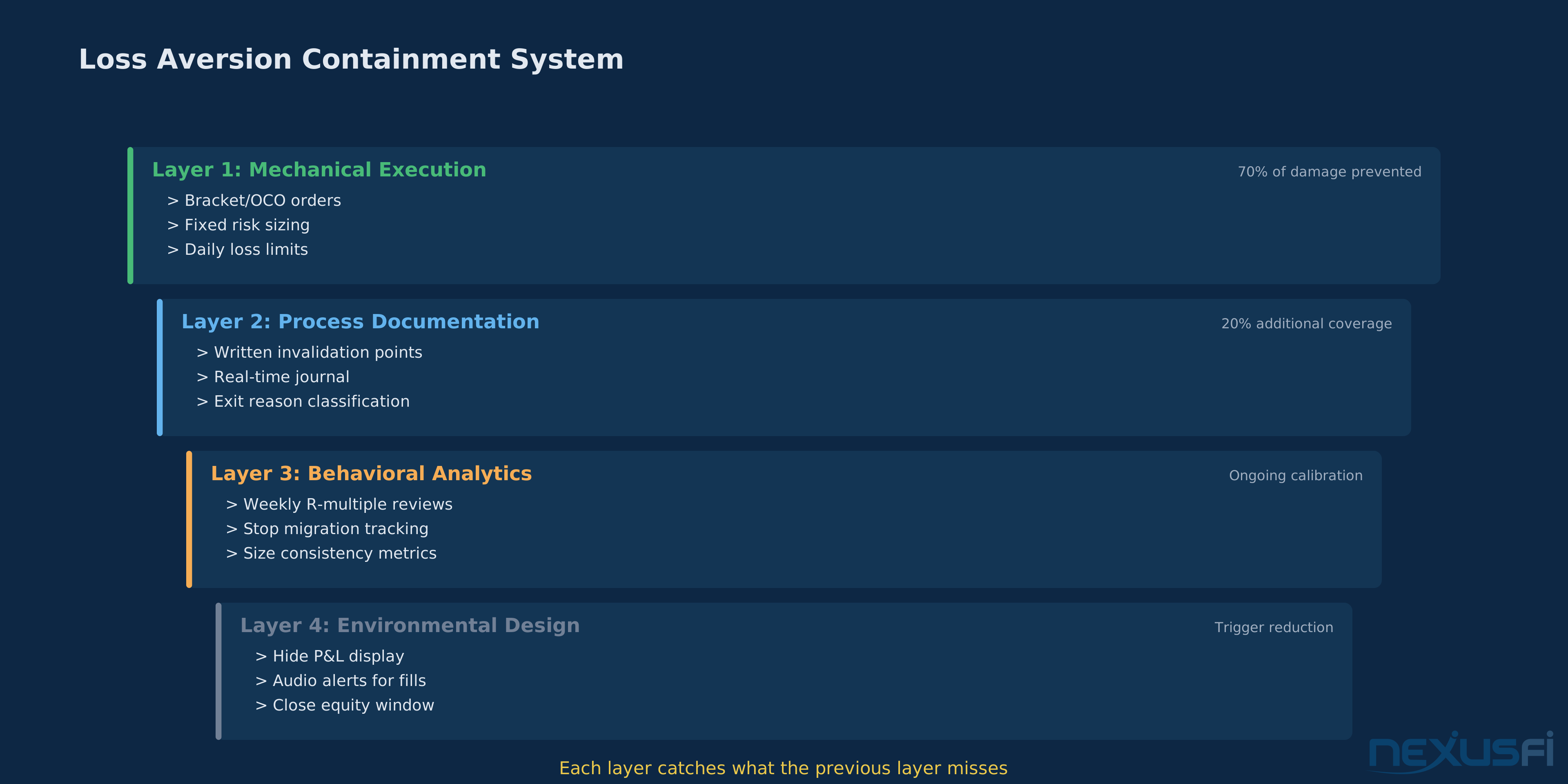
The interventions above work individually, but the real power comes from layering them into a coherent system. Here's the architecture, from most critical to supplementary:
Layer 1: Mechanical execution. Bracket orders, fixed sizing, daily loss limits. These are non-negotiable. They handle 70% of loss aversion's damage by removing the decision points where the bias fires.
Layer 2: Process documentation. Pre-trade invalidation points, real-time journal entries, exit reason classification. These create accountability and data for review. They handle the 20% of situations where mechanical rules need human judgment (thesis changes, news events, session context).
Layer 3: Behavioral analytics. Weekly R-multiple reviews, stop migration tracking, holding time analysis, size consistency metrics. These reveal whether layers 1 and 2 are actually working or whether loss aversion is finding new channels around the guardrails. You should be getting better over time — if the metrics aren't improving, the system needs adjustment.
Layer 4: Environmental design. Reduce P&L visibility during the session (some platforms allow hiding the P&L column). Use audio alerts for stop/target fills instead of watching the DOM. Close the account equity window. Every piece of P&L information you remove from your visual field during a trade is one less trigger for myopic loss aversion.
Practical Application #
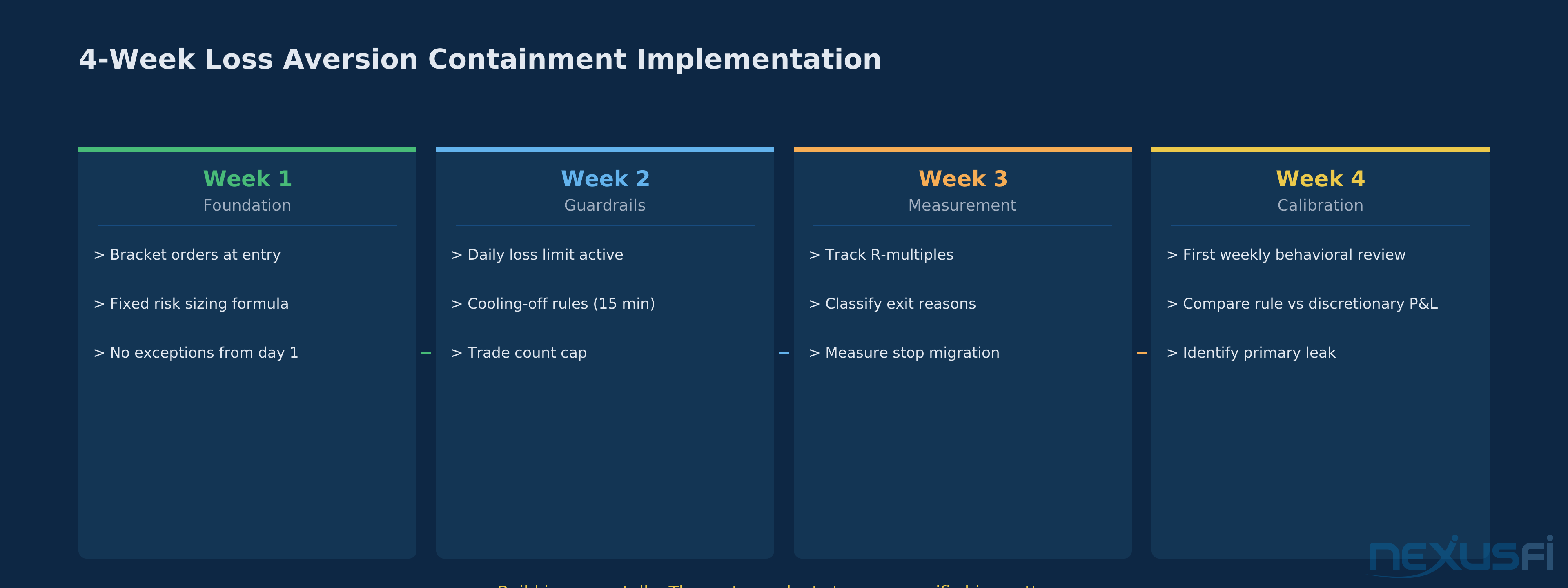
Apply these interventions in sequence. Don't try to implement everything at once — loss aversion containment is a system you build over weeks, not a switch you flip.
Week 1: Start with bracket orders and fixed sizing. For every trade, attach the stop and target at entry. Calculate position size from the formula (equity x risk% / stop distance). No exceptions.
Week 2: Add the daily loss limit and cooling-off rules. Define your max drawdown threshold and enforce it mechanically. After two consecutive stops, take a 15-minute break before the next entry.
Week 3: Begin the post-trade review. Track R-multiples, classify exits as rule-based or discretionary, and measure stop migration. This is where the data starts revealing your specific loss aversion patterns.
Week 4: Run your first weekly behavioral review. Compare rule-based exits to discretionary exits by P&L. Calculate your stop migration ratio. Measure winner R-multiple compression. The numbers will tell you exactly where loss aversion is still leaking through.
Ongoing: Refine the system based on data. Some traders discover that their primary leak is stop widening. Others find it's premature profit-taking. The diagnostic dashboard tells you where to focus.
[10] The system adapts to the trader, not the other way around.
Citations #
- @Fat Tails on loss aversion and anchoring -- All in all out vs. scaling in and out (NexusFi)
- @tigertrader on myopic loss aversion -- Get nervous after earning money (NexusFi)
- @tigertrader on asymmetry of profits and losses -- Spoo-nalysis ES e-mini futures (NexusFi)
- @tigertrader on prospect theory and trade management -- Spoo-nalysis ES e-mini futures (NexusFi)
- @Fat Tails on the stages of loss aversion -- Did revenge trade today, lost big... (NexusFi)
- @tigertrader on prospect theory in trading -- The PandaWarrior Chronicles (NexusFi)
- @ZviTradingCoach on the hidden gain of skipping stops -- Advice on how to stick to a stop (NexusFi)
- @Ming80 on prospect theory and revenge trading -- Best Trading Psychology course (NexusFi)
- @delux9 on learning to cut losses -- What helped you convince yourself to cut losses? (NexusFi)
- @Fat Tails on stop loss strategy and loss aversion -- STOPS are Frustrating (NexusFi)
- @HumbleTrader on disciplined flat-by-close approach -- Fighting Addiction and Stops (NexusFi)
- @Big Mike on cutting winners and letting losers run -- Ask any Trading Question (NexusFi)
- @josh on the cost of ignoring loss aversion -- What helped you convince yourself to cut losses? (NexusFi)
- @forrestang on prospect theory value function -- Given a bets/gamble with an associated probability (NexusFi)
Knowledge Map
Prerequisites
Understand these firstGo Deeper
Build on this knowledgeReferences This Article
Articles that build on this topicCitations
- — All in all out vs. scaling in and out (2010) 👍 14“Absolutely. There is a known human deficiency called loss aversion. Has to do something with anchoring. On the profitable side of the trade there is the irresistable pull to lock in profits.”
- — Get nervous after earning money (2014) 👍 23“the inability to hold onto winning trades is very common with new traders and is commonly referred to in behavioral finance as the disposition effect which is also part of of kahneman and tversky's prospect theory.”
- — Spoo-nalysis ES e-mini futures S&P 500 (2014) 👍 12“indeed, there are two respects in which profits and losses are asymmetric. one is objective and has to do with non-linearity. for example, it requires a 100% profit to make back a 50% loss. the second is subjective and has to do with risk aversion.”
- — Spoo-nalysis ES e-mini futures S&P 500 (2015) 👍 23“it's not only about time-frames, but it's about trade management, and how traders behave when faced with probabilities. if you offer a subject a sure win and you offer them a lottery that's a little better, they'll take the sure win.”
- — Did revenge trade today, lost big... (2011) 👍 6“Hi MetalTrade, thanks for sharing this experience. I think everybody, even if we do not like to admit it, knows very well what you are describing.”
- — The PandaWarrior Chronicles (2014) 👍 18“PandaWarrior -Brian, this is a classic example of "prospect theory", which states that people are willing to settle for a reasonable level of gains (even if they have a reasonable chance of earning more), and are willing to engage in risk-seeking beh...”
- — Advice on how to stick to a stop (2023) 👍 7“You will hear many answers to this question. Many will say you need discipline, you need to have clear rules and just follow them etc. The problem is - I'm sure you've heard all of that before, but it still didn't happen.”
- — Best Trading Psychology course for dealing with Tilt and Revenge trading (2014) 👍 10“Hi Shredder, I totally empathize with you as all traders have perhaps undergone this emotional state before.”
- — What helped you convince yourself to cut losses? (2021) 👍 5“I struggled with this at first like a lot of people. Key turning points for me was proving to myself I have a real edge in the market along with not being undercapitalized.”
- — STOPS are Frustrating (SL) ...to take or not to take (2010) 👍 33“I first hated stops, because I am often stopped out. Then I tried to ignore the stops and to average down my position thus reducing the price difference between current price and break-even.”
- — Fighting Addiction and Stops (2024) 👍 7“Warning - Long post. I believe there are 2 sets of challenges associated with honouring stop loss. 1st one is universal for 'humans' and the 2nd one is specific to 'individuals'. Nature vs Nurture analogy can be helpful here.”
- — Ask any Trading Question (2012) 👍 7“Question: Hi Mike, Why is that most new traders are very good at letting losers run and cutting winners short? I believe that every trader has been through this as part of their learning curve, what would/did you do to overcome this painful common tr...”
- — What helped you convince yourself to cut losses? (2021) 👍 11“Burning 2 months or so profit, shorting, with size, a massive breakout in an Asian market (no, not the one that just happened over the past month in the Nikkei.. was buying that :) ).”
- — Given a bets/gamble with an associate probability, which would you choose? (2021) 👍 6“So the purpose of this survey, is based on an idea in behavioral finance, with the focus being on "Prospect Theory," pioneered by Daniel Kahneman and Amos Tversky.”