



Transaction Cost Analysis for Automated Futures Trading: Measuring Slippage, Market Impact, and True Execution Cost
Transaction Cost Analysis for Automated Futures Trading: Measuring Slippage, Market Impact, and True Execution Cost #
Overview #
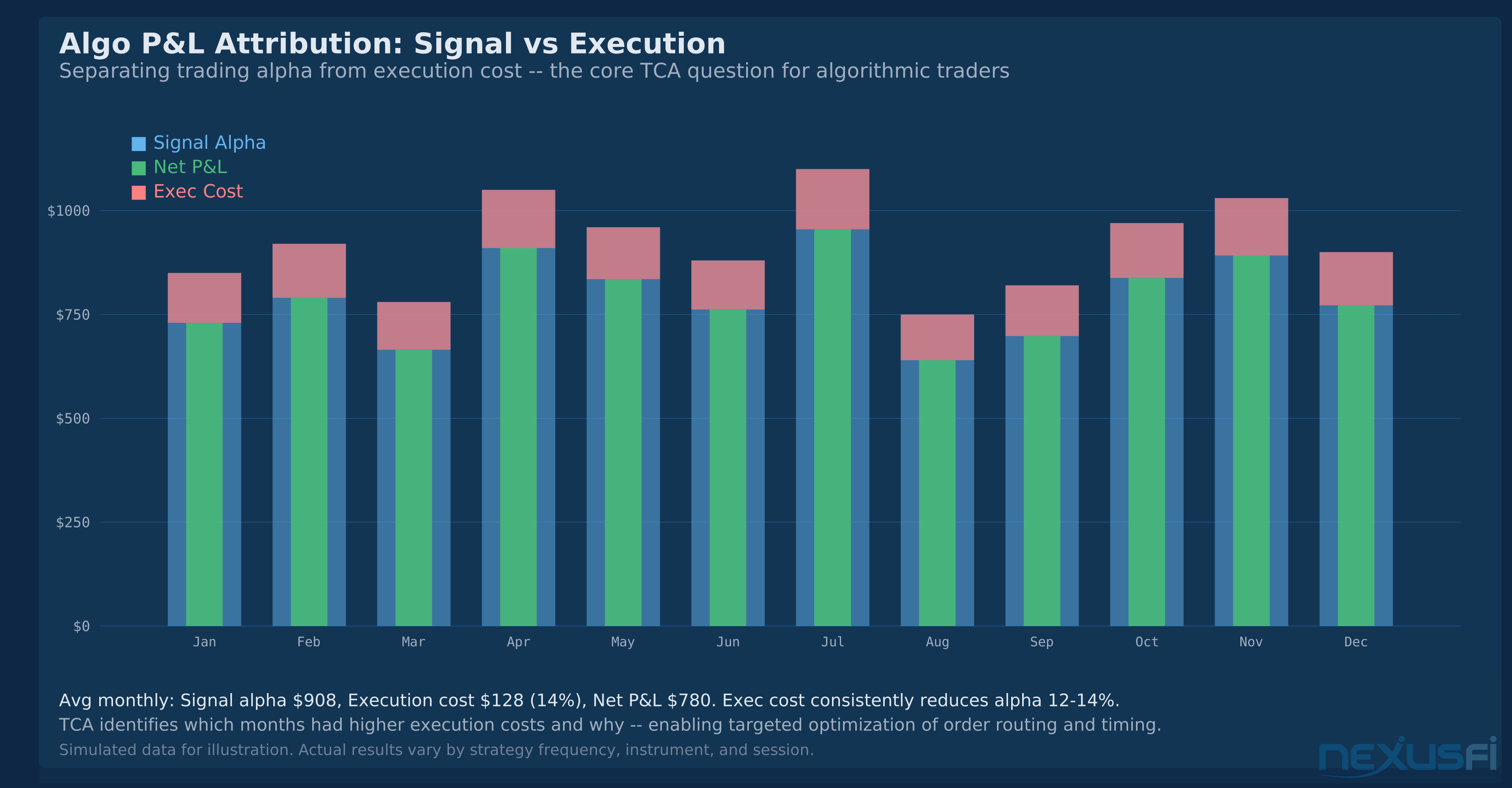
Transaction Cost Analysis (TCA) is the discipline of measuring what automated futures strategies actually pay to execute trades versus what they expected to pay. Every algo has two P&L lines: the backtest projection and the live account reality. TCA maps the gap — and more importantly, identifies which cost driver is responsible and how to address it.
The core components are explicit (commissions, exchange fees) and implicit (bid-ask spread, slippage, market impact, adverse selection). Most traders account for explicit costs and systematically underestimate implicit ones.
TCA is not about explaining why a trade lost money — signal failure is a separate problem. TCA measures execution quality when the signal is correct but the fill costs more than the model predicted. Confusing the two produces the wrong fix. See Algorithmic Trading for the broader automation context, and Backtesting Trading Strategies for how execution assumptions affect backtest validity.
Every automated futures strategy has two P&L lines. The first is what your backtest shows. The second is what actually deposits into your account. Transaction Cost Analysis — TCA — is the discipline that maps the gap between them. More importantly, it tells you where the leakage is and how to close it.
TCA in equities has decades of institutional infrastructure behind it. In futures, the discipline is less formalized but arguably more urgent. Futures traders use leverage. They trade overnight. They deal with roll mechanics, session transitions, and liquidity cliffs that don't exist in equity markets. A slippage estimate that's off by half a tick per trade doesn't matter much when you're holding for weeks. It destroys your edge when you're running an intraday algo with 50 signals a day.
The goal here isn't academic completeness. It's a working framework a futures algo trader can apply immediately: how to measure what execution quality actually cost you, how to identify why it happened, and how to use that information to improve. This is the feedback loop that separates algos that stay profitable from ones that looked good in testing and died in live trading.
What TCA Is -- and Isn't #
TCA is the systematic measurement and attribution of execution costs against a defined benchmark. When you break it down into components:
Measurement: You calculate the difference between what you actually paid to execute a trade and what you expected to pay. This requires tracking fill prices, timestamps, and market prices at specific reference points.
Attribution: You explain why that difference exists. Was it the spread? Latency? Market impact? Adverse selection? Each driver has a different fix, so attribution isn't just accounting — it's diagnosis.
Optimization input: TCA findings feed back into your execution logic. You're not just measuring the past; you're using it to change behavior going forward.
The formal framework was established by André Perold in 1988, who coined the term implementation shortfall — the difference between a paper portfolio's return and the actual portfolio return after execution costs. Almgren and Chriss formalized the optimal execution mathematics in 2001, creating the standard cost decomposition now used across equity and futures TCA. For futures specifically, Quantitative Brokers launched the first implementation shortfall execution algorithm for futures markets in 2011 — over a decade after the concept was standard in equities. [12]
What TCA is NOT: it's not a way to explain why your strategy's alpha failed. If a trade loses money because the signal was wrong, that's signal research, not TCA. If a trade loses money because you paid too much to execute a correct signal, that's TCA's territory. The boundary matters because conflating execution quality with trade quality leads to fixes for the wrong root cause — you tune your order routing when you should be questioning your entry logic, or vice versa.
TCA measures execution quality, not signal quality. A strategy with good alpha and terrible execution has an execution problem. A strategy with good execution and bad alpha has a research problem. Mixing the two produces fixes for the wrong root cause.
The Full Cost Picture #
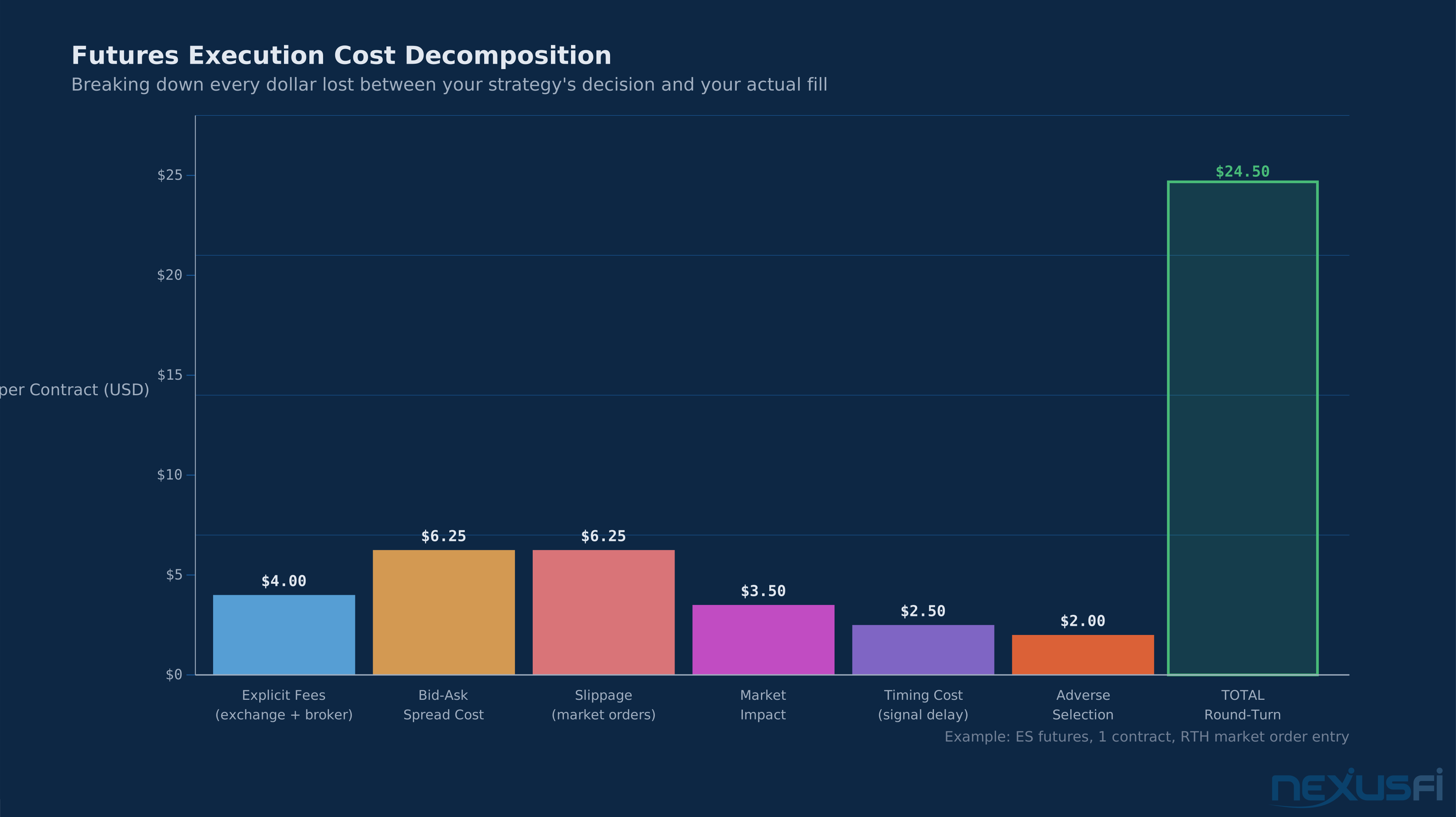
Execution costs in futures fall into two buckets: explicit and implicit. Most traders account for explicit costs and systematically undercount implicit ones. The implicit costs are where most strategies actually die.
Explicit Costs #
These show up directly on your account statement:
- Exchange fees: Per-contract fees charged by CME, ICE, or Eurex for each trade. CME Globex charges approximately $0.85 per contract for equity index futures for non-members. Institutional rates vary — some firms negotiate below $0.50, others pay above $1.
- Clearing fees: NFA fees, clearing firm fees — often bundled into a single "commission" by retail brokers.
- Broker commissions: The markup your broker charges above exchange fees. For retail automated trading via Rithmic or CQG, all-in rates typically run $2-$5 per round-turn on ES. Prop desk rates through introducing brokers can go below $1 per round-turn.
Explicit costs are predictable and easy to model. The problem is that many traders stop here.
Implicit Costs #
These don't appear as line items but consistently erode P&L:
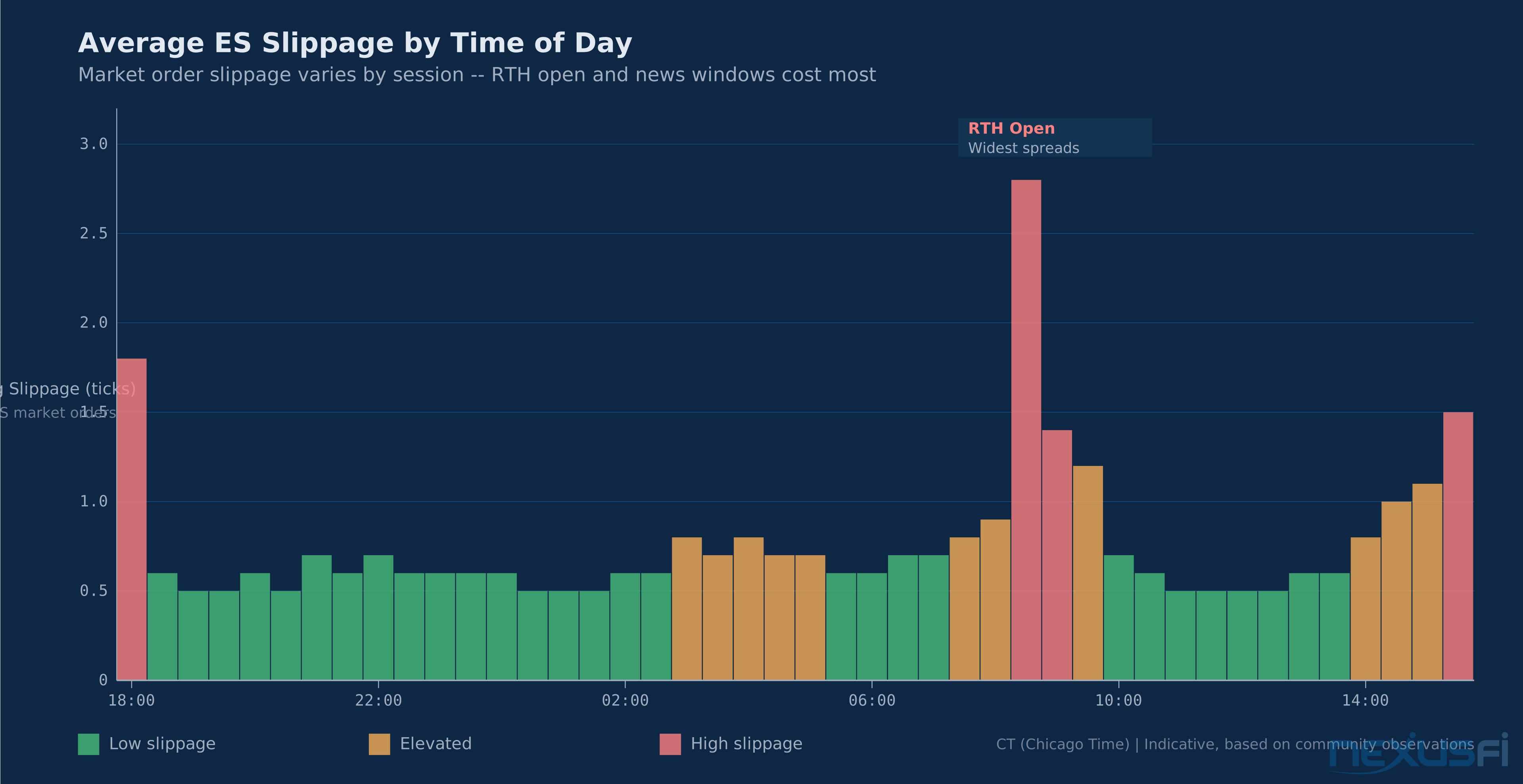
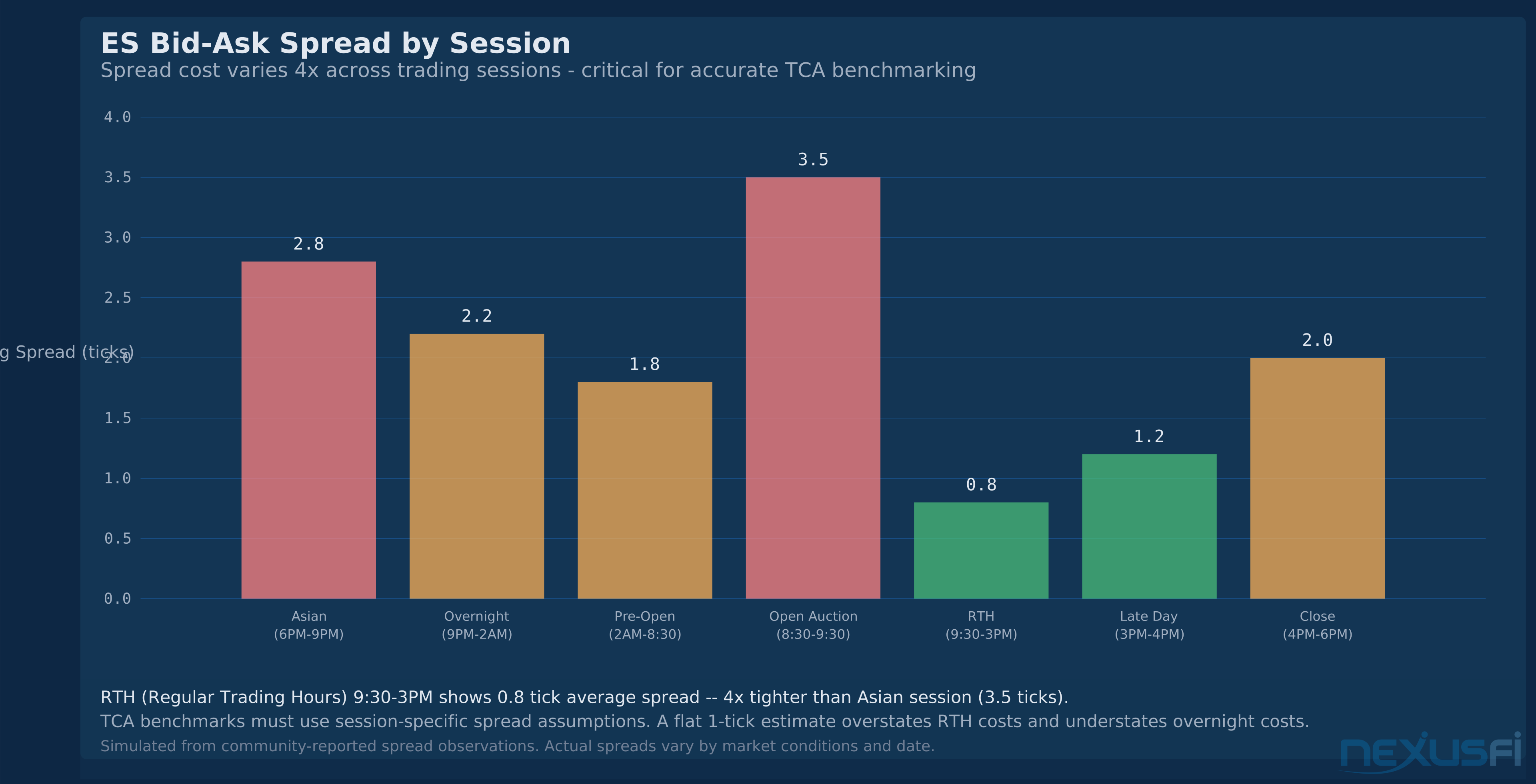
Spread cost: Crossing the bid-ask spread. On ES during RTH with normal liquidity, the spread is 1 tick (0.25 points = $12.50 per contract). In the overnight session, during economic releases, or on roll days, that spread widens to 2-4 ticks routinely. If your backtest models 1-tick spread uniformly and the strategy frequently trades in lower-liquidity windows, you're underestimating costs.
Slippage: The difference between your expected fill price and your actual fill price, beyond the spread. For market orders, slippage occurs because market conditions change between when you generate the signal and when your order reaches the exchange. For stop orders converted to market, slippage can be severe during fast moves — a 2-tick stop fill becoming a 5-tick fill isn't rare in CL or NQ during high-volatility sessions.
Market impact: Your own order moving the market against you. At small sizes on ES (1-5 contracts), market impact is negligible — you're a rounding error. At 50+ contracts, it becomes measurable. At 200+ contracts in a single market order, you're moving the market you're trying to trade.
Timing cost / drift: The P&L leakage from the delay between when your model says "trade now" and when the trade executes. In trend strategies this can be neutral or even positive. In mean-reversion strategies where you need to get in quickly before the move reverses, drift is poison.
Opportunity cost: Trades your strategy generated that didn't fill. A limit order sitting at 4595.00 when ES prints 4595.25 then reverses is a missed trade. Your backtest captured that as a win. Your live system got nothing — and your TCA metrics look great because you only measure trades that did fill.
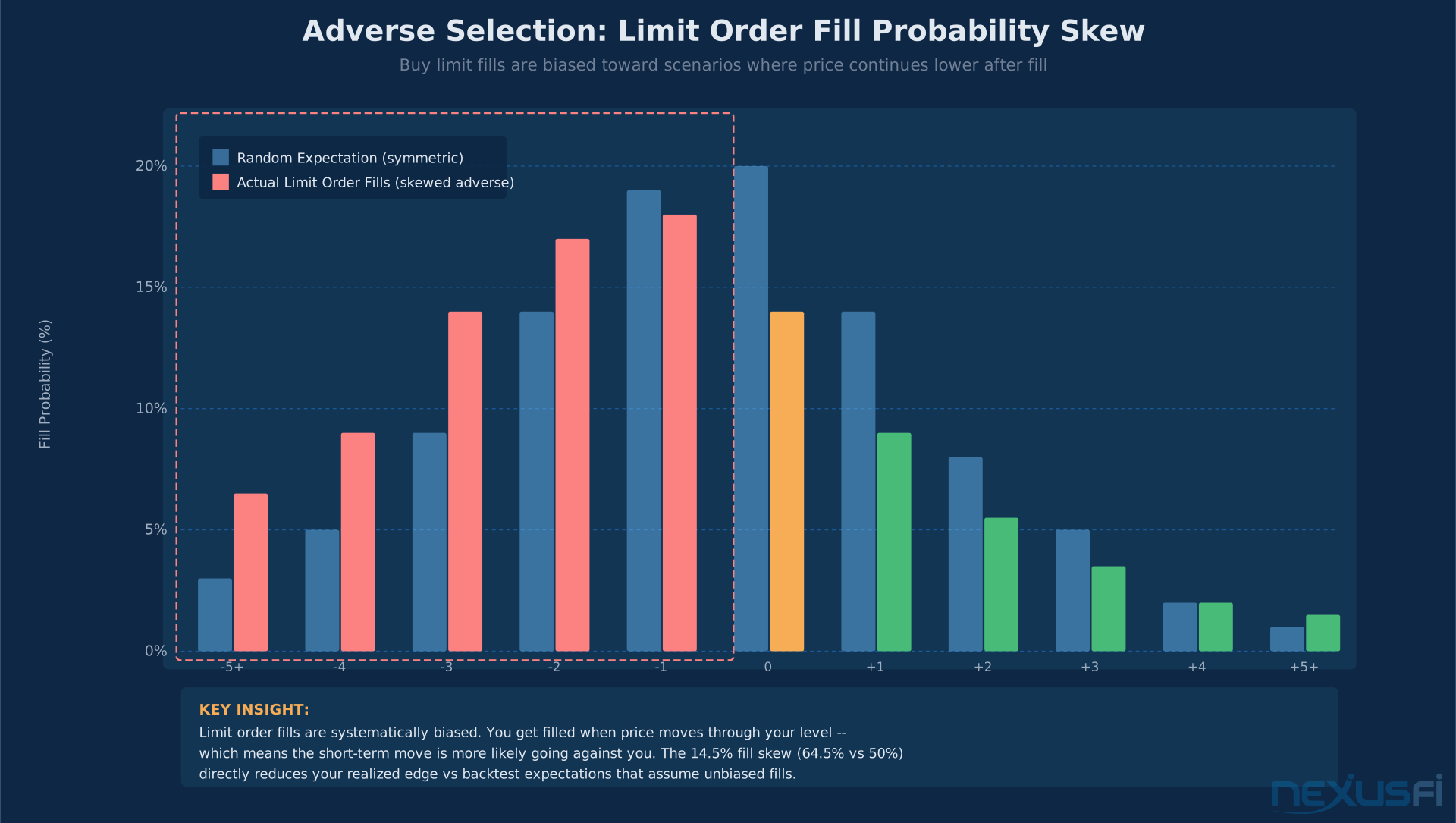
Adverse selection: The systematic tendency to get filled on the worse half of every decision. If you use passive limit orders, you get filled when price moves through your level — which is more likely when the short-term move is going against you. The fill you wanted was roughly 50/50; the fills you actually get skew toward the losing side on entry.
Total execution cost per round-turn (simplified):
EC = (spread × 0.5) + slippage + market_impact + fees + opportunity_costOn ES market order at RTH: ~$6.25 spread + $6.25 slippage + $4.00 fees ≈ $16-20 per round-turn minimum at low size. At scale (100+ contracts), market impact adds 1-3+ ticks easily.
As @Fat Tails analyzed across multiple futures instruments, the relationship between tick size, volatility, and order book depth determines how costs scale — and these relationships vary dramatically by product. ES has the best cost structure for short-term strategies; ZB and thin overnight markets are significantly worse. [2]
Futures-Specific Execution Environments #
Generic TCA frameworks designed for equities miss several futures-specific realities. Understanding these differences is what makes futures TCA more complex — and more valuable.
Contract Multipliers Change the Math #
In equities, a $0.02 spread means $0.02. In futures, a 1-tick spread on the ZB (30-year Treasury) is 1/32 = $31.25 per contract. A 1-tick spread on the NQ is $5.00. A 1-tick spread on the ES is $12.50. You can't compare slippage in raw price terms across instruments — normalize everything to dollars per contract or bps of notional.
Session Structure Creates Predictable Liquidity Cliffs #
Futures trade nearly continuously, but liquidity is highly non-uniform:
- RTH (Regular Trading Hours, 8:30-15:00 CT for ES): Maximum liquidity, tightest spreads, highest fill rates on limit orders.
- Electronic session (15:00-17:00 and 17:00-08:30 CT): Significantly lower depth, wider spreads during low-volume periods. Single print moves on 5-minute charts aren't unusual.
- Session transitions: The overnight-to-day transition and the pit close create brief periods of elevated volatility and spread widening.
- Economic releases: The first 2-5 minutes following major releases (CPI, NFP, FOMC) can have spreads 10-20x normal. Market orders during these windows are execution suicide.
CME Group's own analysis of E-mini S&P 500 fill quality during Q4 2018's volatility spike demonstrated an important nuance: displayed order book depth dropped 75% while trading volume actually increased 65%, yet fill quality degraded by only 1.5 ticks maximum. For TCA purposes, displayed book depth systematically overstates execution risk — actual fill quality under stress is the metric that matters, and it held up far better than depth-based models predicted. [13]
Contract Rolls Create Systematic Cost Events #
Every quarterly roll introduces 3-5 days of degraded execution quality as liquidity migrates from front-month to next-month contract. During this window:
- The front month volume drops while spreads widen
- The next month has not yet consolidated full liquidity
- Calendar spread pricing becomes less efficient
- Roll execution slippage can be 2-5x normal
TCA that doesn't separate roll-period trades from non-roll trades will show inflated average costs during roll weeks and understate actual normal-session execution quality.
Product-Specific Profiles #
@Fat Tails' systematic analysis of transaction costs across ES, 6E, CL, GC, SI, and ZB revealed that cost structures vary enough to make the same strategy viable in one product and unviable in another. For strategies with short holding periods, instruments with high tick values relative to spread (CL, TF) outperform instruments where the spread represents a high percentage of the typical move (ZB, some currency pairs during off-hours). Instrument selection is as much a TCA decision as an alpha decision. [2]
Choosing Execution Benchmarks #
Every TCA calculation requires a benchmark — a reference price against which you measure what you actually paid. Benchmark selection is the most consequential methodological decision in TCA, because the wrong benchmark can make terrible execution look fine or flag good execution as costly.
The Main Options #
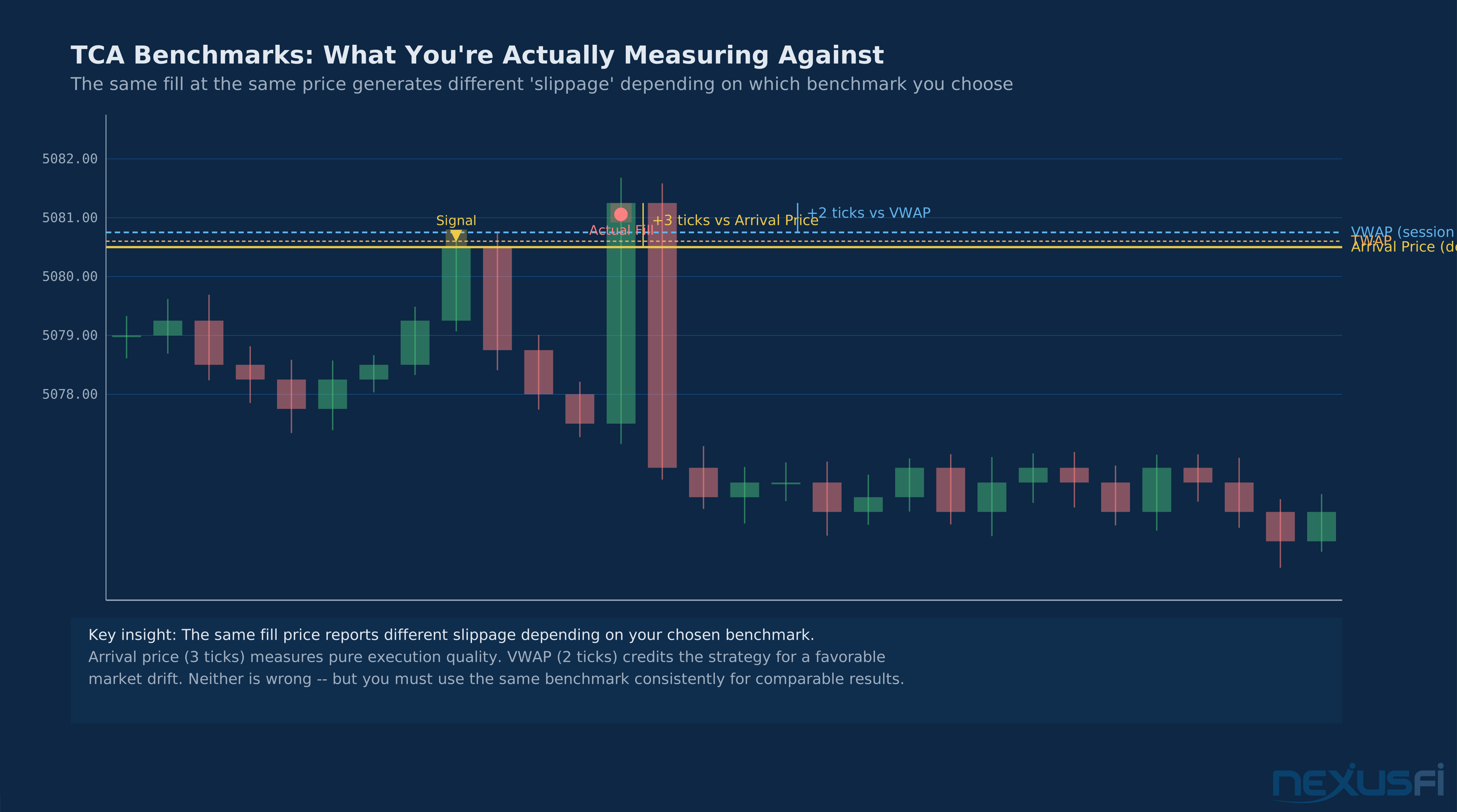
Arrival price (decision price): The midpoint of the bid-ask spread at the moment you decided to trade — before any order was sent. This is the purest measure of execution quality. It answers: "What could we have traded at if execution were instantaneous?" For intraday algo strategies where every second of delay costs alpha, arrival price is the right benchmark.
VWAP (Volume-Weighted Average Price): The average price weighted by volume over a specified window.
VWAP is appropriate when you're executing a large order over time and want to measure how well you tracked what the market actually did. For high-frequency automated execution, it's less useful because the relevant window is too short to be meaningful. [11]
TWAP (Time-Weighted Average Price): Simple average price over a time window, weighted by time rather than volume. Simpler to calculate, easier to game.
Midprice: The midpoint of the bid-ask spread at the time of fill. Useful for measuring spread leakage when you have tick data.
Microprice: The bid-ask midpoint weighted by available depth at the top of book. More precise than raw midprice when you have L2 data. Captures imbalances that aren't visible in raw spread.
Benchmark Selection by Strategy Type #
Switching benchmarks mid-analysis to make execution look better is self-deception. Decide on your benchmark methodology before looking at results. The most common error: using arrival price when you lose money (makes slippage look costly) and VWAP when you come out ahead (makes execution look skillful). Run both consistently and pick the one appropriate for your strategy's time horizon.
| Strategy type | Best benchmark | Why |
|---|---|---|
| High-frequency, mean-reversion | Arrival price | Alpha decays in seconds; need cost relative to decision time |
| Trend-following, multi-hour holds | VWAP over execution window | Execution spread over time, longer alpha horizon |
| Large-size execution | VWAP or POV schedule | Benchmarks execution schedule performance |
| Simple backtest gap analysis | Signal bar close (decision price proxy) | Matches what backtest assumed |
| Passive limit-order strategies | Fill rate + opportunity cost adjusted | Raw slippage metrics mislead without fill rate |
Measuring Slippage #
Slippage in its simplest form: slippage = actual_fill_price - expected_fill_price (sign-adjusted for direction). But that formula requires careful definitions to be useful in practice.
Signed Slippage #
For long entries:
slippage = actual_fill - benchmark_priceNegative slippage = you paid more than benchmark (bad). Positive slippage = you paid less (good, usually means a fast market moved in your favor before fill).
For short entries:
slippage = benchmark_price - actual_fillNegative slippage = you received less than benchmark (bad). Positive slippage = you received more.
This sign convention is critical. If you average signed slippage without adjusting for direction, longs and shorts partially cancel each other out and you miss systematic patterns.
Normalizing to Comparable Units #
Raw price differences are meaningless across instruments without normalization:
- In ticks: Divide by tick size. 1 ES tick = 0.25 points = $12.50.
- In bps of notional:
slippage_bps = (slippage / fill_price) × 10,000. Comparable across different price levels. - In dollars per contract: Multiply ticks × tick value. Directly comparable to commission figures.
For a single ES contract at 5,000 with 0.5-tick average slippage per entry: that's $6.25 per contract per one-way. 100 entry/exit cycles per month = $1,250/month in slippage alone, before commissions. At 500 cycles/month, it's over $6,000. That differential determines whether a strategy survives.
Segmenting Slippage #
Averages hide everything. To actually diagnose problems, segment slippage by:
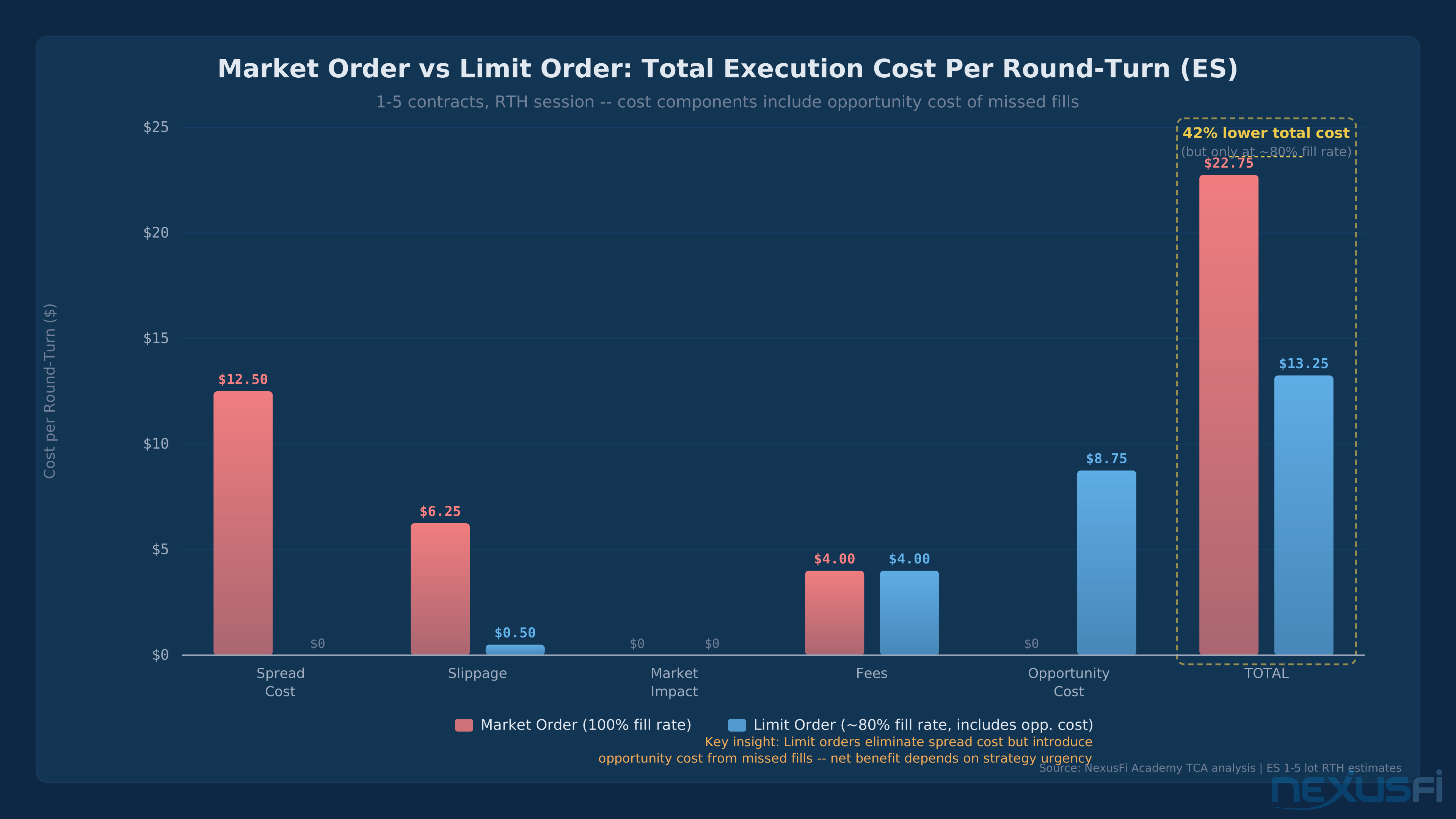
Order type: Market orders have higher expected slippage than limit orders. But limit orders introduce opportunity cost from non-fills. The comparison isn't apples-to-apples — factor in fill rate when comparing the two.
Time of day: Slippage is highest in the first 30 minutes of RTH (widest spreads, most volatility) and during news events. A strategy that predominantly enters at 9:30-9:45 ET will show systematically worse slippage than the same strategy entering at 11:00 ET.
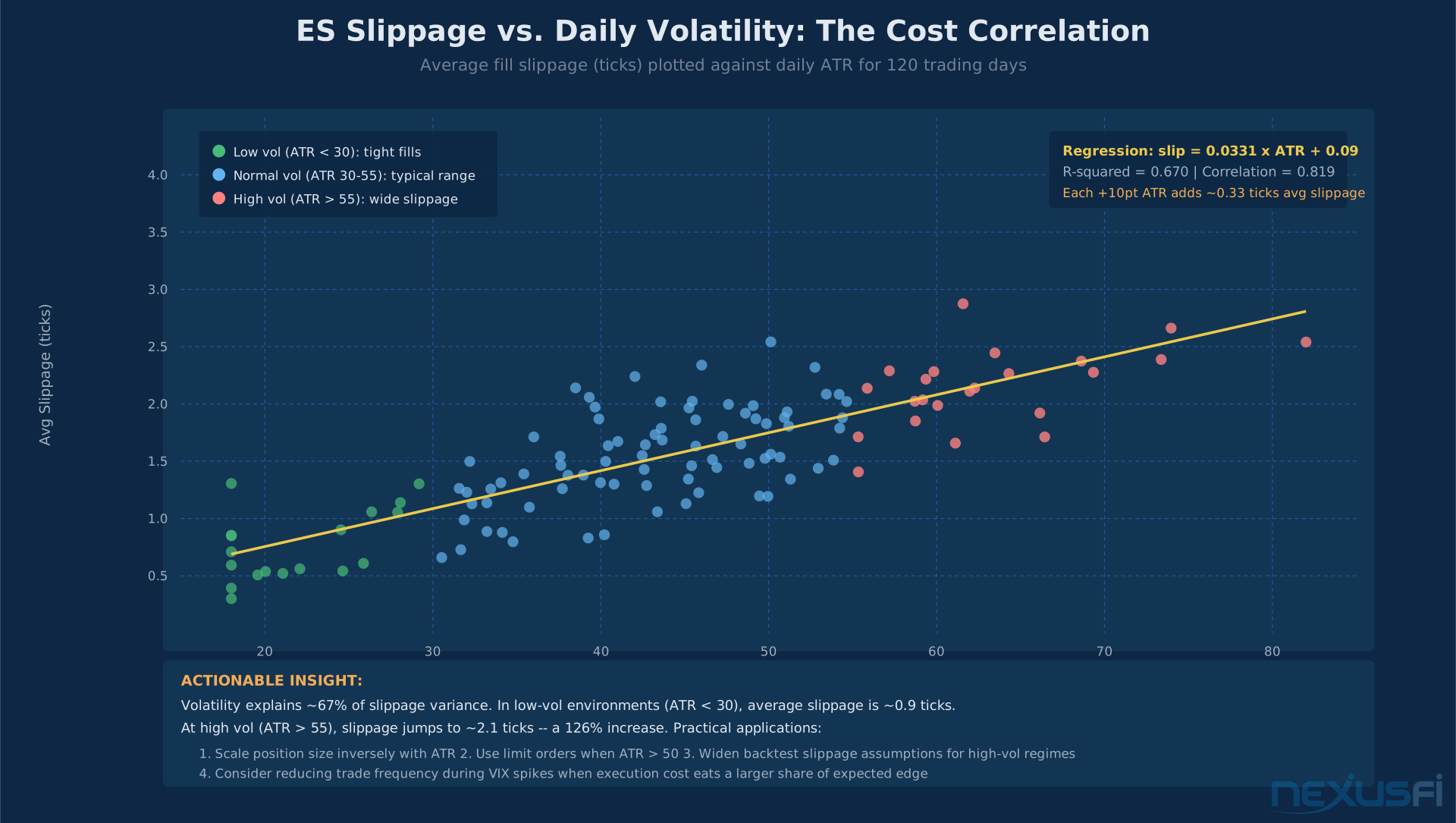
Volatility regime: Slippage scales with volatility. Track average ATR or VIX on high-slippage days vs. low-slippage days. The correlation is strong and actionable.
Contract size relative to book depth: For liquid contracts (ES, NQ), 1-10 contracts have near-zero market impact. 50+ contracts start moving your market. Know your contract's typical top-of-book depth relative to your order size.
Roll periods: Liquidity migrates from front month to back month in the 3-5 days before first notice day or expiration. During this window, effective spreads widen and slippage increases even on normally liquid instruments.
@djkiwi's analysis of CL autotrading showed that on-market orders with tight targets can produce slippage and commission costs exceeding 30% of gross P&L — "equivalent of playing roulette with 11 zeros on the roulette wheel." The fix was moving to limit order entries with wider targets that created room for the execution cost burden. The insight is transferable: cost structure must be calibrated to strategy structure. [1]
Understanding Market Impact #
Market impact is slippage caused by your own orders. It's relevant when your size represents a meaningful fraction of displayed liquidity.
Temporary vs. Permanent Impact #
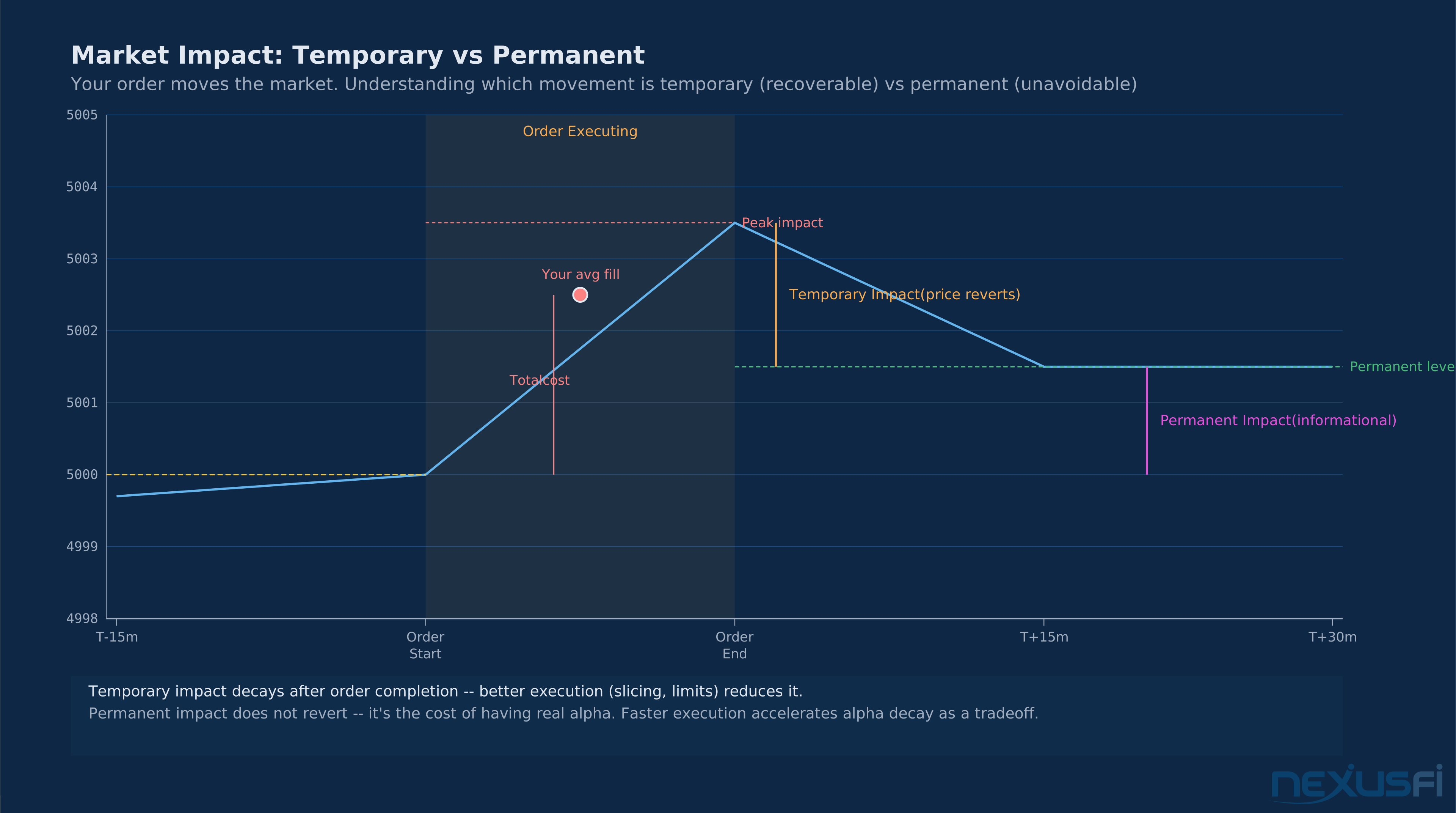
Temporary impact: The price pressure your order creates that dissipates after you've finished executing. When a 100-lot market buy hits the ES, it temporarily pushes price up. Once the order is absorbed, price partially reverts — but you've already filled at the higher prices. This reversion is the temporary impact component.
Permanent impact: Price change that persists after your execution. This happens when your trade is informative — when you're trading based on information that genuinely changes the market's fair value. For most automated retail strategies, permanent impact is minimal. For strategies with genuine, durable alpha, permanent impact can be significant.
The practical distinction: temporary impact can be reduced through better execution (order slicing, pacing, limit orders). Permanent impact generally can't — it's the price you pay for your alpha. Trying to reduce permanent impact usually means executing more slowly, which accelerates alpha decay. This trade-off is the core tension of execution for high-conviction strategies.
Market Impact Thresholds by Product #
For ES futures during RTH:
- 1-5 contracts: Impact negligible. You're within normal noise.
- 10-20 contracts: Measurable 0.25-0.5 tick impact on market orders, depending on real-time depth.
- 50+ contracts: 0.5-2 tick impact common.
- 200+ contracts: Need to slice execution across time; single-order execution moves the market materially.
For thinner markets (CL, GC, ZB), these thresholds shift down by 80-90%. A 10-lot market order in ZB during the overnight session can have more impact than a 100-lot in ES during RTH. Always calibrate to your specific product and session.
Measuring Your Impact #
The cleanest measurement: compare your fill to the midprice 5-15 minutes after your execution. If prices systematically revert after you buy (or advance after you sell) and then partially recover, you're observing temporary impact. If prices don't revert, your impact was more permanent.
As @Fat Tails explained regarding limit order mechanics: a market order is a liquidity-seeking order that takes away liquidity from the exchange, while a limit order adds liquidity. The cost structure is at the core different — market orders pay the spread plus any impact; limit orders earn the spread (if filled) but introduce fill uncertainty. TCA must account for this tradeoff, not just measure raw slippage on completed fills. [6]
Track post-trade reversion for your strategy. If you consistently see price move 1-2 ticks against you within the first 5 minutes after entry and then recover, that's temporary impact from your own execution. Slicing into smaller child orders or using limit orders would reduce this leakage. The pattern is clearest when you plot average midprice change from T+1 minute to T+15 minutes relative to your fill.
Segmenting and Attributing Results #
Measurement gives you numbers. Attribution tells you why those numbers are what they are. This is where TCA shifts from accounting to diagnosis.
The Attribution Framework #
Split your execution costs into layers:
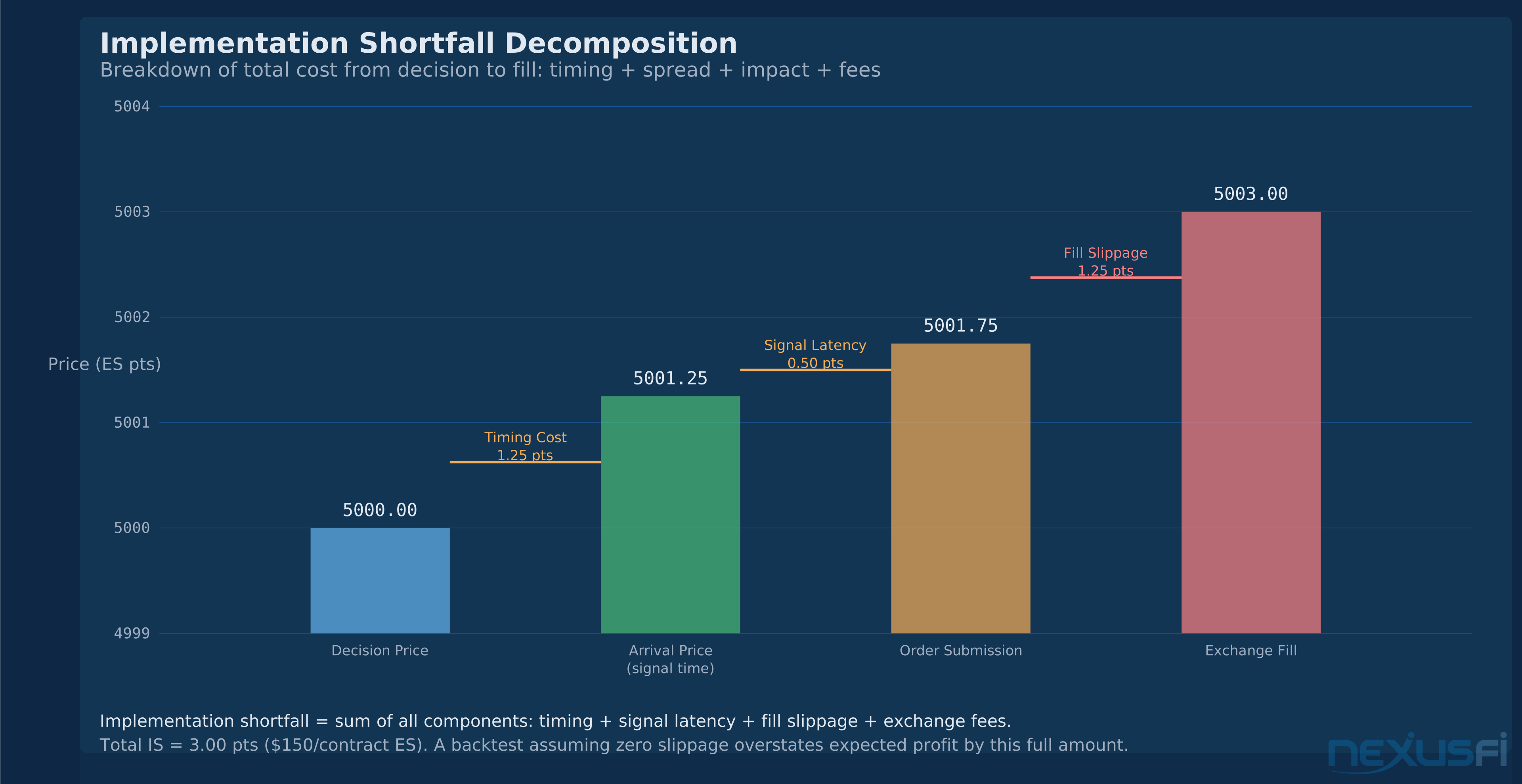
Spread component: Half the bid-ask spread at time of fill. This is the price of liquidity on demand. On ES during RTH, approximately $6.25 per contract per one-way. Unavoidable with market orders; tradeable (with fill risk) using limit orders.
Timing component: The price movement between your decision signal and your fill. Measured as midprice change from signal time to fill time. Long entry where midprice moved up 1 tick between signal and fill = 1 tick timing cost. This directly measures signal-to-fill latency damage.
Impact component: Your own order moving the market. Measured by midprice change during and immediately after your order activity.
Residual slippage: Everything that doesn't fit the above — queue position effects, exchange matching nuances, network latency variability, partial fill pricing.
Diagnostic Questions #
Good TCA generates these findings:
- Is slippage stable or regime-dependent? High variance slippage suggests execution during different liquidity regimes. Filter by session, by volatility band, and compare.
- Is slippage correlated with volatility? If yes (common), your strategy executes in high-volatility windows. Consider scheduling execution away from known volatility events.
- Does slippage increase with order size? If yes, you're experiencing market impact. The fix is order slicing over time.
- Are limit orders better net of fill rate? Calculate total effective cost of limit orders (slippage + missed opportunity cost from non-fills) vs. market orders (slippage but 100% fill rate). The answer depends on your strategy's time urgency.
- Is the simulation-to-live gap consistent? If backtest slippage was $5 per contract and live is $15, you have a systematic bias in your simulation assumptions. Fix the model, not your live execution logic.
The last point matters most. Strategies that fail in live trading because of slippage almost always failed because the backtest model was too optimistic — not because execution logic was bad. You can't trade your way out of a bad fill assumption; you need to re-evaluate whether the strategy has edge after realistic costs.
The Optimization Feedback Loop #
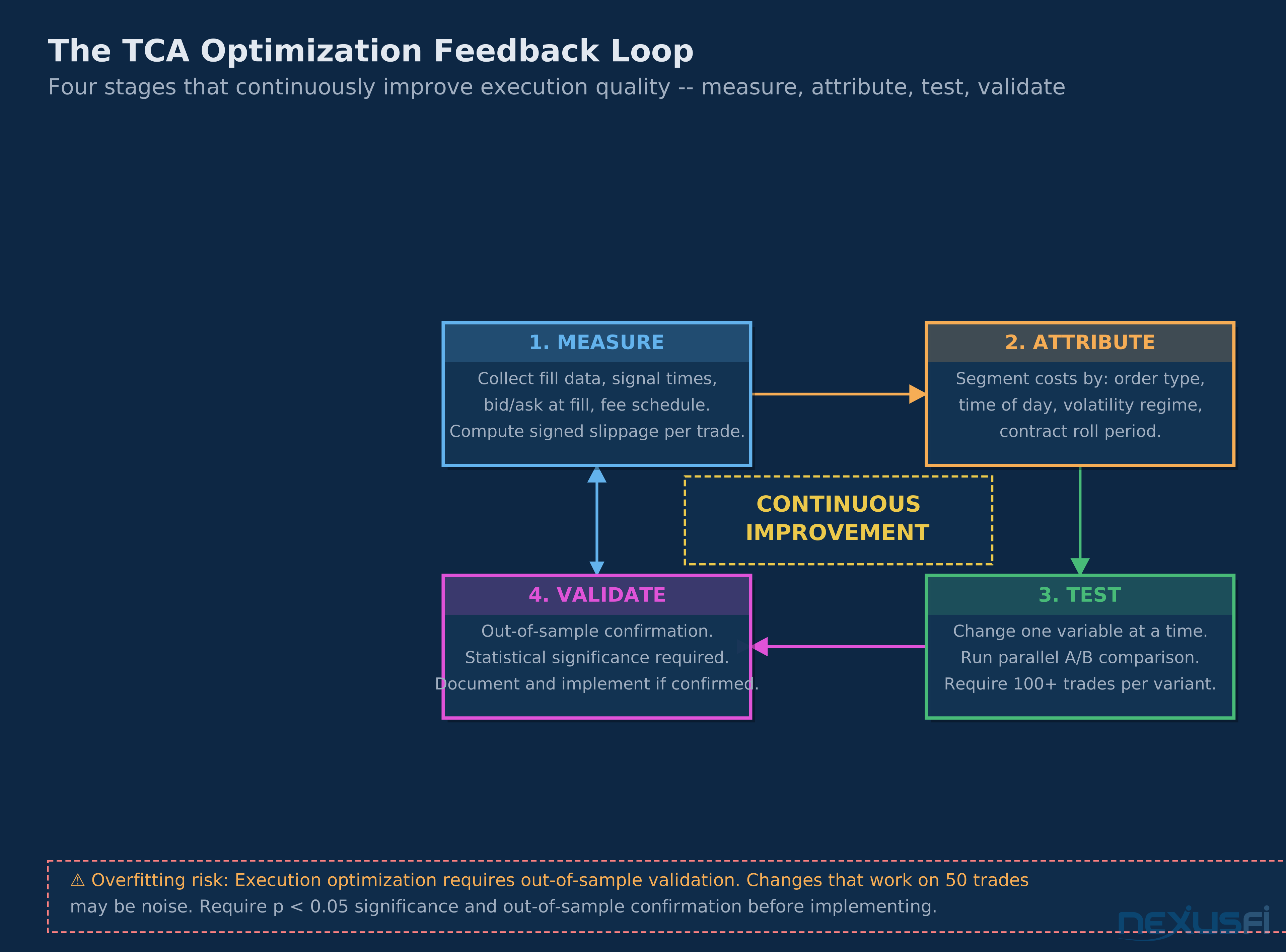
Measurement and attribution are only useful if they change behavior. The TCA feedback loop runs through four stages:
1. Establish Baselines #
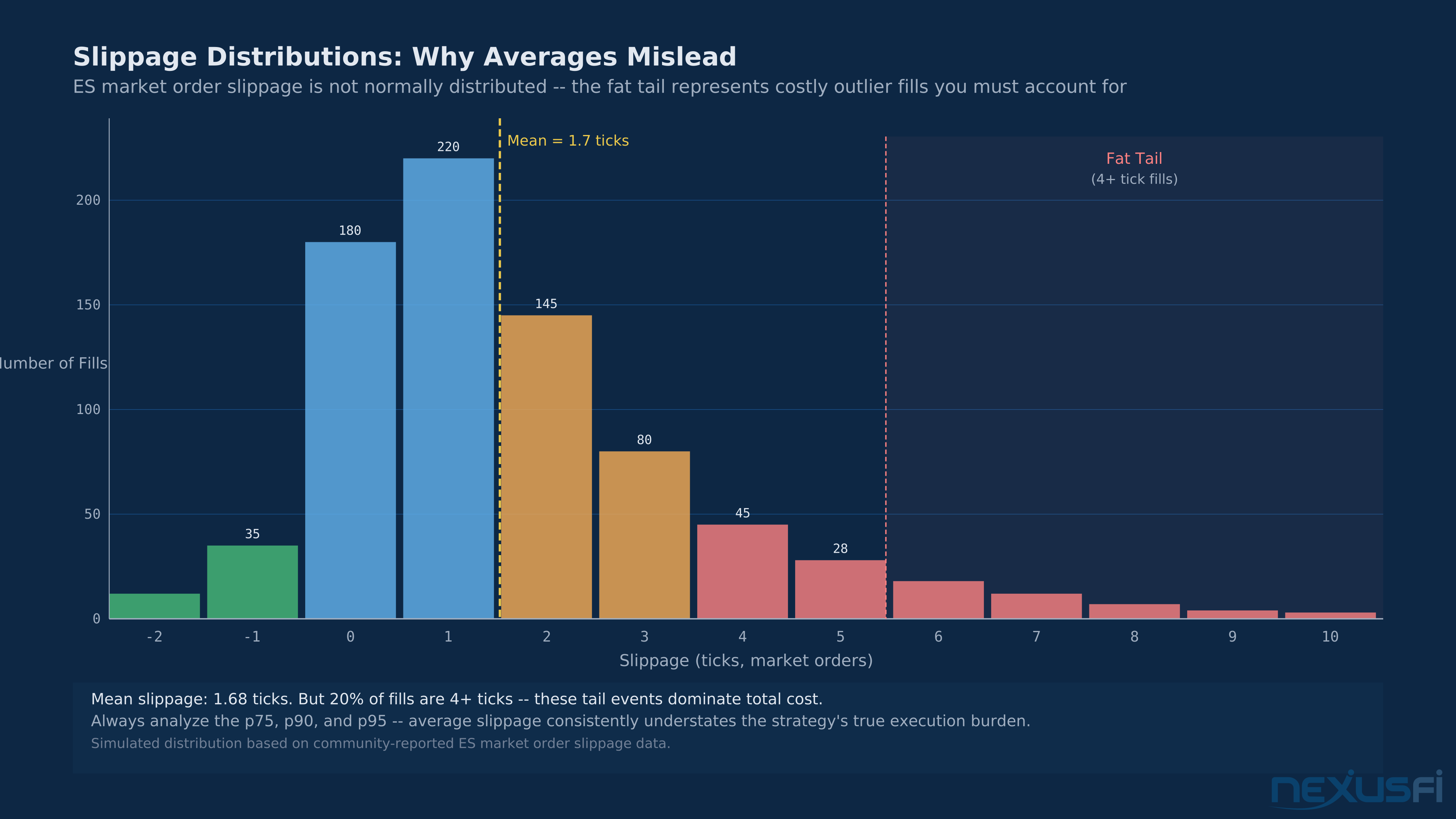
Before optimizing anything, run your strategy for at least 200-300 trades to establish statistically meaningful cost baselines. Fewer than that and you're reacting to noise — cost distributions are fat-tailed and a handful of extreme fills can distort averages severely.
Minimum baseline metrics:
- Average slippage per entry (signed, in ticks)
- Average slippage per exit (signed, in ticks)
- Slippage percentile distribution (p25, p50, p75, p95)
- Fill rate for limit order components
- Cost by time of day (hourly buckets)
- Cost by volatility quintile
2. Identify the Driver #
What's causing your execution cost?
- Primarily spread crossing → consider limit orders for entries
- Primarily timing cost → investigate latency (signal delay, order routing, network hops)
- Primarily market impact → slice orders, reduce participation rate
- Primarily adverse selection → evaluate whether passive execution adds or removes edge overall
- Primarily roll-period spikes → filter or schedule around roll windows
3. Test Modifications #
Change one variable at a time. If market orders are too costly, test a limit-order variant. Run both in parallel at small size, then compare TCA metrics across 100+ trades.
The trap: optimizing execution in isolation from strategy metrics. Switching from market orders to limit orders may reduce slippage but increase opportunity cost if the strategy depends on catching moves at the open. The net outcome — slippage saved minus edge lost to missed entries — must be positive.
4. Guard Against Overfitting #
Execution optimization can overfit as badly as strategy optimization. If you tune entry timing to a 6-month dataset, you risk optimizing to that period's specific liquidity patterns.
Guardrails:
- Require statistically significant improvement (p < 0.05) before implementing any change.
- Walk-forward test execution changes — use out-of-sample data to validate.
- Implement gradually — don't switch all execution logic at once.
- If you can't explain mechanically why a change should work, it's probably curve-fit.
The optimization loop — Measure → Attribute → Test → Validate — distinguishes professional automated trading from parameter-twiddling. Every execution change requires evidence from both in-sample and out-of-sample data before it goes into production. An execution change that improves performance on the training set but not the test set is as useless as any other backtest artifact.
When TCA Misleads You #
TCA has failure modes. Understanding them prevents expensive wrong conclusions.
Conflating slippage with alpha decay: If your mean-reversion strategy consistently shows negative slippage (you pay more than expected), the cause might not be execution — it might be that your signal is lagged and you're always chasing. Bad signals generate bad fills that look like execution problems.
Wrong benchmark selection: If your strategy operates on a 5-second decision cycle and you benchmark against 30-minute VWAP, the benchmark is meaningless. VWAP doesn't capture what the market was doing when you traded.
Small sample bias: 50 trades is not enough for meaningful TCA. Cost distributions are fat-tailed. You need 200+ trades before average slippage estimates stabilize and before you can detect regime-specific patterns.
Ignoring contract roll distortions: Roll-period trades have completely different cost profiles from normal-session trades. Mixing them distorts both sets of statistics. Separate them.
Averaging across session types: RTH and Globex trading have completely different cost profiles. Never average the two into a single slippage figure. Segment them.
Treating missed fills as invisible: A limit-order strategy that misses 20% of entries isn't suffering 0% opportunity cost on those misses. The visible slippage on completed fills looks great; the effective strategy P&L includes the cost of missed trades. You need opportunity cost in the analysis.
Optimizing execution without re-evaluating alpha: If your strategy barely breaks even after execution costs are properly modeled, the answer is rarely to improve execution. The answer is to question whether the alpha is real. Execution optimization can rescue a strategy that has edge but poor implementation. It can't resurrect a strategy without edge.
Data Requirements and Practical Setup #
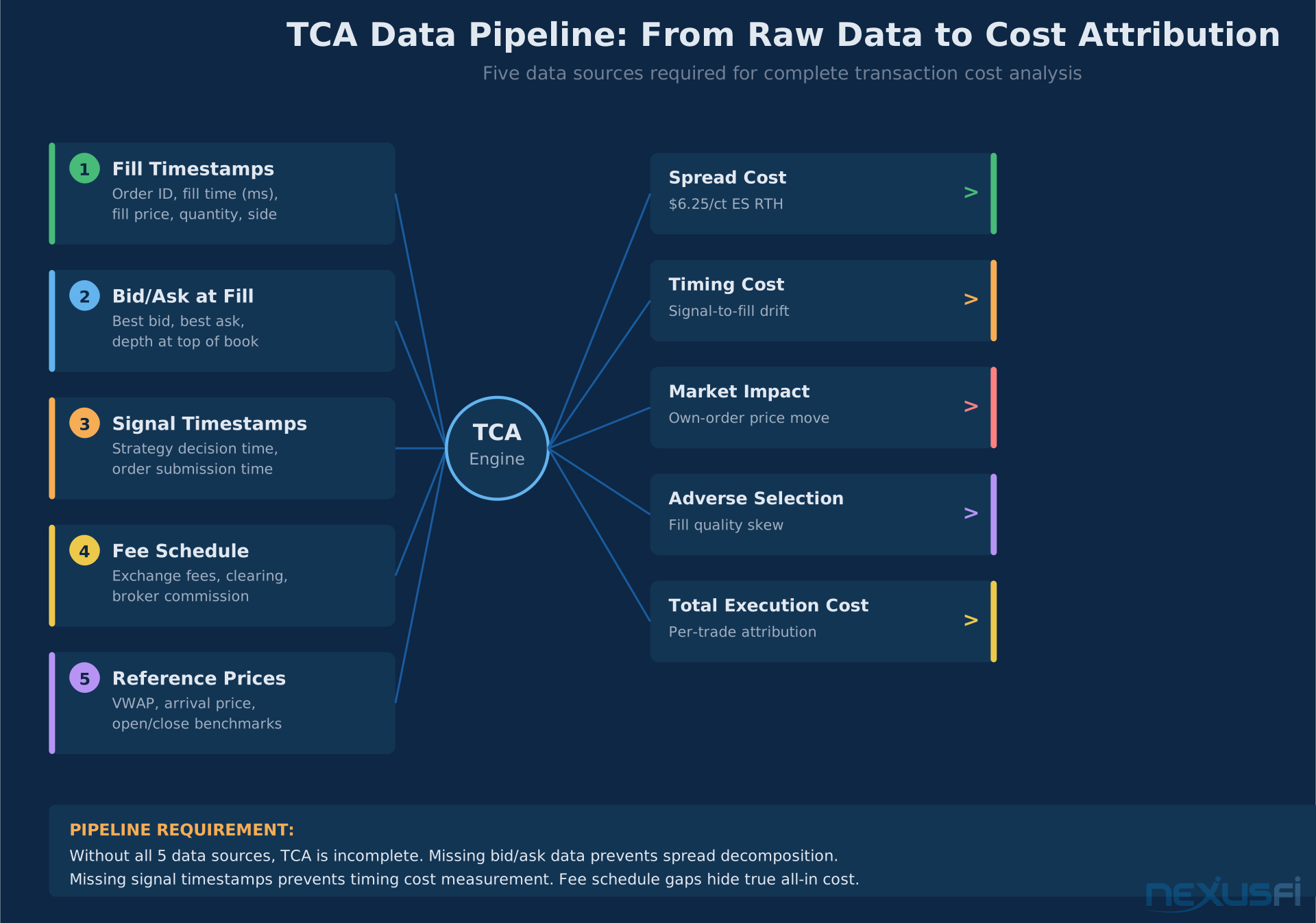
You can't run TCA without the right data. Minimum requirements:
Fill records: Timestamp (millisecond or better), instrument, side (buy/sell), quantity, fill price, order type, commission. Most algo platforms export this automatically.
Market data at fill time: The bid and ask prices at the moment of each fill. This requires tick-level bid/ask data, not just trade prints. If you don't have this, you can use trade price as a proxy for market orders, but limit-order analysis becomes imprecise.
Signal timestamps: When your strategy generated the entry/exit signal. The gap between signal time and fill time is your timing cost component. Many backtest platforms don't record this — add explicit logging at the signal generation step.
Reference prices: VWAP, previous close, open price, depending on your chosen benchmarks.
Fee schedule: Your actual per-contract all-in cost broken down by exchange fee, clearing fee, and broker markup. Bundled "all-in" rates hide the breakdown and make it impossible to compare across brokers.
With these five data sources, you can run complete TCA. Without bid/ask data at fill time, you're limited to analyzing final fill quality rather than decomposing spread costs from timing costs.
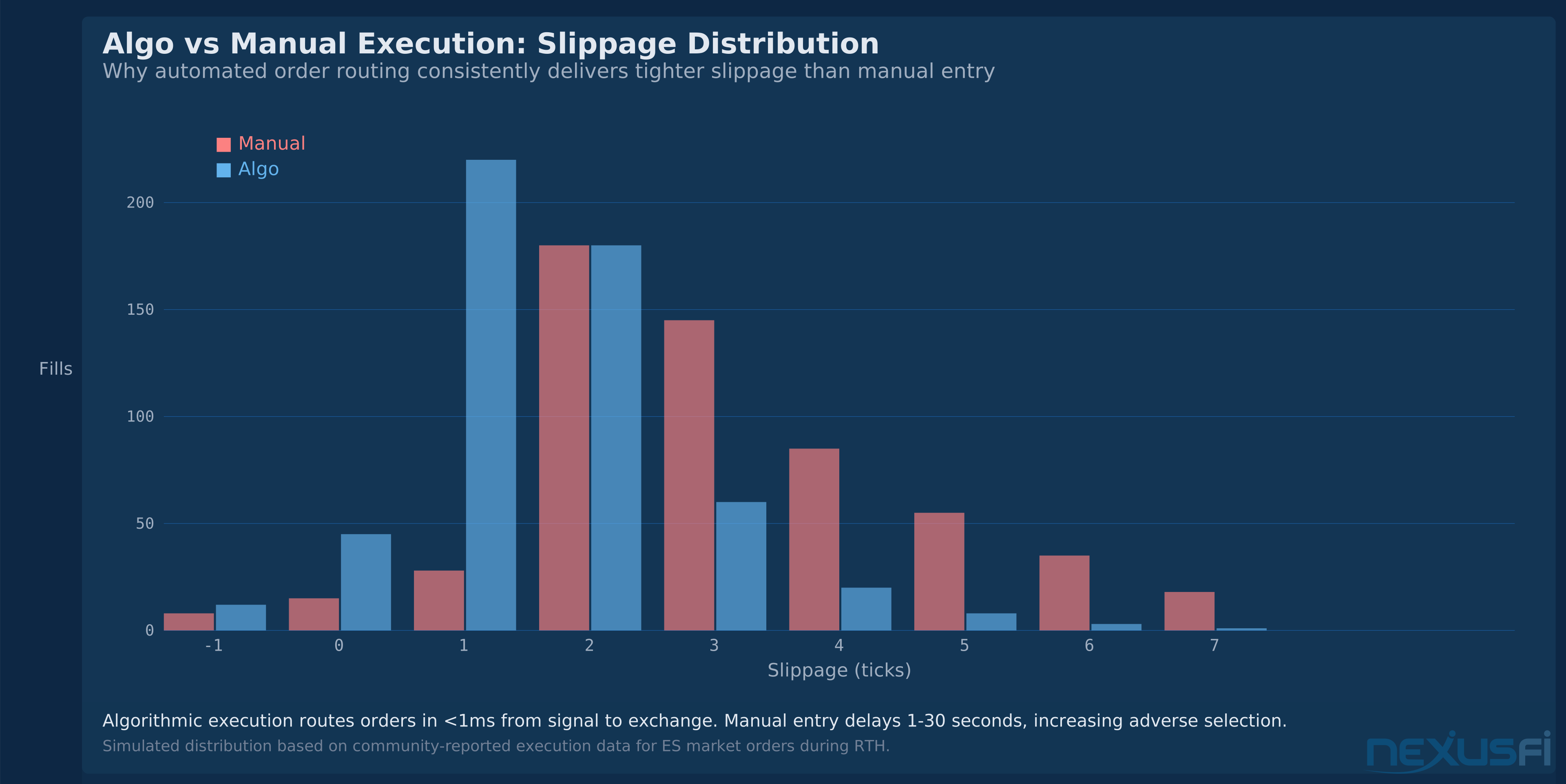
Log signal timestamps separately from order submission timestamps. Signal-to-order latency (typically 1-50ms in a local automated system) and order-to-fill latency (10-200ms including network round-trip to exchange) have different causes and different fixes. Without separate logging, you can't distinguish between a slow signal generator and a slow order router. The former is a coding problem; the latter is an infrastructure problem.
Citations #
[1] @djkiwi, "Autotrading Slippage compared to Replay," NexusFi NinjaTrader, October 2012. https://nexusfi.com/showthread.php?t=23778&p=271841#post271841
[2] @Fat Tails, "Comparing Index Futures," NexusFi The Elite Circle, July 2010. https://nexusfi.com/showthread.php?t=4861&p=53627#post53627
[3] @Fat Tails, "Expected slippage vs order size," NexusFi Psychology and Money Management, September 2010. https://nexusfi.com/showthread.php?t=5671&p=64446#post64446
[4] @bobwest, "NinjaTrader Brokerage and Slippage," NexusFi Brokers, September 2022. https://nexusfi.com/showthread.php?t=58857&p=871454#post871454
[5] @Fat Tails, "Relationship between Minis and CL," NexusFi Commodities, April 2011. https://nexusfi.com/showthread.php?t=9602&p=116334#post116334
[6] @Fat Tails, "Buying the Ask; Selling the Bid," NexusFi Traders Hideout, October 2011. https://nexusfi.com/showthread.php?t=14524&p=165752#post165752
[7] @Big Mike, "Automated DayTrading: Market Replay vs. Live SIM," NexusFi Elite Algorithmic NinjaTrader, December 2011. https://nexusfi.com/showthread.php?t=15578&p=173946#post173946
[8] @artemiso, "Autotrading Slippage vs Replay," NexusFi NinjaTrader, October 2012. https://nexusfi.com/showthread.php?t=23778&p=271832#post271832
[9] @kobo, "How to account for slippage when backtesting?," NexusFi Commodities, January 2022. https://nexusfi.com/showthread.php?t=58053&p=858877#post858877
[10] @bobwest, "Max contracts on 5min emini without influencing the market," NexusFi Emini and Emicro Index, November 2020. https://nexusfi.com/showthread.php?t=56173&p=825741#post825741
[11] @JonnyBoy, "VWAP for stock index futures trading?," NexusFi Emini and Emicro Index, May 2019. https://nexusfi.com/showthread.php?t=46813&p=715685#post715685
[12] A. Perold, "The Implementation Shortfall: Paper vs. Reality," Journal of Portfolio Management, 14 (Spring 1988), pp. 4-9. See also: Quantitative Brokers, "A Brief History of Implementation Shortfall." https://www.quantitativebrokers.com/blog/a-brief-history-of-implementation-shortfall
[13] CME Group, "Alternative Liquidity Measures," CME Group Education, 2019. https://www.cmegroup.com/education/articles-and-reports/alternative-liquidity-measures
Knowledge Map
Prerequisites
Understand these firstGo Deeper
Build on this knowledgeReferences This Article
Articles that build on this topicCitations
- — Autotrading Slippage compared to Replay (2012) 👍 23
- — Comparing Index Futures (2010) 👍 68
- — Expected slippage vs order size (2010) 👍 8
- — Ninjatrader Brokerage and Slippage (2022) 👍 5
- — Relationship between Minis and CL (2011) 👍 7
- — Buying the Ask; Selling the Bid - better than placing Market orders? (2011) 👍 14
- — Automated DayTrading: Market Replay vs. Live SIM. Why are results different? (2011) 👍 10
- — Autotrading Slippage compared to Replay (2012) 👍 3
- — How to account for slippage when backtesting? (2022)
- — What is the max # of contracts to trade on 5min emini without influencing the market? (2020) 👍 3
- — VWAP for stock index futures trading? (2019) 👍 8
- — The Implementation Shortfall: Paper vs. Reality / A Brief History of Implementation Shortfall (1988)
- — Alternative Liquidity Measures (2019)