



Futures Position Limits: Exchange Accountability Levels, CFTC Rules, and What Every Scaling Trader Must Know
Overview #
Most futures traders never think about position limits — until the day their broker calls and says their order was rejected, or the CFTC sends a letter asking them to file Form 40. At that point, they're already past the threshold and scrambling to understand a regulatory framework they should have mapped out months earlier.
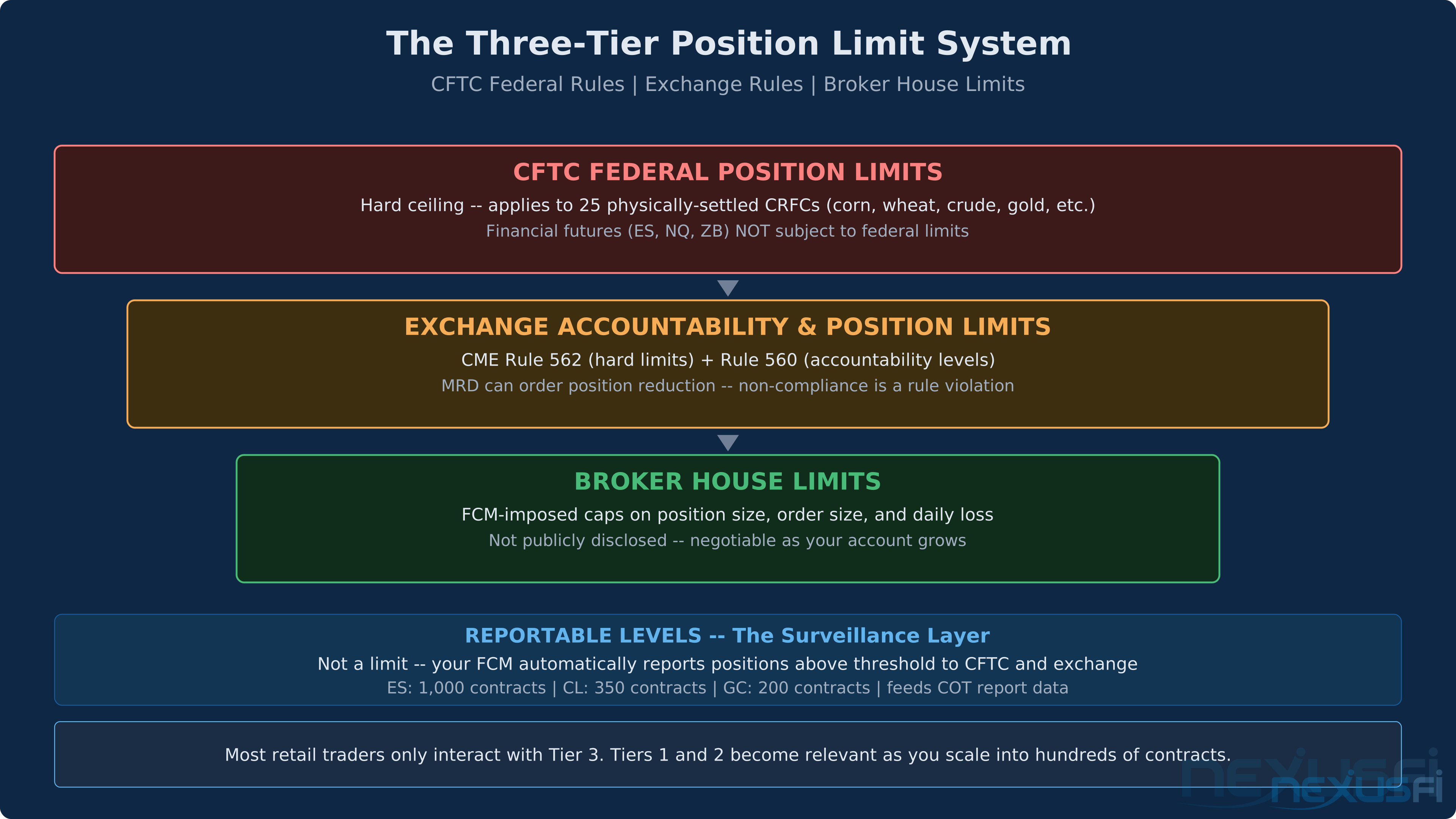
Position limits exist at three distinct levels: federal rules set by the CFTC, exchange rules set by CME Group and other DCMs, and broker-imposed house limits that sit entirely below the regulatory thresholds. Most retail traders only ever interact with the broker layer, which is the most practical and immediate constraint. But as you scale — whether in contract size, account count, or product diversity — the regulatory layers start mattering in ways that can surprise you at exactly the wrong moment.
Here's how the entire system works, from the CFTC's 25 core referenced futures contracts down to the default position caps your FCM applies to new accounts, and what you need to do at each threshold.
Key Concepts #
Position Limit — A hard ceiling on the number of contracts a market participant may hold or control in a specific product. Exceeding a position limit is a rule violation with real consequences: exchange fines, forced liquidation, potential CFTC enforcement action. Position limits are enforced on a net futures-equivalent basis.
Position Accountability Level — Not a hard limit, but a surveillance trigger. When your position exceeds the accountability level, the exchange's Market Regulation Department (MRD) may contact you to explain your position, strategy, and hedging intent. You can exceed accountability levels without violating any rule — but if the MRD orders you to reduce your position, compliance isn't optional. As CME Group's RA2601-5 advisory states: any market participant exceeding an accountability level is deemed to have consented to not further increase positions and to comply with any reduction order from the Department.
Reportable Level — The threshold at which your broker (as a registered FCM) is legally obligated to report your position to the CFTC and the exchange. This feeds the large trader reporting system that underlies the COT reports. The CFTC uses this data to monitor for concentration risk, potential manipulation, and disorderly market conditions.
Bona Fide Hedge — An exemption from speculative position limits for traders who hold offsetting positions in the physical commodity or have a legitimate commercial hedging need. Grain elevator operators, oil refiners, airlines managing jet fuel costs — these entities can hold positions above speculative limits if they qualify. The exemption requires documentation and, depending on size, pre-approval from the exchange and/or CFTC.
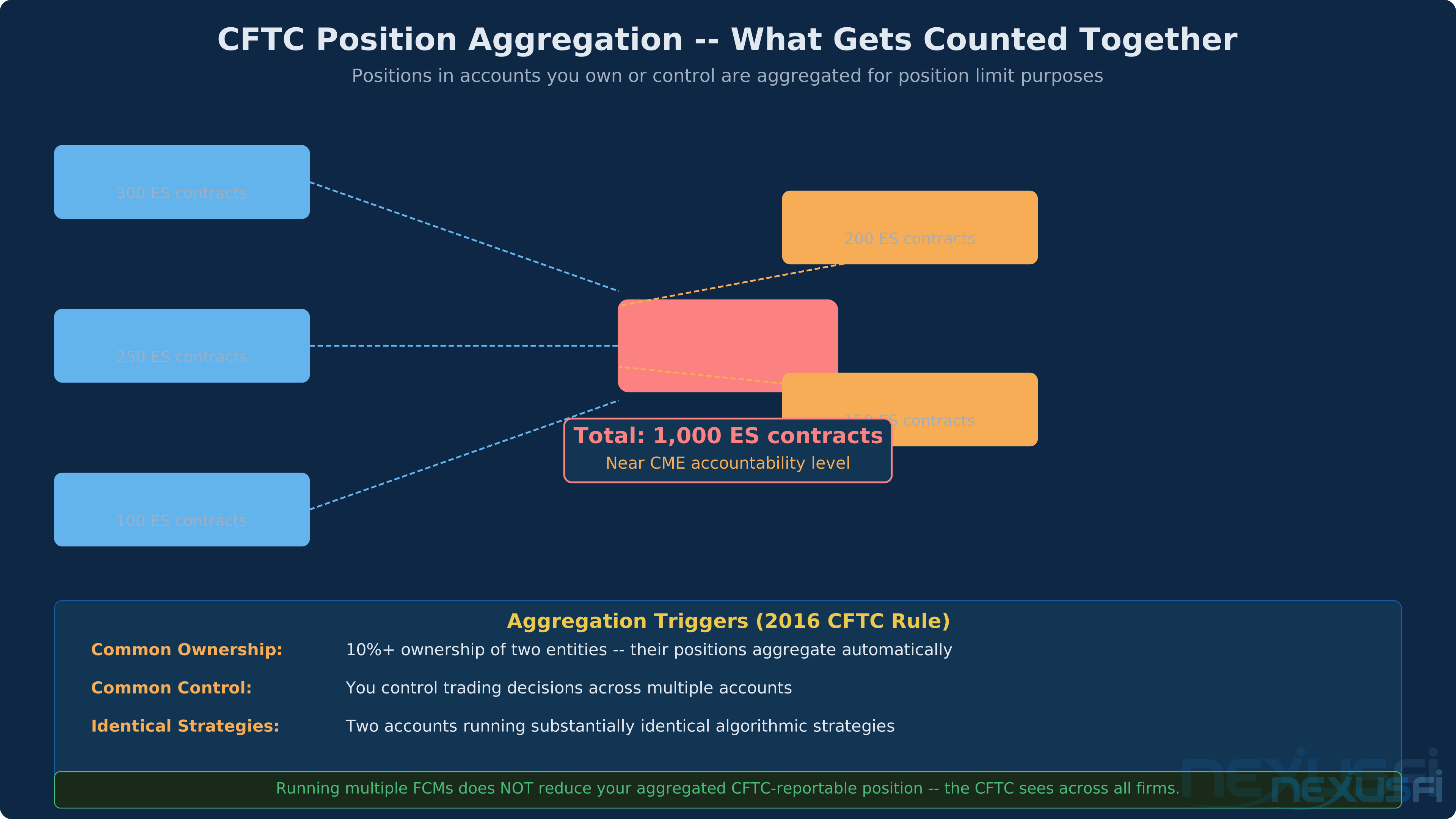
Aggregation — The CFTC requires position limits to be calculated on an aggregated basis across all accounts you own or control. Hold 500 contracts in your personal account, 300 in your LLC, and 200 in a trust you control? That's 1,000 contracts for position limit purposes. The 2016 Aggregation Rule tightened this much — common ownership, common control, and substantially identical trading strategies all trigger aggregation.
The Three-Tier System #
Understanding who sets which limits and why matters for knowing where your actual constraints come from.
Tier 1: CFTC Federal Speculative Position Limits #
The CFTC's 2020 Final Rulemaking established federal speculative position limits for 25 physically-settled core referenced futures contracts (CRFCs). These cover the major agricultural, energy, and metals markets — think corn, soybeans, wheat, crude oil, natural gas, gold, silver, copper. Critically, financial futures — ES, NQ, ZB, ZN, 6E, 6B — are NOT subject to CFTC federal position limits. The CFTC's authority here applies to physical commodity derivatives specifically.
For contracts subject to federal limits, the rules break down into two periods:
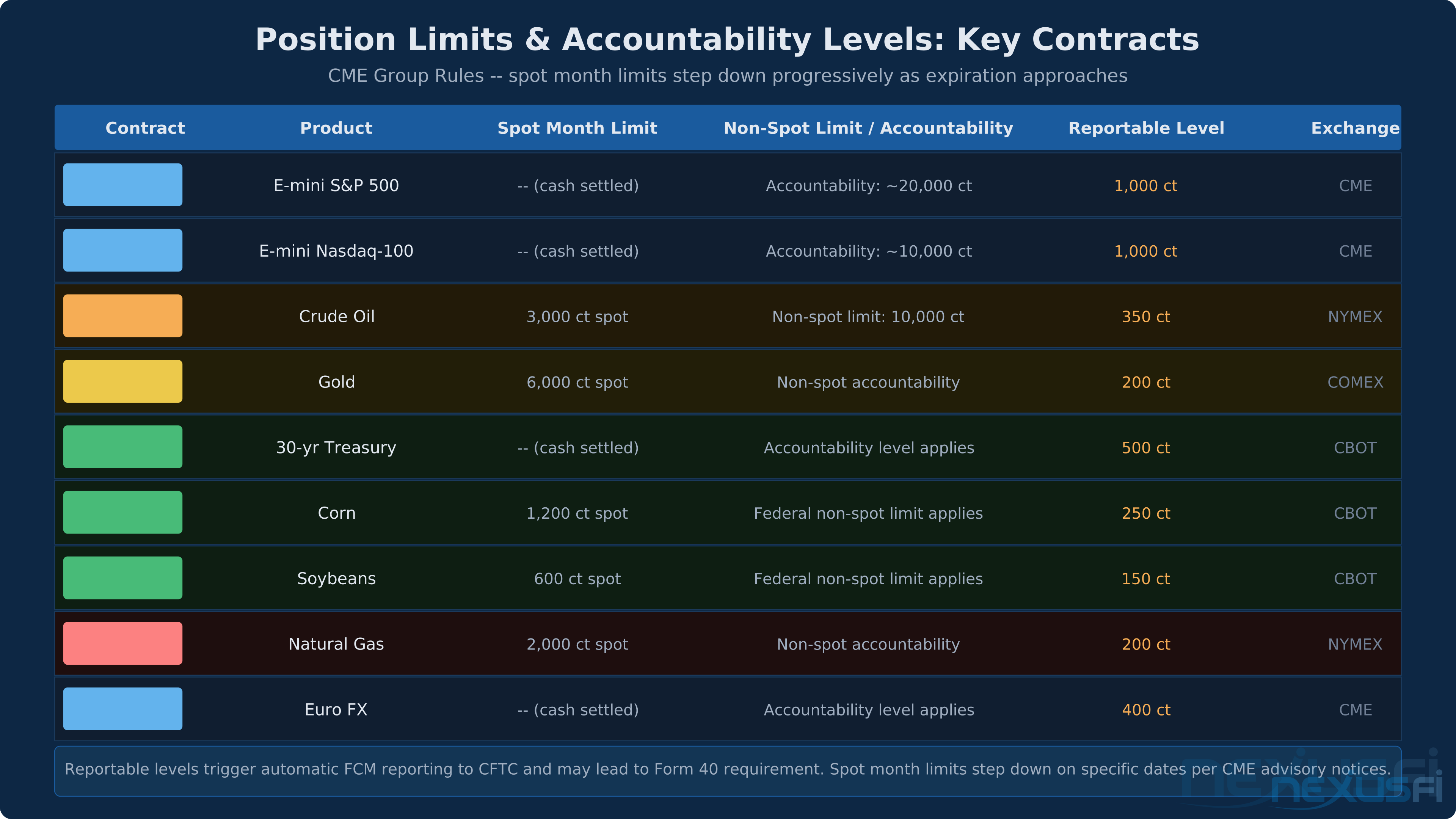
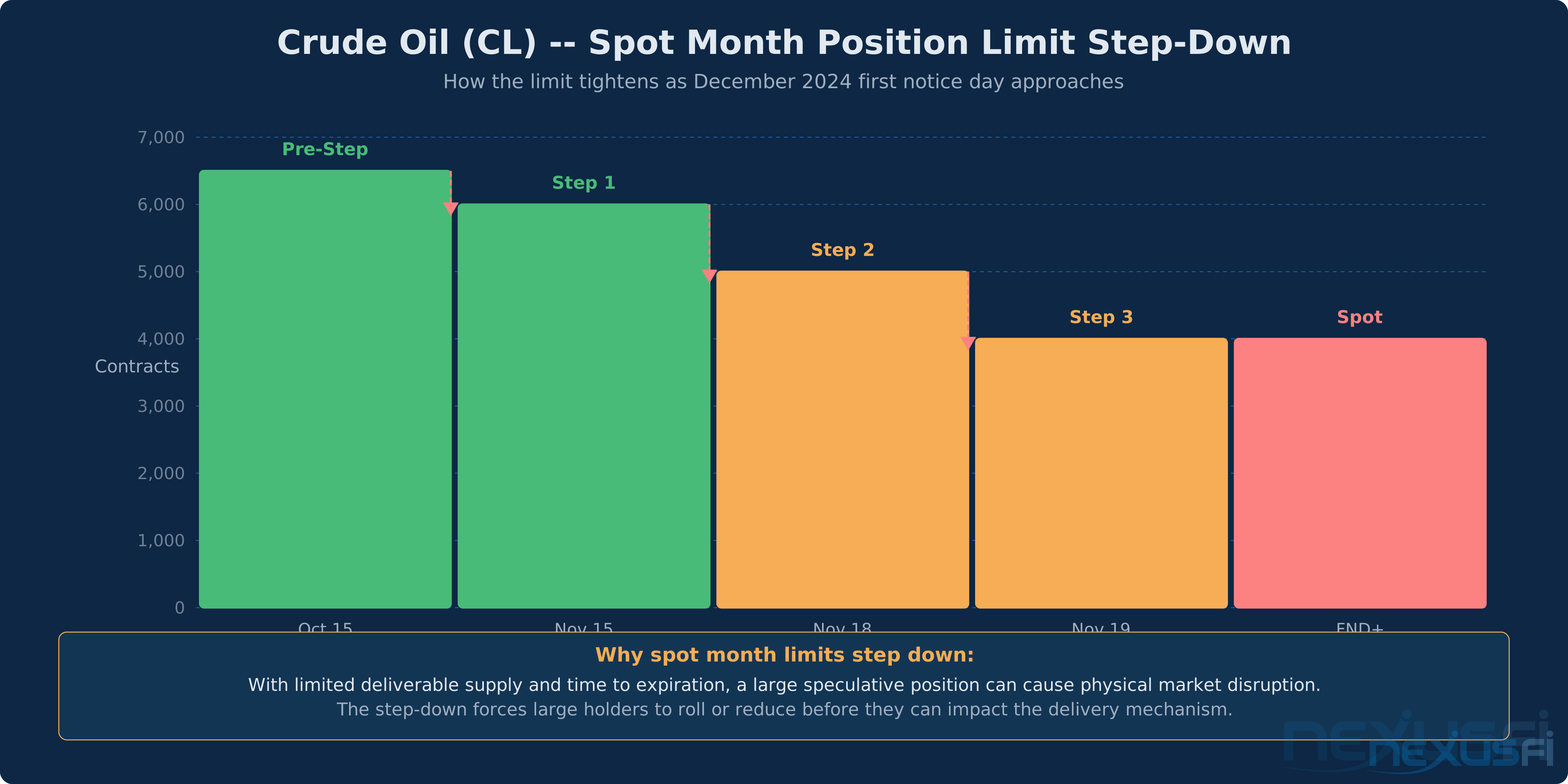
Spot Month Limits apply during the period approaching contract expiration (typically the last few weeks before delivery). These are set at or below 25% of estimated deliverable supply for physically-settled contracts. For CL crude oil, the spot month limit steps down dramatically as you approach expiration: starting around 6,000 contracts roughly 15 days out, then stepping to 5,000, then 4,000 as first notice day approaches. Once in the spot month, cash-settled and physically-settled contracts cannot be netted against each other.
Non-Spot Month Limits apply to the 9 legacy agricultural contracts outside the spot month. The formula: 10% of open interest for the first 50,000 contracts, plus 2.5% of open interest above that threshold. For the 16 non-legacy contracts (energies, metals), there are no federal non-spot month limits — those are governed by exchange-set rules.
The practical takeaway: for most futures traders, CFTC federal limits are not your binding constraint. You'd need to be running thousands of contracts in physical commodity markets before the federal tier becomes directly relevant. But the reporting infrastructure that supports these limits absolutely affects you at much smaller sizes.
Tier 2: Exchange Position Limits and Accountability Levels #
CME Group sets position limits and accountability levels for all contracts traded on CME, CBOT, NYMEX, and COMEX. For contracts subject to federal position limits, CME's own limits cannot exceed the federal level. For contracts not subject to federal limits — the equity index and rate futures most traders care about — CME has full discretion.
Per CME Group Rule 562, position limits are hard floors. Rule 560 governs accountability — a softer trigger that initiates monitoring and potential intervention. Here's how CME calculates positions for accountability purposes using three methods, and any one method triggering the threshold puts you in accountability status:
- Net futures-equivalent basis — includes contracts that aggregate into base contracts (e.g., E-mini ES and Micro E-mini MES both aggregate into the full-size SP contract for limit purposes)
- Net futures-only basis — strips out options, looks at pure futures exposure
- Options per quadrant — long calls, long puts, short calls, short puts evaluated gross per quadrant
For ES/MES specifically: there's no hard position limit in the traditional sense for non-spot months. The accountability system kicks in at the levels disclosed in CME's Position Limit Table (accessible via the market regulation section of CME's rulebook for each exchange). These levels are in the thousands of contracts for major products like ES.
For commodity products on NYMEX and COMEX, hard limits apply. The CL crude example from
One contract = 1,000 barrels, so the spot month limit represents 3 million barrels of crude exposure — the kind of position that only large commercial participants routinely approach.
When you exceed an accountability level (not a limit), the exchange's Market Regulation Department has explicit authority per CME Group's advisory notices to:
- Require you to not further increase positions
- Require you to reduce positions to a specific level
- Require you to comply with any limit on position size they specify
Failure to cooperate can result in disciplinary action independent of any rule violation. The key distinction: exceeding an accountability level isn't itself a violation, but ignoring a reduction order is.
Tier 3: Broker-Imposed (House) Limits #
This is where most retail traders actually live. Your FCM applies its own position limits — often far below exchange accountability levels — based on its risk appetite, your account profile, and current market conditions. These house limits operate completely outside the regulatory framework. They're a business decision your broker makes, and they're not publicly disclosed.
FCM house limits typically exist on three dimensions:
Per-contract limits — Maximum contracts per individual trade entry. A retail FCM might cap individual order submissions at 100 contracts regardless of account size.
Total position limits — Maximum net open position across all products or per product. These are often tied to account equity: if your account has $50,000 and ES overnight margin is $15,000, simple math caps you at 3 contracts. But broker risk systems often apply multipliers that are more conservative than exchange minimums.
Daily loss limits — Not position limits per se, but effectively constrain position size by stopping trading once losses hit a threshold. Some brokers will set these on request; some apply them automatically to new accounts.
And as @Massive l observed: "Usually, any limits that you have on your account can be raised by asking your broker." Both are correct — house limits are negotiable, but you have to initiate the conversation.
The @citikot experience from NexusFi's Brokers forum captures the practical value of these limits: "only thanking that fact that i have loss limit on the broker side i didn't blown out my account. So to request either your broker or to shift to such a broker with built-in risk management capabilities is extremely healthy idea for any trader. Even disciplined one."
Position Reporting: When the CFTC Knocks #
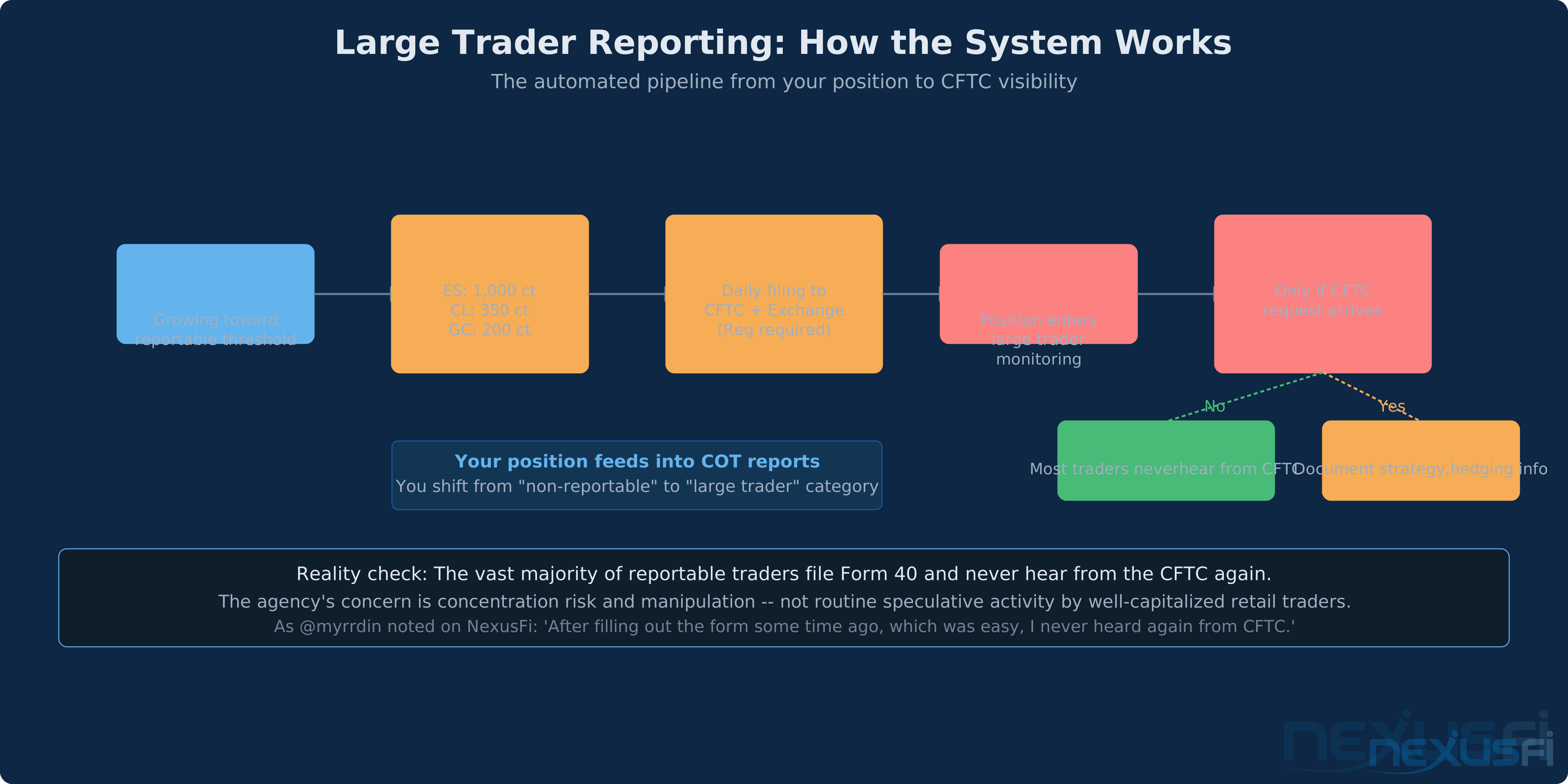
This is where the system gets real for traders scaling into larger positions. The CFTC's large trader reporting system requires your FCM — not you directly — to report your positions to the CFTC when you hit the reportable threshold for a given product.
The reportable level for most CME products is defined in the Position Limit Table. For ES, this is currently 1,000 contracts (futures equivalent). For CL crude oil, it's 350 contracts. For GC gold, it's 200 contracts. These thresholds are surprisingly reachable for well-capitalized retail traders or small funds — a 200-contract gold position represents roughly $4 million in notional value at current prices.
When you cross the reportable threshold, several things happen automatically:
- Your FCM submits daily reports to the CFTC identifying your position, your account, and your firm
- Your position feeds into the Commitments of Traders (COT) report data — you move from the "non-reportable" bucket into the "large trader" category
- If you hit the accountability level, you may receive contact from CME's Market Regulation Department
The Form 40 process works as follows: the CFTC can require any reportable trader to file Form 40 (Statement of Reporting Trader), which asks for your identity, the nature of your position (speculative vs. hedging), and your related cash market activity.
@myrrdin's experience is instructive, and it's representative of what most reportable traders encounter:
For speculative traders whose positions are well within limits, Form 40 is largely an administrative exercise. The CFTC's concern is concentration risk and potential manipulation — a 300-lot retail ES trader doesn't pose systemic risk, and the agency knows it.
One critical nuance that catches traders: aggregation across small contracts. As @SMCJB flagged: "As @myrrdin found out, 25 lots of the 'Bloomberg Commodity Index' contract — which is a tiny contract — fell into the 'other commodity' positions." Any contract without its own specific reportable level falls into an "other commodity" bucket, and thresholds in that bucket can be surprisingly low. If you're trading obscure products, check the reportable level before building size.
The Broker's Role in Reporting #
Your FCM is the entity that actually reports to the CFTC — you're not doing this yourself.
This is standard. Every FCM does this — it's a regulatory requirement, not a privacy concern.
The practical implication: if you're approaching reportable levels, your broker's compliance department already knows before the CFTC does. This is another reason building a relationship with your broker's risk and compliance team matters as you scale.
Aggregation: The Hidden Complexity #
The 2016 CFTC Aggregation Rule much complicated position limit compliance for traders running multiple accounts or entities. The core principle: positions in accounts you own or control are aggregated.
Common ownership triggers aggregation: if you own 10% or more of two entities, their positions aggregate for limit purposes.
Common control triggers aggregation: if you control trading decisions in multiple accounts — even accounts you don't own — those positions aggregate. Fund managers trading managed accounts plus a personal account must aggregate.
Substantially identical trading strategies: two accounts trading the same algorithmic strategy with different initial conditions may trigger aggregation.
The aggregation rule has direct practical consequences:
- Running separate accounts at different FCMs to avoid a single broker's house limit does not reduce your CFTC-reportable position. The CFTC sees across FCMs.
- An LLC you use for tax purposes doesn't create a separate position limit bucket unless the LLC is independently managed with genuinely different strategies
- Introducing broker arrangements don't help — the position still aggregates at the clearing level
There are specific exemptions: independent account controllers (IACs) who can demonstrate genuine independence in trading decisions, certain passive ownership structures below 10%, and positions held for broker-dealer operations. These require documentation and in some cases prior application to the CFTC.
Spot Month Mechanics: The Most Critical Period #
The spot month is when position limits get seriously strict — and when getting caught overloaded has the worst consequences.
What is the spot month? For each futures contract, the exchange defines a period near expiration (usually the last 30 days, tightening further in the final weeks) during which spot month limits apply. These limits are far more restrictive than non-spot month limits because the physical commodity markets underlying the contract are actively being set up for delivery.
Why spot month limits are stricter: With limited time to expiration and constrained deliverable supply, large speculative positions can actually impact physical commodity prices and delivery logistics. A trader holding 4,000 contracts of CL heading into the delivery window has notional control over 4 million barrels of crude oil — the CME spot month limit exists precisely to prevent one participant from cornering deliverable supply.
The step-down structure: Spot month limits don't suddenly engage at a fixed date. They step down progressively. For CL, CME's notices show the December 2024 step-down sequence: initial reduction to 6,000 contracts on November 15, stepping to 5,000 on November 18, then 4,000 on November 19. For physically-settled contracts, the exchange monitors compliance at each step.
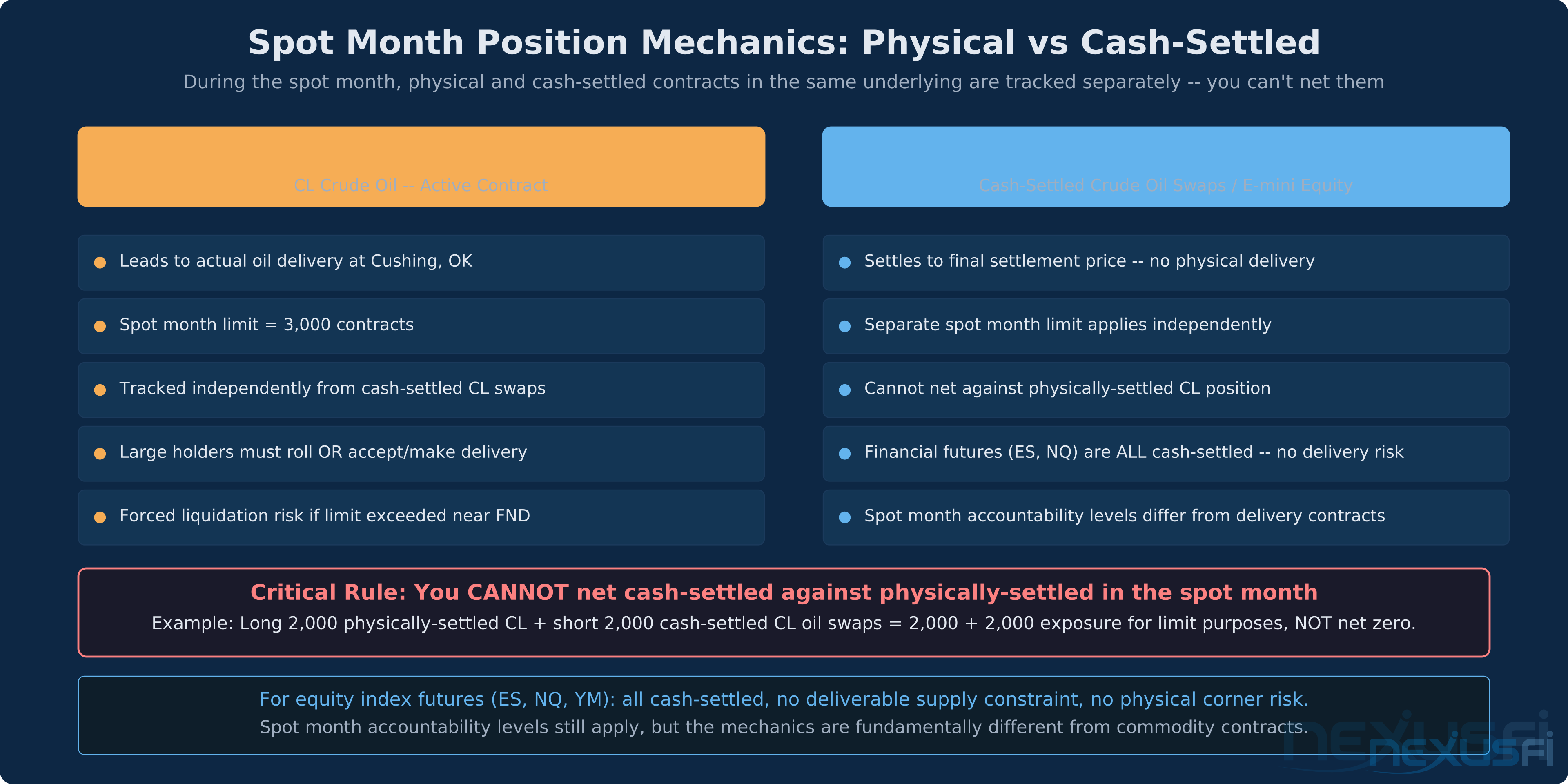
Physical vs. cash-settled treatment in the spot month: This is where it gets complicated and where traders get caught. During the spot month, the CFTC treats physically-settled and cash-settled positions in the same underlying commodity separately for limit purposes. You can hold up to the spot month limit in physically-settled contracts AND up to the spot month limit in cash-settled contracts separately — but you cannot net one against the other. If you're running a spread between physically-settled oil futures and cash-settled oil swaps, you need to track both legs against their respective limits independently.
For non-commodity futures traders: Equity index futures (ES, NQ, YM, RTY) don't have spot month delivery mechanics in the physical commodity sense. Index futures settle to cash based on the index value. There's no deliverable supply constraint. CME still defines a spot month period and applies accountability levels during that window, but the dynamics are at the core different — there's no physical corner risk.
Bona Fide Hedge Exemptions: Getting Above the Line #
If you're a commercial participant with genuine hedging needs, you can apply for a bona fide hedge exemption that allows positions above speculative limits. This is the mechanism that allows airlines to hedge jet fuel, grain processors to hedge wheat, and refiners to hedge crude — all at position sizes that would violate speculative limits.
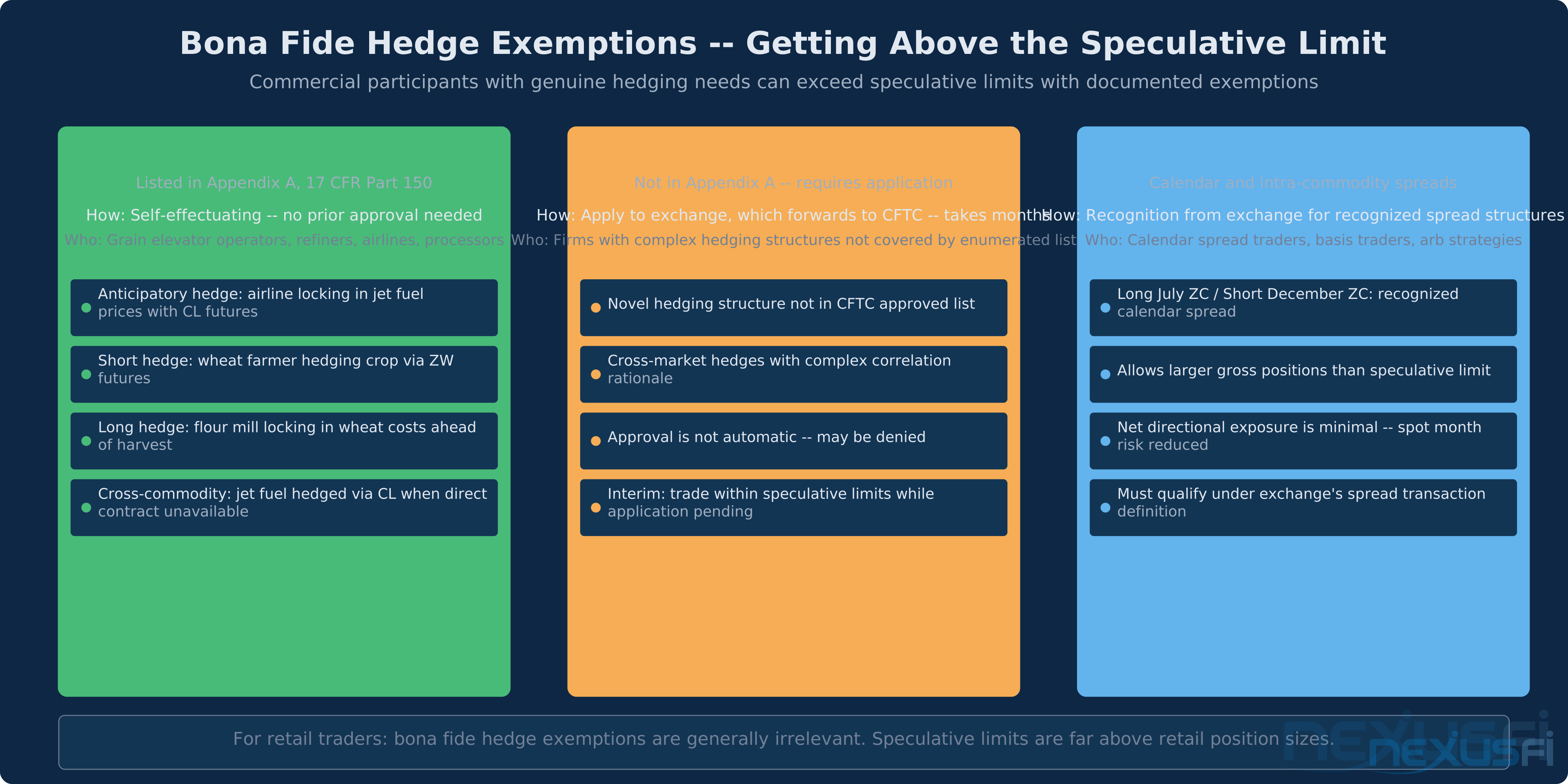
Enumerated bona fide hedges are listed in Appendix A to 17 CFR Part 150 and are self-effectuating — you don't need prior approval from the CFTC, just documentation. These include anticipatory hedges for a business that will need to buy or sell the commodity, short hedges by producers, long hedges by processors, and cross-commodity hedges where the futures contract is "highly correlated" to the underlying exposure.
Non-enumerated hedges require application to the exchange (which passes it to the CFTC). The process involves documenting the commercial exposure, the hedging rationale, and the proposed position size. Approval is not automatic and can take months.
The spread exemption covers situations where your positions in different contract months are offsetting. A trader long July soybeans and short November soybeans at the same size is running a calendar spread — the net directional exposure is minimal. CME grants spread exemptions from spot month limits for recognized spread structures, which allows spread traders to operate larger gross positions than speculators.
For retail traders, hedge exemptions are generally irrelevant — the speculative limits are far above where retail activity occurs. But for a commodity trading firm or a business with genuine physical exposure scaling into futures markets, understanding the exemption framework is essential infrastructure.
What Happens When You Exceed Position Limits #
Exceeding an Exchange Position Limit #
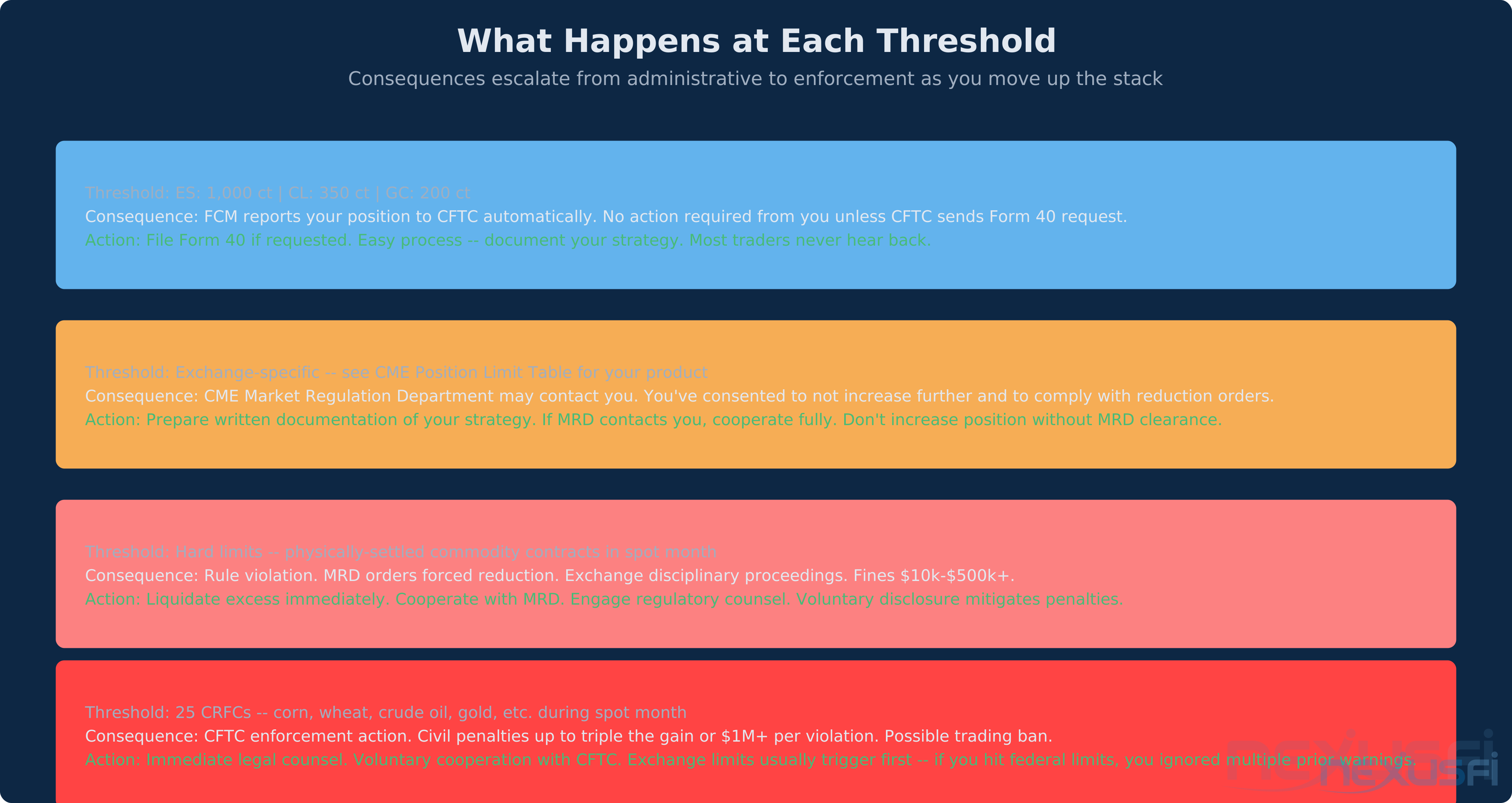
This is a rule violation under CME Rule 562. The consequences are not hypothetical:
- Positions in excess of limits must be liquidated — the excess is subject to forced reduction
- Rule violation findings trigger exchange disciplinary proceedings
- Fines can be significant — CME's sanctions range from tens of thousands to hundreds of thousands of dollars for limit violations
- Severe or repeated violations can result in suspension from trading on the exchange
- The CFTC can pursue its own enforcement action for violations of federal limits
If a position exceeds limits as a result of an option assignment (not intentional accumulation), CME grants one business day to liquidate the excess without treating it as a violation. The "delta shift" provision also applies: if a position exceeds limits at close based on updated delta factors but not based on prior day's deltas, it's not a violation.
Exceeding an Accountability Level #
Not a violation, but not consequence-free. The MRD will contact you and will want to understand:
- The nature and size of the position
- Your trading strategy
- Hedging information if applicable
If you can't explain the position credibly, or if MRD determines it poses market integrity risk, they can order position reduction. Ignoring a reduction order escalates the situation into a rule violation.
Exceeding a Reportable Level #
No direct consequence — just automatic reporting by your FCM to the CFTC. The Form 40 process follows. Failing to file Form 40 when required by the CFTC is a separate regulatory violation.
Practical Implications for Scaling Traders #
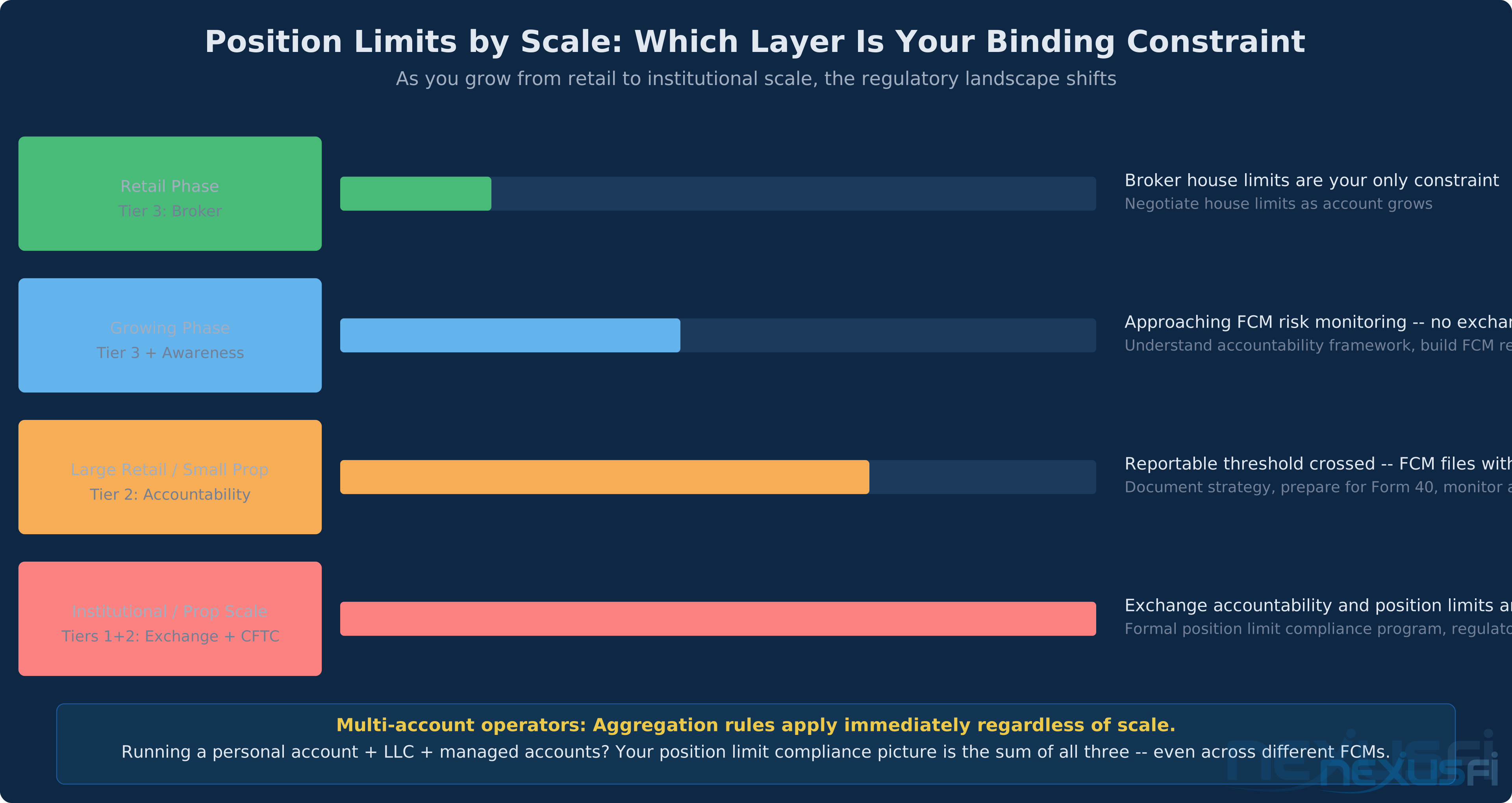
At 1-50 contracts in major products: Broker house limits are your only constraint. Exchange and CFTC layers don't apply. Focus on negotiating house limits as your account grows.
At 50-500 contracts in equity index or rate futures: You may approach CME accountability levels depending on the product. No hard limit violations possible, but starting to understand the accountability framework matters. Reportable levels are still likely above your size unless you're in smaller contracts.
At 200-1,000 contracts: You're in reportable territory for most products. Your FCM is reporting your position to the CFTC. Form 40 may arrive. This isn't scary — it's paperwork. Document your strategy clearly and maintain records.
At 1,000+ contracts in commodity products: Hard position limits for spot months become directly relevant. You need to track your aggregated position across all accounts and entities. If you're approaching spot month limits, you're either rolling well in advance or explicitly managing the step-down schedule. Consult your FCM's compliance team and potentially outside regulatory counsel.
Multi-account operators: The aggregation rules matter immediately. If you're running managed accounts, a prop account, and a personal account simultaneously, your position limit compliance picture is the sum of all three — even if they're at different FCMs.
Monitoring Your Position Against Limits #
No single system gives you a cross-exchange, cross-account view of your aggregated position relative to limits. You have to build this yourself:
At the FCM level: Your broker's position management system shows your position at that firm. Most FCMs will alert you when you approach their house limits. Some FCMs will monitor exchange accountability levels on your behalf and flag approaching thresholds — ask your broker whether they offer this.
Across FCMs: If you trade at multiple FCMs, you're responsible for your own aggregated position tracking. The CFTC's system aggregates this; yours should too.
Spot month calendar: Know when spot month limits take effect for every product you trade. CME publishes Market Surveillance Notices in advance of each delivery month detailing the step-down dates. Subscribe to these alerts through CME Group's notification system.
Accountability levels reference: Download CME Group's Position Limit and Accountability Level table for each exchange. These are updated periodically (the February 2026 advisory RA2601-5 superseded the previous version). The tables are dense PDFs, but the accountability levels for your specific products are there.
Integration With Your Trading Infrastructure #
Position limits integrate with your risk infrastructure in a few specific ways:
Automated pre-trade risk checks: Most professional FCMs run pre-trade risk checks that include position limit monitoring. If your order would push you past the FCM's house limit or a hard exchange limit, it rejects before it reaches the matching engine. Retail platforms handle this via their own risk modules.
Platform-level position caps: NinjaTrader's Account Risk settings allow you to configure maximum position sizes per account, and these will prevent orders that would exceed your self-imposed cap.
This is a separate safety net below broker limits.
Post-trade monitoring: Exchange limits are monitored intraday and at end of day. Even if your pre-trade check clears, end-of-day position calculations can reveal limit violations if your position moved into a delivery period or if delta factors on options shifted your futures-equivalent exposure.
What Changes at Scale #
Position limits are not static across your trading career. As you scale, three things shift:
Your binding constraint moves up the stack. Early in your trading career, broker house limits stop you well before exchange accountability levels. As your account grows and your volume increases, you negotiate house limits up, and eventually the exchange's accountability framework becomes your actual constraint. At that point, you're in a different relationship with your FCM and with the exchange.
Your documentation requirements increase. A 10-contract ES trader needs nothing. A 2,000-contract ES trader approaching accountability levels should have written documentation of their trading strategy, risk management approach, and why their position size is justified. If the MRD calls, you want a clear, coherent answer ready.
Your aggregation exposure becomes non-trivial. Running a personal account, an LLC, and two managed accounts simultaneously means you need a position limit compliance framework — not just a mental model but an actual process for daily aggregated position reconciliation.
The underlying reality: position limits exist because concentrated speculative positions have caused genuine market dislocations. The Hunt Brothers' attempt to corner the silver market in 1979-1980 demonstrated exactly what unconstrained position accumulation can do to a market. The regulatory framework built since then is a response to real historical events, not bureaucratic excess.
For the vast majority of NexusFi traders, position limits are a topic to understand but not a daily constraint. But as scale increases, the framework shifts from background knowledge to operational reality.
Knowledge Map
Prerequisites
Understand these firstGo Deeper
Build on this knowledgeCitations
- — CFTC / Large Trader (2020) 👍 10“I can't offer any personal insight beyond that which is written on the CFTC website, but since you now hold a large futures position you don't have a choice in the matter. You must report. The information you supply will be used by the CFTC in monitoring activities, such as the COT reports.”
- — CFTC / Large Trader (2020) 👍 7“Generally, you are required to do so if you are holding or controlling a reportable position. This isn't an option. A trader must do so. The goal of this is for this federal regulator to understand what you are doing with the position, whether it is hedged or speculative.”
- — CFTC / Large Trader (2021) 👍 1“IB's own website says they gave the data to the CFTC: 'IBKR, as a registered FCM providing clients with access to those markets, is obligated to report to the CFTC information on clients who hold a position in a quantity that exceeds defined thresholds.'”
- — CFTC / Large Trader (2021) 👍 4“After filling out the form some time ago, which was easy, I never heard again from CFTC, and never had to do any reporting or answering questions.”
- — Max position sizes (2021) 👍 3“Yes, varies product to product. For example in Crude 'CL', Spot Month Limit is 3,000 contracts, Non-Spot Month Limit is 10,000, with the additional total NET position limit of 20,000 contracts.”
- — Maximum contracts (2022) 👍 1“Some brokers will set maximum daily loss limits if you ask them, I imagine they could also set maximum position limits. If you decide to change broker, give your proposed new broker a call before opening the account.”
- — Question about position limits (2014) 👍 1“Usually, any limits that you have on your account can be raised by asking your broker. If and when I need more than that, I'll ask them to raise it.”
- — A broker with margin controls (2016) 👍 1“Only thanking that fact that i have loss limit on the broker side i didn't blown out my account. So to request either your broker or to shift to such a broker with built-in risk management capabilities is extremely healthy idea for any trader.”
- — Position Limits for Derivatives (2022)
- — Position Limits and Accountability Levels -- CME Group Advisory RA2601-5 (2026)