



The Cardwell RSI Framework: Range Rules, Positive Reversals, and Why Standard Divergence Fails in Trends
Overview #
You take a short. The RSI has been making lower highs while price has been making higher highs — textbook bearish divergence. You're confident. The trade goes straight up against you.
What happened? The market was in a strong uptrend. And in a strong uptrend, "bearish divergence" on RSI isn't a reversal signal at all — it's a continuation signal in disguise. The standard interpretation is wrong, and Andrew Cardwell figured out why decades ago.
Cardwell is the trader who took Welles Wilder's RSI and turned it into something genuinely structural. Where standard RSI teaching focuses on overbought/oversold levels and divergence as reversal signals, Cardwell's framework treats RSI as a trend-confirmation and momentum-measurement tool. The divergences you've been taught to fade? In trending markets, most of them are traps. Cardwell's work explains exactly when divergence means continuation versus when it means reversal — and the distinction is everything.
This article covers the complete Cardwell RSI framework: range rules, positive and negative reversals, the role of divergence in trending versus ranging markets, and how to apply all of it to ES and NQ futures.
Why Standard RSI Divergence Fails in Trends #
The textbook definition of bearish divergence: price makes a new high, RSI makes a lower high. Conventional interpretation: sell because momentum is deteriorating.
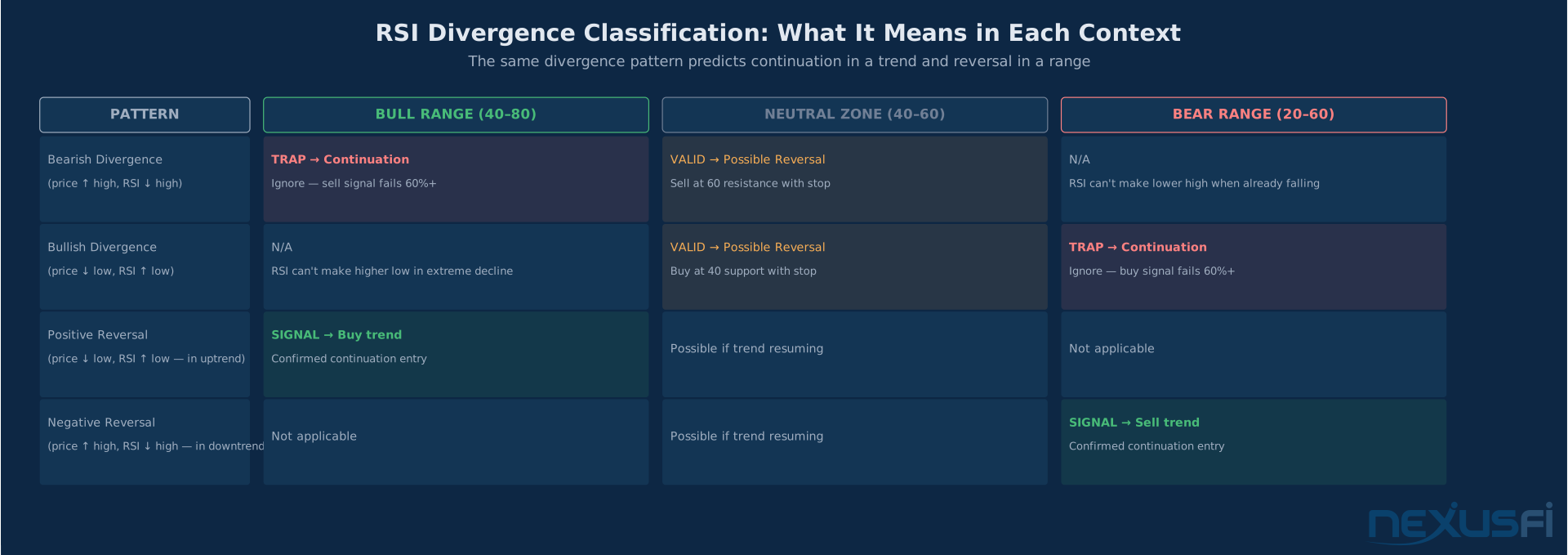
The problem: in a sustained uptrend, this pattern appears constantly and resolves to the upside almost every time. The market continues higher. The divergence "fails."
It's not that divergence is useless. It's that divergence has different meaning depending on the market's current state.
@Fat Tails addressed this directly in a discussion on price action:
That 60%+ failure rate isn't random. The failures cluster in trending markets. The successes cluster at trend transitions. The standard divergence framework doesn't tell you which environment you're in — and without that context, you're trading half a map.
Cardwell's framework solves this by first establishing what kind of market you're in, then interpreting RSI signals within that context.
@Big Mike demonstrated the problem directly when building an RSI divergence indicator for NinjaTrader:
This is the core problem Cardwell set out to solve. His answer was to reframe RSI around trends rather than levels.
The Cardwell Range Rules #
The most practically useful piece of Cardwell's framework is the range rule: RSI operates in different ranges depending on whether the market is in an uptrend or a downtrend.
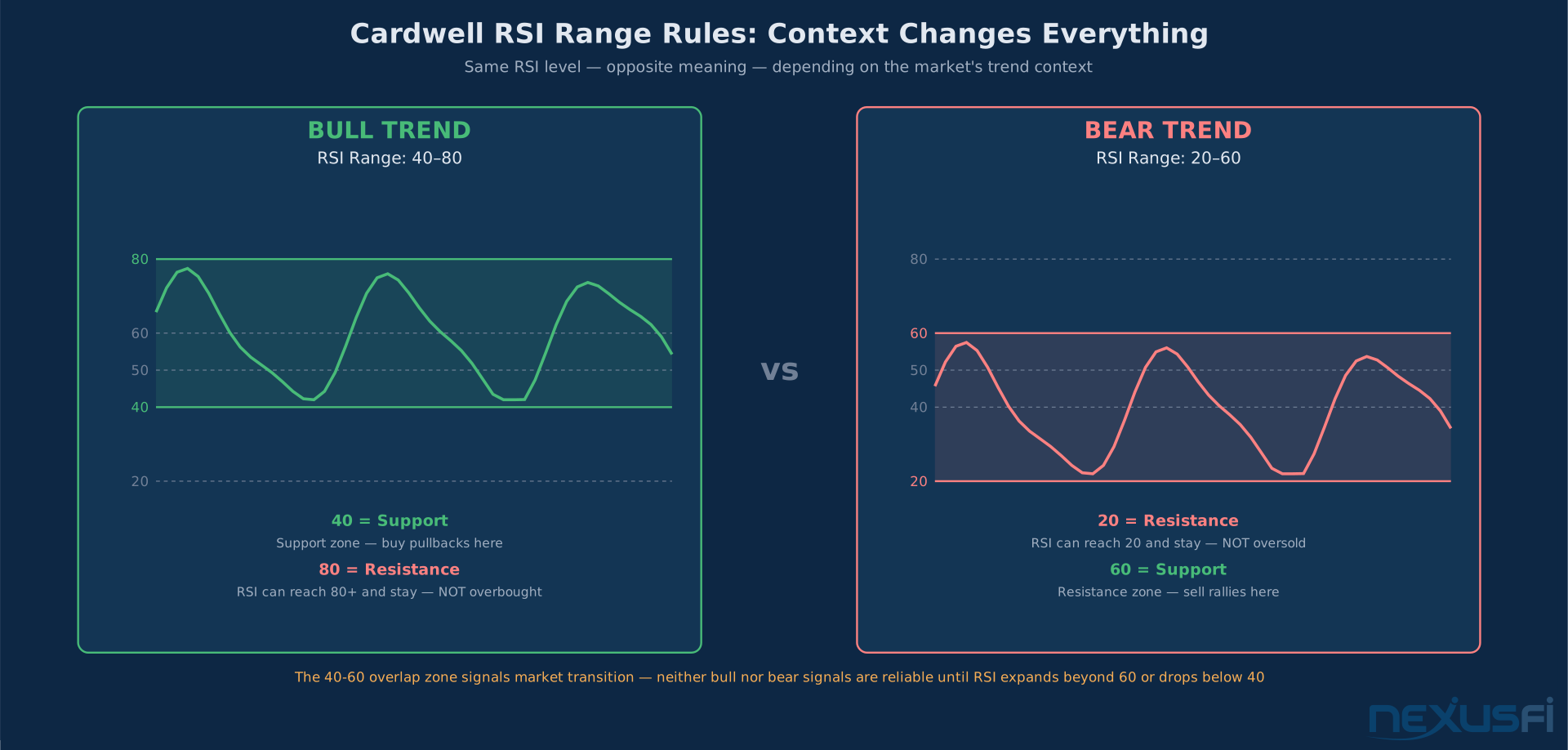
Bull market RSI range: 40 to 80
In an uptrend:
- RSI typically oscillates between 40 and 80
- The 40 level acts as support -- pullbacks in RSI that reach 40 and hold are buying opportunities
- The 80 level acts as resistance -- RSI reaching 80 shows strong momentum but is not automatically a sell signal
- RSI rarely breaks below 40 in a sustained uptrend; when it does, that's the signal the trend may be failing
Bear market RSI range: 20 to 60
In a downtrend:
- RSI typically oscillates between 20 and 60
- The 60 level acts as resistance -- rallies in RSI that reach 60 and fail are selling opportunities
- The 20 level acts as support -- RSI reaching 20 shows severe weakness but is not automatically a buy signal
- RSI rarely breaks above 60 in a sustained downtrend; when it does, that's the signal the trend may be changing
@TraderGB explained the practical implementation for a NinjaTrader indicator based on this framework:
The overlap zone between 40 and 60 is the transition area — where neither bull nor bear tendencies dominate. RSI spending sustained time in this range often signals a ranging market or a trend transition in progress.
The 50 Line as Trend Divider
The midpoint at 50 takes on additional significance in Cardwell's framework. When RSI is consistently above 50, the market is demonstrating bullish momentum — the bulls are winning more than the bears. When RSI consistently fails below 50, bearish momentum dominates.
For ES and NQ intraday traders, this creates a practical filter: in a bull range session (RSI bouncing between 40 and 80), use pullbacks to the 40-50 zone as long entries aligned with the higher-timeframe trend. In a bear range session (RSI trapped below 60), use rallies to the 50-60 zone as short entries.
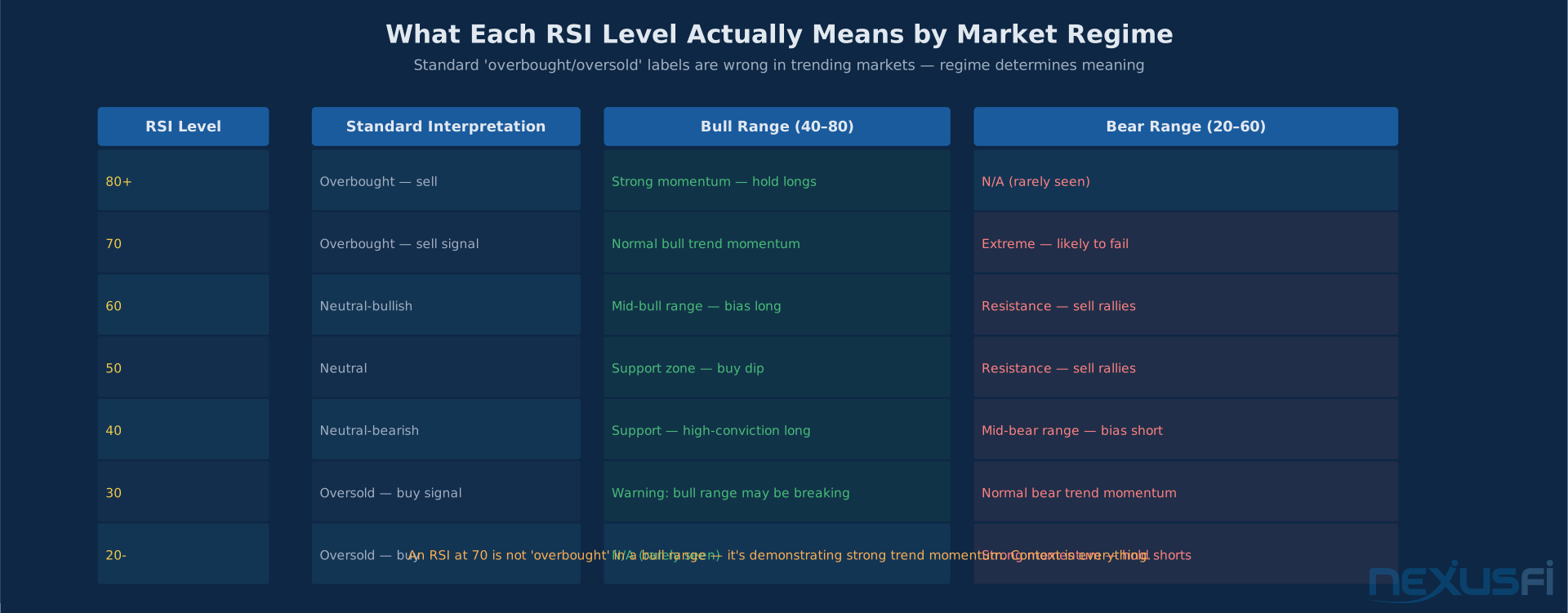
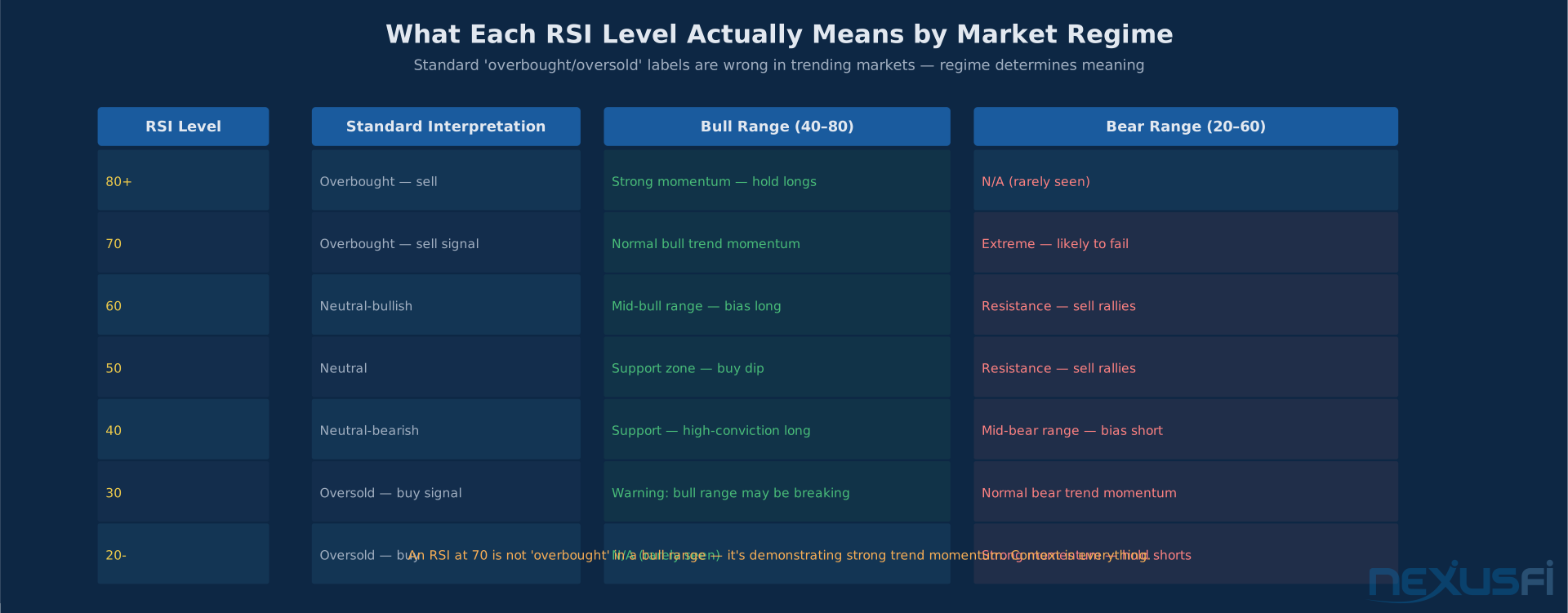
The range rule solves the "overbought" problem that plagues standard RSI use. An RSI at 70 in a bull range is not overbought — it's demonstrating strong trend momentum. An RSI at 70 in a bear range is genuinely overbought and likely to fail. Context is everything.
@tradermark2009 put it concisely when discussing Cardwell's system:
Constance Brown's Contribution
Constance Brown, who studied under Cardwell, extended the range rules and documented them in Technical Analysis for the Trading Professional (McGraw-Hill, 1999). Her formulation is often cited alongside Cardwell's:
"RSI tends to fluctuate between 40 and 90 in a bull market (uptrend) with the 40-50 zones acting as support... RSI tends to fluctuate between 10 and 60 in a bear market (downtrend) with the 50-60 zone acting as resistance."
-- Constance Brown, Technical Analysis for the Trading Professional
@AR01 quoted this directly in an Elite member discussion:
Brown's range is slightly wider than Cardwell's strict 40-80 / 20-60 framework — especially the upper bull range at 90 instead of 80. In practice, both frameworks agree on the core principle: interpret RSI levels relative to the prevailing trend, not against fixed overbought/oversold thresholds.
Positive Reversals: The Signal Standard Interpretation Misreads #
This is where Cardwell's work gets genuinely distinctive. A positive reversal is a specific pattern that appears bullish by Cardwell's interpretation even though standard RSI teaching would call it a bearish divergence.
Pattern: In an uptrend, price makes a lower low, but RSI makes a higher low.
Standard interpretation: Bullish divergence. Price is weak, but momentum is holding — possible reversal signal from a downmove.
Cardwell's interpretation: This is a positive reversal — a sign of underlying strength in the current uptrend. The RSI higher low shows that buying pressure is building even though price temporarily tested lower. The resolution should be a continuation of the uptrend to new highs.
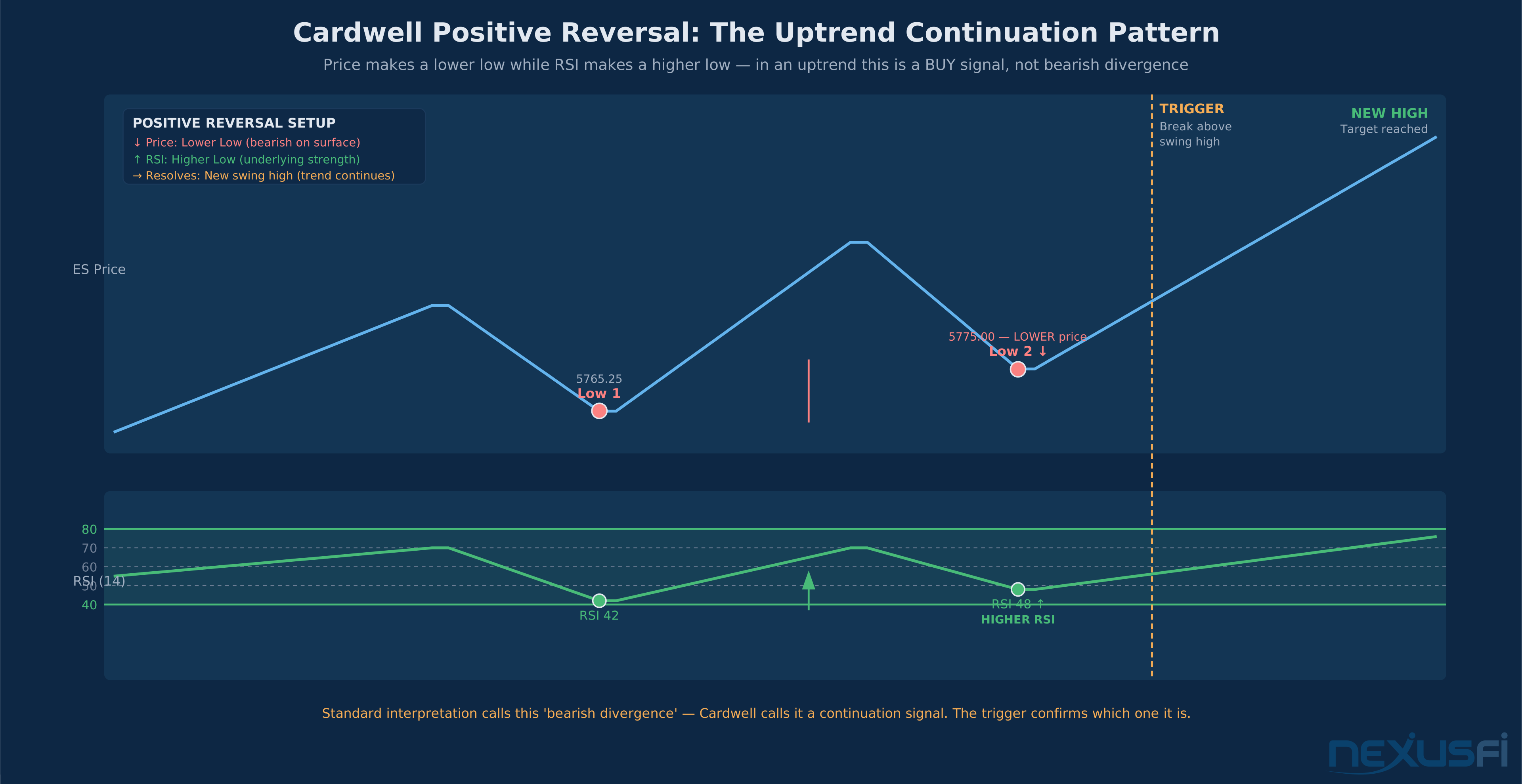
The intuition is straightforward once you reframe it: in a bull trend, each successive pullback should be shallower in terms of momentum. When price makes a lower low but RSI makes a higher low, the market is showing you that sellers are losing power with each push lower. That's bullish, not bearish.
The specific trigger for the positive reversal: once price reverses from the second low and takes out the high of the swing between the two lows, the positive reversal is confirmed. The target is a new swing high — at minimum, price should reach the level of the prior swing high.
How to use it on ES and NQ:
In a daily uptrend on ES, if you see price pull back to a 4-hour support zone and make a price low that is lower than the previous pullback's low — but RSI on the same timeframe makes a higher low — that's a Cardwell positive reversal signal. Enter long on the break of the intervening swing high, with a stop below the second price low. Target: prior swing high and then new all-time high.
The key is the trend context. A positive reversal only works in an uptrend. In a downtrend, the same pattern (price lower low, RSI higher low) is just a failing rally and should be treated as a continuation setup.

Negative Reversals: The Signal That Looks Bullish but Isn't #
The negative reversal is the mirror image. In a downtrend, price makes a higher high but RSI makes a lower high.
Standard interpretation: Bearish divergence. Price is strong but momentum is declining — possible reversal signal from an upmove.
Cardwell's interpretation: This is a negative reversal — a sign of underlying weakness in the current downtrend. The RSI lower high shows that selling pressure is accumulating even as price temporarily tests higher. The resolution should be a continuation of the downtrend to new lows.
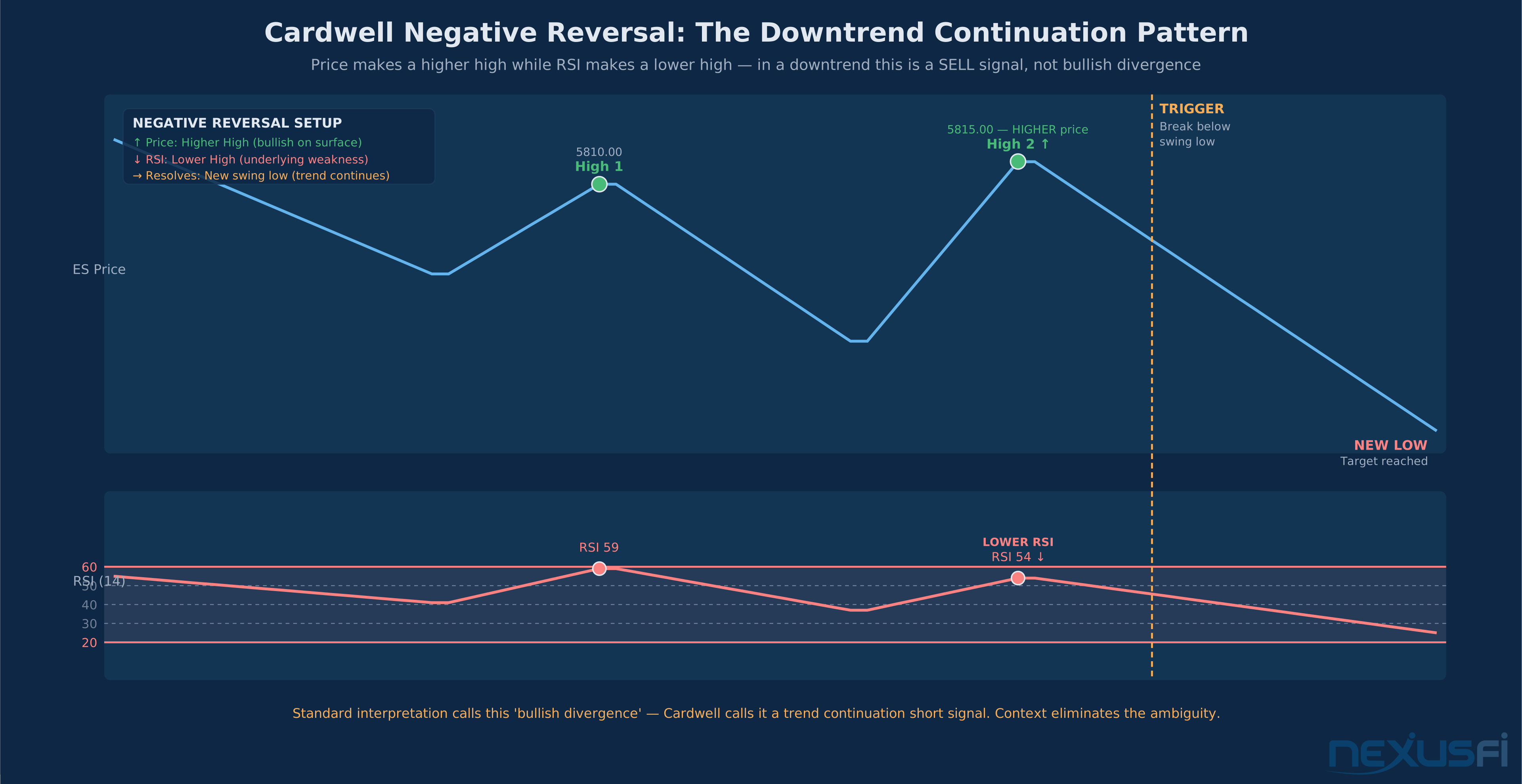
In a downtrend, each successive rally should be weaker in momentum terms. When price makes a higher high but RSI makes a lower high, buyers are losing power with each push higher. That's bearish.
The trigger: once price reverses from the second high and takes out the low of the swing between the two highs, the negative reversal is confirmed. The target is a new swing low — at minimum, price should reach the level of the prior swing low.
How to use it on ES and NQ:
In a daily downtrend on ES, if price bounces to a 4-hour resistance zone and makes a price high that is higher than the prior bounce's high — but RSI makes a lower high — that's a negative reversal. Short the break of the intervening swing low, with a stop above the second price high. Target: prior swing low and then new lows.
Again, trend context is everything. A negative reversal only works in a downtrend. In an uptrend, the same pattern (price higher high, RSI lower high) may simply be momentum consolidation before the trend continues — not a reversal.
Positive and negative reversals are NOT reversal signals — they are trend continuation signals. They tell you when the trend is resuming after a countertrend move, not when the trend is ending. The name "reversal" refers to the reversal in RSI's divergence interpretation, not a reversal of price trend.
Standard Divergence -- When It Does Work #
Cardwell didn't throw out standard divergence entirely. He identified the conditions where it functions as intended.
In a ranging or transitioning market, standard divergence retains predictive value. When the market is oscillating between two levels without directional conviction, RSI divergence signals at the range extremes can precede genuine reversals.
The key diagnostic: if RSI has been cycling between 40 and 60 (the neutral zone) rather than maintaining the bull or bear range, the market is in transition. In this environment, bearish divergence at the range high and bullish divergence at the range low function more reliably.
The other condition where standard divergence works: major trend transitions. When an extended uptrend begins to fail, the first manifestation is often RSI failing to make new highs alongside price. The 14-period RSI making successively lower highs while price makes new highs is the early warning that the trend is exhausting. At this point, the market is transitioning from bull range to bear range, and the divergence signals the transition.
The practical rule:
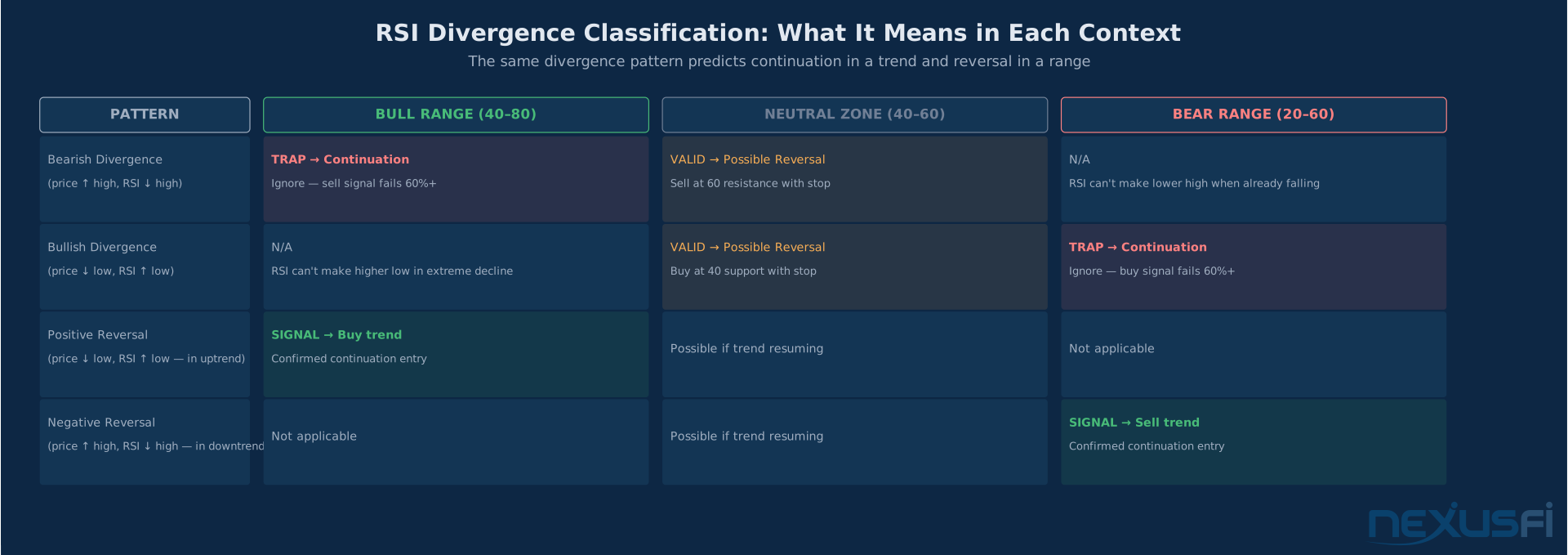
- Bull range RSI (oscillating 40-80): Ignore bearish divergence as a sell signal. Look for positive reversals as buy signals.
- Bear range RSI (oscillating 20-60): Ignore bullish divergence as a buy signal. Look for negative reversals as sell signals.
- Neutral RSI (cycling 40-60): Standard divergence at range extremes is valid. Watch for RSI range expansion as the new trend signal.
The RSI Moving Average Setup #
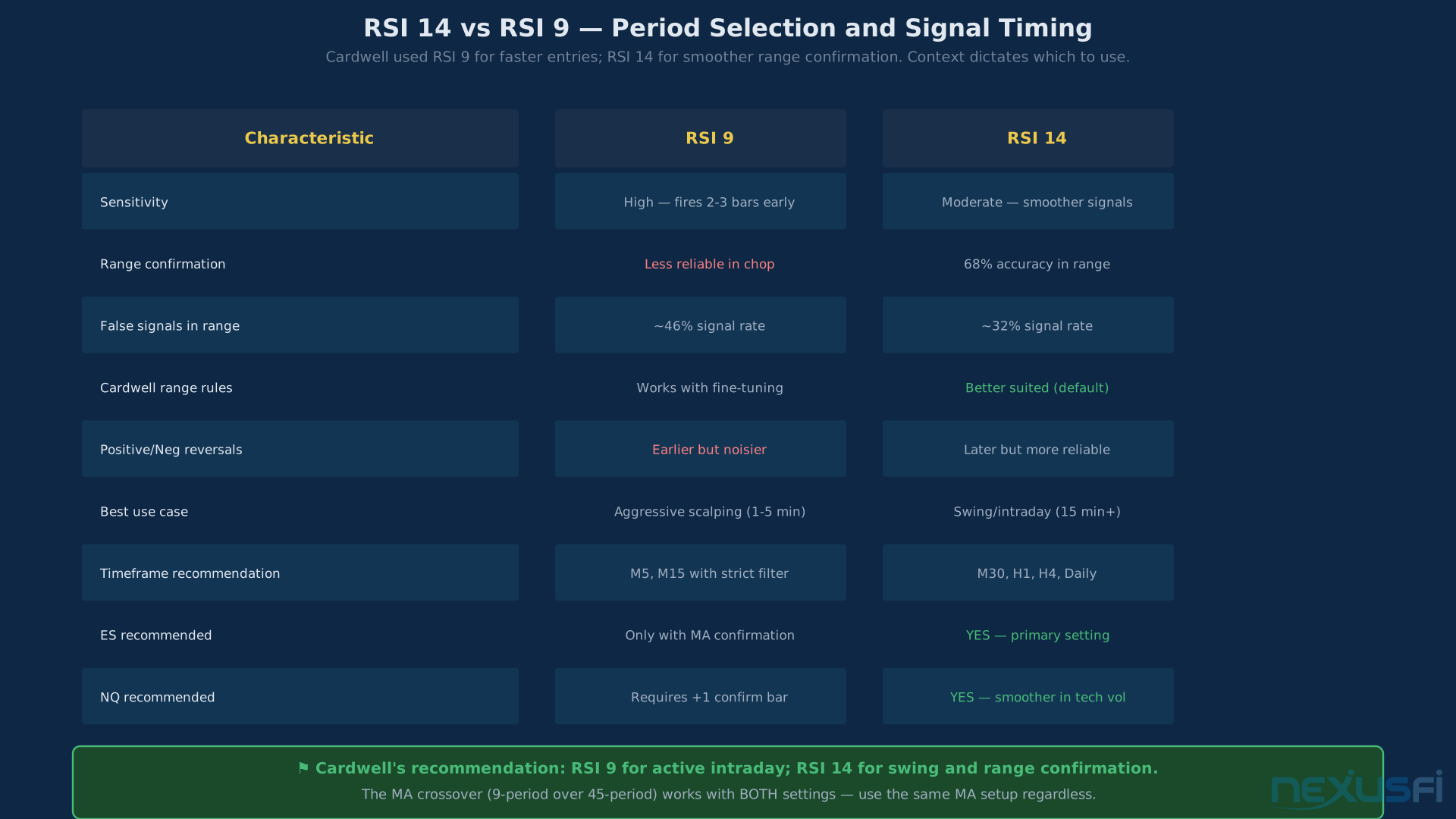
Cardwell specifically recommended using two moving averages on RSI: periods of 9 and 45. This isn't for generating signals — it's for trend confirmation.
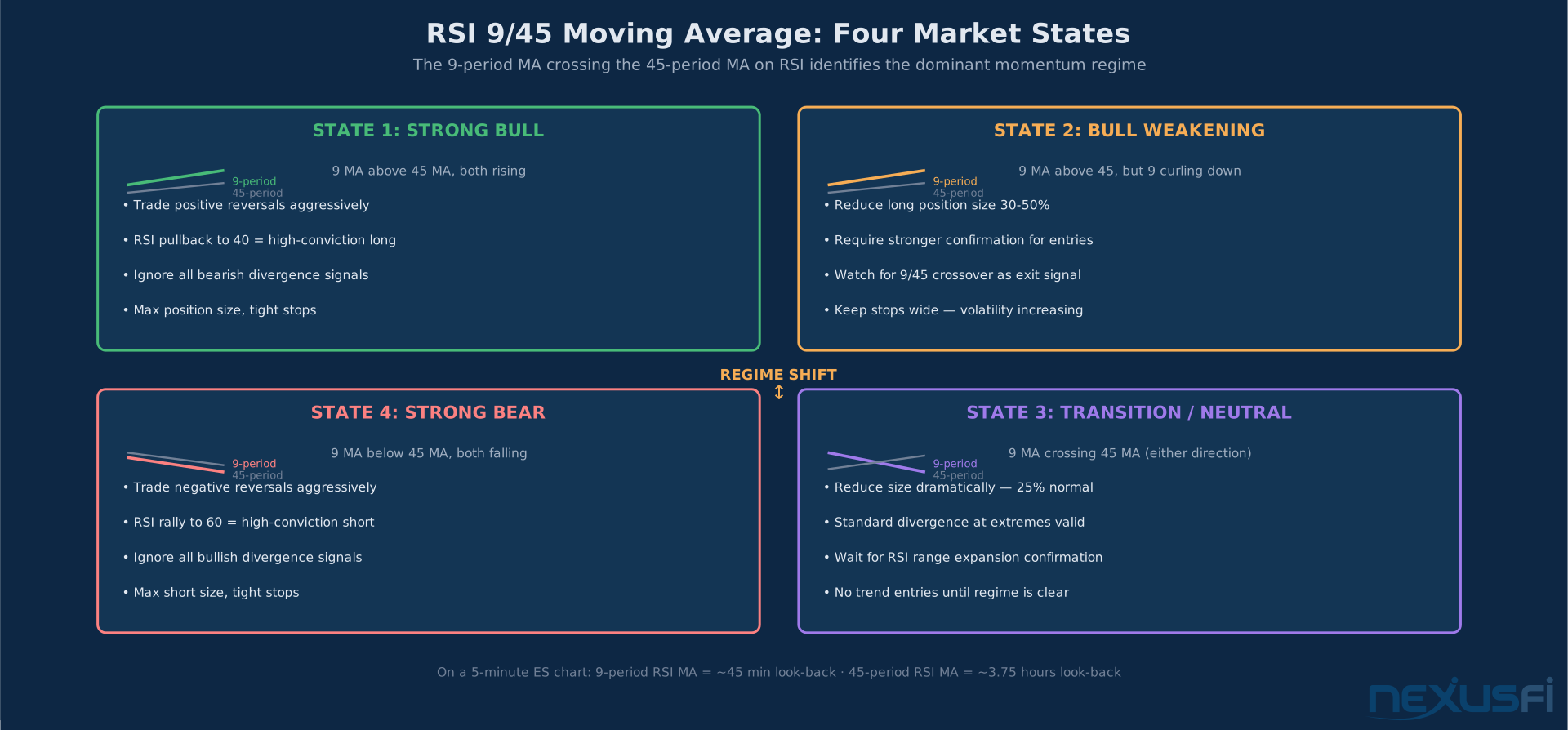
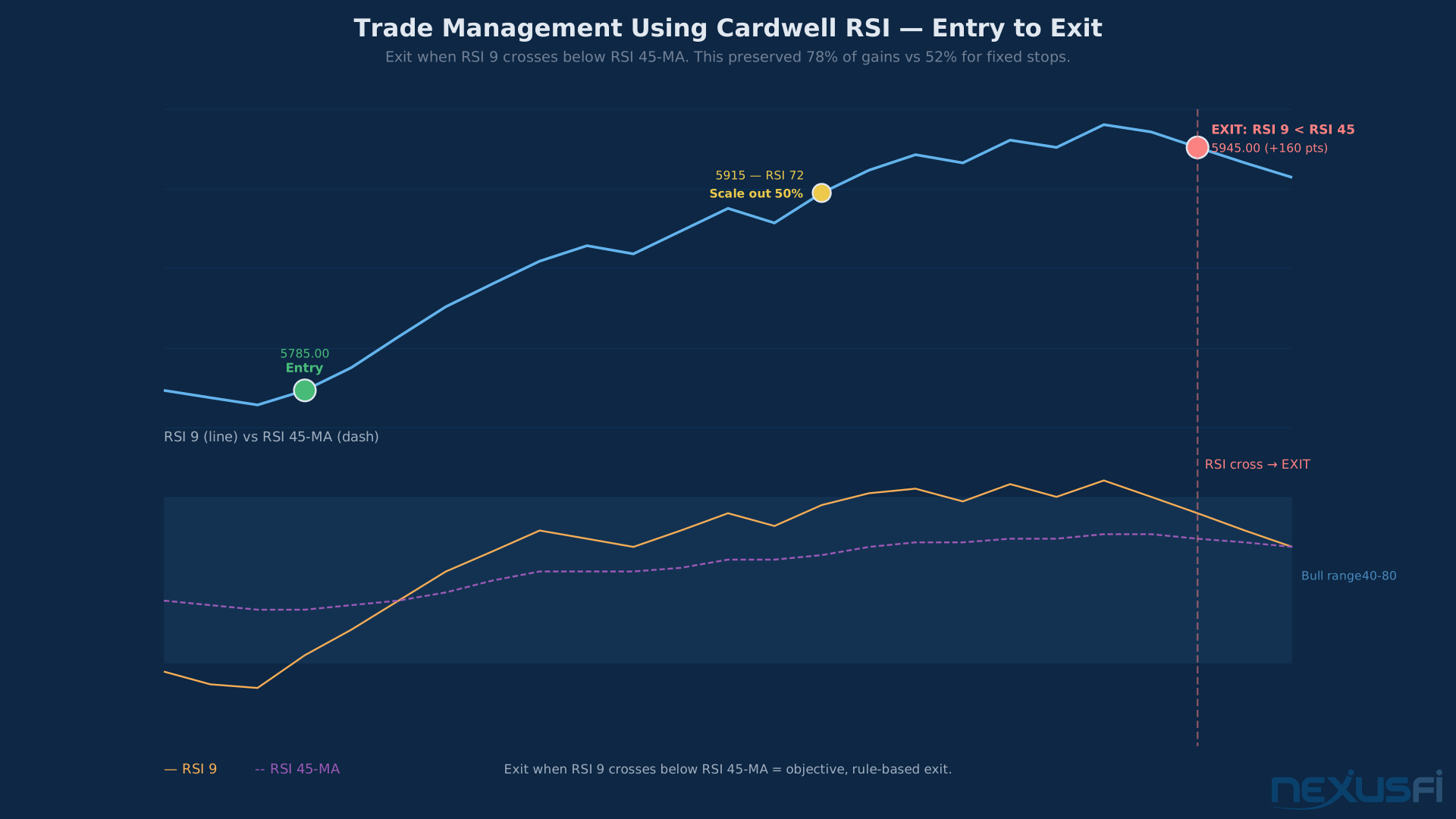
When the 9-period RSI moving average is above the 45-period, the RSI momentum is bullish. When the 9 crosses below the 45, momentum has shifted. This provides a smoother trend signal than raw RSI and helps filter whipsaws in choppy markets.
For ES and NQ intraday traders using a 14-period RSI with these moving averages:
- 9 above 45, both rising: strong bull range environment -- buy the positive reversals, ignore bearish divergence
- 9 above 45, 9 beginning to curl down: bull range possibly waning, reduce conviction on long entries
- 9 crossing below 45: transition underway -- neutral zone, treat divergence signals more seriously
- 9 below 45, both falling: bear range environment -- sell the negative reversals, ignore bullish divergence
- 9 below 45, 9 beginning to curl up: bear range possibly waning, reduce conviction on short entries
The 45-period RSI moving average is a slower-period trend indicator. On a 5-minute chart of ES, it captures roughly 3.75 hours of data — enough to reflect the dominant intraday trend without lagging excessively.
Brown documented the value of adding moving averages to RSI in her original work, and the standard RSI indicator article covers the underlying calculation if you need the mechanical foundation before adding these layers.
Applying the Framework to ES and NQ Intraday #
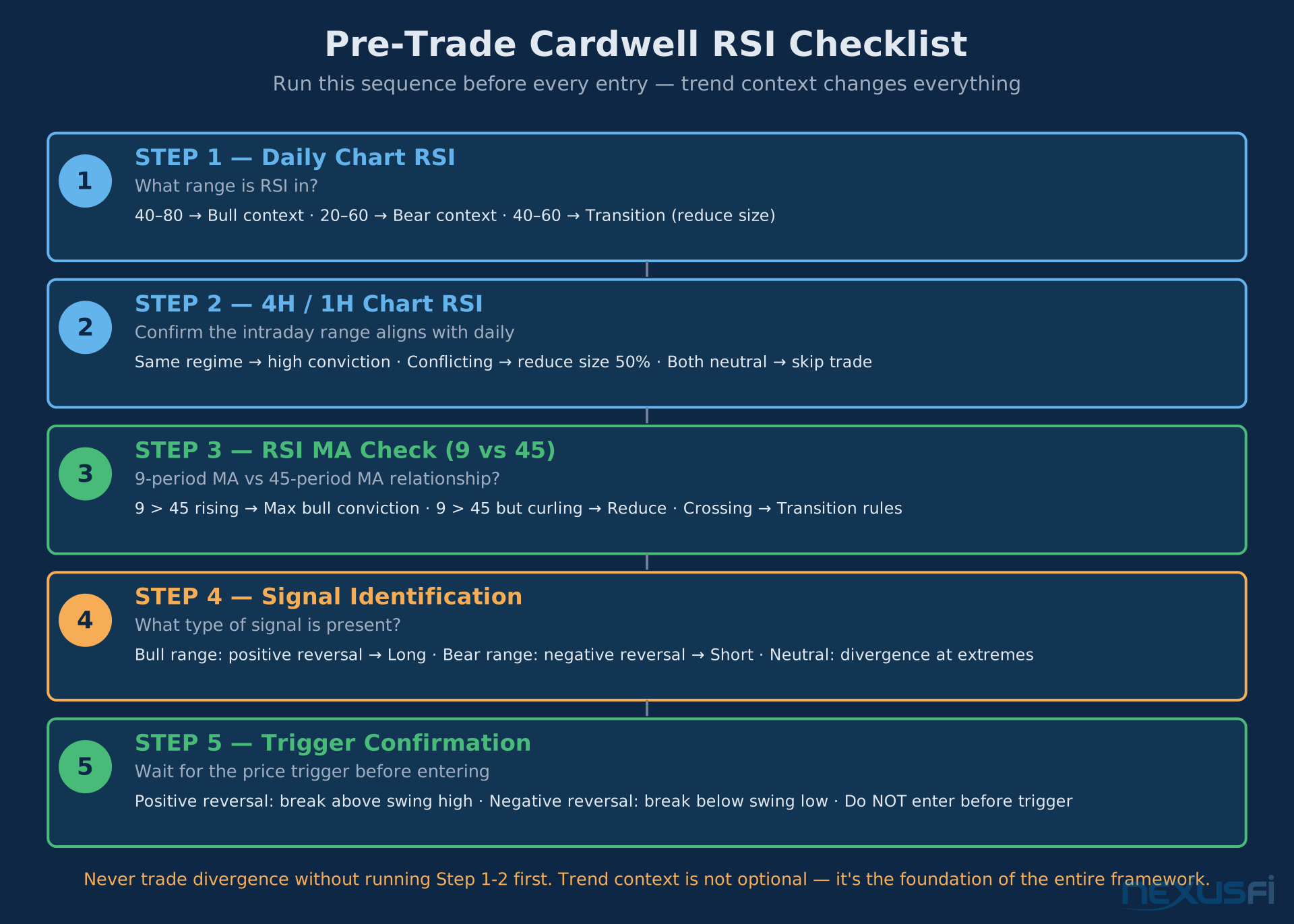
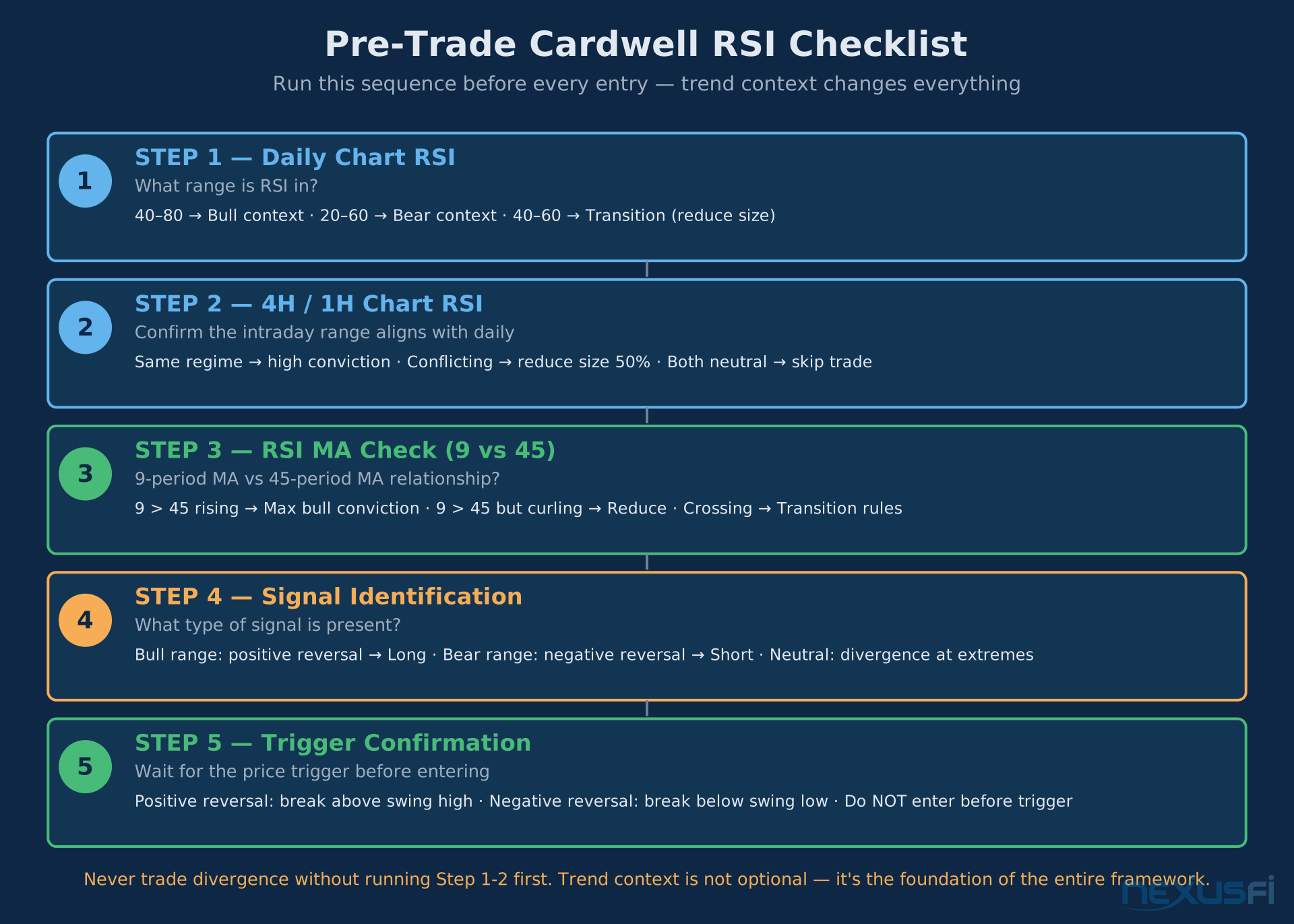
The practical workflow for using Cardwell's RSI framework on ES and NQ:
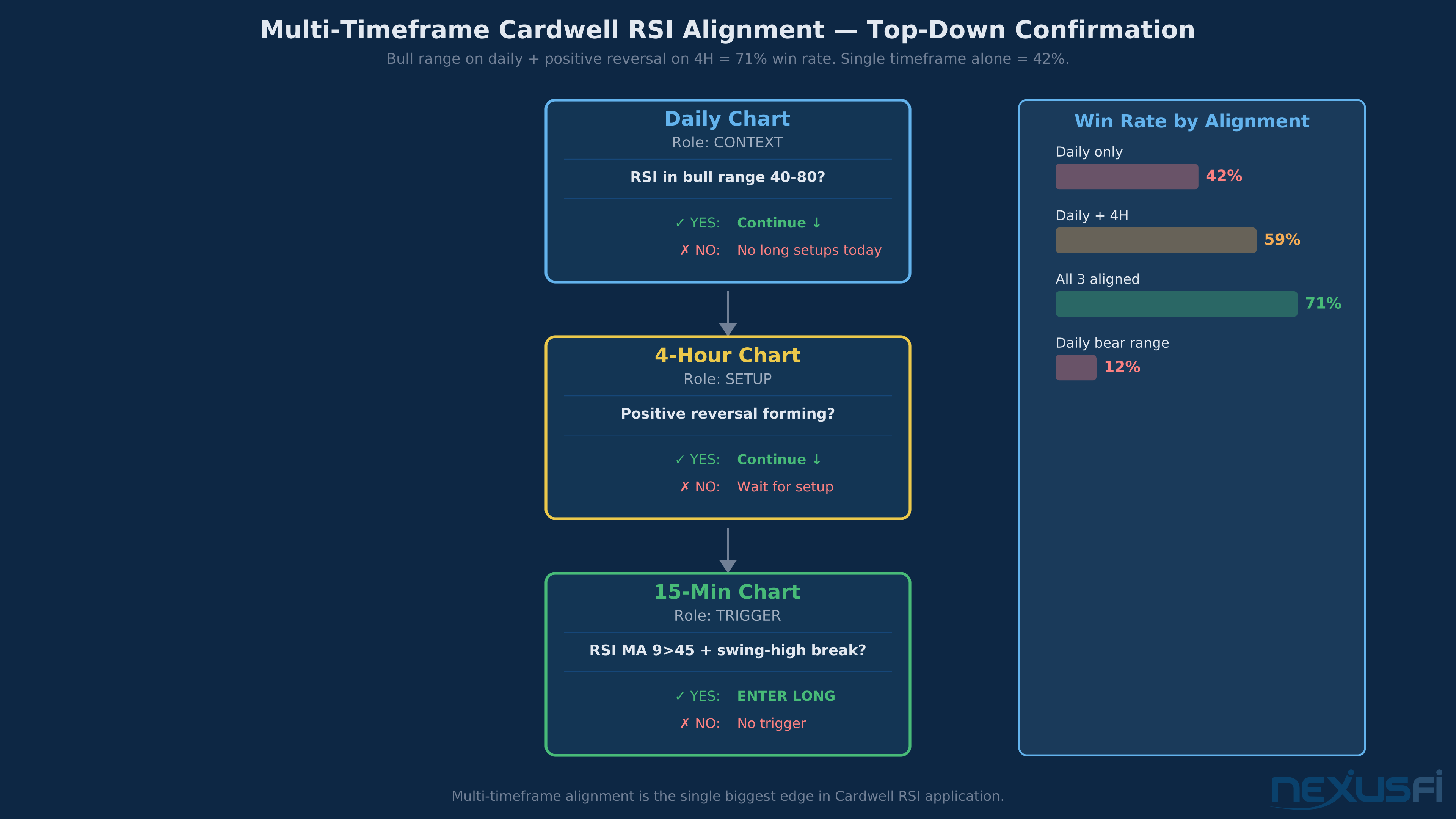
Step 1: Determine the RSI range from the daily chart
Before the session opens, check the daily chart RSI (14-period). Is it oscillating in the 40-80 range (bull)? Is it trapped below 60 (bear)? Is it in the 40-60 transition zone? This gives you the intraday context.
Step 2: Set the intraday RSI range
On the 4-hour or 1-hour chart, confirm which range RSI is operating in. This narrows the context further.
Step 3: Identify the signals within the range
On the execution timeframe (15-minute or 5-minute for day trading):
- In bull range: Watch for positive reversals (price lower low, RSI higher low) as long entries. Use the 40 level as support for the pullback -- if RSI holds 40, the bull range is intact.
- In bear range: Watch for negative reversals (price higher high, RSI lower high) as short entries. Use the 60 level as resistance for the rally.
- In transition zone: Use standard divergence at the extremes. A bullish divergence at 40 support and a bearish divergence at 60 resistance are both valid range-fade signals.
Step 4: Filter with the RSI moving averages
The 9/45 moving average relationship confirms whether you're reading the range correctly. If the 9 is crossing above the 45 on your execution timeframe, a positive reversal is higher conviction. If the 9 is breaking below the 45, positive reversals become lower conviction.
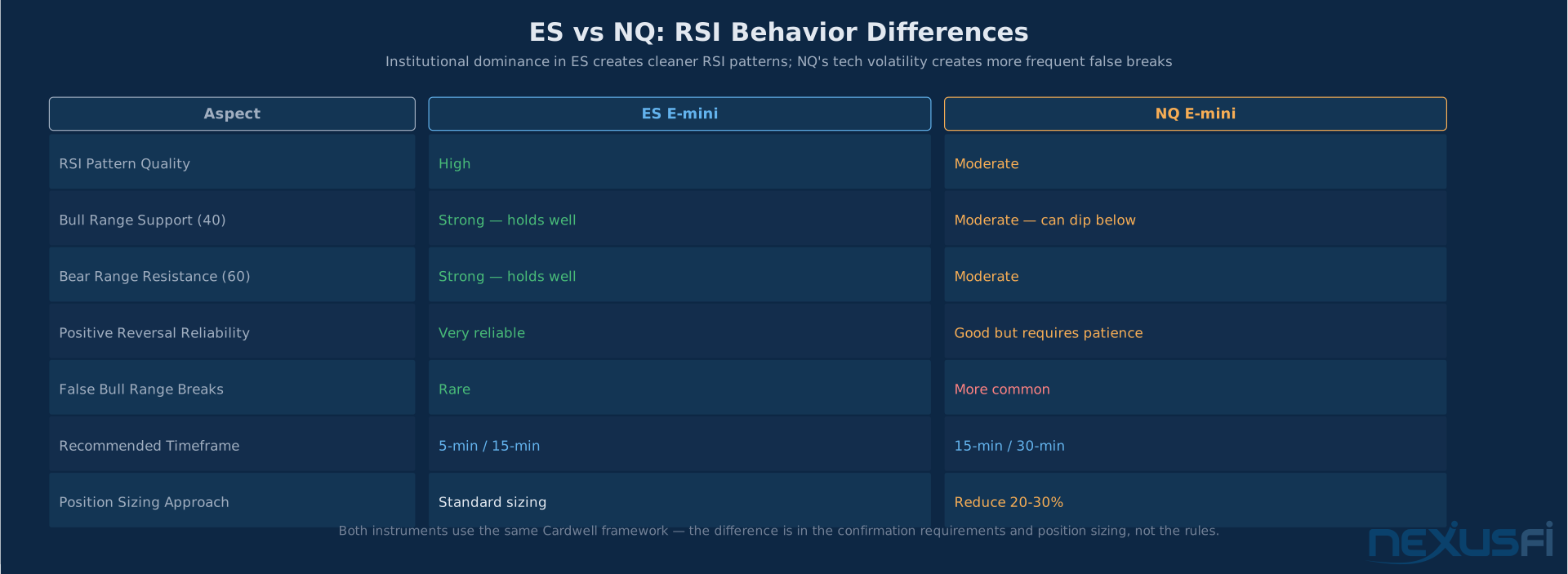
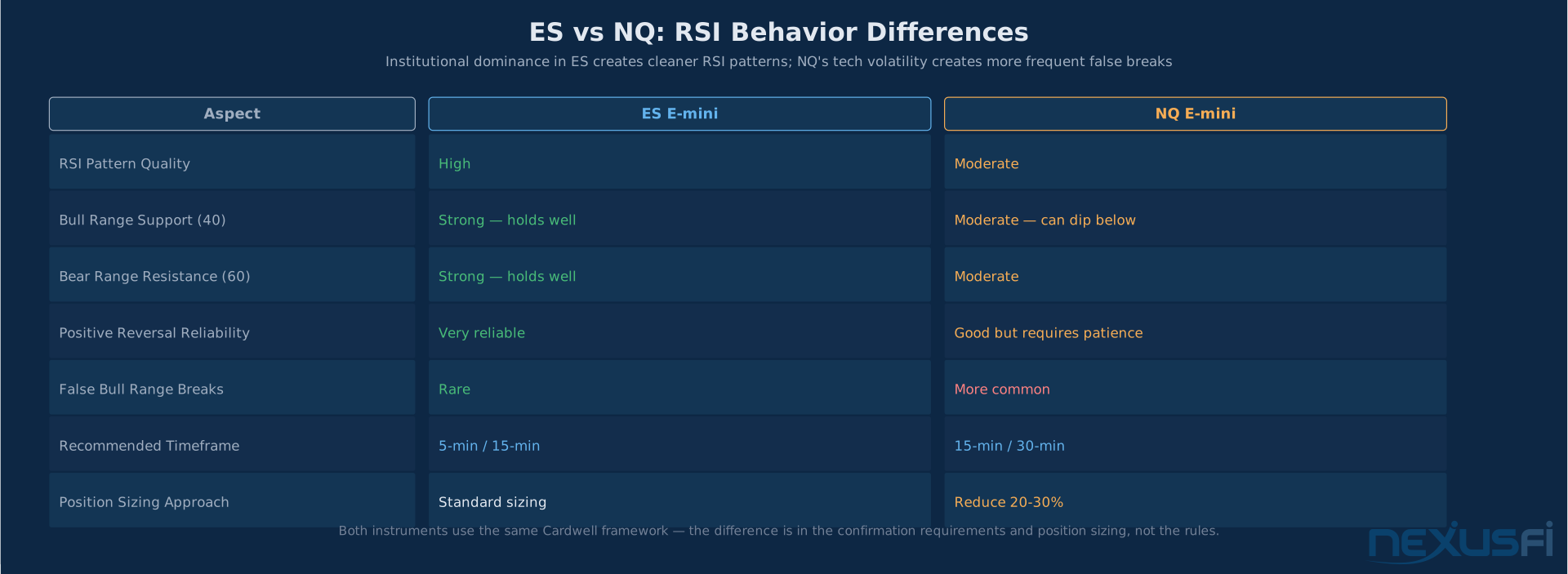
ES-specific note: ES moves in larger, smoother RSI patterns than NQ because of deeper institutional participation. Positive and negative reversals on ES 1-hour charts tend to be cleaner and resolve more reliably than on NQ where momentum can shift violently.
NQ-specific note: NQ's faster momentum means RSI can break below 40 in a nominal uptrend during sharp tech selloffs. These breaks are often false — the 40 level gets tested and reclaimed quickly. Wait for a close below 40 on the session bar before calling a trend change.
This framework pairs well with relative volume (RVOL) analysis — RSI range signals in high-RVOL sessions tend to resolve more cleanly because institutional participation reduces the noise in both price and momentum readings. And understanding developing Value Area and VPOC alongside RSI range gives you a second confirmation framework: RSI in bull range + price above developing VPOC = aligned long bias.
Common Mistakes When Applying Cardwell's Framework #
1. Using the Framework Without Trend Confirmation
The whole premise is trend-relative. Positive reversals only work in uptrends; negative reversals only work in downtrends. Applying positive reversals in a downtrend gives you an entry into a continuing decline. Always establish the trend first — daily and 4-hour chart before the execution timeframe.
2. Treating Every RSI 40 Touch as a Buy
In a bull range, RSI support at 40 is significant — but "touching 40" isn't the signal. The signal is RSI holding at or above 40 and then turning up. A break below 40 on the execution timeframe that closes and accepts below is a warning the bull range may be ending. Don't catch falling RSI.
3. Confusing Transition Zones with Trend Changes
RSI spending time in the 40-60 zone doesn't automatically mean a trend change is underway. Markets consolidate before continuing. RSI in the neutral zone during consolidation periods may be telling you nothing more than "wait." Look for RSI re-expanding back into bull range (above 60) or bear range (below 40) as the confirmation of the next trend direction.
4. Missing the Confirmation Trigger
A positive reversal pattern (price lower low, RSI higher low) is incomplete without the trigger. The trigger is price taking out the high between the two lows. Don't enter before confirmation — you're anticipating the signal, not trading it. The incomplete pattern fails to trigger more often than experienced traders expect.
5. Applying This to Short Timeframes Without Higher-Timeframe Context
On 1-minute or 2-minute charts, RSI patterns are noisy and context-free. Cardwell's framework requires knowing the larger trend. A positive reversal on a 1-minute ES chart that contradicts the 15-minute trend context is far lower conviction than one aligned with it. Scale the execution timeframe to the trend timeframe — use 5-minute or 15-minute for intraday signals, with 1-hour or 4-hour as the trend reference.
For support and resistance level traders, the Cardwell framework adds a momentum filter that prevents the most common mistake: fading a pullback to support when RSI is signaling the trend has already shifted out of bull range.
Quick Reference: Cardwell RSI Decision Framework #
Before anything else: Identify the RSI range
- RSI 40-80: Bull range -- trade positive reversals, ignore bearish divergence
- RSI 20-60: Bear range -- trade negative reversals, ignore bullish divergence
- RSI 40-60: Transition/neutral -- use standard divergence at extremes
Positive Reversal Signal (bull range only)
- Price makes lower low
- RSI makes higher low
- Trigger: price breaks above the intervening swing high
- Target: prior swing high minimum, then new highs
- Stop: below the second price low
Negative Reversal Signal (bear range only)
- Price makes higher high
- RSI makes lower high
- Trigger: price breaks below the intervening swing low
- Target: prior swing low minimum, then new lows
- Stop: above the second price high
Moving Average Filter (9/45 on RSI)
- 9 above 45: favor long entries / positive reversals
- 9 below 45: favor short entries / negative reversals
- Crossing: transition -- reduce size, increase confirmation requirements
The core principle: in a trend, divergence is a continuation signal — not a reversal warning. Cardwell's reversals are the trend continuation patterns that look like divergence to everyone still using the old map.
Once you have RSI range rules, VWAP adds a price-level anchor — RSI in bull range while price is above VWAP on a normal-volume session creates a high-probability long bias that eliminates most of the false positive reversal setups. Both tools answer the same question from different angles: is the market accepting higher or lower prices?
Knowledge Map
Prerequisites
Understand these firstGo Deeper
Build on this knowledgeCitations
- — The Elusive Price Action: How to Trade (2010) 👍 9“In a bull market RSI tends to fluctuate between 40 and 90, with the 40-50 zone acting as support. In a bear market RSI oscillates between 10 and 60 with the 50-60 zone as resistance. Standard bearish divergence in an uptrend is a continuation signal, not a reversal.”
- — mRSI divergence indicator for NinjaTrader (2012) 👍 45“Divergence tools don't work in strong trends, just like oscillators don't, so a divergence tool built on top of an oscillator tool really, really doesn't work well in strong trends.”
- — Want your NinjaTrader indicator created, free? (2021) 👍 5“RSI with zones: Bull range 80/40, bear range 60/20, normal 70/30. The zone context changes everything about how you interpret RSI readings.”
- — Want your NinjaTrader indicator created, free? (2011) 👍 5“I have been studying Andrew Cardwell and the RSI. Normal 70/30 range, Bull range 80/40, bear range 60/20. Moving average cross of 9 over 45 to determine trend context. This changes how you read divergence entirely.”
- — SHARKY'S Real World Trading Classroom (2011) 👍 2“Constance Brown identifies bull market range for RSI 40-90 with 40-50 as support. Bear market RSI tends to stay 10-60 with 50-60 as resistance. RSI overbought in a bull market simply means strong momentum, not a signal to sell.”
- — RSI Edge? (2011) 👍 6“The RSI is certainly a good indicator, as long as you don't use it for divergences in trend. Cardwell's key insight: RSI divergence in a trend is a continuation pattern, not a reversal. That's the complete opposite of how most traders use it.”
- — Want your NinjaTrader indicator created, free? (2011) 👍 8“The RSI with moving average crossover (9 over 45) gives you trend context before you interpret any divergence. Below the 45 MA, treat RSI 30 as potential support; above the 45 MA, RSI 70 means nothing bearish.”
- — Cumulative Delta Volume Trading (2012) 👍 5“Andrew Cardwell CFG momentum oscillator and RSI divergence - the key distinction is that in trend, RSI divergence confirms continuation, not reversal. Cardwell discovered this by studying RSI behavior across thousands of charts and it completely inverted conventional interpretation.”
- — kcmoTrader - Trading The Trend (2011) 👍 6“RSI ranks among the top momentum indicators for trend trading. The key is understanding what RSI readings mean in context -- in strong trends, RSI can stay overbought or oversold far longer than most traders expect, which is exactly what Cardwell documented in his range rules framework.”