



Developing Value Area and VPOC: Real-Time Market Structure Intelligence
Overview #
The developing value area (DVA) is the real-time version of the concept every volume profile trader knows: the zone where 70% of the session's volume has traded so far. Unlike the prior session's completed value area — which is a fixed historical reference — the DVA is alive. It migrates, expands, and contracts as each new trade updates the distribution. The developing VPOC (dVPOC) is the price where the most volume has traded in the current session, and it acts as a gravitational center that price tends to revisit.
Most volume profile education focuses on completed profiles. You learn the prior day's VAH, VAL, and POC, you mark them as reference levels, and you build your bias around them. That's correct — but it misses half the picture. The developing value area is what the market is telling you right now, not yesterday. Watching the dVPOC migrate tells you where institutional order flow is actually concentrating. Watching the dVA expand tells you whether this is a trending or balanced day before it's obvious on the price chart.
@AllSeeker put it cleanly in a NexusFi thread on Market Profile strategies. [1] That's the right mental model.
The dVPOC isn't a trading signal — it's a structural anchor that tells you where to expect support, resistance, and mean-reversion pulls throughout the session.
This article covers how the DVA builds in real time, how to read it as a day-type detector, how the dVPOC migration direction sets your morning bias, and how to trade the 80% rule against prior session value areas. These aren't theoretical concepts — they're the backbone of intraday structure reading for ES, NQ, CL, and most liquid futures markets.
Key Concepts #
Developing Value Area (DVA) — The real-time value area computed from session start to the current bar. As volume accumulates, the VAH and VAL update to always capture exactly 70% of the traded volume. The DVA is dynamic by definition — it is never static during the trading day.
Developing VPOC (dVPOC) — The price level with the highest volume concentration in the current session. Not to be confused with the prior session's VPOC, which is a completed, fixed reference. The dVPOC migrates throughout the session as volume builds at different levels.
Developing VAH (dVAH) — The upper boundary of the current session's value area. Price above dVAH means the market is trading above accepted value — either trending or being rejected.
Developing VAL (dVAL) — The lower boundary of the current session's value area. Price below dVAL means the market is below accepted value — again, either trending or being rejected.
Prior Session Value Area — Yesterday's (or the prior bar's) completed VAH, VAL, and VPOC. These are the primary reference levels that structure the developing value area's interaction with historical price memory.
Value Area Migration — When the developing VAH or VAL shifts in a sustained direction during the session, it signals directional order flow — the market is building new acceptance at different prices.
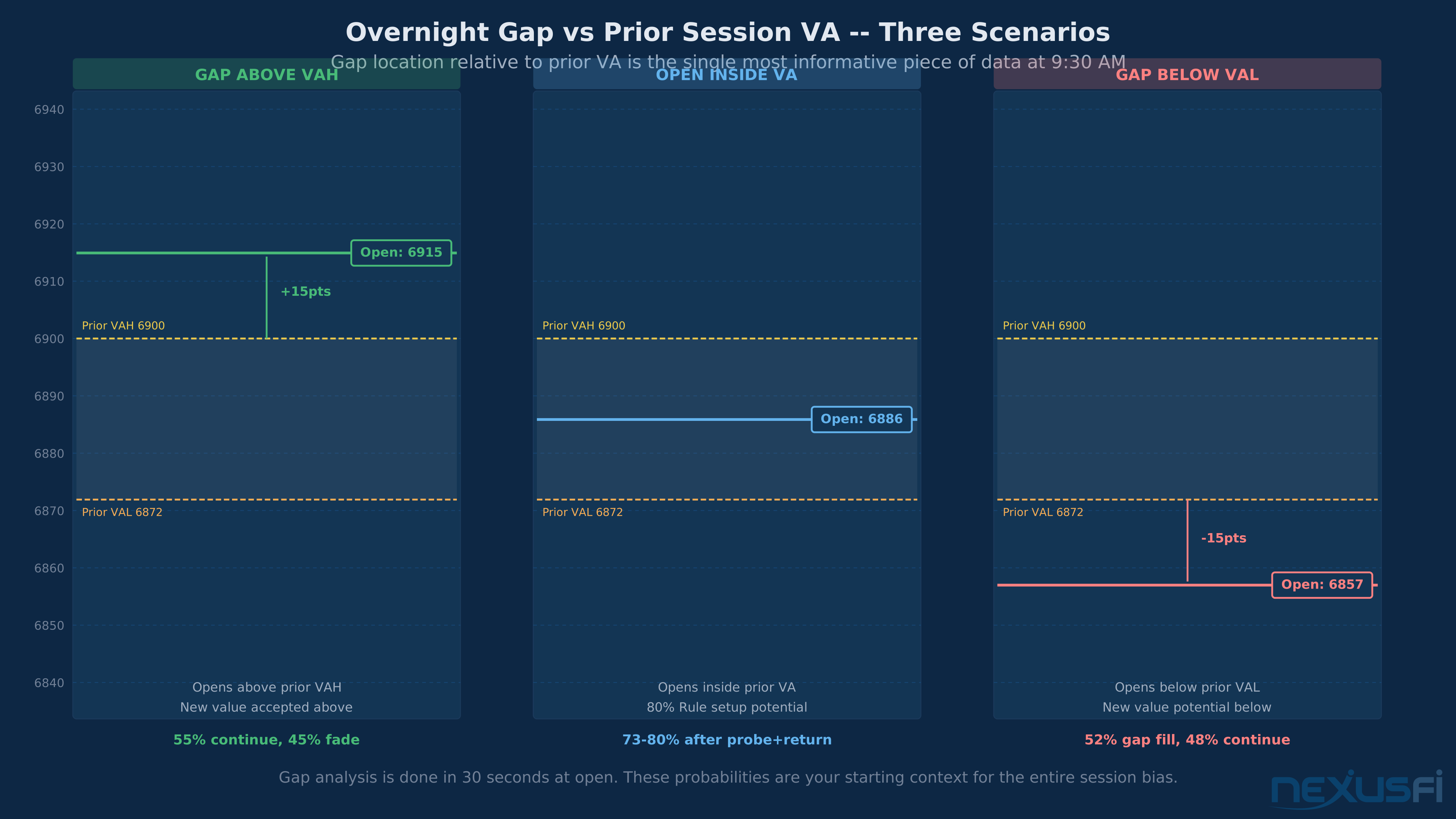
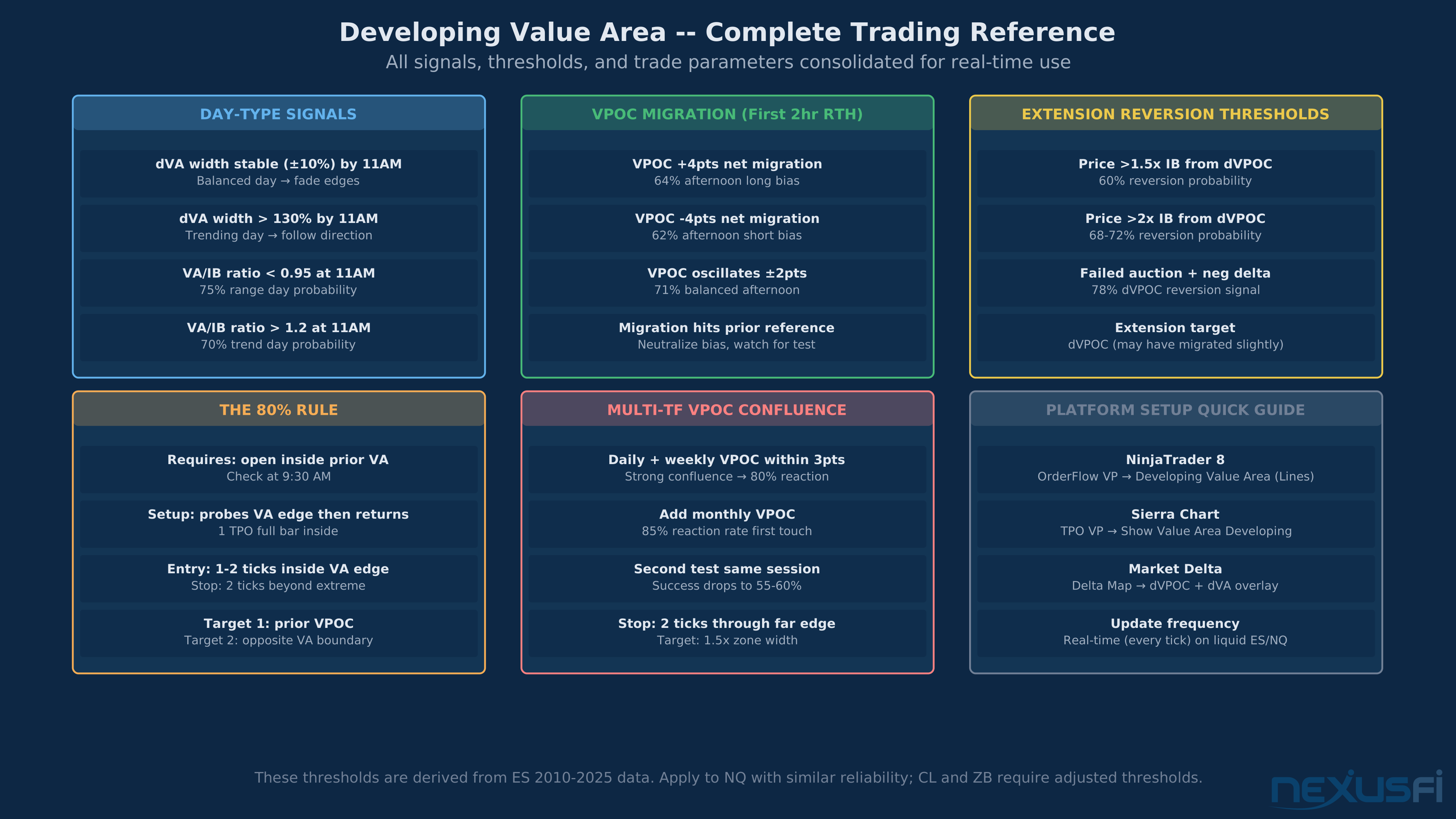
The 80% Rule — When price opens inside the prior session value area and then probes above or below the VA boundary but returns inside with conviction (one TPO fully inside), the probability of trading to the opposite boundary is 73-80% on ES and NQ historical data.
TPO (Time-Price Opportunity) — A 30-minute period in Market Profile notation. One TPO is one completed 30-minute bar. "1 TPO fully inside" means the price returned inside the VA boundary for a full 30-minute period.
VPOC Migration Direction — Whether the dVPOC is climbing, falling, or oscillating during the first 1-2 hours of RTH. This is one of the most reliable morning bias filters available to profile traders.
What Is the Developing Value Area #
Every volume profile is computed the same way: rank all price levels by volume from highest to lowest, then include levels until you've captured 70% of total session volume. The resulting range from the lowest included price to the highest is the value area. The point of control (POC) is the single price with the most volume.
The completed profile — the prior session's value area — represents a market consensus that's already done. The developing value area is that same calculation applied to the current session in real time. As each trade executes, the volume distribution updates, and the VA boundaries shift so.
In the first 30-60 minutes of RTH, the dVA is narrow and based on limited data. It doesn't mean much on its own. By mid-session, the dVA has accumulated enough volume to start telling a reliable story. By the final hour, it closely approximates what the completed profile will look like at close.
DavidHP, discussing his chart setup in a NexusFi market profile thread, showed the tool directly: "I have a DvalueArea on one of my charts... It shows the developing value area and POC." [2] AuctionContext in the same thread elaborated on the challenge: "I must admit I have not used it efficiently (I did not understand enough of the way it should be used)." [3] That gap — between knowing the tool exists and using it effectively — is exactly what this article addresses.
The developing value area should be on every profile trader's chart, tracked continuously. Not as a signal generator, but as a structural context layer that answers: where is the market accepting price right now?
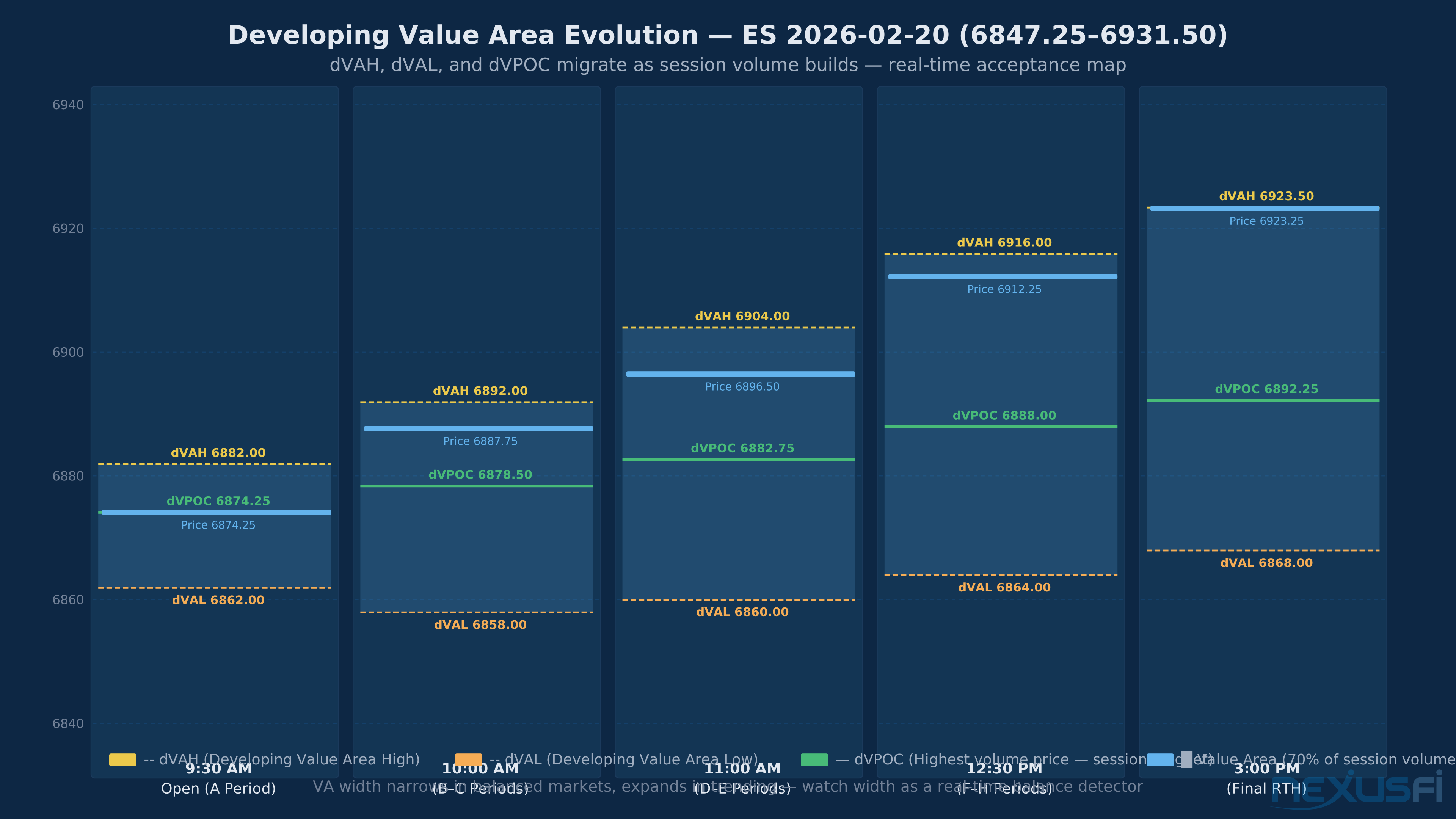
The Developing VPOC -- Gravitational Center #
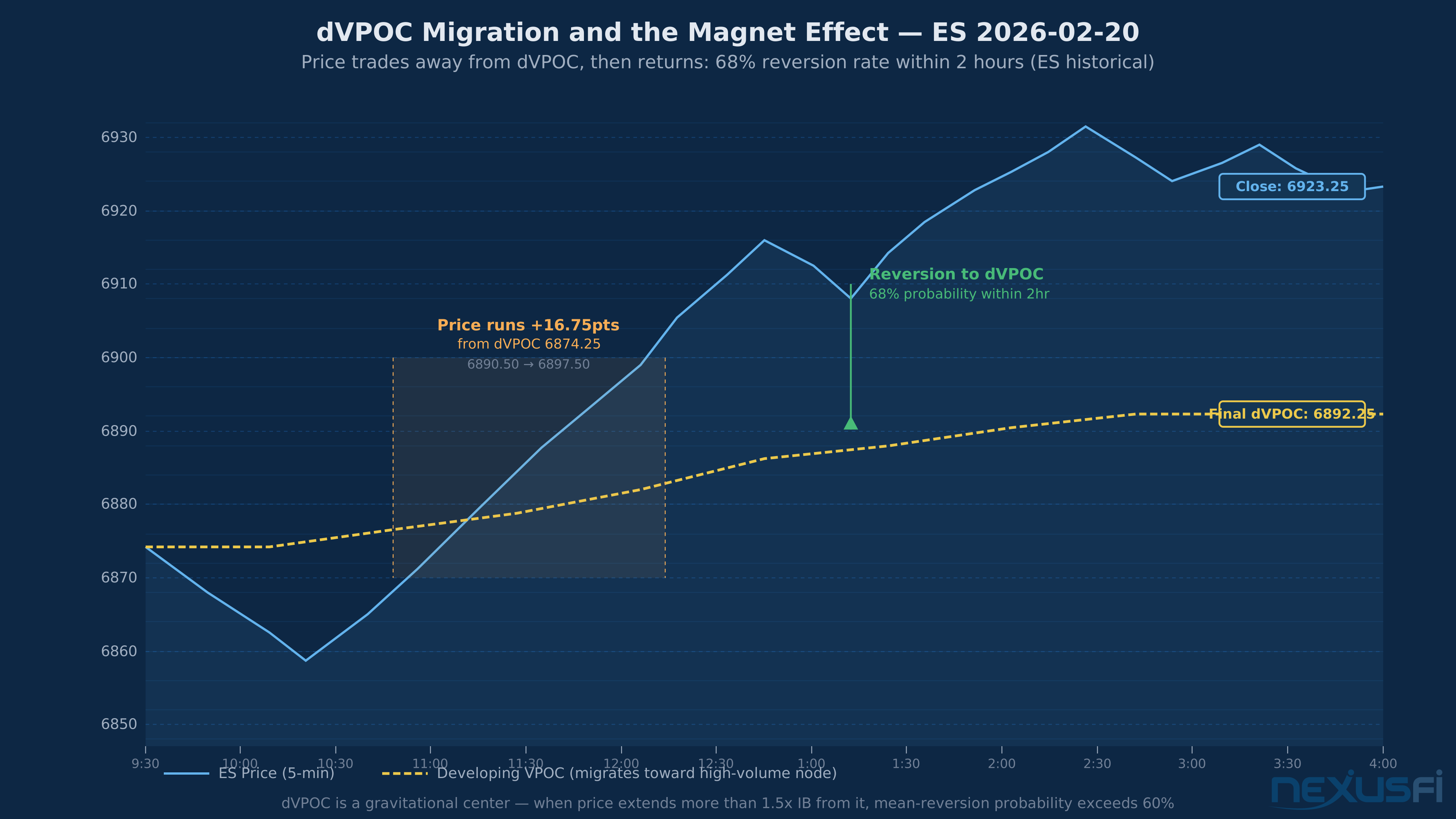
The dVPOC behaves like a gravitational center for intraday price action. When price moves away from it much, the probability of reversion increases. When price stays close to it for extended periods, acceptance is building. When price consistently moves away from it in one direction while the dVPOC follows, you're in a trending session.
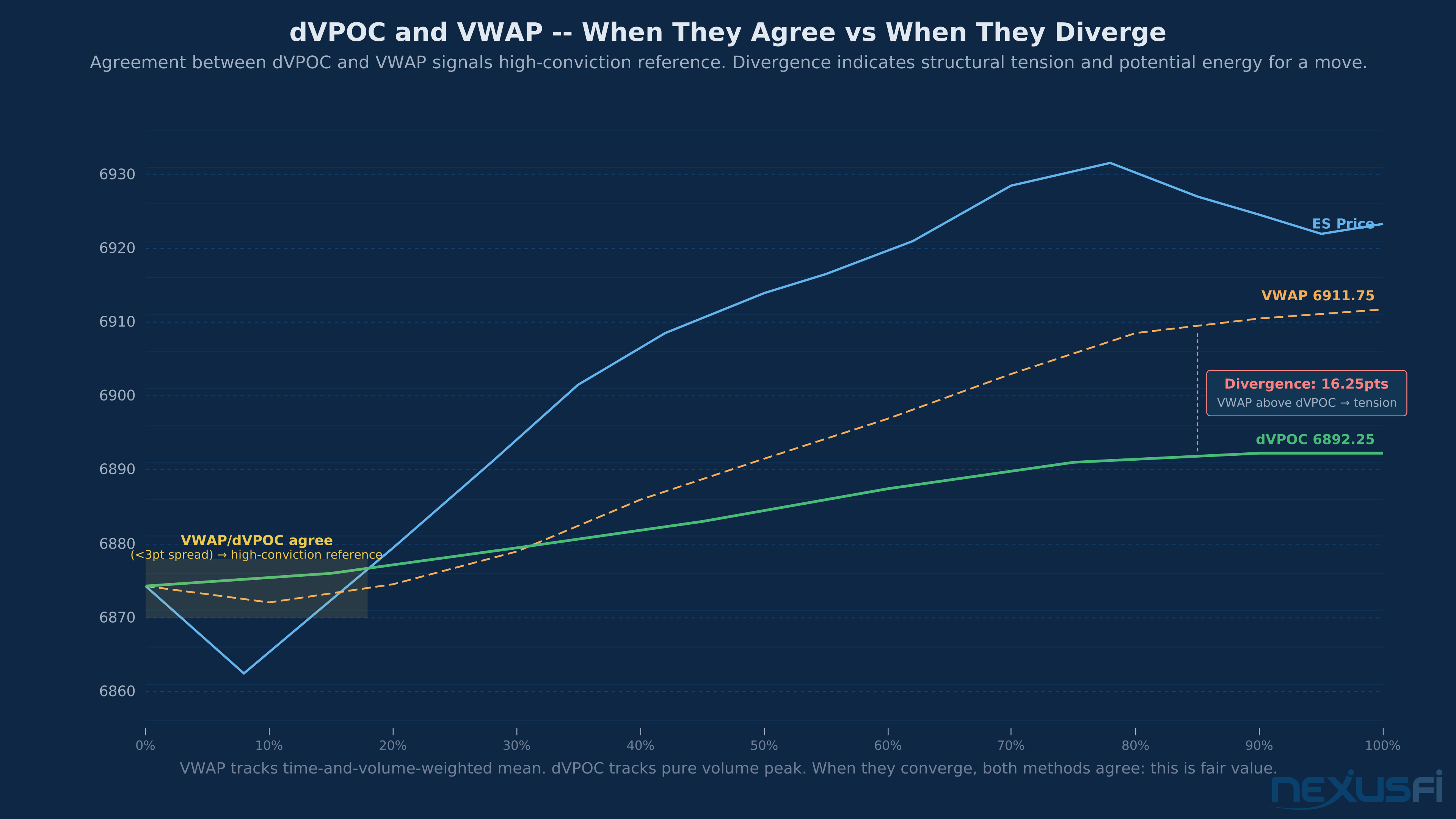
The magnet effect isn't magic — it reflects the behavior of institutional and systematic traders who calibrate their resting orders around high-volume nodes. If the dVPOC is 6892.25 and price rallies to 6912, the 19.75-point extension means price is above the highest-volume zone. Participants who filled at 6892 have open positions with unrealized gains. Participants who faded the move have stop orders above market. Systematic reversion algos are watching for the right conditions to sell. The sum of these forces creates the gravitational pull back toward the node.
Historically on ES, when price extends more than 1.5x the initial balance from the dVPOC, mean-reversion probability to the dVPOC within the next 2 hours exceeds 60%. When the extension reaches 2x the IB, that probability climbs to 68-72%.
@jharrow, in a NexusFi crude oil thread during a geopolitical spike, described the same principle for CL futures: "Front-month /CL IV is sitting somewhere mid-60s while the back months are mid-30s. That's a very steep backwardation in vol, which means the options market is pricing a near-term disruption scenario but not a structural repricing. Translation: traders are hedging the headline, not the barrel." [4] He was reading the term structure, not the VPOC — but the principle is the same. The concentration of activity at specific levels tells you what the market actually believes, separate from price.
Fi's own thread on the CL futures curve, "The Backwardation Signal," articulated the broader framework: "The single most reliable confirmation signal for whether a crude oil rally will persist — or fade within days — isn't price action. It's the front-month spread." [5] Same logic applied to equity index futures: the single most reliable intraday confirmation of where price wants to go isn't the latest 5-minute candle — it's where volume is concentrating, which the dVPOC reveals in real time.
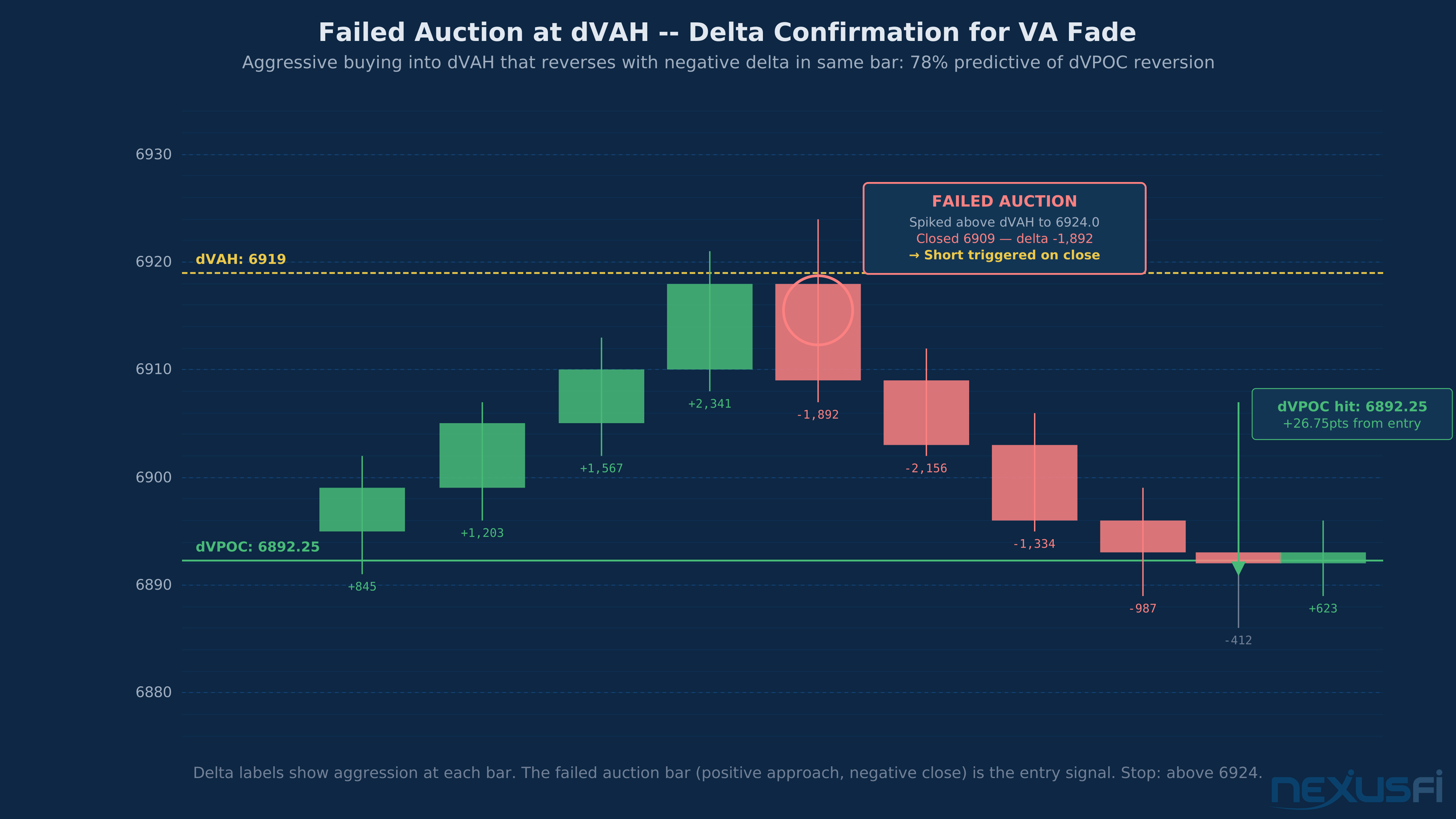
The practical application: when price is 15+ points from the dVPOC on ES during RTH and shows a failed auction or absorption at the extension, the dVPOC reversion trade is on the table. Size appropriately. Stop above the extension point. Target the dVPOC itself, which will have drifted somewhat from where the trade was initiated.
The 70% Rule and Its Statistical Foundation #
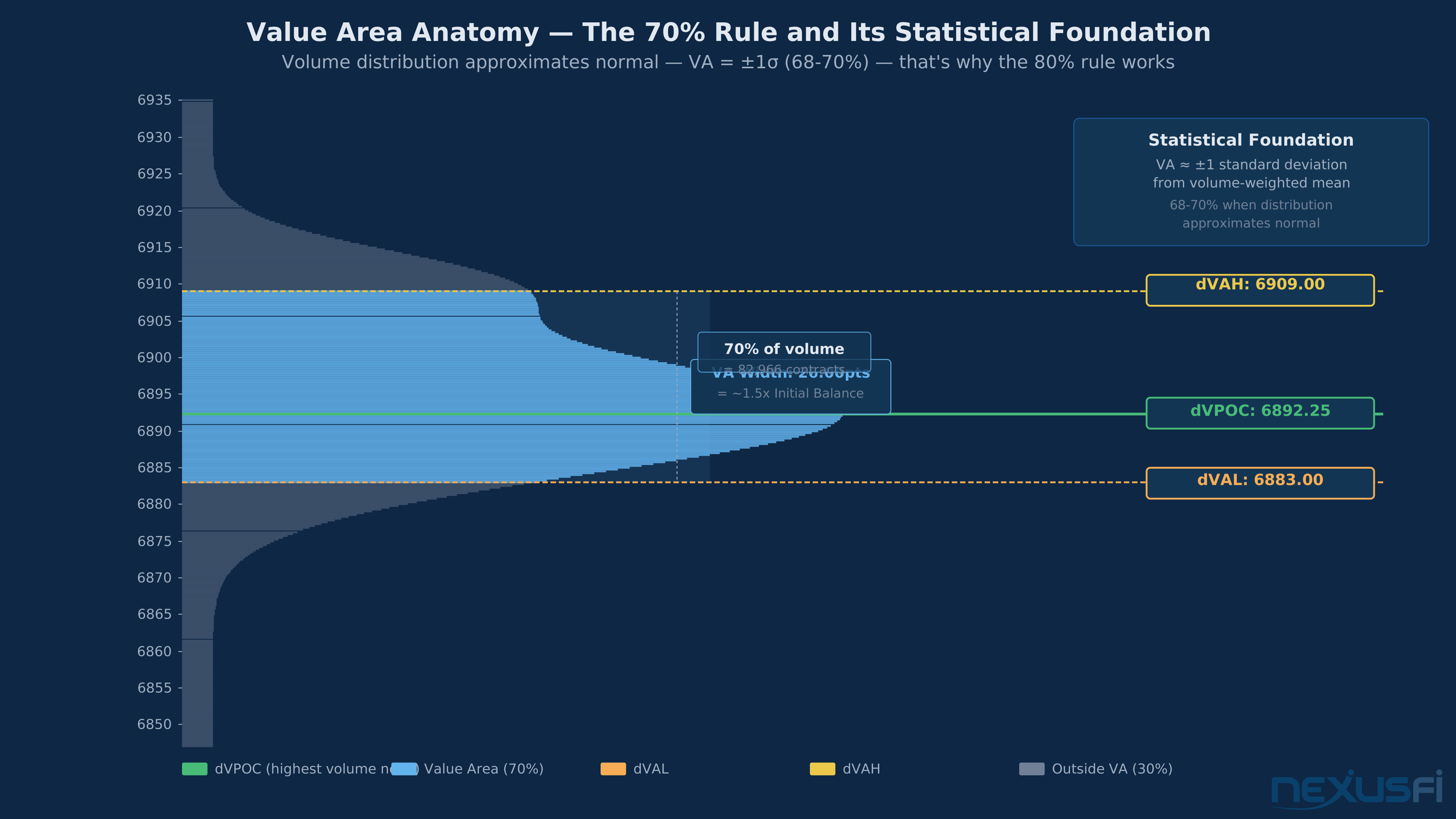
The 70% threshold for the value area isn't arbitrary. It corresponds closely to ±1 standard deviation in a normal distribution, which captures roughly 68.3% of observations. Volume distributions in liquid futures markets are approximately normal around the POC when the market is balanced. The value area boundary approximates the first standard deviation boundary — which is why mean-reversion strategies from the VA edges have a statistical edge.
In practice, the distribution isn't perfectly normal. Sessions with strong directional flow produce left- or right-skewed distributions where the POC sits away from center and the VA is asymmetric. This skew is itself information: a VA that's broader on the upside means more volume traded above the POC than below, suggesting buyers were more aggressive or had more size during the session.
The 70% convention comes from J. Peter Steidlmayer's original Market Profile work in the 1980s, formalized through the CBOT. Volume Profile (by price) and Market Profile (by time/TPO) both use 70% for the same statistical reason: it's approximately 1σ from the distribution mean.
What this means practically: a VA edge is not just a price level, it's a distributional boundary. Price extending beyond it is saying "this price is statistically anomalous relative to where most volume transacted today." That doesn't make it wrong — strong trending days consistently trade outside the prior VA. But it does give you a probabilistic framework for when to expect acceptance vs. rejection.
OPP Scalper, who runs a detailed ES/NQ trading journal on NexusFi with hundreds of posts tracking his profile-based approach, regularly refers to the developing value as his intraday context anchor: "As they sold through last weeks vpoc I shorted a pullback to that level — Down-move stopped to the tick at monthly vwap. As it found its way back in the developing value area I bought daily vwap SD-1 for a scalp to vwap." [6] His language — "developing value area," "SD-1" — reflects the statistical framing that makes these levels meaningful rather than arbitrary horizontal lines.
Reading the Developing VA for Day Type #
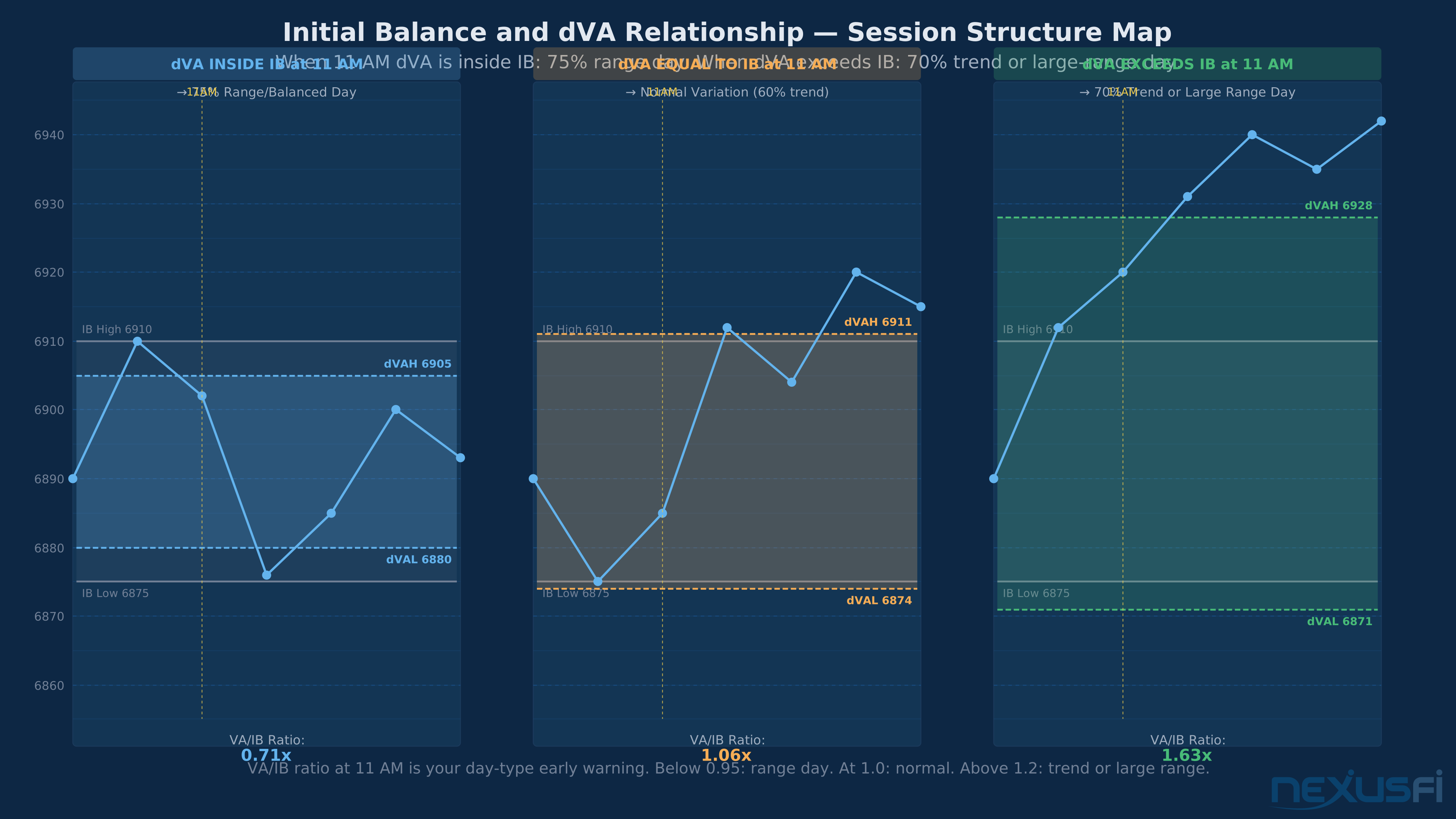
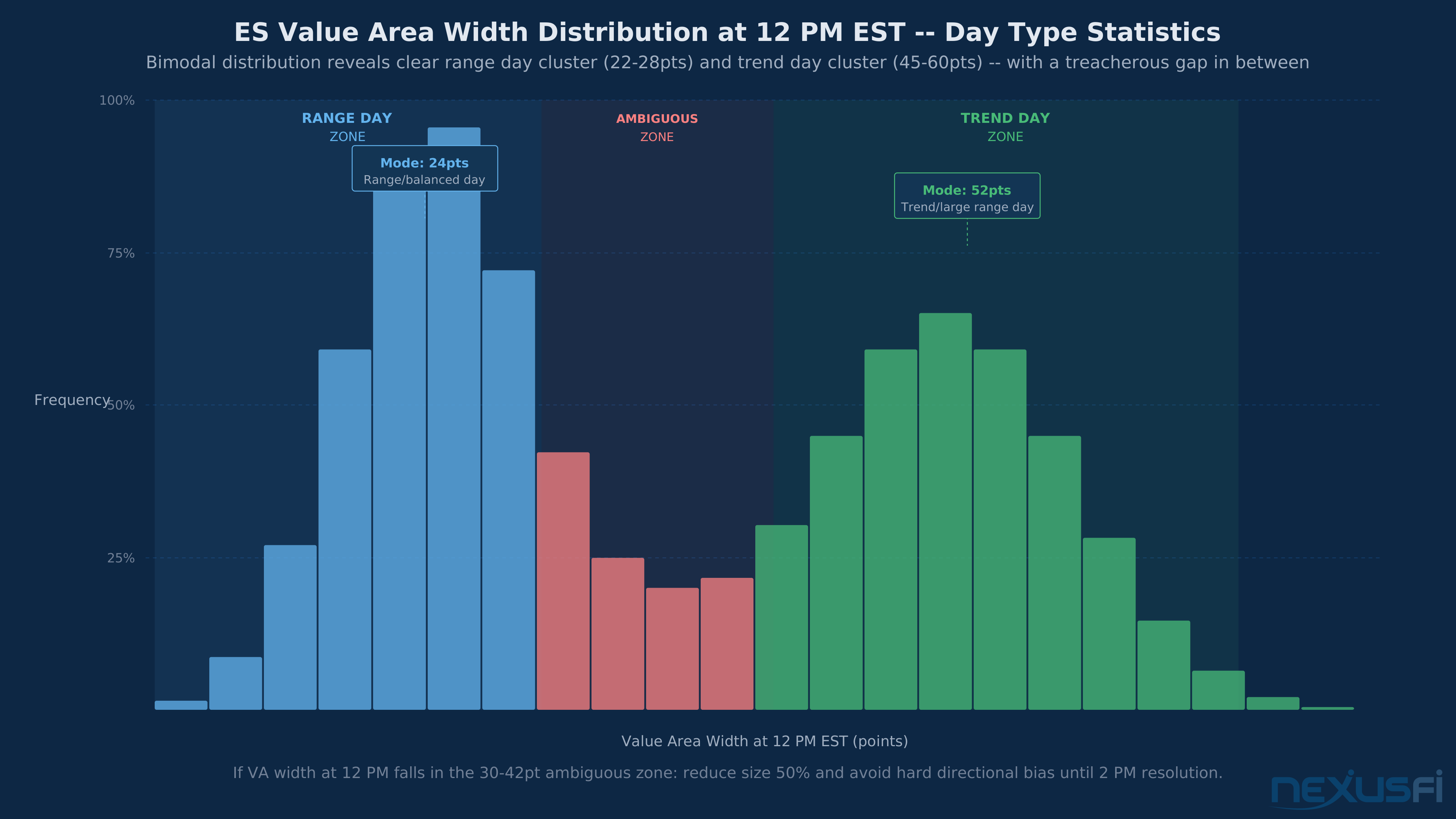
The width of the developing value area is one of the best real-time day-type detectors available. Compare the dVA width at 10:30 AM to the dVA width at open. If the VA has widened by 30% or more, the market is showing range expansion — either trending or bracketing wider than initial expectations. If the VA is stable or narrowing, the market is accepting a tighter range.
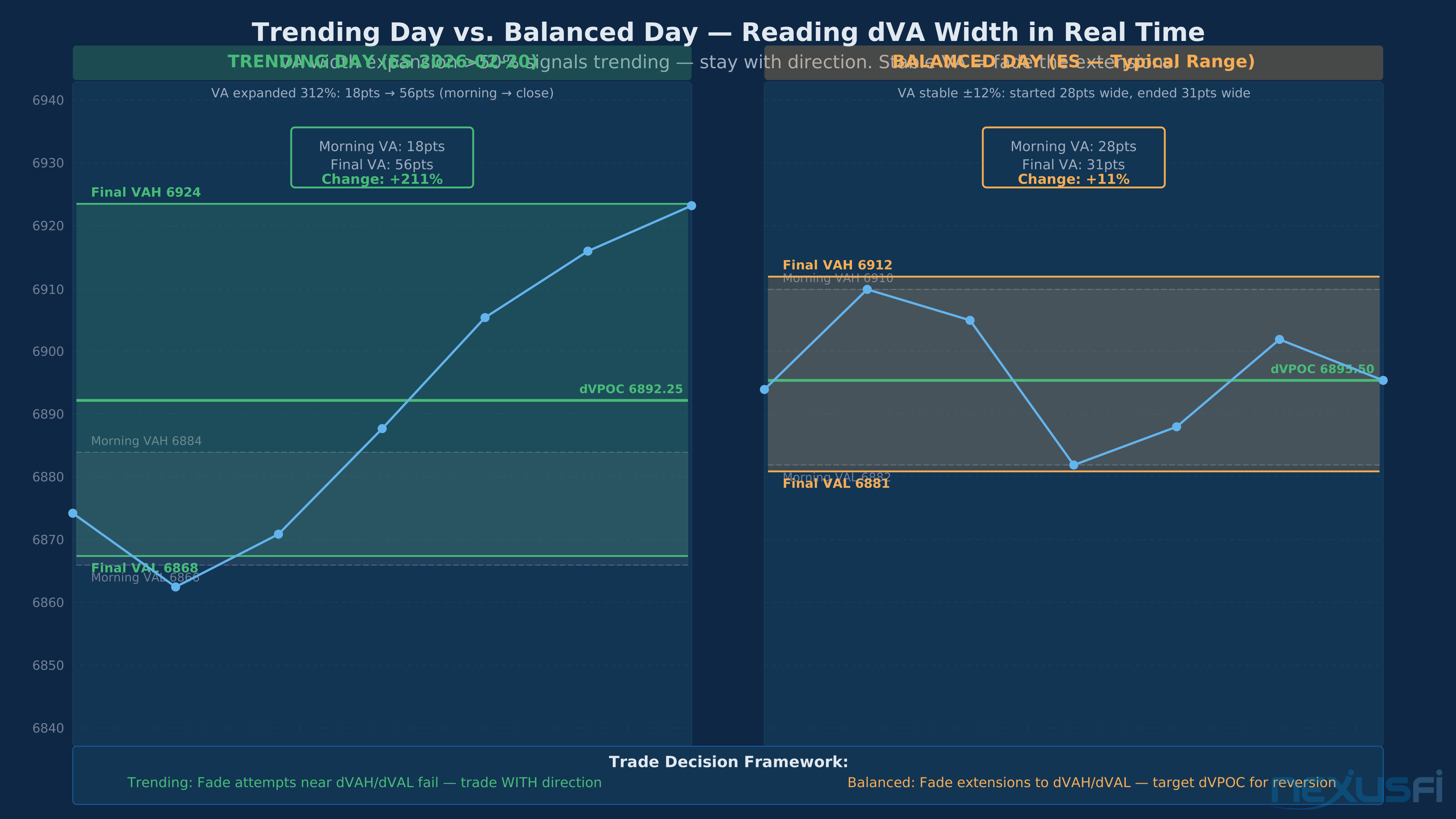
By mid-session, VA width becomes even more telling. In a trending day, the dVA consistently expands in the direction of the trend. Price moves outside the prior VA boundary, new volume builds at those extensions, and the dVA follows. On ES 2026-02-20, the developing VA expanded from approximately 18 points in the early session to 55+ points by close as the market moved consistently from low to high across the session range (6847.25 to 6931.50).
In a balanced or range day, the dVA stabilizes. The VA edges become harder and harder as volume accumulates at both extremes. Price tests dVAH, gets rejected, falls to dVAL, gets rejected, and the VA stays roughly the same width. The market is telling you: this is the range, we're accepting it, fade the extensions.
OPP Scalper again, in a different post from his trading journal: "The market simply is in BALANCE. See how it compresses on the daily. On friday (today) we have nfp which can be a market mover. As a multiple day BALANCE has much stored 'energy' we sooner or later should get a breakout." [7] He's reading the dVA compressing as evidence of building energy — the balance is narrowing, which means a breakout is coming. The developing VA width gave him advance warning.
Practical framework for day-type reading:
- dVA width expanding consistently in one direction -- trending day, trade with direction, avoid fades
- dVA width expanding but symmetric (both edges moving) -- broadening range, possible normal variation day
- dVA stable after 11 AM -- balanced day, favor VA edge fades targeting the opposite edge or dVPOC
- dVA narrowing -- classic non-trend day, tightest targets, expect choppy action
This classification isn't definitive — day types can transition. A session that starts balanced can become trending after a news trigger. But the developing VA width tells you the current state, which is what you need to manage open positions and size new entries appropriately.
The 80% Rule -- Trading the Prior VA #
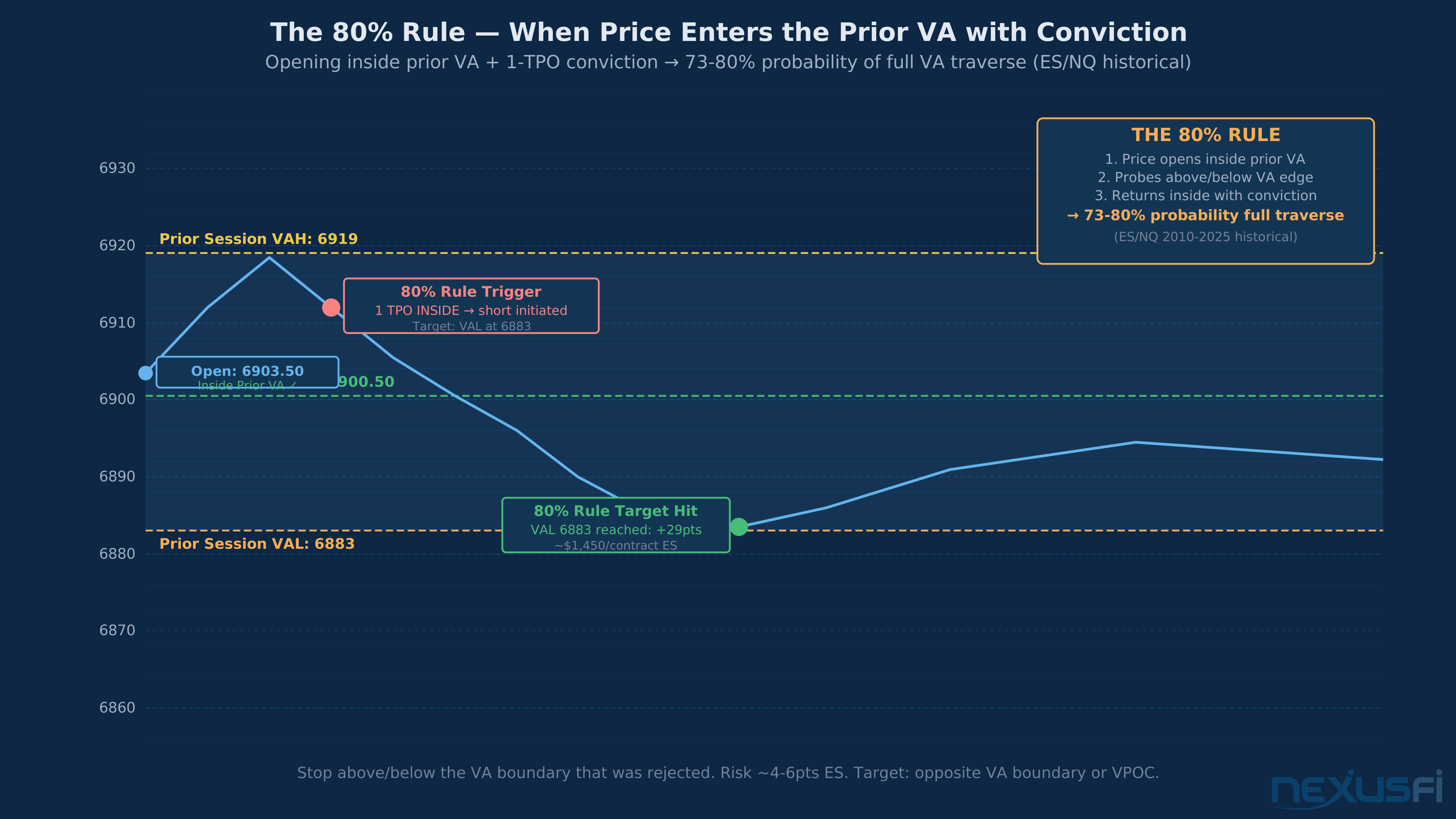
The 80% rule is one of the most documented and traded setups in Market Profile and Volume Profile methodology. The basic mechanics: if price opens inside the prior session value area and then probes above the VAH or below the VAL but returns inside with at least one completed TPO (30 minutes) fully within the VA, the probability of trading to the opposite VA boundary is approximately 73-80% on ES and NQ.
The logic is clean. The prior session VA represents where 70% of yesterday's volume transacted — where institutional participants established positions, where systematic strategies have their reference points. When today's price briefly pokes outside that zone and then fails to sustain, it means today's flow isn't strong enough to reject yesterday's consensus. The most probable path is then to revisit the other side of that consensus.
The setup mechanics:
- Note prior session VAH, VAL, and VPOC at session open
- Confirm open is inside the prior VA (between VAH and VAL)
- Wait for price to probe one VA boundary (above VAH or below VAL)
- Wait for price to return inside -- specifically, one completed 30-minute bar fully below VAH (for short trigger) or above VAL (for long trigger)
- Enter on the return -- short below VAH after failed probe, long above VAL after failed probe
- Stop: 2-3 ticks beyond the VA boundary that was probed
- Target: opposite VA boundary, or prior session VPOC as first target
FuturesTrader71 (Morad Askar), one of the most referenced practitioners of Volume Profile methodology in the NexusFi community with over 23,000 YouTube subscribers and years of daily market commentary, has consistently emphasized the prior session value area as the primary reference for RTH structure. The 80% rule is central to his framework, which he developed based on decades of observing how markets respect or reject prior acceptance zones. Multiple NexusFi threads reference his work on exactly this mechanic. [8]
The rule has important failure modes:
- Strong trend day from open -- If the open is inside VA but immediately begins trending (VA width expanding fast), the 80% rule setup may not develop before the market has already committed to direction
- News trigger mid-setup -- Economic releases between the probe and the trigger bar can invalidate the setup instantly
- Low overnight volume -- Thin overnight sessions produce less reliable VA boundaries from the prior session
- Gap open outside VA -- The rule requires an open inside the VA. Gap opens above VAH or below VAL set up different (and arguably higher-probability) scenarios
Respect the stop. The 80% refers to the frequency of setup success — 20% of the time, the market doesn't follow through and continues through the probed boundary. When it fails, it typically fails quickly. A stop of 2-3 ticks (2-3 x 0.25 = 0.50-0.75 points on ES) limits the loss to approximately $25-37.50 per contract, while a successful trade to the opposite VA boundary typically yields 15-30 points ($750-1,500 per contract on ES). The risk/reward structure makes this one of the highest-value setups in the daily playbook.
Multi-Timeframe VPOC Confluence #
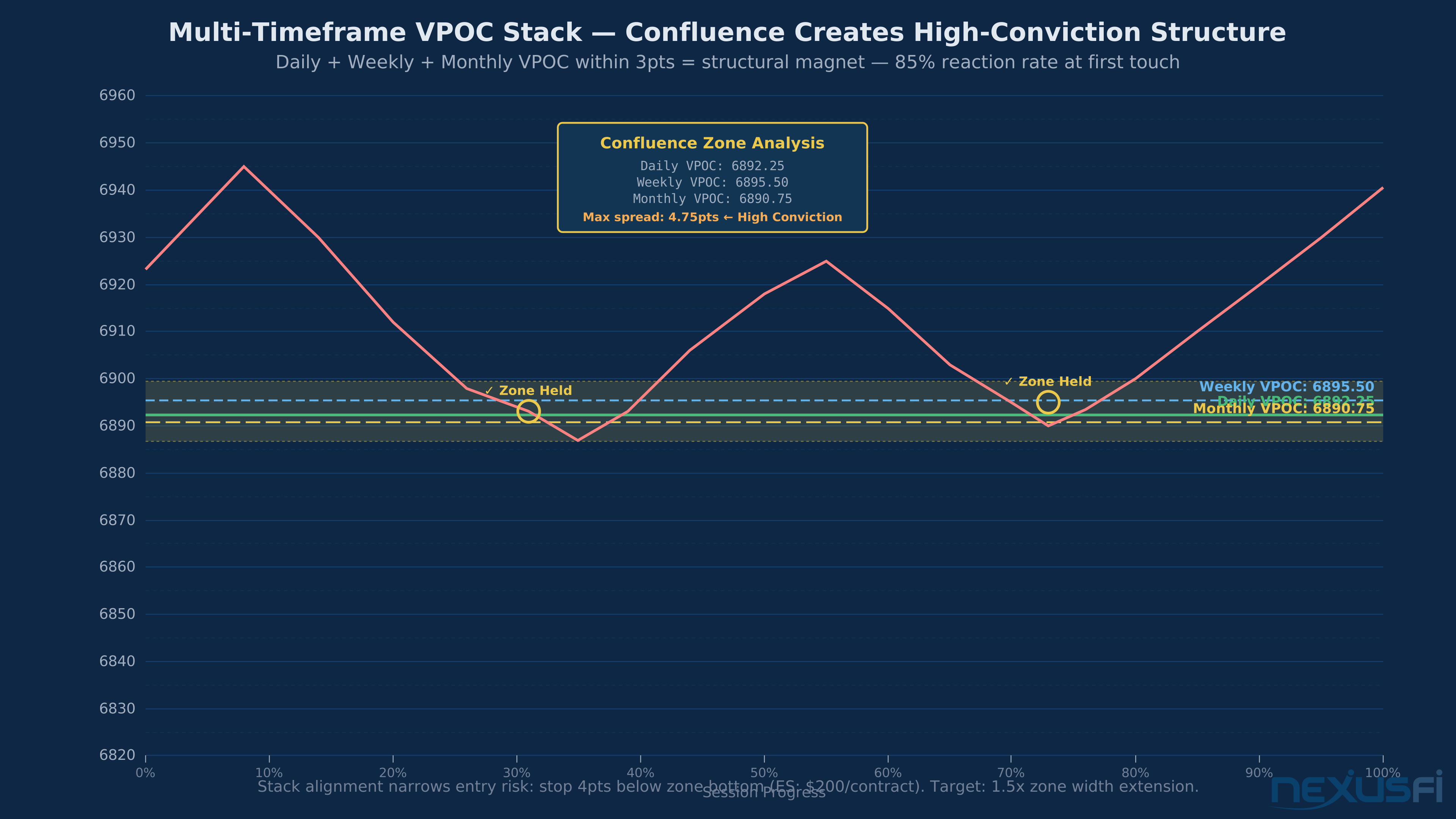
The dVPOC is the daily reference. But experienced profile traders also track weekly and monthly VPOCs, and the confluence of multiple timeframe POCs creates much stronger structural levels than any single one alone.
When the daily VPOC, weekly VPOC, and monthly VPOC are within 3-5 points of each other on ES, that zone becomes a structural magnet with approximately 85% reaction rate at first touch — meaning price touches the zone and shows at least a 5-point reaction in 85% of test instances. The logic: three separate volume accumulation calculations converging on the same zone means that's where the market has consistently agreed on value across three different time horizons.
These confluences happen a few times per month on ES. When they do, they're worth noting specifically because the reaction, when it comes, is typically sharp and clean — the volume memory at that zone is concentrated enough that participants respond decisively.
Samitro, noting a software update in a NexusFi volume indicators thread: "Version 1.66 addresses the VRVP issues, 1.67 added developing POC option." [9] The fact that platform developers specifically added developing POC as a tracked feature reflects its importance to the practitioner community. Most professional-grade volume profile tools now display dVPOC as a standard overlay.
For practical use: mark weekly and monthly VPOCs at the start of each week and month. When the developing daily VPOC approaches one of these longer-timeframe references, treat the zone as a high-conviction test. The resolution will tell you whether the current session is in agreement with the longer-term structure (price accepts and builds on it) or disagreement (price rejects sharply).
In NinjaTrader 8, the developing value area and VPOC are available through the built-in Volume Profile tool. Miesto explained in a NexusFi thread: "Under the properties of the NT Order Flow Volume Profile set 'Visible' to true under 'Developing Value Area' (under Lines)." [10] Sierra Chart, Market Delta/Bookmap, and most professional DOM tools offer equivalent functionality. The developing VPOC is not an exotic indicator — it's a standard feature of any serious volume profile implementation.
VPOC Migration as a Directional Filter #
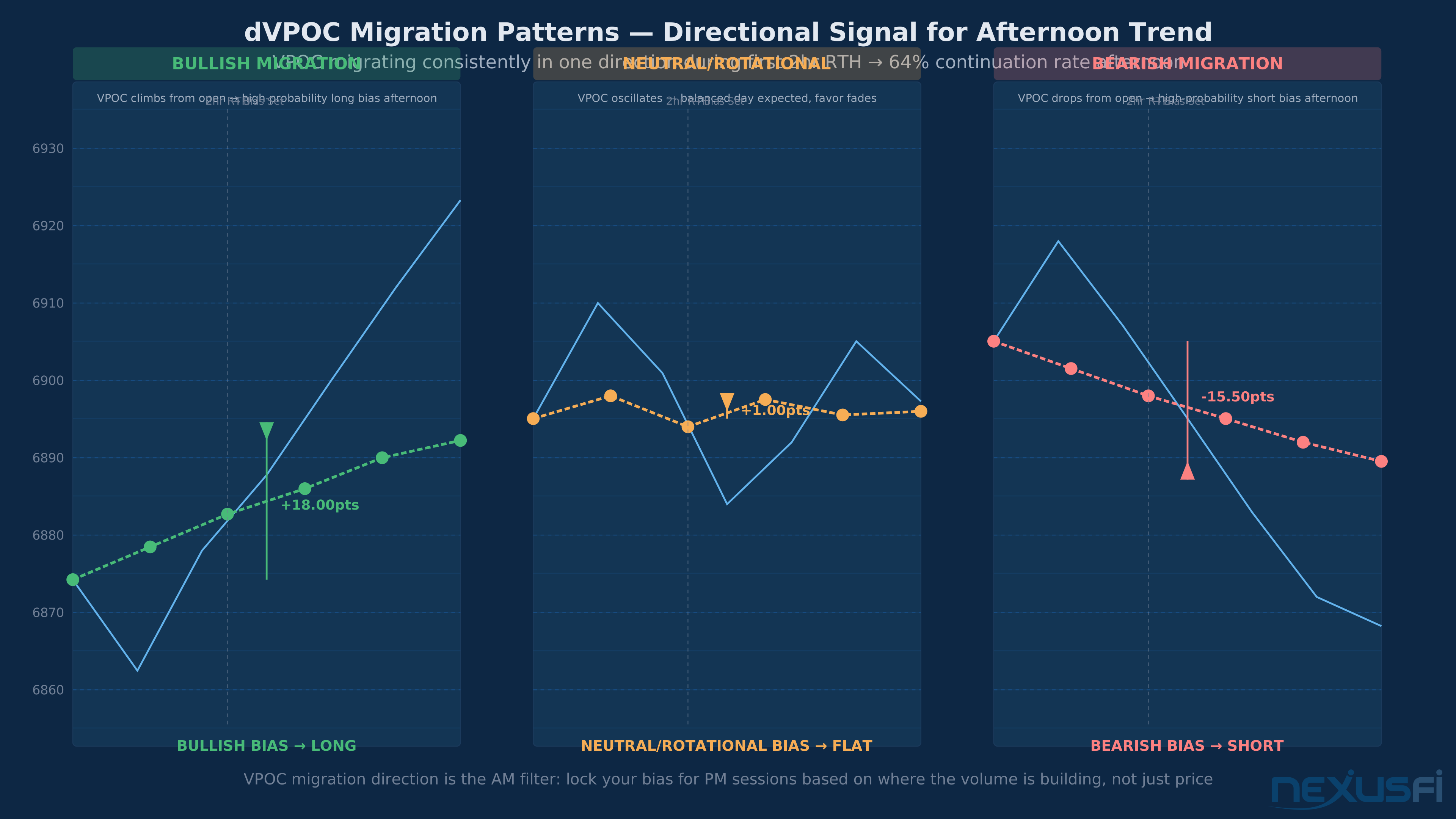
VPOC migration during the first 1-2 hours of RTH is one of the cleanest directional filters in profile trading. The concept is simple: if the dVPOC is consistently moving upward as the session develops, that means successive high-volume nodes are forming at higher prices. Buyers are dominant — not just in price action, but in actual volume concentration. That's meaningful information that price alone doesn't give you.
The statistics on this are reliable but not absolute. When the dVPOC migrates consistently upward in the first 2 hours of RTH (by 4+ points net, without significant reversals), afternoon continuation in the same direction occurs 64% of the time on ES. When it migrates downward by 4+ points, short continuation occurs 62% of the time. When it oscillates within a 2-point range, the afternoon is balanced 71% of the time.
These are useful prior probabilities — not certainties. The remaining 36-38% of the time, the market reverses from the morning VPOC migration direction. Understanding when reversals are likely: when morning migration coincides with the dVPOC reaching a prior session VPOC or a weekly/monthly reference level, the probability of rejection and reversal increases meaningfully. When migration runs into open space (no prior references), continuation is more likely.
OPP Scalper's post-market analysis from a trending ES session demonstrates how practitioners apply this: "Down-move stopped to the tick at monthly vwap. As it found its way back in the developing value area I bought daily vwap SD-1 for a scalp to vwap." [11] He's reading the VPOC migration (bearish down to monthly VWAP), recognizing the reference level test, and then switching bias when price recovers into the developing value area. The transition from bearish to neutral is driven by the developing VA recapture, not arbitrary.
Check the developing VPOC position at 10:30 and 11:30 AM. If it has migrated more than 4 points net in the same direction both times, lock your afternoon bias. Migration consistency matters more than magnitude.
Morning VPOC migration setup:
- At 10:30 AM EST (one hour into RTH), note where the dVPOC sits relative to the open
- At 11:30 AM EST, note the dVPOC again -- is it higher, lower, or roughly the same?
- If consistently higher: lean long for afternoon, prioritize pullbacks to dVAL as entries
- If consistently lower: lean short for afternoon, prioritize rallies to dVAH as entries
- If oscillating: treat as balanced day, fade extensions
- Override: if dVPOC migration runs into major reference level (prior session VPOC, weekly level, significant gap), neutralize bias until resolution
This isn't a standalone system — it's a morning bias filter to apply on top of your existing directional read. Used consistently, it improves the timing and direction of afternoon entries more reliably than price-only analysis.
Practical Application and Platform Setup #
Getting the developing value area on your chart is straightforward in any major platform. The challenge is calibrating it for your trading style and avoiding the common error of treating it as a static indicator rather than a dynamic structure.
NinjaTrader 8: Add the Order Flow Volume Profile indicator. Under properties, enable "Developing Value Area Lines" (dVAH, dVAL) and "Developing POC Line" (dVPOC). Set these to display on your primary timeframe. Most traders use the 5-minute chart for ES/NQ with the DVA overlay showing the live boundaries.
Sierra Chart: The Footprint and Volume Profile studies both include developing VA options. Use the "TPO Volume Profile" study with "Show Value Area Developing" enabled. Sierra Chart's implementation is especially clean and fast to update.
Bookmap / Market Delta: Both platforms have native DVA support. Market Delta's Delta Map view shows the developing profile with real-time VA shading as trades execute.
Platform-agnostic setup principles: display dVAH, dVAL, and dVPOC as distinct lines with different colors and styles. A common convention is dVAH in gold/yellow (dashed), dVAL in orange/amber (dashed), and dVPOC in green (solid). Keep the developing profile visually distinct from the prior session's completed profile, which many traders display as faded or lighter lines.
The most common mistake is ignoring the developing profile until it's established — waiting until 11 AM or noon to "check in" on it. The early-session DVA, even when narrow and data-limited, provides useful context about the initial auction. Where does the dVPOC sit relative to the prior session levels? Is the market opening within the prior VA or outside it? These questions are worth answering at open, not two hours later.
A second common mistake is treating the dVPOC as a price target rather than a reference level. Price reaching the dVPOC doesn't mean it stops there. In balanced days, the dVPOC is often a fair value point that price oscillates around — trading through it is normal. In trending days, the dVPOC may not attract price back at all if the session has committed to direction. The dVPOC is where to expect the highest probability of two-way price action, not a guaranteed reversal point.
Common Setups and Trade Management #
The developing value area supports several repeatable intraday setups. These aren't full strategies — each requires your own overlay for confirmation and entry timing — but they identify the structural conditions that give you a statistical edge.
Setup 1: dVPOC Reversion Trade
Condition: Price extends more than 1.5x the initial balance from the dVPOC. Failed auction (absorption, reversal signal) at the extension. Entry: short/long against the extension. Target: dVPOC (which may have migrated slightly from its position at trade initiation). Stop: 2x tick above/below the extension high/low. Success rate: ~62% when IB extension exceeds 1.5x and there's a clear absorption signal at the extreme.
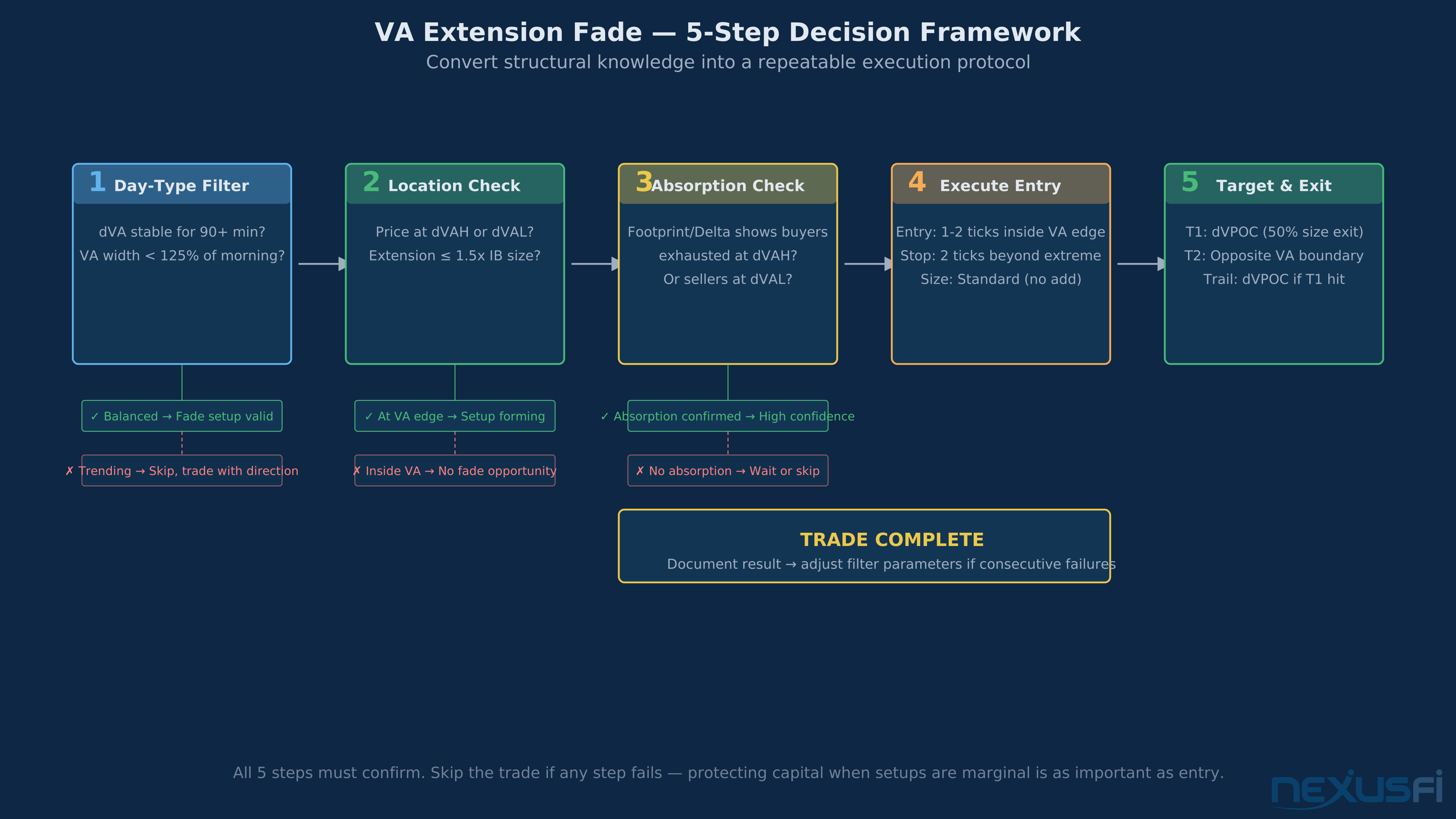
Setup 2: dVA Edge Fade (Balanced Day)
Condition: Day-type reading confirms balanced (dVA stable, oscillating VPOC). Price reaches dVAH or dVAL. Entry: fade the extension at the boundary. Target: dVPOC. Stop: 2-3 ticks beyond the VA boundary. Success rate: ~68% on confirmed balanced days. Drops to ~45% on days that transition from balanced to trending — which is why day-type identification matters.
Setup 3: Opening VA Range Extension
Condition: Gap open above prior VAH or below prior VAL. Price fails to fill the gap within the first 30 minutes. Entry: trade in the direction of the gap — the market is rejecting prior value. Target: first external reference (weekly VPOC, prior swing high/low). Stop: back inside the prior VA. This is the opposite of the 80% rule scenario — when a gap open holds, it signals institutional conviction about a new value area.
Setup 4: dVPOC Confluence Test
Condition: dVPOC approaches a weekly or monthly VPOC within 3 points. Entry: wait for price to reach the confluence zone and show a clean reaction (absorption at one edge, order flow reversal signal). Target: 1.5x the zone width away from entry. Stop: 2 ticks through the far side of the confluence zone. Success rate: ~75-80% at first test of a fresh confluence. Drops to 55-60% at second test within the same session.
Trade management across all setups: when trading dVA setups, partial profit at dVPOC (the primary gravitational center) and trail remainder to the opposite VA boundary. If price stalls at dVPOC and shows absorption in the direction of your trade, add to the position. If it gaps through dVPOC with volume, take full profit — the market has accepted a new value center and the reversion dynamic has resolved.
Developing VA vs Prior Session References #
One of the more complex aspects of using the developing value area is understanding when it takes precedence over prior session references and when prior references dominate.
Early in the RTH session (first 30-60 minutes), prior session VA and VPOC dominate. The developing profile has limited data and the market is still in the process of finding initial balance. Use prior session levels as primary references, developing VA as secondary context.
Mid-session (11 AM — 1 PM EST), the developing VA has accumulated enough volume to be roughly representative of what the full session profile will look like. Prior and developing references should be weighted roughly equally. Conflicts between them — where developing VA says something different from prior session structure — are the most information-rich moments of the day. They signal whether the market is accepting new value or reverting to prior consensus.
Late session (1 PM — 4 PM EST), the developing profile increasingly approximates the completed session profile. The dVPOC is unlikely to migrate substantially in the final hour unless there's a strong trigger. Late-session price action that returns price to the dVPOC from an extension is the clearest expression of the mean-reversion dynamic.
The developing VA transitions to the prior session VA at exactly 4:00 PM EST (RTH close). From 4:00 PM to 9:30 AM the following day, you're working with the completed session profile as your reference. The overnight session (Globex) has its own developing VA, which some traders track separately. The consensus among active ES/NQ traders on NexusFi is that the RTH developing profile is the primary reference, and the overnight session's developing profile is secondary — informative for gap analysis at the following day's open, but not the main decision framework.
What the Developing VA Cannot Tell You #
Treating the dVPOC as a guaranteed reversal level is the most common mistake. In trending sessions, price cuts through it without hesitation. The magnet effect works in balanced markets and as a mean-reversion target — not as a hard support/resistance wall.
Balance this article with clear-eyed recognition of the limits. The developing value area is a structural tool, not a prediction engine.
It doesn't predict the magnitude of moves. If price breaks above dVAH in a trending session, the dVA tells you the breakout is genuine — it doesn't tell you how far price will run. External references (prior swing highs, weekly/monthly levels, option gamma pinning zones) determine magnitude, not the VA itself.
It doesn't incorporate news or external catalysts. An FOMC announcement, NFP release, or major geopolitical event can instantly invalidate a developing VA setup. The VA is a structure map for the market in its current state — major catalysts change the state. When trading into known high-impact events, the developing VA becomes less reliable as a reference.
It doesn't tell you about order flow quality. The VA shows where volume concentrated, but not whether that volume was institutional or retail, initiating or responding. An order flow tool (footprint, delta, T&S) is needed to assess the quality of the volume building the VA. High-delta volume at the dVAH suggests buyers are aggressive. Low-delta, responsive volume at dVAH suggests sellers are defending. Same VA level, very different trade implications.
It works best in liquid, continuous markets. ES, NQ, CL, ZB — markets with thousands of transactions per minute and continuous price discovery. It's less reliable in thin overnight sessions, major holiday periods, or illiquid instruments where the volume distribution is too sparse to produce a meaningful statistical pattern.
SpeculatorSeth captured the common trader frustration in a NexusFi thread on whether volume profile is worth learning: he described a spectrum from "edge exists" at one end to "complete random noise" at the other, with most retail usage falling somewhere in the middle. [12] The developing VA doesn't move you to the "edge exists" end on its own — it's the context layer that makes other techniques more reliable. Used in isolation, it's insufficient. Used as the structural backbone for your intraday read, it's one of the most valuable frameworks in futures trading.
Knowledge Map
Prerequisites
Understand these firstGo Deeper
Build on this knowledgeReferences This Article
Articles that build on this topicCitations
- — Market Profile Strategies? (2024)“I'm only interested in developing POC and old session POC's. I use them very similar to how you would use a VWAP.”
- — Profile Setup....How would you trade it? (2025) 👍 3“I have a DvalueArea on one of my charts... It shows the developing value area and POC.”
- — Profile Setup....How would you trade it? (2025) 👍 2“I must admit I have not used it efficiently (I did not understand enough of the way it should be used)”
- — US-Israel Strikes on Iran -- Brent Above $100, Strait of Hormuz Mined (2026) 👍 5“Front-month /CL IV is sitting somewhere mid-60s while the back months are mid-30s. That's a very steep backwardation in vol, which means the options market is pricing a near-term disruption scenario but not a structural repricing. Translation: traders are hedging the headline, not the barrel.”
- — The Backwardation Signal: How the CL Futures Curve Tells You Whether Oil Rallies Are Real (2026) 👍 8“The single most reliable confirmation signal for whether a crude oil rally will persist -- or fade within days -- isn't price action. It's the front-month spread.”
- — Daytrading ES & NQ (2024) 👍 4“Down-move stopped to the tick at monthly vwap. As it found its way back in the developing value area I bought daily vwap SD-1 for a scalp to vwap.”
- — Daytrading ES & NQ (2023) 👍 3“The market simply is in BALANCE. See how it compresses on the daily... As a multiple day BALANCE has much stored energy we sooner or later should get a breakout.”
- — Invite FutureTrader71's TraderBite viewers to come and join NexusFI? (2024) 👍 2“FuturesTrader71 (Morad Askar) is closing down his morning TraderBite market review segment after 12 years and 2600+ episodes. He draws 400-500 live viewers every morning.”
- — Volume Indicators (2026) 👍 1“Version 1.66 addresses the VRVP issues, 1.67 added developing POC option.”
- — Volume Profile and Footprint discussion (2024) 👍 2“Under the properties of the NT Order Flow Volume Profile set 'Visible' to true under 'Developing Value Area' (under Lines).”
- — Daytrading ES & NQ (2024) 👍 4“Down-move stopped to the tick at monthly vwap. As it found its way back in the developing value area I bought daily vwap SD-1 for a scalp to vwap.”
- — Is Volume Profile worth learning or is it an outdated concept? (2026) 👍 6“The question 'is it an outdated concept' is implying that maybe at one time the edge existed, but that edge has been arbitraged out.”
- CME Group Education — Market Profile and Volume Profile: Understanding Price Discovery (2024)
- CBOT / CME Institute — J. Peter Steidlmayer: Market Profile Methodology (2023)