



Market Cycle Analysis in Futures Trading: How to Identify, Measure, and Trade Recurring Price Patterns
Overview #
Every serious futures trader eventually notices that price doesn't move randomly. It moves in waves. A 20-day swing low followed by a rally, then another pullback roughly 20 trading days later. The lunchtime lull that kills momentum five days a week. The September weakness in equity index futures that shows up in the data year after year. These aren't coincidences — they're market cycles, and understanding them gives you something most traders lack: a probabilistic framework for timing.
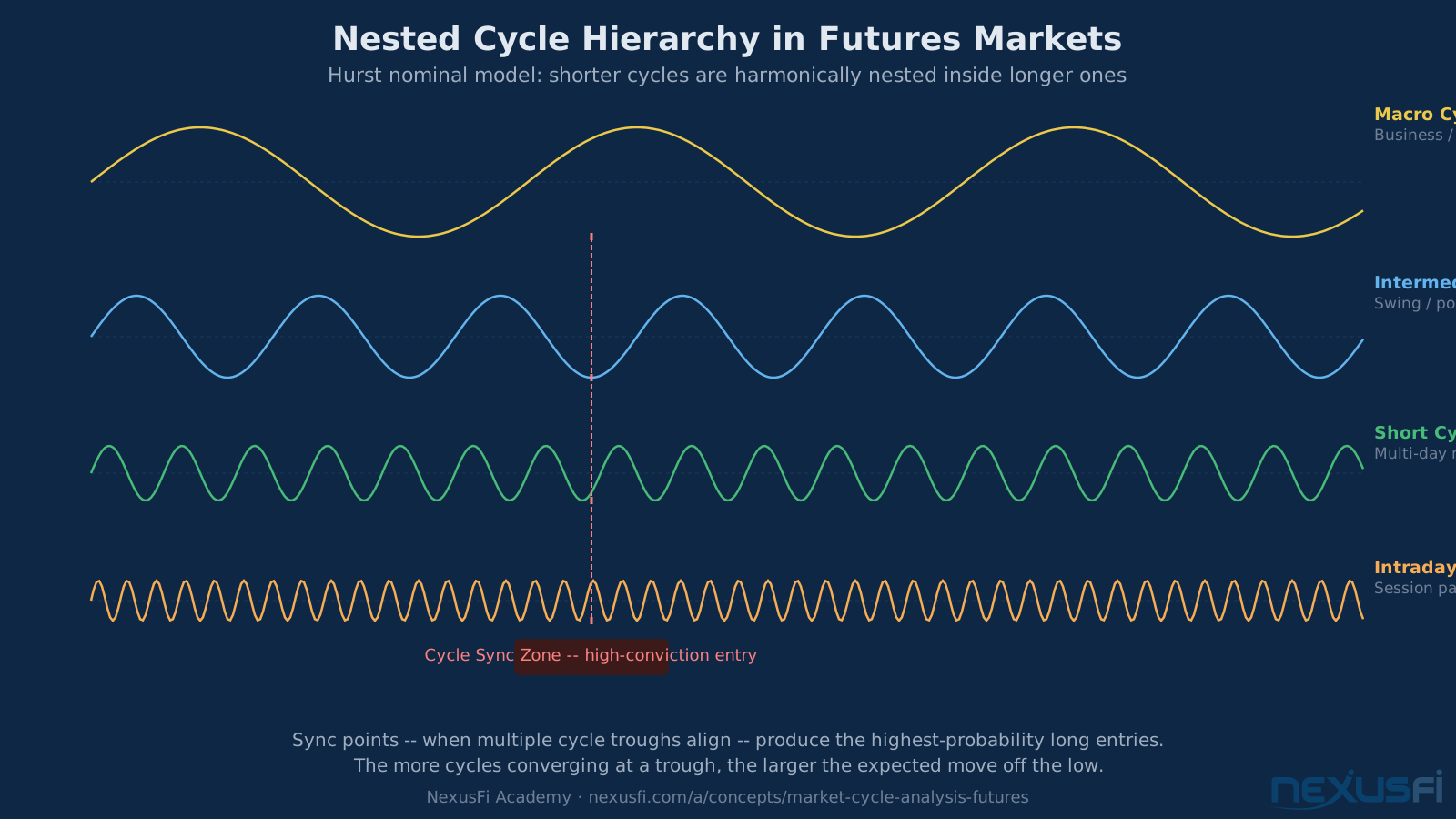
Market cycle analysis is the discipline of identifying, measuring, and trading these recurring price rhythms. The foundational theory comes from J.M. Hurst, an engineer who applied spectral analysis to stock market data in the 1970s and documented something that practitioners have been refining ever since: markets exhibit nested, harmonically related cycles. Shorter cycles operate inside longer ones. Multiple cycles trough together at high-conviction reversal points. The structure is not perfect — cycles stretch and compress, they occasionally invert — but the statistical tendency is real enough to trade.
This article covers the complete cycle analysis framework for futures traders: how cycles form and nest, how to identify dominant cycle periods using both quantitative tools and manual measurement, how to apply the framework to ES, NQ, and CL specifically, and the seven pitfalls that destroy traders who use cycle analysis incorrectly.
Key Concepts #
Dominant cycle — The cycle period that accounts for the most variance in price movement at a given timeframe. A market can have multiple active cycles, but one typically dominates. For ES intraday, the 20-minute rhythm is often dominant. For ES swing trading, the 20-trading-day cycle is dominant.
Cycle trough — The low point of a cycle, where price completes its contraction phase and begins expanding upward again. Troughs are where most cycle-based trades are entered — buying the trough, not the continuation.
Cycle peak — The high point of a cycle. Most cycle traders exit well before the peak because timing peaks precisely is much harder than timing troughs. Price tends to roll over gradually, while troughs are sharper and more defined.
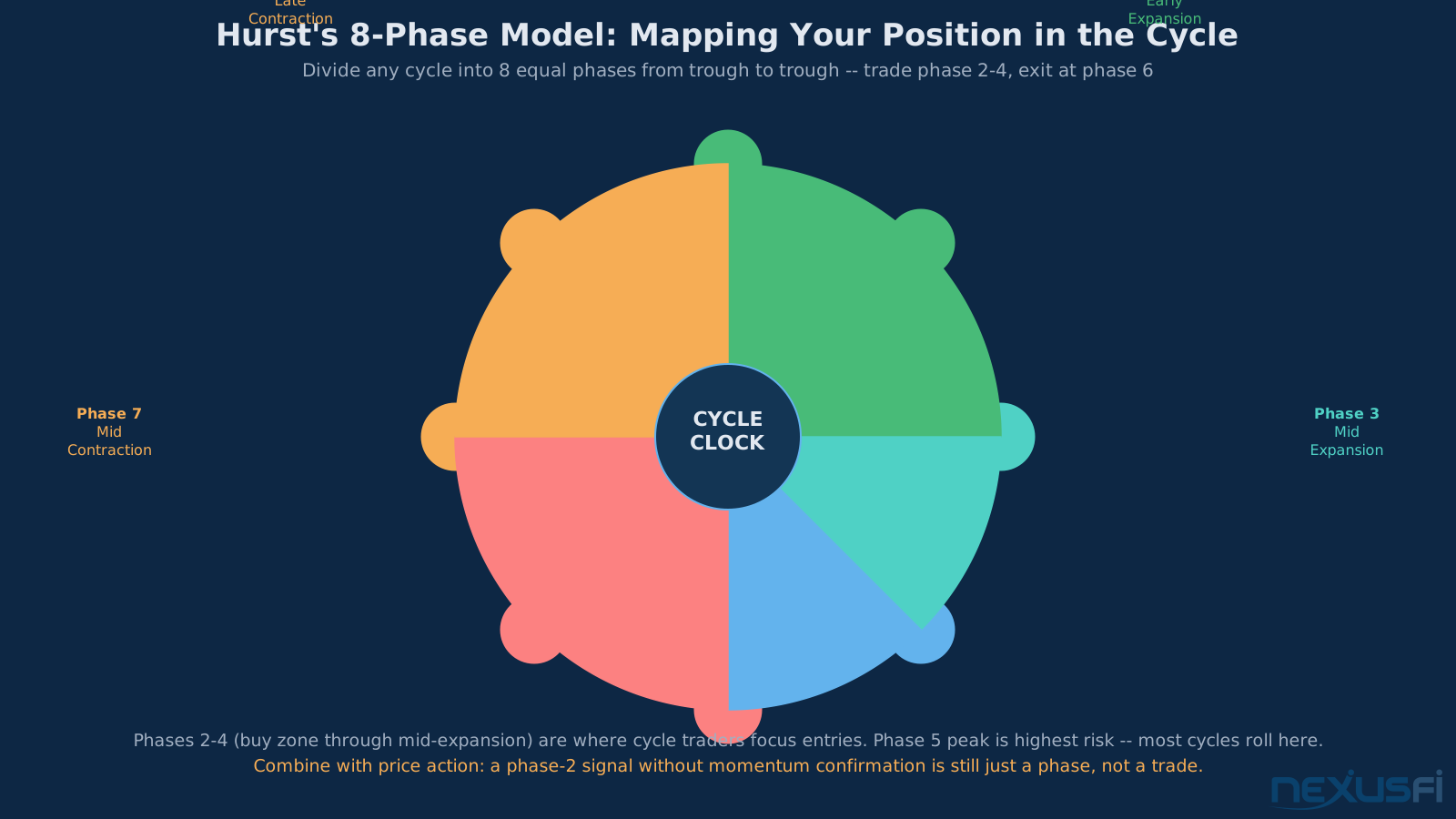
Cycle phase — Where you currently are within the cycle, expressed as a percentage (0% at trough, 50% at peak, 100% back at trough) or in degrees (0 to 360). Knowing your phase tells you whether you're approaching a buy zone, hold zone, or exit zone.
Cycle amplitude — The magnitude of the price move from trough to peak. A high-amplitude cycle produces large moves. Low amplitude means the cycle exists but isn't generating tradeable moves. Only trade cycles where amplitude exceeds your transaction costs plus target profit by a meaningful margin.
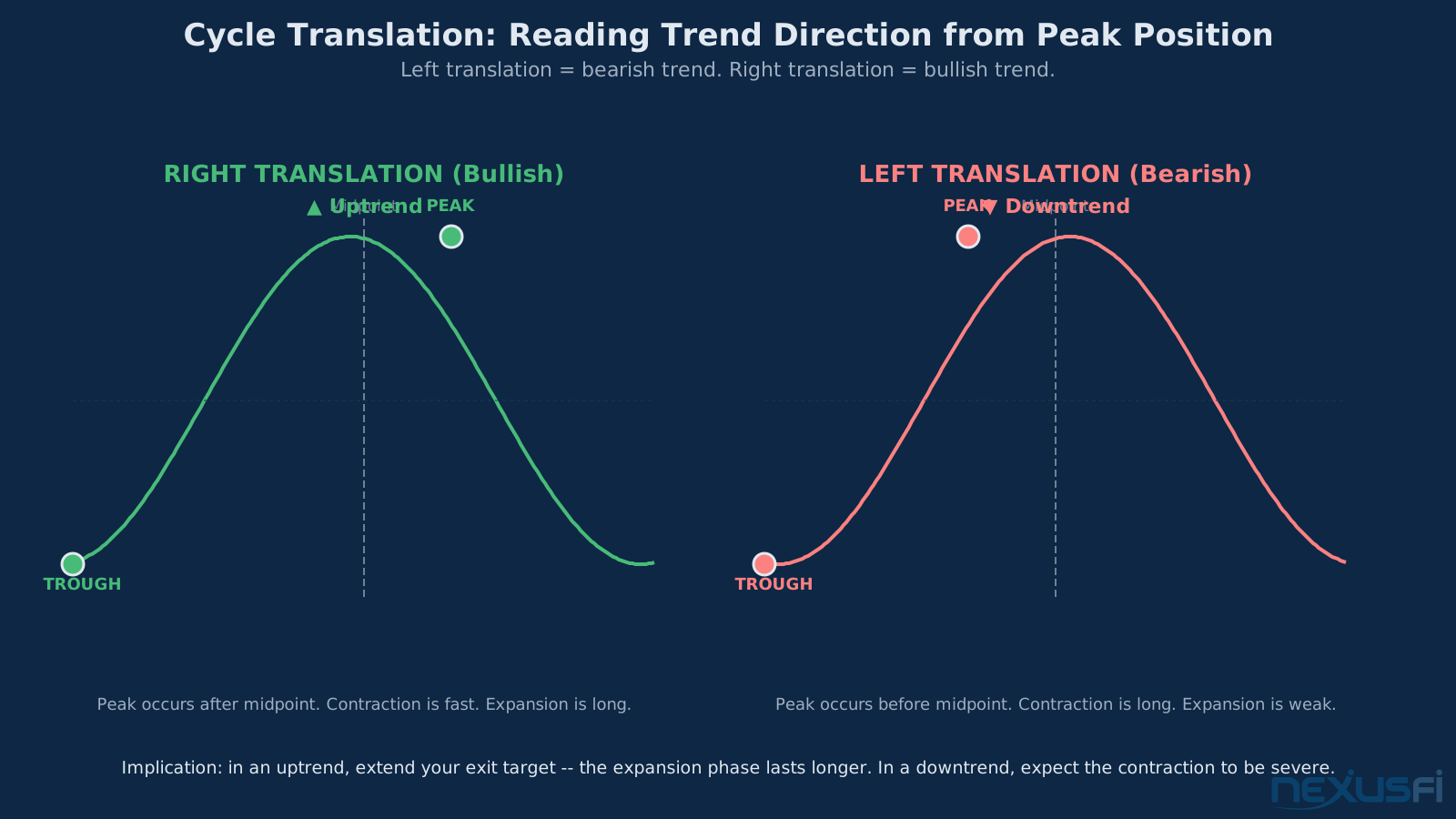
Cycle translation — The shift of the peak left or right of the cycle midpoint. Right translation (peak occurring after the midpoint) signals a bullish trend within the cycle period. Left translation signals a bearish trend. This is one of the most practically useful aspects of Hurst's framework — you can determine trend direction from where the peak sits.
Hurst exponent — A statistical measure of a price series' behavior. Values above 0.5 indicate trending behavior (persistent cycles); values below 0.5 indicate mean-reverting behavior (anti-persistent). The Hurst exponent helps you determine whether a detected cycle is likely to persist or quickly fade.
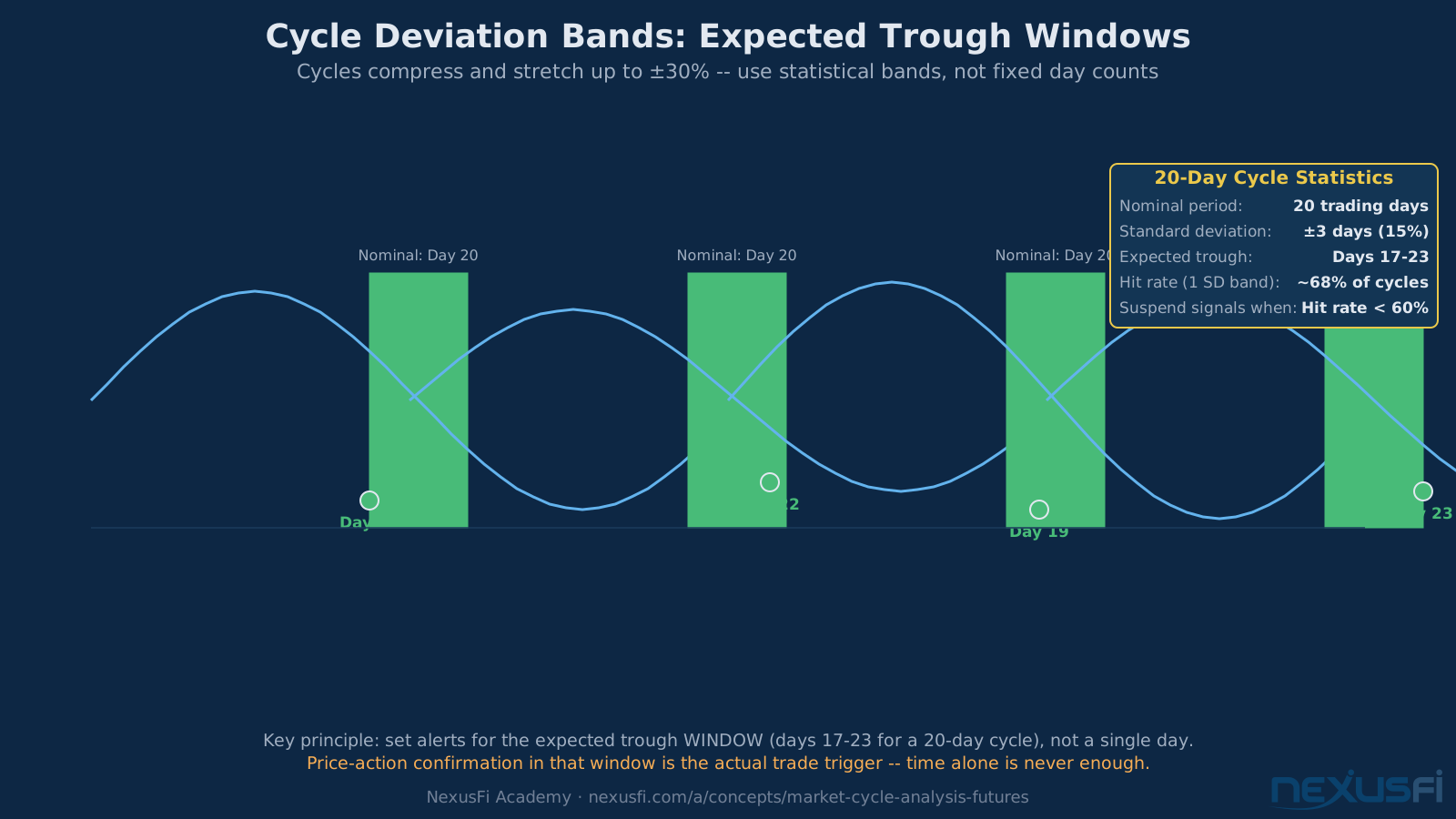
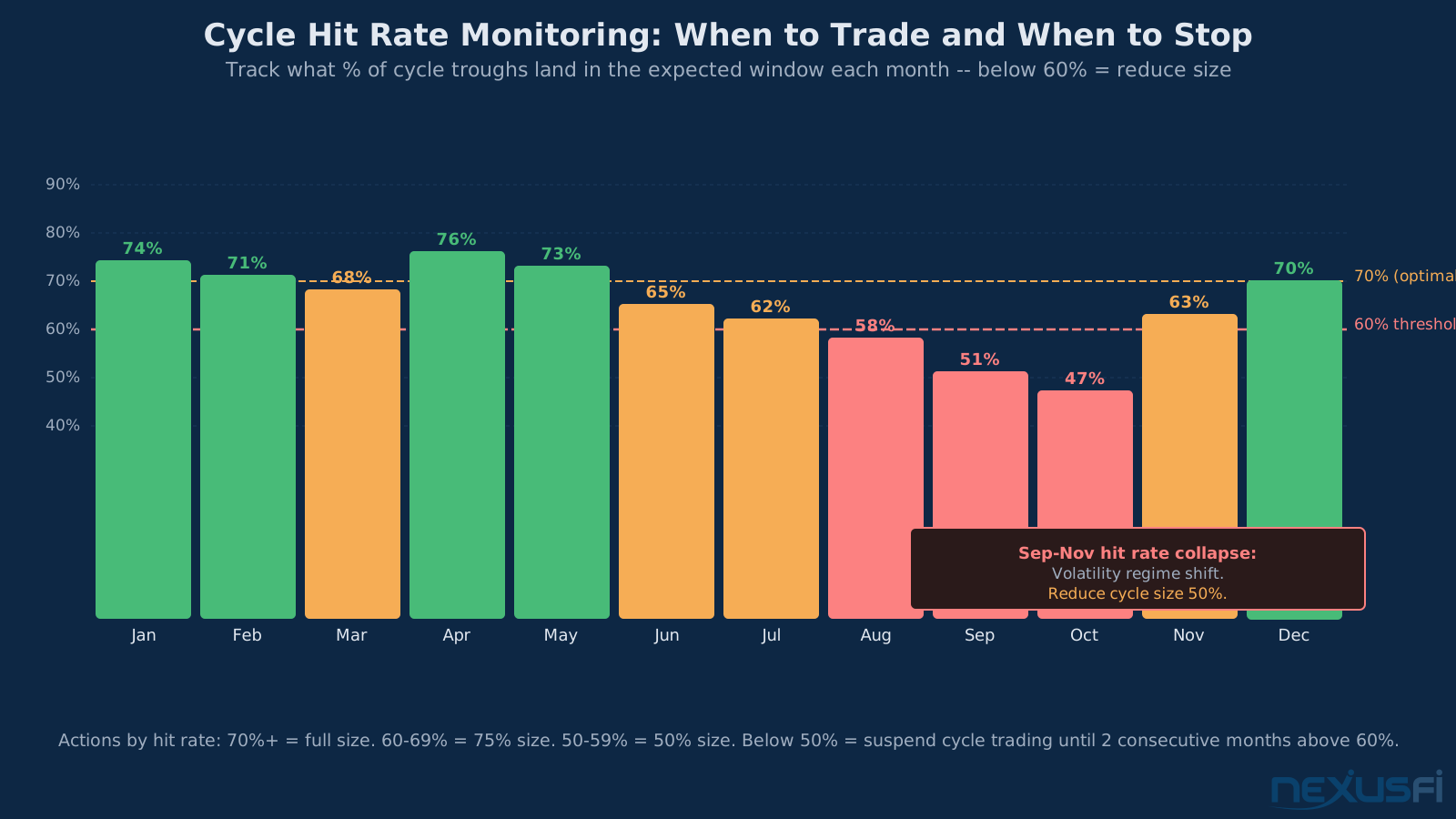
Cycle hit rate — The percentage of time a cycle's trough falls within the expected statistical window (typically ±1 standard deviation of the nominal period). When hit rate drops below 60%, stop trading that cycle until reliability recovers.
Hit Rate Monitoring: Check your dominant cycle's hit rate every 4 weeks. Below 60% for two consecutive months = scale position sizing to 50%. Below 50% = suspend cycle signals entirely. This is the primary risk control mechanism for cycle-based trading.
The Cycle Hierarchy #
Hurst's nominal model describes a hierarchy of cycles at specific harmonic ratios — typically 2:1 between each level. In practice, the exact ratios vary by market, but the nesting principle holds. Here's how the hierarchy applies to equity index futures:
Macro cycle (12-18 months): Driven by Fed policy pivots, business cycle turns, and major earnings regime shifts. This cycle determines the dominant directional bias for months at a time. You don't day trade against the macro cycle — you use it to set your directional lean. In 2022, the macro cycle was in contraction; every intermediate rally was a fade candidate. In 2023-2024, the macro cycle was in expansion; every swing pullback was a buy.
Intermediate cycle (20 trading days): This is the bread-and-butter cycle for swing traders in ES and NQ. Roughly one month. The 20-day low shows up with enough consistency that it's been documented and discussed on NexusFi for years — per @glennts in the Cycle Analysis thread in the Emini and Emicro forum:
Identifying these multi-week swing lows and the dominant/minor cycle relationships between them is the core of practical cycle work for index futures. It's the cycle that separates routine pullbacks from genuine buying opportunities.
Short cycle (4 trading days): Nestled inside the 20-day cycle. Useful for position traders who want to improve entry timing within the intermediate cycle. If you're trying to buy an intermediate cycle low, the 4-day cycle helps you identify whether you're early or late within that trough window.
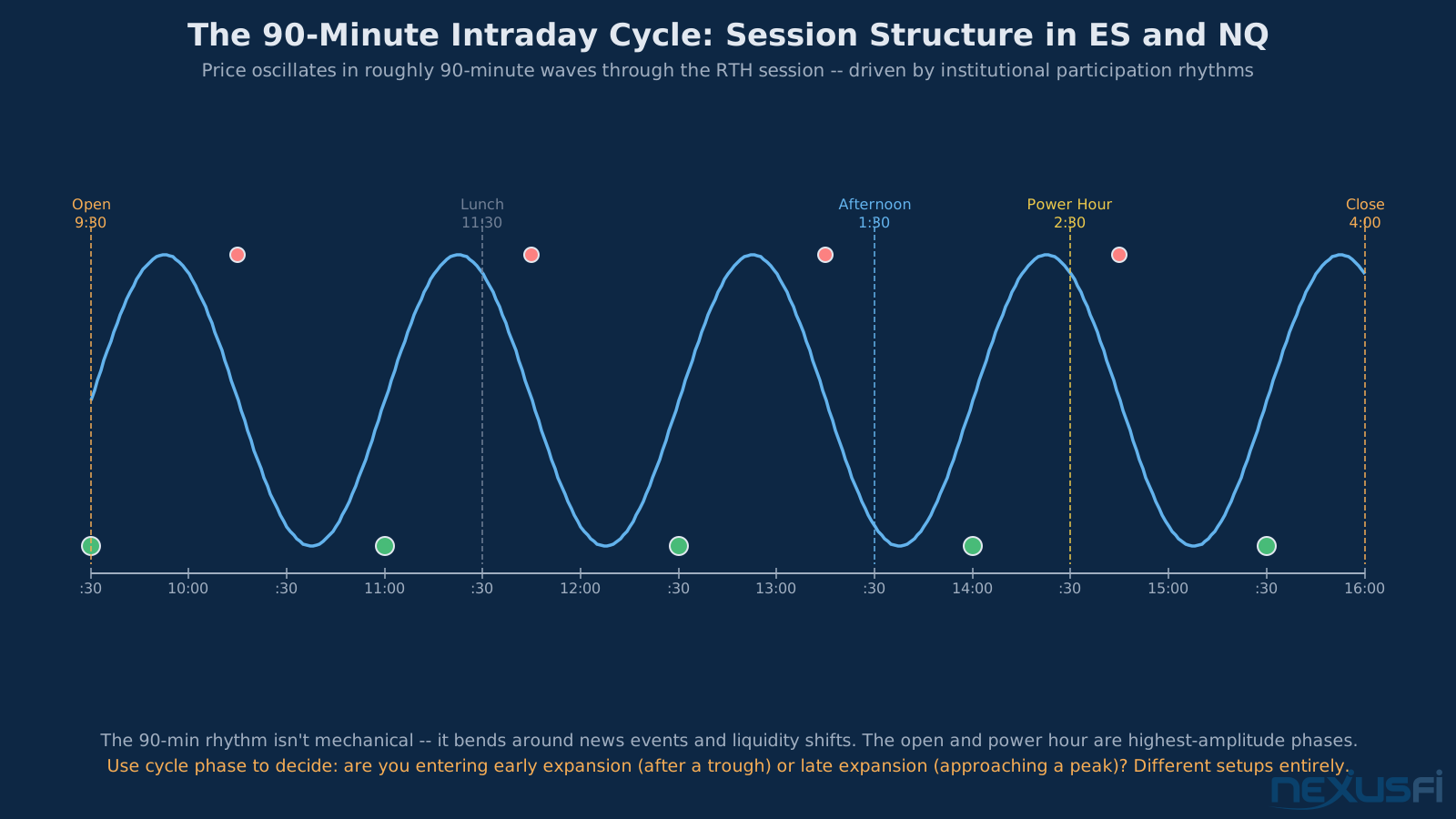
Intraday cycle (60-90 minutes): The session microstructure rhythm. This is what day traders exploit — the predictable waves of momentum and mean-reversion within a single session. As @tigertrader documented extensively in the Spoo-nalysis thread in The Elite Circle, price follows recognizable intraday timing windows: the open drive, the morning session, the lunchtime lull, the afternoon grind, and the power hour. These aren't arbitrary — they reflect institutional participation patterns that repeat because the participants and their mandates don't change.
Identifying and Measuring Cycles #
There are two approaches to finding dominant cycles: quantitative detection and manual trough measurement. Both are valid. Most serious practitioners use both.
Quantitative detection: spectral analysis
Apply the Fast Fourier Transform (FFT) or the Goertzel algorithm to a detrended price series. You need at least 200 bars — more is better. The output is a power spectrum showing which cycle periods account for the most variance. Peaks in the power spectrum identify candidate dominant cycles. Validate those candidates with the Bartels cyclicity test to confirm statistical significance — without validation, you're just finding the loudest noise, not genuine cycles.
The practical limitation of FFT: you need software. NinjaTrader, TradeStation, and Sierra Chart all support custom spectral analysis scripts. The Goertzel algorithm is computationally efficient and available in most programming languages if you want to roll your own.
Manual trough measurement
Mark every confirmed swing low on a chart over 12+ months. Measure the number of bars between consecutive troughs. Compile those distances and calculate the modal (most frequent) distance — that's your dominant cycle period. Calculate the standard deviation to establish your expected trough window.
Example: If the modal distance between ES swing lows over the past year is 20 trading days, and the standard deviation is 3 days, your expected trough window is days 17-23 of each cycle. Set alerts for that window. Wait for price-action confirmation. That's the entry zone.
The Detrended Price Oscillator (DPO)
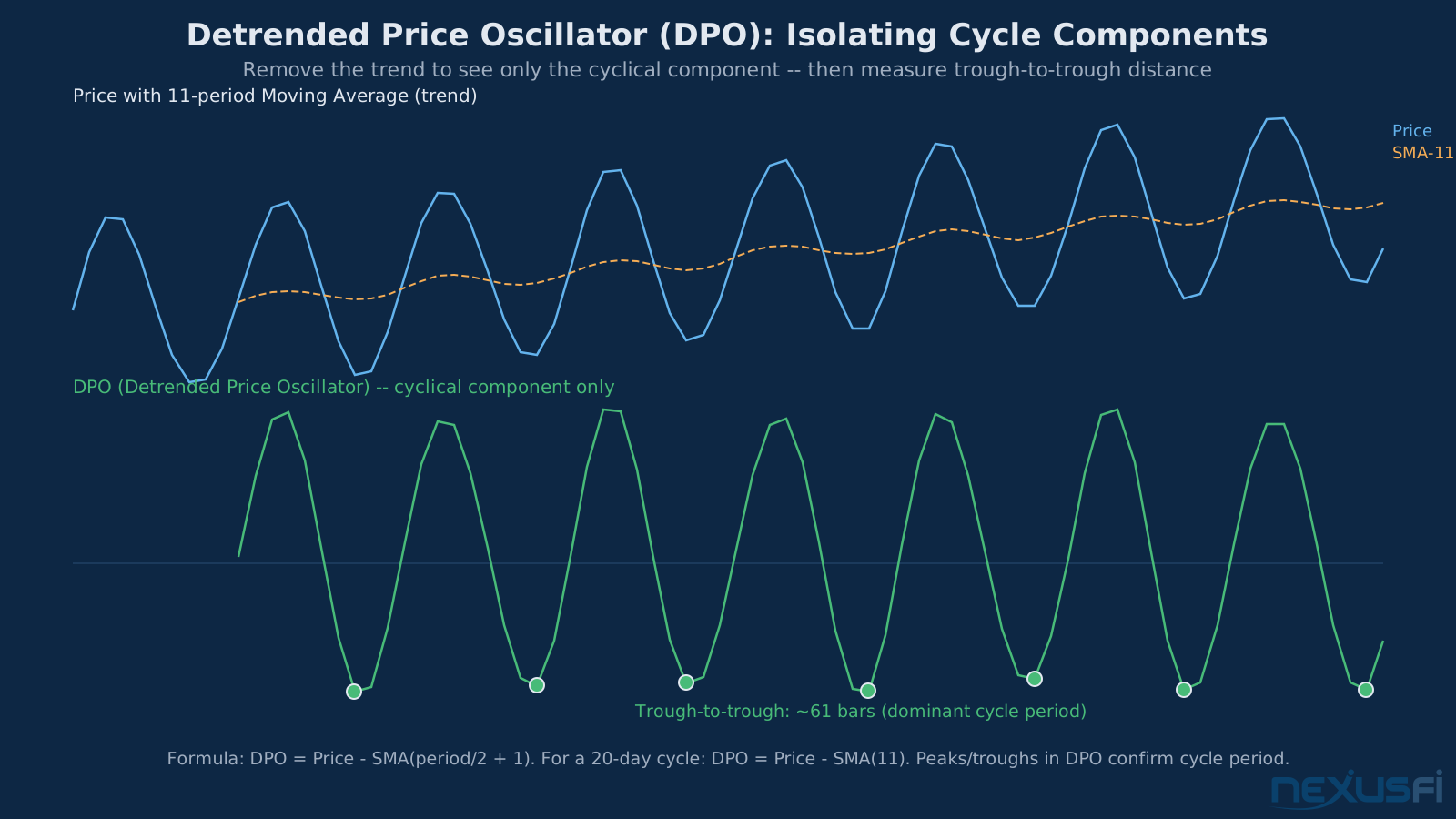
A useful intermediate tool. Remove the trend by subtracting a centered moving average from price, then analyze what's left for cyclical behavior. Set the lookback to (suspected cycle period / 2) + 1. For a 20-day cycle: (20/2)+1 = 11-period DPO. Peaks and troughs in the DPO should roughly correspond to cycle highs and lows in price — if they do, you've confirmed the cycle is real enough to trade.
Regime monitoring: the hit rate
A cycle that was reliable 6 months ago may not be reliable today. Track your cycle's hit rate monthly: what percentage of troughs fell within the expected ±1 SD window? When hit rate drops below 60%, reduce position sizing to 50% of normal. Below 50%, suspend cycle-based signals entirely until reliability returns.
Intraday Cycles and Seasonality #
The most immediately tradeable cycle layer for day traders isn't the 20-day swing cycle — it's the intraday session structure. These time-of-day patterns are among the most reliable in all of technical analysis because they're driven by structural forces that don't change: institutional mandates, exchange hours, option hedging flows, and liquidity provision rhythms.
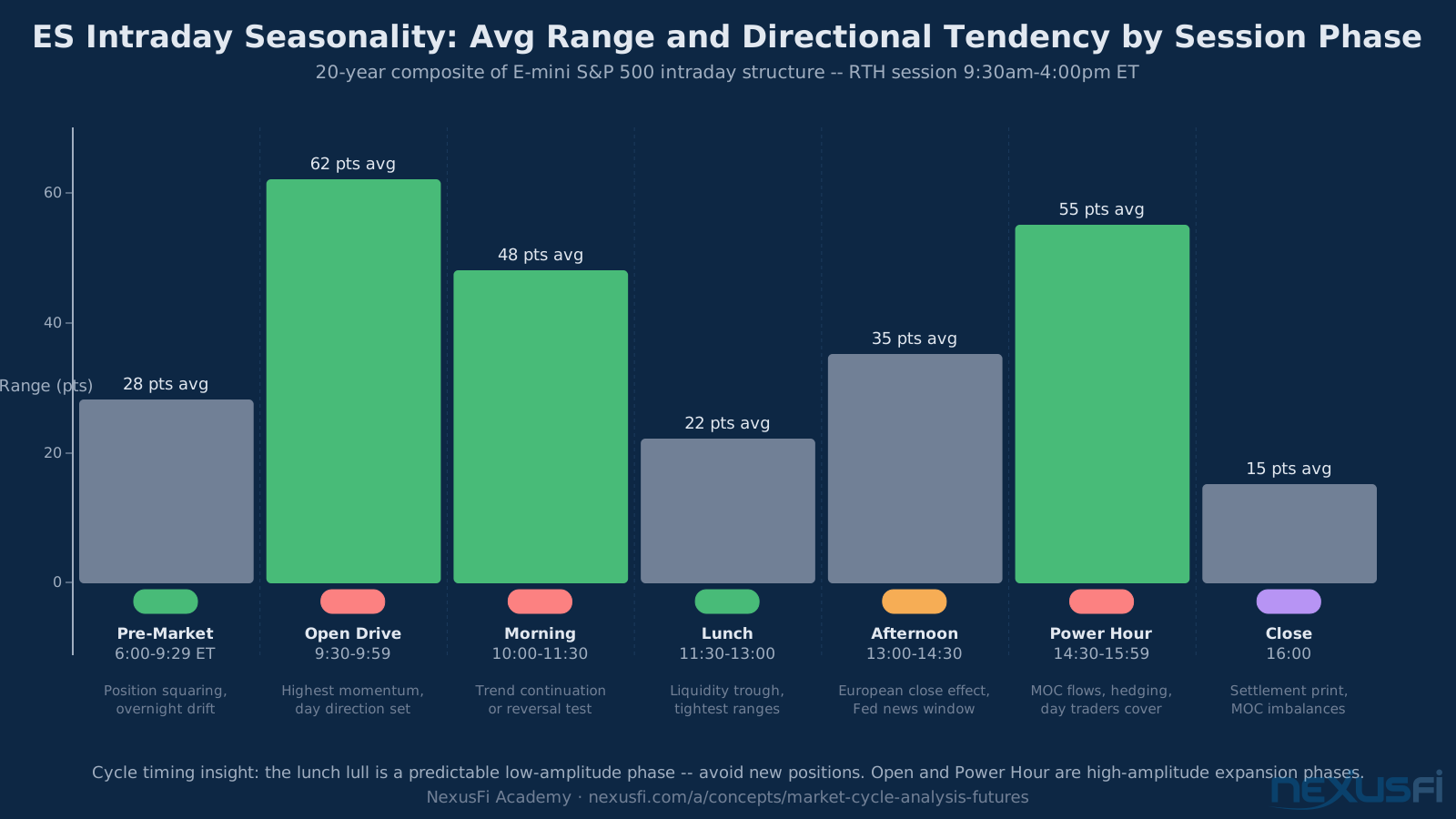
Pre-market (6:00-9:29 ET): Thin liquidity, position squaring from overnight traders, global market reactions. Range is typically 25-35 ES points on a normal day, but spikes on macro events. Don't fight pre-market trends — they often continue into the open. But don't chase them either; spreads are wider and fills are worse.
Open drive (9:30-9:59 ET): The highest-energy phase of the day. The first five minutes frequently sets the high or low of the day. The open drive's direction and strength tells you a lot about the session character. A strong directional drive on high volume that holds past 10:00 is a trend day; plan to ride with-trend. A failed drive that reverses is a range day signal; plan to fade extremes.
Morning session (10:00-11:30 ET): Either trend continuation or the first reversal test. If the open drive was strong, this session sees pullbacks that are buyable (in trend days) or extensions that are sellable (in range days). @Fat Tails documented in the Elite Circle thread on Intraday Seasonality that the probability of the daily high or low forming shifts much by time bucket — the open and morning session dominate as daily-extreme-formation windows:
Lunch lull (11:30-1:00 ET): Avoid this. The data is clear. Volume drops 40-60% from morning levels. Spreads widen relative to volatility. The market chops around without commitment. Signals generated in the lunch window have the lowest follow-through of any session phase. @tigertrader made this explicit in the Spoo-nalysis thread:
The lunch lull is the nonstationarity peak.
Afternoon (1:00-2:30 ET): European close (roughly 11:30 ET) causes a brief liquidity shift. The afternoon can see trend resumption or the first signs of reversal. FOMC decisions drop at 2:00 PM ET when applicable — stay out of positions 30 minutes before and after on FOMC days. Economic data can drop at 1:00 PM (oil inventories on Wednesdays for CL, various Fed speakers).
Power hour (2:30-4:00 ET): MOC (market-on-close) order imbalances hit the tape at 3:45-4:00. Institutions hedging end-of-day positions. Day traders covering. This creates a predictable directional push into the close — often in the same direction as the morning trend. Volume picks back up to near-open levels. This is the second-best session for trend entries.
Day-of-week effects: These are real but weak. Wednesdays have historically shown the softest ES performance — as @tigertrader documented:
Fridays tend to show position-lightening ahead of the weekend, which can create afternoon weakness even in up-weeks. Use day-of-week effects as a mild tilt, never a standalone signal.
Seasonal and Macro Cycles #
Seasonal cycles operate at the monthly and quarterly level. They're driven by predictable institutional flows — rebalancing at quarter-end, tax-loss harvesting in Q4, option expiration dynamics — and by physical supply/demand rhythms in commodity futures.
ES and NQ seasonality:
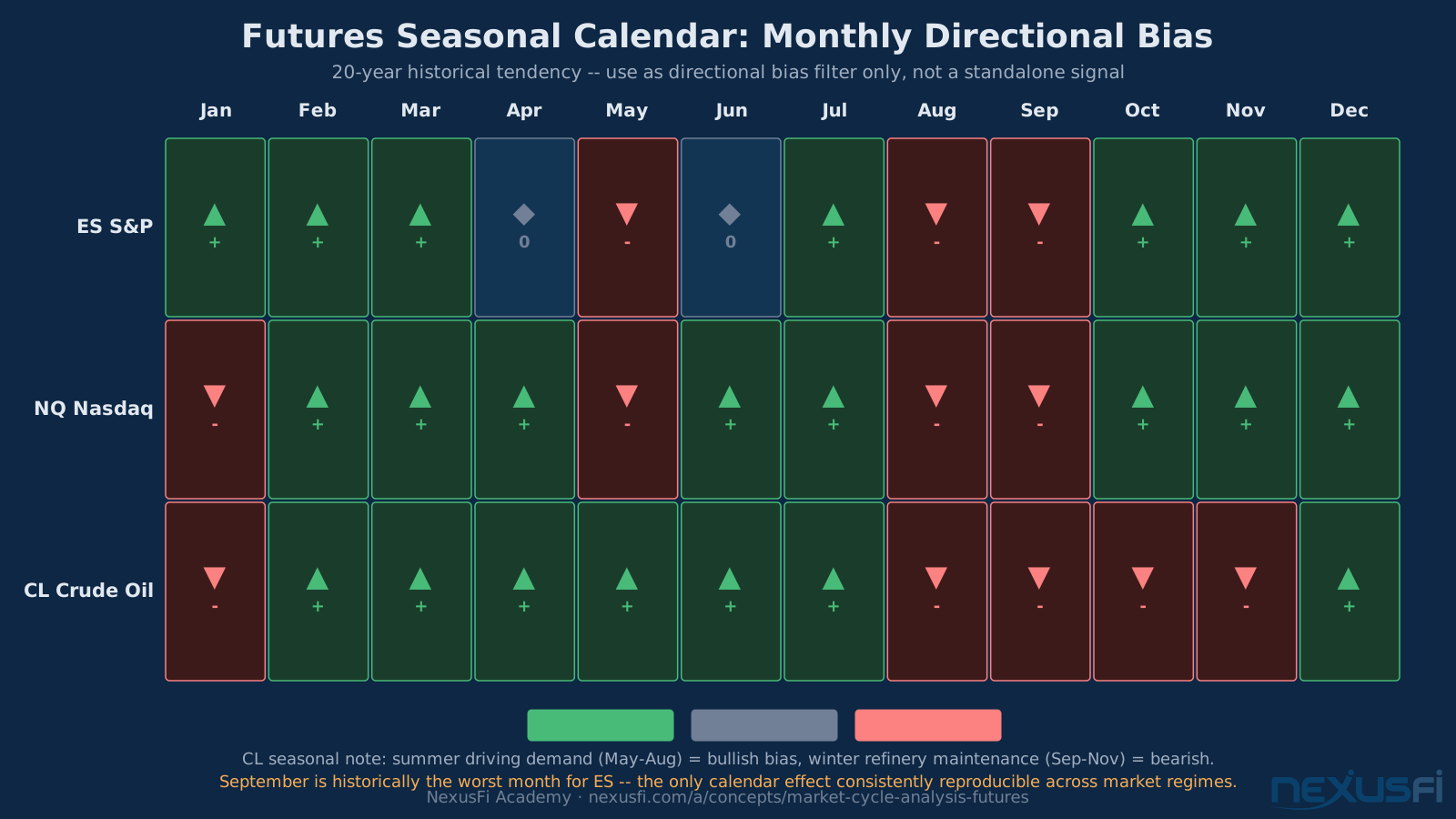
September is the most well-documented seasonal effect in equity index futures. The average September return for the S&P 500 going back decades is negative — the only calendar month with a consistently negative expected return across bull and bear markets alike. As @Inletcap noted in the Spoo-nalysis thread, "Just a word of caution on the seasonals — Election year Sept is the anomaly — Look this up but I think there is a 60+ % positive" — election years do modify the pattern, but the baseline September weakness is the most strong seasonal effect you'll find in equity index futures.
Q4 strength (October through December) is the mirror image — historically the strongest three-month stretch for ES and NQ. Tax-loss harvesting is typically complete by mid-November, clearing the way for year-end positioning. The January effect (small-cap outperformance) is real for RTY futures specifically.
NQ amplifies these seasonal effects. Technology stocks have higher beta to risk sentiment cycles, which means NQ seasonal tendencies run about 15-20% more extreme than ES in terms of magnitude, while tracking the same directional pattern.
CL seasonality:
Crude oil's seasonal cycles are more directly tied to physical demand. Driving season (May through August) creates predictable demand growth as US gasoline consumption peaks. Refineries shifting from winter heating oil blends to summer gasoline blends in March-April creates a demand pull on crude that's been exploitable for decades. The summer driving season peak typically transitions to weakness in September-October as refiners shift back to heating oil and demand growth slows.
OPEC meeting schedules impose an additional quarterly rhythm on CL. The cartel typically meets in late November/early December and in spring — output decisions from these meetings create directional pulses that can either amplify or negate the seasonal tendency.
Macro cycles:
The business cycle — expansion, peak, contraction, trough — operates on a 3-7 year timescale and is the dominant force for longer-term futures positioning. The Fed's rate cycle (typically 12-18 months between major pivots) is more tradeable from a futures perspective. Rising rate cycles suppress equity index futures through multiple compression; falling rate cycles provide the opposite tailwind. CL is sensitive to growth cycles directly — recession = demand destruction = lower prices, regardless of OPEC policy.
Use macro and seasonal cycles as directional bias filters. They don't tell you where to enter — they tell you which direction to lean when your shorter-term cycle triggers fire.
The Cycle Phase Trade Framework #
Here's where cycle analysis becomes actionable. The framework has five components: phase identification, entry zone, trigger, exit zone, and position sizing.
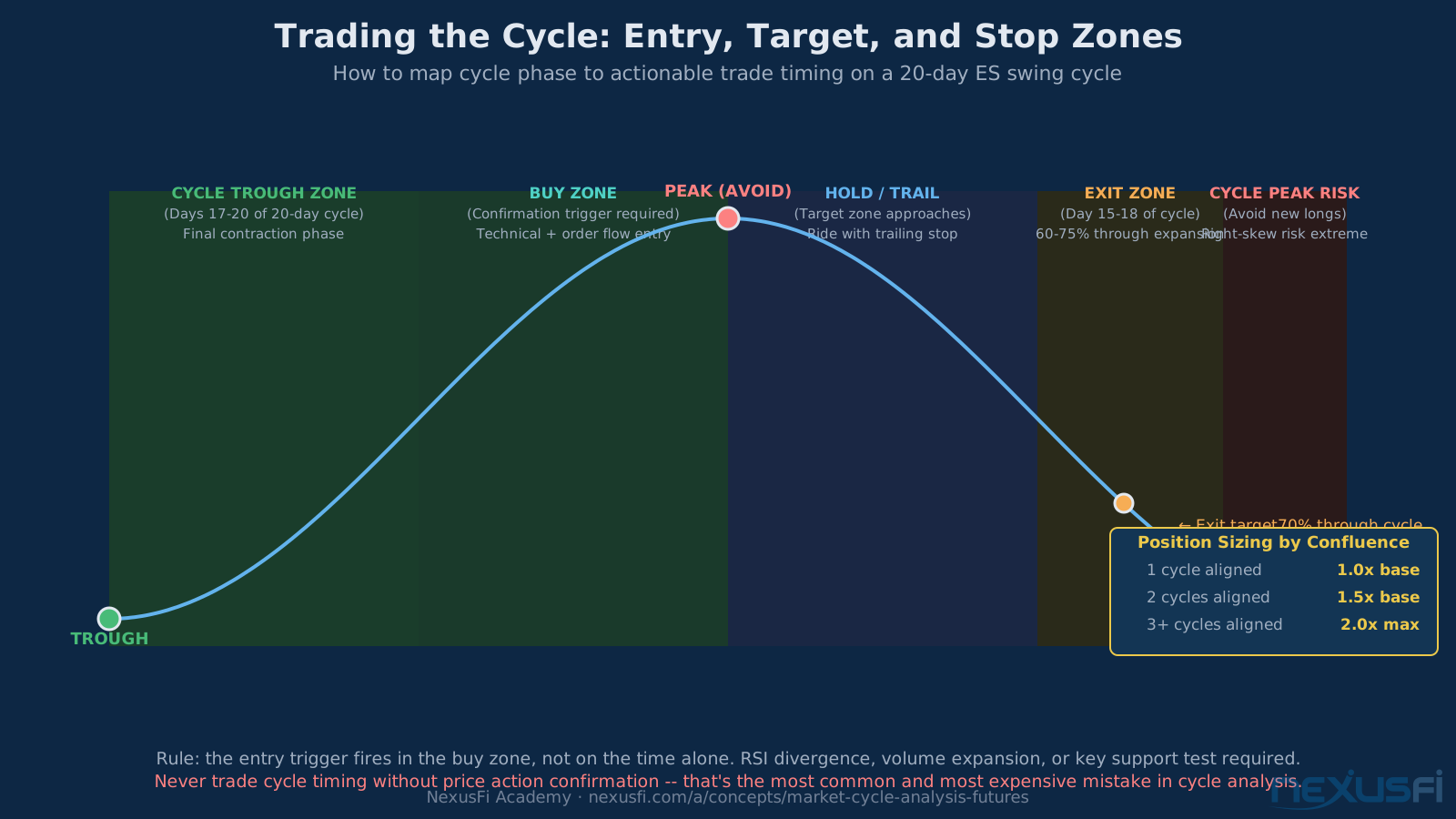
Phase identification: Using your trough-to-trough measurements, determine where you are in the current cycle. If the last confirmed trough was 15 trading days ago and your dominant cycle is 20 days, you're at approximately day 15 of 20 — entering the expected trough window. Start paying attention.
Entry zone (cycle trough zone): The final 25% of the contraction phase — for a 20-day cycle, roughly days 17-23, accounting for your ±1 SD deviation window. This is when you set your alerts, review your technical setup, and prepare to enter. Don't enter here blindly — the zone sets your readiness, not your entry.
Trigger (technical or order-flow confirmation): The actual entry fires on confirmation, not on time alone. Look for:
- RSI divergence (price making a lower low while RSI makes a higher low)
- Volume contraction followed by volume expansion on the reversal bar
- Test and hold of a key support level (prior VAL, PDL, a moving average convergence)
- VWAP recapture after a brief false break below
- DOM-level evidence of large passive buyers absorbing sell pressure
Any of these, in combination with being in the cycle trough zone, is sufficient. Requiring multiple simultaneous confirmations leads to missing the trade entirely.
Exit zone: Target 60-75% through the expansion phase — not the peak. For a 20-day cycle with a trough at day 0, that means targeting days 12-15. The peak typically occurs near day 10 on a 20-day cycle (50% mark), but cycles exhibit right translation in uptrends, meaning the peak arrives later than the midpoint. Exiting at 70% of the cycle captures the bulk of the move while avoiding the choppy, uncertain phase near the peak.
Structure your exit: partial at 50% through the cycle, final at 70%, trailing stop on the remainder.
Position sizing by cycle confluence:
1 cycle aligned: 1.0x base position size
2 cycles aligned (e.g., 20-day and 4-day both troughing): 1.5x base
3 or more cycles aligned: 2.0x maximum
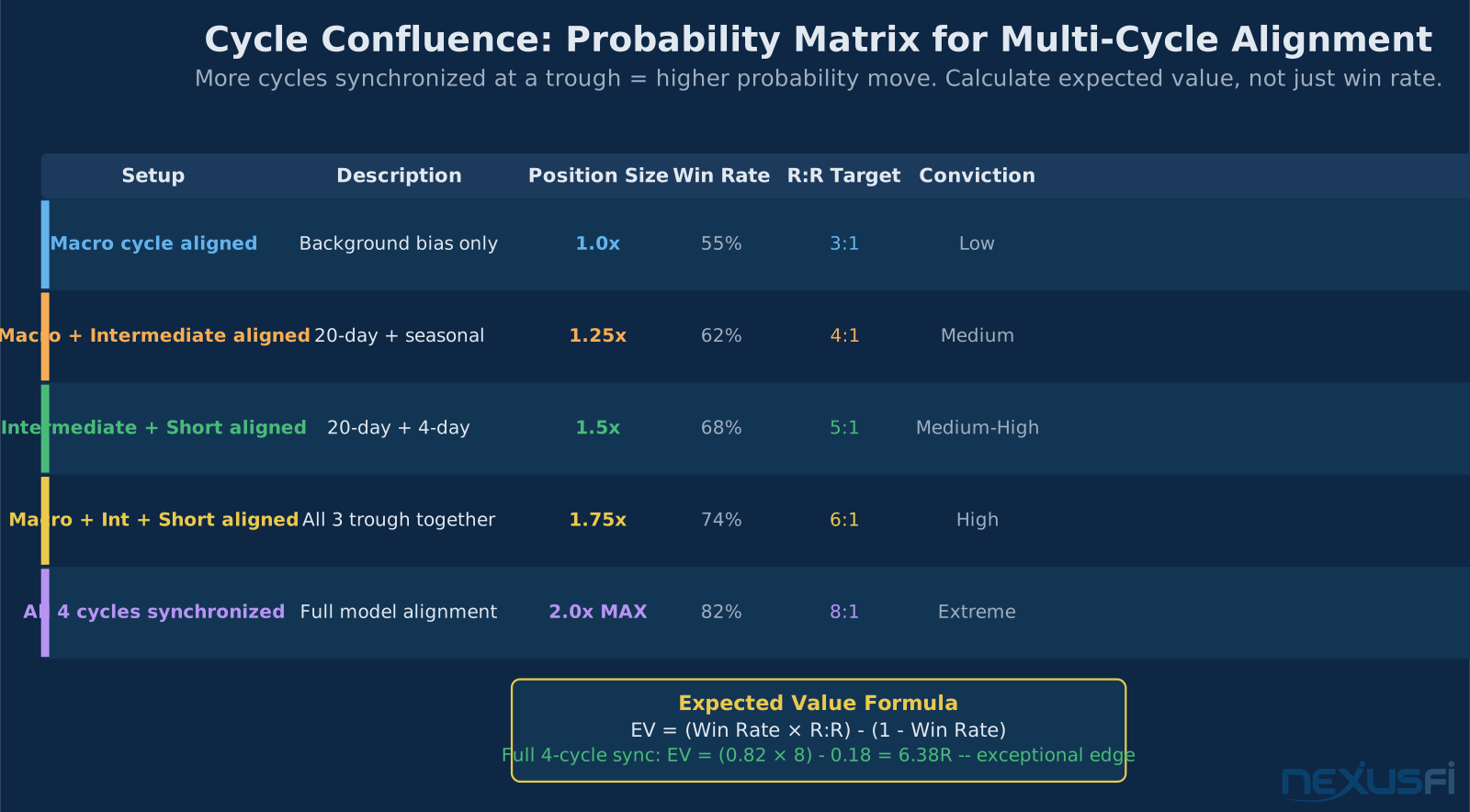
Cycle confluence — multiple cycle periods hitting their troughs simultaneously — is the highest-conviction setup in cycle analysis. As @glennts demonstrated in the Cycle Analysis thread, identifying where the 15-second, 5-minute, and 15-minute cycles all show Minor/Dominant cycle relationships troughing together gives you the structural confirmation that a move is about to initiate. When the 20-day ES swing cycle and the 4-day cycle both trough within a day of each other, you're looking at potential for an explosive move off the lows.
The 1/4 Rule: Cycle Length and Timeframe #
The single most common mistake in cycle analysis is using the wrong execution timeframe relative to the cycle being traded. The rule is simple: your execution timeframe should be 1/4 to 1/8 the length of the cycle you're exploiting.
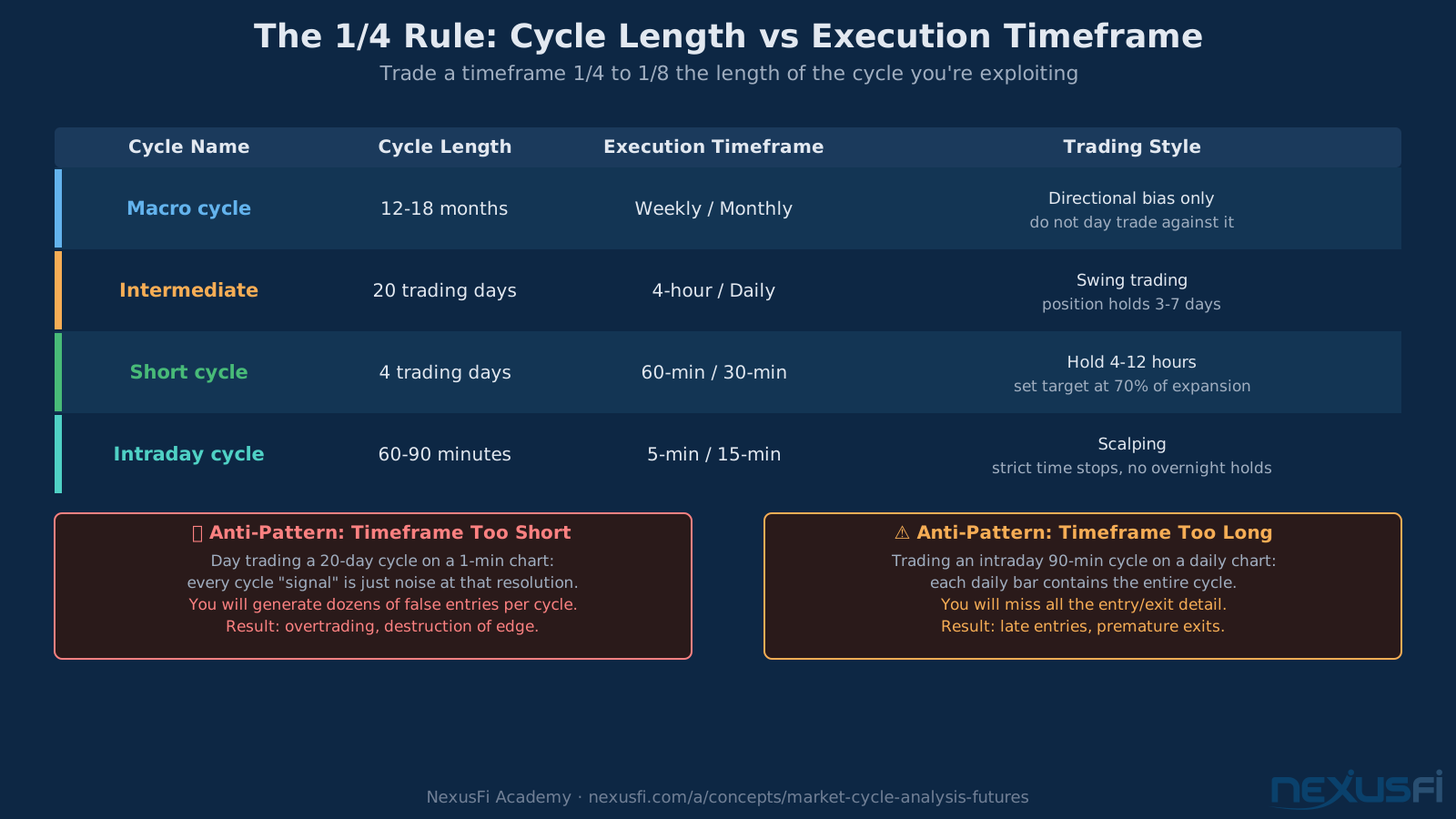
If you're trading the 20-day ES swing cycle, use 4-hour or daily charts for decisions. A 1-minute chart will generate dozens of false signals per cycle. A weekly chart won't give you the entry precision you need to time the trough zone properly.
If you're trading the 60-90 minute intraday cycle, use 5-15 minute charts. A daily chart won't show you anything — the intraday cycle completes within a single daily bar. A 1-minute chart is too granular; you'll see noise that looks like cycle structure but isn't.
The math behind this: a cycle of length T contains meaningful information at sampling rates much smaller than T. At sampling rates close to T, you're basically seeing noise. This is the Nyquist principle applied to trading — you need enough bars to see the cycle clearly, but not so few bars that each bar represents the entire cycle.
Cycle Behavior by Instrument: ES, NQ, and CL #
ES (E-mini S&P 500):
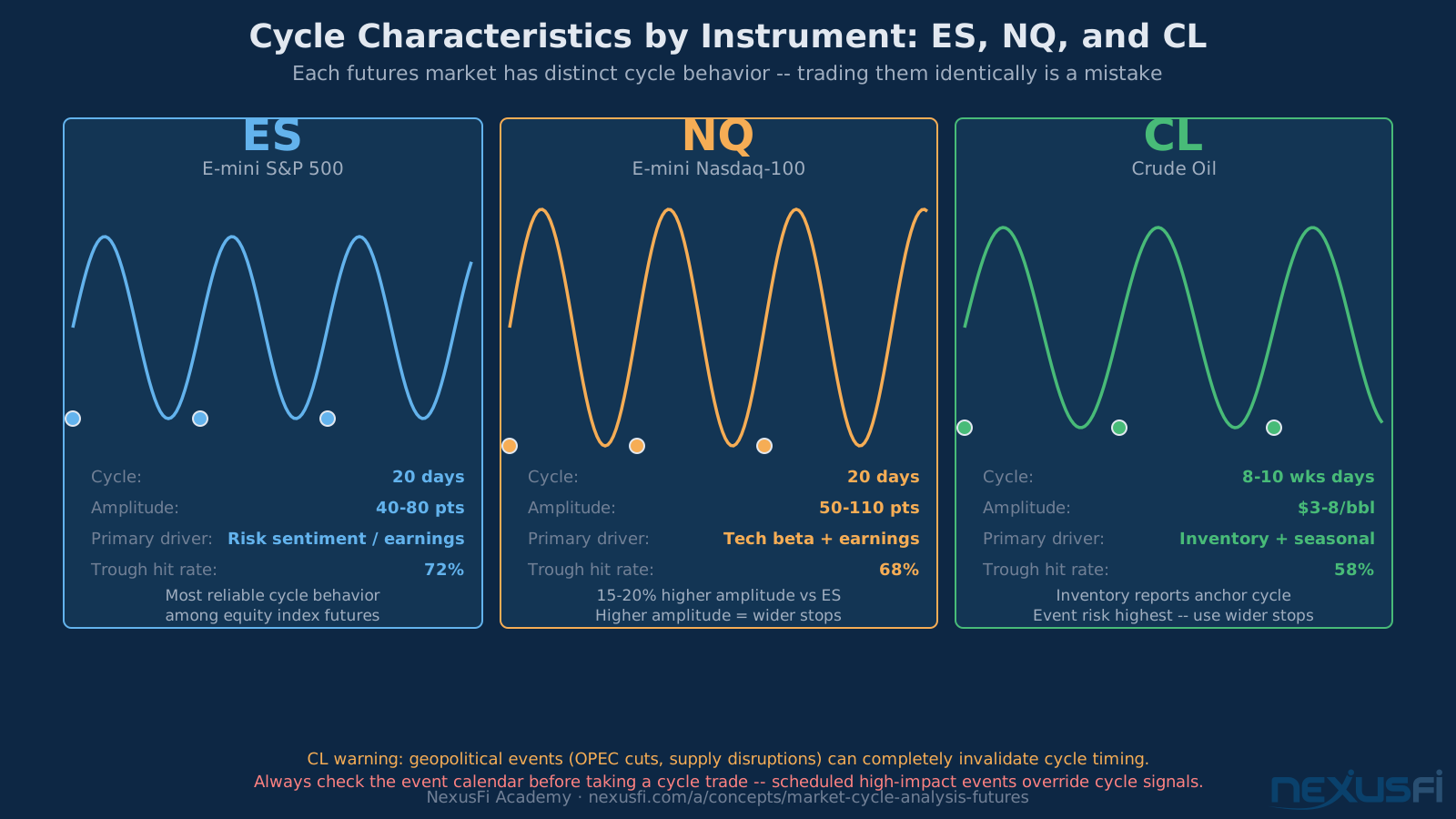
The most cycle-friendly instrument in US futures. The 20-day intermediate cycle shows up with approximately 72% reliability — meaning roughly 7 out of 10 cycles, the trough falls within the expected ±1 SD window. Amplitude ranges from 40-80 ES points from trough to peak on the 20-day cycle, depending on the volatility regime. In low-volatility trending markets (VIX below 15), amplitude compresses. In high-volatility markets (VIX above 25), amplitude expands dramatically.
ES and NQ track together 85%+ of the time. When one instrument diverges from the other by more than 2% intraday, consider fading the divergence as cycles realign — they almost always do within the session.
NQ (E-mini Nasdaq-100):
NQ runs the same cycle structure as ES but with 15-20% higher amplitude. The 20-day cycle trough on NQ moves 50-110 points compared to ES's 40-80. This means your stop distances need to be wider in NQ, and your position sizing should be proportionally smaller relative to ES. The NQ intraday cycle also shows stronger U-shaped volatility (high at open, low at lunch, high at close) compared to ES — the tech-heavy composition means more sensitivity to global session timing.
NQ's earnings-cycle sensitivity is also higher than ES. The quarterly earnings window (roughly 3-4 weeks around earnings seasons) creates volatility spikes that can distort standard cycle timing. Running cycle analysis during earnings season for major NQ components (AAPL, MSFT, NVDA, AMZN, GOOGL) requires extra caution — amplitude expands but hit rates drop because stock-specific events create non-cycle-driven moves.
CL (Crude Oil):
CL operates on an 8-10 week inventory-driven intermediate cycle, substantially longer than equity index cycles. The weekly EIA inventory report (released Wednesdays at 10:30 AM ET) acts as a phase anchor — major surprises can advance or delay the cycle trough by 1-2 weeks. Amplitude in CL is much higher than equity index futures — a normal 8-10 week cycle swing can run $3-8 per barrel.
CL hit rates are lower than ES — roughly 58% reliability on the intermediate cycle, compared to 72% for ES. The reason: geopolitical events (OPEC production decisions, supply disruptions, geopolitical tensions in oil-producing regions) routinely override cycle timing in ways that equity index futures rarely experience. A cycle that says "trough is forming" can be completely invalidated by an unexpected production cut announcement.
The practical implication: always check the event calendar before entering a cycle trade in CL. An inventory report or OPEC meeting within 3 trading days of your expected trough changes the game. Position sizing in CL should reflect the lower hit rate — 70% of equivalent ES sizing, all else equal.
The Seven Pitfalls #
These aren't theoretical risks. They're the specific ways that cycle analysis fails in practice, documented across decades of use by practitioners who shared their experience on NexusFi and elsewhere.
1. Overfitting historical data
This is the most dangerous pitfall. Running spectral analysis on 6 months of data and finding "the perfect 17.3-day cycle" tells you almost nothing about what will work forward. The more cycles you fit to historical data, the better the in-sample results and the worse the out-of-sample performance. Validate every identified cycle across at least 3 years of data before trading it. Test it out-of-sample on at least 12 months of data you didn't use for identification.
2. Regime blindness
Cycles that work beautifully in low-volatility trending markets can completely disintegrate in high-volatility or macro-shock environments. The 2020 COVID crash violated every intermediate cycle expectation in equity index futures. The 2022 rate-shock bear market compressed cycles in ways that surprised systematic cycle traders. Monitor your hit rate continuously. When it drops below 60% for two consecutive months, scale back aggressively until reliability returns.
3. Assuming symmetry
Cycles don't have equal up and down phases. In uptrends, the peak occurs after the midpoint (right translation), meaning the expansion phase is longer than the contraction phase. In downtrends, the peak occurs before the midpoint (left translation), meaning the contraction phase is longer and more severe. If you're expecting a 10-day expansion phase based on a 20-day cycle (50/50 split), you're wrong in any trending environment. Read the translation before you set your exit target.
4. Cycle inversion
Sometimes what you expect to be a trough becomes a peak, and vice versa. Cycles invert. When they do, positions based purely on cycle timing produce losses. The mitigation is clear: never enter on time alone. Always require price-action or order-flow confirmation. A trough zone that fails to produce a reversal signal is a warning that inversion may be occurring — move to the sidelines until the cycle re-establishes itself.
5. Ignoring amplitude
A cycle phase signal in a low-amplitude cycle is often just noise. If the detected cycle has an amplitude of 5 ticks in an ES market that moves 50 points per day, there's nothing there to trade. Only act on cycle signals when the cycle's amplitude is large enough to generate moves that exceed your minimum risk/reward requirements. Amplitude below your transaction costs plus target profit is a non-tradeable signal by definition.
6. Filter lag and phase distortion
Band-pass filters and centered moving averages — common tools for isolating cycle components — introduce phase lag. A filter designed to reveal a 20-day cycle will itself show peaks and troughs that lag the actual market by several bars. If you use filtered data for entry timing without accounting for this lag, you'll be late every time. Use multiple methods to cross-check: spectral analysis, manual trough measurement, and visual identification all together.
7. Treating event risk as a cycle distortion
FOMC decisions, CPI releases, NFP prints, EIA inventory reports, OPEC announcements — these are not cycle distortions. They're legitimate market-moving events that override cycle timing. A cycle-based long positioned 30 minutes before a hawkish FOMC statement is not a victim of cycle failure — it's a risk management failure. Check the economic calendar before every cycle entry. If a scheduled high-impact event falls within the next 3 trading days, either wait until after the event or size the position at 25% of normal until the risk window passes.
Practical Workflow #
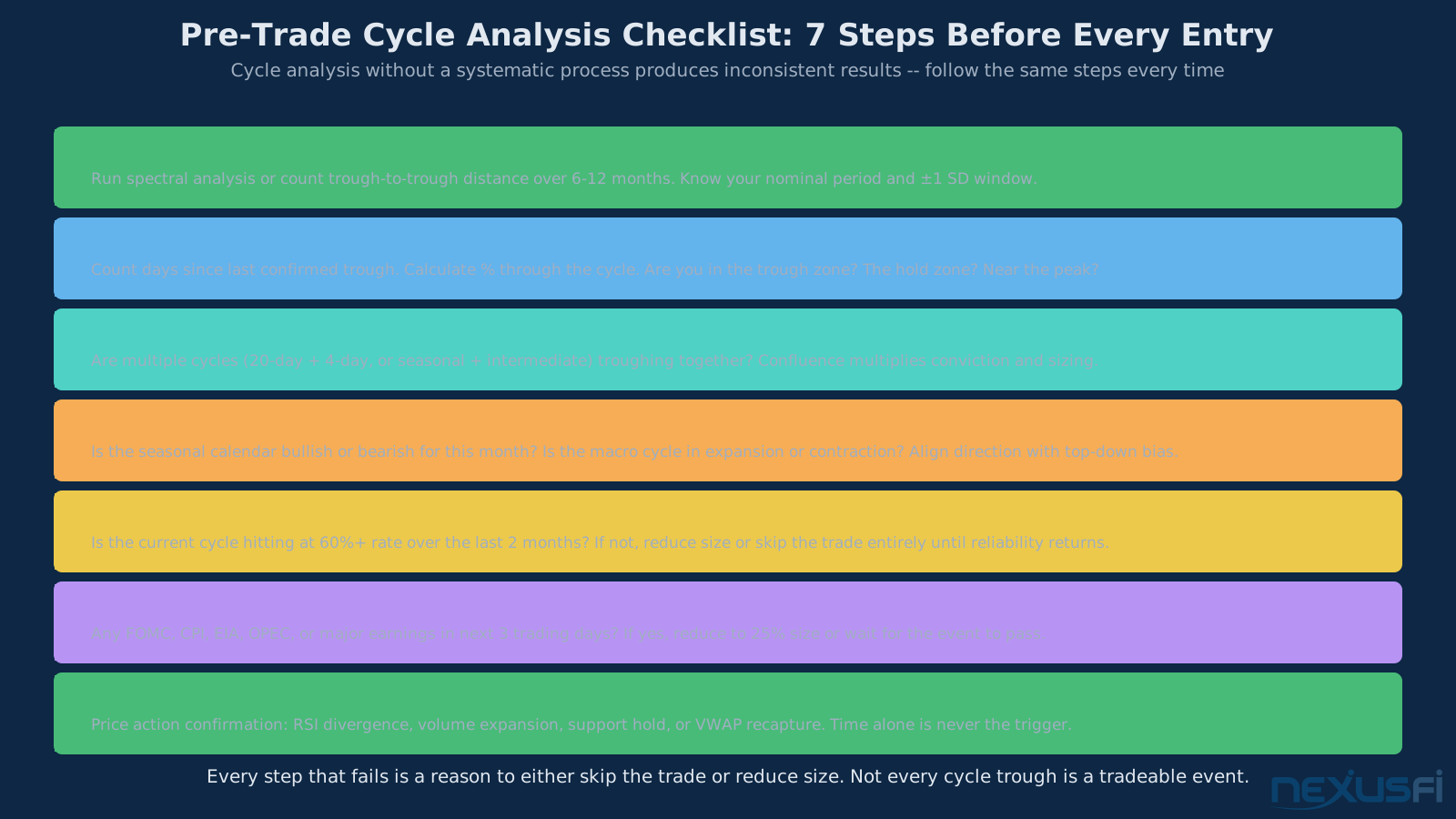
Here's the step-by-step framework for implementing cycle analysis in your trading:
Step 1: Identify your dominant cycle
Apply spectral analysis or manual trough measurement to 200+ bars of data in your target instrument. Identify the modal trough-to-trough distance. Calculate standard deviation. This gives you your nominal cycle period and expected trough window.
Step 2: Determine current phase
Mark the last confirmed cycle trough. Count forward. If you're within the ±1 SD window of the next expected trough, you're in the buy zone. If you're at 50% of the cycle, you're near the peak — be cautious with new longs. If you're at 70-80%, you should be exiting existing longs, not adding.
Step 3: Set alerts for the trough window
Don't sit at the screen waiting. Set price alerts for levels that would constitute good support tests within the expected trough window. Set time alerts for the beginning and end of your expected trough window.
Step 4: Check for confluence
When your trough window arrives, check whether shorter-cycle periods are also approaching troughs. A 20-day trough with a simultaneous 4-day trough is 1.5x the conviction. Three cycles aligning is 2x.
Step 5: Wait for the trigger
RSI divergence, volume expansion, support hold, VWAP recapture. One clear confirmation is enough. Don't wait for all four simultaneously — that's paralysis dressed up as patience.
Step 6: Enter with appropriate sizing
Base your position size on the confluence count (1x, 1.5x, or 2x maximum). Set your stop below the trough structure — not based on cycle theory alone, but based on where price action would tell you the trough has failed.
Step 7: Monitor hit rate monthly
Track what percentage of your cycle entries are triggering within the expected window versus arriving early or late. Below 60% hit rate for two consecutive months is your signal to reduce cycle-based sizing until the pattern re-establishes.
Cycle analysis is not a black box. It's a framework for answering a specific question: given where we are in the price rhythm, what's the directional probability bias for the next X bars? That answer, combined with technical confirmation and sound risk management, is what gives cycle traders a genuine edge.
Knowledge Map
Go Deeper
Build on this knowledgeReferences This Article
Articles that build on this topicCitations
- — Cycle Analysis... a way of looking at price action. (2022) 👍 7“Both the ES and 6E put in Multi-Week swing lows and out of these lows both broke above Multi-Day resistance. As is 'normal' behavior out of a MW Low, the dominant/minor cycle relationships are what you need to identify.”
- — Current Intraday Seasonality (2011) 👍 6“The fundamental uncertainty of trading is highest in daytrading the stock market particularly index futures such as the SP/ES and ND/NQ. Markets are nonstationary on an intraday basis -- almost without fail.”
- — Intraday Seasonality Volatility - When to Trade and When Not to Trade (2010) 👍 15“Having a look at ES. Green bars indicate the probability for the first daily high or low, red bars for the second daily high or low. The extreme of the day is most frequently established in the opening hour or in the period just before the cash close.”
- — Spoo-nalysis ES e-mini futures S&P 500 (2016) 👍 11“Just a word of caution on the seasonals -- Election year Sept is the anomaly -- Look this up but I think there is a 60+ % positive.”
- — Spoo-nalysis ES e-mini futures S&P 500 (2014) 👍 6“market traded under last weeks low and the 20dema each of the last 3 days, but couldn't follow through as value buyers were able to absorb supply at these levels. Wednesday's have clearly been the weakest day of the week.”
- — J.M. Hurst's Cyclic Theory - The Engineering Analysis Behind Market Cycles (2020)
- — Spoo-nalysis ES e-mini futures S&P 500 (2015) 👍 21“Pre-Market: 5:30-8:30 | Open: 8:30-9:00 | Morning: 9:00-11:30 | Lunch: 11:30-13:15 | Afternoon: 13:15-15:00 | Power Hour: 15:00-16:15. These intraday timing windows reflect the predictable institutional participation cycles in the ES market.”
- — Intraday Seasonality Volatility - When to Trade and When Not to Trade (2010) 👍 53“Here is the range analysis for ES using a 30-minute chart. The low volatility lunch period (11:30-13:00 ET) shows the smallest average ranges and the poorest follow-through of any session phase. Avoid position-taking during this window.”
- — Intraday Seasonality Volatility - When to Trade and When Not to Trade (2010) 👍 47“Do your own range and volume analysis with the indicators attached below. These tools quantify the intraday seasonality patterns in ES so you can build your trading schedule around high-probability windows rather than arbitrary time choices.”
- — Market Cycles For Fun & Profit (2009) 👍 5“The core premise of market cycle analysis is that price action contains identifiable, repeating patterns at multiple timescales. Hurst's original research documented these patterns in equities; they appear with similar regularity in futures markets.”