



ES vs NQ vs YM vs RTY: Which E-mini Futures Contract Should You Trade?
Overview #
Every new futures trader hits this question fast: ES or NQ? What about YM? What's RTY? You're looking at four different e-mini contracts tracking four different indices, each with different tick values, different volatility profiles, different behaviors at key levels — and the wrong choice in the wrong order kills accounts that had perfectly good strategies.
The answer is almost always ES first. Then micros to learn without bleeding capital. Then NQ only if your style specifically rewards its personality. YM and RTY exist for specific traders with specific reasons. Here's the complete breakdown.
The Four Contracts: What You're Actually Trading #
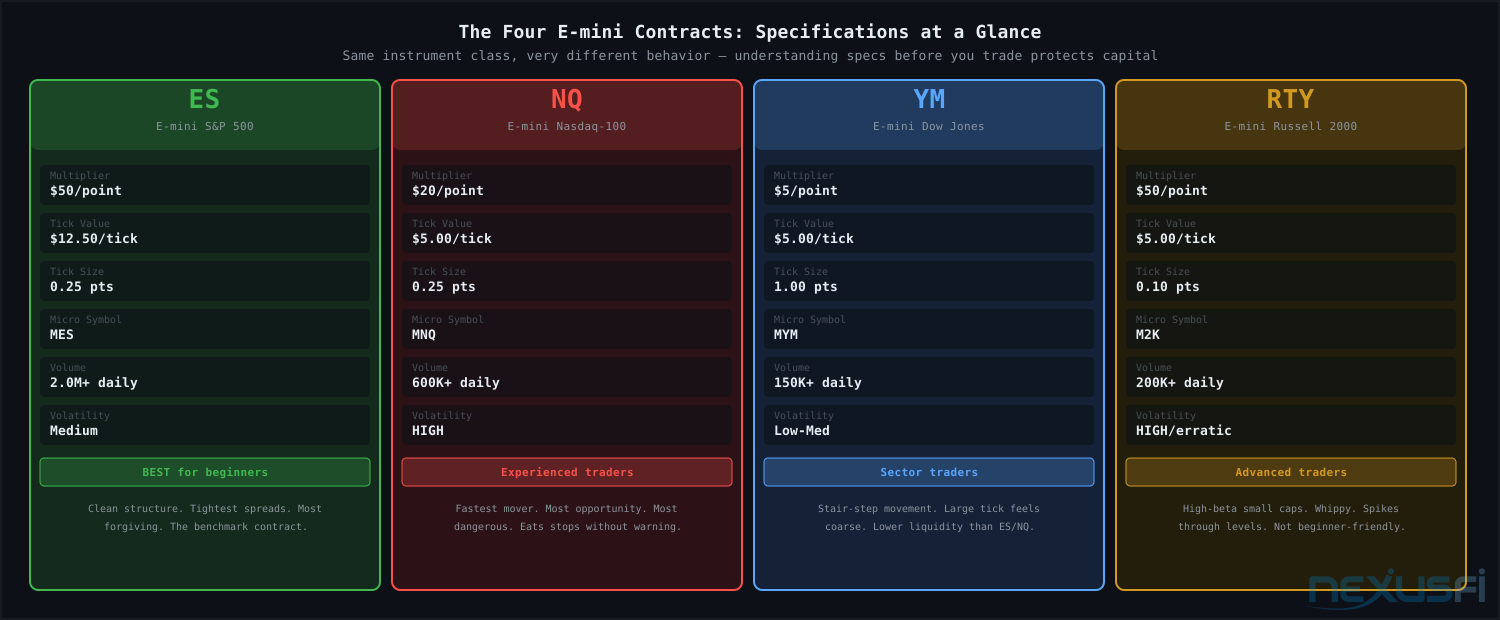
ES -- E-mini S&P 500
ES is the benchmark. Two million contracts change hands daily. The bid-ask spread is 1 tick ($12.50) in normal conditions and almost never widens. The S&P 500 it tracks is the most widely-followed equity index in the world, which means every institutional player, hedge fund, and market-maker is simultaneously involved — and that consensus creates the clearest technical structure in futures.
ES moves $50 per point. Each tick is 0.25 points = $12.50. A 10-point stop costs $500. That sounds expensive compared to NQ's $5 tick value, but the comparison is misleading — ES's stop widths in points can be tighter because the market respects levels more carefully. You're paying less in slippage, less in spread inefficiency, and getting more predictable structure for every dollar of stop risk.
The S&P 500's broad composition (500 stocks across all sectors) dampens individual name risk. A blow-up in a single tech stock barely registers on ES. That same event can move NQ 50 points because the Nasdaq-100 is concentrated in mega-cap tech.
ES also offers the largest selection of futures brokers, the most strong market replay data, the most extensive research, and the most active education community. For traders building skill, that ecosystem matters.
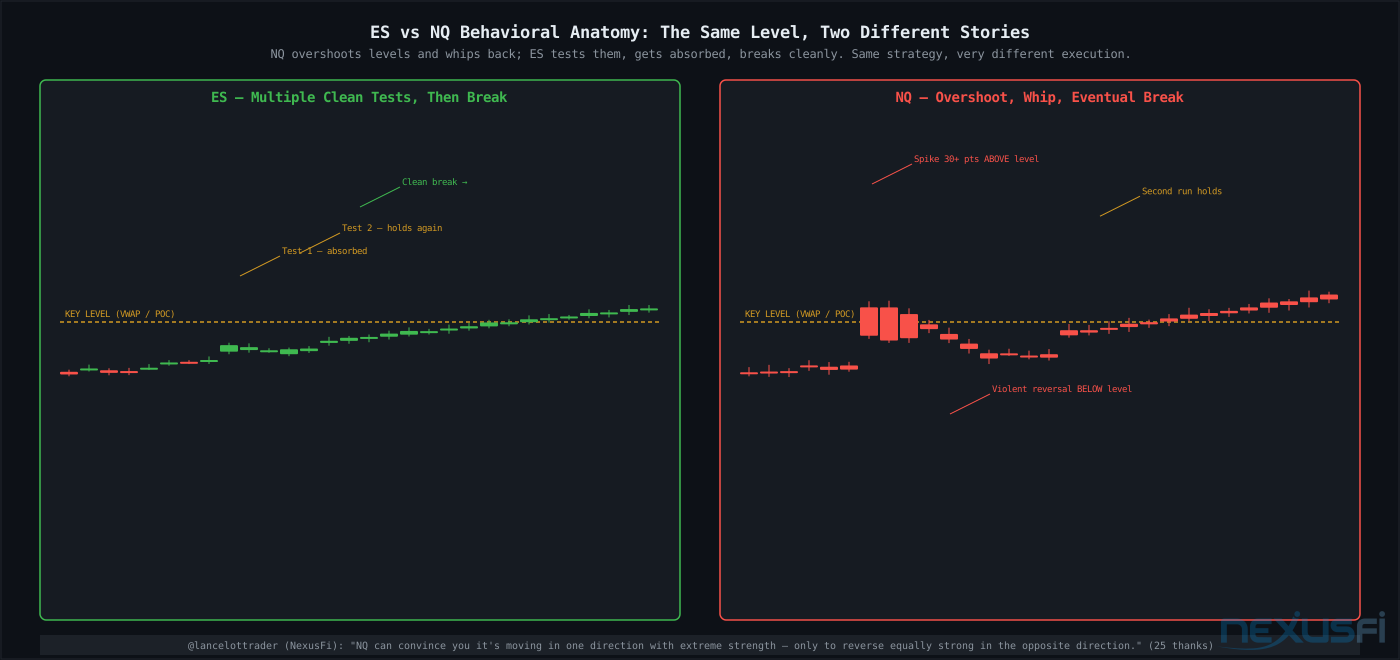
That absorption pattern is the core reason ES is the right learning instrument. When a level holds on ES, it holds cleanly. You can study the order flow, watch how size defends it, see the rotation develop. That clarity is what accelerates the learning curve.
NQ -- E-mini Nasdaq-100
NQ tracks the Nasdaq-100 — 100 of the largest non-financial stocks on the Nasdaq, heavily weighted toward Apple, Microsoft, Nvidia, Meta, Alphabet, Amazon. That concentration creates a contract that amplifies tech-sector emotion. When Nvidia gaps on earnings, NQ moves. When the Fed says something about rates, NQ moves three times harder than ES because the Nasdaq-100 is more interest-rate sensitive than the broad market.
The tick value is $5, with each point worth $20. A 10-point stop costs $200 — apparently cheaper than ES's $500. But 10-point stops don't survive NQ's noise. Experienced NQ traders typically run 20-40 point stops in normal conditions, costing $400-$800. Same ballpark as ES, except the volatility is higher and the pattern recognition harder.
The NQ community has given the contract a nickname: The Beast. It's earned. The contract runs stops with algorithmic precision, overshoots support and resistance levels by 20-30 points before reversing, and on bad days produces movement that experienced traders describe as "impossible to trade" — random, chaotic, unreadable price action where every entry loses regardless of direction.
NQ is not a bad contract. For momentum traders with developed execution skills, it's genuinely excellent — the strongest trending moves in the E-mini space, clear follow-through on breakouts, significant daily range. But the prerequisite is the discipline to sit out the trap days and the stop-width discipline to survive the noise. Neither skill develops fast.
YM -- E-mini Dow Jones Industrial Average
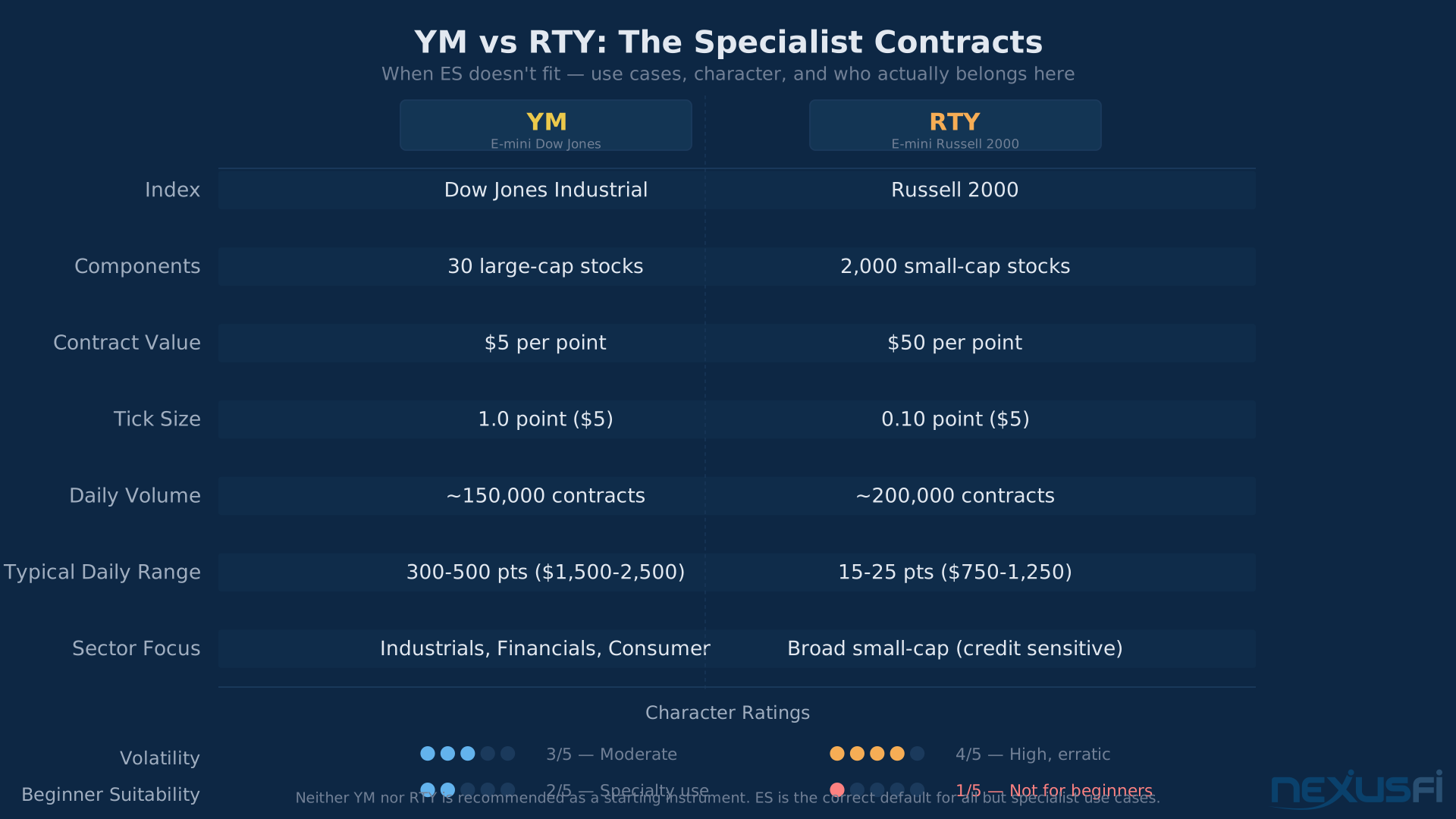
YM tracks the 30-stock Dow Jones Industrial Average, the oldest major US index. The multiplier is $5 per point, the tick size is 1 full point, and each tick is worth $5. That large tick structure gives YM a distinctive "stair-step" feel — price moves in $5 increments rather than the $5 and $12.50 granularity of NQ and ES.
Daily volume runs around 150,000 contracts — meaningful liquidity but thin compared to ES and NQ. The spread holds at 1 tick ($5) in normal conditions. Execution quality is generally solid but can deteriorate during fast markets faster than ES or NQ.
YM's 30-stock composition creates sector concentration in industrials, financials, and consumer goods. When those sectors diverge from tech (which happens — see any period where energy and banks rally while tech sells off), YM and NQ can move in opposite directions while ES sits in the middle. Traders who specifically track sector rotation find YM useful.
The Dow's price-weighted index construction (higher-priced stocks have more influence) means individual stocks like UnitedHealth or Goldman Sachs disproportionately move YM. That idiosyncrasy makes YM harder to predict from pure macro analysis than ES.
YM isn't a bad choice. For traders who've developed with YM and understand its character, it works fine. But it's rarely recommended as the first or best choice when ES offers better liquidity, cleaner structure, and broader educational resources.
RTY -- E-mini Russell 2000
RTY tracks 2,000 small-cap US stocks — completely different character from the large-cap indices. Small-caps are more sensitive to domestic economic conditions, interest rates, and credit availability. They're also more illiquid underlying securities, which shows up in the futures as more erratic, whippy price action.
The multiplier is $50 per point — same as ES — with tick size 0.10 points = $5 per tick. Daily volume is around 200,000 contracts. The combination of high volatility and lower-than-NQ volume creates a product that can have sudden, large moves with less warning and less visible order flow context.
RTY tends to lead or lag the large-cap indices depending on macro regime. During "risk-on" phases when investors are taking on credit risk, RTY outperforms. During "risk-off" deleveraging, RTY gets hit harder than ES. Understanding this regime relationship takes time and study.
For beginners, RTY is explicitly not recommended. The erratic movement pattern, the less-clear technical structure, and the sensitivity to factors that aren't visible in the contract itself (small-cap credit conditions, IWM flows) make it a difficult instrument to develop a consistent edge on without significant prior experience.
Daily Range: How Much They Actually Move #
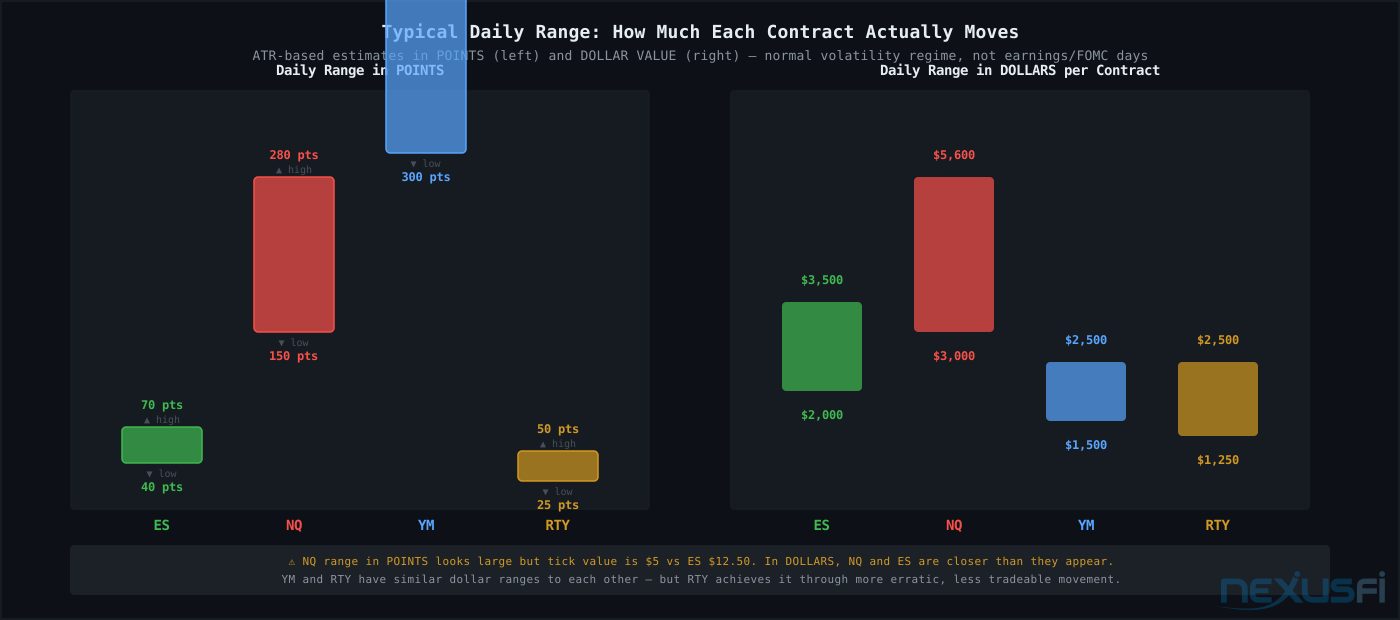
Raw point ranges are misleading across these four contracts because each uses a different multiplier. What matters is dollar range — how much the contract moves in dollar terms during a normal session.
In typical conditions (non-FOMC, non-earnings, moderate VIX), ES moves roughly $2,000-$3,500 in total daily range per contract. NQ moves $3,000-$5,600 — larger, but NQ's required stop widths are proportionally larger too. YM moves $1,500-$2,500 in dollar terms. RTY moves $1,250-$2,500 but with less consistent pattern to where those moves occur.
The NQ vs ES comparison is the important one. NQ appears to offer dramatically more opportunity because 150 NQ points sounds like 3x the ES 40 points. But at $20/point vs $50/point, the dollar difference is much smaller than the point difference implies. And NQ's required stop distances (in points) to survive normal noise are proportionally wider — often 2-3x wider than ES stops.
Dollar Risk Per Trade: The True Comparison #
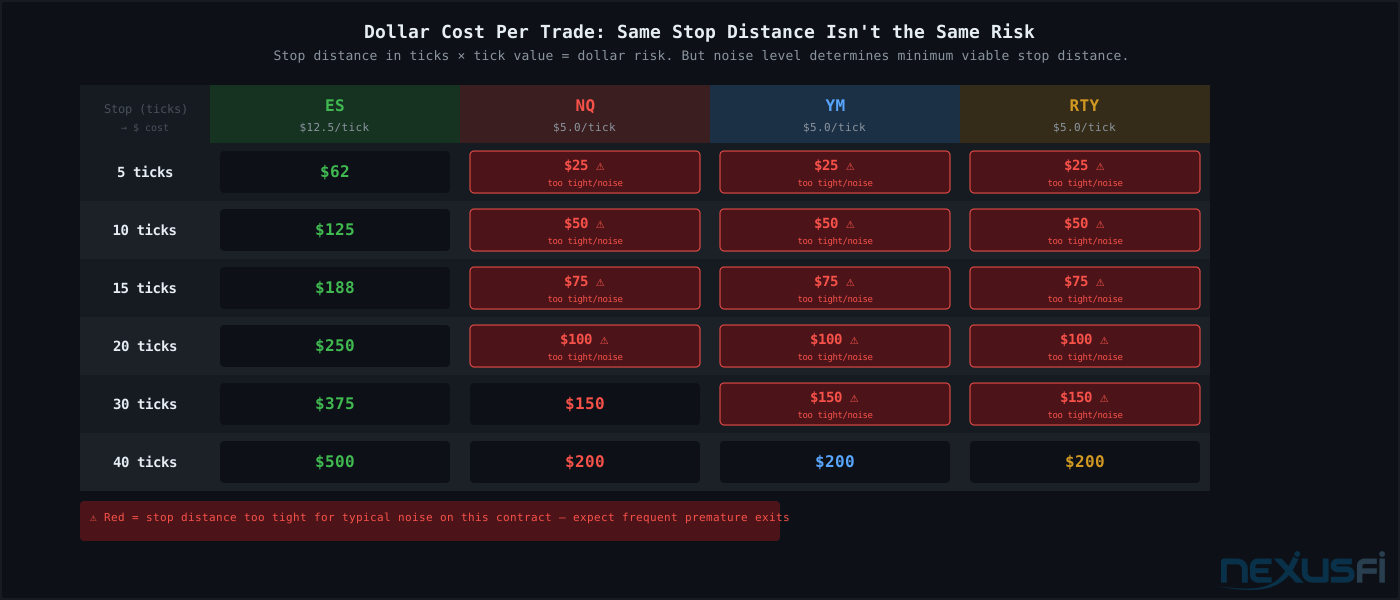
The stop cost comparison between contracts comes down to this: what's the minimum viable stop distance, and what does that cost in dollars?
On ES, tight scalp setups can run 4-tick stops ($50) with reasonable expectation of survival. Swing entries or news setups might need 20 ticks ($250). On NQ, 10-tick stops get eaten by normal session noise — you need 20-40 ticks ($100-$200) minimum for most setups. On YM, the 1-point tick makes any stop feel coarse; 10-tick stops ($50) aren't meaningful unless the setup is very tight.
The practical result: the dollar cost per trade across contracts is more similar than it looks when comparing tick values. What differs is how that risk is distributed — ES gives you tight, precise entries with clear invalidation; NQ requires accepting wider heat before knowing whether the setup is working.
Liquidity and Execution Quality #
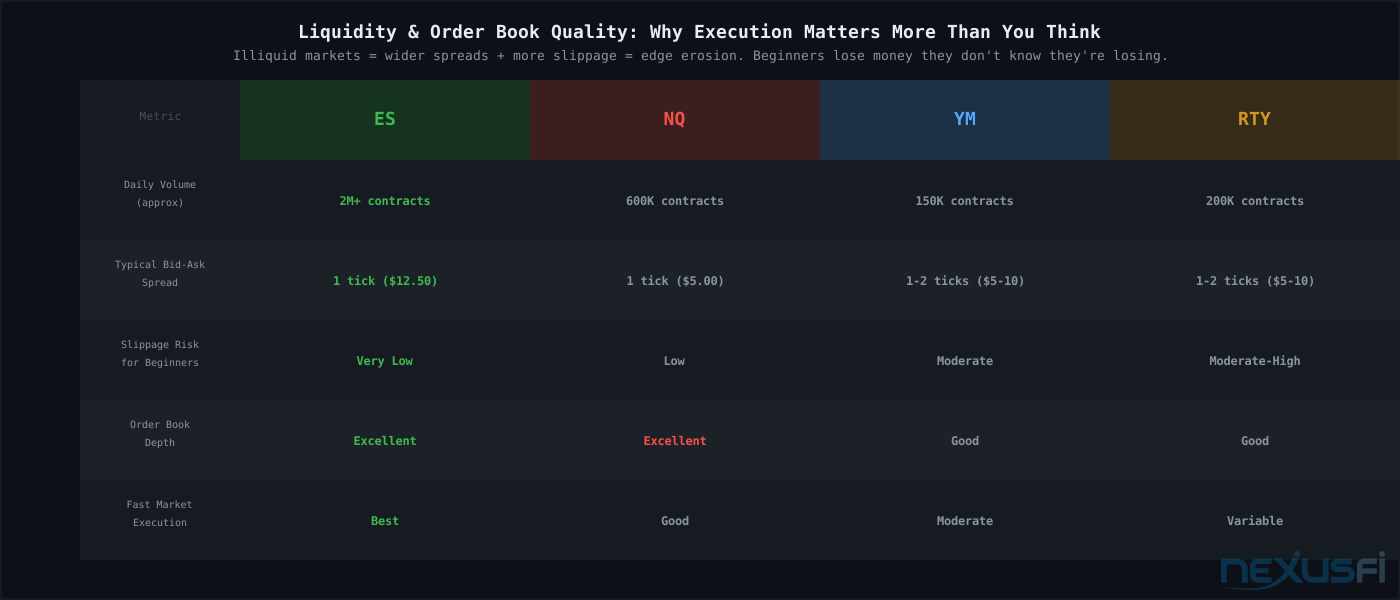
Liquidity affects more than just ability to get filled. In highly liquid markets, levels hold more consistently because more participants are simultaneously defending them. In thinner markets, levels break easily — which can mislead technical traders into thinking they've identified a false resistance, when the level actually held on the more liquid contract.
ES liquidity also creates tighter bid-ask spreads across all times of day, including overnight Globex sessions. NQ is also excellent. YM and RTY are fine for most purposes but show more spread widening during off-hours and fast markets.
For beginners, this matters in a specific way: slippage and poor fills are invisible P&L leaks. A strategy that appears breakeven in backtesting can lose money in live trading entirely because of execution costs in a less liquid market. ES minimizes this risk.
Which Contract Fits Your Trading Style #
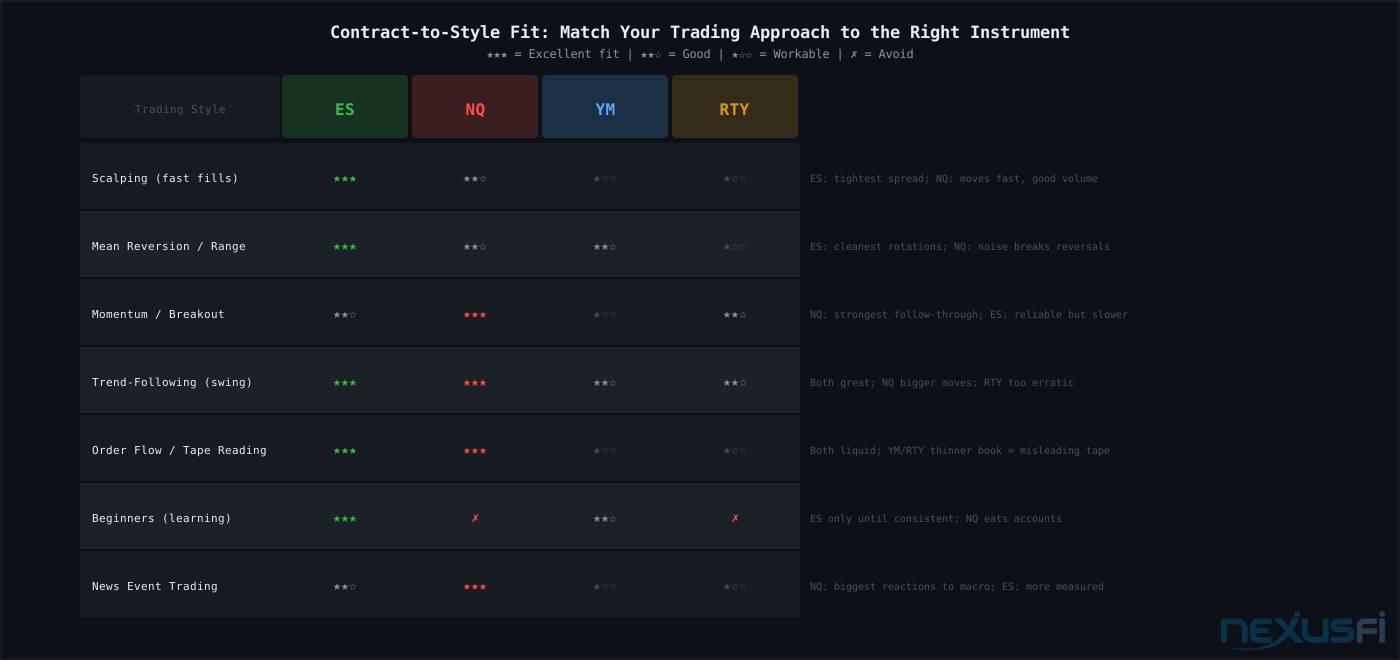
Scalping
ES dominates. Tight spreads, clean fills, consistent 1-2 tick targets are achievable. NQ scalping is possible but requires faster execution and accepting wider spreads during choppy conditions. YM's 1-point tick makes precise scalping harder. RTY is too erratic for reliable scalping.
Mean Reversion and Range Trading
ES again. Its structure respects VWAP, prior day levels, and value area boundaries with consistent reliability. Mean-reversion setups on ES — fade the +2SD VWAP extension, fade the opening range extreme — work because the contract's liquidity creates a genuine gravitational pull back to value. NQ's overshoots can extend further than the same setups on ES, requiring wider stops and wider profit targets to capture the same quality of reversion.
Momentum and Breakout Trading
NQ earns its place here. Breakout follow-through on NQ is consistently stronger than ES — a 20-point NQ breakout is more likely to travel the full measured move than the equivalent ES breakout. If your strategy is specifically built around momentum continuation, NQ is the better instrument. But you need to have developed the execution discipline on ES first to manage NQ's noise without systematic stop-outs.
lancelottrader's path is instructive — he came to NQ with existing experience from CL (crude oil), which is also a volatile, momentum-heavy contract. His success with NQ came from translating developed pattern recognition, not from learning on NQ directly.
Beginners
ES, full stop. No debate. The learning curve is about developing pattern recognition, execution discipline, and risk management — all of which are harder to develop on a contract that moves faster and less predictably. MES (Micro ES) specifically lets you run live setups with 1/10th the dollar exposure while learning.
Which Contract for Your Account Size #
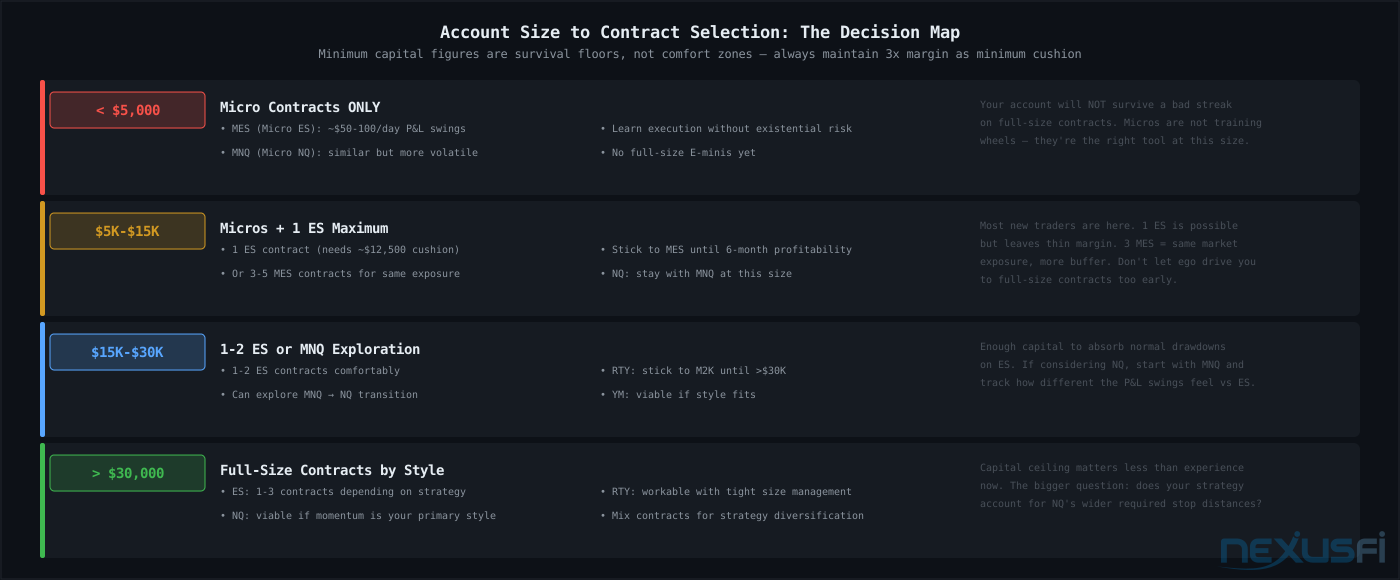
The standard intraday margin for ES is approximately $500 per contract (varies by broker). Overnight margin is substantially higher — around $12,500 per contract. The practical rule is that you need at least 3-5x the overnight margin as account cushion to absorb drawdowns without margin calls.
That puts realistic minimum capital for 1 ES contract at $15,000-$25,000 if you're running overnight, or $5,000-$10,000 if you're strictly intraday with hard stops before close. Below $5,000, micro contracts (MES) are the only viable path.
NQ's overnight margin is similar to ES at around $10,500-$12,500 per contract. But the required stop widths mean you need more buffer for drawdown — $25,000+ is a more appropriate starting point for 1 NQ contract if you want to survive a string of normal losing trades without blowing up.
The Micro Versions: MES, MNQ, MYM, M2K #
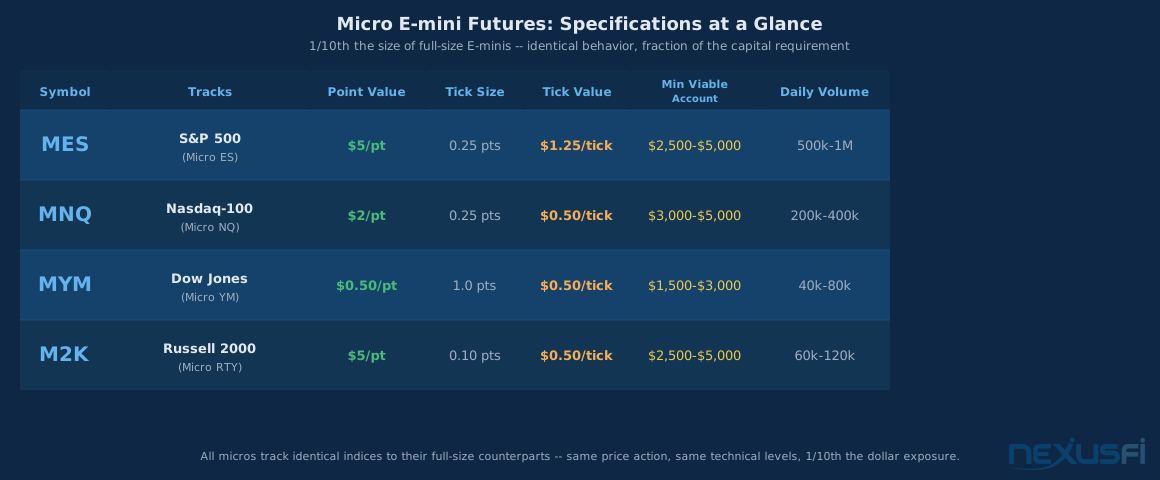
Every E-mini contract has a micro version at 1/10th the size. MES is 1/10th of ES — $5 per point, $1.25 per tick. MNQ is 1/10th of NQ — $2 per point, $0.50 per tick. MYM is 1/10th of YM — $0.50 per point. M2K is 1/10th of RTY — $5 per point, $0.50 per tick.
Micros aren't training wheels. They're the right tool for two specific situations: (1) accounts below the capital threshold for full-size E-minis, and (2) strategy testing in live market conditions before scaling to full size. Many consistently profitable traders use 3-5 MES contracts instead of 1 ES to maintain more granular sizing control.
MES and MNQ in particular have enough volume to get clean fills. M2K and MYM are more thinly traded, which can create slightly wider spreads during fast markets — still workable, just something to be aware of.
Common Mistakes in Contract Selection #
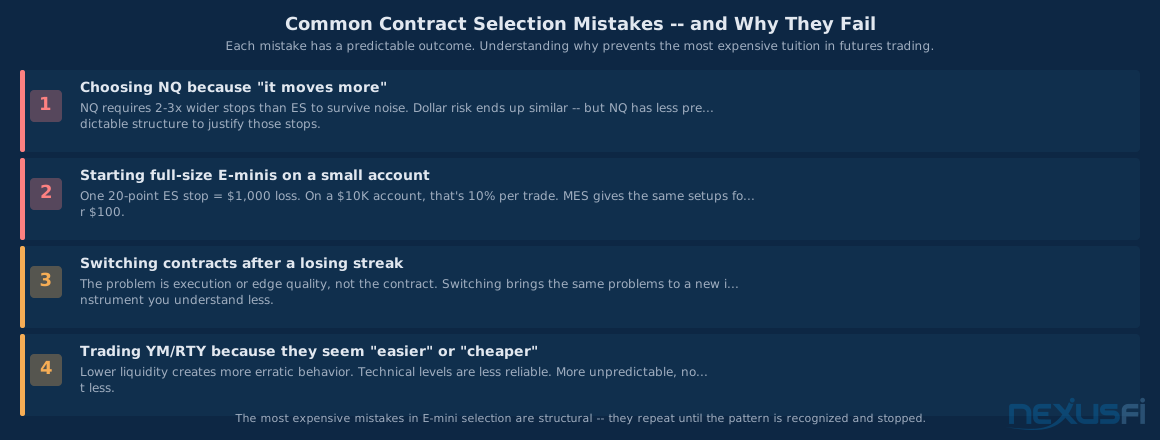
Choosing NQ because "it moves more." NQ's additional movement comes with additional volatility requirements — wider stops, faster execution, more noise on every level. Most traders who move to NQ from ES for this reason end up needing to move back.
Starting with full-size E-minis on a small account. One bad trade on ES at 1 contract = $500-$1,000 loss on a setup that hits a 10-20 point stop. On a $10,000 account, that's 5-10% in one trade. Micros exist precisely to prevent this.
Trading YM or RTY because they seem "easier" or "cheaper." Lower liquidity and different index composition don't make them easier — they make them less forgiving of mistakes because thinner order books create more erratic price behavior at key levels.
Switching contracts after a losing streak. The problem is almost never the contract. Pattern recognition failures, execution errors, and risk management issues follow you to the new instrument. Switching doesn't fix the underlying issue.
Making the Decision #
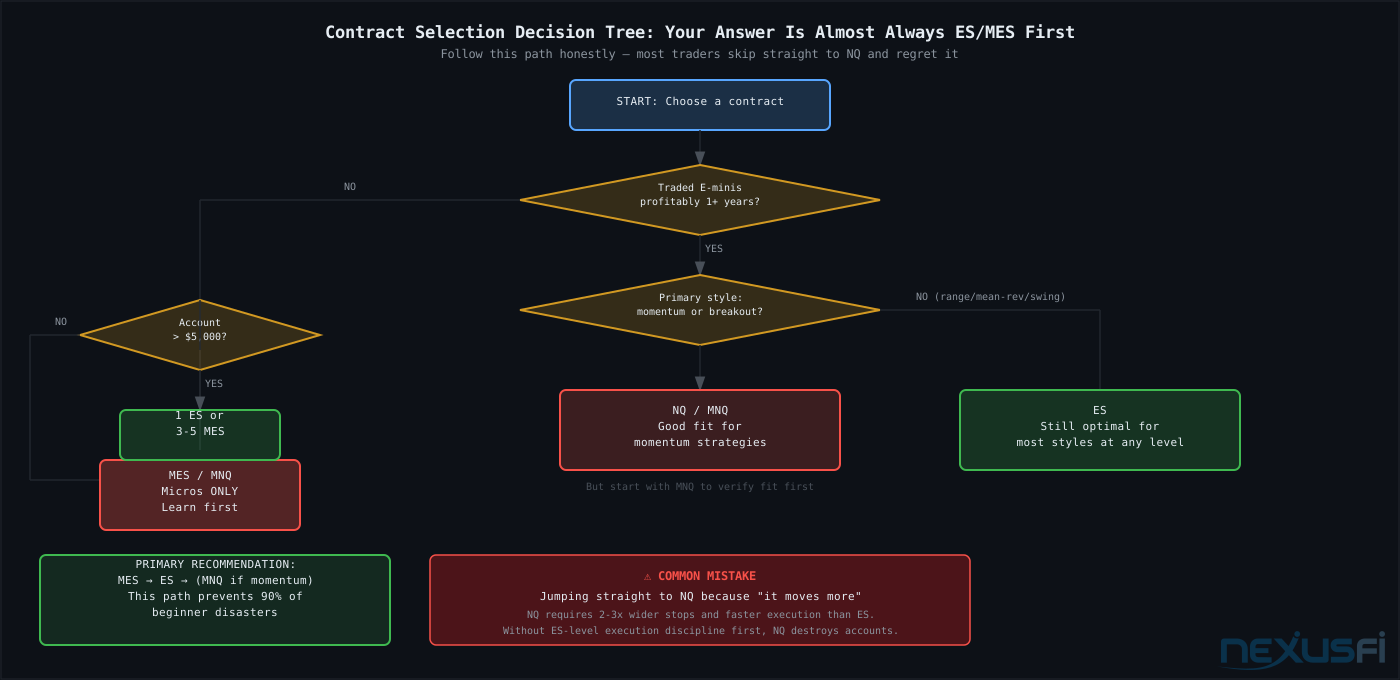
The framework is simple: start with MES or ES, develop execution discipline and pattern recognition, then evaluate whether your style requires NQ. Most styles don't. For the traders who do belong on NQ — momentum specialists, breakout traders who've proven their edge on ES — the move to NQ makes sense. For everyone else, ES is the better instrument permanently, not just temporarily.
YM and RTY are legitimate contracts for traders who've developed specific expertise with them or have strategic reasons to trade those particular indices. They're not starting points. They're niche instruments for specific applications.
The micro contracts make this path cheaper: MES first, validate the strategy with real market exposure and real P&L, then scale. The point of micros isn't to be a permanent home — it's to make the learning phase survivable.
Knowledge Map
Go Deeper
Build on this knowledgeReferences This Article
Articles that build on this topicCitations
- — Which one is easier to trade, NQ vs ES? (2026)“With ES running 2M+ contracts daily vs NQ at roughly 600k, the absorption patterns read completely differently. ES tends to respect levels -- previous day high, VWAP, POC -- with multiple tests before breaking. NQ will just blow through by 10-20 points before anyone realizes the level mattered.”
- — The Beast Slayer, Lance's NQ Trading Journal (2018) 👍 25“NQ is one of the trickiest and most difficult instruments to trade. For an average retail trader using 20-40 tick stops, NQ can eat up your account quickly. It can convince you that it is moving in one direction with extreme strength -- only to reverse equally strong in the opposite direction.”
- — The Beast Slayer, Lance's NQ Trading Journal (2020) 👍 12“I never really liked the ES. YM was sometimes good, but I saw real movement with NQ. It seemed to have multiple strong moves almost every day and seemed like a good match for my trading style.”
- — Trading advice needed down 400 a month 4-12 trades a day (2022) 👍 3“Just a quick look at NQ vs ES should tell you that NQ is violently, let's say, abrupt. Compared to the nice slow ES, it can take your head off.”
- — ES vs NQ/YM (2021) 👍 4“NQ is fast and initially looks random and wild but really it's not. It's the best mover with more opportunity but can be very volatile off a catalyst. Which one's best? The one you are able to see and trade best.”
- — Is it worth tracking the ES and NQ? or CL? (2019) 👍 4“NQ has a more volatile, fast-paced behavior. NQ can be quite scary at opening bell, shooting up and down like a laser wiping out little stop-losses.”
- — Best deal on futures margin (2021) 👍 4“A better option, if cash is tight, is to use the micro contracts. MNQ has a tenth of the value per point of regular NQ and could be traded with smaller margin with a tenth of the risk. If you trade it well, you can build your account soon enough.”
- — ES vs NQ/YM (2019) 👍 7“I recently switched to YM, and I like it mainly because of the smaller tick size: 10 ticks in YM = $50, vs. 4 ticks = $50 on ES. I think the granularity makes entries/exits a little better, and the bid/ask spread is smaller in dollar terms, so slippage is less.”
- — ES vs NQ/YM (2019) 👍 10“I spent about a month studying the YM, the NQ and the ES. In the end I settled on the NQ -- mostly due to the Average Daily Range. NQ = 131.55 x $20 = $2,631.00. ES = 33.5 Points x $50 = $1,675.00. YM = 293.1 x $5 = $1,465.50.”