



NQ (Nasdaq-100 E-mini) Futures Trading Strategies: The Complete Playbook
Overview #
NQ is not a faster ES. That's the most common mistake traders make when switching from the S&P 500 E-mini to the Nasdaq-100 E-mini — they assume the same setups, the same stop distances, and the same market dynamics apply. They don't. NQ is a at the core different trading vehicle with its own personality, its own timing windows, its own sensitivity to rate news and tech earnings, and its own approach to position sizing.
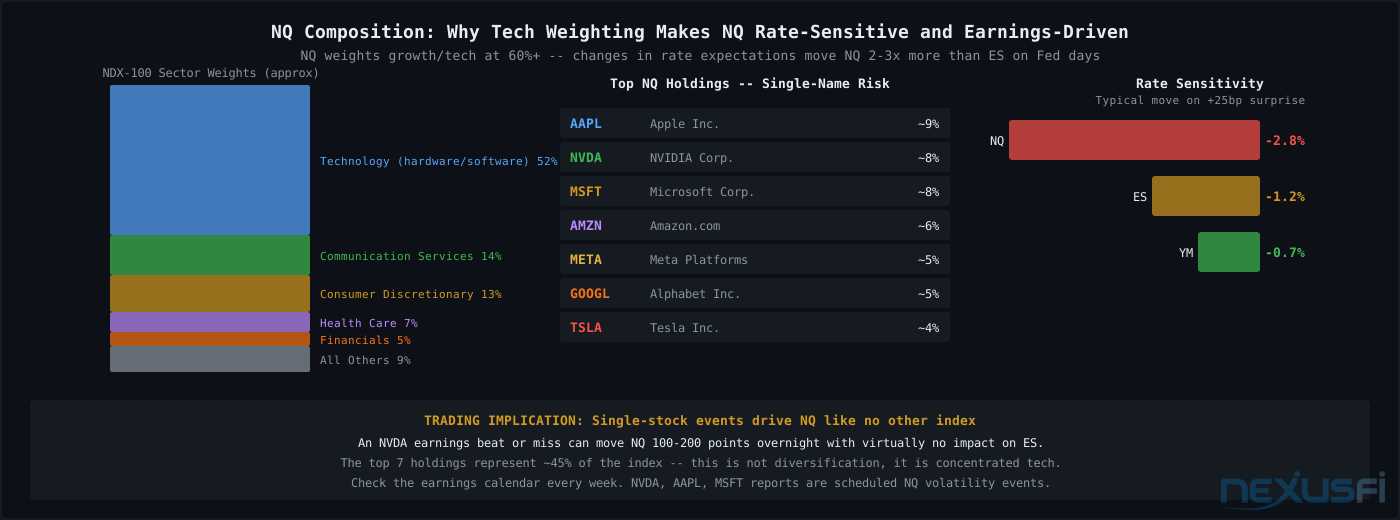
The Nasdaq-100 E-mini (NQ) represents the top 100 non-financial stocks listed on the Nasdaq exchange, weighted heavily toward technology and growth. As of 2026, the top seven holdings — NVDA, AAPL, MSFT, AMZN, META, GOOGL, TSLA — account for approximately 45% of the index weight. This concentration means a single NVDA earnings report can move NQ 150-200 points overnight with virtually no impact on ES.
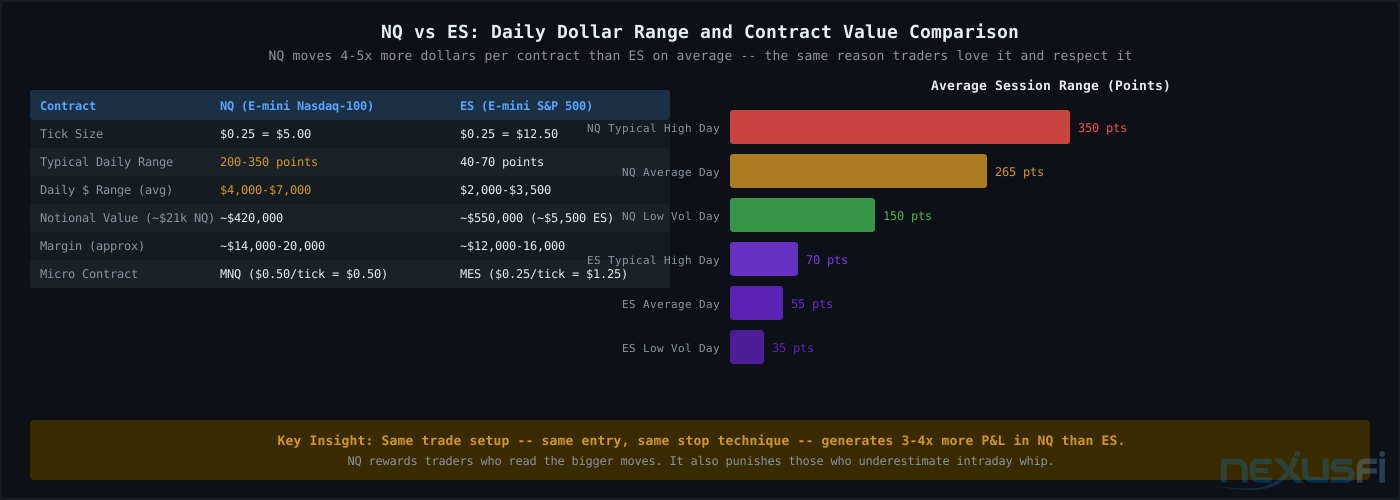
What makes NQ worth learning: its daily range generates $4,000-$7,000 in dollar movement per contract on average, versus $2,000-$3,500 for ES. The same trade setup — same entry, same stop technique — produces 3-4x more P&L in NQ than ES on a typical day. That's why 100-tick targets (25 NQ points = $500) are standard working targets for experienced NQ traders, and why beginning traders often find NQ's magnitude disorienting before they find it profitable.
What Makes NQ Different: The Tech Weighting Effect #
ES tracks the S&P 500 — a diversified index with significant exposure to financials, energy, healthcare, and industrials alongside technology. NQ tracks the Nasdaq-100, which has basically zero exposure to traditional financial stocks and concentrates 60%+ of its weight in technology and growth companies. This creates three structural differences that affect every NQ strategy:
Rate sensitivity: Growth companies (especially high-P/E tech) are long-duration assets — their valuations are based on earnings far in the future. When interest rates rise, the discount rate applied to those future earnings rises, compressing today's valuations. The practical result: NQ moves roughly 2-3x more than ES on Fed policy surprises. A +25bp shock that might drop ES 1.2% will often drop NQ 2.5-3%.
Single-stock concentration risk: NVDA reporting earnings affects NQ directly and immediately. Before the NVDA weighting increased much in 2023-2024, a NVDA surprise moved NQ maybe 30-50 points. Now, a blowout or miss can move NQ 100-200 points in after-hours trading before RTH even opens. You need to know the earnings calendar cold if you're trading NQ.
Momentum character: NQ tends to trend harder and faster than ES when it has a trigger. As @lancelottrader documented, NQ can move 100-200 ticks in one direction then reverse 100 ticks the opposite way. That momentum is the opportunity; understanding that it reverses equally fast is the risk management.
ES vs. NQ Correlation: When They Move Together and When They Don't #
During normal trading sessions, ES and NQ track each other closely — correlation around 0.87-0.90. They're both responding to the same broad macro flows: Federal Reserve policy, risk appetite, passive fund rebalancing. On these days, the choice between ES and NQ is mostly about position sizing and fill quality, not directional edge.
The divergence windows are where NQ traders find their edge. The correlation fractures hard in three scenarios:
- Big tech earnings: NVDA, AAPL, MSFT, META earnings produce NQ-specific moves that ES doesn't replicate. If you're in ES during an NVDA blowout quarter, you've missed the move. If you're in NQ, you're riding it.
- Rate surprise events: CPI beats, FOMC surprises, and labor market shocks hit NQ harder than ES. NQ's duration sensitivity means it leads the sell-off when rates spike, often by 15-30 seconds before ES fully reprices.
- Sector rotation: When institutional money shifts from growth to value (tech to financials/energy/industrials), NQ can fall while ES holds flat or rises. @josh documented this pattern explicitly: "I had a clear short trade setup when NQ took out the morning opening price" while YM (Dow) was holding its range -- using NQ weakness as the directional signal.[2]
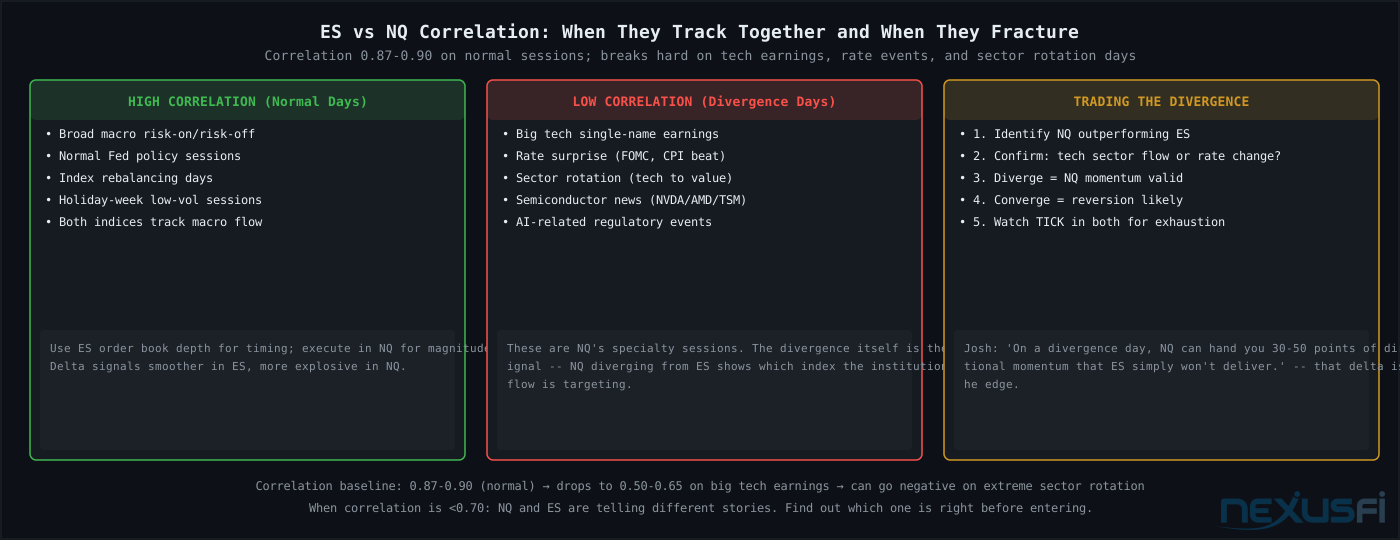
The practical trading rule: when NQ and ES diverge, determine which direction the institutional flow is going. The index that leads the divergence usually continues — the one lagging is the mean-reversion candidate. This is @josh's YM/NQ spread trade framework applied: "Buying this YM/NQ spread makes the bet that even if tech continues to rampage higher, the rest of the market will likely follow suit, rather than continue to see the huge divergence we've seen."[4]
Core NQ Strategy: VWAP Confluence Trading #
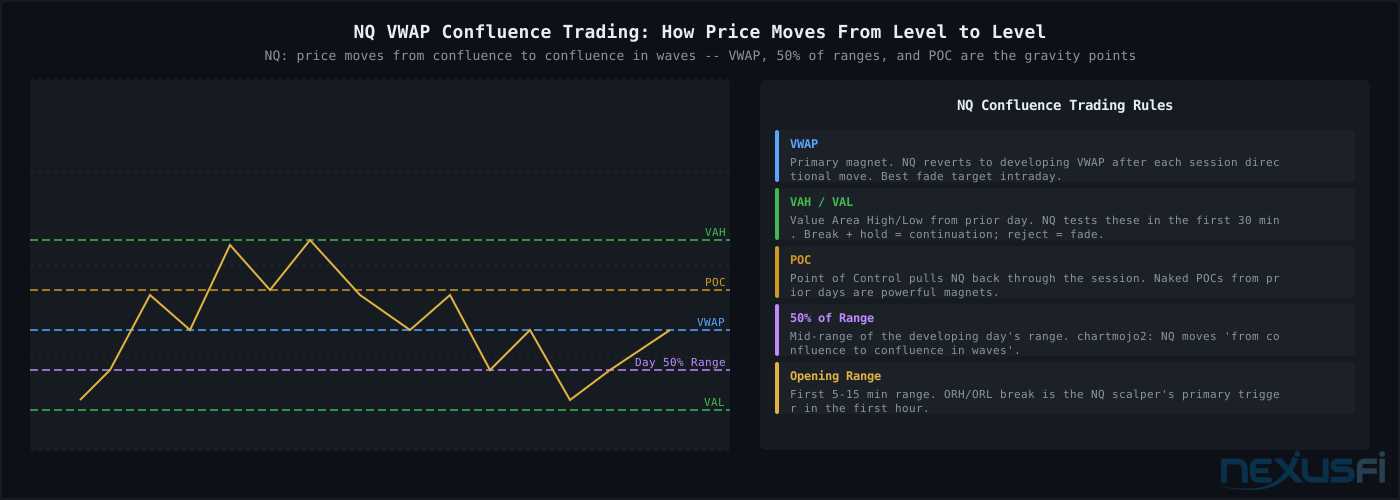
This is the core mental model: NQ moves between structural reference points. Identify the reference points before the session. Place your trades around those points. The movement between them is the opportunity.
The primary confluence levels for NQ:
- VWAP: The session's volume-weighted average price is NQ's central gravity point. Price above VWAP in an uptrend that pulls back to VWAP is the highest-probability long entry in the entire NQ playbook. VWAP reclaims after a rejection are similarly powerful short covers.
- Value Area High/Low from prior day: NQ tests these in the first 30 minutes with high consistency. A clean break above prior VAH with volume = momentum continuation. A rejection at VAH = fade setup back to VAL or POC.
- Point of Control: The volume profile POC from the current session and prior sessions acts as a magnet. NQ will often reverse within 10-15 points of testing the session POC.
- 50% of the day's developing range: The midpoint of whatever range is forming. NQ frequently stalls at this level before the next directional move.
- Opening Range High/Low: The first 5-15 minutes establish the OR. NQ traders watch the ORH and ORL as primary triggers -- a break above the ORH in the first hour is one of the most reliable momentum entries.
The 100-Tick Target: NQ Momentum Scalping #
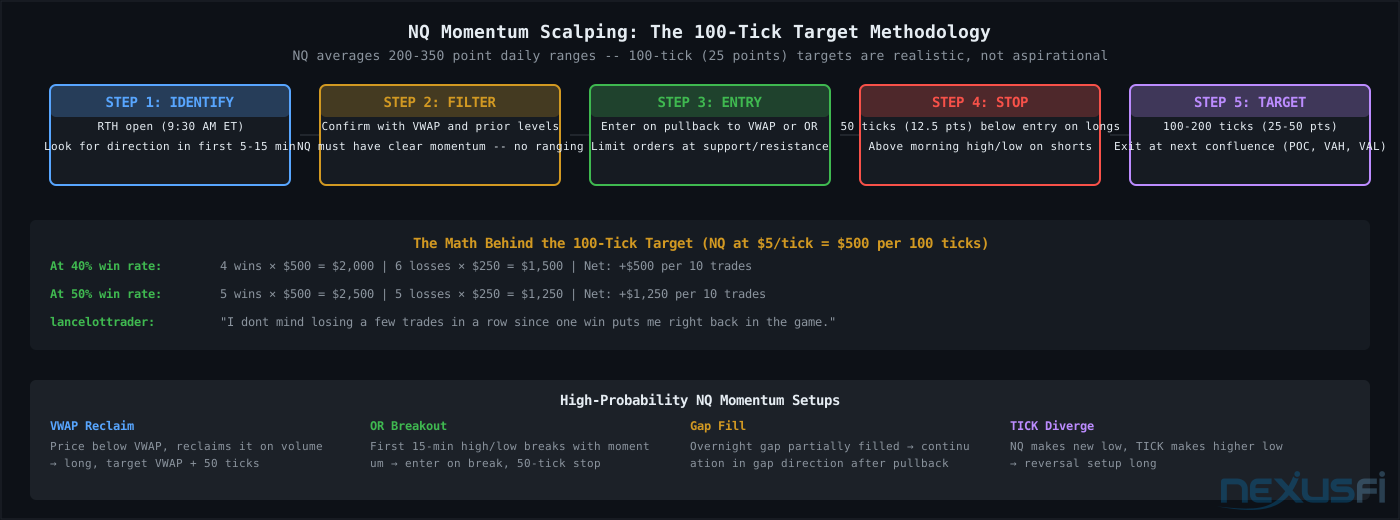
@lancelottrader's methodology, refined over years of NQ trading, centers on 100-tick targets with 50-tick stops — a 2:1 reward-to-risk on every trade. The math works at lower win rates than most traders expect: "I don't mind losing a few trades in a row since one win puts me right back in the game."[1]
The case for 100-tick targets as a default: NQ averages 200-350 point daily ranges. A 100-tick (25-point) target is asking for 7-15% of the day's range. On most days, that's not aspirational — it's conservative. The question is timing and direction, not whether the magnitude is achievable.
The methodology:
- Morning direction: Read the opening 15 minutes. Is NQ establishing an uptrend or downtrend? A strong opening move above VWAP with sustained buying pressure is the first signal.
- Pullback entry: Don't chase. Wait for the first pullback to VWAP, the OR midpoint, or a visible support level. Enter on the retest with a limit order at the level.
- Stop placement: 50 ticks below the entry on longs. This should be below the prior swing low and below the VWAP. If the stop is above the OR, the setup is invalid.
- Target management: The first 50 ticks, hold. At 50 ticks profit, move stop to entry + 2 ticks. Let the trade work to 100 ticks. If it stalls at a strong resistance level before 100 ticks, take the profit.
- Adjusting for conditions: "If there is strong support or resistance at only 50 ticks away and that looks like the only good setup, then I will have a 50 tick target instead of assuming it will breakout. So targets are usually in a spot that doesn't have to break through a strong area."[1]
NQ Session Structure: When to Trade and When to Watch #
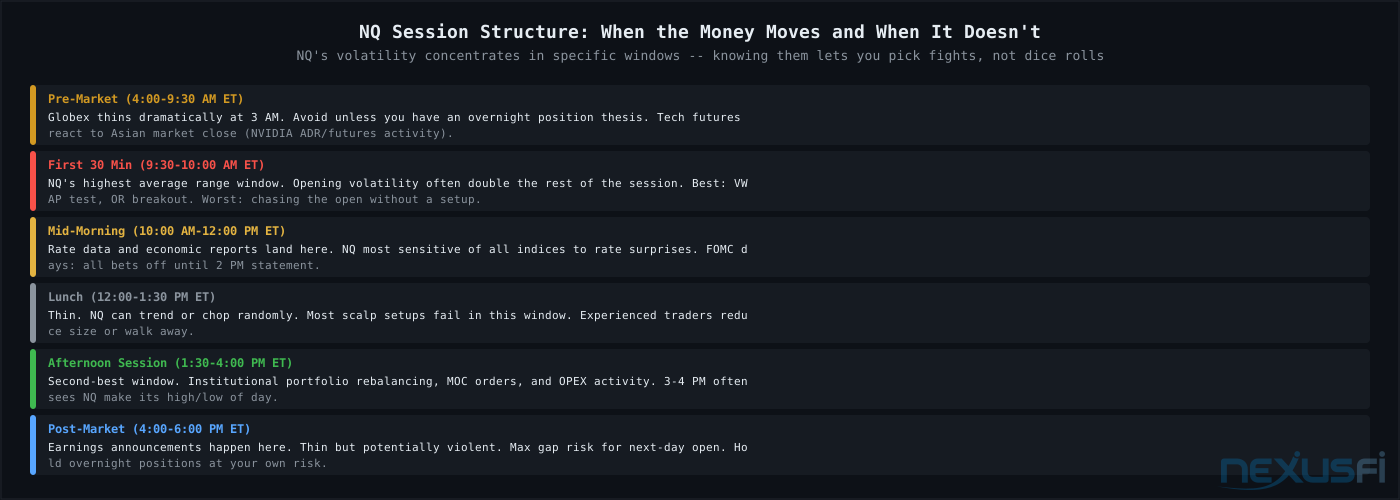
NQ's volatility concentrates in specific windows. Trading outside these windows is a consistent leak for NQ traders because the magnitude of moves doesn't justify the execution costs and false signals in low-participation periods.
First 30 minutes (9:30-10:00 AM ET): Highest average range window. This is where NQ establishes direction and tests prior day levels. Best setups: OR breakout, VAH/VAL test, VWAP gap fade. Worst behavior: chasing the first move without a structural entry point.
Mid-morning (10:00 AM-12:00 PM ET): Economic data and Fed speaker events land here. CPI, PPI, jobless claims, consumer confidence — each one moves NQ hard if it surprises. Rate-sensitive news hits NQ harder than any other equity index future. Know the calendar before this window.
Lunch (12:00-1:30 PM ET): Thin, random. Most NQ scalp setups degrade in this window. The volume drops, the spread between meaningful levels compresses, and the false signals increase. Experienced NQ traders either reduce size dramatically or exit the screen.
Afternoon session (1:30-4:00 PM ET): Second-best window. Institutional rebalancing, MOC orders, and options expiration activity create directional moves in the last hour. 3:00-4:00 PM often sees NQ make its session high or low as end-of-day flows concentrate.
Managing Big Tech Earnings Events #
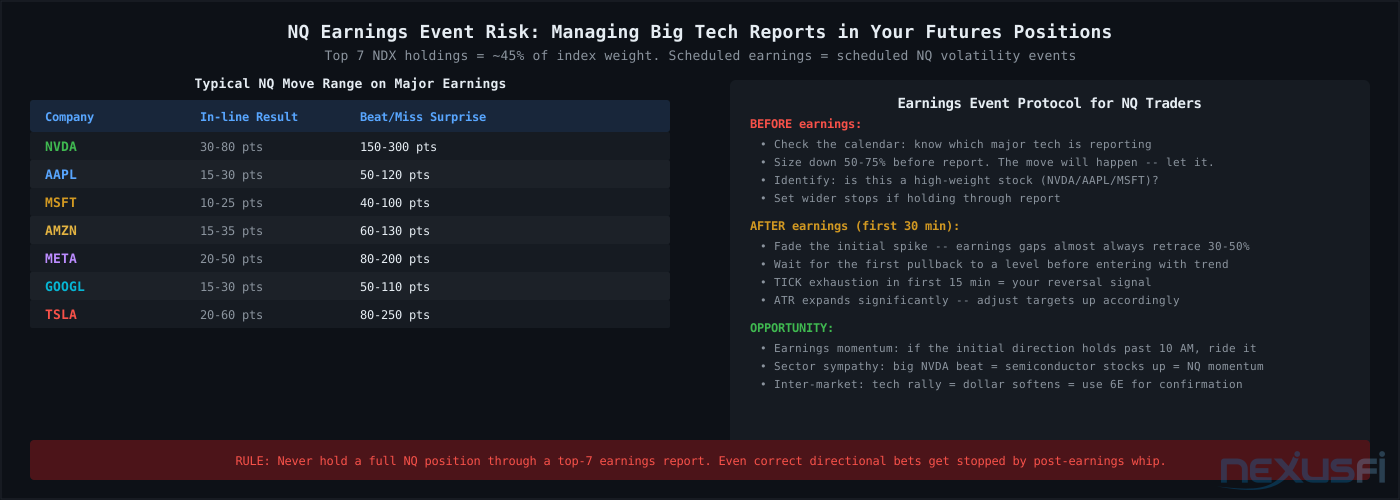
The single most unique risk in NQ trading versus all other equity index futures: scheduled single-stock earnings reports that move the entire index. NVDA alone can move NQ 150-300 points on a surprise quarter. That's a $7,500-$15,000 swing per NQ contract — in after-hours trading, often before you can do anything about it.
The earnings protocol:
Before earnings: Check the calendar. Size down 50-75% of your normal position before any top-10 NDX holding reports. The magnitude of the move after the report is often larger than you expect. If you have a directional thesis on the stock, that's what options are for — not NQ futures held through the report.
After earnings, first 30 minutes: Fade the initial spike. Earnings gaps in NQ almost always retrace 30-50% in the first 30 minutes of RTH as traders take profits on overnight positions. Wait for the first pullback to VWAP or to the prior day's range before entering in the earnings direction.
The earnings opportunity: A major beat in NVDA or MSFT creates NQ momentum that can sustain through the entire morning session. If the initial post-open direction holds past 10:00 AM, the institutional positioning has confirmed — the trend is your friend for the rest of the morning.
NQ-ES Divergence as a Trading Signal #
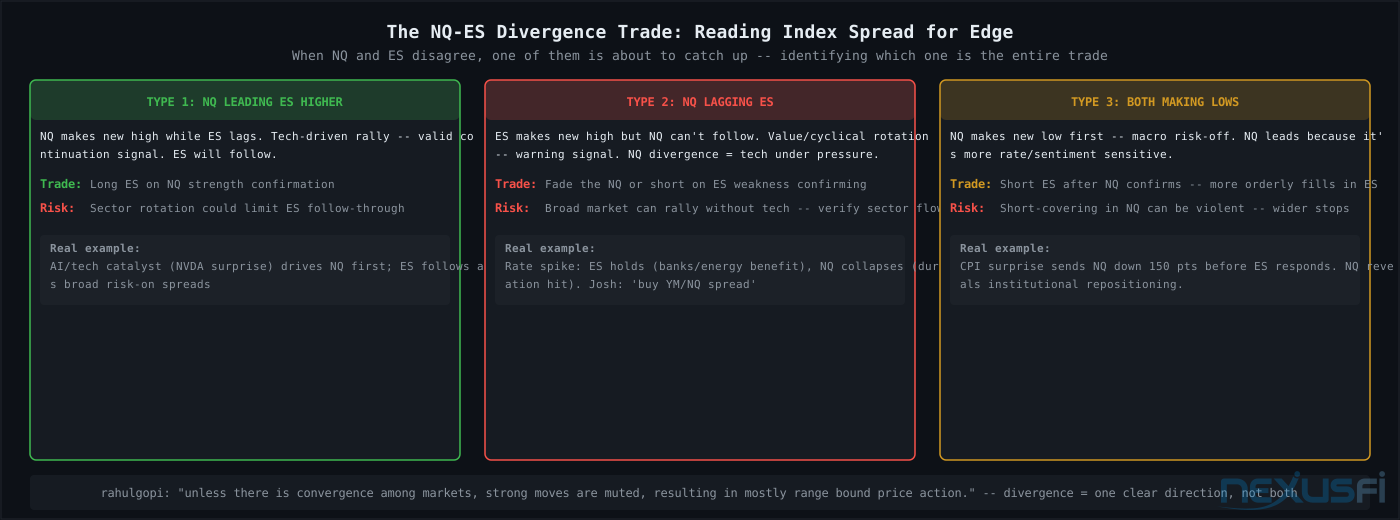
One of the most reliable NQ edges comes from watching when NQ and ES tell different stories. The divergence itself is the signal — determining which index is right is the trade.
NQ leads ES higher: Tech-driven rally. ES will follow. This is the typical pattern on AI/semiconductor positive events. Long ES on NQ strength is lower-risk than long NQ chasing its own move — you get the macro move without fighting the thinner NQ book at extended prices.
NQ lags ES: Sector rotation warning. Value and cyclicals are outperforming. This is @josh's YM/NQ spread trade scenario — when the Dow is outperforming the Nasdaq by a significant margin, mean reversion of the spread becomes a high-probability bet. ES can hold or rise while NQ stagnates or falls on rate concerns.
Both making new lows, NQ leading: Macro risk-off, NQ is the most sensitive indicator. When NQ leads both indices down, the signal is valid — ES will follow. Short NQ or short ES after NQ confirms are both valid, with ES offering better fills on larger size.
Risk Management for NQ's Volatility #
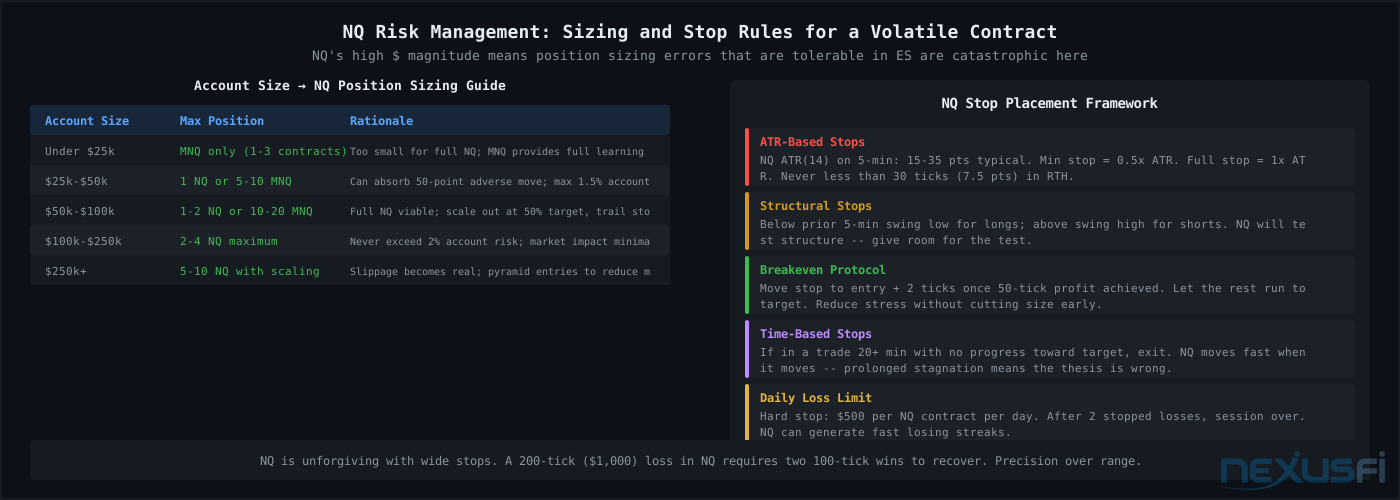
NQ's magnitude creates risk management errors that compound faster than any other equity index futures contract. A 200-tick ($1,000) loss requires two successful 100-tick trades to recover. The same math that makes NQ's reward so attractive makes its drawdowns devastating when stops are too wide or position sizes are too large.
ATR-based stops: NQ's ATR(14) on a 5-minute chart runs 15-35 points during RTH. Minimum stop distance is 0.5x ATR; full stop is 1x ATR. Never use a stop tighter than 30 ticks (7.5 points) during RTH — NQ's noise level is higher than that at any time of day.
Daily loss limit: Set a hard stop at $500 per NQ contract per day. After two stopped losses, the session is over. NQ can generate fast losing streaks in thin or choppy sessions that erode account equity at alarming speed. The loss limit protects you from the specific NQ risk of chasing losses with increased size.
Session-specific sizing: @josh's approach: "I took a trade when I saw that I had some edge in doing so. It does not have to be one or the other."[2] Size based on the quality of your setup and the current session conditions, not on your desire to recover a previous loss.
MNQ vs. NQ: Choosing the Right Contract #
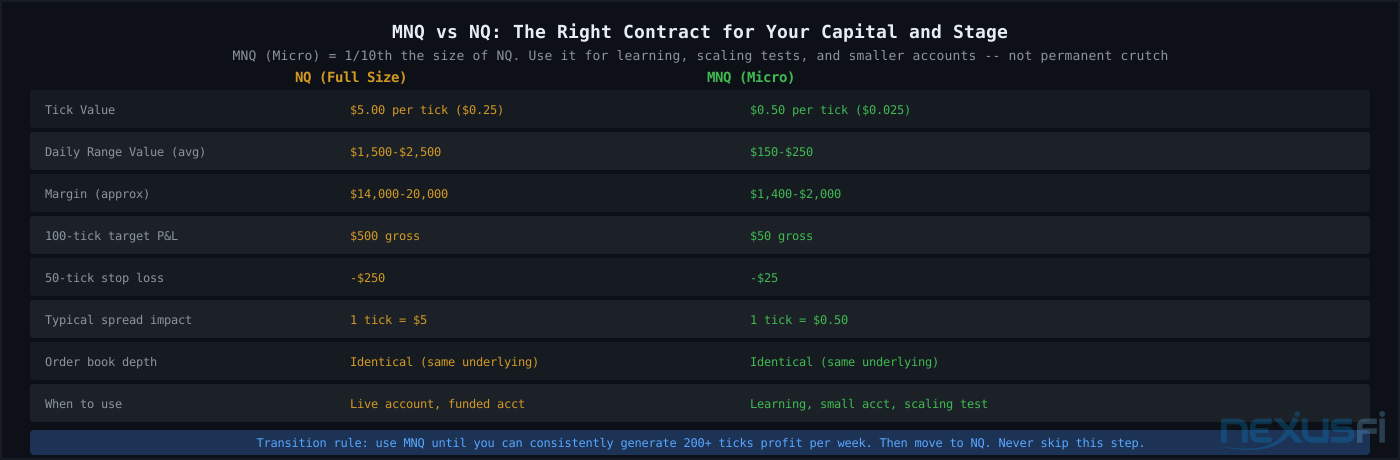
The Micro E-mini Nasdaq-100 (MNQ) is 1/10th the size of NQ: the same tick increment ($0.25), but worth $0.50 per tick instead of $5.00. MNQ is not just a practice tool — it's a legitimate trading vehicle for smaller accounts and for testing new strategies before scaling to full NQ size.
The transition rule: use MNQ until you can consistently generate 200+ ticks profit per week in your journal. That's $100/week in MNQ. Once that consistency shows up, move to NQ where the same 200 ticks is $1,000/week. Don't skip this step based on impatience — the psychological difference between MNQ and NQ losses is significant, and most traders discover their risk management discipline only after experiencing their first full NQ drawdown.
Both contracts trade on the same order book and receive identical fills — the only difference is the dollar multiplier. MNQ allows granular position sizing (adding 1 MNQ at a time) that NQ's larger contract doesn't permit.
Pre-Session Preparation #
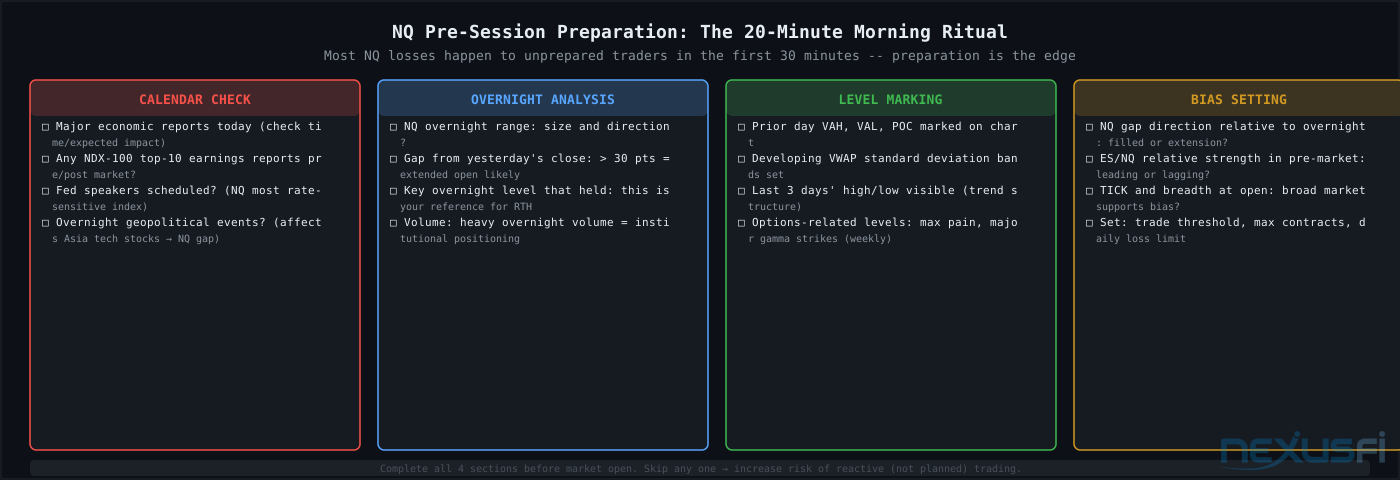
Most NQ losses happen to unprepared traders in the first 30 minutes. The opening volatility is highest, the pace is fastest, and the traders who haven't done their homework are making reactive decisions based on what they're seeing in real-time — the worst possible basis for execution in a fast market.
The 20-minute morning preparation ritual:
- Calendar check: Major economic reports today? NDX-100 top-10 earnings? Fed speakers? Any of these require sizing adjustment.
- Overnight analysis: NQ overnight range -- how large, in which direction? Gap from yesterday's close? A gap over 30 points means extended behavior in the opening session.
- Level marking: Prior day VAH, VAL, POC on the chart before anything else. These are your trade locations for the entire session.
- Bias setting: NQ gap direction relative to overnight -- filling or extending? Pre-market ES/NQ relative strength -- which is leading?
Knowledge Map
Prerequisites
Understand these firstGo Deeper
Build on this knowledgeReferences This Article
Articles that build on this topicCitations
- — The Beast Slayer, Lance's NQ Trading Journal (2021) 👍 9“it can move in one direction 100-200 ticks and then reverse 100 ticks the opposite way. It is a way different animal than ES or even YM”
- — Is the nasdaq micro and mini the best day trading vehicle ? (2024) 👍 5“I took a trade when I saw that I had some edge in doing so. It does not have to be one or the other”
- — ES vs NQ/YM (2021) 👍 4“price tends to move from confluence to confluence in waves and patterns in certain time zones thru the day”
- — Spoo-nalysis ES e-mini futures S&P 500 (2023) 👍 4“Buying this YM/NQ spread makes the bet that even if tech continues to rampage higher, the rest of the market will likely follow suit”
- — RG's Emini Journal (2021) 👍 5“unless there is convergence among markets, strong moves are muted, resulting in mostly range bound price action”
- — ES vs NQ/YM (2026)“On a divergence day, NQ can hand you 30-50 points of directional momentum that ES simply won't deliver”
- — E-mini Nasdaq-100 Futures Contract Specifications (2024)
- — Nasdaq-100 Index Overview and Methodology (2024)