



Value Migration
Overview #
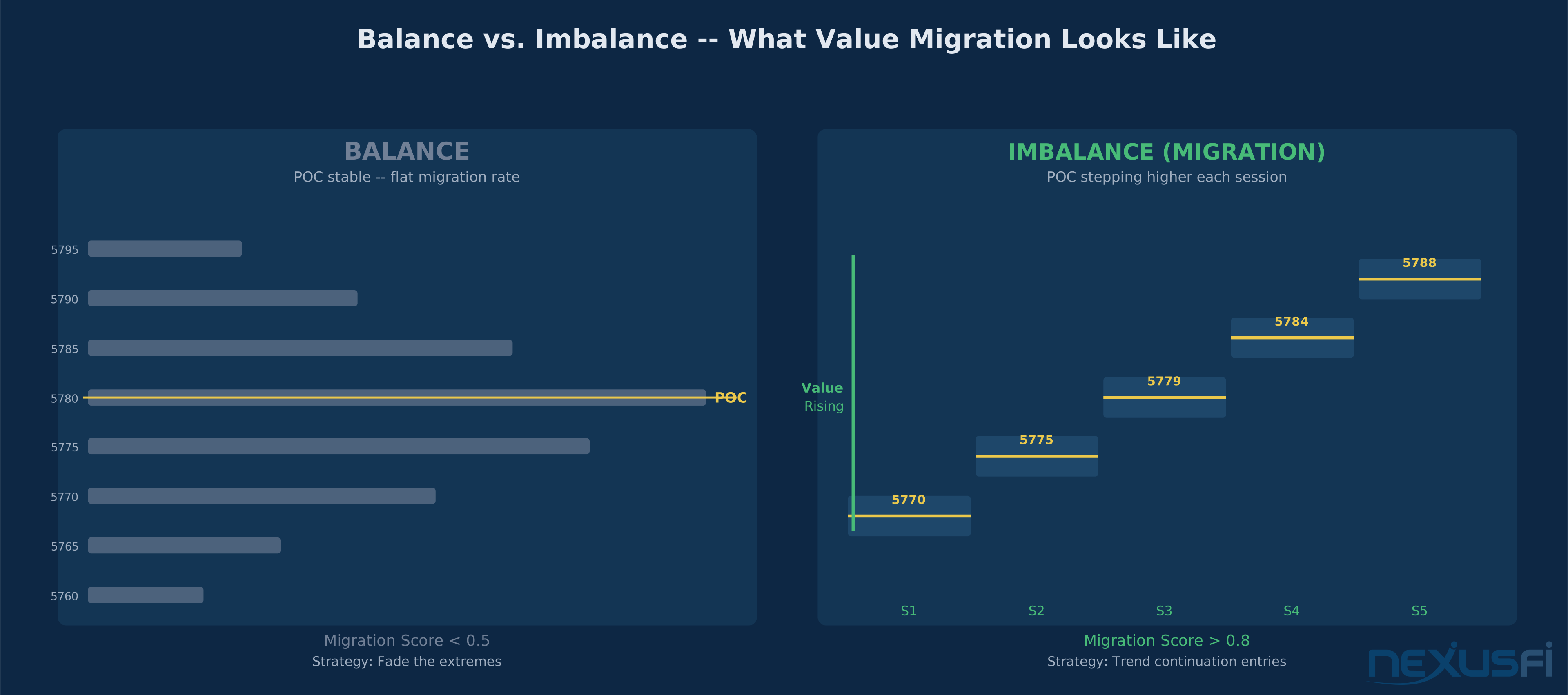
Value migration tracks the directional movement of the Point of Control and Value Area across sessions. Not price — value. Price can move without value moving. But when value moves consistently in one direction across multiple sessions, the market is telling you something that most retail charts can't show you: the auction has shifted its center of gravity.
This is a Market Profile and Volume Profile concept rooted in Auction Market Theory. The basic premise is that markets cycle between balance and imbalance. During balance, value clusters in a range and POC stays relatively stable. During imbalance — a trend — value migrates in the trend direction. Each session's POC and Value Area shift, creating a measurable trail that confirms or contradicts what price is doing.
Understanding value migration lets you distinguish between two surface-similar scenarios: a trending price move where value is confirming, and a price move that's running ahead of value (setting up for rotation back). The difference between those two scenarios is the difference between a continuation entry and a counter-trend fade.
This article is part of the Volume Profile Trading framework. For the foundational concepts of POC and Value Area construction, start with Market Profile (TPO Charts). For how Value Area boundaries create intraday reference levels, see Key Reference Levels in Futures Day Trading.
How Value Migrates #
The POC is the single price level where the most volume was traded during a session. The Value Area is the price range containing 70% of that session's volume. Both are backward-looking constructs — they describe where the market found acceptance over a completed session.
Migration happens when the market's center of acceptance shifts directionally across sessions. As @JDNeeman laid out in a foundational Crude Oil trading thread: "The VAL and VAH is the range where the 70% of the action happened in the previous session... it's the most important reference point for knowing if price is accepted or rejected." [1] When those reference points shift higher every session, the auction is migrating up. When they shift lower, it's migrating down.
The mechanism follows Auction Market Theory directly. A market in imbalance has more participants willing to trade at higher (or lower) prices than existed the prior session. Each session's profile reflects that willingness. The result is a POC that steps progressively in the trend direction, and a Value Area that shifts with it.
Three forces drive value migration:
Initiative activity — Buyers or sellers actively moving price away from prior value. Initiative participants decide the prior session's value was too cheap (buyers) or too expensive (sellers) and commit size. This creates the directional expansion.
Responsive failure — The opposing side fails to respond effectively. In a bull migration, sellers who fade the higher prices get absorbed or run out of size. Their failure to hold prior levels is what allows value to shift. If responsive sellers were consistently winning, value wouldn't migrate — it would revert.
Acceptance at new prices — The key confirmation. Price can reach a new level, but migration only occurs when volume builds there. A price spike that retreats without volume isn't migration — it's a probe. Migration requires the market to trade back and forth at the new level, accumulating volume that pushes the POC higher.
When all three forces align, you get clean, measurable migration.
Measuring Migration Rate #
Migration rate is the POC's directional displacement per session. The formula is straightforward:
Migration Rate = (POC_current - POC_prior) / tick_size
Expressed in points (or ticks), this number tells you the speed of migration. A 4-point migration rate on ES (S&P 500 E-mini, 0.25-tick increments) means POC moved 4 points higher than the previous session's POC.
What the numbers mean for ES:
| Migration Rate | Interpretation |
|---|---|
| 0-2 pts | Stalling. Market is near-balanced. POC oscillation within a range. |
| 3-6 pts | Healthy orderly migration. Trend is progressing at a sustainable pace. |
| 7-12 pts | Elevated. Migration is accelerating. Watch for impulse behavior. |
| 13+ pts | Impulse. Value jumped. High risk of gap fill or rotation back. |
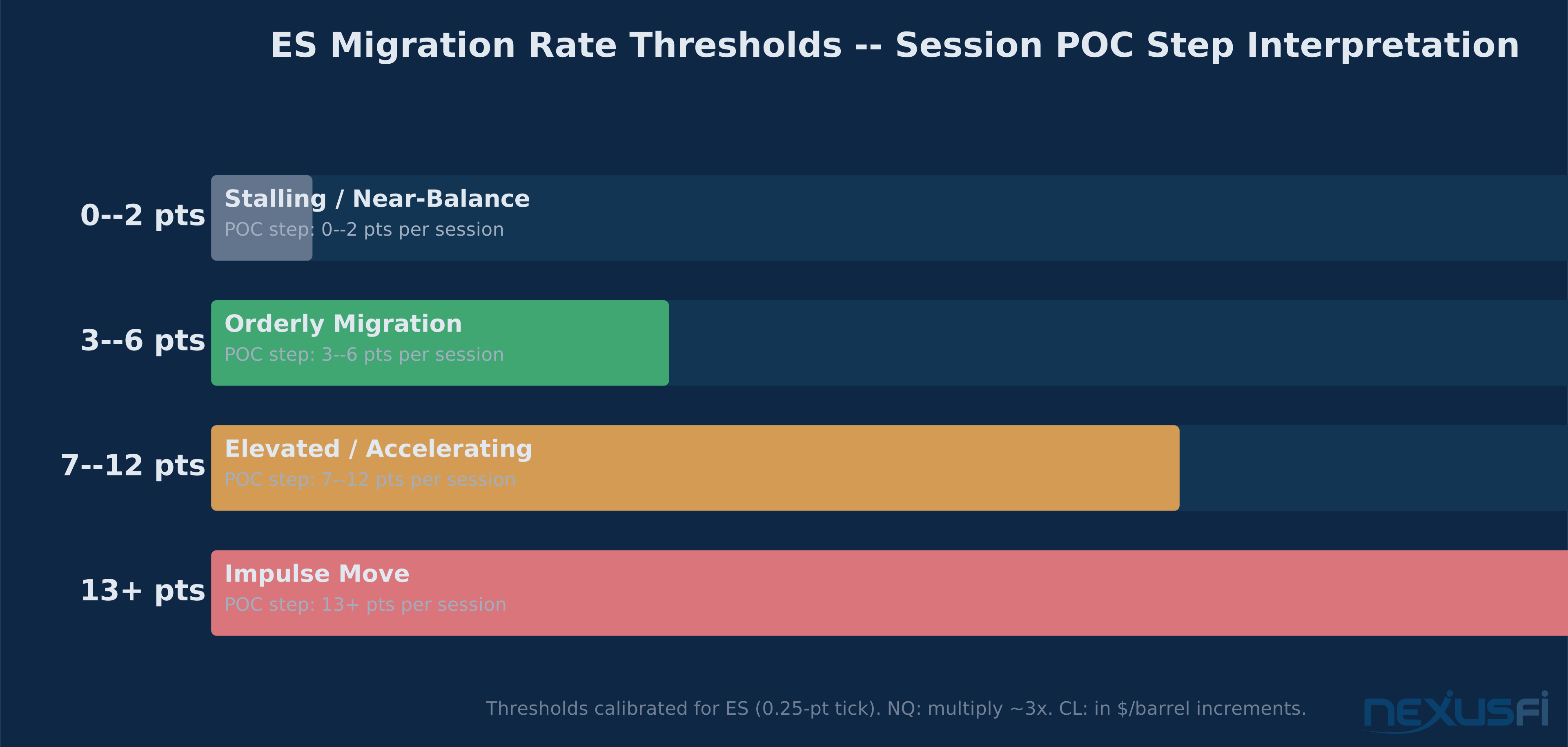
These thresholds are calibrated for ES. NQ (Nasdaq 100 E-mini) runs roughly 2-3x wider ranges, so scale so. CL (Crude Oil) operates in dollar-per-barrel units and has its own volatility profile.
Tracking migration over multiple sessions:
A single session's migration rate means little in isolation. What matters is the consistency and direction over 3-7 sessions. A 4-point migration rate for five consecutive sessions is more significant than a single 8-point jump. The former signals an orderly trending auction. The latter signals either a trigger-driven move or potentially an exhaustion setup.
Track a rolling 5-session migration rate: sum the absolute POC moves over the last 5 sessions, divide by 5. When this average starts declining from elevated levels, migration is losing steam.
The Staircase Pattern #
The staircase pattern is what clean migration looks like on a multi-session chart. POC steps methodically in the trend direction, creating a series of consistent, roughly equal increments that plot like ascending (or descending) stairs.
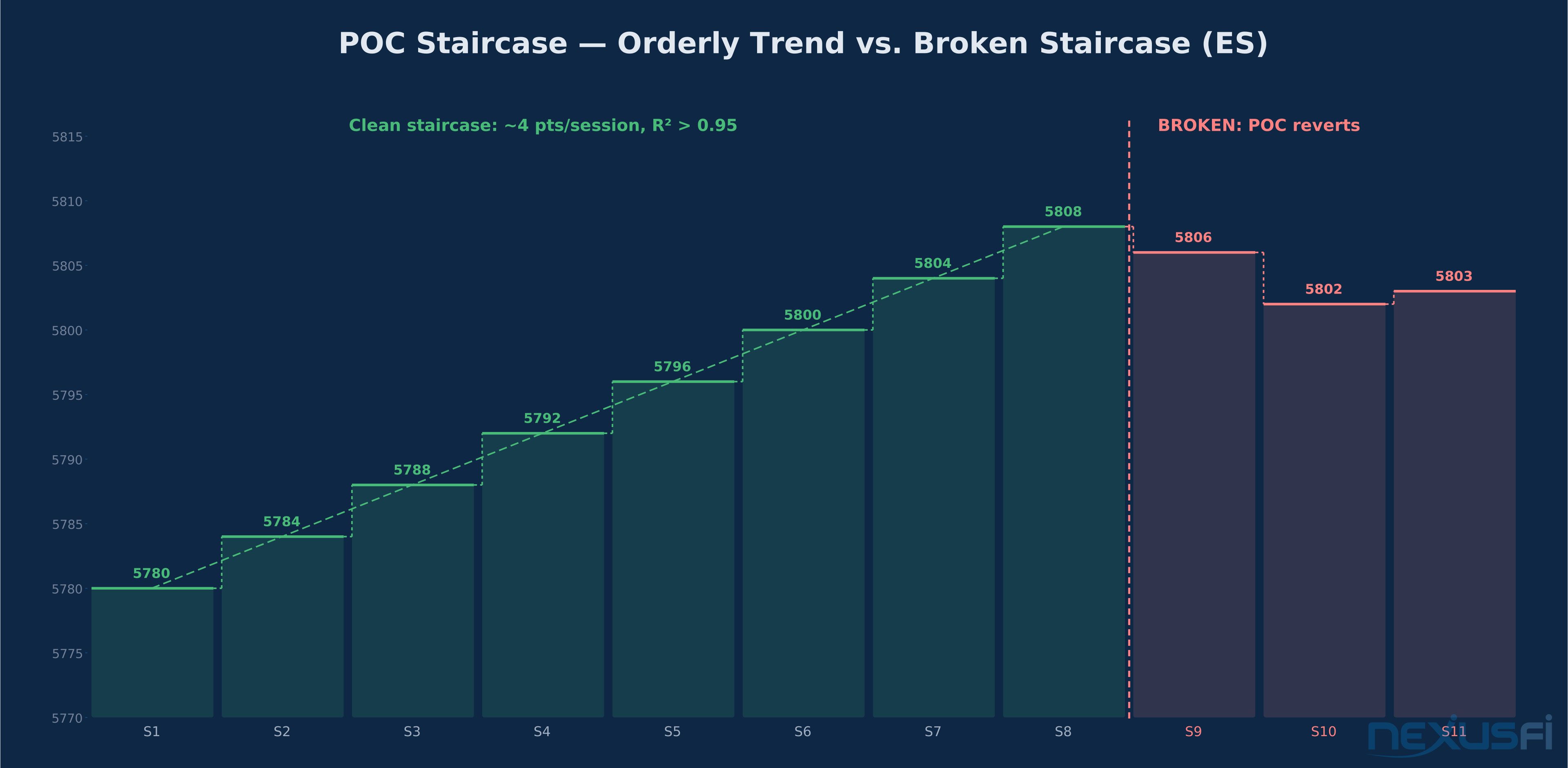
The chart above shows 8 sessions of ES migration with consistent ~4-point POC steps, R-squared > 0.95 against a linear trend line. The 9th session breaks the staircase — POC reverts rather than advancing. That's the first warning sign. Not a reversal signal by itself, but a structural crack worth noting.
Characteristics of a healthy staircase:
- Consistent step sizes: Variation within 30-40% of the average step. If average step is 4 points, you want steps in the 2.5-5.5 pt range. Steps that suddenly double or halve indicate regime change.
- Directionality: Each session's POC is above (bull) or below (bear) the prior session's. Occasional flat sessions (zero migration) are acceptable — a staircase doesn't need to move every single day. But counter-directional POC moves signal weakening.
- VA confirmation: The Value Area shifts with the POC. VAH and VAL both migrate in the trend direction, maintaining roughly consistent VA width. Expanding VA width signals uncertainty; contracting VA width signals strong acceptance.
- Linear fit: A best-fit line through POC values across sessions should have R-squared > 0.85 for a clean staircase. Below that, the migration lacks consistency and the trending signal weakens.
What breaks a staircase:
Three patterns signal staircase deterioration:
POC reversal — Current session's POC is lower than prior session (in a bull trend). A single reversal isn't decisive, but two consecutive POC reversals mean the staircase is broken.
POC flatness — Multiple sessions where POC barely moves. The market is building balance at this level. This can precede a continuation (re-accumulation) or a reversal (distribution), but it's not neutral — it signals the migration trend has paused and needs reassessment.
Erratic steps — Some sessions with 2-point steps, others with 12-point steps. The trend exists but lacks structure. This often occurs in news-driven markets where sessions alternate between info-driven expansion and technical consolidation.
The staircase matters for trade management more than entry. A clean staircase on ES justifies holding winning positions through sessions, trailing stops below the last session's VAL, and targeting extension beyond prior VAH levels. A broken staircase means tighter management, quicker targets, reduced size.
Value Area Overlap Analysis #
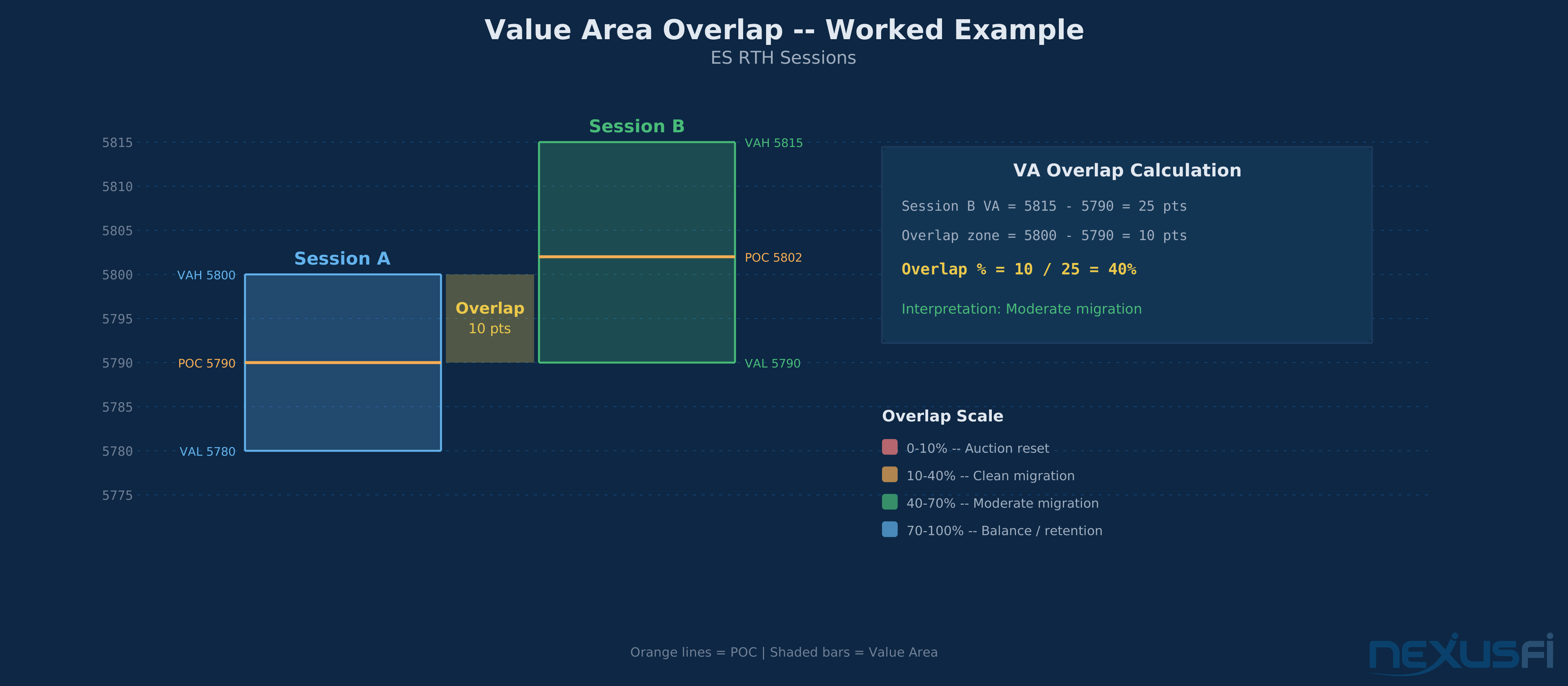
VA overlap is the percentage of the current session's Value Area that falls within the prior session's Value Area. It measures how much the market's accepted price range has shifted.
The formula:
Overlap Zone = intersection of (VAH_current, VAL_current) with (VAH_prior, VAL_prior)
Overlap Length = max(0, min(VAH_current, VAH_prior) - max(VAL_current, VAL_prior))
VA Overlap % = Overlap Length / VA_Width_current × 100
Worked example (from the chart above):
- Session A: VAH=5800, VAL=5780, width=20
- Session B: VAH=5815, VAL=5790, width=25
- Overlap zone: 5790 to 5800 = 10 points
- VA Overlap % = 10 / 25 = 40%
Interpreting VA overlap:
| Overlap % | Interpretation |
|---|---|
| 70-100% | High overlap. Value barely moved. Near-balance condition. |
| 40-70% | Moderate overlap. Healthy migration. Value shifting but maintaining continuity. |
| 20-40% | Low overlap. Aggressive migration. Value moved substantially. Monitor for impulse. |
| 0-20% | Near-zero or zero overlap. Value zones non-overlapping. Impulse move or news event. |
High overlap is NOT a bullish or bearish signal. It's a regime signal. It means the market is staying near the same value — which could be orderly consolidation in a trend, or the beginning of a reversal. Context matters.
Low overlap is more directional. When the current session's Value Area barely overlaps with the prior session, the market has made a decisive statement about where value now resides. In a trending context, this confirms momentum. As a stand-alone signal after a sustained trend, it can warn of over-extension.
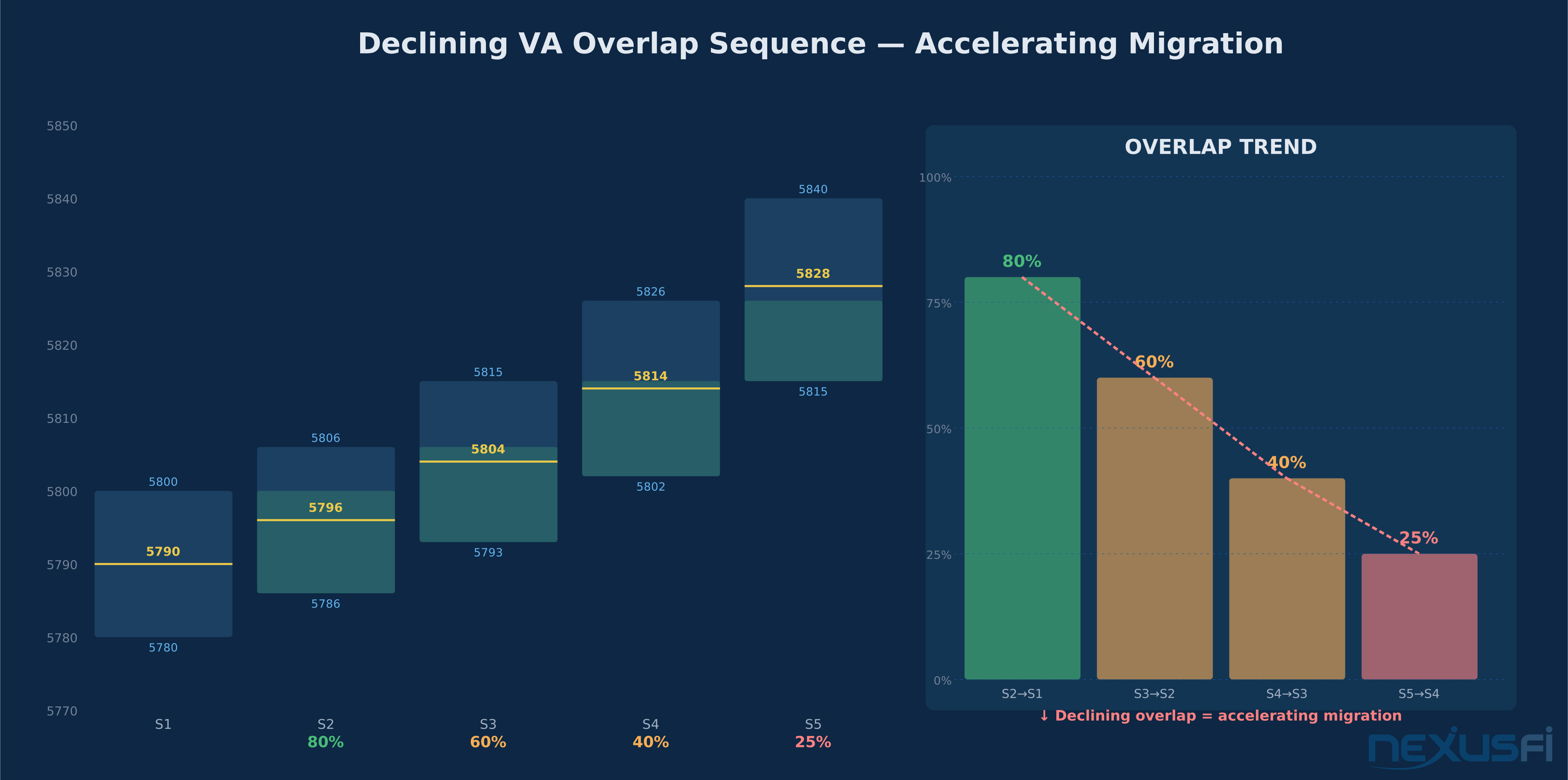
The second chart shows what accelerating migration looks like in the VA overlap metric: four consecutive sessions with declining overlap (80% → 60% → 40% → 25%). Each session the Value Area moves further from the prior one. Value is leaving prior levels behind at increasing speed. This pattern often precedes either: (a) an impulse move that extends the trend dramatically, or (b) a stall as the market gets ahead of itself and needs to rebuild value.
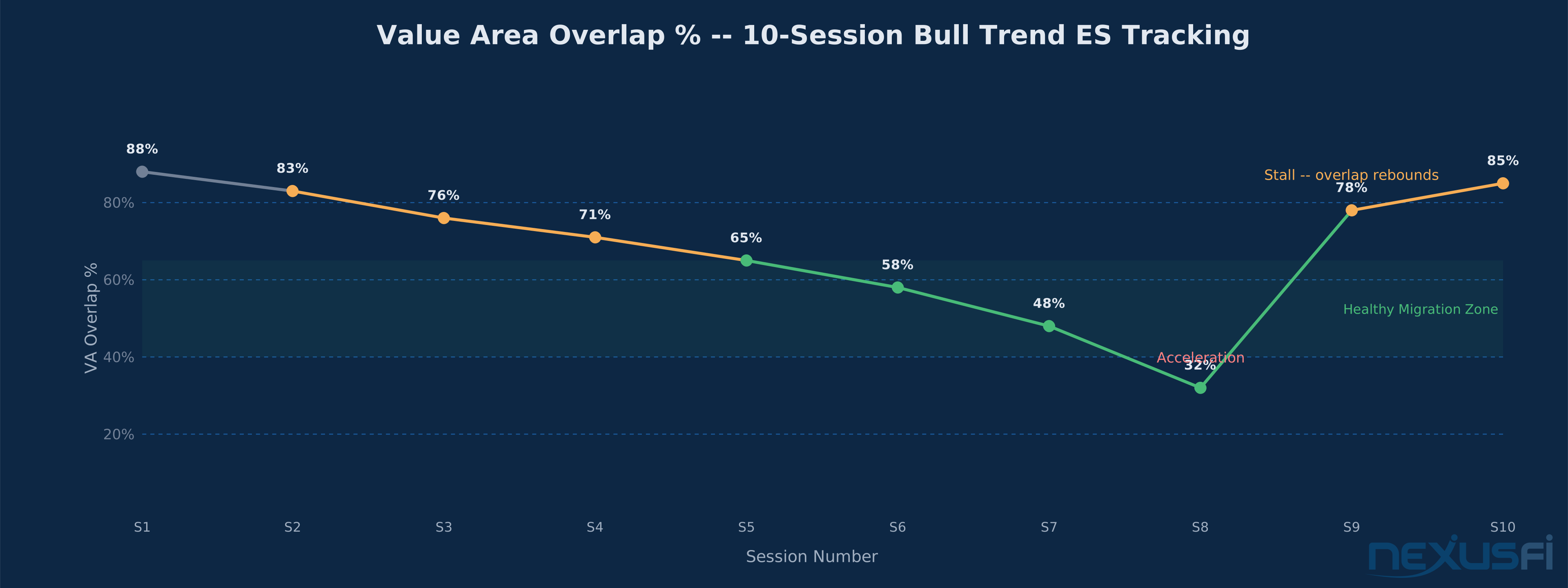
The migration signature to trade:
The highest-quality trending setups occur when VA overlap holds in the 40-70% range for multiple sessions. This is the "Goldilocks zone" — value is migrating consistently, but not so fast that it's outrunning participation. Entries during these sessions get the benefit of trend momentum without the reversal risk of impulse moves.
Orderly vs. Impulse Migration #
Not all migration is created equal. The distinction between orderly and impulse migration changes everything about how you trade the trend.
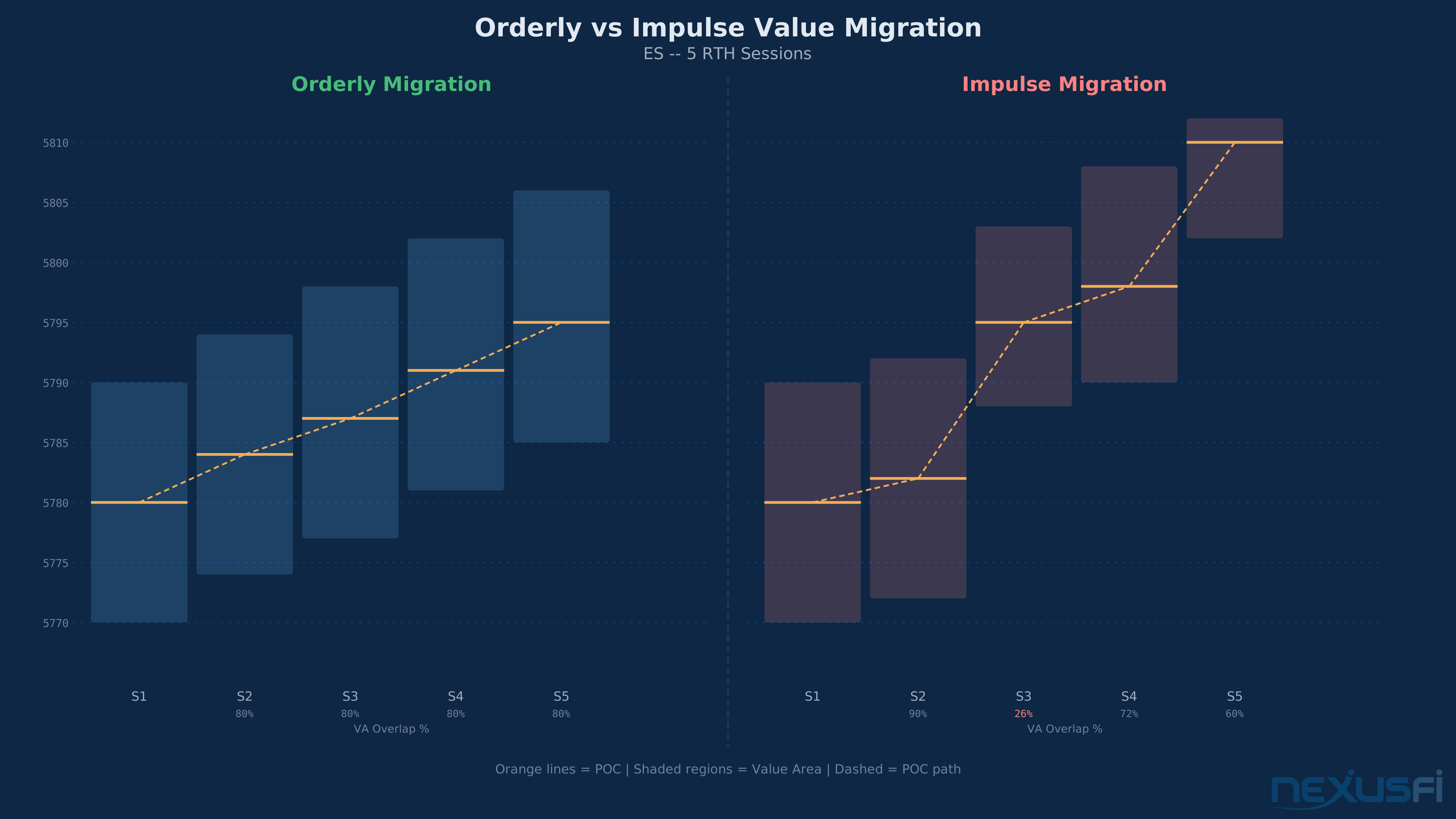
Orderly migration (left panel): POC moves 4-5 points per session, consistently. VA width stays stable at approximately 24 points. Each session's VA overlaps meaningfully with the prior session. The trend is proceeding in an organized, two-sided way — new participants are entering, but prior participants aren't being squeezed out violently.
Impulse migration (right panel): Session 3 sees a 17-point POC jump. VA contracts dramatically (thin VA = one-sided trade). The overlap between Sessions 2 and 3 is minimal. This is what news-driven or capitulation-driven moves look like in value terms.
Why the distinction matters for trading:
Orderly migration supports continuation entries on pullbacks. When value has migrated 4-5 points per session in a consistent staircase, a pullback to prior session's VAH (now acting as support) is a high-probability long setup. The market has demonstrated an organized willingness to accept higher prices, and pullbacks find responsive buying at prior value levels.
Impulse migration requires caution. When value jumped 17 points in a session, it left behind a value gap — a zone between prior acceptance and new acceptance that hasn't been traded. Markets frequently fill these gaps. Entering continuation trades after an impulse move means you're buying into a setup with a magnet below the current price. One gives back. The other does not.
Impulse migration checklist before any continuation trade:
- Was the POC step > 2x the 5-session average?
- Was VA width narrow (< 60% of 5-session average)?
- Was VA overlap < 20%?
If 2+ of those are true, the most recent session was likely impulse. Do not chase continuation. Wait for either: (a) a subsequent session that re-establishes orderly migration, or (b) a pullback that fills part of the value gap before re-entry.
covers the auction process that underlies these dynamics — value establishes, then extends, with two-way trade required for sustainable moves. [2] Impulse moves by definition lack the two-way trade that sustains healthy migration. They rely on one-sided momentum, which always has an expiration date.
CL (Crude Oil) specifics:
Crude Oil frequently produces impulse migration around EIA inventory data (Wednesdays at 10:30 AM ET). A 5-6 dollar intraday range on EIA day can shift the weekly profile's POC dramatically. Treat any migration created on EIA day as potentially impulse, regardless of whether the step size looks "normal" by CL standards. The informational backdrop matters, not just the magnitude.
Migration Stalls and Reversals #
Every migration eventually stalls. Recognizing the early warning signs separates traders who hold through consolidation (correctly) from traders who hold through reversals (expensively).
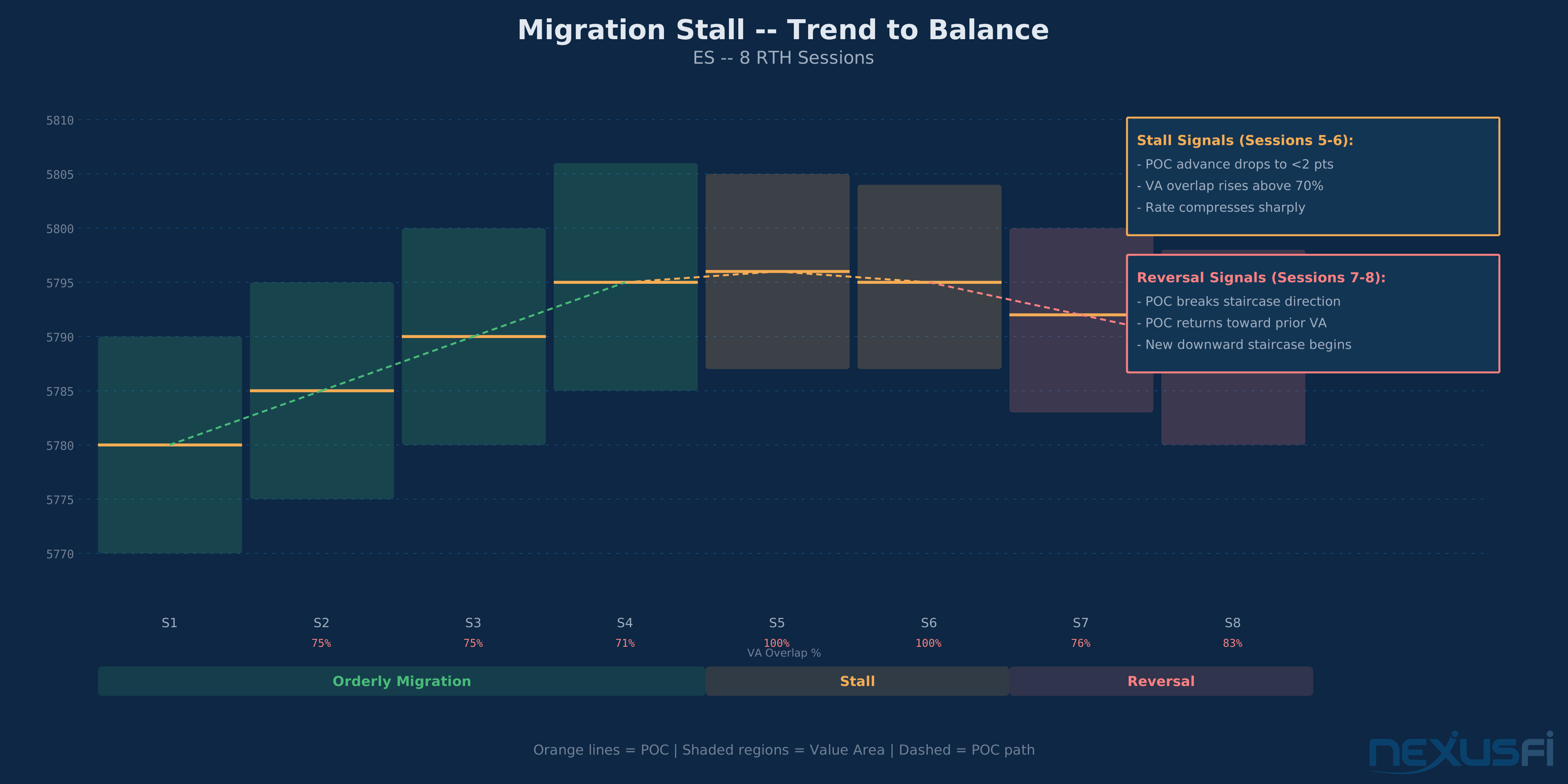
The chart shows a 7-session migration lifecycle: Days 1-3 are clean trending (6-pt POC steps), Days 4-5 show stalling (1-pt steps), Days 6-7 show balance forming (POC starting to revert, VA widening).
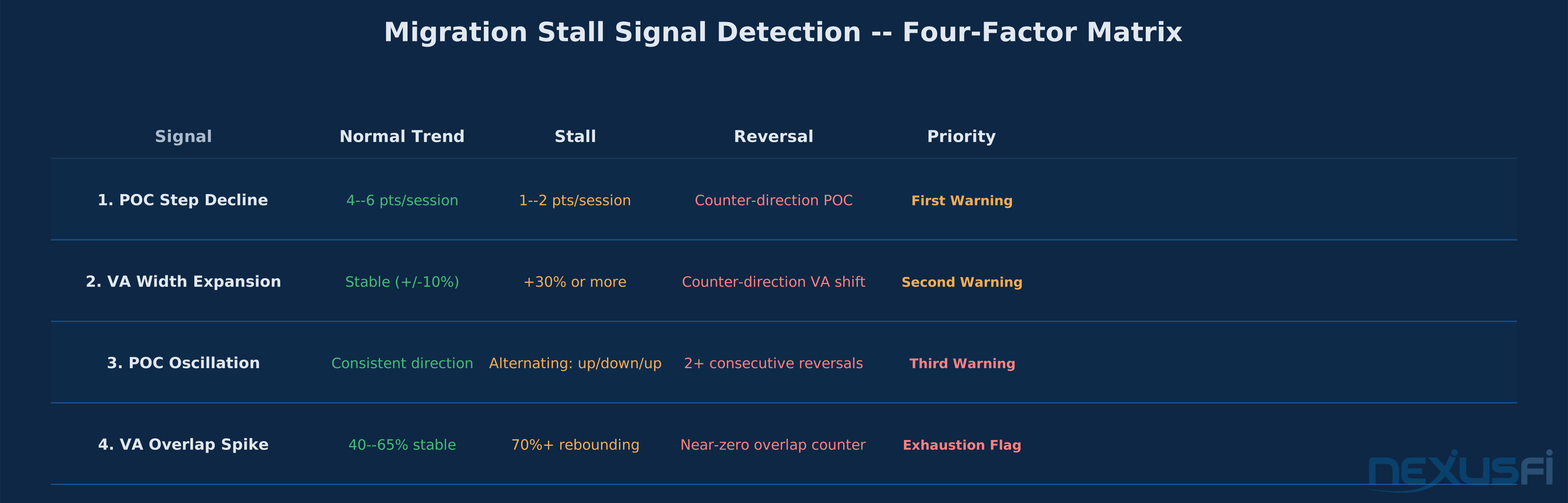
Stall signals (in order of appearance):
1. Declining step consistency (first warning) POC advance shrinks from average. If 5-session average step was 5 points and the last two sessions stepped 1-2 points, the trend is decelerating. Not over — decelerating. This is the time to tighten stops, not exit.
2. VA width expansion (second warning) A widening Value Area indicates the market is struggling to find two-sided acceptance at the current level. More prices are being explored without volume clustering. The auction is probing for a new range rather than confidently migrating. Average VA width expanding by 30%+ signals balance is forming.
3. POC oscillation (third warning) When POC alternates — one session higher, next session lower, next session higher — rather than consistently advancing, migration has stalled. The market is in balance at the current level, establishing a new value zone. This is the most reliable stall signal.
4. Near-zero VA overlap with no follow-through (exhaustion) If a session produces near-zero VA overlap (impulse move), and the following session fails to produce continued migration (pulls back into the gap or stalls), that's often the migration's final push. Classic exhaustion pattern.
Reversal vs. stall:
Stalls don't always reverse. Many stalls are consolidations that lead to trend continuation. The difference:
| Stall | Reversal |
|---|---|
| VA holds above prior session's VAL | VA drops below prior session's VAL |
| POC oscillates but remains above 5-session average | POC drops below 5-session average POC |
| VA overlap moderate-to-high (50%+) | VA overlap drops to < 20% in the counter-trend direction |
| Volume at prior session high-volume nodes (HVNs) holds | Prior HVNs fail to attract volume (become LVNs) |
The key distinction: in a stall, value hovers at the current level. In a reversal, value migrates in the opposite direction. You're watching for a counter-migration signal, not just a pause.
Trading through stalls:
During a stall, the correct position is neutral-to-flat. Don't add to trend positions during stalls (you're paying up for deteriorating probability). Don't aggressively counter-trend trade (the trend hasn't reversed yet). Use the stall period to identify the key levels — the boundaries of the balance zone — that will tell you whether this is consolidation or reversal when price eventually commits.
Contract-Specific Migration Behavior #
Value migration works across all liquid futures contracts, but each instrument has distinct characteristics that affect how you interpret migration signals.
ES (S&P 500 E-mini) #
ES is the reference instrument for value migration analysis. Deep liquidity, consistent participation, and a broad participant base that includes both institutional and retail traders create clean, readable profiles.
Typical orderly migration parameters:
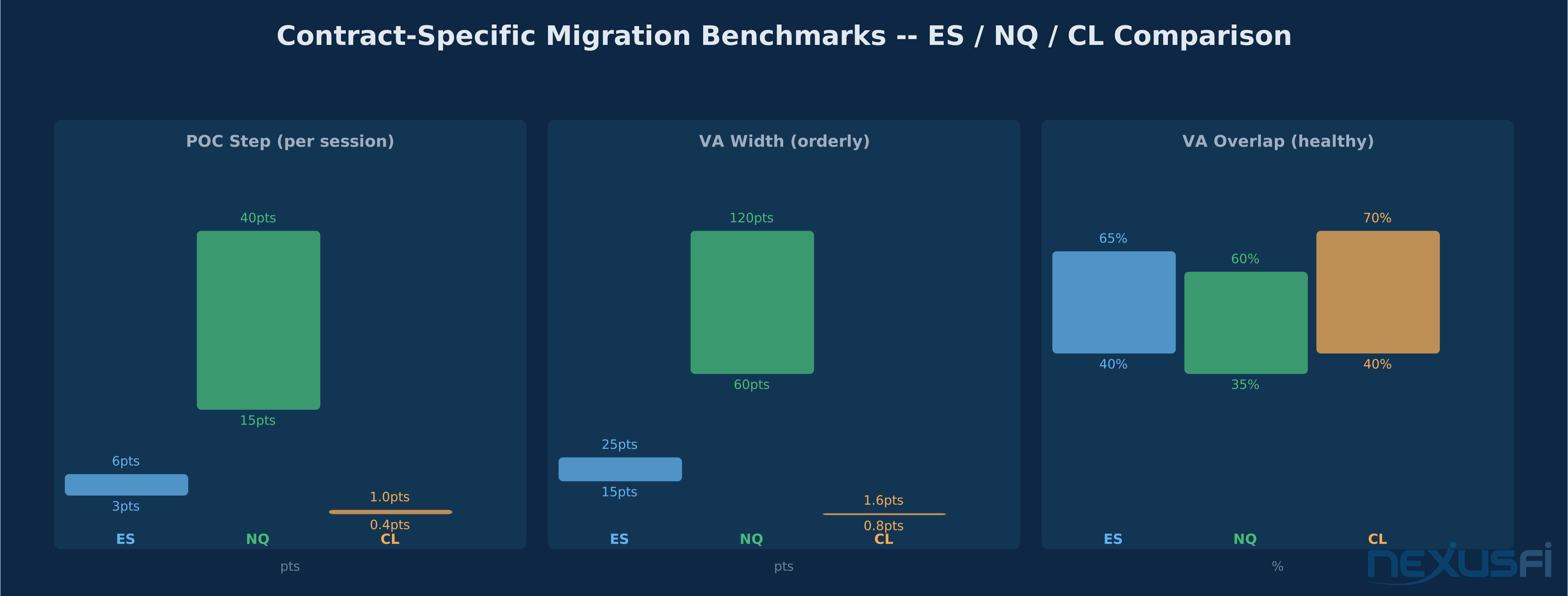
- POC step: 3-6 points per session during trends
- VA width: 15-25 points during orderly migration
- VA overlap: 40-65% in healthy trending conditions
ES migration is heavily influenced by futures-to-cash convergence dynamics. When the December expiration approaches, rolling activity can distort session-to-session migration comparisons. Account for expiration calendars when analyzing multi-week migration patterns.
Most common failure mode: ES trend days created by FOMC decisions or surprise economic data often produce impulse migration that fails to sustain. The reaction session (day of the data) shows massive POC displacement. The subsequent session frequently retraces, filling the value gap before any directional continuation occurs.
NQ (Nasdaq 100 E-mini) #
NQ amplifies ES behavior. When ES migrates 5 points in a session, NQ often migrates 15-25 points. This isn't unusual — NQ is a higher-beta instrument by design.
Typical orderly migration parameters:
- POC step: 15-40 points per session during trends
- VA width: 60-120 points during orderly migration
- VA overlap: 35-60% (NQ tends toward lower overlap even in orderly trends)
NQ migration is more sensitive to single-stock events (AAPL, NVDA, MSFT earnings, etc.) that can create impulse moves in the index. Earnings season requires special handling — any migration established in the week of major tech earnings should be treated as potentially impulse-driven until confirmed by post-earnings sessions.
CL (Crude Oil) #
CL is the poster child for impulse migration. More event-driven than ES or NQ — geopolitical catalysts, OPEC decisions, and weekly EIA inventory reports all create disruptions that would register as noise in equity index futures.
Typical orderly migration parameters:
- POC step: $0.40-$1.00 per session during trends
- VA width: $0.80-$1.60 during orderly migration
- VA overlap: 40-70%
The most important CL-specific rule: never evaluate migration from an EIA day as representative of the trend's health. EIA sessions frequently produce 2-4x normal migration rates regardless of trend context. Use the sessions before and after EIA as your trend evaluation points.
The CL overnight roll: Unlike ES and NQ which have significant overnight participation from global equity markets, CL overnight sessions reflect a more specific set of participants (Asian demand, European supply dynamics). Overnight migration in CL sometimes leads RTH migration and sometimes fades it. Don't assume overnight CL migration is a reliable leading signal.
Comparing Migration Across Contracts #
@Big Mike opened the Volume Profile and Footprint discussion that became one of NexusFi's most-cited Volume Profile resources: "I felt that we needed a thread dedicated to the discussion of Volume Profile. Some basics..." [3] The thread documents cross-instrument observations over years, and the consistent finding is that while absolute migration rates differ dramatically across contracts, the relative patterns — orderly vs. impulse, stall signatures, reversal confirmations — translate directly.
Building a Migration Tracking Framework #
Theoretical understanding of value migration becomes tradeable intelligence only when you track it systematically. Here's a practical framework you can implement in a spreadsheet.
Data Requirements #
For each session, record:
- Date
- POC price
- VAH price
- VAL price
- VA width (VAH - VAL)
- Session high and low
- POC step (current POC - prior POC)
- VA overlap % (calculated)
That's eight fields. Twenty minutes of data entry per session. The insight it generates outweighs any complexity cost.
Five-Session Migration Score #
At the end of each session, compute a 5-session Migration Score:
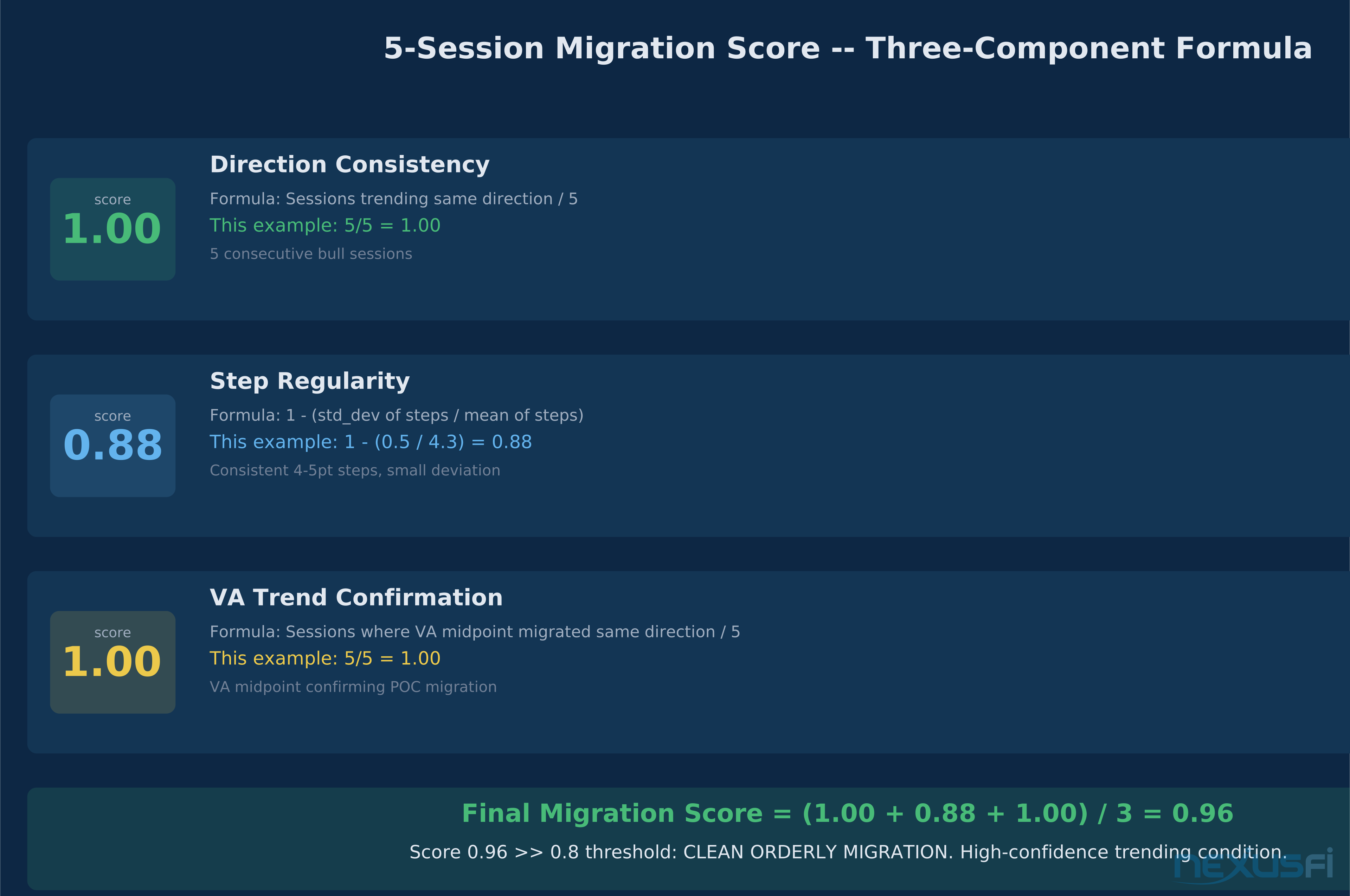
Migration Score = (5-session POC direction consistency × step regularity × VA trend confirmation) / 3

Direction consistency = sessions trending same direction / 5
Step regularity = 1 - (std_dev of steps / mean of steps)  [= 1 when all steps identical]
VA trend confirmation = sessions where VA midpoint moved in migration direction / 5
Score of 0-1 where:
- 0.8-1.0: Clean orderly migration. High-confidence trending condition.
- 0.5-0.8: Mixed signals. Migration exists but with noise. Trade more conservatively.
- 0-0.5: No reliable migration. Balanced or choppy market. Volume Profile mean-reversion applies.
Alert Levels #
Set alerts when:
- POC step > 2x the 10-session average (potential impulse)
- VA overlap < 20% (value gap forming)
- POC reverses twice in three sessions (stall progressing toward reversal)
- Migration Score drops below 0.5 after being above 0.8 (trend deteriorating)
These alerts don't require action — they require attention. When an alert fires, your next trade decision should explicitly account for the migration regime change.
Five-Session Worked Example: ES Migration in Real Time #
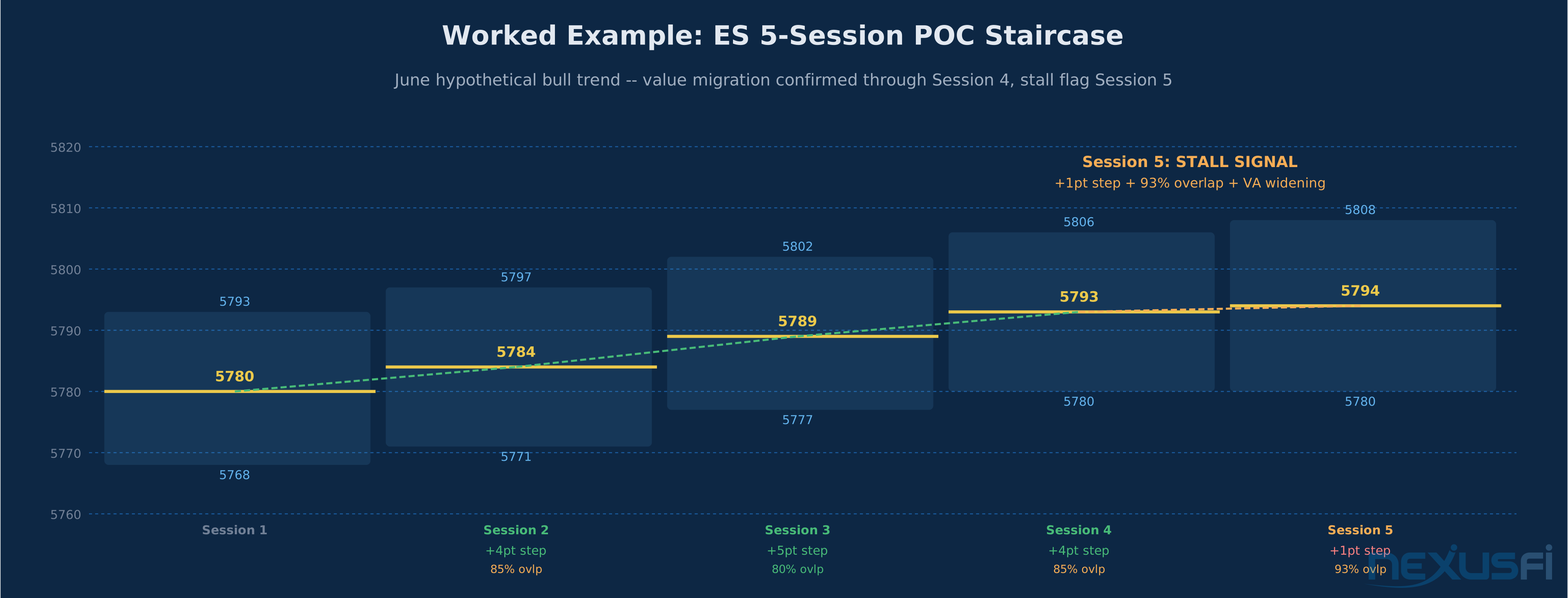
Let's walk through how these concepts play out in practice using a hypothetical but realistic ES scenario during a bull trend.
Session 1 — Clean migration initiates
- POC: 5780. VAH: 5793. VAL: 5768. VA Width: 25 points.
- This is the reference session. No prior migration to measure.
- Structural note: Orderly session, moderate VA width.
Session 2 — First measurable step
- POC: 5784. VAH: 5797. VAL: 5771. VA Width: 26 points.
- POC step: +4 points.
- VA overlap: Session 2 VA (5771-5797) vs Session 1 VA (5768-5793). Overlap = 5771-5793 = 22 pts. Overlap % = 22/26 = 85%.
- Assessment: High overlap, small but positive step. Early-stage migration. Don't over-read it.
Session 3 — Pattern confirming
- POC: 5789. VAH: 5802. VAL: 5777. VA Width: 25 points.
- POC step: +5 points.
- VA overlap with Session 2: (5777-5797) overlap = 20 pts. Overlap % = 20/25 = 80%.
- Assessment: Consistent 4-5 pt steps. VA overlap decreasing slightly (from 85% to 80%), meaning value is shifting. Staircase forming. Bullish bias confirmed.
Session 4 — Healthy mid-trend
- POC: 5793. VAH: 5806. VAL: 5780. VA Width: 26 points.
- POC step: +4 points.
- VA overlap with Session 3: (5780-5802) = 22 pts. 22/26 = 85%.
- 5-session migration score: Direction consistency = 4/4 (100%), Step regularity = 1 - (0.5/4.3) = 88%, VA confirmation = 3/3 (100%). Score = 0.96.
- Assessment: Near-perfect staircase. 0.96 migration score. This is when you hold trend positions through intraday noise and trail stops below prior session's VAL.
Session 5 — First stall warning
- POC: 5794. VAH: 5808. VAL: 5780. VA Width: 28 points.
- POC step: +1 point. (Alert: step dropped from 4-5 pts to 1 pt.)
- VA overlap with Session 4: (5780-5806) = 26 pts. 26/28 = 93%. (Alert: overlap spiking.)
- VA Width increased from 25-26 to 28. (Alert: widening.)
- Assessment: All three stall signals firing simultaneously — small step, high overlap, widening VA. Not a reversal. A stall. Tighten stops. Reduce size. Do not add.
What happens next:
- If Session 6 resumes 4-5 pt steps with moderate overlap: stall was consolidation. Re-engage.
- If Session 6 produces a counter-directional POC move: stall is progressing toward reversal. Exit longs.
This worked example demonstrates why you need multiple sessions of data, not single-session profile analysis. The trend signal wasn't visible at Session 2. It became high-confidence by Session 4. The stall warning arrived at Session 5. Without the five-session history, you'd have no context for any of those signals.
Tracking Spreadsheet Layout #
| Column | Field | Formula |
|---|---|---|
| A | Date | Manual |
| B | POC | Manual |
| C | VAH | Manual |
| D | VAL | Manual |
| E | VA Width | =C-D |
| F | POC Step | =B-prior_B |
| G | VA Midpoint | =(C+D)/2 |
| H | Overlap Zone | =MAX(0, MIN(C,prior_C) - MAX(D,prior_D)) |
| I | VA Overlap % | =H/E |
| J | Migration Score | =5-session calc (described above) |
| K | Regime Flag | =IF(J>0.8,"TREND",IF(J>0.5,"MIXED","BALANCE")) |
Keep 20 sessions rolling. Beyond 20, the data is mostly historical context rather than active trading information.
Relationship to Other Concepts #
Value migration doesn't exist in isolation. It connects to the broader Volume Profile and Market Profile framework in key ways.
Migration and High Volume Nodes & Low Volume Nodes
As migration progresses, prior-session HVNs become relevant reference levels. When ES migrates 4 points higher and then pulls back, the first significant support is typically the prior session's POC (itself an HVN). If that fails, the next level is the prior session's VAL. These levels are known in advance — they're the HVNs from yesterday's profile.
LVNs between sessions often appear in the "value gaps" created by impulse migration. When POC jumps 17 points and the VA barely overlaps with the prior session, the non-overlapping zone is effectively a session-spanning LVN. Markets respect these gaps and frequently fill them.
Migration and Initial Balance
The Initial Balance captures the first session of any meaningful migration event. On the day a trend first emerges from balance, the IB will typically be narrow (the market is still discovering direction) and range extension will be dramatic (initiative activity driving migration). Recognizing that an IB breakout represents the first session of what could be a multi-session migration changes how aggressively you manage trend positions.
Migration and Auction Market Theory
Auction Market Theory is the theoretical foundation for everything in this article. Migration is AMT's imbalance phase made measurable. Balance → imbalance is the transition from flat migration to consistent POC steps. Imbalance → re-balance is the transition from staircase to stall. AMT tells you the structure. Migration metrics tell you where you are in that structure right now.
The most important practical insight from value migration analysis: position size should be inversely proportional to VA overlap trend. When VA overlap is declining steadily (acceleration phase), reduce size — impulse moves have shorter windows and sharper reversals. When VA overlap is stable in the 40-65% range (healthy migration), this is when trend positions can be sized normally. The overlap metric isn't just a diagnosis tool. It's a position sizing input.
Hub article for Volume Profile Trading. Related concepts: Market Profile (TPO Charts), Auction Market Theory, High Volume Nodes & Low Volume Nodes, Initial Balance
Knowledge Map
Prerequisites
Understand these firstReferences This Article
Articles that build on this topicCitations
- — Crude Oil trading (2012) 👍 21“The VAL and VAH is the range where the 70% of the action happened in the previous session -- it's the most important reference point.”
- — Trading Futures with Context (2014) 👍 18“6-part study guide to MARKET PROFILE from CBOT covering auction process and value migration dynamics.”
- — Volume Profile and Footprint discussion (2012) 👍 118“I felt that we needed a thread dedicated to the discussion of Volume Profile. Some basics...”
- — Introduction to Market Profile: Developing Value and Price Acceptance (2022)
- — Mind Over Markets: Power Trading with Market Generated Information (2007) (2007)
- — Spoo-nalysis ES e-mini futures S&P 500 (2012) 👍 14“I keep an eye on the migration of value and how price reacts to it. During a rotational day, the value area should encompass a majority of the day's activity whereas a trending day will have price leave or better said lead value as the auction continues until balance/two way trade is restored.”
- — Volume Profile and Footprint discussion (2012) 👍 9“If a value shift occurs you have to look at the context -- you can interpret it in conjunction with prior ranges and other indicators such as cumulated delta. The POC and value area migration tell the story of a day.”
- — Session Toolbox - Trading the Session (2013) 👍 6“On some days the value area shifts and settles in a new area. Those days are called double distribution days. The POC is a bit arbitrary, because it will be displayed for the higher of the two peaks, whether it is the first or the second that developed during the day.”
- — Volume Profile and Footprint discussion (2012) 👍 9“Price proceeded to balance between the developing value before shortly taking off higher. As price moved higher, the POC and developing value area high served as confirmation in the trend continuing. Price finally stalled and balanced at the end of the day near the high, which had value catch up to price -- signaling the end of the auction.”