



Sui (SUI): The Move-Language Layer-1 Now Available as CME Futures
Overview #
On May 4, 2026, CME Group added Sui (SUI) to its regulated cryptocurrency futures suite. First block trades were executed between FalconX and G-20 Group. Starting May 29, 2026, these contracts trade 24 hours a day, 7 days a week — the weekend gap problem that has plagued crypto futures traders for years is gone.
Two SUI contracts are available at CME: standard SUI futures at 50,000 SUI per contract, and Micro SUI futures (MSUI) at 5,000 SUI. Both cash-settle to the CF SUI-USD Reference Rate and fall under Section 1256 tax treatment — 60% long-term, 40% short-term, regardless of holding period.
Sui isn't just another altcoin. It's a Layer-1 blockchain built on a at the core different architecture than Ethereum and most competitors. The object-centric design and Move programming language enable genuine parallel execution — not marketing parallelism, actual concurrent transaction processing for non-overlapping transactions. DeFi TVL has grown from zero at mainnet launch in May 2023 to over $3.5 billion by mid-2026, tracking early Solana adoption patterns closely.
Start with the tokenomics section if nothing else. The unlock schedule is the dominant variable for anyone holding a multi-week SUI position.
Related instruments: Avalanche (AVAX), Solana (SOL), Crypto Derivatives Trading, Crypto Funding Rates and Perpetual Swaps, On-Chain Analysis for Traders
What Is Sui and Why Traders Should Care #
Sui is a Layer-1 blockchain developed by Mysten Labs, founded by former Meta engineers who worked on the Diem (formerly Libra) blockchain project. It launched mainnet in May 2023. The core thesis: design a blockchain from first principles to be fast and safe simultaneously, without the "choose two of three" trade-offs that haunt Ethereum and its forks.
Why should a futures trader care? Three reasons.
First, it now has CME-regulated futures. That means CFTC oversight, Section 1256 tax treatment, and a new class of institutional participant with real capital. CME launched AVAX and SUI simultaneously on May 4, 2026 — Giovanni Vicioso, CME's Global Head of Cryptocurrency Products, noted: "The early support we've seen for our AVAX and SUI futures contracts signals that clients are actively seeking regulated products to manage price risk and pursue new opportunities across a wider range of crypto instruments."
Second, it's volatile. SUI's beta to Bitcoin runs 1.5-2.5x. When crypto rallies, SUI often moves 3-4x what BTC moves. For derivatives traders, volatility is opportunity — as long as you size it right.
Third, it has a specific supply dynamic — monthly token unlocks with predictable timing — that creates tradeable patterns. As @SMCJB noted when analyzing CME's crypto expansion: "CME crypto futures are financially settled vs the reference rates — without more reference rates the CME cannot launch more crypto products." The CF SUI-USD Reference Rate established ahead of the May 2026 launch is the same infrastructure backbone used for Bitcoin, Ether, Solana, and all other regulated CME crypto products.
Sui Architecture: Object Model and Parallel Execution #
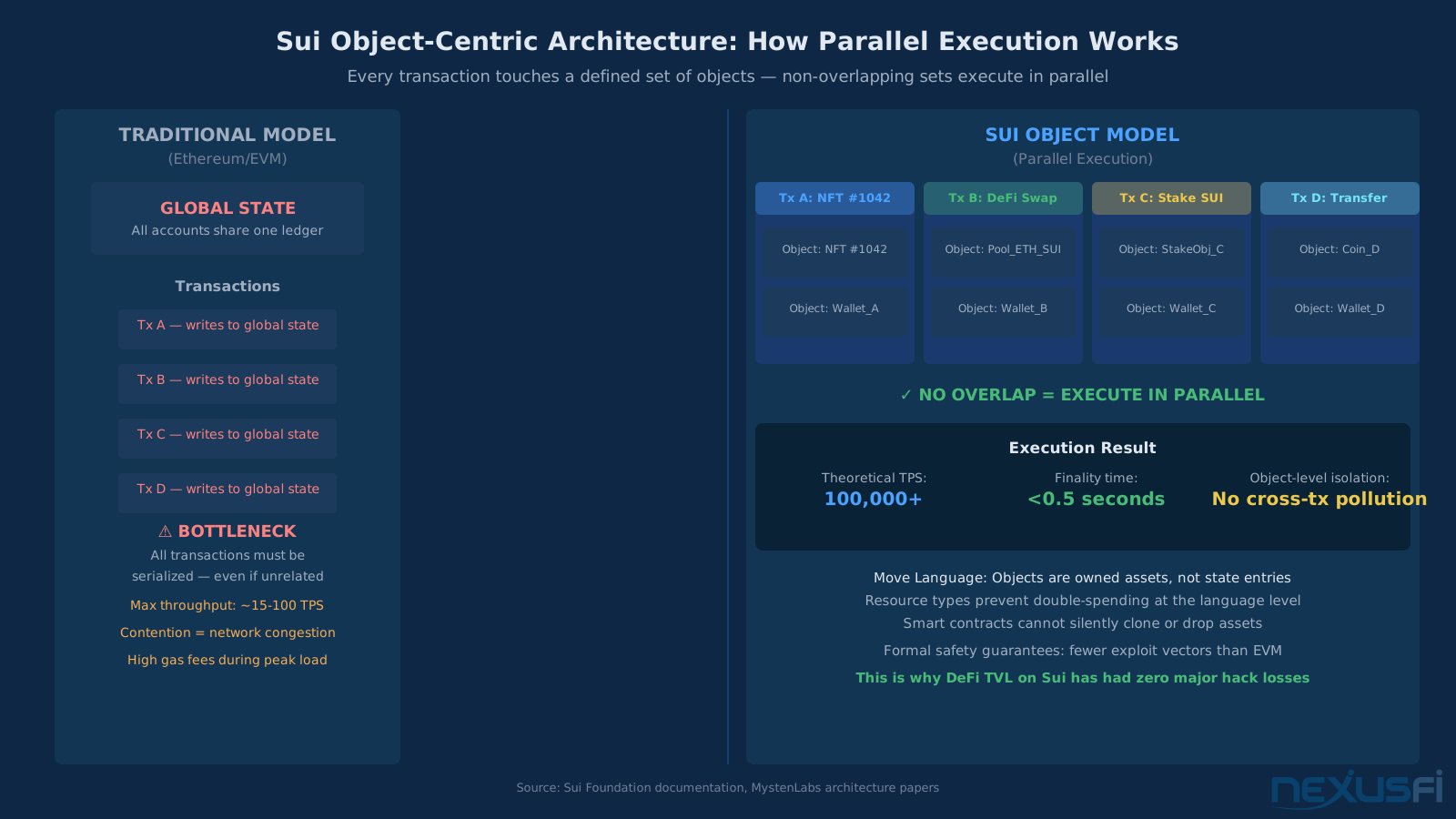
To understand why Sui can claim 100,000+ TPS while Ethereum handles 15-30, you need to understand the state model.
Traditional EVM blockchains (Ethereum, Avalanche C-Chain, BNB Chain) use an account-based model. There's one global state — a ledger where every address has a balance and every smart contract has stored variables. Every transaction reads from and writes to this global state. Even if Tx A is Alice sending tokens to Bob and Tx B is Carol swapping ETH for USDC with zero overlap, the runtime must process them sequentially because it can't confirm non-conflict until runtime.
Sui's object model is different. State is partitioned into discrete objects — NFTs, coins, DeFi positions, validator stakes. When a transaction is submitted, it specifies exactly which objects it needs. The Sui runtime checks immediately: do Tx A and Tx B need any of the same objects? If not, they execute in parallel. No conflict, no waiting, no sequential bottleneck.
The practical result: Sui's throughput scales with validators and hardware. In production, peak throughput of 65,000+ TPS has been observed during NFT launch events. For DeFi, this means clean liquidation records — Sui protocols have had zero major hack losses since mainnet, partly because Move prevents the state management failures that caused the Ronin ($625M), Wormhole ($320M), and Nomad ($190M) exploits on EVM chains.
Sui's parallel execution isn't just about speed. It's about safety. The object model makes conflicting transactions impossible by design — which is why DeFi protocols have cleaner liquidation records on Sui than on Ethereum or Solana.
Move Language: Safety at the Foundation #
Move is a programming language developed at Meta specifically for blockchain state management. The core property: resources are first-class citizens that cannot be implicitly copied, dropped, or duplicated.
In EVM Solidity, a bug can cause a contract to lose track of asset ownership — silently creating tokens, destroying them, or transferring to wrong addresses. That's the root cause behind most DeFi exploits. In Move, the type system enforces resource safety at compile time. You can't write Move code that loses track of an asset. If you try to transfer a coin and forget to update the recipient's balance, the compiler rejects it — not at runtime after money has moved, at compile time before deployment.
For traders, this translates to a specific thesis: DeFi protocols on Sui have structurally lower probability of catastrophic exploit losses. When a DeFi exploit hits Ethereum or Solana and causes broad sector selloff, Sui is less likely to be the epicenter. Useful hedge property within a crypto DeFi portfolio.
Mysticeti Consensus: Sub-Second Finality #
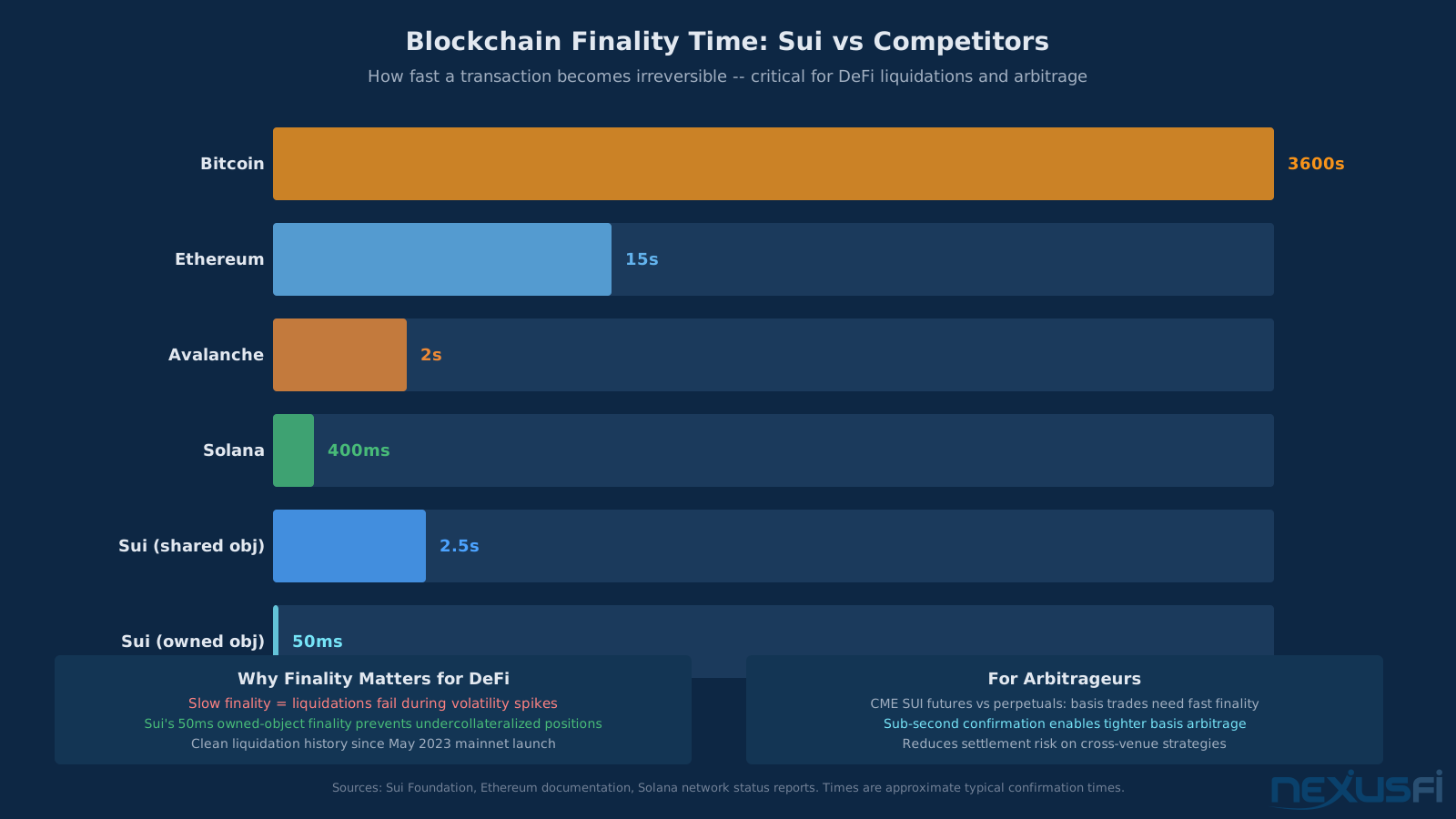
Sui's consensus mechanism is called Mysticeti — a BFT (Byzantine Fault Tolerant) protocol designed to work with the parallel execution model. Finality time: under 500ms for simple owned-object transactions, 2-3 seconds for shared-object transactions requiring global coordination.
Bitcoin takes 10+ minutes. Ethereum takes 12-15 seconds for block inclusion. Even Solana, at 400ms block times, often takes 2-3 seconds for practical confirmation. Sui's sub-second finality for owned objects is the fastest of any major L1 in production.
Why finality time matters for traders: DeFi liquidation mechanics depend on how fast the chain processes forced sells during price drops. Slow finality means positions stay underwater longer before liquidation, creating cascade risk. Sui's fast finality means DeFi lending protocols execute liquidations before losses exceed collateral. That's why Sui DeFi protocols have maintained solvency through all the 2024-2026 crypto volatility events.
SUI Tokenomics: The Supply Schedule Every Trader Must Track #
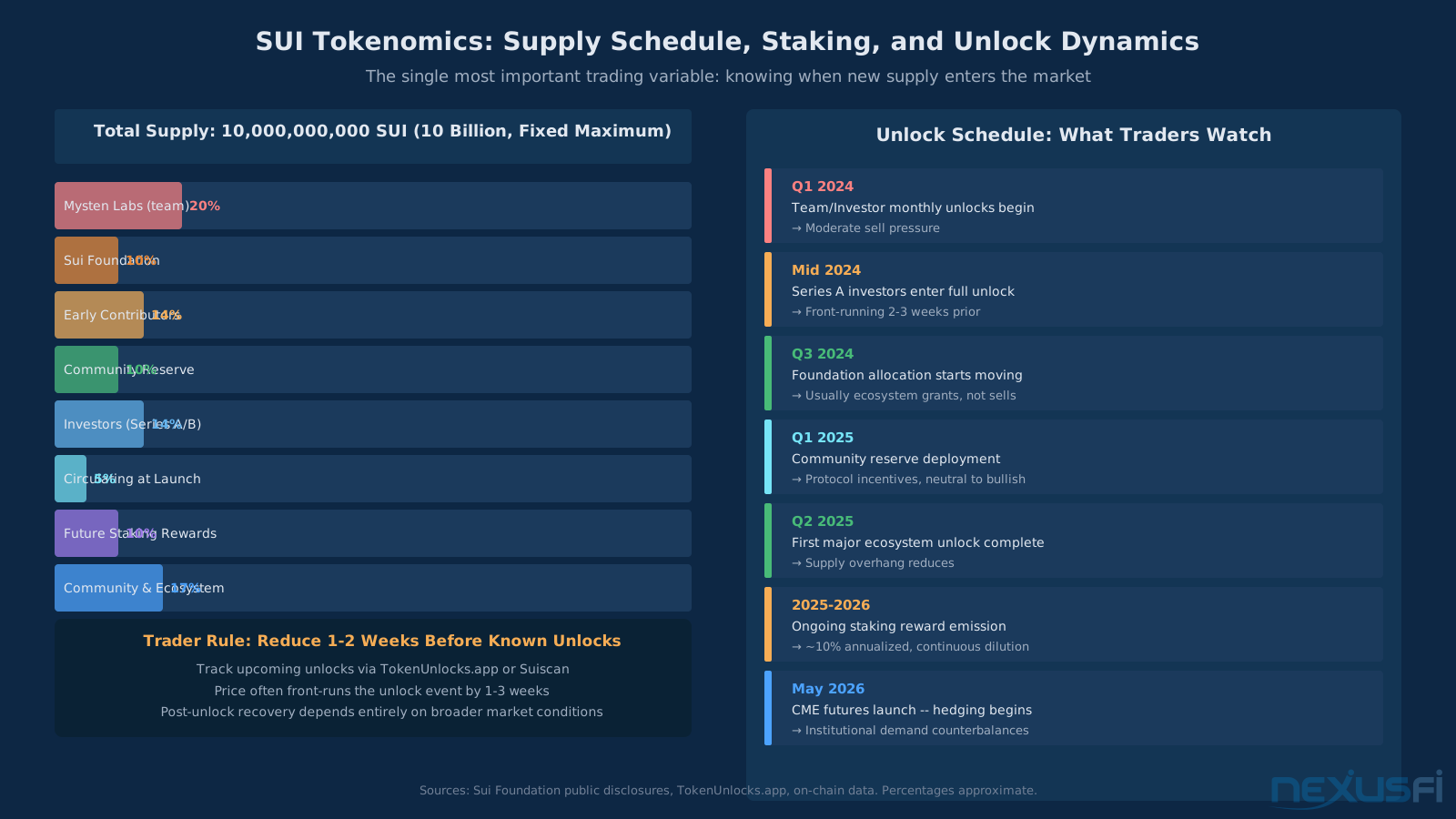
SUI has a fixed maximum supply of 10 billion tokens. That's the good news — no unlimited inflation mechanism. The bad news: a significant portion was allocated to Mysten Labs, early investors (Series A and B), and the Sui Foundation, all with vesting schedules stretching from 2023 to 2027.
Approximate allocation at mainnet launch: Mysten Labs team 20%, early contributors 14%, Series A/B investors ~14%, Sui Foundation 10%, community reserve 10%, ecosystem and community 17%, staking rewards ~10%, circulating at launch ~5%.
The practical consequence: for the first two years after mainnet, newly unlocked tokens hit the market on a regular monthly schedule. Team members and investors who received SUI at $0.10-$0.30 in private rounds now hold tokens that have traded above $3.00 — a 10-30x return. Some fraction will sell on unlock. Most price damage happens 1-3 weeks prior, as informed participants front-run the supply increase.
The framework that works: check TokenUnlocks.app or Suiscan for the upcoming 30-day calendar. If a major unlock (anything over 50M SUI) is within 2 weeks, reduce position size by at least half. Post-unlock recovery timing depends entirely on broader market conditions.
:::quote @SMCJB, discussing CME's crypto expansion on NexusFi: "CME eMini Equity Futures SPREADS increase from $1.00 to $1.15 CBOT eMini... the same cost dynamics apply across all new CME crypto products." — https://nexusfi.com/showthread.php?t=60309&p=893298#post893298:::
One significant positive: the CME futures launch in May 2026 introduced institutional hedgers who can now offset SUI spot holdings with regulated futures. This bidirectional flow should gradually tighten SUI's liquidity profile and reduce unlock-driven dump severity as the derivatives market deepens. As @Symple noted when CME announced 24/7 crypto trading: the institutional infrastructure is now in place for crypto to be treated as a full-time trading asset class.
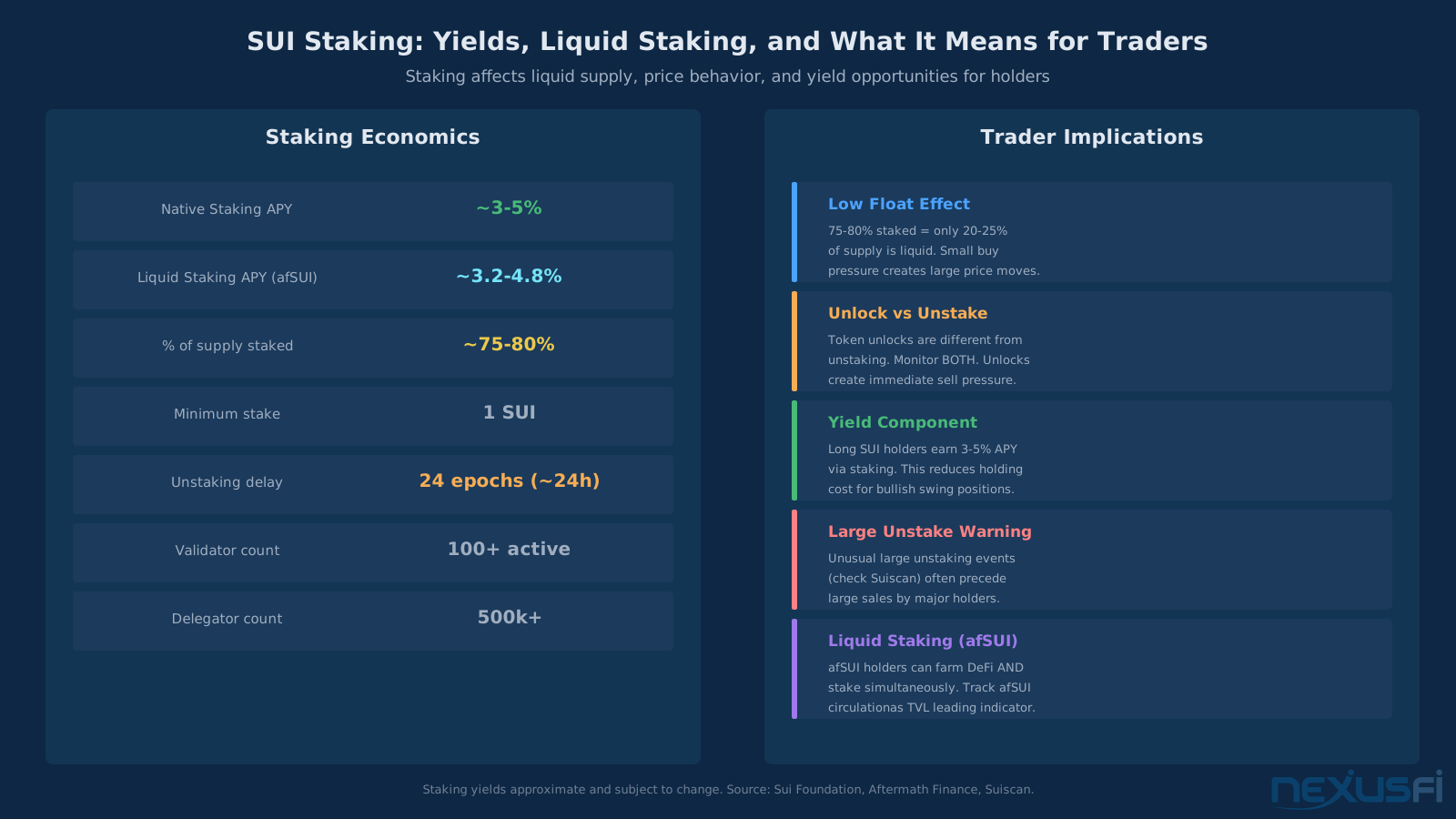
With 75-80% of SUI supply staked (earning 3-5% APY through native staking or liquid staking via afSUI), only 20-25% of supply is actually liquid. This amplifies price moves in both directions — small buy pressure creates large percentage swings. Track large unstaking events on Suiscan; unusual unstaking often precedes significant sales by major holders.
Sui DeFi Ecosystem: What Actually Has Value #
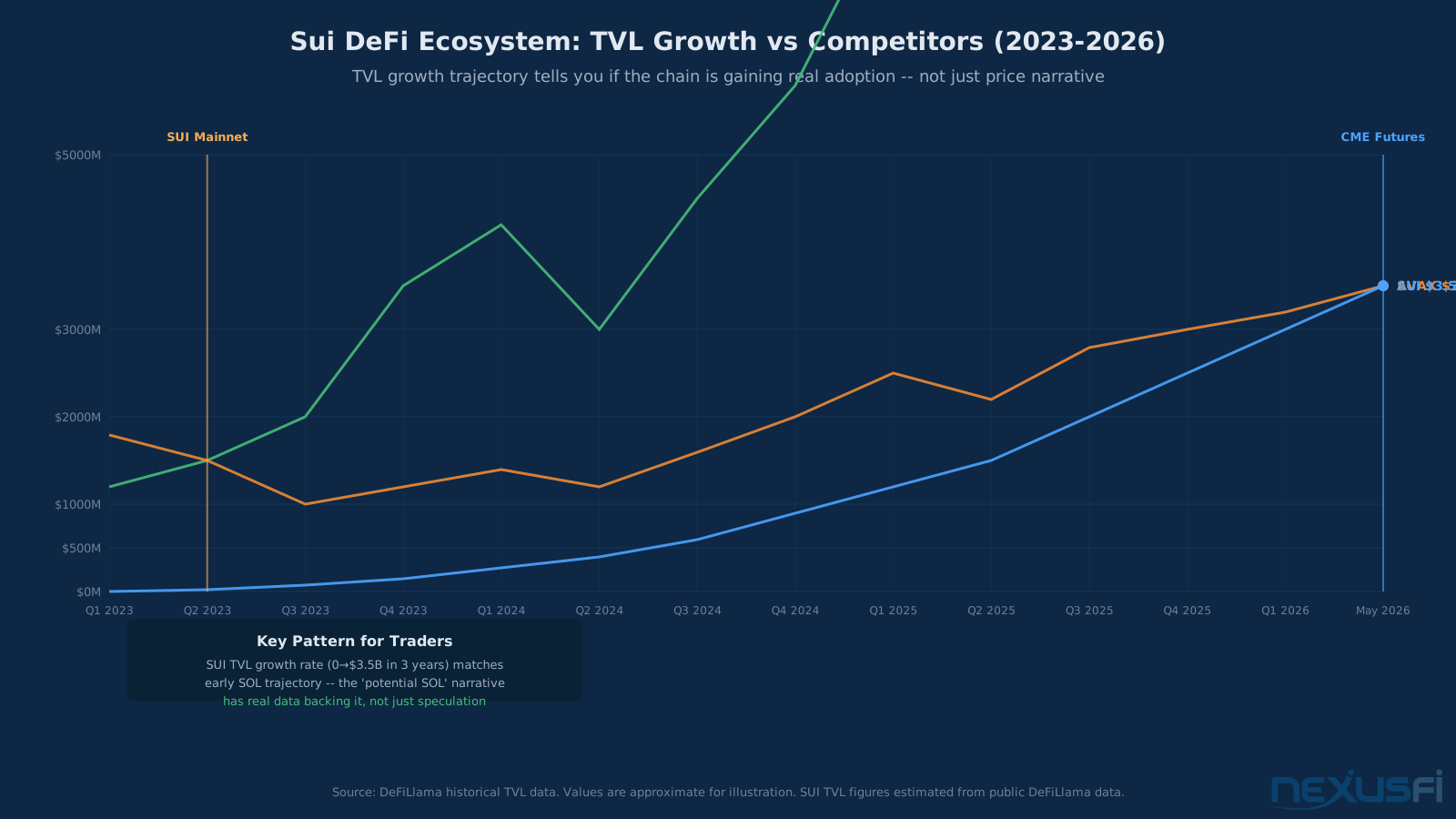
Sui's DeFi ecosystem grew from zero TVL at mainnet launch to over $3.5 billion by mid-2026. That TVL growth curve closely matches early Solana adoption patterns — the "potential next SOL" narrative has real data backing it.
The key protocols: Cetus Protocol is Sui's dominant DEX — concentrated liquidity model similar to Uniswap v3, handles the majority of Sui swap volume. When you're tracking Sui liquidity depth for position sizing, Cetus 24h volume is the primary indicator. NAVI Protocol is Sui's largest lending market — the Aave equivalent. NAVI utilization rates tell you how much leverage is deployed; above 80% means the ecosystem is highly leveraged and vulnerable to forced deleveraging. Aftermath Finance handles liquid staking via afSUI tokens — a reliable indicator of long-term holder conviction.
For timing entries and exits: NAVI utilization above 80% + Cetus 24h volume above $200M simultaneously signals risk-on phase. When both compress, DeFi money is moving out — often before price breaks. NFT volume on Sui is a leading indicator of retail enthusiasm; watch Tradeport for major collection activity 24-48 hours before spot price moves.
CME SUI Futures: The Regulated Play (May 2026) #
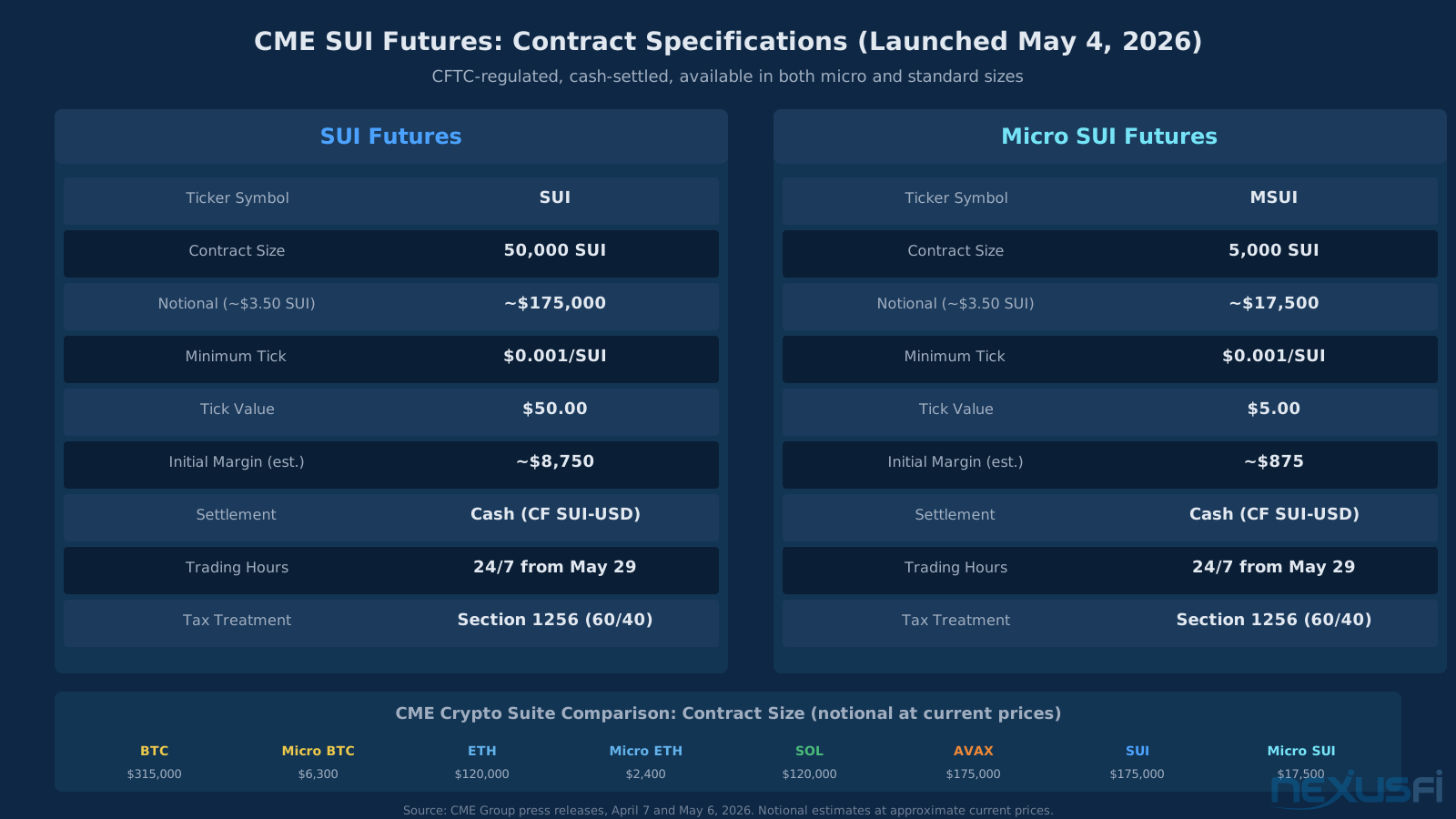
CME announced SUI futures on April 7, 2026, pending regulatory review. First trades executed on May 6, 2026, as block trades between FalconX and G-20 Group. As Fi noted when covering CME's crypto expansion: "CME has announced plans for 24/7 crypto futures trading in Q2 2026. The micro contracts make these accessible to retail-sized accounts — which matters."
Contract specifications:
SUI futures (ticker: SUI): 50,000 SUI per contract. At $3.50/SUI, approximately $175,000 notional. Minimum tick $0.001/SUI = $50.00 per tick. Initial margin approximately 5% of notional (~$8,750 at current prices). Cash settlement to CF SUI-USD Reference Rate.
Micro SUI futures (ticker: MSUI): 5,000 SUI per contract, 10% of standard size. Each tick at $0.001/SUI = $5.00. Initial margin ~$875 at current prices. Same settlement, same Section 1256 treatment. One Micro SUI is the practical entry point for retail-sized positions.
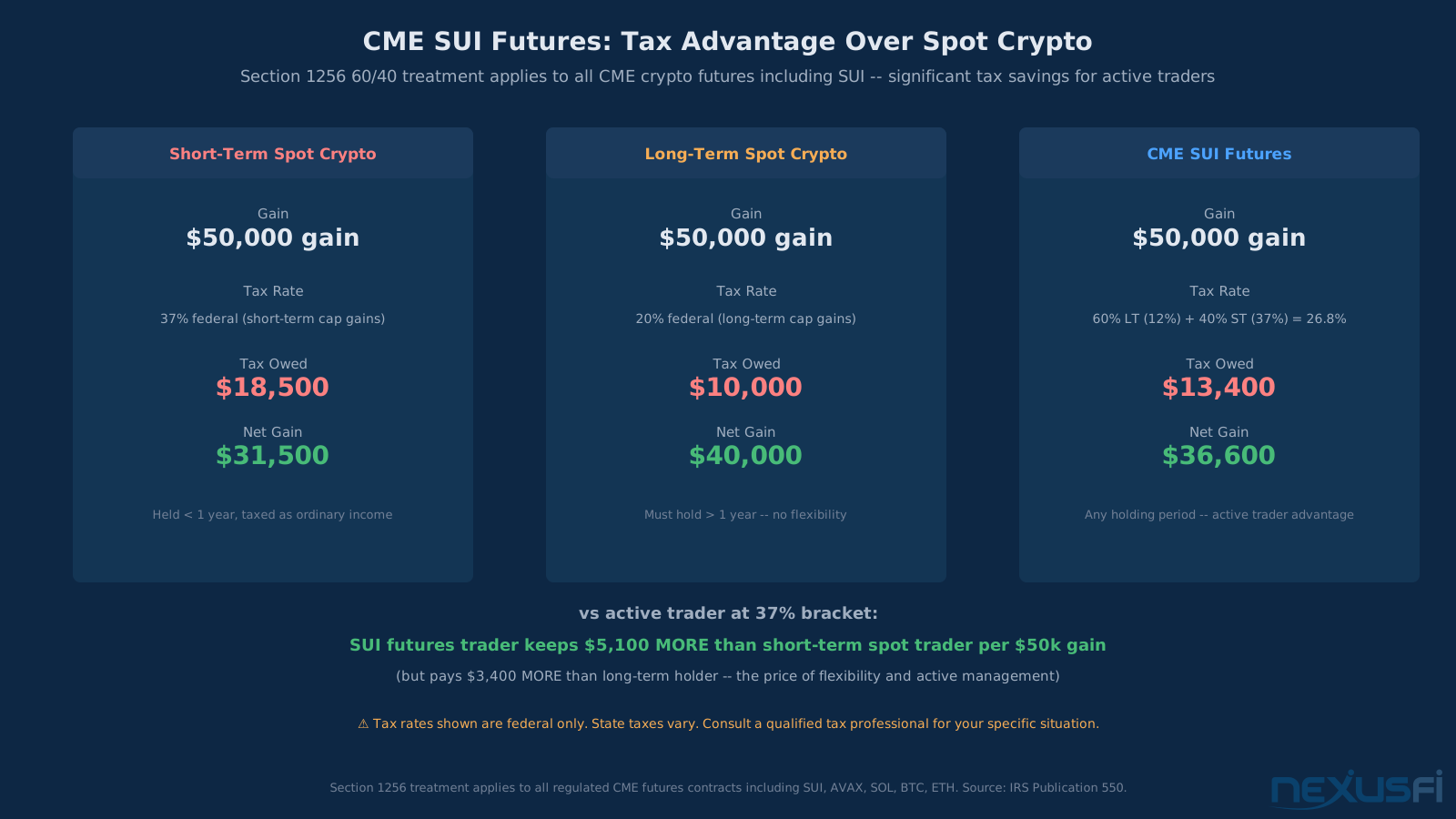
Both contracts fall under Section 1256 tax treatment — 60/40 blended rate regardless of holding period. For a trader in the 37% federal bracket, SUI futures gains are taxed at approximately 26.8% blended vs 37% for short-term spot crypto. That's a 10-point tax advantage on the same trade, which compounds significantly for active traders.
The 24/7 trading launch on May 29, 2026 eliminates weekend gap risk. Sui trades continuously on spot markets; CME's old weekday schedule meant positions accumulated weekend exposure with no hedge. Starting May 29, CME SUI trades around the clock with only a daily 60-minute maintenance break. As @SMCJB noted about CME's micro contracts: "0.1 Ether — trades on the same infrastructure, same hours, same clearinghouse as the standard contract but accessible to traders who aren't institutional." That characterization applies exactly to Micro SUI.
CME SUI futures give US traders regulated exposure to the fastest-growing new L1 without touching a crypto exchange. Section 1256 treatment + 24/7 trading + clearinghouse protection = the institutional-grade path to SUI exposure.
SUI Price History and Market Behavior #
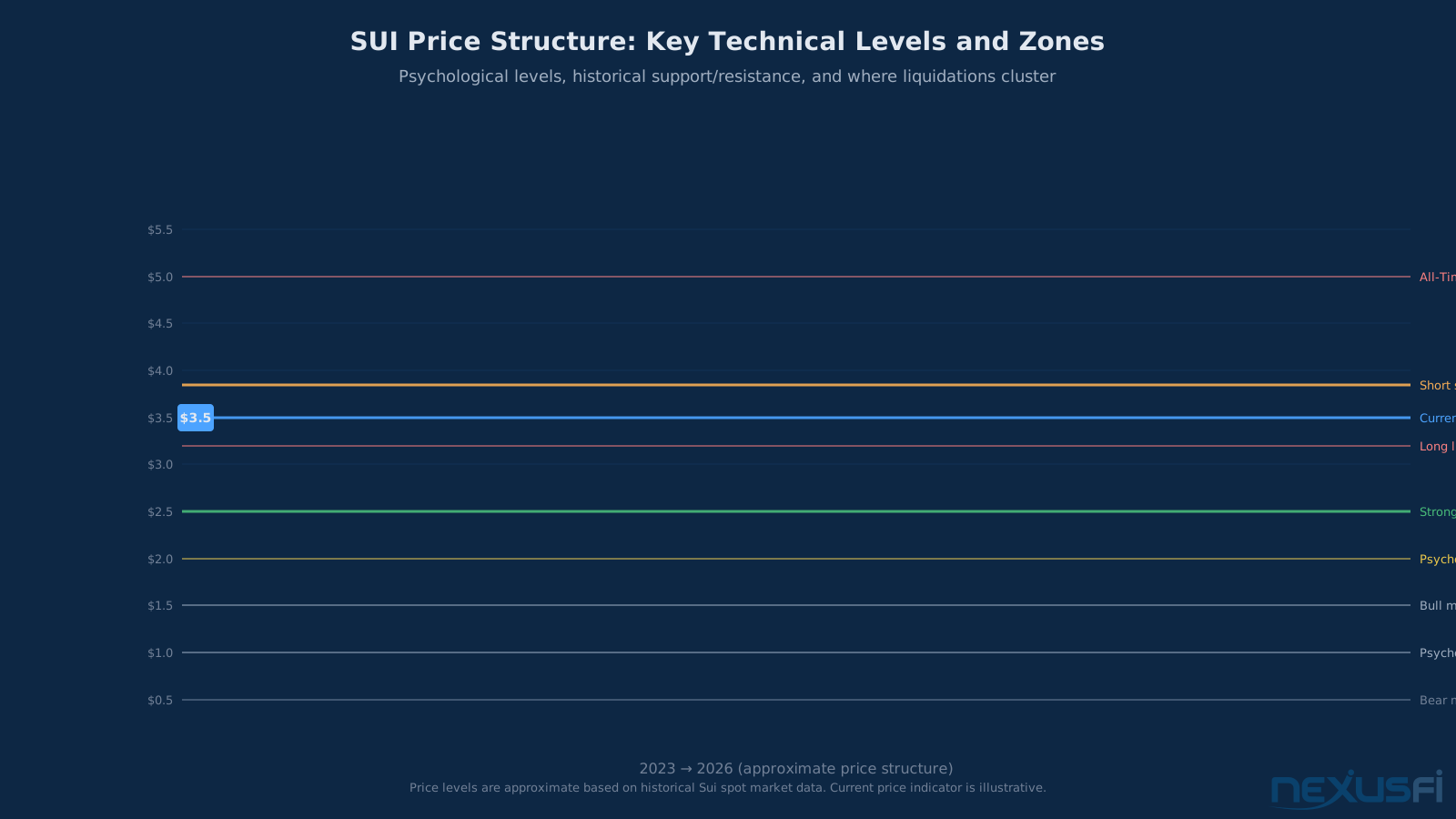
SUI launched mainnet in May 2023 with initial token prices in the $0.10-$0.15 range. The Q4 2023/Q1 2024 crypto bull cycle drove SUI to approximately $1.50-$2.00 in early 2024. The mid-2024 correction hit SUI harder than Bitcoin — standard behavior for high-beta altcoins. From its early 2024 high, SUI retraced roughly 55-60%. The lesson baked into every chart from Q2-Q3 2024: SUI is not a Bitcoin-variance trade. It has 2-2.5x beta.
Late 2024 alt-season pushed SUI to new highs in the $3.50-$4.50 range — a combination of genuine DeFi TVL growth, institutional attention from CME's expansion, and favorable macro conditions. Key observation: SUI led Aptos (its closest Move-language competitor) by approximately 2-3 weeks on both the upswing and the downswing. If you're watching APT as a proxy indicator for Move ecosystem sentiment, it works — but SUI moves first.
Price behavior around unlocks has been consistent: underperformance in the 1-2 weeks before major team/investor unlocks, post-unlock recovery dependent on broader crypto conditions. Psychological levels that have acted as significant support/resistance: $0.50, $1.00, $2.00, $3.50. The $3.50 level marked both the 2024 ATH and the post-correction consolidation zone in early 2026.
Trading SUI: Strategies by Market Regime #
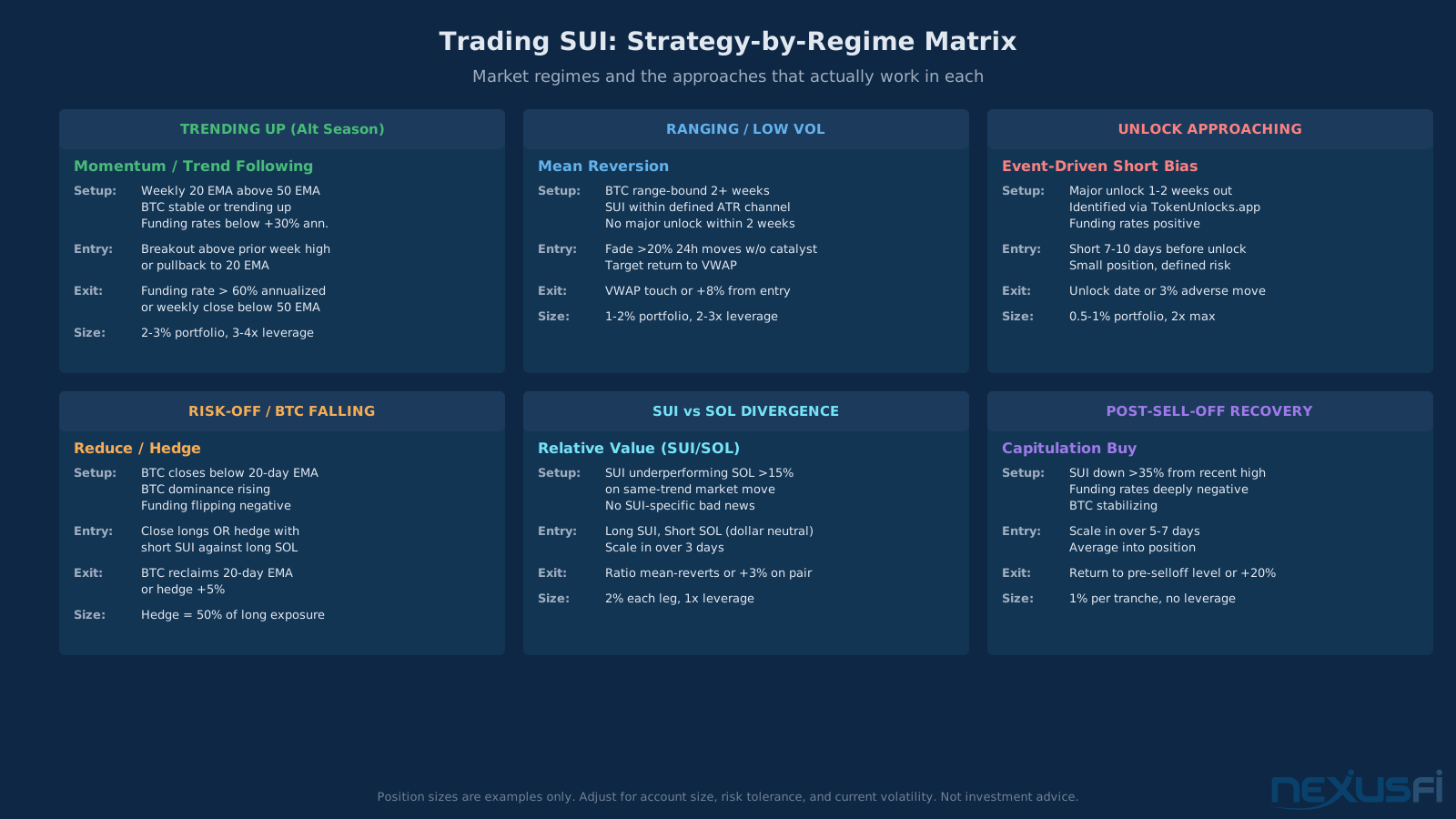
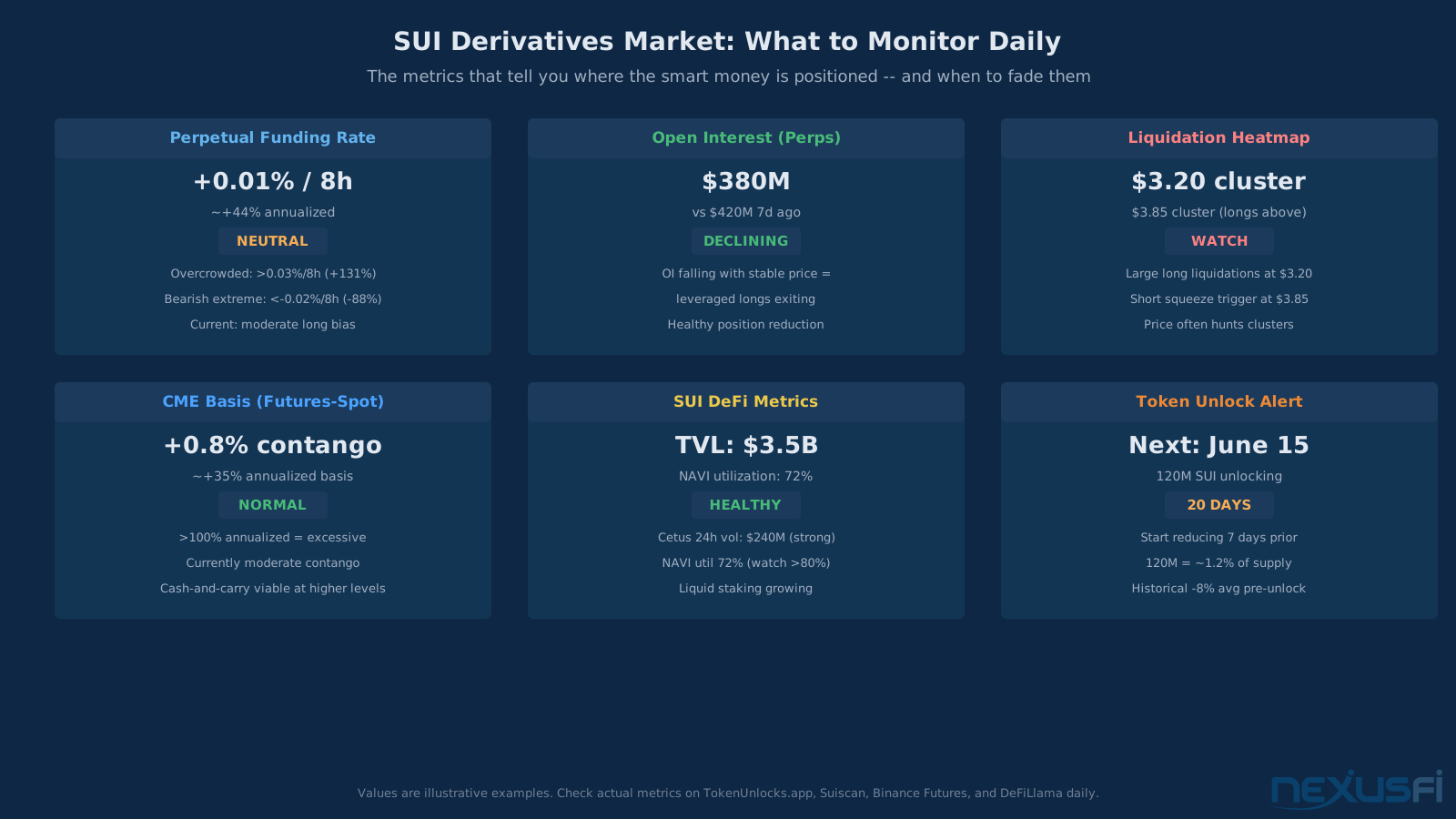
Six regimes, six approaches. The most common mistake is using one strategy across all regimes.
Trending up (alt-season): Weekly 20 EMA above 50 EMA, BTC stable, funding below +30% annualized. Momentum / trend following. Enter breakouts above prior week high or pullbacks to 20 EMA. Exit when funding exceeds 60% annualized or weekly close drops below 50 EMA. Position: 2-3% of futures portfolio, 3-4x max leverage.
Ranging / low volatility: BTC range-bound 2+ weeks, SUI within defined ATR channel, no major unlock within 2 weeks. Mean reversion. Fade moves greater than 20% in 24h without fundamental trigger, targeting return to VWAP. Exit at VWAP touch or +8% from entry. Position: 1-2% of portfolio, 2-3x leverage.
Unlock approaching (1-2 weeks out): Identified via TokenUnlocks.app. Short bias, small size, defined risk. Enter 7-10 days before unlock. Exit on unlock date or 3% adverse move. Position: 0.5-1% of portfolio, 2x maximum. The goal isn't to profit from this — it's to not lose money.
Risk-off / BTC falling: BTC closes below 20-day EMA, BTC dominance rising, funding flipping negative. Reduce or hedge. A 10% BTC drop often means 20-25% SUI drop. Get smaller before the macro breaks, not after.
SUI/SOL divergence: SUI underperforming SOL by more than 15% on the same market move, no SUI-specific bad news. Relative value pairs trade: long SUI, short SOL, dollar neutral. Scale in over 3 days. Exit on ratio mean-reversion or +3% on pair. Position: 2% per leg, 1x leverage.
Post-selloff recovery: SUI down 35%+ from recent high, funding deeply negative, BTC stabilizing. Capitulation buy, scale in over 5-7 days. Exit at pre-selloff level or +20%. No leverage. Position: 1% per tranche.
Underlying principle for all six: check the unlock calendar before entering any multi-week position. A high-conviction trade in a favorable regime becomes a coin flip if a major unlock lands 10 days in.
Risk Management for SUI Traders #
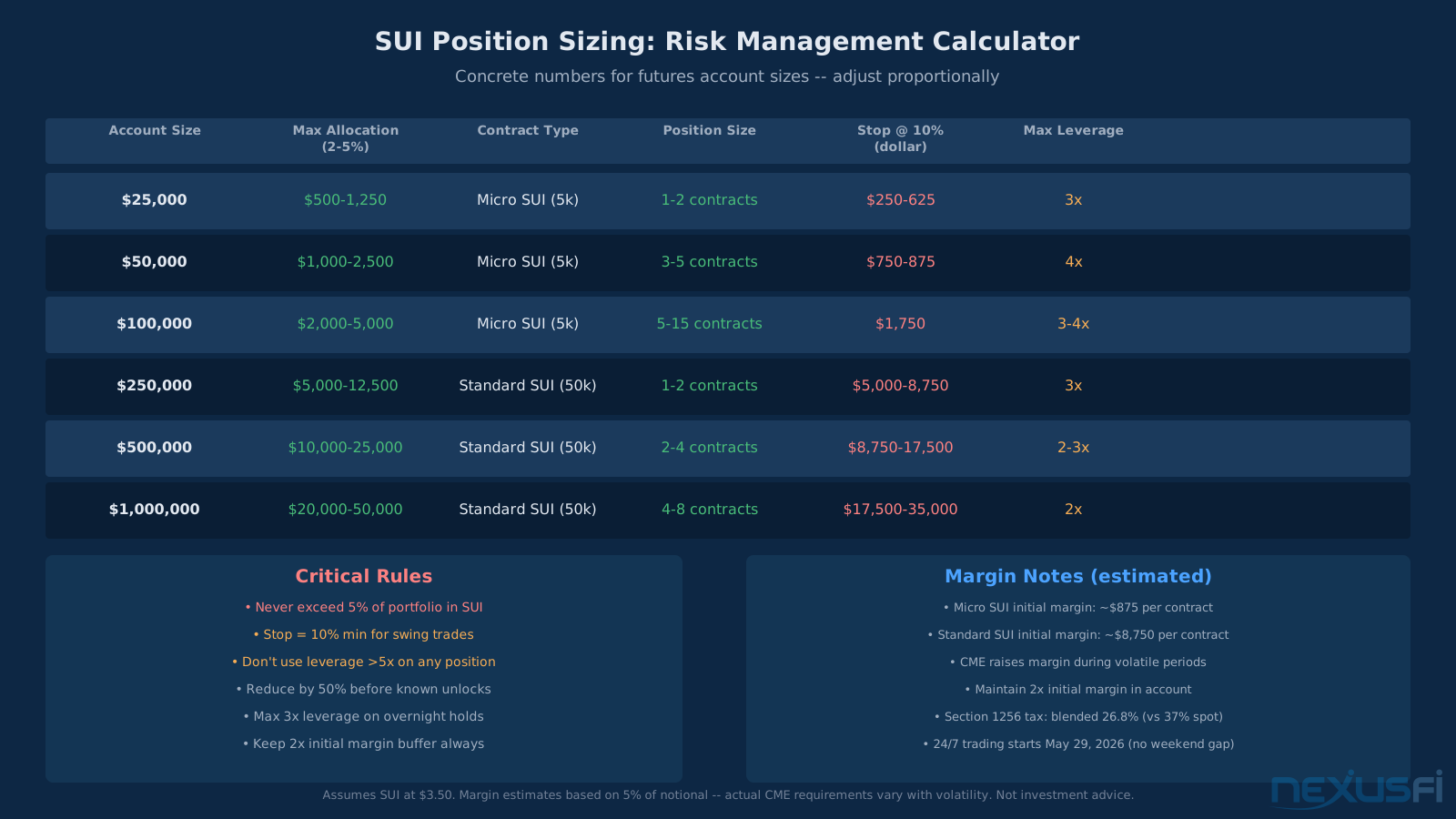
SUI's average daily range runs 5-8% in normal conditions. During market stress, 15-20% daily ranges have occurred multiple times. That's 6x the typical ES daily range. Position sizing rules from ES don't apply here.
Maximum allocation: 2-5% of your total futures portfolio. A 5% allocation with 4x leverage position gives 20% of notional in SUI. A 10% daily move against you is a -2% portfolio hit — acceptable. A 20% move is -4%. Painful but survivable. Beyond 5% allocation, a bad SUI day threatens the rest of your book.
Stop placement: 8-12% for swing trades, 15-20% for position trades. Size stops based on SUI's ATR, not dollar amounts. A "tight stop" that protects on ES will get hit constantly by SUI's intraday noise.
Leverage cap: 3-5x maximum for swing positions, 2x for anything held overnight through potential news events. The combination of SUI's high beta and the early CME market's thin liquidity makes over-leveraging dangerous. A 20x leveraged SUI position during a 20% daily move is liquidated. No recovery.
Correlation risk: The 0.75-0.85 correlation between SUI and SOL means a joint long in both is roughly 1.75x a single alt position, not 2x two independent positions. Adjust total alt exposure so. If you're long SOL, AVAX, or APT — reduce SUI allocation.
:::warning Specific risks to calendar in advance: Token unlock dates (TokenUnlocks.app, monthly), CME margin increase announcements (watch CME site during volatility), DeFi protocol exploits sector-wide (correlation 0.7+ in risk-off), Sui network upgrade dates (monitor Sui Status).:::
Sui vs Solana vs Aptos: What Traders Actually Need to Know #
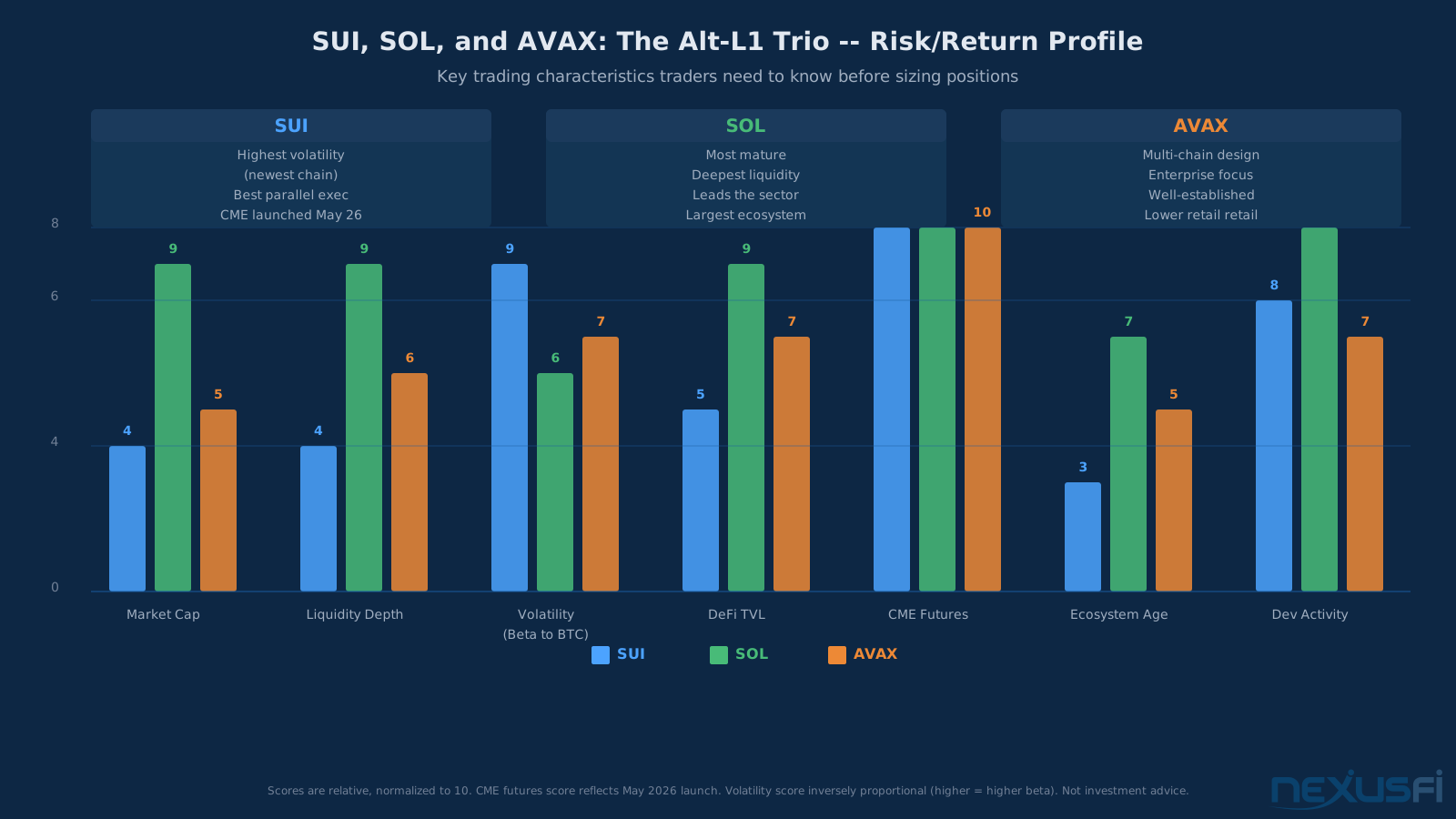
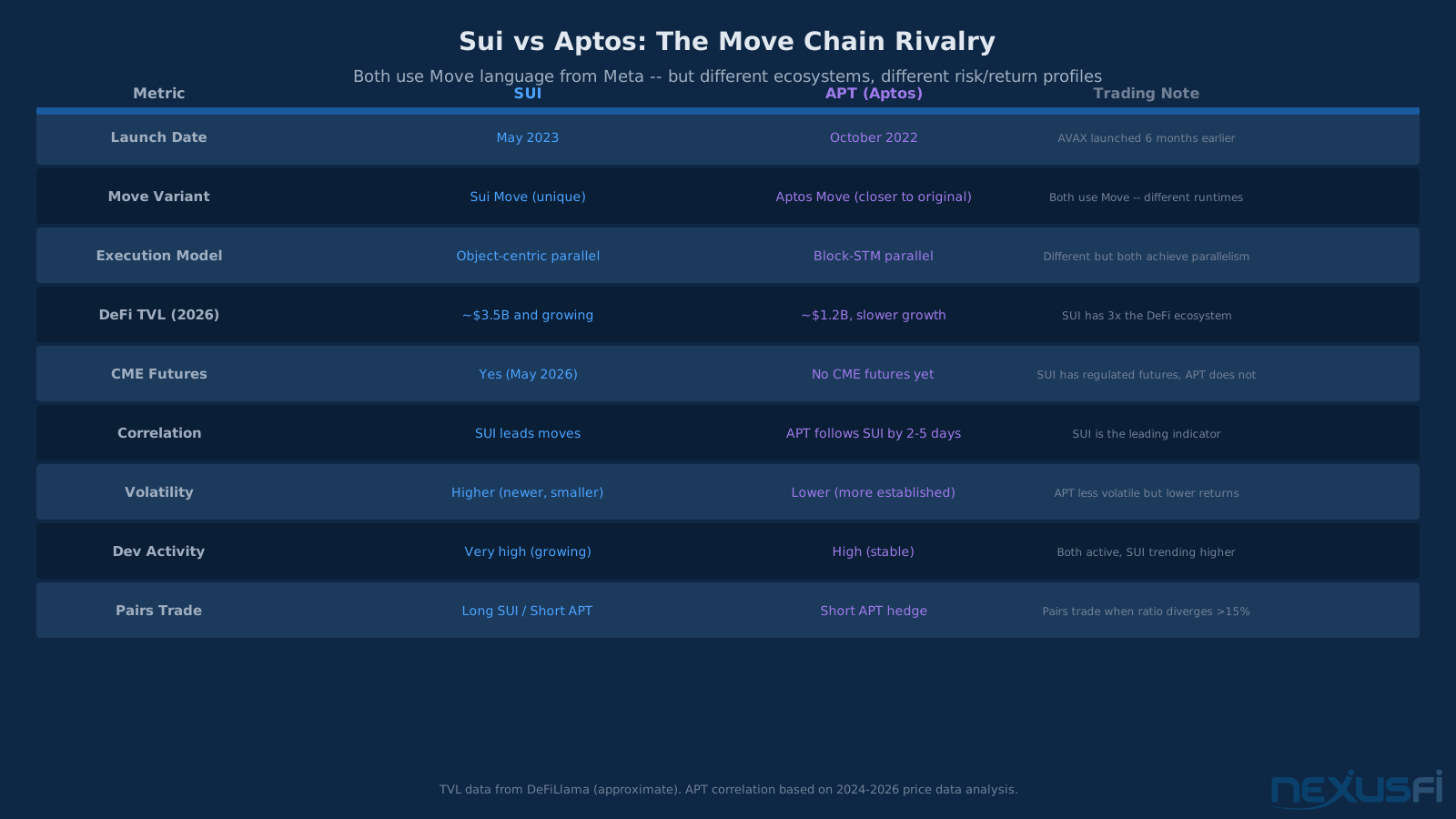
Solana is the established leader. Deepest liquidity, most mature DeFi ecosystem, largest NFT market. SOL moves the sector — when SOL rips, SUI typically follows within hours. When SOL drops, the sector follows within minutes. SOL is the leading indicator for the broader high-performance L1 space. Solana's weakness: network congestion during high-demand events has caused real performance failures that complicated the reliability narrative for institutional buyers.
Aptos is Sui's closest competitor — also ex-Meta engineers, also Move language, also parallel execution. Launched October 2022, six months before Sui. Aptos had initial mindshare advantage, but Sui's DeFi ecosystem has outpaced Aptos much in 2024-2026. From a trading perspective, APT and SUI are deeply correlated (0.80+), but SUI tends to have higher volatility on the upside while APT sometimes leads on the downside. The SUI/APT ratio trades with a well-defined mean-reversion pattern — when the ratio diverges more than 15% from its 60-day average, it tends to revert within 2-4 weeks. Only SUI has CME futures as of May 2026.
Avalanche launched CME futures simultaneously with Sui on May 4, 2026. AVAX targets institutional and enterprise deployments more than retail DeFi — JPMorgan tokenization pilots, gaming chains. Their price movements correlate during macro risk-on/risk-off but diverge during ecosystem-specific catalysts.
The pairs trade that works best: SUI/SOL during "alt-L1 rotation" narratives. When crypto capital rotates from Bitcoin into altcoins, SUI outperforms SOL for 2-4 week windows. Long SUI / Short SOL strips out directional crypto exposure and isolates the rotation dynamic. As @SMCJB noted in his analysis of newer CME crypto products, these relative value opportunities exist across the expanding CME crypto suite and are most cleanly expressed using regulated futures on both sides.
Common Mistakes SUI Traders Make #
Every common mistake traces to either ignoring the tokenomics or applying risk parameters from a lower-volatility asset.
Ignoring the unlock calendar. This is the most expensive mistake. Traders build a bullish thesis, enter a 5x leveraged long, and get cut in half by a major team unlock they never checked. TokenUnlocks.app shows every major unlock 60+ days in advance.
Sizing SUI like Bitcoin. Bitcoin's average daily range is 1.5-2%. SUI's is 5-8%. A position size that gives you comfortable risk on BTC creates 3-4x more dollar volatility on the same notional in SUI. Run the volatility math before you enter.
Assuming CME SUI liquidity is the same as BTC/ETH. SUI futures launched in May 2026. Open interest is small. Bid/ask spreads are wide in off-hours. A limit order that fills instantly on BTC futures might sit for 10 minutes on Micro SUI at 3 AM. Plan execution so.
Treating "Move language safety" as price protection. Move reduces DeFi exploit probability. It doesn't protect against token price declines, macro risk-off events, or bad sentiment. When Bitcoin drops 15%, SUI drops 22-30%. Don't conflate technical safety with price stability.
Using the same stop-loss logic as equity index futures. Always calculate stops as a percentage of the SUI price, not as absolute dollar amounts. A dollar-amount stop that looks appropriate on ES will be too tight for SUI's 5-8% daily range.
The traders who do well in SUI long-term treat it as exactly what it is: a high-beta, growth-stage Layer-1 with predictable supply-side dynamics. Don't fall in love with the tech thesis. Trade the regime, respect the unlock calendar, and size for SUI's volatility — not Bitcoin's.
Knowledge Map
Prerequisites
Understand these firstCitations
- — New Micro Contract :- Micro Ether coming 5-Dec-21 (2021) 👍 10“CME crypto regulated futures space: ICE Bitcoin, CME Bitcoin, CME Micro Bitcoin, CME Ether, CME Micro Ether -- fee structures and notional values across the regulated crypto futures landscape.”
- — 11 New CME Crypto Reference Rates = More Futures Soon? (2022) 👍 3“CME CF Reference Rates are the gateway to new crypto futures. Without reference rates, CME cannot launch new crypto futures. 11 new rates covering 90% of investible crypto market cap.”
- — 2024 CME Exchange Fee Increases (2023) 👍 19“CME exchange fee structures across major crypto contracts: Bitcoin futures $6.50, Ether futures $4.50 per contract for non-members. Micro contracts fees unchanged.”
- — New Solana Crypto Futures (2025) 👍 1“CME now has 4 crypto futures: Bitcoin, Ether, Solana, and XRP. Also Perpetual/Spot Quoted Bitcoin and Ether. The altcoin expansion continues with each new CF Benchmark reference rate.”
- — CME Group Launches 24/7 Futures Trading (2025) 👍 3“CME expanding existing cryptocurrency futures and options -- Bitcoin, Ether -- to 24/7 trading beginning early 2026, pending regulatory approval. The altcoin suite continues growing.”
- — CME Group Launches Cardano, Chainlink, and Stellar Futures Today (2026)“CME adding Cardano (ADA), Chainlink (LINK), and Stellar (XLM) to its regulated crypto derivatives suite. Micro contracts make these accessible to retail-sized accounts. CME facilitated nearly $3T notional in crypto in 2025.”
- — Is Bitcoin done? (2025) 👍 2“CME has crypto futures -- Bitcoin, Ether, Solana, and Ripple/XRP. US regulated futures exchange. None of the issues you see with the other, mostly non-US, mostly unregulated crypto exchanges. The regulated path is the institutional path.”
- — CME Group Announces First Trades of New Avalanche and Sui Cryptocurrency Futures
- — CME Group to Continue Expansion of Regulated Crypto Suite with Launch of Avalanche and Sui Futures