



Cardano (ADA): The Proof-of-Stake Blockchain Every Crypto Trader Needs to Understand
Overview #
Cardano (ADA) is one of the most debated assets in crypto. On one side: a blockchain built with peer-reviewed academic research, formal verification, and a long-term vision for global financial inclusion. On the other: a chain that took years to ship smart contracts, trades on narrative more than adoption metrics, and has underperformed more agile competitors in every DeFi liquidity battle so far.
For traders, none of that debate matters much. What matters is how ADA behaves in markets — and the answer is consistent. ADA is a high-beta, narrative-driven altcoin that amplifies BTC's moves by 1.5-3.5x in both directions, responds violently to upgrade cycles and sentiment shifts, and requires execution discipline that most traders underestimate. Get the macro right and time your entries, and ADA will pay you handsomely. Trade it like a stable large-cap and you'll get destroyed.
This article covers what you actually need: Cardano's architecture and how it affects trading mechanics, the staking system and why it creates a predictable supply signal, how upgrade cycles generate tradeable patterns, and a complete framework for sizing, entering, and exiting ADA positions across different market regimes.
What Makes Cardano Different -- Architecture and Philosophy #
Cardano was built from the ground up by IOHK (Input Output Global), founded by Charles Hoskinson (one of Ethereum's original co-founders) and Jeremy Wood. The chain launched in September 2017 and has followed a deliberate, phased development roadmap — Byron (foundation), Shelley (decentralization), Goguen (smart contracts), Basho (scaling), and Voltaire (governance).
The core philosophy separates Cardano from most of its competitors: every major protocol decision is peer-reviewed and published in academic papers before implementation. Ouroboros, the consensus protocol, was the first proof-of-stake protocol to be formally proven secure in academic literature. Plutus, the smart contract language, is built on Haskell and designed for formal verification — meaning developers can mathematically prove their contracts behave correctly before deployment.
Two architectural choices define Cardano's technical identity:
Layered architecture: Cardano separates the Settlement Layer (handling ADA transactions) from the Computation Layer (handling smart contracts). This separation was designed to allow independent upgrades and regulatory compliance options without compromising the base settlement system.
EUTXO model: Cardano extends Bitcoin's Unspent Transaction Output model with "Extended" UTXO — adding programmability to each output via datum and validator script pairs. Unlike Ethereum's account model where all contracts share global mutable state, Cardano's UTXOs are discrete, self-contained value units. More on why this matters for traders in the EUTXO section below.
The market implication of the research-first approach: Cardano ships features later than competitors but with high confidence in their correctness. Shelley launched on-chain governance and staking in July 2020. The Alonzo upgrade brought smart contracts in September 2021 — nearly three years after Ethereum had established DeFi dominance. Vasil (2022) and Chang (2024) added further performance and governance improvements.
That cadence creates the upgrade cycle trading pattern — one of the most reliable short-term setups in ADA's history.
Ouroboros Proof-of-Stake: How the Consensus Works #
Cardano uses Ouroboros, a family of PoS protocols that have evolved through multiple versions (Classic, Praos, Hydra-adjacent designs, and the upcoming Leios for throughput improvement). The key mechanics traders need to understand:
Slot leaders and epochs: Time is divided into epochs (5 days each), which are subdivided into slots (1 second each). At the start of each epoch, a lottery selects which staking pool nodes get to produce blocks for each slot in that epoch. Selection probability is proportional to the amount of ADA staked in that pool. This creates the epoch-based timing that drives the staking reward calendar.
Delegation, not locking: ADA holders don't lock their coins to stake. Instead, they delegate their staking rights to a pool operator while retaining full custody and liquidity. This distinction matters — staked ADA can be moved or sold at any time without an unbonding period. The staking commitment is epoch-by-epoch, not time-locked.
Pool saturation: Cardano uses a saturation parameter (k parameter) to limit the size of individual pools, currently targeting pools at roughly 64-70M ADA maximum effective size. Delegating to an oversaturated pool reduces your rewards. This drives delegation toward a diverse pool ecosystem rather than concentration in a few large validators.
Security model: Ouroboros is provably secure under the assumption that at least 51% of staked ADA is controlled by honest participants. With 63%+ of supply currently delegated and spread across thousands of pools, this threshold is comfortably maintained — making Cardano one of the most decentralized PoS chains by validator count.
For traders, the Ouroboros protocol is background infrastructure. It's not the mechanism you trade directly. But it shapes the supply dynamics that create real trading signals — specifically through the staking reward calendar and the exchange balance flow patterns covered in the next section.
Staking ADA: The Epoch System and What Traders Actually Get #
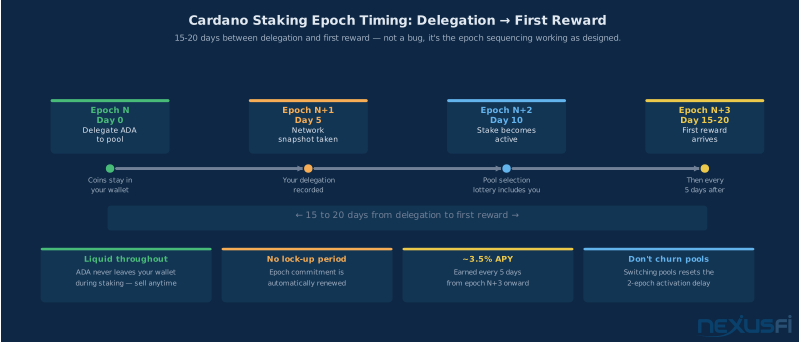
Staking on Cardano is straightforward to execute but has a sequencing delay that confuses most new participants. Here's the actual timeline:
Epoch N (Day 0): You delegate your ADA to a stake pool. Your ADA moves to "staked" status in your wallet. You retain full custody — the coins never leave your address.
Epoch N+1 (Day 5): The network takes a snapshot of stake distribution. Your delegation is recorded but not yet active for block production purposes.
Epoch N+2 (Day 10): Your stake becomes active. Your pool's selection probability for the coming epoch now reflects your delegation.
Epoch N+3 (Day 15-20): First rewards appear in your wallet. Subsequent rewards arrive every epoch (every 5 days) from this point on.
That's 15-20 days between delegation and first reward. Traders frequently misinterpret this delay as something going wrong with their wallet. It's not. It's the epoch sequencing working as designed.
Current staking yields: approximately 2.5-4.5% APY, depending on the pool's performance, uptime, and fee structure. Most Daedalus/Yoroi wallets display estimated annual returns when you browse pools. The yield comes from transaction fees and a portion of the ADA reserve (protocol-level inflation), distributed to delegators every epoch.
What staking yield means for your trading: Not much, directly. At 3.5% average APY, you earn roughly 0.7% per quarter. That sounds fine until you remember that ADA can lose 15-40% in a single bad week. The yield doesn't hedge the price risk in any meaningful way. What staking does create is a large base of sticky long-term holders who won't sell their ADA unless they're willing to forgo the reward cycle — introducing a behavioral barrier to selling that can slow downside moves during minor corrections but does nothing in genuine risk-off selloffs.
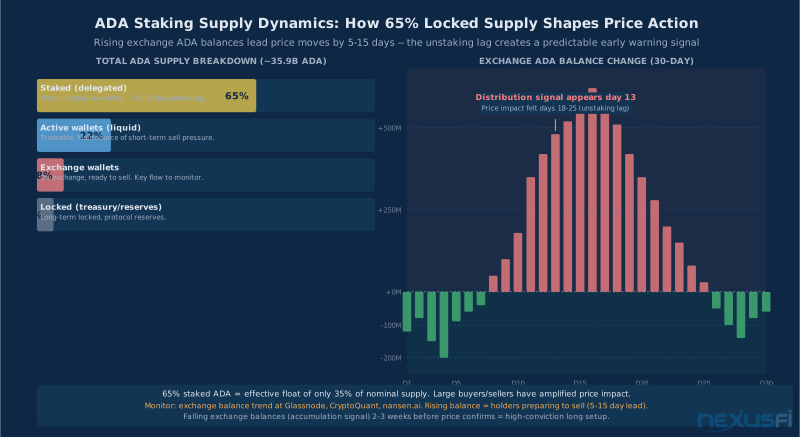
The more useful signal: when exchange-held ADA balances start rising persistently (visible on CryptoQuant or Glassnode), it indicates holders are moving coins from staking wallets to exchanges in preparation to sell. Because of the epoch delay, this signal can lead price by 5-15 days. Accumulation (falling exchange balances) similarly precedes recoveries.
The EUTXO Model: How Cardano Handles Smart Contracts #
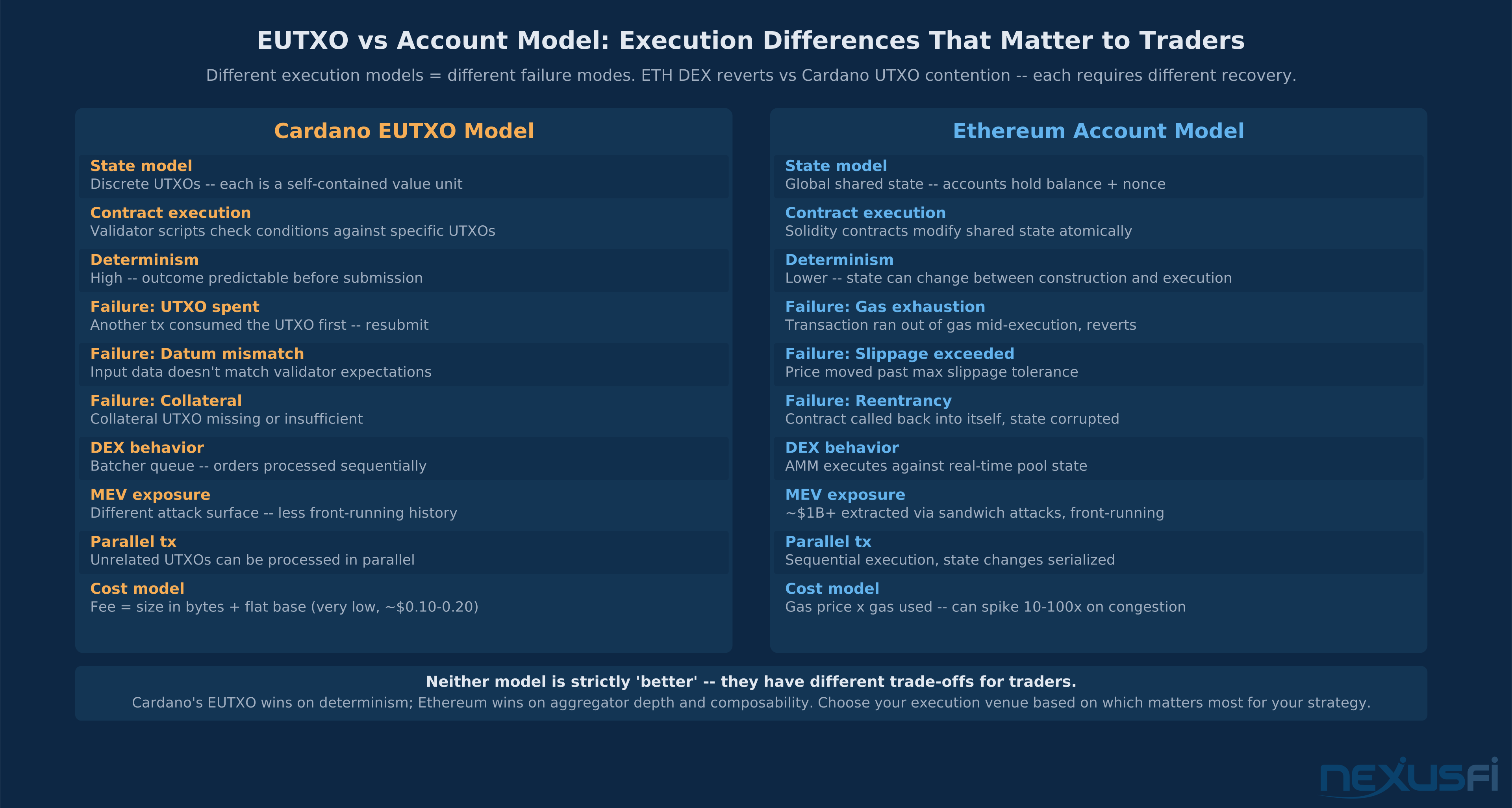
The Extended UTXO model is Cardano's most architecturally distinctive feature and the one most likely to trip up traders migrating from Ethereum-native DeFi.
In Ethereum's account model, smart contracts maintain global state — think of it as a shared database where every contract can read from and write to the same state. When you swap on Uniswap, the contract reads liquidity pool balances, updates them atomically, and returns your tokens. All in one state transition.
In Cardano's EUTXO model, there's no shared mutable state. Instead, each UTXO is a discrete value unit with an attached datum (arbitrary data) and validator script (the logic that controls how that UTXO can be spent). To execute a smart contract interaction, you provide UTXOs as inputs, the validator scripts verify the conditions are met, and new UTXOs are created as outputs. The state of the system is the collection of all unspent UTXOs — not a globally-shared database.
What this means for traders:
Transaction outcomes are more deterministic. Because UTXO state is captured at transaction construction time rather than execution time, you can predict whether your transaction will succeed before submitting it. If the conditions encoded in the datum/validator match what you're providing, the transaction succeeds. This reduces a class of failures common on EVM chains where state changes between transaction construction and execution cause reverts.
UTXO contention is a real issue on popular Cardano DEXs. If multiple traders are all trying to interact with the same liquidity pool UTXO at the same time, only one transaction can succeed — the others fail because the UTXO was already consumed. Cardano DEX protocols have addressed this with multi-UTXO liquidity designs (batchers, virtual AMMs), but it means high-activity pools sometimes have queued execution and higher latency than Ethereum DEXs.
Failure modes differ. On EVM chains, transactions fail due to gas issues, reentrancy, or out-of-gas errors. On Cardano, failures typically come from datum mismatches, collateral requirements not being met, or UTXO contention. Different error messages, different debugging workflows. If you're executing trades via Cardano-native DEX frontends, the wallets abstract most of this — but if you're building systematic execution, you need to understand the EUTXO semantics.
MEV exposure is different, not eliminated. Cardano's EUTXO model doesn't enable the same front-running attack vectors that dominate Ethereum's mempool (transaction ordering manipulation, sandwich attacks). But it introduces its own ordering dynamics through the batcher queue system used by most Cardano DEXs. Whether this is better or worse for retail traders depends on the specific execution scenario.
Plutus and the Smart Contract Ecosystem #
Plutus is Cardano's native smart contract language, built on Haskell. The design choice to use a functional programming language with strong type guarantees is deliberate — Haskell enables formal verification techniques that can mathematically prove contract behavior is correct before deployment.
In practice, this means: Cardano smart contracts tend to be more thoroughly audited before launch, failures are rarer, but the developer tooling is less mature and the developer pool is smaller. Haskell is not a language most web2 developers know, creating a steeper onboarding path than Ethereum's Solidity.
The Cardano smart contract ecosystem includes:
Native assets: Unlike Ethereum where tokens require a separate ERC-20 contract, Cardano supports native tokens at the protocol level — no smart contract needed for basic token issuance. This simplifies token creation and reduces execution cost for NFTs and utility tokens.
DEX environment: Minswap, SundaeSwap, and WingRiders are the largest automated market makers on Cardano. Combined TVL as of 2026 is in the $150-250M range — dramatically smaller than Ethereum's top DEXs which hold billions individually. This is the most important practical constraint for traders: liquidity is thinner, slippage is higher, and large orders need to be broken up or routed through CEXs.
Stablecoin ecosystem: DJED (Cardano's algorithmic stablecoin) and bridged USDC/USDT via supported bridges provide the stablecoin pairs needed for DeFi. Stablecoin depth on Cardano DEXs is the primary liquidity constraint — when ADA/stablecoin pool depth is thin, your execution cost at size rises sharply.
Aiken as an alternative: Aiken is a newer smart contract language for Cardano that compiles to Plutus Core but with a more accessible syntax. Adoption has grown since 2023 and reduced the developer friction somewhat, but Haskell/Plutus remains the dominant production path.
ADA Trading Characteristics: Volatility and Price Behavior #
ADA is a high-beta, high-volatility altcoin. These numbers need to be in your head before you size any position:
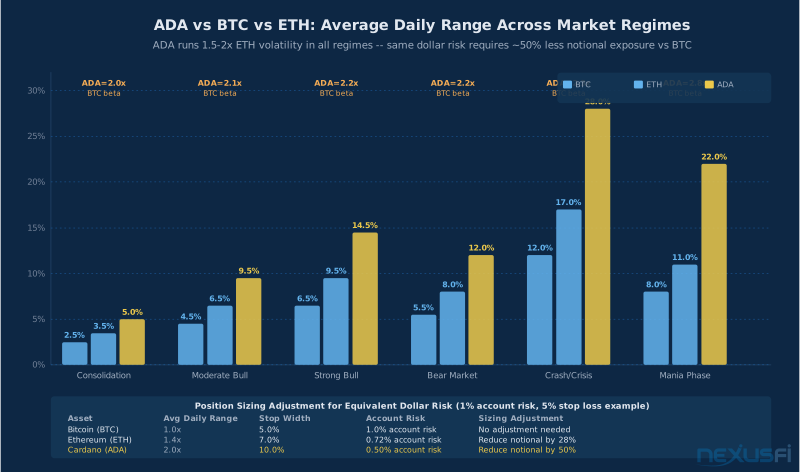
Average daily range: 4-6% in normal conditions. On trigger days (major upgrade announcements, macro crypto events, exchange listings), the daily range can reach 15-25%. Compare that to Bitcoin at 2.5-4%, ETH at 3.5-5%, and S&P 500 futures at 0.5-1%. You need proportionally wider stops than you'd use on BTC, and proportionally smaller position sizes for equivalent dollar risk.
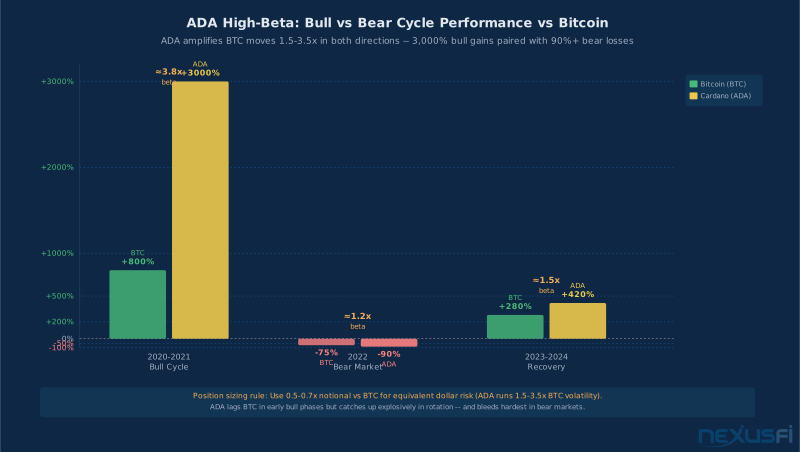
Cycle behavior: ADA follows a well-documented boom/bust cycle correlated with Bitcoin's 4-year halving cycle but amplified. In the 2020-2021 bull phase, ADA returned approximately 3,000% from cycle lows vs Bitcoin's ~800%. In the 2022 bear market, ADA lost 90%+ from its September 2021 ATH of $3.10 vs Bitcoin's ~75% drawdown. In the 2023-2024 recovery, ADA gained roughly 420% vs Bitcoin's 280%. The beta runs consistently higher in both directions.
Wick behavior: ADA regularly produces wicks of 5-15% on high-timeframe candles that are quickly reversed. This is partly a liquidity artifact — relatively thinner order books mean a single large market order can cause a wick that doesn't represent genuine price acceptance at that level. This creates false breakout setups for traders who use intraday wicks as entry triggers. Confirm wick-based signals with volume data before acting on them.
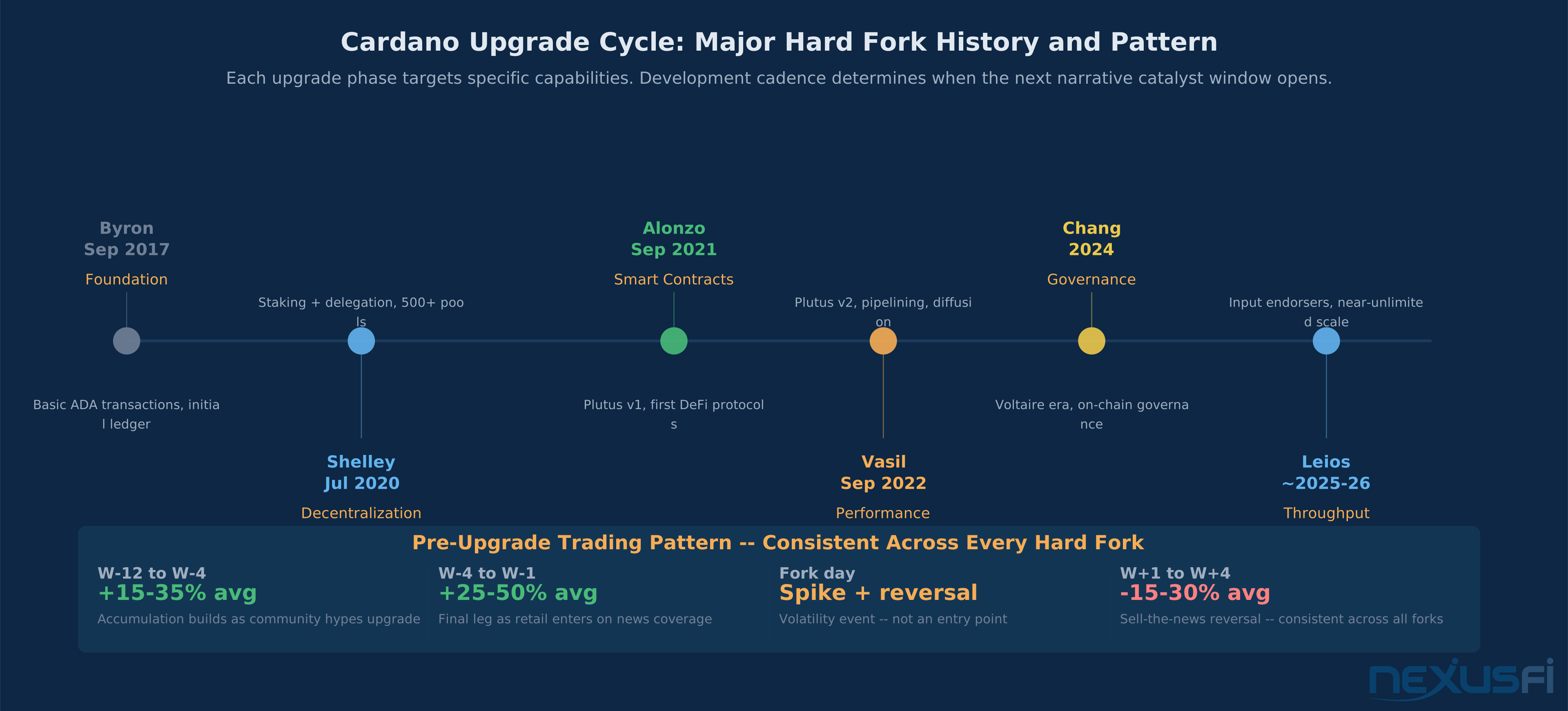
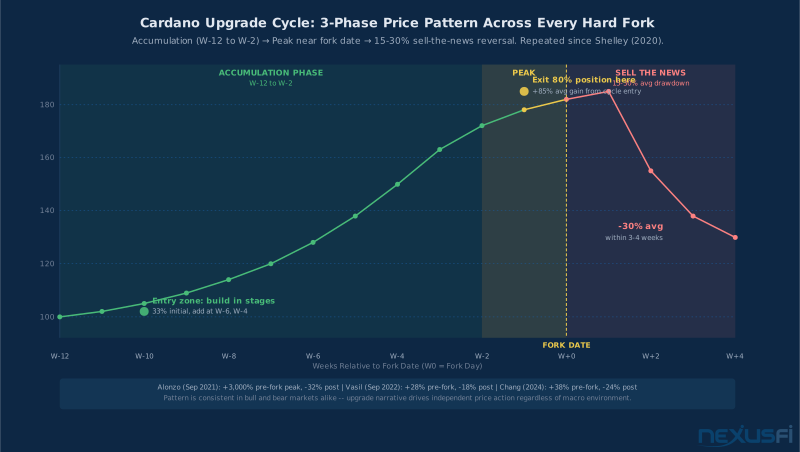
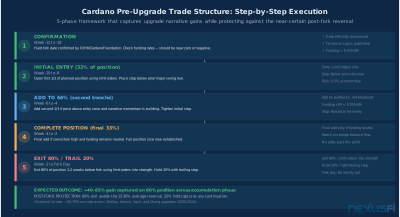
Upgrade cycle pattern: Every major Cardano hard fork has followed a 3-phase pattern — accumulation 8-12 weeks before the fork, a peak near the fork date, then a 15-30% sell-the-news reversal within days to weeks of the launch. This pattern has been consistent across Shelley (2020), Alonzo (2021), Vasil (2022), and Chang (2024). The accumulation phase tends to produce independent price action — ADA outperforms BTC during this window even in sideways BTC markets.
Weekend and off-hours behavior: Like most crypto assets, ADA has thinner liquidity outside of US Eastern/European market hours. Weekend moves can extend further than weekday moves for equivalent order flow. If you're running leveraged positions, weekend gap risk is real — especially through Sunday nights when Asia-Pacific sessions open and can reprice aggressively.
The upgrade cycle pattern is one of the most documented and consistently replicable setups in altcoin trading. The mechanism is behavioral, not technical: each fork creates a narrative window, institutional and retail participants accumulate in anticipation, and the sell-the-news reversal occurs because the forward-looking price already reflected the expected impact. Understanding why the pattern exists helps you know when it might break.
BTC/ETH Correlation: Trading ADA in Context #
The single most important framework for trading ADA: ADA is not an independent asset. It's a leveraged bet on crypto market sentiment, with BTC as the primary driver.
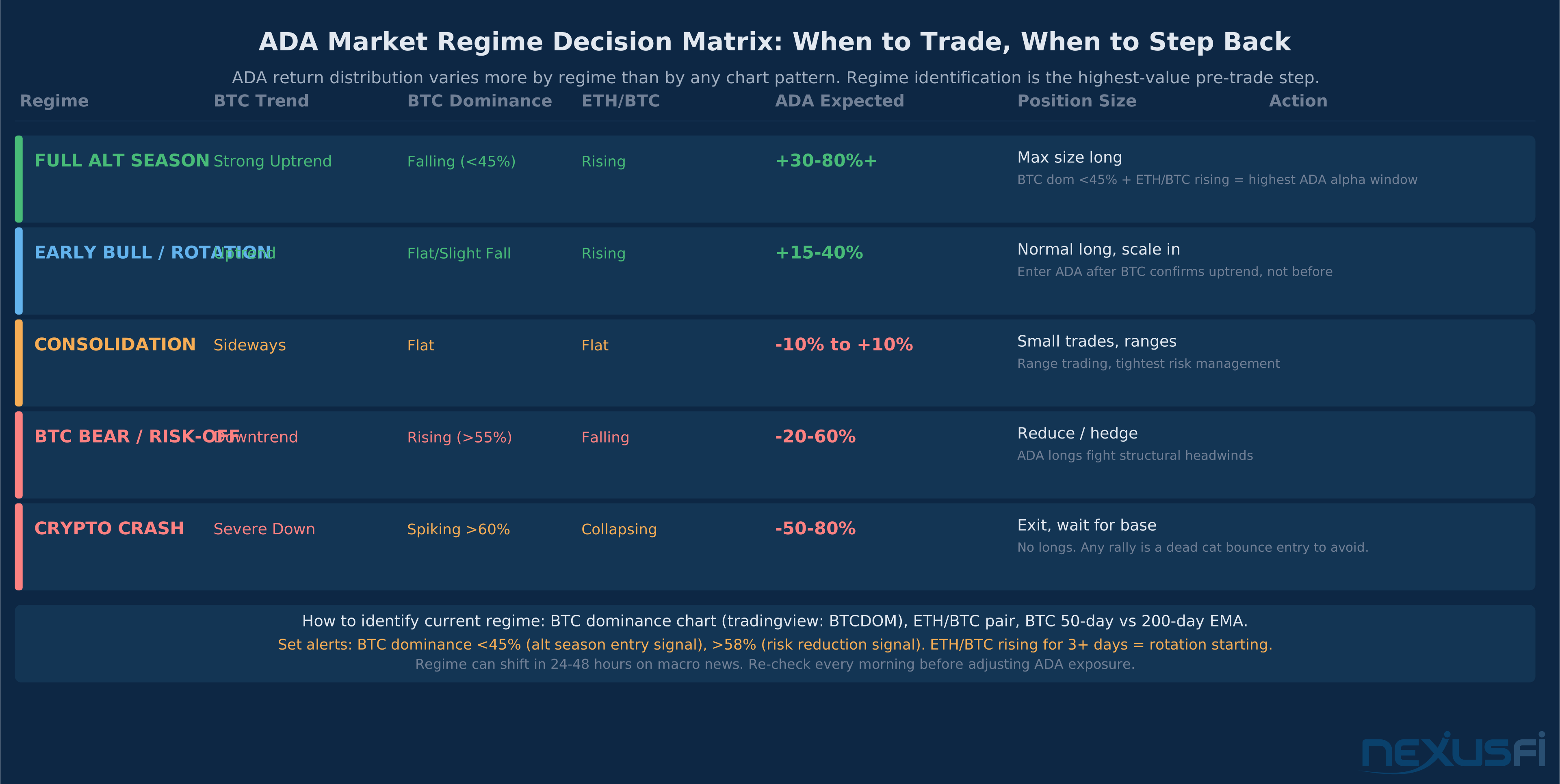
The correlation structure on most trading days: if BTC is up, ADA is usually up more. If BTC is down, ADA is usually down more. The magnitude differential — the beta — typically runs 1.8-3.5x BTC's daily move. This isn't an accident or temporary — it's structural. ADA's trading volume is dominated by spot and derivatives traders who use crypto-to-crypto pairs, with most of the flow ultimately denominated and benchmarked against BTC.
BTC dominance is the regime indicator. When BTC dominance is rising (BTC taking a larger share of total crypto market cap), altcoins like ADA tend to underperform or bleed. When BTC dominance is falling — the "alt season" signal — capital rotates from BTC into ETH and then into higher-beta alts like ADA. The BTC dominance chart is as important to ADA traders as price itself.
ETH/BTC ratio matters too. A rising ETH/BTC (Ethereum outperforming Bitcoin) signals that smart-money rotation has reached the second layer of the risk hierarchy. Often, ADA rallies follow ETH outperformance by days to weeks, as the same rotation trade extends into higher-beta smart contract layer-1s.
Practical trading rules:
Rule 1: Don't trade ADA long in a falling BTC tape. You're fighting the primary driver. Even if the ADA-specific setup looks clean, BTC macro headwinds will usually override it.
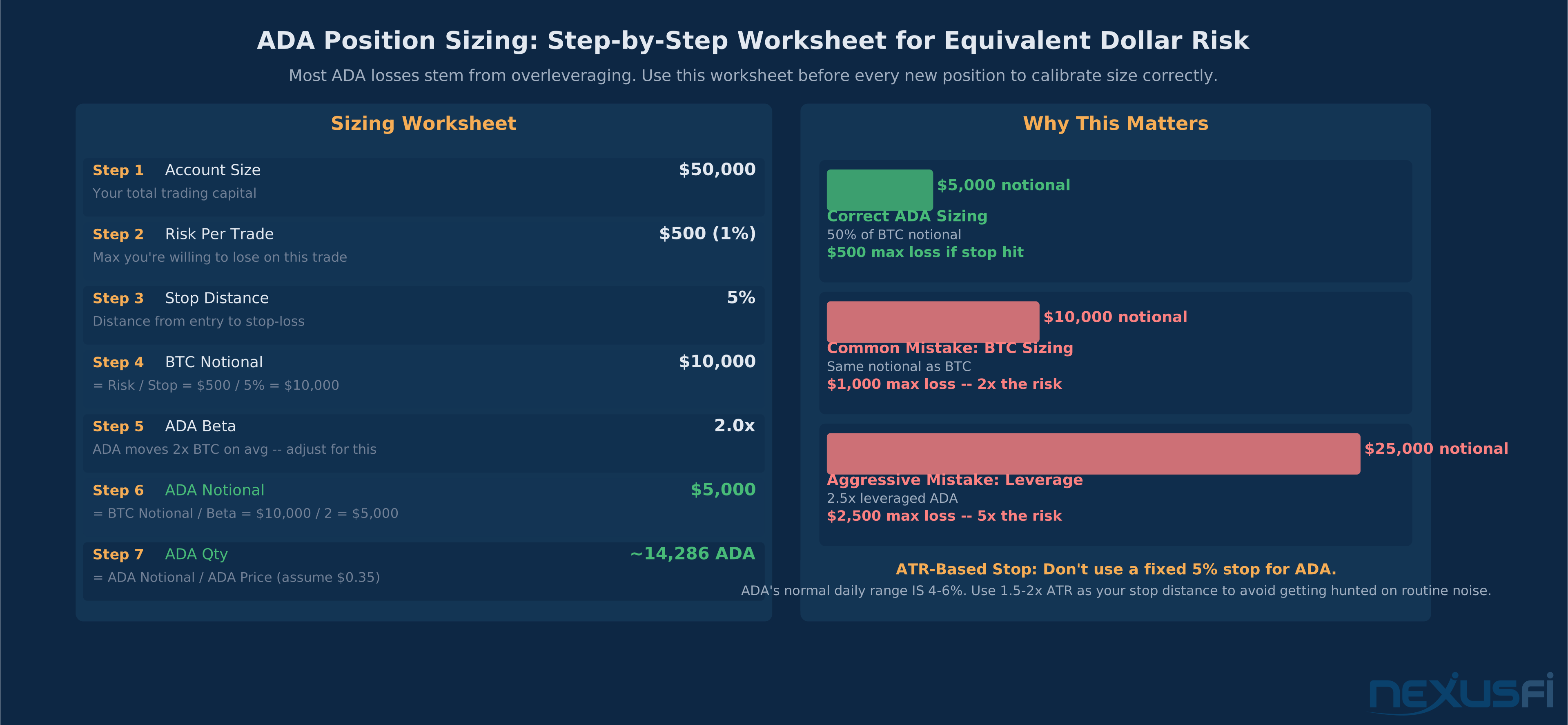
Rule 2: Size ADA positions at 40-60% of the notional you'd use for an equivalent BTC setup. The same dollar-risk per trade at ADA's higher volatility means smaller notional exposure. Most traders size ADA the same as BTC and get surprised when normal BTC volatility translates to outsized ADA P&L swings.
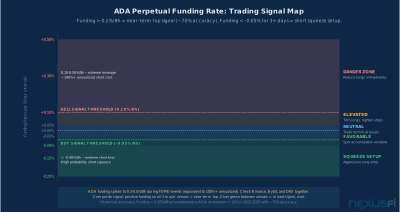
Rule 3: Check funding rates before entering. ADA perpetual funding above 0.10%/8h (equivalent to 100%+ annualized short cost) signals an overcrowded leveraged long position. This is a near-term top signal with roughly 70% accuracy — crowded longs are vulnerable to any negative trigger, and the unwind can be violent. The inverse signal (extreme negative funding, -0.08%/8h sustained for 3+ days) sets up short squeezes.
DEX Environment: Where ADA Actually Trades #
For most retail volume, ADA trades on centralized exchanges — Binance, Coinbase, Kraken, OKX. These venues offer deep spot books, perpetual swaps with up to 20x leverage, and tight spreads at standard retail size. For large retail or institutional size, CEX remains the preferred execution venue for ADA because the liquidity depth is orders of magnitude better than on-chain DEXs.
On-chain DEX execution on Cardano involves a different set of tradeoffs:
Minswap: The largest Cardano DEX by TVL and volume. Uses a batcher design to handle the UTXO concurrency issue — trades are queued and batched together by protocol validators. TVL as of 2026 is approximately $80-100M, with the ADA/USDC and ADA/USDT pairs being the most liquid.
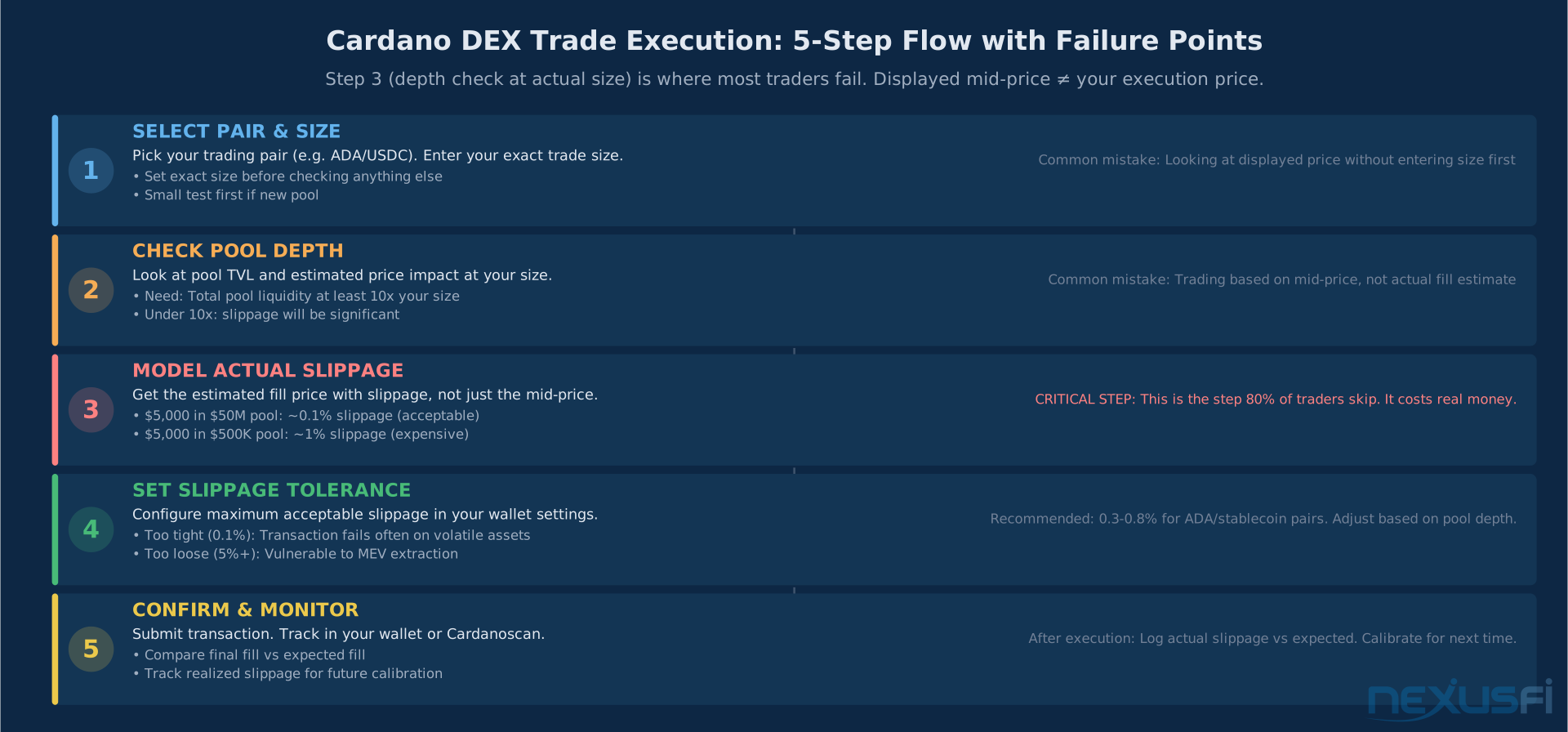
Slippage at realistic sizes: A $1,000 ADA trade on Cardano's largest DEX will clear with minimal slippage. A $25,000 trade starts to see 1.5-3% slippage. A $100,000 trade? You're looking at 4-8%+ depending on current pool depth, and that's before factoring in batcher fees. For comparison, a $100,000 ADA trade on Binance spot executes at sub-0.1% slippage. For any position above $10,000-15,000, CEX is almost always the better execution venue.
Routing: On Cardano DEXs, there's no mature multi-hop routing infrastructure comparable to Uniswap's router or 1inch's aggregator on Ethereum. You're typically executing against single pools. Check pool depth manually before committing to a DEX trade at size.
Bridge risk: Cardano's LayerZero integration (2025) opened cross-chain asset movement to 80+ chains, reducing the historical "island" problem where assets couldn't easily move between Cardano and Ethereum/Solana. But bridge risk remains — bridged assets carry smart contract and oracle risk layered on top of base chain risk. If you're using bridged stablecoins for Cardano DeFi, understand the bridge mechanics before significant allocation.
For systematic traders: The Cardano DEX ecosystem is not well-suited to algorithmic execution at meaningful size. Batcher queues introduce latency, the available DEX APIs vary in quality, and routing options are limited. For systematic ADA exposure, perpetual futures on major CEXs offer the best combination of liquidity, execution quality, and infrastructure.
Cardano vs Ethereum: A Trader's Comparison #
Traders often frame this as a competition. It's not — they're different tools with different trade-offs, and which one matters for your portfolio depends on what you're trying to accomplish.
For on-chain DeFi execution: Ethereum and its L2 ecosystem (Arbitrum, Base, Optimism) have deeper liquidity, mature aggregator infrastructure, and the established stablecoin rails that institutional money flows through. If you're running systematic on-chain strategies at size, Ethereum is currently the more complete ecosystem.
For spot and derivatives trading: Both trade on the same major CEXs. ETH has slightly deeper spot books and more institutional product development (ETH ETFs, CME contracts). ADA trades with higher volatility and offers larger percentage moves for a given BTC trigger — higher risk, higher potential return on directional bets.
For staking yield: Cardano's 2.5-4.5% APY for liquid, non-custodial staking compares favorably to Ethereum's 3-5% staking yield, which requires either running a validator (32 ETH minimum, significant operational overhead) or using Lido/similar liquid staking derivatives with added smart contract risk. Cardano's delegated staking model is operationally simpler for retail holders.
@Fluid Fox, a long-time NexusFi Elite member who trades both equities and crypto, described her altcoin evaluation framework: "I invest in cryptos more than I trade them, so I factor in use-case (real world utility), potential return on investment, circulating supply relative to the current price and performance of the asset, stature, relationships and connections of the people who created the cryptocurrency, and I try to understand the blockchain or digital ledger tech itself." (Becoming A Better Trader, 2021) That's basically the ADA vs ETH allocation framework in practitioner form — Cardano's case rests on architectural correctness, narrative, and upgrade cycle patterns. Where Ethereum currently dominates is DeFi liquidity depth and institutional product development.
For development activity: Ethereum has the larger developer community, more strong tooling, and deeper DeFi composability. Cardano has grown its developer base much since Alonzo but operates from a smaller base. The Aiken language adoption has accelerated on-chain development, but Ethereum's network effects remain dominant for new protocol launches.
For price behavior: ADA runs higher beta than ETH in both directions. Same BTC macro trigger: ETH might move 8%, ADA moves 15%. In bear markets, ETH often holds value better than ADA over multi-month periods. In the late-stage bull phase when alt season kicks in, ADA can dramatically outperform ETH on a shorter timeframe.
Common ADA Trading Mistakes #
These are the patterns that consistently produce losses — mostly by experienced traders who apply frameworks from other asset classes without adjustment:
Treating ADA as a safe large-cap: It's in the top 10 by market cap. It's held that position for years. So it must be relatively stable, right? Wrong. ADA has drawn down 85-95% from ATH twice since 2018. Position it in your portfolio as you would any high-beta speculative asset, not as a "core holding."
Using market orders on DEXs: On a thin Cardano DEX pool, a market order at $25,000 size can easily execute 2-4% below the displayed mid-price. That's $500-1,000 in hidden execution cost before the trade even starts working. Use limit orders with explicit maximum slippage parameters. Always preview estimated slippage before confirming.
Ignoring BTC regime: This gets traders more than almost anything else. You do your analysis on ADA, find a clean setup, enter long — and then BTC sells off 8% on macro news. ADA follows at 15-20% down. The ADA-specific analysis was irrelevant because the primary driver moved against you. Check BTC first, every time.
Overleveraging perpetuals: ADA's daily range means that at 10x leverage, a normal day of 5% ADA volatility produces a 50% swing in your position value. That's not a risk management problem — that's a mathematical certainty of getting liquidated given enough time. Most ADA perp traders who lose big are running 5-20x on an asset that moves 5-10% on quiet days.
Overweighting staking yield in the trade thesis: "I'll buy ADA and collect staking rewards while I wait." The math: 3.5% APY / 4 quarters = 0.875% per quarter. ADA can lose 30% in a month. The yield doesn't change the risk calculus in any meaningful way. It's nice income on a long-term hold, not a reason to enter or hold through a drawdown.
Buying narrative peaks: "Cardano just announced [major upgrade / major partnership / exchange listing]." Social media erupts. Price rips. You buy. Price reverses 20-30% within days. The pattern repeats on every single trigger because the upgrade cycle accumulation phase is well-understood and smart money is already positioned — the public announcement is the distribution signal, not the buy signal.
Not building upgrade cycle positions early enough: The flip side of the above. The upgrade cycle pattern creates a genuine edge, but only if you enter 8-12 weeks before the fork date — not in the week before. By the time a Cardano upgrade is widely covered on crypto news sites, the positioning window is largely closed.
ADA's epoch unlock delay creates a 5-15 day lag between when staked holders decide to sell and when exchange balances actually rise. This makes exchange inflow trends a leading indicator — not a coincident one. When CryptoQuant shows exchange ADA balances rising persistently over 7+ days, distribution is already underway before price reflects it.
Practical ADA Trading Framework #
Here's a concrete framework for structuring ADA positions:
Step 1: Macro regime filter
Before looking at any ADA-specific setup, answer: Is BTC in an uptrend, neutral, or downtrend? Is BTC dominance rising or falling? If BTC is trending down and dominance is rising, ADA exposure should be reduced or hedged. Only proceed to ADA-specific analysis when the macro filter is green or neutral.
Step 2: Upgrade cycle timing
Check the Cardano development roadmap (cardano.org or IOHK's GitHub). Any major hard fork within 12 weeks? If yes, the upgrade cycle setup applies: build position in weeks 12-4 before the fork, trim aggressively in weeks 4-1, be mostly out on fork day. Use ADA's relatively thin order book to your advantage — don't try to exit all at once.
Step 3: On-chain signal check
Exchange ADA balance trend (CryptoQuant): Rising = distribution, bearish. Falling = accumulation, bullish. ADA perpetual funding rate (Coinglass): Above 0.10%/8h = crowded longs, reduce exposure. Below -0.05%/8h sustained = short squeeze potential. These two signals together give you the immediate-term sentiment picture that pure chart analysis misses.
Step 4: Position sizing
For ADA, use 40-60% of the notional you'd use for an equivalent BTC trade to maintain equivalent dollar risk. With a 5% ADA stop, you're risking 2x what you'd risk with a 5% BTC stop, because ADA's actual range can easily hit 5% on a random day. Size down so.
Step 5: Execution venue
Below $15,000 notional: DEX execution on Cardano can work, watch slippage. Above $15,000: CEX spot or perpetuals. Above $100,000: CEX only, check book depth before entering, consider staged entry over multiple days if market impact is a concern.
Step 6: Entry structure
Staged entries are much better than all-at-once entries for ADA. Build in thirds — initial position, add at the first technical confirmation, final add if conviction remains high and funding is still neutral. This smooths the average entry price and reduces the impact of the wick-heavy price action.
Ecosystem Signals to Monitor #
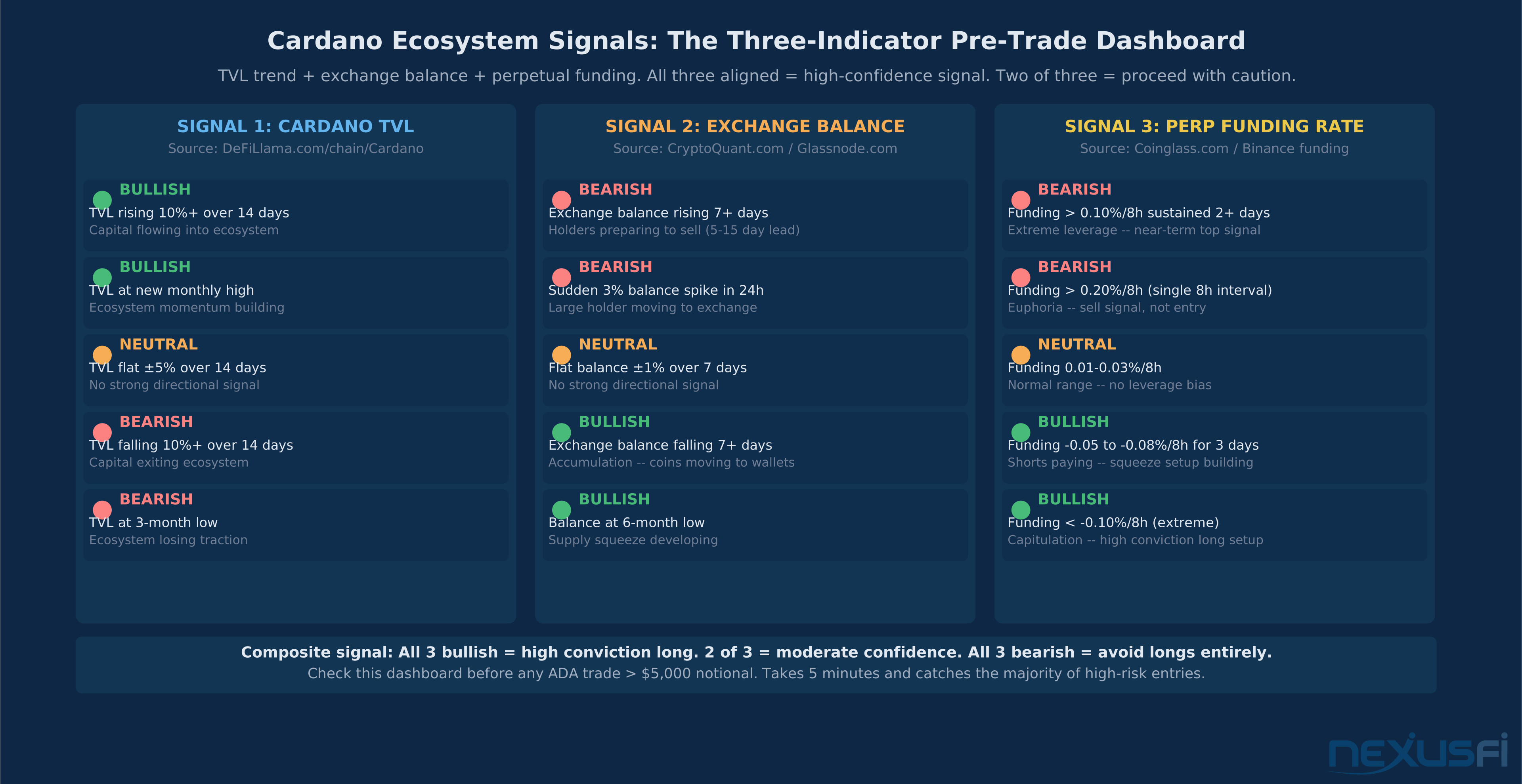
These are the data points that provide genuine edge for ADA positioning:
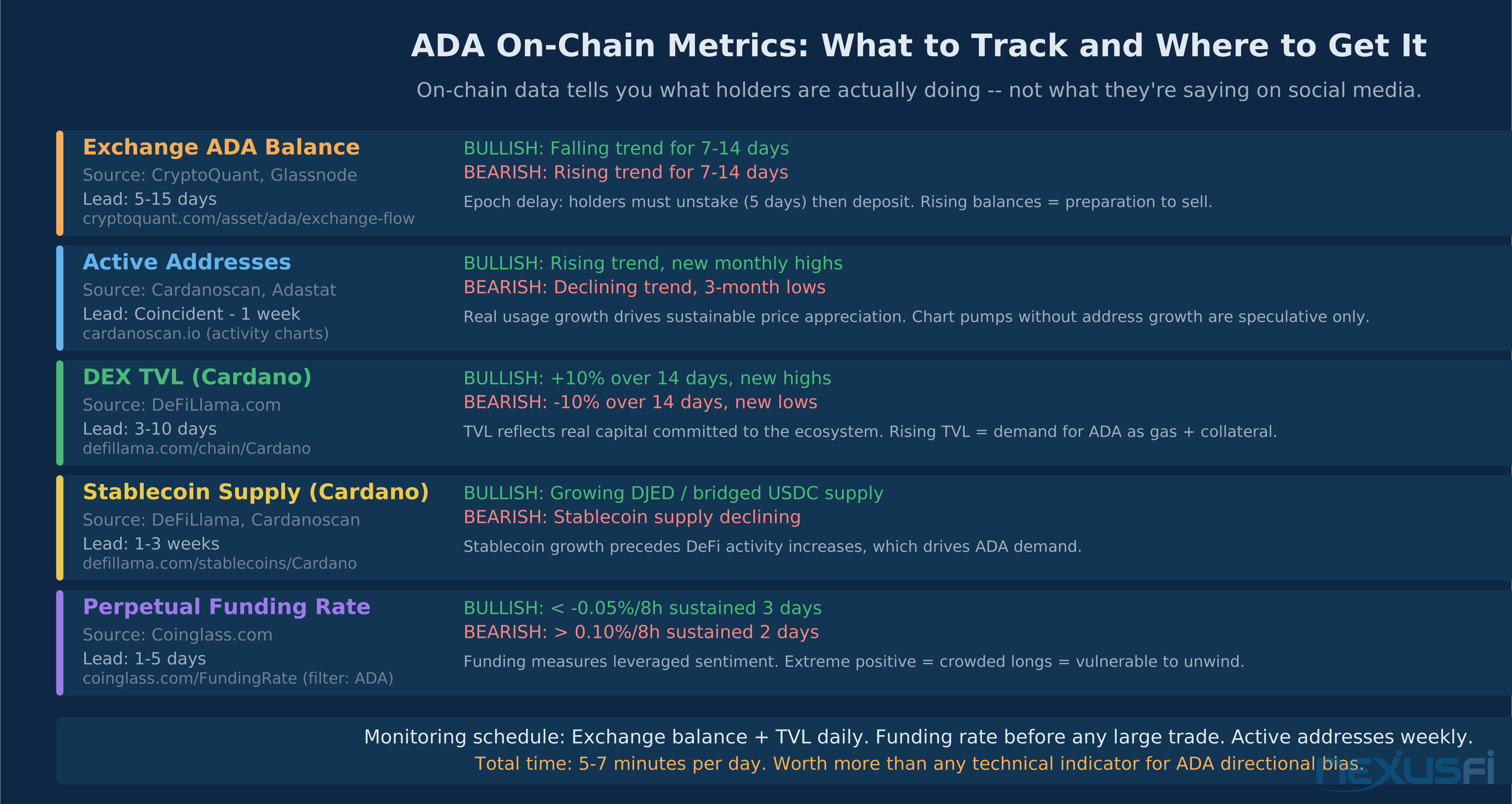
DEX TVL trend (DeFiLlama): Rising TVL means capital is flowing into the Cardano ecosystem — bullish. Falling TVL signals capital leaving, bearish even if ADA spot price hasn't responded yet. DeFiLlama's Cardano breakdown separates native ADA TVL from bridged assets.
Exchange ADA balance (CryptoQuant, Glassnode): The primary on-chain flow signal. When exchange holdings rise persistently over a 7-14 day window, holders are preparing to sell. This is a high-quality leading indicator because of the epoch delay between unstaking and deposit.
The signal quality of on-chain data has been validated systematically in the NexusFi community. @rleplae ran a rigorous backtest combining on-chain metrics with a standard MACD/moving average strategy: "On a very base and simple MACD / Moving averages trading bot, the result on 5 yr was 140%, adding an on-chain metric filter, the result was boosted to above 450%." (Building an alpha out of on-chain data?, 2022) Exchange balance flows operate on this same principle — they surface supply dynamics invisible to price charts, and in ADA's case the epoch unlock delay makes them a especially clean leading signal.
ADA perpetual funding rates (Coinglass): Real-time sentiment indicator for leveraged traders. The composite signal across Binance, Bybit, and OKX is more reliable than any single exchange. Divergence between venues — one venue positive, another negative — signals mixed positioning and lower conviction in either direction.
Developer activity (GitHub, Essential Cardano newsletter): Not for real-time trading, but for medium-term narrative formation. Major protocol updates (Ouroboros Leios for throughput, governance voting activity, bridge launches) are the catalysts that drive upgrade cycle accumulation.
BTC dominance and ETH/BTC ratio: Your primary macro filters. BTC dominance falling + ETH/BTC rising = alt season conditions where ADA performs best. Set alerts at BTC dominance 45% (extended alt season) and ETH/BTC 0.07 (rotation signal) as regime indicators.
Active addresses and contract interactions (Cardanoscan, Adastat): Track actual usage growth, not just price. Sustained growth in daily active addresses and smart contract volume indicates genuine adoption driving ecosystem value, not pure speculation.
Knowledge Map
Prerequisites
Understand these firstCitations
- — Systematic Altcoin Trading Strategy using Trading Volumes (2018) 👍 2“Volume shocks and past returns create highly profitable trading strategies in cryptocurrency markets -- altcoin volume is a stronger signal than price momentum alone in crypto.”
- — Becoming A Better Trader (2021) 👍 7“BTC dominance chart: when alt-coins rally, it tanks. Markets might trade in a much more organized manner given current institutional attention and interest.”
- — Becoming A Better Trader (2021) 👍 5“Haha absolutely! I've been borderline obsessed with cryptocurrencies, admittedly because there's a lot of profit potential. Crypto is high risk, high reward.”
- — Tezos (XTZ) - the self-governing, smart contracts, DeFi capable coin (2021) 👍 3“Formal verification can help avoid costly bugs and the contentious debates that follow -- Tezos facilitates formal verification, a technique used to improve security by mathematically proving properties about programs such as smart contracts.”
- — Becoming A Better Trader (2021) 👍 3“I invest in cryptos more than I trade them, so I factor in use-case (real world utility), potential return on investment, circulating supply relative to the current price and performance of the asset, stature, relationships and connections of the people who created the cryptocurrency.”
- — Building an alpha out of on-chain data ? (2022) 👍 5“On a very base and simple MACD / Moving averages trading bot, the result on 5 yr was 140%, adding an on-chain metric filter, the result was boosted to above 450%.”
- Cardano Foundation — Cardano Protocol: Ouroboros Proof-of-Stake Overview (2026)
- DeFiLlama — Cardano TVL and Protocol Statistics (2026)
- Coinglass — ADA Perpetual Funding Rate Historical Data (2026)
- Minswap — Minswap DEX: Cardano Liquidity Protocol Statistics (2026)
- CryptoQuant — Cardano Exchange Inflow/Outflow On-Chain Data (2026)