



CME Bitcoin and Ether Options on Futures: The Complete Trading Guide
Overview #
Most traders who discover CME crypto options make the same mistake first: they assume they're buying or selling Bitcoin or Ether. They're not. CME Bitcoin and Ether options are options on futures — and that single distinction changes everything about how they behave, how they settle, and how you use them.
When you buy a CME Bitcoin call, you're not getting the right to buy 5 BTC at a price. You're getting the right to a long position in a CME Bitcoin futures contract at the strike price. That futures contract then cash-settles to the CME CF Bitcoin Reference Rate. No actual Bitcoin changes hands. No custody required. Pure derivatives exposure, routed entirely through CME clearing, regulated by the CFTC.
This matters for three reasons. First, settlement is clean — you get cash, not custody problems. Second, the pricing references the futures curve, not the spot price, which means basis and term structure are live variables you have to manage. Third, the volatility surface looks nothing like equity options — persistent left-tail skew, regime-dependent term structure, and implied volatility that can spike 40+ points in a session when crypto goes risk-off.
— compare that to 10.9% OTM ES puts at 2% premium, or 11% OTM crude oil calls at 3.3%. Crypto options carry 4--6x the premium of comparable equity or commodity options, reflecting the asset class's realized volatility profile.
Since then, CME's crypto options market has matured considerably. CME's crypto derivatives business grew 139% year-over-year in 2025, reaching $12 billion in average daily notional value. Options on BTC and ETH now trade alongside options on SOL, XRP, and the newer altcoin contracts. In December 2025, CME and CF Benchmarks launched the Bitcoin Volatility Index (BVIV) — a VIX-style measure derived specifically from CME options — giving traders their first exchange-level crypto vol benchmark.
This article covers the mechanics, margin, volatility behavior, and practical strategy framework for trading CME Bitcoin and Ether options. It assumes you understand futures basics — if you need the foundation, start with Crypto Derivatives Trading and Margin Requirements and Leverage.
Contract Specifications: What You're Actually Trading #
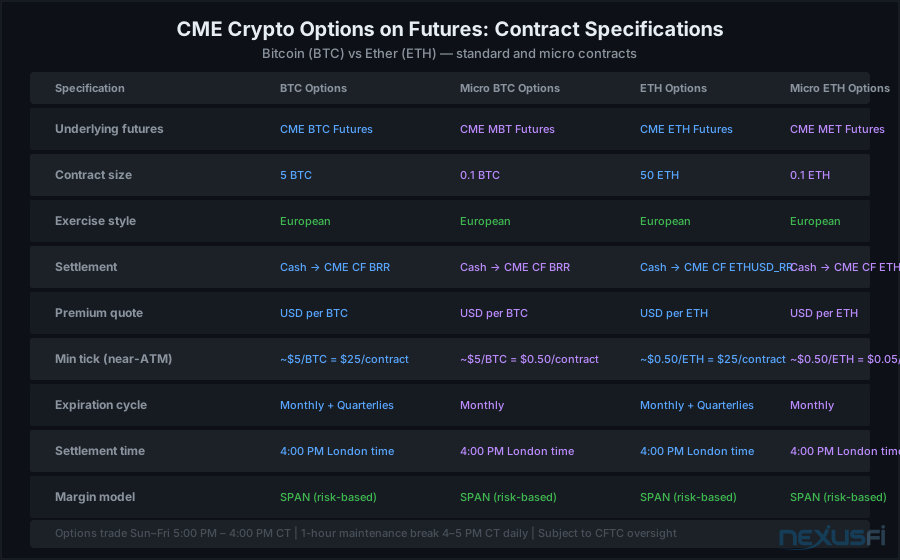
There are four CME crypto option products most relevant to futures traders:
Standard BTC Options
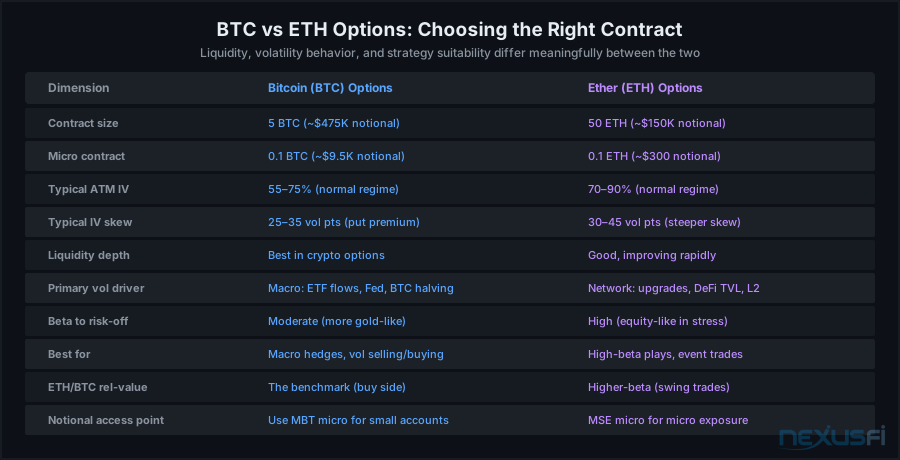
Each contract represents one CME Bitcoin futures contract — 5 BTC. At $95,000/BTC, that's $475,000 notional per option contract. The premium is quoted in USD per bitcoin, so a $2,000/BTC premium on a standard BTC call means $10,000 upfront cost for that option.
Micro BTC Options (MBTM)
Same mechanics, 0.1 BTC per contract. At $95,000/BTC, that's $9,500 notional. One micro BTC option represents 1/50th the exposure of a standard contract — critical for retail position sizing. A $2,000/BTC premium costs $200 on the micro.
Standard ETH Options
Each contract is one CME Ether futures contract — 50 ETH. At $3,000/ETH, that's $150,000 notional per option contract. ETH options often carry higher implied volatility than BTC options — higher beta, more event sensitivity, steeper put skew.
Micro ETH Options
0.1 ETH per contract. At $3,000/ETH, that's $300 notional — very small increments for strategy calibration, and useful for testing option structures on smaller accounts before scaling.
The Exercise Style Question
CME BTC and ETH options are European-style: exercise is only permitted at expiration. You cannot exercise early. This is a material difference from most equity options (which are American-style) and has practical implications:
- No early assignment risk -- short option positions can't be called away before expiry
- Black-76 model is the correct pricing framework (Black-Scholes with futures as the underlying)
- Closing a position requires selling the option back in the market, not exercising it
- Time value behavior is simpler -- no "early exercise premium" component
The European-style exercise makes these options mathematically cleaner and operationally simpler than American equity options. The tradeoff: if you want to capture intrinsic value before expiry, you must sell the option, not exercise it.
Settlement: The Two-Step Process #
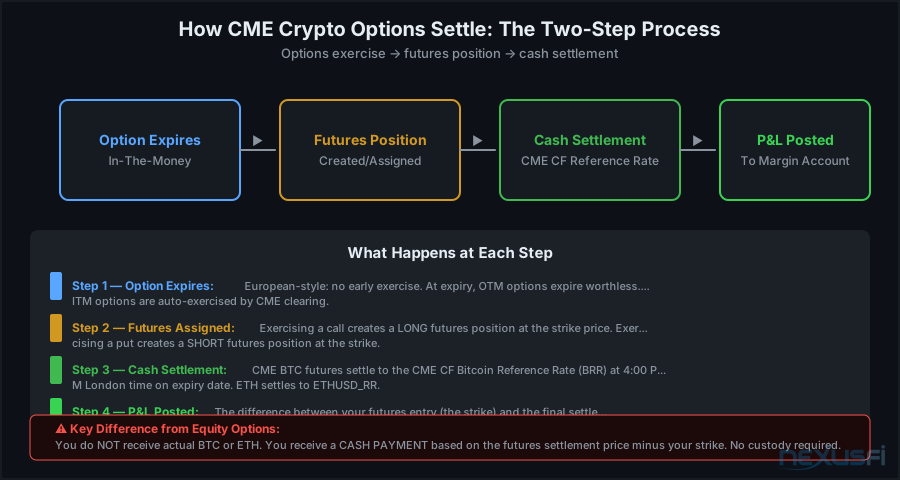
This is where most traders coming from equity options get confused. CME crypto options don't deliver coins. They settle through a two-step process:
Step 1 — Exercise at expiration: An in-the-money option is automatically exercised at expiry by CME clearing. Out-of-the-money options expire worthless.
Step 2 — Futures position then cash-settles: Exercising a call creates a long position in the underlying futures contract at the strike price. Exercising a put creates a short position. That futures contract immediately cash-settles to the CME CF reference rate (BRR for Bitcoin, ETHUSD_RR for Ether) at 4:00 PM London time on the expiration date.
Net result: you receive (or pay) the cash difference between your strike price and the final settlement rate, multiplied by the contract size. No Bitcoin or Ether touches your account. No custody provider involved. The settlement is faster and cleaner than physical delivery.
The reference rates matter. For Bitcoin:
- CME CF Bitcoin Reference Rate (BRR): calculated at 4:00 PM London time using transaction data from CME-designated constituent exchanges. This is the settlement benchmark for all CME BTC futures and options.
- The BRR is published daily and can diverge from spot prices by $50--$300 in normal conditions.
For Ether, the CME CF Ether-Dollar Reference Rate (ETHUSD_RR) uses the same methodology applied to ETH/USD pairs on constituent exchanges.
The practical implication: if you hold a BTC call through expiry and BTC is trading at $100,500 on Coinbase when the BRR prints at $100,200, you settle at $100,200. This basis difference between spot and the reference rate is small in normal conditions but can widen during high-volume periods near settlement.
Implied Volatility: The First Thing to Understand #
Equity options traders who approach crypto options with standard intuitions get hurt. Three things are different here:
The Level Is Higher
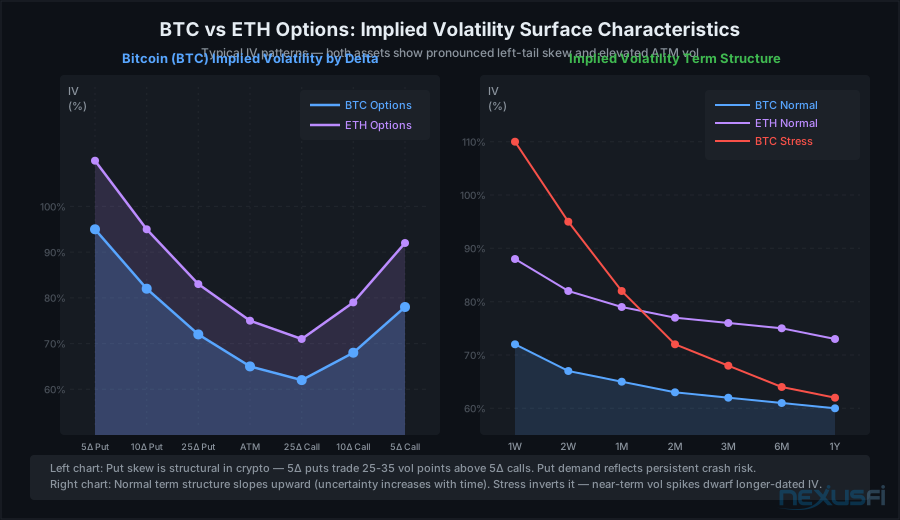
Bitcoin ATM implied volatility typically runs 55--75% annualized in normal market conditions. Ether runs 70--90%. Compare that to SPY options at 15--20% ATM IV in normal markets. The premium you pay for 10% OTM options in crypto is 4--6x what you'd pay in equities for equivalent moneyness. As @SMCJB documented in a 2020 NexusFi post, a 10.8% OTM Bitcoin call carried 13.3% premium vs. 2% for a comparable ES put and 3.3% for crude oil.
The Skew Is Structural
Crypto options show a pronounced left-tail skew: put options trade much richer than calls at equivalent OTM distance. 5-delta puts typically trade 25--35 vol points higher than 5-delta calls. This isn't just crash protection — it's a permanent feature of the crypto vol surface, reflecting the market's memory of extreme downside events and the asymmetric cost of margin calls in leveraged crypto markets.
ETH typically carries steeper skew than BTC, reflecting its higher beta and greater exposure to network-specific risk events.
IV rank first, then direction. Before selecting any crypto option strategy, check CME BVIV or your platform's IV rank indicator. The difference between BVIV at 40% (buy premium) and BVIV at 85% (sell premium via spreads) completely changes which structures make sense. Strategy selection without an IV context is guesswork.
The Term Structure Inverts in Stress
In normal conditions, crypto options show upward-sloping term structure: 1-week IV is lower than 3-month IV, reflecting greater uncertainty over longer time horizons. During stress events, this inverts violently: near-term IV spikes above 100% while 3-month IV moves up more modestly. The result is a contango-to-backwardation shift in the vol term structure — a signal that creates calendar spread opportunities for traders who recognize it.
Margin: What Your Account Actually Needs #
CME crypto options use SPAN (Standard Portfolio Analysis of Risk) margining, which calculates margin based on the portfolio-level risk profile rather than position-by-position. Key points:
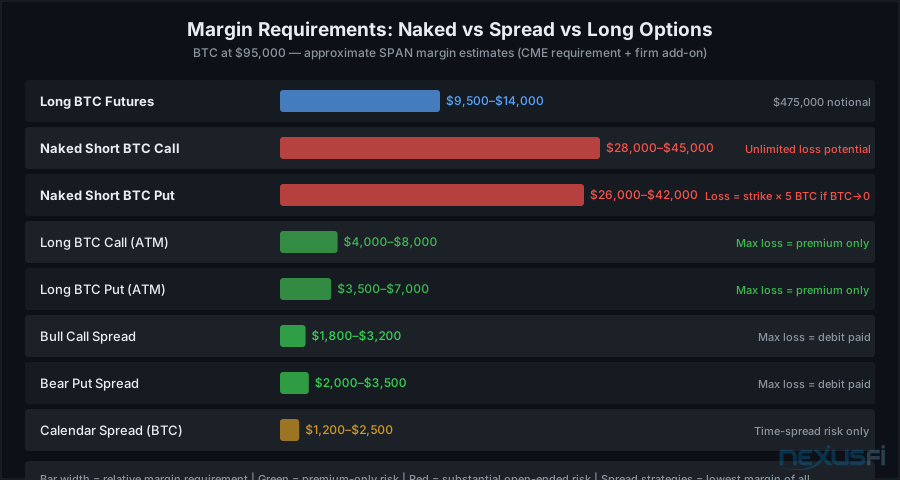
Long options: Pay the premium upfront. No further margin requirement. Maximum loss is the premium paid. This is the most accessible way to trade crypto options — your risk is completely capped at entry.
Short naked calls/puts: Initial margin runs $26,000--$45,000 per standard BTC contract depending on moneyness and current IV levels. This margin can expand rapidly during volatility spikes. A trader who is short naked BTC calls into a regulatory headline can face a margin call within hours as both delta and vega work against them.
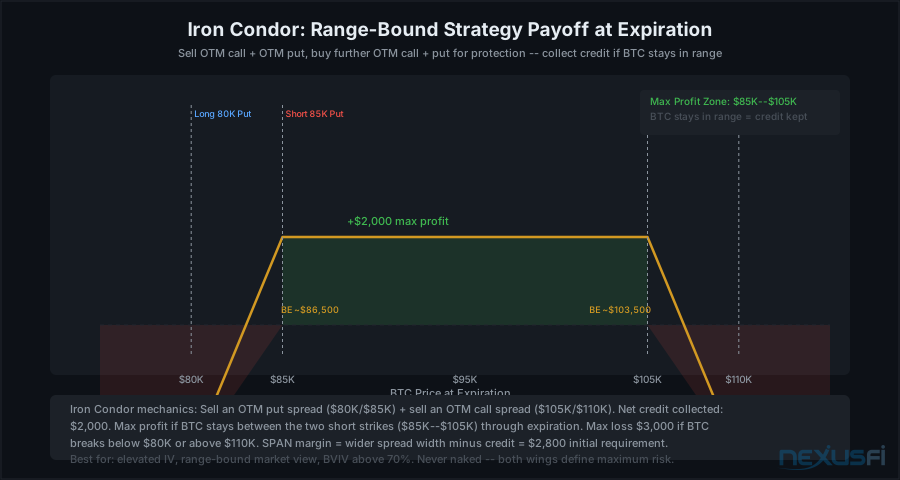
Spreads receive SPAN margin offsets: A bull call spread's margin is typically the net debit paid ($1,800--$3,500 for common strike widths). SPAN recognizes that the short call's risk is offset by the long call. Calendar spreads receive similar treatment. Iron condors are margined at the wider wing width minus the credit collected.
The practical message: for retail traders, long options and defined-risk spreads are the only structures that make risk management tractable. The notional exposure in standard BTC contracts ($475,000) makes naked short positions capital-intensive in ways that don't match retail account sizes.
Vertical Spreads: The Core Tool #
When crypto traders ask what single strategy covers the most use cases, the answer is vertical spreads. They're margin-efficient, define maximum loss at entry, reduce the vega exposure that makes outright options expensive to hold, and work in both debit and credit configurations depending on IV levels.
Bull Call Spread
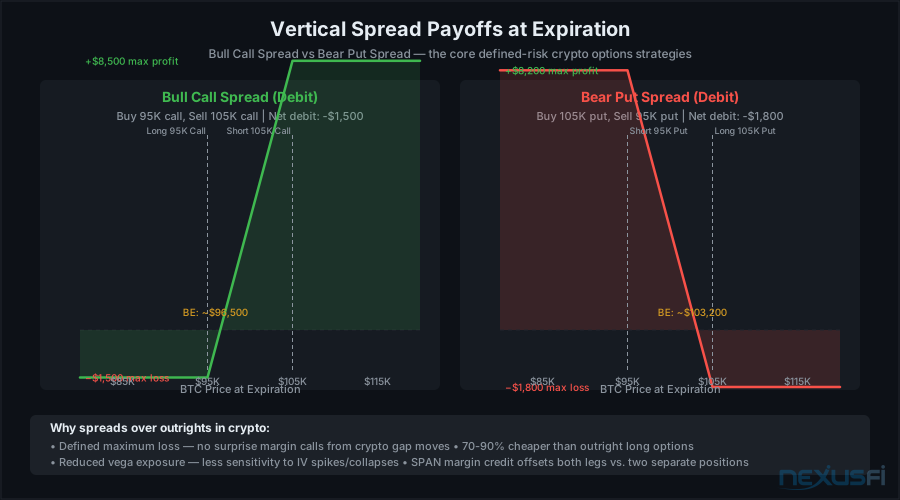
Buy a lower-strike call, sell a higher-strike call with the same expiration. Example: buy the 95K call, sell the 105K call. Net debit of roughly $1,500 for a 10-point spread with BTC near $95K. Maximum gain: $8,500 (the spread width minus the debit). Maximum loss: $1,500 (the debit paid). Breakeven: approximately $96,500.
Use when: moderately bullish, expecting upside but not an explosive move; IV is elevated (selling the higher-strike call captures some of that rich premium); account size limits outright long call exposure.
Bear Put Spread
Buy a higher-strike put, sell a lower-strike put. Example: buy the 105K put, sell the 95K put. Net debit of roughly $1,800. Maximum gain: $8,200. Maximum loss: $1,800. Breakeven: approximately $103,200.
Use when: moderately bearish, expecting downside but not a collapse; the higher-strike long put captures a large chunk of downside exposure at reasonable premium; selling the lower-strike put funds part of the cost and limits maximum gain.
Credit Spreads
Bull put spread (sell the higher put, buy the lower put) and bear call spread (sell the lower call, buy the higher call) collect a net credit upfront. They profit if the underlying stays beyond the short strike at expiry. Maximum gain is the credit collected; maximum loss is the spread width minus the credit.
Credit spreads work when IV is elevated and you expect range-bound price action — the high premium makes the credit collected meaningful relative to the max risk.
Calendar Spreads: Trading the Term Structure #
When crypto IV inverts — front-month IV spikes above back-month IV — calendar spreads become one of the most attractive structures in the toolkit. Buy the longer-dated option, sell the shorter-dated option at the same strike.
Example: sell the 1-week ATM BTC call when 1-week IV is at 95%, buy the 1-month ATM BTC call at 65% IV. If spot stays near the strike and the front-month vol crush materializes, the short leg decays faster than the long leg, producing a profit.
Calendar spreads receive SPAN margin offsets. The margin requirement is typically much lower than the notional exposure of either individual leg — SPAN recognizes the offsetting vega and limited net risk profile.
The risk: if spot moves sharply away from the strike, both legs lose value and the spread can produce a loss. Calendar spreads require the underlying to stay near the entry strike for the trade to work as intended. They're a vol-spread trade, not a directional trade.
For ETH specifically, calendar spreads around known network events (major upgrades, hard forks, ETF-related dates) can be powerful. Front-month IV spikes heading into an event are structural — the event passes, IV collapses, and the calendar spread benefits from the asymmetry.
Long Straddles and Strangles: When Direction Is Uncertain #
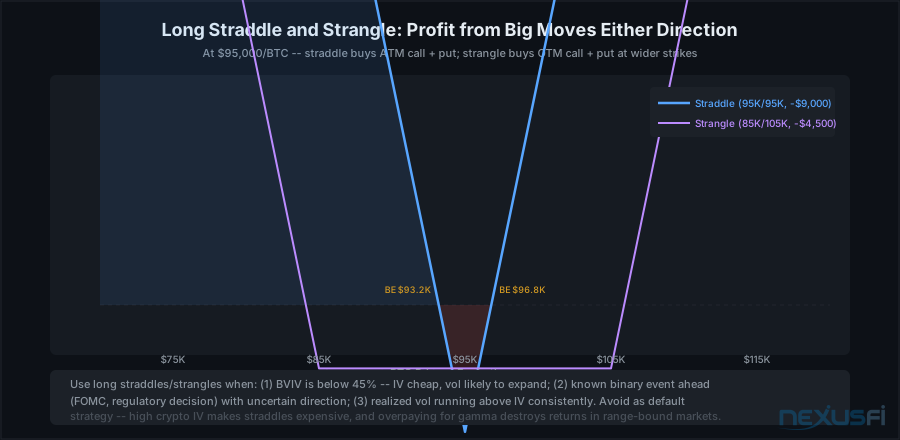
A long straddle (buy ATM call + buy ATM put at the same strike) profits from large moves in either direction. Cost is roughly 2x the ATM option premium. At $95,000/BTC with typical ATM IV of 65%, a 1-month straddle costs approximately $8,000--$10,000 for a standard contract, or $160--$200 for the equivalent micro position.
The key question: will realized volatility exceed implied volatility? If BTC moves more than the premium paid (the "breakeven range"), the straddle profits. If BTC stays within the breakeven range through expiry, the straddle loses.
Long strangles use OTM call + OTM put, which costs less than a straddle but requires a larger move to profit. Example: buy the 85K put and the 105K call with BTC at $95K. Lower cost, wider breakeven range.
When to use long volatility in crypto:
- Ahead of known catalysts (FOMC announcements, major regulatory decisions, ETF-related dates) when direction is genuinely unknown
- When CME BVIV is at historically low levels (below 45%) -- IV tends to mean-revert upward
- When realized volatility has been running much above implied volatility
- Never as a default strategy -- high crypto IV means straddles are expensive, and overpaying for gamma is the most common mistake in crypto vol trading
Short straddles and strangles are premium-selling strategies that profit from low realized volatility. They require significant margin and carry gap risk when BTC or ETH experiences weekend moves while CME is closed. These are sophisticated strategies suitable for experienced options traders with strong risk management — not appropriate for most retail participants in crypto.
Protective Hedges: Options for the Long Crypto Futures Trader #
CME crypto options work especially well as portfolio insurance for traders who hold long BTC or ETH futures positions. The mechanics are identical to equity options hedging — the advantage in crypto is that both the futures position and the options position settle through the same CME infrastructure, eliminating the basis risk that exists when hedging CME futures with spot or OTC options.
Protective Put
Long a CME BTC futures contract and concerned about downside? Buy an OTM put below the current level. If BTC falls past the strike, the put pays off, limiting your net loss. The cost is the put premium — think of it as insurance. With typical BTC IV, a 10% OTM put 1 month out costs roughly 2--4% of notional, or $9,500--$19,000 for a standard contract.
Collar
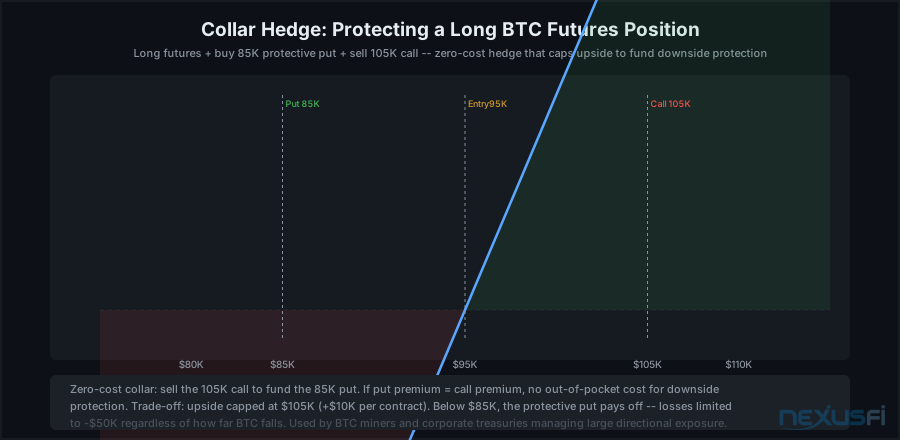
A collar funds the protective put by selling a call above the current level. Long futures + long put + short call. The short call limits your upside profit above the call strike but generates premium that offsets the put cost, often resulting in a zero-cost or near-zero-cost hedge. Widely used by miners, corporate treasuries holding BTC, and institutional funds managing long crypto exposure.
The tradeoff: you cap your upside. If BTC rallies strongly above the short call strike, you don't participate beyond that level. In a strong crypto bull trend, a collar is costly in opportunity terms.
BTC vs ETH: Choosing the Right Contract #
The two products behave differently enough that strategy selection is meaningfully asset-specific.
BTC Options are better suited for:
- Macro-driven directional trades (Fed policy, ETF flows, risk-off/on shifts)
- Vol strategies requiring deep liquidity (tighter bid-ask, better fill quality)
- Long-dated positions (quarterly expiries, calendar spreads across multiple months)
- Hedging against broad crypto market risk
ETH Options are better suited for:
- Event-driven trades around Ethereum network upgrades or protocol changes
- Higher-beta directional plays -- ETH tends to outperform BTC in strong risk-on and underperform in risk-off
- Short-dated structures where ETH's higher IV generates more premium per unit of risk
- Relative-value trades between ETH and BTC (pair trades using both options markets)
The ETH/BTC relative-value trade is worth noting separately. When ETH implied vol trades at a premium to BTC that feels excessive given recent correlation, traders sometimes sell ETH vol (via short ETH straddle or strangle) and buy BTC vol (via long BTC straddle), betting on vol convergence. This is a more sophisticated institutional strategy that requires careful correlation analysis, but the CME infrastructure makes it possible to execute entirely through regulated futures options.
The CME Bitcoin Volatility Index (BVIV) #
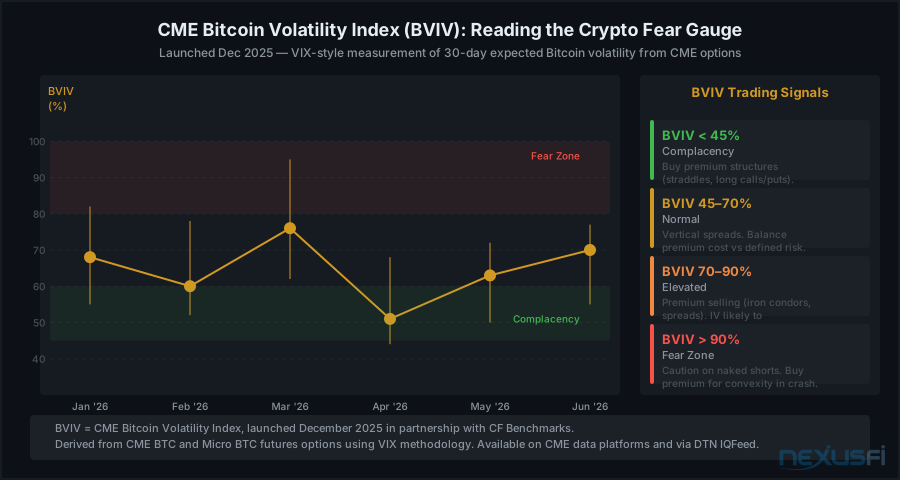
In December 2025, CME and CF Benchmarks launched the Bitcoin Volatility Index (BVIV) — a VIX-style measure derived from CME Bitcoin and Micro Bitcoin futures options. As Fi reported on NexusFi at launch: "BTC implied volatility derived from CME and Micro BTC futures options... VIX-style calculation methodology applied to Bitcoin... Enables new volatility trading strategies for institutional and retail traders."
BVIV measures the market's expectation of 30-day realized volatility, expressed as an annualized percentage. The reading is derived from the full options market across strikes and expirations, not just ATM IV. Key thresholds:
- BVIV below 45%: Complacency zone. The market is pricing in low future volatility. These are historically good entry points for long premium strategies -- vol tends to mean-revert upward from these levels. Buy straddles, buy OTM options.
- BVIV 45--70%: Normal regime. Standard vol environment for crypto. Vertical spreads are the workhorses -- balance premium cost against defined risk.
- BVIV 70--90%: Elevated vol. IV is rich. Premium selling through spreads and iron condors becomes more attractive as the market is likely to mean-revert.
- BVIV above 90%: Fear zone. IV is extremely elevated. Selling naked premium is dangerous -- the high IV reflects genuine tail-risk uncertainty. Defined-risk spreads still work for premium collection; outright long options offer convex payoffs if the vol spike continues.
BVIV as a position sizing tool. Beyond strategy selection, BVIV calibrates position size. At BVIV 45%, a single ATM BTC straddle might cost $8,000 — reasonable for a moderate account. At BVIV 95%, that same straddle costs $22,000. Scaling position size inversely with BVIV prevents the common mistake of buying the most expensive options at the worst possible time.
BVIV doesn't exist yet as a tradable product, but it provides the same type of anchoring that VIX does for equity options traders. It's available through CME data platforms and via DTN IQFeed for traders who have that data subscription.
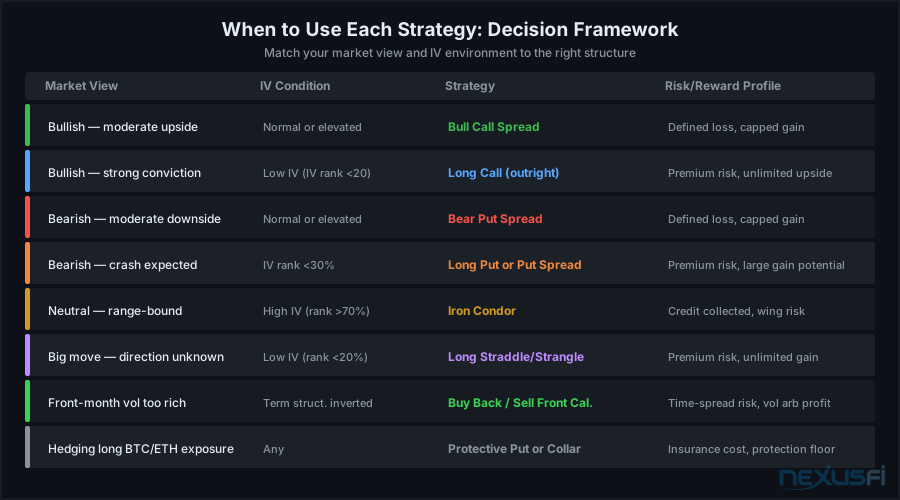
Strategy Selection by Market View #
The practical framework for selecting a crypto options strategy comes down to two variables: your directional view and the current IV environment.
When IV is low (BVIV below 45%, IV rank below 25th percentile):
- Directional long premium structures are cheapest -- outright calls/puts, long straddles
- Debit spreads (bull call, bear put) offer directional exposure at reasonable cost
- Premium selling is less attractive -- the credit collected doesn't justify the risk
When IV is elevated (BVIV above 70%, IV rank above 75th percentile):
- Premium selling becomes attractive -- but always with defined risk via spreads
- Iron condors for range-bound views with limited risk on each side
- Calendar spreads if front-month IV is disproportionately elevated vs back-months
- Avoid naked short positions -- crypto can gap against you overnight
What Equity Options Traders Get Wrong #
The three most expensive mistakes traders make when transitioning from equity options to CME crypto options:
1. Applying equity-sized position sizing. A typical equity options trader buying 10 SPY calls might have $5,000--$10,000 at risk. Ten micro BTC calls (0.1 BTC each) at similar premium-to-underlying ratios could mean $80,000--$120,000 at risk. Standard BTC contracts at $475,000 notional require recalibrating every risk metric. Always convert to dollar risk first: how much am I putting at risk if these expire worthless?
2. Expecting American-style exercise behavior. Many equity traders try to "exercise early" to capture intrinsic value or "roll away" from in-the-money short options. None of that applies here. European style means you manage positions by trading in the market, not exercising. Short options can only be closed by buying them back, not by assignment risk management.
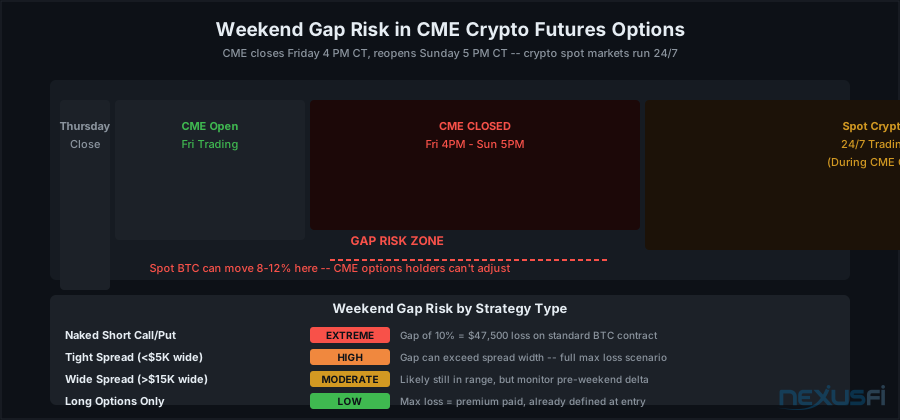
3. Ignoring weekend gap risk. Crypto spot markets trade 24/7. CME markets close for a 1-hour maintenance window at 4 PM CT daily and have reduced hours over weekends. A Bitcoin news event Friday night can move spot 8--12% before CME re-opens Sunday evening. Options traders with naked short positions or narrow spreads who don't plan for weekend gaps are systematically exposed to losses that can't be managed in real time.
[NexusFi, 2025] Either hedge before the weekend close or understand that your spread width needs to accommodate potential gap scenarios.
Weekend gap exposure is non-negotiable. Naked short BTC or ETH options held into a Friday CME close carry 49 hours of unhedgeable spot market risk. A crypto news event Saturday night can move spot 10--15% before CME reopens Sunday 5PM CT. Either close or hedge naked exposure before Friday 3:30 PM CT, or only trade defined-risk structures where weekend gaps can't cause losses beyond your predefined maximum.
4. Treating "crypto options" as the same as "options on crypto." Deribit offers American-style options on spot crypto. BitMEX, Bybit, and OKX have perpetual-based option structures. These are all different instruments from CME futures options — different settlement, different exercise style, different counterparty risk. CME crypto options provide CFTC regulatory oversight, exchange-level clearing, and segregated customer funds protections. The regulated structure matters, especially for institutional and professional traders.
Execution and Liquidity #
CME crypto options liquidity has improved substantially since the early days @SMCJB described in 2021 as "generally poor and at certain times non-existent." CME's 139% volume growth in 2025 brought much deeper books in the major expirations.
following the CME 24/7 expansion — though this applies to futures, not options contracts which still have defined trading windows. [NexusFi, 2026] But liquidity remains concentrated:
- Most liquid: front-month and quarterly expirations, ATM and first 2--3 strikes OTM/ITM
- Less liquid: deep OTM strikes (delta below 10), far-dated expirations, serial months
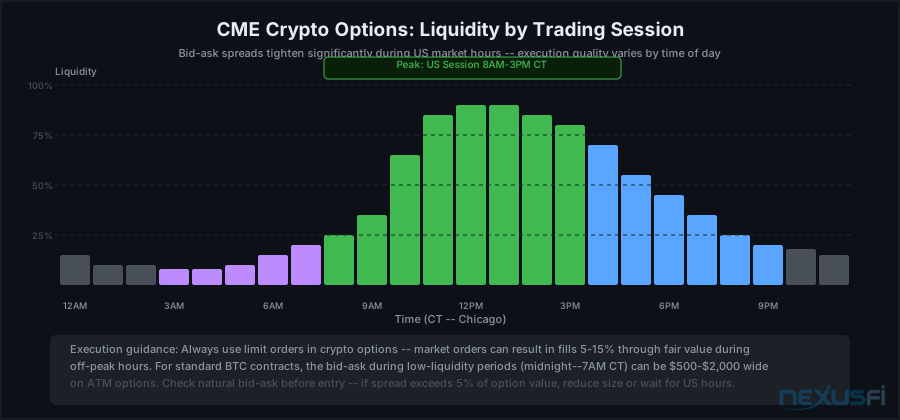
- Micro contracts: liquidity has grown but still thinner than standard contracts; wider bid-ask spreads in off-peak hours
Best execution practices:
- Use limit orders -- market orders in crypto options can result in expensive fills
- Execute during US session overlap (8 AM to 3 PM CT) when institutional participation is highest
- Check natural bid-ask before trading; if the spread is more than 3--5% of option value, consider whether the fill cost is justified
- For standard-size spreads, routing through a futures commission merchant (FCM) with direct CME access gives better fill quality than retail platforms with option order handling overhead
Resources for CME Crypto Options Traders #
- CME Group Crypto Products (cmegroup.com/markets/cryptocurrencies) -- official contract specs, margin requirements, daily settlement prices for BTC and ETH options
- CME Bitcoin Volatility Index (BVIV) -- available via CME data platforms; tracks 30-day expected BTC vol from the options market
- CF Benchmarks (cfbenchmarks.com) -- publishes BRR and ETHUSD_RR daily; historical reference rate data available for settlement price research
- DTN IQFeed -- provides real-time data for CME crypto options including BVIV; sponsor of NexusFi (see RDL listing)
- CFTC COT Reports (cftc.gov) -- weekly positioning data for managed money in crypto futures; contextual backdrop for options positioning
For related reading in the NexusFi Academy, see Bitcoin (BTC): The Original Cryptocurrency, Ethereum (ETH): The Smart Contract Platform, and Crypto Derivatives Trading. For margin mechanics, see SPAN Margin for Futures Options. For the volatility framework, see Volatility Data for Futures Trading.
Knowledge Map
Prerequisites
Understand these firstGo Deeper
Build on this knowledgeCitations
- — Selling Options on Futures? (2020) 👍 3“With CME Mar21 Bitcoin quoted 18050, the Mar21 20000 Calls are 2400/2650! If we say the 20000 strike is 10.8% out of the money and 2400 represents a 13.3% premium of the underlying...”
- — Selling Options on Futures? (2021) 👍 2“The CME also list options on Bitcoin futures but liquidity is generally poor and at certain times non-existent. Not surprisingly you will find these options to be have very high premiums, but when the market moves 10% every few days that's not surprising.”
- — CME Bitcoin Volatility Indices Launch - VIX-Style Measurement for Crypto (2025)“BTC implied volatility derived from CME and Micro BTC futures options. VIX-style calculation methodology applied to Bitcoin. Enables new volatility trading strategies for institutional and retail traders.”
- — CME Group Launches 24/7 Futures Trading - December 5, 2025 (2025) 👍 3“On futures & options for cryptocurrencies Separately, CME has announced that its existing cryptocurrency futures and options e.g. on Bitcoin (BTC) and Ethereum (ETH) are planned to be...”
- — New Micro Contract: Micro Ether coming 5-Dec-21 (2021) 👍 10“CME Bitcoin | 5 coins, Notional ~ $320k CME Micro Bitcoin | 0.1 coins, Notional ~ $6.4k CME Ether | 50 Ether, Notional ~ $225k”
- — Is Bitcoin done? (2025) 👍 1“CME Bitcoin futures trade 23 hours but spot never stops. Weekend gaps on Sunday open create predictable setups - spot moves 5-10% while CME is closed.”
- — CME Group Goes 24/7 on Crypto Futures (2026)“Weekend gap risk is dead for CME crypto. If you've ever held a BTC or ETH futures position through a Friday close and watched spot...”
- — CME Group and CF Benchmarks to Launch Bitcoin Volatility Indices (2025)
- — Cryptocurrency Futures and Options -- Product Overview (2026)
- — CME Group Reports Record Cryptocurrency ADV in 2025 (2025)