



SPAN Margin for Futures Options: The Portfolio Risk Engine Every Options Seller Must Understand
Overview #
SPAN — Standard Portfolio Analysis of Risk — is the margin methodology used by CME Group and most major futures exchanges to determine how much capital a trader must post as collateral. If you sell options on futures, this engine controls your leverage. And if you don't understand how it works, you're flying blind.
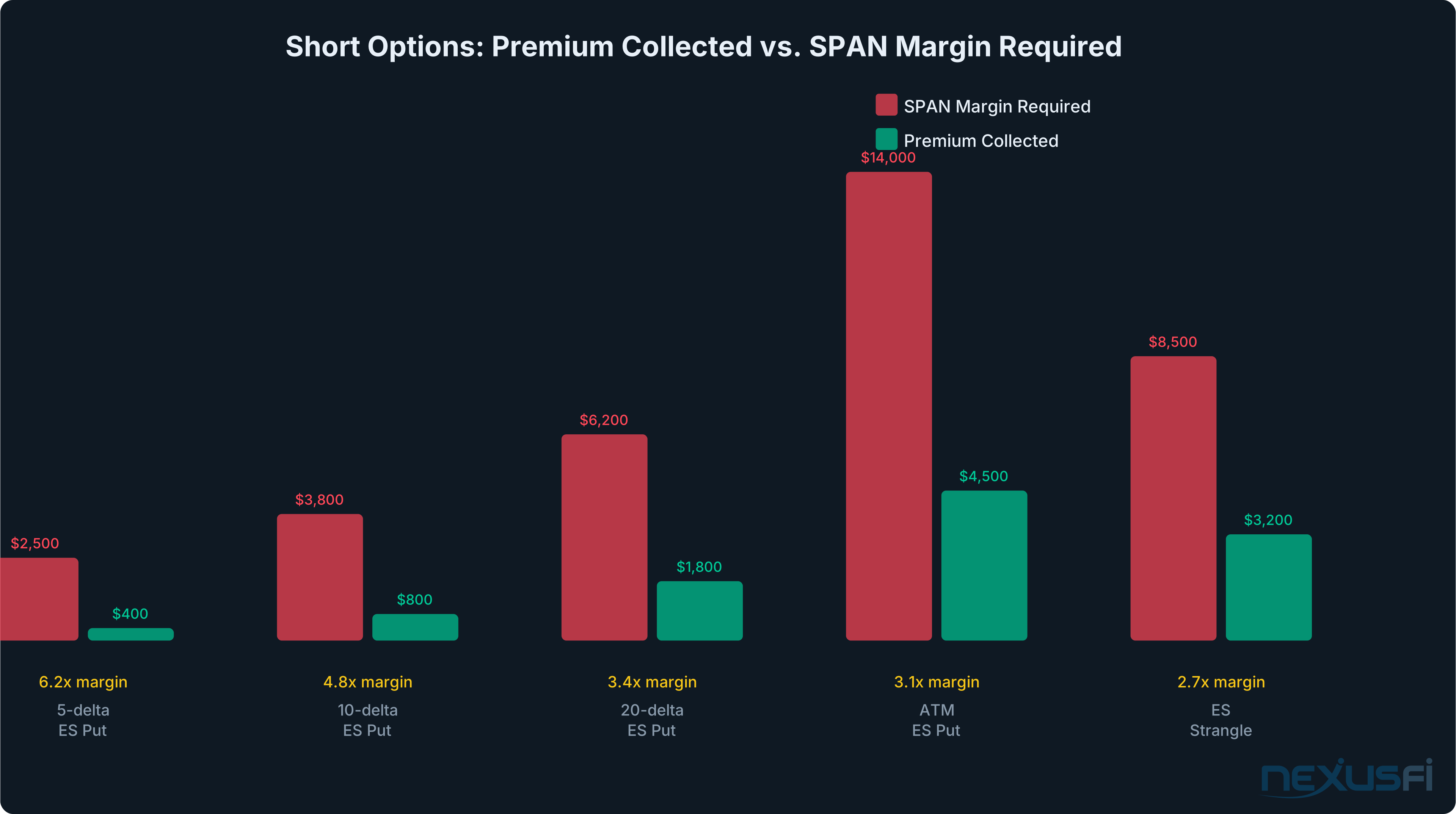
Most traders approach SPAN the wrong way. They look at the initial margin number, size up so, and assume that number will stay roughly constant until expiration. That's not how it works. SPAN margin is a live calculation that changes every time price moves, implied volatility shifts, or your portfolio composition changes. A position that requires $1,500 in margin this morning can require $4,500 this afternoon if a volatility event hits.
This article breaks down exactly how SPAN calculates margin, why options positions behave so differently from futures positions inside the model, and what practical risk management actually looks like when you're managing a portfolio of short premium.
Key Concepts #
SPAN (Standard Portfolio Analysis of Risk): CME Group's scenario-based margin methodology. Evaluates the worst-case loss of an entire portfolio under defined market stress scenarios rather than calculating margin position by position.
Performance Bond / Initial Margin: The term CME uses for what most traders call "initial margin" — the deposit required to hold a futures or options position. Not the same as a cash deposit, but the minimum account equity needed.
Maintenance Margin: The minimum equity level that must be maintained. Falling below this triggers a margin call — the broker demands immediate deposit or forced liquidation begins.
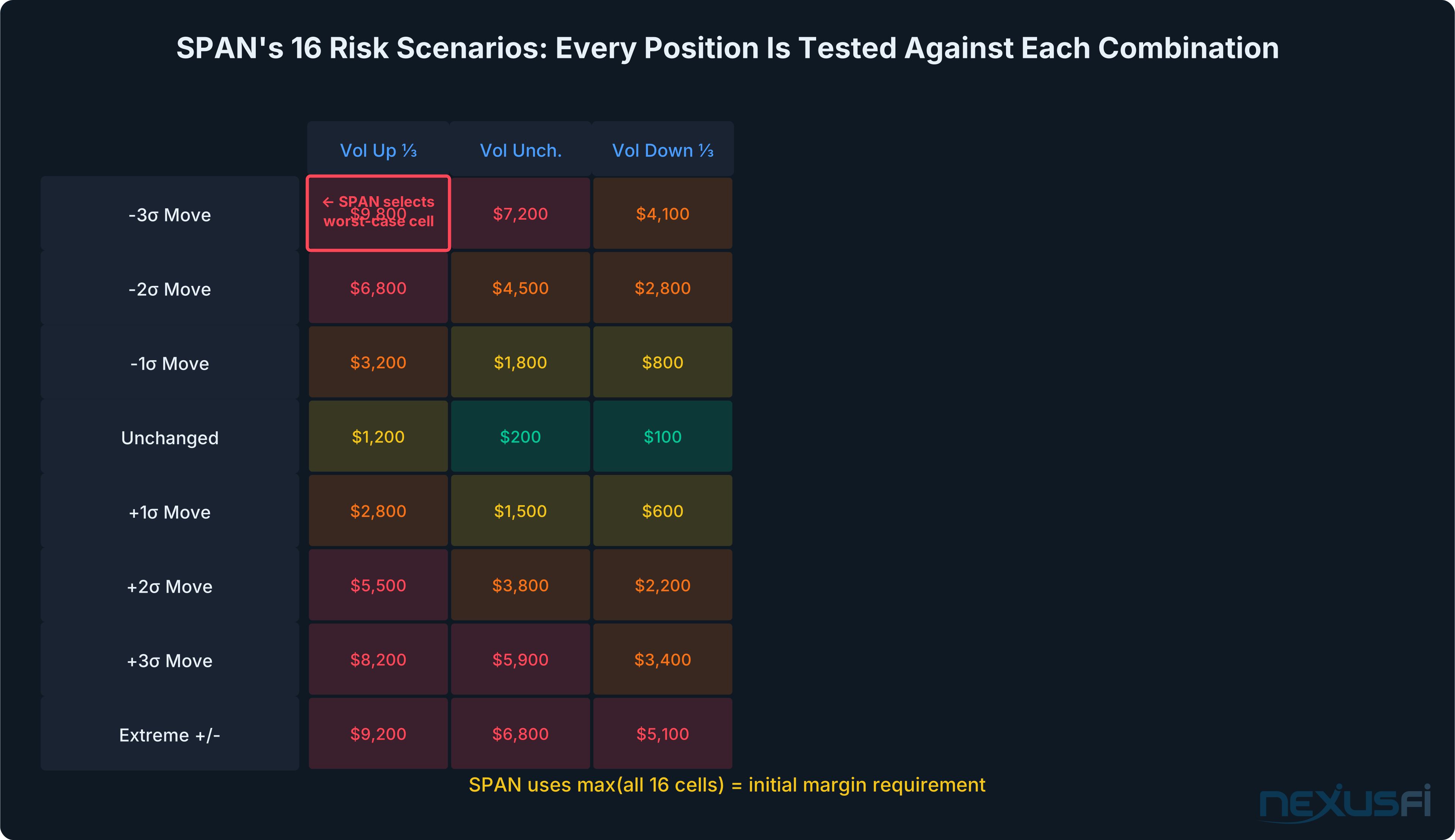
Risk Array: SPAN's core calculation unit. For each instrument, SPAN generates a table of P&L outcomes across 16 standardized scenarios combining price moves and volatility shifts. The worst-case outcome across those scenarios defines that instrument's margin contribution.
Volatility Scan Range (VSR): The range of implied volatility moves SPAN models in its scenarios. When IV expands, the VSR effectively increases the severity of the worst-case scenarios, driving up margin requirements — even if the underlying price hasn't moved.
PC-SPAN / CME CORE: The software tools traders and FCMs use to estimate SPAN margin for a portfolio. PC-SPAN is the legacy desktop application. CME CORE is the current cloud-based interface that provides real-time what-if analysis.
Offset Credit: The margin reduction SPAN awards when offsetting positions reduce portfolio risk. A short call partially hedged by a long future receives a credit because the combined position is less risky than the naked short.
Inter-Commodity Spread Credit: Margin reduction awarded when two correlated products offset each other — for example, short ES options against long NQ futures. The credit reflects the statistical correlation between the products.
Net Delta: The portfolio-level directional exposure expressed in futures-equivalent units. SPAN accounts for net delta when calculating the margin benefit of hedged positions.
Defined-Risk Structure: Any options position where the maximum loss is bounded — vertical spreads, iron condors, butterflies. SPAN typically awards margin credits to these because the worst-case scenario loss is capped.
Short Convexity / Short Gamma: A portfolio position where losses accelerate as price moves toward or through the short strike. Short strangles, short straddles, and naked short options all carry short gamma. These positions are SPAN's primary concern.
SPAN 2: CME Group's updated margin framework, rolled out in 2023. Adds seasonality adjustments, options term structure modeling, and liquidity cost factors not present in the original SPAN methodology.
How SPAN Calculates Margin #
SPAN doesn't care about individual positions in isolation. It evaluates the entire portfolio together, looking for the worst outcome under a defined set of market scenarios.
Here's the core process:
Step 1: Generate Risk Arrays #
For every instrument in the portfolio — futures contracts, options at each strike and expiration — SPAN generates a risk array containing 16 scenario outcomes. Each scenario combines a specific price move with a specific volatility shift:
- Price move range: Typically plus or minus 2-3 standard deviations based on recent historical volatility
- Volatility shift range: Up one-third of the VSR, down one-third, or unchanged
For ES options, the price scenarios might span ±200 points, with volatility scenarios capturing implied volatility expanding or contracting by 3-5 vol points. SPAN evaluates P&L at each combination.
Step 2: Find the Worst-Case Scenario #
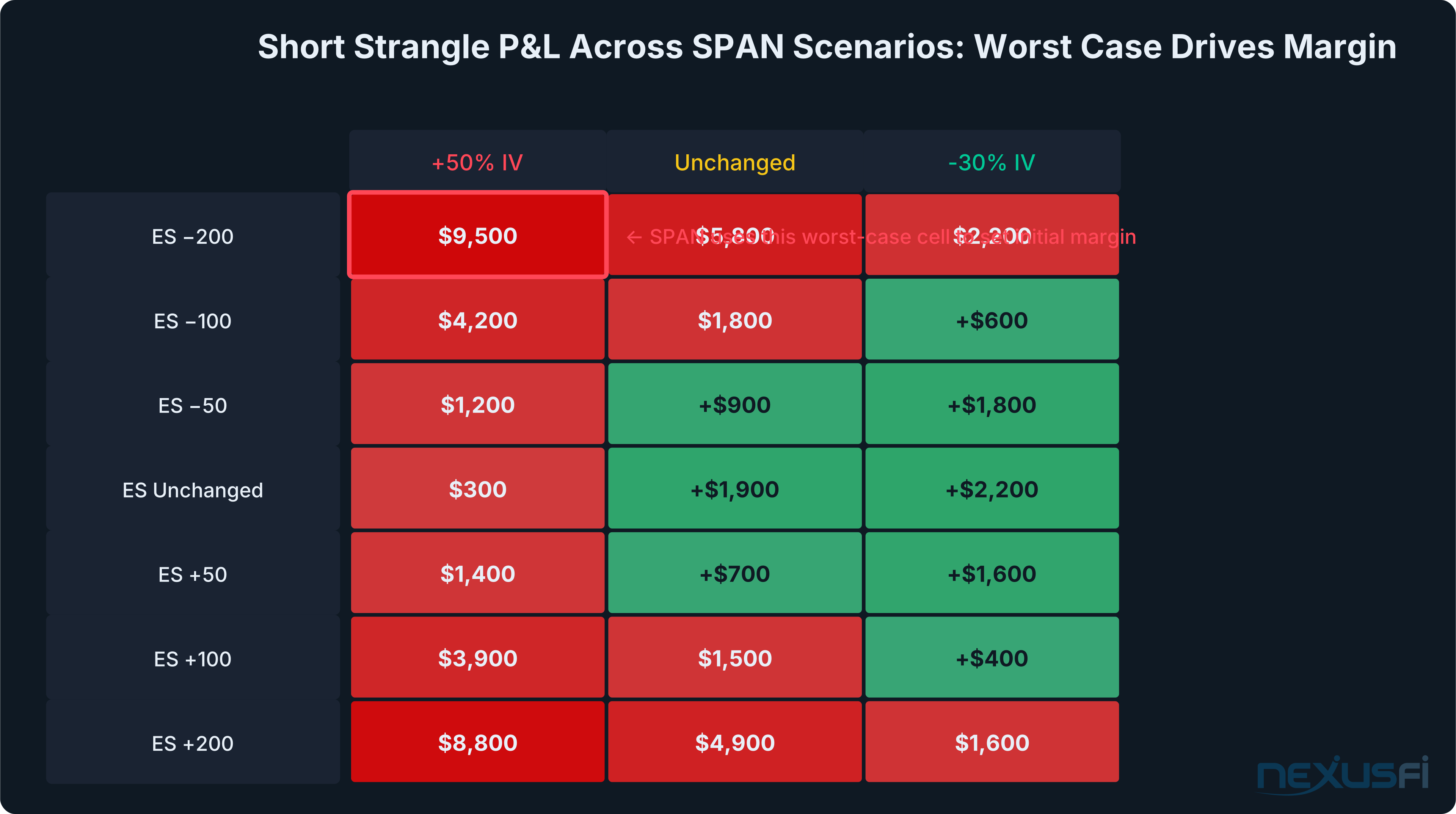
Across all 16 scenarios, SPAN identifies which scenario produces the largest loss for the combined portfolio. That worst-case number drives the margin requirement.
This is where portfolio margining creates efficiencies. A portfolio that's long ES futures and short ES calls might show small losses or even small gains in most of the 16 scenarios — the futures profits offset the options losses in many cases. The margin requirement reflects the worst remaining scenario, not the sum of each position's individual worst case.
Step 3: Apply Spread Credits and Offsets #
SPAN adds margin credits for recognized hedge relationships. A short crude oil strangle partially hedged with long CL futures gets credit. An ES iron condor gets credit because the long wing caps the worst-case loss in extreme scenarios.
The critical word is "recognized." SPAN uses specific rules about which offsets count. Not every hedge relationship gets credit, and the credit amount depends on how well the hedge actually reduces the worst-case scenario outcome.
Step 4: Add Short Option Minimum #
For short options, SPAN adds a minimum charge that prevents deeply out-of-the-money options from appearing nearly "free" to hold. The short option minimum ensures that even when a short option's scenario losses are tiny, there's a floor on the margin required.
Step 5: Compute Portfolio Requirement #
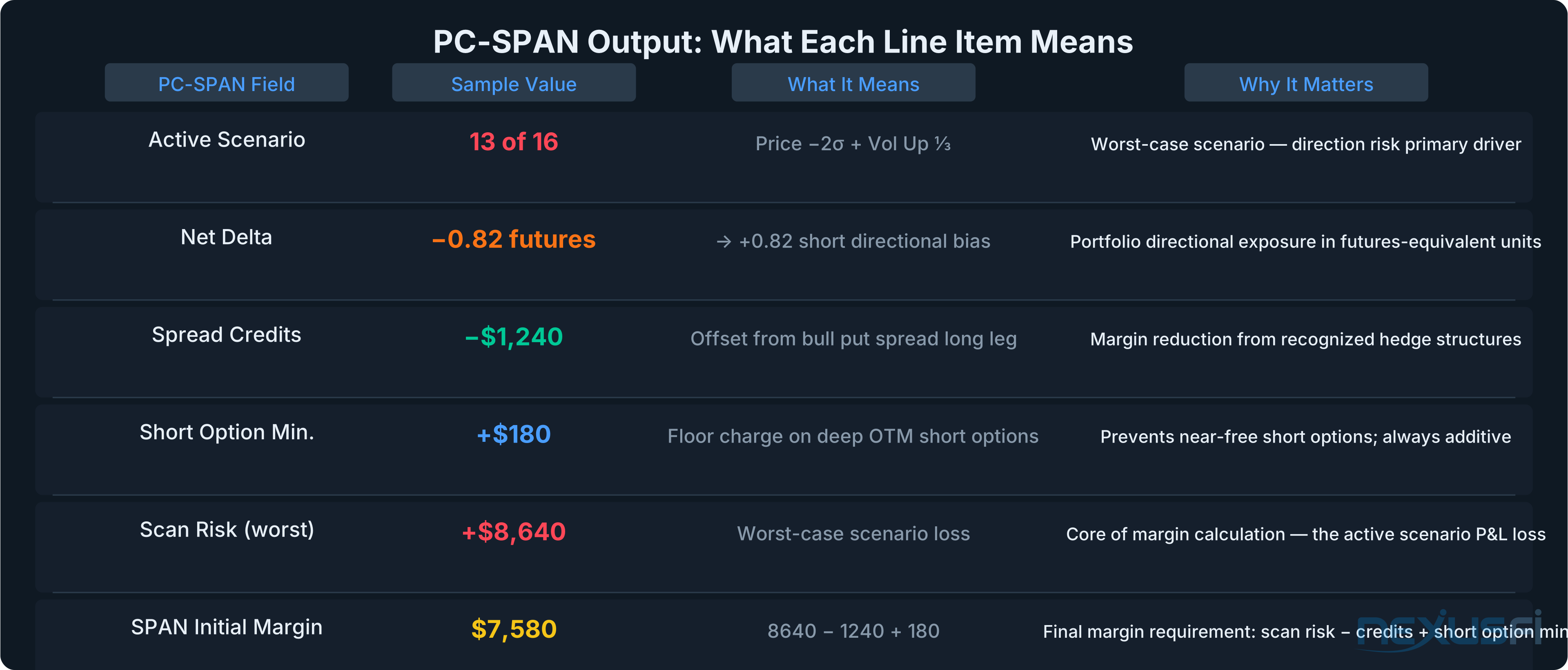
The final margin requirement is the sum of: the worst-case scenario loss, minus spread credits, plus the short option minimum charge. The result is the SPAN initial margin.
Options Margin vs. Futures Margin: The Core Difference #
Futures margin is relatively straightforward. You post a performance bond based on the expected daily price range. If you're long one ES contract and the exchange sets margin at $13,200, you need $13,200 in your account. If ES moves against you by more than that, you get a margin call.
Options margin is a completely different animal.
Futures: linear exposure. P&L moves proportionally with price. The margin requirement is driven primarily by the underlying price move scenarios.
Short options: nonlinear exposure with asymmetric risk. This is the key distinction. When you sell an options contract, your potential gain is capped at the premium received. Your potential loss — especially for naked short calls — can be theoretically unlimited. SPAN reflects this asymmetry by treating short options very differently from long options.
Long Options: Margin Is Usually Zero or Minimal #
When you buy an option, your maximum loss is the premium paid. SPAN recognizes this and typically requires zero or minimal margin for long option positions. You've already paid your maximum loss upfront.
This also means long options can provide significant margin relief when held alongside short options. Buy a put to hedge a short strangle and you've capped the downside — SPAN credits the hedge.
Short Options: Margin Is the Primary Risk Driver #
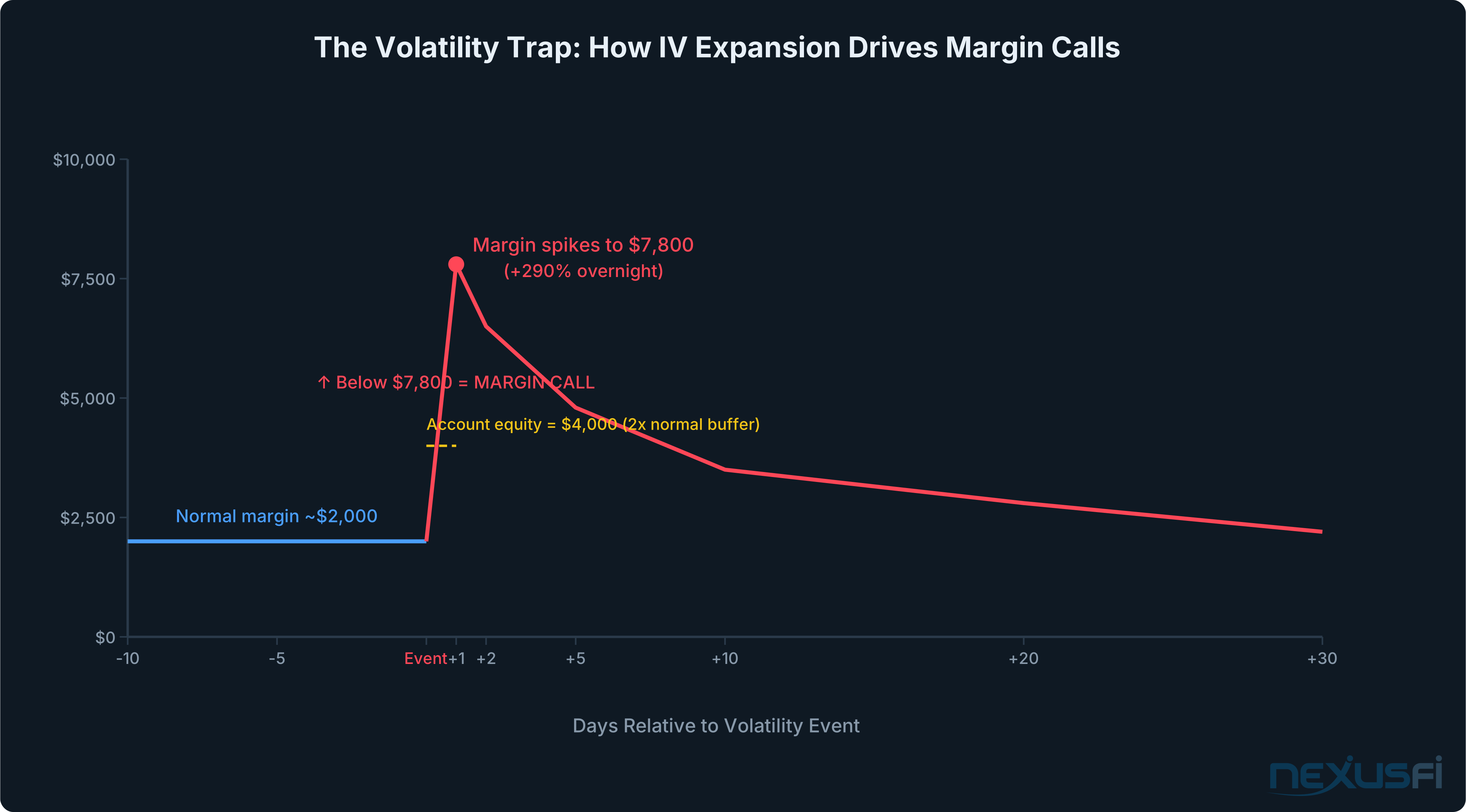
Sell an option and SPAN starts paying very close attention. Your losses can exceed the premium received by a large multiple under adverse scenarios. A short ES put that collected $500 in premium might show a $6,000 loss in SPAN's worst-case price scenario.
For uncovered short options, margin typically ranges from 2x to 10x the premium received, depending on:
- Distance from current price to the strike
- Implied volatility at the time of sale
- Time to expiration
- Current market conditions
The further out-of-the-money the strike, the lower the premium — but that doesn't mean lower margin. A 5-delta short put with $500 premium might require $2,500 in SPAN margin. A 10-delta short put with $1,200 premium might require $3,000 in SPAN margin. The relationship between premium and margin is not linear.
The Math on a Simple Short Put #
Consider selling one ES September put at the 5000 strike when ES is trading 5500. The put is 500 points out of the money. Premium collected: $400.
SPAN's worst-case price scenario for ES might model a 200-point down move. That brings ES to 5300 — still 300 points above the strike. In that scenario, your short put has gained value because time decay and reduced fear have worked in your favor.
But now consider SPAN's combined worst-case scenario: a 200-point down move AND a significant volatility expansion. Now the put's value has exploded even though it's still out of the money. The combined scenario might show a $2,500 loss on a position that collected $400 in premium.
That $2,500 (or more) is your SPAN margin requirement. Six-to-one leverage against your collected premium.
The Volatility Trap #
This is the concept that sends short premium traders to the margin call. It's not just about price.
When implied volatility spikes, SPAN's scenarios become dramatically more severe — even if the underlying price doesn't move much. Here's why:
The VSR expands. SPAN's volatility scenarios model a percentage move in IV. If ES options are trading at 15% IV and SPAN's VSR covers ±30% of current IV, the scenarios model IV ranging from roughly 10.5% to 19.5%.
Now VIX spikes to 40%. Suddenly the real-world IV has moved 2.5x beyond SPAN's existing scenario range. CME updates the risk parameters, the VSR adjusts, and your margin requirements — calculated against the new, more severe scenarios — jump sharply.
Here's a real example pattern from the NexusFi community. On August 24, 2015 — the "Flash Crash" morning when ES dropped 100+ points in minutes — traders who were short puts with seemingly adequate margin found themselves facing margin calls within the first hour of trading.
The options were still out of the money. But the volatility expansion had made the SPAN scenarios dramatically more severe, and margin requirements doubled or tripled within hours.
The lesson: you can be right about direction, right about strike selection, and still face a margin call purely from volatility expansion.
How to Manage the Volatility Trap #
The solution is buffer. Not 1.2x SPAN margin. Not 1.5x. Experienced short premium traders typically target 3x to 5x the SPAN margin as their position size limit.
@ron99, one of the most quantitative traders in the NexusFi options community, documented this explicitly: "6X is the bare minimum to ride out a crash" — meaning he sized positions such that SPAN margin was only one-sixth of the capital allocated to that position.
That might sound like giving up a lot of leverage. It is. That's the discipline.
PC-SPAN and CME CORE #
Two tools dominate how traders actually calculate SPAN margin:
PC-SPAN (Legacy) #
PC-SPAN is the downloadable software CME distributes for calculating SPAN margin locally. For years it was the go-to tool for options sellers who wanted to model portfolio margin before placing trades.
How it works: You input your positions, PC-SPAN fetches the current SPAN parameter files from CME, and calculates the margin for your exact portfolio — including all spread credits and offset calculations.
The NexusFi community has deep PC-SPAN expertise.
The thread includes custom Excel integrations and batch scripts for automated margin monitoring.
A critical lesson from the community: different brokers calculate SPAN margin differently.
The SPAN initial margin and the total initial margin can differ — and your broker may use one while you're modeling the other.
CME CORE (Current) #
CME Group now offers CORE — Clearing Online Risk Engine — as a cloud-based alternative to PC-SPAN. CORE provides:
- Real-time what-if analysis via a web interface
- Intraday margin monitoring
- Portfolio construction tools
- Direct integration with current SPAN parameter files
For active options traders, CORE is the more practical tool because it reflects intraday parameter updates rather than requiring manual file downloads.
Broker Margin Tools #
Your broker's risk interface is the final word on actual margin requirements. Most FCMs provide real-time margin displays that show current SPAN requirement plus house margin (the broker-imposed multiplier above SPAN minimums). Interactive Brokers, for instance, uses SPAN as the foundation but applies its own risk overlay that can require more than SPAN minimum during elevated volatility.
SPAN 2: The 2023 Upgrade #
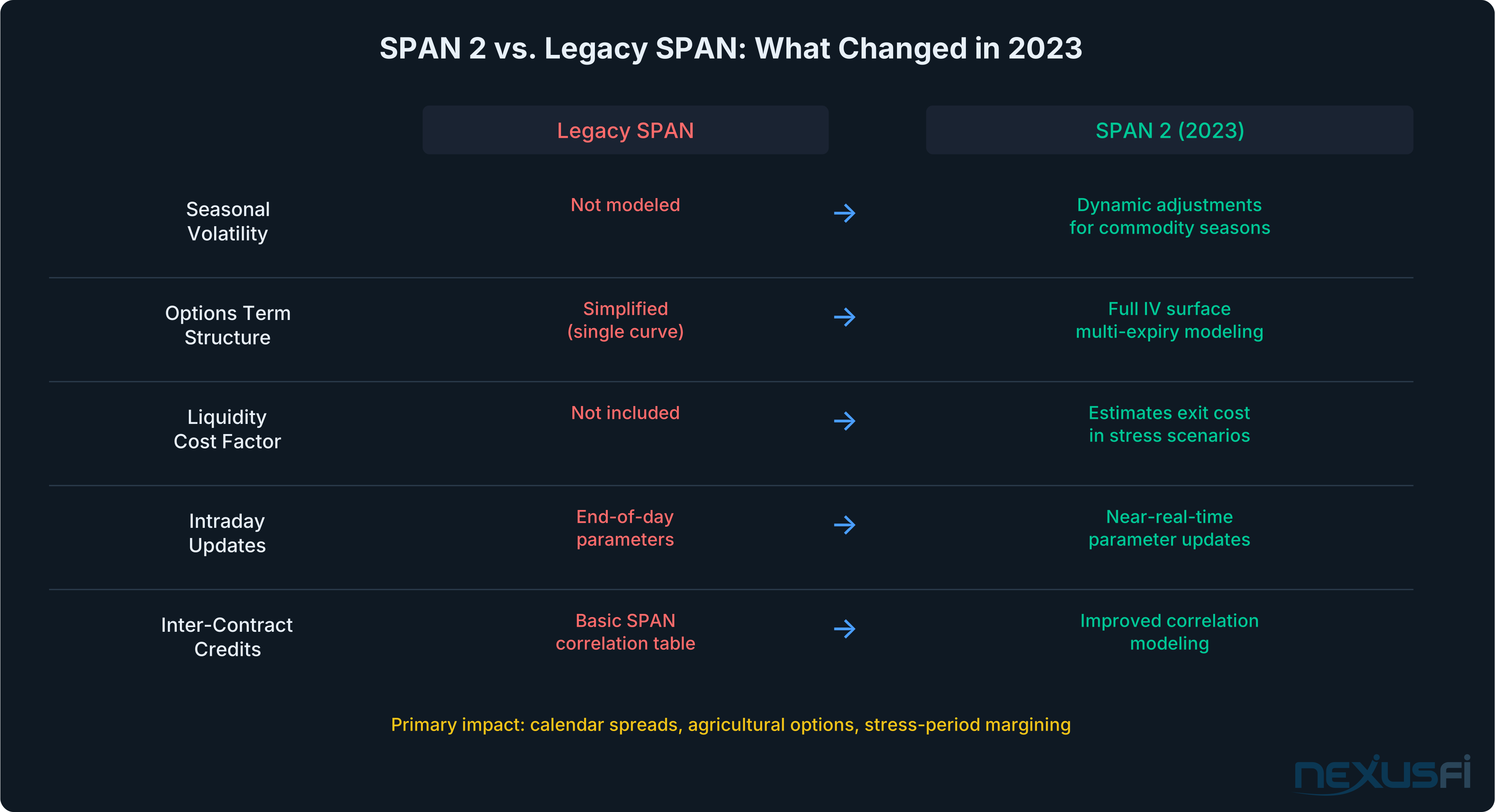
In 2023, CME Group introduced SPAN 2, an updated margin framework that addresses limitations in the original methodology. Key additions:
Seasonality adjustments. Commodity markets have seasonal volatility patterns — natural gas in winter, agricultural products around harvest. SPAN 2 incorporates these patterns into scenario construction, producing margin requirements that better reflect when risk is actually elevated.
Options term structure modeling. The original SPAN treated different expirations somewhat interchangeably in its inter-contract spread credits. SPAN 2 builds in the term structure of implied volatility more explicitly, producing more accurate margin calculations for calendars, ratio spreads, and multi-expiration portfolios.
Liquidity costs. SPAN 2 adds a liquidity cost component that reflects the expected cost of closing a position in stress conditions. If an options position would be difficult to exit quickly during a fast market, SPAN 2 applies a higher margin charge to reflect that execution risk.
Dynamic adjustments. SPAN 2 supports more rapid updates to risk parameters during fast-moving markets, potentially reducing the lag between when conditions change and when margin requirements reflect the new reality.
For practical trading purposes, the SPAN 2 changes primarily affect:
- Calendar spreads and inter-expiration positions
- Agricultural options around seasonal risk peaks
- Positions with low liquidity or wide bid-ask spreads
Most retail options traders won't notice a dramatic difference from SPAN 2 vs. legacy SPAN on standard short premium positions in liquid products like ES or CL.
Portfolio Offsets: When They Work and When They Don't #
SPAN's portfolio margining is the efficiency everyone talks about. What's less discussed is when those offsets disappear.
How Offset Credits Work #
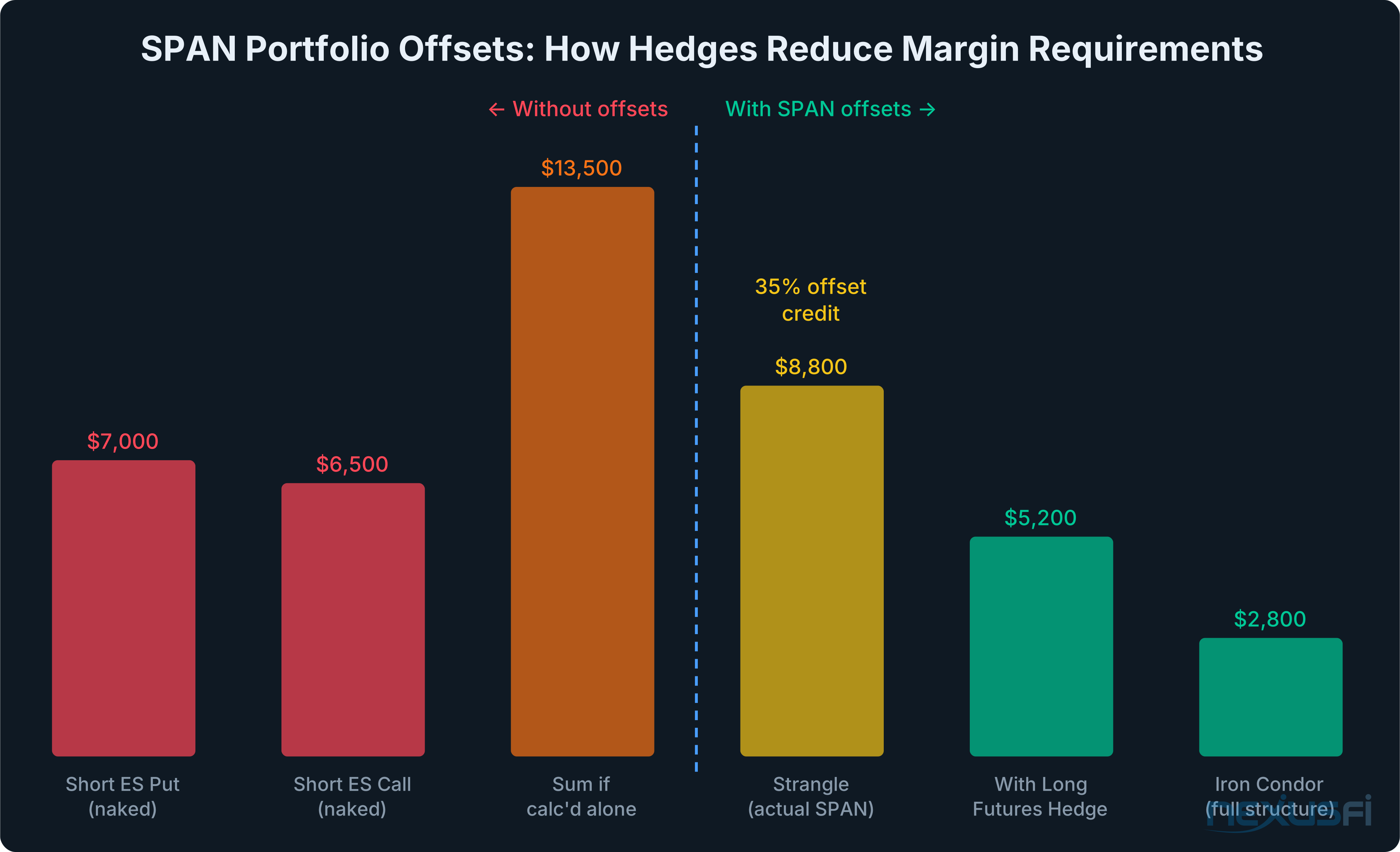
Hold a short ES strangle (short call + short put at different strikes) and SPAN calculates the margin for the combined position — not the sum of margins for each naked option. The short call and short put offset each other in some price scenarios: if ES rips higher, the put gains value (helping the overall P&L) while the call gets hammered. That partial offset reduces the portfolio's worst-case loss and so reduces margin.
The credit isn't 50%. The two legs don't perfectly offset. But the margin for the strangle is meaningfully lower than the margin for each naked leg separately.
When Offsets Fail #
The offset credit exists within SPAN's defined scenario range. Outside that range — in the extreme tail — the model breaks down.
"Black swan" events tend to produce simultaneous moves in both directions of a portfolio. During COVID March 2020 and other genuine crises, correlation across assets moved sharply toward 1.0. If you held a diversified short options portfolio across ES, CL, and ZN because you believed they were uncorrelated, that correlation assumption got tested. When everything sells off simultaneously, the "portfolio diversification" margin credit evaporates.
As the council synthesis noted: "Correlations often move to 1.0 during 'black swan' events, and previously reliable offsets may evaporate when liquidity thins."
This is the liquidity risk underneath the margin efficiency argument. The offset credit assumes you can exit positions and manage risk at normal transaction costs. During a true stress event, that assumption fails.
Matching SPAN's Recognized Structures #
SPAN credits only the offsets it's programmed to recognize. A vertical spread is well-understood by SPAN — the long wing directly caps the worst-case scenario loss. But more complex structures require exact matching.
As the council analysis showed, "mismatched strikes, poor hedge ratios, legs in different expiries not recognized as offsetting, or wrong netting structure can reduce or eliminate offsets."
Practical implication: model your exact positions in PC-SPAN or CME CORE before assuming you know your margin. Don't estimate. Run the actual numbers.
Defined-Risk Structures and Margin Efficiency #
If you're going to sell options on futures, defined-risk structures are your friend — not because they're "safer" in some abstract sense, but because SPAN treats them dramatically differently than naked short options.
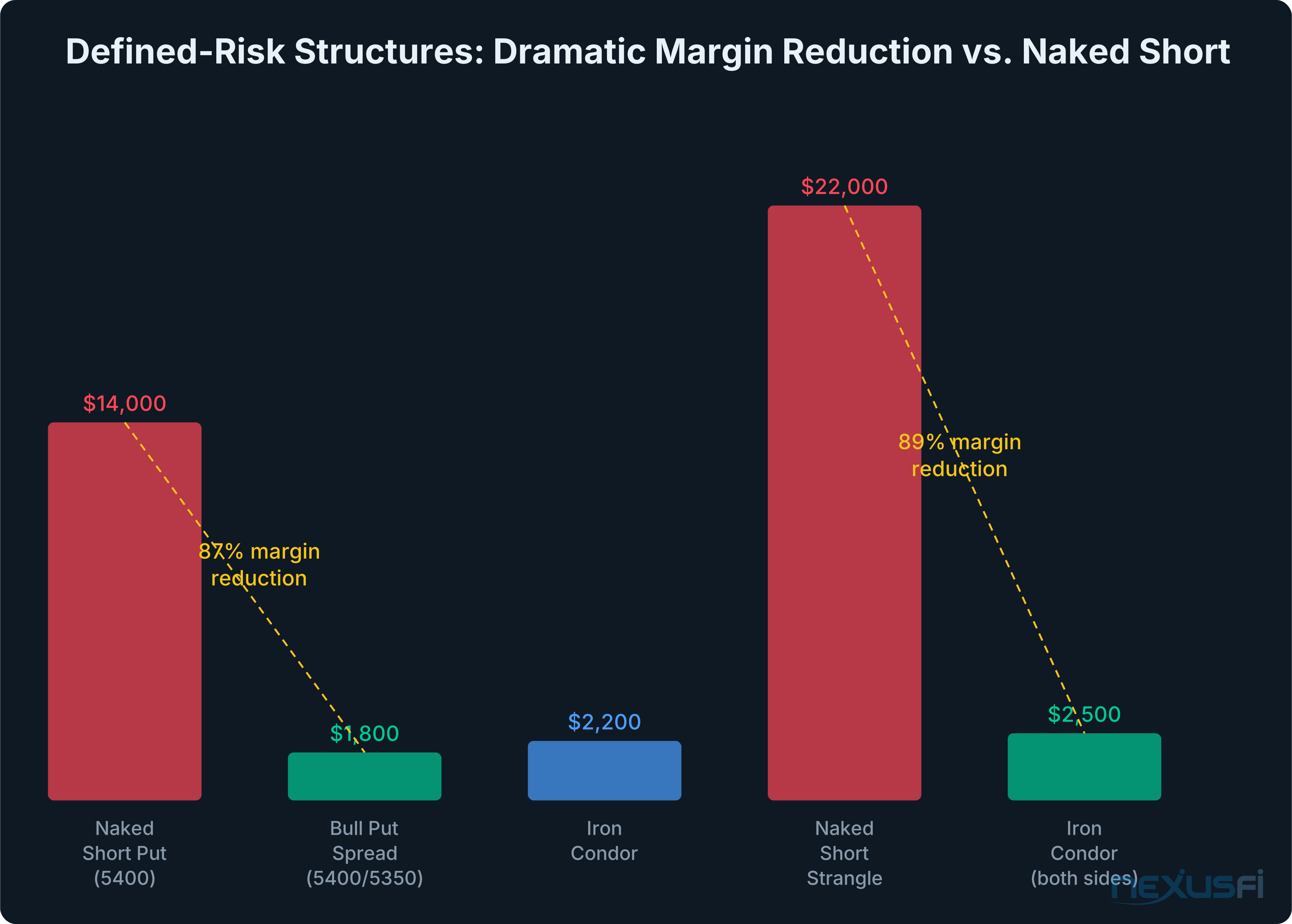
Vertical Spread: Sell a put, buy a lower-strike put (or sell a call, buy a higher-strike call). The long wing caps the worst-case scenario loss. SPAN sees a bounded maximum loss and awards a significant margin credit. Required margin typically equals the width of the spread minus the premium received.
Example: Sell the 5400 ES put for $2,500, buy the 5350 ES put for $1,800. Net premium: $700. Maximum loss: $2,500 (50-point spread × $50/point) minus $700 collected = $1,800. SPAN margin: approximately $1,800 — your maximum loss.
Compare that to a naked short 5400 put requiring $4,000-$8,000 in SPAN margin depending on market conditions.
Iron Condor: Combines a put spread and call spread. SPAN typically requires margin on only the wider spread, not both sides, because in any single extreme scenario only one side can lose the maximum amount. That's accurate — ES can't simultaneously crash to 5350 AND rally to 5650 on the same day.
Iron condor margin efficiency comes with a catch. During volatile, choppy markets, the underlying can trade above and below your strikes in sequence. The margin stays efficient even when you're actively managing losses on one side.
Butterfly: Three-leg structure that's long convexity at the wings, short convexity at the body. The wings provide defined-risk protection. SPAN rewards this with relatively low margin. Butterflies are especially margin-efficient because the position actually benefits from volatility mean-reversion after a spike.
The tradeoff with defined-risk structures is obvious: capping your worst-case loss also caps your premium collected. A vertical spread collects a fraction of what a naked short option collects at the same strike. The margin efficiency is the compensation.
The SPAN Trap #
Here's a failure mode that catches a lot of traders: confusing margin efficiency with risk management.
SPAN tells you the minimum capital required to hold a position. It doesn't tell you whether that position is appropriate to hold. Those are completely different questions.
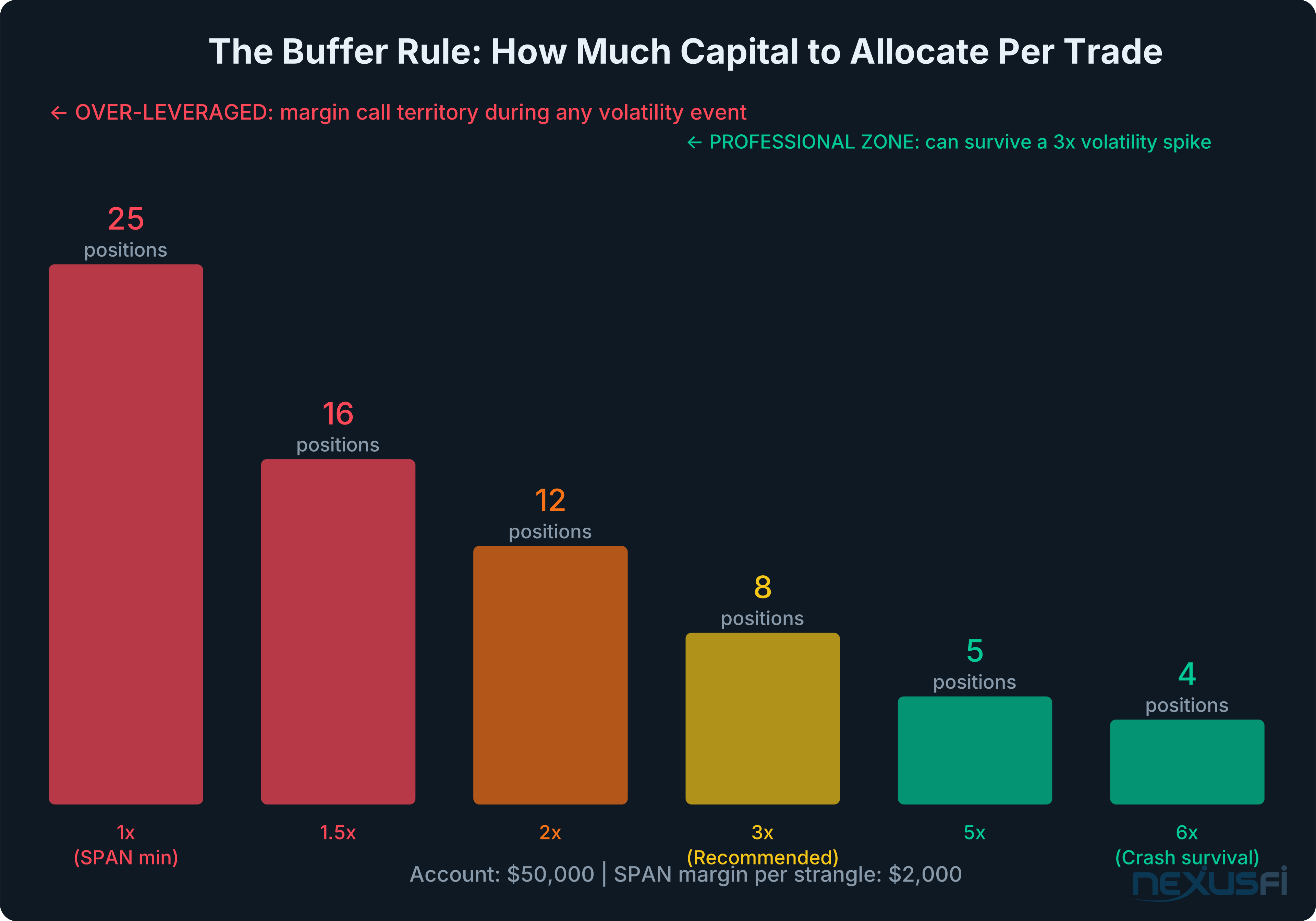
Example: You have a $50,000 account. SPAN requires $1,500 in margin for a short ES strangle. You could theoretically hold 33 strangles on $50,000. The math works on paper.
In practice, holding 33 strangles on $50,000 means that a 30% volatility spike — completely routine in a risk-off event — could cause your margin requirements to jump from $49,500 to $148,500 overnight. Your account can't meet that call. You're liquidated at the worst possible time.
CME can also manually adjust risk parameters. When volatility spikes much, CME has the ability to increase margin requirements for the entire market intraday. This happens. It happened in 2020, in 2018, and during other stress events. Your margin requirement can jump not just because your positions are moving against you, but because CME changed the parameters on all traders simultaneously.
The discipline that experienced short premium traders develop: always know what your margin requirement looks like under a 50% IV expansion. Run it in PC-SPAN or CME CORE. If that number is more than 40-50% of your account equity, you're overcrowded. Size back.
Risk Management Framework for Short Options #
Based on the community research from NexusFi's Options forum, experienced short premium traders use a disciplined approach to SPAN margin management:
The 3x-6x Buffer Rule #
Size positions so that current SPAN margin represents only one-third to one-sixth of the capital allocated to that position. At 3x buffer: $10,000 allocated, $3,333 max SPAN margin. At 6x buffer: $10,000 allocated, $1,667 max SPAN margin.
The 6x buffer is the extreme-event standard. @ron99's research on riding out the 2015 flash crash pointed to 6x as the minimum to survive without a margin call during a genuine crash scenario.
Run "Stress SPAN" Before Entering #
Before entering any short options position, model what margin looks like under a 30%, 50%, and 100% increase in implied volatility. These aren't exotic scenarios — a 30% IV expansion is a normal market stress event. If those margin numbers are too large for your account, the position is sized wrong.
Monitor Intraday #
SPAN margin changes intraday as prices move. For short options traders who carry positions through news events or market open/close, knowing the current margin requirement (not the margin at time of entry) is essential. Brokers display this in real time. Glance at it.
Defined-Risk When in Doubt #
If market conditions make it hard to maintain adequate buffer margins, shift to defined-risk structures. The lower premium collected is the cost of not blowing up.
Pre-Plan Your Exit #
Know before you enter the position what you'll do if margin jumps 50%. "I'll close the tested leg" or "I'll roll down the short strike" or "I'll buy wing protection." Pre-planning prevents panic decisions during fast markets when execution costs are highest.
Practical Application: Reading SPAN Output #
When you open PC-SPAN or CME CORE and model a position, here's what to look for:
Active Scenario: Which of the 16 scenarios is SPAN's worst case? If it's the extreme price move scenario, your risk is directional — price moving hard against you. If it's the combined price+volatility scenario, your primary exposure is volatility expansion.
Net Delta: Where does your portfolio stand directionally? Zero net delta means you're exposed to gamma and vega more than direction. Significant net delta means you have directional exposure that SPAN is incorporating.
Spread Credits: How much margin relief are your offsets providing? If you think you're protected but your spread credits are near zero, the hedge structure isn't working as you intended.
Short Option Minimum: Visible as a separate line item in PC-SPAN output. This floor charge exists even when your positions are deeply OTM and showing minimal scenario losses. Don't ignore it.
Total vs. Initial Margin: Some brokers (and the original PC-SPAN interface) show both "initial margin" (SPAN calculation) and "total initial margin" (which adds cash flows and other factors). Make sure you're looking at the number your broker uses to determine margin calls.
Summary #
SPAN is not a fixed number tied to a contract type. It's a live portfolio risk model that recalculates continuously based on price, volatility, time, and position structure. Short options positions are its primary concern because of their nonlinear, uncapped downside — and volatility expansion is the mechanism that causes sudden margin spikes even when price is "safe."
The traders who survive and prosper selling options on futures treat SPAN margin as a dynamic constraint, not a fixed cost. They model their positions before entering, maintain significant buffers above minimum margin, stress-test against volatility scenarios, and choose defined-risk structures when they want margin efficiency with bounded downside.
The traders who blow up do the opposite: they maximize leverage, assume the current margin number is stable, and discover during a fast market that SPAN margin can triple in an afternoon.
Use PC-SPAN or CME CORE before sizing up. Run your positions through a 50% IV expansion scenario before entering. Maintain the buffer. That's the game.
Knowledge Map
References This Article
Articles that build on this topicCitations
- — NexusFi Discussion“I know ron99 said that his firms use the SPAN initial margin, but the firms I trade at use the Total initial margin”
- — NexusFi Discussion“compared the results from DudeTooth's PC-SPAN based Excel application to the initial margin calculations for real positions at RJO and Interactive Brokers”
- — NexusFi Discussion“make sure you know how your brokerage is calculating your margin requirements. For example, at OX you can use either formula when looking at your overall margin requirements”
- — NexusFi Discussion“6X is the bare minimum to ride out a crash”
- — NexusFi Discussion“The only thing I can think of is that the long options are at 35 DTE on 9/11 (shorts are at 70 DTE) and that is why IM jumps”
- CME Group — Official description of SPAN's scenario-based portfolio risk evaluation methodology
- — NexusFi Discussion“the formula for the SPAN initial margin on spreads is: IMSpread”
- — NexusFi Discussion“I've been able to get this to work to create a performance bond risk summary of the portfolio... batch file to run SPAN and generate a report”