



Bitcoin (BTC): The Original Cryptocurrency and What Every Trader Needs to Know
Overview #
Bitcoin is the original cryptocurrency — the asset that defined digital scarcity, invented the blockchain, and launched an entirely new financial paradigm. Created in 2008 by the pseudonymous Satoshi Nakamoto in the aftermath of the global financial crisis, Bitcoin was designed as peer-to-peer electronic cash, a monetary system that required no banks, no governments, and no trusted intermediaries.
For traders, Bitcoin is something more specific: a 24/7, globally traded asset with extraordinary volatility, a fixed supply cap of 21 million coins, and increasingly, a footprint in regulated institutional markets. The January 2024 spot ETF approvals changed the game permanently. BlackRock's IBIT now holds 570,000+ BTC, and daily ETF flows of $200-500M have become the primary short-term price driver. You're no longer just trading against retail speculators and offshore exchanges — you're trading alongside sovereign wealth funds, pension allocators, and corporate treasuries.
This guide covers what actually moves Bitcoin price, how to read the on-chain data that precedes price moves, which instruments give clean regulated exposure, and how to construct trading setups specific to BTC's market structure. The crypto-naive "just buy low sell high" framing is useless here. Bitcoin at $80,000 is a at the core different trading instrument than Bitcoin at $10,000, and the frameworks that worked in 2021 need significant updating for 2025-2026 market structure.
What Makes Bitcoin Different From Every Other Crypto Asset #
Start here before anything else: Bitcoin has a hard cap of 21 million coins. That number never changes. No central bank can print more, no protocol upgrade can expand it, no board can vote to dilute it. Roughly 19.7 million BTC have already been mined as of mid-2026, with the remaining 1.3 million drip-released on a predictable schedule through 2140.
That fixed supply is the foundation of every Bitcoin investment thesis ever written. When demand increases against a supply that cannot respond, price is the only adjustment mechanism. This is different from every fiat currency (printable), most commodities (mineable on demand), and virtually every other cryptocurrency (supply schedules variable or manipulable by teams).
The scarcity math in practice: At the April 2024 halving rate, approximately 900 new BTC enter circulation per day. At $80,000/BTC, that's $72 million in new supply per day. Compare that to the $200-500M in daily ETF flows — and you understand why the institutional buyers have structural pricing power when they choose to accumulate.
Three additional properties that define Bitcoin's trading character:
Censorship resistance. No transaction can be blocked by any actor with less than majority computational control. Bitcoin moved through Iran sanctions, Russian capital controls, and frozen banking systems. This property commands a premium — especially from sovereign and institutional buyers using it as geopolitical insurance.
Proof of Work. Bitcoin's consensus mechanism requires real-world computational work, creating what's effectively a physical cost floor for attack. Every other major cryptocurrency uses Proof of Stake, which has lower energy requirements but different security assumptions. For a reserve asset, PoW's externally-anchored security model matters to the most sophisticated institutional allocators.
Immutability. The Bitcoin protocol has barely changed since 2009. No team can rug-pull, upgrade, or pivot the monetary policy. The predictability of the issuance schedule is priced in globally and provides a fundamental anchor for long-term price discovery that more centralized projects cannot replicate.
The Halving Cycle: Supply Shock Every 4 Years #
Bitcoin's protocol is designed to halve miner rewards every 210,000 blocks — roughly every 4 years. This is the most important mechanical feature of Bitcoin for traders with any medium-to-long horizon.
The 2024 halving in April cut the block reward from 6.25 to 3.125 BTC. That single event reduced daily new BTC supply from roughly 1,800/day to 900/day. The 5th halving, expected around 2028, will cut it again to 1.5625/day.
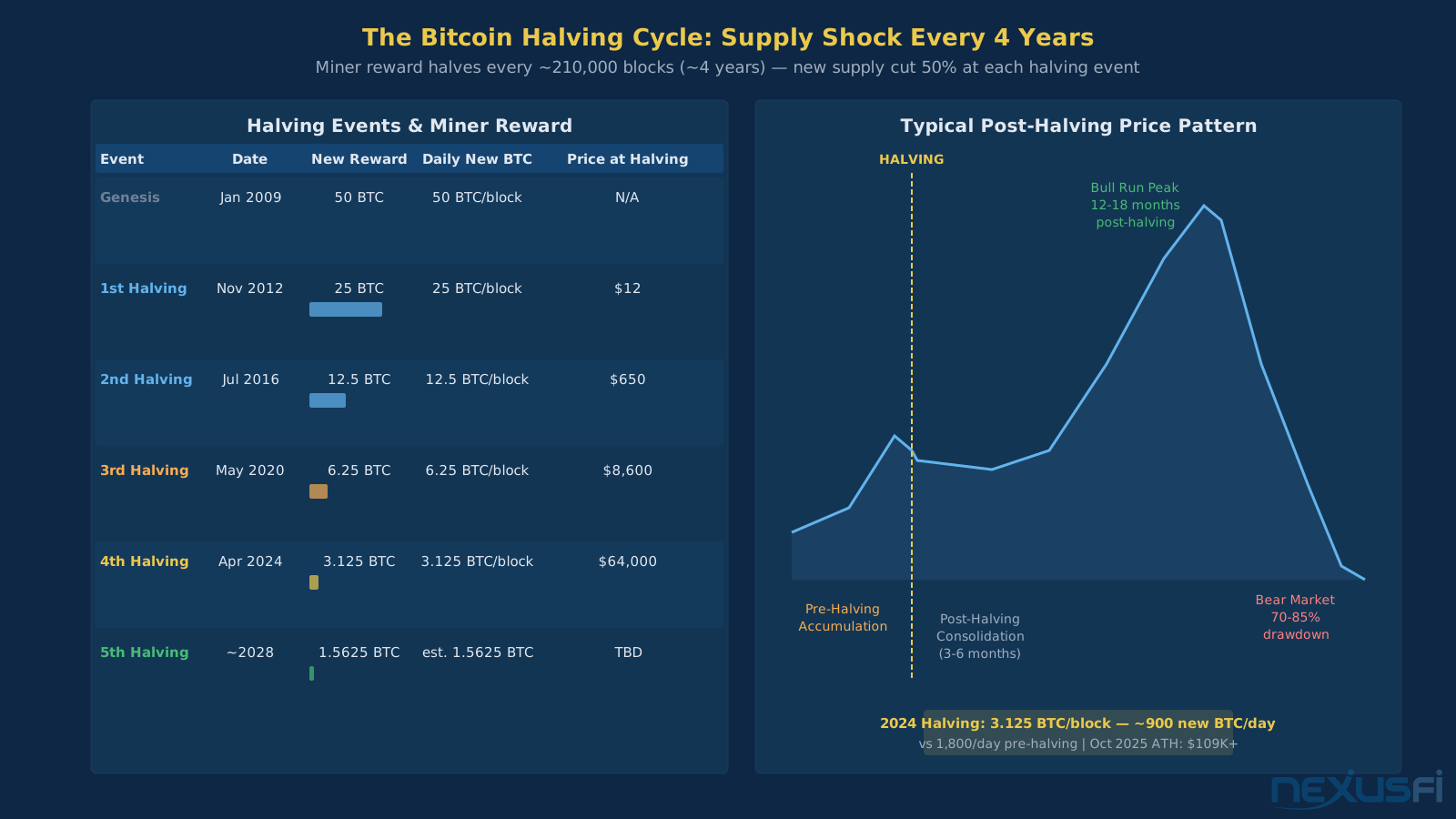
The historical pattern across all four halvings is consistent: price tends to peak 12-18 months after each halving event, as the supply reduction works through the market. But the mechanism is often misunderstood. The halving doesn't work because miners now have fewer coins to sell (the direct supply impact is real but small). It works because:
- Narrative catalysis. The halving is a scheduled media event that brings new buyers into the market in anticipation and after.
- Realized scarcity. Miners operate on thinner margins post-halving, often holding inventory rather than immediately selling. This removes consistent daily sell pressure.
- Institutional front-running. Each successive cycle, more sophisticated capital front-runs the expected appreciation, pulling the price action earlier and compressing returns.
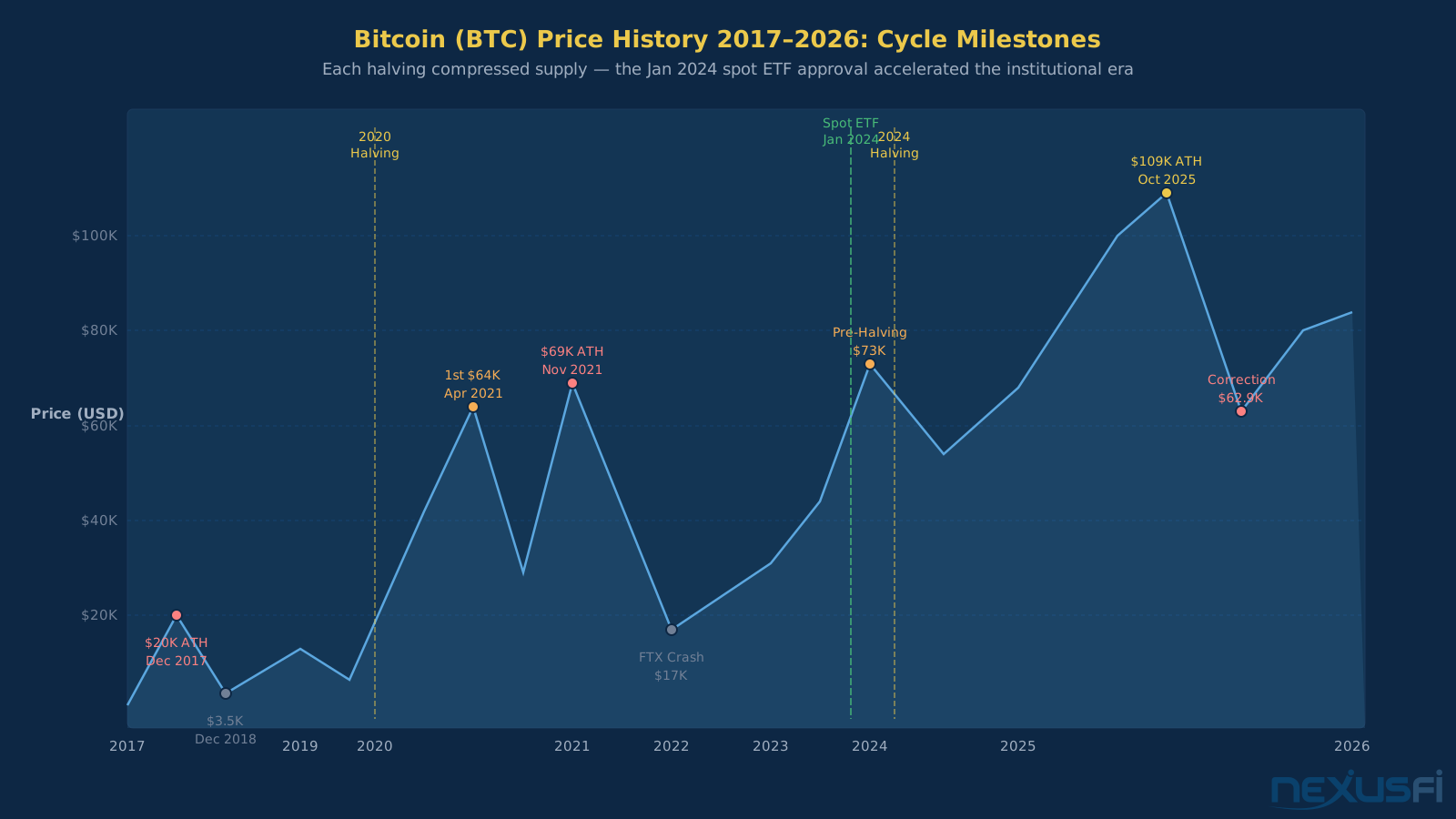
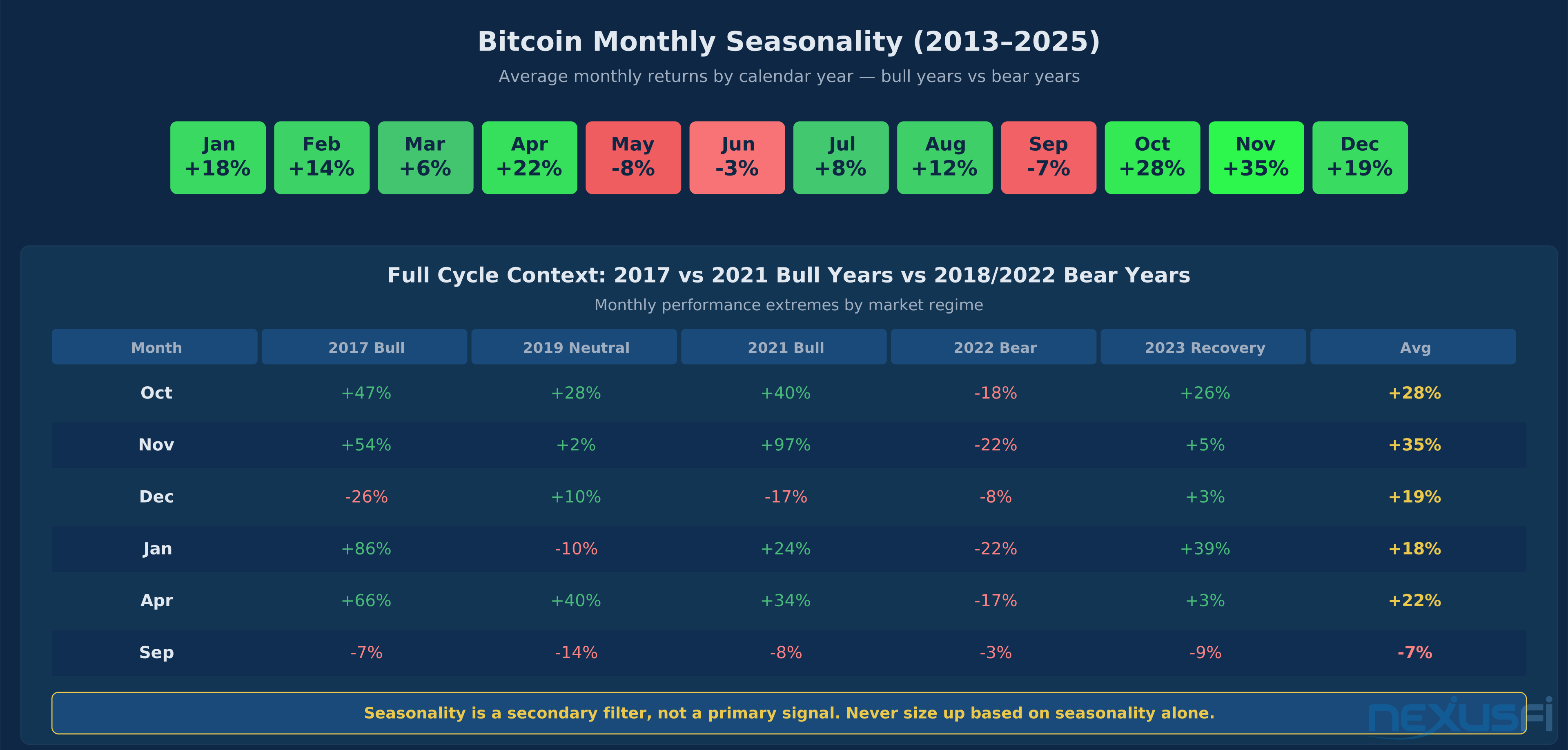
The cycle compression risk is real. Each halving's expected appreciation has been front-run earlier. In 2024, BTC reached $73K in March — before the April halving — as capital anticipated the supply reduction. The "buy the halving" trade is now well-known enough that it's partially self-defeating at peak.
The 2024-2025 cycle data: BTC hit a pre-halving high of $73K in March 2024, pulled back to $54K post-halving, then staged the main bull run through late 2025 to an ATH above $109K in October 2025. The correction into early 2026 brought prices back to $62.9K in February, consistent with the typical 40-50% mid-cycle pullback pattern. As of May 2026, BTC is recovering through the $80K range.
For practical traders: the halving is a macro directional framework, not a short-term timing tool. Use it to set your medium-term bias for 12-18 months post-halving. Don't try to day-trade the halving event itself.
The ETF Revolution: How January 2024 Changed Everything #
The January 2024 approval of spot Bitcoin ETFs by the SEC was the most significant structural change in Bitcoin's 15-year history. Full stop. Not the 2017 futures launch. Not the institutional adoption wave of 2020-2021. The spot ETFs.
Why? Because spot ETFs are physically backed — every ETF share is backed by actual BTC held in custody. Unlike futures ETFs (which had existed since 2021), spot ETFs require the ETF provider to buy real Bitcoin to create shares. When institutional demand flows through ETFs, it converts directly into spot buying pressure.
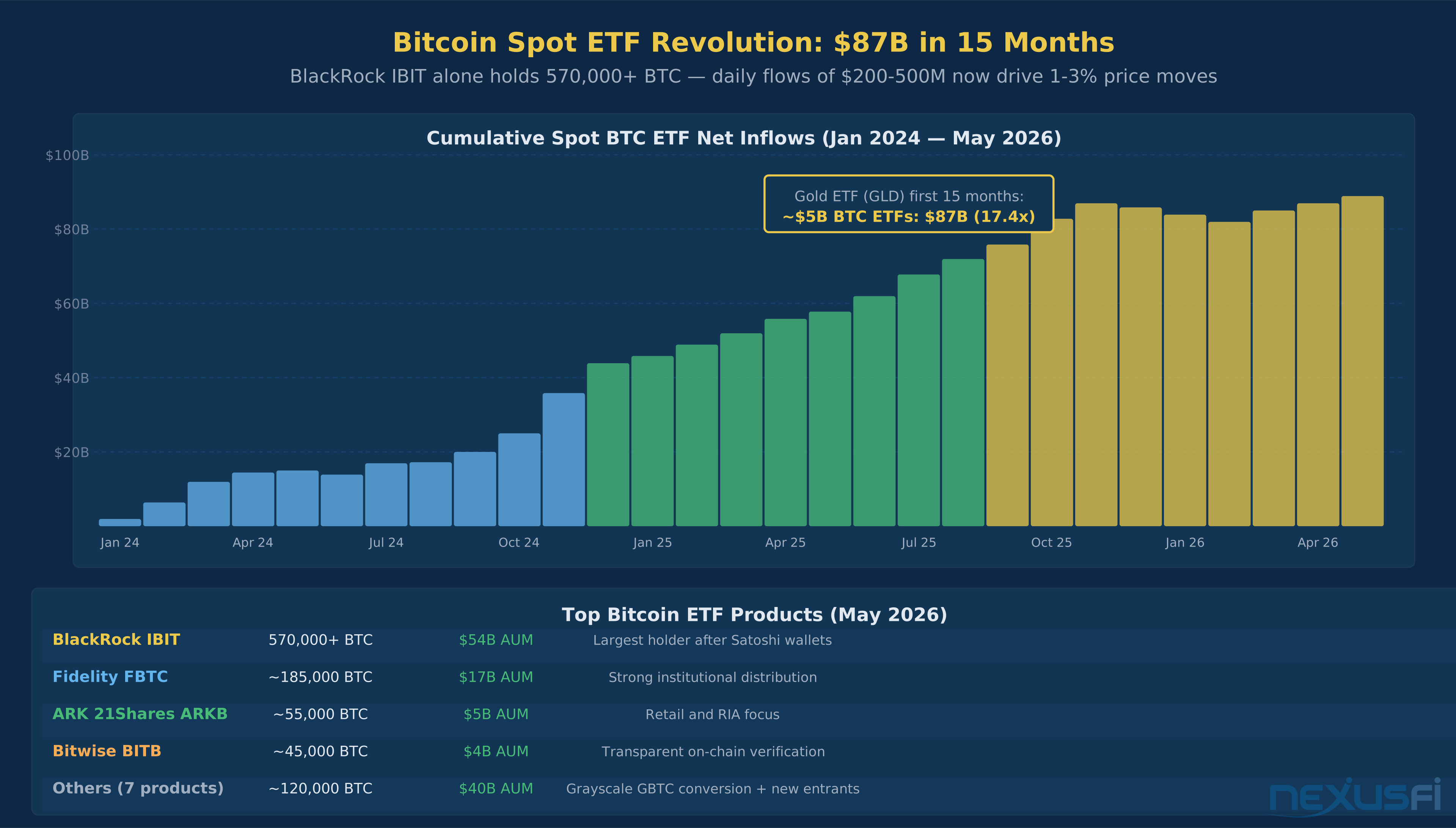
The numbers are staggering in historical context. GLD (the Gold ETF) attracted roughly $5B in its first 15 months of trading after launching in 2004. Bitcoin spot ETFs attracted $87B in the same timeframe — 17.4x the pace. This isn't just a "Bitcoin is more exciting than gold" story. It reflects pent-up institutional demand that had been locked out of compliant Bitcoin exposure for years.
What ETF flows actually mean for traders:
Daily flow data from ETF providers is published publicly and is actionable. When IBIT records $500M+ in daily inflows, that represents real spot buying — the ETF must purchase Bitcoin on the open market to back new shares. A sustained positive flow week (>$1B aggregate) creates measurable upward pressure on spot prices.
The reverse is equally important. During the Feb-Mar 2025 correction, sustained ETF outflows (especially from GBTC's ongoing conversion selling) contributed to the downward pressure. Monitoring daily ETF flow data (via Farside Investors, Bloomberg, or SoSoValue) is now a required data point for any serious BTC position.
BlackRock's IBIT has become a structural force: at 570,000+ BTC, it's the second-largest known Bitcoin holder globally after Satoshi Nakamoto's estimated 1M dormant coins. The sheer concentration of IBIT's holdings means BlackRock's hedge ratios and ETF mechanics now influence BTC market microstructure in ways that didn't exist two years ago.
Vanguard's reversal as confirmation: In December 2025, Vanguard — the world's second-largest asset manager, which had explicitly refused to support Bitcoin ETFs at launch — reversed policy and opened its $11 trillion platform to crypto ETF products.
That kind of institutional confirmation doesn't disappear in bear markets. It anchors a structural demand floor that previous Bitcoin cycles didn't have.
On-Chain Metrics: What the Blockchain Tells You Before Price Moves #
Bitcoin's blockchain is public. Every transaction, every address balance, every coin movement is permanently recorded and auditable. The on-chain analytics industry has built an entire framework for translating blockchain data into trading signals. The best practitioners use these metrics to identify accumulation phases, distribution tops, and leverage overcrowding — often days before price confirms the move.
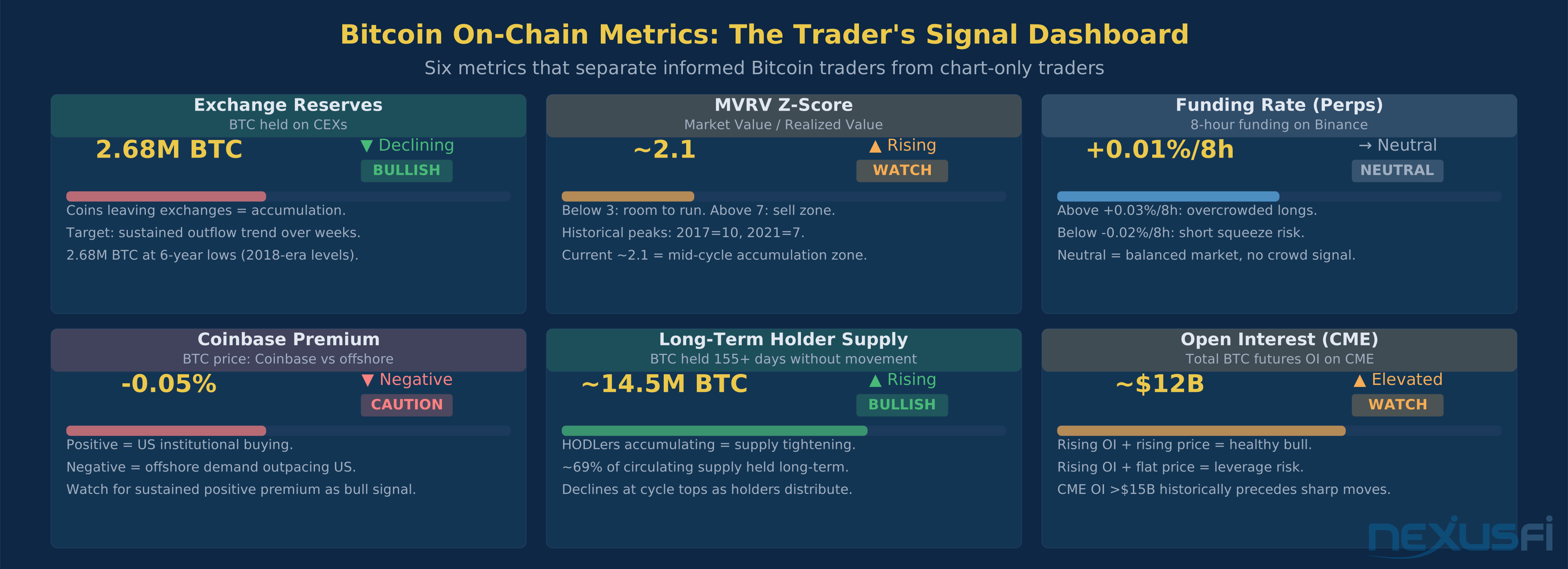
These are the six metrics that experienced BTC traders actually monitor:
Exchange Reserves
The total amount of BTC held on centralized exchanges is the single most important supply signal. When coins move off exchanges into cold storage or hardware wallets, they're being removed from potential sell supply. When coins move onto exchanges, holders are preparing to sell.
Exchange reserves have fallen to approximately 2.68M BTC as of 2026 — 6-year lows. This is the same supply level seen in 2018, before the entire 2020-2021 bull run. The structural interpretation: less available sell supply at any price level. Combine declining exchange reserves with rising demand (ETF flows, institutional buying), and you have a structural supply squeeze.
MVRV Z-Score (Market Value to Realized Value)
Market cap divided by realized cap, Z-scored to account for historical variance. Realized cap is the sum of all BTC valued at the price they last moved — effectively the aggregate cost basis of all Bitcoin holders.
When MVRV is above 7, the market is in extreme overvaluation territory (every holder is much in profit, creating strong sell incentive). Historical peaks: 2013=10, 2017=10, 2021=7. When MVRV is below 1, the market is trading below aggregate cost basis (extreme undervaluation). Current reading of ~2.1 places BTC in the mid-cycle accumulation zone — not cheap, but far from cycle top territory.
Funding Rate
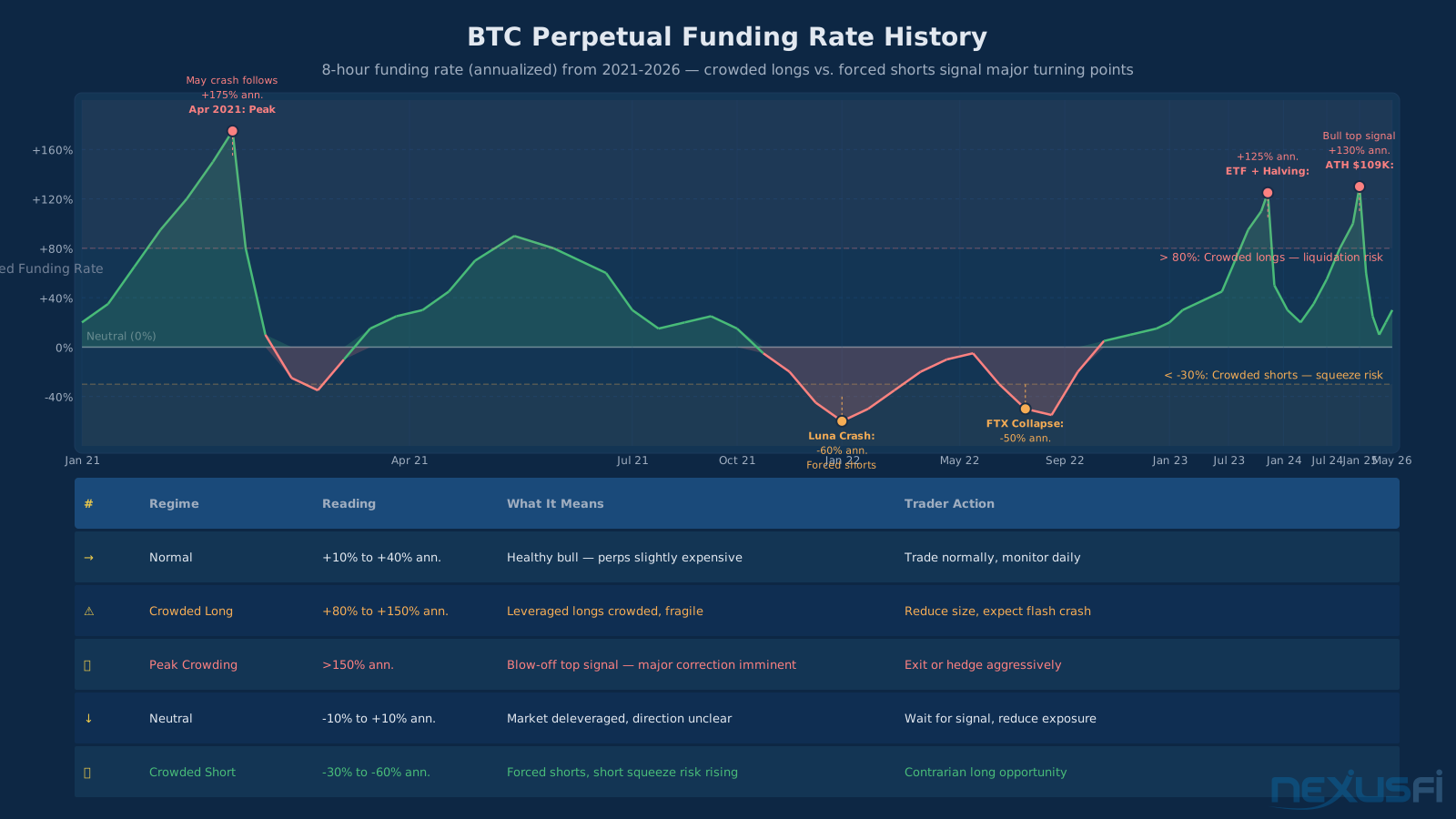
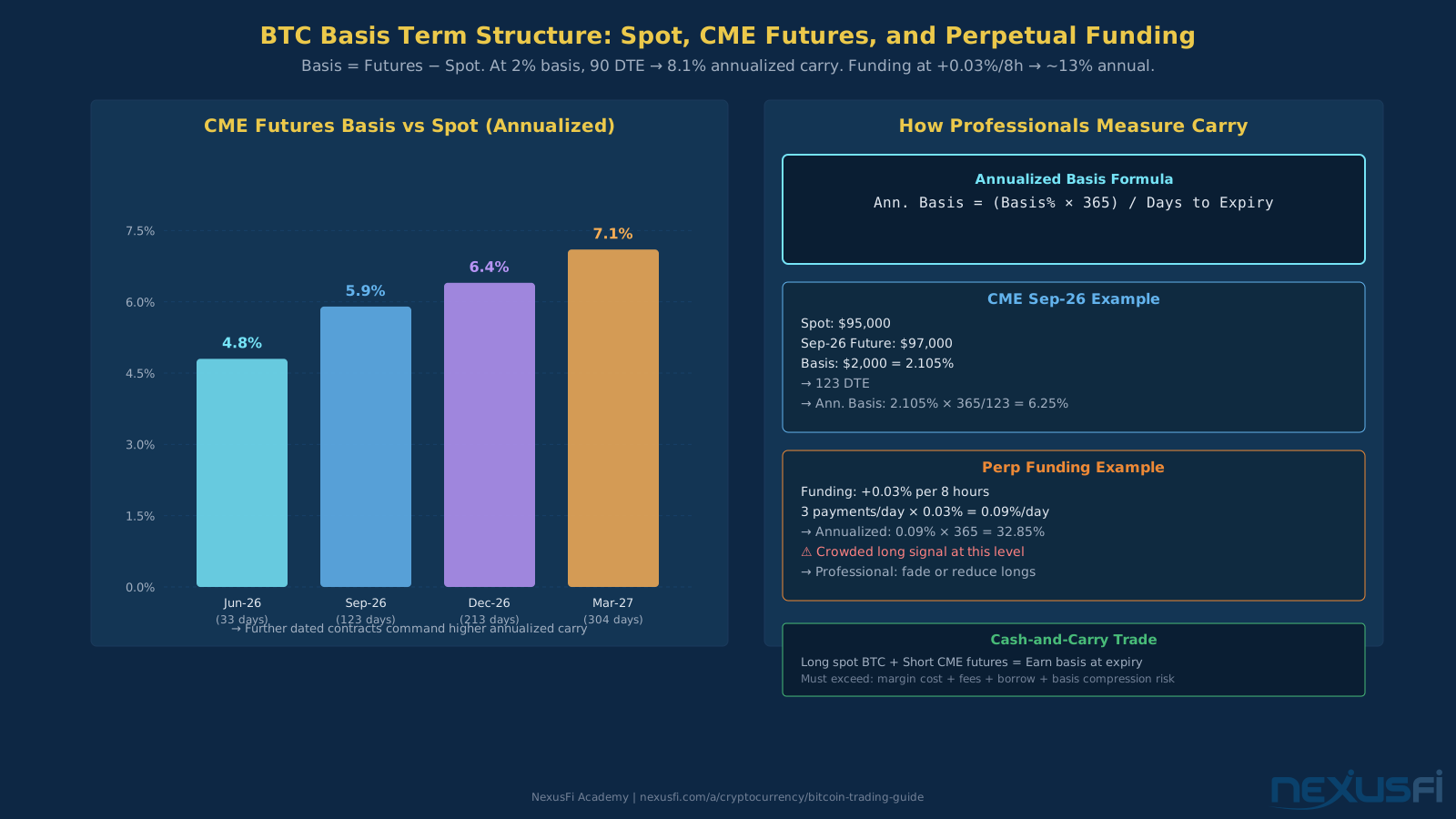
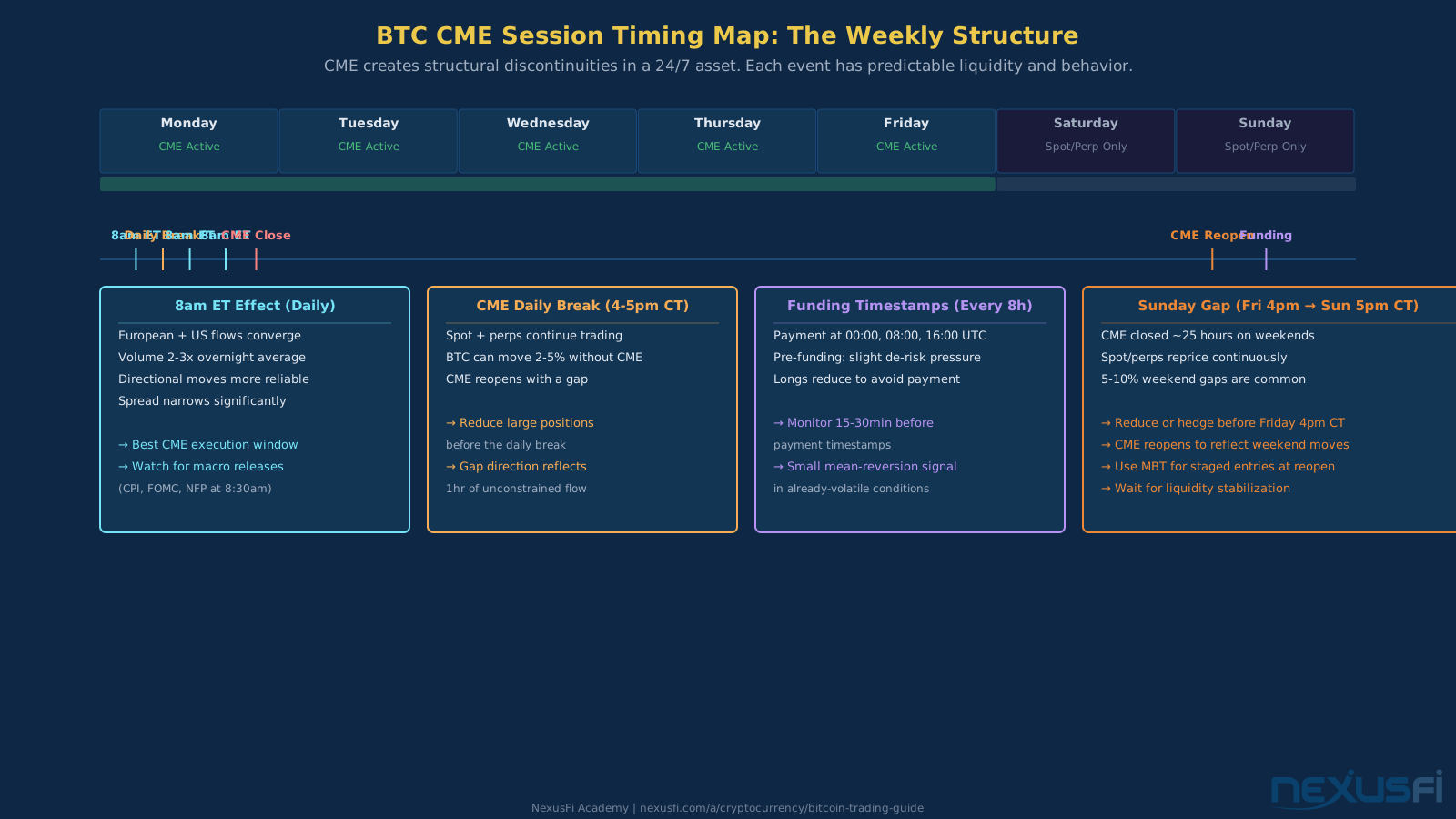
On perpetual swap exchanges (Binance, Bybit, OKX), funding is paid every 8 hours between longs and shorts to keep the perp price anchored to spot. When the market is long-heavy, longs pay shorts — and the funding rate goes positive. When short-heavy, shorts pay longs.
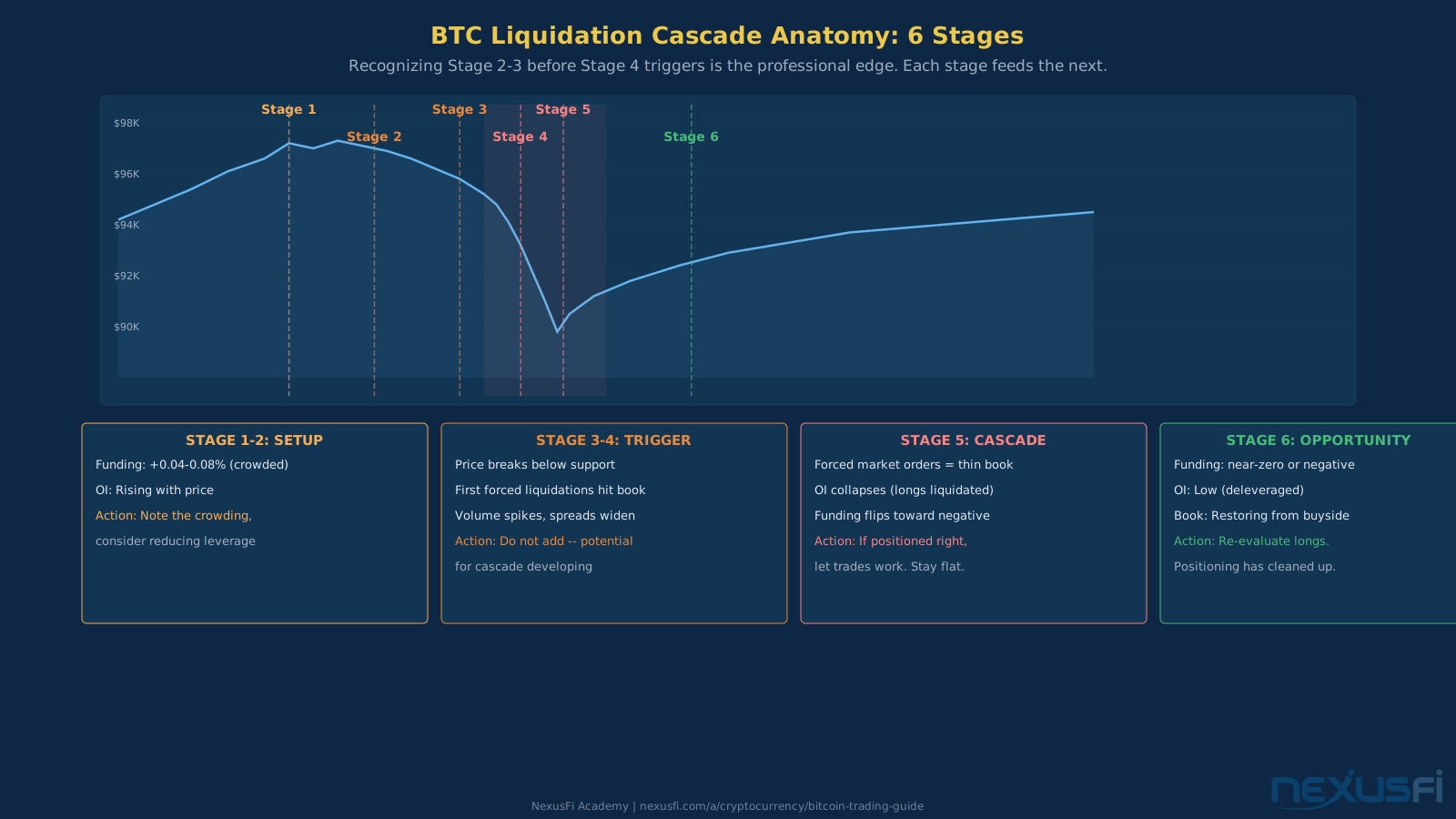
Above +0.03%/8h: the market is overcrowded with leveraged longs. These positions are fragile. A trigger (macro event, large sale) triggers a cascade of liquidations. Above +0.05%/8h: crowding extreme, mean reversion trade setup. Sustained negative funding (-0.02%/8h or below): shorts are paying, which creates upward pressure as shorts cover. This pattern preceded several major reversals in 2024-2025.
Coinbase Premium Index
The price difference between BTC on Coinbase (the primary US institutional spot exchange) vs. offshore exchanges like Binance. A sustained positive premium signals US institutional buyers are paying up for spot — they want the coins and they want them now. A negative premium means offshore demand is outpacing US buying.
This metric became especially telling post-ETF: IBIT's creation/redemption mechanism routes through Coinbase Prime. When IBIT sees large inflows, Coinbase's spot price gets pushed up, creating a positive premium. Watch for positive Coinbase premium alongside positive ETF flows as a corroborating bull signal.
Long-Term Holder (LTH) Supply
Coins that haven't moved in 155+ days are classified as long-term holder supply. As of 2026, roughly 69% of all circulating BTC (~14.5M BTC) is classified as long-term held. This figure rises during bear markets (HODLers accumulate and hold) and falls during bull markets as long-term holders distribute into strength.
When LTH supply starts declining as price rises, it signals distribution — smart money selling into retail FOMO. This is one of the clearest cycle-top indicators in Bitcoin's history. Conversely, rising LTH supply during price consolidation signals accumulation — holders buying and committing to long-term holds.
CME Open Interest
CME futures OI represents the total open positions in the regulated futures market. Rising OI alongside rising price = healthy bull market with genuine conviction. Rising OI with flat or declining price = leverage buildup without fundamental support — a setup for a squeeze in either direction. At ~$12B in May 2026, CME OI is elevated but below the $18-20B levels that preceded major liquidation cascades.
Bitcoin Price Drivers: The Five Forces #
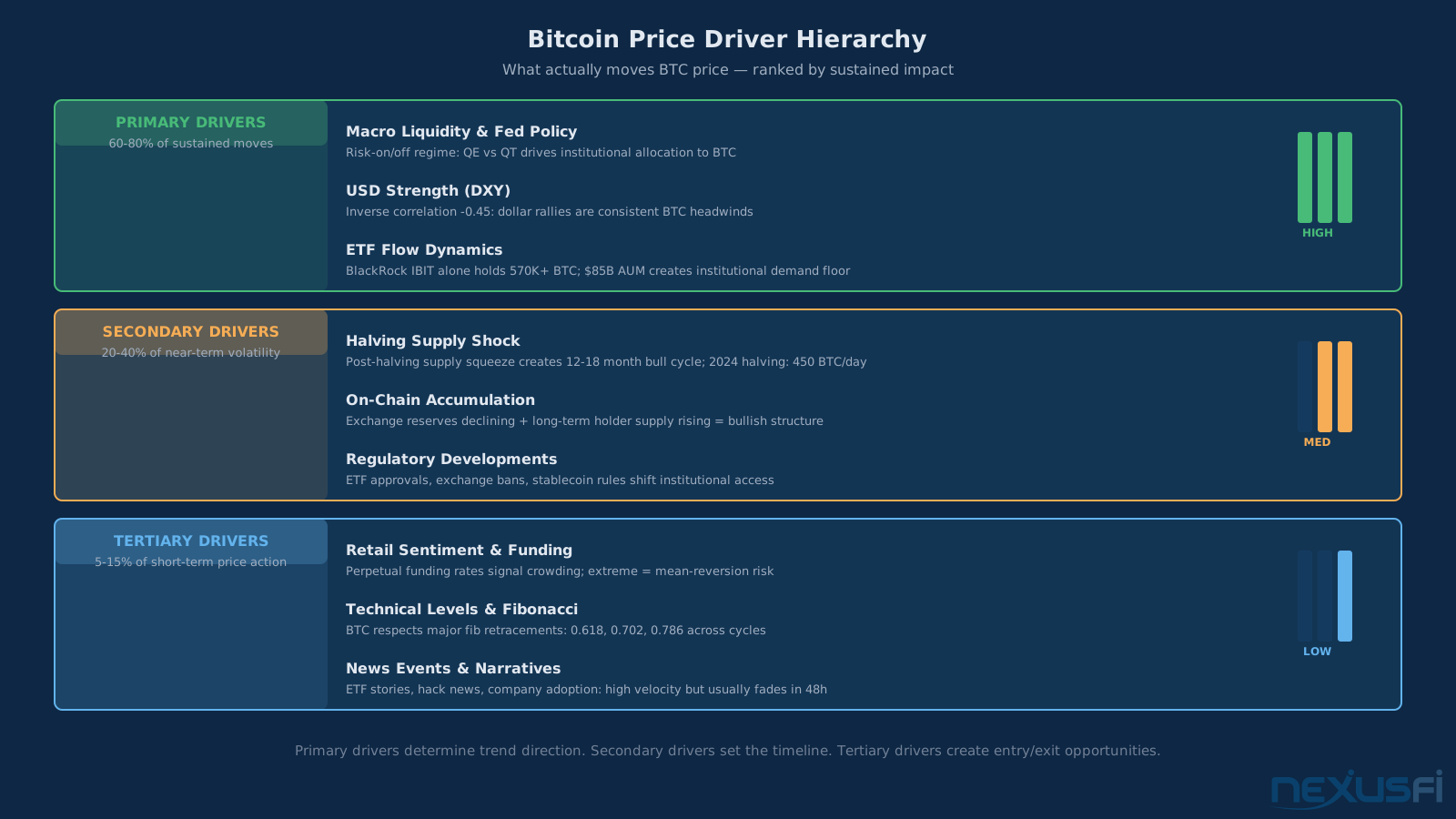
Bitcoin's price is the intersection of five distinct forces. They don't always align, and misidentifying which force is dominant is how traders get caught on the wrong side.
Force 1: Supply Mechanics (Halving + Exchange Reserves)
Already covered in depth above. The core: new supply is fixed and declining, exchange supply is falling, ETF custody removes coins from circulation. When demand increases against tightening supply, the only adjustment is price.
Force 2: ETF Flows and Institutional Demand
The new dominant short-term driver. Daily ETF net flow data is the first number sophisticated traders check each morning. $500M+ daily inflows correlate with 1.5-2% price appreciation within 24 hours. Sustained weekly inflows above $1B create multi-day upward momentum. The data is published with a 24-48 hour lag — factor this into your timing models.
Institutional demand isn't just ETF-driven. Corporate treasury allocations (MicroStrategy at 500K+ BTC as of 2026, plus dozens of smaller corporate buyers), sovereign wealth fund exposure in certain jurisdictions, and pension fund allocations through ETF wrappers all contribute. This demand is primarily directional (buy) rather than tactical (buy/sell around levels) — it creates a structural bid under the market.
Force 3: Macro Liquidity and Risk Sentiment
Post-ETF, Bitcoin trades with the risk-on/risk-off cycle in a way it didn't before 2024. Correlation with ES and NQ has strengthened to 0.63-0.68 on a 30-day rolling basis. When the Fed signals rate cuts, BTC rallies with equities. When VIX spikes above 30, BTC sells off alongside SPX.
The dollar index (DXY) is the most reliable macro inverse signal for BTC. DXY strength (risk-off, dollar demand) consistently weighs on BTC. DXY weakness (dollar debasement narrative) provides fundamental fuel for BTC's "store of value" thesis. Watch DXY direction as the first macro filter before any BTC trade.
US 10-year real yields matter for the same reason they matter for gold — they represent the opportunity cost of holding a non-yielding asset. Rising real yields are headwinds for BTC. Falling real yields (either nominal rate cuts or inflation expectations rising) support BTC's store-of-value bid.
Force 4: Derivatives Positioning and Leverage
The futures and perpetuals market amplifies everything. When funding is extreme positive and OI is elevated, the leverage structure is fragile — a single trigger can create liquidation cascades of 15-25% in hours. Bitcoin has done this repeatedly, including a 25% single-day drop in May 2021, a 30% drop in the June 2022 Celsius/Three Arrows collapse, and a 35% decline into the November 2022 FTX implosion.
These moves aren't random — they have a structural signature: funding rate above +0.04%/8h, OI up 30%+ from a recent base, price stalling at a resistance level despite positive news flow. That combination precedes the most violent corrections. Position sizing for BTC must account for this: a 10-15% stop is not aggressive, it's realistic for the instrument.
Force 5: Regulatory and Geopolitical Catalysts
The 2024 ETF approvals were regulatory. The potential repeal of SAB 121 (which previously required banks to hold capital against customer crypto assets) is regulatory. A sovereign Bitcoin reserve announcement would be geopolitical. These are binary events that can reprice BTC by 10-30% in a session.
The playbook: monitor Congressional hearings, SEC announcements, and Treasury policy statements as event risk. Reduce leveraged exposure before major regulatory catalysts — the move is usually binary (large rally on approval, large drop on rejection) and impossible to fade with leverage safely.
How to Trade Bitcoin: Instruments #
Spot Trading
The simplest form. Buy BTC on a regulated exchange (Coinbase, Kraken), hold it in cold storage or a hardware wallet. No financing cost, no liquidation risk, no counterparty dependency beyond your exchange. Appropriate for medium-to-long term directional views.
For spot holders: liquid staking is not available for Bitcoin (no staking mechanism), but you can earn yield on BTC through regulated lending (Coinbase Institutional, some ETF wrapper structures) or via Bitcoin-backed loans if you need liquidity without selling.
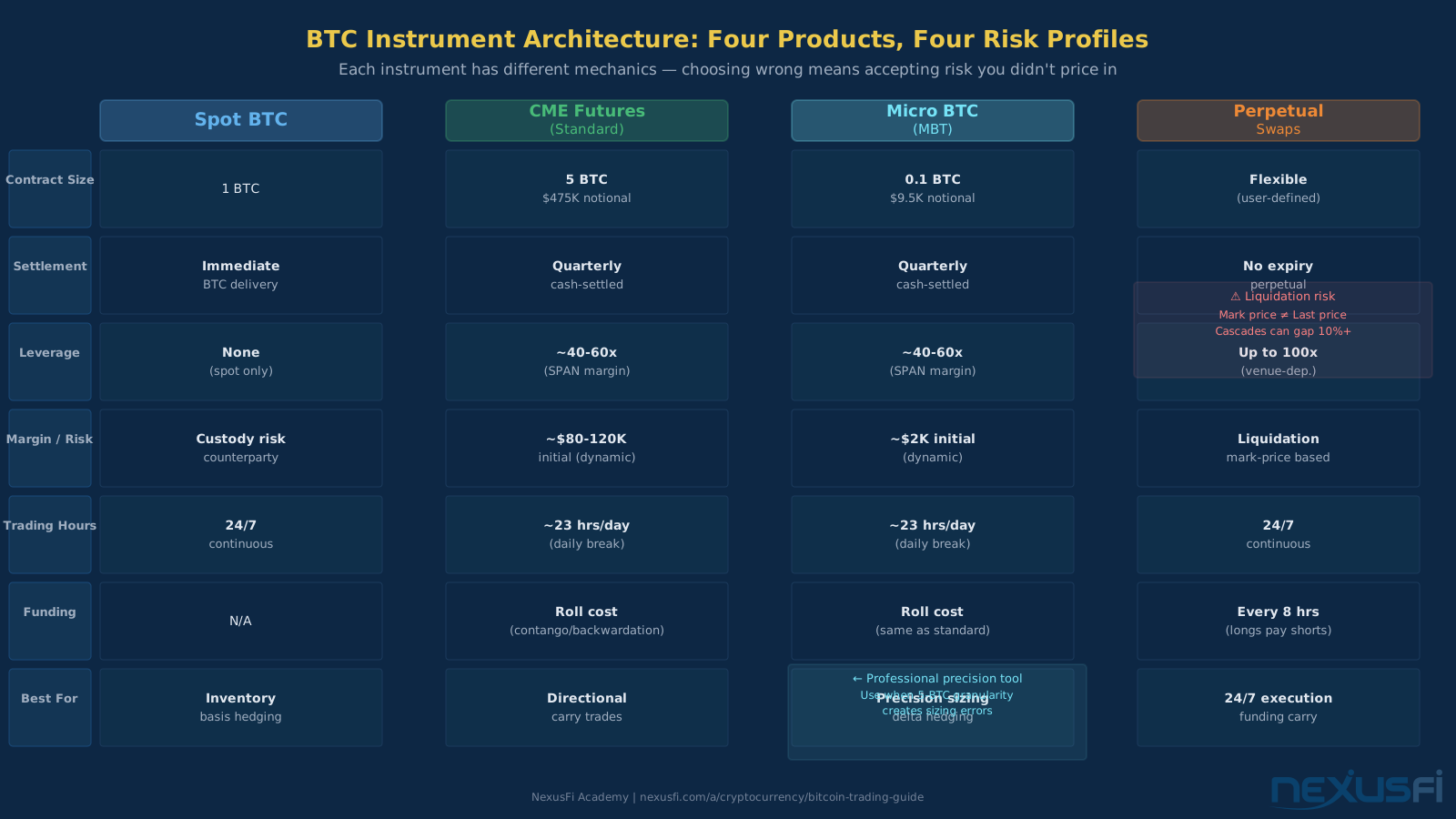
CME Bitcoin Futures
The regulated, institutional standard. Two contracts:
- BTC Futures: 5 BTC per contract (~$400,000 notional at $80K). Tick size $5.00 = $25.00 per tick. Initial margin ~$35,000. Settlement against BRR (Bitcoin Reference Rate, CME CF).
- Micro Bitcoin (MBT): 0.1 BTC per contract (~$8,000 notional). Tick size $0.50 = $0.05 per tick. Initial margin ~$700. Same settlement mechanism.
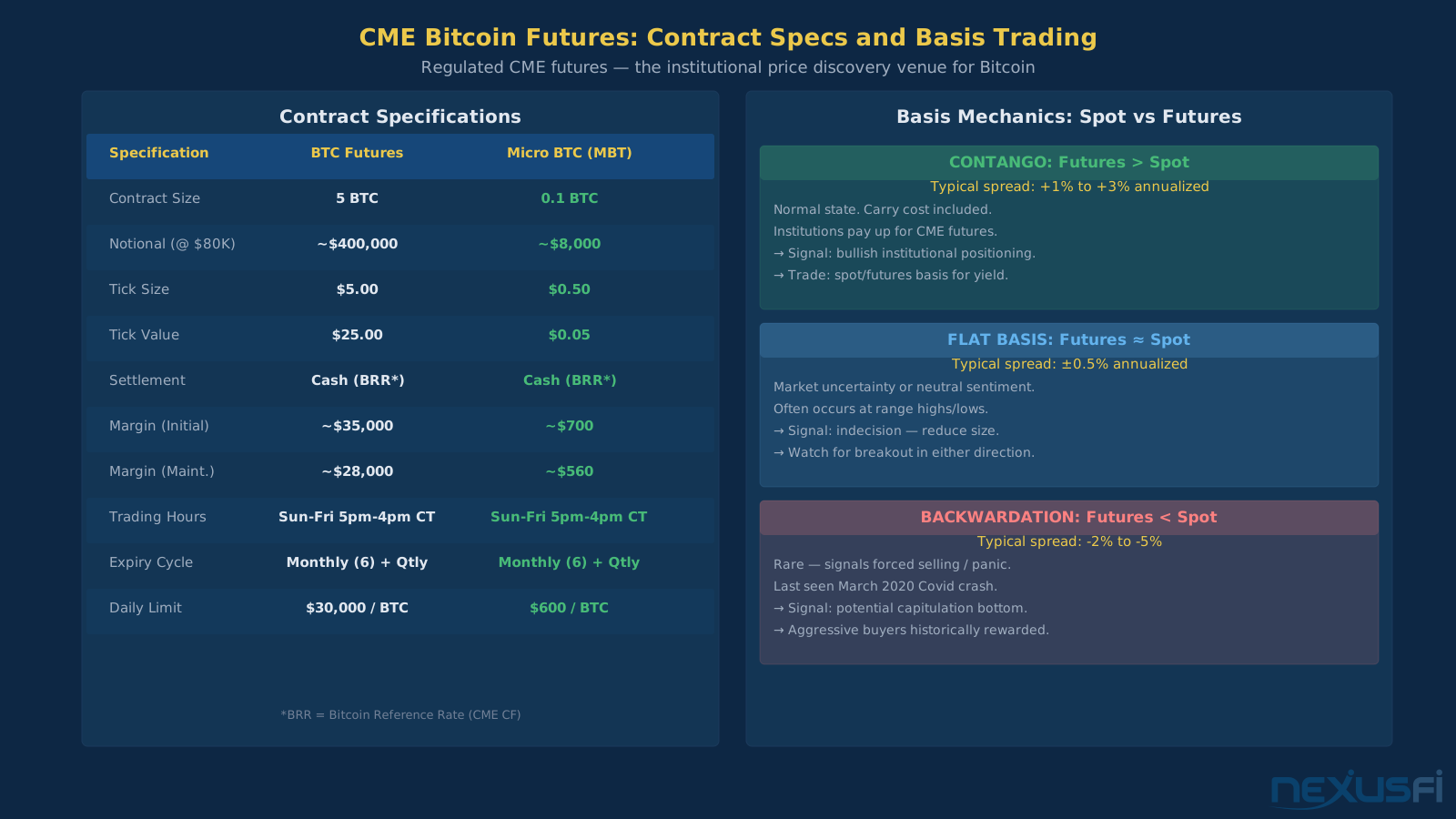
CME trades 23 hours/day (Sunday through Friday, 5pm-4pm CT) with a 1-hour closure that creates gap risk around major overnight events. Cash-settled, so no custody of actual BTC — which is the point for regulated entities.
The Micro BTC contract is the right starting instrument for most retail traders. A $25,000 trading account can participate in BTC moves with 3 Micro contracts (~$24,000 notional) while maintaining a reasonable 2% stop loss risk. The full BTC contract at $400K notional demands either significant capital or extreme caution with leverage.
CME Basis Trading
The spread between CME futures price and spot BTC is called the basis. In normal conditions (contango), futures trade at a premium of 1-3% annualized — reflecting the cost of carry for regulated entities. Basis compresses or inverts (backwardation) during stress events.
The March 2020 Covid crash produced the last significant Bitcoin backwardation, when CME futures briefly traded at a 5% discount to spot. Traders who bought spot and shorted CME futures at that moment locked in a guaranteed 5% return as the basis normalized. Basis trades are low-risk and low-return but provide reliable income during volatile periods for sophisticated traders with access to both spot and futures.
Spot Bitcoin ETFs
For retirement accounts, institutional allocators, or traders who don't want crypto custody complexity. IBIT (BlackRock), FBTC (Fidelity), ARKB (ARK), and others trade like stocks. Expense ratios 0.15-0.25% annually. Near-zero tracking error vs spot BTC. Daily liquidity in the billions.
Flow data from these products is the primary institutional signal — worth monitoring daily regardless of whether you trade them directly.
Perpetual Swaps
Available on Binance, Bybit, OKX, dYdX. No expiration, settled in USD/USDT, continuous funding mechanism. High leverage available (10-50x on most platforms) but funding rate risk accumulates over time. Position sizes 10x-50x what most traders should be using.
Perps are the right instrument for short-term tactical trades where you want high turnover and don't care about overnight carry cost. They're the wrong instrument for medium-term conviction trades due to funding rate erosion. If funding is +0.02%/8h and you're long for a week, you're paying roughly 1.7% in funding costs before any price movement. Size and time horizon matter.
Four Trading Setups for Bitcoin #
Setup 1: Halving Cycle Accumulation (3-12 Month Horizon)
Use the halving cycle framework as a directional bias filter. The pattern: 6-12 months pre-halving is the accumulation zone. 3-6 months post-halving is consolidation. 12-18 months post-halving tends to be the bull run peak.
Execution: During the post-halving consolidation phase (when price is flat and sentiment is neutral), build a position in spot or long-dated CME futures. Stop: below the halving-week low (a close below this level invalidates the thesis). Target: cycle ATH (the prior ATH is typically exceeded in the bull run). Size: this is a high-conviction, long-term position, so manage size to survive a 30-40% drawdown without being forced out.
Setup 2: ETF Flow Momentum (1-5 Day Horizon)
When ETF net flows for the day are large positive (>$400M aggregate), BTC has historically continued to rally over the following 1-3 days as the ETF providers execute their spot purchases across multiple days.
Entry: the following morning after a large positive flow day is confirmed. Stop: 2-3% below entry (the flow data may be front-run and already priced). Target: prior resistance level. This is a tactical, high-turnover setup — not a standalone framework, but useful for timing entries within a bullish macro backdrop.
Setup 3: Funding-Rate Mean Reversion (1-3 Day Horizon)
When 8-hour funding rates are above +0.04%/8h consistently for 2+ days, the leveraged long positioning is fragile. Entry trigger: a failure to make a new high on a session where BTC had every reason to rally (positive macro, positive ETF flows). That's the "crowded longs can't push higher" signature.
Short entry at range high with a stop 1.5% above the high. Target: 50-70% of the prior swing range. Cover quickly — don't hold shorts against the halving cycle trend. This is a counter-trend trade that works best when the macro backdrop is neutral to slightly bearish.
Setup 4: DXY Divergence (1-2 Week Horizon)
When the US Dollar Index is making new highs and BTC is holding its range (not declining with dollar strength), that's a bullish divergence — BTC is ignoring its most reliable macro headwind. Entry: when DXY rolls over from a short-term high, add to BTC longs or establish new positions. Stop: a DXY breakout to new cycle highs would invalidate the setup. Target: the next major BTC resistance level.
This setup has a strong historical record because when BTC refuses to sell off on DXY strength, it signals genuine supply absorption by buyers who are not sensitive to dollar dynamics — typically long-term holders accumulating at levels they consider attractive regardless of FX.
Bitcoin in the Macro Framework #
Bitcoin doesn't trade in isolation from traditional markets. Since the ETF approval, its macro footprint has become impossible to ignore for any trader running a multi-asset book.
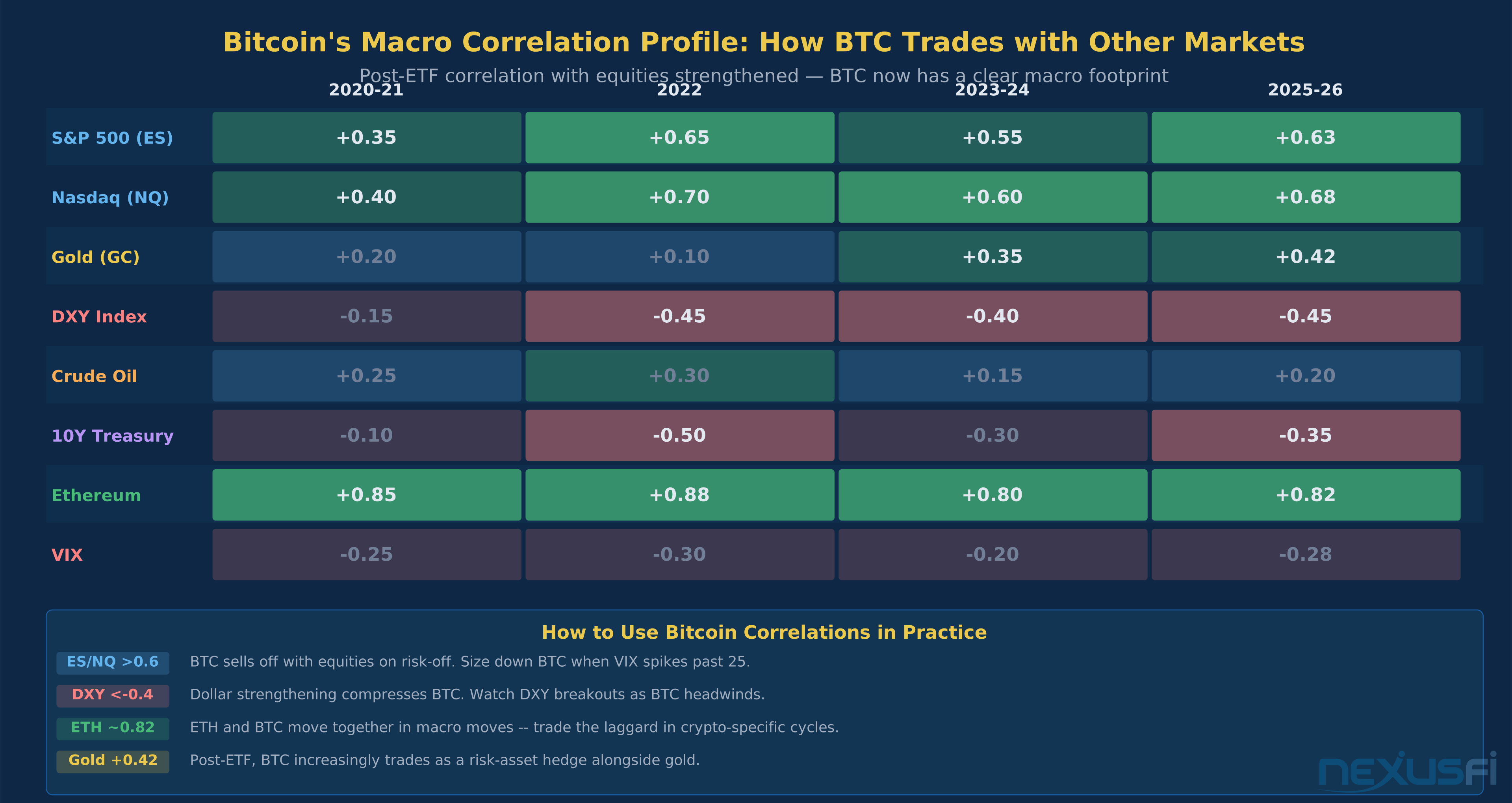
The correlation structure as of mid-2026:
Positive correlations:
- S&P 500 (ES): 0.63. In broad risk-off events (VIX >30), BTC sells off with equities. Size down BTC when the equity tape is in free fall — the correlation to ES overwhelms the store-of-value narrative in acute stress.
- Nasdaq (NQ): 0.68. Higher correlation than ES reflects BTC's technology/growth asset character. When growth stocks are getting destroyed, BTC follows.
- Gold: 0.42. The monetary debasement narrative creates a positive correlation in regimes where both BTC and gold are being bought as dollar hedges. In risk-off (pure flight to safety), gold holds while BTC can decline — the correlation is regime-dependent.
- Ethereum: 0.82. BTC and ETH move together in macro-driven moves. Trade the relative spread (BTC vs ETH) in cycle-specific narratives (ETH outperforms in DeFi cycles, BTC outperforms in pure-institutional accumulation phases).
Negative correlations:
- DXY: -0.45. Dollar strength is BTC's most consistent headwind. Every major Bitcoin bull run has occurred in DXY downtrend environments.
- 10-Year Treasury (real yields): -0.35. Rising real yields (falling TIPS prices) weigh on BTC as the risk-free rate opportunity cost rises.
- VIX: -0.28. Rising volatility generally hurts BTC, though in prolonged fear cycles, BTC can disconnect when crypto-specific demand reasserts.
For a futures trader running both ES and BTC positions: these instruments are not independent. A stress event that hits ES will hit BTC. Running both long at full size is not diversification — it's concentration in the same macro risk factor. The appropriate portfolio construction is to size them on a correlation-adjusted basis or ensure your BTC size is reduced when you're already long ES/NQ into a volatile period.
For the mechanics of how BTC futures interact with the broader derivatives market, see Crypto Derivatives Trading: Futures, Perpetuals, and Options.
Risk Management for Bitcoin's Volatility #
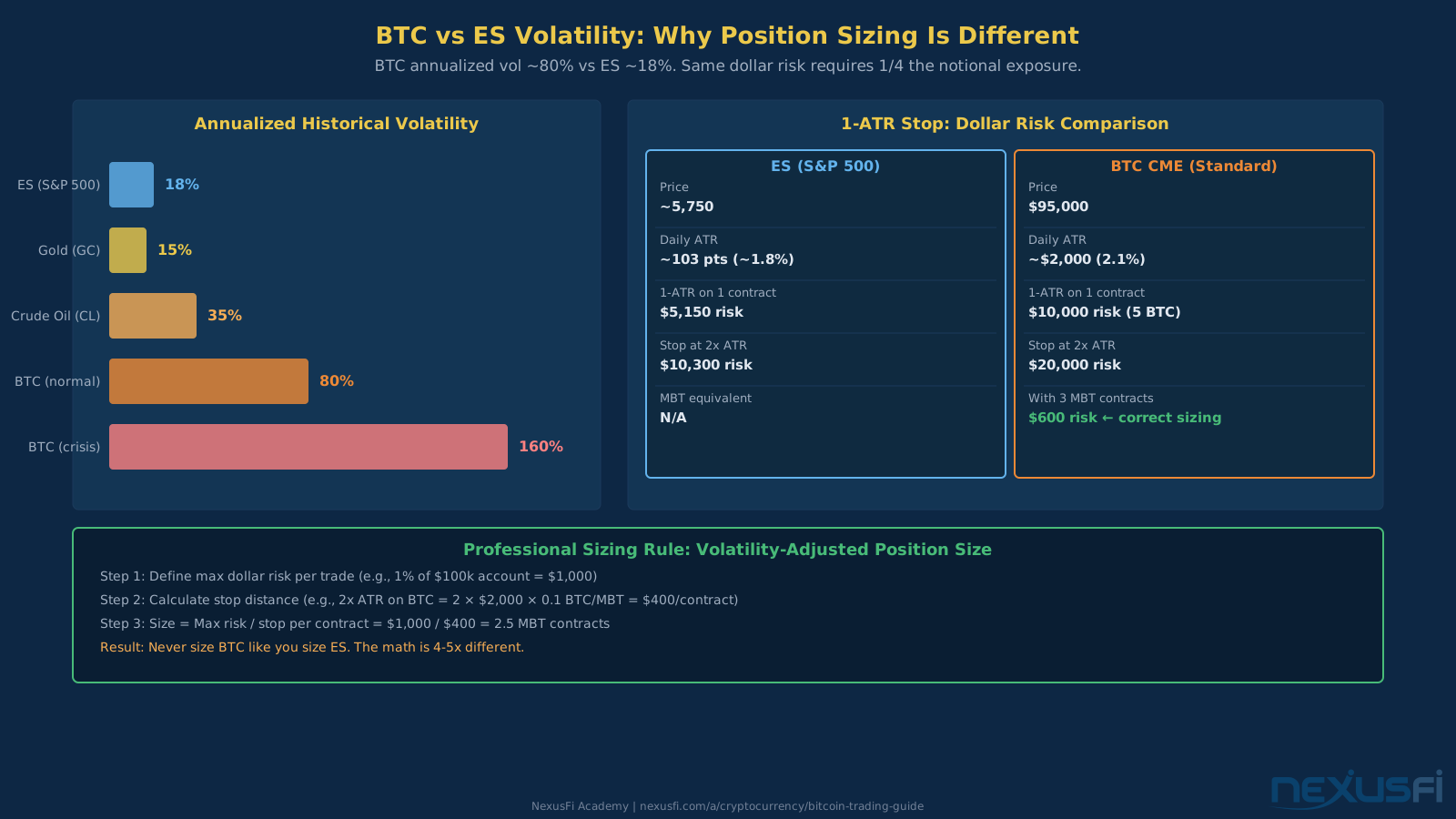
Bitcoin is not a low-volatility asset. 30-day realized volatility has declined from 80%+ in 2021 to 45-55% in 2025-2026 — but that's still 3-4x equity market vol. The risk management discipline for BTC trading is different from futures trading frameworks developed for ES or CL.
ATR-based position sizing: Bitcoin's average true range (ATR) on the daily chart runs 3-5% of price. At $80,000, that's $2,400-$4,000 per day. If you're using a 2x ATR stop (typical for swing trades), you're placing stops $4,800-$8,000 below entry — a 6-10% move. Your position size must be calibrated to this.
Rule: risk no more than 1.5% of account equity per trade. If your stop is $6,000 away per BTC and you have a $200,000 account, your maximum position is: ($200,000 × 0.015) / $6,000 = 0.5 BTC. That's it. No "but I have high conviction" overrides — conviction doesn't prevent 30% flash crashes.
Leverage floors: CME Micro BTC at ~$8,000 notional with ~$700 margin gives roughly 10:1 leverage at maximum CME margin. That's not appropriate for swing trades. Use 2-3:1 effective leverage at most — enough Micro BTC contracts to get meaningful exposure, but not so many that the daily ATR move wipes 5% of your account.
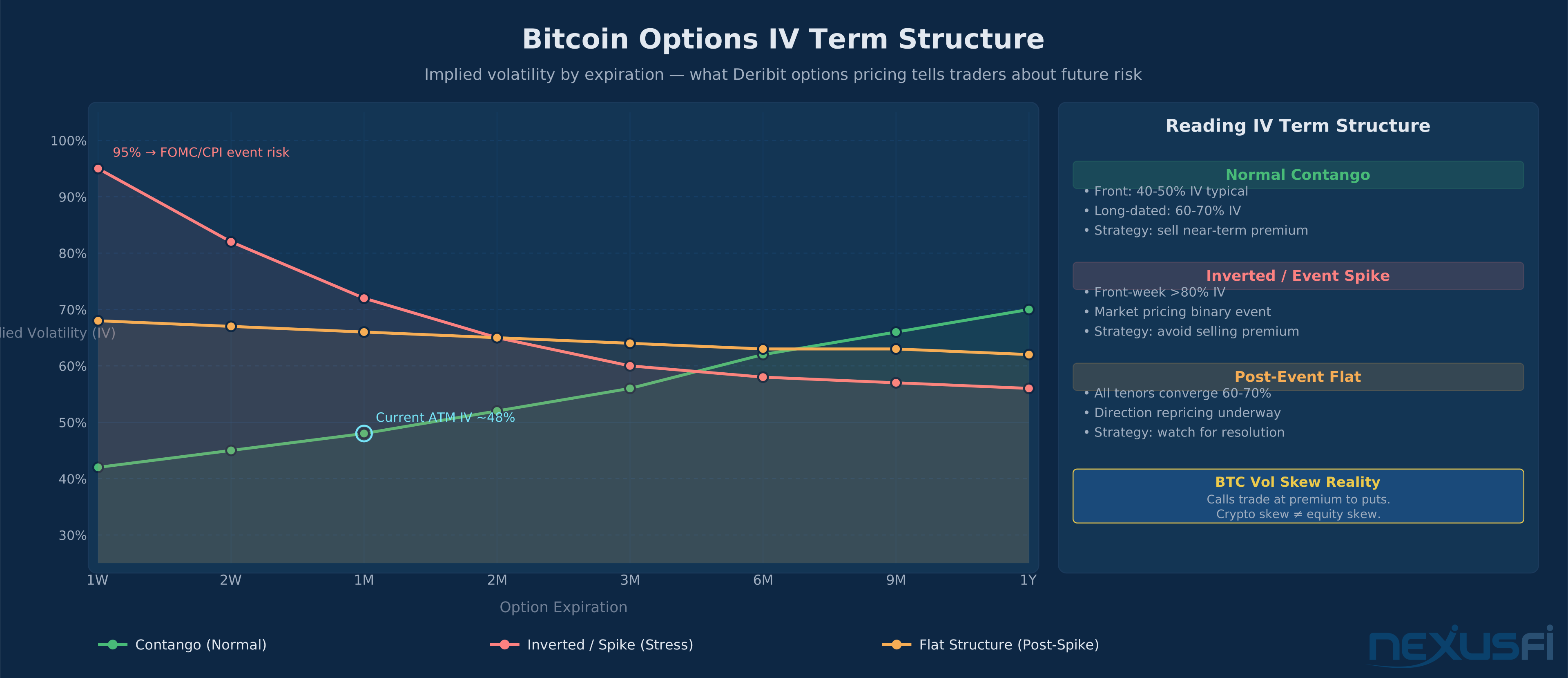
Gap risk: CME Bitcoin futures close for 1 hour daily (4pm-5pm CT). Price can gap at the open around macro events — FOMC decisions, CPI prints, geopolitical shocks. Reduce position size going into major scheduled events. A surprise hawkish Fed can gap BTC 5-8% at the 5pm open with no ability to manage the position.
The 70-85% drawdown reality: Every Bitcoin bear market has produced 70-85% peak-to-trough declines. 2018: -83%. 2022: -77%. Every single cycle. If you're holding BTC through a bear market without a risk management plan, you're choosing the holding strategy — make that an explicit decision, not a default. Size your long-term holdings to survive a $109K → $20K scenario emotionally and financially before accepting that risk.
What Bitcoin Is Not #
A few misconceptions worth addressing directly:
It's not uncorrelated to equities. Pre-2023 it was weak correlation. Post-ETF, BTC correlates with ES at 0.63. It's a risk asset with crypto-specific supply dynamics layered on top. Treat it as a high-beta risk asset in your portfolio construction, not a true diversifier in acute stress events.
It's not purely driven by halving cycles anymore. The 2024-2025 cycle was much influenced by ETF flows, Trump election narrative, corporate treasury adoption, and interest rate cuts — factors that didn't exist in prior cycles. The halving is still relevant as a supply-side structural factor, but it now competes with macro and institutional forces for the dominant pricing narrative.
The "digital gold" narrative is still contested. Gold held during the April 2025 equity correction while BTC declined. The long-term store-of-value thesis is sound, but BTC trades more like "digital growth" in the short term. Recognize the narrative vs. the actual price behavior.
Knowledge Map
Go Deeper
Build on this knowledgeReferences This Article
Articles that build on this topicCitations
- — Bitcoin and Crypto discussion (2024) 👍 5“Bull Cycle is approximately 365 days prior to halving, and another 365 days continuation after halving. This would put the cycle top approximately at April 2025 -- 365 days after the April 2024 halving.”
- — Is Bitcoin done ? take a look... (2026) 👍 1“CME + ETFs combined run maybe $10-15B/day. Offshore derivatives dominate at $50-150B+/day depending on volatility. Regulated US venues represent roughly 10-15% of total global BTC trading volume.”
- — Vanguard Reverses Crypto Policy - Opens $11T Platform to Crypto ETFs (2025)“When the world second-largest asset manager opens its platform to crypto products, it signals mainstream institutional validation that is hard to ignore.”
- — Becoming A Better Trader (2021) 👍 4“Bitcoin dominance chart: when alt-coins rally, it tanks. Markets might trade in a much more organized manner given current institutional attention and interest.”
- — Becoming A Better Trader (2021) 👍 7“BTC tends to respect the .702 Fib level. A close above key resistance kicks off alt season -- different markets trade differently, and Fibonacci levels have real significance in crypto.”
- — New Micro Contract: Micro Ether coming 5-Dec-21 (2021) 👍 10“Regulated crypto futures: ICE Bitcoin (1 coin, ~$64K notional), CME Bitcoin (5 coins, ~$320K), CME Micro Bitcoin (0.1 coins, ~$6.4K). Micro Bitcoin fees are 25x more expensive than full size -- the fee structure matters for position management.”
- — Martin Price Action Journal (2019) 👍 6“BTC price action: Gap down and a failed breakout of yesterday low which was a bull bar -- a bad sell signal bar. Managing winners and cutting losers are the discipline challenges even for experienced traders working Bitcoin setups.”
- — Bitcoin Price Analysis: BTC/USD Bulls Keep Charging to Upside Targets (2019) 👍 2“BTC remained well bid above $7,600 with the 0.618 Fib retracement providing clear support. Bitcoin respects Fibonacci levels with precision -- the 61.8% retracement and trend line confluence are consistent reference points across all BTC price cycles.”
- CME Group — Bitcoin Futures Contract Specifications (2024)
- Farside Investors — Bitcoin ETF Fund Flow Data (2026)
- Glassnode — Bitcoin On-Chain Metrics and Market Intelligence (2026)