



Spot Ethereum ETFs: The Futures Trader's Complete Guide to ETHA, FETH, and the Basis Trade
Overview #
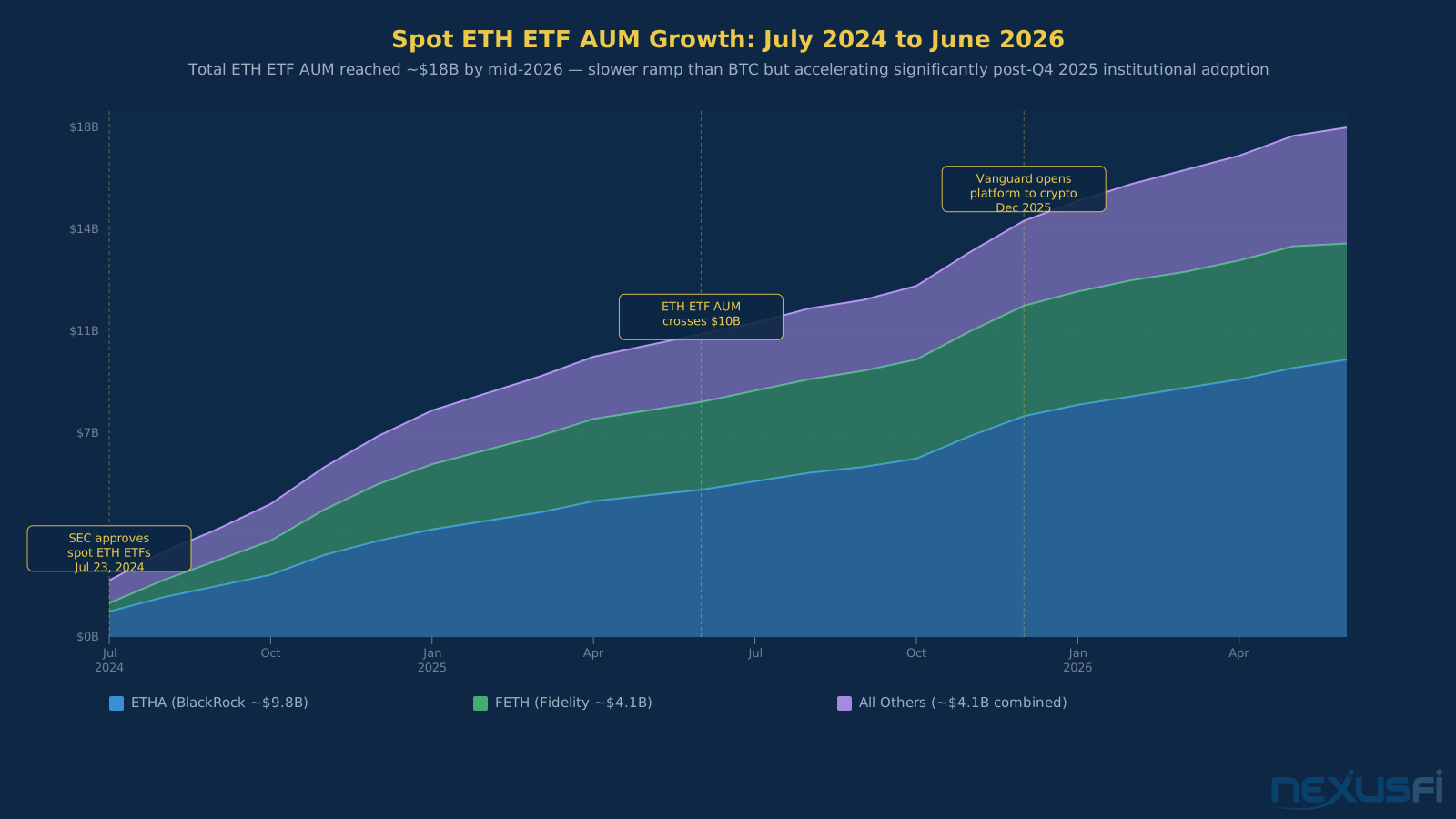
May 23, 2024. The SEC approved eight spot Ethereum ETFs. Within 24 hours, BlackRock's ETHA and Fidelity's FETH began trading on July 23, 2024 after a brief technical review period. By mid-2026, the combined spot ETH ETF complex had accumulated roughly $18 billion in assets under management, holding a meaningful percentage of the liquid ETH supply available to institutional investors.
For futures traders, this isn't a story about ETFs. It's a story about a new category of institutional flow that now directly shapes CME Ethereum futures pricing, basis behavior, and market microstructure — and it comes with one critical twist that separates it from the Bitcoin ETF story: the staking yield gap.
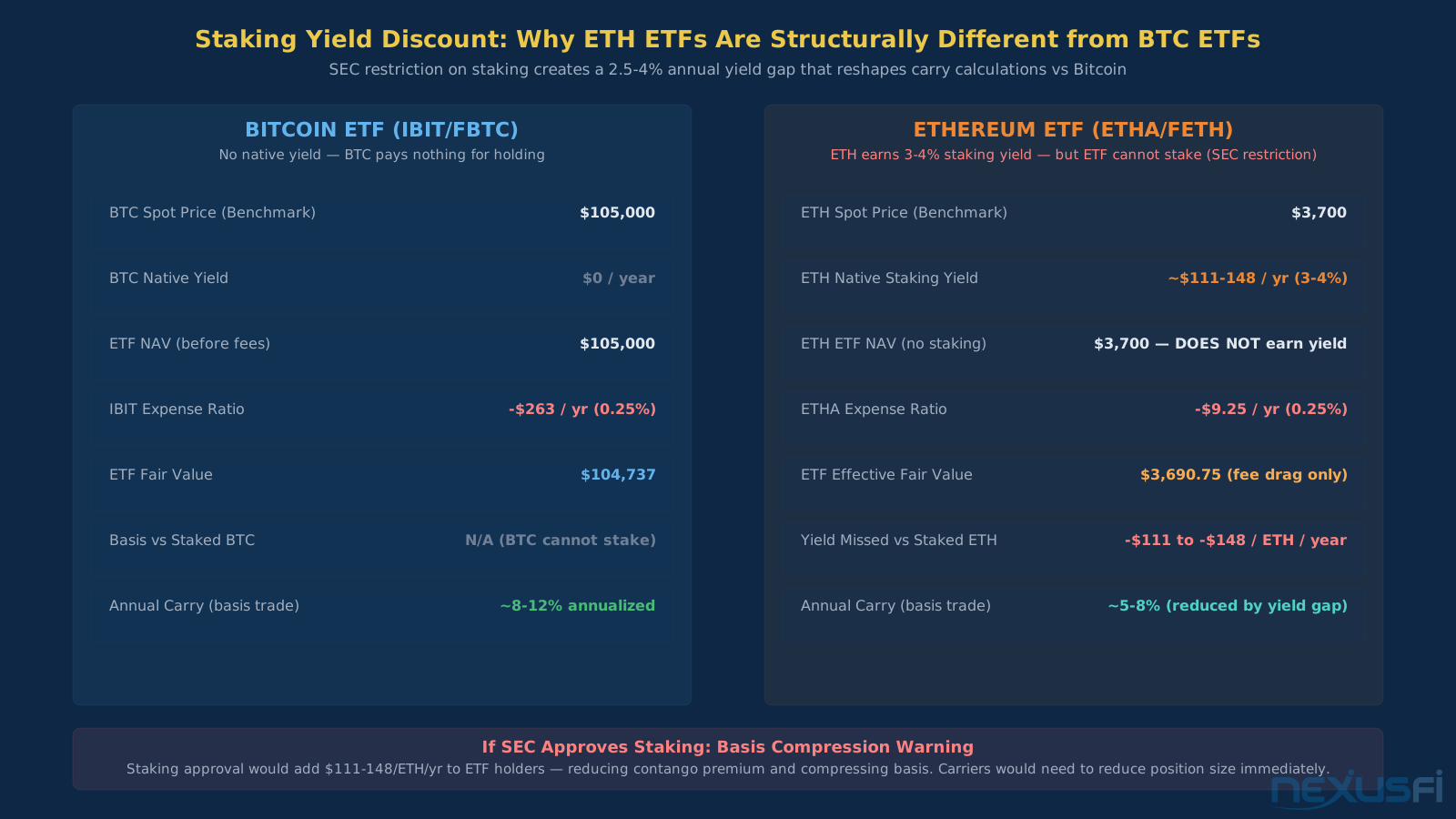
Unlike Bitcoin, Ethereum generates a native yield of approximately 3-4% annually through staking on the proof-of-stake network. Spot ETH ETFs cannot currently stake (SEC restriction). That means every dollar in an ETH ETF is leaving 3-4% of annual yield on the table compared to direct ETH ownership. This structural yield gap reshapes every carry calculation, changes the fair value of the basis, and creates dynamics that don't exist in the BTC ETF world.
This article covers the ETH ETF mechanics, the staking yield discount, the basis trade framework, how to read ETF flow signals, and exactly where these strategies break down. No fluff — just the specific mechanics that determine whether a basis trade works or eats your account.
What the Spot ETH ETF Approval Changed for Futures Traders #
Before spot ETH ETFs, institutional investors wanting Ethereum exposure had limited options: hold ETH directly on crypto exchanges (counterparty risk, custody complexity), use Grayscale's ETHE trust (which historically traded at a discount to NAV because it had no redemption mechanism), or trade CME Ethereum futures (no spot exposure, roll costs, 50% margin requirement).
The spot ETF changed all of this simultaneously. With real creation and redemption mechanics, the premium/discount to NAV stays compressed to a few basis points under normal conditions. The wrapper is regulated, the custodians are institutional-grade (Coinbase Custody for BlackRock, Fidelity Digital Assets for FETH), and shares trade on NYSE Arca during standard US equity market hours.
For futures traders, the key shift was this: significant institutional ETH demand now flows through a vehicle with daily transparent flow reporting. You can see exactly how many new shares were created or redeemed each business day, which tells you precisely how much ETH is being absorbed by the ETF complex — or released back to the market. That data stream didn't exist before July 2024.
The scale grew faster than many expected. As @Fi documented when Vanguard reversed its crypto policy in December 2025: the opening of major distribution platforms to crypto ETFs drove sustained inflow acceleration, improving the correlation between spot and futures markets through deeper institutional participation. Vanguard's $11 trillion platform opening to crypto products shifted the ETH ETF trajectory meaningfully in Q4 2025.
CME also responded. As @SMCJB reported in November 2025, CME Group's cryptocurrency trading volume surged 226% year-over-year in October 2025, with Micro Ether futures (0.1 ETH = roughly $370 notional at $3,700 ETH) increasingly popular with retail-sized participants wanting CME-regulated exposure. The full ETH contract at 50 ETH (~$185,000 notional) remains primarily institutional.
The Staking Yield Gap: The Most Important Difference from Bitcoin ETFs #
This section deserves careful attention because it's the single largest variable that separates ETH ETF dynamics from BTC ETF dynamics — and most traders misunderstand it.
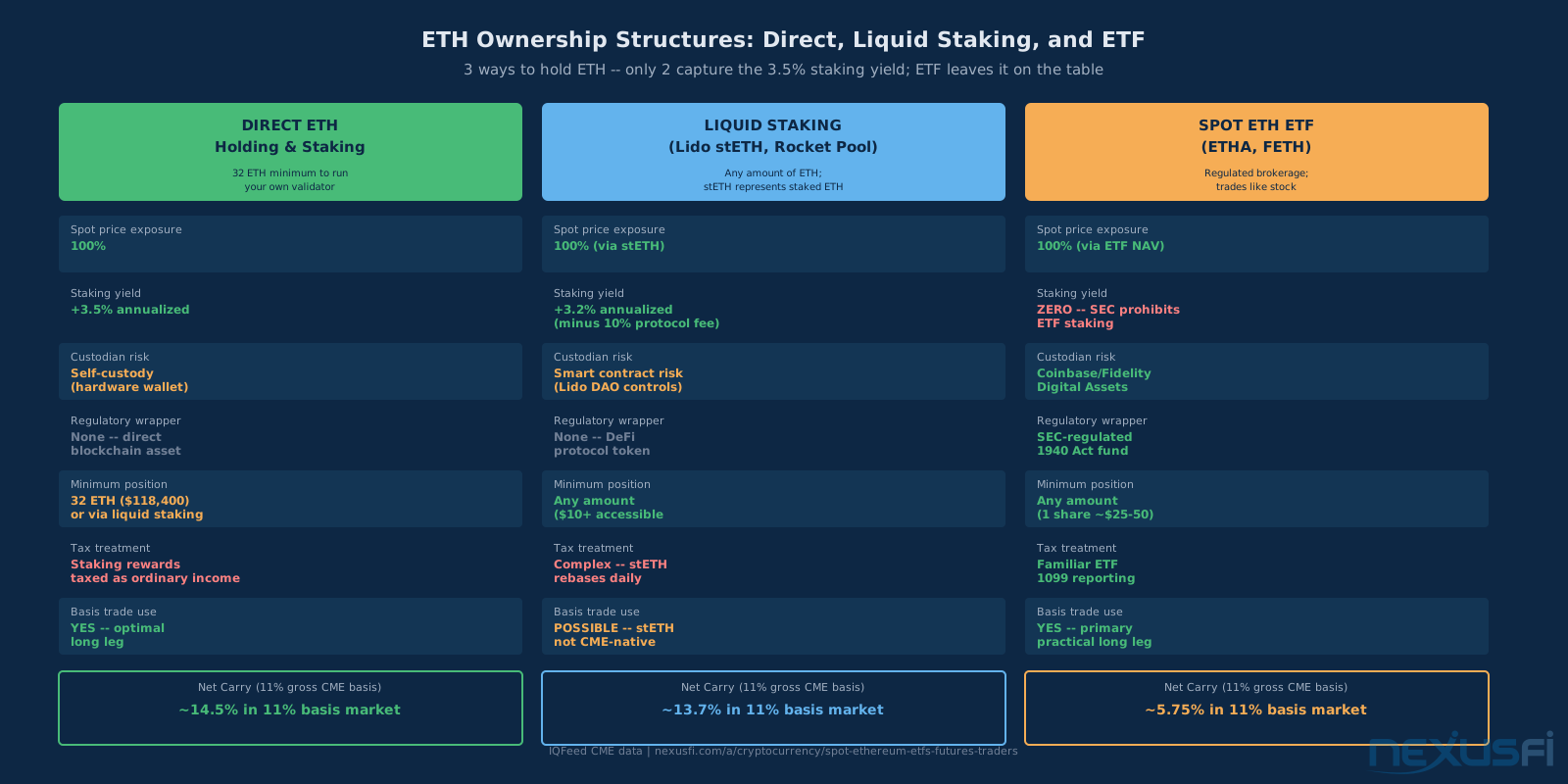
Ethereum uses proof-of-stake consensus. Validators lock up ETH (minimum 32 ETH to run a validator, or any amount through liquid staking protocols like Lido or Rocket Pool) and earn roughly 3-4% annual yield in newly issued ETH. This yield is real, predictable, and material. At $3,700 ETH and 3.5% staking yield, staking 50 ETH generates approximately $6,475 in annual yield.
Spot ETH ETFs currently cannot stake. The SEC's approval order in May 2024 (Release No. 34-100224) explicitly prohibited the ETFs from participating in Ethereum staking, citing concerns about the nature of staking rewards as potential securities. The ETFs simply hold ETH in custody — earning zero yield on their holdings.
This creates a structural divergence between owning ETH directly (or through liquid staking protocols) and owning it through an ETF wrapper. The ETF is permanently leaving 3-4% of annual return uncaptured.
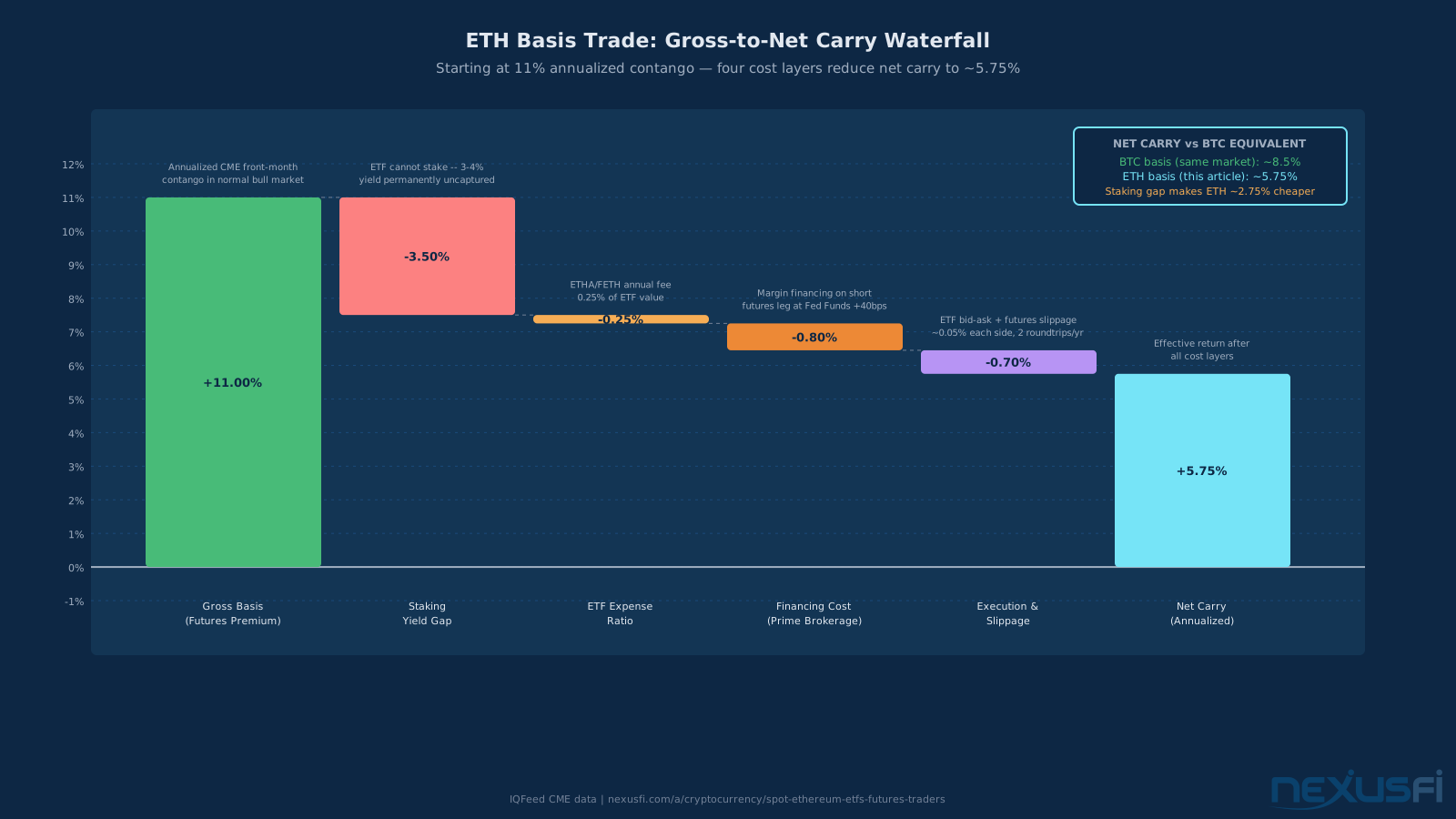
For basis traders, this has two direct implications. First, your carry model must reduce the expected annualized basis by the staking yield — because part of what the futures market prices into contango reflects expectations about staking economics, and your long leg (the ETF) doesn't capture that yield. A BTC basis trade at 10% annualized is clean carry. An ETH basis trade at 10% annualized has an effective staking-adjusted yield of roughly 6-7% after the yield gap is factored in.
Second, if the SEC ever approves ETH staking for ETFs — which remains a live regulatory question — the dynamics shift dramatically. Approval would add $111-148 per ETH annually to ETF holders' returns, increasing demand for the spot leg, compressing basis, and potentially requiring a rapid reduction in basis trade positioning. Watch regulatory developments carefully.
Never model an ETH basis trade using the same carry assumptions as BTC. The 3-4% staking yield gap is a permanent structural headwind on your long leg. An ETH basis "at parity" with BTC basis is actually 3-4% cheaper in real carry terms.
Creation and Redemption Mechanics: The Engine Under the Hood #
To understand why ETF flows affect futures basis, you need to understand how Authorized Participants (APs) — the institutional market makers who create and redeem ETF shares — operate.
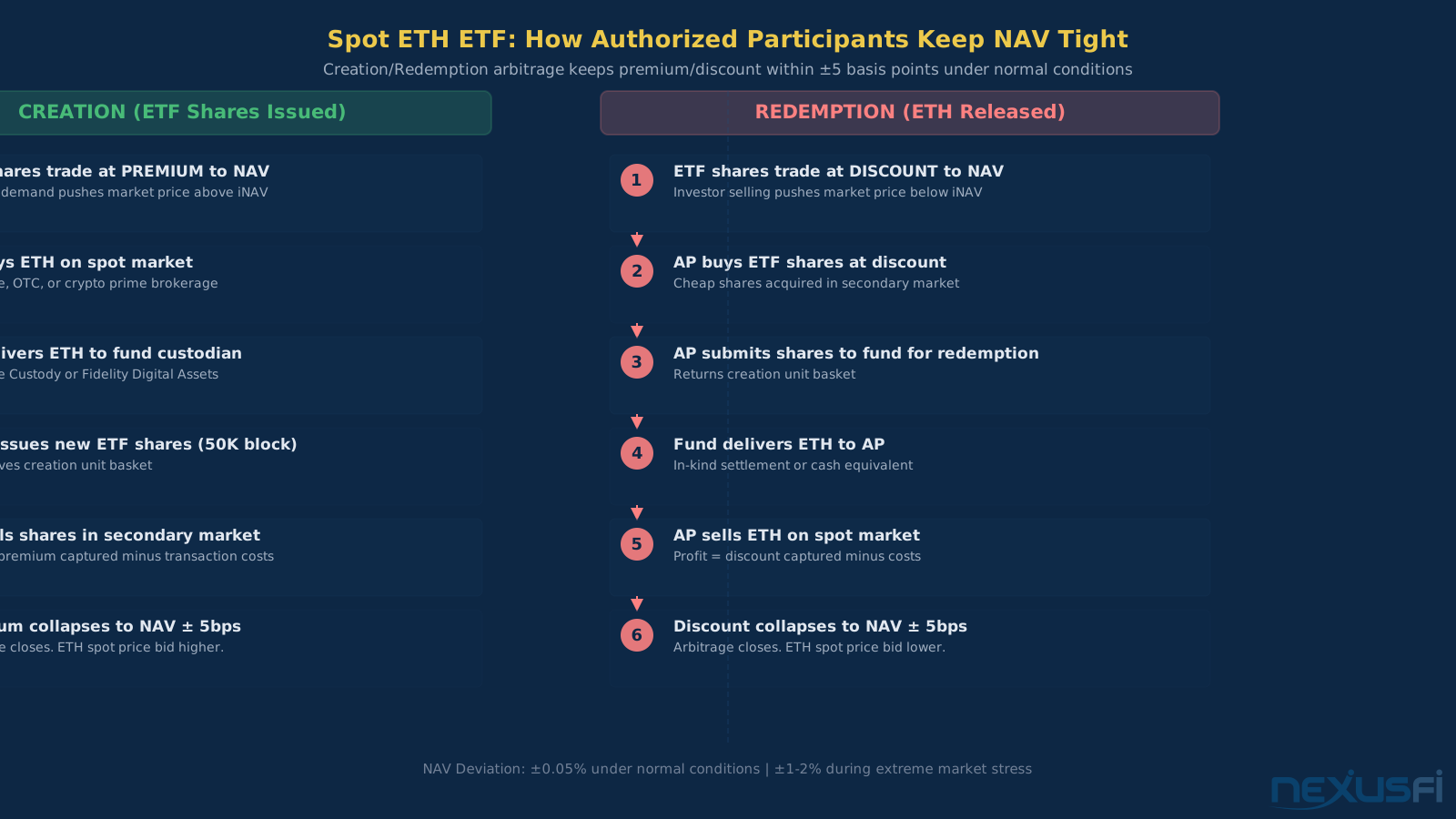
Creation: When ETF shares trade at a premium to NAV (iNAV), an AP delivers ETH to the fund custodian (or cash in "cash creation" mode). The ETF issues shares in large blocks — typically 50,000 shares per creation unit for ETHA, representing roughly 50-100 ETH at current prices depending on the share price. The AP then sells those shares in the secondary market, profiting from the premium captured minus transaction costs.
Redemption: When ETF shares trade at a discount to NAV, an AP buys shares in the secondary market at the discount, returns them to the fund, and receives ETH (or cash equivalent). They sell the ETH, profiting from the arbitrage. This mechanism is why premium/discount stays tight — any deviation from NAV creates an immediate arbitrage opportunity for APs. In practice, ETHA and FETH typically trade within ±0.05% of NAV during regular market hours.
The critical implication for futures traders: when net creations are high, APs are actively acquiring ETH in the spot market to deliver to the fund. That's sustained buy pressure that changes the spot/futures relationship. When net redemptions dominate, ETH is flowing out of the ETF complex and being sold.
However, the transmission to CME futures isn't direct or immediate. Some APs hedge their ETF exposure using CME futures rather than moving spot ETH. When they do, front-month futures absorb the hedging flow, widening basis. When they don't — when hedging occurs OTC or via spot inventory — CME basis may not react at all. Reading which channel the hedge is flowing through is one of the core skills in ETF-futures basis trading.
The Approved ETF Environment: Choosing Your Spot Leg #
Eight spot ETH ETFs launched in late July 2024. By mid-2026, the market had consolidated around two dominant vehicles with a long tail of smaller alternatives.
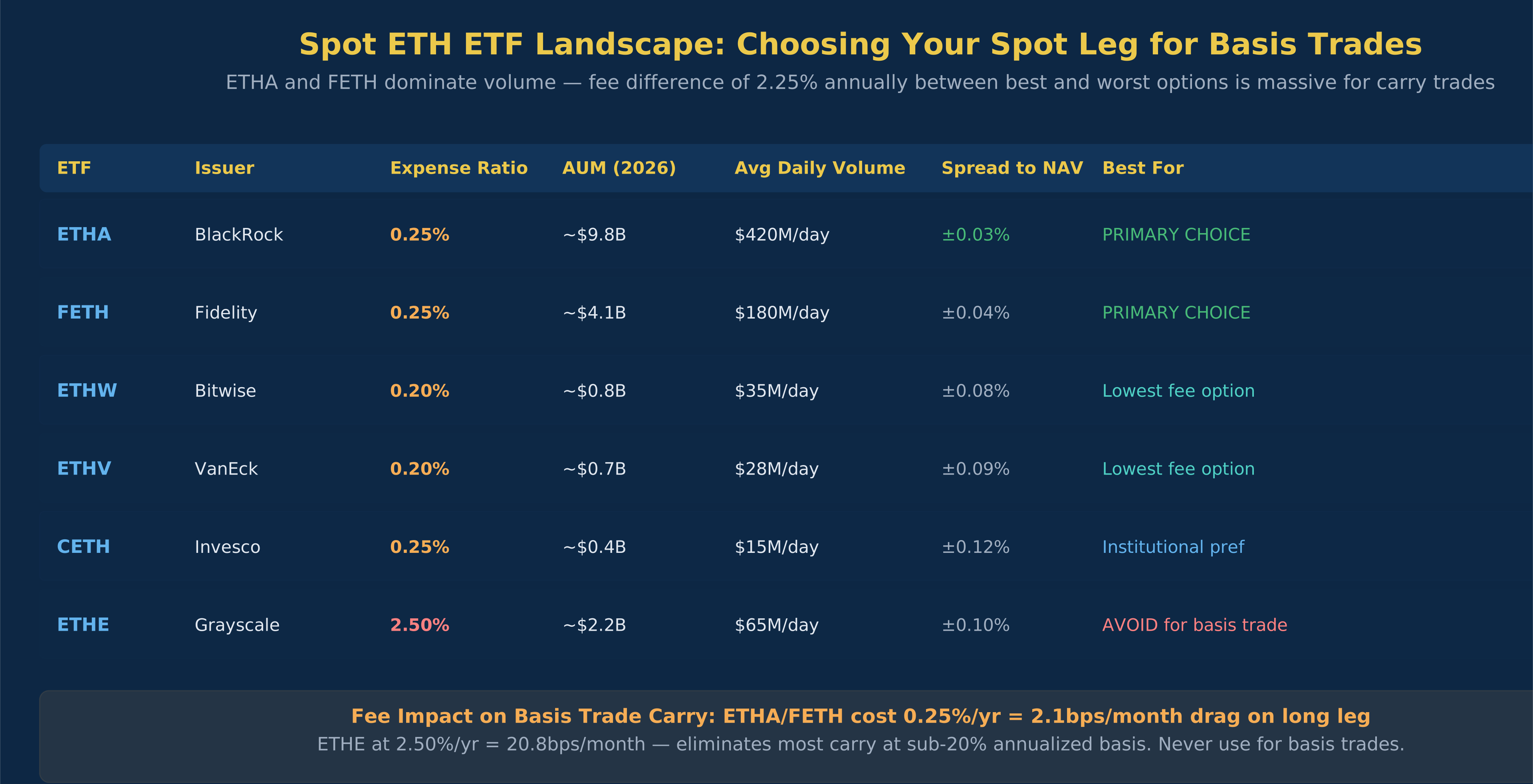
ETHA (BlackRock iShares Ethereum Trust) is the dominant vehicle with approximately $9.8 billion in AUM and $420 million in average daily trading volume. The expense ratio is 0.25%, matching IBIT's BTC fee structure after the introductory waiver period. Spreads are consistently within ±0.03% of iNAV. For basis trades, ETHA is the primary choice for the long leg due to its superior liquidity and tightest bid-ask spreads.
FETH (Fidelity Ethereum Fund) is the clear second with approximately $4.1 billion in AUM and $180 million daily volume. Expense ratio matches ETHA at 0.25%. Spreads are slightly wider at ±0.04% but still excellent. Fidelity's custodianship through Fidelity Digital Assets — its own subsidiary — differentiates FETH from ETFs using Coinbase Custody. For traders concerned about counterparty concentration risk, FETH provides meaningful diversification.
ETHW (Bitwise) and ETHV (VanEck) both charge 0.20% — slightly lower fees than ETHA/FETH — but have much thinner liquidity with ~$35M and $28M daily volume respectively. The fee advantage (5bps annually) is more than offset by wider execution spreads and less predictable AP participation, especially during market stress. Not recommended for basis trading at scale.
ETHE (Grayscale Ethereum Trust, converted) is the cautionary tale. Grayscale converted its pre-existing ETHE trust to a spot ETF but retained a 2.50% expense ratio — ten times higher than ETHA/FETH. At this fee level, the drag on the long leg is 20.8 basis points per month, eliminating virtually all carry in normal-basis environments. For basis trading, ETHE is unsuitable. The only scenario where ETHE makes sense is a short position — but that introduces borrow costs and complexity that further erode the trade logic.
The Cash-and-Carry Basis Trade: Framework and Reality #
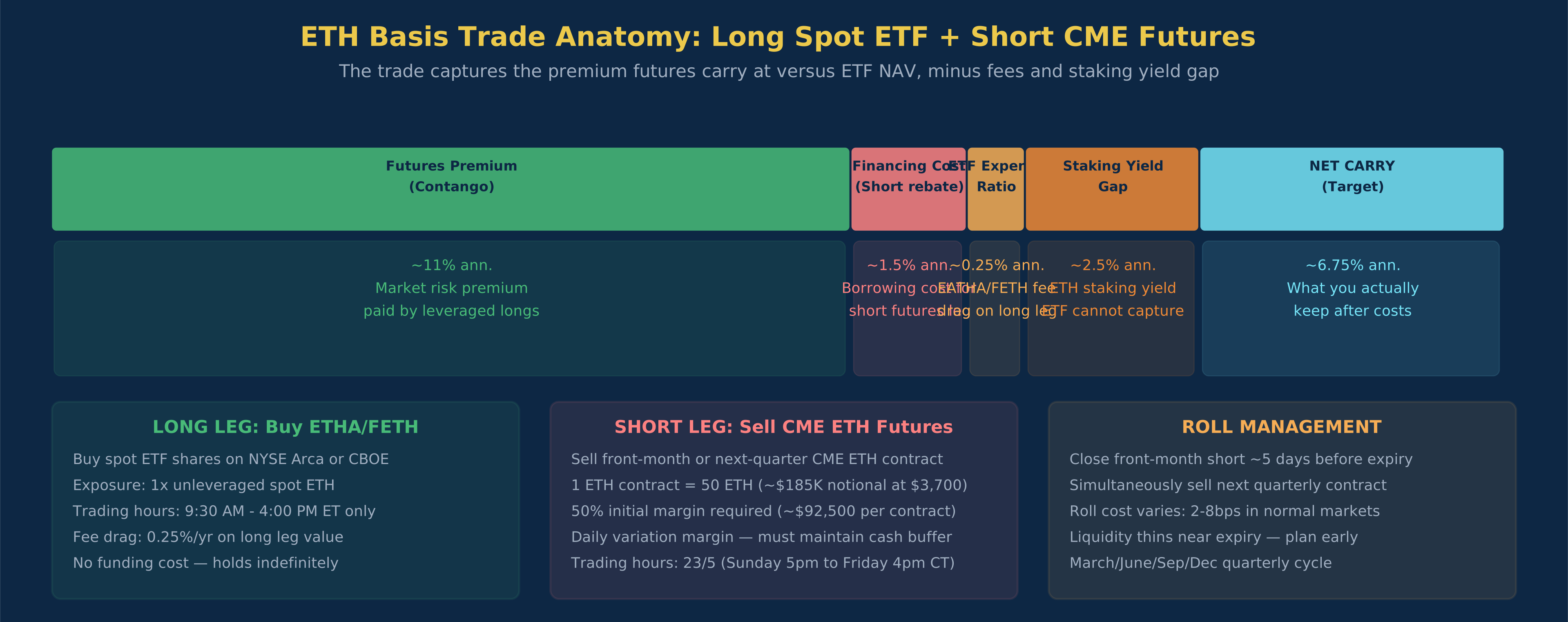
The canonical ETH ETF-futures basis trade is structurally identical to its BTC counterpart: buy ETF shares as a spot proxy, sell CME ETH futures at a premium. Hold through convergence. Capture the spread. The staking yield gap makes the effective carry lower, but the framework is the same.
What the basis actually reflects in ETH futures: the economic decomposition is Futures ≈ Spot + financing cost + risk premium − staking economics. That last term — staking economics — is where ETH differs from BTC. In a world where ETH earns 3-4% staking yield, fair futures price should theoretically be lower than spot + financing alone, because the spot leg "earns" through staking while the short futures leg does not. The ETF's inability to stake means this discount isn't fully captured by the long leg, which is why ETH basis trades require adjusted carry expectations.
The execution structure: Buy ETHA or FETH shares and simultaneously sell front-month CME ETH futures. The standard CME ETH contract is 50 ETH — at $3,700 ETH, that's $185,000 notional requiring approximately $92,500 in initial margin. The Micro ETH contract is 0.1 ETH (~$370 notional) and is useful for fine-tuning hedge ratios but not the primary vehicle at institutional scale.
As @SMCJB noted early in the CME Ethereum futures launch: "CME released the margin requirements for these contracts this week and it is a staggering 50% of Notional which makes Bitcoin margins (37% of Notional) look low!" That 50% initial margin requirement is non-trivial — it means even a "unleveraged" basis trade requires significant capital for the short futures leg.
@SMCJB also documented the Micro ETH contract specifications when they launched in December 2021: "0.1 Ether? This contract is tiny with a Notional of about $450." At $3,700 ETH in 2026, Micro ETH is ~$370 per contract — useful for smaller position sizing and hedge ratio refinement in basis trades.
Typical annualized basis ranges for CME ETH futures: In neutral market regimes, ETH futures typically trade at 5-10% annualized contango. During bull markets with strong demand from leveraged participants, basis can spike to 20-35%+. In bear markets or when sentiment is extremely negative, basis compresses toward 0-3%, making the carry trade unattractive. The target carry after all costs (ETF fees + staking yield gap + execution slippage) is approximately 5-8% in normal regimes.
At a 7% annualized basis with ETHA (0.25% fee) and a 3% staking yield gap, your effective net carry is approximately 3.75% annualized. Size positions where this is still worthwhile relative to the capital deployed and margin commitment — the trade isn't "free money."
ETF Flow Data as a Trading Signal #
Daily ETF flow data is published by each fund provider and aggregated by services like ETF.com, Bloomberg, and direct fund websites. ETHA, FETH, and the other ETH funds all report share creation/redemption activity every business day. Here's how futures traders use it effectively — and where it fails.
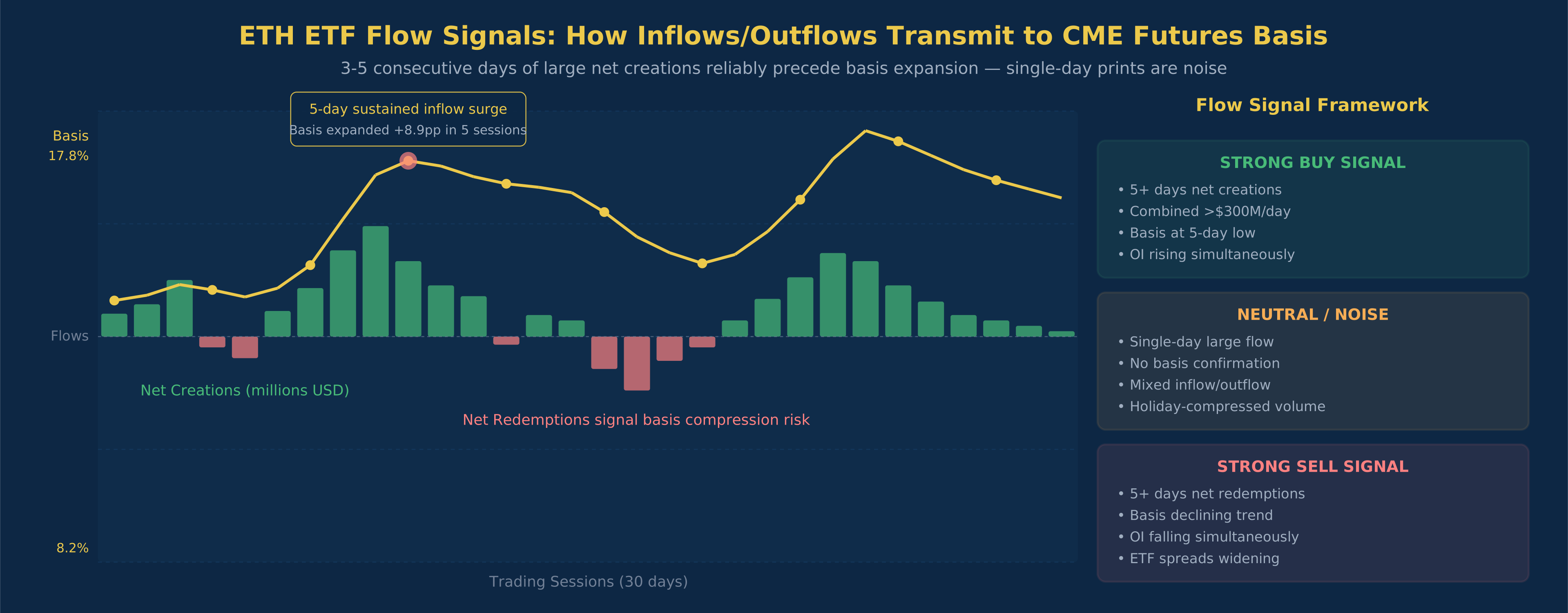
Layer 1: Regime detection over single-day prints. Single-day flow prints are noise. Five consecutive days of sustained net creations exceeding $100 million combined carry signal. When ETHA and FETH show five consecutive inflow days, that's sustained institutional buy pressure typically preceding spot ETH strength — which can then widen the basis as CME adjusts to the new demand signal. Conversely, heavy sustained outflows while price holds often signal large OTC or institutional selling absorbing the ETF distribution.
Layer 2: Magnitude surprises. The market prices in an expected level of ETF activity based on recent trends. A massive single inflow day — well above recent averages — creates genuine surprise demand that the futures market needs time to fully digest. In the hours immediately following a large flow print, basis can dislocate as CME adjusts to the implied spot level from the ETF buying. These dislocations typically resolve within 1-2 sessions.
Layer 3: Cross-market hedging inference. This is the most sophisticated application. If large ETF inflows hit but CME futures basis doesn't widen, hedging is occurring in spot/OTC channels rather than CME. If CME reacts strongly to flow events, hedging is CME-heavy. Tracking this relationship over time tells you how the major ETF arbitrageurs are currently routing their hedge — which determines where the next leg of price discovery will originate. In ETH's case, this is complicated by the large offshore perpetual swap market on Binance, OKX, and Bybit that can absorb flows independently of CME.
Layer 4: Combining with CME open interest changes. Flow direction alone is insufficient. ETF inflows combined with rising CME open interest from asset managers create a stacking signal. ETF outflows with falling CME OI signal potential cascade. The COT report provides the weekly positioning data to confirm what ETF flows are suggesting directionally. As @Fi documented: "Watch the CME Commitment of Traders: Asset managers: 85% long consistently. When both align long = explosive moves."
One important caveat: ETF flow data is a proxy for institutional demand, not a perfect representation of it. Large institutions can establish ETH exposure through OTC derivatives, crypto prime brokerage, or direct custody — none of which appears in ETF flow data. Treat flows as one signal in a regime, not a standalone trigger.
The 17.5-Hour Gap: Systematic Dislocation Opportunity #
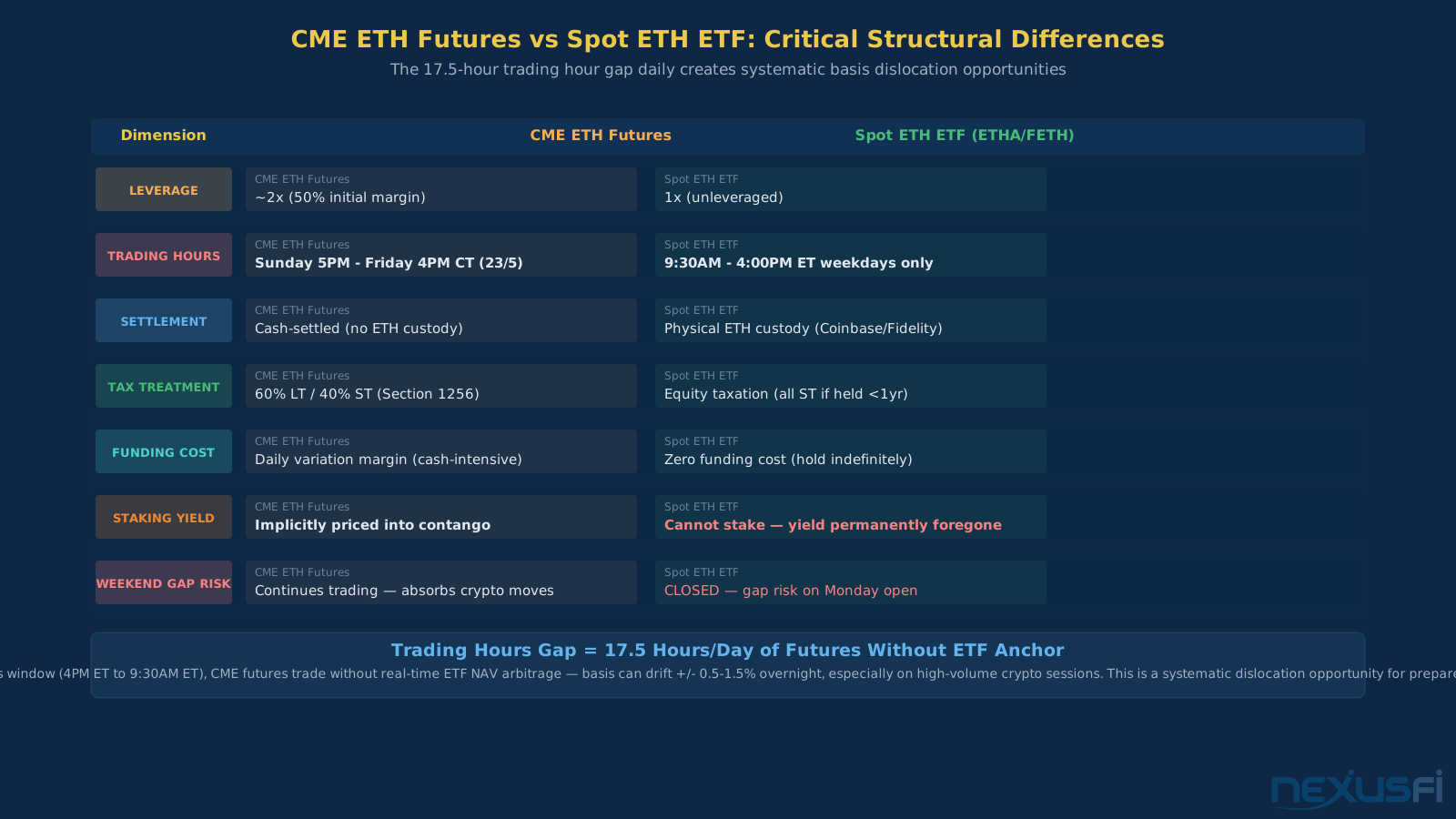
CME Ethereum futures trade 23 hours per day, five days a week — Sunday 5 PM CT through Friday 4 PM CT. Spot ETH ETFs trade 9:30 AM to 4:00 PM ET on weekdays. That leaves a 17.5-hour daily window where CME futures trade without the real-time ETF NAV arbitrage mechanism functioning.
During this window, ETH spot price continues moving (crypto never sleeps, and offshore exchanges like Binance trade 24/7). But the ETF-based AP arbitrage — which keeps ETF prices anchored to NAV during US hours — is offline. CME futures can drift from their fair value relative to spot, creating basis dislocations that are sometimes systematic and predictable.
@SMCJB flagged CME's 24/7 crypto trading initiative: "CME Group to Offer Around-the-Clock Trading for Cryptocurrency Futures and Options. Obviously playing catch up to the crypto exchanges." CME's phased move toward 24/7 trading through 2026 will eventually close this gap — but for now, the overnight window remains a systematic source of ETH basis dislocation.
What the gap means in practice: If significant ETH price action occurs during Asian or European trading hours, CME futures must reprice when the US session opens at 6 PM CT Sunday or at the regular daily session open. This creates predictable basis compression or expansion in the first hour after CME resumes following major overnight moves. Traders monitoring the gap and positioning before the US equities open can exploit the basis reset.
ETF vs futures gap on weekends: The ETF closes at 4 PM ET Friday. CME continues trading through 4 PM CT Friday but then resumes Sunday at 5 PM CT. Any ETH price movement Saturday and Sunday until 5 PM CT appears as a gap in CME futures at the Sunday open. This is directly analogous to the ES/NQ weekend gap trades that index futures traders use — but in crypto, the weekend moves can be dramatically larger. A 5-10% ETH weekend move creates an instant CME basis dislocation on Sunday evening as the market reprices.
Risk Factors That Kill ETH Basis Trades #
Every basis trade has an adversary structure — circumstances where natural convergence fails and losses accumulate. ETH basis trades have several specific failure modes that go beyond what BTC basis traders typically face.
Four failure modes kill ETH basis trades: ETF liquidity stress (wider spreads reduce long leg exit quality), CME margin calls in fast moves (50% initial margin is punishing), staking regulation change (SEC approval would compress basis immediately), and offshore perp funding domination (Binance/OKX funding can overwhelm CME signals).
ETF liquidity stress. During severe crypto market downturns, ETF bid-ask spreads widen much even for ETHA and FETH. APs pull back from creating/redeeming during fast markets because the ETH delivery/acquisition process takes time that the market doesn't wait for. If you're long ETHA and the bid-ask spreads to 0.5% during a crash, exiting the long leg at a fair price becomes difficult. Size positions relative to normal daily volume, not maximum theoretical liquidity.
CME margin call cascade. CME ETH futures require 50% initial margin — the highest among major CME products. At $3,700 ETH, one contract is $185,000 notional with $92,500 initial margin. A 20% ETH rally in a session adds roughly $18,500 in variation margin requirements on a short futures position. If you don't have that cash immediately available, you're forced to close the short leg at the worst time, leaving your long ETF position naked. Always model your maximum margin requirement at ±20% ETH in a single session before entering.
Staking regulation sudden approval. If the SEC reverses its position on ETH ETF staking — which could happen at any administration transition or through SEC rulemaking — the impact on basis trades is immediate and severe. ETFs gaining staking yield would increase their NAV accretion rate, making the long leg more valuable in yield terms, which compresses the relative premium that futures command. Positions would need rapid reduction before markets fully reprice. Set up regulatory monitoring specifically for "ETH ETF staking approval" news.
Offshore perpetual swap funding domination. The vast majority of crypto derivatives trading happens outside CME — on Binance, OKX, and Bybit through perpetual swaps. As @SMCJB documented in the original CME Ethereum futures webinar thread: the relationship between CME futures and offshore perp markets creates ongoing basis complexity. When offshore funding rates are extremely positive (perps trading at large premium to spot), arbitrageurs short perps and go long CME futures, compressing CME basis from the CME side. When offshore funding goes negative (during bearish periods), the pressure reverses. CME ETH basis can be dominated by offshore dynamics that have nothing to do with ETF flows.
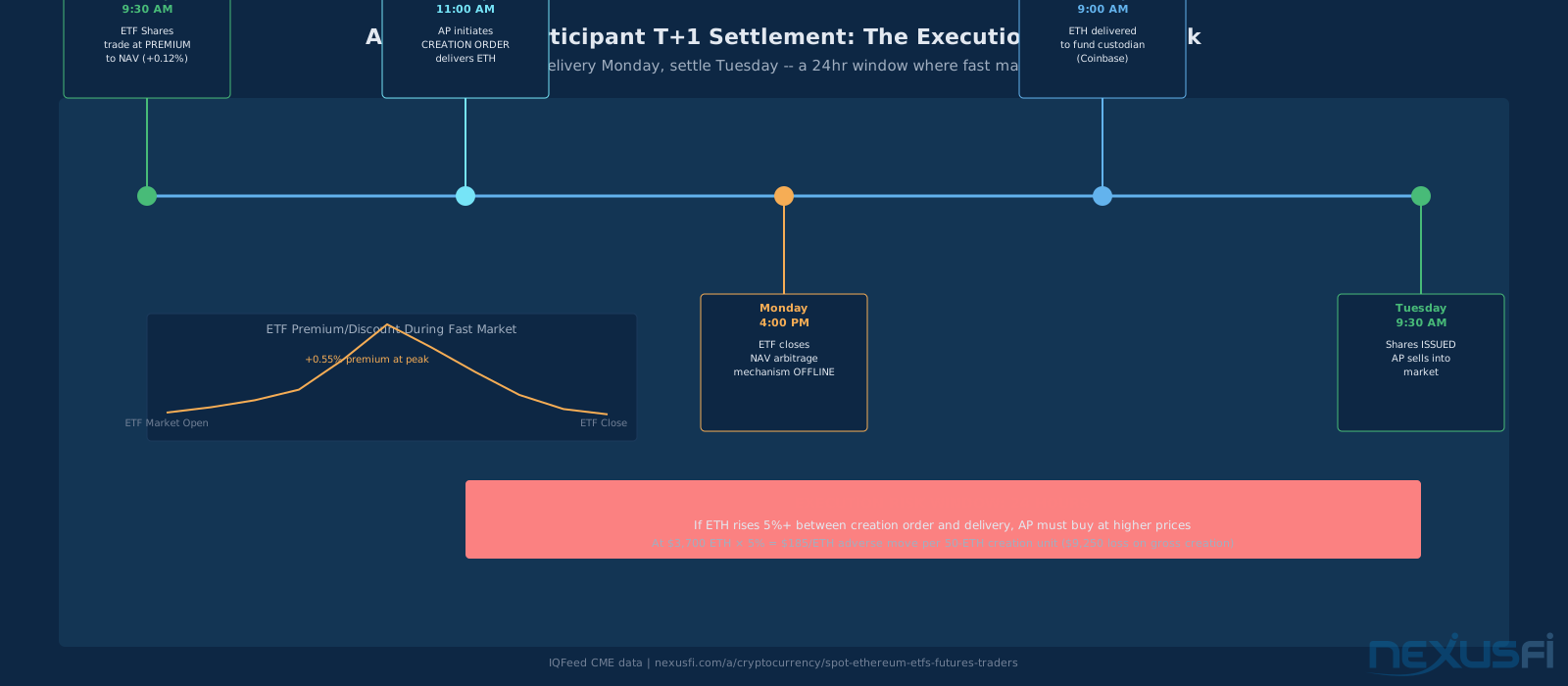
AP operational delay and settlement timing. ETF creation and redemption involve T+1 settlement. An AP initiating a large creation on Monday delivers ETH on Tuesday. In fast ETH markets, this creates execution risk — the "obvious" NAV arbitrage initiated Monday may be whipsawed before Tuesday settlement, trapping the AP's hedge in a worse position. This can cause temporary premium/discount spikes that don't mean-revert as quickly as the mechanistic framework suggests. Don't assume NAV deviation is always a near-term arbitrage opportunity.
Beyond Basis: Other ETH ETF-Related Strategies #
The cash-and-carry basis trade is the canonical strategy, but the ETH ETF complex creates several other opportunities for futures traders.
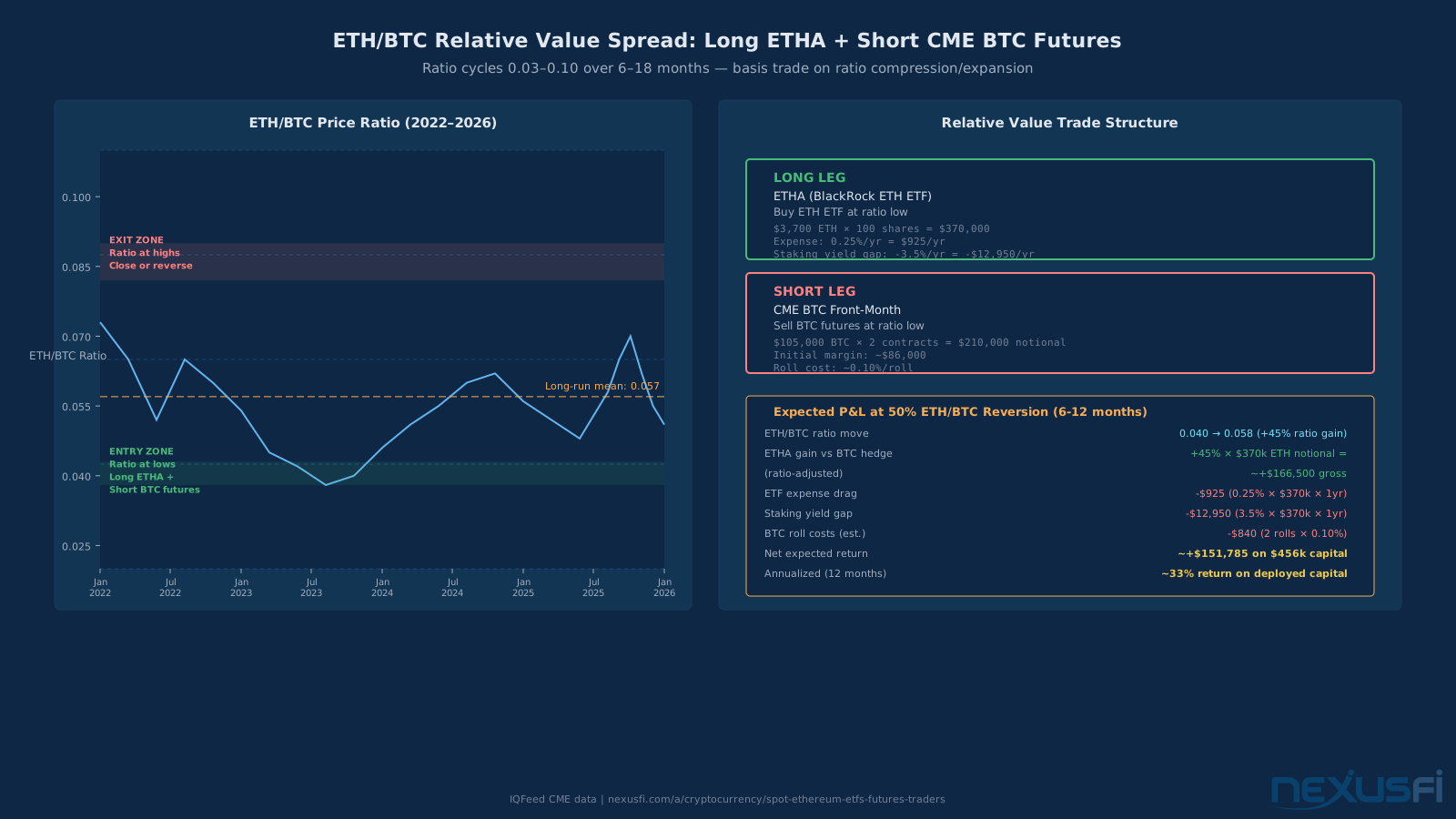
ETH/BTC relative value using ETF and futures. The ETH/BTC ratio (ETH price divided by BTC price) moves in cycles reflecting relative institutional appetite for smart contract exposure versus digital gold. When the ratio is at cyclical lows, a relative value trade is possible: long ETHA, short CME BTC futures. This isolates ETH/BTC ratio reversion while maintaining delta-neutrality to USD crypto moves. The staking yield gap actually helps this trade slightly — ETHA's effective long-term underperformance vs. direct ETH creates a structural discount that sometimes makes the relative value entry more attractive.
Calendar spread term structure trades. When ETF flows are concentrated in current spot demand, front-month CME ETH futures respond more than back-month contracts. Trading the front-month vs. next-quarter spread isolates near-term flow impact from longer-term carry and risk premium. This is lower complexity than full cash-and-carry (no ETF position needed) while still extracting value from the flow/basis relationship.
Flow-informed directional positioning. Without implementing the full basis trade, ETF flow data can simply inform directional futures positions. Sustained ETHA/FETH net creations over 5+ trading days while CME basis is at a multi-week low suggests institutional demand is being expressed at a point where CME pricing hasn't fully caught up. A long CME ETH futures position with a tight stop below the pre-flow support level can capture this lag without the complexity of managing both ETF and futures legs simultaneously.
CME 24/7 Trading: What It Changes #
CME's phased rollout of 24/7 cryptocurrency futures trading through 2026 at the core changes several dynamics that ETH basis traders have relied on. @SMCJB noted the broader institutional evolution: the progression from CME Bitcoin to CME Ether to Micro Ether contracts represents a consistent pattern of CME following institutional demand signals — and 24/7 trading is the next step in that pattern.
The weekend gap trades — where ETH spot moves substantially while CME is closed, creating an instant opening basis — are a well-known edge among ETH futures traders. As CME extends to 24/7, this edge compresses toward zero. The skill requirement shifts from "identify the gap at Sunday 5 PM CT" to "model the hedging flow during US session open when ETF arbitrage comes back online."
Additionally, if CME eventually goes to true 24/7 while ETFs remain limited to US equity market hours (9:30-4 PM ET), the 17.5-hour daily window actually becomes more predictable rather than disappearing — CME would absorb offshore moves continuously, and the 9:30 AM ET ETF open would become a systematic daily "anchor reset" event when NAV arbitrage turns back on. That creates a new pattern: overnight CME drift that reverts sharply at US ETF open. Watch for this as 24/7 trading matures.
Practical Checklist for ETH ETF-Futures Trades #
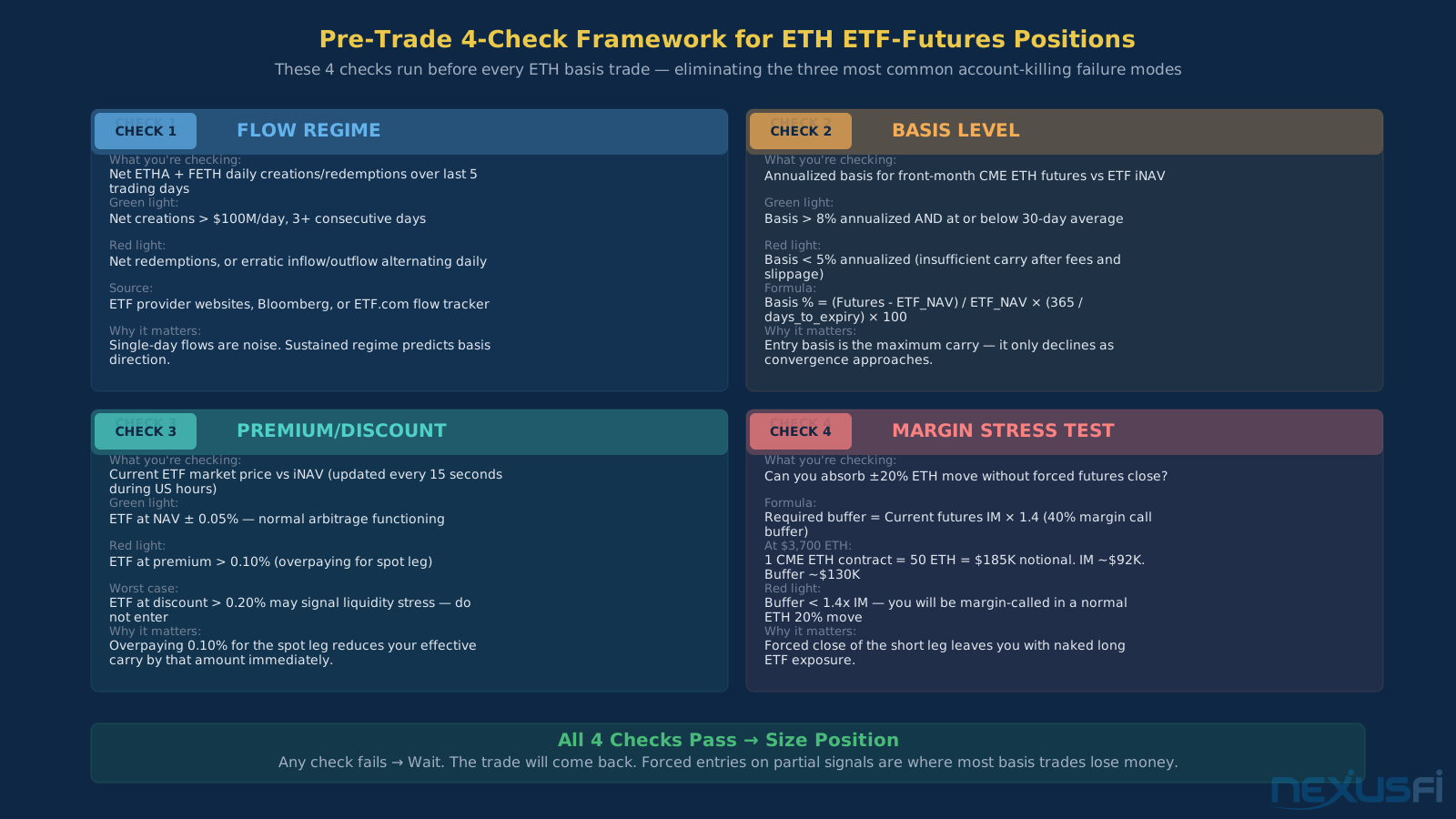
Before establishing any ETH ETF-related futures position, work through these four checks in sequence. All four must pass — a failed check means wait, not adjust-and-proceed.
Check 1: Flow Regime. What's the net ETHA + FETH flow trend over the last 5 trading days? Check the ETF provider websites or Bloomberg ETF flow data. Net creations above $100M per day for 3+ consecutive days represent a green light. Alternating inflow/outflow (noise) or net redemptions are red lights. A single massive inflow day without follow-through is yellow — wait for confirmation.
Check 2: Basis Level. Calculate the current annualized front-month basis: (CME Front Month − ETHA NAV) / ETHA NAV × (365 / days to expiry) × 100. Compare to the 30-day historical average. Below 8% annualized is generally insufficient carry after fees, staking gap, and execution costs. Above 12% annualized in a neutral regime is attractive entry. The staking yield gap means you should require 2-3 percentage points higher basis entry than you would demand for an equivalent BTC basis trade.
Check 3: Premium/Discount. Check the current ETHA market price versus iNAV before placing any order. Both ETF issuers publish the iNAV updating every 15 seconds during market hours. If ETHA is trading at more than +0.10% premium, you're overpaying for the spot leg — reduce expected carry by that amount. If at more than -0.20% discount, the signal may indicate stress rather than opportunity. The best entries are when ETF is at or within ±0.03% of NAV.
Check 4: Margin Stress Test. Calculate: if ETH moves 20% against your short futures position in the next 30 days, what's your required variation margin? At $3,700 ETH × 50 ETH per contract × 20% = $37,000 adverse move per contract. Can you fund that variation margin without closing the short leg prematurely? If not, reduce position size until you can absorb a 20% adverse move. At 50% initial margin, the math: initial margin per contract ≈ $92,500; buffer target ≈ $130,000 per contract.
The data sources you need: ETHA and FETH flow data is available daily from ETF flow trackers like The Block, Bloomberg ETF analysis, and directly from the fund's website under "daily holdings." CME ETH futures data including basis, open interest, and term structure is available via CME DataMine and most institutional data platforms. DTN IQFeed provides complete CME cryptocurrency futures data feeds including ETH with the depth and historical resolution required for serious basis analysis. NinjaTrader platform supports CME Micro ETH contract trading with direct connectivity to the exchange.
Finally: the most reliable ETH basis entries come when ETF flows and CME OI are aligned (both signals bullish or both bearish), the basis is at a multi-week extreme in your favor, the staking regulation environment is stable (no pending SEC decisions), and you've stress-tested margin through a full 20% ETH adverse move. When all four conditions align and all four checklist items pass, the trade has clear positive expectancy. When they diverge — especially around regulatory announcements on staking — wait.
Knowledge Map
Go Deeper
Build on this knowledgeReferences This Article
Articles that build on this topicCitations
- — Vanguard Reverses Crypto Policy - Opens $11T Platform to Crypto ETFs (2025)“Vanguard opening its $11T platform to crypto ETFs drove sustained inflow acceleration in Q4 2025, improving the correlation between spot and futures markets through deeper institutional participation.”
- — CME Group Reports Record October Volume: Metals Surge 165%, Crypto Up 226% (2025)“CME Group cryptocurrency trading volume surged 226% year-over-year in October 2025. Micro Ether futures notional is tiny at about $340 per contract.”
- — CME annouces 7x24 crypto futures trading to start in 2026 (2025) 👍 6“CME Group to offer around-the-clock trading for cryptocurrency futures and options -- obviously playing catch up to the crypto exchanges.”
- — Webinar: Ethereum Futures from CME Group (2021) 👍 3“CME released the margin requirements for these contracts this week and it is a staggering 50% of Notional which makes Bitcoin margins (37% of Notional) look low!”
- — New Micro Contract :- Micro Ether coming 5-Dec-21 (2021) 👍 10“I think they should call this the Nano contract not the Micro! 0.1 Ether -- this contract is tiny with a Notional of about $450.”
- — New Micro Contract :- Micro Ether coming 5-Dec-21 (2021)“Full CME ETH contract is 50 ETH -- correction with full regulated crypto futures landscape overview including contract specifications and margin requirements.”
- — Is Bitcoin done ? take a look... (2025)“Watch the CME Commitment of Traders: Asset managers: 85% long consistently. CME vs crypto exchange market structure comparison.”
- — Webinar: Ethereum Futures from CME Group (2021) 👍 4“CME ETH futures: FCM day trade margins vs exchange margins. Spread implieds switched off for crypto currencies adds complexity for institutional spread traders.”
- — Webinar: Ethereum Futures from CME Group (2021) 👍 6“HFs reportedly short Bitcoin futures versus long actual coins, collecting the yield which is currently about 8%. The 17% increase in margin requirements takes more than 30bp out of the yield trade.”
- — Webinar: Ethereum Futures from CME Group (2021) 👍 3“Margin scenarios for BTC/ETH spread: BTC H1 - ETH H1 1:1 spread benefits from $39,577 in CME margin offsets, reducing combined exposure significantly for basis traders.”
- — Webinar: Ethereum Futures from CME Group (2021) 👍 4“Those margins are insane, and the reason everyone is trading spot.”