



Ethereum Futures (ETH): The Complete Trading Guide
Overview #
Ethereum futures let you take regulated, leveraged positions on Ether — the fuel for the world's largest smart contract network — without touching a crypto exchange. You're trading at the CME, under CFTC oversight, with a clearinghouse between you and every counterparty. Same infrastructure as ES, NQ, and CL. Completely different risk profile.
There are two contracts that matter: the standard ETH futures (50 ETH per contract, roughly $120,000 notional at current prices) and Micro Ether futures — ticker METH — which are 0.1 ETH each. The micro is how most retail traders should start here. A 10% ETH move on a full-size contract is $12,000. On one micro, it's $24. Same percentage, completely different survival math.
On May 29, 2026, CME is expanding all cryptocurrency futures and options to continuous 24/7 trading. If you've been waiting for CME-regulated, exchange-cleared crypto futures without the weekend gap problem, the gap is literally disappearing. This changes the basis trade, the perpetual arbitrage, and the risk management calculus for anyone holding overnight. We'll cover what actually changes — and what doesn't.
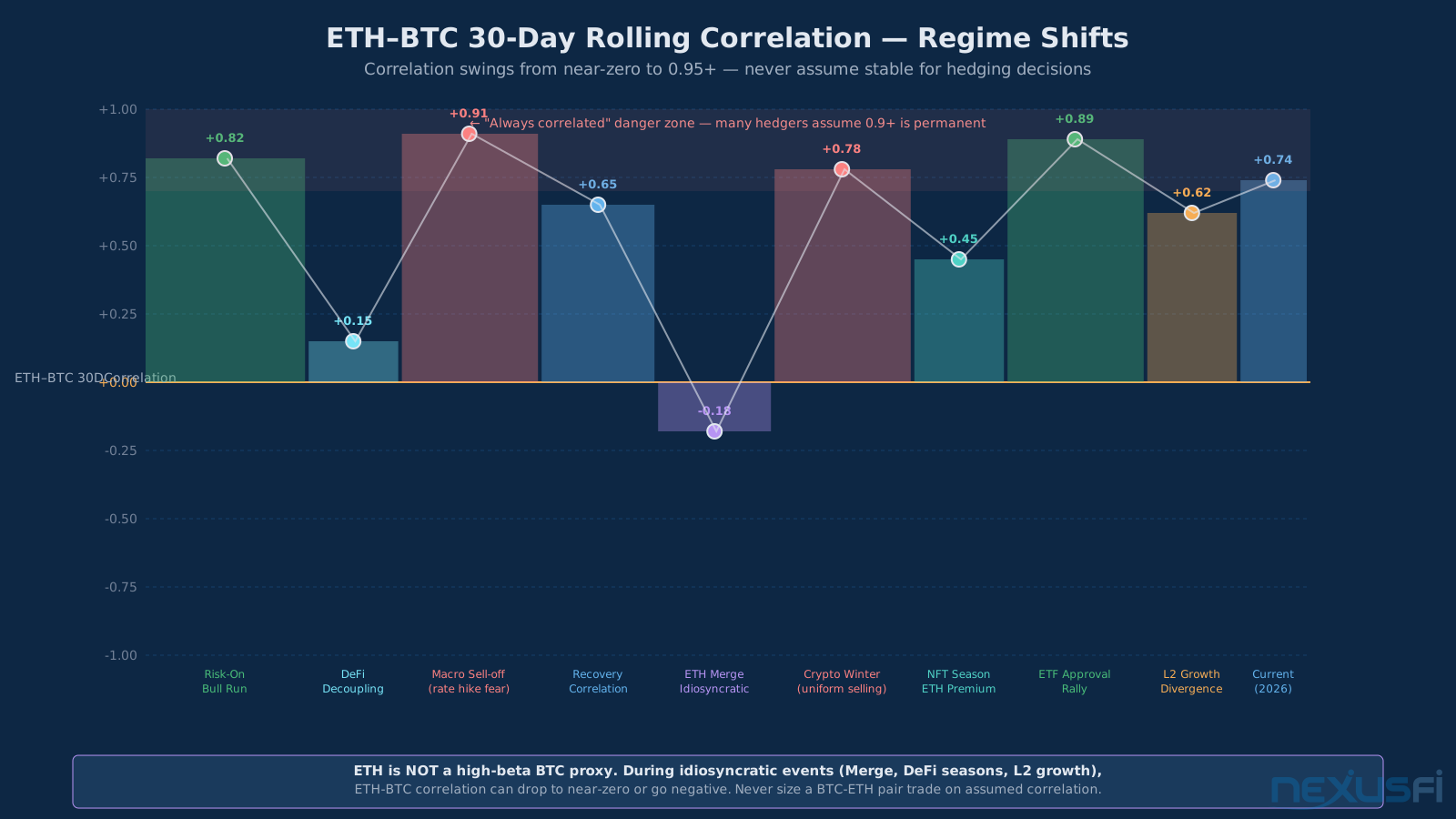
ETH futures aren't BTC futures with a different ticker. Ethereum has its own macro drivers: DeFi total value locked, L2 network activity, ETH staking yields, NFT market cycles, and institutional adoption of smart contract exposure. When BTC and ETH correlation breaks — and it does break, sometimes dramatically — traders who assumed 0.9+ correlation get burned. The ETH Merge in 2022 pushed that correlation to -0.18 for a period. L2 growth seasons regularly diverge. Treat ETH as its own instrument.
This guide covers contract specifications, margin mechanics, the basis trade, CME's 24/7 transition, position sizing for ETH's volatility, and the most common mistakes traders make when they cross over from equity index futures. ETH is not ES. The position sizing differences aren't optional adjustments — they're the difference between surviving and getting wiped on a 4% daily move.
Related instruments covered in the Academy: Bitcoin Futures (BTC), VIX Futures, Selling Options on Futures, Open Interest Analysis
Key Concepts #
Contract Specifications
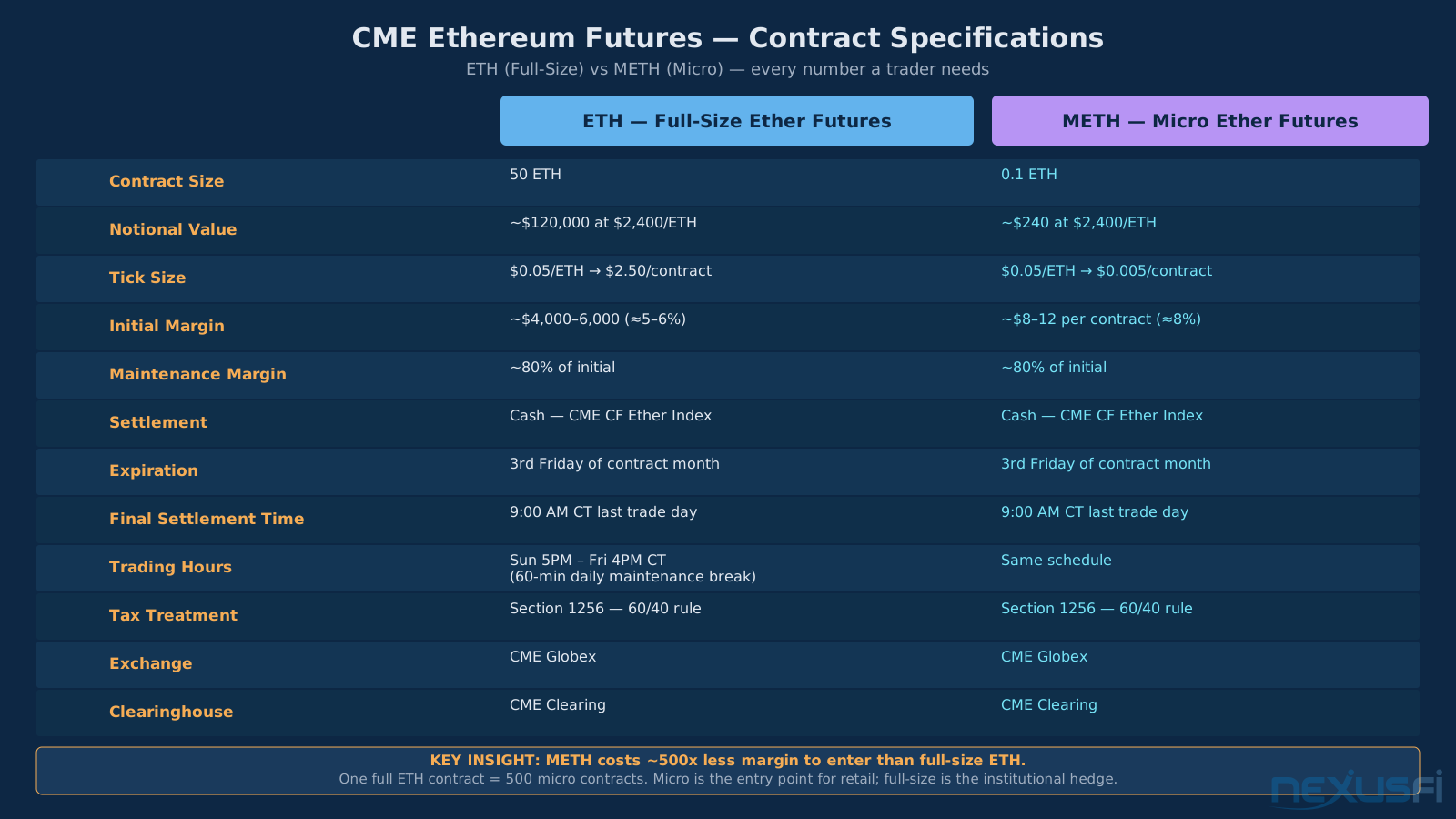
The CME lists two Ether futures products under the same underlying index. Both cash-settle to the CME CF Ether-Dollar Reference Rate — a benchmark derived from multiple crypto exchange prices, not any single venue. That settlement mechanic matters: you're not getting delivery of actual ETH, you're getting the dollar difference between your entry and the settlement rate.
Standard ETH futures: 50 ETH per contract, minimum tick $0.05/ETH, so each tick is worth $2.50. At $2,400 ETH, one contract controls roughly $120,000 notional. Initial margin runs around $4,000--$6,000 depending on current CME margin settings (check CME Group's Ether futures page for the latest figures) — that's 3--5% of notional, but it shifts with volatility. During major crypto drawdowns, CME can and does raise margins intraday.
Micro Ether (METH): 0.1 ETH per contract. Same tick size percentage, but each tick is now $0.005. At $2,400 ETH, one micro controls $240 notional with roughly $8--$12 initial margin. You can trade 10 METH contracts for the same directional ETH exposure as one standard contract, but with substantially more flexibility — you can scale in, scale out, adjust your hedge ratio without giant jumps.
The METH contract is accessible exactly as @SMCJB described at its December 2021 launch:
That characterization still holds — and the fee difference between METH and full-size ETH still makes active METH trading expensive relative to the full contract.
Cash Settlement and the CME CF Reference Rate
At final settlement on the 3rd Friday of the contract month, CME uses the CF Ether-Dollar Reference Rate — a volume-weighted benchmark calculated from qualifying crypto exchanges at 4:00 PM London time. Your futures P&L isn't based on where one exchange prints; it's based on a strong multi-venue average that's designed to be difficult to manipulate.
This matters for basis traders: the convergence at expiration isn't to "spot price" on any specific venue — it's to this index. If your spot leg is on an exchange that trades at a persistent premium or discount to the reference rate, your basis trade has basis risk. Small, but real.
Cash settlement also means no delivery concerns. You don't need a crypto wallet. You don't need to set up custody. Your P&L is dollars — clean, taxable as Section 1256 60/40, and handled by your FCM like any other futures account.
Section 1256 Tax Treatment
ETH futures fall under Section 1256 contracts — meaning 60% of gains are treated as long-term capital gains regardless of holding period, and 40% are short-term. This blended rate applies even if you held the contract for one hour. Compare this to spot crypto which tracks full holding period. For active traders, the 1256 treatment is a meaningful tax advantage, especially in higher rate environments. See Section 1256 and the 60/40 Tax Rule for full mechanics.
The 24/7 Trading Transition (May 29, 2026)
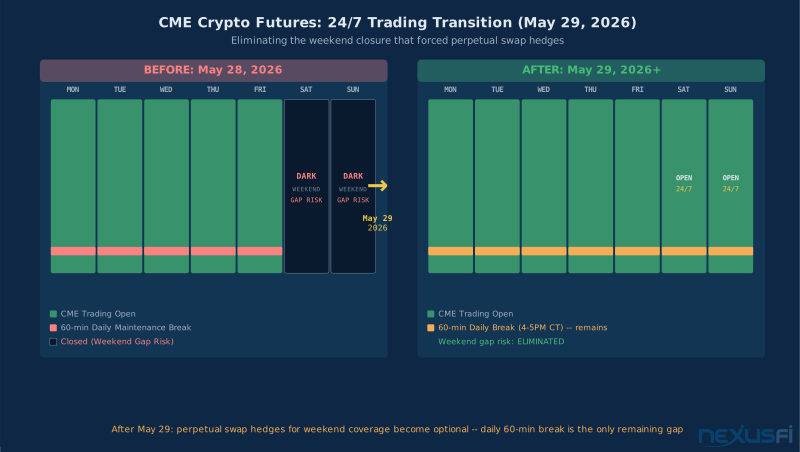
May 29, 2026 changes the ETH futures playbook: weekend basis trades shift structure, perpetual hybrid strategies need rethinking, and the Sunday gap — historically ETH's biggest single overnight risk source — is eliminated for CME-traded positions. If you're running any ETH strategy that depends on weekend gap dynamics, audit it before May 29.
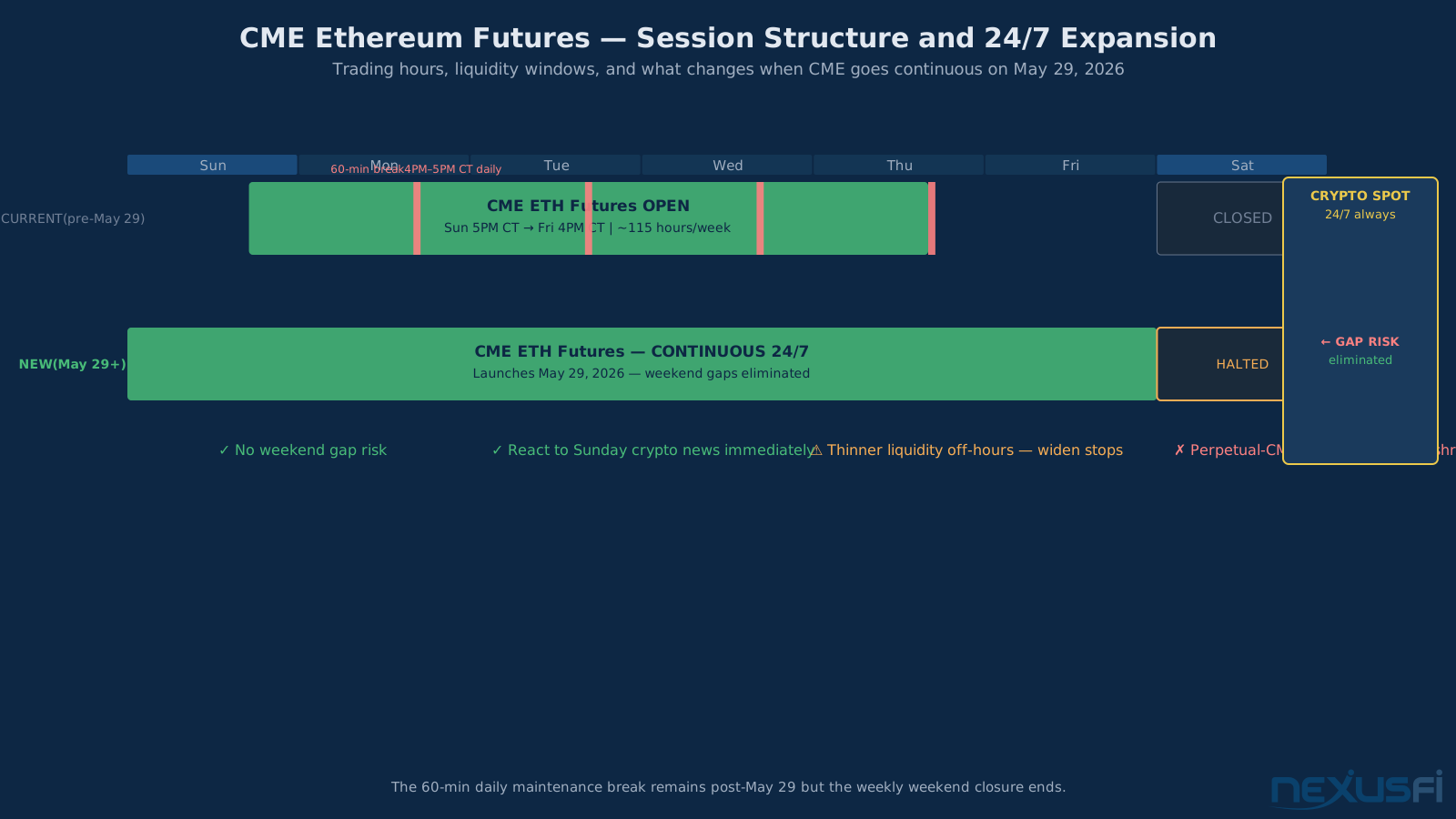
Currently, CME ETH futures trade Sunday 5:00 PM CT through Friday 4:00 PM CT with a 60-minute daily maintenance break. That weekly weekend closure has meant a persistent "Sunday night gap" — ETH moves all weekend on spot/perp markets while CME is closed, and you'd see the gap when CME reopened Sunday evening.
Starting May 29, 2026, that weekly closure ends. CME will trade continuously through Saturday, 7 days a week, with only the daily 60-minute maintenance break remaining. For futures traders, this is significant: the biggest weekend gap risk source is eliminated. For basis traders, it changes the arbitrage window calculus. For perpetual-CME hybrid strategies, it tightens the spread.
What doesn't change: the daily maintenance break (4:00--5:00 PM CT each weekday) remains. Liquidity will still be thinner during overnight US hours and early Asian session. The 24/7 label doesn't mean uniform liquidity — it means CME won't be completely dark on weekends anymore.
How It Works #
Margin Mechanics: SPAN, Initial, and Maintenance
CME uses Standard Portfolio Analysis of Risk (SPAN) to set margin. SPAN runs scenarios — stress tests across price movements, volatility shifts, and time decay — and sets margin at the level needed to cover a 1-day adverse move under stressed conditions. For ETH, that number moves with the market.
When ETH's 30-day realized volatility spikes from 60% to 120% annualized (which has happened multiple times), CME margin requirements can increase within 24 hours. If you're fully margined when they raise requirements, you get a margin call. This isn't theoretical — it happened during the Terra/Luna collapse, the FTX bankruptcy, and every major crypto drawdown in the past five years. Always maintain a buffer above initial margin.
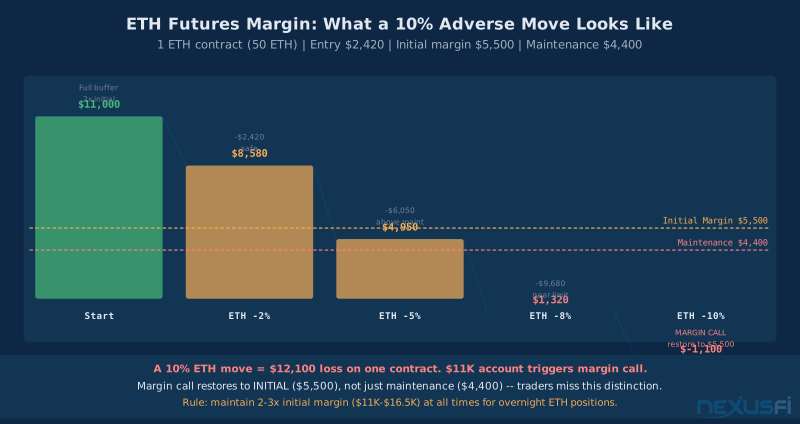
The practical framework: never open ETH futures with less than 2× initial margin in your account. If full ETH requires $5,500 initial margin, have $11,000+ available. On a single METH contract with $11 initial margin, this still means having at least $25--50 available for that micro position — trivial in practice, but the principle holds at scale.
Maintenance margin is roughly 80% of initial. If your account equity drops below maintenance, you get a call to bring it back to initial — not just to maintenance. That's the mechanics trap many traders miss: the call is to full initial margin, not just the threshold they crossed.
ETH Volatility vs Other Futures
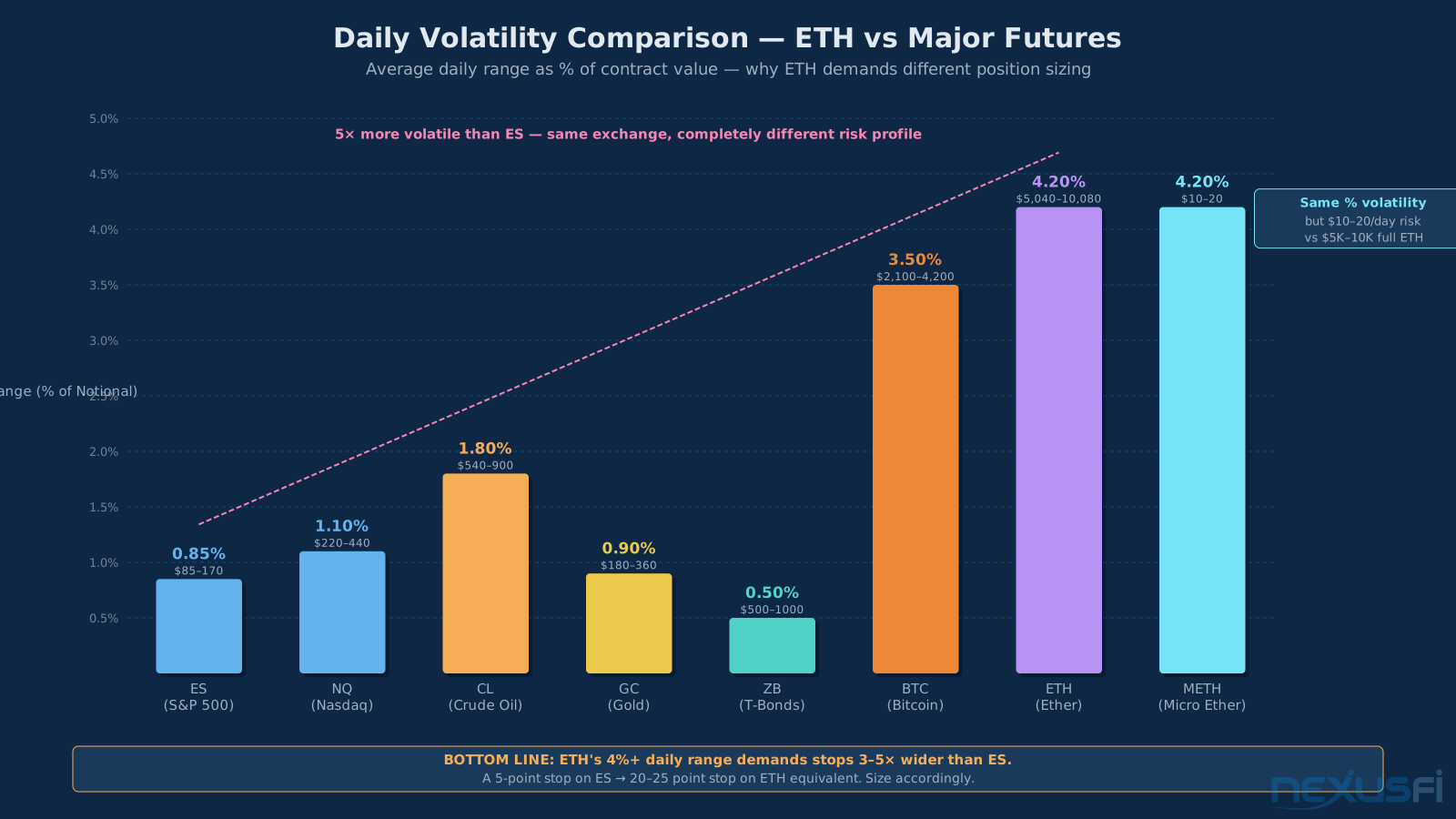
The single most important number for sizing ETH positions: average daily range of approximately 4--4.5% of notional. That's 5× the daily range of ES (around 0.85%), 4× NQ (1.1%), and more than double crude oil (1.8%).
At $2,400 ETH, a 4% daily range on one standard contract is $4,800. A 10% move — which ETH does in a day during macro shock events — is $12,000 on one contract. If your stop-loss strategy was designed for ES, you need to completely rebuild it for ETH. A 5-point stop on ES translates to 20--25 points of ETH movement for similar probability-of-hit. Wider stops, smaller size, more room for the contract to breathe.
That observation from 2021 reflected 50% margin requirements during peak crypto volatility. Margins have normalized since, but ETH's underlying volatility hasn't changed materially. High volatility + margin structure + high leverage = size so.
Basis and Term Structure
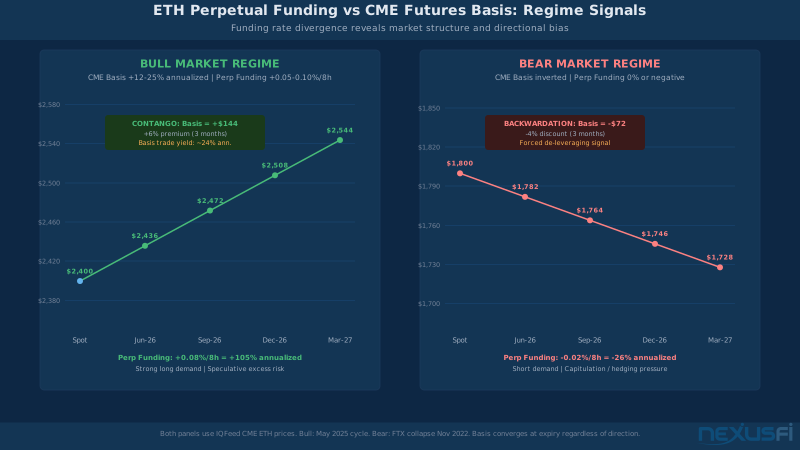
Futures price minus spot price equals the basis. In normal market conditions, ETH futures trade at a premium to spot — contango — because of funding cost and the demand for leveraged long exposure. Traders willing to pay the premium for exchange-cleared, margined exposure push futures above spot.
When the basis is wide — futures much above spot — the carry yield from shorting futures/holding spot is attractive. When basis inverts — futures below spot (backwardation) — it signals forced de-leveraging: longs are being unwound and spot holders are hedging. During the FTX collapse, ETH futures went into sharp backwardation as institutions rushed to hedge spot exposure at any cost.
The basis converges at expiration: futures must settle to the CME reference rate by the 3rd Friday. Basis traders extract that convergence as profit. Directional traders use contango or backwardation as a regime signal — wide contango can indicate speculative excess; sharp backwardation can signal capitulation and potential reversal.
ETH vs BTC Correlation: It's Not What You Think
The naive view: ETH is high-beta BTC. When BTC moves 5%, ETH moves 7%. This relationship holds during broad crypto risk-on/risk-off regimes — and for most of the time, the correlation does run 0.65--0.90.
The problem: it breaks, sometimes dramatically and for extended periods. During the Ethereum Merge in September 2022, ETH underperformed dramatically as the event created idiosyncratic uncertainty — then outperformed as the narrative shifted. The 30-day correlation with BTC dropped to near-zero for weeks — a dynamic studied in detail in Giacometti (2023), which used Pearson correlation and wavelet analysis to map the ETH-BTC lead-lag relationship around the Merge. During DeFi seasons when ETH's L2 ecosystem drives activity, ETH can rally while BTC consolidates. During NFT market peaks, ETH premium compressed when activity concentrated on ETH vs BTC.
The practical consequence: if you're running a BTC/ETH pair trade assuming stable correlation, you need to track that correlation in real time. A hedge that assumed 0.85 correlation that drifts to 0.20 isn't just less effective — it can add to risk. Always verify correlation before sizing a cross-asset hedge, and build in rebalancing triggers when correlation shifts more than 0.25 points.
Practical Application #
The Basis Trade: Core Institutional Strategy
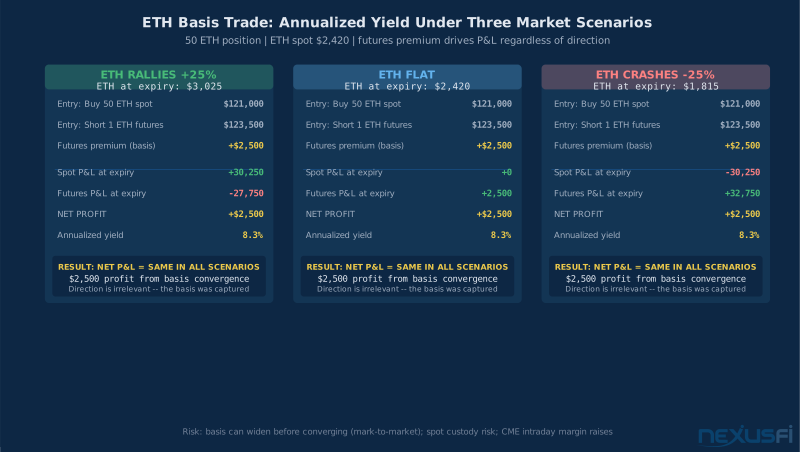
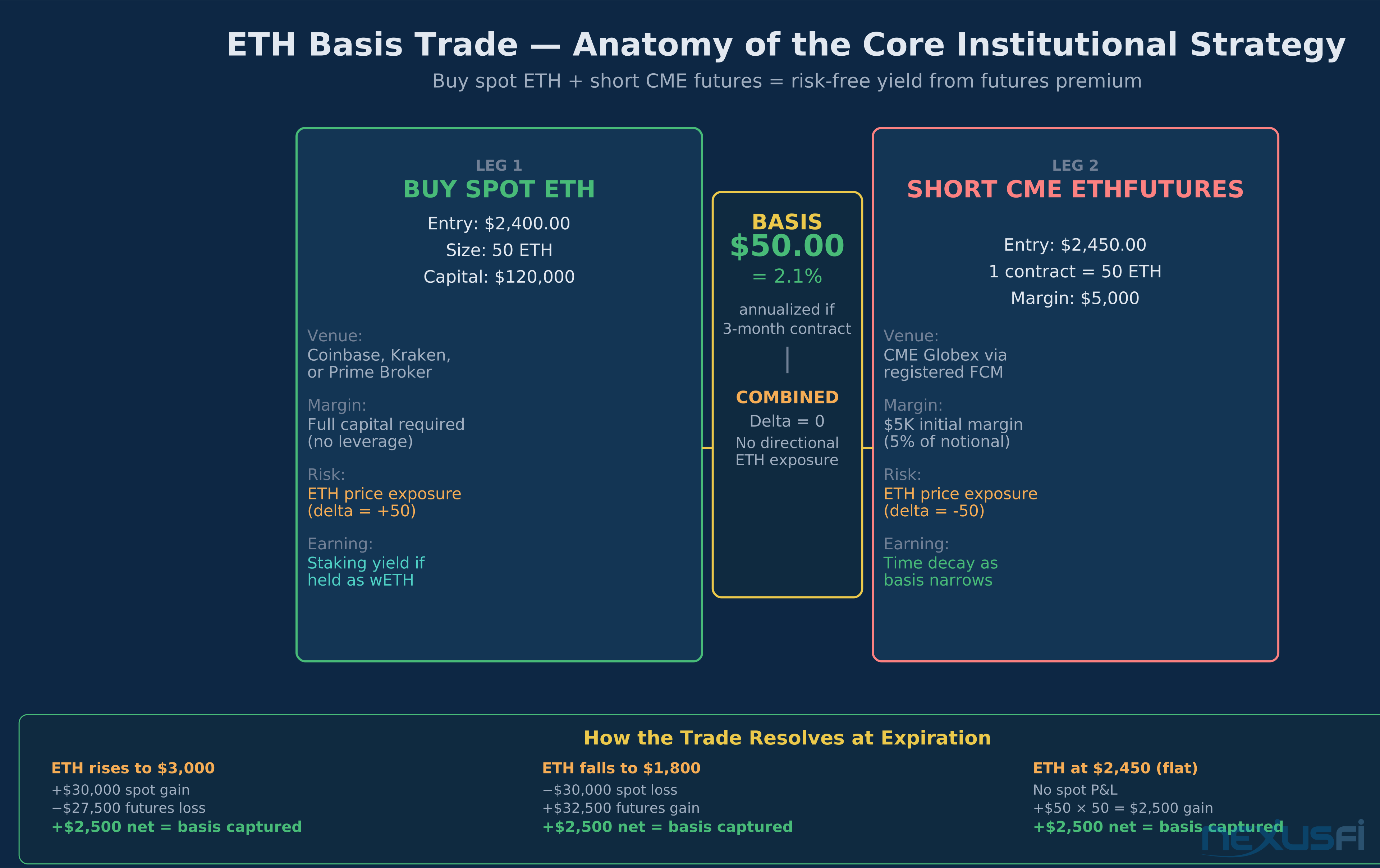
The basis trade is the foundational CME ETH futures strategy. Buy spot ETH (or hold existing spot), simultaneously short one CME ETH futures contract covering the same quantity. Your delta is zero — you're not exposed to ETH price direction. Your profit comes from the futures premium converging to spot at expiration.
Example at $2,400 ETH with a 3-month contract trading at $2,450:
- Buy 50 ETH at $2,400 = $120,000 spot investment
- Short 1 CME ETH futures at $2,450 = $5,000 margin
- Basis = $50 (2.1% premium)
At expiration, regardless of where ETH trades, the futures settles to spot price. If ETH is $3,000: spot gain +$30,000, futures loss -$27,500 (difference was only the $2,450 entry vs $3,000 settlement). Net = +$2,500, which is the original $50 basis × 50 ETH. If ETH is $1,800: spot loss -$30,000, futures gain +$32,500. Net = +$2,500 again. The basis was captured independent of direction.
Risk factors: basis can widen before it narrows (mark-to-market losses on the futures leg even if the trade is directionally sound), spot custody risk, CME maintenance margin requirements during volatile periods, and the convergence isn't guaranteed to happen smoothly if there's a major disruption near expiration.
Annualized yield on a 3-month basis trade with a 2% premium: roughly 8% per annum before financing costs. During periods of elevated speculative demand, basis has been as wide as 20--30% annualized. During bear market de-leveraging, it compresses to near zero or inverts.
DeFi Portfolio Hedging with Micro Contracts
METH's granularity makes it useful for something the standard contract can't easily do: hedge small DeFi positions. If you're providing liquidity in an ETH/USDC pool and have 0.75 ETH exposure you want to hedge, you can short 7--8 METH contracts and get close to a precise hedge. One standard ETH contract (50 ETH) would dramatically over-hedge a 0.75 ETH position.
The mechanics are straightforward: calculate your ETH delta (how much you gain or lose per $1 change in ETH price), convert to ETH quantity, and short the equivalent METH contracts. For a Uniswap v3 position, the delta isn't fixed — it shifts as ETH moves in and out of the price range. You'll need to rebalance the futures hedge as the LP position changes.
Transaction costs matter at micro scale: each METH contract has a tick value of $0.005, and exchange fees plus FCM commissions typically run $0.50--$1.50 per contract round trip. At small sizes, you're hedging a $200--$400 notional position for $1--3 in commissions — reasonable. But if you're rehedging frequently, the transaction drag compounds. For DeFi hedges, weekly rebalancing is usually sufficient unless ETH moves more than 10--15%.
CME + Perpetual Hybrid: 24/7 Exposure Before May 29
Before CME goes 24/7, traders seeking continuous ETH exposure run a hybrid: CME futures for the regulated, margin-efficient daytime position; perpetual swaps on a separate exchange to maintain exposure during CME breaks and weekends.
The mechanics: when CME closes Friday 4PM CT, roll some or all of your CME position into perpetuals on a regulated exchange (Coinbase Advanced, Kraken, etc.). When CME reopens Sunday 5PM CT, roll back to CME. This gives you continuous price exposure with minimized regulatory and custody risk.
The cost of this hybrid: perpetual funding rates. Perpetuals charge a funding rate (positive or negative) every 8 hours, based on whether the perpetual is trading above or below spot. During bull markets with strong leverage demand, funding can run 0.05--0.10% per 8 hours — meaning 0.15--0.30% per day, or 50--100%+ annualized. During bear markets, funding inverts and you get paid. This funding cost/income is the price of "renting" continuous exposure that CME doesn't provide on weekends.
After May 29: the hybrid strategy simplifies dramatically. If CME is trading 7 days a week, the case for maintaining a perpetual position during CME breaks shrinks. You still might want perpetuals for the funding-rate carry trade itself, but the "gap coverage" motivation disappears. This is structurally significant for CME's market share.
Volatility-Scaled Position Sizing
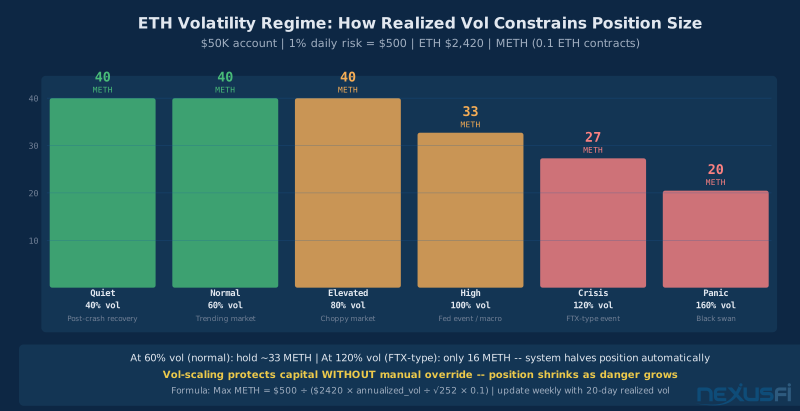
If you trade ES or NQ with fixed contract sizes, you need a different framework for ETH. ETH's volatility isn't just higher — it's more variable. It can swing from 40% annualized realized vol to 140% in a few weeks during crisis periods. A fixed contract size approach means your dollar risk exposure swings by 3.5× depending on market regime.
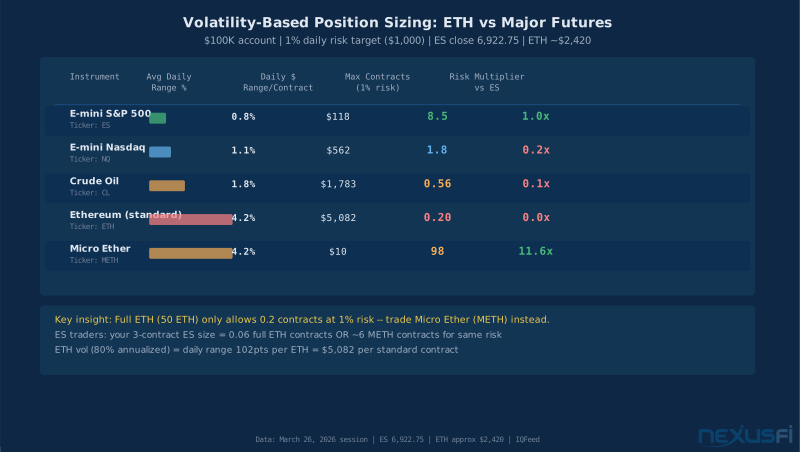
The solution: size ETH positions to target a fixed dollar risk or percentage-of-account risk, not a fixed contract count. Calculate current 20-day realized volatility (the annualized standard deviation of daily returns). Convert that to an expected daily dollar range for one contract. Size your position so that the expected daily range equals your desired daily dollar risk.
Example: account is $100,000, daily risk target is 1% ($1,000). Current ETH 20-day realized vol = 80% annualized. Daily range estimate = $2,400 × (80% / √252) = $120 per ETH per day = $6,000 per standard contract per day. At 1% risk target: size = $1,000 / $6,000 = 0.17 contracts. You'd use 1--2 METH contracts (0.1--0.2 ETH equivalent). When vol spikes to 120%, your max size drops to 0.11 contracts — the system automatically protects you in higher vol regimes.
Orderflow and Microstructure During Key Windows
ETH futures have distinct liquidity patterns across the trading day. US equity hours (9:30 AM--4:00 PM ET) bring the deepest books, tightest spreads, and most reliable price discovery. This is when institutional hedgers, equity arbitrage desks, and macro traders are active.
The Asian session (midnight--6 AM ET) brings elevated crypto-native flow. This is when DeFi protocol events, Asian exchange liquidation cascades, and on-chain activity tend to move spot. CME volume is thinner here — the DOM is shallower, spreads widen, and a relatively small order can push price further. If you're holding overnight ETH positions, this session is when gap risk concentrates before the 24/7 transition.
The daily maintenance break (4:00--5:00 PM CT) remains post-May 29. During this 60-minute window, CME is dark while crypto spot/perps keep trading. This is a legacy gap risk source that's staying. Reduce position size or hedge with perpetuals during this window if your exposure is large.
DOM analysis in ETH futures looks different from ES. Iceberg orders are common — institutional size shows only partial depth. Sweeps of the visible book often precede larger directional moves. Aggressive market orders through multiple levels of the DOM are a more reliable buy/sell pressure signal in ETH than in equity indices where passive liquidity is deeper and more stable. See Depth of Market (DOM) for foundational DOM reading.
Common Mistakes #
Assuming ETH Position Sizing Works Like ES
This is the fastest way to blow up an ETH futures account. ES has an average daily range around 25--40 points (roughly 0.85% of notional). ETH has an average daily range of $100+ (4%+). An ES trader who normally trades 5 contracts with $5,000 daily P&L exposure might look at ETH and think 1--2 contracts is conservative. At current ETH prices, 1 standard contract can easily produce a $5,000--$12,000 intraday range. That's not conservative — that's 5--12× normal daily risk.
The recalibration: when you move from ES to ETH, divide your typical contract count by 4--5 and still treat that as a starting point. Trade the micro (METH) until you've experienced a full range of ETH market conditions — including a 10%+ single-day move. Then scale up based on real risk tolerance, not assumptions.
Ignoring CME Break Gap Risk
Before May 29, the weekend closure was the primary gap risk. After May 29, it's the daily 60-minute maintenance break. During these 60 minutes, spot and perpetual crypto markets continue. News events, liquidation cascades, or macroeconomic releases during the break window open CME with a potential gap.
The 2022 FTX collapse happened on a Thursday. CME had to open through massive gap-down moves the following day. Traders who held large ETH positions without stops watching the break window got devastating fills on reopening. The daily break isn't as long as the weekend, but it has the same structural exposure profile. Either hedge during breaks, reduce size much, or use the break window as a forced position review.
Static Correlation Assumptions in Cross-Asset Trades
If you're using ETH to hedge BTC exposure (or vice versa), you need to monitor that correlation in real time — not assume it's stable. Many traders run a "crypto exposure" hedge where they're long one and short the other to reduce overall crypto risk. When correlation is 0.85, this works reasonably well. When it's 0.20 because of an ETH-specific trigger, you don't have a hedge — you have two separate, potentially offsetting bets that can both go against you on an ETH idiosyncratic move.
Set a correlation rebalancing trigger: if the 10-day rolling ETH-BTC correlation moves outside your expected range (say, below 0.50), pause or restructure the cross-asset trade until the relationship stabilizes.
Over-Leveraging the Low Initial Margin
ETH initial margin at 5% of notional is low. On paper, you can control $120,000 of ETH exposure for $6,000 in margin — 20:1 leverage. For context, ES at 5% margin gives you similar leverage, and ES traders who run max leverage on ES consistently get margin-called during elevated volatility periods. ETH's volatility is 5× ES. Max leverage on ETH is a high-probability path to a margin call.
The CME margin is a minimum — your FCM's risk desk may require more, and intraday margin can be raised by CME with short notice. Running near the minimum is running against the margin buffer that protects you when CME raises requirements. The practical rule: maintain 2--3× initial margin available at all times when holding overnight ETH exposure.
Treating the Basis Trade as Risk-Free
The basis trade (spot long + futures short) eliminates directional ETH risk, but it introduces basis risk, custody risk, and liquidity risk. Basis can widen before it converges — meaning your short futures leg marks against you even if the trade is ultimately profitable. During the Terra/Luna collapse, ETH futures went into deep backwardation temporarily as institutions hedged, then snapped back. A trader who wasn't properly funded got margin-called on the "safe" hedge just before it became profitable.
Additionally, holding spot ETH on a crypto exchange exposes you to exchange counterparty risk. The FTX collapse destroyed multiple sophisticated basis trades whose spot leg was at FTX. A truly risk-managed basis trade holds spot with a regulated custodian or prime broker, not on a retail crypto exchange.
Knowledge Map
Go Deeper
Build on this knowledgeReferences This Article
Articles that build on this topicCitations
- — New Micro Contract :- Micro Ether coming 5-Dec-21 (2021) 👍 10“0.1 Ether? This contract is tiny with a Notional of about $450. This will obviously open up trading Ether to a lot of people, but it will make buying and holding Ether expensive as your roll cost will be astronomical!”
- — Michael Burry warns the Mother of All Crashes is coming (2021) 👍 3“The maximum overnight leverage varies by contract, the more volatile it is, the less the leverage. I believe the lowest leveraged CME future are Ether Futures which have a margin requirement of 42% of notional, which equates to about 2.4:1.”
- — Webinar: Ethereum Futures from CME Group (2021) 👍 3“CME released the margin requirements for these contracts this week and it is a staggering 50% of Notional which makes Bitcoin margins (37% of Notional) look low!”
- — ** 2024 CME Exchange Fee Increases ** (2023) 👍 4“The most egregious of them all? Ether (ETH)/Ethereum (MET). Full size is 50 Ether and exchange fees are $4. Micro is 0.1 Ether and exchange fees are $0.20 which equates to $100 for 500 lots/50 Ether! So Micro is 25x more expensive!”
- — Webinar: Ethereum Futures from CME Group (2021) 👍 2“The margin requirements are always made based on historical past moves and what size moves are within certain standard deviations of price movement. The requirement is set to avoid stop outs and credit risk and counterparty risk.”
- — Selling Options on Futures? (2021) 👍 6“All futures are taxed as section 1256 contracts and hence are treated as 60% long term capital gains and 40% short term capital gains which for me is much more favorable than being taxed as income.”
- — Do you change your strategy based on volatility? (2022) 👍 2“Most longer term futures traders use volatility based position sizing. Using an indicator like ATR, and multiples of, gives you a ball park of the amount the market needs to move to stop you out of your trade. Calculate the stop level (trade risk) - use a total dollar risk amount (I've read 2% of account is common) and divide the total dollar risk by the trade risk to get the number of contracts to trade.”
- — Minimum starting funds to learn to trade (2016) 👍 3“Create a volatility based constant percentage risk position sizing algorithm -- one that normalizes the dollar volatility by adjusting position sizing. So positions that move a large dollar amount are typically fewer contracts than ones that move less in dollars. This is appropriate diversification across futures markets.”
- — SD's Options & Futures Journal (2021) 👍 2“The higher the margin required to trade a product the quicker you can lose/make money. A product that has a margin of $200 moves like a sloth compared to a product which has margin of $3000. Where it could take an entire day to make $30 in one contract it would only take 3 ticks and about 2 seconds in CL!”