



Prediction Market Perpetuals Beyond Bitcoin: Trading ETH, Altcoins, and Equity Perps on Kalshi and Polymarket
Overview #
The CFTC's May 29, 2026 approval of BTCPERP on Kalshi was the regulatory opening, not the destination. Within six days, Kalshi launched Ethereum perpetuals. Within weeks, Polymarket US began offering perpetual futures on NVIDIA, Bitcoin, and Ethereum with up to 10x leverage. SOL and DOGE contracts are in Kalshi's pipeline.
Futures traders who thought perpetuals were a Bitcoin-only conversation missed the map. The prediction market platforms that first built regulated event contracts are now building something different: a continuously-traded derivatives market that covers crypto assets, individual equities, and potentially commodities — all under CFTC oversight, all clearing through regulated infrastructure.
This article covers what comes after BTCPERP. If you haven't read US-Regulated Bitcoin Perpetual Futures (BTCPERP) first, do that — funding rate mechanics and regulatory structure are prerequisites. This article focuses on what changes when you move beyond Bitcoin.
Why Multi-Asset Perps Matter #
The $92.9 trillion in offshore perpetual swap volume from 2025 wasn't all Bitcoin. Ethereum typically represents 25-35% of total crypto perp volume on offshore platforms. Altcoins — SOL, DOGE, AVAX, and dozens of others — account for another 30-40%. Equity perps (NVIDIA, Tesla, SPX-linked products) represent a rapidly growing slice on platforms like Drift, GMX, and Hyperliquid.
All of that volume flowed through unregulated venues with no customer fund segregation requirements, no clearinghouse guarantee, and no legal recourse for US traders. The regulatory opening that BTCPERP created extends to every asset class that Kalshi and Polymarket choose to list.
For a futures trader, this creates three distinct opportunities:
Directional exposure with no roll. Ethereum, SOL, DOGE perpetuals give continuous directional exposure without the quarterly roll cost that afflicts CME crypto products. CME's Ether futures (ETH) expire monthly; a continuous perp position eliminates that friction.
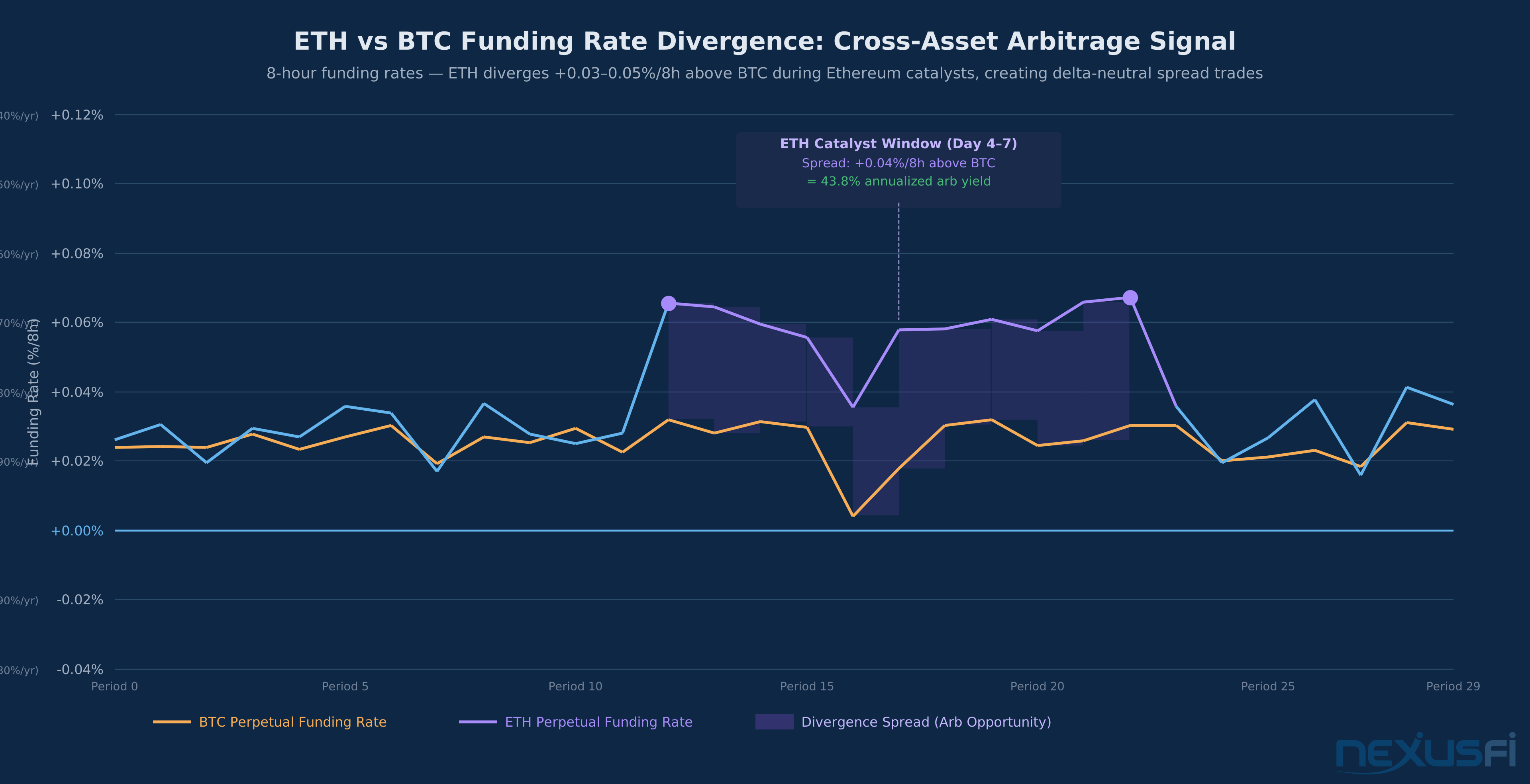
Funding rate harvesting across assets. ETH funding diverges from BTC's during ETH-specific catalysts. Altcoin funding is more volatile with larger spreads. Cross-asset funding arbitrage only works when you have access to multiple regulated perpetuals simultaneously.
Equity exposure without securities registration. Polymarket's equity perpetuals — NVIDIA, individual stocks — provide leveraged directional exposure to equities through a futures framework, bypassing the Pattern Day Trader rule and capital requirements that govern equities trading. This is a new regulatory pathway that traditional futures traders will recognize immediately.
Ethereum Perpetuals: What's Different from BTCPERP #
Kalshi launched Ethereum perpetuals days after Bitcoin. The structural mechanics are identical — funding every 8 hours, CFTC-regulated DCM framework, customer fund segregation — but the market dynamics differ in ways that create different trading environments.
ETH perpetual funding diverges above BTC funding by 0.03--0.05%/8h during Ethereum-specific catalysts. Traders who go long ETH perp and short BTC perp in equal notional capture this spread: 0.04%/8h × 3 periods × 365 days = 43.8% annualized on a delta-neutral position. The spread compresses as arbitrageurs enter — early positioning captures the widest differential.
Larger beta, wider funding swings. Ethereum typically trades at 1.2-1.8x Bitcoin's beta depending on the time period. During bull markets, ETH rises faster than BTC; during selloffs, it falls harder. This amplified movement produces wider funding rate swings. Where Bitcoin perp funding might sit at +0.02-0.04% per 8 hours during normal bull conditions, ETH perp funding can reach +0.05-0.08% during ETH-specific enthusiasm. For funding rate traders, this means higher potential yield on delta-neutral cash-and-carry positions — and higher risk when funding reverses.
Protocol trigger risk. Ethereum has a product roadmap with specific technical milestones. Major protocol upgrades — sharding completions, Layer 2 integrations, EIP implementations — historically produce significant ETH price movement that doesn't correlate with Bitcoin. A trader holding a delta-neutral ETH position must understand that the delta-neutralizing mechanism (the perp short) will lose mark-to-market value if ETH spikes on a protocol trigger, requiring immediate margin posting. Bitcoin doesn't have equivalent product-specific trigger risk at the same frequency.
ETF flow divergence. Spot Bitcoin ETFs reached $125B in AUM in early 2026. Spot Ethereum ETFs, launched later and with less institutional adoption, show different capital flow patterns. On days when ETF inflows to ETH spike while BTC inflows moderate, ETH perp funding tends to diverge upward. This divergence is a short-term arbitrage signal — ETH perp premium relative to BTC perp premium often reverts within 24-48 hours as professional arbitrageurs bring them back in line.
Lower absolute liquidity early. BTCPERP launched with several established market makers. ETH perp launched days later into a thinner book. Bid-ask spreads are wider on ETH perp than on BTCPERP in the early months. For position traders, this is acceptable. For scalpers or high-frequency approaches, the spread cost matters more.
Altcoin Perpetuals: Solana, DOGE, and What Comes Next #
Kalshi announced a pipeline of additional crypto perpetuals including Solana (SOL), Dogecoin (DOGE), and others subject to CFTC review. These represent a different risk profile than BTC and ETH perps.
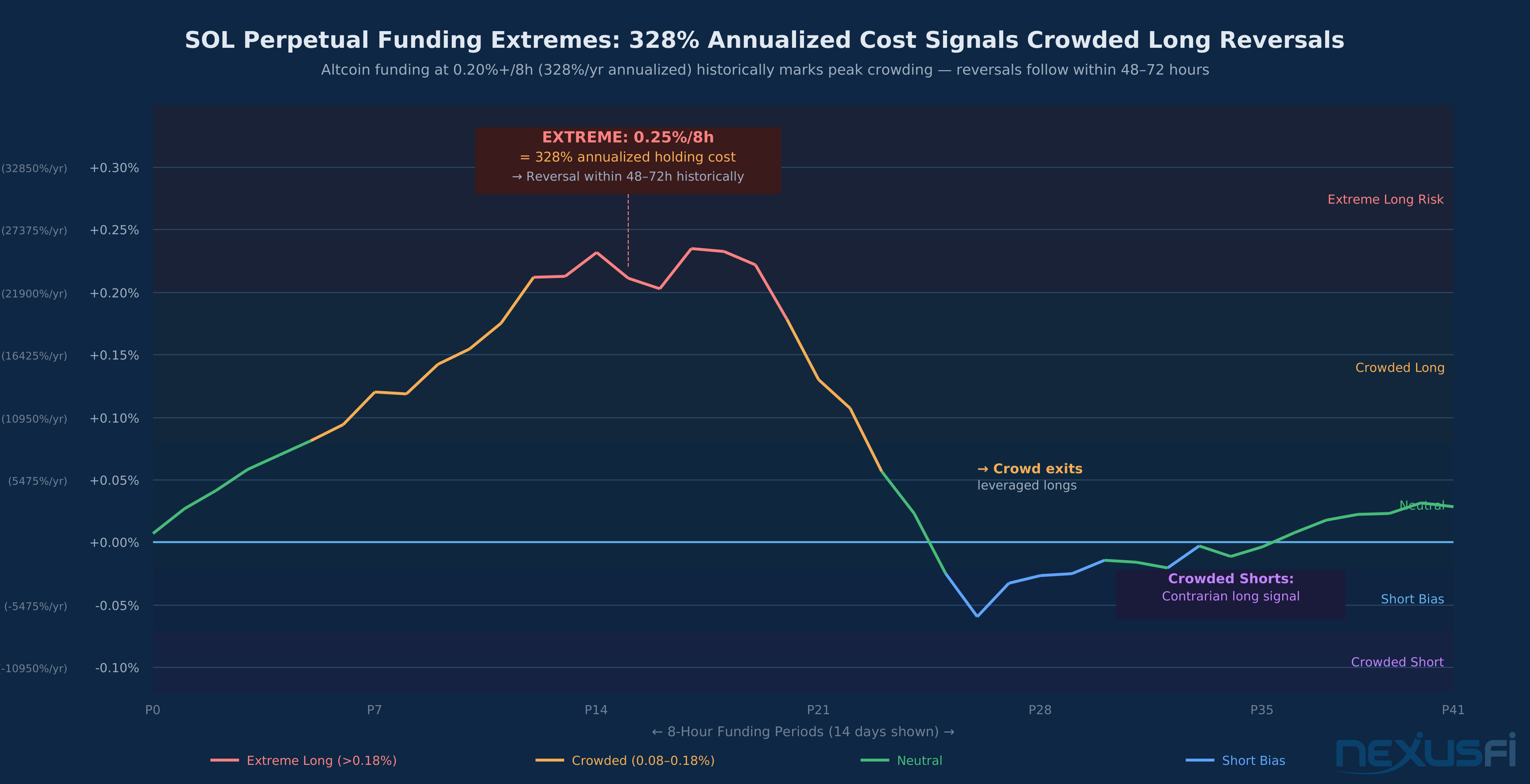
SOL perpetual funding at 0.25%/8h annualizes to 328% — unsustainable carry that historically precedes reversals within 48--72 hours as leveraged longs face mounting costs. Deeply negative funding (below −0.07%/8h) identifies crowded short setups where the contrarian case strengthens. Color-coded zones map positioning extremes to reversal probability across 14 simulated days.
Funding rate volatility is extreme. Altcoin funding on offshore platforms regularly hits +0.2-0.3% per 8 hours during speculative frenzies — 20x the typical Bitcoin rate — and crashes to deeply negative during selloffs. A 0.3% per 8-hour funding rate annualizes to 328%. That's not sustainable. What it represents is extreme positioning: the market is paying enormous carry to hold leveraged longs. These extremes are mean-reverting, often sharply.
For futures traders who understand mean reversion mechanics, extreme altcoin funding rates are one of the most reliable sentiment contrarian signals in crypto markets. When SOL perp funding hits +0.2% per 8 hours, the market is at peak long crowding. When it hits -0.1% per 8 hours, it's at peak short crowding. The reversal isn't guaranteed — trends can persist through multiple funding extremes — but the persistence of extreme funding rates measures the unsustainability of the current positioning.
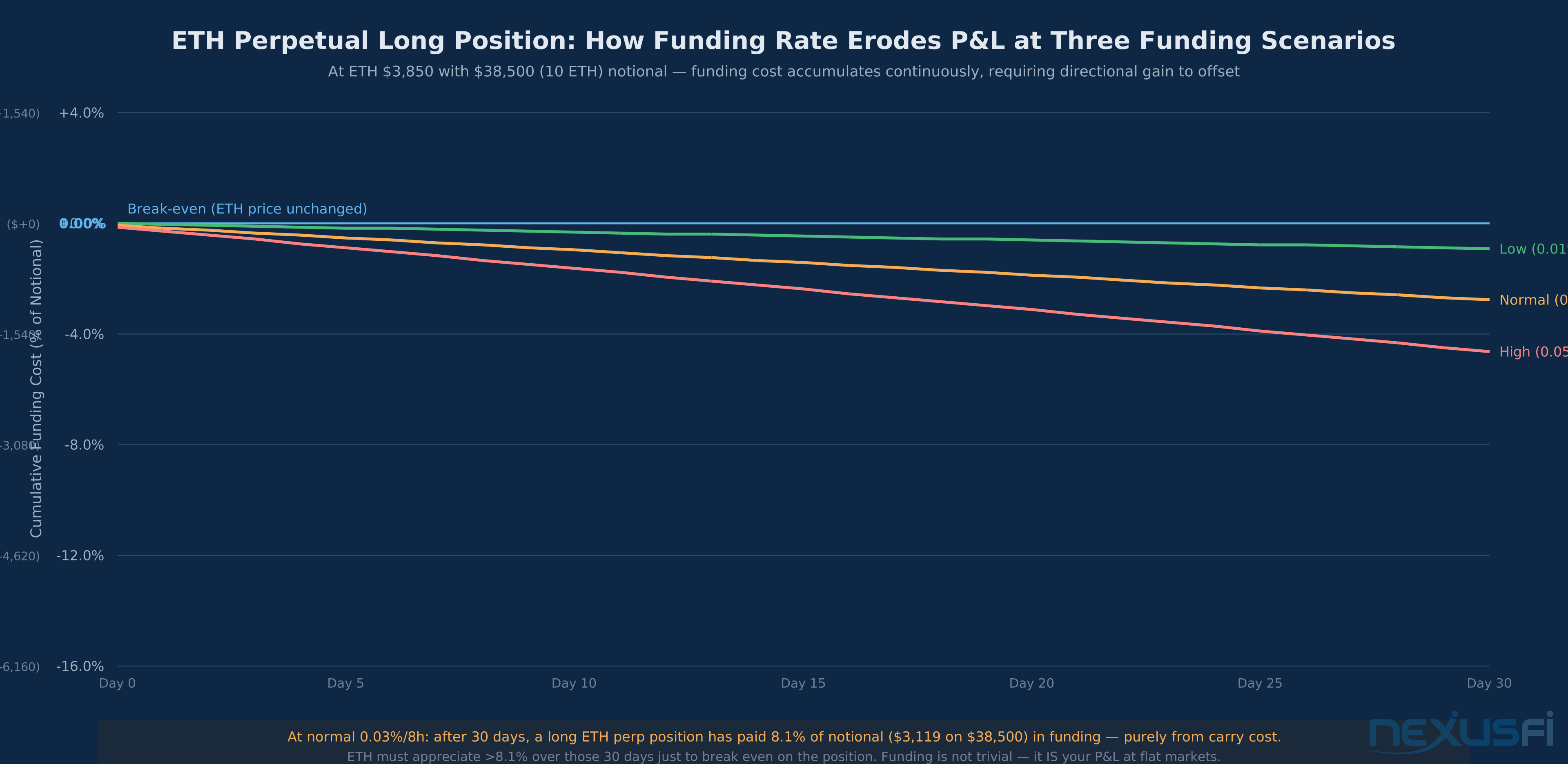
Cumulative funding cost on a 10 ETH long perpetual position (3,850/ETH, $38,500 notional) at three funding levels. At normal 0.03%/8h funding: after 30 days the position has paid $3,119 in carry costs — requiring ETH to appreciate 8.1% just to break even. High funding (0.05%/8h) costs $5,198 over 30 days. Position sizing must account for expected funding duration, not just entry/exit price.
Liquidity risk is higher. SOL perps will have shallower books than BTC perps at launch. A $1M position in BTC perp might move the market 3-5 basis points. The same position in SOL perp at equivalent notional might move it 30-50 basis points. This slippage cost must factor into any calculation of whether the funding yield justifies the position.
Regulatory expansion is gradual. Each new perp listing requires separate CFTC review. Kalshi's BTCPERP approval doesn't automatically extend to DOGE. The pace depends on Kalshi's regulatory relationship and the CFTC's comfort with each additional asset.
Polymarket's Equity Perpetuals: A New Category #
Polymarket's move into equity perpetuals represents something genuinely new: a CFTC-regulated platform offering perpetual futures on individual stocks including NVIDIA, with 7-10x leverage.
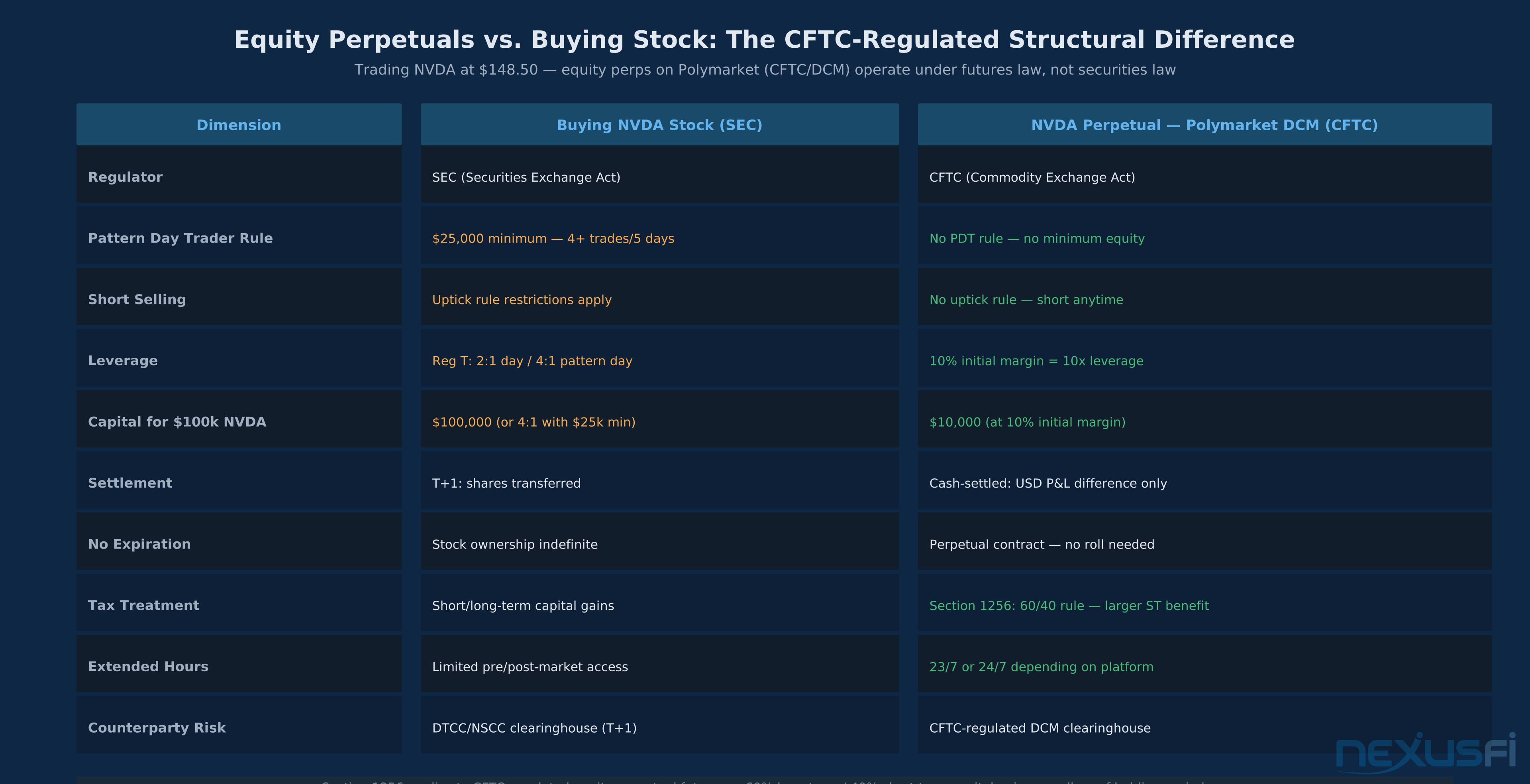
Trading NVDA at $148.50 as a CFTC-regulated equity perpetual vs. buying the stock: equity perps bypass the PDT rule (no $25,000 minimum), uptick restrictions, and T+1 settlement. A $100,000 NVDA position requires only $10,000 in margin at 10% initial margin vs. $100,000 to own shares. Section 1256's 60/40 rule is an additional tax advantage over short-term stock gains.
This deserves careful analysis because it creates a jurisdictional overlap that didn't previously exist.
How equity perps differ from stock trading. When you buy NVIDIA stock, you own a security regulated by the SEC. When you trade a perpetual futures contract on NVIDIA's price, you're trading a derivative regulated by the CFTC — not a security. This distinction has significant practical implications:
- No PDT rule applies. The Pattern Day Trader rule requires $25,000 minimum equity for day traders making 4+ trades in 5 business days. Futures products, including equity perps, aren't subject to this rule.
- No uptick rule on shorting. SEC regulations restrict short selling in certain circumstances. Futures contracts have no equivalent restriction — you can short with the same mechanics as going long.
- No settlement in shares. Equity perps settle in cash. You receive or pay the price difference in USD; no stock ever changes hands.
- Leverage economics differ. A 10% margin requirement means 10x leverage on a $100,000 NVIDIA position requires $10,000 in margin. CME-style equity futures have similar economics, but Polymarket's equity perps offer continuous exposure without quarterly rolls.
Funding rate dynamics on equity perps differ at the core. Stock-linked perpetuals don't have the 24/7 continuous trading of crypto. NVIDIA the stock trades 9:30 AM - 4:00 PM ET on weekdays. Outside those hours, the perp contract continues trading, but the reference price index is either static or calculated from after-hours futures, depending on the index methodology.
This creates a different funding rate pattern than crypto perps. During regular trading hours, funding reflects directional positioning similar to crypto. Outside hours, funding can accumulate based on where the perp diverges from the after-hours reference — but the mechanism for traders to arbitrage back is impaired. Understand the index calculation methodology before trading equity perps outside market hours.
Cross-Platform Perpetual Funding Arbitrage #
Having multiple perpetual products on regulated venues creates strategies that weren't possible when BTC perp was the only regulated option.
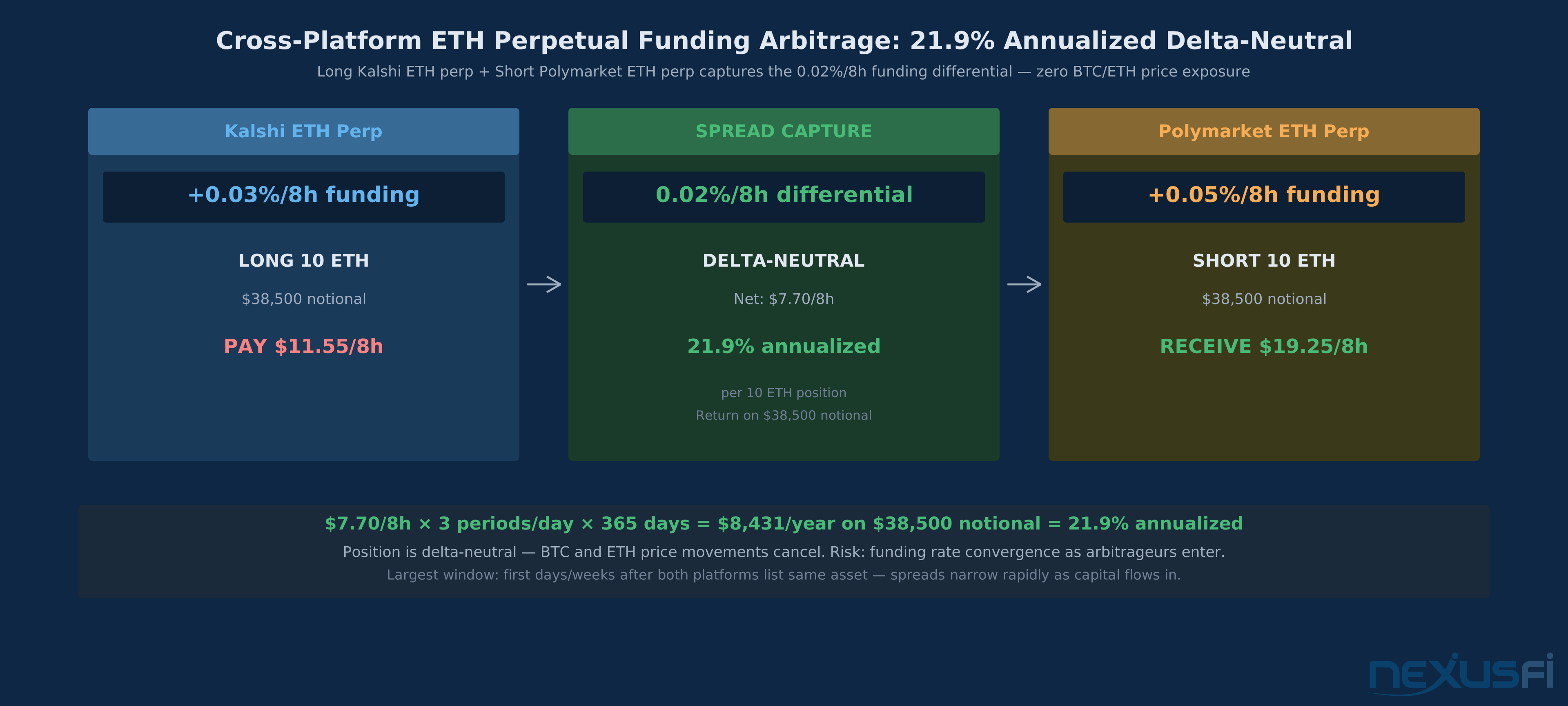
When Kalshi ETH perp charges 0.03%/8h funding and Polymarket ETH perp charges 0.05%/8h, going long Kalshi and short Polymarket captures the 0.02%/8h spread. On 10 ETH ($38,500 notional), the net cash flow is $7.70/8h — 21.9% annualized on a fully delta-neutral position. This spread compresses as arbitrageurs enter, making early positioning critical.
ETH/BTC spread perpetuals. The Ethereum-to-Bitcoin ratio has well-documented mean-reverting properties around specific technical levels. Trading the ratio using regulated perps means going long ETH perp and short BTC perp in equivalent notional amounts. The position is delta-neutral to overall crypto market direction — what you're trading is the relative performance of ETH vs BTC.
The complexity is funding. Long ETH perp pays ETH funding. Short BTC perp receives BTC funding. If ETH funding is higher than BTC funding (common during ETH-specific bull runs), the long ETH / short BTC position has negative carry that must be offset by the spread moving in your direction. If BTC funding is higher, the position has positive carry.
Multi-platform funding arbitrage. When two regulated platforms offer the same underlying perpetual — say, both Kalshi and Polymarket offer ETHPERP — funding rate differentials between platforms create arbitrage opportunities. If Kalshi ETH perp funding is +0.03% per 8h while Polymarket ETH perp funding is +0.05% per 8h, going long Kalshi and short Polymarket captures the 0.02% spread 3x per day. At 0.02% × 3 × 365 = 21.9% annualized, delta-neutral, cross-platform.
This trade requires accounts on both platforms, sufficient margin on both sides, and active monitoring. The spread narrows as more arbitrageurs enter. The window for large funding differentials between competing regulated platforms shrinks rapidly once both products are liquid — early-stage differentials are the highest-value opportunity.
Event risk positioning using crypto perps + prediction markets. The unique feature of Kalshi and Polymarket is that they offer both traditional binary event contracts and perpetual futures. This creates a hedging combination unavailable elsewhere. Consider an FOMC meeting day: a trader might hold a binary YES contract on "Fed holds rates" while using an ETHPERP short as tail risk protection.
The NVIDIA Perpetual: Risk Profile for Equity Perp Traders #
NVIDIA is Polymarket's initial headline equity perp listing. Its characteristics make it a natural early product: massive daily volume, high retail interest, significant AI-driven institutional flows, and enough intraday volatility to generate genuine two-sided markets.
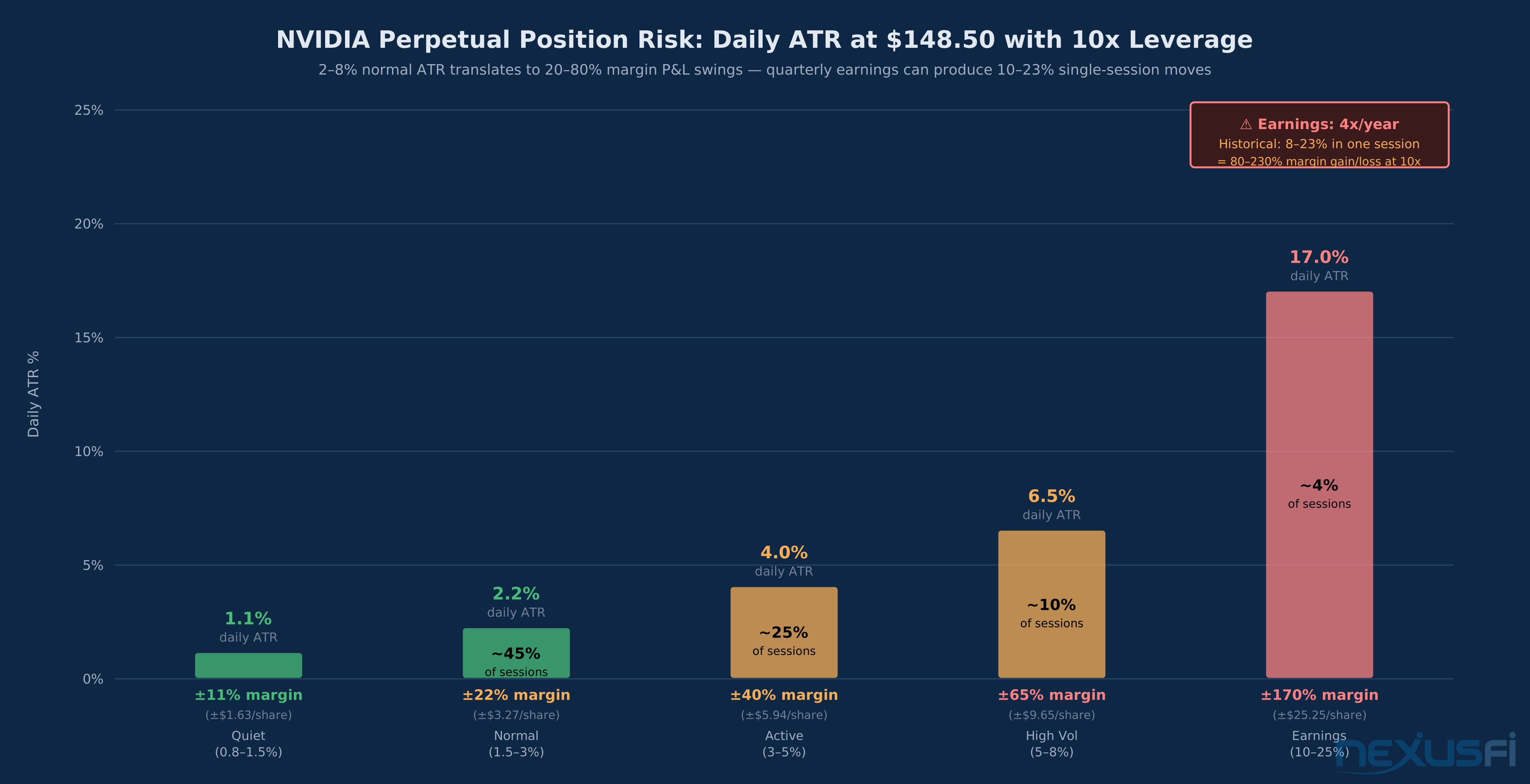
NVIDIA at $148.50 shows 2--8% daily ATR under normal conditions, translating to 20--80% margin P&L swings at 10x leverage. The 4% normal day category represents ~25% of sessions. Quarterly earnings have historically produced 8--23% single-session moves — a 10x leveraged position would gain or lose 80--230% of initial margin. Earnings dates are non-negotiable position size reduction events.
For futures traders, NVIDIA perps behave like trading a highly volatile single-name futures product. The relevant data points:
- NVIDIA's daily ATR in 2026 ranges from $3-25 depending on market conditions, representing 2-8% daily swings from $148.50
- At 10x leverage, a 3% ATR day produces ±30% swings in margin value
- Earnings quarters produce outsized moves — NVIDIA has moved 10-20% on earnings multiple times
- Options-related gamma exposure creates intraday dynamics similar to what ES/NQ traders see around SPX opex, but concentrated in a single name
Earnings. NVDA reports quarterly. A 15% single-session earnings move at 10x leverage = 150% gain or loss on initial margin. Before every earnings date, reduce position size or exit. This is non-negotiable.
Outside regular trading hours. NVDA perp may continue trading when the stock is closed. The reference index methodology determines the mark price between 4 PM and 9:30 AM ET. Study this before holding overnight — crypto perps have 24/7 underlying; NVDA does not.
Platform Comparison: Kalshi vs. Polymarket for Perp Trading #
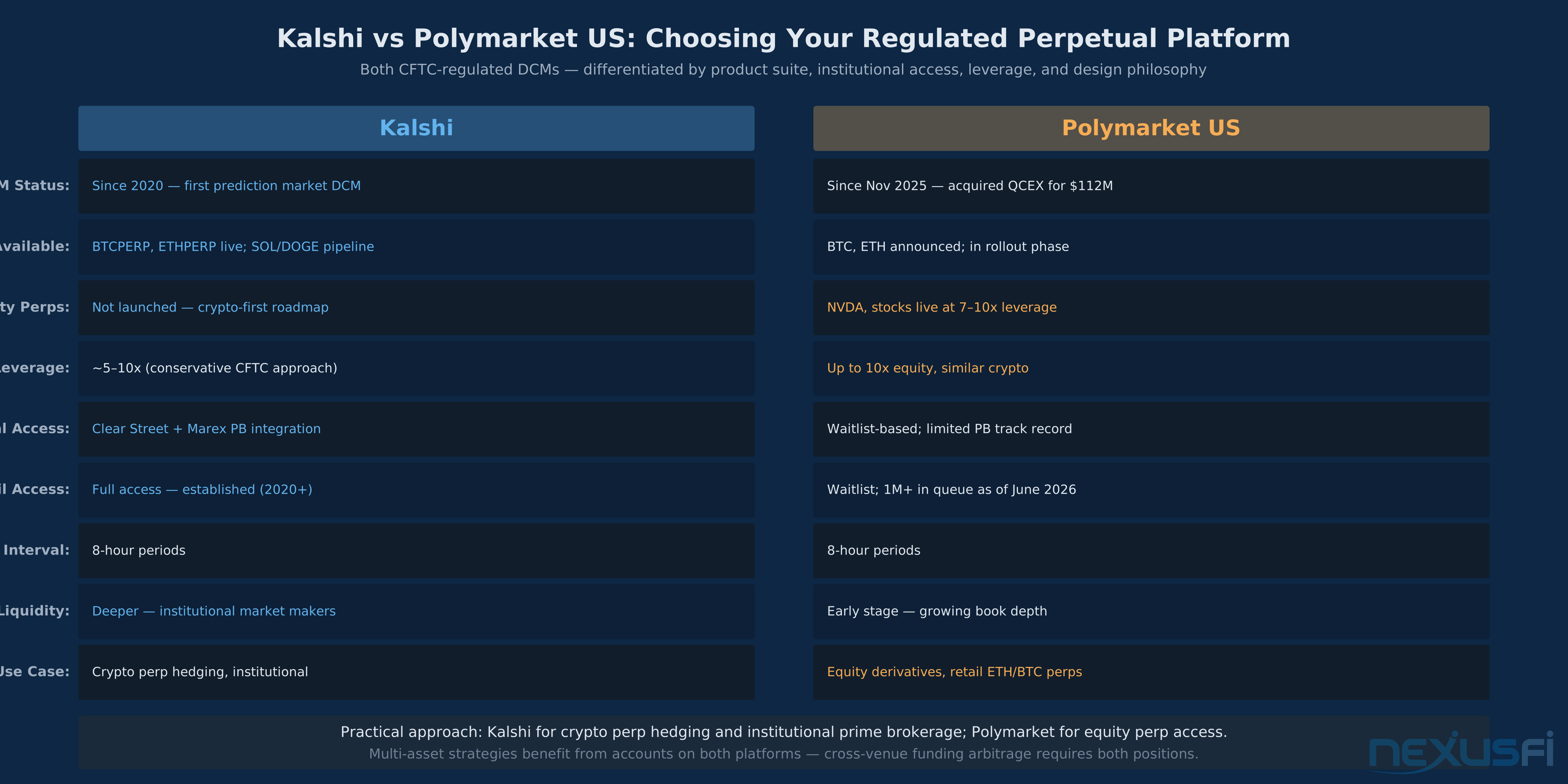
Both Kalshi and Polymarket US operate as CFTC-regulated Designated Contract Markets. Kalshi leads with institutional prime brokerage integration (Clear Street, Marex) and established regulatory track record since 2020. Polymarket US, established November 2025, leads with equity perpetuals including NVIDIA at 7-10x leverage. Multi-asset perpetual strategies benefit from accounts on both platforms.
Both platforms operate as CFTC-regulated DCMs. Both offer perpetual futures under the same regulatory framework. But their product approaches differ in ways that matter for execution.
Kalshi's design philosophy. Operating since 2020, Kalshi has the deepest CFTC regulatory track record. Key advantages: institutional prime brokerage integration through Clear Street and Marex, full US access, and established infrastructure for crypto perpetuals.
Polymarket's design philosophy. Polymarket acquired QCEX for $112M to become a CFTC-licensed DCM in November 2025. The equity perp launch — NVIDIA and other equities at 7-10x leverage — positions Polymarket in an asset class Kalshi hasn't yet entered.
Execution quality in early stages. Both platforms have thinner books than offshore perp venues at launch. Use limit orders. Work into positions across multiple executions. The bid-ask spread is a hard cost that must factor into your position sizing calculation.
Access and compliance. Both platforms require full KYC. Account approval timelines and margin funding mechanics differ from traditional futures brokers. Allow 2-4 weeks for account setup before you need the position.
Risk Management for Multi-Asset Perp Portfolios #
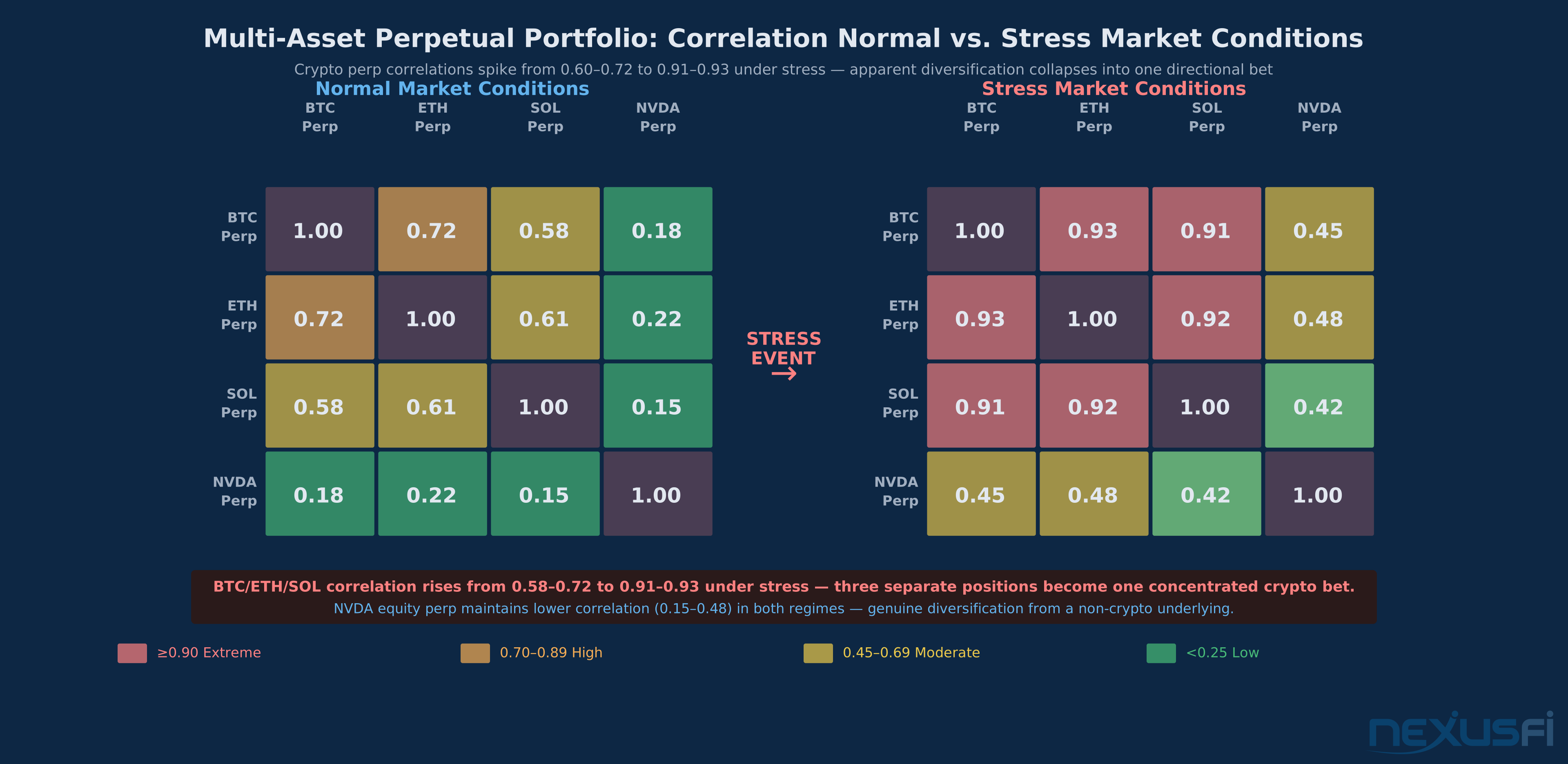
BTC, ETH, and SOL perpetuals show moderate correlations (0.58--0.72) under normal conditions but spike to 0.91--0.93 during stress events, collapsing apparent diversification into a single directional crypto bet. NVDA equity perp maintains distinctly lower correlation (0.15--0.48) in both regimes. Model aggregate portfolio correlation explicitly — individual position diversification analysis misses this stress-regime behavior.
Adding multiple perpetuals creates aggregate risk that individual position management misses.
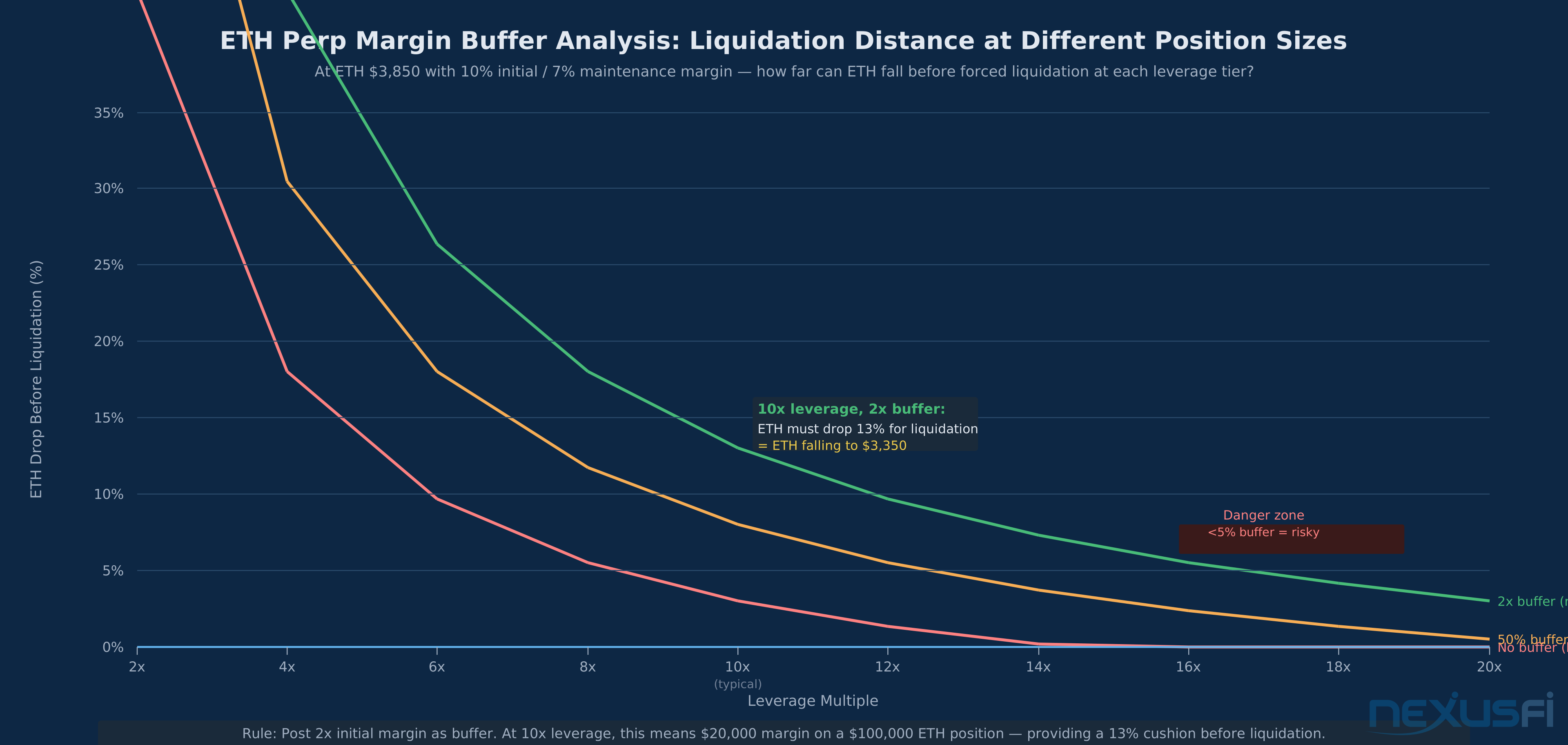
At 10x leverage with 2x margin buffer (posting $20,000 on $100,000 ETH notional), ETH must drop 13% before liquidation is triggered. At bare minimum 1x buffer, a 3% adverse move triggers liquidation. Higher leverage compresses this buffer dramatically — 20x leverage with 2x buffer still only provides 7.5% protection. The 2x buffer rule across all leverage tiers is the minimum recommended for survivable position management.
Correlation during stress. In calm markets, BTC, ETH, and altcoin perps have different funding dynamics and some genuine diversification benefit. During market stress — a sharp macro selloff, crypto contagion, exchange failure — correlations converge to 0.90+. A portfolio that looks diversified across crypto perp positions becomes a large net short or long crypto exposure when stress hits. Build stress scenarios into your position sizing.
Aggregate funding rate exposure. Calculate total daily funding cost across all perpetual positions. If aggregate funding exceeds 0.5% per day of total notional — 182.5% annualized — reconsider position sizes. During bull market extremes, every long perp position simultaneously faces elevated funding.
Margin concentration risk. All positions on a single platform share the same margin pool. A large adverse move in one position draws down the margin available for all others. Maintain margin buffers at 150-200% of maintenance requirements across all positions simultaneously, not just per position.
Liquidation cascade. If one position is liquidated, the equity change can trigger maintenance violations on others. Model liquidation scenarios across all positions simultaneously.
The FOMC Day Combo Trade #
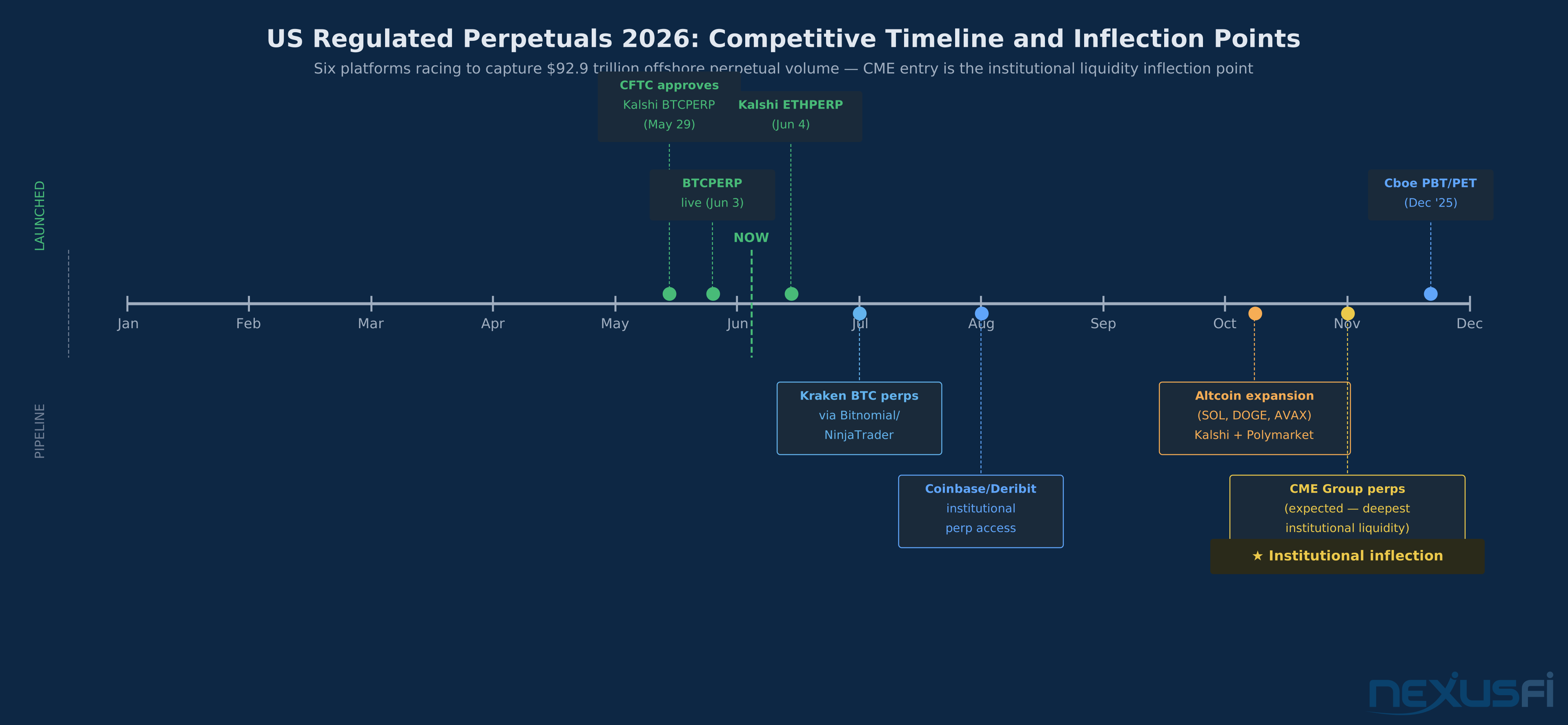
Competitive timeline for US-regulated perpetual futures in 2026. Kalshi launched BTCPERP (June 3) and ETHPERP (June 4) as the first CFTC-regulated perps. Kraken targets 30-day entry via Bitnomial and NinjaTrader Clearing — meaning existing NinjaTrader users may access regulated perps through familiar infrastructure. CME Group entry, expected Q4 2026, would be the institutional liquidity inflection point drawing deepest capital from offshore venues.
The unique feature of prediction market DCMs is that they offer both binary event contracts and perpetual futures on the same platform. This combination creates hedging structures unavailable elsewhere.
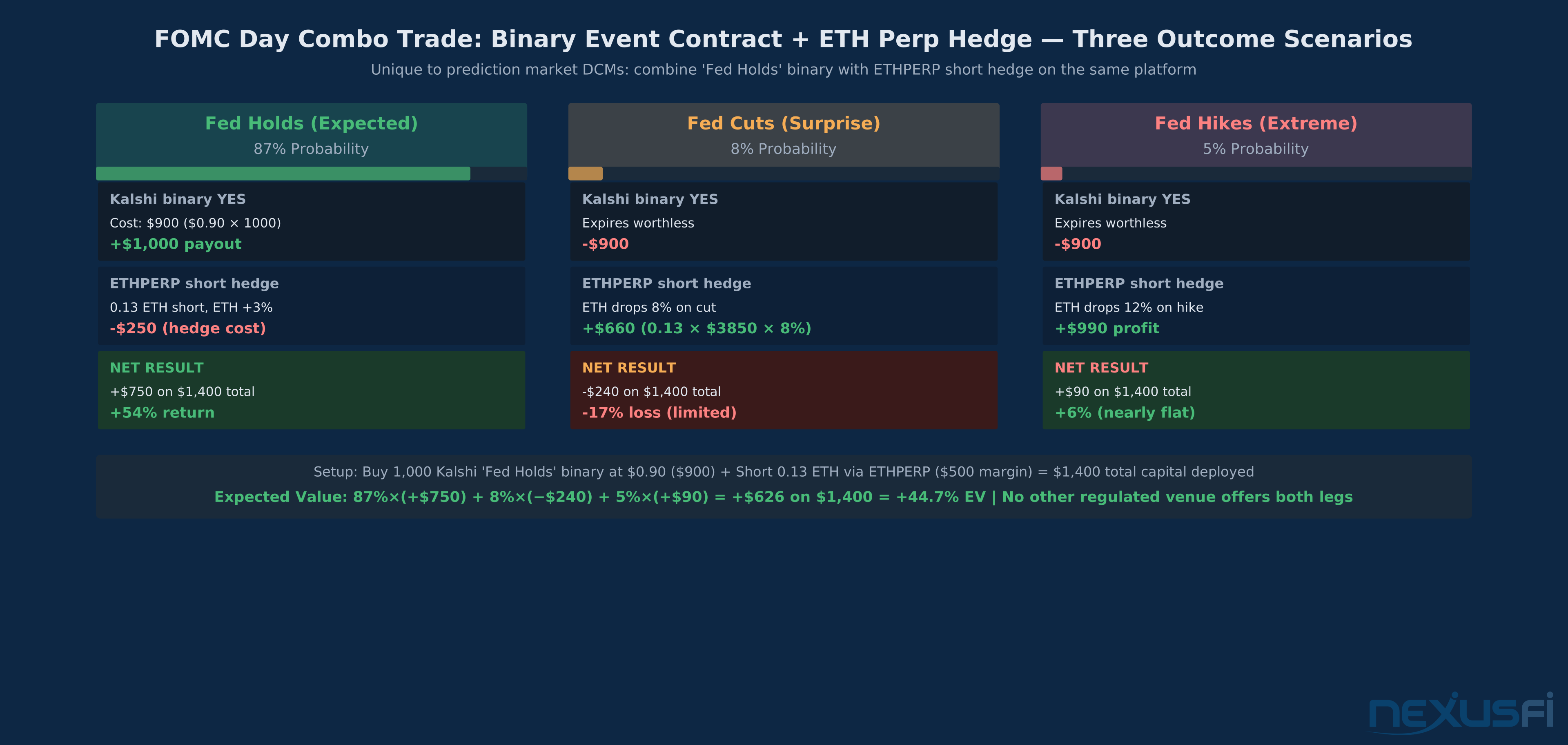
Consider an FOMC meeting day. A trader might buy a binary YES contract on "Fed holds rates" at 87 cents probability ($0.87 × 1000 units = $870 cost) while simultaneously shorting a small ETHPERP position as tail risk protection.
The outcome math: if the Fed holds (87% probability), the binary pays $1,000 — a $130 profit — while the ETH perp short loses value as markets rally on the expected outcome. If the Fed surprises with a cut or hike (13% probability), the binary expires worthless but the ETH perp short captures the sharp move in crypto as traders react to the surprise.
This structure expresses a view (likely Fed hold) while managing tail risk. No other regulated venue offers both legs on the same platform — CME traders split execution across different clearing relationships to achieve similar hedging.
The funding rate on the ETHPERP short accumulates during the hold period. For short-dated event setups, funding is negligible. For multi-week hedges, model the funding cost explicitly.
The Competitive Environment and What's Coming #
CME Group CEO Terry Duffy's June 4, 2026 criticism of the new perpetuals — calling them "dangerous possibilities" — signals the competitive intensity. Duffy flagged: 50x leverage options, the 2.5-hour CFTC Section 40.3 approval bypassing standard public comment, and funding rate mechanics he characterized as encouraging speculation.
Combining Kalshi's 'Fed Holds' binary event contract ($900 cost) with an ETHPERP short hedge ($500 margin) creates a $1,400 position with +44.7% expected value. The structure profits maximally in the most likely scenario (87% Fed hold: +54% return) while limiting downside to -17% in the surprise cut scenario and nearly breaking even in the extreme hike case. This combination is unavailable at any other regulated venue — only prediction market DCMs offer both binary event contracts and perpetuals simultaneously.
What Duffy's criticism actually signals: the traditional exchanges didn't build these products because they judged the regulatory risk-adjusted relationship not worth it. The crypto-native and prediction market platforms built them because continuous perpetual exposure is what their user base demanded. The competitive environment is now in motion:
Near-term entrants (announced):
- Kraken: Announced regulated BTC perps through Bitnomial within 30 days of Kalshi's BTCPERP launch, with NinjaTrader Clearing integration
- Coinbase/Deribit: CFTC Staff Letter 26-17 provides the institutional perp access pathway through US FCMs
Medium-term expansion (likely):
- Altcoin perps: SOL, DOGE, and AVAX on Kalshi and Polymarket, subject to CFTC review per-listing
- Additional equity perps: Beyond NVIDIA, Polymarket's template extends to any liquid equity underlying
- Commodity perps: Gold, crude oil, and natural gas would compete directly with CME's most liquid products
The CME inflection point. CME entry would be the institutional liquidity inflection point — deepest institutional relationships, clearing infrastructure, and the existing US futures customer base. Cboe already launched Bitcoin and Ether Continuous Futures (PBT/PET) with 10-year expirations and daily settlement. CME listing a regulated perpetual means immediately the deepest order books.
Practical Framework: Should You Trade Prediction Market Perps? #
Use prediction market perps if:
- You trade crypto directionally and want regulated continuous exposure without quarterly rolls
- You run cash-and-carry strategies and need the perp leg on a compliant venue
- You want funding rate signals across multiple assets as sentiment overlays
- You're exploring equity exposure without PDT constraints
- You're building systematic strategies in funding rate patterns
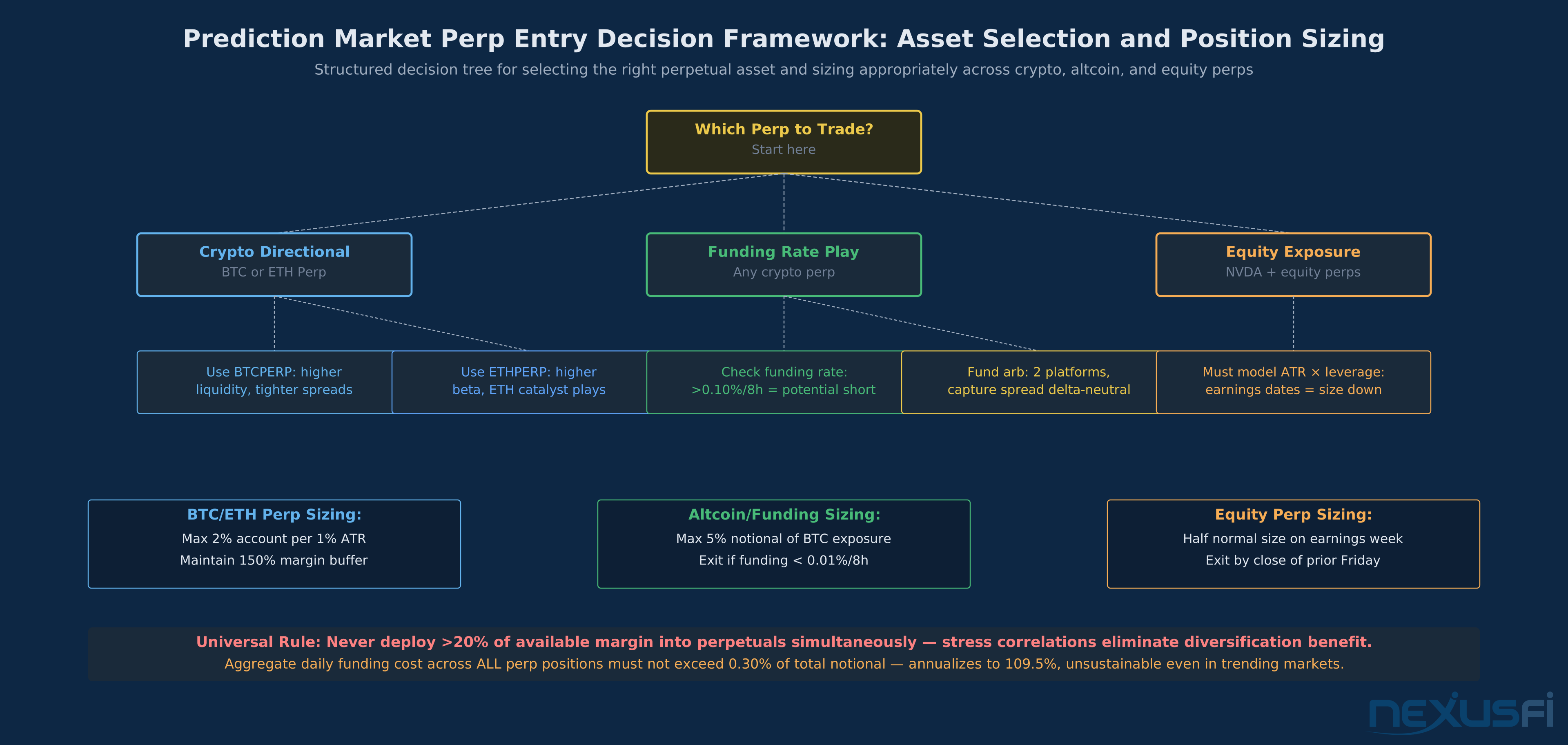
Structured decision framework for selecting and sizing prediction market perpetuals. BTC/ETH perp sizing: maximum 2% account risk per 1% ATR, maintain 150% margin buffer. Altcoin/funding sizing: exit when funding drops below 0.01%/8h. Equity perp sizing: half-size on earnings weeks, exit before the Thursday prior. Universal rule: never deploy more than 20% of available margin into perpetuals simultaneously — stress correlations collapse apparent diversification.
You probably don't need them if:
- Your position sizing is small enough that quarterly roll costs are negligible
- You're a high-frequency scalper — liquidity at these platforms doesn't support HFT approaches yet
- Your compliance framework limits you to the most established regulated venues (CME, Cboe, ICE) and prediction market DCMs don't yet meet that threshold
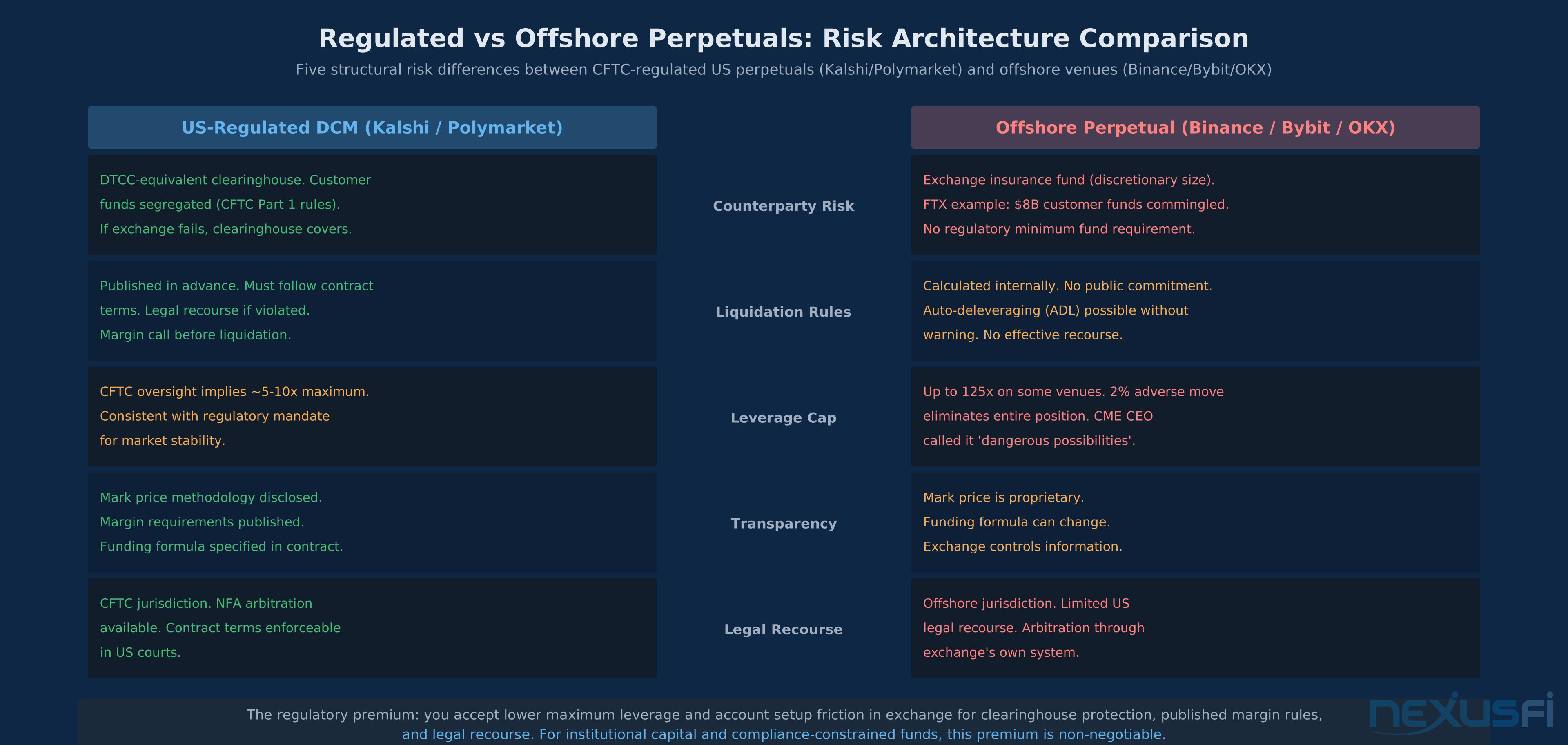
Five structural risk differences between CFTC-regulated perpetuals (Kalshi/Polymarket) and offshore venues. Regulated US perps: clearinghouse counterparty protection with customer fund segregation, published margin rules with legal recourse, and leverage caps (~5-10x). Offshore venues: discretionary insurance funds (FTX example: $8B commingled), proprietary mark prices, and up to 125x leverage. The regulatory premium is lower max leverage in exchange for structural risk elimination.
Account setup. Budget 2-4 weeks for account setup: KYC verification, FCM selection, margin funding.
Start small. New products on new platforms with evolving liquidity. Keep initial trades small enough that slippage is negligible. Learn the execution mechanics, understand the funding rate rhythm, and confirm the liquidation process before committing real capital.
The Bottom Line #
The May 2026 regulatory approvals created more than BTCPERP. They opened the door to a class of products — multi-asset perpetual futures on regulated US prediction market platforms — that didn't exist six months earlier.
Ethereum perps are live. Altcoin perps are in the pipeline. Equity perps on NVIDIA are trading on Polymarket. The competitive response from Kraken, Coinbase, and eventually CME is underway.
For futures traders, the practical implications are concrete: new instruments for directional expression, new sources of carry income through funding rates, new hedging combinations using both binary event contracts and perpetuals on the same platform, and a regulated alternative to the $92.9 trillion offshore perp market.
The mechanics differ by asset. ETH funding diverges from BTC during protocol catalysts. Altcoin funding is more volatile with larger spreads and higher liquidity risk. Equity perps create CFTC-regulated stock exposure that futures traders will find structurally familiar.
The regulatory watershed happened in May 2026. The products are here. The liquidity will follow.
Knowledge Map
Go Deeper
Build on this knowledgeCitations
- — Kalshi Launches Commodities Hub and Teases Perpetual 'Timeless' Contracts -- Iran Nuclear Deal (2026)“Kalshi's positioning seems more like an alternative to options, no? It's a derivative of the spot market prices with many unique price contracts on the same day to take directional views.”
- — CME Goes 24/7 on May 29 -- Crypto Futures, Options, and Event Contracts Will Trade Around the C (2026)“What would be more interesting to me, is when will we be able to trade Kalshi, Polymarket etc in a TradFi trading front end?”
- — Polymarket Launches Perpetual Futures With 10x Leverage on Stocks and Crypto -- Second CFTC-App (2026)“Does this mean everyone in the US can now use Polymarket if the CFTC approved them?”
- — CME to list Sports Event Contracts Dec'25 (2025)“I suspect they believe they have no choice and that if they don't it's only a matter of time before Kalshi and Polymarket come for their markets.”
- — Cboe Launching Bitcoin & Ether Perpetual Futures December 15 (2025)“While they will be financed in USD, they will probably have TradFi margining rules so assuming your broker allows it, you'll be given a chance to meet the margin call rather than auto liquidated.”
- — Gemini Completes Full-Stack CFTC Licensing With DCO Approval -- Prediction Markets and Crypto P (2026)“What's the competitive advantage of using this DCO to the others? Faster clearing? Lower fees? Lower integration costs? Why would a company choose them over the alternatives?”
- — A critical view at "Prediction Markets" (2026)“Prediction markets are of interest even if I do not gamble on any topic. I rather have a look at what others predict, specifically on topics which are related to economic or to financial products.”
- — CFTC Sues Arizona, Connecticut, and Illinois in First Federal Lawsuits Over Prediction Market J (2026)“I just find it weird that the Trump government is suing states for creating legislation to protect their own residents.”
- — CME to list Sports Event Contracts Dec'25 (2025)“Would people rather trade interest rate contracts as binary outcomes rather than traditional futures? Probably always a need for Index, Gold and Crude futures but what about contracts like ZQ/30-Day Fed Funds.”
- — CME Group CEO Raises Concerns About Crypto Perpetual Futures -- Value The Markets
- — Kalshi Launches Ethereum Perpetual Futures Trading for US Users -- NFTenex
- — Polymarket Unveils Perpetual Futures Trading for US Markets in 2026 -- Bitcoin.com