



Commitment of Traders (COT) Report: The Complete Guide to Reading Futures Positioning Data
Overview #
Every Friday at 3:30 PM ET, the CFTC publishes one of the most valuable free datasets in futures trading: the Commitment of Traders (COT) report. This weekly snapshot shows exactly how different categories of market participants — producers, hedge funds, swap dealers, and small speculators — are positioned across hundreds of futures contracts.
The challenge is that most traders misuse it. They look at raw contract numbers that mean nothing without historical context. They use the wrong report type for their market. They treat extreme positioning as an automatic reversal signal and get steamrolled by trends that persist for weeks. They ignore the critical 3-day lag in the data.
Done correctly, COT analysis answers the most important question in futures trading: who is vulnerable to being squeezed, and who has conviction on their side? That's a risk calibration tool, not a timing signal.
[IMAGE:cot_report_structure.svg:Three CFTC COT Report Types: Legacy, Disaggregated, TFF compared — each serves a different analytical purpose for different markets]
The Three CFTC Report Types #
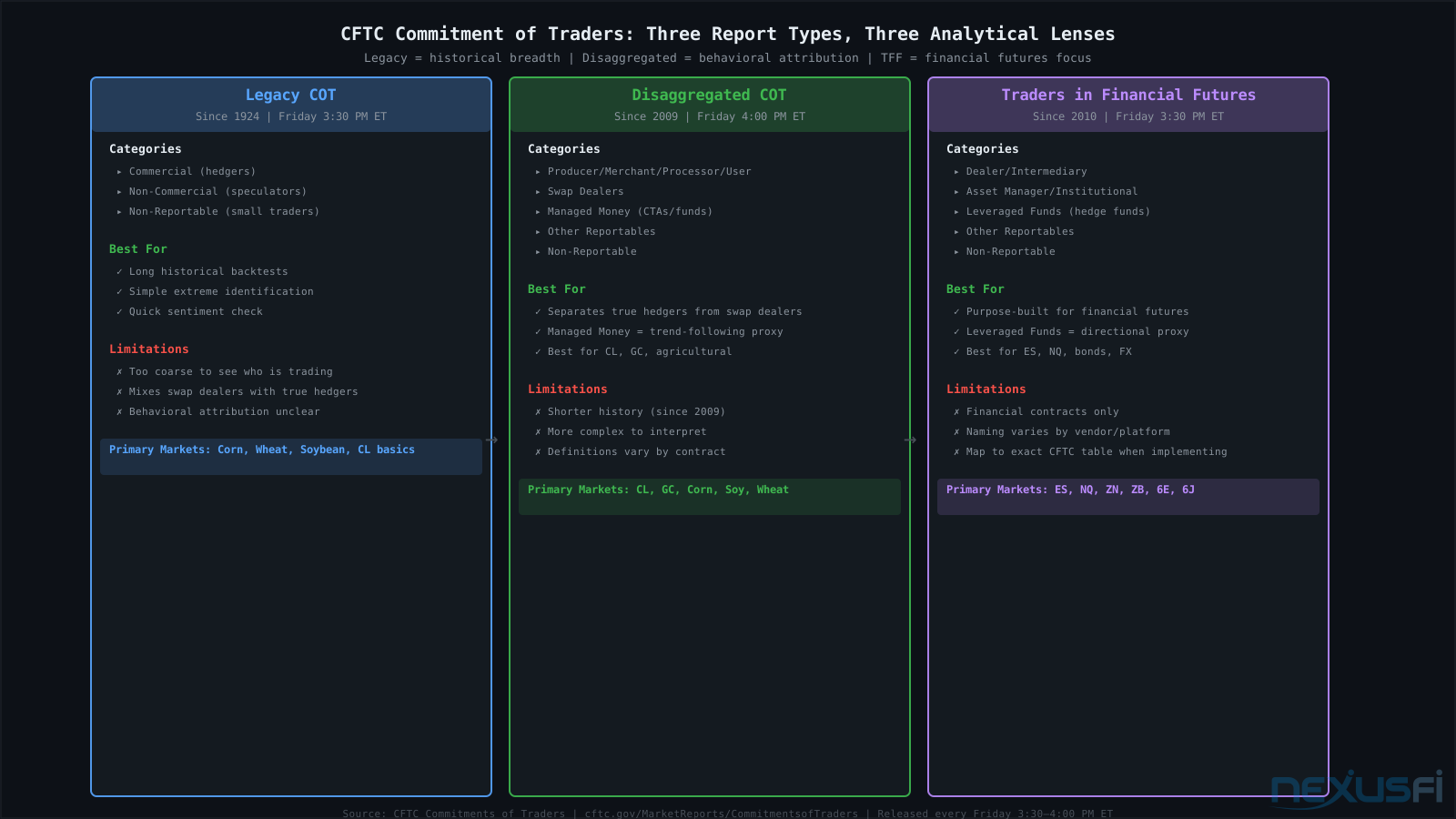
The CFTC publishes three distinct COT reports, each designed for different markets and analytical purposes. Using the wrong report for your market is the most common COT mistake.
Legacy COT
The original and most widely known format, published since 1924 and updated weekly. The Legacy COT divides the market into three broad buckets: Commercial (traders who use futures to hedge an underlying business exposure), Non-Commercial (large speculators who trade for profit), and Non-Reportable (small traders below CFTC reporting thresholds, calculated by subtraction).
The Legacy report's strength is its long historical record — you can backtest signals decades into the past. Its weakness is coarseness: the "Commercial" category lumps together true hedgers (farmers, oil producers) with swap dealers (banks facilitating institutional hedging), whose behaviors can diverge much.
Disaggregated COT
Introduced by the CFTC in 2009, the Disaggregated report breaks the "Commercial" category into four sub-groups, giving traders a much cleaner view of who is doing what:
- Producer/Merchant/Processor/User: True physical market hedgers -- oil companies, farmers, grain processors. Their positions reflect operational hedging needs, not directional speculation.
- Swap Dealers: Banks and other financial intermediaries who help commodity exposure for institutional clients. Their positions often represent "pass-through" hedging rather than proprietary views.
- Managed Money: Commodity Trading Advisors (CTAs), Commodity Pool Operators (CPOs), and hedge funds with registered positions. This is the category most closely associated with trend-following speculation -- when Managed Money builds extreme positions, markets often become vulnerable.
- Other Reportables: Floor traders, spread positions, and participants who don't fit the other categories cleanly.
The Disaggregated report is the standard for serious COT analysis on CL (crude oil), GC (gold), and agricultural futures. As @Fat Tails noted in the NexusFi Elite Circle thread on COT methodology, the disaggregated format lets you distinguish whether it's the producers or the swap dealers driving commercial positioning — two completely different signals.
Traders in Financial Futures (TFF)
The TFF report, introduced in 2010, applies Disaggregated-style categorization specifically to financial futures: equity indices (ES, NQ), Treasury products (ZN, ZB), currencies (6E, 6J, 6B), and VIX. The key category for ES and NQ traders is Leveraged Funds — hedge funds and CTAs with directional bets on equity direction.
[IMAGE:cot_es_managed_money_positioning.svg:ES Futures Managed Money net positioning vs price — the complete signal sequence showing peak, stalling additions, and correction]
Understanding What Net Positioning Means #
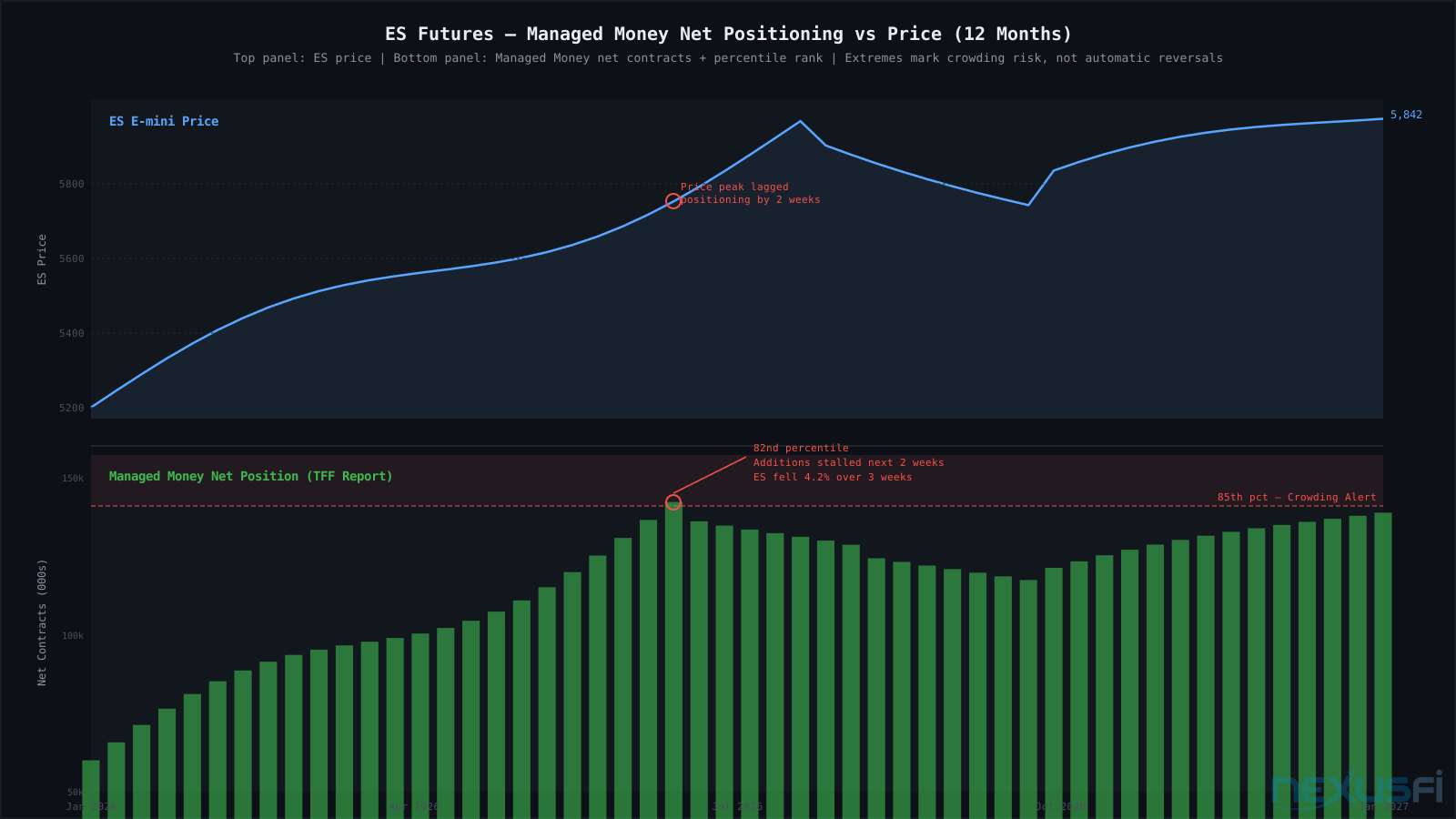
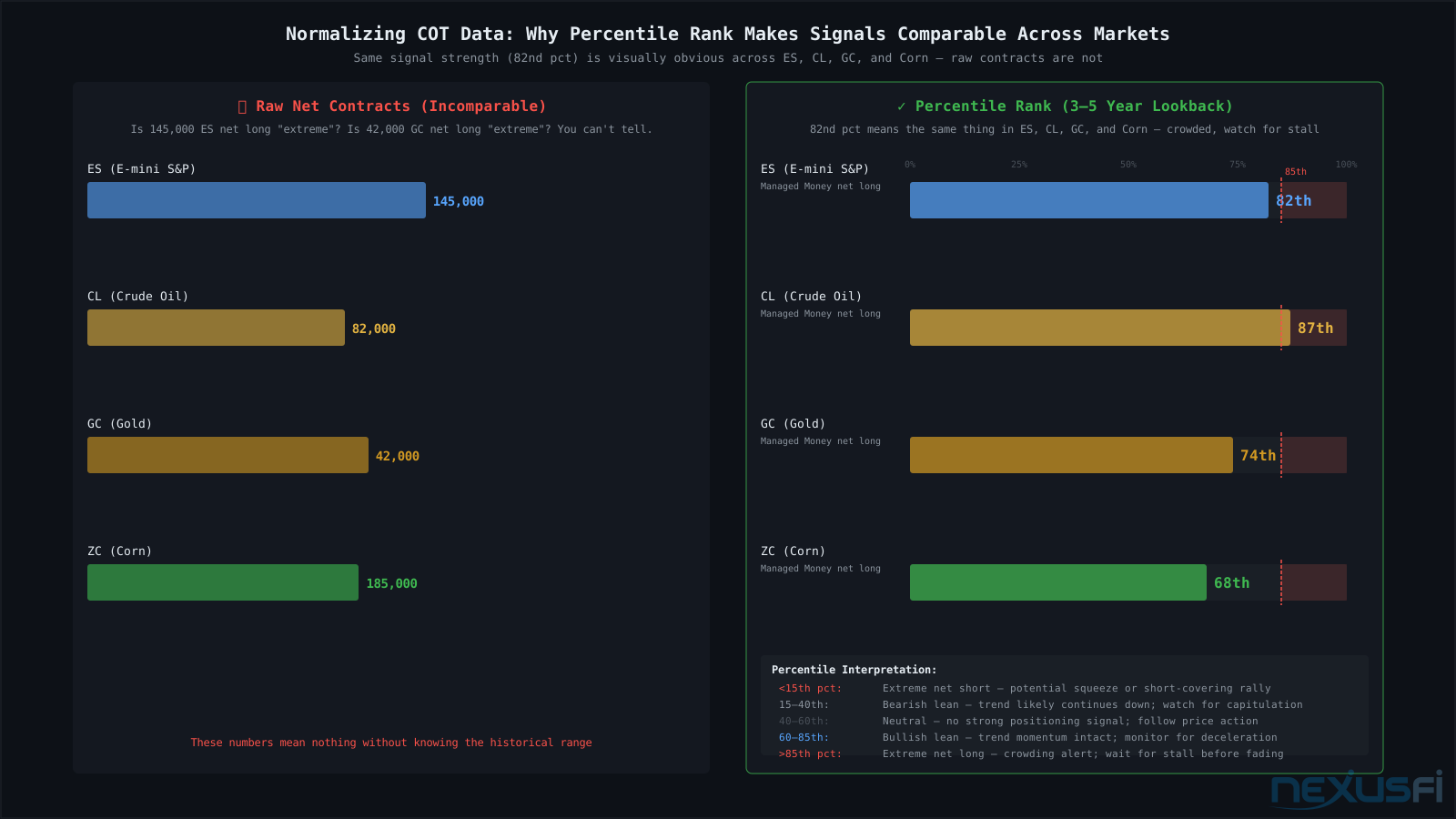
Every COT category reports both long and short contracts. The analytically useful number is the net position: longs minus shorts. A Managed Money net long of +145,000 contracts in ES means those traders hold 145,000 more long contracts than short contracts — they are positioned for higher prices as a group.
But that raw number tells you almost nothing without context. The solution is normalization. Professional COT analysts use two methods:
- Percentile rank: Where does the current net position rank among all weekly readings over the past 3-5 years? A 90th percentile reading means the current positioning is more extreme than 90% of historical readings. This is the most commonly used metric and makes signals directly comparable across markets.
- Net percentage of open interest: Net position divided by total open interest. This adjusts for markets where OI has grown much over time.
Always normalize before drawing conclusions. As @pad6 documented in NexusFi, "The CFTC publishes tons of data regarding the positioning of the various groups, but without historical context those numbers are meaningless." Percentile rank removes that ambiguity instantly.
[IMAGE:cot_percentile_normalization.svg:Percentile rank normalization — making 82nd pct in ES directly comparable to 87th pct in CL and 68th pct in Corn on the same scale]
The Four COT Signal Types #
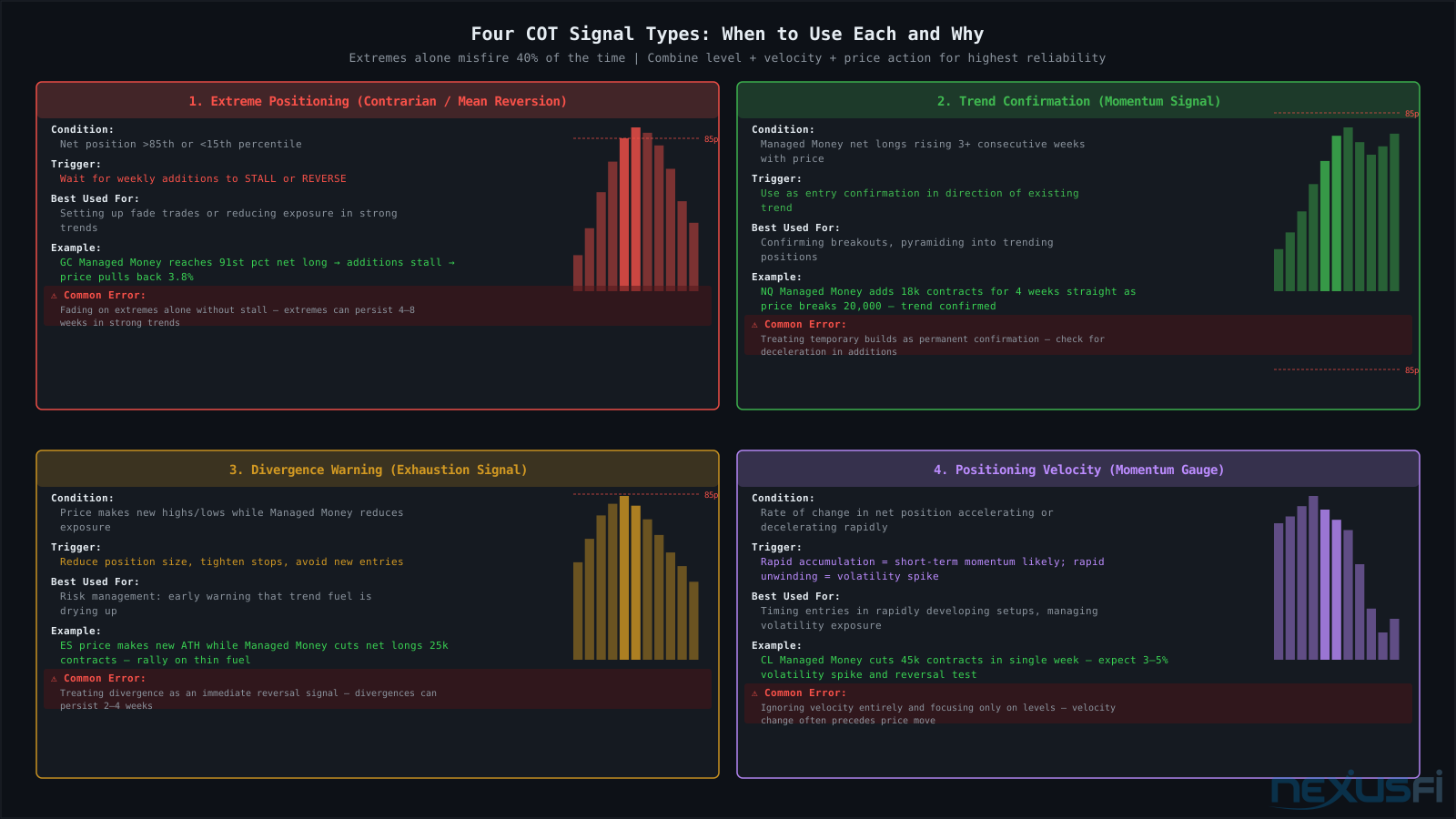
COT data produces four analytically distinct signals depending on the regime and what the data is showing. Using the wrong signal type for the current context is a common source of losses.
1. Extreme Positioning (Contrarian / Mean Reversion)
When Managed Money or Leveraged Funds reach historically rare positioning — above the 85th percentile net long or below the 15th percentile net long — the market is crowded. The critical error traders make is treating extreme positioning as an automatic, immediate reversal signal. It isn't. The actual reversal signal requires two additional conditions:
- Additions are stalling or reversing: the weekly change in net position is no longer adding to the extreme
- Price action is showing exhaustion: failed breakouts, lower highs in an uptrend, deteriorating breadth
Extremes can persist 4-8 weeks in strong trending markets. Using just the extreme level as a signal produces false signals approximately 40% of the time. Require all three conditions — extreme level, stalling additions, and price exhaustion — before fading.
2. Trend Confirmation (Momentum Signal)
When Managed Money is building net long positions over 3 or more consecutive weeks and price is confirming with higher prices, COT is providing trend confirmation. This is not a contrary signal — it's momentum validation. Trend confirmation signals are most useful for adding to existing positions during consolidations and for overriding hesitation to stay with a strong trend.
3. Divergence Warning (Exhaustion Signal)
When price makes new highs or lows but Managed Money is reducing exposure, the market is advancing on diminishing fuel. The correct response to a divergence signal is risk management — tightening stops, reducing position size, avoiding new entries — rather than initiating a counter-trend position. Divergences typically precede reversals by 2-4 weeks and are not precise timing signals.
4. Positioning Velocity (Momentum Gauge)
The rate of change in net positioning — how many contracts per week are being added or removed — often matters more than the absolute level. Velocity signals are most actionable when they diverge from what the level suggests. A market at the 60th percentile with rapid accumulation has more near-term momentum than a market at the 85th percentile with stalling additions.
[IMAGE:cot_four_signal_types.svg:Four COT signal types — extreme positioning, trend confirmation, divergence warning, and velocity — with mini-charts showing each regime]
Contract-Specific Application #
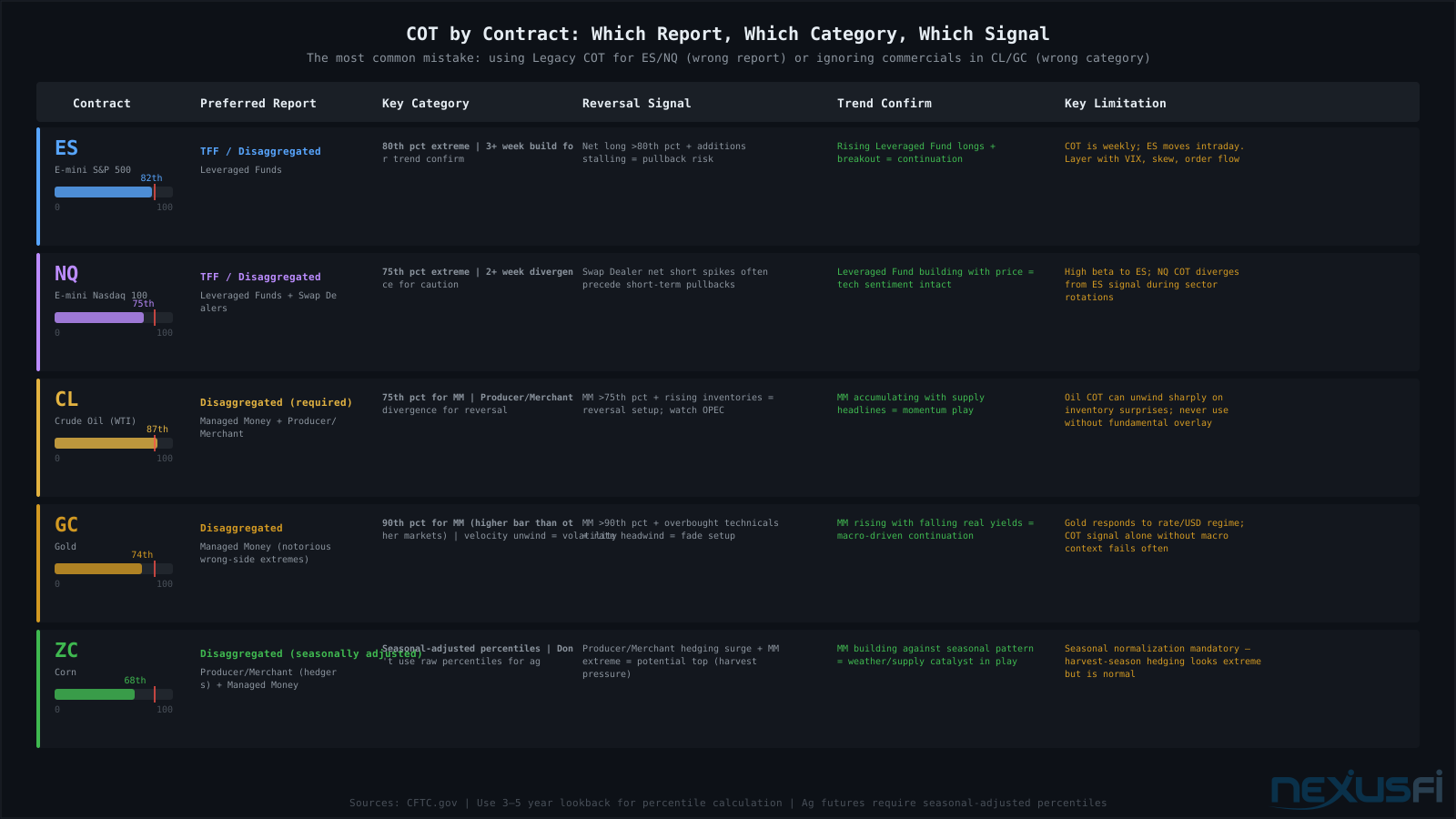
ES (E-mini S&P 500)
For ES, the TFF report's Leveraged Funds category is the primary signal. Key thresholds: net long above the 80th percentile with stalling additions signals elevated reversal risk; 3+ consecutive weeks of building net longs into a breakout confirm trend continuation; price at new high with Leveraged Funds reducing net longs signals divergence — reduce exposure.
NQ (E-mini Nasdaq 100)
NQ COT interpretation mirrors ES but with an important distinction: NQ has higher beta to technology sector sentiment and responds more sharply to Swap Dealer positioning changes. During periods when value stocks outperform growth, institutional managers reduce NQ exposure even while ES positioning remains elevated — creating a useful relative positioning divergence.
CL (Crude Oil)
Crude oil's COT is the most complex because the market has multiple well-defined participant types with distinct behavior patterns. The Disaggregated report is mandatory.
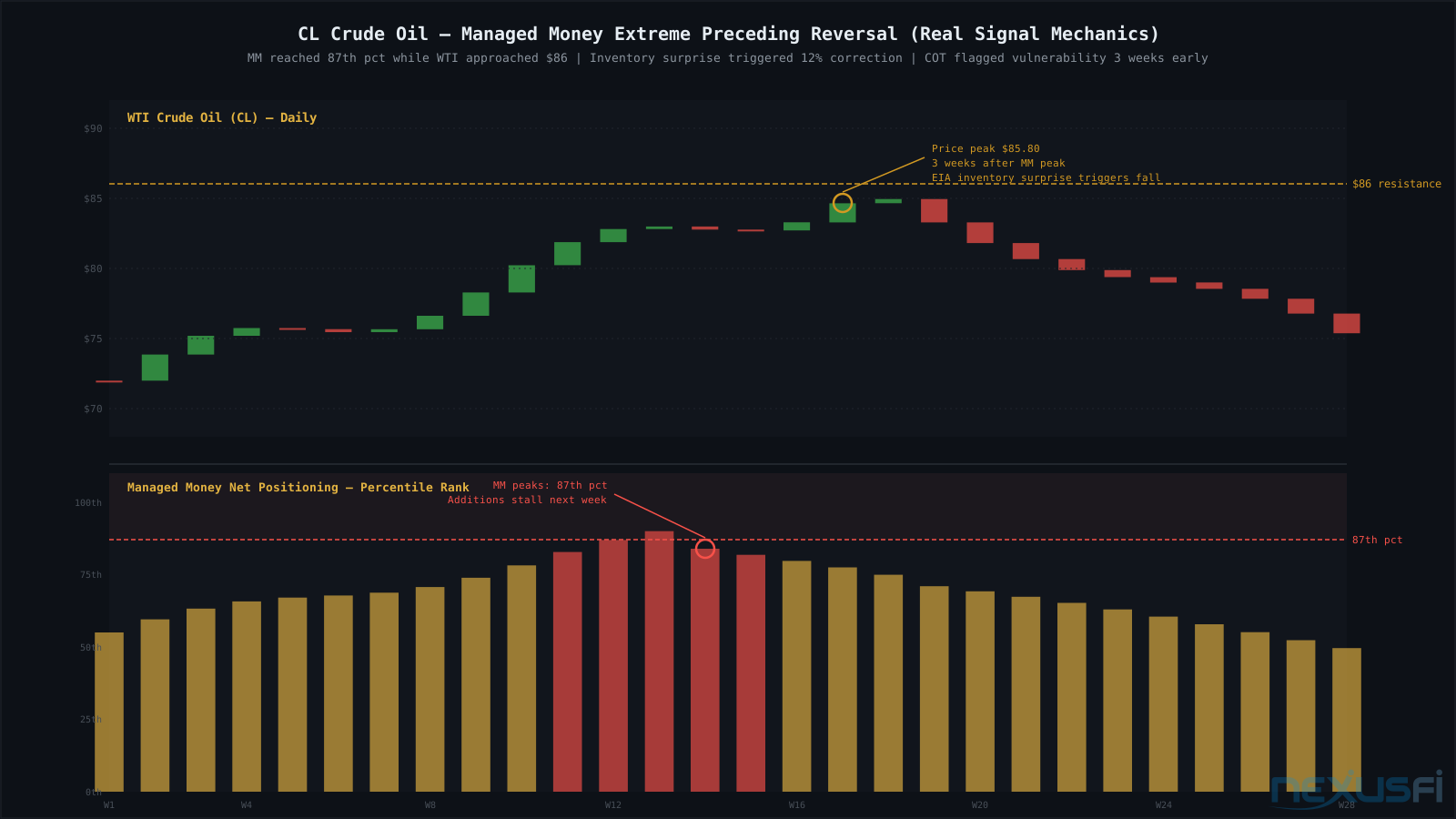
For CL: Managed Money above the 75th percentile combined with building EIA inventory data is the highest-probability reversal setup. Oil COT extremes can unwind violently — position sizing during extreme COT readings should reflect elevated volatility probability.
GC (Gold)
Gold is notorious for Managed Money's tendency to build extreme net long positions right before meaningful corrections. The effective threshold for an extreme signal in GC is the 90th percentile (versus 85th for ES, 75th for CL), because gold's structural narrative creates sustained trends where speculators accumulate large positions over extended periods.
As @ron99 documented in his NexusFi analysis of the Disaggregated COT gold report: the weekly report lets you see when producers are hedging production versus when Managed Money is speculating on direction — two completely different signals that the Legacy report blends into noise.
Agricultural Futures (Corn, Soybeans, Wheat)
Seasonal patterns make agricultural COT analysis at the core different. Use same-month-only lookbacks when calculating percentile ranks for agricultural contracts: compare August positions only to prior August readings. Pre-harvest hedging in August-September makes Producer/Merchant short positions look extreme by annual percentile calculation, but they're structurally normal.
[IMAGE:cot_contract_matrix.svg:COT by contract — preferred report, key category, signal thresholds for ES, NQ, CL, GC, and Corn]
Practical Weekly Workflow #
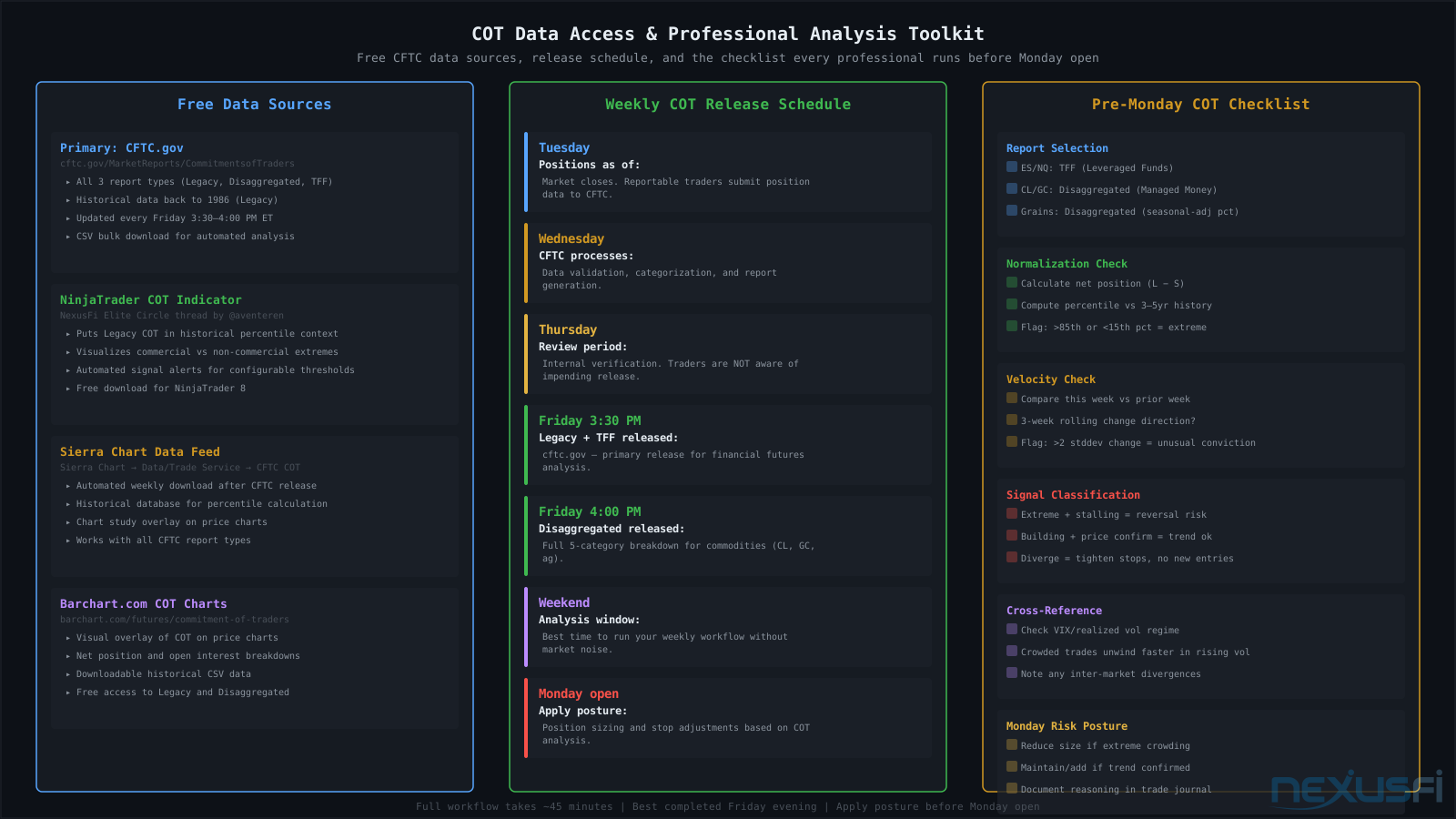
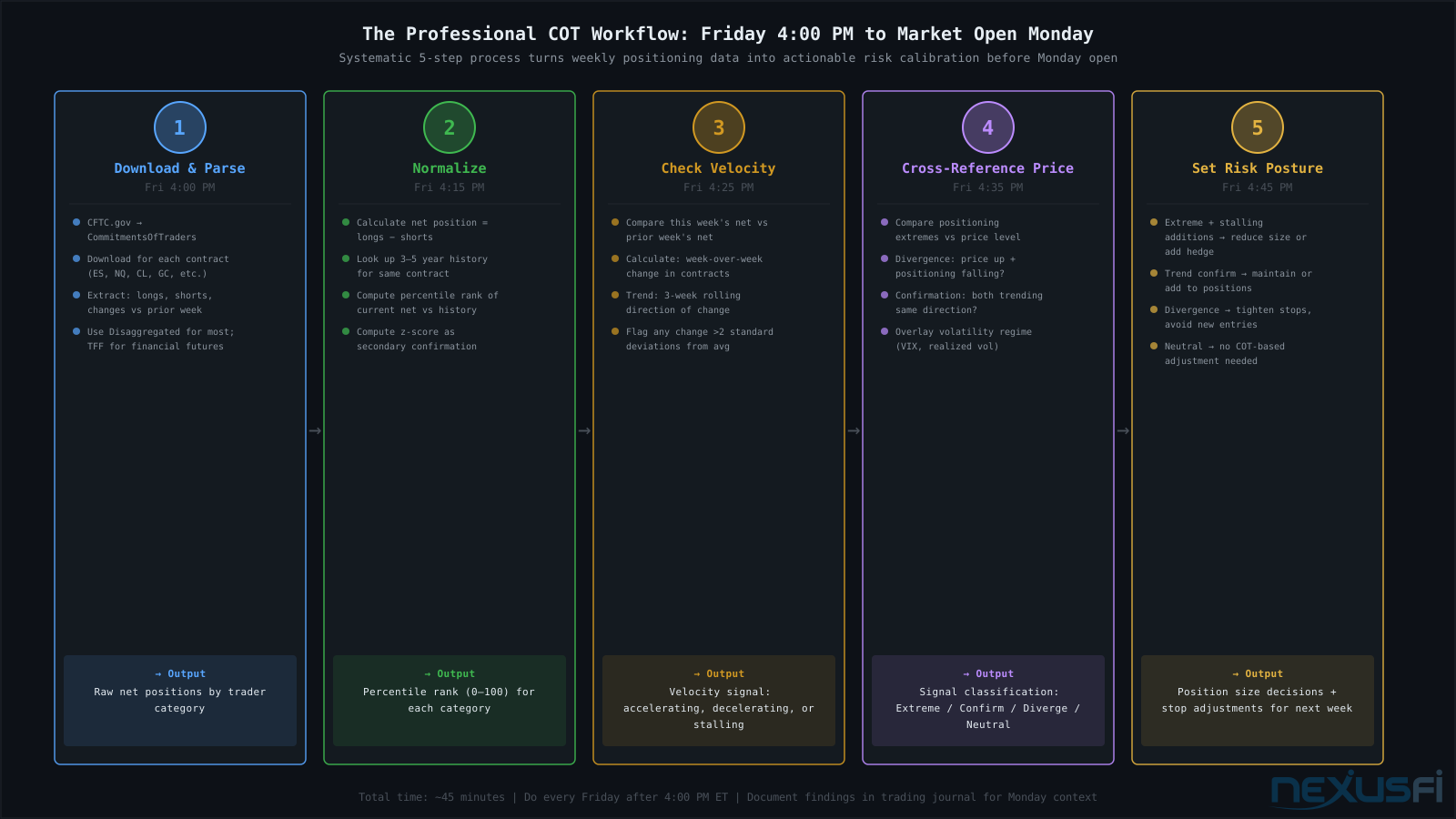
Effective COT analysis requires a systematic weekly process. The complete workflow runs from the Friday 3:30-4:00 PM data release through Monday morning preparation.
Step 1: Download and Parse (Friday 4:00 PM)
Access the CFTC reports at cftc.gov/MarketReports/CommitmentsofTraders. Extract three numbers per contract: the current net position (longs minus shorts), the prior week's net position, and the 52-week history to calculate percentile rank. Many platforms (NinjaTrader, Sierra Chart, TradeStation) have COT indicators that automate this. The NexusFi tool by @aventeren puts Legacy COT data into historical percentile context automatically.
Step 2: Normalize (Friday 4:15 PM)
Calculate the percentile rank of the current net position versus the past 3-5 years of weekly data. Express as a number from 0 to 100. For agricultural contracts, use same-month lookbacks only.
Step 3: Check Velocity (Friday 4:25 PM)
Calculate week-over-week change. How does this week's change compare to the average weekly change? Flag any change exceeding 2 standard deviations — this indicates unusual conviction and often precedes volatility expansion.
Step 4: Cross-Reference Price Action (Friday 4:35 PM)
Compare positioning signals against price behavior. Is there confirmation or divergence? Check the volatility regime — crowded trades unwind faster in rising-volatility environments.
Step 5: Set Risk Posture (Friday 4:45 PM)
Based on the signal type identified, adjust position sizing and stop parameters for the coming week. Extreme + stalling means reduced size or added hedges. Trend confirmation means maintaining or adding. Divergence means tightened stops. Neutral means COT provides no information — rely on other frameworks.
[IMAGE:cot_weekly_workflow.svg:Five-step weekly COT workflow from Friday data release through Monday market open]
[IMAGE:cot_cl_signal_example.svg:CL Crude Oil Managed Money extreme at 87th percentile preceding 12% correction — COT flagged vulnerability 3 weeks before the EIA inventory trigger]
Common Mistakes and How to Avoid Them #
Using Raw Numbers Instead of Percentiles
A Managed Money net long of 145,000 contracts in ES means nothing until you know whether that's the 50th percentile or the 90th percentile. Always normalize. This is the single most common error among traders first encountering COT data.
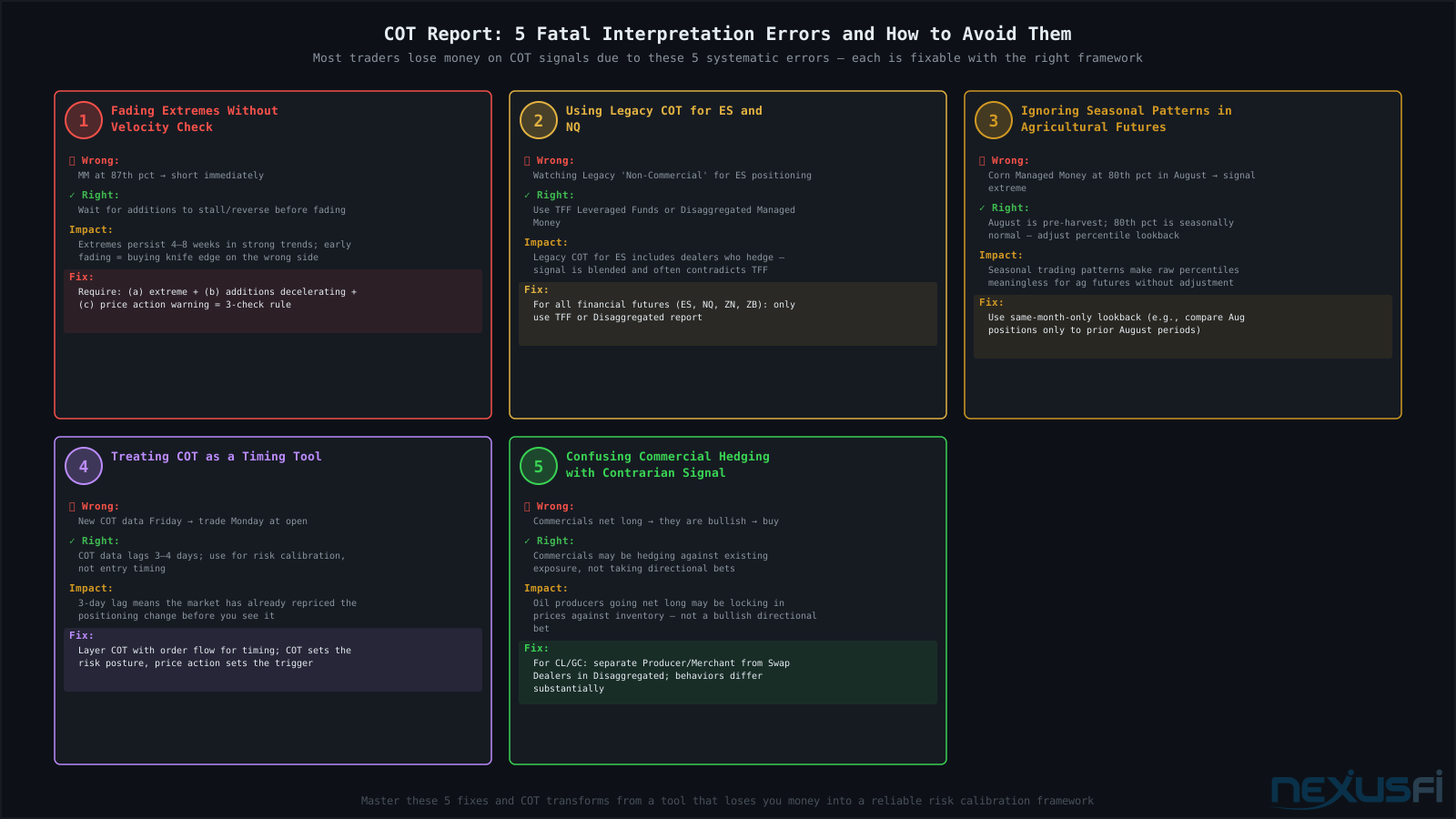
Fading Extremes Without Velocity Confirmation
The second most expensive error. Strong trends produce persistent extremes — Managed Money can build net long positions above the 85th percentile for 8-12 weeks in powerful trending markets. The reversal setup requires the additional confirmation that additions are stalling or reversing.
Using Legacy COT for Financial Futures
Legacy COT blends swap dealer hedging flows with Leveraged Fund speculative flows in the "Non-Commercial" category. For ES and NQ, these flows can move in opposite directions and the blended signal becomes contradictory. Always use TFF or Disaggregated for financial futures.
Ignoring Seasonal Patterns in Agricultural Markets
Pre-harvest hedging makes August-September commercial short positions in corn look extreme by annual percentile calculation, but they're structurally normal. Use same-month-only lookbacks for agricultural COT analysis.
Treating COT as an Entry Timing Tool
The 3-4 day lag from Tuesday positions to Friday release means the market has already partially repriced the information by the time you see it. COT is a risk calibration tool, not a precise timing mechanism. Use it to set your risk posture; use price action, volume, and order flow for actual entry timing.
[IMAGE:cot_five_fatal_errors.svg:Five fatal COT interpretation errors and how to avoid each — from fading without velocity confirmation to confusing commercial hedging structure]
Data Access and Tools #
The CFTC publishes all COT reports for free at cftc.gov/MarketReports/CommitmentsofTraders. Historical data in machine-readable format is available going back decades for Legacy reports, to 2009 for Disaggregated.
Several NexusFi members have developed platform indicators for systematic COT visualization. The @aventeren NinjaTrader indicator documented in the Elite Circle puts Legacy COT into percentile rank context automatically. Sierra Chart and TradeStation both have COT data feeds. Third-party tools like Barchart and Commitmentoftraders.org allow visual overlay of COT on price charts.
[IMAGE:cot_data_tools_checklist.svg:COT data sources, weekly release schedule, and the pre-Monday checklist — all primary data is free at CFTC.gov]
What COT Cannot Tell You #
COT is a positioning report, not a price prediction model. It cannot tell you when a reversal will happen — only that the conditions for vulnerability exist. It cannot tell you whether today's fundamental narrative will continue or reverse. It has no ability to predict the specific trigger that triggers a positioning unwind.
COT works best as one layer in a multi-factor framework: COT identifies the setup (crowded or not, confirming or diverging); fundamentals identify the trigger environment; price action and volume provide entry and exit timing; and position sizing manages the inevitable cases where the setup doesn't develop as expected.
The question COT answers most reliably is not "which direction?" but "how much risk should I carry given current positioning?" Traders who rely on COT as a standalone signal systematically underperform compared to those who use it as a risk calibration layer alongside their primary methodology.
Knowledge Map
Prerequisites
Understand these firstGo Deeper
Build on this knowledgeReferences This Article
Articles that build on this topicCitations
- — Commitment of traders (2010) 👍 5“Commitment of Trader is extremely useful, as it shows the market positions of different groups of traders. You want to know what the other traders are doing and the COT gives you exactly that information.”
- — Why are S&P and EMini S&P COT reports so different? (2011) 👍 4“I suggest to use the Traders in Financial Futures Report, which breaks down the traders into the following categories: Dealer / Intermediary, Asset Manager / Institutional, Leveraged Funds -- the disaggregation that actually matters for ES and NQ.”
- — COT Report? (2022) 👍 2“The data are published weekly with a few days lag, any trades premised on the COT data alone will likely take months to play out. But those can be great trades. The basic idea is that if aggregate non-commercial traders are very heavily positioned one way, they are eventually forced to close those trades.”
- — Diversified Option Selling Portfolio (2017) 👍 10“Commercials do not have to liquidate positions when they move against them. They can give or take delivery when the future expires. They hold their largest position at the price low and systematically buy into falling prices.”
- — Commitment of Traders NinjaTrader Tools and Discussion (2014) 👍 4“This indicator puts the legacy COT data into perspective by looking at a user defined look back period to see where the current COT positioning stands relative to historical norms -- percentile rank visualization for ES, NQ, and commodity markets.”
- — Gold and the DCOT Report (2011) 👍 6“The weekly Disaggregated Futures-Only Commitments of Traders (DCOT) report lets you see when producers are hedging production versus when Managed Money is speculating on direction -- two completely different signals in gold.”
- — CoT Reports (2020) 👍 1“The CFTC publishes tons of data regarding the positioning of the various groups, but without historical context those numbers are meaningless. Normalize to percentile rank before drawing any conclusions about extremes.”
- — How do you make use of COT to its best ability? (2025) 👍 4“If Nasdaq futures are brimming with speculative longs, which he'd see on Fridays in a basic time series chart of COT data, a forced unwind in the opposite direction could be pronounced -- the crowding vulnerability is real and measurable.”
- — Why do large traders and commercial hedge traders seem to go opposite directions (2026)“Large specs buy as it rises and short as it falls. That naturally puts them on the opposite side of the commercials. Since every futures contract has a long and a short, the net positions across all three COT categories must sum to zero.”
- — Commitments of Traders Reports (2024)