



Alternative Data for Futures Traders: Satellite, Credit Card Spend, and the Edge Beyond Traditional Feeds
Overview #
Most futures traders have access to the same data: price, volume, open interest, COT reports, and economic releases. Alternative data sits outside this standard feed. It comes from physical-world observations, digital exhaust from commercial activity, and derived analytics that translate raw signals into tradable intelligence.
Done right, it gives you a window into supply chains, consumer behavior, and corporate decision-making before that information shows up in official statistics or price action. Done wrong, it generates expensive noise that backtests beautifully and fails live.
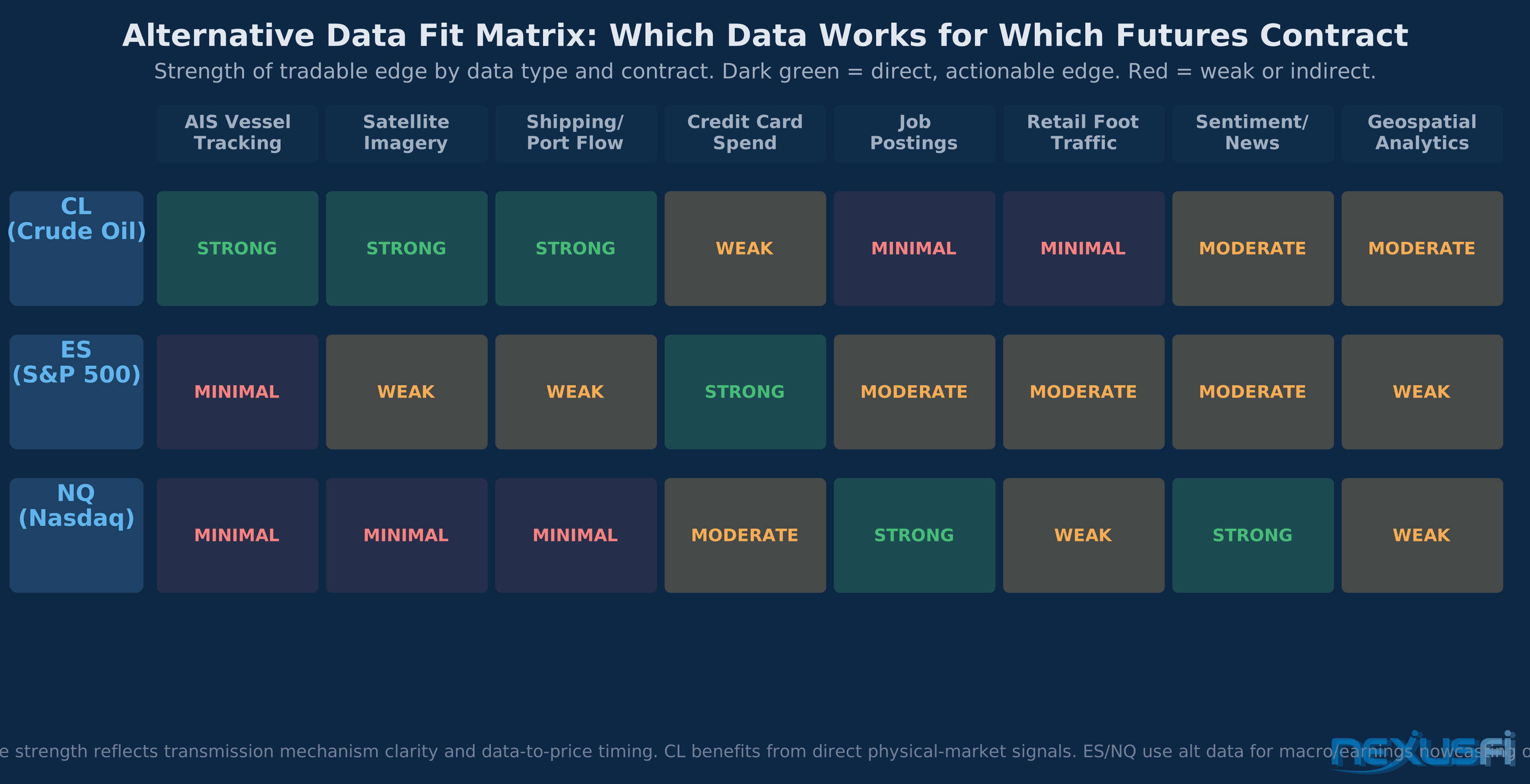
This guide separates the signal from the marketing. Three contracts get concrete treatment — CL (crude oil), ES (S&P 500 futures), and NQ (Nasdaq-100 futures) — because each interacts with alternative data in at the core different ways. CL is a physical commodity with direct ties to supply chain flows and storage levels. ES and NQ are financial instruments priced on growth and inflation expectations, where alt data works best as a macro confirmation overlay.
What Alternative Data Actually Is (and Isn't) #
Alternative data is any information sourced outside traditional financial data feeds that can generate an informational advantage over consensus. The alternative is relative — what one fund treats as alt data another already prices.
Four practical categories:
Physical-world observation data. Satellite imagery of crude oil storage tanks, AIS vessel transponder signals, port congestion indices, refinery activity proxies. These measure real-world events directly, with minimal interpretation required.
Digital exhaust data. Credit card transaction aggregates, mobile location data aggregated to retail foot traffic, job posting databases, web scraping of pricing and inventory signals. Derived from commercial activity happening in real time.
Derived analytics. Vendor-processed signals built on top of the above: tanker flow estimates from AIS, inventory forecasts from satellite, spending momentum indices from card data. Requires trusting vendor methodology.
Sentiment and text data. NLP-processed news feeds, earnings call tone analysis, social media sentiment indices. Most removed from fundamental economic activity; highest signal-to-noise challenge.
Alternative data only creates edge when three conditions hold simultaneously: (1) the data arrives before consensus reprices, (2) you can translate it into a specific economic mechanism, and (3) the signal survives costs and execution friction. Most alt-data claims fail at least one of these tests.
What alt data cannot do: predict central bank decisions, override macro regime shifts, or substitute for understanding position sizing and risk management. A bullish AIS signal for CL does not help you if a Fed surprise tanks the dollar and drags everything lower.
CL (Crude Oil): The Strongest Alt-Data Application #
CL is where alternative data earns its reputation. Crude oil pricing is directly tied to physical supply and demand — how much crude is flowing where, how full storage hubs are, and whether refinery capacity is being used. Unlike equity index futures, the causal chain from alt data to price is short and credible.
A CL trader who sees tanker arrivals rising at Cushing before Thursday's EIA report has an informational advantage over someone reading only last Wednesday's inventory number. The market moves on inventory surprises — what the EIA reports versus what the Street expects. Alt data narrows that uncertainty.
Three data categories dominate for CL:
AIS Vessel Tracking and Shipping Flows #
The Automatic Identification System (AIS) requires all commercial vessels above a threshold size to broadcast position data in real time. Vendors aggregate this signal into structured analytics covering routes, destinations, estimated arrival times, and cargo type classification.
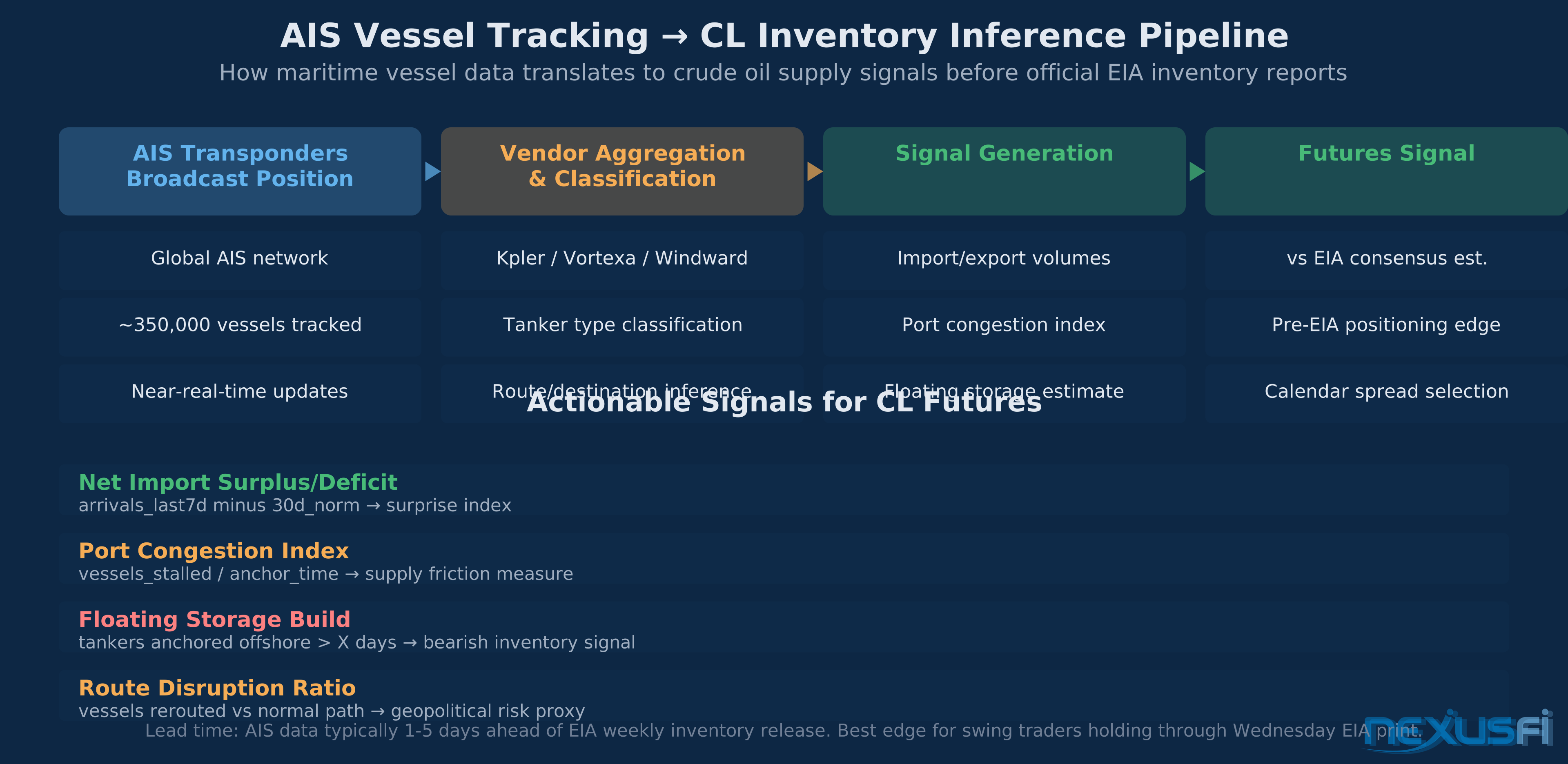
Specific signals for CL traders:
Net import surplus/deficit. Compare crude arrivals at key US import terminals over the past 7 days to the rolling 30-day norm. Sustained deficit suggests drawdown ahead of EIA; surplus predicts build. The formula: import_flow_surprise = (arrivals_last_7d / 7) - (arrivals_last_30d / 30).
Port congestion index. Track vessels at anchor near major ports. Elevated congestion means crude that is nominally in transit is actually delayed — effective supply tightness that won't show in EIA until vessels unload.
Floating storage builds. Supertankers parked offshore with no announced destination signal excess supply that isn't making it to shore. This is one of the clearest bearish signals available from vessel data.
Route disruption ratio. When a significant percentage of vessels take unexpected routes — around Cape of Good Hope instead of Suez, or avoiding specific straits — it signals supply disruption and likely tighter near-term availability.
Lead time: AIS data typically runs 1-5 days ahead of the Wednesday EIA print. For swing traders holding CL through the inventory report, this signal shapes position sizing and directional bias before the event.
Vessel data doesn't care about tax treatment, but it does care about where oil is going. The advantage is physical: crude in the water is quantifiable before it hits the EIA books.
Key providers: Kpler, Vortexa, Windward, MarineTraffic (limited free tier), Spire Maritime.
Satellite Imagery for Storage and Refinery Monitoring #

Floating roof oil storage tanks change shadow profiles as levels change. Satellite imagery vendors have automated this physics: as tank levels rise, the shadow cast by the floating roof shortens on the inside. Machine learning models trained on this pattern produce weekly inventory estimates for major storage hubs like Cushing, Oklahoma.
Practical applications:
Tank farm inventory estimates. Before EIA data exists, satellite estimates for Cushing can validate or challenge consensus inventory forecasts. A satellite showing Cushing filling fast when Street is modeling a draw sets up a contrarian CL short ahead of EIA.
Refinery utilization proxies. Thermal imaging, visible activity, and throughput indicators can suggest refinery ramp-up or shutdown before official PADD utilization data arrives.
Geopolitical disruption detection. Satellite can confirm or deny claims of outages, explosions, or disruptions at facilities in high-risk regions. Breaking news often moves CL on rumors — satellite can verify within 12-24 hours.
Key providers: Orbital Insight, SpaceKnow, Planet Labs, Descartes Labs, BlackSky.
Cost: typically $25K-$250K+ per year. Most useful as a complement to AIS rather than standalone.
Cross-reference satellite estimates against Kpler or Vortexa AIS data before trading. Two independent signals pointing the same direction on Cushing levels — both showing unexpected draw — materially increases conviction before EIA Wednesday.
ES (S&P 500): Alt Data as Macro Overlay #
ES doesn't have a pipeline. It doesn't sit in a tank. The S&P 500 prices earnings expectations, growth trajectory, inflation risk, and interest rate implications — none of which are directly measurable by satellite or vessel tracker.
Alternative data for ES works best when it helps you nowcast economic variables before official statistics arrive, with the explicit goal of anticipating how those variables will affect rates expectations, earnings revisions, and risk appetite.
Credit Card Transaction Data #
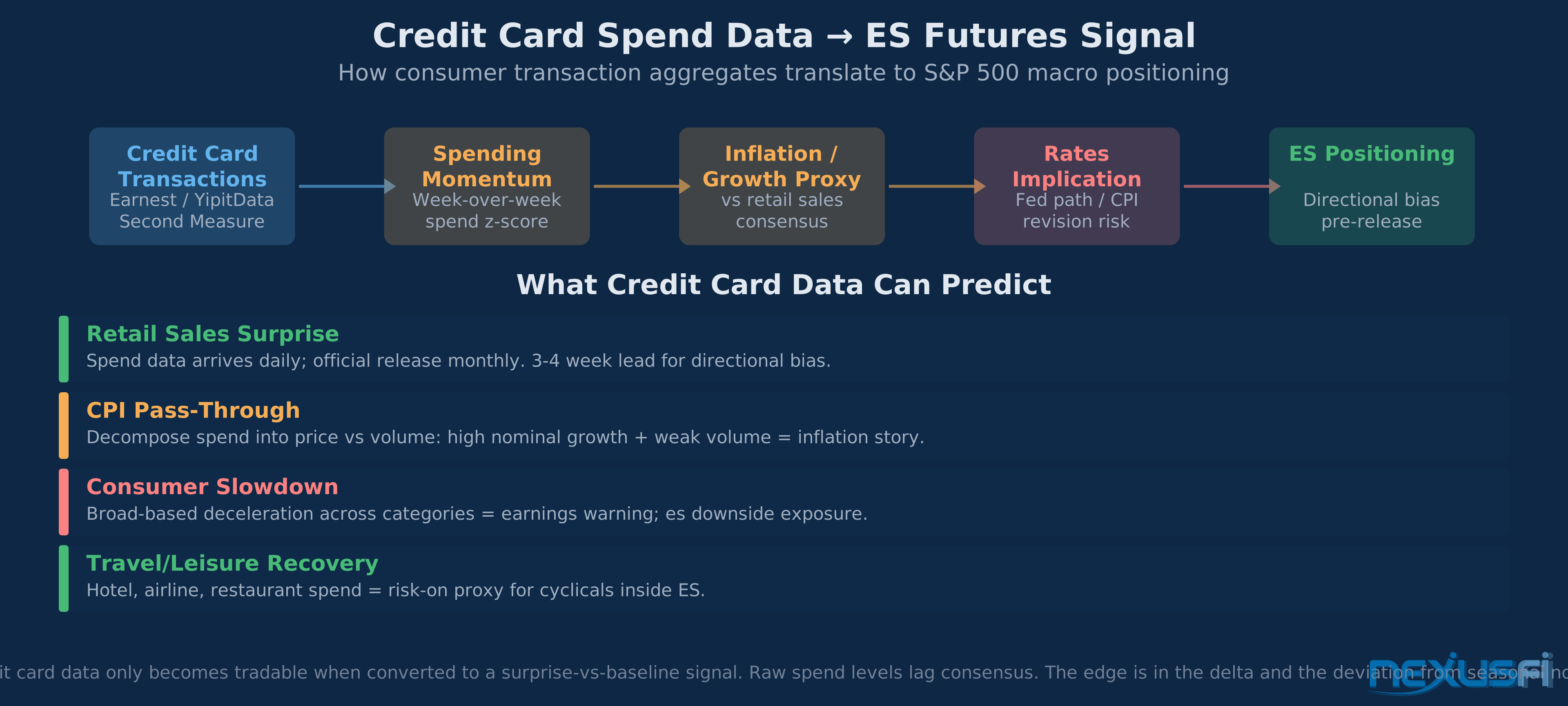
Transaction-level data aggregated across millions of cardholders gives near-real-time visibility into consumer spending patterns. Vendors normalize this by merchant category, geography, and income cohort to produce spending momentum indices.
What it can predict for ES:
Retail sales surprises. Official retail sales reports lag by 2-3 weeks. Credit card data arrives daily. A sustained deceleration in card spend suggests a miss; acceleration suggests beat. ES responds strongly to retail surprises that change the near-term growth narrative.
CPI pass-through detection. Decompose spend into volume and price: if nominal spend is rising but unit volumes are falling, inflation is squeezing real demand. This sets up a Fed-hawkish narrative that pressures ES multiples.
Consumer slowdown early warning. Broad-based spending deceleration across categories — not just one sector — is the most actionable signal for ES bears. When restaurants, travel, and discretionary all soften simultaneously, it often precedes earnings guidance cuts across the index.
Credit card data has the same takeaway in a different context: the useful edge is not the top-line number, but the disaggregated detail.
Key providers: Earnest Research, YipitData, Second Measure, Facteus, Consumer Edge. Cost: $50K-$500K+ per year for institutional-grade coverage.
Retail Foot Traffic and Geospatial Analytics #
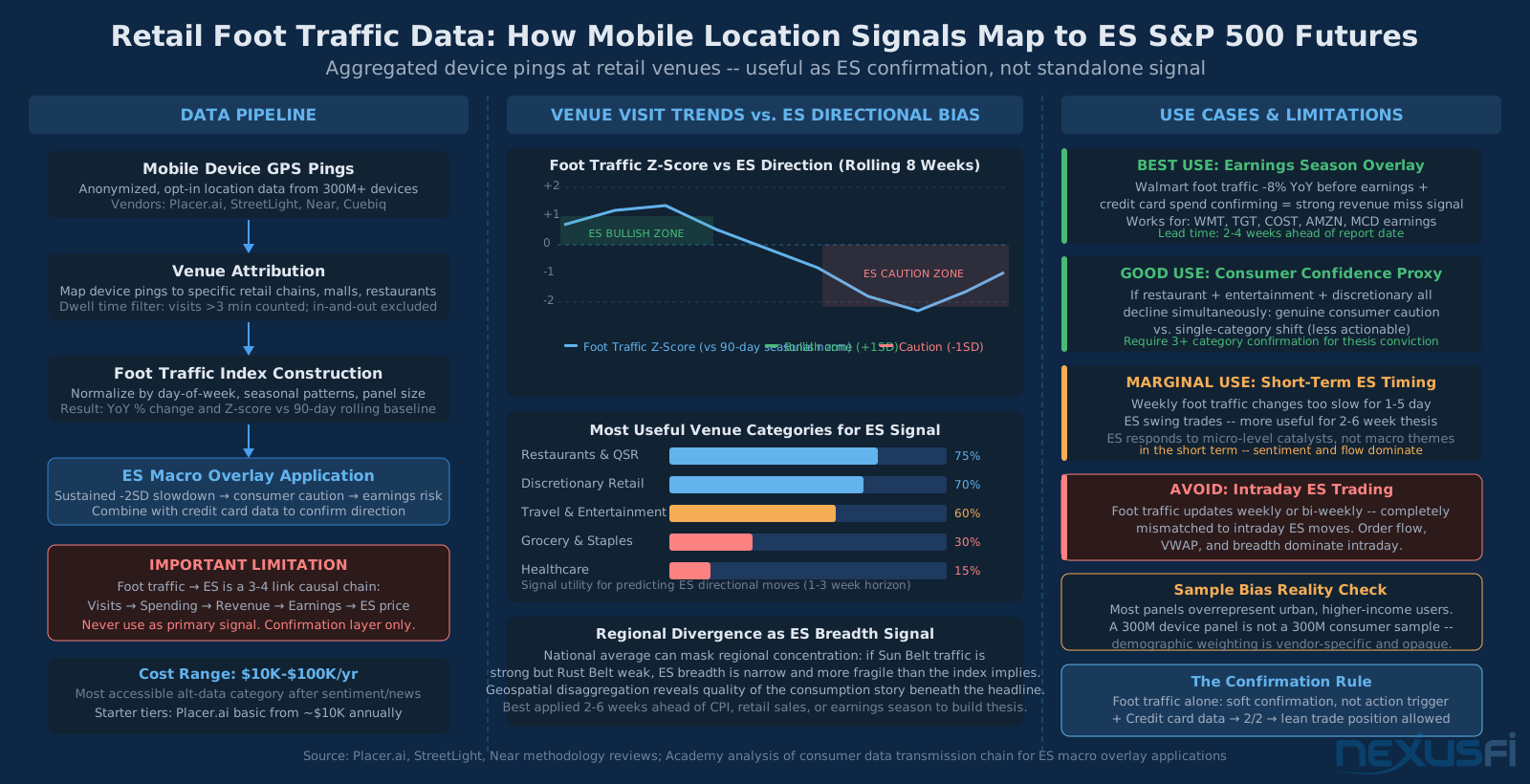
Location intelligence vendors aggregate mobile device location data, anonymized and aggregated by venue, to estimate visitor counts at retail locations, malls, restaurants, and service businesses.
For ES, foot traffic is useful as a confirmation layer rather than a primary signal:
Earnings season overlay. If Walmart foot traffic is declining week-over-week heading into earnings, that's soft evidence for a revenue miss. When combined with credit card spend data, the confirmation strengthens.
Regional economic divergence. Geospatial data can reveal that a national aggregate masks regional strength/weakness — useful for understanding whether ES breadth is being distorted by regional concentration.
Consumer confidence proxy. Sustained decline in restaurant and entertainment traffic suggests genuine consumer caution, not just a spending category shift.
Key providers: Placer.ai, StreetLight Data, Near, Cuebiq.
Caveat: the direct mechanism from foot traffic to ES index price is weak. Use this as a second or third confirming signal, not a primary driver.
NQ (Nasdaq-100): Tech-Specific Signals #
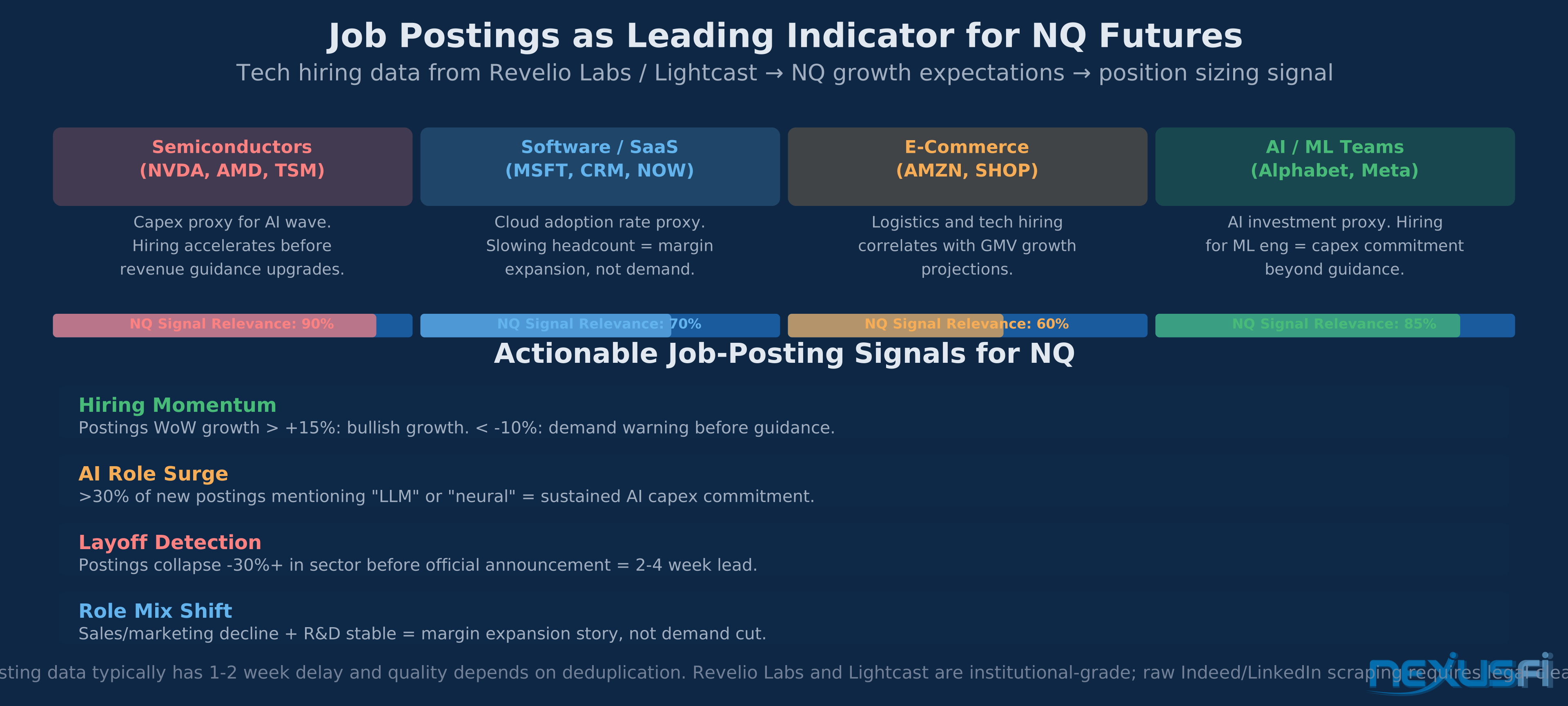
Job postings data is one of the few alt-data categories where NQ traders can front-run earnings guidance changes. Semiconductor hiring surges 4-6 weeks before companies raise AI capex guidance; layoff announcements in software can precede formal guidance cuts by 2-3 weeks. The signal is weakest at peak tech euphoria when every data point gets priced in immediately.
The Nasdaq-100 responds to growth duration, earnings quality in mega-cap tech, AI investment narratives, and rates. Alternative data for NQ is most useful when it helps assess the sustainability of growth in the index's biggest constituents.
Signal Design Framework #
Alternative data without a signal design framework is expensive noise. The framework has five steps, and failing any of them means the data doesn't translate to futures edge.
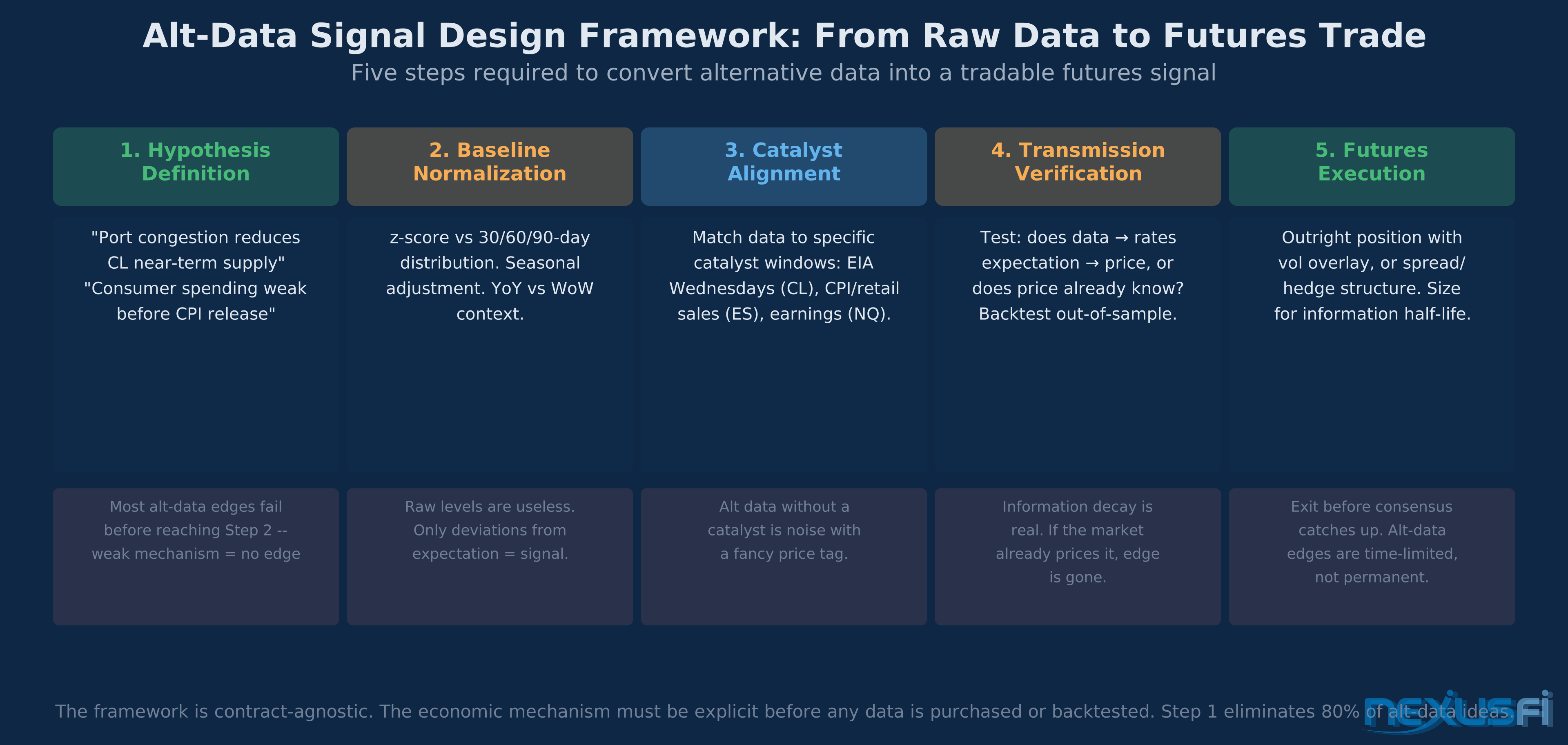
Step 1: Define the hypothesis explicitly. State the economic mechanism in one sentence: "Port congestion reduces near-term CL supply, which should tighten the front of the curve before EIA." If you cannot write this sentence, you do not have a signal — you have data.
Step 2: Convert to surprise vs baseline. Raw data levels are useless. What matters is deviation from what the market already expects. Build a z-score against trailing 30, 60, or 90-day distributions with seasonal adjustment.
Step 3: Align to catalysts. Every alt-data signal needs a specific event where the information advantage expires. For CL: EIA Wednesday. For ES: CPI, retail sales, payrolls. For NQ: earnings reports. This defines your hold time and exit timing.
Step 4: Verify the transmission mechanism out of sample. Backtests with vendor data suffer from look-ahead bias because final/revised data was used. Test on out-of-sample periods across multiple regimes (risk-on, risk-off, high-vol, low-vol).
Step 5: Size for information half-life. The edge erodes as the market prices the signal. Size positions for the window between data availability and trigger event, not for indefinite holding.
Provider Environment and Costs #
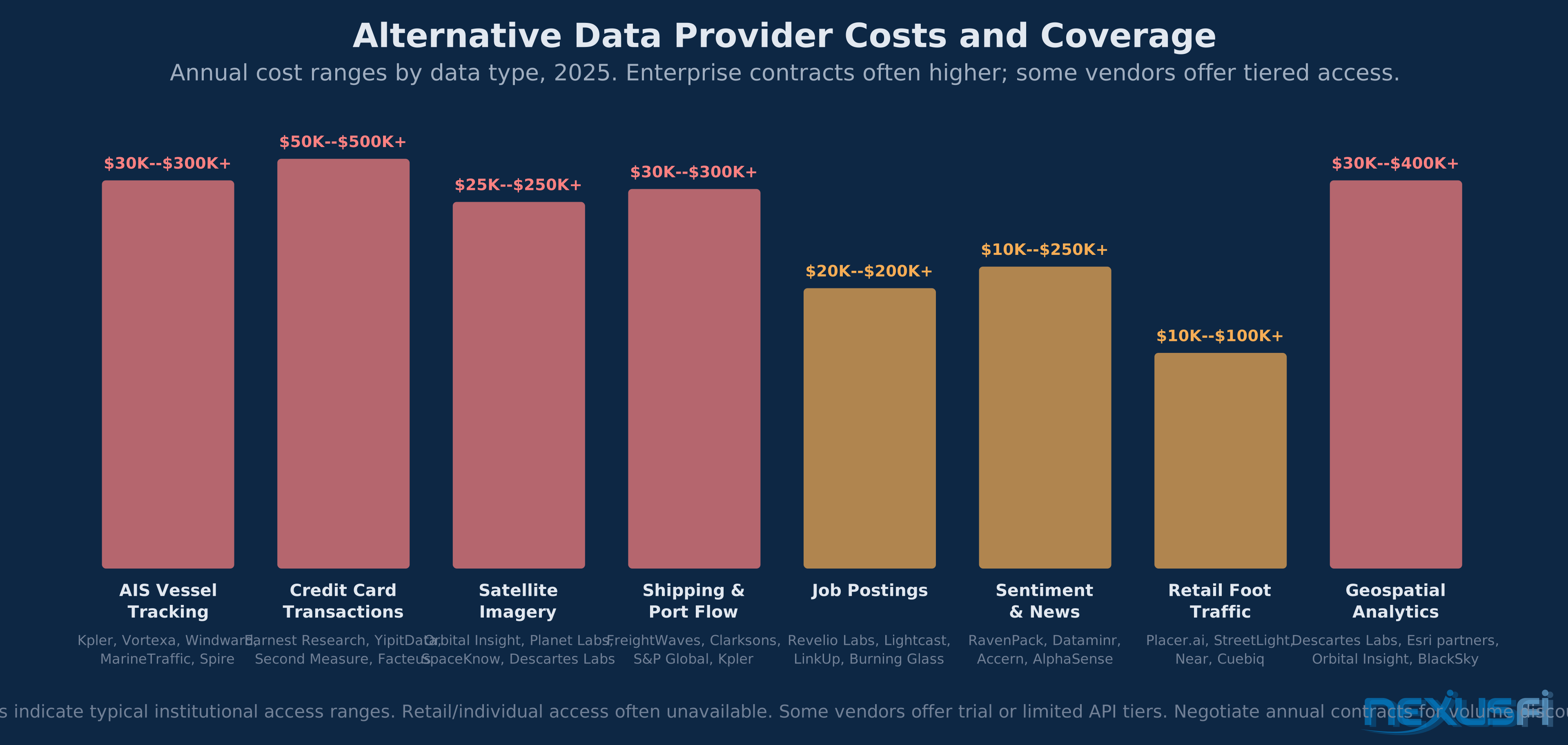
The cost reality for individual traders is harsh: most institutional-grade alternative data is priced for hedge funds with $100M+ AUM. A $250K/year satellite dataset is only viable if it generates meaningful alpha on a large book.
Practical alternatives:
Public data proxies. The St. Louis Fed's FRED API is free and offers thousands of economic series. Combined with Treasury auction data, JOLTS, and advance retail sales, a thoughtful macro model can capture much of what expensive credit card data measures with a 2-4 week lag.
Licensed tiered access. Some vendors offer starter tiers or academic pricing. RavenPack news sentiment starts at lower price points. MarineTraffic offers limited AIS history with free registration.
Delayed feeds. Some AIS vendors sell 3-7 day delayed data at a fraction of real-time pricing. For weekly EIA-driven CL trading, a 3-day delay still provides useful directional signal.
Legal and Compliance Considerations #
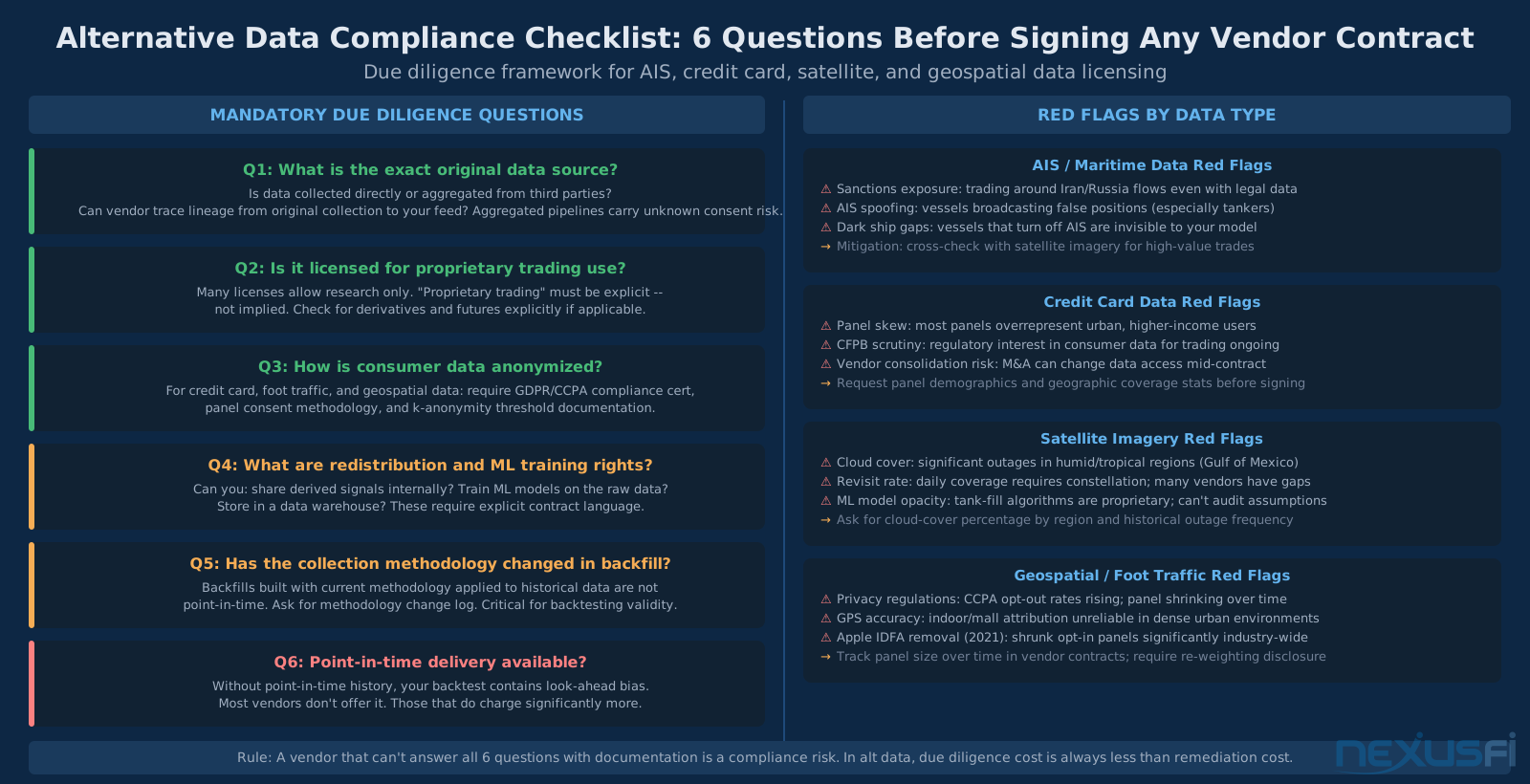
Every alternative data provider relationship requires due diligence on four dimensions:
Licensing scope. The agreement must explicitly allow use of the data for proprietary trading. Many providers license for research purposes only. "Proprietary trading use" needs to be stated, not implied.
PII and privacy compliance. For any dataset derived from consumer behavior — credit cards, foot traffic, location data — the provider must demonstrate GDPR/CCPA compliance, proper anonymization, and panel consent. Trading firms have faced regulatory scrutiny for using improperly sourced consumer data.
Web scraping legality. Scraping job boards directly often violates terms of service. The CFAA (Computer Fraud and Abuse Act) has been applied to automated scraping in some cases. Buy from licensed aggregators rather than running scrapers against production sites.
Redistribution limits. Can you share derived analytics internally? Train machine learning models on the data? Store it in a data warehouse? These questions need explicit answers before signing.
A useful checklist for vendor due diligence: (1) What is the exact original data source? (2) Is it licensed for trading/derivatives research? (3) How is consumer data anonymized? (4) What are redistribution and ML training rights? (5) Has the data collection methodology changed in the historical backfill period? (6) Can point-in-time historical data be delivered without look-ahead contamination?
For maritime/AIS data, check your firm's sanctions compliance framework. Using vessel tracking data to trade around Iran, Russia, or North Korea-related flows may create compliance exposure even if the trading itself is legal.
Common Pitfalls and Failure Modes #
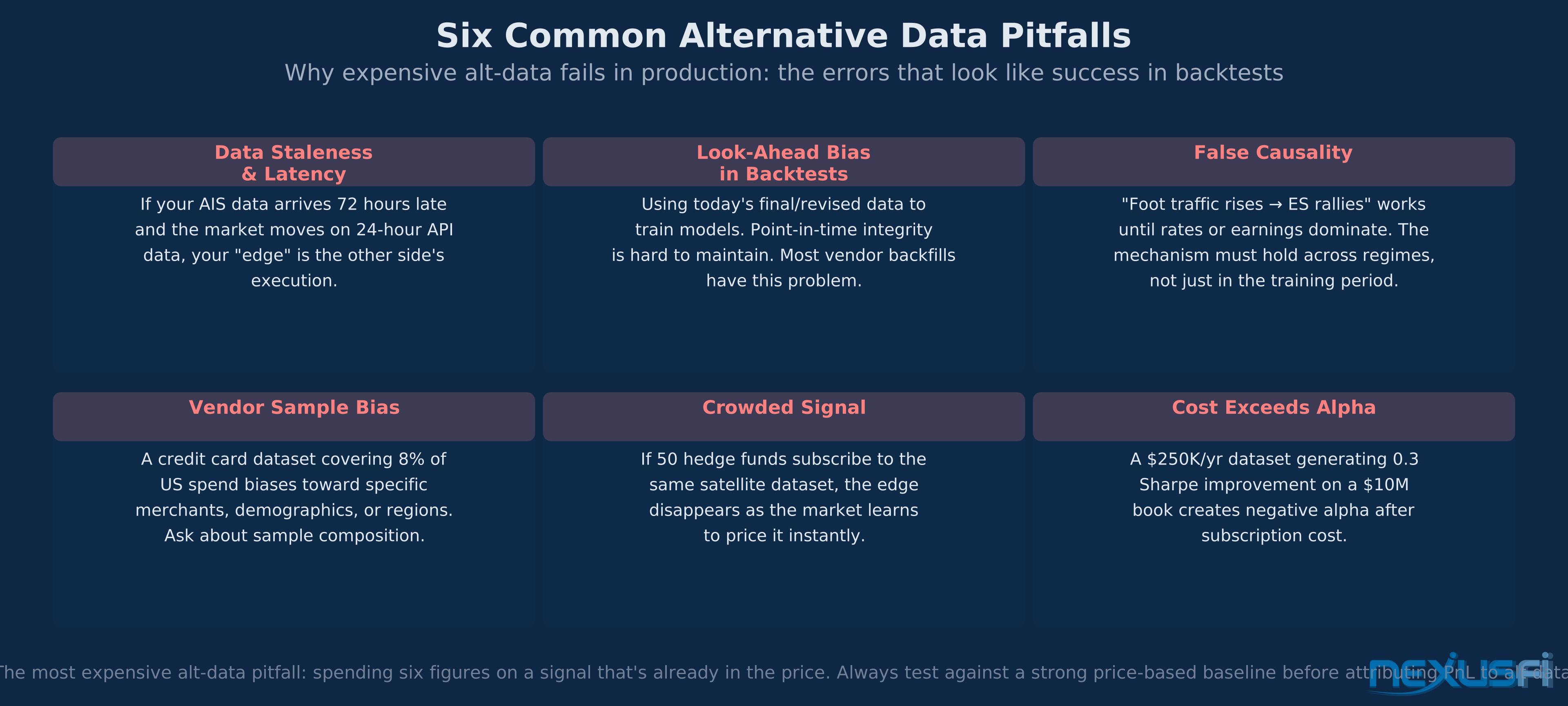
Data staleness kills intraday edge. If your AIS data arrives 72 hours after the real-time signal, you are trading against counterparts who have the real-time version. Know the latency of every feed in your stack.
Look-ahead bias is pervasive in vendor backfills. Most alternative data providers supply historical data using today's final/revised methodology. This is not what was available at the time of the historical trades. Point-in-time historical data is more expensive and less common.
False causality across regimes. A foot traffic-to-ES relationship that holds in a low-rate, consumer-driven market disappears when rates spike and every signal gets overwhelmed by duration. Test relationships across regimes, not just your in-sample training period.
Sample bias in consumer data. A credit card dataset covering 8% of US transactions may overrepresent certain income levels, geographies, or merchant categories. A signal built on this sample may not generalize to the aggregate.
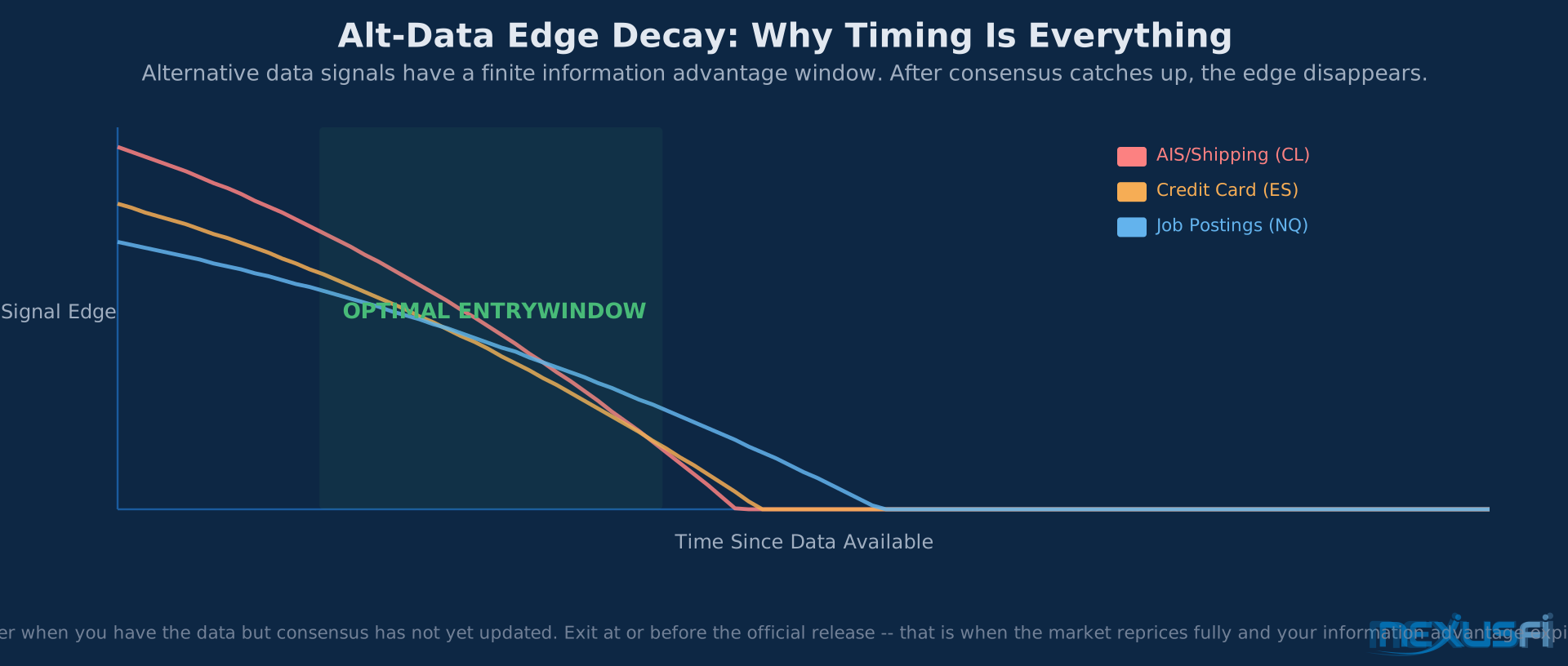
Crowded signals. When multiple funds buy the same AIS feed from Kpler, the market learns to front-run the signal. Edges compress over time as information gets priced faster. Monitor signal decay on live performance.
Cost exceeds alpha. This is the most quantifiable failure mode. A $250K/year dataset generating 0.3 Sharpe improvement on a $10M book, with 5% annual trading volume, probably doesn't cover its cost after taxes, execution, and research time.
That applies to alt data: the professional approach requires modeling the expected value of a dataset before signing the contract, not after.
How to Actually Trade Alternative Data #
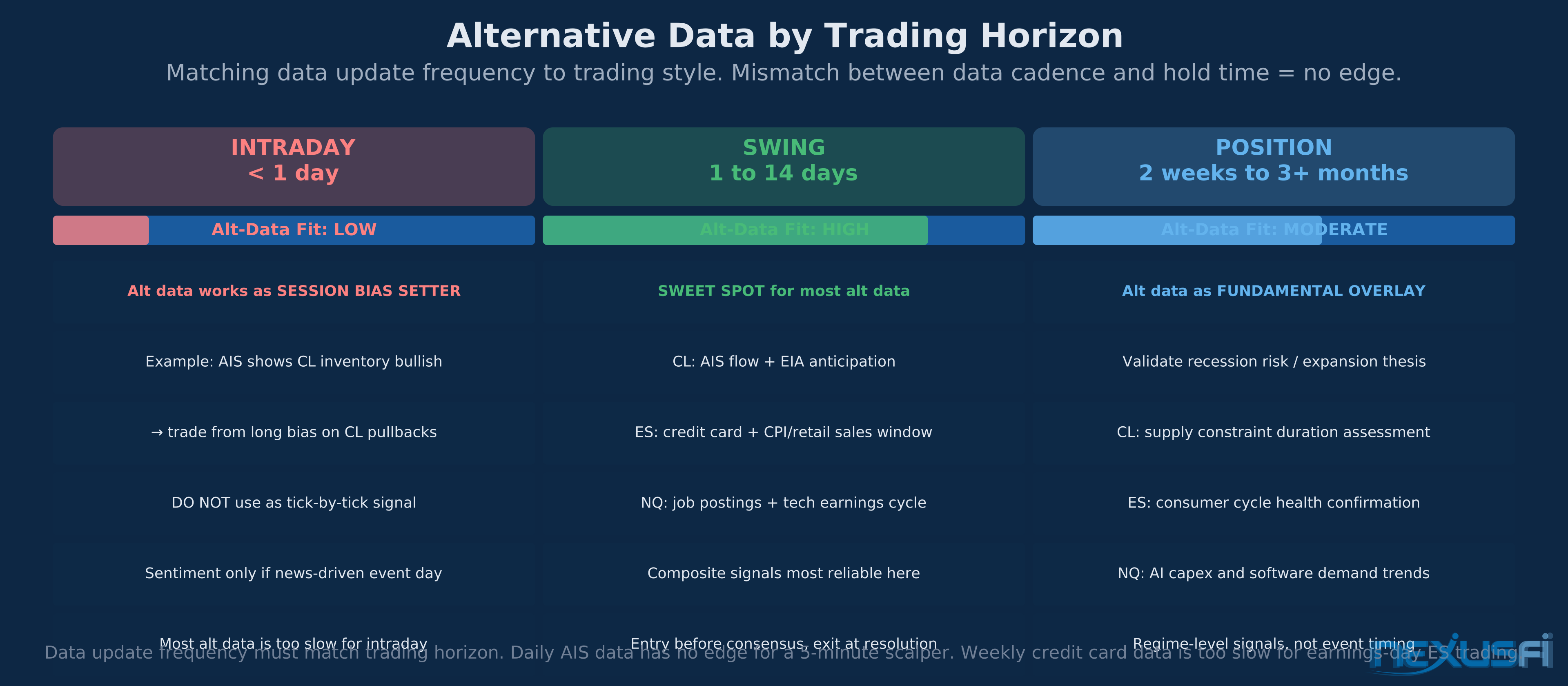
Intraday (< 1 day). Alt data sets the pre-session bias. If AIS data suggests CL inventory draw before Wednesday's EIA, trade from a long bias on pullbacks — but don't override order flow or key reference levels with the data signal. Too slow for tick-by-tick execution.
Swing (1-14 days). The sweet spot. CL: AIS flow signal into EIA Wednesday. ES: credit card weakness into CPI or retail sales. NQ: job posting collapse into earnings season. Build composite signals with at least two confirming datasets. Enter before consensus, exit at or before the trigger event.
Position (2+ weeks). Alt data validates macro thesis. CL supply tightness lasting multiple months. Consumer spending slowdown persistent enough to affect multiple quarters of earnings. Use alt data to determine whether a thesis is worth maintaining, not to time entries.
Practical execution sequence:
- Identify the trigger event (EIA, CPI, earnings)
- Check alt-data signal strength vs baseline (z-score > 1.5 SD = meaningful)
- Confirm direction with at least one other signal (COT positioning, options flow, market internals)
- Size position for information half-life — not indefinite holding
- Exit at or before trigger resolution
The most common execution mistake: holding an alt-data-driven CL position through the EIA number. The edge evaporates at release — if you are right, you already have PnL. If you are wrong, you are now trading the news like everyone else with no informational advantage remaining.
Building Your Alt-Data Stack: A Tiered Approach #
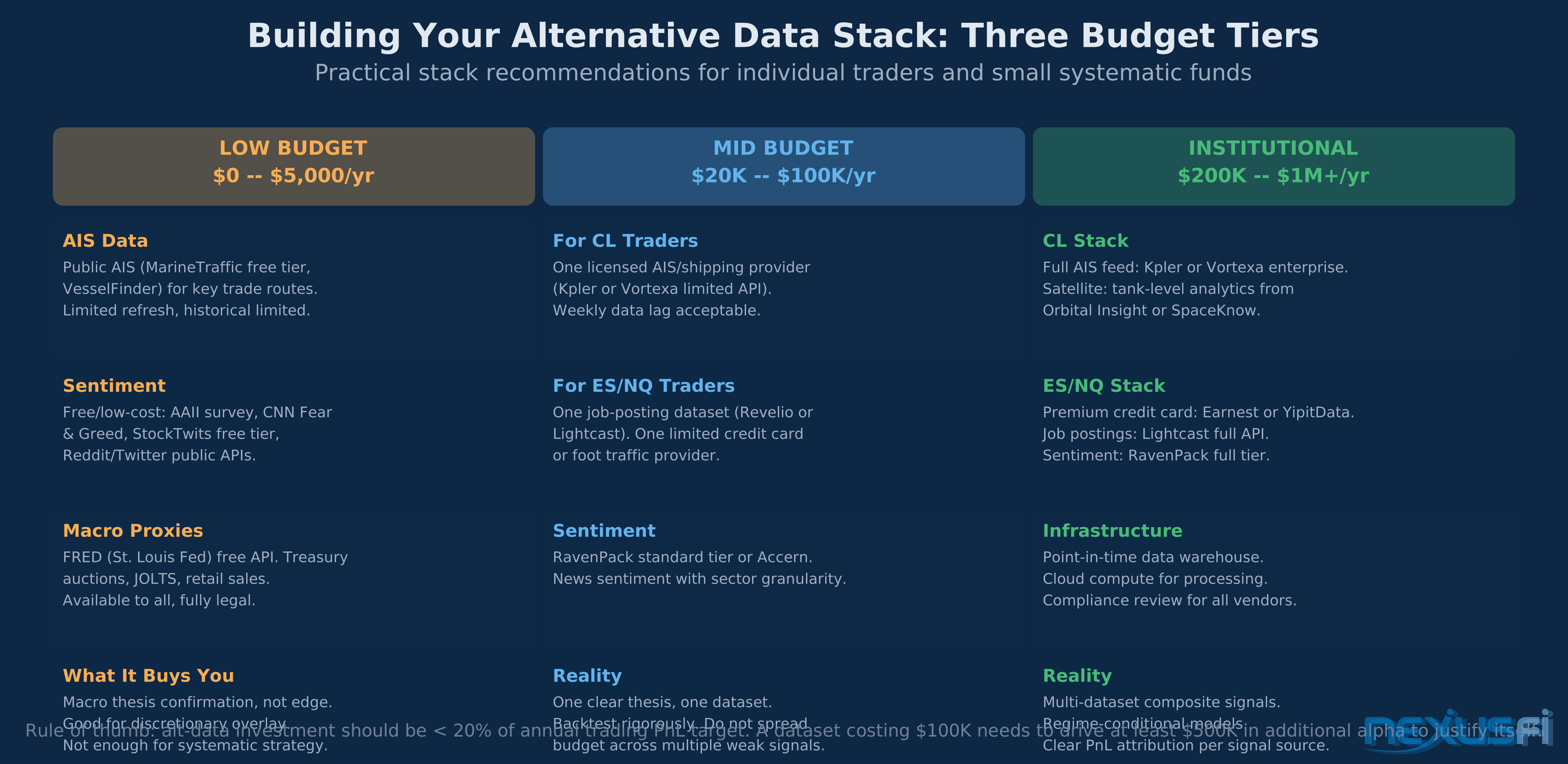
Low budget ($0-$5K/year). Free and public sources: FRED API, Treasury auction data, AAII investor sentiment survey, MarineTraffic free tier, JOLTS, advance retail sales. These are macro confirmation tools, not edges. Useful for discretionary overlay in a thesis-driven approach.
Mid budget ($20K-$100K/year). One licensed dataset, one thesis. CL traders: a limited-tier AIS or shipping feed (Kpler or Vortexa starter). ES traders: a job-posting dataset (Revelio Labs or Lightcast) plus a starter sentiment tool (RavenPack standard). The key discipline: resist spreading the budget across multiple weak signals. One signal with a clear mechanism beats five signals with murky mechanisms.
Institutional ($200K-$1M+/year). Multi-dataset composite models with point-in-time historical data, cloud processing infrastructure, and compliance review for every vendor. Systematic signal research process with attribution accounting by data source.
The practical rule: alternative data investment should represent less than 20% of annual trading PnL target. A dataset costing $100K requires at least $500K in estimated additional alpha to justify itself after research time, implementation cost, and the probability that the edge decays.
Knowledge Map
Go Deeper
Build on this knowledgeCitations
- — Trading is a Business (2025) 👍 8“Treating it as a business is the mindset that matters.”
- — Selling Options on Futures? (2021) 👍 6“I live in a no income tax state and trade in my individual name. All futures are taxed as section 1256 contracts and hence are treated as 60% long-term, 40% short-term capital gains.”
- — Personal or LLC? (2018) 👍 10“For most retail traders the most common use case of trading will be to use the net loss as a deduction on their personal taxable income.”
- — Kpler Trader Tools: Market Intelligence for Energy Traders (2024)
- — Satellite Data and Artificial Intelligence for FINtech (2024)
- — On the Capital Market Consequences of Big Data: Evidence from Outer Space (2019)
- — Alternative Data for Investing: Satellites, Web Scraping and Information Edge (2024)
- — The Scalper's Journey (2017) 👍 13“The large operators always have a massive informational advantage over the rest of us. They've got eyes on every single tanker; every single port; every single major refinery out there.”
- — The Scalper's Journey (2016) 👍 6“I care about price action and only some fundamental news from API, EIA and Opec. I focus 80-90% on technical analysis and the rest would be fundamentals.”
- — $5,000 Live Trading Account Challenge - CL & ES (2017) 👍 6“I compare expected vs. actual numbers, e.g. if actual and expected are almost the same then CL's movement is sometimes very small and it just ranges or continues its trend.”