



Treasury Auction Data for Bond Futures Traders: Bid-to-Cover, Indirect Bidders, and the Signals That Move ZN and ZB
Overview #
Every week, the U.S. Treasury sells hundreds of billions of dollars of debt to fund the federal government. These auctions — 2-year notes on Monday, 10-year notes on Tuesday, 30-year bonds on Wednesday — are the most important scheduled events in the fixed income calendar. For ZN and ZB futures traders, they're not background noise. They're the heartbeat of the market.
The data that comes out of each auction tells you things the price chart doesn't: whether global demand for U.S. debt is strengthening or collapsing, whether foreign central banks are accumulating or stepping back, whether primary dealers are stuck with inventory they need to unload. That information moves yields by 5-10 basis points in seconds — and since ZN has a DV01 of roughly $63 per basis point, a surprise 7-basis-point tail on a 30-year bond auction is worth $441 per contract. That's not noise. That's a setup.
This article is about the data itself — what it measures, where to get it, and how to read it in real time. If you trade bond futures, you need to know this infrastructure the way an equity trader knows earnings reports. The auction calendar shapes supply dynamics for the entire Treasury complex, and the results data is the most unambiguous real-money signal in the rates market. Foreign central banks don't bluff. When indirect bidder participation collapses at a 10-year auction, you're watching real institutional demand evaporate in front of you.
Bond futures traders often treat auctions as events to avoid. The traders who've actually worked in fixed income treat them as setups to trade. The auction data is a live vote on whether the world still wants U.S. debt — and at what price. Everything else is opinion.
Key Specifications: The Auction Calendar #
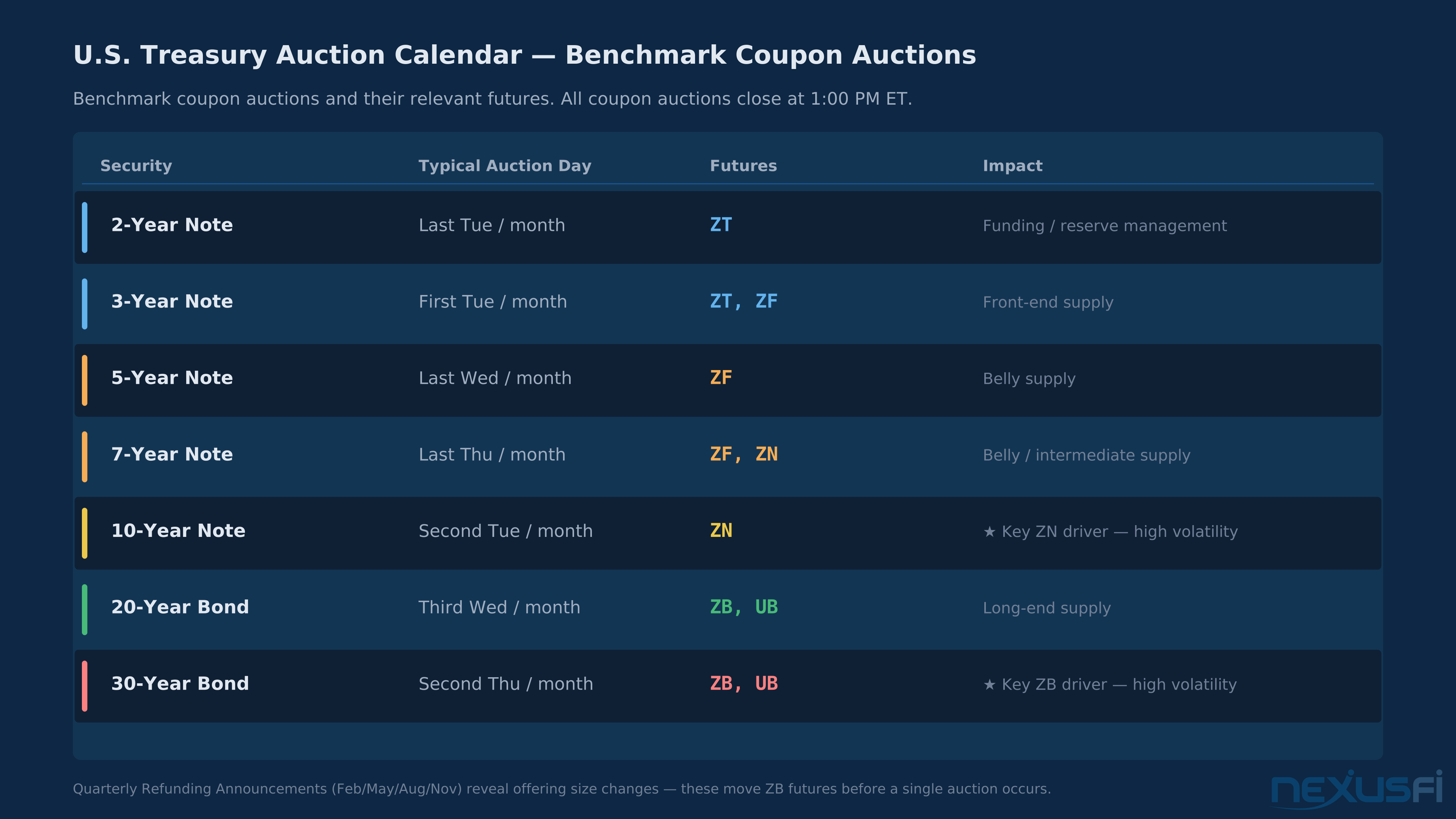
The Treasury runs approximately 300 auctions per year. For futures traders, the relevant universe is the benchmark coupon auctions — the ones tied to the contracts you're actually trading.
Regular Auction Schedule (Standard Monthly Cycle)
| Security | Typical Auction Day | Maturity | Relevant Futures |
|---|---|---|---|
| 2-Year Note | Last Tuesday of month | 2 years | ZT |
| 3-Year Note | First Tuesday of month | 3 years | ZT/ZF |
| 5-Year Note | Last Wednesday of month | 5 years | ZF |
| 7-Year Note | Last Thursday of month | 7 years | ZF/ZN |
| 10-Year Note | Second Tuesday of month | 10 years | ZN |
| 20-Year Bond | Third Wednesday of month | 20 years | ZB/UB |
| 30-Year Bond | Second Thursday of month | 30 years | ZB/UB |
| 10-Year TIPS | Late January, March, May, July, September, November | 10 years | N/A |
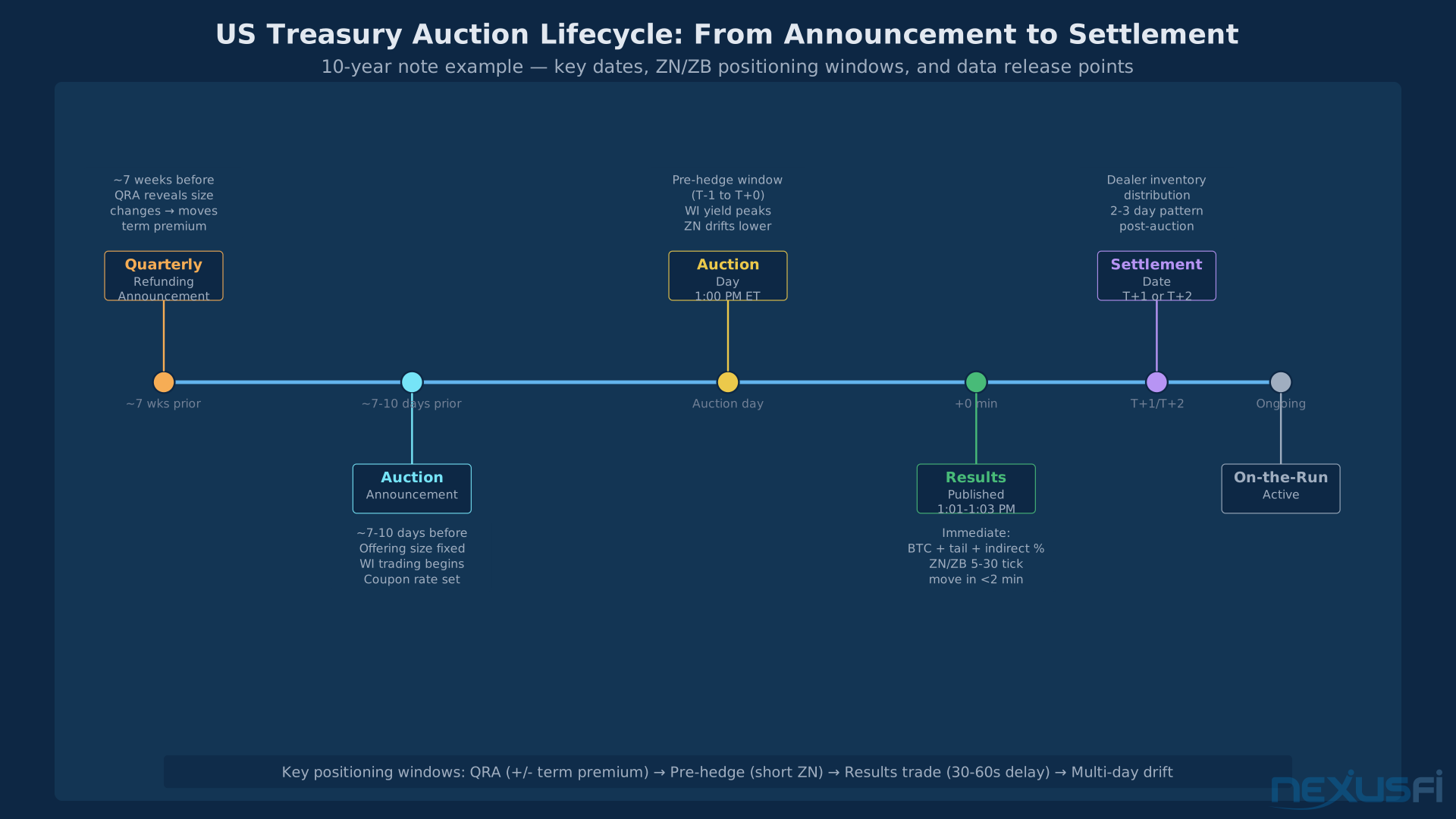
All coupon auctions close at 1:00 PM Eastern Time. Results are typically published within minutes — sometimes seconds — on TreasuryDirect.gov and the Federal Reserve Bank of New York's website. Bloomberg flashes the headline numbers (bid-to-cover, yield, indirect bidder %) almost simultaneously.
Quarterly Refunding Announcements happen in February, May, August, and November. These are when the Treasury announces whether it's increasing or decreasing auction sizes — which has dramatic effects on term premium and futures pricing. A refunding announcement that surprises the market with larger-than-expected long-end supply can move ZB futures by multiple points before a single auction even occurs.
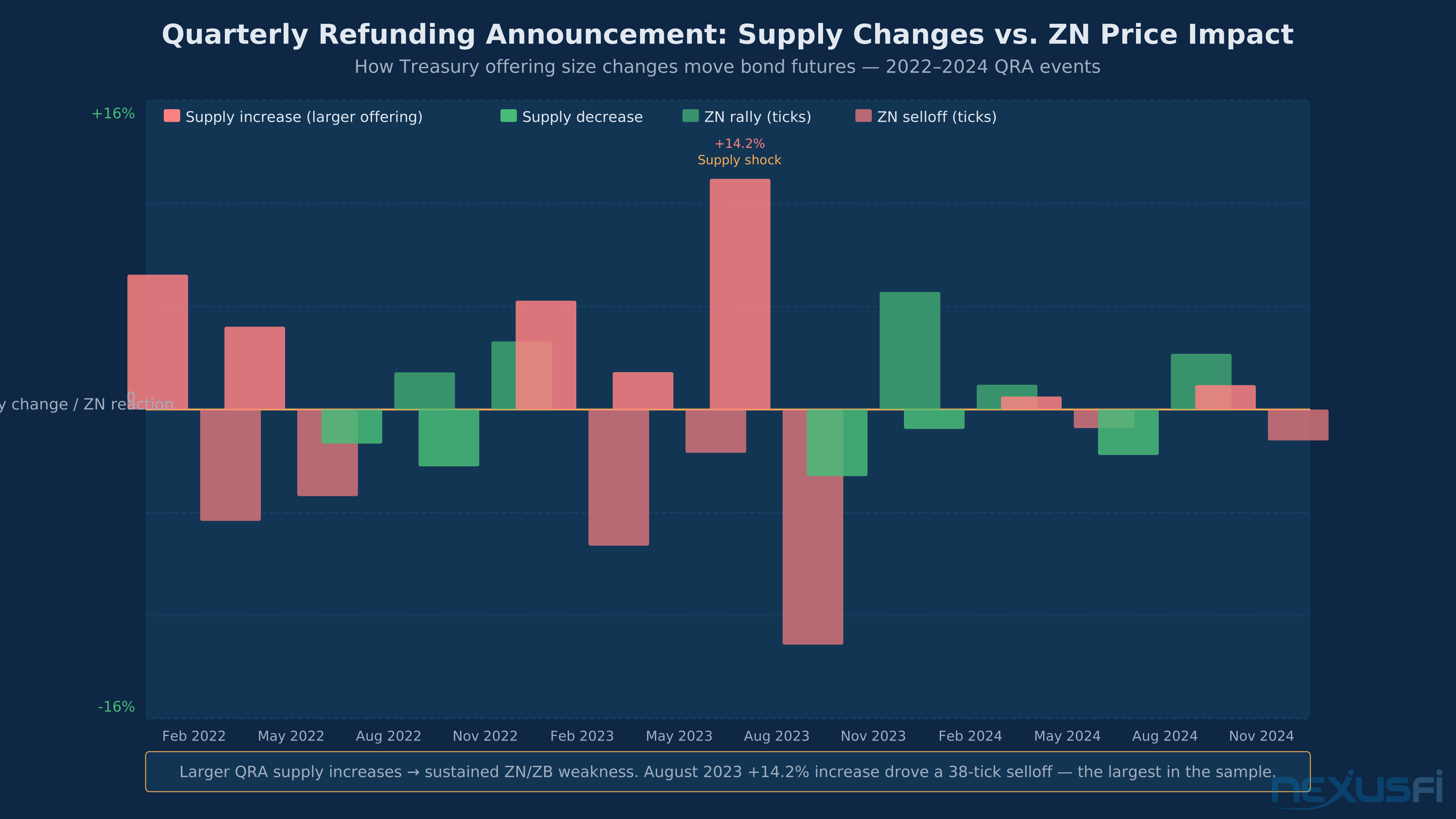
The auction calendar is published weeks in advance at TreasuryDirect.gov under "Auction Announcements." Mark 10-year and 30-year dates — they generate the most directional ZN and ZB volatility. The 2-year and 5-year auctions matter less for long-end futures traders.
How It Works: The Dutch Auction Mechanics #
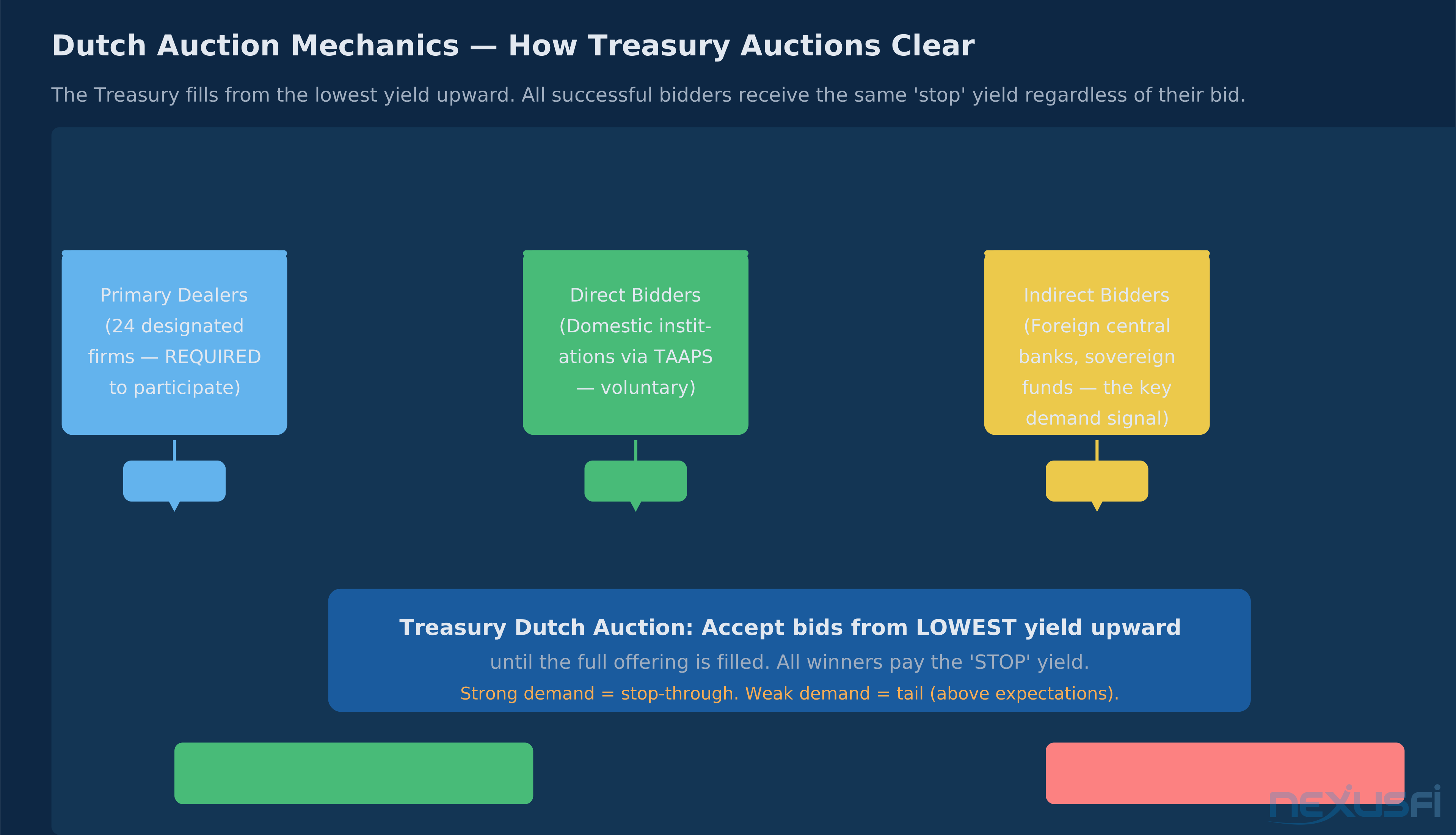
The U.S. Treasury uses a Dutch auction format. Understanding the mechanics tells you exactly what the reported data means.
The Bidder Categories
There are three types of participants in every Treasury auction:
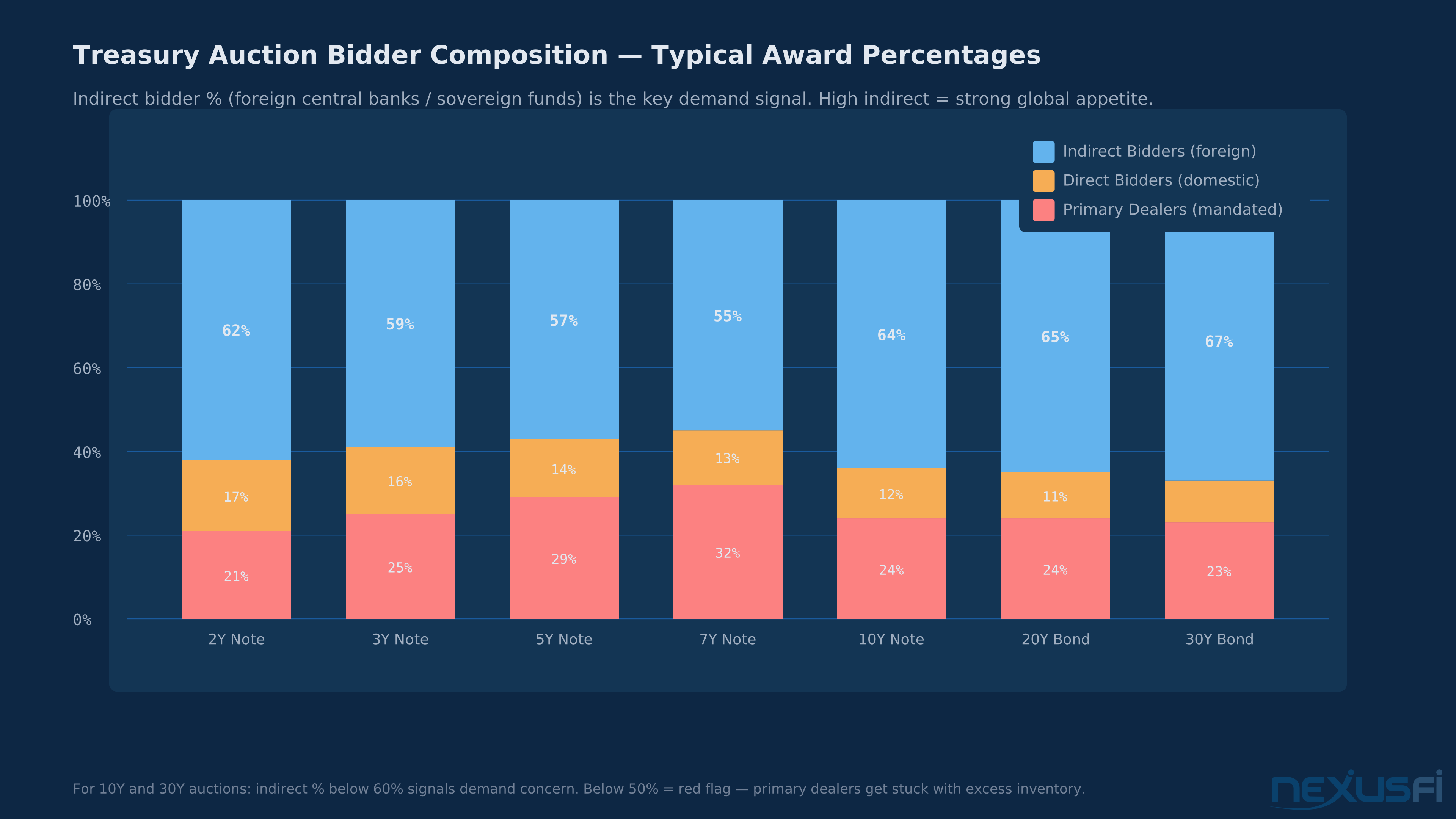
Primary Dealers — 24 large financial institutions (Goldman Sachs, JPMorgan, Citigroup, Bank of America, etc.) designated by the Federal Reserve Bank of New York. They are required to participate in every auction and bid on a pro-rata basis relative to the offering size. They're the buyers of last resort. This designation means the Treasury's auction always clears — but primary dealers can be forced to take on far more inventory than they want, which has consequences you'll see in the data.
Direct Bidders — Domestic institutions (pension funds, insurance companies, mutual funds, money market funds) that access the auction directly through the Treasury Automated Auction Processing System (TAAPS). They bid for their own accounts.
Indirect Bidders — All other participants who submit bids through a primary dealer or TreasuryDirect, including foreign central banks, sovereign wealth funds, and international investors. This is the category that gets the most attention, because indirect bidder participation is the cleanest proxy for global demand for U.S. debt.
The Auction Process
- Bidders submit competitive bids specifying yield and quantity (or non-competitive bids that accept the clearing yield)
- The Treasury accepts all non-competitive bids first
- For competitive bids, starting from the lowest yield (highest price), the Treasury works up the yield curve until the entire offering is filled
- The "stop" or "high yield" is the highest yield accepted — this is where the auction clears
- All successful bidders receive this same yield regardless of what they bid
The key point: if demand is strong, many bidders wanted the security at yields below the stop, and the auction clears at a yield lower than where the market expected. If demand is weak, the Treasury has to reach further up the yield curve — paying more to borrow — to fill the order book. This is where tails come from.
Key Metrics: What the Data Actually Measures #
Bid-to-Cover Ratio #
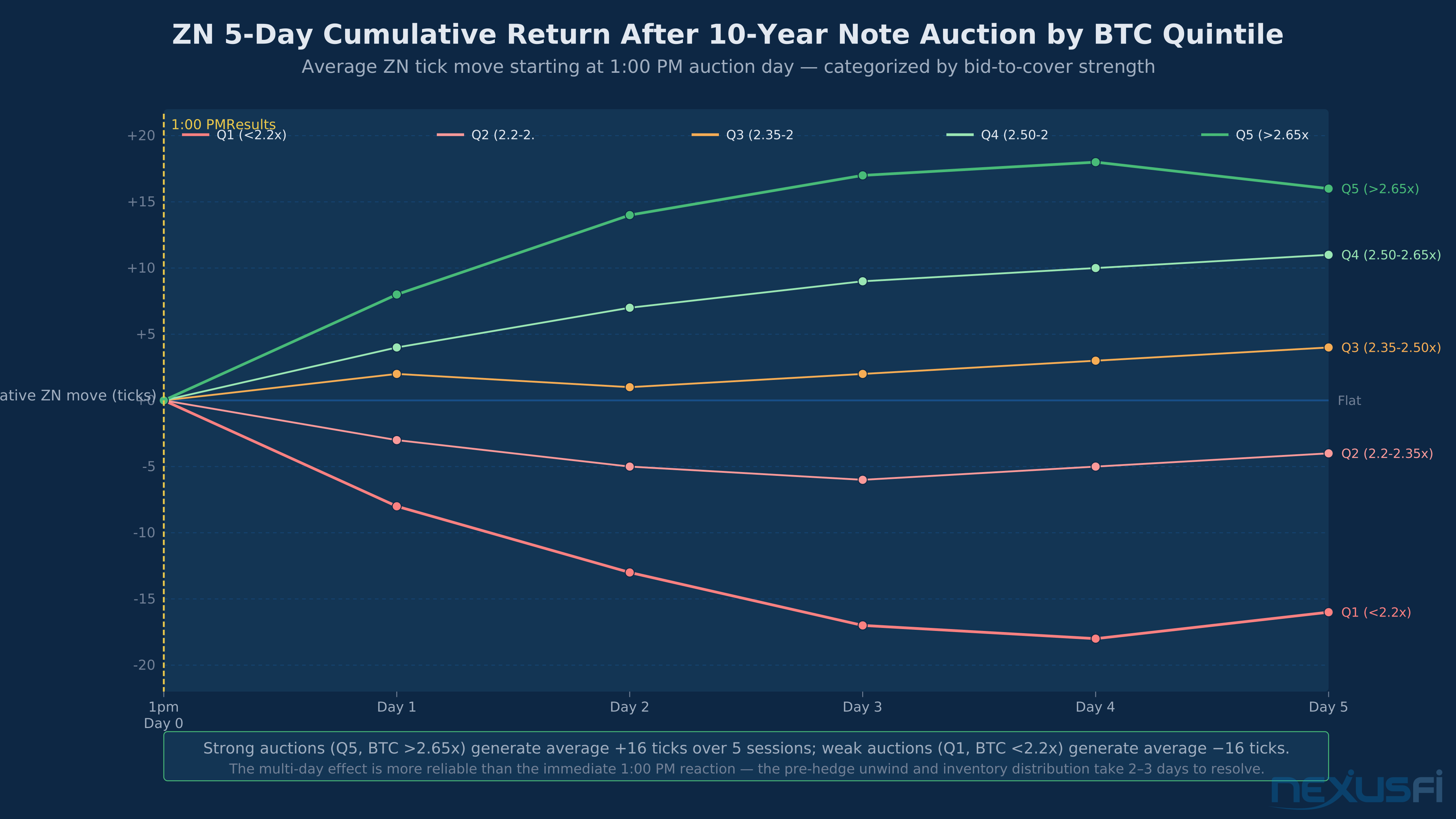
The bid-to-cover (BTC) ratio is the most widely-reported auction metric: total dollar value of bids submitted divided by total dollar value offered. If the Treasury sells $42 billion of 10-year notes and receives $100 billion in bids, BTC = 2.38x.
Higher BTC means stronger demand. But the absolute number means almost nothing — you need context.
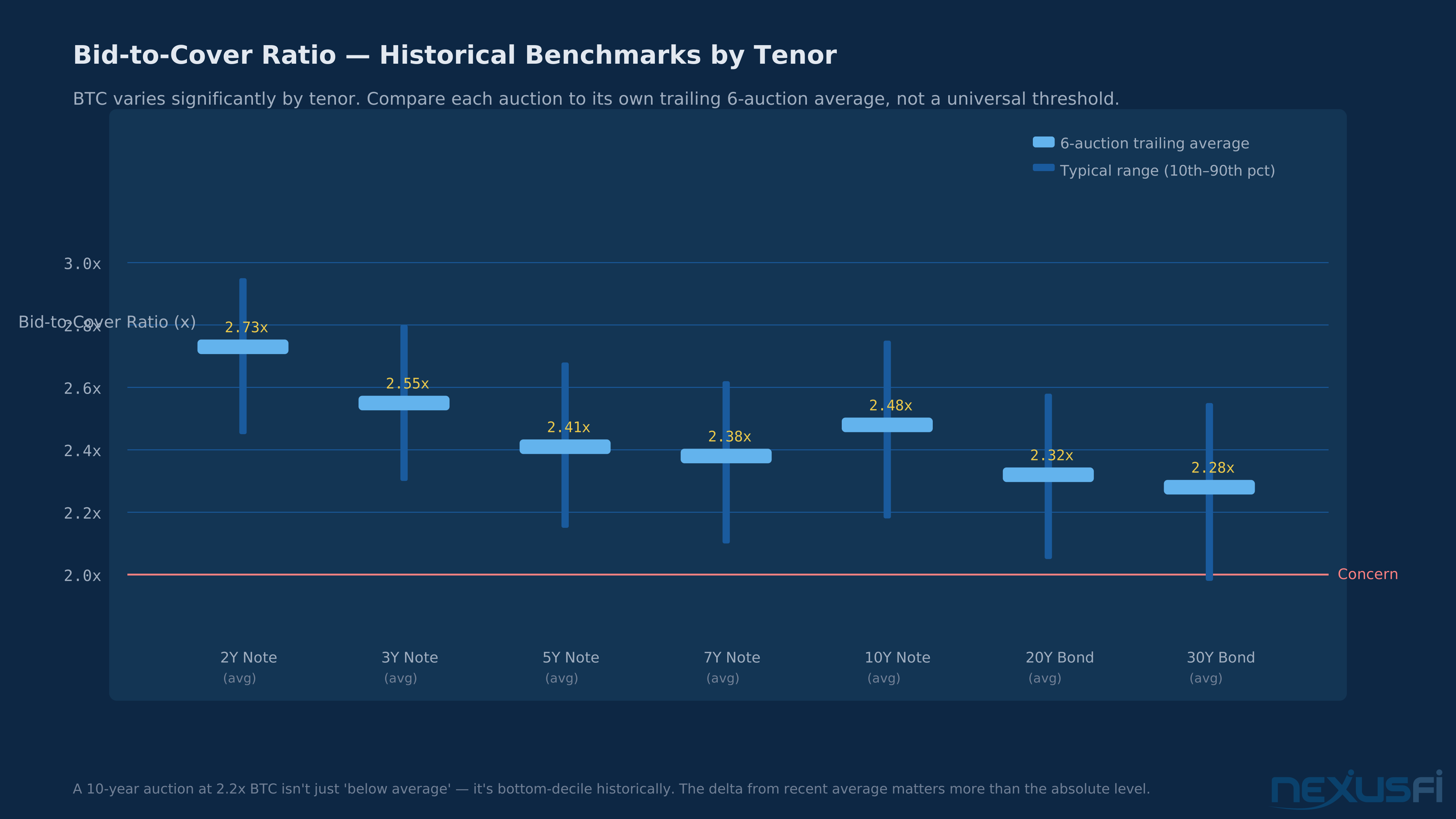
Historical benchmarks vary by tenor:
- 2-year notes: average BTC ~2.6x-2.8x (highly liquid, frequently used as cash proxy)
- 5-year notes: average BTC ~2.3x-2.5x
- 10-year notes: average BTC ~2.4x-2.6x
- 30-year bonds: average BTC ~2.2x-2.4x (thinner, longer duration = lower demand)
A 10-year auction at 2.2x BTC isn't just "below average" in the abstract — it's the bottom 10th percentile historically, and the market typically reacts hard. Research on bid-to-cover effects shows statistically significant impacts on subsequent bond market returns when auctions come in below the 20th percentile of historical distribution. That's not observation; it's measurable edge.
What matters more than the absolute BTC is the delta from recent trailing average. If the 10-year has averaged 2.55x over the past 6 auctions and comes in at 2.20x, that's a 14% demand shortfall. ZN will sell off. If it comes in at 2.80x, that's a 10% surplus — ZN rallies.
The bid-to-cover ratio can be gamed. Primary dealers are required to bid, and they can submit large bids at yield levels they expect to be rejected — padding the BTC without representing real demand. Watch the dealer award % alongside BTC. High BTC + high dealer award = the demand was largely internal/forced, not genuine end-user demand.
Indirect Bidder Percentage #
Indirect bidders — predominantly foreign central banks and sovereign wealth funds — are the most important demand signal in Treasury auctions. When the indirect bidder percentage is high, global demand for U.S. debt is strong. When it collapses, you're watching a supply/demand problem develop in real time.
The market's response was immediate — ZB gained +21 ticks on the results, even though the overall BTC was weak (2.45x, the lowest since September 2009). The indirect bidder surprise overwhelmed the BTC weakness.
Typical indirect bidder ranges by tenor:
- 2-year notes: 58-66% (highest, as foreign central banks use short-term Treasuries as reserves)
- 5-year notes: 50-60%
- 10-year notes: 60-70%
- 30-year bonds: 60-72% (long-end tends to attract real money managers)
A 10-year auction where indirect bidder % drops below 55% is a demand concern. Below 50% is a genuine red flag — dealers get stuck with inventory and will sell futures to hedge.
Tail vs. Stop-Through #
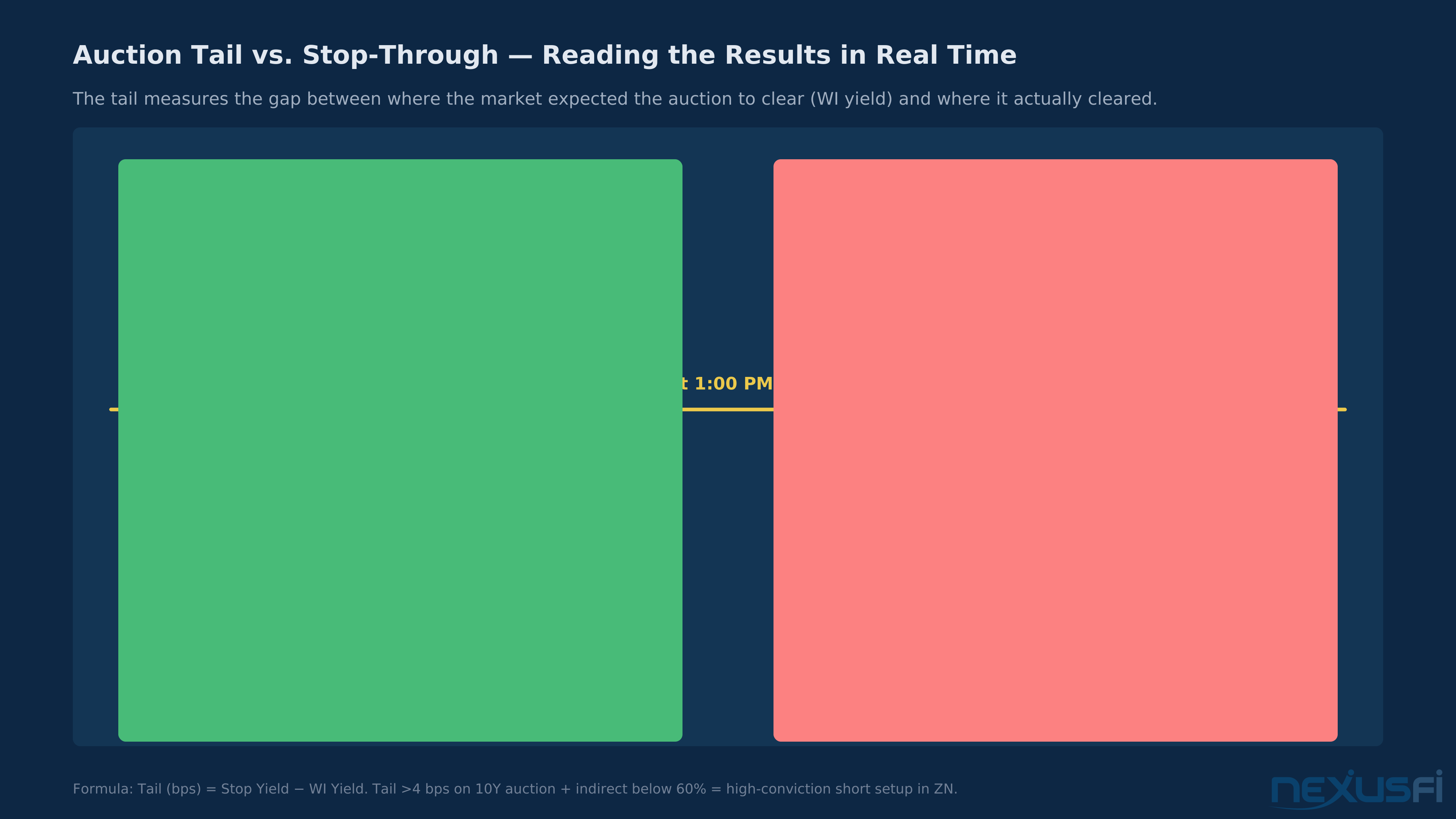
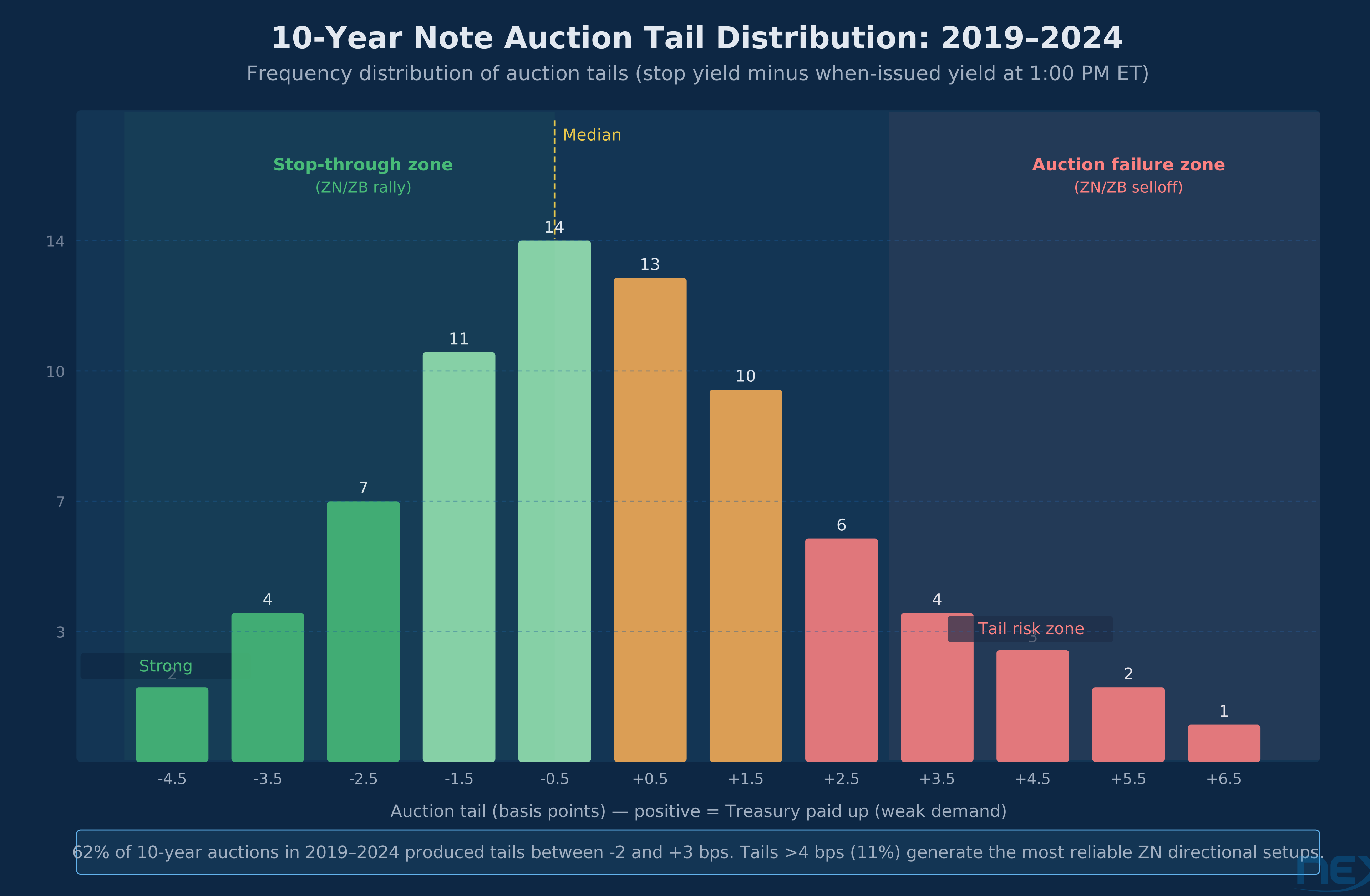
The tail is the single most actionable data point in any auction result. It measures the gap between where the market expected the auction to clear (the when-issued yield at 1:00 PM Eastern) and where it actually cleared (the stop yield).
Tail = Stop Yield - When-Issued Yield
- Positive tail (e.g., +4 bps): The auction cleared at a higher yield (lower price) than expected. Demand was weaker than anticipated — the Treasury had to pay up to find buyers. Bond prices fall.
- Stop-through (e.g., -2 bps): The auction cleared at a lower yield (higher price) than expected. Demand was stronger — the Treasury borrowed more cheaply than the market thought it would. Bond prices rally.
- Zero tail: Right on the when-issued. Average auction.
The when-issued (WI) market is where Treasury securities trade on a forward basis between the announcement date and the settlement date. It's the market's best real-time consensus estimate of where the auction will clear. Major dealers and hedge funds trade WI aggressively in the hours before each auction, positioning for the result. The WI yield at exactly 1:00 PM — when bidding closes — is the benchmark.
A 1-2 basis point tail on a 10-year is noise. A 4-5 basis point tail is notable. A 7+ basis point tail is a genuine auction failure, and ZN typically sells off 15-25 ticks in the 5 minutes after results hit.
A strong stop-through of 3+ basis points triggers the reverse: ZN and ZB rally sharply as the market reprices.
Auction Tail Formula Tail (bps) = Stop Yield − When-Issued Yield at 1:00 PM ET
A positive tail = weak auction = prices fall after results A negative tail (stop-through) = strong auction = prices rally Width × $63 per basis point per ZN contract = directional P&L potential
Primary Dealer Award Percentage #
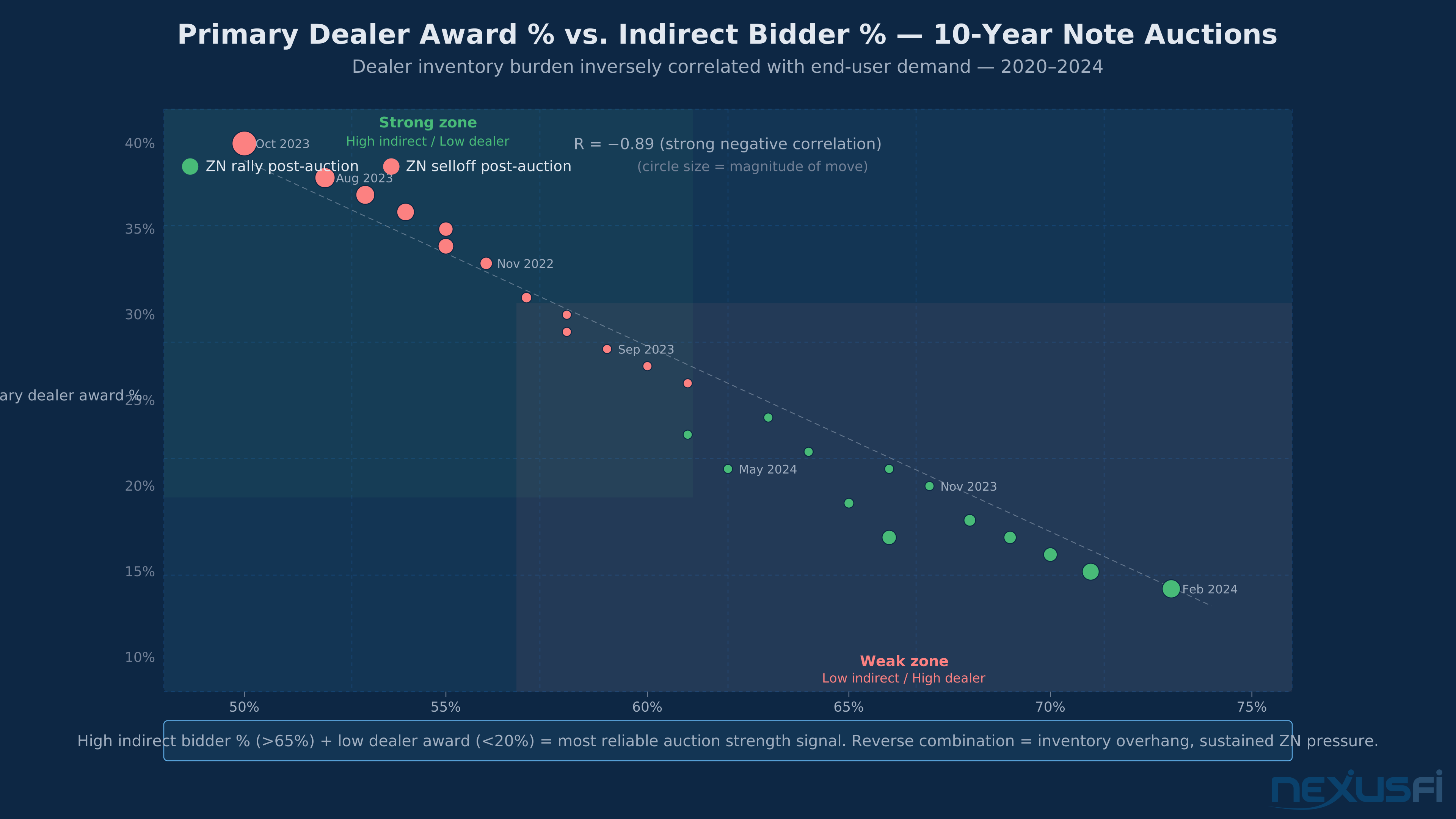
The primary dealer award % is the "leftover" metric — the share of the auction that primary dealers absorbed because end-user demand didn't fully cover the offering. Since dealers are required to bid, a high dealer award means the market isn't finding organic buyers.
High dealer award (>30% on a 10-year) = supply overhang. Dealers just became involuntary holders of significant inventory. Their job is to distribute that inventory in the secondary market — which means they'll sell futures to hedge their duration risk until they can offload the cash securities. This is predictable short-term selling pressure on ZN and ZB.
Low dealer award (<15% on a 10-year) = strong end-user demand. Real money bought the auction. Dealers have minimal inventory to unwind. This is constructive.
When-Issued (WI) Yield: Pre-Auction Intelligence #
The when-issued market is active from auction announcement through settlement. It's where sophisticated participants position before the auction using their read on demand.
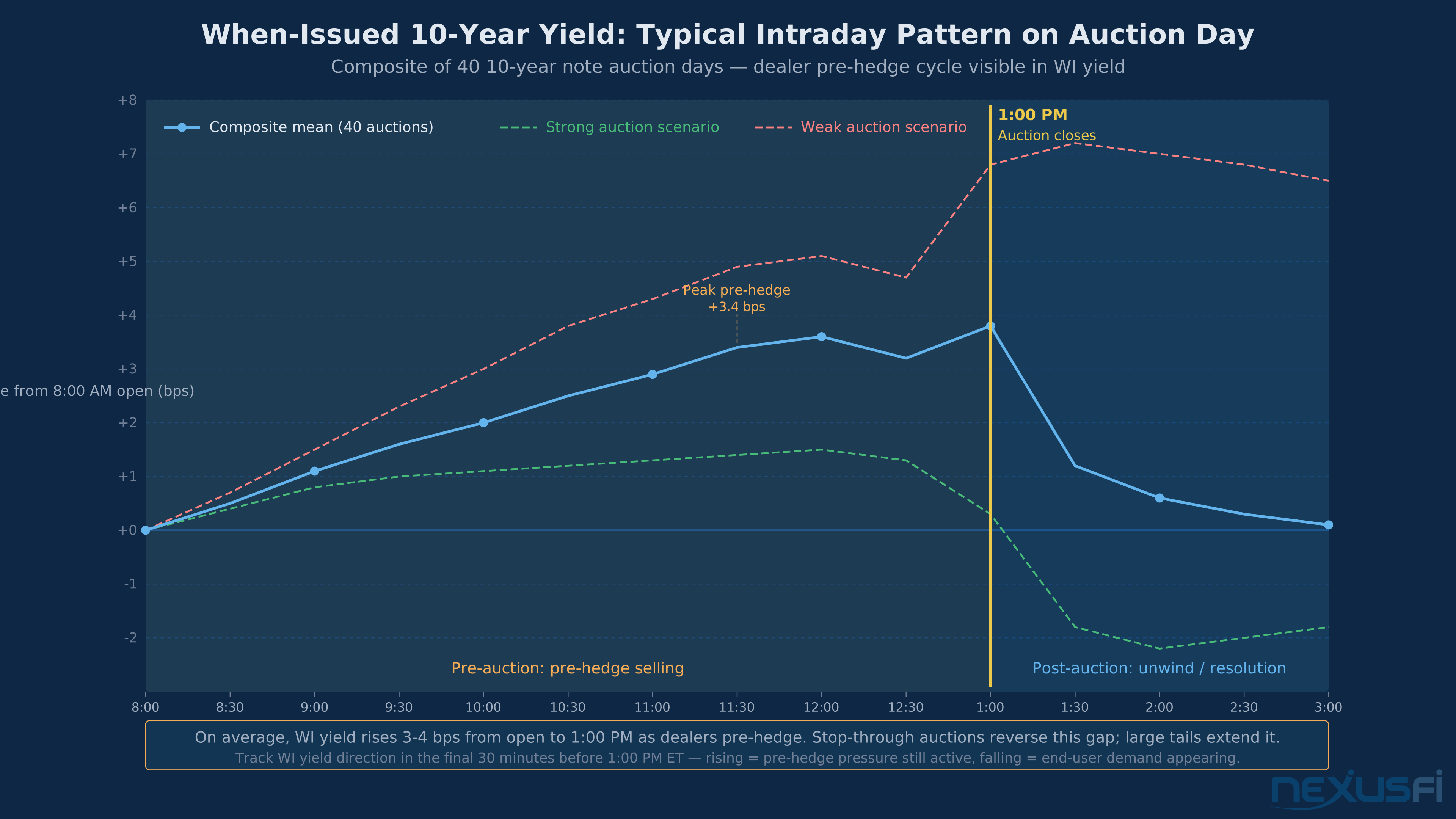
In the hours before a 10-year auction, watch how the WI yield moves relative to the on-the-run 10-year in the secondary market:
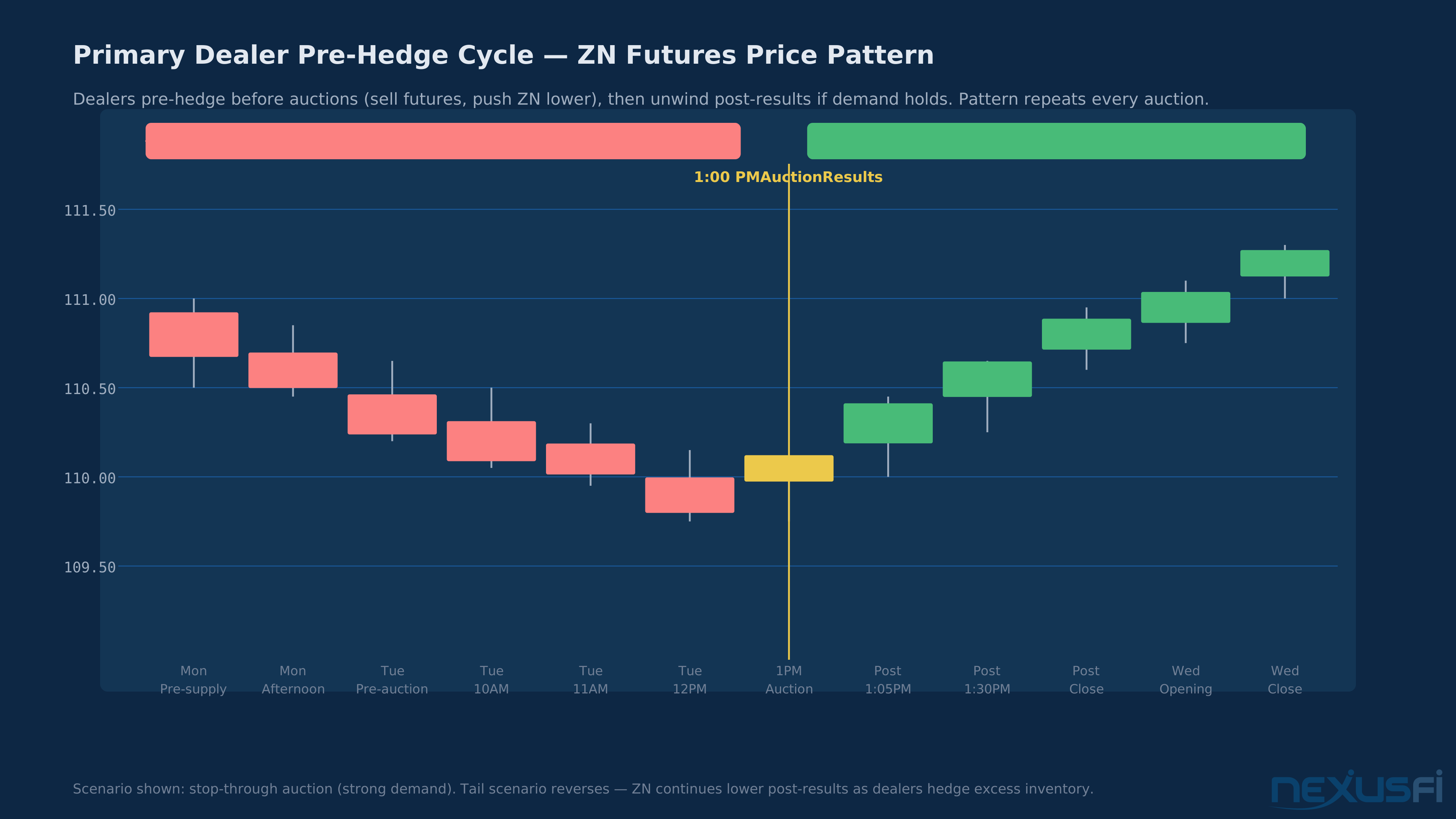
- WI yield rising (prices falling): Dealers are pre-hedging their expected inventory. This is the classic pattern @jstnbrg describes — "they know they're going to be buying a lot of bonds, so they go into the auction short futures (they pre-hedge, just like grain elevators preparing for overnight grain purchases)."
- WI yield stable or falling: End-user demand is being telegraphed through the WI market. Auction likely to come in at or through the market.
The WI gives the reference for calculating the tail — track it from 12:30 PM ET through the 1:00 PM close.
Reading Auction Results in Real Time #
Results hit at 1:00 PM ET (sometimes 1:01-1:02 PM if TreasuryDirect is slow). Bloomberg subscribers get a flash with BTC, yield, and indirect % simultaneously. Non-Bloomberg traders can watch TreasuryDirect.gov directly, though there's a 30-60 second lag versus professional feeds.
The Reading Sequence (in order of importance):
- Tail first: Positive or negative? How many basis points?
- Indirect bidder %: Above or below recent averages?
- Bid-to-cover: Compare to trailing 6-auction average
- Dealer award %: What's the inventory burden?
You should be able to form a preliminary read within 15 seconds of results hitting:
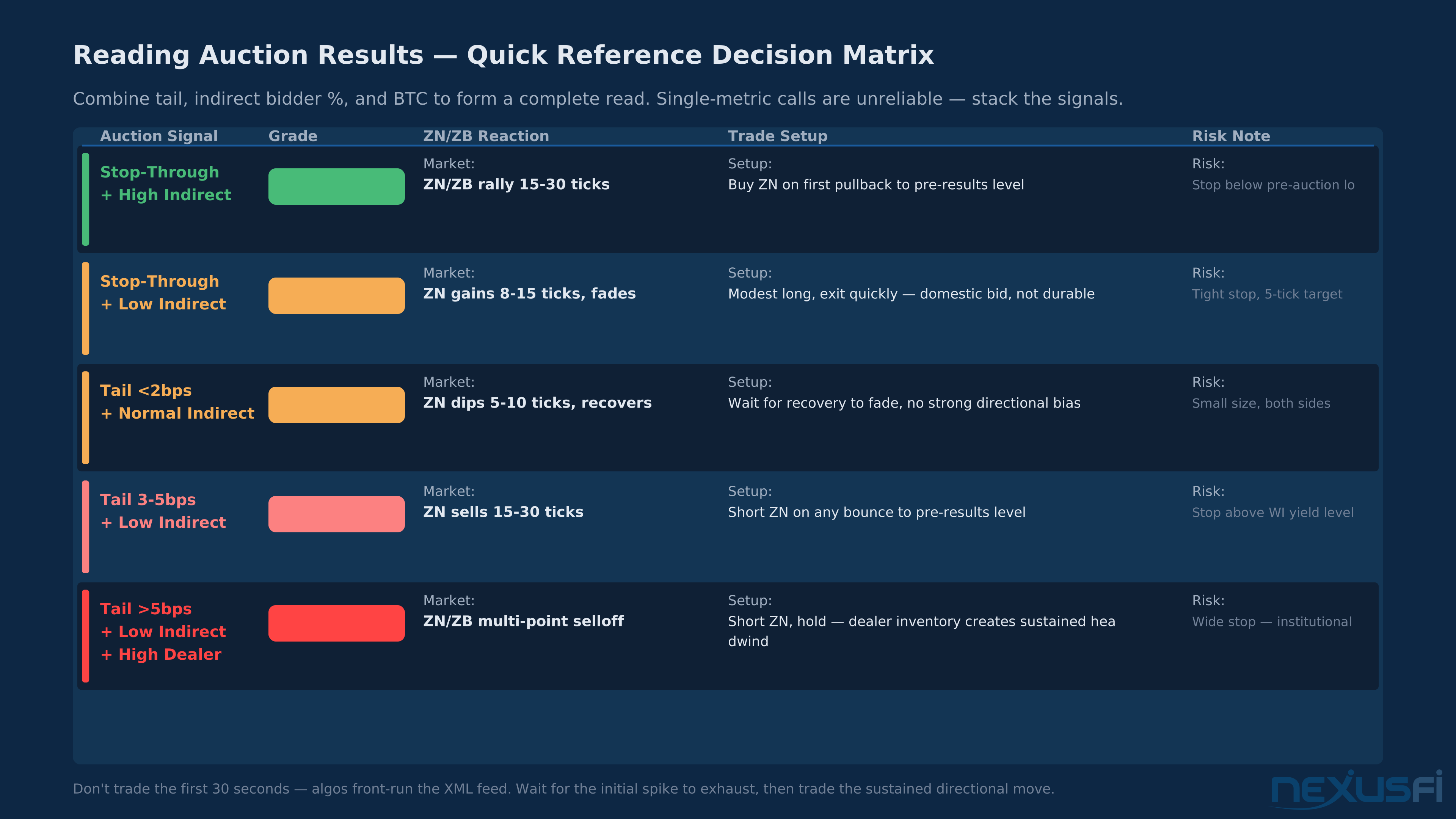
| Signal | Reading |
|---|---|
| Stop-through + high indirect | Strong auction. ZN/ZB rally. Dealers unwind shorts aggressively. |
| Stop-through + low indirect | OK auction. Domestic demand covered it. Modest rally, fades. |
| Tail (<2 bps) + normal indirect | Weak but manageable. ZN dips, recovers. |
| Tail (3-5 bps) + low indirect | Bad auction. ZN sells off 15-30 ticks. High dealer award creates overhang. |
| Tail (>5 bps) + low indirect + high dealer | Auction failure. ZN/ZB multi-point selloff. Sustained pressure. |
Speed matters: algos read the XML feed in milliseconds. Know what the numbers mean before they hit. A 4+ bps tail combined with indirect % below 60% is a high-probability short setup in ZN — in the 2022-2023 cycle, these setups produced 25-40 tick moves within 10 minutes of results.
Trade Setups Around Auctions #
Auction-based setups fall into three categories: pre-auction, post-results, and post-auction supply dynamics.
Pre-Auction: The Pre-Hedge Fade #
Setup: Short ZN or ZB in the 60-90 minutes before the 1:00 PM auction close, targeting the pre-hedge selling pressure. Exit into the auction results.
Conditions: Highest probability when:
- Positioning is already moderately long (dealers have more to hedge)
- Auction size is large relative to recent averages (Treasury Quarterly Refunding announcement)
- WI yield is rising heading into the close
Risk: If a large indirect order (foreign central bank) hits the WI market, the yield can snap lower suddenly. Tight stops mandatory.
Invalidation: If ZN is already at key technical support — the market may have pre-discounted the auction weakness and won't sell further.
Post-Results: The Reaction Fade #
Setup: Trade the immediate post-auction price reaction.
Strong auction (stop-through + high indirect): Buy ZN on the initial spike if it retraces to the pre-results price level within 10-15 minutes. Real demand supports the market. The rally usually extends into the afternoon.
Weak auction (tail + low indirect): Short ZN on any bounce to the pre-results level. Dealer inventory overhang creates a sustained headwind. The sell-off typically doesn't reverse quickly.
The critical distinction: don't trade the first 30-60 seconds. Algos flip the price in both directions as they read the results data. Wait for the initial knee-jerk to exhaust, then take the directional trade with the auction data as your fundamental backdrop.
As @tigertrader demonstrated: watching a 5-year note auction with a weak BTC (2.45x) but 53% indirect bidder participation — and getting the nuance right — is the difference between a good trade and a bad fade. The bid-to-cover headline was weak; the indirect bidder story was strong. ZB gained 21 ticks.
Don't trade auction results in a vacuum. A strong auction in a trending bear market for bonds doesn't create a sustainable rally — just a squeeze. The setup is strongest when the auction result confirms the underlying trend, not when it fights it. A stop-through in a bull market = high-conviction long. A stop-through in a bear market = short-term squeeze, fade the rally.
Post-Auction Supply Dynamics: The Multi-Day Pattern #
The most durable pattern from auction data is the multi-day supply dynamic that
When heavy auction supply hits the market across multiple days (e.g., $56 billion in 3-year notes Monday + $39 billion in 10-year notes Tuesday + $25 billion in 30-year bonds Wednesday), the market prices in that supply as a headwind. But once the supply is absorbed — if the auctions come in reasonably well — the selling pressure from pre-hedging unwinds and the market can rally into the end of auction week.
The pattern: ZN and ZB weak Monday-Wednesday (heavy supply), then potentially stronger Thursday-Friday (supply absorbed, no new headwind). The strength of the post-auction rally is directly proportional to how well the auctions went. Good auctions = dealers light on inventory = they let prices drift up to offload. Bad auctions = dealers heavy = selling continues.
Accessing the Data #
TreasuryDirect.gov #
The primary official source. Results are published immediately after each auction closes.
- Auction Results: treasurydirect.gov → "Institutional" → "Announcements, Data & Results" → "Auction Results"
- Upcoming Auctions: Same path → "Upcoming Auctions"
- Data Format: Available as HTML tables or downloadable XML/PDF
The XML feed is what Bloomberg and other institutional services use. For manual traders, the HTML page works fine — results appear within 2-3 minutes of the 1:00 PM close.
Federal Reserve Bank of New York (FRBNY) #
The FRBNY publishes auction results and SOMA data. During QE, SOMA absorbed ~40% of some auctions; post-QT, private demand fills 100%. See newyorkfed.org → Markets → Market Operations → Treasury Securities.
Bloomberg Terminal and Free Alternatives #
Bloomberg's \AKTIV\ page shows auction results live; \LBBD\ tracks the WI yield pre-auction. Without Bloomberg, TreasuryDirect.gov works fine — results appear within 2-3 minutes of the 1:00 PM close. WSJ Market Data and CNBC flash major results shortly after.
Micro Treasury Yield Futures: Directly Auctioned Yields #
The CME's Micro Treasury Yield Futures (launched August 2021) reference yield directly, not price — sized at $10 per basis point and cash-settled to the most recently auctioned Treasury at each tenor.
For traders wanting pure yield exposure without duration-price conversion, these are a cleaner vehicle than ZN/ZB. Auction data isn't just context — it's the settlement mechanism.
When Auction Data Fails #
Auction data has four predictable blind spots:
Trend days: When yields move 15+ bps on macro news, individual auction data gets overwhelmed by the bigger move.
Flight-to-quality: During crashes or crises, bonds can rally even with weak auction metrics — secondary market crisis demand bypasses the auction channel entirely. Monitor intermarket correlations alongside auction data.
Fed intervention: During QE, SOMA absorbed up to 40% of supply, distorting BTC and indirect % baselines. Historical data from 2009-2014 and 2020-2022 requires adjustment.
Auction size changes: When the Treasury unexpectedly increases offering size (October 2023 QRA), historical BTC averages become less useful. A lower BTC immediately post-size-increase is often arithmetic, not genuine demand weakness.
Auction data is most reliable in range-bound rate environments with stable offering sizes, no Fed intervention, and two or more metrics confirming the same story.
Practical Considerations #
Don't trade the first 30 seconds: Algos read the TreasuryDirect XML feed before any human can. Wait for the knee-jerk to exhaust.
Stack the metrics: BTC + indirect % + tail = complete read. Single-metric calls are coin flips.
Rate regime matters: A stop-through in a bear market is a squeeze, not a reversal. Auction data is directional, not absolute.
Watch QRA calendar: Offering size changes reset historical BTC baselines. Large increases create supply headwinds even before the auction.
COT positioning context: @Schnook's point applies here — when everyone is already max short, a weak auction may still fail to generate a sustained selloff. Combine auction data with CFTC COT data for complete positioning context.
ZN/ZB settlement: Quarterly settlement (March/June/September/December) can introduce basis distortions near expiration.
Citations #
- @tigertrader | The PandaWarrior Chronicles | Trading Journals | 2013 | Post 339499 | Thanks: 7 | "53% of the notes at today's auction were awarded to indirect bidders... highest share since January 2010"
- @jstnbrg | Refunding auctions start today | Treasury Notes and Bonds | 2011 | Post 88581 | Thanks: 6 | Primary dealer pre-hedge mechanics in bond futures
- @Schnook | General bond / interest rate discussion | Treasury Notes and Bonds | 2021 | Post 855134 | Thanks: 2 | Supply calendar dynamics and positioning effects
- @tigertrader | The PandaWarrior Chronicles | Trading Journals | 2013 | Post 339461 | Thanks: 5 | "+21 tic move in the ZB on the results — heavy foreign demand"
- @SMCJB | Micro Treasury Yield Futures coming 16 Aug'21 | Treasury Notes and Bonds | 2021 | Post 844741 | Thanks: 15 | Micro Treasury Yield futures mechanics and yield-referenced contracts
- Loomis Sayles Research | "The Anatomy of a Treasury Auction" | 2025 | loomissayles.com | Dutch auction mechanics and end-user take analysis
- Alpha in Academia | "Treasury Auctions and Future Returns" | April 2026 | alphainacademia.com | Statistically significant impact of bid-to-cover ratio on subsequent bond returns
Knowledge Map
Prerequisites
Understand these firstReferences This Article
Articles that build on this topicCitations
- — The PandaWarrior Chronicles (2013) 👍 7“53% of the notes at today's auction were awarded to indirect bidders, a group of investors that includes foreign central banks. That marks the highest share of a 5-year note auction going to indirect bidders since January 2010.”
- — Refunding auctions start today (2011) 👍 6“They know they're going to be buying a lot of bonds, so they go into the auction short futures (they pre-hedge, just like grain elevators preparing for overnight grain purchases). Pre hedging in the massive quantities required for today's huge auctions drives down the market.”
- — General bond / interest rate discussion (2021) 👍 2“when so many money managers are already max short, they have no choice but to hold their nose and buy when new fund deposits come in or coupons need to be reinvested”
- — The PandaWarrior Chronicles (2013) 👍 5“+21 tic move in the ZB on the results -- heavy foreign demand. 5 yr note auction: Indirect bidders bought 53.0%, versus 43.9% in recent sales.”
- — FOUR more NEW MICRO's - Micro Treasury Yield Futures coming 16 Aug'21 (2021) 👍 15“Launching August 16, 2021, cash-settled Micro Treasury Yield futures will offer a streamlined way to trade interest rate markets with contracts based directly on yields of the most recently auctioned Treasury securities.”
- Loomis Sayles — The Anatomy of a Treasury Auction (2025)
- Alpha in Academia — Treasury Auctions and Future Returns (2026)
- — ACD trading By Mark Fisher (2019) 👍 8“[QUOTE=dandxg;88448]Has anyone noticed that is trading ACD, the issue of what to do when a significant narrow range day gets taken before the opening range is even set? It makes for a confusing dilemma. Which gets priority? [I][B][COLOR=Black]I am finding the one which triggers first, since both ar”
- — New to Bonds which one should I look at first. (2019) 👍 8“Bonds are quite technical, much more than index futures. You are competing with bond traders who understand forward rates and yield curves. You should be aware of treasury auctions and there impact on market prices. You should understand intermarket relationships, as the bond markets are of”
- — The Scalper's Journey (2019) 👍 7“[QUOTE=grausch;626132]With the proliferation of ETFs and their use of futures contract to obtain their exposure, the marketplace changed. Initially it was possible to front-run the ETFs and Emil van Essen (can't remember the name of his fund) used this to great effect. However, the ETFs quickly caug”
- — Koyaanisqatsi Hototo--wldman out of balance (2021) 👍 6“I have no futures positions on now. I have no market/index options position. I'm long stock (the basket) and I have a few short put positions. So, I'm essentially naked long. I'm about 50% cash and that is a HUUUUGE over allotment but viewed as a long put in the bigger picture. Why? Last night t”