



ICE (Intercontinental Exchange): The Energy and Commodities Exchange That Prices the World
The Other Futures Exchange You Need to Know #
If you trade energy, you trade ICE. The Intercontinental Exchange handles the world's benchmark crude oil contract
ICE started in 2000 as an electronic-only energy marketplace when most exchanges still had open outcry pits. That DNA matters. The platform was built from scratch for electronic trading, and it shows in the execution architecture. No legacy pit systems, no hybrid model
As @SMCJB explains on NexusFi: "Like the CME Group (who own CME, CBOT, NYMEX etc), ICE have bought up many futures exchanges (ICE, NYBOT, IPE, LIFFE as well of course as the NYSE)." That acquisition history created the sprawling exchange network traders interact with today.
This article covers the ICE ecosystem from a trader's perspective: what products trade where, how the sessions and clearing work, how it compares to CME, and what the practical differences mean when you're routing orders and managing positions.
The ICE Ecosystem: Exchanges, Clearing, and Data #
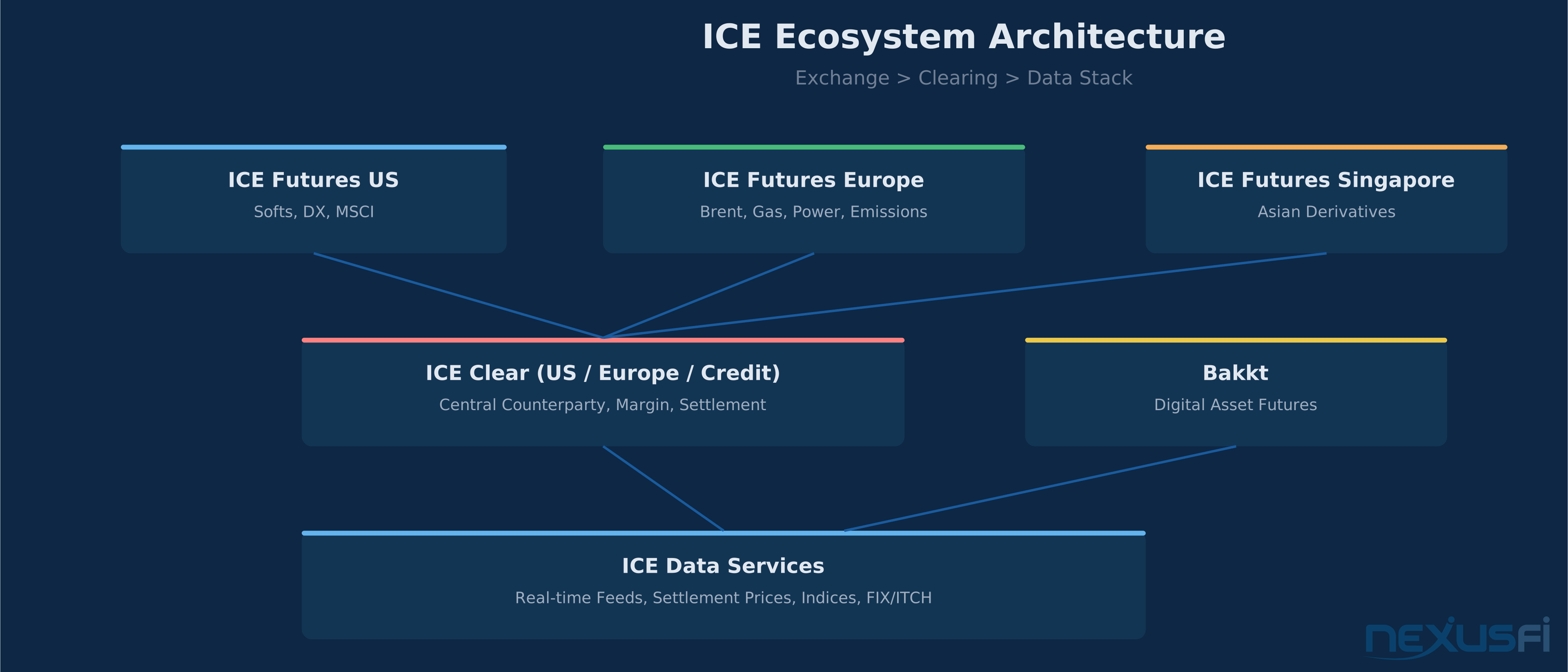
ICE operates as a stack: exchanges on top, clearing in the middle, data services underneath. Understanding which piece does what prevents confusion when you're dealing with contract specifications, margin calls, or data feeds.
ICE Futures US
Headquartered in New York, ICE Futures US is the successor to the New York Board of Trade (NYBOT). This is where the soft commodities trade: Coffee C, Sugar No. 11, Cocoa, Cotton No. 2, and Frozen Concentrated Orange Juice. It also lists financial products including the MSCI index futures and the US Dollar Index (DX).
If you trade softs, this is your exchange. The coffee and sugar contracts alone account for the vast majority of global benchmark pricing in those commodities.
ICE Futures Europe
Based in London, ICE Futures Europe is the energy powerhouse. This is where Brent crude oil trades
As @SMCJB notes: "Brent is the world Benchmark. It's the old IPE contract now traded on ICE. Just FYI the ICE matching engine is in Chicago not London." That last detail matters for latency
ICE Clear
ICE operates multiple clearing houses: ICE Clear US, ICE Clear Europe, and ICE Clear Credit. These are the counterparty to every trade
ICE Data Services
ICE Data Services provides real-time market data, reference pricing, index calculations, and analytics. This includes the settlement prices that determine your daily P&L, the reference data your broker uses for margin calculations, and the indices that underpin many financial products. For traders using third-party platforms, ICE data feeds arrive via FIX or ITCH protocols.
Bakkt
ICE's digital asset division, launched in 2018 as a physically-settled Bitcoin futures venue. Bakkt contracts clear through ICE Clear US, bringing institutional-grade clearing to crypto. More on this below.
Energy Futures: Where ICE Dominates #
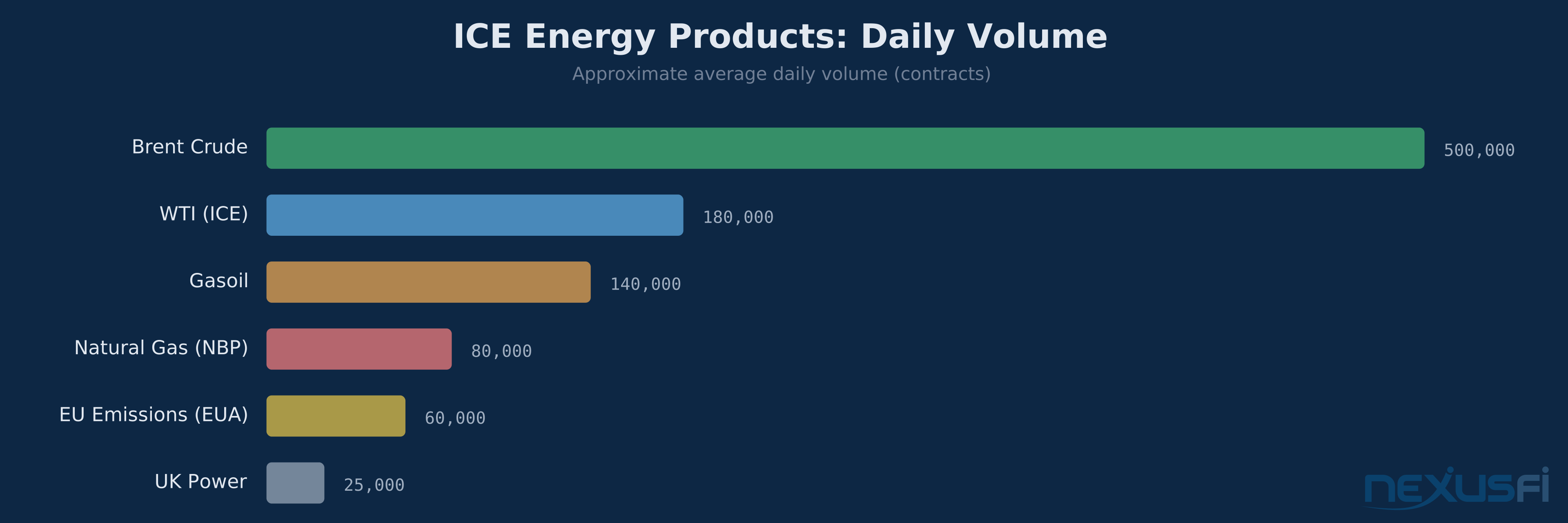
Energy is ICE's franchise. The numbers tell the story: Brent crude alone trades over 500,000 contracts per day across the whole curve, making it the most actively traded crude oil contract in the world by open interest.
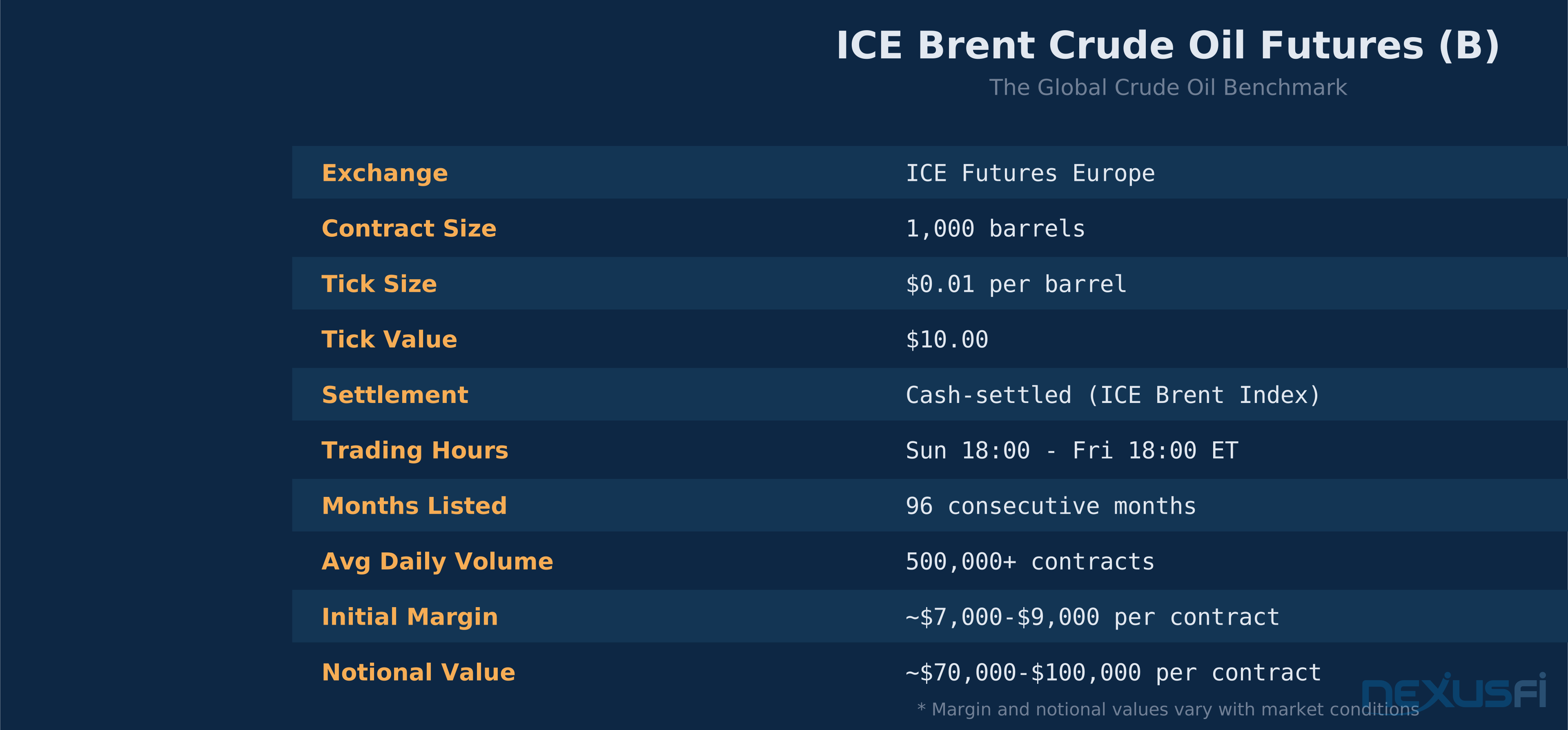
Brent Crude Oil (B)
| Specification | Detail |
|---|---|
| Exchange | ICE Futures Europe |
| Contract Size | 1,000 barrels |
| Tick Size | $0.01/barrel ($10.00/tick) |
| Settlement | Cash-settled against ICE Brent Index |
| Trading Hours | Sunday 18:00 - Friday 18:00 ET (with daily break) |
| Delivery Months | Monthly |
Brent is the global crude benchmark. Unlike WTI (which is Cushing, Oklahoma delivery), Brent settles financially against an index of physical North Sea cargoes. This makes it the reference price for crude produced in Europe, Africa, the Middle East, and large parts of Asia.
Here's the critical distinction traders need to understand. @SMCJB lays it out: "There is more Brent liquidity on ICE though, so if you want to trade Brent do it on ICE. Both exchanges offer exchange traded spreads, but ICE's spread book is far deeper." CME lists a Brent contract too, but ICE owns the liquidity. Don't fight it.
WTI Crude Oil on ICE
ICE also lists a WTI crude oil contract that's financially settled against the NYMEX WTI settlement price. Why trade WTI on ICE instead of directly on NYMEX? Cross-margining. If you're running Brent-WTI spread positions, having both legs on ICE gives you margin offsets you can't get across exchanges.
As community discussion reveals: "The ICE WT-Brent spread you reference when traded will yield both a ICE WTI Future AND an ICE Brent future." Native exchange spreads execute as a single transaction
Natural Gas
ICE Futures Europe lists the UK Natural Gas (NBP) contract
The Brent-WTI Spread
This is the single most discussed ICE-related trade on NexusFi. The spread between Brent and WTI reflects the relative value of Atlantic Basin crude versus US-benchmarked crude. When Brent trades at a premium, it signals tighter global supply relative to the US. When it narrows, it typically reflects strong US production or weak global demand.
As @SMCJB explains: "What we are really looking at is a combination of two different spreads, the Brent-Houston WTI spread PLUS the Houston-Cushing WTI Spread. There's actually a Houston WTI Future, but its listed on ICE and only has trivial volume." That layered structure is why the spread moves in ways that confuse traders who think of it as a simple differential.
Soft Commodities: Coffee, Sugar, Cocoa, and Cotton #
ICE Futures US is the home of the global soft commodity benchmarks. These markets have characteristics that make them distinct from energy or financial futures: strong seasonality, weather sensitivity, delivery logistics that span continents, and liquidity that concentrates heavily in the front months.
Key Contracts
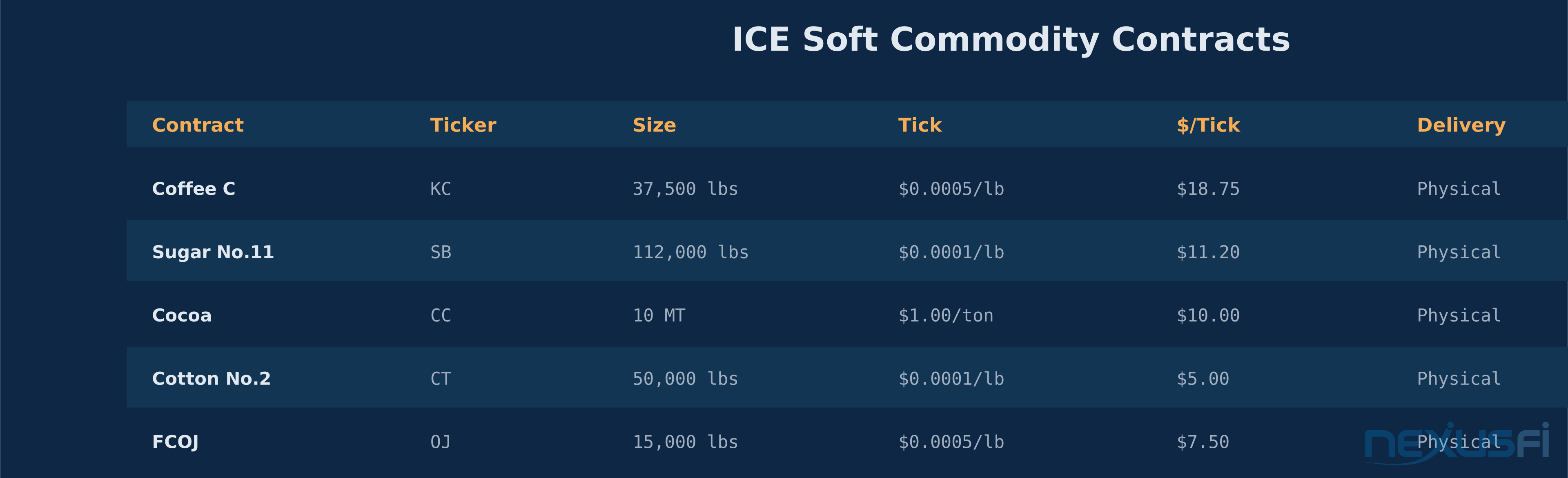
| Contract | Ticker | Size | Tick | Tick Value | Settlement |
|---|---|---|---|---|---|
| Coffee C | KC | 37,500 lbs | $0.0005/lb | $18.75 | Physical delivery |
| Sugar No. 11 | SB | 112,000 lbs | $0.0001/lb | $11.20 | Physical delivery |
| Cocoa | CC | 10 metric tons | $1.00/ton | $10.00 | Physical delivery |
| Cotton No. 2 | CT | 50,000 lbs | $0.0001/lb | $5.00 | Physical delivery |
| FCOJ | OJ | 15,000 lbs | $0.0005/lb | $7.50 | Physical delivery |
Soft commodities are physically delivered, which creates dynamics that financial futures traders might not expect. As delivery months approach, the front contract can decouple from the back months based on actual supply logistics
Liquidity in softs concentrates in the prompt month and the next 2-3 delivery months. Beyond that, you're dealing with wider spreads and thinner books. Coffee is the exception
Financial Products on ICE #
ICE's financial futures are less prominent than CME's, but two contracts stand out:
US Dollar Index (DX)
MSCI Index Futures
Through the LIFFE acquisition, ICE Futures Europe also lists Euribor interest rate futures (Three Month Euribor, or I) and UK Gilt futures
Trading Hours and Session Structure #
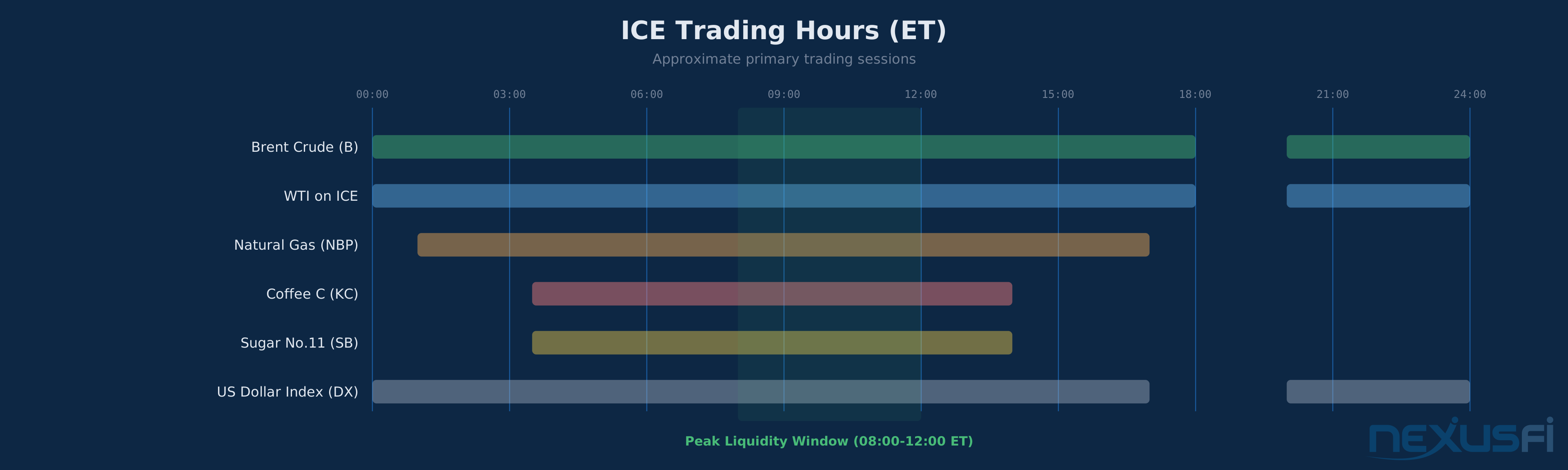
ICE's global footprint means trading sessions span nearly 24 hours on business days. The specifics vary by product division.
ICE Futures Europe (Energy)
Brent crude and other European energy products trade from 01:00 to 23:00 London time (20:00 - 18:00 ET), with a one-hour daily break. This gives US traders access to European energy markets during their normal trading day and European traders access during theirs.
Liquidity peaks during two windows: London morning (07:00-12:00 GMT, overlapping with European physical trading) and the US session (08:00-14:30 ET, when NYMEX energy is also active). The overlap between these windows
ICE Futures US (Softs)
Soft commodities on ICE Futures US trade from 03:30 to 14:00 ET for most contracts, with electronic pre-open sessions starting earlier. Coffee C and Sugar No. 11 have the most active electronic sessions. Liquidity peaks during the New York morning window (09:00-12:00 ET).
Session Design Impact on Traders
ICE was built electronic from day one. There's no open outcry session to worry about, no pit-to-screen transition effects. What you see on the screen is the market. This matters for stop placement and order management
Market Structure and Execution #
ICE's matching engine runs a price-time priority algorithm
Order Types
ICE supports the full spectrum: market, limit, stop-limit, market-on-close, iceberg (hidden quantity), and discretionary orders. The iceberg functionality is worth understanding
Liquidity Provision
ICE runs market maker programs with Designated Market Makers (DMMs) and Electronic Liquidity Providers (ELPs). These participants get fee rebates and other incentives for maintaining continuous quotes within specified spread parameters. The result is tighter spreads than you'd see without these programs, especially in less liquid contract months and during off-peak hours.
ICE Clear: How Clearing Works #
Every trade on ICE goes through central clearing. ICE Clear steps in as the counterparty to both sides of every transaction through a process called novation. Once a trade is matched, the exchange ceases to exist as the connection between buyer and seller
Margin Framework
ICE Clear uses a risk-based margining methodology (SPAN-like for US products, proprietary risk models for European products). Two types of margin apply:
Initial Margin
Variation Margin
Cross-Margining
One of ICE's practical advantages for energy traders: cross-margining across correlated products. If you're long Brent and short WTI on ICE, the clearing house recognizes the offsetting risk and reduces your total margin requirement below what you'd pay for each leg independently. This capital efficiency is a real reason traders keep both legs on ICE rather than splitting between ICE Brent and NYMEX WTI.
Default Waterfall
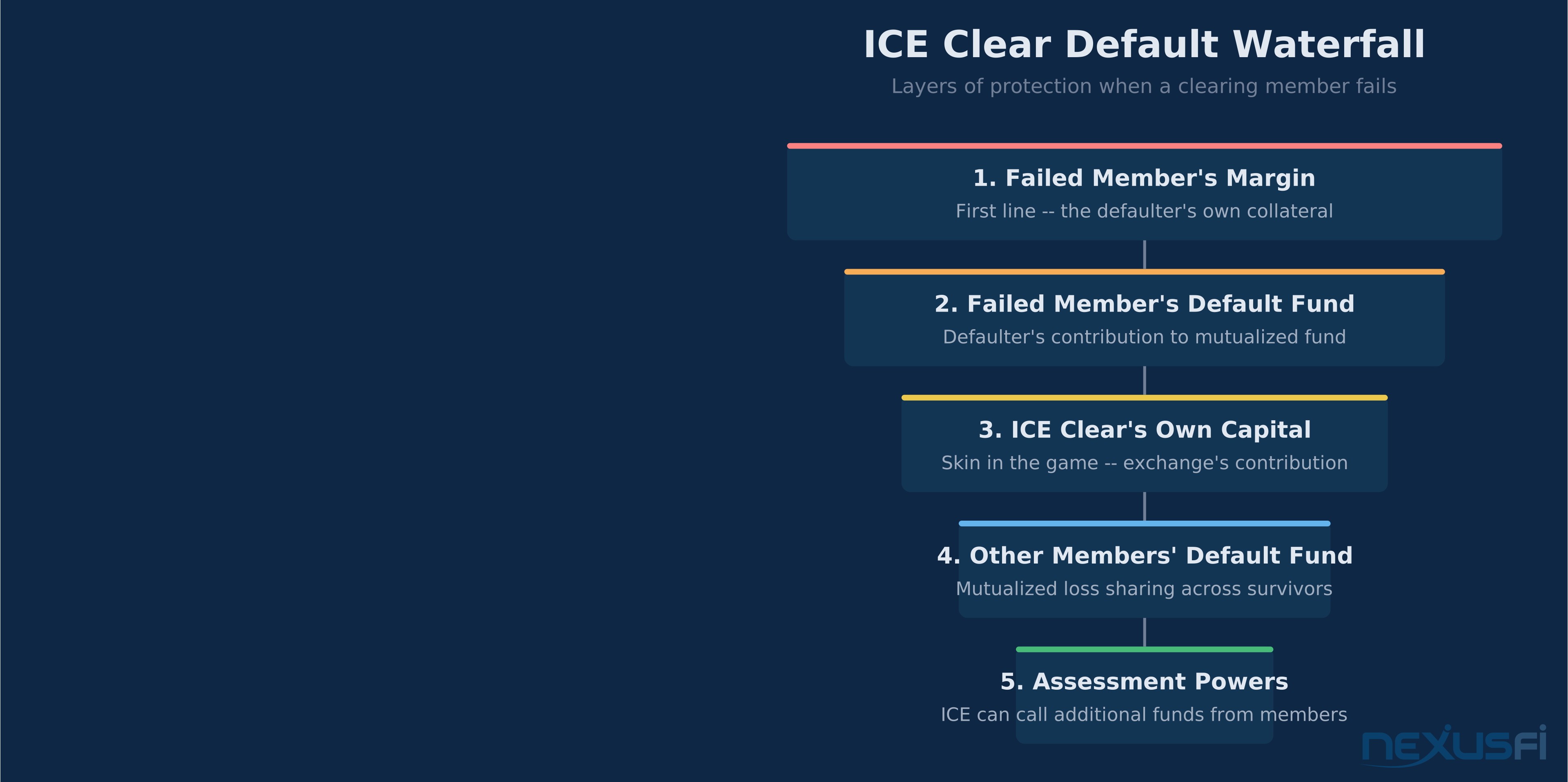
If a clearing member fails, ICE Clear's default waterfall kicks in: the failed member's margin first, then their default fund contribution, then ICE Clear's own capital (skin in the game), then other members' default fund contributions. This layered protection is what makes central clearing the foundation of systemic risk management in derivatives markets.
ICE Brent is the global crude benchmark — not WTI. Roughly two-thirds of the world's physically-traded crude oil is priced against Brent, including most Middle Eastern, African, and European grades. When the news says "oil prices fell $2 today," they're quoting ICE Brent. NYMEX WTI is the U.S. reference. Knowing which benchmark moves first — and why — is core to trading energy.
ICE vs. CME Group: What Matters to Traders #
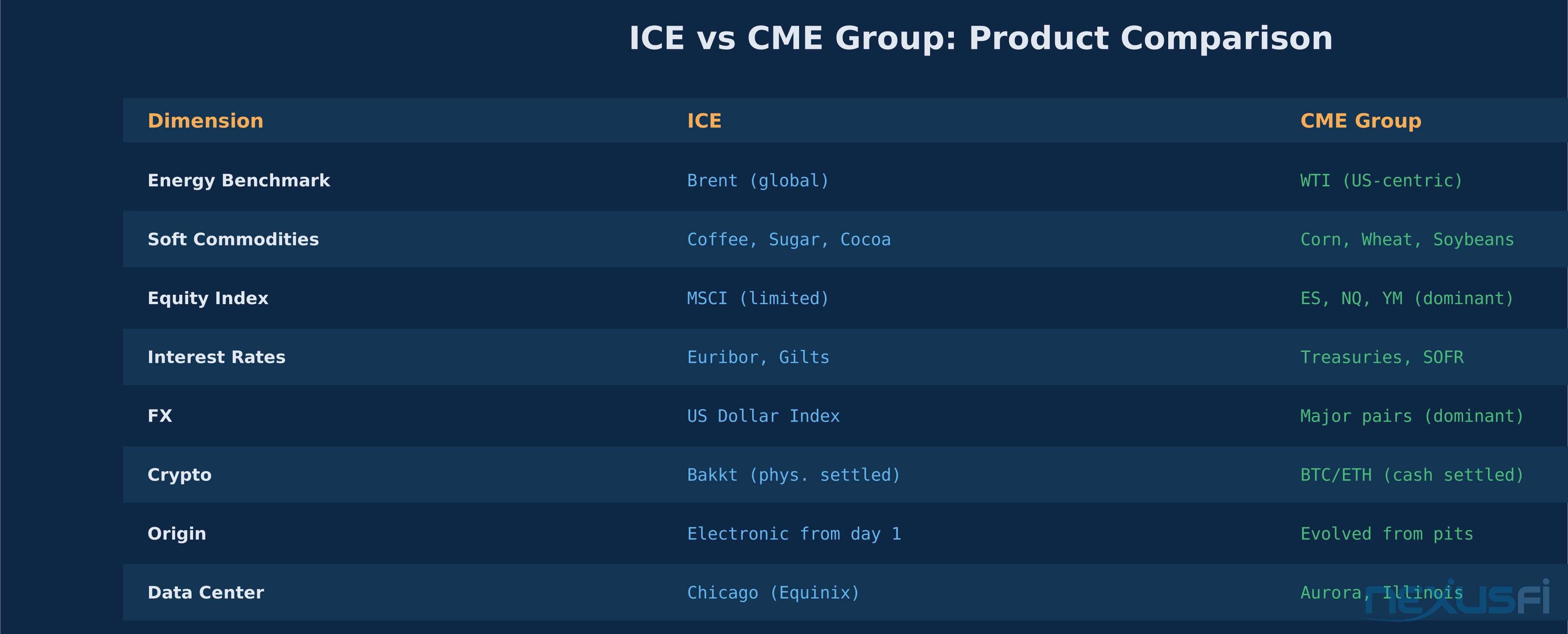
Every futures trader encounters both ICE and CME. Here's where the differences actually matter for execution, cost, and strategy.
| Dimension | ICE | CME Group |
|---|---|---|
| Energy Benchmark | Brent crude (global), European gas, power | WTI crude, Henry Hub gas (US-centric) |
| Equity Index | MSCI, Russell (limited) | S&P 500, Nasdaq 100, Dow (dominant) |
| Soft Commodities | Coffee, Sugar, Cocoa, Cotton (dominant) | Corn, Wheat, Soybeans (CBOT grains) |
| Interest Rates | Euribor, Gilts (European) | Treasuries, Fed Funds, SOFR (dominant) |
| FX | US Dollar Index | Major currency pairs (dominant) |
| Origin | Electronic from day one | Evolved from open outcry |
| Primary Data Center | Chicago (Equinix) | Aurora, Illinois |
| Matching Engine | Built for electronic | Globex (evolved) |
The practical takeaway: if you're trading global energy benchmarks or soft commodities, ICE is your primary venue. If you're trading equity index futures, US rates, or grains, CME dominates. For spread trading across both
As @SMCJB puts it on NexusFi: "Being aware of what Brent is doing, and what the WTI-Brent spread is doing, may help you in your understanding of the underlying crude oil markets. Brent is primarily traded on ICE Europe."
ICE Data Services #
ICE Data Services is the information backbone. For traders, three functions matter most:
Real-Time Market Data
Settlement Pricing
Index Calculations
Bakkt: Digital Assets on ICE Infrastructure #
Bakkt launched in 2018 as ICE's play in digital assets. The original proposition was institutional-grade, physically-settled Bitcoin futures cleared through ICE Clear US. This meant actual Bitcoin delivery into Bakkt's qualified custodian
Bakkt has since expanded to include cash-settled Bitcoin and Ethereum contracts and pivoted toward consumer-facing digital payment services. For futures traders, the relevance is narrow but specific: Bakkt contracts offer regulated crypto exposure with ICE's clearing infrastructure, which matters for institutional participants who can't or won't use unregulated crypto exchanges.
CME's Bitcoin and Ethereum futures have captured more institutional volume, largely due to CME's broader existing client base and the cash-settlement model that avoids physical custody complexities. Bakkt's physically-settled model appeals to traders who want actual delivery capability, but that's a niche within a niche.
What This Means for Your Trading #
If you're building or expanding a commodity trading operation, here's the practical framework for thinking about ICE:
Energy traders
Soft commodity traders
Multi-asset traders
Platform considerations
ICE's role in the global derivatives ecosystem is foundational. It runs the benchmarks that price physical commodities worldwide, clears the trades that manage that risk, and distributes the data that makes price discovery possible. For any trader working in energy or soft commodities, ICE is as essential to understand as CME.
Knowledge Map
Prerequisites
Understand these firstGo Deeper
Build on this knowledgeReferences This Article
Articles that build on this topicCitations
- — Best European commodities exchange for day trading (2016) 👍 2“ICE and CME together account for the vast majority of liquid commodity futures -- ICE Europe for Brent, softs, gasoil; CME NYMEX for WTI, nat gas, metals.”
- — The CL Crude-analysis Thread (2015) 👍 4“Brent is the world Benchmark. It's the old IPE contract now traded on ICE. (Just FYI the ICE matching engine is in Chicago not London). It is financially settled against an index.”
- — Does anyone here trade Brent Crude? (2015) 👍 4“Average Daily Volumes in Oct 2015: 794,708 NYMEX Light Crude (WTI) vs 677,834 ICE Brent Crude -- Brent nearly matches WTI volume despite trading on a different exchange.”
- — The Most Liquid Futures on the European Market? (2010) 👍 6“Brent Crude IPE (B/BC/COIL) ranks among the most liquid European commodity futures -- the old IPE contract, now traded on ICE, remains the global Brent benchmark.”
- — The CL Crude-analysis Thread (2023) 👍 3“Generally yes. I understand that the Arb to Europe is currently closed. Need to remember that WTI is now part of the Brent/BFOB basket, but it's Houston WTI not Cushing WTI.”
- — Markets correlated to CL (2014) 👍 5“With the changes in US crude fundamentals over the last few years Brent has surpassed WTI as the world benchmark -- Brent trades on ICE Europe, not CME.”