



NYMEX (New York Mercantile Exchange): The Global Hub for Energy and Metals Futures
Overview #
NYMEX — the New York Mercantile Exchange — is where the world's price for crude oil, natural gas, gold, silver, and copper gets set every trading day. If you've traded CL, NG, GC, or HG, you've been on NYMEX or its sister division COMEX. Together, these two exchanges — both divisions of CME Group since 2008 — run the world's largest commodity futures complex by open interest. CL alone averages over 1 million contracts daily during peak periods. GC is the global benchmark for gold. NG is the most volatile liquid futures market period.
NYMEX matters to every futures trader, even if you never touch a commodity. Crude oil is a real-rate and risk-sentiment indicator. Copper leads economic cycles by 6-12 months. Gold is a real interest rate proxy that often moves before Treasuries. Understanding these markets makes you a better ES or NQ trader, not just a commodity trader.
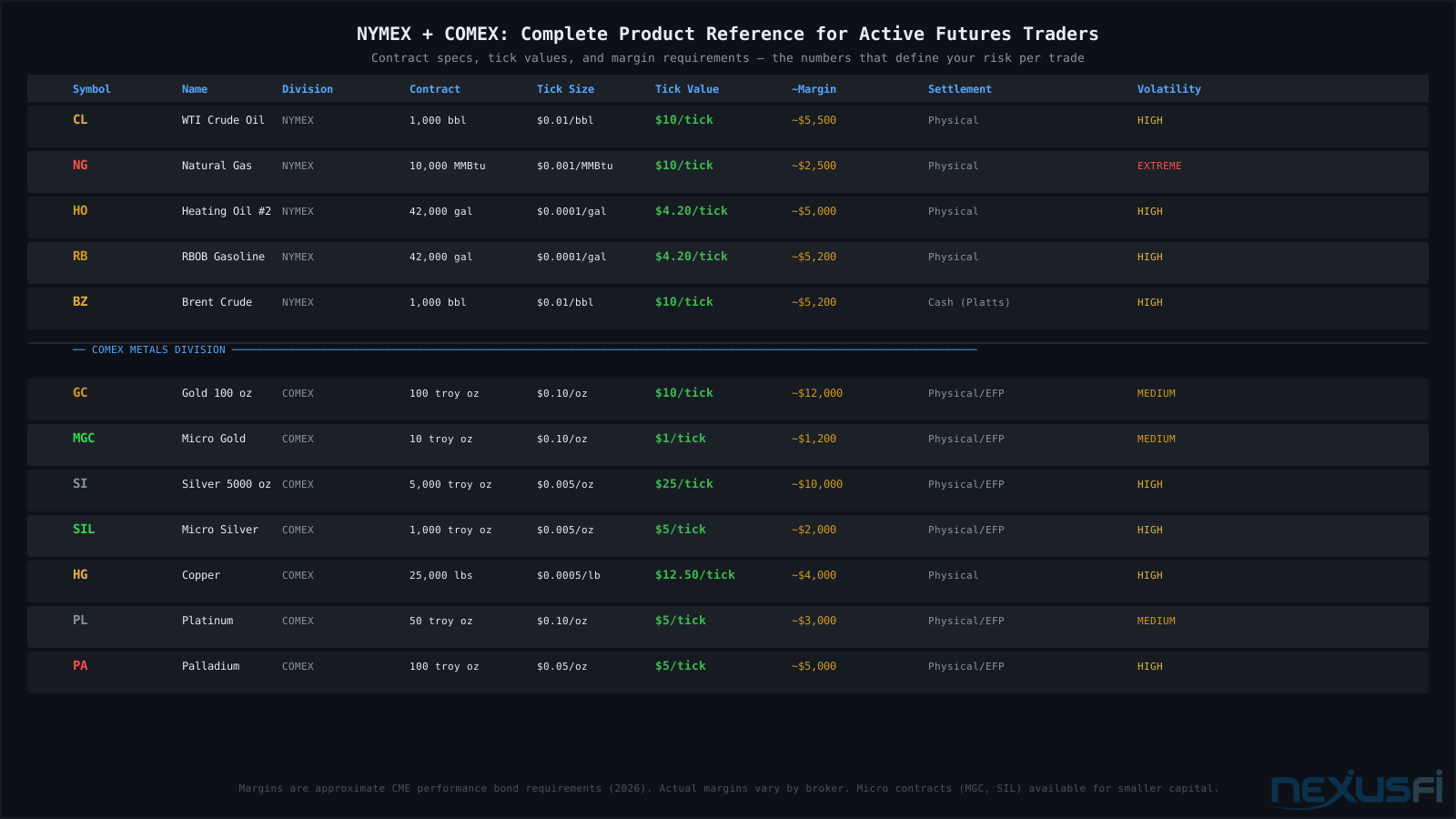
NYMEX and COMEX product specifications. Tick values and margin requirements vary dramatically across contracts — CL at $10/tick vs NG at $10/tick but 5x the daily volatility range.
What Is NYMEX? #
The New York Mercantile Exchange is the world's largest physical commodity futures exchange by open interest. It's the price discovery mechanism for WTI crude oil — the commodity that benchmarks contracts from Texas to Tokyo — and for COMEX gold, which anchors monetary metal prices from the London fix to Shanghai futures. When energy traders say "oil is up $2," they mean NYMEX CL is up $2. When news says "gold hit a new high," they mean COMEX GC made a new contract high.
For active futures traders, NYMEX is relevant for two reasons. First, CL and GC rank among the most heavily traded futures contracts on earth — deep books and tight spreads during U.S. and European sessions. Second, commodity markets on NYMEX behave differently from equity index futures in ways that matter: they have physical delivery mechanisms that anchor prices to real-world supply and demand, they respond to different catalysts (EIA reports, OPEC decisions, Fed policy on gold), and their correlations with each other create spread trading opportunities unavailable on equity exchanges.
New to NYMEX from equity index futures? The contracts are different in three critical ways: physical delivery is real (not just a contract clause), weekly government reports (EIA, storage) are high-impact scheduled events, and the daily ranges — especially in NG — are multiples of what you see in ES or NQ.
NYMEX History: From Butter to Barrels #
NYMEX was founded in 1872 as the Butter and Cheese Exchange of New York. By 1882 it had expanded into eggs and renamed itself the New York Mercantile Exchange. For most of the 20th century, it dealt primarily in agricultural commodities and potato futures — yes, potato futures were a major product through the 1970s. The modern NYMEX that energy traders know emerged in 1978, when the exchange launched heating oil futures (#2 heating oil, still traded as HO today), followed by crude oil futures in 1983.
The WTI crude oil contract, launched March 30, 1983, would become the most important commodity futures contract ever created. By the 1990s, NYMEX was processing more than 100 million contracts annually. In 2006, NYMEX merged with COMEX (the Commodity Exchange Inc., which itself was formed from four smaller exchanges in 1933), creating a single entity. In 2008, CME Group acquired NYMEX Holdings for approximately $9.5 billion. Today NYMEX and COMEX operate as divisions of CME Group, trading electronically on CME Globex alongside the CME, CBOT, and other exchange divisions.
The physical trading pits in Manhattan, which defined American commodity markets for over a century, closed in 2016. Everything now happens on Globex's electronic matching engine. The exchange building at One North End Avenue still exists, but the open outcry pits are gone. What remains is the contract structure, the delivery specifications, and the price authority that a century of trading established.
The NYMEX Energy Division: CL, NG, HO, RB, BZ #
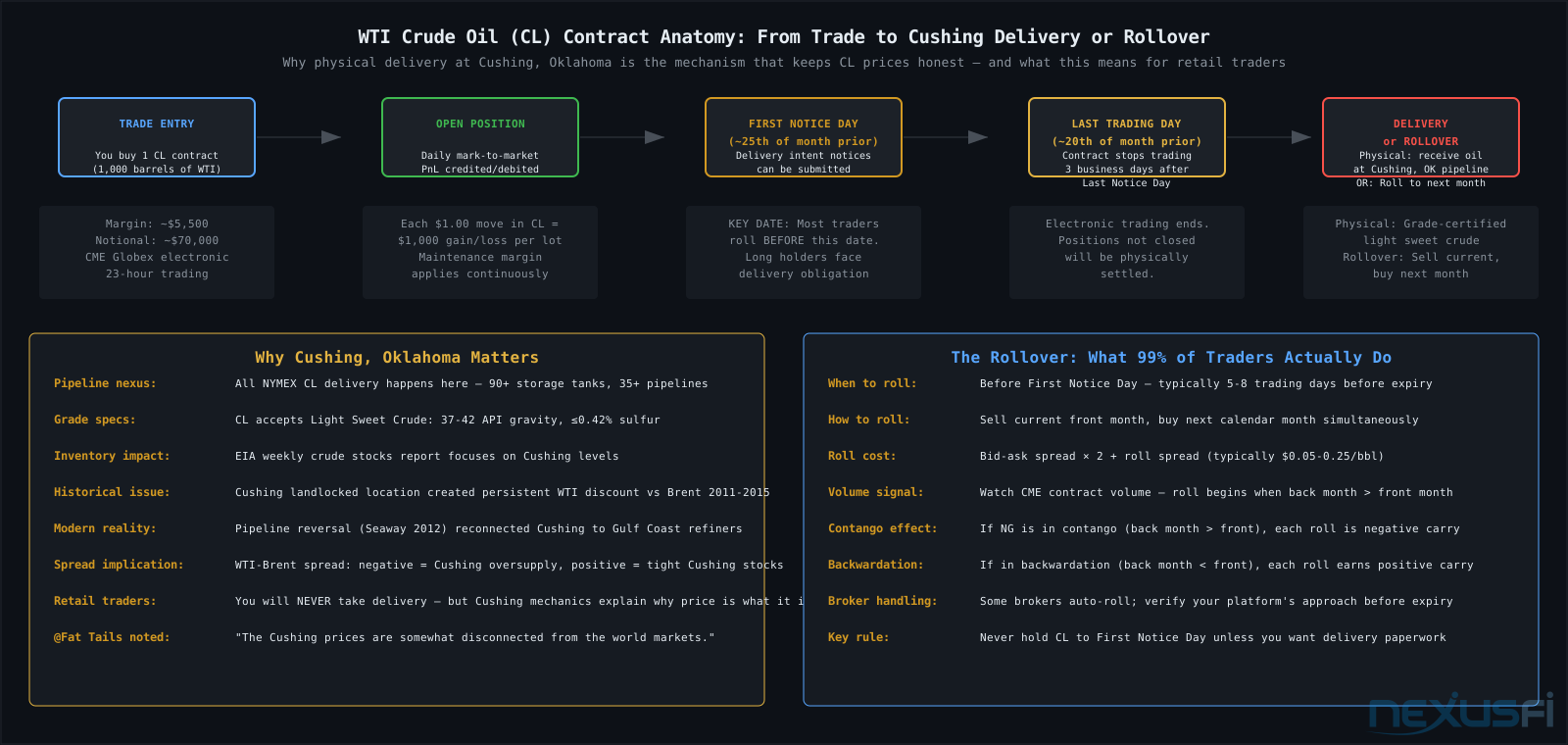
CL contract anatomy: 1,000 bbl deliverable at Cushing, Oklahoma. First Notice Day triggers physical delivery obligations — retail traders must roll before this date, typically 5-8 days before Last Trading Day.
The NYMEX energy complex is the heart of the exchange. Crude oil (CL) dominates by volume and significance, but the energy complex is a complete ecosystem of interconnected contracts.
WTI Crude Oil (CL) is the benchmark. Each contract represents 1,000 barrels of West Texas Intermediate crude oil, deliverable at Cushing, Oklahoma. One tick ($0.01 per barrel) equals $10. Current initial margin is approximately $5,000-6,000 per contract, giving you roughly 12:1 leverage on a ~$70,000 notional position. CL trades electronically Sunday 5:00 PM through Friday 4:00 PM CT (6:00 PM to 5:00 PM ET), with a daily 60-minute break. Most retail traders focus on U.S. RTH hours (9:00 AM to 2:30 PM ET when the NYMEX pit historically closed), when spreads are 1-3 ticks and order book depth is significant.
[cite:https://nexusfi.com/showthread.php?t=681&p=462343#post462343]
This is critical: NYMEX CL isn't "oil" generically — it's specifically Light Sweet Crude deliverable to Cushing, Oklahoma, Pipeline Section 2. Cushing fundamentals can diverge much from global crude conditions.
Physical delivery is theoretically possible but practically irrelevant for retail traders.
[cite:https://nexusfi.com/showthread.php?t=34423&p=463560#post463560]
For retail traders, the mandatory action is rolling before First Notice Day (typically the 25th of the month prior to delivery). Hold to First Notice Day and you're on the hook for receiving or delivering 1,000 barrels of actual crude oil.
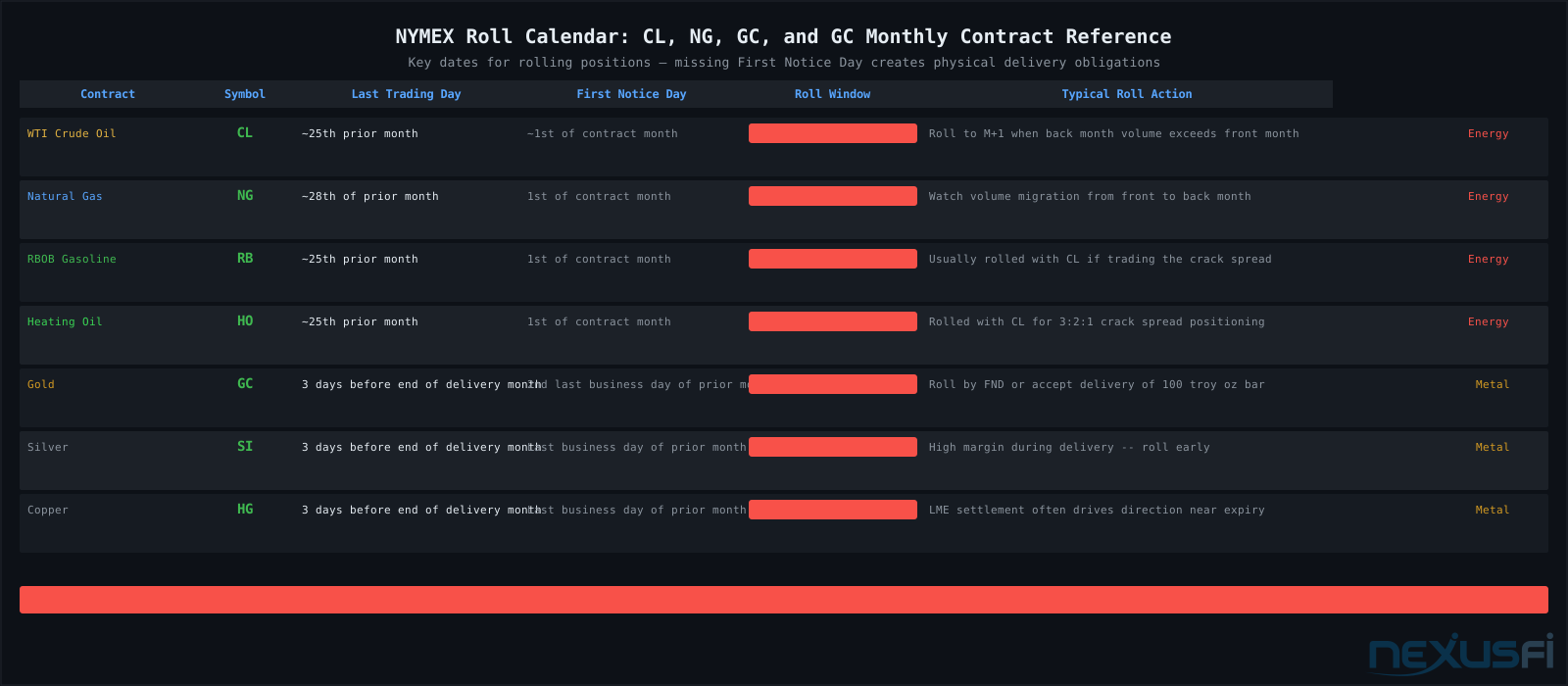
NYMEX roll calendar: energy contracts roll 5-8 days before LTD; metals roll before First Notice Day. Volume migration is the practical signal — roll when back-month volume exceeds front-month.
@BigMike documented CL roll timing in the NexusFi rollover thread: CL volume migrates to the new front month by the third Thursday of the prior month, not on expiry day itself.
[cite:https://nexusfi.com/showthread.php?t=2073&p=18242#post18242]
[cite:https://nexusfi.com/showthread.php?t=57159&p=843041#post843041]
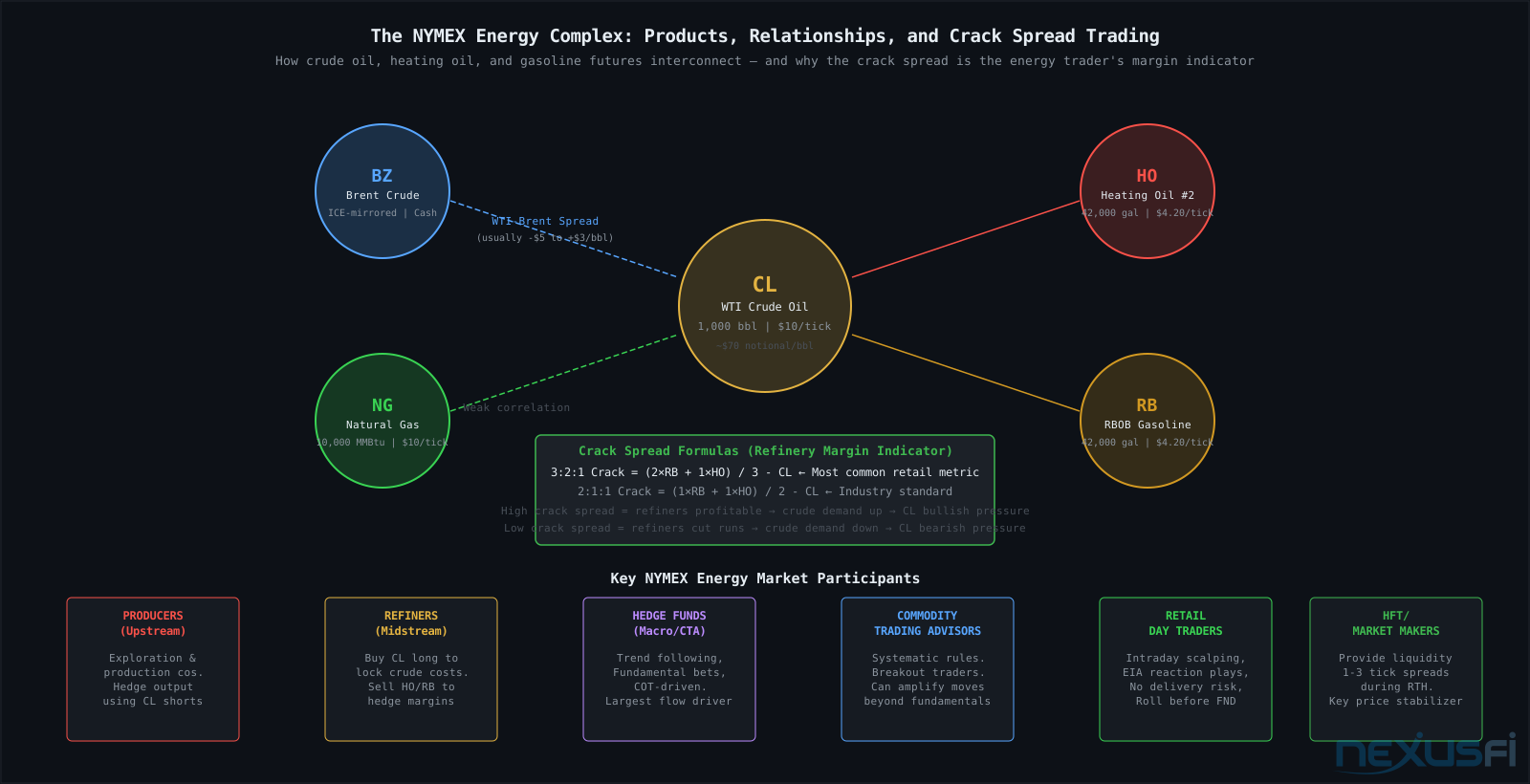
NYMEX energy complex: CL, NG, HO, RB, and BZ with crack spread formulas. The 3:2:1 crack (2 gasoline + 1 heating oil vs 3 crude) is the core refinery margin indicator every energy trader should track.
Natural Gas (NG) is CL's volatile sibling. One contract = 10,000 MMBtu (million British thermal units) of natural gas at Henry Hub, Louisiana. Tick size is $0.001 per MMBtu = $10 per tick. Margins are lower than CL (~$2,000-3,000), but NG is more volatile — it regularly moves 3-8% in a single session and can gap 20-40% on weather extremes. Unlike crude, natural gas has no efficient global arbitrage mechanism: you can't ship it between continents without LNG infrastructure, so supply and demand are more regional and weather-sensitive. The EIA Natural Gas Storage Report every Thursday at 10:30 AM ET is the primary scheduled volatility event.
Heating Oil #2 (HO) and RBOB Gasoline (RB) are refined petroleum products derived from crude. Each represents 42,000 gallons (one standard tanker truck). Tick size is $0.0001 per gallon = $4.20 per tick. These contracts are essential for understanding crack spreads — the refinery margin measuring the difference between what refiners pay for crude and what they earn from products. The 3:2:1 crack spread (2 parts gasoline + 1 part heating oil vs. 3 parts crude) is the most-quoted refinery margin metric.
@SMCJB covered the crack spread mechanics in detail:
[cite:https://nexusfi.com/showthread.php?t=34162&p=458358#post458358]
Brent Crude (BZ) on NYMEX is a cash-settled mirror of ICE Brent futures, settled against Platts assessments. @SMCJB on the WTI vs Brent choice: "NYMEX CL is a physically delivered contract while ICE WTI is a financially settled 'copy cat' contract based upon the NYMEX CL settlement price."
[cite:https://nexusfi.com/showthread.php?t=9601&p=540909#post540909]
The WTI-Brent spread reflects pipeline infrastructure, US export capability, and geopolitical dynamics. When Cushing storage is high (supply glut at the delivery point), WTI trades at a discount to Brent. When Cushing is tight and US shale production is elevated, the spread narrows.
The Cushing Effect: Why Delivery Location Matters #
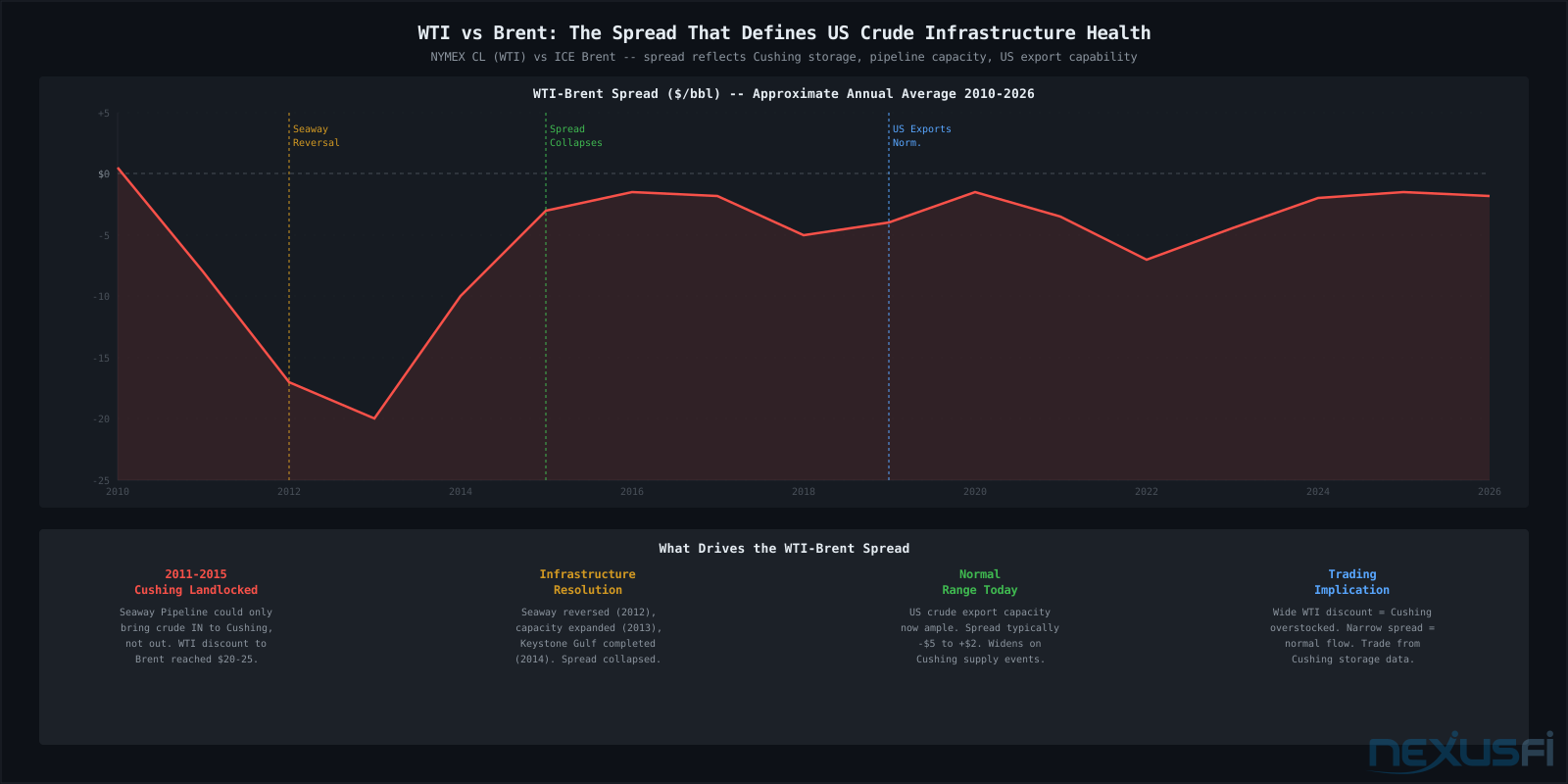
WTI-Brent spread 2010-2026. The 2011-2015 Cushing landlocked period drove WTI to $20-25 discounts. Pipeline reversals (2012-2014) resolved the bottleneck. Today's spread reflects export capacity and short-term flow dynamics.
No exchange has a more consequential delivery location than NYMEX's choice of Cushing, Oklahoma for crude oil settlement. Cushing sits at the intersection of 35+ pipeline systems and holds more than 90 storage tanks with approximately 76 million barrels of storage capacity. It is the "pipeline crossroads of the world."
This delivery mechanism is what anchors NYMEX futures prices to physical reality — but it also created the most significant pricing anomaly in modern commodity markets.
[cite:https://nexusfi.com/showthread.php?t=3541&p=471791#post471791]
From roughly 2011 to 2015, Cushing was geographically landlocked — pipelines could bring crude in but had limited capacity to move it out to Gulf Coast refiners. The result was a persistent Cushing oversupply, WTI trading $20-25 below Brent, and contango so severe that long-only fund investors lost billions rolling forward contracts. The solution came through infrastructure: the Seaway Pipeline was reversed in 2012 (adding 180,000 barrels/day of southbound capacity), then expanded, and the pipeline to the Gulf was completed in 2014. By 2015, the spread had collapsed back to near parity.
Understanding Cushing logistics isn't optional for serious CL traders — it explains why WTI and Brent prices can diverge much and when that divergence will mean-revert.
The Cushing storage report within the weekly EIA data is more important than the headline crude draw/build. A draw that happens outside Cushing barely moves CL. A Cushing draw of 2+ million barrels in winter typically produces a 1-2% same-day reaction. Watch the Cushing-specific number, not just the total U.S. crude figure.
COMEX Metals: Gold, Silver, Copper, Platinum, Palladium #
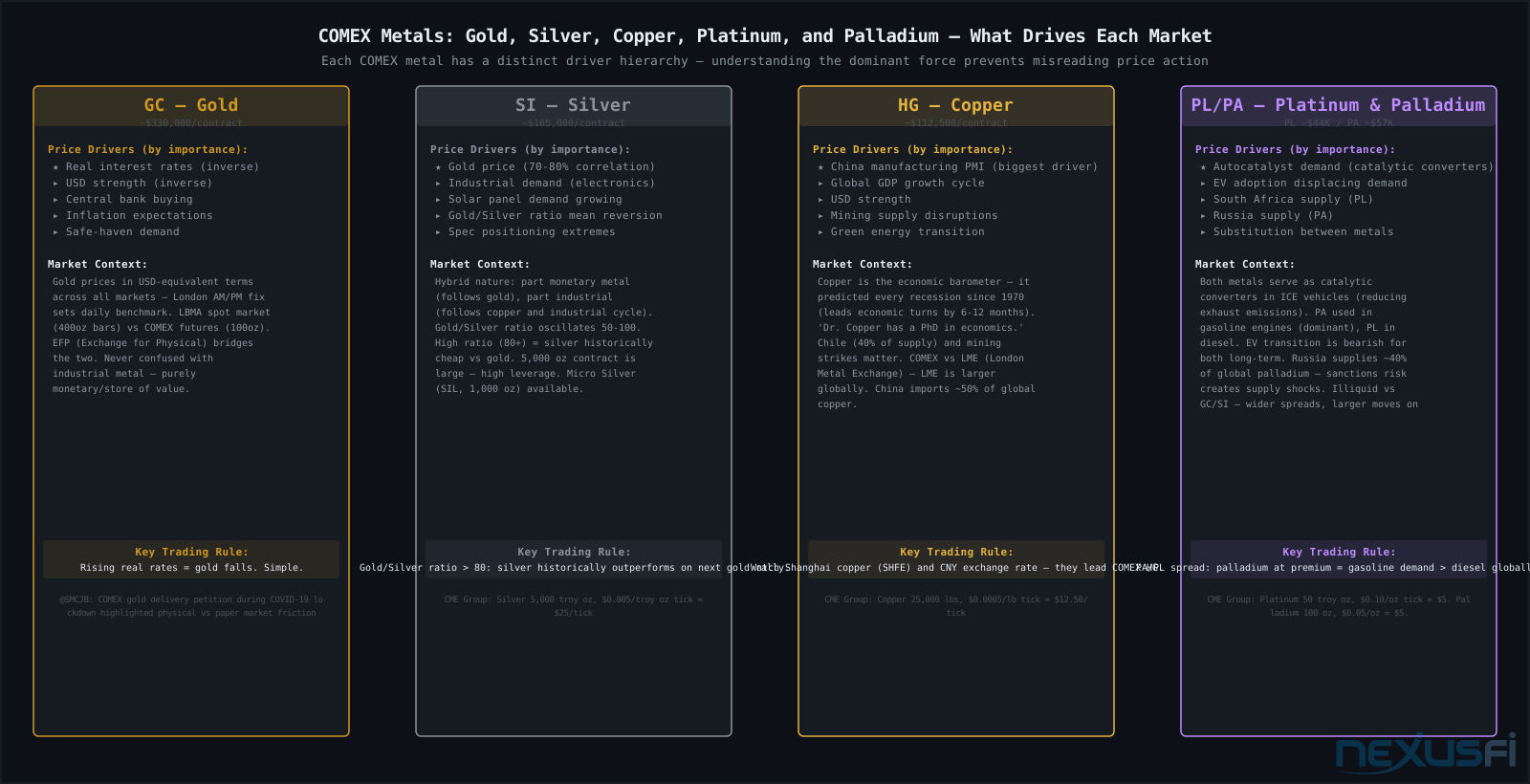
COMEX metals: GC (100 oz, real rates), SI (5,000 oz, dual monetary/industrial), HG (25,000 lbs, economic cycle), PL and PA (automotive trigger demand). Each responds to different macro drivers.
COMEX is the metals division of NYMEX and the world's primary futures exchange for gold and silver. While NYMEX energy products are driven by supply, demand, and geopolitical factors, COMEX metals respond to an entirely different set of drivers — especially monetary conditions.
Gold (GC) is the most monetarily significant metal in existence. Each contract represents 100 troy ounces. At current prices (~$3,300/oz), one GC contract has notional value around $330,000. Tick size is $0.10/troy oz = $10/tick. The dominant driver of gold is real interest rates — specifically, the 10-year U.S. Treasury Inflation-Protected Securities (TIPS) yield. When real rates fall, the opportunity cost of holding gold (which pays no yield) decreases, making gold more attractive. When real rates rise, gold faces selling pressure. The USD also matters: gold priced in dollars tends to rise when the dollar weakens against other currencies. Central bank purchasing (historically 400-1,000 tons/year globally) provides a structural bid that has grown much since 2022.
COMEX gold delivery involves 100-troy-oz bars with specific purity requirements (0.995 fineness), deposited at CME-approved vaults in New York and other designated facilities. The Exchange for Physical (EFP) mechanism allows holders of futures positions to exchange them for physical gold (or vice versa) outside the exchange, bridging COMEX futures and the LBMA spot market in London. This arbitrage mechanism keeps COMEX and London prices tightly linked.
Silver (SI) has a dual identity: monetary metal and industrial commodity. Each contract represents 5,000 troy ounces (~$165,000 notional). Tick size is $0.005/troy oz = $25/tick — the highest dollar tick value of any standard COMEX metal. Silver follows gold's monetary dynamics but with higher leverage to sentiment changes, and it has meaningful industrial demand from electronics, solar panels, and medical applications. The Gold/Silver ratio (currently oscillating between 70-90) has historically mean-reverted: when it reaches extremes above 80, silver tends to outperform gold on the next monetary-driven rally. The Micro Silver contract (SIL, 1,000 troy oz) allows smaller capital deployment while maintaining the same price exposure.
Copper (HG) is the most economically linked of the COMEX metals. Each contract is 25,000 lbs (~$112,500 notional). Copper "has a PhD in economics" — it consistently leads economic cycles by 6-12 months because copper demand tracks construction, manufacturing, and infrastructure investment. China consumes approximately 50% of global copper supply; Chinese manufacturing PMI is the single most important monthly data point for HG traders. The LME (London Metal Exchange) is the larger copper market globally, but COMEX HG is the primary US price reference. Watch the SHFE (Shanghai Futures Exchange) copper contract overnight for directional signals before US market hours.
Platinum (PL) and Palladium (PA) are the precious metals most affected by the automotive industry. Both serve as catalytic converter components for internal combustion engines. Palladium dominates in gasoline engines; platinum in diesel. The transition to electric vehicles is structurally bearish for both over the long term, though the timeline remains uncertain. Russia supplies approximately 40% of global palladium — supply disruption risk from sanctions or production issues can cause violent price spikes. Both contracts are relatively illiquid compared to GC and SI, with wider spreads and greater susceptibility to thin-market gaps.
The NYMEX Weekly Calendar: EIA Reports and Key Data Events #
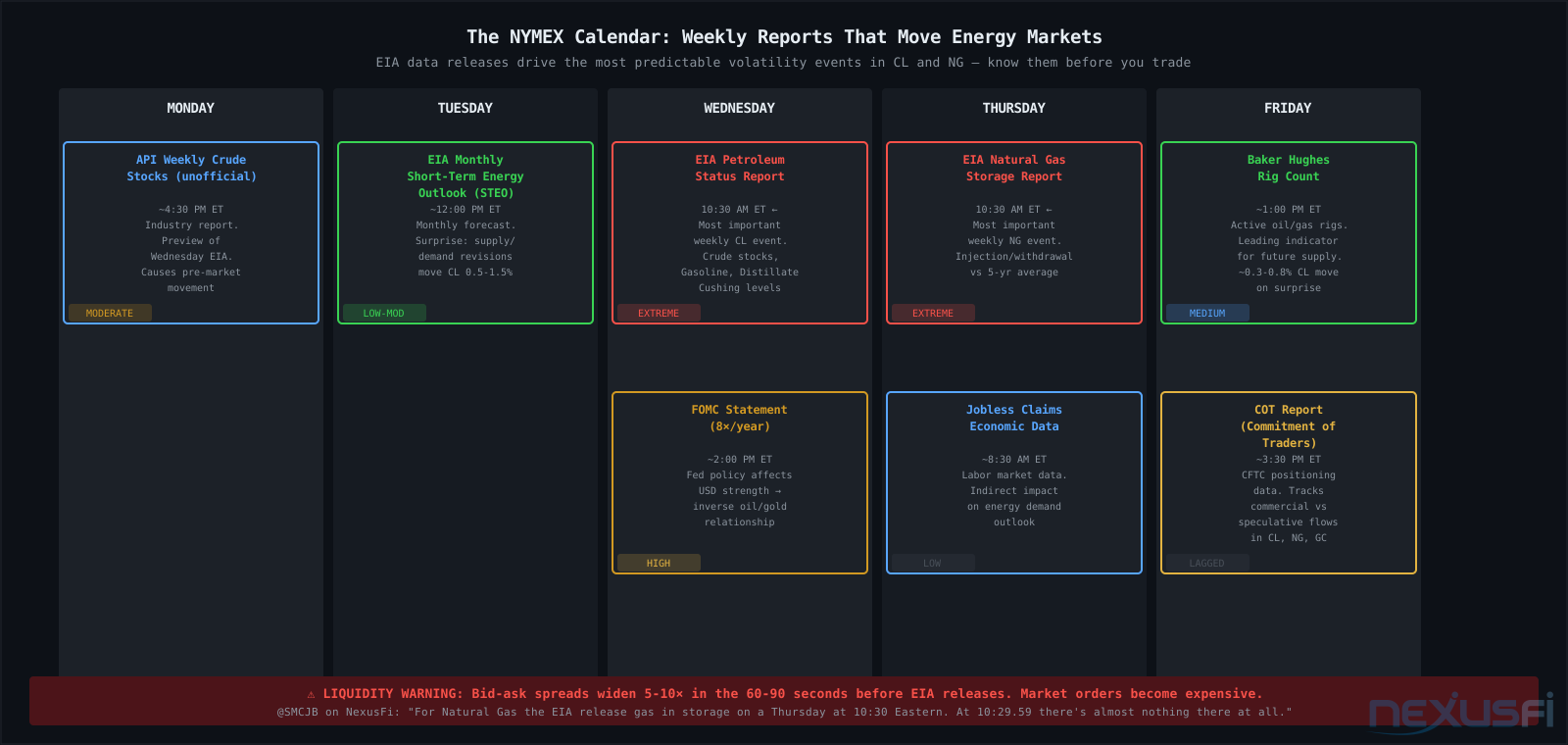
NYMEX weekly scheduled events. The EIA Petroleum Status Report (Wednesday 10:30 AM ET) and Natural Gas Storage Report (Thursday 10:30 AM ET) are the two highest-impact scheduled events in commodity futures trading.
NYMEX energy contracts have more predictable scheduled volatility events than any other asset class. Two weekly government data releases dominate the trading calendar.
EIA Petroleum Status Report (Wednesdays, 10:30 AM ET) is the most market-moving scheduled event for CL, HO, and RB. The report provides weekly data on U.S. crude oil stocks, gasoline inventories, distillate inventories, refinery utilization, and — critically — Cushing storage levels. The market response is driven by the difference between the actual number and the consensus estimate, not the absolute level.
@SMCJB on reading PADD regional data within the EIA report: inventory figures are divided into PADD regions (Pipeline Administration for Defense Districts), and "an increase in Padd V — west of the rockies — is basically meaningless for most of the country as it's a completely separate market." Only Cushing (PADD 2) and Gulf Coast (PADD 3) numbers move CL much.
The practical implication: liquidity evaporates in the 90 seconds before the release.
[cite:https://nexusfi.com/showthread.php?t=26796&p=708270#post708270]
The same dynamic applies to the petroleum report for CL. Do not place market orders in the 90-second window before 10:30 AM on Wednesday (petroleum) or Thursday (natural gas). The book is basically empty.
EIA Natural Gas Storage Report (Thursdays, 10:30 AM ET) is the primary volatility trigger for NG. The report shows weekly injections to or withdrawals from natural gas storage facilities, compared against the five-year average and analyst expectations. When actual storage deviates much from expectations — especially in winter when withdrawal expectations are high — NG can move $0.10-0.40/MMBtu in seconds (equivalent to $1,000-4,000 per contract). Natural gas is seasonal: high summer injections (storage refilling) are expected; any shortfall creates winter supply anxiety and price spikes.
Baker Hughes Rig Count (Fridays, ~1:00 PM ET) tracks the number of active oil and gas drilling rigs in the U.S. Rising rig counts signal future supply increases; declining counts signal production pullback. The market reaction is typically smaller (0.3-0.8% for CL on surprises) but can compound with existing trend conviction. The rig count leads production data by 6-9 months.
COT Report (Fridays, ~3:30 PM ET, for prior Tuesday's positions) is the CFTC's Commitment of Traders report, showing aggregate positions of commercial hedgers (producers, refiners), large non-commercial speculators (hedge funds, CTAs), and non-reportable retail traders. Extreme speculative positioning in one direction often precedes mean-reversions. When large speculators are maximally net long CL, there's limited buying pressure remaining; when they're maximally net short, the setup for a short-covering rally improves.
NYMEX vs. ICE: The WTI-Brent Divide #
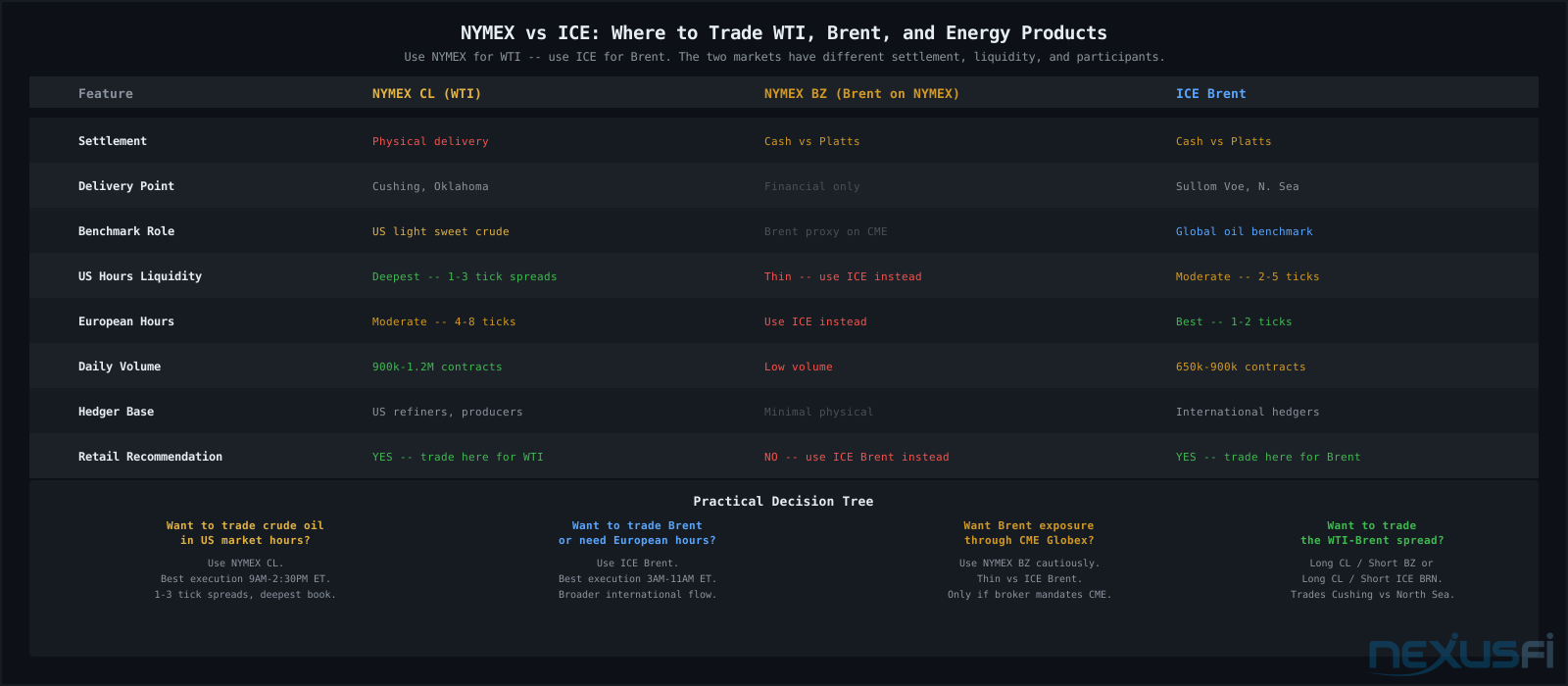
NYMEX CL vs ICE Brent: settlement type, delivery location, benchmark status, and session liquidity differences. Use NYMEX for WTI trading; use ICE for Brent. The two exchanges serve different markets.
For energy traders, the primary alternative to NYMEX is ICE (Intercontinental Exchange), which lists Brent crude futures in London. Understanding the division is essential.
WTI Crude Oil on NYMEX: the physically delivered U.S. benchmark price with the deepest book in U.S. hours. Brent Crude on ICE: cash-settled against Platts North Sea assessments, the international benchmark with better liquidity during European hours and broader participation from international physical hedgers.
@SMCJB on where to trade each contract: "NYMEX CL is a physically delivered contract while ICE WTI is a financially settled 'copy cat' contract based upon the NYMEX CL settlement price... Also there is more CL or WTI liquidity on NYMEX hence if you want to trade WTI I would suggest you do it on NYMEX... There is more Brent liquidity on ICE though, so if you want to trade Brent do it on ICE."
[cite:https://nexusfi.com/showthread.php?t=9601&p=540911#post540911]
The WTI-Brent spread is itself tradeable, and the difference reflects pipeline infrastructure, U.S. export capability, and relative supply conditions at Cushing vs. Sullom Voe (the North Sea delivery point). Systematic spread traders monitor this difference as a quality signal for U.S. crude infrastructure health. The spread typically ranges from -$5 to +$5 in normal market conditions, widening dramatically during Cushing supply disruptions or geopolitical events affecting North Sea production.
Trading NYMEX Products: Practical Considerations for Active Traders #
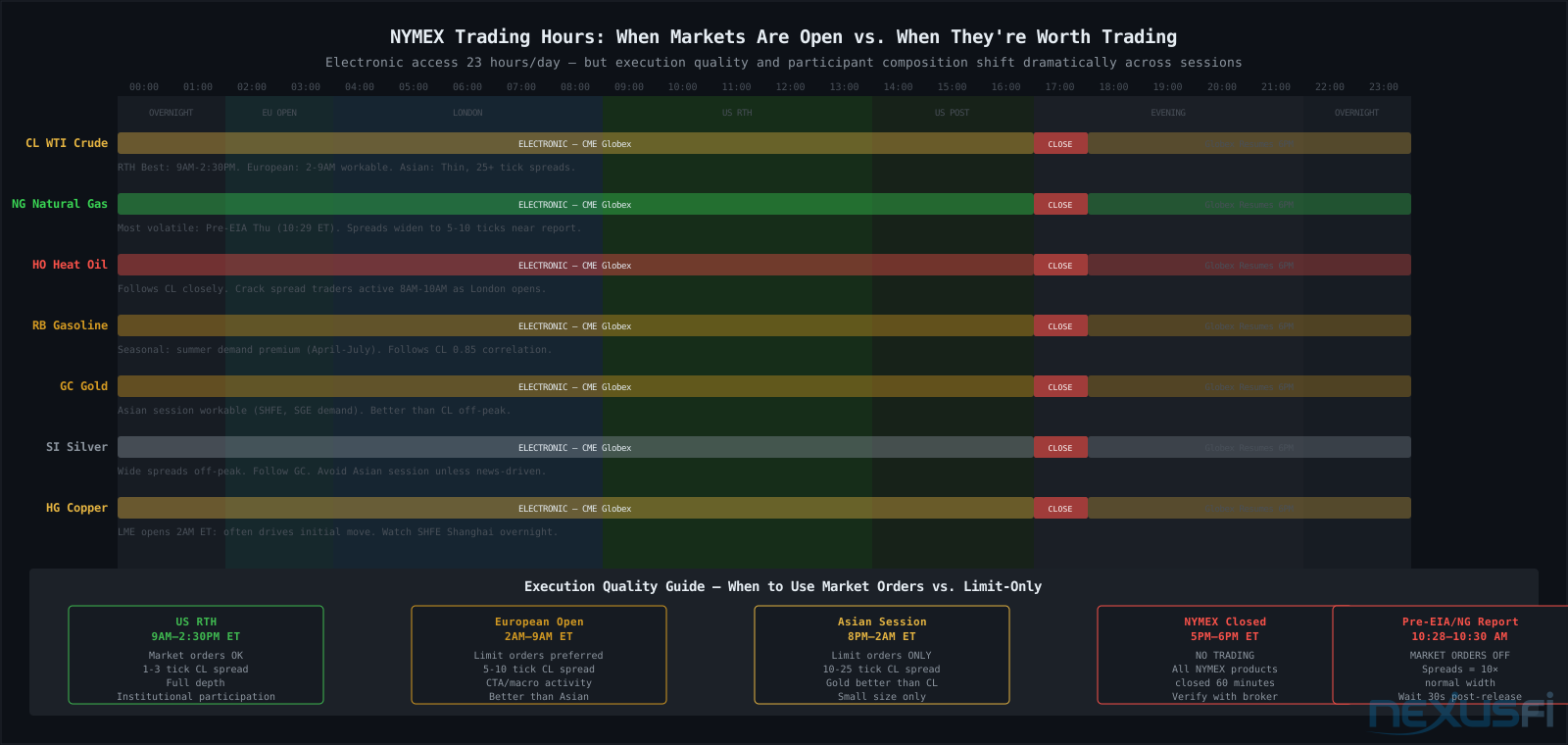
NYMEX execution quality by session. CL during Asian hours has 10-25 tick spreads; during U.S. RTH, 1-3 ticks. Gold (GC) has better Asian session depth than CL because of Shanghai Gold Exchange participation.
Trading NYMEX products requires understanding that these are at the core different from equity index futures. Here's the practical framework.
Session selection matters more than on ES/NQ. CL during European hours (2-9 AM ET) has spreads of 5-10 ticks. CL during Asian session has spreads of 10-25 ticks. CL in U.S. RTH (9 AM-2:30 PM ET when the NYMEX pit historically closed) has spreads of 1-3 ticks. The same $500 risk position in Asian session requires wider stops, which means taking equivalent dollar risk with less favorable entries. Gold (GC) has structurally better Asian session liquidity than CL, because Asian physical gold demand (Shanghai Gold Exchange, Hong Kong dealers) provides real counterparties overnight.
Know your roll dates. Every CL contract has a specific First Notice Day and Last Trading Day. Mark them in your calendar. Most traders roll 5-8 trading days before expiry when the back-month volume begins to exceed front-month. Watch the volume migration: when December CL starts trading more volume than November CL, November's liquidity is dying. Staying in the front month for execution quality means rolling before the liquidity migration completes.
Understand the report environment. Holding CL through Wednesday at 10:28 AM ET without a plan for the EIA report is gambling, not trading. Know the consensus expectation before the open on report days. Decide in advance: are you out before the report, or are you positioned for a specific directional surprise? Mixed reports (crude draw + gasoline build) create complex reactions — the market usually trades the product that most directly affects demand outlook.
Correlations shift with regime. Gold and crude oil are sometimes positively correlated (risk-on environment, USD weakness), sometimes negatively (CL falls on demand concerns while GC rises on safe-haven bid), and sometimes entirely disconnected. Don't assume a fixed relationship. The gold-oil ratio (ounces of gold per barrel of crude) oscillates widely and has no reliable mean-reversion property over short time horizons.
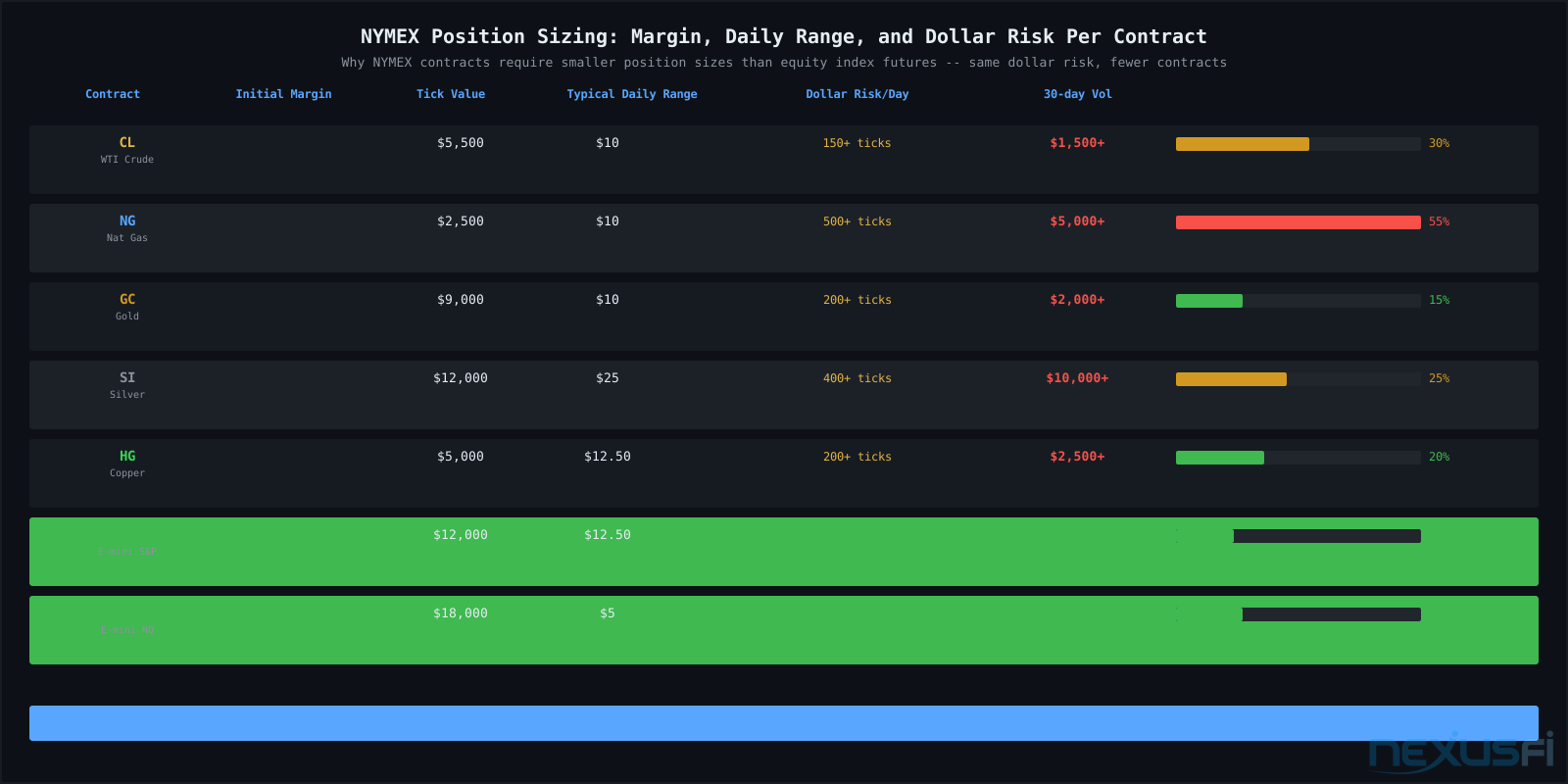
Position sizing for energy volatility. CL's daily range regularly exceeds 150 ticks ($1,500 per contract). NG can move 500+ ticks in a session. These are not ES/NQ where a "big day" is 80 ticks. Size your NYMEX positions so — the same dollar risk allocation requires fewer contracts than you'd use on equity index futures. Experienced commodity traders typically use 1-3 CL contracts where they'd use 5-10 MES contracts for equivalent account size.
NYMEX margin and daily range: CL daily dollar risk is 1.5x-5x higher than ES per contract. Size by dollar risk, not contract count — 1-2 CL contracts typically equals 5-10 MES for equivalent capital exposure.
NYMEX for Equity Traders: What the Commodity Markets Tell You #
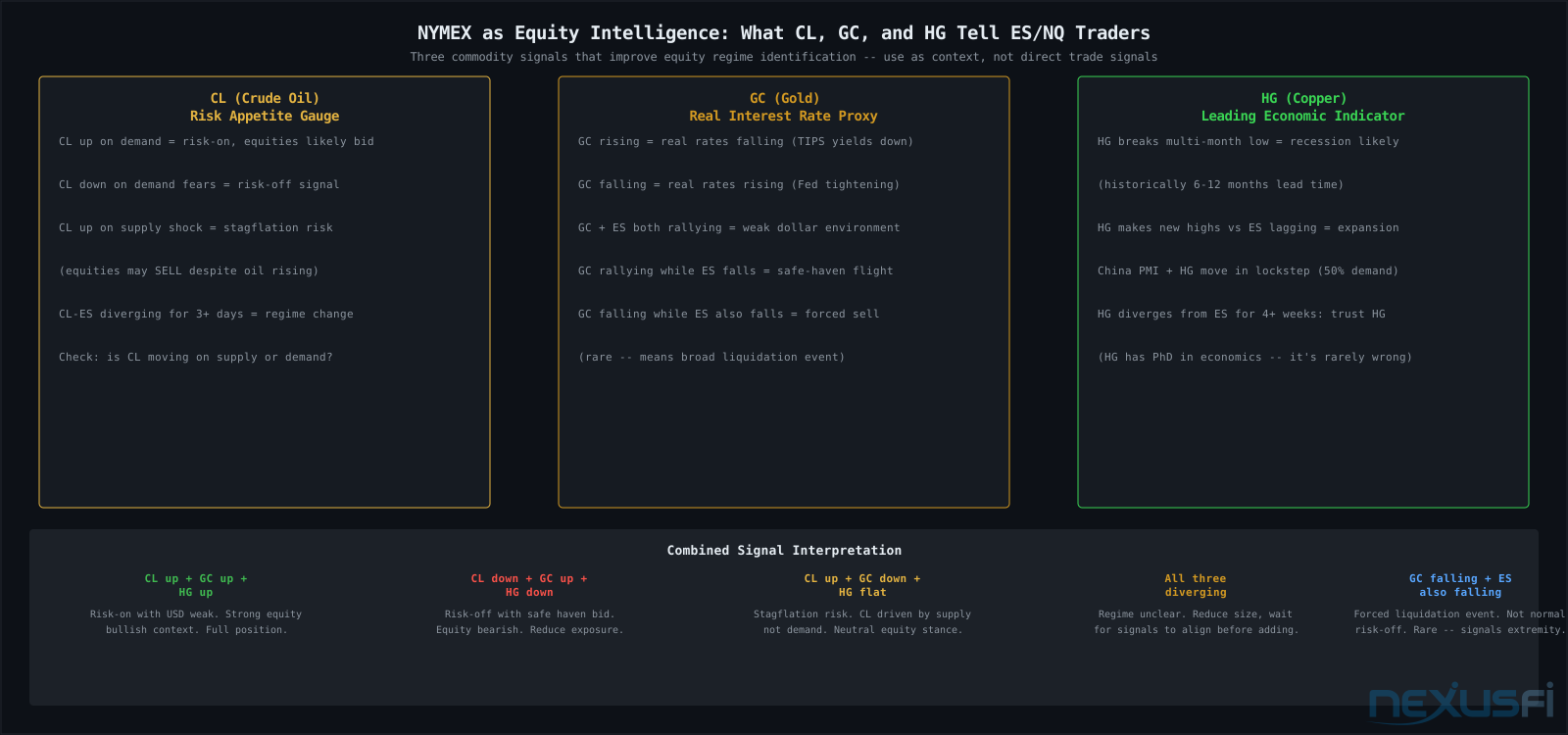
NYMEX as equity intelligence: CL reflects risk appetite, GC reflects real interest rates, HG leads economic cycles. Use these as context signals, not direct trading signals for equity positions.
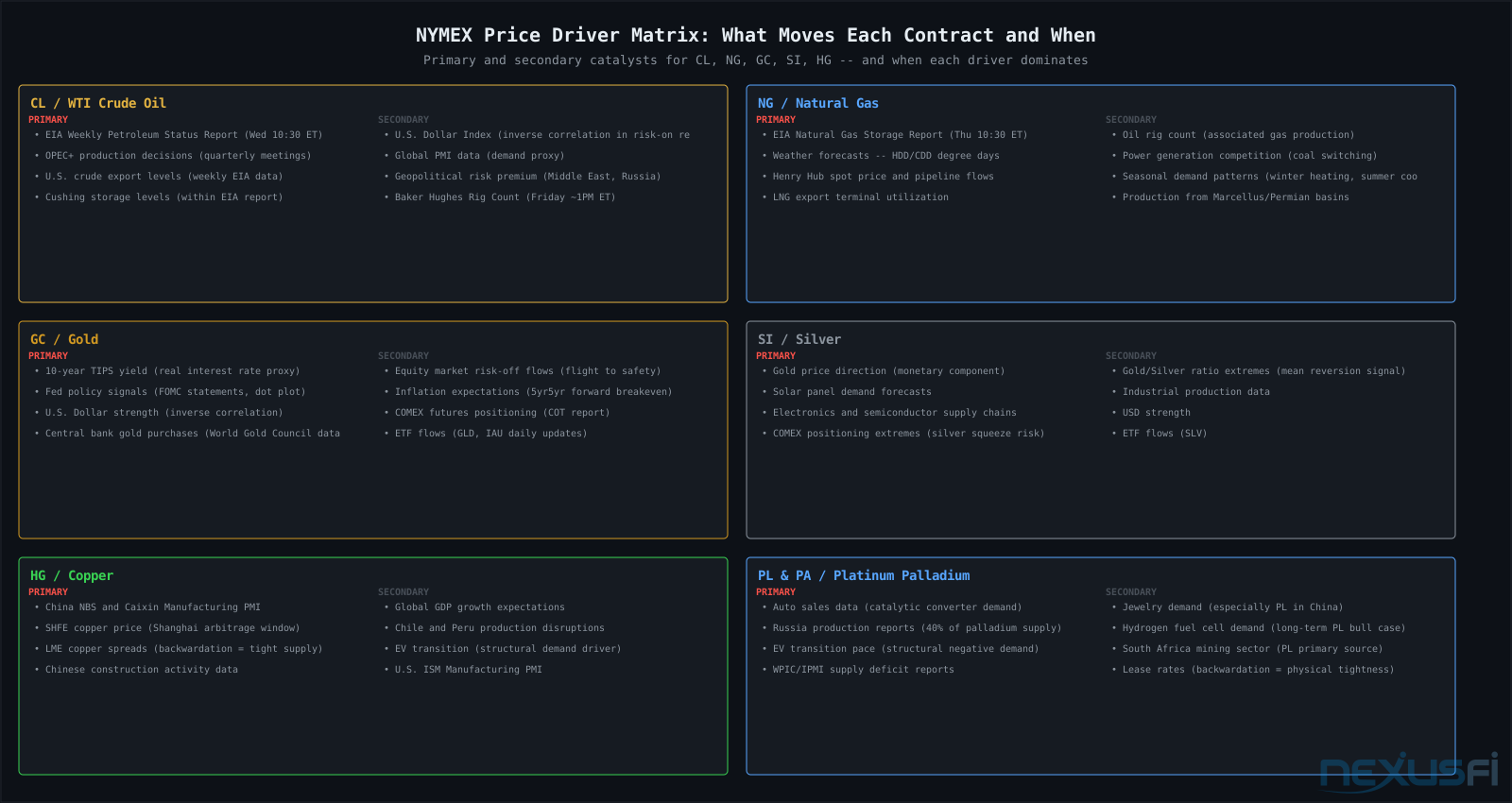
NYMEX price driver matrix: each contract responds to distinct catalysts. Knowing what moves each contract prevents trading CL on equity signals or GC on inventory data.
Even if you exclusively trade ES or NQ, NYMEX market conditions provide intelligence that equity traders miss:
CL as a risk sentiment gauge. Crude oil prices correlate with global risk appetite in many regimes. Falling crude on supply worries can precede equity weakness; sharp crude rallies on geopolitical supply risk can be simultaneous with equity selling (stagflation concern). CL and ES are not consistently correlated, but understanding why they're moving together or diverging provides useful context for directional conviction.
GC as a real-rate proxy. Gold's direction reflects the market's assessment of real interest rates. If the Fed is signaling more aggressive tightening than expected, watch GC for an early reaction — gold often leads bond markets in pricing real-rate changes, especially at inflection points in Fed policy cycles.
HG (Copper) as a leading economic indicator. Copper's price action typically leads the economic cycle by 6-12 months. Copper breaking multi-month lows has historically preceded equity market corrections. Copper breaking to new highs while equities lag has historically preceded economic expansion confirmation. It's not a trading signal — it's a slow-moving context indicator for regime assessment.
Gold and equity futures diverging sharply is a regime-change signal. When ES is selling off but GC is also falling (not the usual safe-haven bid), something unusual is happening — typically forced liquidation or a Fed-driven real-rate shock. When both ES and GC are rallying simultaneously, the regime is risk-on with currency weakness as the driver.
Micro Contracts: NYMEX for Smaller Capital #
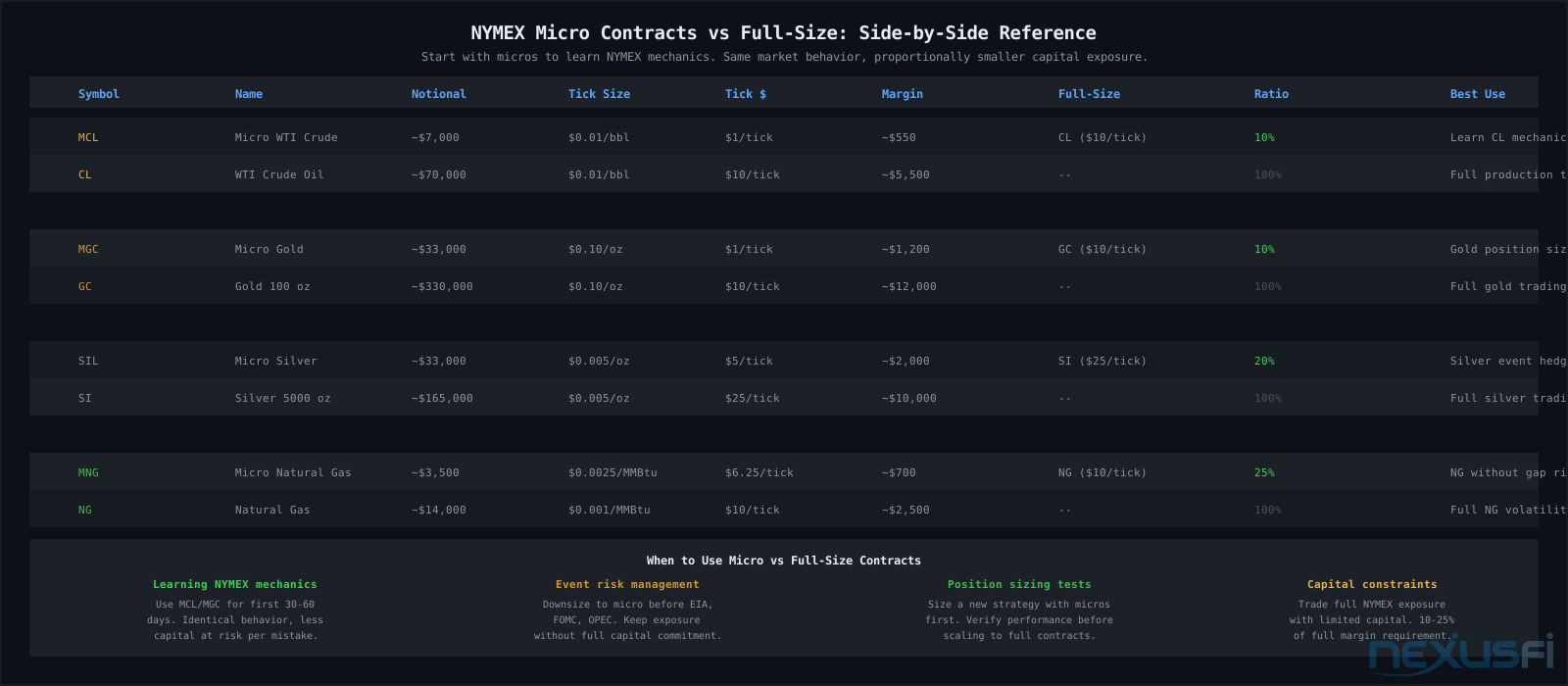
NYMEX micro contracts: 10-25% of full-size notional. MCL at $1/tick vs CL at $10/tick. MGC at $1/tick vs GC at $10/tick. Ideal for learning commodity mechanics and calibrating position sizing before scaling.
CME Group has progressively introduced micro contracts that provide NYMEX exposure at much reduced notional values:
- Micro WTI Crude Oil (MCL): 100 barrels (10% of CL), $0.01/bbl tick = $1/tick. Margin ~$550. Ideal for learning CL mechanics before scaling to full contracts.
- Micro Gold (MGC): 10 troy oz (10% of GC), $0.10/oz tick = $1/tick. Margin ~$1,200. Same price exposure as GC but at 1/10th the contract size.
- Micro Silver (SIL): 1,000 troy oz (20% of SI), $0.005/oz tick = $5/tick. Margin ~$2,000.
- Micro Natural Gas (MNG): 2,500 MMBtu (25% of NG), $0.0025/MMBtu tick = $6.25/tick. Allows NG participation without the full contract's extreme volatility per dollar.
Micro contracts have narrower markets than their full-size counterparts, especially during off-peak hours, but in U.S. RTH they provide solid execution quality. They're especially useful for learning NYMEX strategies before committing full-contract capital — the microstructure (how prices move, when reports hit, how liquidity changes intraday) is identical to the full contracts.
What NYMEX Is Not: Clearing Up Common Misconceptions #
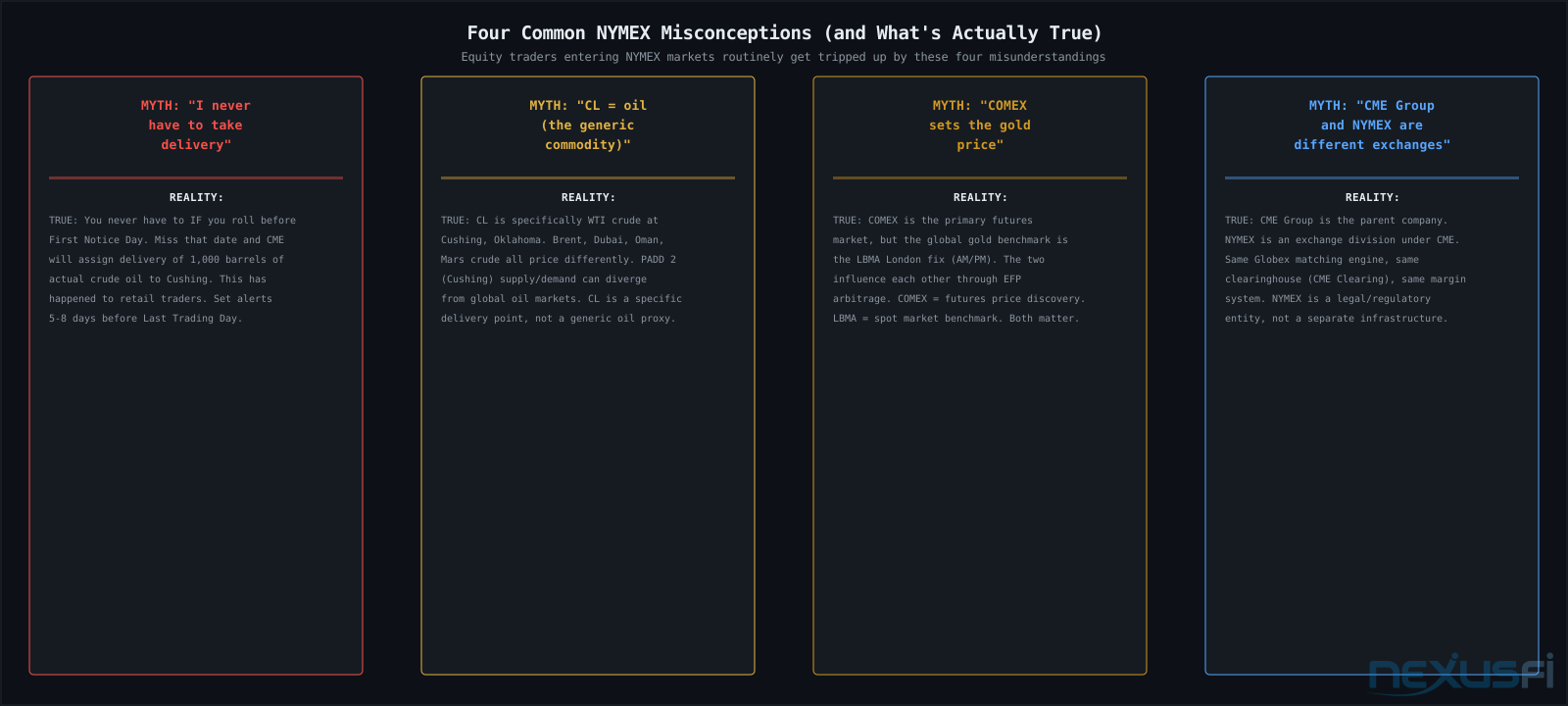
Four common NYMEX misconceptions from traders new to commodity futures. The physical delivery point matters, CL is a specific grade/location not generic oil, and CME Group is the parent not a separate exchange.
Several misunderstandings about NYMEX are common among traders from equity markets.
"I'll never have to take physical delivery." Correct — as long as you roll before First Notice Day. But if you don't track expiry dates, you absolutely can end up with delivery notices. This is not theoretical: retail traders have received delivery notices for crude oil by ignoring expiry. Set calendar alerts.
"NYMEX CL is the same as 'oil.'" WTI crude oil at Cushing, Oklahoma is one specific crude grade at one specific location. Brent crude (North Sea), Dubai crude (Middle East benchmark), and Mars crude (U.S. Gulf Coast sour crude) all price differently. CL moves are specific to U.S. light sweet crude fundamentals, not global "oil" generically — though they're highly correlated in most regimes.
"Gold prices are set by COMEX." COMEX is the primary futures market, but the daily gold benchmark is still the London Bullion Market Association (LBMA) AM/PM fix. The two markets influence each other through arbitrage and EFP transactions. COMEX's role is price discovery for futures; LBMA's role is spot market benchmarking. Both matter.
"CME Group and NYMEX are different exchanges." CME Group is the parent company. NYMEX is the exchange division. They share the same Globex electronic matching engine, the same clearinghouse (CME Clearing), and the same margin system. When you see NYMEX products in your trading platform, the infrastructure is CME Group — NYMEX is the regulatory and contractual entity under which those contracts are listed.
Knowledge Map
Prerequisites
Understand these firstGo Deeper
Build on this knowledgeReferences This Article
Articles that build on this topicCitations
- — Trading CL (Crude Oil futures) #2 (2014) 👍 6“Crude & products are not homogeneous. The crude refinery in Houston runs a different crude than a refinery in Chicago... Hence we may have plenty of crude in the US, but have very little WTI in Padd II (which is the crude and location that the NYMEX contract is delivered to). Hence you could see US crude prices in general drop, but NYMEX prices rise!”
- — Does anyone here trade Brent Crude? (2015) 👍 4“NYMEX CL is a physically delivered contract while ICE WTI is a financially settled 'copy cat' contract based upon the NYMEX CL settlement price. Also there is more CL or WTI liquidity on NYMEX hence if you want to trade WTI I would suggest you do it on NYMEX. There is more Brent liquidity on ICE though, so if you want to trade Brent do it on ICE.”
- — Changing rollover dates for CL (2015) 👍 4“The main problem is that oil is flowing into Cushing faster than it is flowing out. The local surplus has kept the prices of WTI well below Brent Crude, which has become the international benchmark.”
- — futures-convergence to the physical market? (2015) 👍 8“The WTI contract on NYMEX is a deliverable contract. This means that if you go long 1 futures contract and do nothing until expiry, you will get delivered the physical oil. The place where the oil will be delivered is the pipeline depot in Cushing Oklahoma.”
- — Trading natural gas futures (2019) 👍 11“For Natural Gas the EIA release gas in storage on a Thursday at 10:30 Eastern. As such liquidity starts drying up at 10:28 and at 10:29.59 there's almost nothing there at all. So if you send your order exactly then you are probably going to experience massive slippage, but if you send it 1 minute later the market is more than likely be back to 1 tick wide.”
- — Markets correlated to CL (2014) 👍 5“You may also want to look at the oil products, Heating Oil & RBOB (Gasoline) on NYMEX and Gasoil on ICE, and their crack spreads. While they will rarely lead crude, they will often confirm the direction of crude and can provide additional confirmation signals.”
- — Does anyone here trade Brent Crude? (2015) 👍 3“There are two WTI markets. NYMEX and ICE. They track each other pretty closely. Both are priced in dollars for 1000 barrel lots. If you want volume and better fills in WTI you want to be on NYMEX not ICE.”
- — Cmegroup.com (2024)
- — Eia.gov (2024)
- — Rollover Days - some Quick Facts about (2009) 👍 13“CL does not usually switch until the third Thursday. I usually add the next contract to Market Analyzer early in the month, and as we get closer to roll over day on oil, I just check the volume and move to the new one when volume has taken over.”
- — When not to trade during roll week (2021) 👍 2“Front month refers to a contract where the most traded volume is. When the newer contract overtakes the old front month in traded volume, that is the roll signal -- not the calendar expiry date.”