



Polymarket: The Crypto-Native Prediction Market That Brought Event Trading to the Mainstream
Polymarket is the world's largest prediction market by trading volume — a crypto-native exchange built on Polygon (Ethereum Layer-2) where traders buy and sell binary outcome contracts on real-world events. If you've read the NexusFi Academy coverage of Kalshi, you already understand event contracts. Polymarket takes that concept and strips away the traditional financial infrastructure: no clearinghouse, settlement in USDC stablecoins instead of dollars, and an order book powered by blockchain smart contracts rather than exchange matching engines.
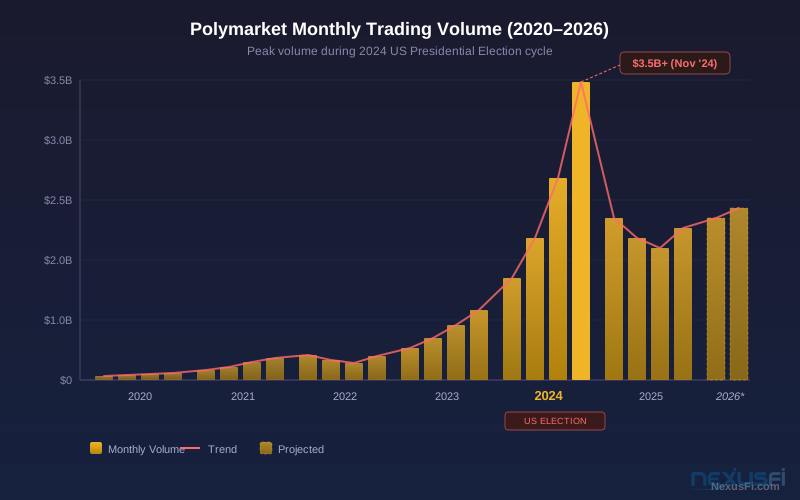
The 2024 US presidential election cycle put Polymarket on the map. Over $3.5 billion in trading volume across political markets alone made it the go-to real-time probability gauge for everyone from hedge fund managers to cable news producers. The platform processed more election-related volume than all other prediction markets combined — and its odds proved more accurate than most poll-based models at several key moments during the campaign.
For futures traders, Polymarket represents something specific: a binary derivatives venue that offers real-money probability discovery on events that move the macro markets you trade every day. Fed decisions, geopolitical escalation, election outcomes — the same catalysts driving ES, bonds, and crude are priced in real time on Polymarket's order book.
Overview #
Prediction markets are derivative instruments where the underlying asset is the probability of a real-world event occurring. Unlike a futures contract on crude oil — where you're speculating on a continuous price — a Polymarket event contract is a binary bet: a specific question resolves "Yes" or "No", and the contract settles at $1.00 or $0.00 so. This binary structure makes Polymarket at the core different from anything trading on CME, ICE, or Eurex, but the economic function is recognizable: traders who believe they have better information or superior probability estimates profit at the expense of those who don't.
Polymarket launched in 2020 on the Ethereum mainnet and migrated to Polygon (an Ethereum Layer-2) for cheaper, faster transactions. The platform operates as a decentralized application — smart contracts hold the collateral, an oracle system determines outcomes, and a central limit order book (running off-chain for speed, settling on-chain for finality) matches buyers and sellers. For a futures trader, the closest analogy is a binary options exchange with on-chain clearing and USDC settlement instead of USD in a segregated account.
What makes Polymarket relevant to futures traders specifically is price discovery. The macro events that move your futures positions — Fed rate decisions, election outcomes, geopolitical escalation, economic data surprises — are priced in real time on Polymarket's order book by traders putting real money on specific binary outcomes. That signal is extractable even if you never trade on Polymarket directly. And for traders who do want to participate, understanding the platform's mechanics, its regulatory history, and how it compares to regulated competitors like Kalshi is essential before risking capital.
Key Concepts #
Event Contracts: Polymarket's core product. Each market poses a question with two or more outcomes: "Will the Fed cut rates in June?" or "Will Bitcoin exceed $100,000 by year-end?" Traders buy shares in outcomes they believe will occur. A "Yes" share that settles correctly pays $1.00. A wrong answer pays $0.00. Prices between $0.01 and $0.99 represent the market's real-money probability estimate — a contract trading at $0.72 implies a 72% chance of that outcome occurring.
USDC Settlement: All trading and settlement happens in USDC (USD Coin), a stablecoin pegged 1:1 to the US dollar, running on the Polygon blockchain. You deposit USDC, trade USDC, and withdraw USDC. No bank wires, no ACH transfers, no fiat on-ramp through the exchange. For anyone coming from CME or any traditional exchange, this is the biggest operational shift — your collateral lives on-chain, not in a segregated bank account with CFTC-mandated protections.
Conditional Token Framework (CTF): Polymarket uses Gnosis's CTF standard to create outcome tokens. When you buy "Yes" on an event, you receive ERC-1155 tokens representing your position. These tokens are transferable, composable with other DeFi protocols, and visible on-chain. Anyone can audit open interest, position sizes, and settlement outcomes by reading the blockchain. Transparency cuts both ways — your positions are publicly visible too.
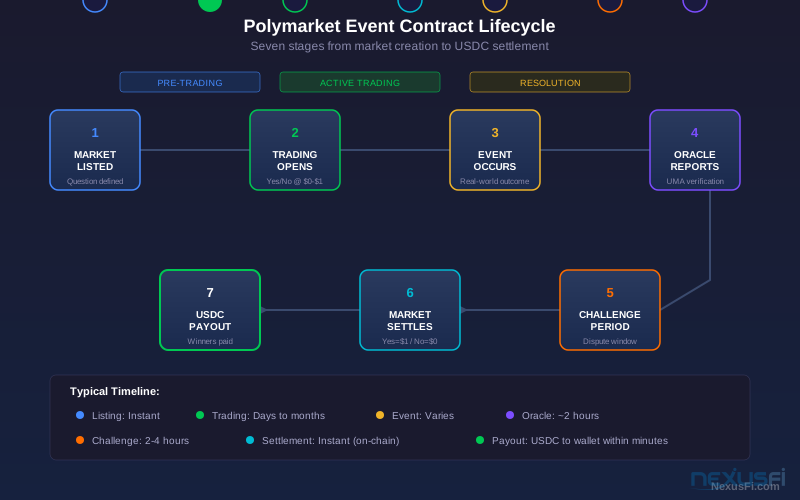
UMA Oracle System: When an event resolves, Polymarket relies on UMA (Universal Market Access) Protocol's optimistic oracle to declare the outcome. A proposer submits the result, a dispute window opens (typically 2-4 hours), and anyone can challenge by posting a bond. If challenged, UMA token holders vote on the correct resolution. This decentralized approach eliminates single-point-of-failure risk in outcome determination — but introduces oracle-specific risks that futures traders need to understand.
Central Limit Order Book (CLOB): Despite the crypto infrastructure, Polymarket runs a familiar order-book model. Limit orders, market orders, maker-taker dynamics. The matching engine operates off-chain for speed, with settlement on-chain for finality. For futures traders accustomed to CME's price-time priority matching — covered in depth in Futures Exchange Matching Algorithms — the execution mechanics feel familiar even though the plumbing is different.
How Polymarket Works #
Trading Mechanics #
Connect a crypto wallet (or use Polymarket's built-in email-based MPC wallet), deposit USDC, and start trading. No broker application, no suitability review, no waiting period.
The order book functions like any exchange. You see bids and asks, submit limit or market orders, and get filled at the best available price. Maker orders that add liquidity sit on the book. Taker orders that remove liquidity execute immediately against resting orders.
Where it diverges from traditional futures:
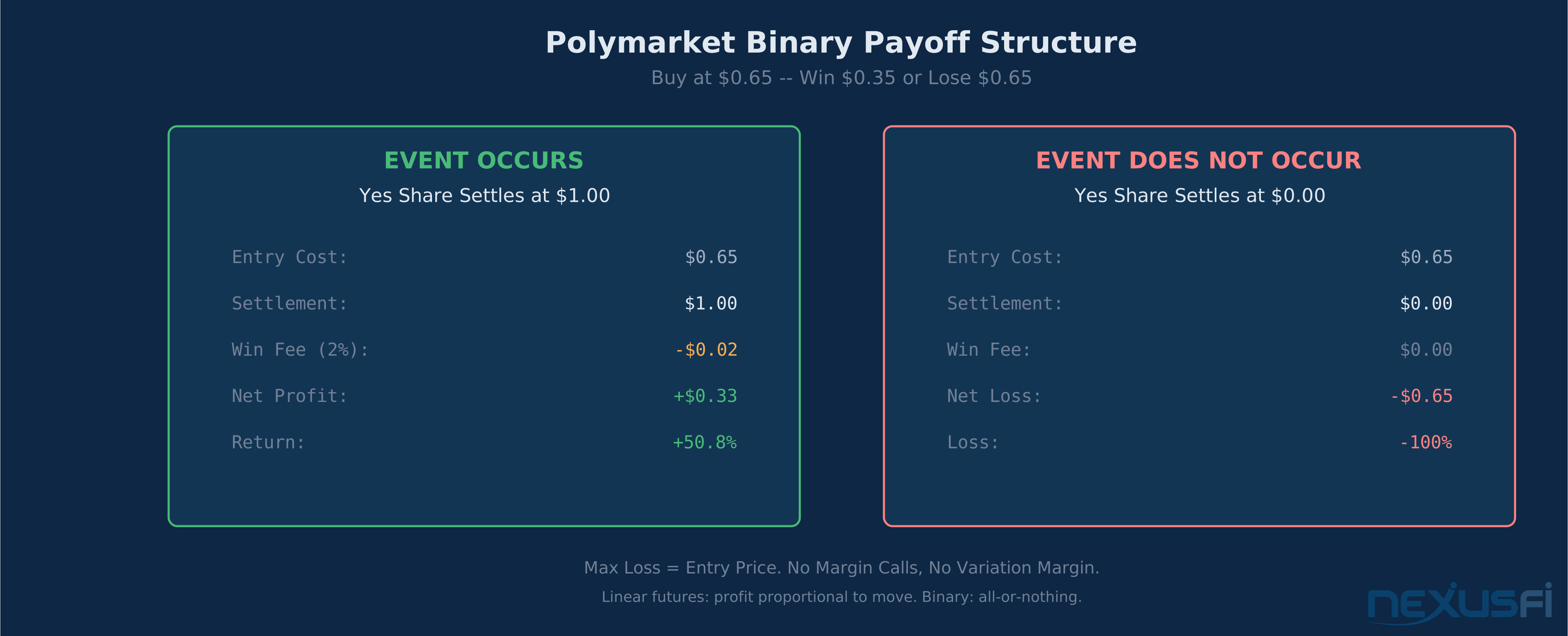
No leverage. You pay the full share price upfront. Buy "Yes" at $0.65, you deposit $0.65. If correct, you receive $1.00 — a $0.35 profit. If wrong, you lose $0.65. Maximum loss equals your purchase price. No margin calls, no daily mark-to-market, no variation margin. Different risk profile entirely.
No stop-losses. Binary contracts don't support traditional stop-loss mechanics. You can exit early by selling shares on the order book, but there's no automated stop execution. If the book goes thin during a news spike, your exit price is whatever someone will pay.
Position transparency. Large positions are visible on-chain. Whale wallets regularly move Polymarket prices simply because other traders can see the accumulation happening. Information leakage is structural, not a bug.
Even if you never deposit a dollar on Polymarket, you can use its prices as a free probability tool. Before a Fed meeting or major election event, check Polymarket's odds for the relevant contracts. The price reflects real money weighing in on the outcome — often more predictive than poll-based models or media sentiment. Traders have used this signal to size futures positions around macro events.
Settlement Process #
Settlement is where Polymarket's crypto-native architecture creates both advantages and risks.
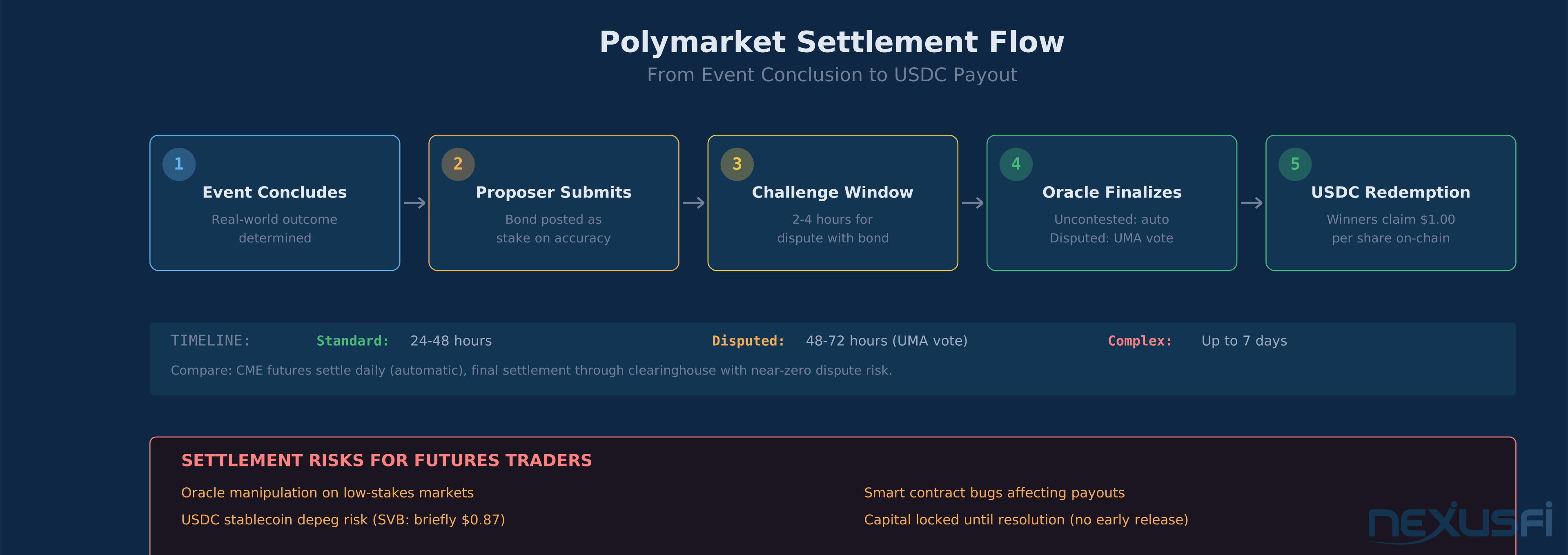
Step 1: Event Resolution. After the real-world event concludes — election results certified, economic data released, game ends — UMA's oracle system activates. A proposer submits the outcome with a bond.
Step 2: Challenge Window. A 2-4 hour window opens where anyone can dispute the proposed outcome by posting their own bond. Most resolutions are uncontested — the result is obvious and the proposer's submission stands.
Step 3: Final Settlement. If uncontested, winning shares become redeemable for $1.00 USDC. If disputed, UMA token holders vote in a decentralized arbitration process that can take 48-72 hours.
Step 4: Redemption. Winners redeem through the smart contract and receive USDC directly to their wallet. No counterparty required — the contract itself holds the funds.
Total timeline: 24-48 hours for standard resolutions. Up to a week for disputed outcomes. Compare that to CME futures, where daily settlement is automatic and final — the mechanics behind that system are detailed in Futures Clearing and Settlement.
Fee Structure #
Polymarket's fee model is unlike anything in traditional derivatives:
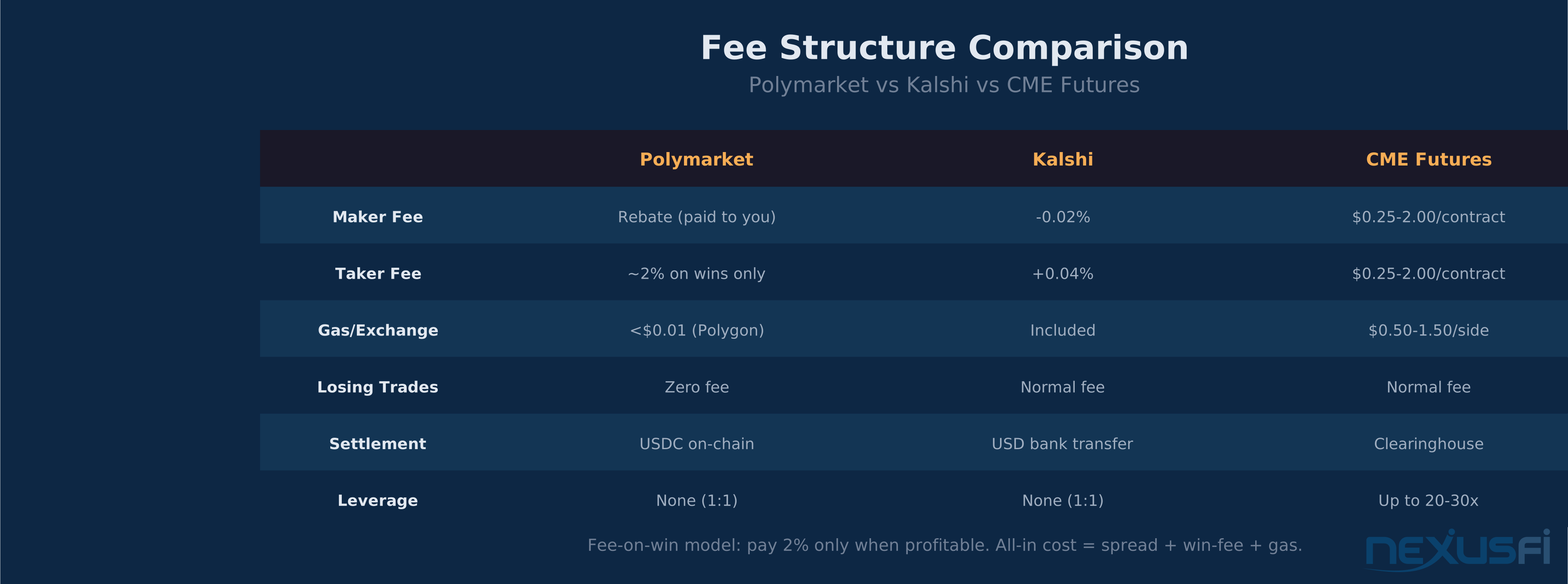
Maker fee: Rebate (you get paid to provide liquidity). This incentivizes limit orders and tighter spreads.
Taker fee: ~2% on winning positions only. Zero fee on losing positions.
Gas fees: Negligible. Polygon transactions cost under $0.01.
The "fee-on-win" model is closer to a sportsbook vig than a CME per-contract commission. Your expected profit must exceed the 2% win-fee plus spread plus slippage. On a $0.65 contract that wins, you receive $1.00 minus ~$0.02 fee = $0.98. Real profit is $0.33, not $0.35.
For comparison, on a Kalshi contract at the same price point, you'd pay the taker fee at execution rather than settlement — the economics are roughly similar but structured differently. The Kalshi article covers their fee mechanics in detail.
Contract Categories #
Political Events #
This is Polymarket's flagship category. The 2024 US presidential election generated $3.5 billion+ in political market volume alone. State-level markets, cabinet nominations, legislative passage, international elections — the coverage was granular enough to construct a full probabilistic election model from market prices.
Polymarket's presidential odds were cited by Bloomberg, The Wall Street Journal, and CNBC as a leading indicator throughout the 2024 cycle. The NexusFi community tracked this evolution closely — as the discussion on prediction markets and regulatory status documented, the question of whether these are financial instruments or "gambling on politics" remains unsettled even as volumes reach traditional-exchange levels.
Geopolitical and Macro Events #
Conflict resolution probabilities, trade war escalation odds, central bank decision outcomes. These markets directly overlap with the macro factors driving futures prices. A trader managing ES or bond exposure can use Polymarket's real-money probability estimates as a complement to traditional sentiment indicators — you don't need to trade on Polymarket to extract signal from its price discovery.
Sports #
Championship outcomes, player awards, season totals. When Kalshi hit $1 billion in Super Bowl trading volume, it proved event contracts could generate exchange-scale activity around single sporting events. Polymarket sees similar volume patterns around major championships. The arbitrage between Polymarket odds and sportsbook lines creates constant cross-venue flow.
Cryptocurrency #
Bitcoin price milestones, Ethereum upgrade outcomes, protocol governance decisions. Natural fit for the platform's crypto-native user base. These markets carry the deepest non-political liquidity.
Corporate and Entertainment #
M&A completion, box office milestones, awards show outcomes. Thin markets, wide spreads. Entertainment value more than serious trading.
Regulatory History and CFTC Status #
The 2022 Enforcement Action #
In January 2022, the CFTC charged Polymarket with operating an unregistered swap execution facility. The settlement: $1.4 million fine and an agreement to wind down existing markets and cease serving US customers.
The enforcement logic was straightforward — Polymarket offered binary event contracts (classified as swaps by the CFTC) without the Designated Contract Market or swap execution facility registration required under the Commodity Exchange Act. No registration, no exemption, no compliance infrastructure. The fine was modest but the operational hit was severe: US traders were geo-blocked.
Understanding how the CFTC investigates and prosecutes market violations is foundational context here — the complete playbook is covered in CFTC Enforcement Actions in Futures Markets.
The Regulatory Pivot #
The environment shifted in 2025-2026. The CFTC withdrew its Biden-era prediction market ban under Chairman Selig and signaled new rulemaking establishing clear standards for event contract regulation. This opened the door for multiple entrants — and for Polymarket's return.
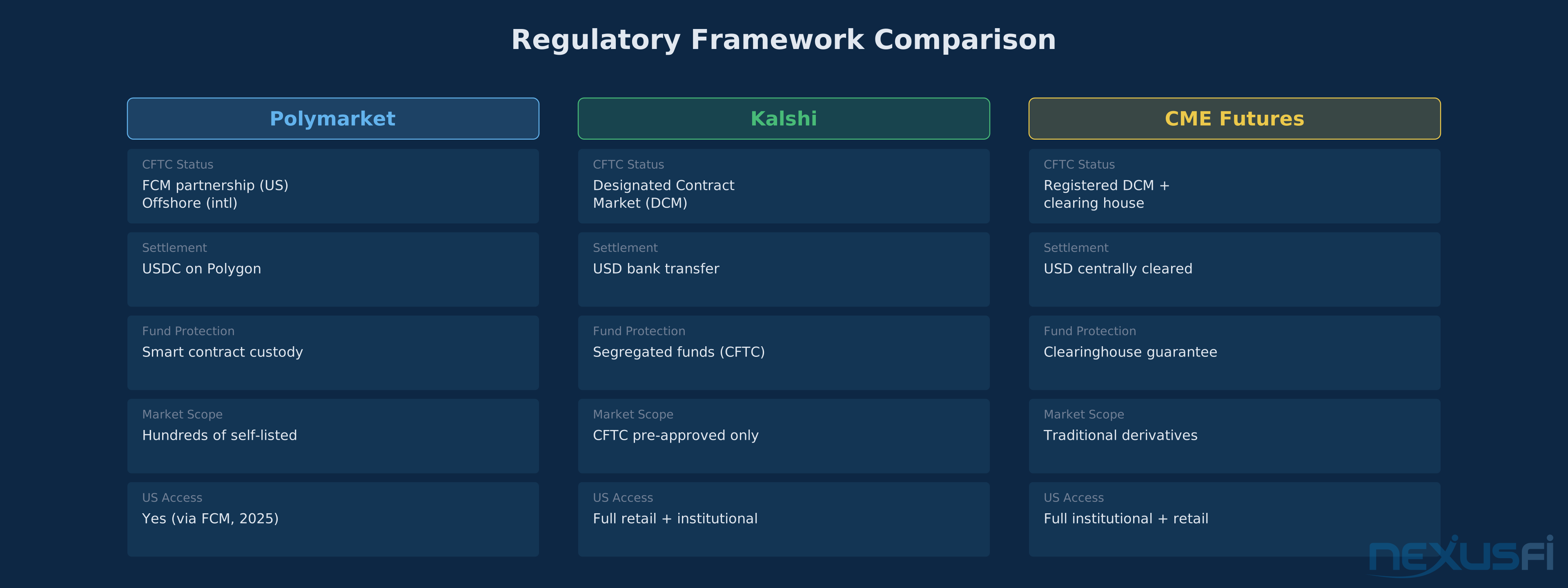
As NexusFi reported, Polymarket received CFTC approval to re-enter the US market through a partnership with a registered Futures Commission Merchant (FCM). The FCM requirement ensures customer fund segregation and regulatory oversight — bringing Polymarket closer to the compliance framework Kalshi operates under.
Polymarket's 2022 CFTC enforcement action — $1.4 million fine, immediate US market shutdown — is a live reminder that regulatory status matters. Even if you're trading from a jurisdiction Polymarket currently serves, read the terms of service carefully and understand that regulatory risk can materially change platform access overnight. Never commit capital you can't afford to have locked up if regulatory access changes.
Current Status #
Polymarket now operates a hybrid regulatory model:
US operations: Through FCM partnership, with CFTC oversight and fund protections. Narrower market selection compared to the offshore platform.
International operations: Broader market selection, crypto wallet access, fewer regulatory constraints.
For futures traders accustomed to CME's clear-cut regulatory framework, this dual structure adds complexity. US customer protections are real but structurally different from traditional exchange clearing. The international offering carries counterparty risks that don't exist on regulated exchanges.
Polymarket vs. Kalshi -- The Comparison That Matters #
Both exchanges offer binary event contracts. The mechanical similarity obscures differences that matter for execution and risk:
Settlement infrastructure. Kalshi settles in USD through traditional banking. Polymarket settles in USDC on-chain. Polymarket's settlement is faster and more transparent if you're comfortable with crypto custody. Kalshi's traditional clearing provides stronger fund protection.
Market coverage. Polymarket lists markets with minimal gatekeeping — hundreds of active contracts across dozens of categories. Kalshi requires CFTC pre-approval for each contract type, producing fewer but more standardized markets.
Liquidity. Polymarket's liquidity is bursty and event-driven. Top political markets see $50-200 million in total volume. Niche markets might have $5,000 on the book. Kalshi's liquidity is more consistent but generally thinner at peak events. Neither approaches CME depth.
Fee economics. Polymarket charges ~2% on winning positions with maker rebates. Kalshi charges maker/taker on execution. All-in costs are roughly comparable — the structure differs.
Transparency. Polymarket's on-chain settlement means every trade is publicly auditable. Kalshi operates as a traditional exchange with standard reporting. Position privacy: Kalshi wins. Market transparency: Polymarket wins.
API and systematic access. Kalshi offers REST/WebSocket APIs with Python SDK. Polymarket requires web3 development familiarity for programmatic interaction. Building systematic strategies on Polymarket demands crypto-native development skills.
Liquidity and Market Structure #
Who Provides the Liquidity #
Three groups supply Polymarket's order book:
Professional market makers — algorithmic firms running cross-venue strategies across Polymarket, Kalshi, sportsbooks, and political betting markets. They provide the bulk of resting liquidity on major contracts.
Retail speculators — crypto-native traders, political enthusiasts, sports bettors. They drive event-related volume spikes but provide inconsistent resting depth.
Cross-platform arbitrageurs — systematic traders exploiting price differences between venues. They tighten spreads during normal conditions but can withdraw during uncertainty.
Practical Depth Assessment #
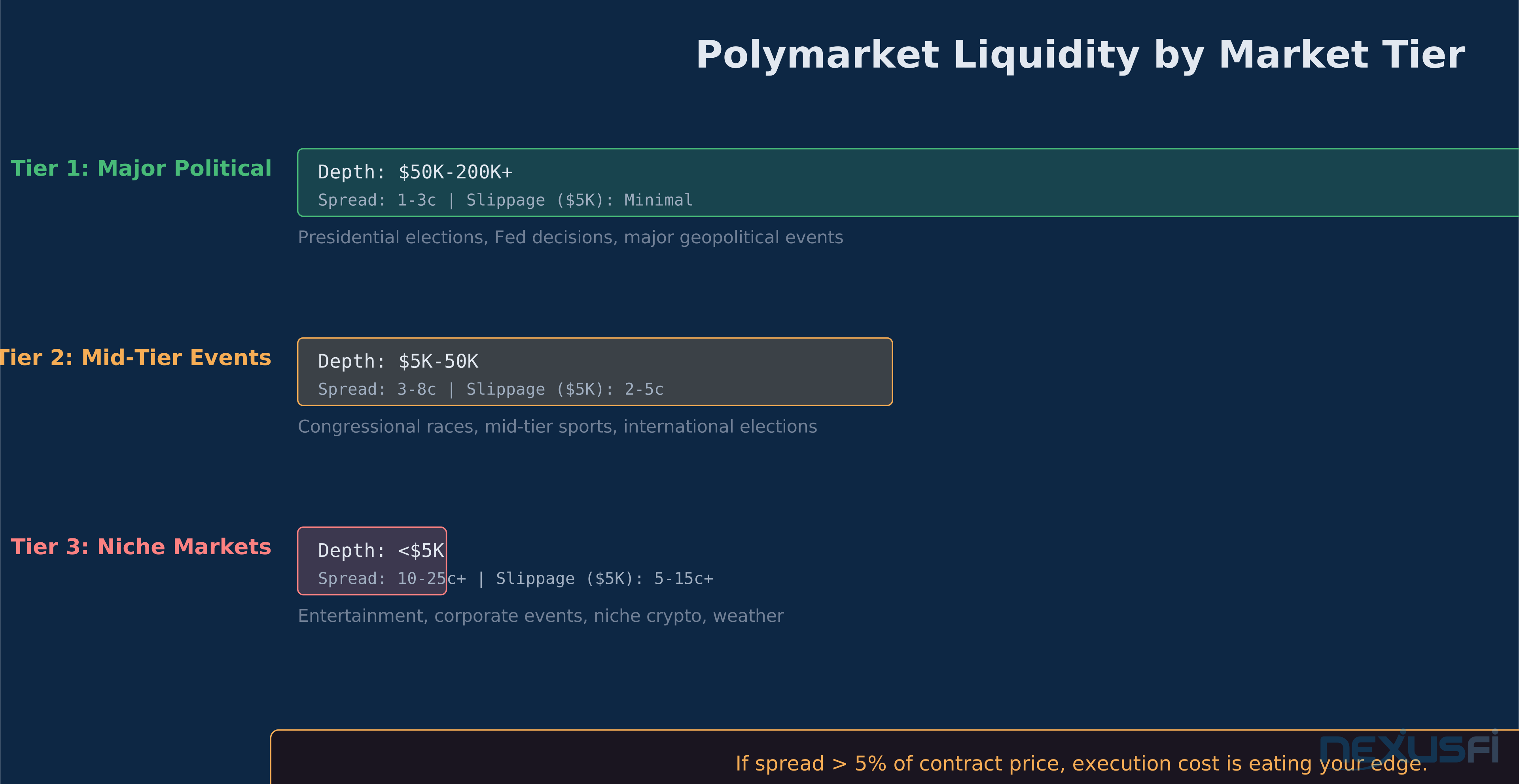
Liquid political markets (presidential elections, major policy decisions): Spreads 1-3 cents. Depth $50,000-$200,000+ at the inside. Slippage on a $5,000 order: minimal.
Medium-liquidity markets (mid-tier political events, major sports): Spreads 3-8 cents. Depth $5,000-$50,000 at the inside. Slippage on $5,000: 2-5 cents.
Thin markets (niche events, entertainment, corporate): Spreads 10-25+ cents. Depth under $5,000. Slippage on $5,000: 5-15 cents or worse.
The rule: if the spread exceeds 5% of the contract price, execution cost is eating your edge. Trade markets with at least $10,000 of depth on each side. For comparison on how liquidity dynamics play out across traditional derivatives, the principles are basically identical — tighter spreads, deeper books, and faster fill velocity correlate with lower execution cost regardless of the venue.
Settlement Risk -- The Section That Matters Most #
For anyone coming from regulated futures, this is where Polymarket introduces risks that simply don't exist on CME.
Oracle Risk #
UMA's oracle works cleanly for unambiguous outcomes — Team A won, CPI came in at 3.2%, the election was certified. Where it breaks down: edge cases, ambiguous definitions, events where the "correct" resolution is debatable. Political contracts with fuzzy definitions, weather contracts with measurement disputes, corporate events with complex conditions. The dispute resolution process (UMA token holder voting) is genuinely decentralized but can take days and may not match your interpretation of the contract terms.
Smart Contract Risk #
All settlement flows through smart contracts. Code bugs, exploits, or unexpected protocol interactions could affect payouts. Polymarket's contracts have been audited and battle-tested through billions in volume, but smart contract risk is never zero. No SIPC insurance, no clearinghouse guarantee, no regulatory backstop if a contract malfunction occurs.
Stablecoin Risk #
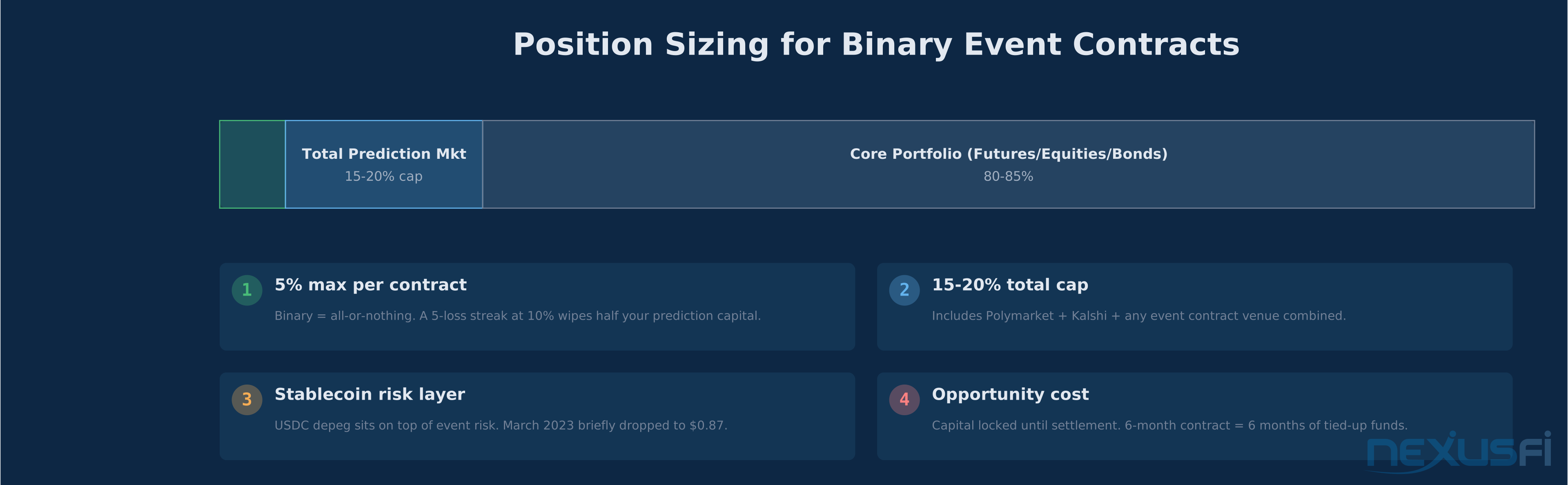
Your collateral sits in USDC. If USDC depegs from the dollar — even temporarily — your position value fluctuates independent of the event outcome. The March 2023 USDC depeg (briefly dropping to $0.87 during the Silicon Valley Bank collapse) demonstrated this isn't theoretical. Traders holding large Polymarket positions experienced real mark-to-market stress from a factor completely unrelated to their event thesis.
Capital Lock-Up Risk #
Unlike futures where you can close a position and have margin released in seconds, Polymarket capital is locked from entry to settlement. A political contract that won't resolve for 6 months ties up your capital for 6 months. Calculate the opportunity cost: could that capital earn more deployed in liquid futures during the same period?
Practical Trading Framework #
When Polymarket Makes Sense #
Real-time probability discovery. When you need to know what the market thinks about a specific binary outcome — Fed decision, election result, geopolitical event — Polymarket's prices are among the most accurate real-money gauges available. Use them as signal for your futures trading, even if you never trade on Polymarket directly.
Specific event hedging. You have directional futures exposure vulnerable to a specific binary outcome. Buy the hedge on Polymarket. If the event goes against your futures position, the Polymarket payout offsets part of the loss.
Information edge. You have genuine domain expertise in a specific category — political analysis, economic forecasting, sports analytics — and can consistently identify mispriced probabilities.
When to Avoid #
No informational edge. Major event prices are set by sophisticated market makers and informed traders. Trading based on the same polling data everyone else sees means paying the spread without an edge.
Thin markets. If the order book shows under $5,000 at the inside, execution cost will consume your expected profit. Don't trade niche contracts at size.
Ambiguous resolution. If you can construct a plausible scenario where the outcome definition is arguable, that's a red flag. Price in extra uncertainty or skip it.
Long-dated capital lock-up. Contracts resolving months out tie up capital. Calculate the opportunity cost.
Position Sizing #
- Never allocate more than 5% of trading capital to a single event contract. Binary payoffs are unforgiving — all or nothing.
- Cap total prediction market exposure at 15-20%. This includes Polymarket, Kalshi, and any other prediction market combined.
- Factor in stablecoin risk. Polymarket exposure includes USDC depeg risk layered on top of event risk. Size so.
- Account for capital lock-up. If a contract won't resolve for 3 months, that's 3 months of opportunity cost.
Execution Best Practices #
- Limit orders only. Market orders during news spikes cause severe slippage.
- Check depth before sizing. Your order should be less than 10% of visible depth at your price level.
- Monitor whale wallets. On-chain transparency means you can track large positions building in real time through analytics tools.
- Time your entries. Liquidity concentrates during US market hours and spikes around event-related news. Off-hours liquidity thins considerably.
The Competitive Environment #
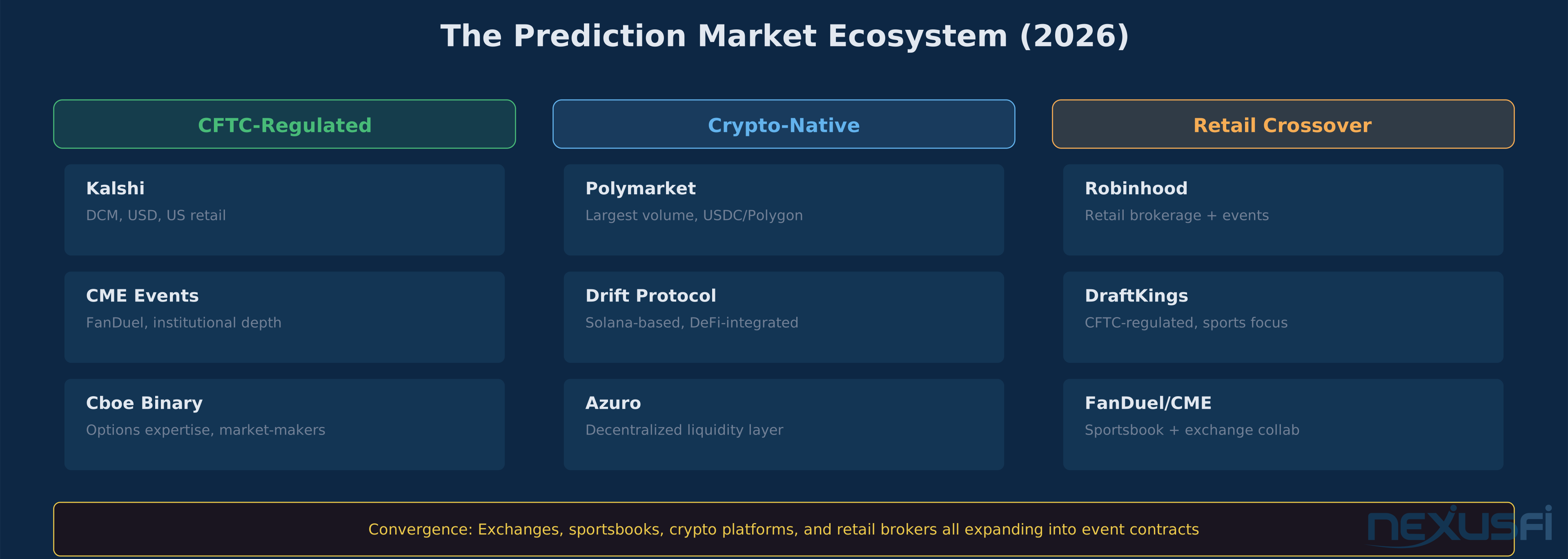
Polymarket operates in a prediction market ecosystem that's expanding rapidly, as the NexusFi community has tracked:
Kalshi — CFTC-registered, USD-settled, full regulatory protection. The compliant US alternative. Covered in depth in the NexusFi Academy Kalshi article.
CME Event Contracts — CME hit 100 million event contracts traded in eight weeks through its FanDuel partnership. CME brings cross-margining with futures, institutional liquidity, and established clearing — advantages no crypto-native platform can replicate.
DraftKings Predictions — Expanding CFTC-regulated markets through Crypto.com partnership, targeting player-specific sports contracts and broader event coverage.
Cboe Binary Options — Leveraging options expertise and established market-making relationships for binary contract offerings.
Robinhood — Entered prediction markets targeting the same retail demographic that drove Polymarket's growth.
The convergence is real. Traditional exchanges, sportsbooks, crypto platforms, and retail brokers are all converging on event contracts. Google opened advertising to CFTC-regulated prediction markets, expanding the distribution channel. And the CFTC's first insider trading enforcement action on prediction markets — catching a political candidate betting on his own election — signals regulators are treating these as legitimate financial venues deserving full market integrity oversight.

The Bottom Line #
Polymarket is the dominant prediction market globally by volume and the platform that brought event contract trading into mainstream consciousness. Its crypto-native architecture delivers real advantages: lower fees, faster settlement, transparent on-chain auditing, and broader market coverage than any regulated competitor.
The tradeoffs are equally real. Oracle-based settlement introduces dispute risk absent from traditional clearing. USDC exposure adds stablecoin risk on top of event risk. On-chain transparency means no position privacy. And despite recent CFTC approval for US operations, the regulatory framework is less established than CME or Kalshi's DCM license.
For futures traders, Polymarket's practical value splits into two uses:
As an information tool: Polymarket's prices on major events are the best real-money probability estimates available. When election odds shift 10 points, that's real money repricing event risk that will show up in equity futures, bonds, and FX. You don't need to trade on Polymarket to benefit from its price discovery.
As a trading venue: With genuine domain expertise and comfort with crypto custody, Polymarket offers a legitimate venue for binary views on real-world outcomes. Start with liquid markets, size conservatively (5% per contract, 15-20% total), and read every resolution specification before putting up capital.
The prediction market space is evolving fast — from CME's sports contract launch through Kalshi's billion-dollar fundraise to the CFTC's regulatory pivot. Polymarket sits at the intersection of crypto infrastructure and traditional derivatives — a space getting more crowded, more regulated, and more liquid every quarter.
Knowledge Map
Prerequisites
Understand these firstGo Deeper
Build on this knowledgeReferences This Article
Articles that build on this topicCitations
- — Event Contracts - New Way to trade the CME Futures markets (2022) 👍 6“Event contracts let you take a position on a binary outcome -- who wins the game, whether a data release beats expectations. The payoff structure is fixed: $1.00 if correct, $0.00 if wrong.”
- — Event Contracts - New Way to trade the CME Futures markets (2022) 👍 4“The CFTC has been cautious about event contracts but the category is gaining legitimacy. CME launched their event contracts through IB initially -- the infrastructure exists, the regulatory path is being cleared.”
- — Kalshi, Polymarket, Prediction Markets etc (2025) 👍 4“This is all over Twitter but not so much in the main media. To be honest I'm not surprised and hope it has some success and also spills over to the other companies. The prediction market category deserves more mainstream attention.”
- — CME to list Sports Event Contracts (2025) 👍 2“CME Group will list event contract swaps on pro basketball games, pro football games, and college football. This legitimizes the event contract category at the institutional exchange level.”
- — CME Goes 24/7 on May 29 -- Crypto Futures, Options, and Event Contracts (2026) 👍 2“CME Group will launch continuous 24/7 trading for all cryptocurrency futures and options starting May 29, 2026. Event contracts -- including prediction market products -- will also be included in the 24/7 expansion.”
- — Kalshi Launches Commodities Hub and Teases Perpetual Timeless Contracts (2026) 👍 2“Kalshi is positioning itself as a 24/7 alternative to traditional futures for directional commodity bets -- seems more like an alternative to options, where the risk is capped at the premium paid.”
- — Kalshi, Polymarket, Prediction Markets etc (2025)“Kalshi raised $1B Series E at $11B valuation - major institutional backing despite legal uncertainty - Polymarket received CFTC approval to return to the US market.”
- — FanDuel Predicts Launch - CME Event Contracts from $1 (2025)“FanDuel Predicts launches CME-regulated event contracts from $1 -- economic indicators, cryptocurrency, and sports outcome contracts available in non-online sports betting states.”
- — DraftKings Expands CFTC-Regulated Prediction Markets via Crypto.com (2026)“DraftKings expands CFTC-regulated prediction markets through Crypto.com partnership -- player-specific sports contracts and broader event coverage targeting the same retail demographic.”