



Liquidity in Futures Markets: What Every Trader Needs to Know About the Force That Controls Execution
Overview #
Liquidity is the single most important structural feature of any market you trade — and the one most traders take for granted until the moment it disappears. In futures, liquidity determines how fast you get filled, how much slippage you eat, how wide the spread gets, and whether you can exit a position at all when the market moves against you.
Here's what makes liquidity tricky: it's not just volume. A contract can trade millions of lots per day and still have terrible liquidity at specific moments. Volume tells you what already happened. Liquidity tells you what's available right now — who's willing to stand on the other side of your trade, how much size they're offering, and how quickly that size evaporates when conditions change.
As @Jigsaw Trading explains, "liquidity is limit orders, people willing to trade a specific price as opposed to market orders grabbing the best price. When liquidity goes down, volatility goes up, all other things being equal." [1] That inverse relationship — liquidity and volatility as two sides of the same coin — is the foundation everything else builds on.
This article covers what liquidity actually is in futures markets, how to measure it, what makes it change, and what it means for your execution. If you trade futures, you're already dealing with liquidity every time you place an order. The question is whether you understand what you're dealing with.
Key Concepts #
Liquidity Defined — Not Just Volume #
Liquidity measures how efficiently you can enter and exit positions — at good times and bad.
That last point matters enormously. The ES might be "liquid" for a 5-lot order but thin for a 500-lot order. Liquidity isn't binary — it's a spectrum that depends on your size, your urgency, and the current state of the order book.
Three components define practical liquidity:
- Bid-ask spread — the cost of immediacy. One tick wide means efficient. Three ticks wide means you're paying to play.
- Depth of book — how many contracts are resting at each price level beyond the inside market. Deep book means your market order gets absorbed gradually. Shallow book means it rips through multiple levels.
- Resilience — how quickly the book refills after a large order sweeps through. This is the hardest to measure and the most important.
Displayed vs Hidden Liquidity #
What you see on the Depth of Market (DOM) is only part of the picture. Displayed liquidity is the visible resting orders at each price level — the numbers sitting on the bid and offer columns of your price ladder.
Hidden liquidity includes iceberg orders (showing only a fraction of their true size), dark pool activity on the underlying cash markets, and orders that aren't placed until specific conditions trigger them. In modern futures markets, hidden liquidity often exceeds displayed liquidity by a significant margin.
This creates a fundamental problem for order flow traders: the DOM shows you what participants claim they want to do, not what they'll actually do when price arrives. Orders get pulled as price approaches. Icebergs reload. The picture keeps changing.
Liquidity Providers vs Liquidity Takers #
Every trade requires a provider and a taker:
- Liquidity providers post limit orders — they add depth to the book and earn the spread. Market makers, algorithmic firms, and patient institutional traders fall into this category. They make money when markets are calm and lose money when markets gap through their resting orders.
- Liquidity takers send market orders or aggressive limit orders that cross the spread — they consume depth. Directional traders, news-triggered algorithms, and stop-loss orders fall here. They pay the spread in exchange for guaranteed execution.
The balance between providing and taking drives everything. When providers pull back, the book thins, spreads widen, and every market order moves price further. When providers are confident, they stack the book deep and spreads compress to the minimum tick.
How Liquidity Works in Practice #
The Liquidity-Volatility Feedback Loop #
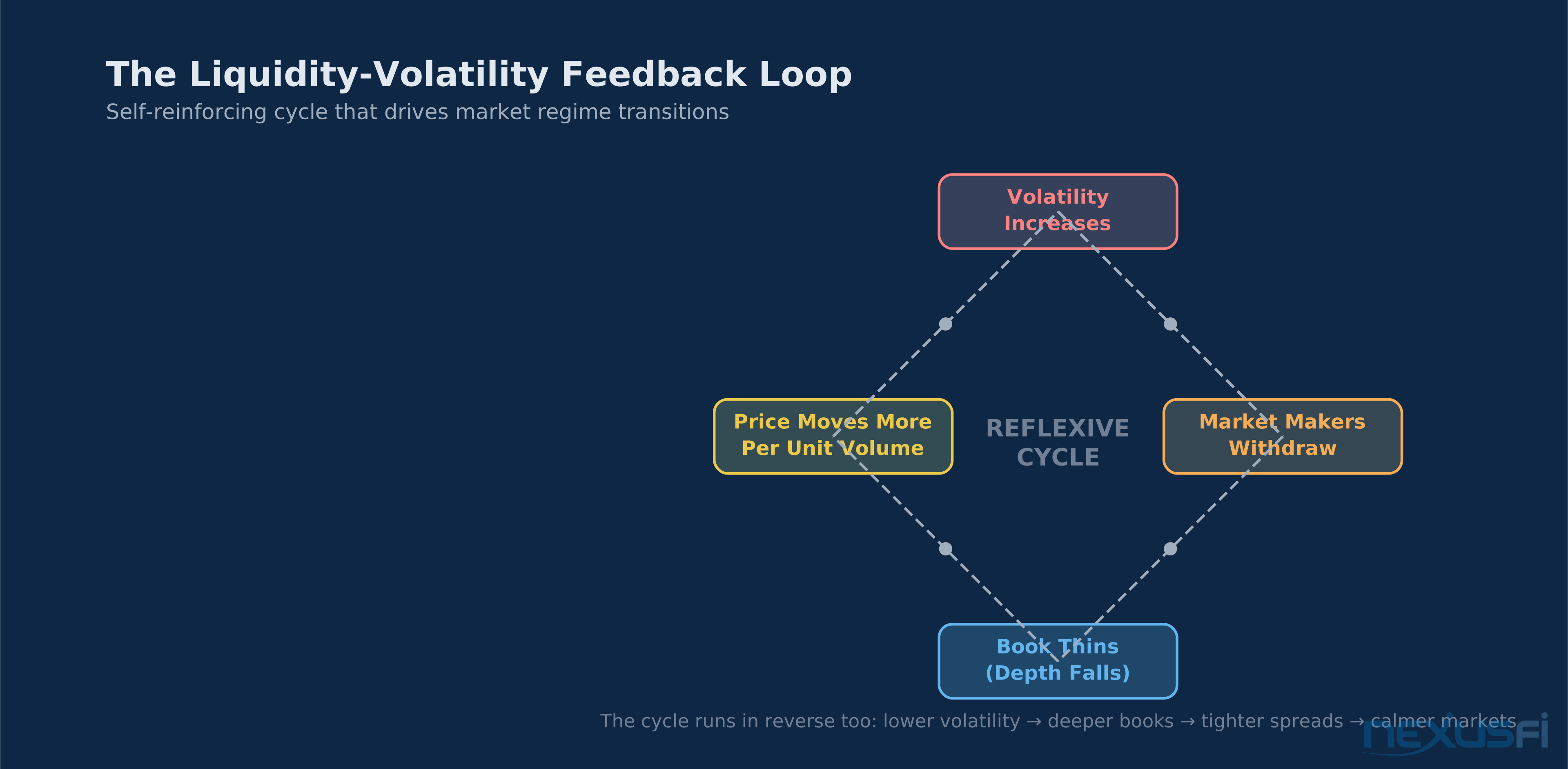
This is the most important dynamic in futures markets, and it's self-reinforcing: thin liquidity causes volatility, and volatility causes thin liquidity.
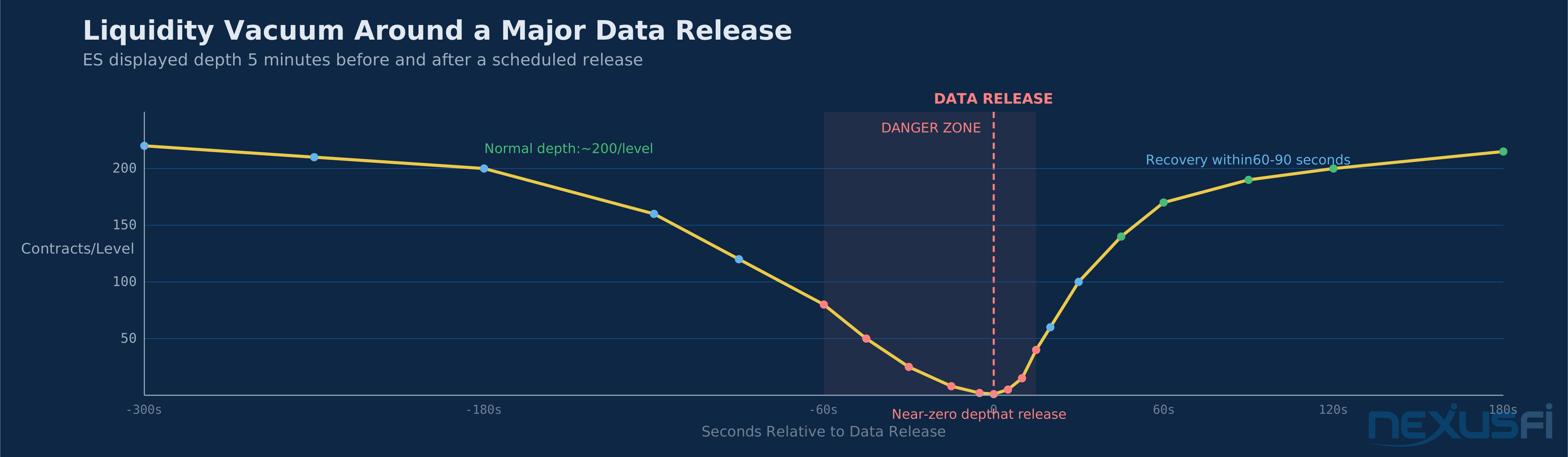
This reflexive loop explains why markets tend toward two stable states: calm and thick (balanced sessions with tight spreads and deep books) or volatile and thin (trending/discovery sessions with wide spreads and shallow books). Transitions between states happen fast — the book can thin out in seconds ahead of a major data release and take minutes to rebuild afterward.
Measuring Liquidity in Real Time #
Experienced futures traders monitor several signals simultaneously:
Spread width — A consistently one-tick spread in ES signals healthy liquidity. When the spread starts flickering to two or three ticks, liquidity providers are pulling back. This is one of the earliest warning signals.
DOM depth — Total resting size within 5-10 levels of the inside market. In the ES during normal RTH conditions, you might see 100-300 contracts per level. When that drops to 20-50, the book is thin and execution risk increases.
Volume at price — How many contracts actually traded at each level tells you about realized liquidity versus displayed liquidity. A level that shows 200 contracts resting but only 50 trade before price moves through it had less real liquidity than it appeared.
Cancellation rate — The ratio of canceled orders to filled orders. High cancellation rates mean displayed liquidity is unreliable. Some traders and platforms track this metric to gauge how "real" the visible book is.
How Liquidity Varies by Session #
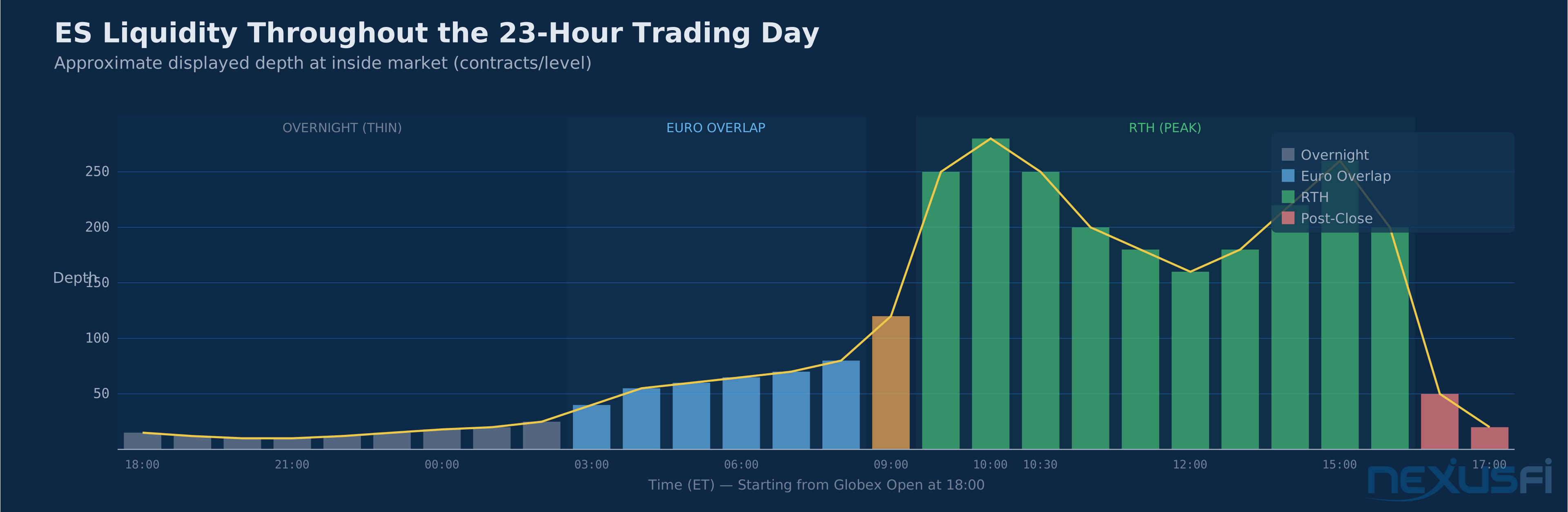
Liquidity follows predictable daily patterns in most futures contracts:
RTH (Regular Trading Hours) — Peak liquidity. Spreads are tightest, depth is deepest, slippage is lowest. For ES, this is 9:30 AM - 4:00 PM ET. Most retail scalpers should concentrate activity here.
Pre-market/Post-market — Moderate liquidity. The European overlap (around 3:00 AM - 9:30 AM ET for index futures) provides decent liquidity in globally traded contracts. Post-4 PM to around 5 PM is the dead zone.
Overnight/Globex — Thin liquidity. @Jigsaw Trading notes that while you can trade ES overnight without major issues for small size, "the problem as I see it would be needing to trade. A lot of times, there will be nothing on." [4] The book supports 20-30 contracts without terrible slippage, but volatility per unit of volume is much higher.
Around data releases — Liquidity evaporates on a schedule.
[2] Every major data release creates a predictable liquidity vacuum that resolves within seconds.
Holidays and seasonal patterns — International holidays create asymmetric liquidity. Crude Oil on a British holiday trades lower volume but largely normal liquidity for retail sizes. US holidays thin everything. Week between Christmas and New Year's is notoriously thin across all products.
Liquidity Across Different Contracts #
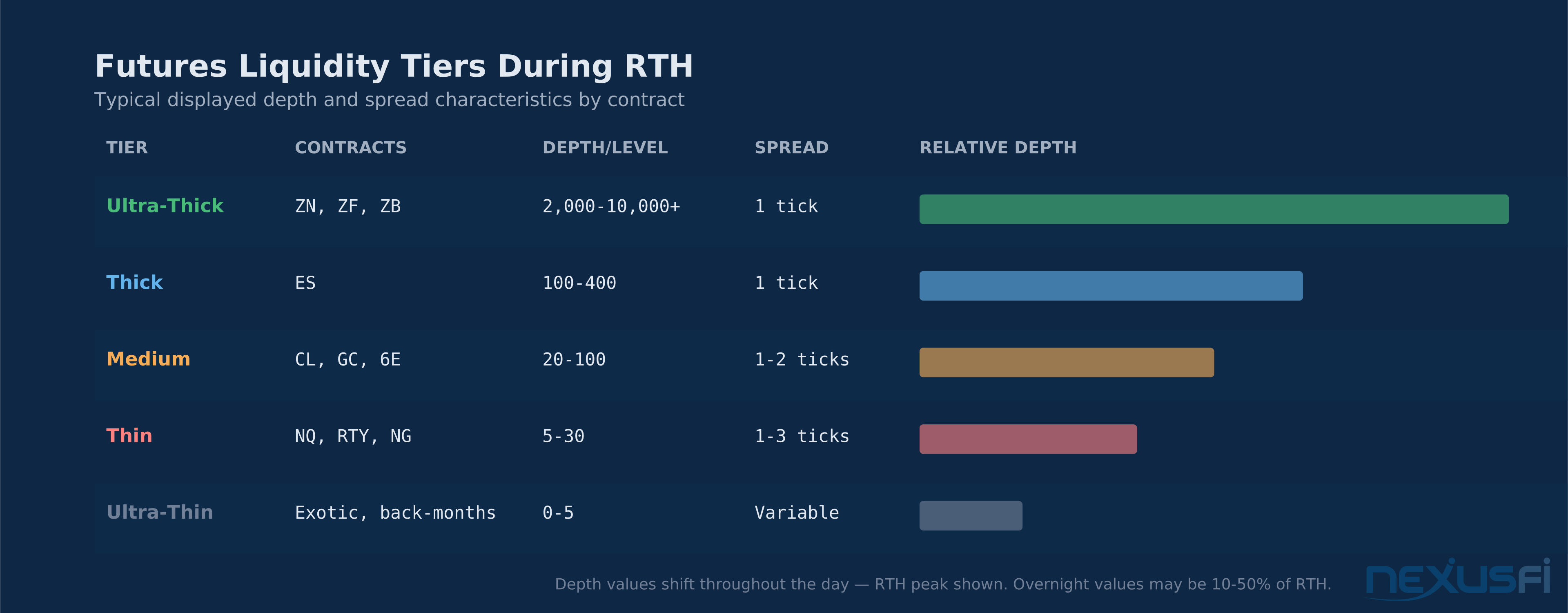
Not all futures are created equal. The difference between a "thick" and "thin" contract is massive:
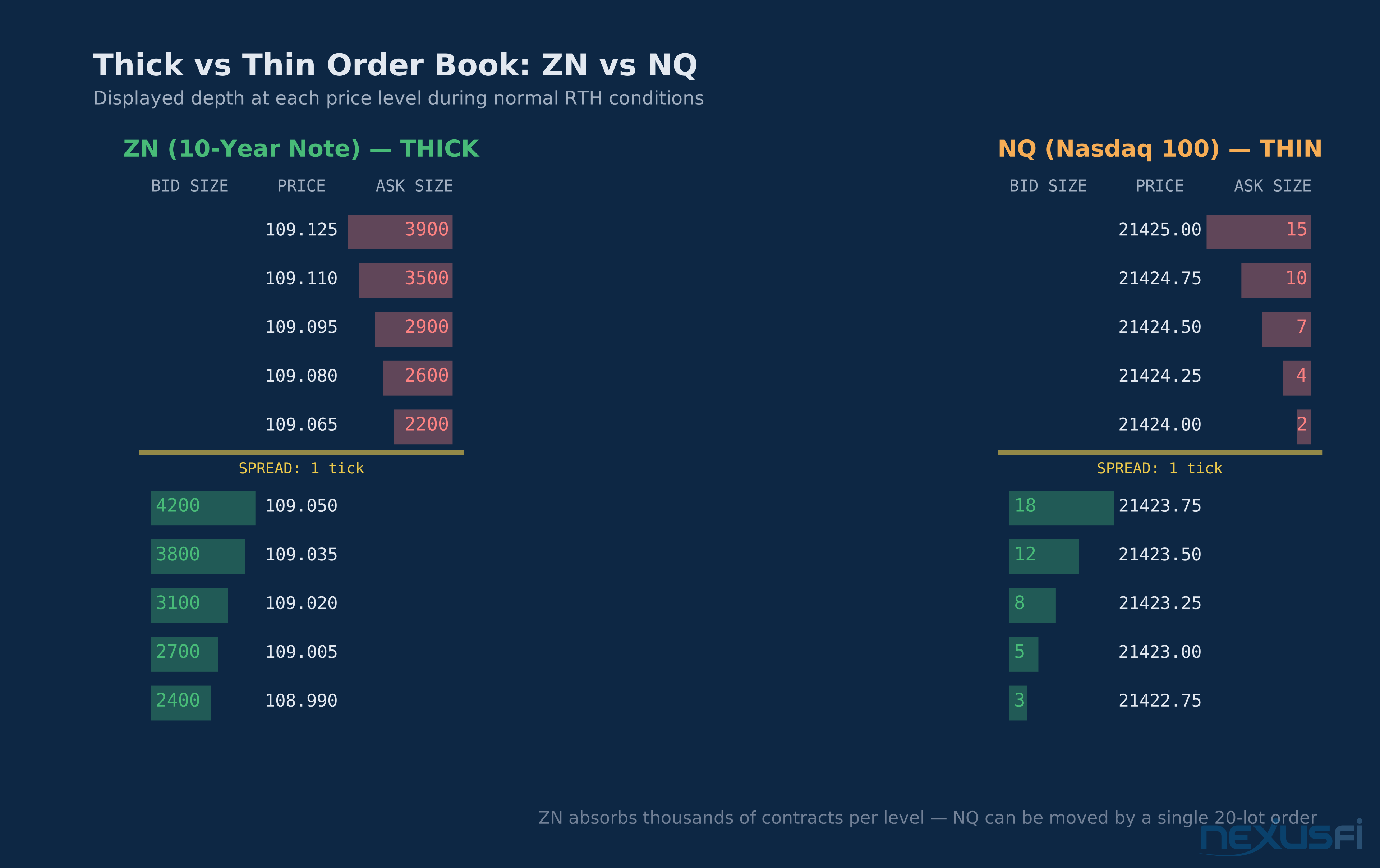
@matthew28 illustrates this with DOM snapshots: ZN (Ten-Year Treasury) shows thousands of contracts per level — thick, slow-moving, and forgiving. ES shows hundreds per level — medium depth with reasonable execution. NQ shows 5-20 per level — thin, fast, and punishing for size. [5]
The practical impact:
When Liquidity Deceives You #
Spoofing and Phantom Liquidity #
Not all displayed liquidity is real. Spoofing — placing large orders with the intent to cancel before they fill — creates phantom depth that misleads other traders.
@Jigsaw Trading explains the "flipping" variant: the spoofer stacks one side of the book to appear strong, absorbs orders on the opposite side via iceberg, then "flips" — pulls the spoofed orders, stacks the real side, and fires market orders. "Those that sold know they are toast and they bail out (by buying) and the market pops up." [8]
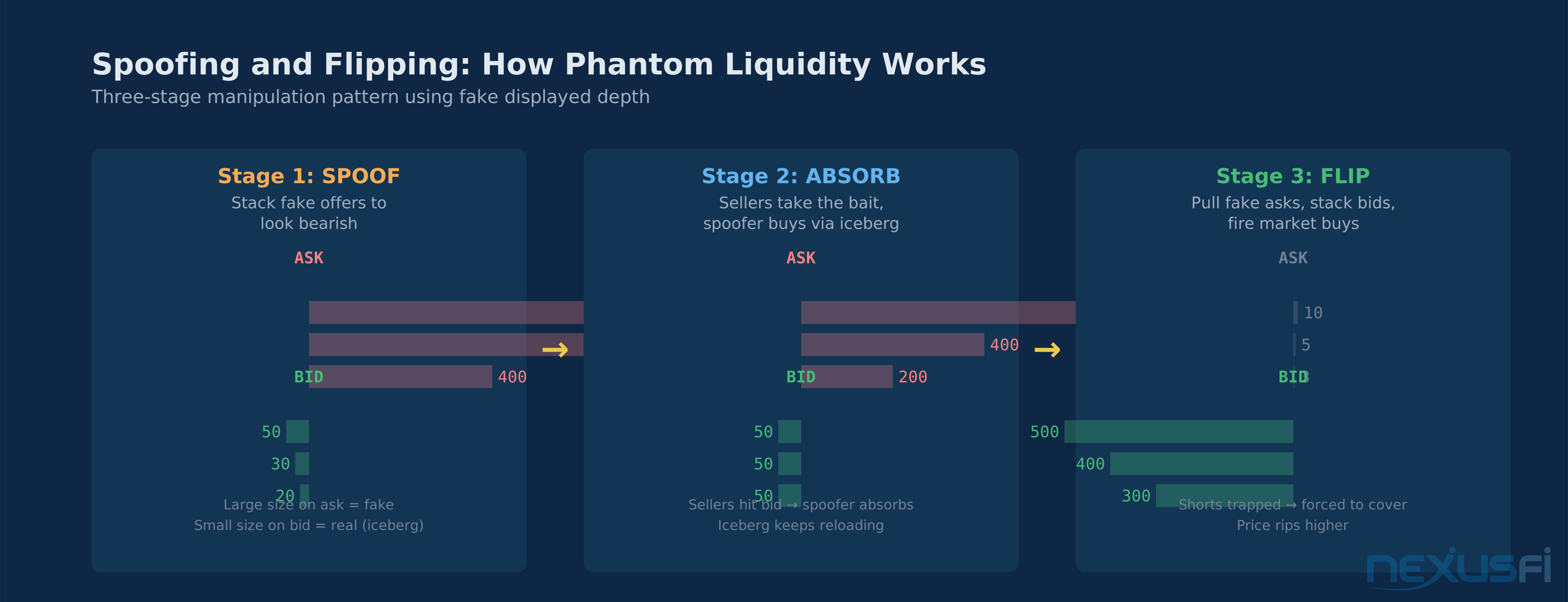
For practical purposes: if a large bid or offer appeared suddenly and the volume trading at that level is much lower than what was displayed, the liquidity was likely spoofed. @tpredictor notes you can detect this "simply by tracking the orders that trade at a level compared to the depth that was at the level. If less orders are required to trade through that level then most likely it was spoofed." [7]
The Thin Book Trap #
One of the most dangerous scenarios for futures traders is trading in conditions where the book has silently thinned but price action appears normal. This happens:
- Pre-FOMC and pre-NFP — Price consolidates into a tight range while the book quietly empties. The first aggressive order after the release moves price 5-10x more than usual because there's nothing to absorb it.
- After major stops are hit — A stop cascade sweeps through multiple levels, removing resting orders. The book hasn't refilled yet, but price has stabilized temporarily. Entering here means you're trading into a vacuum.
- Late in Friday sessions — Market makers reduce exposure ahead of the weekend. The book appears normal because price is calm, but the depth isn't there to protect you from a sudden move.
Structural Liquidity Changes #
The liquidity environment evolves over years, not just within sessions. @tigertrader documents how the migration from open-outcry to electronic trading eliminated traditional market makers, replaced by HFT firms that provide liquidity differently — faster to add, faster to pull. [9]
Modern futures markets depend heavily on algorithmic market makers who will provide billions in notional liquidity during calm conditions but withdraw it instantly when models signal risk. This is at the core different from the floor-trader era where market makers had obligations to maintain orderly markets.
The result: baseline liquidity is excellent most of the time but can vanish faster and more completely than it did in the pre-electronic era. The 2010 Flash Crash, the 2015 August selloff, and the March 2020 COVID crash all demonstrated how quickly modern liquidity providers can step away.
Practical Considerations #
Choosing Instruments by Liquidity #
Your contract selection should match your trading style and size:
- Scalpers need thick markets. If you're targeting 2-4 ticks and trading multiple times per session, slippage on entry and exit destroys your edge. ES and ZN are the go-to choices. NQ works for small size but punishes scaling up.
- Swing traders can tolerate thinner markets because their profit targets are wide enough to absorb slippage. CL, GC, 6E, and even NQ work well for multi-day holds.
- Position traders in back-month or exotic contracts need to use limit orders exclusively and accept that entries and exits may take time. Market orders in thin contracts are expensive.
Managing Execution in Variable Liquidity #
Practical rules for execution quality:
- Know your contract's liquidity schedule. Every futures product has predictable daily patterns. Trade the liquid windows, avoid the dead zones.
- Watch the spread, not just price. A widening spread is the first signal that conditions are deteriorating. If ES goes from 1-tick to 2-tick spread, something has changed.
- Use limit orders in thin conditions. Market orders in thin books guarantee bad fills. If you can't afford to miss the entry, at least use limit orders one tick through the market rather than pure market orders.
- Scale your size to the book. Don't trade 50 lots in a market that has 10 contracts per level. Your order will sweep through multiple levels and your average fill will be much worse than the price you saw.
- Pre-data release protocol. Flatten or reduce position size 2-3 minutes before any major data release. The liquidity vacuum is predictable and the risk/reward of holding through it is terrible for most strategies.
- Don't confuse calm with liquid. Price can be stable with a thin book. The stability lasts until one aggressive order arrives, then price moves violently. Check the depth, don't just watch the chart.
Liquidity and Stop Placement #
Stop losses interact with liquidity in ways many traders don't consider. A stop-market order converts to a market order when triggered — if the book is thin at that point, you'll fill well past your stop price. In thin markets or pre-data conditions, consider using stop-limit orders (accepting the risk of non-fill) or simply reducing position size so the slippage on a market stop is tolerable.
Concentrated stop clusters — where many traders have stops at the same obvious level — create their own liquidity events. When those stops trigger simultaneously, they produce a burst of market sell orders into whatever depth exists. The fills are often dramatically worse than the stop price, especially in thin contracts like NQ or RTY.
Knowledge Map
Go Deeper
Build on this knowledgeReferences This Article
Articles that build on this topicCitations
- — Are futures dying? "Volume drying up" (2012) 👍 5“liquidity is limit orders, people willing to trade a specific price”
- — Trading natural gas futures (2019) 👍 11“Volume is how much a contract trades and liquidity is how efficiently you can enter and exit positions”
- — Spoo-nalysis ES e-mini futures S&P 500 (2024) 👍 6“The book thins out greatly when volatility increases...self-reinforcing reflexive loop”
- — Emini-After hours liquidity (2013) 👍 3“the problem would be needing to trade...a lot of times there will be nothing on”
- — basic questions about futures (2018) 👍 3“thick products trade much more volume at each level than thin products”
- — What is happening with ES? (2021) 👍 4“I prefer ES because I actually have a chance to get out when I need to”
- — Is Spoofing alive and well? (2017) 👍 5“Spoofing or fake liquidity is a factor in the markets...tracking orders that trade at a level”
- — Flipping spoofing (2013) 👍 2“Spoofing is simply submitting limit orders that you will pull before they get filled”
- — Are futures dying? "Volume drying up" (2012) 👍 3“Decimalization eliminated the majority of market makers...end of open-outcry”
- — Comparing Slippage in Different Futures (2017) 👍 3“slippage is a consequence of low liquidity”