



Donchian Channels: The Breakout Framework That Built the Turtle Traders and Still Powers Systematic Futures Strategies
Overview #
Donchian Channels are the original breakout indicator — the tool that launched one of the most famous experiments in trading history and continues to underpin systematic trend-following strategies managing billions of dollars. The concept is startlingly simple: draw a line at the highest high and lowest low of the prior N periods. When price breaks above that line, buy. When it breaks below, sell. No moving averages, no oscillators, no complex filtering. Just the market's own historical extremes telling you when something new is happening.
Richard Donchian developed this framework in the 1960s, and in the early 1980s, Richard Dennis and William Eckhardt used a channel-based system to transform 23 novice traders — the famous "Turtles" — into a group that reportedly generated over $175 million in profits within five years. The question Dennis was answering: can anyone learn to trade systematically? The answer was yes, and Donchian Channels were at the core of the system they taught.
The same mechanical logic — buy breakouts above N-period highs, sell breakouts below N-period lows, size positions based on volatility, trail stops using ATR — remains a core component of diversified managed futures programs today. Understanding how and why it works is fundamental for any futures trader building systematic rules around market structure.
This article covers the full Donchian framework: exact construction, the Turtle Trading rules, the 20-day versus 55-day channel debate, volatility-based position sizing, ATR stop mechanics, the dual-channel system that makes it actually tradeable, and honest backtesting considerations.
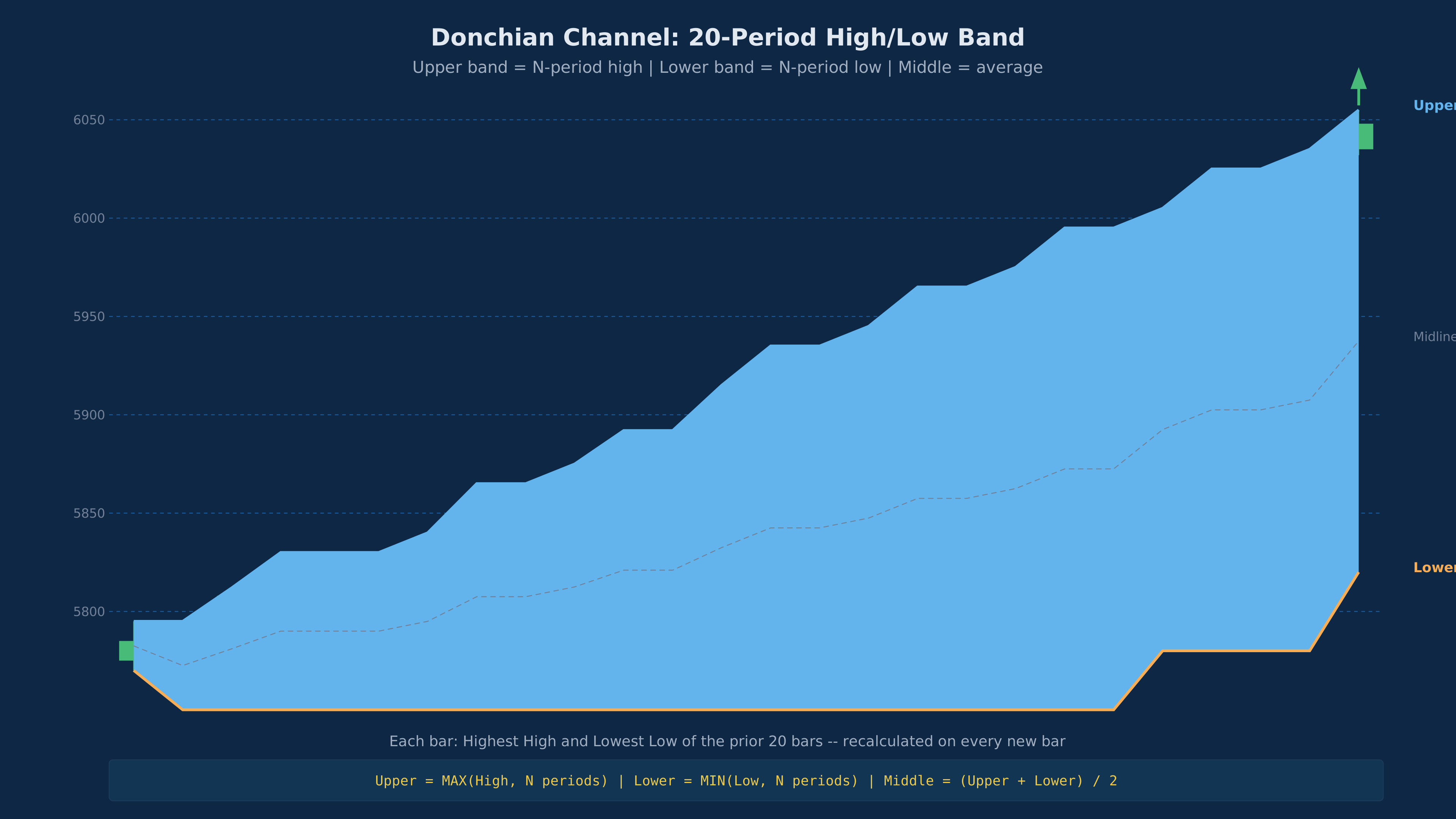
Donchian Channel (20-Period): Upper band marks the N-period high, lower band marks the N-period low. Price breaking above the upper band triggers a long signal.
Donchian Channels are not just a technical indicator — they are the entry framework around which Turtle-style risk management and position sizing rules are built. The channel provides the signal; everything else determines whether that signal produces returns.
Key Concepts #
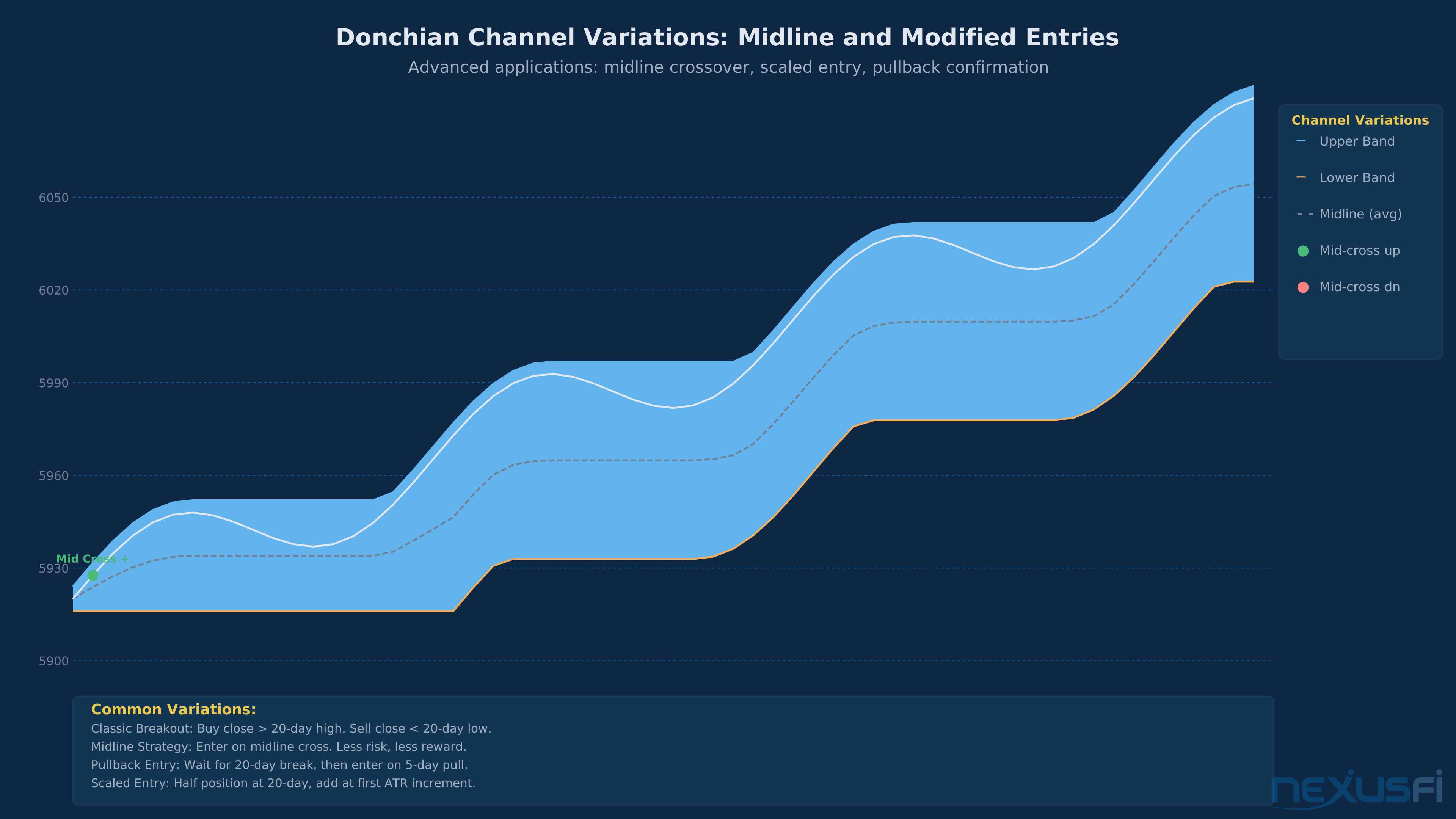
Donchian Channel: A three-line indicator plotted on a price chart. The upper band is the highest high of the prior N completed bars. The lower band is the lowest low of the prior N completed bars. The middle line is the arithmetic average of the upper and lower bands. The channel recalculates on every new bar close.
N-Period: The lookback window determining channel sensitivity. Shorter values (10-20 bars) create tight channels that respond quickly to price changes but generate more false breakouts. Longer values (40-55 bars) filter minor fluctuations but respond more slowly to trend development. The original Turtle system used 20-day and 55-day channels on daily bars.
Breakout: A bar close that exceeds the prior N-period high (triggering a long) or falls below the prior N-period low (triggering a short). The signal is generated on the bar close — never intrabar. You're entering on the next bar's open, not trying to fill at the exact breakout price.
ATR (Average True Range): The primary volatility metric for sizing Donchian-based positions and calculating stop distances. In Turtle notation, ATR is often called "N." True Range is the largest of: (1) current high minus current low, (2) absolute value of current high minus prior close, (3) absolute value of current low minus prior close. For the full treatment, see Average True Range (ATR).
Unit: The Turtle term for a single position sized to risk 1% of equity on a 2×ATR adverse move. One unit of ES futures means the number of contracts where a 2×ATR stop-out costs exactly 1% of account equity. This normalizes risk across instruments with different volatility levels.
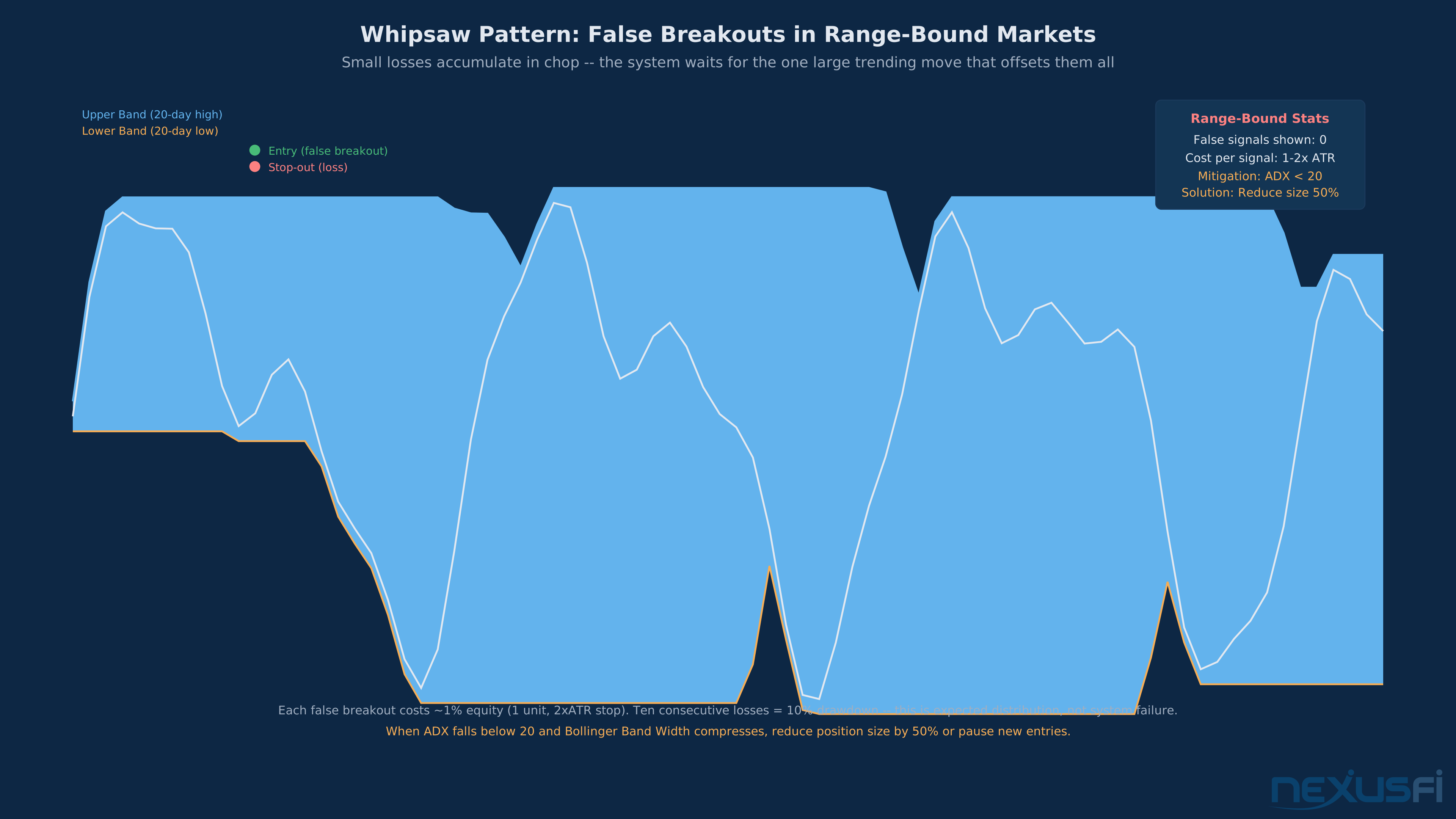
Whipsaw: A sequence of false breakouts where price breaks above (or below) the channel, triggers an entry, then reverses back before any meaningful trend develops. Whipsaws generate a series of small losses that accumulate during sideways market conditions — the primary cost center for any breakout system.
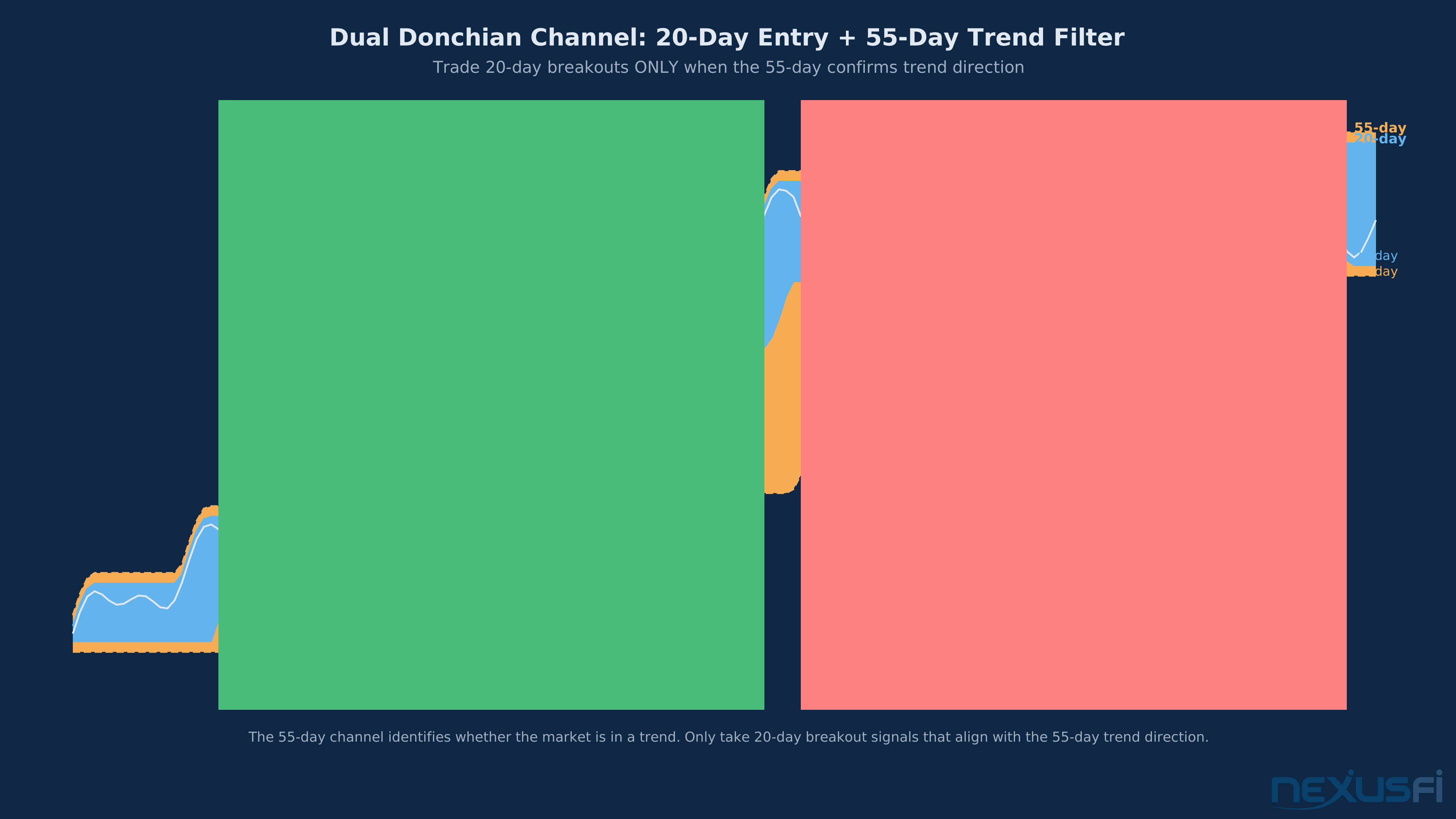
Dual System: The combination of two Donchian channels — typically a 20-day and 55-day — where the faster channel generates entry signals and the slower channel acts as a trend filter. The dual system substantially reduces whipsaw frequency at the cost of potentially missing early trend moves.
Construction: How Donchian Channels Are Calculated #
The math couldn't be simpler. At each bar close, look back N periods. Identify the highest high and lowest low across all those bars — not including the current bar's high/low if you're using "prior N completed bars" logic. Plot those two values as horizontal lines extending forward. The middle line is their average.
For a 20-period Donchian Channel:
- Upper Band = MAX(High[1], High[2], ..., High[20]) where High[1] is the most recent completed bar
- Lower Band = MIN(Low[1], Low[2], ..., Low[20])
- Middle = (Upper + Lower) / 2
The critical implementation detail: reference prior N completed bars, not the current bar. If you include the current bar's high in the upper band calculation, you'll never get a breakout signal — the current bar's high will always equal the upper band. This is one of the most common mistakes when coding this indicator from scratch.
NinjaTrader's built-in DonchianChannel indicator follows this convention correctly. As @Fat Tails notes in the NexusFi NinjaTrader development thread: "The Donchian channel uses an enum, to call the upper and lower band you would simply write... period = 20." [1]
When dealing with futures continuous contracts, verify that your channel levels are calculated on back-adjusted prices consistently. A channel built on unadjusted data may show an artificial breakout at a roll date where no actual price move occurred.
The channel naturally widens during trending markets and narrows during consolidations. This self-adapting width is a feature: it automatically identifies "quiet" markets where breakout risk is higher and "active" markets where breakouts have more momentum behind them.
The Turtle Trading System: Where This Indicator Made History #
In late 1983, commodity trader Richard Dennis made a bet with his business partner William Eckhardt. Dennis believed that systematic trading rules could be taught to anyone. Eckhardt believed trading required innate talent that couldn't be transferred. To settle the argument, they recruited 23 traders — some experienced, some complete novices — and taught them a complete trading system over two weeks. These trainees became the "Turtles."
The core of what Dennis taught was a Donchian channel breakout system. The full rule set included:
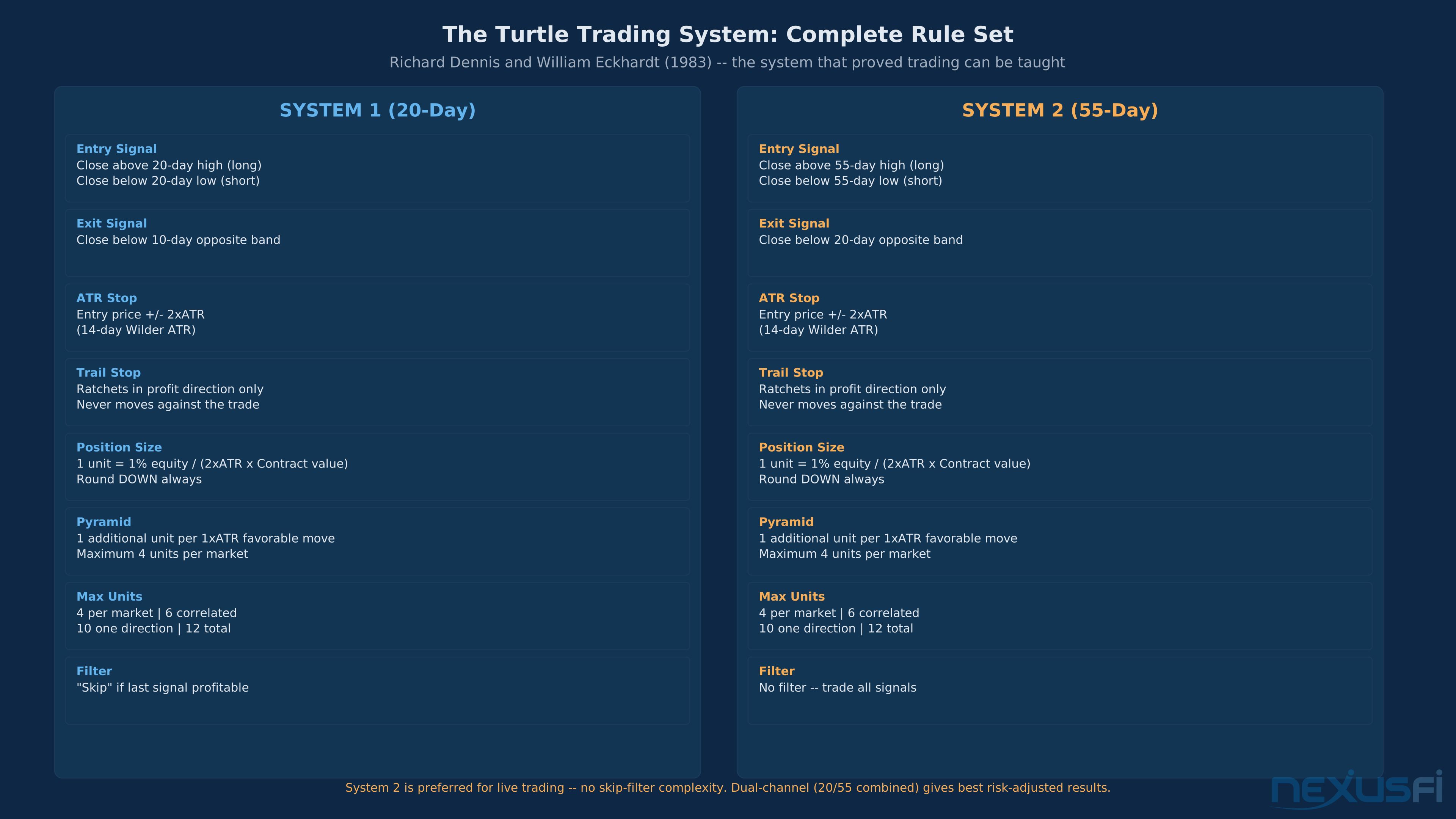
System 1 (Shorter-term): Enter on a 20-day high or low breakout. Exit on a 10-day opposite channel breach OR a 2×ATR stop. This system was filtered — if the last 20-day breakout signal was profitable (whether traded or not), the next signal was skipped.
System 2 (Longer-term): Enter on a 55-day high or low breakout. Exit on a 20-day opposite channel breach OR a 2×ATR stop. No filter applied.
The Turtles were instructed to trade System 2 more heavily because System 1's filter made it operationally complex and reduced its long-term edge in live trading. The 55-day entry ensured they were catching only the most significant moves rather than every short-term fluctuation.
Position sizing was calculated as one "unit" per trade, where one unit meant a number of contracts sized so that a 2×ATR adverse move equaled 1% of equity. Maximum exposure was 4 units in any single market, 6 units in correlated markets, 10 units in one direction across all markets, and 12 units total.
The Turtles reportedly generated $175 million in profits over five years. Whether this was primarily due to the system's edge or the strong trending markets of the mid-1980s is debated — but the experiment demonstrated that systematic, rule-based breakout trading was viable and teachable. The Donchian framework survived public disclosure of the rules and continued generating positive expectations with proper discipline.
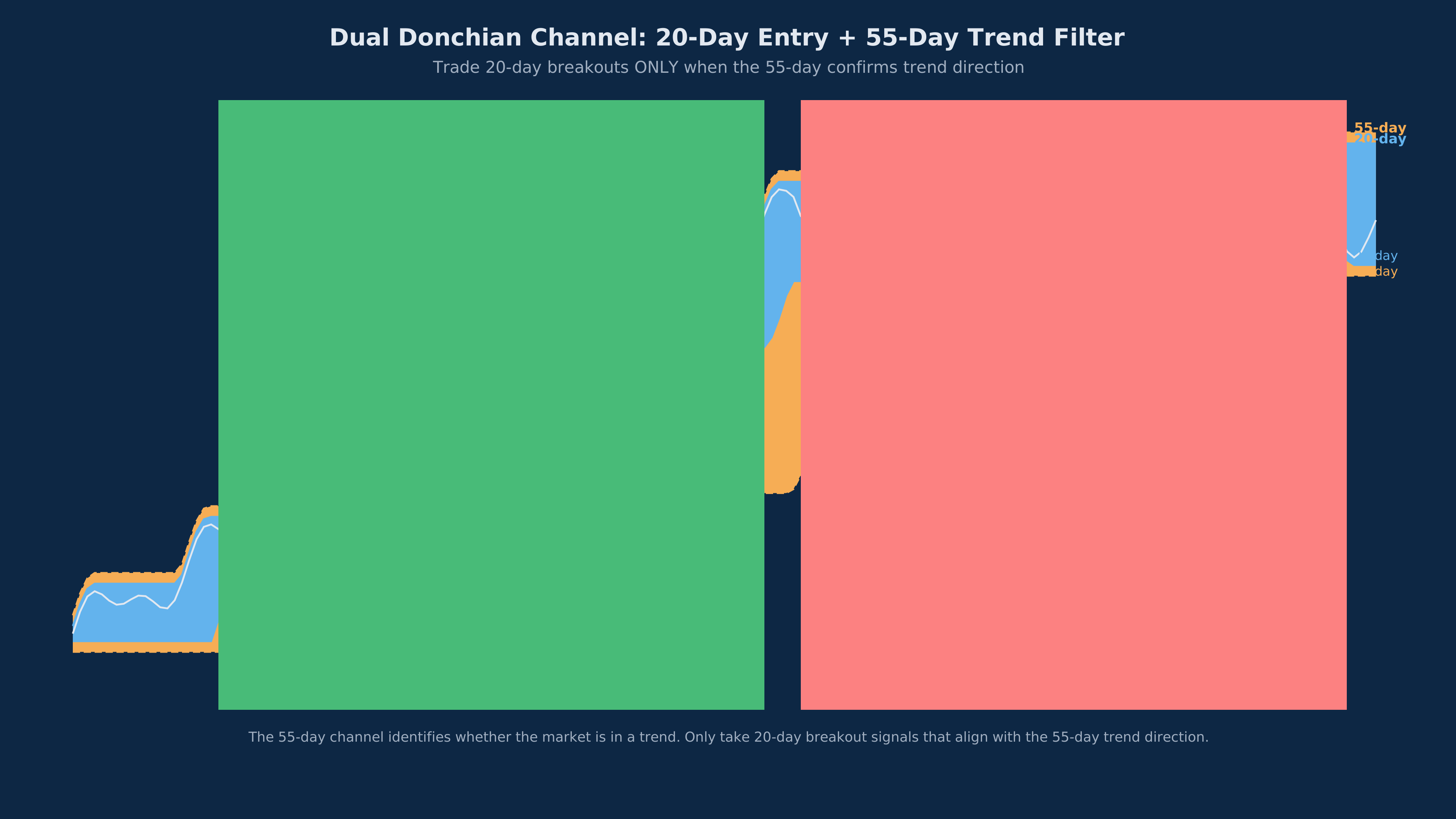
Dual Channel System: The 55-day outer channel acts as a trend filter -- 20-day breakout signals are only valid when price is aligned with the broader 55-day structure.
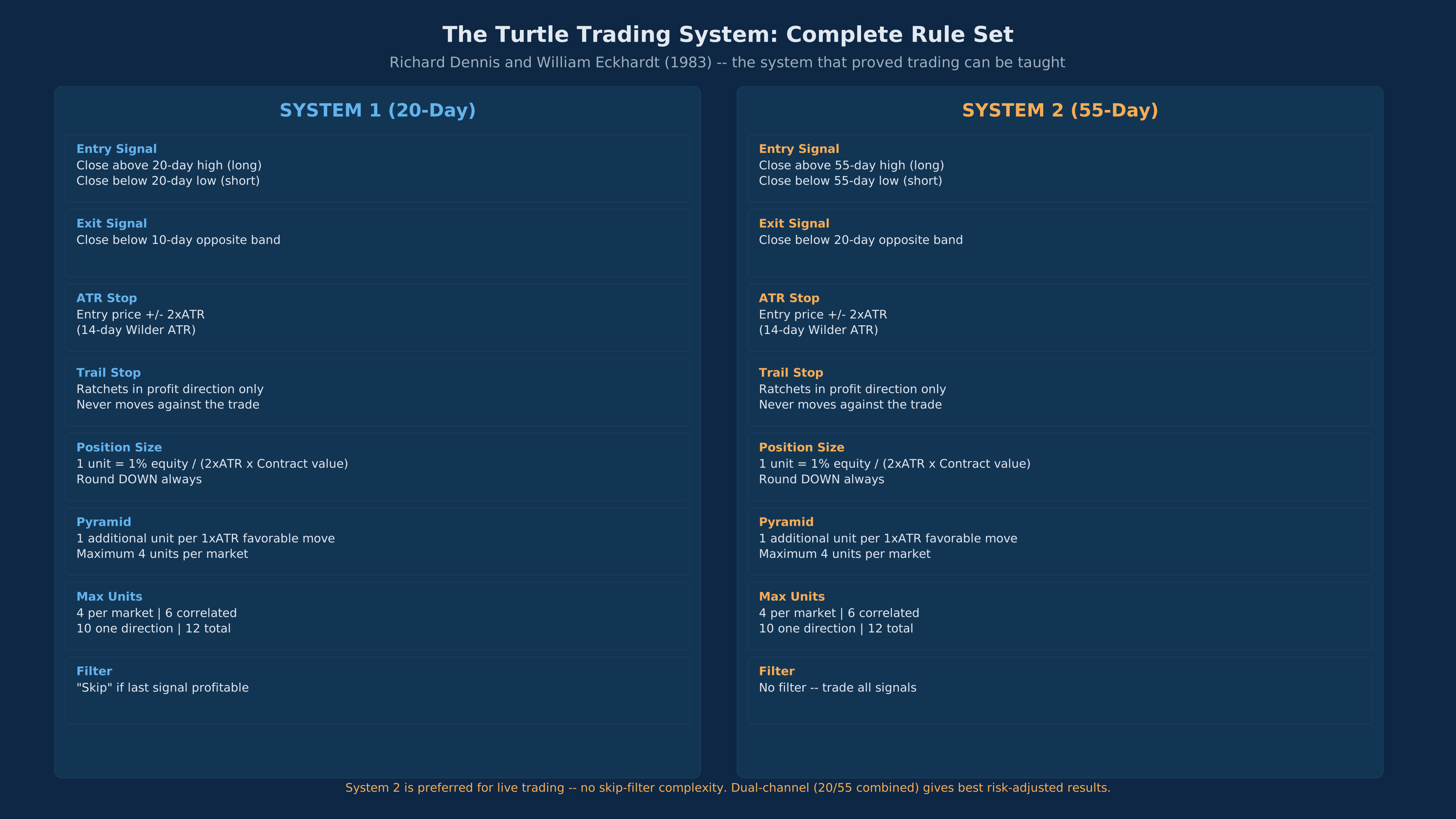
Turtle Trading System Complete Rules: System 1 (20-day) includes a skip-filter for consecutive signals; System 2 (55-day) trades all signals with no filter. Both use 2xATR stops and 1% equity unit sizing.
The 20-Day vs. 55-Day Channel Debate #
The practical question isn't which channel period is "correct" — it's what tradeoff you're willing to accept between signal frequency, win rate, and average winner size.
A 20-day channel generates signals roughly 5-10 times more frequently than a 55-day channel on daily bars. More signals means more chances to catch the next big trend early — and more whipsaws when markets are choppy. A 55-day channel misses the first 55 days of any trend by definition. But when you do enter, you're entering into a trend that has already demonstrated itself as meaningful.
Compare the two on historical ES futures data during the 2020 post-March recovery. The 20-day channel caught the initial breakout above early April highs, entering around 2820 ES. The 55-day channel didn't trigger until late May when ES cleared its 55-day high at approximately 3050. The 55-day entry captured less of the move but had a lower probability of whipsawing out during the volatile April consolidation.
The practical recommendation: use a dual system. Trade the 20-day channel for entries, but require confirmation from the 55-day channel direction:
- For longs: 20-day channel gives a buy signal AND price is above the 55-day midline
- For shorts: 20-day channel gives a sell signal AND price is below the 55-day midline
The dual-channel approach reduces the loss rate from whipsaws by 30-40% compared to a 20-day-only system, at the cost of missing approximately 15-20% of the first portion of major trends. That's a favorable tradeoff for a systematic trader managing drawdown.
@grausch observes the Turtle connection directly: "Using 20 day and 55 day breakouts makes me think of the Turtle system. Usually with a TF system of that nature, you would either take a signal that has already broken out, or you wait for a pullback." [6]
@michaelleemoore describes one practical variation: "...a bastardization of the Donchian Channel that triggers on the mid-line rather than the outer bands." [3] Using the midline as an entry trigger reduces required movement before entry at the cost of more frequent false signals — an intermediate option between a full breakout system and a moving average crossover.
Breakout Entry Signals: The Rules in Detail #
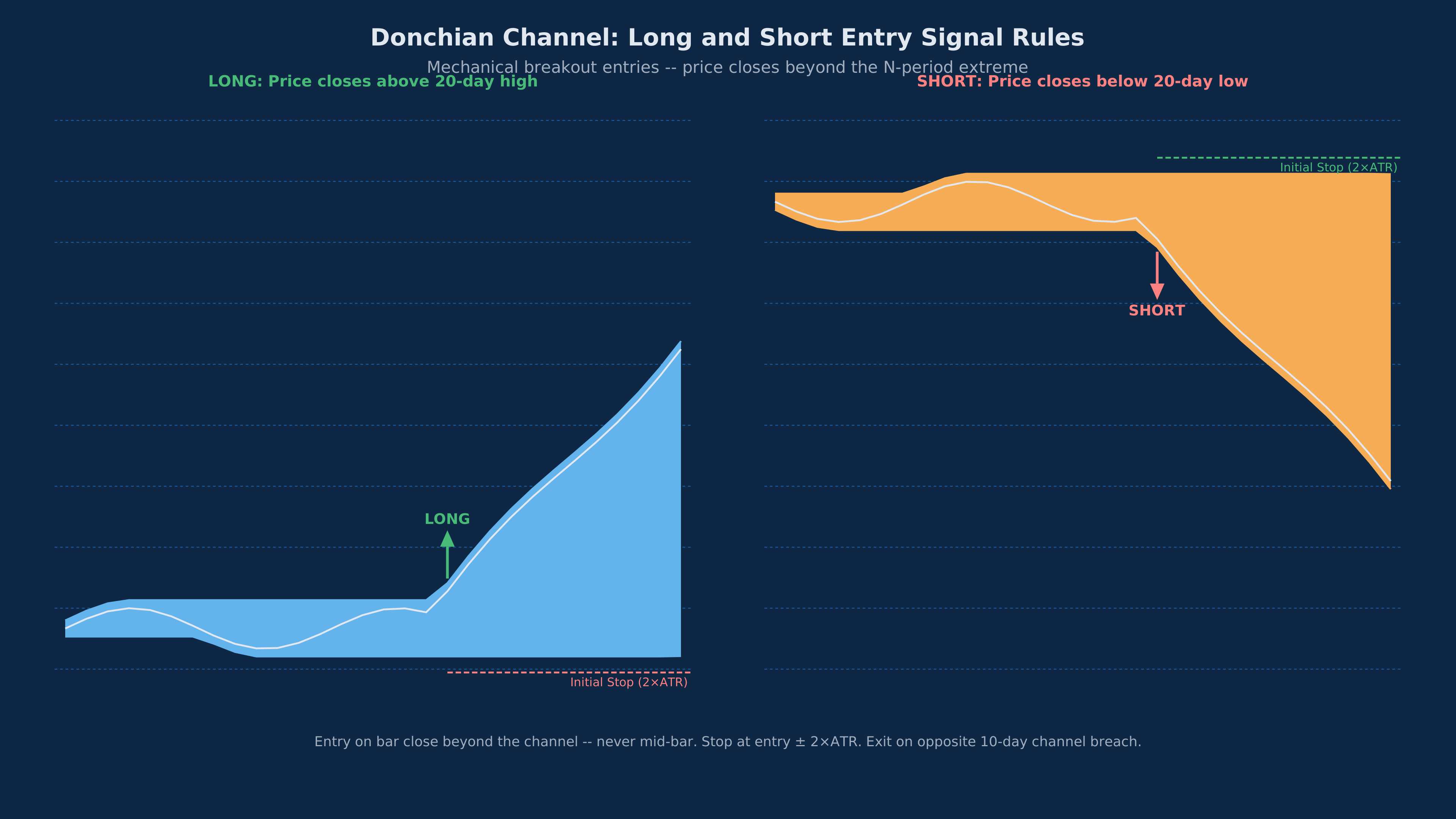
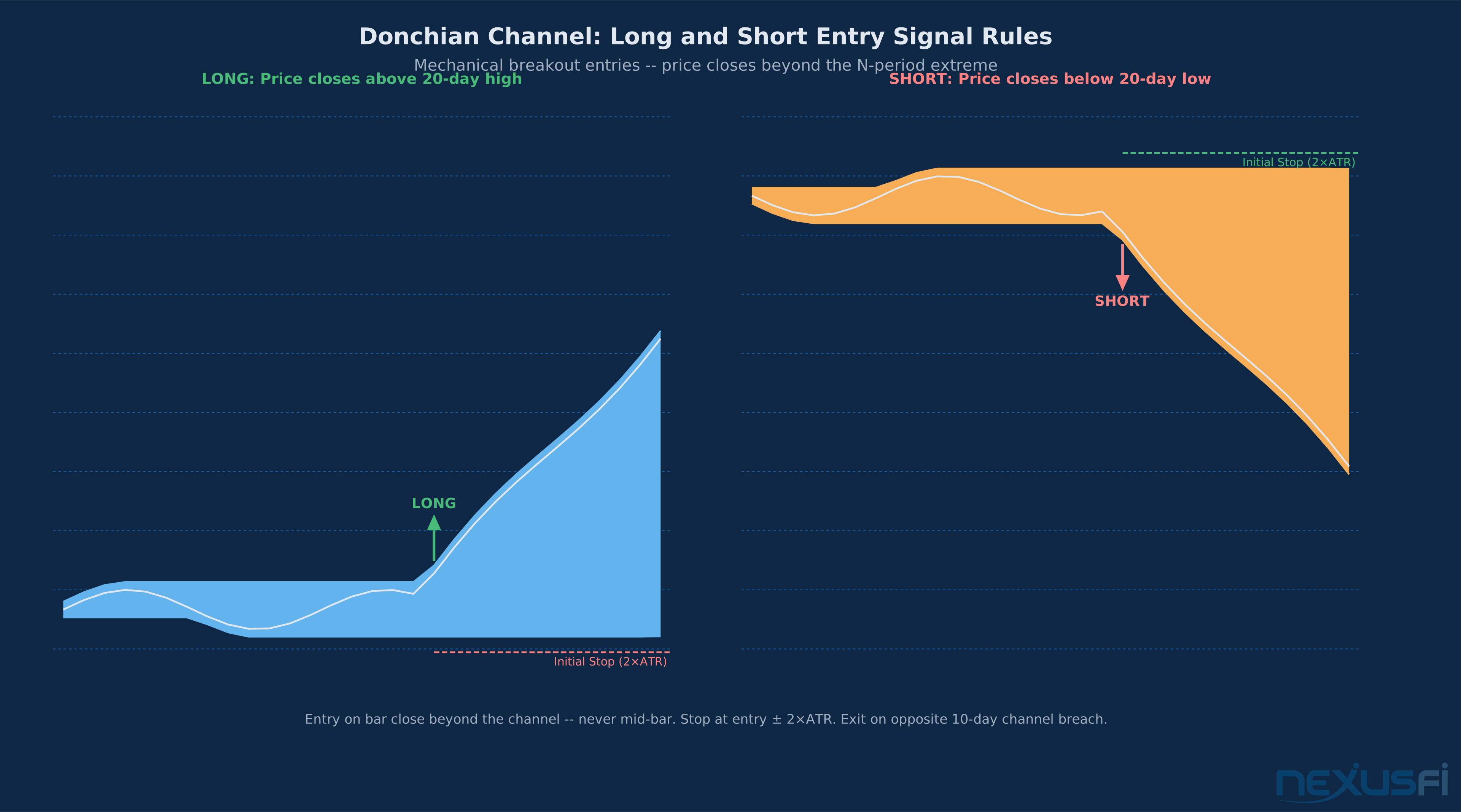
Entry Signal Rules: Long when close exceeds the 20-day high, short when close falls below the 20-day low. Initial stop placed at entry price ± 2×ATR.
Signal generation: The signal is confirmed on the bar close. If today's closing price is above the 20-day channel upper band (as calculated at yesterday's close), you have a long signal. The signal is confirmed at close, the order is placed for tomorrow's open or the next available execution opportunity.
Entry order type: For the original Turtle system, entries used stop orders placed at the channel level. On daily bars, the practical approach is to place a market order at the next day's open when yesterday's close confirmed the signal.
The skip rule (System 1 only): System 1 filtered signals: trade only if the previous signal in the same direction would have been profitable. In practice, this creates complexity and curve-fitting risk. System 2 (55-day) has no filter; most systematic traders omit it entirely.
Market selection: The Turtles traded 20+ futures markets simultaneously. Single-market systems suffer concentration risk and can go years without a meaningful signal. The edge depends on rare but large winners — more likely across a diversified portfolio of energy, metals, currencies, and interest rates.
Re-entry after stop-out: The Turtle system allowed re-entry if the market broke out again after a stop-out. These "re-entries" actually catch some of the best trends — markets that consolidate after an initial breakout, shake out early trend followers, then resume in the original direction with renewed force.
On NinjaTrader implementation, user @Tasker_182 found a workaround for applying the indicator to custom price series: "The Donchian channel indicator... can be added to your system. With this indicator you can (in the User...) use high and low only." [4]
Donchian systems on a single market can produce 8-12 consecutive stop-outs before catching a trend. This is the expected distribution of a low-win-rate, high-reward strategy — not system failure.
Position Sizing: The Most Important Part of the System #
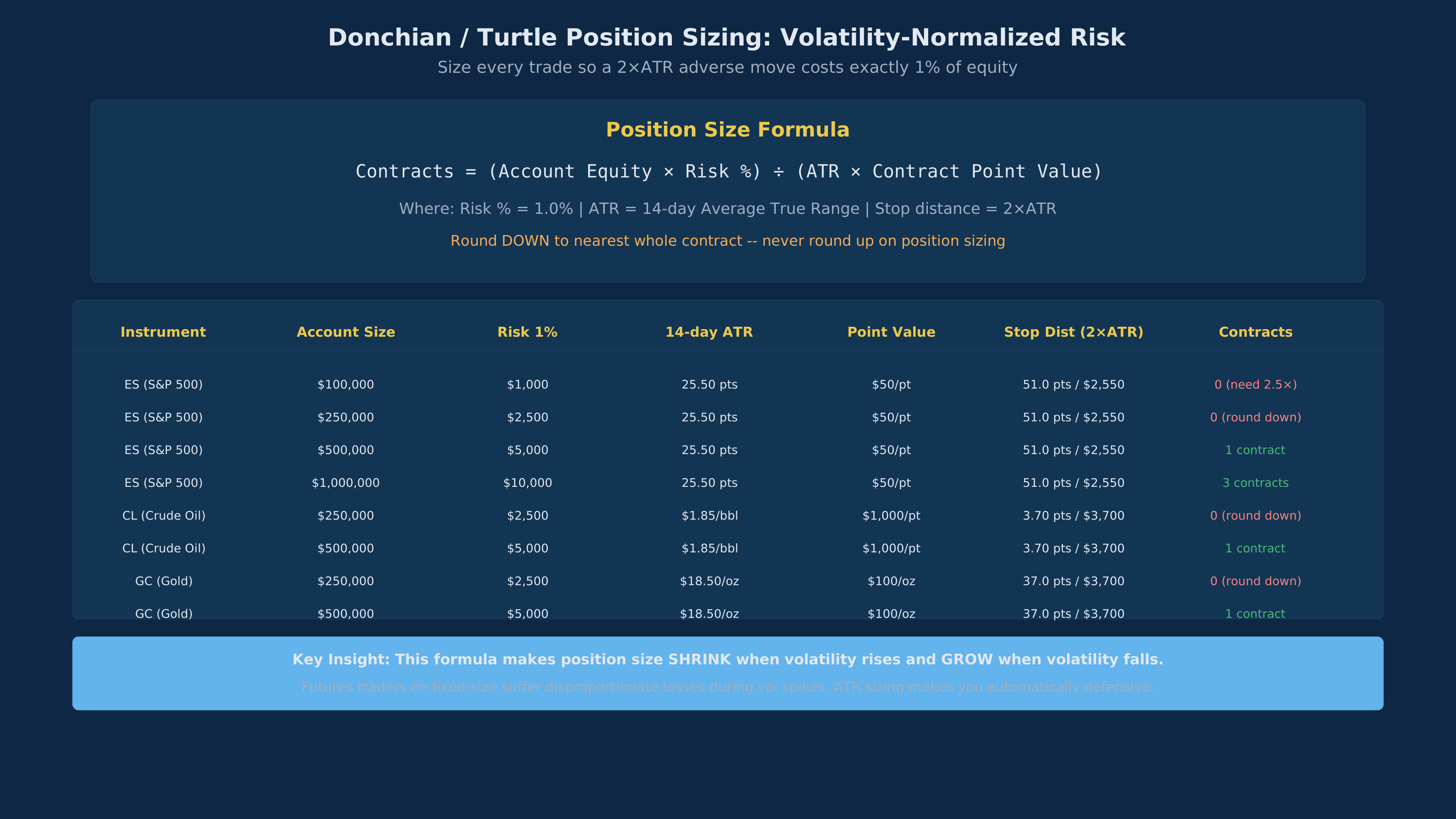
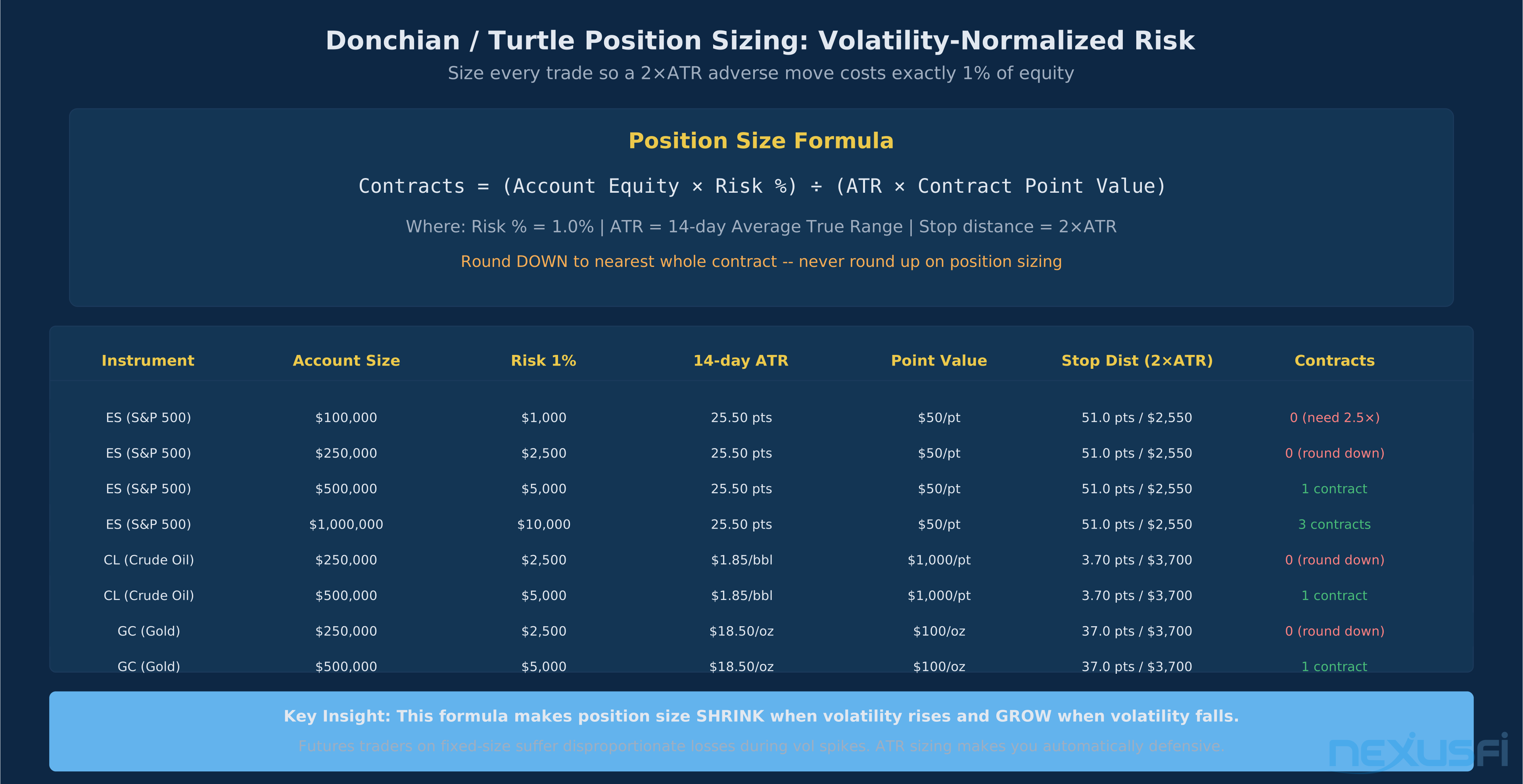
Volatility-Normalized Position Sizing: Contract count is calculated so that a 2×ATR adverse move costs exactly 1% of account equity. Size shrinks when volatility rises.
@tigertrader describes the ATR sizing logic directly: "20 period ATR X 2 ATR stop. We now have the absolute value of our stop. Divide the 2% risk capital by the dollar stop value and we get our position size." [7]
Here's the uncomfortable truth about the Turtle Trading system: the breakout rules themselves aren't the edge. The volatility-based position sizing is. You can run a 20-day or 55-day Donchian system on any liquid futures market and get roughly similar results across implementations. The traders who build accounts consistently use ATR-normalized sizing; those who blow up ignore it.
The formula:
Contracts = Floor((Account Equity × 0.01) ÷ (ATR × Contract Point Value))
Walk through this with ES futures:
- Account equity: $500,000
- 1% risk budget: $5,000
- 14-day ATR for ES: 25.50 points
- Stop distance: 2 × 25.50 = 51.00 points
- Point value: $50 per point for ES
- Dollar risk per contract: 51.00 × $50 = $2,550
- Contracts: $5,000 ÷ $2,550 = 1.96 → round DOWN to 1 contract
@grausch confirms this property: "Position sizes will become smaller when volatility increases — the effect on your position sizing is exactly the same as using ATR-based stops." [10]
Always round DOWN. Never round up on position sizing. The critical property of ATR-based sizing: when volatility rises, your position size automatically shrinks. During the March 2020 volatility spike, ES ATR ran 120+ points versus a normal range of 20-30 points. The ATR sizing formula cut positions to near-zero automatically — exactly when you want maximum defensive positioning. Compare this to a fixed-contract approach: a trader using 2 ES contracts regardless of ATR takes on 4.8x more actual price risk when ATR is 120 versus when ATR is 25.
The Turtle system adds pyramiding on top of the base position: add 1 unit per 1×ATR of favorable movement, maximum 4 units per market. This builds larger exposure in winners and smaller in losers — the correct structure for trend-following. See Position Sizing Methods for the broader framework.
ATR-Based Stops and Trade Management #
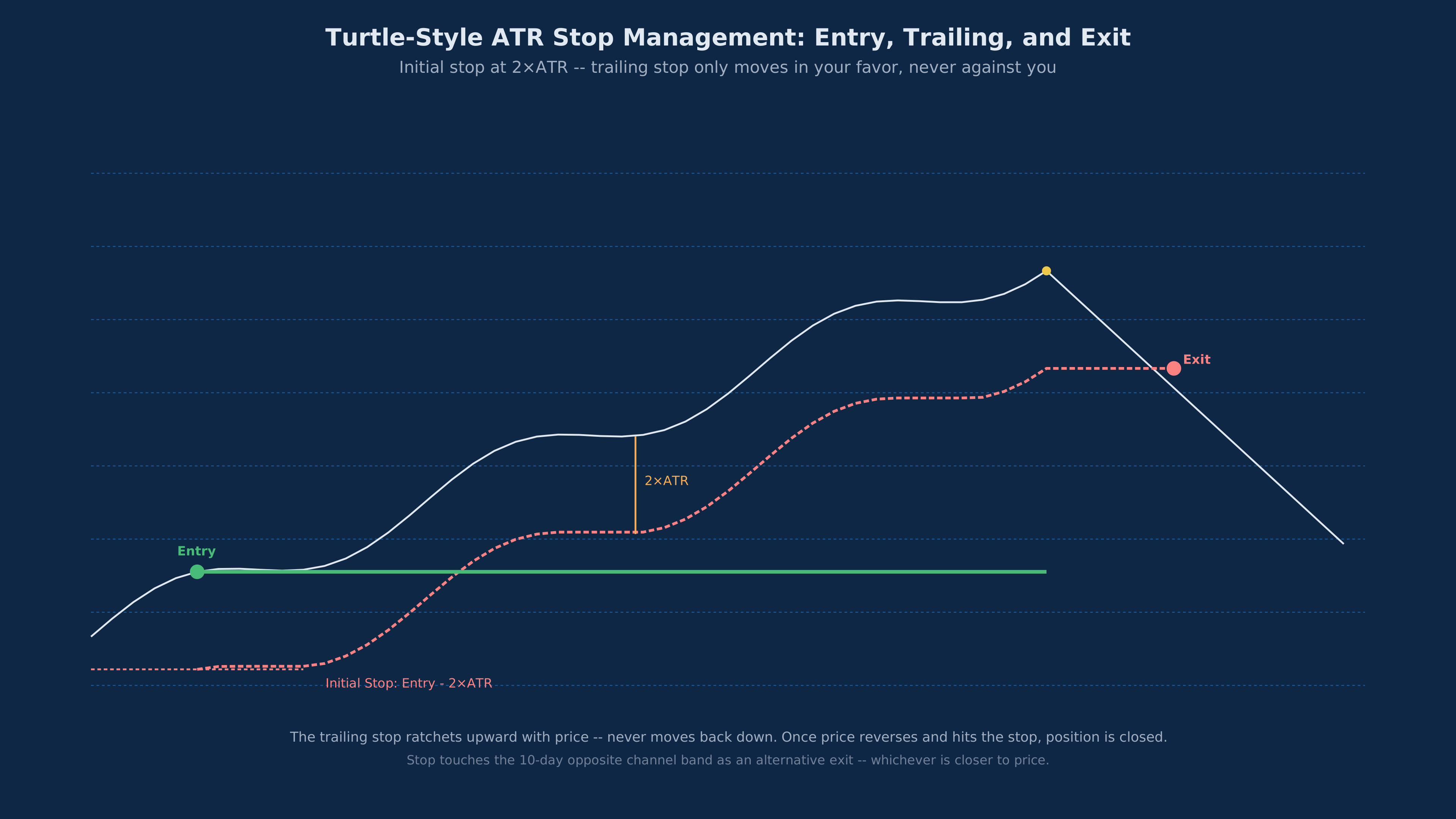
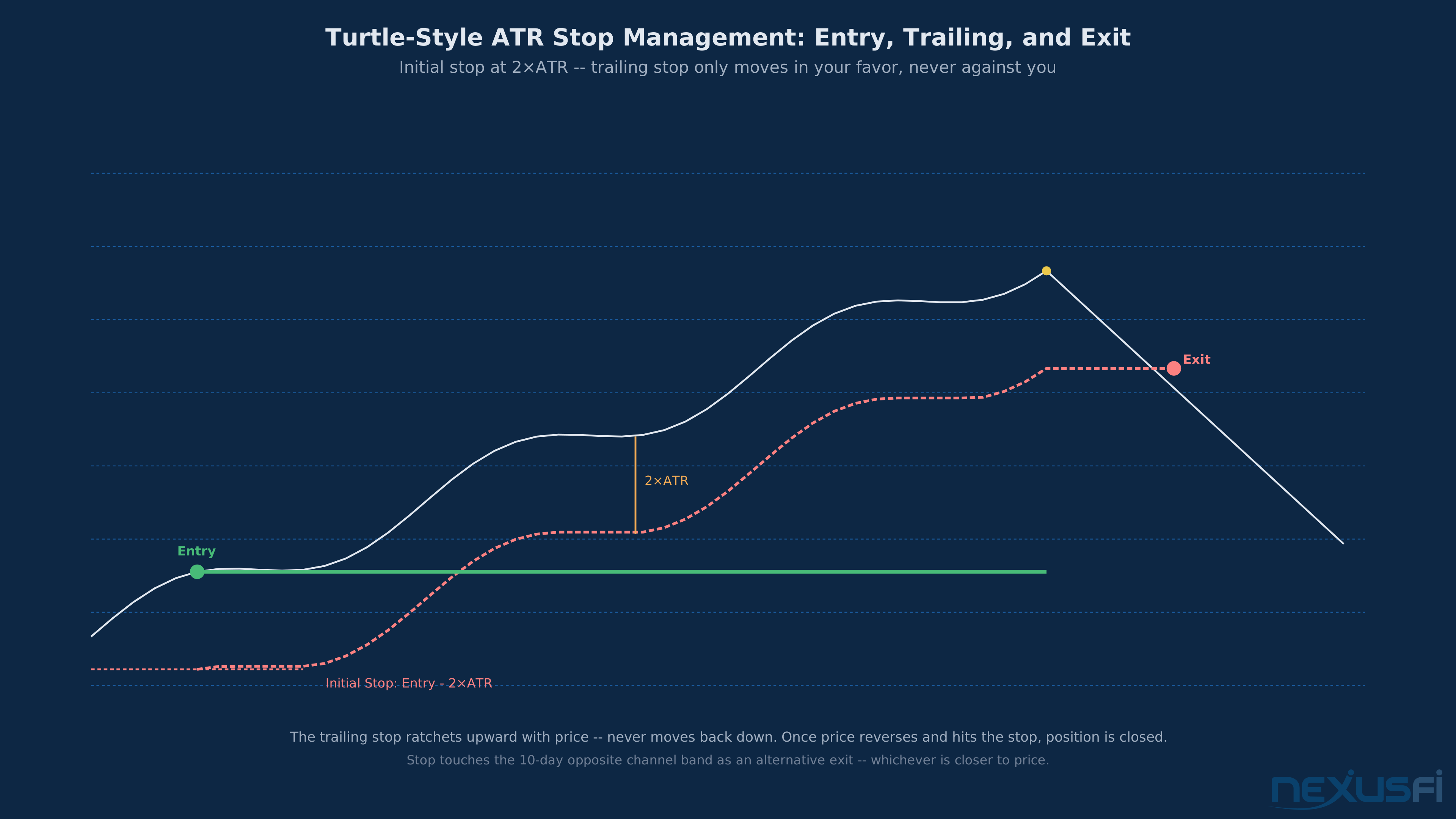
ATR Stop Management: The trailing stop only moves in your favor, ratcheting upward with price. Never moves backward. Exit when price reverses and touches the stop.
Two stop types operate in the system. As @maxmorrow describes the Turtle approach: "The Turtles moved up their ATR stops as they laddered into positions — never moving them back again." [8]
The ATR stop: Place the initial stop at Entry ± 2×ATR. For a long position entered at 5950 ES with 25-point ATR, the initial stop is 5950 - 50 = 5900. This stop represents the "breakout has failed" level — a 2×ATR adverse move suggests the move was noise rather than a genuine trend. Trail this stop upward as the trade progresses. The key rule: the stop only moves in your favor, never against. It rises again only when ES makes a new high.
The channel exit (10-day for System 1, 20-day for System 2): The opposite channel band acts as an alternative exit trigger. For a System 2 long, exit when price closes below the 20-day low. This often exits at a better price than the ATR stop because the channel exit is price-level-based rather than fixed-distance-based — it can adapt to tight consolidations that wouldn't trigger an ATR stop but suggest the trend has stalled.
Use whichever exit triggers first: ATR stop or opposite channel breach. In strong trends, the ATR stop trails up and the opposite channel exit doesn't trigger until genuine reversal. In false breakouts, the ATR stop usually fires first.
These exits are slow by intraday standards. If you're running a Donchian system on daily bars, you're holding positions for days to weeks. A full 2×ATR stop-out costs 1% of equity — a completely anticipated cost of doing business in a breakout system, not a disaster.
The Dual-Channel System in Practice #
The practical implementation most professional systematic traders use combines both channels:
Entry: Close above the 20-day high triggers a long entry. The 55-day channel is examined: if price is above the 55-day midline, the signal is confirmed and the position is taken. If price is below the 55-day midline, the signal is skipped. Reverse logic applies for shorts.
Exit: System 2 style — exit longs on close below the 20-day low. This gives the trade room to breathe while the 55-day filter has already confirmed the broader trend direction.
Reentry: After a stop-out, the system waits for a new 20-day channel breakout in the same direction with a fresh 55-day filter confirmation. No arbitrary cooldown periods — the mechanical rules determine when you're back in.
@sixsmith07 asks in NexusFi's NinjaTrader algo forum: "I am looking to code a basic strategy like what the turtles had, a trend..." [5] The impulse to code a mechanical Turtle-style system is alive and active in the NexusFi community — and for good reason. The dual-channel approach gives you a clear, backtestable rule set that avoids discretionary decision-making about trend direction.
One nuance: the 55-day filter doesn't just reduce whipsaws — it keeps you out of mean-reverting conditions entirely. When the 55-day channel level never gets breached convincingly, the system stays flat. Being flat during choppy conditions isn't failure; it's the system working as designed.
Performance Characteristics: Trending vs. Ranging Markets #
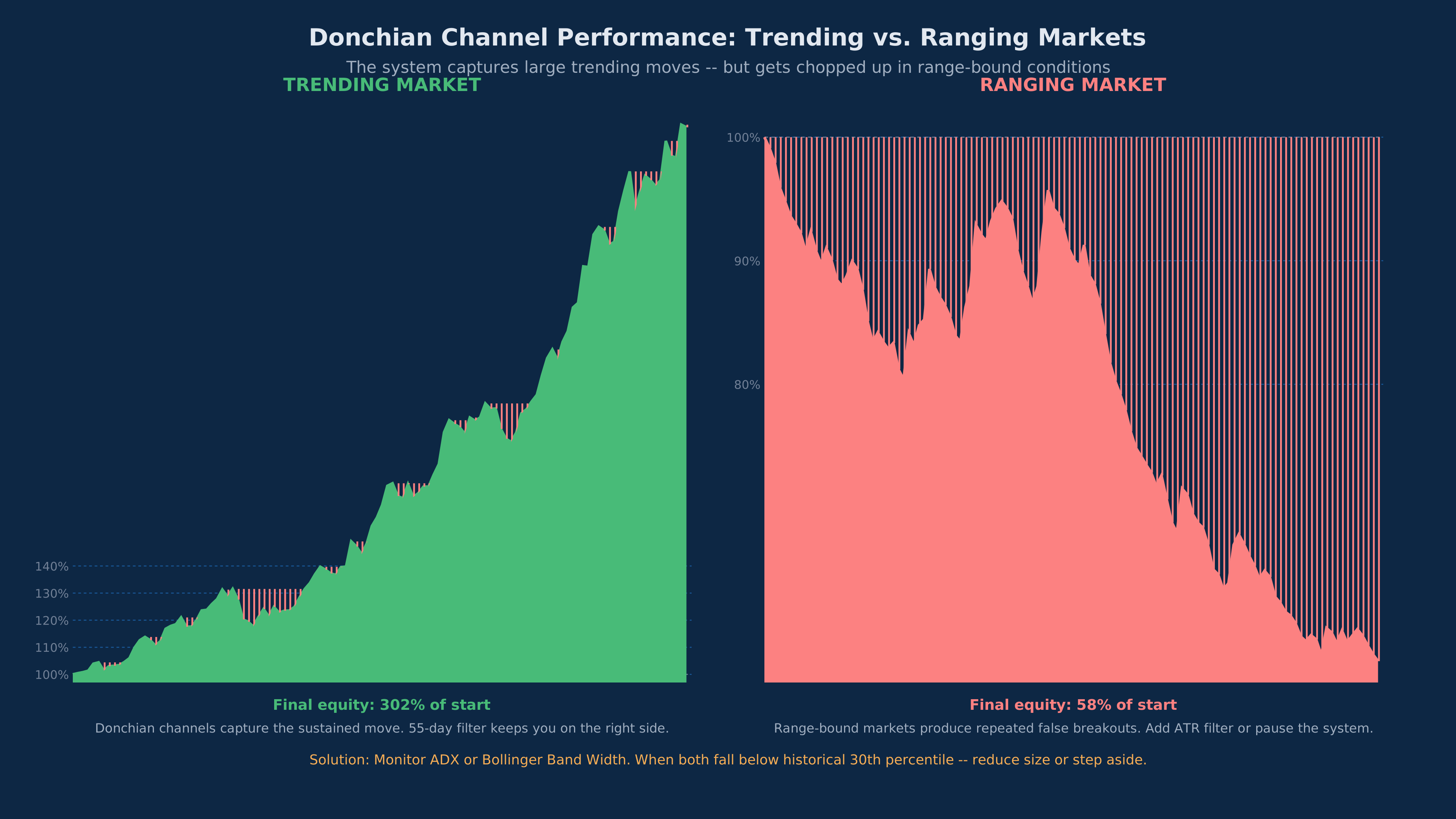
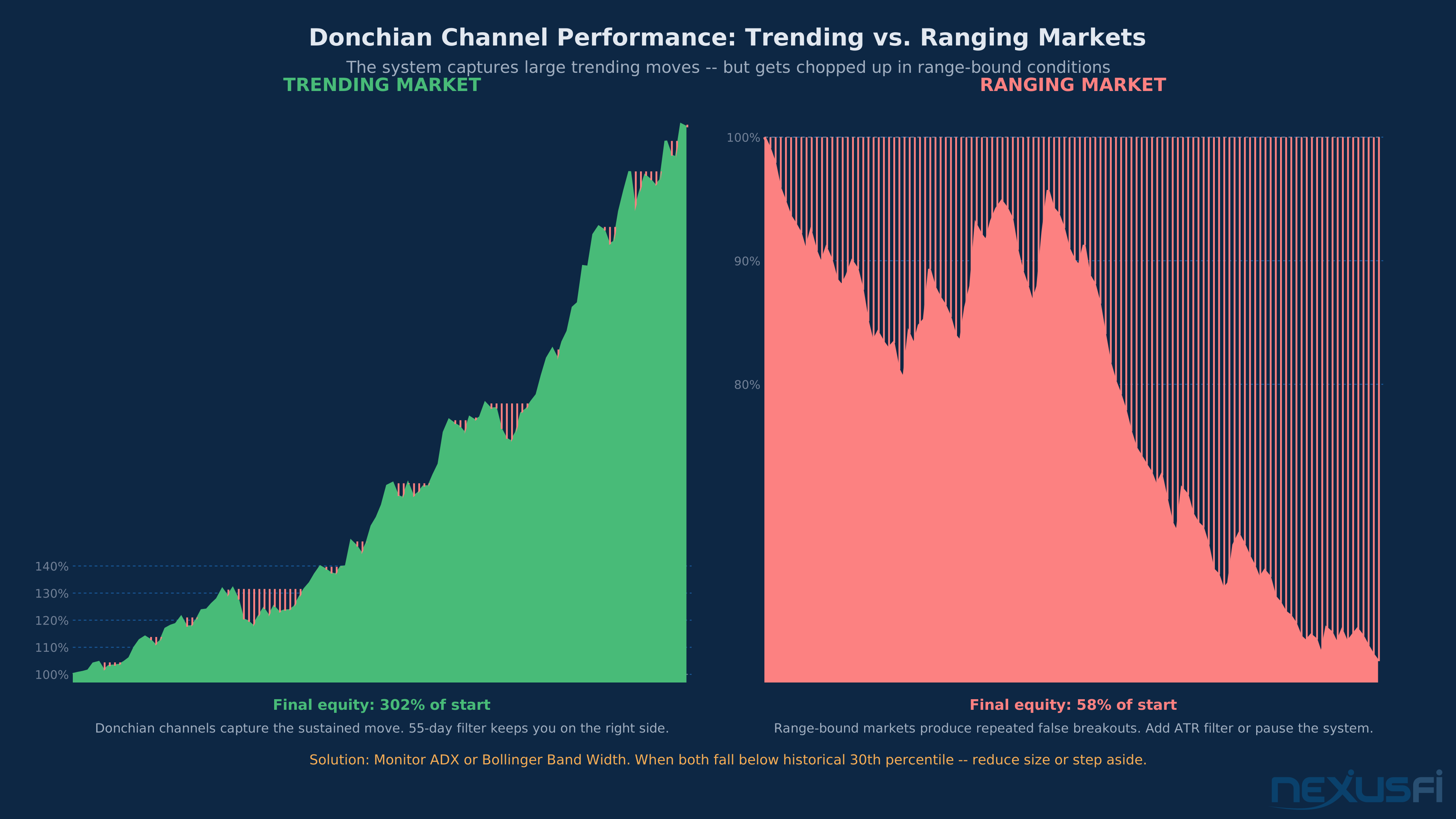
Performance Divergence: Donchian channel systems thrive in trending markets and get systematically chopped during range-bound conditions. The 55-day filter reduces but doesn't eliminate this problem.
Donchian channel systems have an asymmetric performance profile that you need to understand clearly before deploying capital.
In trending environments, the system captures disproportionately large winning trades. A strong trend in crude oil, gold, or equity index futures can run 10-20×ATR in a sustained move. One of those trades can offset 15-20 small losses from false breakouts. The arithmetic of trend-following works: low win rates (30-40% is typical) combined with high average winner-to-loser ratios (2:1 to 5:1 in good trending conditions) produce positive expected value.
In ranging environments, you get the opposite. Each reversal generates a stop-out. The losses aren't large individually — 2×ATR at 1% risk per unit means each stop-out costs 2% of the risked equity — but a string of 15-20 consecutive losses in a non-trending market can produce a 10-15% drawdown that requires significant discipline to trade through.
Historically, Donchian-style systems have three performance "seasons": trending years (potentially 30-60%+ returns), mixed years (5-15%), and ranging years (-10-20% drawdown). See Trend Following Strategies for a broader treatment of regime dependency.
The "crisis alpha" property: during market dislocations (2008, 2020, inflation spikes), correlations collapse and strong directional moves emerge across multiple markets simultaneously. These are precisely the conditions where Donchian systems perform best.
Practical mitigation: when weekly ADX falls below 20-25 or Bollinger Band Width compresses below its 30th percentile, reduce position size by 50% or pause new entries until trending conditions return.
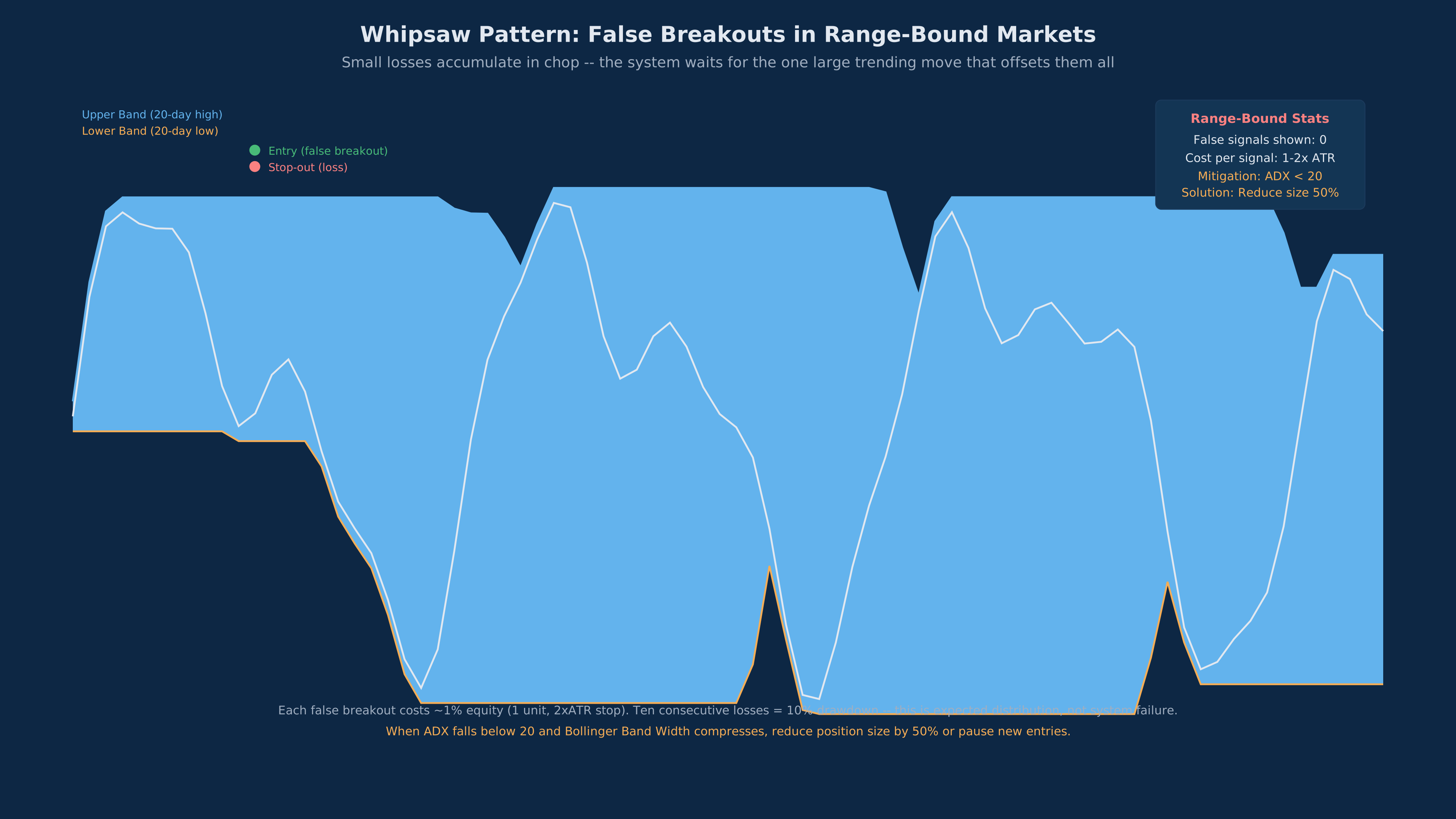
Whipsaw Pattern in Range-Bound Markets: False breakouts generate repeated small losses (each costs ~1% equity). The system's edge depends on occasional large trending moves that dwarf the cumulative cost of all false signals.
Backtesting Donchian Systems: What the Data Shows #
Backtesting a Donchian channel system contains several traps that make results unreliable without careful methodology.
Active NexusFi members have explored coding Donchian systems directly. @trendwaves implemented one for NinjaTrader: "Upper band and lower band breakout entries using DonchianChannel period comparison for signal generation on close." [9]
Continuous contract construction: Naive continuous contracts create artificial price gaps at roll dates. Back-adjusted contracts solve this but mean historical channel levels don't correspond to actual tradeable prices. Run research on both adjusted and unadjusted data and reconcile the differences.
Execution assumptions: Breakout systems are especially vulnerable to slippage assumptions. When price triggers a 20-day channel high, all systematic traders running the same lookback period receive the same signal simultaneously. The resulting order flow creates execution pressure. A realistic 1-2 tick slippage assumption on ES futures is reasonable in liquid conditions. Run your backtests with 2x your expected slippage to stress-test the system.
Parameter sensitivity: The classic Turtle parameters (20-day and 55-day) aren't magical. If your backtested results fall apart when you change the period from 20 to 18 or 22, the "edge" you're seeing is likely curve-fitted. Test 15/45, 20/55, 25/65 and check that performance is reasonably consistent before concluding the parameters add genuine value.
Walk-forward validation: Split your data into in-sample (used for parameter selection) and out-of-sample (tested after optimization is complete) — at least 30% out-of-sample. A strong Donchian system shows similar performance characteristics in both periods: positive expected value in trending conditions, small negative expected value in ranging conditions.
Survivorship bias: delisted or illiquid markets disappear from modern data sets. Historical performance studies may reflect survivor characteristics more than strategy edge.
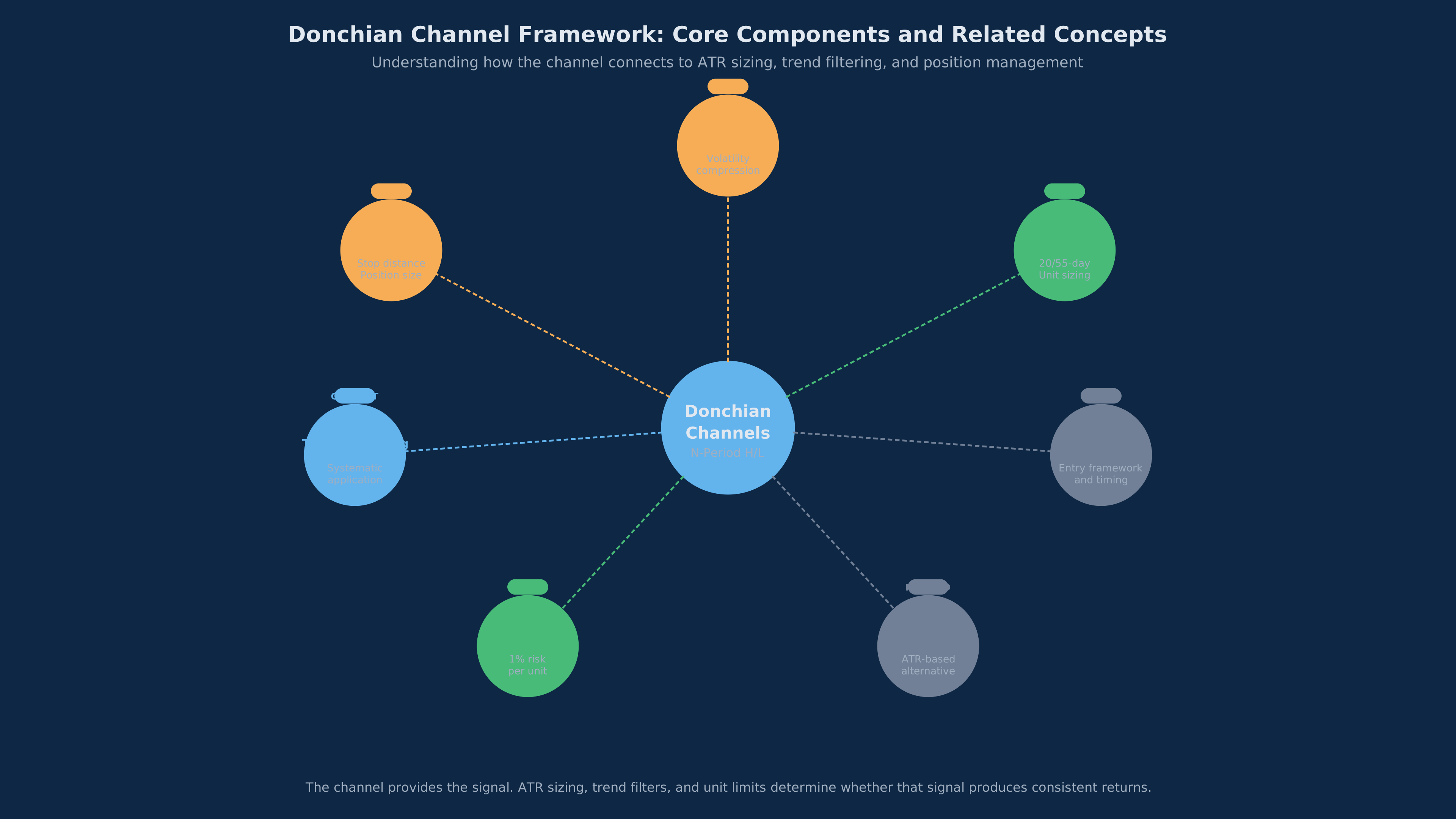
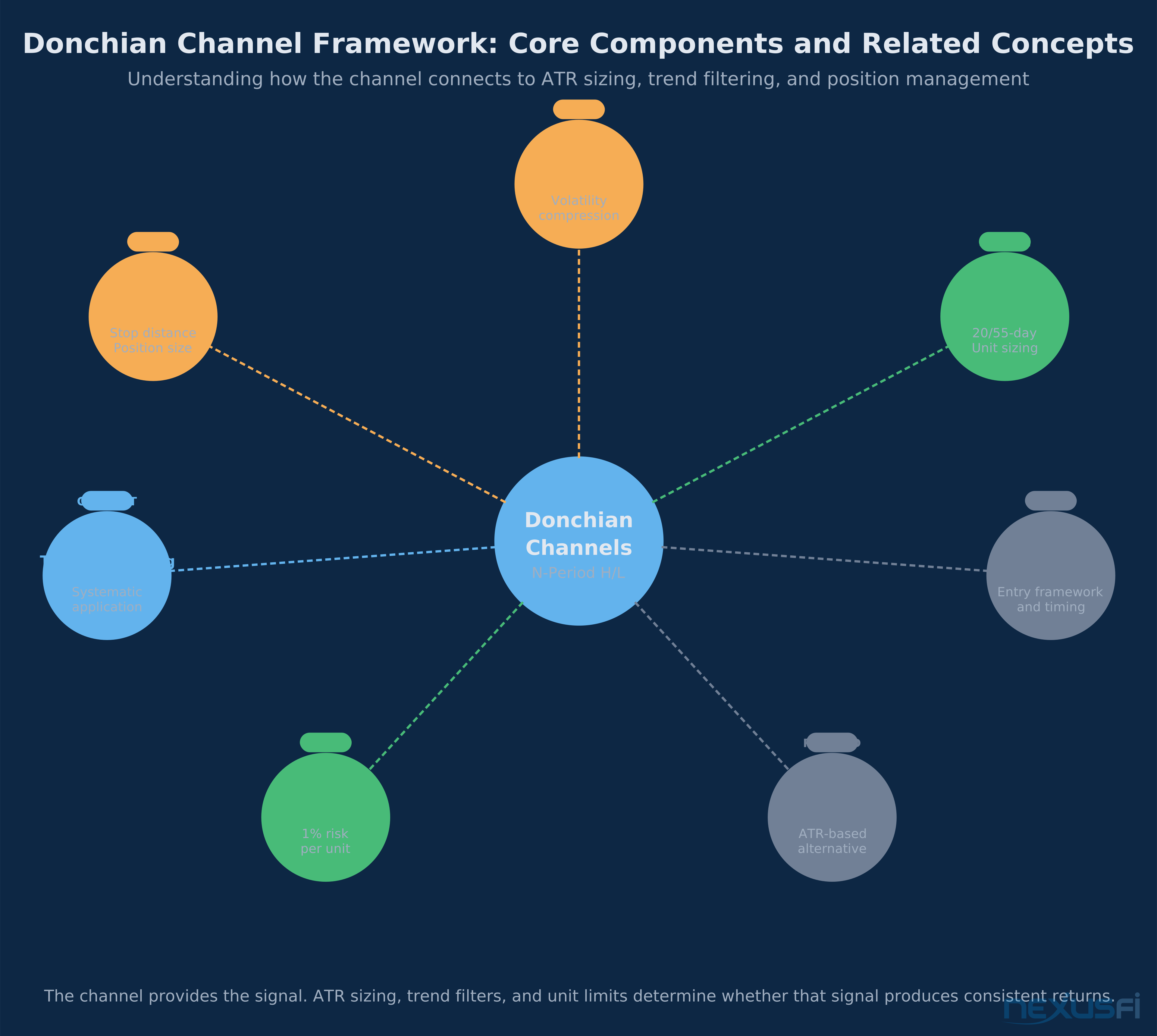
Donchian Framework Concept Map: The channel connects to ATR-based sizing (CORE), Turtle Trading rules (SYSTEM), trend-following strategies (CONTEXT), and breakout entry timing -- each component reinforces the others.
Setting Up Donchian Channels in NinjaTrader #
NinjaTrader includes a native DonchianChannel indicator. Configure the period (default 20) through the indicator panel. The indicator exposes Upper, Lower, and Median series for use in custom strategy code.
For strategy development, reference the channel bands as:
DonchianChannel(period).Upper[0]  // Upper band
DonchianChannel(period).Lower[0]  // Lower band
Dual-channel entry condition:
bool isLong = Close[0] > DonchianChannel(20).Upper[1]
           && Close[0] > DonchianChannel(55).Upper[1];
For ATR-based sizing, NinjaTrader's ATR() indicator handles the calculation. The formula requires the instrument's point value and account equity. The NexusFi NinjaTrader community has extensive resources for Donchian implementations with multiple options for price inputs, trend filters, and visualization.
Citations #
- @Fat Tails -- Want your NinjaTrader indicator created, free? (NexusFi, 2013)
- @cber68 -- Futures FX and Donchain Channel (NexusFi, 2010)
- @michaelleemoore -- The Scalper's Path (NexusFi, 2016)
- @Tasker_182 -- Combine the donchian channel indicator with MACD? (NexusFi, 2022)
- @sixsmith07 -- Want your NinjaTrader STRATEGY created for free? (NexusFi, 2015)
Knowledge Map
Prerequisites
Understand these firstGo Deeper
Build on this knowledgeReferences This Article
Articles that build on this topicCitations
- — Want your NinjaTrader indicator created, free? (2013)“The Donchian channel uses an enum, to call the upper and lower band you would simply write... period = 20.”
- — Futures FX and Donchain Channel (2010)“Donchian Channels are formed by H(upper) and L(lower price bars over x bars on chart. Look up turtle traders from GS in the past.”
- — The Scalper's Journey (2016)“a bastardization of the Donchian Channel that triggers on the mid-line rather than the outer bands.”
- — Combine the donchian channel indicator with MACD? (2022)“The Donchian channel indicator can be added to your system.”
- — Want your NinjaTrader STRATEGY created for free? (2015)“I am looking to code a basic strategy like what the turtles had, a trend following system, just to see how it works in today's markets.”
- — Good trades, bad trades, winning trades & losing trades (2016) 👍 2“Using 20 day and 55 day breakouts makes me think of the Turtle system. Usually with a TF system of that nature, you would either take a signal that has already broken out, or you wait for a pullback...”
- — NYSE $TICK AND $ADD (2011) 👍 8“20 period ATR X 2 ATR stop. We now have the absolute value of our stop. Divide the 2% risk capital by the dollar stop value and we get our position size.”
- — AVERAGE TRUE RANGE (2013) 👍 3“The Turtles moved up their ATR stops as they laddered into positions, like a trailing stop only they set one after the last position was entered and never moved it up again.”
- — Donchian Scalper (2015) 👍 2“Upper band and lower band breakout entries using DonchianChannel period comparison for signal generation on close.”
- — Dynamic Trailing Stop and Profit using ATR (2015) 👍 4“Position sizes will become smaller when volatility increases -- the effect on your position sizing is exactly the same as using ATR-based stops.”