



Linear Regression Channel: The Trend-Path Framework That Quantifies Both Direction and Statistical Extremes
Overview #
The market is always doing one of two things: trending or not trending. The Linear Regression Channel (LRC) quantifies both states with mathematical precision. It tells you the direction of the trend, how fast it's moving, how wide the volatility range is, and where price sits relative to statistical extremes — all in a single visual framework. It won't predict reversals. It won't tell you which setups will work. But it will tell you whether you're fighting the trend or trading with it, and that distinction alone is worth the space it takes on your chart.
The LRC is built on ordinary least squares regression — the same mathematics used in everything from econometrics to machine learning. Applied to price, it finds the straight line that best fits the last N bars, then draws channel bands at a fixed number of standard deviations above and below. The center line is where the market "wants" to be, on average, over your chosen lookback. The bands define the range within which most of that price action has occurred. Breakouts beyond the bands are statistically unusual. Not impossible — just less common than price staying inside.
This is not magic. It's arithmetic. But arithmetic applied consistently to a market with real directional behavior produces a useful read.
Mathematical Foundations #
The center line is a linear equation fitted to the last N closing prices (or HLC3 — pick one and stay consistent). The fitting algorithm minimizes the sum of squared vertical distances between each price and the line, a technique called ordinary least squares (OLS).
For a lookback of N bars, indexed i = 0 to N−1:
Slope (b): The rate of change per bar, calculated as the covariance of bar index and price divided by the variance of the bar index.
Intercept (a): The price level of the line at bar zero, calculated to ensure the line passes through the center of the data.
Channel bands: Upper and lower boundaries drawn at k standard deviations of the residuals above and below the center line. The residuals are the differences between actual price and the fitted line at each bar — they capture how much price typically deviates from the trend path.
The standard deviation of residuals (σ) is what makes the channel statistically meaningful. It tells you how dispersed price has been around the trend. A narrow σ means price has been tracking the center line closely. A wide σ means price has been swinging away from it.
The most common deviation multiplier is k = 1.5 or k = 2.0. At k = 2, roughly 95% of price action falls inside the bands (assuming normally distributed residuals, which is an approximation for market data). At k = 1.5, more price action falls outside — giving you more signals but also more noise.
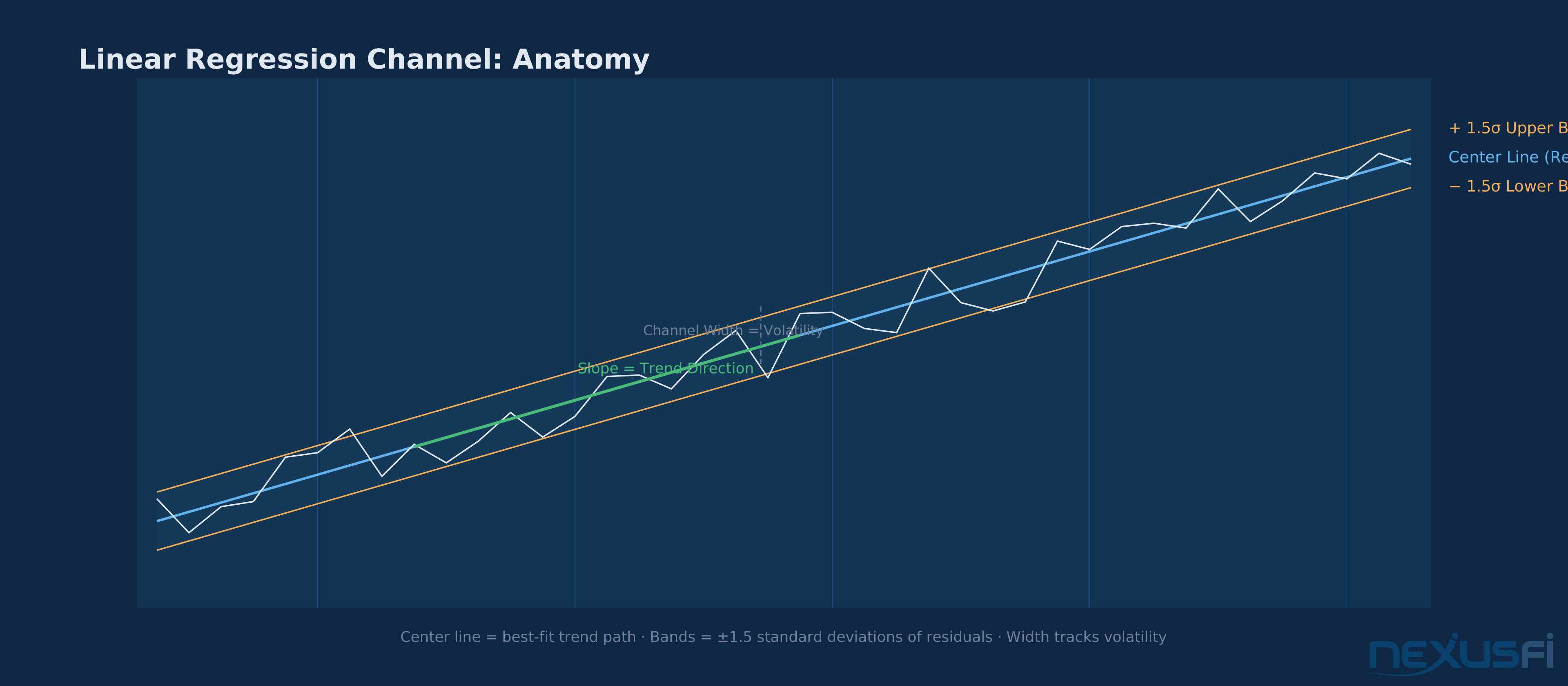
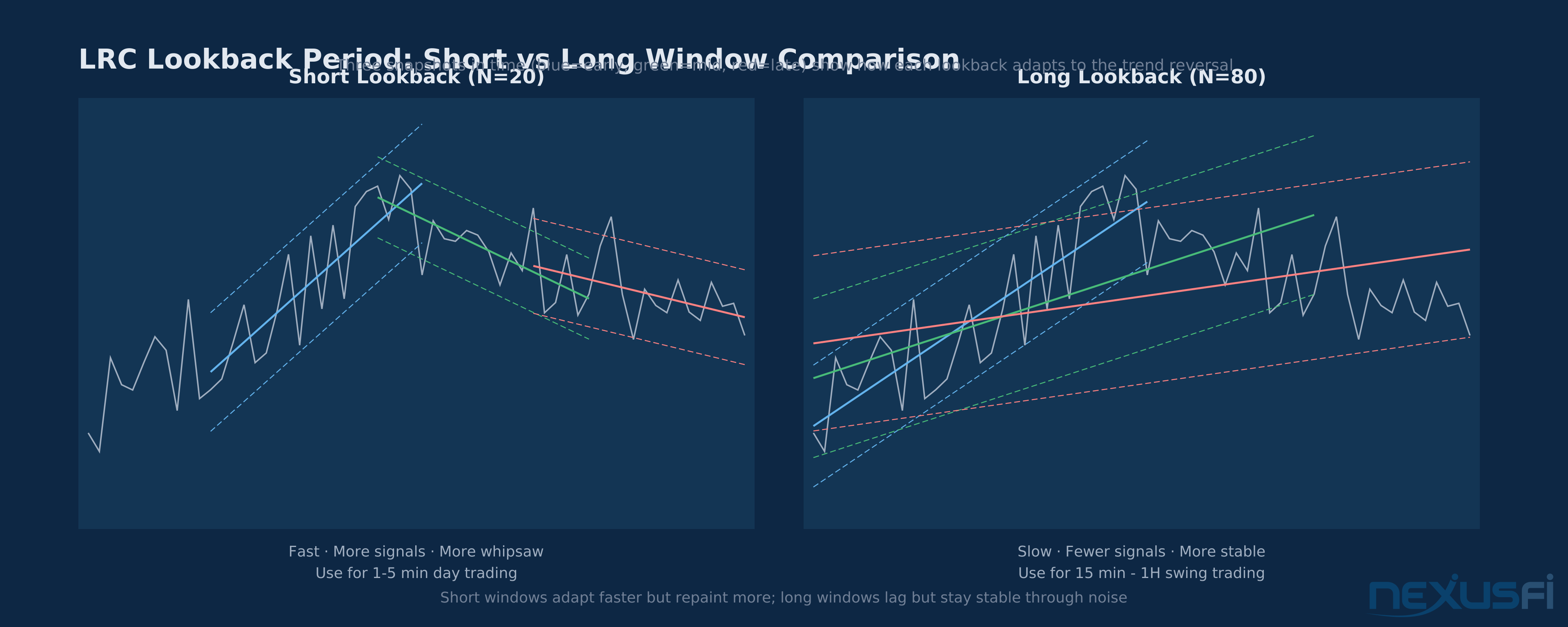
Two parameters control everything: lookback period N and deviation multiplier k. N defines the sample window — how much history you're fitting. A short N (20--30 bars) produces a responsive channel that tracks recent price closely. A long N (80--200 bars) produces a smoother, more stable channel that represents the broader trend. The k multiplier controls band width — narrower for more signals, wider for higher-conviction extremes.
There is no universally optimal N. The right choice depends on your trading timeframe, the instrument's volatility, and what you're trying to answer with the indicator.
How to Read the LRC #
Three elements carry all the information: slope, channel width, and price position.
Slope: The Trend's Velocity #
The slope of the center line is the most important piece of information the LRC provides. It tells you direction and rate of change simultaneously.
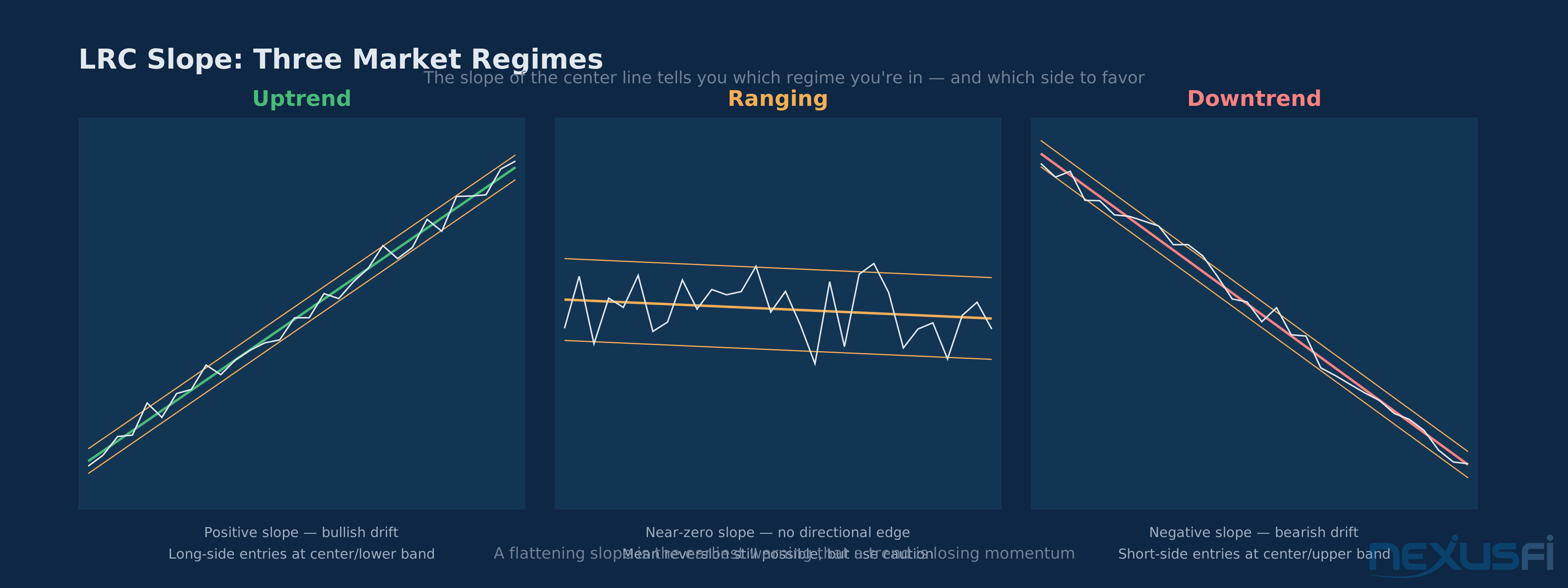
A positive slope means the regression-fitted "average" of the last N bars is rising. The market is making progress upward over your lookback window. A negative slope means progress is downward. A near-zero slope means the market has been moving sideways — no directional trend in the sample.
What experienced traders watch carefully is not just the slope sign, but the slope's change over time. A slope that has been consistently positive for 30 bars and then begins to flatten is showing you trend exhaustion before price itself reveals it. The flattening slope is the earliest mechanical warning the LRC provides.
Steep slope angles in ES or NQ often correspond to momentum-driven intraday moves — gap-and-go opens, CPI-day directional moves, afternoon trend continuation. In these environments, fading the upper band is extremely dangerous because the channel "walks" — price keeps pressing the band as the trend continues. The slope is telling you this isn't the time for mean reversion.
Channel Width: The Volatility Register #
Channel width — the distance between upper and lower bands — is determined by the standard deviation of residuals. It's a direct measure of how volatile price has been relative to its trend.
A widening channel during a trend means the swings are getting larger. This is common in trending markets where momentum is building. The bands expand as each day's price action strays further from the regression line before snapping back. In these conditions, band touches can be continuation signals rather than reversal signals — price is "walking the band."
A narrowing channel is the LRC's way of showing you volatility compression. This is what traders call a squeeze. Price has been tracking the center line closely, with diminishing swings. Squeezes often precede significant directional moves. The LRC doesn't tell you which direction, but the narrowing width is a clear signal to watch for a breakout.
Price Position: Reading Statistical Extremes #
Where price sits within the channel determines what kind of trade is available.
Upper third (price near upper band): In a strong uptrend with a steep slope, this is normal — price is outrunning the center line, which means the trend is strong. In a flatter-slope or sideways market, this is a statistical extreme — the overextension that mean reversion thrives on.
Middle zone (price near center line): This is equilibrium. In trending conditions, the center line acts as a dynamic support/resistance. Pullbacks to the center line that hold are trend continuation opportunities. A close below the center line (in an uptrend) is an early warning that trend strength is weakening.
Lower third (price near lower band): Mirror of the upper third. In downtrends, this is the band that price walks. In ranging conditions, it's the bounce zone.
The center line is also the primary profit target for mean reversion trades. If you're fading the upper band, your first target is the center line, not the lower band. Most mean reversion moves in futures stop at the trend equilibrium — they're pullbacks to the mean, not full reversals to the opposite extreme.
Three Core Trading Applications #
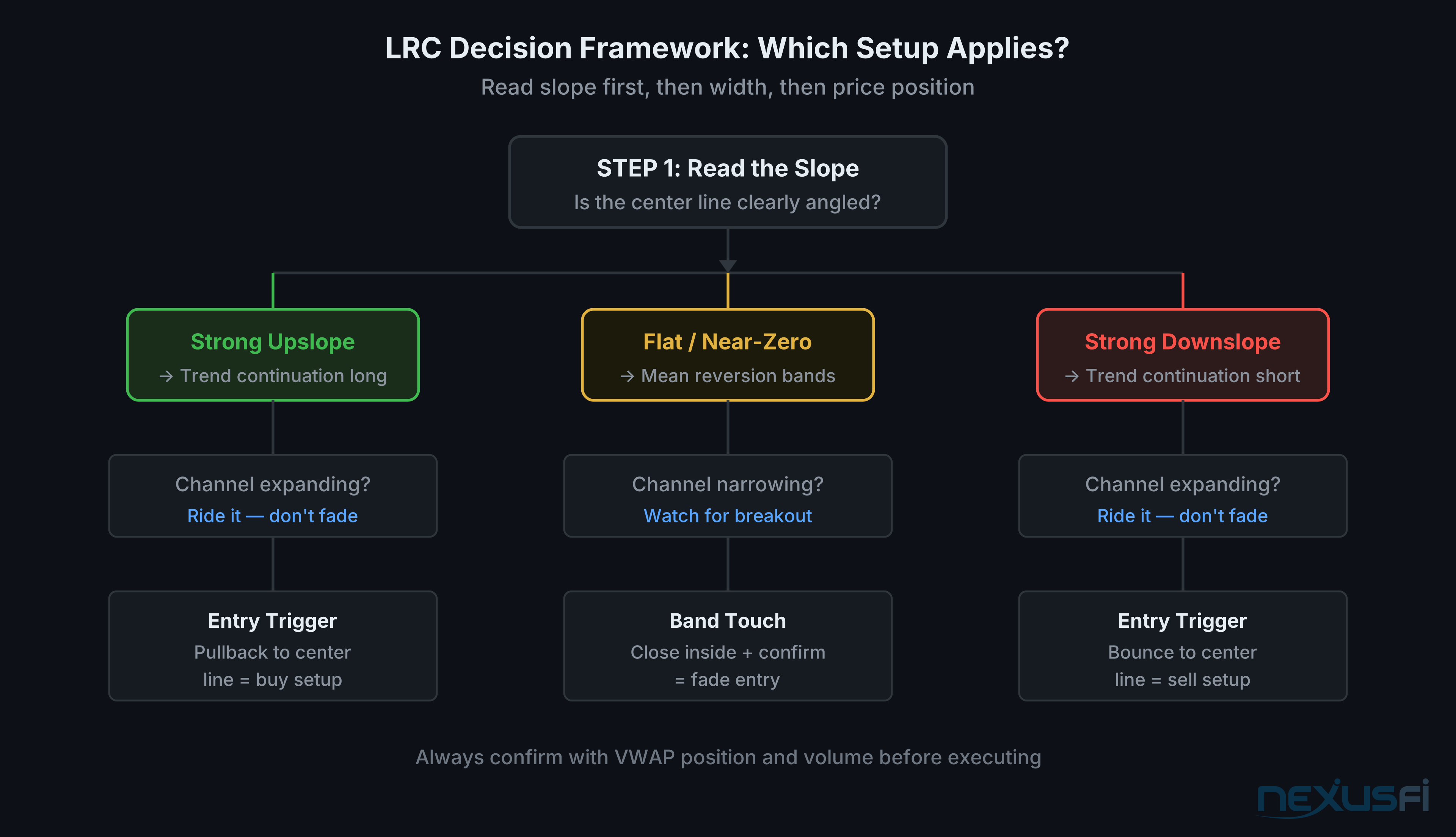
The LRC supports three distinct trading approaches. Understanding which one applies requires reading slope and channel width together, not just price position at a band.
Trend Continuation: The Primary Application #
Trend continuation is the LRC's highest-probability use case. The setup is simple: the center line is sloping upward (or downward), price has pulled back from the upper band (or lower band), and you're waiting for a re-entry in the direction of the trend.
The specific entry trigger depends on your style. Some traders enter on a close back above the center line. Others wait for a close above a short-term moving average layered on top of the LRC. The confirmation standard is up to you, but the concept is universal: the trend is intact, price has pulled back toward equilibrium, and you're buying (or selling) the return to trend direction.
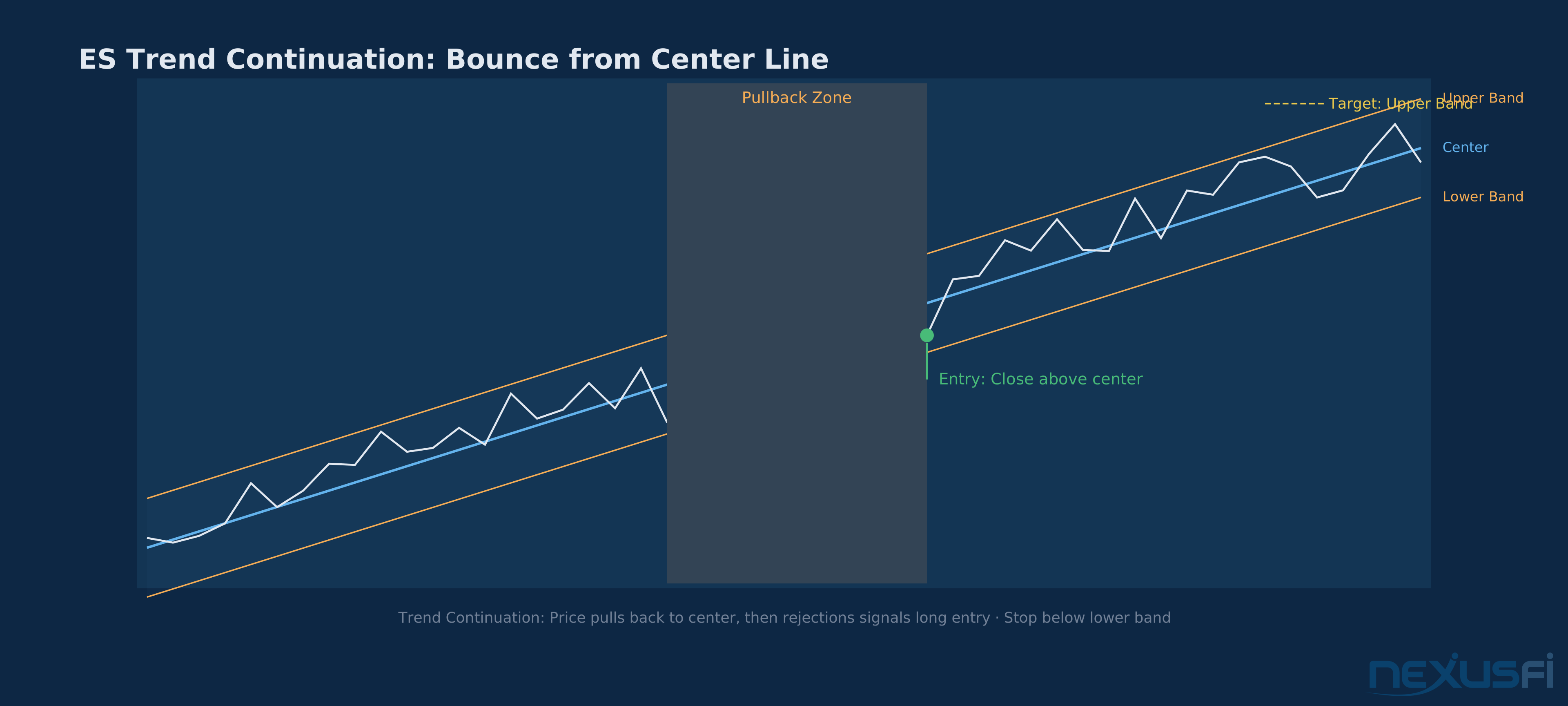
This is the LRC trend continuation logic applied with additional structural context.
Stop placement for trend continuation: below the lower band (for longs) or above the upper band (for shorts). This is the band that defines the channel boundary. A close on the wrong side of that boundary says the trade thesis is broken.
Target: the opposite band or a key structural level beyond it. In trending markets where the channel is "walking," you may simply trail your stop to the center line and let the trend run.
Mean Reversion: The Precision Fade #
Mean reversion from LRC bands works best in specific conditions: slope is shallow or moderate (not steep), channel width is stable or narrowing (not expanding), and price reaches the band in a way that suggests exhaustion rather than continuation.
The cleanest mean reversion setups involve price tagging the upper band, then failing to close above it. The "failure" is the signal — price touched the statistical extreme, could not sustain itself there, and now the probability distribution says it should return toward the center.
What separates professional mean reversion entries from amateur ones is the confirmation requirement. A wick to the upper band is not a short entry. A close back inside the channel, with context supporting the trade (VWAP overhead, weak market internals, volume declining on the push), is a short entry.
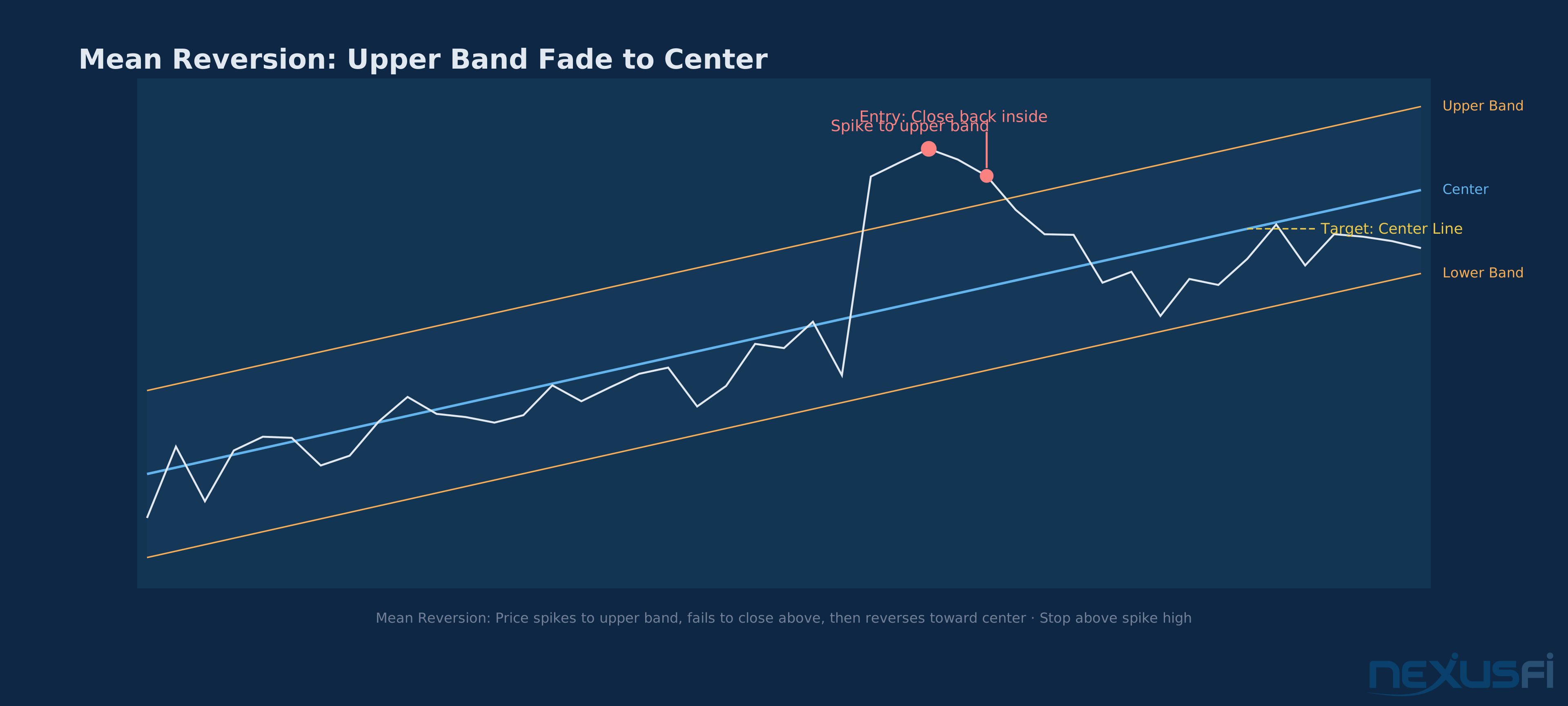
The emphasis on "when the channel is quiet" is critical. Mean reversion in a wide, expanding channel is a different risk profile than mean reversion in a stable, narrow one.
Target for mean reversion: the center line as the primary objective. If price continues through the center and reaches the opposite band, that's a bonus — but don't plan for it. The center line absorbs most mean reversion moves in futures.
Stop placement: just beyond the band that was faded. In practice, this means a stop above the swing high (for short entries) or below the swing low (for long entries) at the band touch.
Breakout: Capitalizing on Compression #
Channel squeeze → explosive breakout is one of the highest-reward setups the LRC provides, and one of the most dangerous if executed poorly.
The setup: the channel has been narrowing for a meaningful number of bars. Price has been coiling around the center line. Then a decisive close occurs beyond one of the bands, and the channel width begins to expand immediately.
The last part — channel width expansion — is the confirmation. A false breakout often looks like a spike beyond the band followed by the channel not expanding (or even contracting further). A genuine breakout is accompanied by the channel immediately widening as subsequent bars add range in the breakout direction.
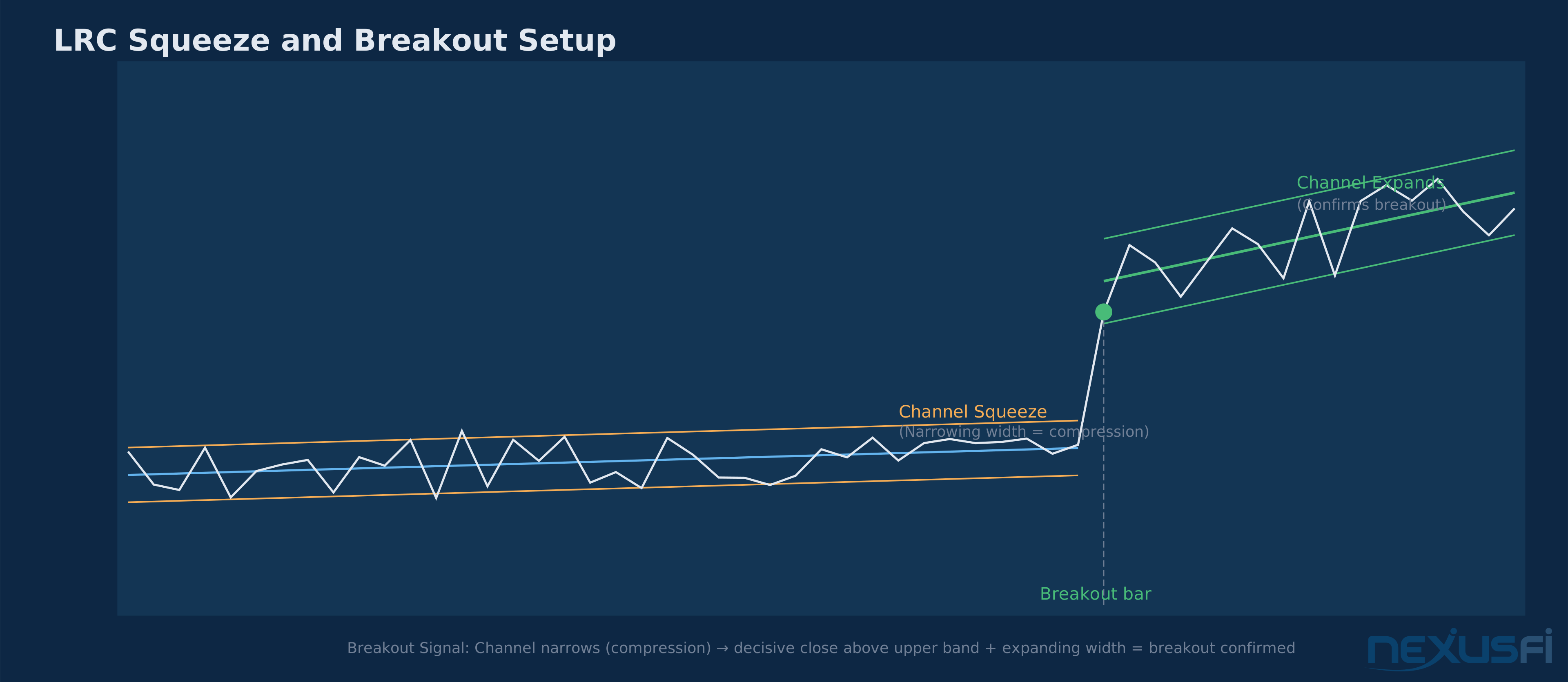
@Pa Dax in the Martin's Price Action Journal described the breakout clearly: "It was parabolic because the first 6, maybe 7 bars created a channel and then three larger bars were breaking out of that channel, hence the trend..."
Entry for breakouts: on the breakout bar itself (aggressive) or on the first pullback to the prior band boundary (conservative). The former gets you a better position size opportunity; the latter reduces the chance of getting caught in a false breakout. In liquid markets like ES and NQ, the pullback entry is usually available within a few bars.
Stop: beyond the breakout bar's opposite extreme. The breakout bar itself defines the failure point — if price reverses back through that bar in full, the breakout has failed.
Parameter Selection for Futures #
ES and NQ: Liquid, Fast Markets #
The E-mini S&P 500 and E-mini Nasdaq-100 are the most-traded futures on the planet. They're liquid, electronically driven, and respond to news with speed that mechanical indicators can't match. The LRC's lag is most apparent in these markets during news events.
For ES and NQ intraday trading:
| Timeframe | Lookback (N) | Deviation (k) |
|---|---|---|
| 1-minute | 30--50 | 1.5 |
| 5-minute | 20--40 | 1.5--2.0 |
| 15-minute | 60--100 | 2.0 |
| 1-hour | 80--150 | 2.0 |
These are starting points, not fixed rules. The key principle is that N should be long enough to capture the relevant trend cycle but short enough to be responsive to trend changes within your trading session.
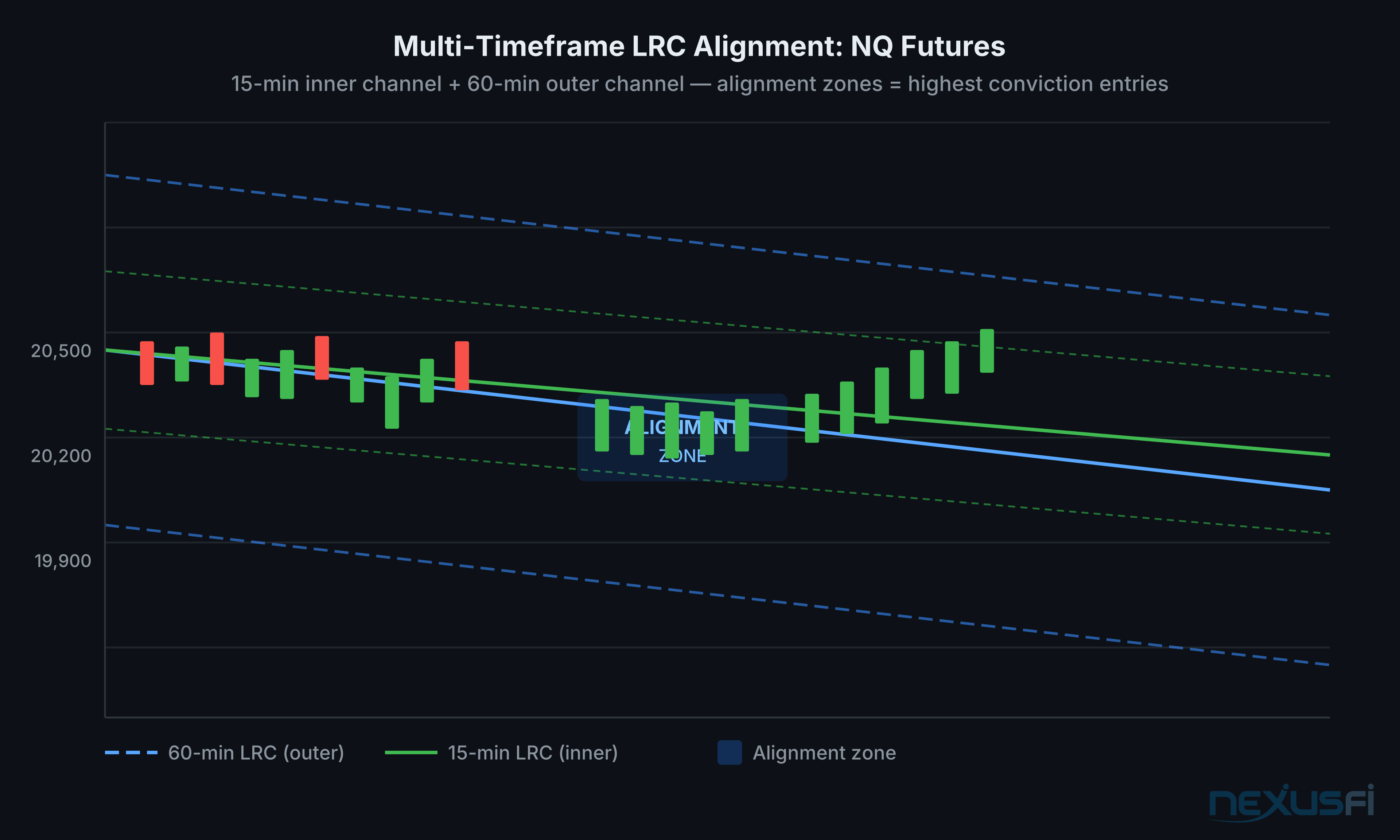
The 5-minute chart with N=30 to 40 is a common day-trading setup for ES and NQ. It captures the morning session trend and begins to adapt around the midday transition. Some traders use multiple LRCs simultaneously — a shorter N (20--30) for entries and a longer N (80--100) for regime context.
CL: Event-Driven, Wider Swings #
Crude oil (CL) is at the core different from equity index futures. It moves on supply reports, geopolitical headlines, and OPEC decisions — discrete events that create gap moves and rapid directional shifts that the LRC's lagging nature handles poorly.
That said, CL does trend. And when it trends, the LRC is useful.
For CL intraday trading:
| Timeframe | Lookback (N) | Deviation (k) |
|---|---|---|
| 1-minute | 40--70 | 2.0--2.5 |
| 5-minute | 30--60 | 2.0--2.5 |
| 15-minute | 70--120 | 2.5 |
CL requires wider deviation settings because its tick-by-tick volatility is higher relative to its trend component. A k = 1.5 channel on CL will constantly have price hitting the bands due to the market's natural noisiness — not because the price is actually at a statistical extreme worth fading.
Testing Parameters Properly #
The only reliable way to choose N and k is to test them across different market regimes — specifically trending days versus ranging days. A parameter that looks great on a trending day will look terrible on a range day, and vice versa.
The walk-forward approach: fix k at 2.0, then test N values at 5-bar intervals across a 3-month data set. Evaluate not just total P&L but how the channel behaves across different volatility regimes. The N that performs acceptably across regimes is more strong than the N that looks best on a cherry-picked trend day.
Avoid optimizing on a single market environment. The LRC is prone to curve-fitting because changing N by even 5 bars can produce dramatically different visual channels, and it's easy to find the N that "worked" for a specific period without that N having any forward predictive value.
Confluence Tools: What Makes LRC More Powerful #
The LRC answers questions about trend direction and price extremes. VWAP answers questions about value and institutional participation. Volume Profile answers questions about where liquidity has actually traded. Market internals answer questions about breadth and participation quality. Using the LRC alongside these tools produces setups with materially higher probability than any single indicator alone.
VWAP Integration #
VWAP (Volume-Weighted Average Price) is the most important context tool for LRC-based trading. When the two align, you have independent statistical and institutional validation of the same price level.
The most powerful alignment: LRC lower band ≈ VWAP. This means the statistical lower extreme of the recent trend coincides with the volume-weighted average price for the session. Two independent tools are saying the same thing: this is a value zone. Institutional buyers who care about VWAP are active at this level. The statistical distribution says price is overextended to the downside.
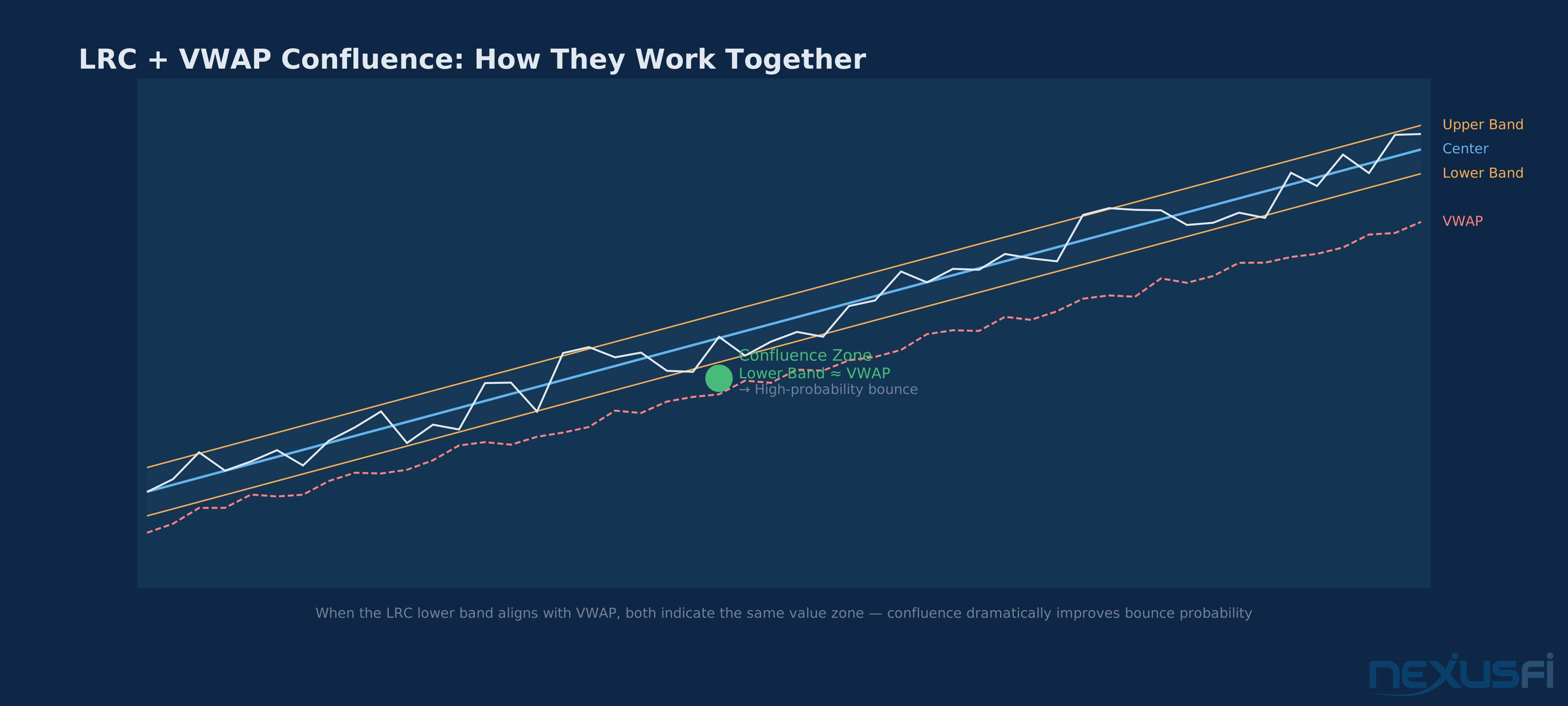
The VWAP filter also prevents bad trades. If the LRC is trending up but price is trading below VWAP, the "trend" you're seeing in the LRC may be a lagging artifact of earlier session strength. Buying a bounce from the LRC center line when price is below VWAP is fighting both the institutional benchmark and the intraday mean. Wait for price to reclaim VWAP before taking long continuation entries.
In the GruttePier trading journal thread,
This is precisely the environment where LRC signals are unreliable — no VWAP support, no volume, no trend. The LRC would be showing you a shallow slope with bands that keep getting breached and quickly reversed.
Volume Profile Confluence #
When an LRC band coincides with a significant volume profile level, the setup quality improves substantially.
LRC lower band + High Volume Node (HVN): strong confluence for a bounce. The HVN represents a price area where significant two-sided trading occurred in the past. Buyers who traded at that level have a reference point; they may defend it again.
LRC upper band + Low Volume Node (LVN): potential continuation level. LVNs represent price areas with thin liquidity that price historically moves through quickly. An LRC upper band near an LVN may not provide meaningful resistance.
LRC center line + Point of Control (POC): when the session POC aligns with the LRC center line, that's a high-confidence equilibrium level. Price tends to revisit the POC and the trend equilibrium independently; when they're at the same price, pullbacks to that level are especially compelling.
Market Internals #
For equity index futures (ES, NQ), market internals provide the participation confirmation that LRC signals can't provide on their own.
NYSE TICK: The 1-minute TICK value reflects the net of stocks ticking up versus down at that moment. A TICK reading of −1,000 or below while price is touching the LRC lower band suggests potential capitulation — aggressive selling into a statistical extreme, which often precedes sharp mean reversion. A TICK reading of −200 at the same price level is just normal market noise.
NYSE ADD / VOLD: Breadth measures that show whether broad participation supports the trend. A strongly positive slope on the LRC that's not supported by positive ADD is a warning — the index may be moving, but the broad market isn't participating, suggesting the trend is fragile.
The interaction cuts both ways. Internals can confirm band touches as trade opportunities (extreme TICK at an LRC extreme), or they can filter out seemingly good setups (weak internals at a center-line bounce that doesn't have breadth support).
Failure Modes: Where LRC Misleads #
Every indicator has conditions under which it degrades. The LRC's failure modes are well-defined and predictable. Knowing them prevents the biggest mistakes.
Choppy Markets: The Primary Failure Mode #
In range-bound, low-directional markets, the LRC produces false signals continuously. The slope flips back and forth across zero. The bands get repeatedly breached and immediately reversed. Price that touched the upper band yesterday touches the lower band today without any meaningful trend in between.
The problem is mechanical: the LRC is designed to find a trend. When there is no trend, the algorithm still produces a line and bands, but they're fitting a random walk, not a directional pattern.
Identification: watch for a slope that oscillates around zero with no persistent direction. If the center line has changed sign multiple times in the last 20 bars, you're in chop. Reduce reliance on the LRC much in this environment, or eliminate it entirely.
Mitigation: use ATR (Average True Range) as a regime filter. When ATR is compressed below its recent average, the market is in a low-volatility consolidation. In these conditions, horizontal support and resistance levels are more reliable than the LRC.
False Breakouts #
False breakouts from LRC bands are the most common trap for traders using this indicator. Price spikes beyond the upper or lower band, triggering breakout entries, then immediately reverses back inside the channel.
The tell: volume on the breakout bar doesn't expand meaningfully, and the next bar closes back inside the channel. Genuine breakouts are accompanied by expanding volume and expanding channel width. False breakouts often look like spikes on thin volume.
Require a close beyond the band, not just a wick. A wick that touched the upper band is not a breakout — it's a test that failed. Only a bar that closes above (or below) the band warrants breakout attention.
@trippenlatin in the "Elusive Price Action" thread described the dynamic: "I read a strategy on trading channels by Joe Ross. He said that if you're going to fade the channel, wait for the candle to close back inside before entering."
Lag at Major Reversals #
The LRC is a lagging indicator — it fits historical data. At major market tops and bottoms, it will often show you a strong slope in the wrong direction because the lookback window is still full of the prior trend's bars.
At a market top, the LRC may be showing a steep positive slope even as price has begun rolling over. The center line will still be rising. The lower band may still be providing "support" for a bar or two before the sell-off accelerates. By the time the slope turns negative, the trader relying solely on the LRC has missed the reversal entirely.
The mitigation: structural analysis. Prior session highs and lows, overnight reference levels, major Fibonacci retracements, and long-term Value Area boundaries are non-lagging tools that can flag potential reversal zones before the LRC adapts.
Repainting and Lookback Effects #
The LRC repaints in real time. As each new bar closes, the entire regression line updates — the slope changes, the bands shift, and what looked like a clean upper-band rejection at 3:00 PM may look different at 3:05 PM when two more bars have been added to the sample.
This is not a flaw — it's how least squares regression works. But it means you should never analyze past LRC signals on a live chart. What you're seeing now is not what you would have seen at the time. For backtesting, you need a programmatic implementation that captures the LRC values at each historical bar as they would have appeared at that moment, not a chart overlay.
NinjaTrader Implementation #
NinjaTrader includes the LinearRegression indicator (center line only) and the RegressionChannel indicator (center plus bands). Both are functional for real-time trading.
@Fat Tails, a prolific NexusFi contributor and developer, released an enhanced regression channel in the NexusFi download section: "This version of the regression channel displays the channel clearly with the regression midline and standard deviation bands. The midline is a linear regression displaced by one bar, and the channels are based on ATR or standard deviation depending on your preference."
For traders who want to build their own NinjaScript implementation:
Core calculation (executed at each bar):
- Collect the last N closing prices
- Compute the regression slope (b) and intercept (a) using least squares
- Compute residuals: e_i = price_i − (a + b × i)
- Compute residual standard deviation σ
- Plot center = a + b × (N−1), upper = center + k×σ, lower = center − k×σ
Key implementation decisions:
- Use
Calculate = OnBarClosefor confirmed signals and to avoid repainting within a bar. UseCalculate = OnEachTickonly if you need intrabar execution with the awareness that the current bar's values will change. - Always specify the price series (Close, HLC3) explicitly and keep it consistent with your backtesting.
- For visual clarity: color-code the center line by slope direction (green for positive, red for negative, gray for flat).
Advanced NinjaScript additions that add professional utility:
- Dynamic deviation adjustment: scale k by a rolling ATR ratio, widening bands in volatile markets and tightening in quiet ones
- Confluence alert: trigger when the LRC band aligns within X ticks of VWAP or a session POC
- Slope strength panel: a separate subgraph showing the slope value and its rate of change, providing an early momentum warning system
Reference Setups #
ES Trend Continuation (5-Minute Chart) #
Setup requirements: N=35, k=1.5 LRC showing positive slope, price above VWAP, price has pulled back from upper band to center line or lower band area.
Trigger: Price closes above the center line after a pullback. Or: price holds the center line on a test (a bar touches the center but closes above it).
Entry: Market or limit order near the close of the trigger bar.
Stop: Below the lower band (2 ticks minimum clearance).
Target: Upper band or prior swing high, whichever is closer.
Exit rule: If price closes below the center line before reaching the target, exit. The trend thesis is no longer intact.
NQ Mean Reversion (5-Minute Chart) #
Setup requirements: N=50, k=1.5 LRC showing slope ≤ 15-degree angle, stable or narrowing channel width, price touches the upper band.
Filter: VWAP is flat or declining, or price is extended much above VWAP (>8 ES/NQ points). NYSE TICK at −300 or below.
Trigger: Bar closes back inside the channel after touching the upper band.
Entry: Short on the close of the trigger bar.
Stop: Above the upper band (1.5x the average bar range above the rejection high).
Target: Center line as primary target. If momentum continues through the center, lower band as secondary target.
Exit rule: If price closes above the upper band again after entry, exit. The mean reversion thesis has failed.
NQ Breakout (1-Hour Chart) #
Setup requirements: N=80, k=2.0 LRC with channel width that has been narrowing for at least 10 bars (measured by comparing current width to average width over 20 bars). Price coiling near the center line.
Trigger: Full-bodied bar closes above the upper band. Channel width on the next bar begins to expand.
Entry option A (aggressive): Enter at the close of the breakout bar. Entry option B (conservative): Wait for the first pullback to the prior upper band boundary. Enter on a close back above it.
Stop: Below the center line. If price reverses back through the center, the breakout has failed.
Target: No fixed target — trail the stop to the center line and let the trend run until the slope begins to flatten.
The LRC in Your Trading System #
The Linear Regression Channel is a tool that rewards context-awareness. Used mechanically — "upper band = short, lower band = long" — it will produce mixed results that don't justify the chart space. Used intelligently — as a framework for understanding trend direction, volatility state, and statistical extremes, filtered by VWAP, volume profile, and participation — it becomes a genuinely useful component of a systematic trading approach.
What separates traders who use the LRC well from those who don't is the regime question. Before you look at where price is in the channel, ask: what is the slope doing? Is the channel widening or narrowing? Is VWAP supporting the trend or contradicting it? Only after answering those questions does the price-at-band information become actionable.
The LRC doesn't generate trades. It generates context. Trades come from price action at the boundaries of that context, confirmed by participation data and structural levels. That's the framework — and it's the same framework that applies to every other indicator worth using in futures.
NexusFi Discussion: Explore community insights on regression channels in the Platforms and Indicators forum, where Elite Members share NinjaScript implementations, parameter optimizations, and real-trade examples using this approach.
Related Academy Pages:
- VWAP — The volume-weighted benchmark that complements LRC
- Average True Range (ATR) — The volatility ruler used to filter LRC regimes
- Volume Profile Trading — How volume profile levels interact with LRC boundaries
- Trend Following Strategies — The broader context for LRC trend continuation setups
- Keltner Channels — A related ATR-based envelope indicator for comparison
Knowledge Map
Go Deeper
Build on this knowledgeCitations
- — Regression Channel Trading (2023) 👍 2“Jeff Mayem at TradingResearchGroup uses LRCs on a 5 sec chart (2 standard deviation each way): 600, 300, 75, 25. Area to watch: when price gets through the 30 min LRC but holds the hour -- often a sign of reversal, especially at VWAP deviation band extremes.”
- — Trading Futures with Context (2013) 👍 6“Lin. Reg. Channel with a 3 standard deviation break after DZ tap and diverge = trigger the long. Yellow arrows = add to position on the pullback to the 20-EMA. Final trigger for the exit at the top followed by the first 20-EMA break of the day.”
- — A curious quest into the unknown (2020) 👍 6“You can't hide from reversion to the mean. Just thrown this together in Sierra. When you are looking at fading the extremes would you be looking across all TF's for conflict? So we are at the top of the linear regression channel on the Monthly, bang in the middle on the Weekly and pushing towards the lower end on the daily.”