



Multi-Timeframe VWAP: Weekly, Monthly, and Session VWAPs as Market Structure Reference Levels
Overview #
Most traders run one VWAP on their chart — the session VWAP that resets at 9:30 AM Eastern and gives them an intraday value reference. That's useful. What's more useful is understanding that three different groups of market participants are simultaneously watching three different VWAPs, each measuring fair value over a different window.
Day traders watch the session VWAP. Swing traders track the weekly VWAP. Institutional position traders reference the monthly VWAP. When price touches a level where all three align, you're standing at the intersection of three different participant groups' sense of fair value — and that convergence has weight.
That's the daily. Add the weekly and monthly and you have the complete picture.
This article covers how to use the full VWAP stack — daily session, weekly, and monthly — as structural reference levels in futures trading. How they reset, what they measure, and how to build setups around their interactions.
Why VWAP Has Multiple Timeframes #
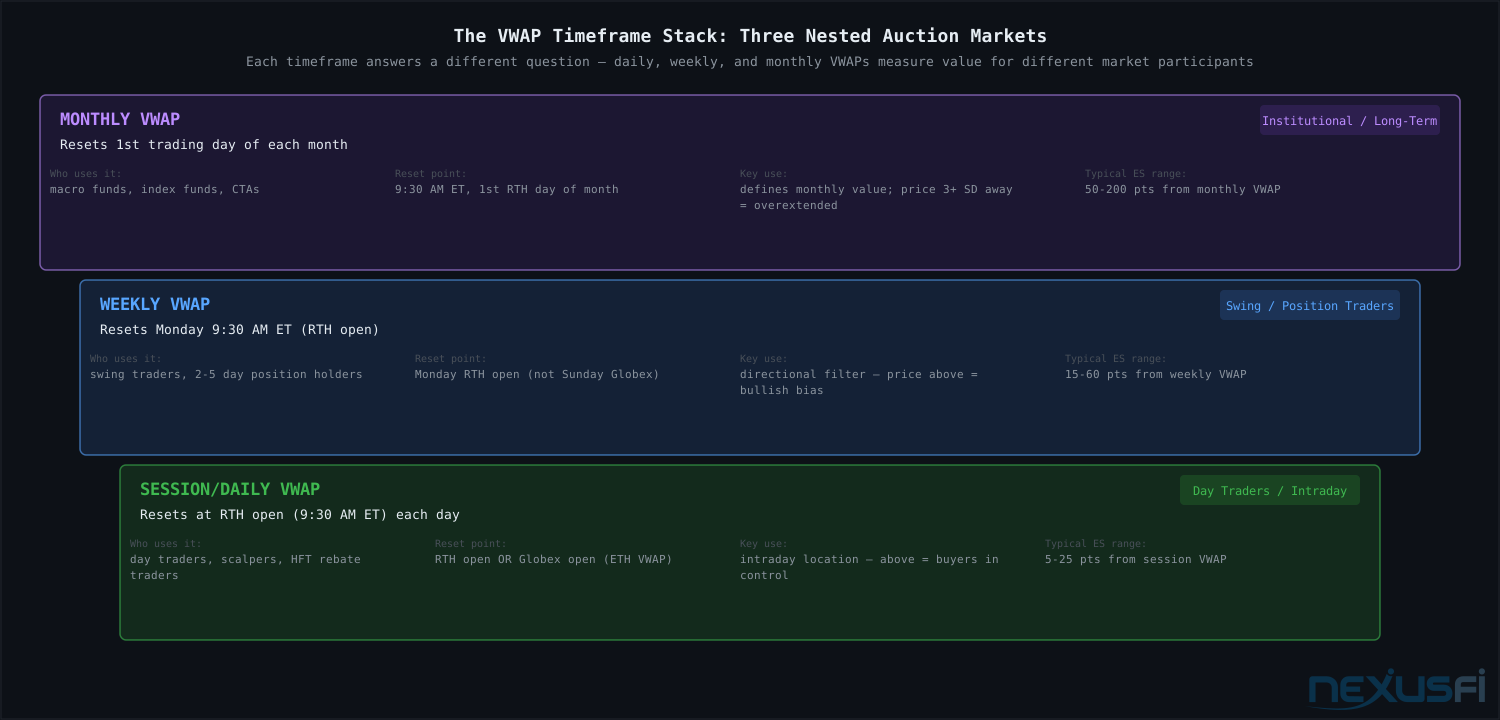
VWAP is a function of a starting point. The daily VWAP starts at 9:30 AM and accumulates price × volume data until the close. Tomorrow, it resets. The weekly VWAP starts Monday at 9:30 AM and accumulates through Friday. The monthly VWAP starts on the first trading day of each month.
Each period measures something different. The daily VWAP tells you: where did value trade today? The weekly asks: where did value trade this week? The monthly asks: where has this instrument been accepted by participants over the past several weeks?
The institutional basis for this framework comes from how buy-side traders are evaluated.
Different institutions operate on different horizons, so they track different VWAPs.
@tigertrader explained the practical consequence clearly: "The important VWAP to monitor is different for each participant and is dynamic. If large players plan to accumulate/distribute a security over x number of days, they will try to buy below the x-days VWAP and to sell above the x-days VWAP." That's why the weekly VWAP acts as structural support or resistance for swing-timeframe participants — it's their benchmark.
Session VWAP: The Intraday Foundation #
The session VWAP is the most familiar. It resets at 9:30 AM Eastern for RTH (regular trading hours) sessions on instruments like ES, NQ, YM, RTY, and CL. Some traders also track the ETH (extended trading hours) VWAP, which includes Globex overnight activity and resets at a different point.
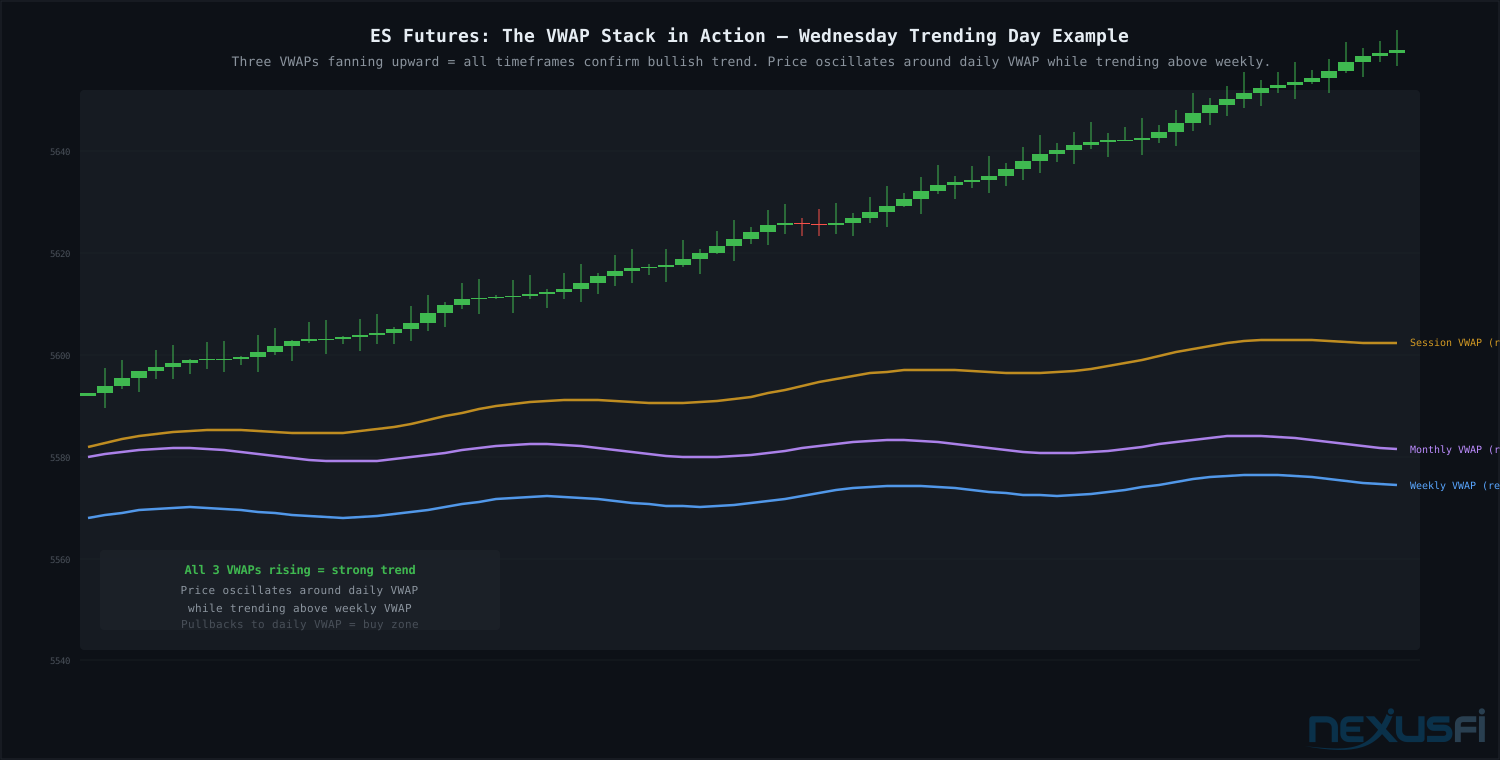
On a pure trend day, price stays on one side of the session VWAP from open to close. That's the cleanest signal the indicator produces — a trend-up day that never breaks below session VWAP versus a day where price chops through it repeatedly. @aviat72 noted: "On a true trend-up day, price will always remain ahead of VWAP."
The session VWAP's limitation is time dependency. Early in the session, it has limited data and moves quickly. By midday, it's anchored by several hours of volume and becomes a more reliable magnet. By the final hour, the price tends to close near the VWAP or a high-volume node as the other-timeframe (OTF) participants come in.
Standard deviation bands around the session VWAP define the day's accepted range. Most sessions see roughly 68% of price action within +/- 1SD of the session VWAP. Moves to +/- 2SD are overextended relative to the day's developing value — sometimes a fade opportunity, sometimes a momentum continuation if the weekly VWAP context confirms the direction.
Weekly VWAP: The Swing Trader's Reference Level #
The weekly VWAP resets at Monday's RTH open — 9:30 AM Eastern on the first trading day of the week. This is an important detail: it does NOT reset at Sunday's Globex open.
The consequence of this Monday reset: the weekly VWAP has no informational value on Monday itself — it's identical to the session VWAP. The framework becomes useful starting Tuesday, when the weekly VWAP has Monday's full volume behind it and the daily VWAP has separated from it. By Wednesday-Thursday, with 3-4 days of volume incorporated, the weekly VWAP is a mature reference level.
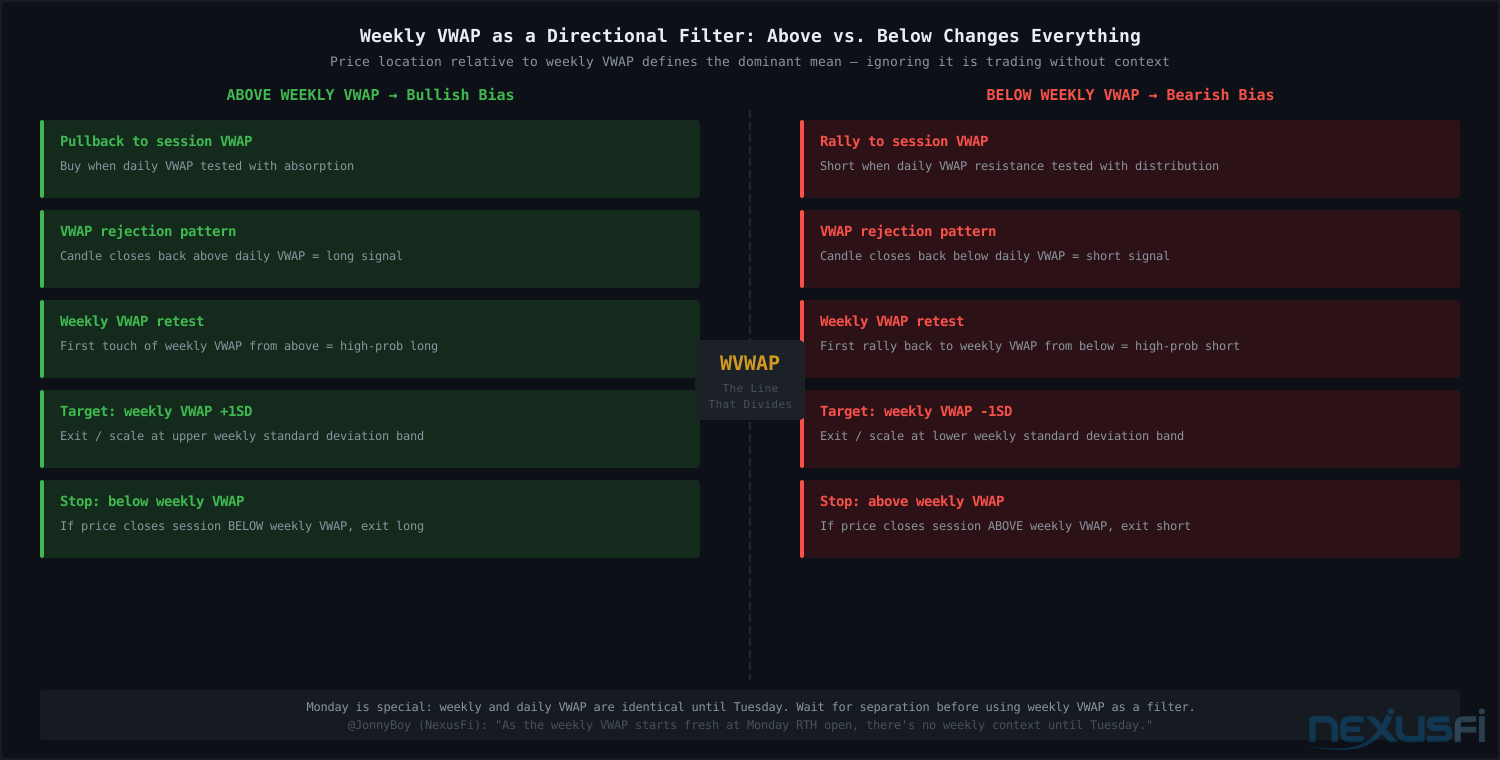
The directional filter application is straightforward: price above the weekly VWAP signals the week's participants view current levels as above-value, with institutional buyers defending the weekly VWAP on pullbacks. Price below signals the opposite. @michaelleemoore described it practically: "I'm always really happy to see the weekly or monthly vwap being approached. Trading a reversal at those lines is money very often."
Primary Weekly VWAP Setups
Three setups emerge consistently from the weekly VWAP framework:
First test of the weekly VWAP. After price has trended away from the weekly VWAP — either up or down — the first retest almost always holds. Buyers defend it from above; sellers defend it from below. The market needs two or three confirmed daily closes through the weekly VWAP before the level genuinely breaks. The first touch is typically the highest-probability reversal setup of the week.
Weekly VWAP as resistance after break. Once price has taken out the weekly VWAP with sustained follow-through, the former support becomes resistance. This flip — weekly VWAP transitioning from support to resistance — is the signal that the week's bias has genuinely changed, not just temporarily rotated.
Weekly VWAP standard deviation bands for swing targets. The +/- 1SD bands around the weekly VWAP define the normal weekly range. For ES, this is typically 15-40 points on each side. Moves beyond +2SD on the weekly (50+ points from the weekly VWAP) are historically mean-reverting with high probability, especially when the monthly VWAP is not providing directional support.
Monthly VWAP: The Institutional Macro Reference #
The monthly VWAP resets on the first RTH trading day of each calendar month. Over the course of the month, it incorporates every session's volume and becomes the most durable mean-reversion reference on the stack. Moves more than 2 standard deviations from the monthly VWAP — typically 50+ points in ES — are historically overextended on the monthly timeframe.
@JonnyBoy provided a concrete historical example in the 532-reply VWAP thread: "Looking at the VWAP tag from January 2019, the observed lows of February 2019 and March 2019 are a very clear tagging of the rolling monthly VWAP. Institutions don't care about random lines — they care about VWAP, and this is a very clear case to pay attention."
The monthly VWAP's power comes from its persistence. Unlike the daily VWAP (reset every session) or the weekly VWAP (reset every Monday), the monthly VWAP accumulates 20+ trading sessions of volume before resetting. An ES monthly VWAP in mid-month has two weeks of institutional flow behind it — that's not an indicator that flickers on every 5-minute bar, it's a structural level that represents genuine multi-week accepted value.

The ETH/RTH Dimension #
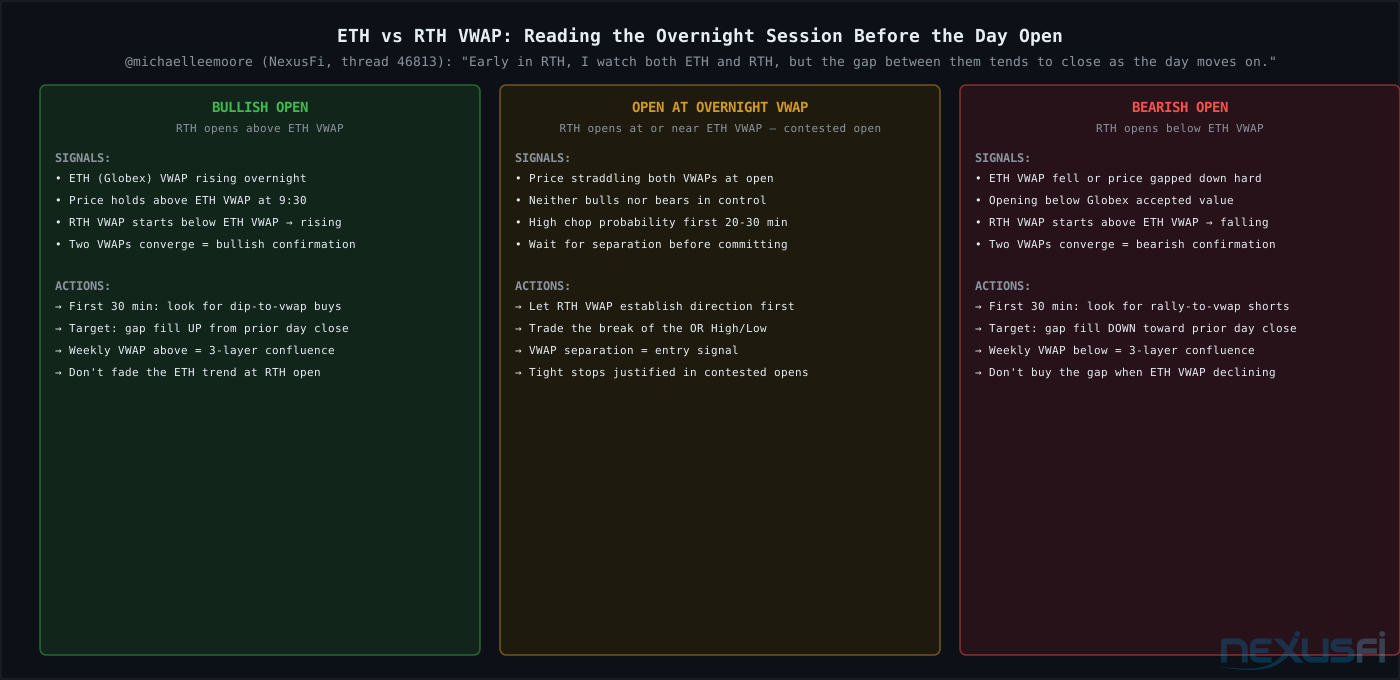
Modern futures markets don't stop at 4:15 PM Eastern. The ETH (extended trading hours) VWAP tracks activity from Sunday's Globex open (5 PM Eastern) through the RTH close. Some traders carry this as a separate overlay alongside their RTH session VWAP.
@JonnyBoy flagged a shift in recent years: "The ETH session is increasing in volume, meaning more attention needs to be placed on the OVN VWAP and standard deviations moving into the day session." This is real — overnight ES volume has grown meaningfully, especially in the Asia and European sessions. Ignoring the ETH VWAP means ignoring where price was accepted during 16 of the 23 hours the market is open.
@michaelleemoore runs four VWAPs simultaneously: ETH, RTH, Weekly, and Monthly. The interaction between ETH and RTH VWAPs at the day open tells the story of overnight intent vs. day-session positioning. When the RTH open occurs above the ETH VWAP, overnight buyers are ahead — day session longs are working with the institutional flow. Below the ETH VWAP at the open, overnight sellers hold the edge.
Multi-VWAP Convergence: The Highest-Probability Configuration #
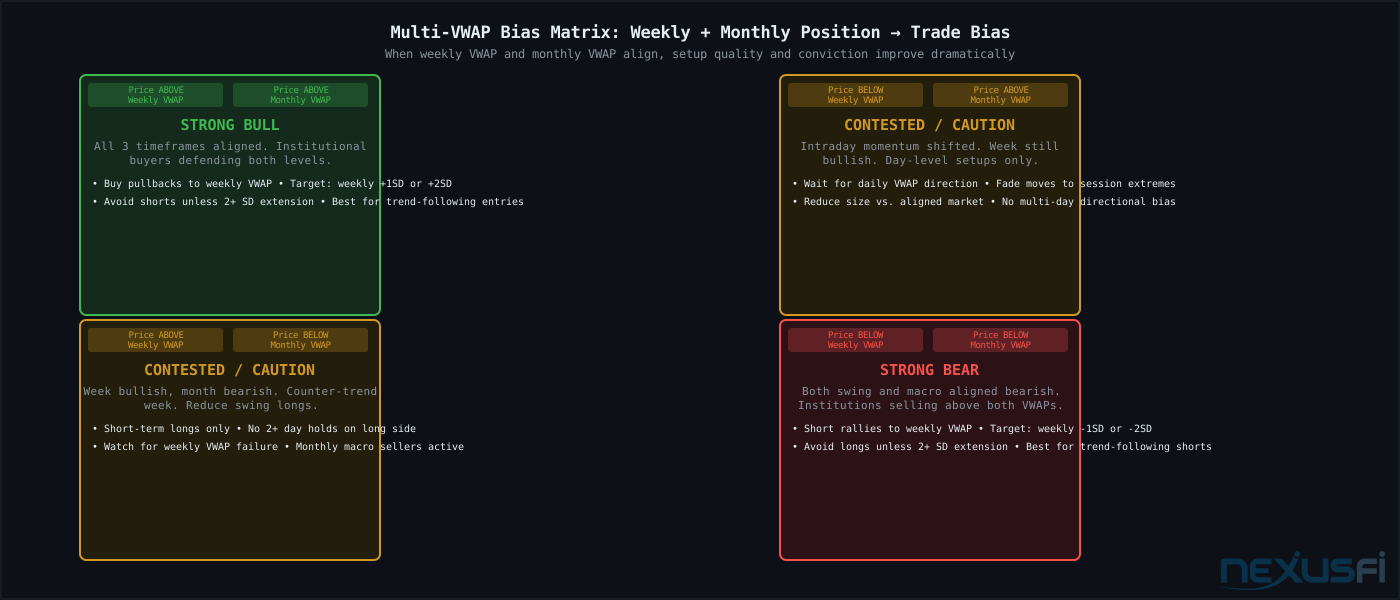
Single-VWAP setups are useful. Multi-VWAP convergence setups are much better. When two or three VWAP levels cluster within 3-5 points of each other — daily VWAP, weekly VWAP, and a structural level like the prior day high or the opening range boundary — you have multiple groups of participants defending the same price simultaneously.
The logic: a swing trader defending the weekly VWAP, a day trader defending the session VWAP, and an OTF participant defending yesterday's high are all the same trade at different time horizons. When all three reference levels cluster at the same price, the combined defense is substantially stronger than any single level.
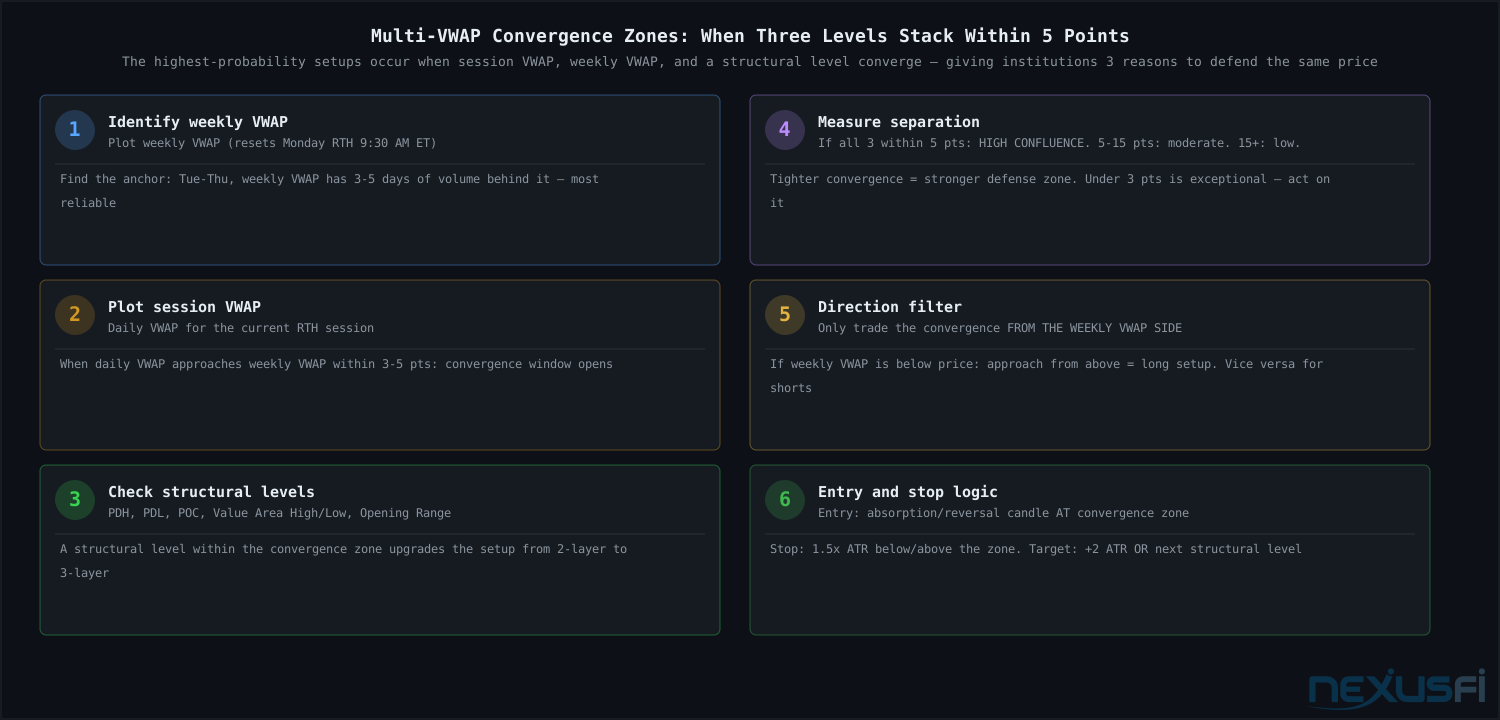
@tigertrader's framework applies directly here: "In a trending market, swing traders like to buy weakness on a rising 5-day VWAP and sell strength below a declining 5-day VWAP. In a range market, where the VWAP is horizontal, traders can trade counter to the trend and profit from fading moves to the plus or minus 2nd standard deviations." The convergence zone is where these different styles agree.
Standard Deviation Bands: The Range Engine #
Each VWAP timeframe comes with its own standard deviation bands. Daily 1SD/2SD = expected intraday range. Weekly 1SD/2SD = expected weekly swing range. Monthly 1SD/2SD = macro extension structure. When price reaches the 2SD band on any timeframe, mean-reversion probability spikes — institutional desks are aware of these levels.
Each VWAP timeframe generates its own standard deviation bands. The daily 1SD and 2SD bands define the expected intraday range. The weekly 1SD and 2SD bands define the expected weekly range. The monthly bands define monthly structure.
@Fat Tails' technical work on recursive VWAP algorithms improved SD band accuracy much. His implementation uses a recursive calculation that incorporates 8 data points per price bar, yielding higher precision on the variance estimate than earlier methods. The practical benefit: tighter, more reliable bands that accurately reflect the actual distribution of volume around the mean.
The most reliable SD band setup uses weekly VWAP standard deviation bands as a regime filter:
- Price above weekly VWAP +1SD: Market is in above-value extension territory. Momentum longs are working, but mean-reversion risk is elevated. Tighten stops and reduce new entries.
- Price between weekly VWAP and weekly +1SD: The normal bullish zone. This is where most of the clean long setups occur -- enough trend confirmation, not yet overextended.
- Price near weekly VWAP: Decision zone. The week's direction is contested. Wait for daily VWAP to confirm which side wins before committing to a directional position.
- Price between weekly VWAP and weekly -1SD: Normal bearish zone. Clean short setups with confirmation. Bears have edge but are not yet overextended.
- Price below weekly VWAP -1SD: Extension below value. Momentum shorts are working, but mean-reversion probability increases. Same logic as above, opposite direction.
Platform Setup and Configuration #
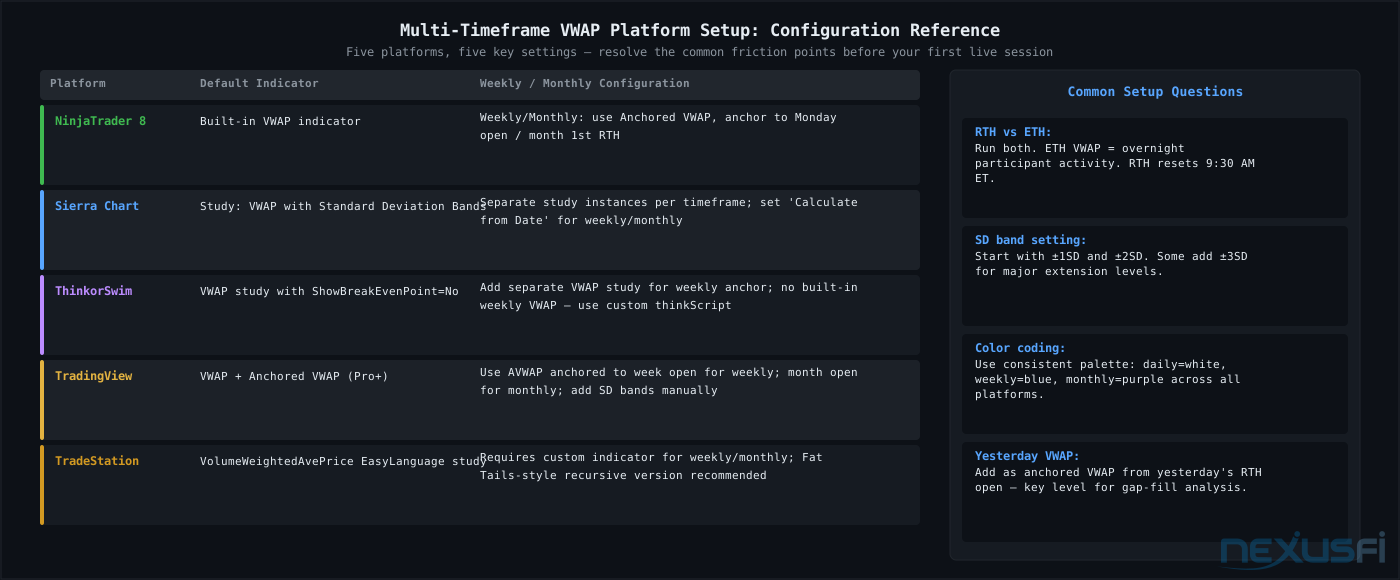
Most professional futures platforms support multi-timeframe VWAP natively. The key configuration questions are consistent across platforms:
Reset anchor point. The weekly VWAP must be anchored to Monday RTH (not Sunday Globex). Some platforms reset at the start of the Globex week — verify your platform's default and adjust if needed. Monthly VWAP should anchor to the first RTH session of the calendar month at 9:30 AM.
Session template. For RTH-only VWAPs on equity index futures (ES, NQ, YM), use RTH session data only (9:30 AM - 4:15 PM ET). For ETH VWAP, use the full Globex session. Mixing session types creates VWAP distortions where low-volume overnight data dilutes the meaningful RTH volume signal.
NinjaTrader 8 includes native VWAP with daily/weekly/monthly reset options. @Fat Tails developed enhanced multi-session VWAP indicators for NinjaTrader 7/8 (discussed extensively in the Session Toolbox thread at nexusfi.com) with additional features including separate start time offsets, recursive calculation, and improved holiday calendar handling.
Sierra Chart supports multi-timeframe VWAP through the VWAP With Standard Deviation Bands study with configurable period types. Weekly and monthly reset periods are built-in.
TradeStation / MultiCharts allow custom VWAP period programming through EasyLanguage and PowerLanguage. Weekly and monthly VWAPs require custom scripts but the calculation is straightforward: accumulate price × volume from the period start, divide by cumulative volume.
Common Mistakes With Multi-Timeframe VWAP #
Using weekly VWAP on Monday. On Monday, the weekly and daily VWAPs are identical. There is no weekly context until Tuesday. Treating Monday's VWAP as a weekly reference level creates false precision — the level has one session of data behind it and carries no more weight than the daily. Wait until Tuesday to apply the weekly VWAP as a structural reference.
Treating VWAP as support/resistance without context. VWAP is a mean, not a wall. Price cuts through it regularly on high-momentum moves. The level matters as a zone — when other factors align with VWAP (structural levels, standard deviation bands, prior session pivots) — not in isolation.
The answer is combining it with the broader stack.
Running RTH and ETH VWAPs simultaneously without understanding the interaction. Two VWAPs on the same timeframe chart creates confusion if their relationship isn't understood. The ETH VWAP tells you where overnight participants accumulated positions; the RTH VWAP tells you where day-session participants are positioned. Their convergence or divergence at the day open is the signal — not their absolute values.
Ignoring the Monday reset for weekly VWAP. Some platforms reset the weekly VWAP at Sunday's Globex open instead of Monday RTH. This is incorrect for equity index futures. Verify that your weekly VWAP starts at Monday's 9:30 AM Eastern RTH open. The distinction matters because Sunday overnight volume is low and unrepresentative — weighting it equally with Monday's RTH volume distorts the weekly reference.
Over-relying on monthly VWAP for intraday decisions. The monthly VWAP is a macro reference, not an intraday one. An ES trader looking for 10-point scalps doesn't need the monthly VWAP for each entry decision — it's relevant for understanding whether you're trading at a structurally overextended level relative to month-to-date institutional flow. Use it as a filter, not a trigger.
Integrating the Full Stack Into Your Trading #
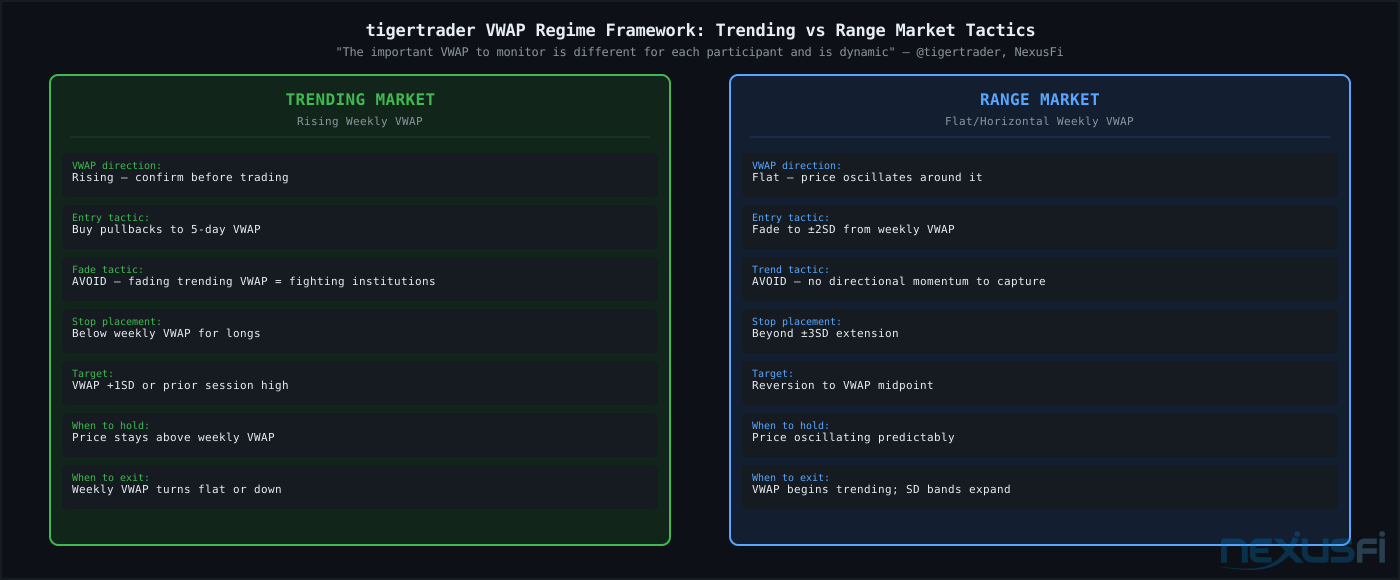
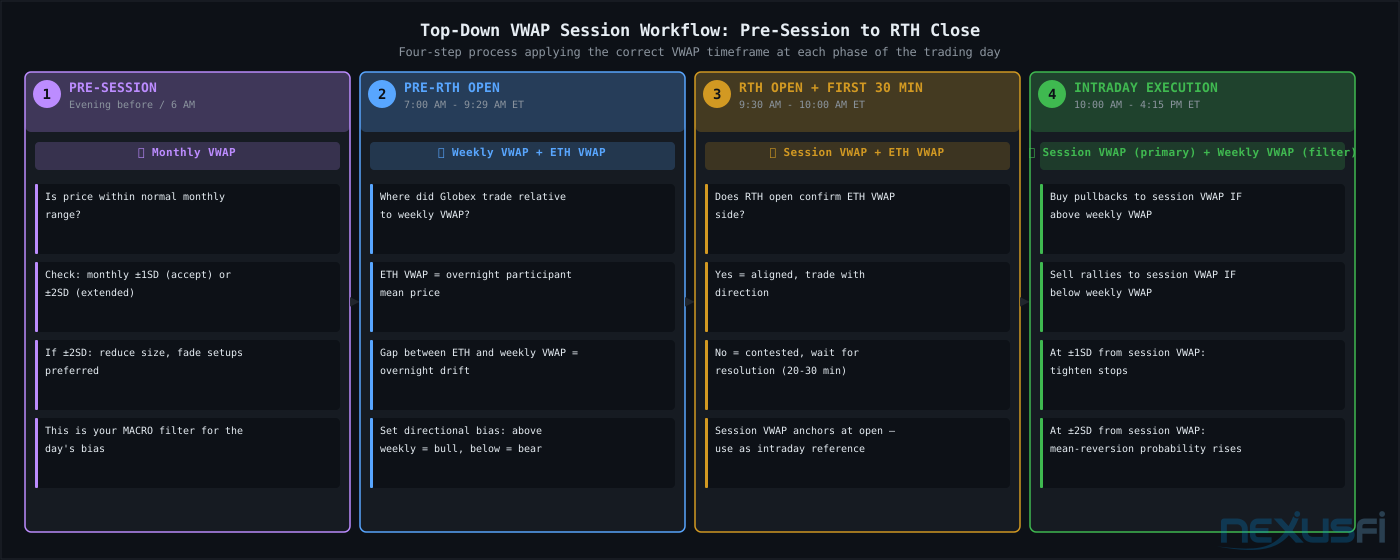
The practical integration follows a top-down sequence:
Pre-session: Note the monthly VWAP level. Is price extended from it? By how much (in SD terms)? This sets the macro context — whether you're trading at value or at an extreme. Check where the weekly VWAP closed Friday and whether it's rising or falling on the chart.
Pre-RTH (7:00-9:30 AM ET): Track the ETH VWAP. How has overnight trading positioned relative to the weekly VWAP? Is the Globex session accepting price above or below the weekly reference? This tells you what the overnight session's participants believe about the week's direction.
RTH open: Watch the RTH/ETH VWAP relationship at 9:30. If price opens on the same side of the weekly VWAP as the overnight session implies, the two sessions are aligned. If not, expect a resolution trade (or a breakout) in the first 20-30 minutes as the day session establishes its own position relative to the weekly mean.
Intraday: Use the session VWAP for execution. Pullbacks to session VWAP in a weekly-confirmed direction are the primary entry pattern. The weekly VWAP is the line that defines whether your session VWAP trades are with or against the broader participant flow.
The framework @michaelleemoore described — four VWAPs simultaneously (ETH, RTH, Weekly, Monthly) plus yesterday's VWAP and last week's VWAP — is the complete picture. It gives every trade a location in three time horizons at once. Not every session requires all of them. But knowing they exist, and what each one measures, changes the quality of context you bring to every setup you take.
Knowledge Map
Go Deeper
Build on this knowledgeReferences This Article
Articles that build on this topicCitations
- — Session Toolbox - Trading the Session (Fat Tails) (2013) 👍 49“If you ask me which is the single most important indicator on my chart, I would probably answer that it is the SessionVWAP of the current day.”
- — Session Toolbox - Trading the Session (Fat Tails) (2013) 👍 26“I have introduced an offset which lets you start the VWAP at any time in mode ETH. The standard deviation bands are also calculated via a fast recursive algorithm.”
- — VWAP for stock index futures trading? (2019) 👍 29“I have four vwaps on my chart -- ETH, RTH, Weekly and Monthly. Trading a reversal at those lines is money very often.”
- — VWAP for stock index futures trading? (2019) 👍 14“Institutions don't care about random lines, they care about VWAP. The Feb and March 2019 lows are a very clear tagging of the rolling monthly VWAP.”
- — VWAP for stock index futures trading? (2020) 👍 8“The weekly VWAP I refer to is anchored to the first day of the current RTH trading week, i.e. Monday.”
- — The Highest, High-Probability-Trade (2011) 👍 11“In a trending market, swing traders like to buy weakness on a rising 5-day VWAP and sell strength below a declining 5-day VWAP.”
- — Using VWAP in your trading (2010) 👍 19“Most institutional traders, especially buy side traders, are evaluated in terms of how the average price of execution compared to VWAP.”
- — VWAP for stock index futures trading? (2020) 👍 15“VWAP alone to me is weak at best when used like the average retail trader uses it. Understanding who is participating changes what you can do with it.”