



Cumulative Volume Delta (CVD): Reading the Hidden Order Flow Story Behind Every Futures Move
Subtitle: How aggressive buyers and sellers leave a paper trail — and how to read it before price confirms the move
Overview #
Price action is a lagging record of decisions already made. By the time ES prints a new high or breaks through a support level, the battle between buyers and sellers is already over. CVD — Cumulative Volume Delta — lets you watch that battle unfold in real time.
CVD is the running total of delta: the difference between aggressive buying volume (orders lifting the ask) and aggressive selling volume (orders hitting the bid), accumulated over time. It answers the one question that price alone cannot: are buyers or sellers genuinely in control right now, or is the market drifting on passive limit order activity?
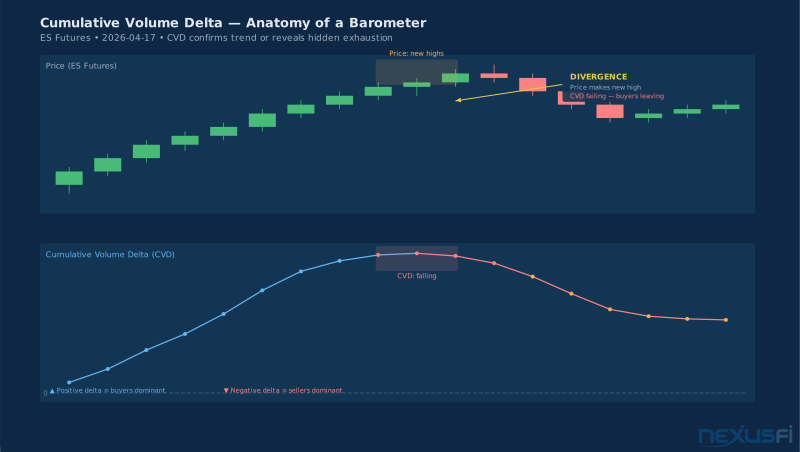
The distinction is critical. When ES breaks above 5,950.00 with CVD surging positive, buyers are aggressively lifting offers — real conviction. When price makes the same break while CVD flattens or drops, buyers stopped participating. That divergence between price and CVD is one of the most reliable signals in order flow analysis, and it's invisible on a standard candlestick chart.
CVD doesn't predict direction. It provides evidence about participation. Experienced traders know that trade direction without participation context is noise. With it, you can distinguish breakouts that have fuel from breakouts that are about to stall.
CVD is not a prediction tool — it's a participation measurement. The most valuable signal is not "CVD is high" or "CVD is low" but whether CVD is confirming or contradicting what price is doing. Divergence between price and CVD is where the real edge lives.
This article covers the mechanics of CVD calculation, the three divergence patterns (including the rarely-discussed "neutralized inventory" setup that experienced traders rank as the most reliable), futures-specific considerations, and the critical failure modes that get traders into trouble. Prerequisites: familiarity with DOM/Level II, Volume Profile basics, and bid/ask spread mechanics. If you're new to those concepts, work through those articles first.
What Delta Actually Measures #
Before understanding CVD, you need a precise understanding of delta.
Every trade that executes in a futures market is a transaction between an aggressor and a passive participant. The aggressor crosses the spread — they accept the price on offer rather than waiting for the market to come to them. The passive participant posts a limit order and waits.
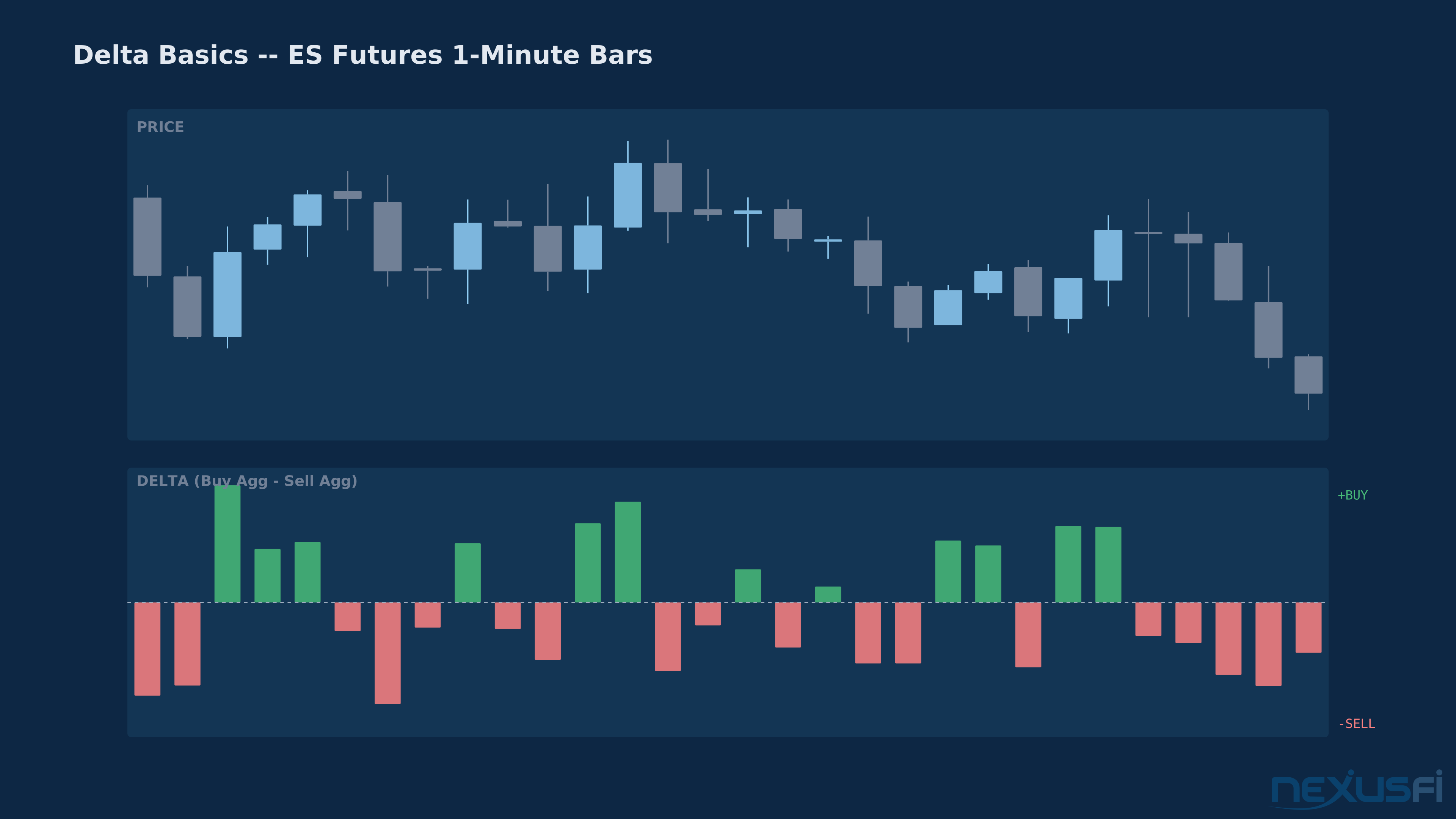
Delta per bar = (Volume executed at the ask) — (Volume executed at the bid)
- A trader submitting a market buy order to lift the offer: positive delta
- A trader submitting a market sell order to hit the bid: negative delta
- A limit order sitting at the bid that gets filled: the aggressor was the seller — negative delta
Positive delta means aggressive buyers dominated during that interval. Negative delta means aggressive sellers dominated. Delta doesn't tell you whether the dominant force will continue — it only tells you who was in control.
The zero line has conceptual meaning but limited practical use. Markets rarely end a bar at exactly zero delta. What matters is the direction and magnitude relative to recent bars, and whether delta is confirming or contradicting price.
Key distinction: Delta measures aggressive orders only. Limit orders sitting passively in the book — even enormous ones from major institutions — register zero delta when they don't execute. This creates CVD's most important blind spot: large passive liquidity absorbing aggressive orders appears as strong delta in the direction of the aggressor, when the actual market power lies with the passive participant. More on this in the Limitations section.
How CVD Is Calculated -- And Why Platform Matters #
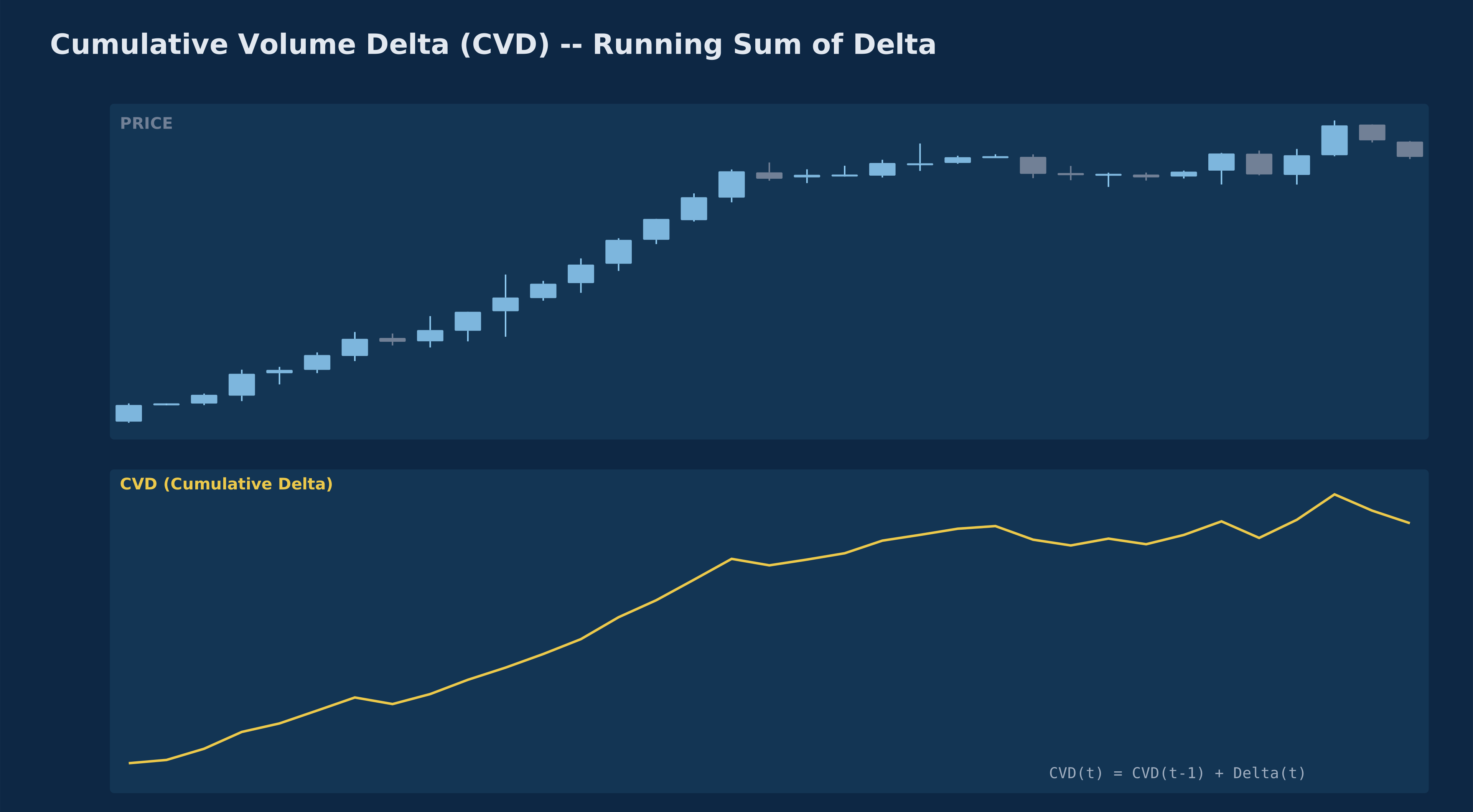
CVD is the cumulative sum of delta values since the last reset point.
If bar 1 has delta of +5,200 and bar 2 has delta of -3,100, then after bar 2, CVD = +2,100. The running accumulation creates a line that shows whether aggressive buying or selling has dominated since the reset.
Reset points change what CVD tells you:
- Session open (6:00 PM Globex or 9:30 AM RTH): tracks the day's cumulative order flow
- Daily reset (midnight or 9:30 AM): most common for day traders — gives a clean daily picture
- Rolling/continuous: no resets, accumulates indefinitely — useful for swing traders tracking multi-day positioning
- Manual anchor: reset at a specific event (post-news, post-open, etc.)
Most misunderstandings about CVD between traders come from different reset points. If your CVD shows -85,000 and another trader's shows +12,000 on the same instrument and time, the first question is always: what are your reset settings?
Trade classification — where the differences live
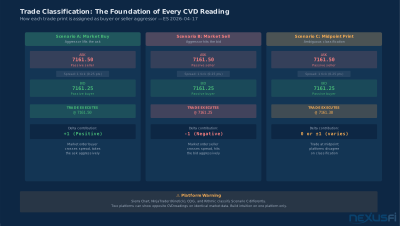
CVD depends entirely on how each trade is classified as a buy or sell. The most common methods:
- Tick rule: If the trade price exceeds the previous trade price, classify as a buy. Below = sell. Simple but prone to error at bid/ask boundaries during fast markets.
- Quote rule / Last-quote method: If the trade executes at or above the ask midpoint, classify as a buy. More accurate but requires real-time bid/ask data at each print.
- Bid/ask rule: Directly checks whether the trade executed at the bid or ask. Most accurate when bid/ask data is reliable.
The critical point most CVD articles skip: two platforms can show materially different CVD for the same instrument on the same day. Sierra Chart, NinjaTrader with Kinetick, CQG, and Rithmic classify some ambiguous prints — trades at the midpoint, large volume crosses, late prints — differently. The differences compound over a full session.
This doesn't make CVD unreliable. But it means:
- You cannot compare absolute CVD readings between platforms
- You must build intuition using one platform's data consistently
- The signal is in the shape and divergence of CVD, not the absolute number
Never trade a CVD signal based on readings from a free data source or a platform you haven't calibrated. Two platforms can show opposite CVD stories on the same market, same time. Build your edge on one consistent data source and stick with it.
Reading the CVD Chart #
CVD produces a line that moves with price — often. When it doesn't, that's your signal.
CVD rising with price: Buyers are aggressively dominating. Trend is confirmed by order flow. Strong trending markets show CVD moving in tight correlation with price, often leading price at swing points (CVD turns before the bar closes).
CVD falling with price: Sellers are dominating. Same characteristics in reverse.
CVD flat while price moves: This is where it gets interesting. Price moving in one direction without CVD moving — two possibilities:
- The move is driven by limit order fills, not aggressive orders (passive activity, potentially vulnerable to reversal)
- Large iceberg/reserve orders are absorbing the aggression (see Limitations)
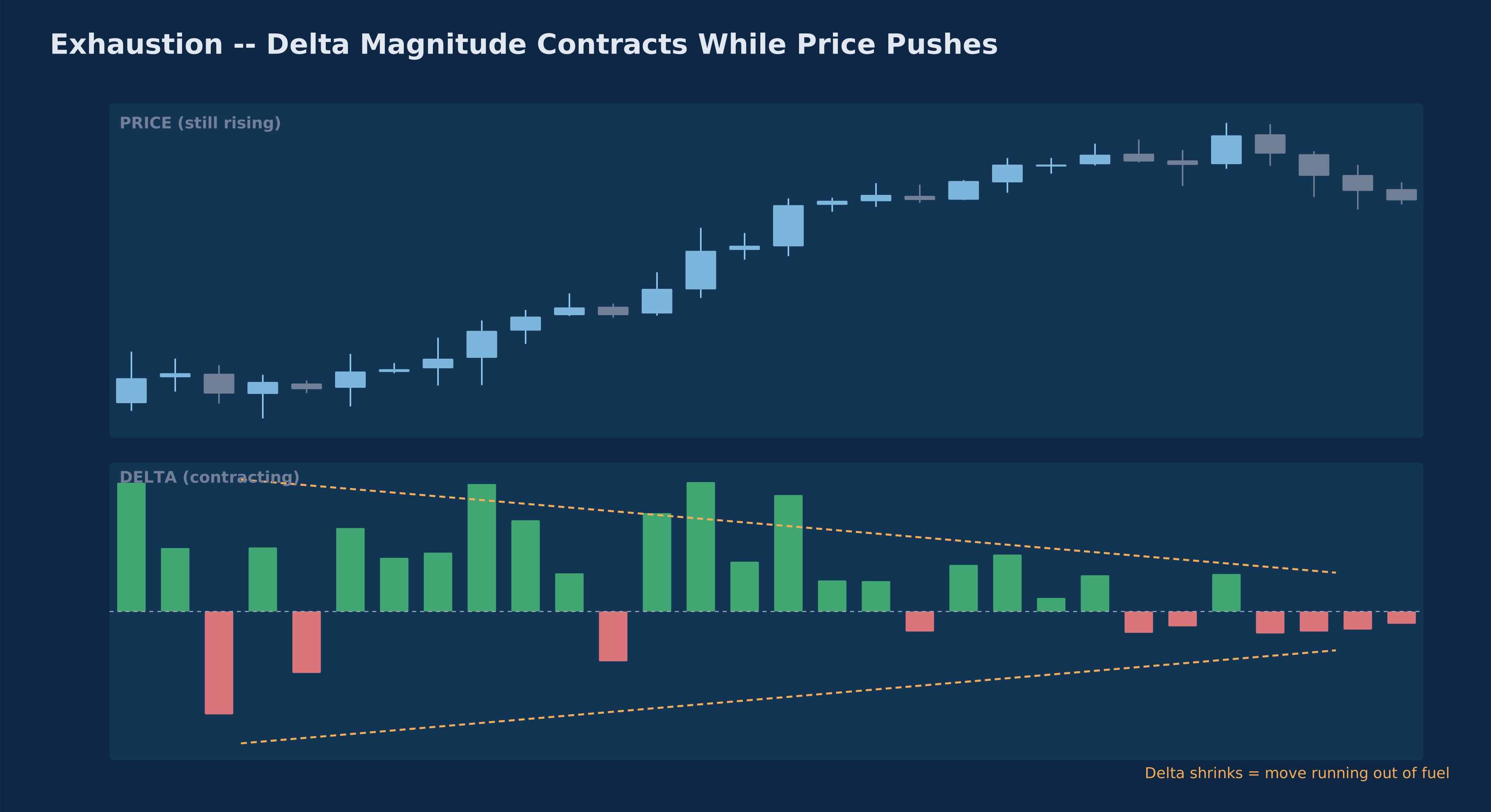
CVD slope changes: Often the most useful early warning. When price is trending upward but CVD's rate of climb decreases, sellers are increasing resistance. Not yet a reversal signal, but a flag to tighten stops or wait for more confirmation.
The zero line: Some traders watch CVD crossing zero as a directional signal. In practice, this is mechanical and doesn't produce reliable results. What matters is direction and divergence relative to recent history, not absolute position.
When starting with CVD, ignore the absolute value entirely for the first 30 days. Focus only on whether CVD is confirming or contradicting price direction. The confirmation/divergence signal is 80% of CVD's value, and you can learn it without worrying about numbers.
The Three CVD Divergence Patterns #
Most traders learn one CVD pattern — regular divergence. Experienced order flow traders know two more patterns that are actually more reliable.
Pattern 1: Regular Divergence (Use with caution) #
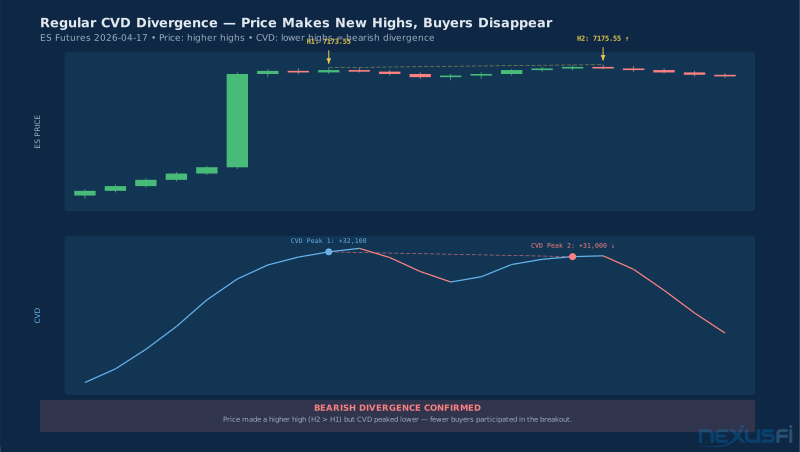
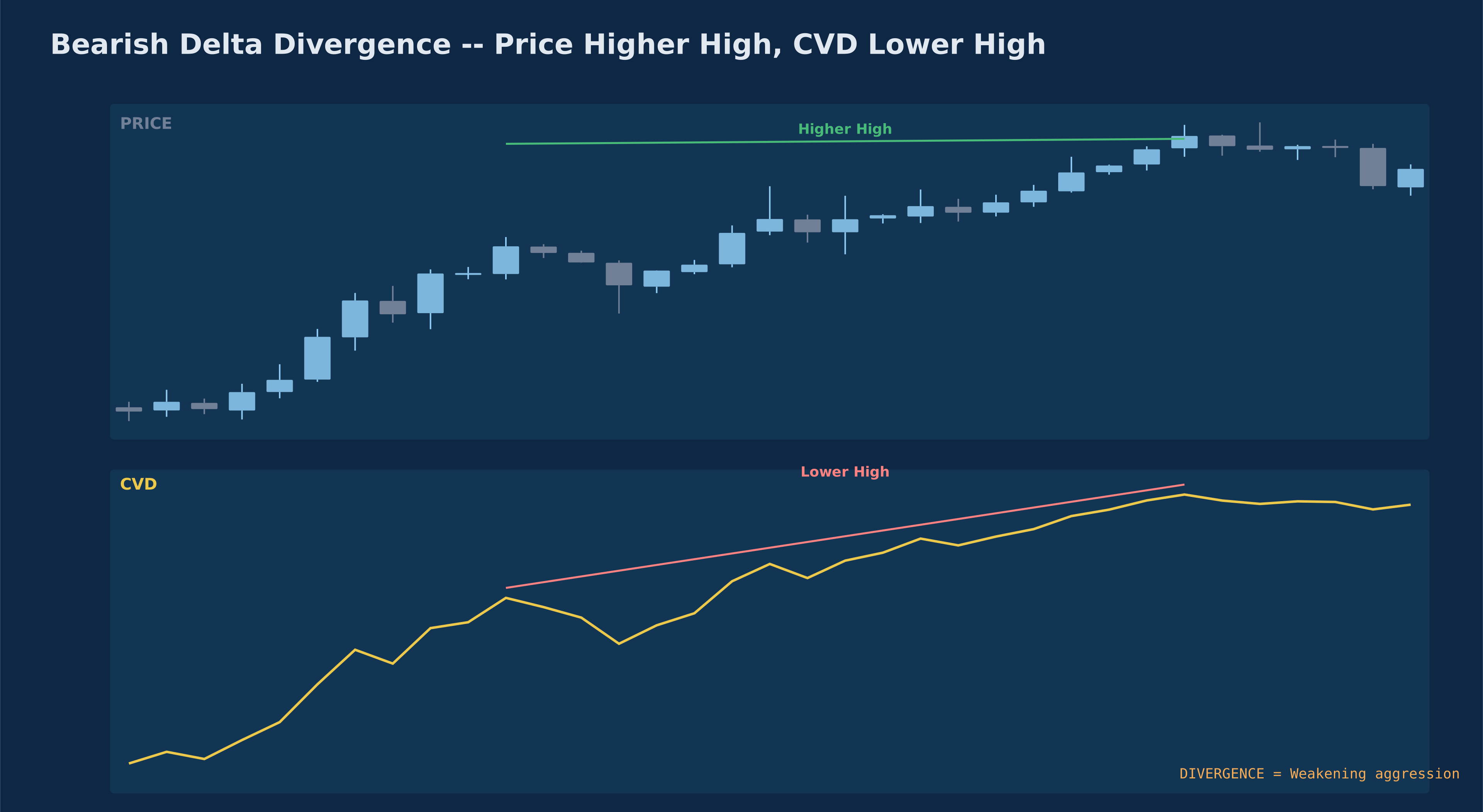
Price makes a new high (or new low) while CVD fails to confirm.
Bearish example on ES: ES pushes to 5,942.25, a new session high, with positive delta on each bar up. Then ES makes a second push to 5,944.50 — a new high. But CVD on this second push tops at a lower level than the first. Buyers are participating less aggressively on the new high than they were before. The fuel is thinning.
Bullish example: ES drops to 5,908.75, negative CVD. Then ES makes another swing low to 5,906.50. But CVD on this second low is less negative than the first — sellers are hitting bids less aggressively. The selling pressure is weakening.
The problem with regular divergence: it triggers constantly in trending markets. CVD can diverge repeatedly for 30-60 minutes on a strong trend day before any reversal occurs. Trading regular divergences alone, without additional context, leads to repeatedly fading strong momentum — which is how you get chopped up.
The correct use of regular divergence: it's a flag to tighten stops on existing positions and wait for additional confirmation. Not a standalone entry trigger. Specifically, look for regular divergence occurring at a known structural level (VAH, VAL, prior day high, major gap), combined with NYSE Tick exhaustion or a DOM rejection.
Pattern 2: Hidden Divergence (Stronger signal, aligns with trend) #
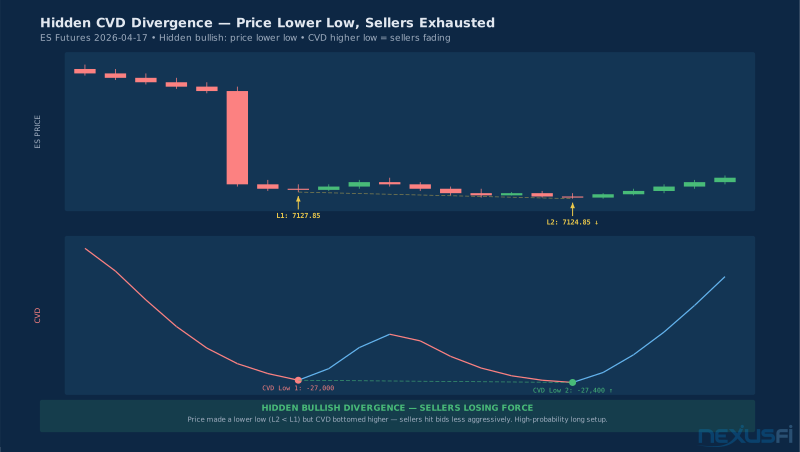
In a downtrend: price makes a new low, but CVD makes a higher low. Selling aggression is decreasing even as price continues lower. The sellers pushing price down are using less and less force. Often precedes sharp short-covering rallies.
In an uptrend: price makes a higher low (healthy pullback), and CVD also makes a higher low. Buyers are still present during the dip. This confirms trend continuation — the dip is attractable, not a topping pattern.
Hidden divergences are more reliable than regular divergences because they align with the underlying trend structure. You're not fighting momentum — you're finding the exhaustion point within a counter-move.
This observation comes from years of systematic tracking of divergence setups across ES, NQ, and Russell.
Entry logic for hidden bullish divergence:
- Downtrend in progress — price making lower lows
- On the most recent swing low, CVD makes a HIGHER low than the prior swing low
- NYSE Tick moves from extreme negative (below -600) toward neutral
- Delta turns positive for 2+ consecutive 1-minute bars
- Enter long. Stop: 4 ticks below the current swing low. First target: 50% retrace of the prior down move. Second target: prior swing high if delta holds positive.
Pattern 3: Neutralized Inventory (Most powerful — rarely documented) #
This is the pattern that experienced CVD traders rank above divergence. The concept:
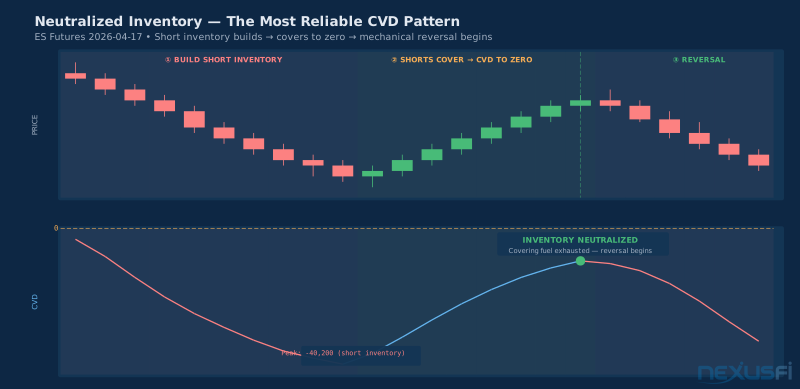
During a sustained directional move — say, 45 minutes of aggressive selling from 10:30 AM onward — CVD builds to a large negative reading. That represents accumulated short inventory: sellers who got short during that move are still holding positions. Their stops sit above the market. When price eventually bounces, those shorts need to cover — and that covering creates a mechanical bid.
Watch for:
- CVD builds to an extreme negative reading (benchmark against historical data for this instrument and time of day — see the Benchmarking section below)
- Price begins to retrace upward
- CVD rises back toward zero as short inventory is covered
- When CVD fully neutralizes — short inventory is exhausted — the mechanical buying stops
- Often see a sharp reversal DOWN after neutralization, because the fuel (short covering) is gone
@djkiwi: "I think the divergences are one part but the more powerful setup is the price change that occurs when existing long or short inventory is neutralized. So many times I see this happen where inventory is neutralized and then we see a powerful move in the other direction. I find these setups much more reliable than regular or hidden divergences."
How this helps: it's mechanical, not probabilistic. You're watching a known population of traders (the shorts) cover their positions in real time. The covering will stop when their positions are closed. There's no ambiguity about when the fuel runs out — CVD returning to zero (or near it) tells you directly.
Practical setup rules:
Pre-condition: CVD has built to an extreme reading (use historical benchmarks to define "extreme"). Price then retraces in the opposite direction. CVD retraces toward zero.
Entry: Short (or long) entry when CVD has retraced 90%+ back toward zero AND price shows a DOM rejection at a structural level (VAH if you're fading the retrace, prior swing high, or a footprint showing large passive sellers absorbing the bid).
Stop: 6-8 ticks beyond the swing extreme of the retrace. Target: Return to the prior extreme price low (or high), which will likely be tested as CVD pushes to new extremes on the continuation.
The three CVD patterns in order of reliability: (3) regular divergence — a flag, not an entry; (2) hidden divergence — a higher-probability entry aligned with trend; (1) neutralized inventory — the most reliable, because it tracks mechanical covering of a known position, not just a probabilistic trend exhaustion. Learn them in reverse order.
Benchmarking Delta -- The Concept Most Traders Skip #
@djkiwi's most important insight about CVD: "delta as an absolute number is worthless." This is worth dwelling on.
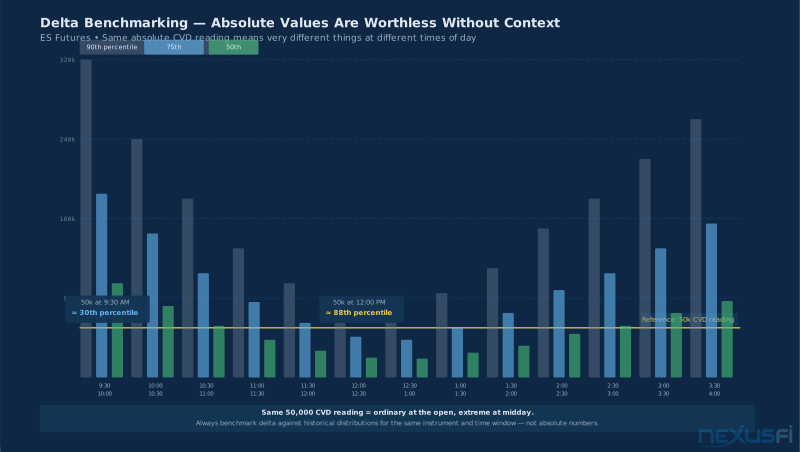
100,000 negative CVD on ES at 9:45 AM is very different from 100,000 negative CVD at 11:30 AM. The 9:30-10:30 RTH period has dramatically higher volume than midday. The same absolute CVD reading represents a much smaller fraction of total volume at 9:45 than at midday. A "large" delta reading at open is proportionally small; the same absolute reading at noon in thin volume is actually enormous.
To use CVD effectively, you need to benchmark readings against historical distributions.
How to build a benchmark:
Over 60+ trading days, record the following for each instrument:
- CVD at specific time windows (9:30-10:00, 10:00-10:30, etc.)
- Maximum positive and maximum negative CVD reached in each window
- Note the 25th, 50th, 75th, and 90th percentile values
When a CVD reading appears during live trading, compare it to the historical percentile for that time window. A reading at the 75th+ percentile is notable. At the 50th, it's unremarkable. At the 90th+, it's extreme.
@djkiwi ran this analysis on NQ data back to 2010. His discovery: from 6:30-7:00 AM, 2,746 positive CVD was the 75th percentile for that time slot. During that same window, a reading of 900 would be at the 35th percentile — ordinary. Without the benchmark, both numbers are just numbers.
Benchmark data also reveals cross-instrument relative strength. If NQ is at the 75th percentile for delta at 9:45 AM and ES is at the 35th, NQ is showing materially stronger buying pressure. Trade the instrument with stronger confirmation.
Building this benchmark takes months of manual recording or automated logging. This is one reason CVD has a steep learning curve. It's not a plug-and-play indicator — it requires calibration to your instrument and trading window.
Futures-Specific CVD Behavior #
Session Transitions #
CVD's informational content changes dramatically between Globex (6:00 PM - 9:30 AM ET) and RTH (9:30 AM - 4:15 PM ET).
Globex is thin. Volume is 15-25% of RTH levels. Delta in Globex swings wildly on small volume and is dominated by news-driven positioning, overnight futures arb with international markets, and thin orderbook action. The correlation between Globex CVD and actual directional bias is low.
For day traders: reset CVD at 9:30 AM (or your RTH open). Track Globex CVD separately for context — it tells you whether overnight participants were aggressively buying or selling into the open — but don't blend it into your intraday reading.
The RTH open at 9:30 is the most important moment for CVD. The first 15-30 minutes shows you whether the market will trend (CVD moves steadily in one direction) or balance (CVD chops around zero with neither side accumulating). The CVD slope in the first 30 minutes is a day-type signal.
Instrument Calibration #
CVD characteristics vary across instruments. Key differences:
ES (E-mini S&P 500): High absolute volume. Typical session CVD extremes: ±200,000 to ±500,000 on a trending day. Midday CVD extremes are much smaller. Strong instrument for CVD analysis due to deep, liquid order book.
NQ (E-mini Nasdaq): Higher per-contract volatility, more responsive to tech sector delta. Typical session extremes: ±100,000 to ±300,000. NQ CVD leads ES CVD during tech-driven moves.
CL (Crude Oil): Very spiky delta, especially around EIA inventory reports (10:30 AM Wednesdays). Avoid delta analysis during the first 2-3 minutes after reports — classification noise is severe. CL delta at other times can be highly informative for trend continuation setups.
ZB (30-Year Bond) / ZN (10-Year Note): Lower volume, slower CVD accumulation. CVD extremes in bonds are smaller in absolute terms but meaningful relative to their history. Bond market delta often leads equity delta during risk-off events.
Contract Roll Implications #
During roll periods (typically 2 weeks before expiration), liquidity splits between front and back months. CVD on the expiring contract becomes less representative as institutional players migrate to the new contract. Use continuous contracts or switch to the next front month early to maintain clean delta data. The transition period shows artificially reduced volume and distorted delta readings on the expiring month.
Integration With Other Tools #
CVD doesn't work in isolation. The strongest setups come from confluence.
CVD + Volume Profile #
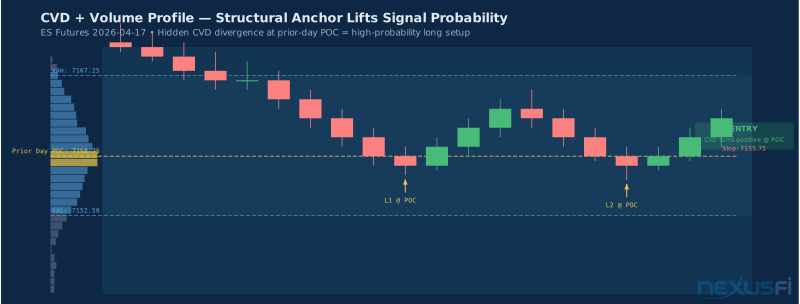
Volume Profile provides price anchors; CVD provides order flow confirmation. When a hidden divergence or neutralized inventory pattern occurs at a Volume Profile level (POC, VAH, VAL, or prior high-volume node), the probability of a successful reversal increases much.
Setup: ES retraces to yesterday's POC at 5,918.50. CVD shows a hidden divergence — price makes a new low at this level, but CVD makes a higher low than the prior swing. This is a potential long setup. Wait for delta to turn positive for 2-3 consecutive 1-minute bars. Enter long. Stop: 4 ticks below the swing low. Target: prior session VAH.
Without the Volume Profile level, the hidden divergence is just a flag. With it, you have two independent frameworks both pointing to the same inflection point.
CVD + NYSE Tick #
NYSE Tick measures the number of NYSE-listed stocks ticking up minus ticking down at any moment. Extreme Tick readings (above +1000 or below -1000) signal broad market participation in one direction. The Tick's 13-period EMA shows the trend of this breadth measure.
CVD + Tick confirmation: When ES hidden divergence shows lower CVD lows while Tick is moving from extreme negative (-800 to -1000) toward neutral (-200 to 0), you have confirmation at two levels simultaneously — futures order flow and equity breadth both showing capitulation. This combination has a meaningfully higher success rate than either signal alone.
@djkiwi: "The tick is a CRITICAL component when playing hidden delta divergences in my opinion and this will often give you all the clues you need to move the risk reward pendulum in your favor."
Market Profile provides structural context, VWAP provides a fair value anchor, and CVD provides the participation confirmation. All three pointing the same direction — that's a high-probability setup.
CVD + DOM #
CVD and DOM serve opposite but complementary roles. CVD tells you what has traded (the done deal). DOM tells you where liquidity currently sits (the pending orders). A CVD signal that aligns with clear DOM absorption is far more reliable than CVD alone.
Example: Price is declining toward 5,920.00 with moderately negative CVD. DOM shows a large offer stack forming at 5,924.50 — the 5-level shows 800 contracts resting there. CVD is negative, but a big seller is clearly guarding the upside. This is NOT a long setup — the CVD "hidden divergence" you might see is being created by passive sellers absorbing aggressive buyers, not by buyers overpowering sellers. The DOM context completely changes the interpretation.
CVD + Rate of Change #
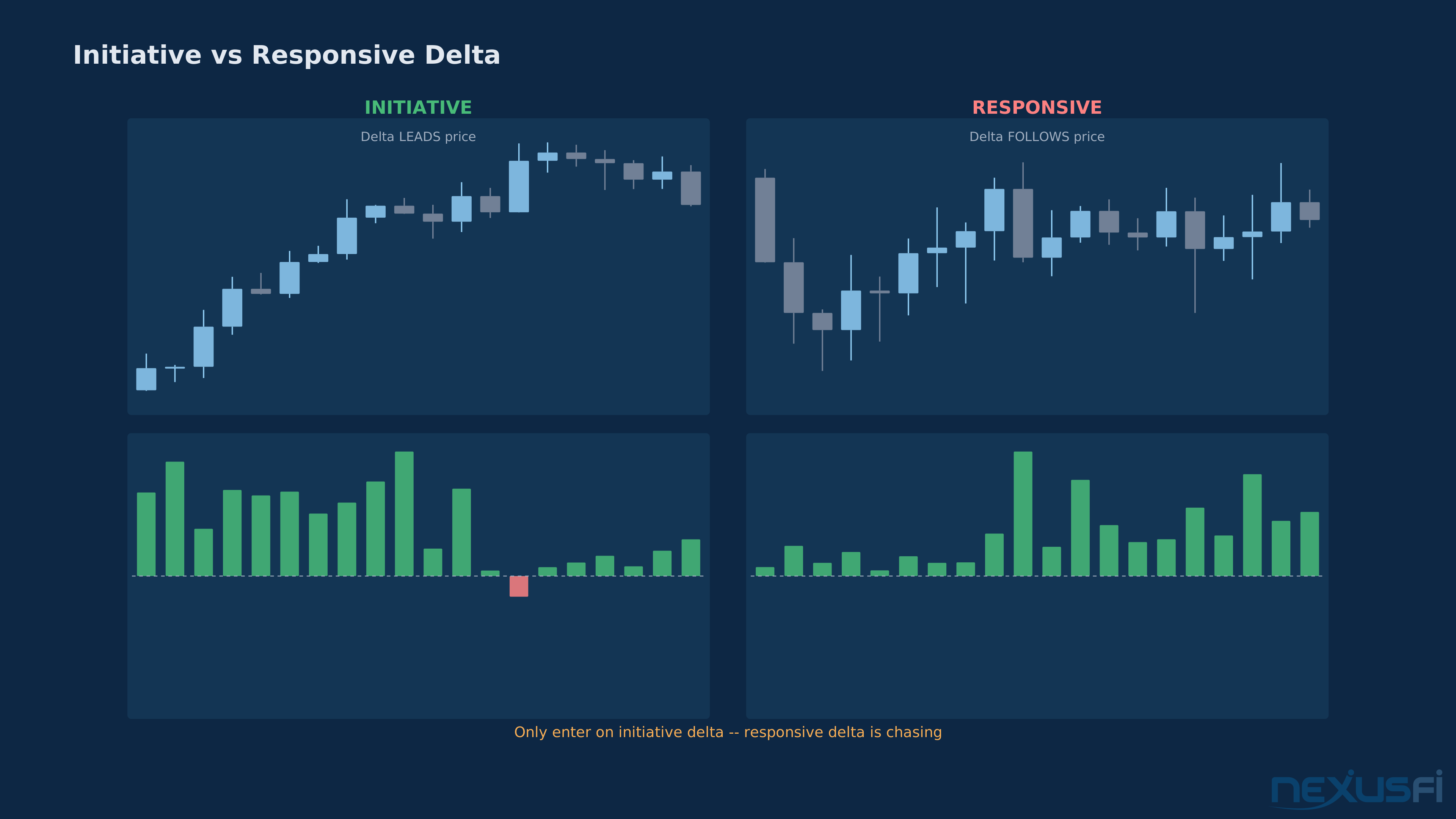
Advanced CVD practitioners track not just the level but the acceleration. When delta explodes in one direction on large volume, that's a momentum continuation signal — not a reversal setup.
@RickM: "I trade when the Delta explodes as long as the Volume also is strong. For Example on ES, normally volume sits on average around 100 (average each 10 seconds) and delta half of that. When a big move occurs, Delta can explode to over 500 positive (safe Long) or negative (safe Sell) values for a short time." This is a momentum entry technique — get in the direction of the delta explosion when both volume and delta are at extremes simultaneously. The setup has a short window (often just 1-3 minutes) but captures the core of a momentum move.
When CVD Fails #
CVD is a genuinely useful tool. It also fails in specific, predictable conditions that you must know cold before trading with it.
Trending Markets Ignore Divergences #
On strong trend days — identifiable by consistently directional CVD slope, expanding range, and NYSE Tick staying in the +600 or -600 range for extended periods — regular CVD divergences are meaningless. The market is in price discovery mode, moving to new ground because real fundamental buyers (or sellers) are present and absorbing everything the other side throws.
Regular divergences fire 8-10 times on a trend day and fail every time. Hidden divergences also fail more frequently on strong trend days. The session before you apply CVD signals, identify the day type. If you can't determine whether the day is trending, balanced, or transitioning within the first 30 minutes, wait before taking CVD-based positions.
On a trend day, CVD divergences are traps, not signals. The market is doing what it should — aggressive buyers are lifting offers all the way up, and any pullback is just a retrace, not a reversal. Fading trend days with CVD divergence signals is a reliable way to get run over. Identify the day type first.
Iceberg Orders and Passive Replenishment #
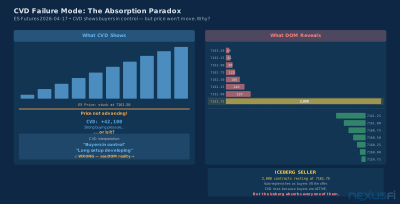
This is CVD's most dangerous blind spot. Large institutions use iceberg (reserve) orders — a 50-contract visible offer that auto-replenishes every time it's filled. To CVD, each fill looks like a separate event: positive delta from the aggressive buyer lifting the offer. CVD rises.
Meanwhile, the real story is a large passive seller who keeps replacing the offer, absorbing all the buying. Price doesn't advance. Eventually the buyer runs out of motivation (or capital) and price falls.
CVD showed buyers in control the entire time. The DOM showed a passive seller absorbing everything. Without the DOM context, you were reading the wrong story.
On footprint charts, this pattern is visible as high positive delta at a price level that refuses to break upward — repeated positive delta with no price advance signals passive selling absorption. CVD alone misses it entirely.
News and Auction Periods #
During major economic releases (NFP, CPI, FOMC) and market-on-close auctions, trades execute at dozens of price levels simultaneously in milliseconds. Classification algorithms struggle with rapid-fire prints across bid, ask, and mid-price in the same fraction of a second. CVD readings in the first 30-60 seconds after a major release are unreliable.
Practical rule: After a tier-1 data release, wait for the immediate volatility to settle (30-90 seconds minimum), then re-evaluate the CVD picture on whatever new trading range forms. Don't trade the first 1-2 minutes of post-announcement action using CVD signals.
The Absorption Paradox #
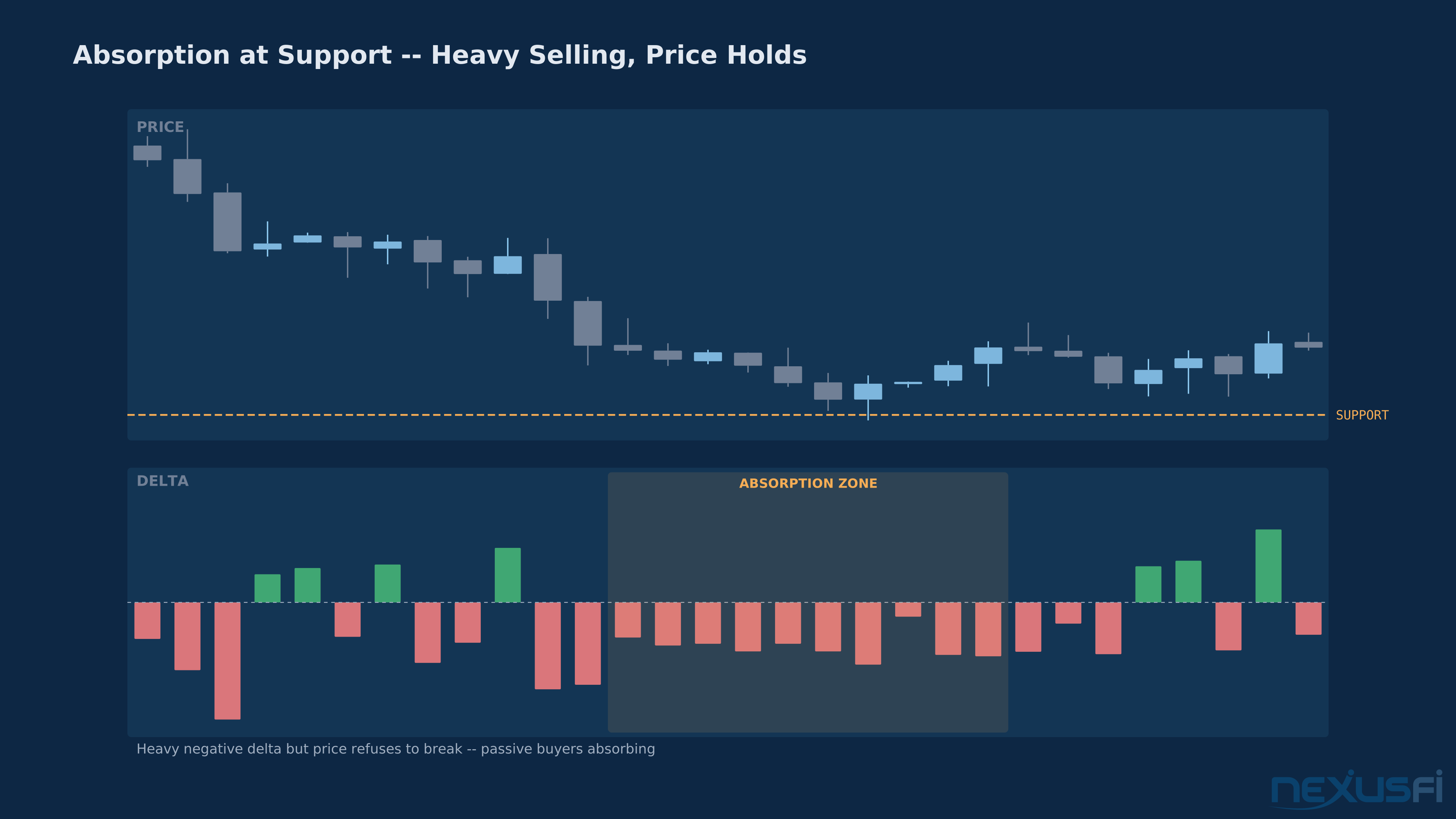
Here's the subtle failure mode that trips up even experienced CVD traders: when price is being absorbed by a large buyer, CVD shows heavy negative delta from all the selling hitting the bid. This looks bearish. But the large absorber is actually bullish — they're accumulating a large long position at low prices, absorbing every offer of stock to sell.
CVD shows selling dominance. The actual power in the market is the buyer. The only way to distinguish absorption from genuine directional selling is additional context: footprint charts showing large positive delta at specific price levels despite overall negative CVD, DOM showing large passive bids being defended, or multi-session context showing that price is near a major support area where institutional players have historically absorbed selling.
This is CVD's core limitation: CVD cannot distinguish between absorption and genuine directional selling. Only combined analysis resolves this ambiguity.
@hobart: "delta is very difficult indicator to interpret, and is best ignored by traders without intimate knowledge of order flow in THAT market." This is not pessimism — it's the honest assessment that CVD requires calibration, context, and months of screen time to read correctly. The traders who lose money with CVD are typically those who treat it as a simple indicator overlay.
Practical Application #
Here's a structured approach for integrating CVD into your process:
Pre-Market #
Review yesterday's CVD pattern:
- Did the session close near CVD highs (long inventory dominant) or CVD lows (short inventory)?
- Large positive CVD at close suggests potential heavy-handed buyers at support today; large negative CVD suggests the reverse
- Multi-day CVD: if CVD has been declining for 3+ days while price holds flat, sellers are gradually overpowering buyers — potential break to the downside is building
RTH Setup Process #
Maintain three views simultaneously:
- 5-minute chart with CVD overlay: primary reference for session narrative
- 1-minute chart or footprint: entry timing and delta confirmation
- NYSE Tick 13-period EMA: macro breadth confirmation
For long setups:
- Identify Volume Profile support (POC, VAL, prior day's high-volume node, or low-volume area above a key level)
- Wait for price to reach the support
- CVD check: hidden divergence, or neutralizing short inventory approaching zero
- NYSE Tick: moving from extreme negative toward neutral
- DOM check: no visible large passive offer stacked above
- Enter long when delta turns positive for 2+ consecutive 1-minute bars
- Stop: 4-6 ticks below the swing low (never wider on intraday)
- First target: 8-12 ticks (take 50% partial). Second target: 20-30 ticks if delta holds positive through the first resistance level
For short setups: mirror exactly.
When NOT to Take a CVD Signal #
Do not enter based on CVD when:
- NYSE Tick is extreme in the SAME direction as price (trend confirmation, not reversal potential)
- The market opened above overnight high with gap continuation buying CVD (trend day developing)
- A major news event occurred within the last 3 minutes
- CVD has been flat and choppy for 30+ minutes (balanced market with no directional bias — wait for a clear move first)
- Volume is 30% below its 30-day average for this time of day (thin markets make CVD unreliable)
Time of Day Reliability #
9:30-10:30 AM: Most reliable. High volume, clear institutional activity, CVD extremes are meaningful. The opening range CVD development sets the day's order flow narrative.
10:30 AM-12:00 PM: Good but declining volume. CVD signals reliable with confirmation.
12:00-1:30 PM: Midday doldrums. CVD divergences fire frequently and fail frequently. This is the "watching paint dry" period. Skip CVD entries here unless volume is at or above average.
1:30-3:00 PM: European close triggers a volume pickup. London institutions close positions; US afternoon trading begins. CVD becomes reliable again. Some of the cleanest hidden divergences of the day occur in this window.
3:00-4:15 PM: Closing positioning. Delta can spike as institutions set up for the 4:00 PM cash close. Late-day CVD signals are sometimes driven by mechanical rebalancing rather than directional conviction. Use caution.
The most common CVD mistake is applying reversal signals (divergences) to the wrong time of day. A hidden divergence at 12:15 PM in thin volume is worthless. The same pattern at 9:55 AM with above-average volume and NYSE Tick confirmation is high-probability. Context isn't a filter — it's the signal.
Knowledge Map
Go Deeper
Build on this knowledgeReferences This Article
Articles that build on this topicCitations
- — Cumulative Delta Volume Trading (2012) 👍 10“I think the divergences are one part but the more powerful setup is the price change that occurs when existing long or short inventory is neutralized.”
- — Cumulative Delta Volume Trading (2012) 👍 8“delta as an absolute number is worthless. Hidden delta divergences have a much higher success rate than regular divergences.”
- — Cumulative Delta Volume Trading (2013) 👍 19“The tick is a CRITICAL component when playing hidden delta divergences.”
- — Cumulative Delta Volume Trading (2013) 👍 5“I believe MP together with VWAP plus a good CVD reading are three tools together providing an edge in the market.”
- — Understanding futures market (delta, time and sale) (2015) 👍 7“delta is very difficult indicator to interpret, and is best ignored by traders without intimate knowledge of order flow in THAT market.”
- — Cumulative Delta Volume Trading (2013) 👍 5“In an extreme short or long market the odds can favor a huge move in the opposite direction.”
- — Cumulative Delta Volume Trading (2012) 👍 13“momentum clearly to the upside, as evidenced by a large delta shift and the pullback having very little participation. Delta doesn't pull back with the price, or with the sort of down move that would warrant real participation pushing this down.”
- — Cumulative Delta Volume Trading (2011) 👍 11“delta can be used to develop a hypothesis about what will happen next, and base a trading decision on that. Look how negative the delta is. This means it's VERY likely that we have trapped sellers, because despite heavy market selling activity, we closed near the high.”
- — Cumulative Delta Volume Trading (2013) 👍 4“That's the reason it's dangerous to use divergences blindly without qualification. We could be wrong but at least we have a valid thesis based on demand and supply principles as opposed to meaningless price based indicators.”
- — Understanding futures market (delta, time and sale) (2015) 👍 7“a marketable order was executed at the offer. now we have a buyer of 3 contracts and a seller of 3 contracts. same amount of buyers and sellers. but since the transaction happened on the offer (ask), we now have a positive delta of 3.”
- — Cumulative Delta Volume Trading (2015) 👍 2“Even though the price ended up 163 ticks higher, the cumulative delta diverged and ended up at -1000 contracts. So there were more market order sellers than buyers in a strong uptrend. This could be a signal for a bullish day if one interprets this as evidence that buyers are going to buy every pullback.”