



Futures Broker Pre-Trade Risk Controls and Margin Monitoring: What Happens Between Your Order and the Market
Overview #
Every time you click "Buy" on a futures order, your broker runs a battery of checks faster than you can blink. Most traders never think about this infrastructure — it's invisible when it works and devastating when it doesn't. Understanding how broker risk controls operate isn't just academic; it directly affects whether your position gets filled, whether you get liquidated before you expect to be, and whether your account can survive a volatile session.
Futures brokers — specifically Futures Commission Merchants (FCMs) — are required by law and exchange rules to maintain real-time risk management systems that monitor your positions, margin, and P&L from the moment you log in until the session closes. These systems are not passive record-keepers. They are active gatekeepers, and when thresholds are breached, they act automatically — often without calling you first.
This article explains how these systems work: the pre-trade checks that screen every order before it reaches the exchange, the margin monitoring that runs continuously while you hold positions, and the auto-liquidation logic that activates when things go wrong. It also covers the regulatory framework that shapes what brokers are required to do, and the practical implications for how you manage your trading account.
Why Futures Broker Risk Controls Are Different #
Risk controls in equities and futures share conceptual DNA, but the futures market has characteristics that make broker risk management both more urgent and more complex.
Leverage and daily mark-to-market are the primary drivers. A single ES (S&P 500 futures) contract controls roughly $265,000 in notional value at current prices. The margin to hold one contract overnight is approximately $15,000 — a 17-to-1 leverage ratio. One adverse 3% move on the underlying erases the entire initial margin.
Futures accounts are also marked to market intraday. Variation margin flows in real time — if you hold a losing position, funds leave your account as the market moves against you. This is at the core different from equities, where paper losses don't affect buying power until you sell. In futures, an unrealized loss is already real: it reduces your account equity, which reduces your margin availability, which can trigger margin calls before you've exited.
FCMs face a clearing obligation that equity brokers don't. An FCM clears trades through a central counterparty and is responsible to the clearinghouse for every position it carries. If a customer's account goes negative, the FCM must cover the loss from its own capital. This is why FCMs can't afford a relaxed attitude toward risk — a single large undercapitalized position going wrong can threaten the FCM's own financial standing.
Futures brokers don't run risk controls to protect you. They run them to protect themselves. Your benefit is incidental. Understanding this changes how you read every margin policy and liquidation clause in your account agreement.
The Five-Layer Risk Control Framework #
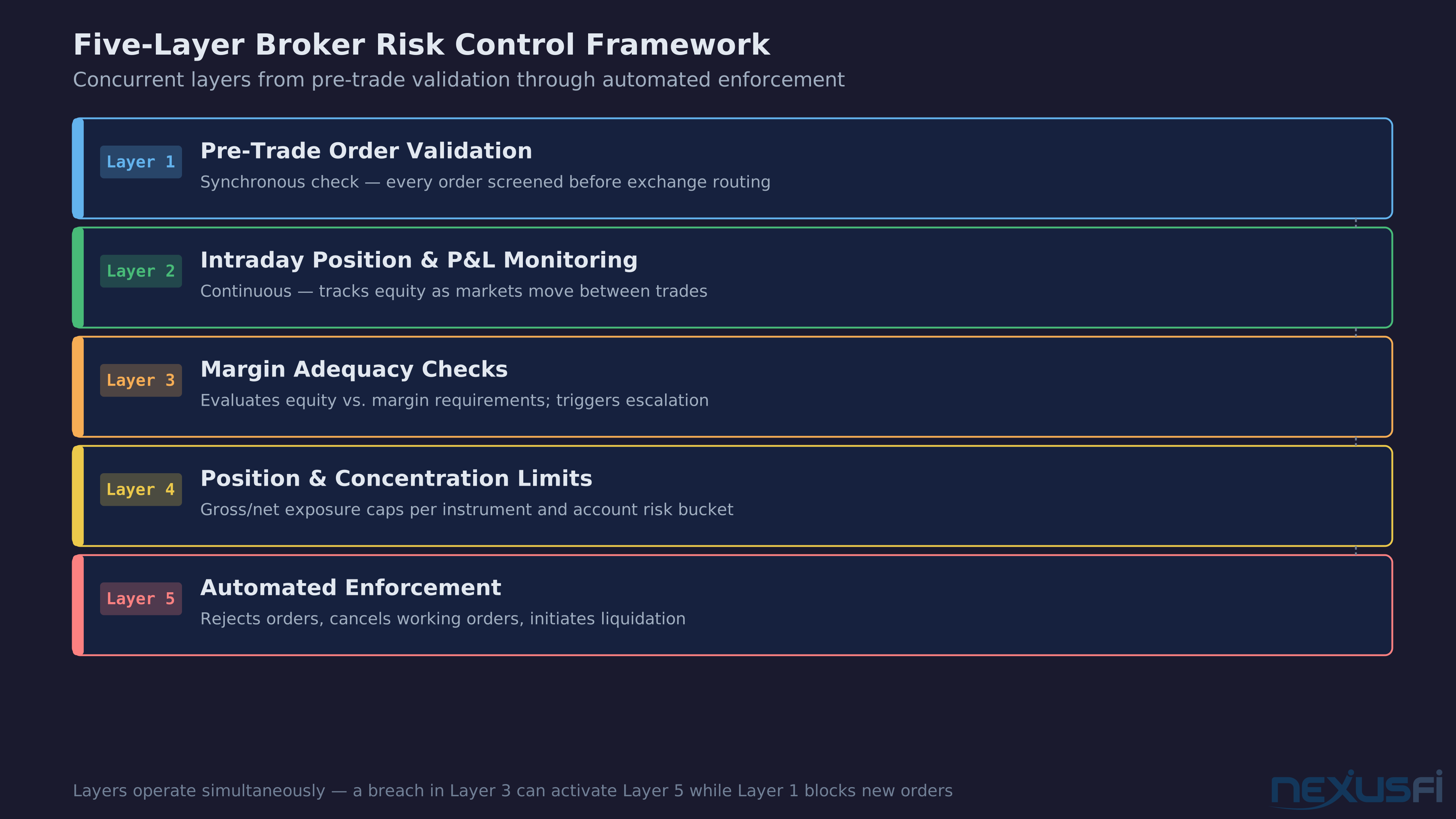
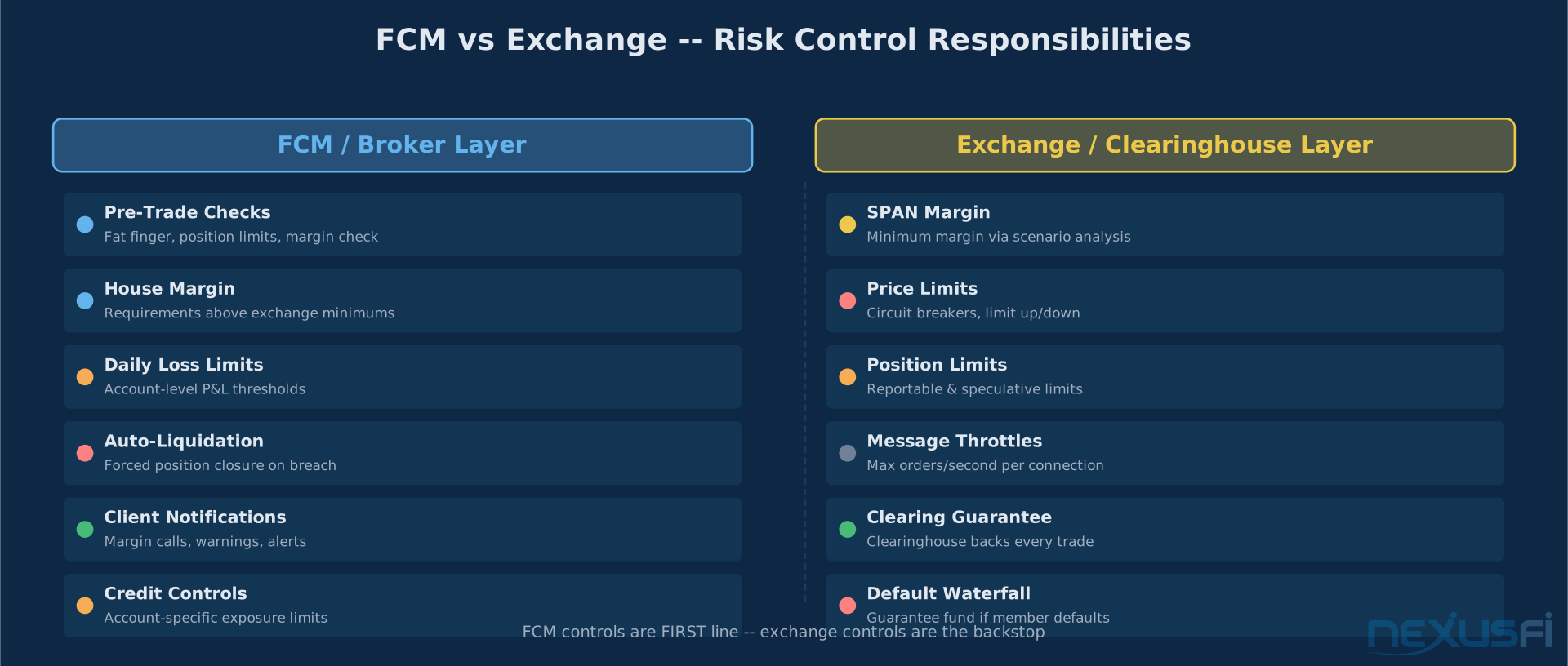
Broker risk management operates as a layered defense system. Each layer addresses different failure modes at different points in the order-to-settlement cycle.
Layer 1: Pre-Trade Order Validation — Synchronous checks before any order is accepted for routing. Every order passes through a risk engine before reaching the exchange. Orders that fail pre-trade checks are rejected before the exchange ever sees them.
Layer 2: Intraday Position and P&L Monitoring — Continuous tracking of open positions, unrealized P&L, and account equity as markets move. This layer doesn't touch individual orders; it monitors the state of your account between trades.
Layer 3: Margin Adequacy Checks — Evaluation of current equity versus current margin requirement, factoring in mark-to-market position values and house margin overlays. This layer determines when you're approaching a margin deficiency and triggers escalation protocols.
Layer 4: Position and Concentration Limits — Checks on gross and net exposure across instruments and account-level risk buckets. These limits may be exchange-mandated (for large traders) or broker-imposed as credit controls.
Layer 5: Automated Enforcement — The execution layer that acts when upper layers detect a breach: rejecting new orders, canceling open orders, and initiating position liquidation.
These layers operate simultaneously and feed each other. A large position growing adversely in Layer 2 might trigger Layer 3 checks, which activate Layer 5 liquidation while blocking new orders via Layer 1.
Pre-Trade Checks: The First Line of Defense #
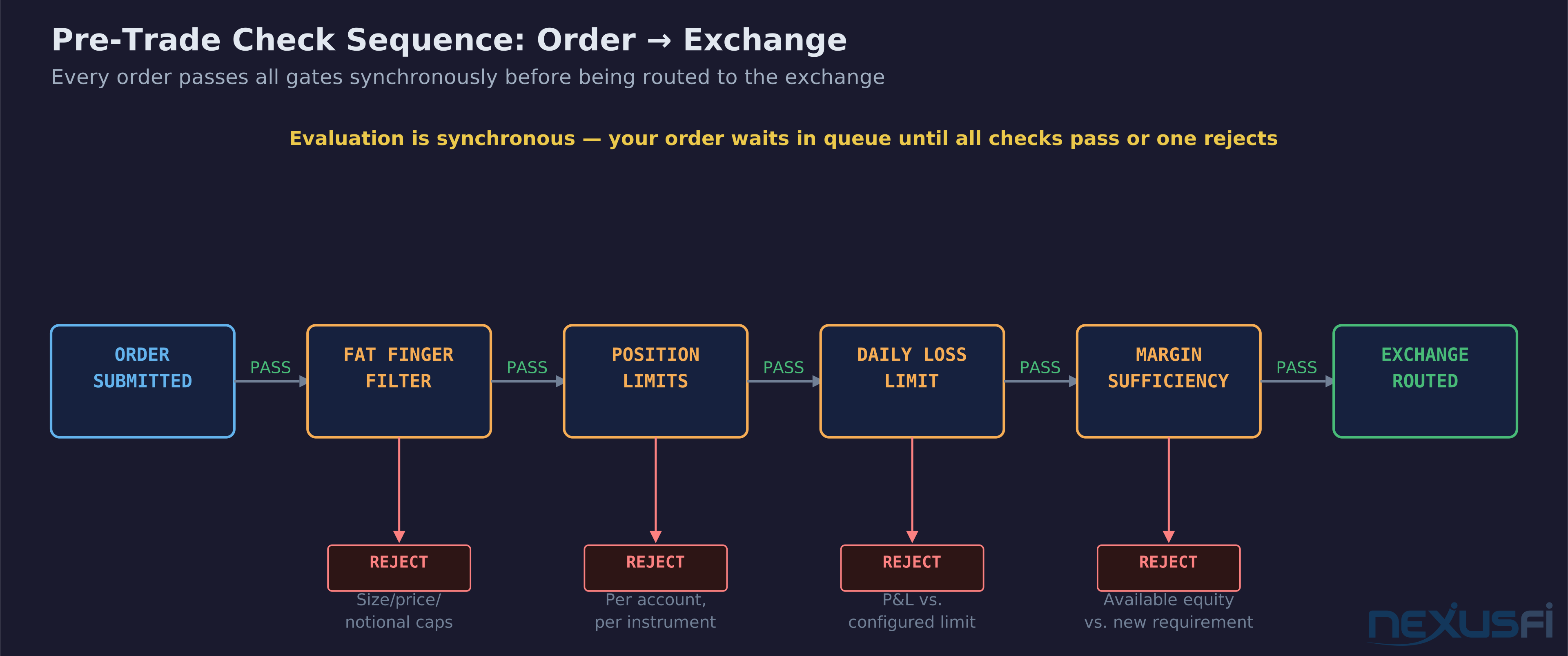
Every order your platform sends passes through a pre-trade risk engine before being forwarded to the exchange. The check sequence is fixed: fat finger validation → position limits → daily loss assessment → margin sufficiency. Any single failure stops the order.
Fat Finger Filters #
Fat finger protection catches orders that are clearly erroneous — too large, priced too far from market, or inconsistent with normal trading behavior.
Order size caps are the most common control. A broker sets a maximum number of contracts per order for each account. If you intend to buy 5 ES but fat-finger 500, the order is rejected. Caps are configurable per account and per instrument. Prop firms and CTAs with established track records often negotiate higher caps; retail accounts get conservative defaults.
Price collars (also called price bands or reasonability checks) reject orders priced too far from the current market. A limit sell order priced $500 below the market on NQ might indicate a typo — the system catches it before it can print. Most brokers apply collars of 1-5% around last traded price, with tighter bands for liquid instruments.
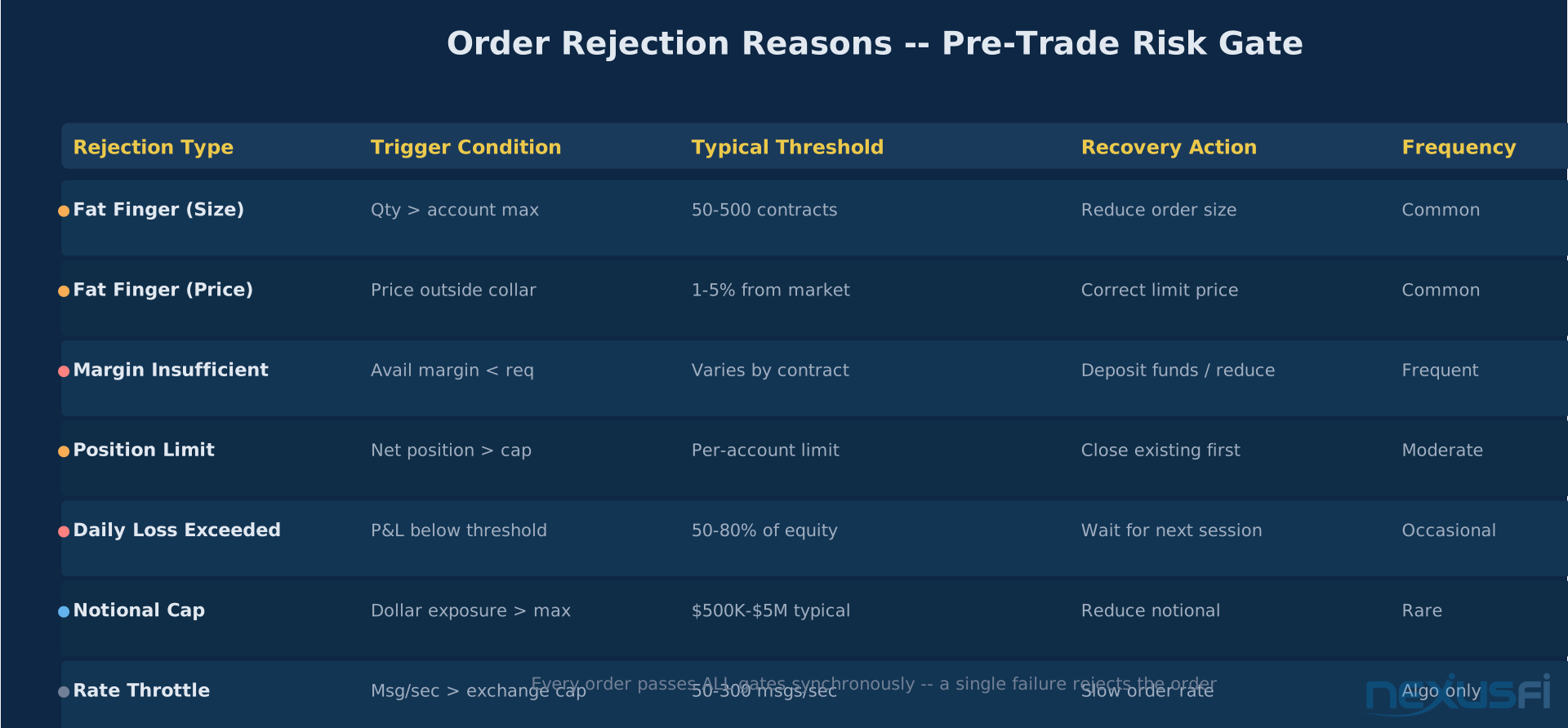
Notional value checks add a third dimension: instead of checking contract count alone, the system checks total dollar exposure. An order for 100 MES contracts might not trigger a size cap, but can trigger a notional cap because it represents significant market exposure.
Check your broker's fat finger parameters before trading unusual contract sizes. If you trade options on futures alongside outright futures positions, the combined notional exposure may trigger alerts you didn't anticipate. Call your broker and ask for the specific limits on your account — these are not always disclosed proactively.
Position Limits #
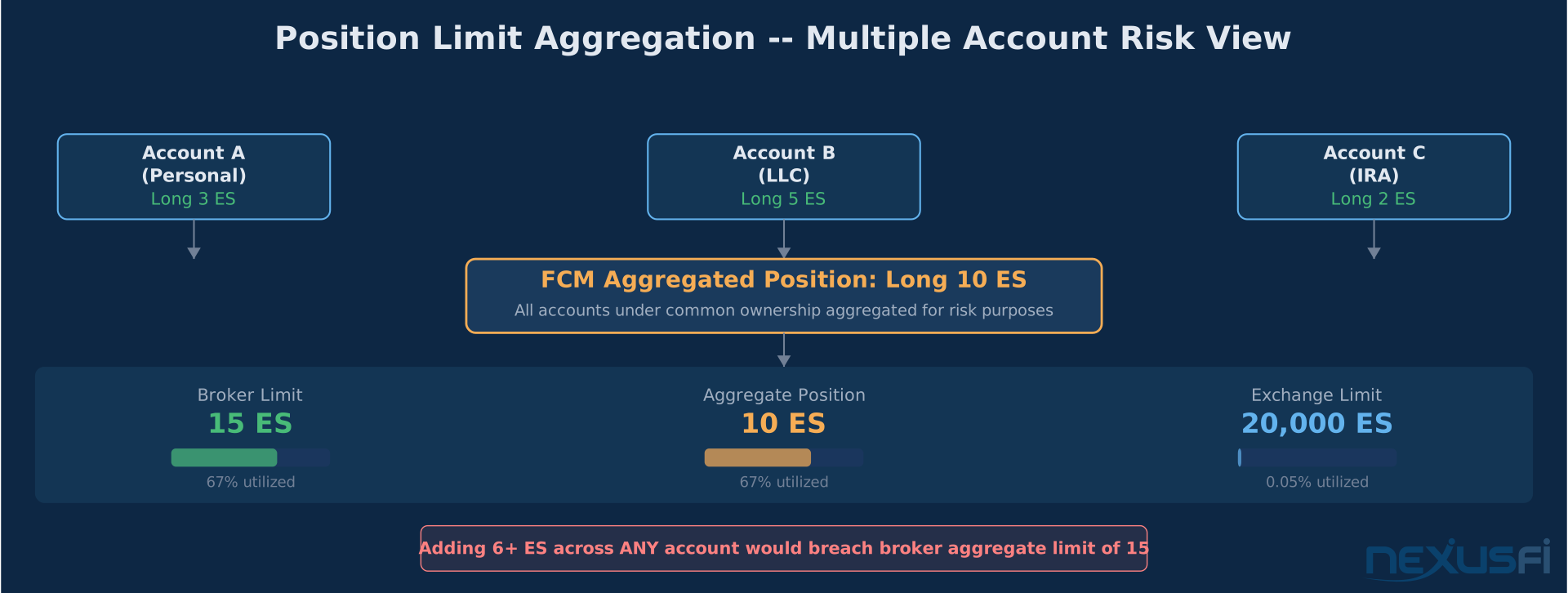
Position limits define maximum open exposure your account can carry, measured in contracts or notional value.
Broker-imposed limits are credit controls set by the FCM based on your account size, track record, and the margin requirements of the instruments you trade. These are separate from — and typically more restrictive than — exchange-mandated position limits, which apply to large traders to prevent market manipulation.
Intraday vs. overnight limits often differ much. Many brokers allow larger intraday positions (because day-trading margins are lower) but automatically block new positions approaching session end to prevent clients from carrying undercapitalized overnight positions. If you've been trading four ES contracts intraday, you might find yourself unable to add a fifth at 3:30 PM ET as the broker applies end-of-day risk tightening.
Daily Loss Limits #
Daily loss limits are among the most powerful — and most variable — pre-trade controls. When your realized plus unrealized P&L for the session falls below a defined threshold, the system either blocks new orders (soft stop) or liquidates all open positions (hard stop).
The existence and configuration of these limits varies dramatically across brokers. Some FCMs apply automatic liquidation at an account-level daily loss limit but don't disclose the specific threshold to clients. Others allow clients to configure their own limits within a maximum set by the broker.
As @sstheo discovered when asking his broker: the AMP auto-liquidate feature was set at 80% daily loss by default, was configurable, and came with a per-contract liquidation fee. The Rithmic platform's "shut it down" feature provides the same protection at the platform level — without the FCM fee — an important distinction when evaluating which layer to rely on.
The layering of daily loss limits matters: an FCM may apply its own limit, a platform like TT or Rithmic may apply an additional limit, and the trader can configure further limits within their own trading system. When they conflict, the most restrictive wins. Trading Technologies confirmed this explicitly: "It is possible that these could conflict with their own risk management settings — they might already be applying auto-liquidation to a trading account, based on their own daily limits."
Margin Sufficiency at Order Entry #
Before accepting an order, the risk engine checks whether your available margin is sufficient to cover the additional margin requirement for the new order.
Available margin = current equity (account balance + open trade equity) minus margin already in use. If a position is already running against you, your open trade equity is negative, reducing your available margin. An account that appears adequately funded at session open can become margin-constrained mid-session because existing positions have moved adversely.
Day-trading margins are your entry ticket, not your safety net. An account with $5,000 and $500 MES margins might seem to have room for 10 contracts. In practice, if 5 contracts are down $400 in unrealized losses, your effective available margin for new positions has already dropped by $400. The margin check happens at order entry with current equity, not starting equity.
Order and Message Rate Throttles #
For algorithmic traders, message throttles prevent runaway order submission from overwhelming the broker's exchange connection. CME Group and other exchanges impose their own rate limits; brokers apply additional caps. After submitting several rapid cancel-replace sequences, you may encounter orders rejected with a "throttle exceeded" error — the broker's rate limiter protecting its exchange connectivity from floods that could result in exchange-side penalties.
Margin Monitoring: The Surveillance Never Stops #
Once an order is filled and you hold an open position, a separate system takes over: the intraday margin monitoring engine. This runs continuously, re-evaluating your margin adequacy as market prices move and account equity changes.
Initial vs. Maintenance vs. Variation Margin #
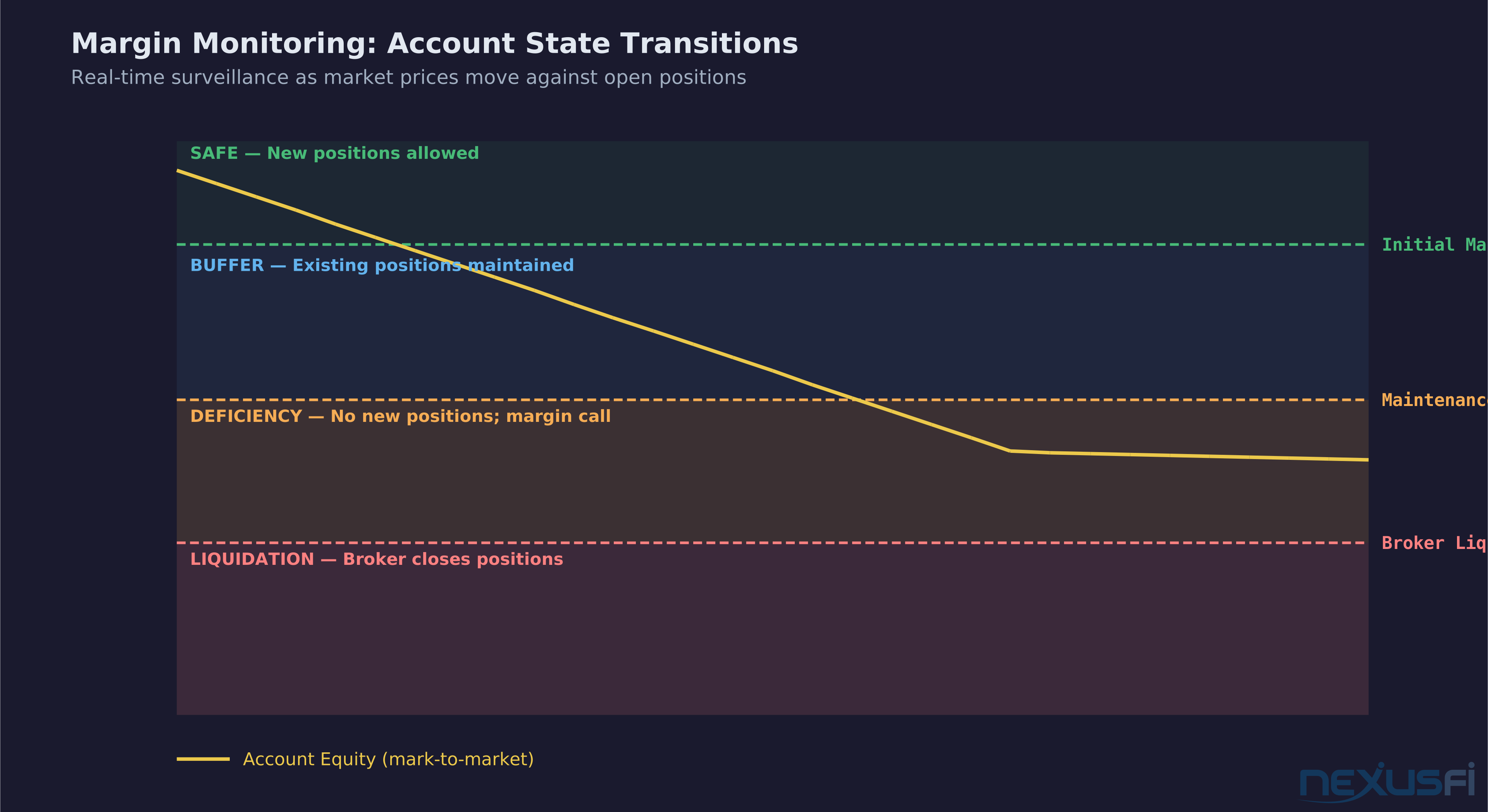
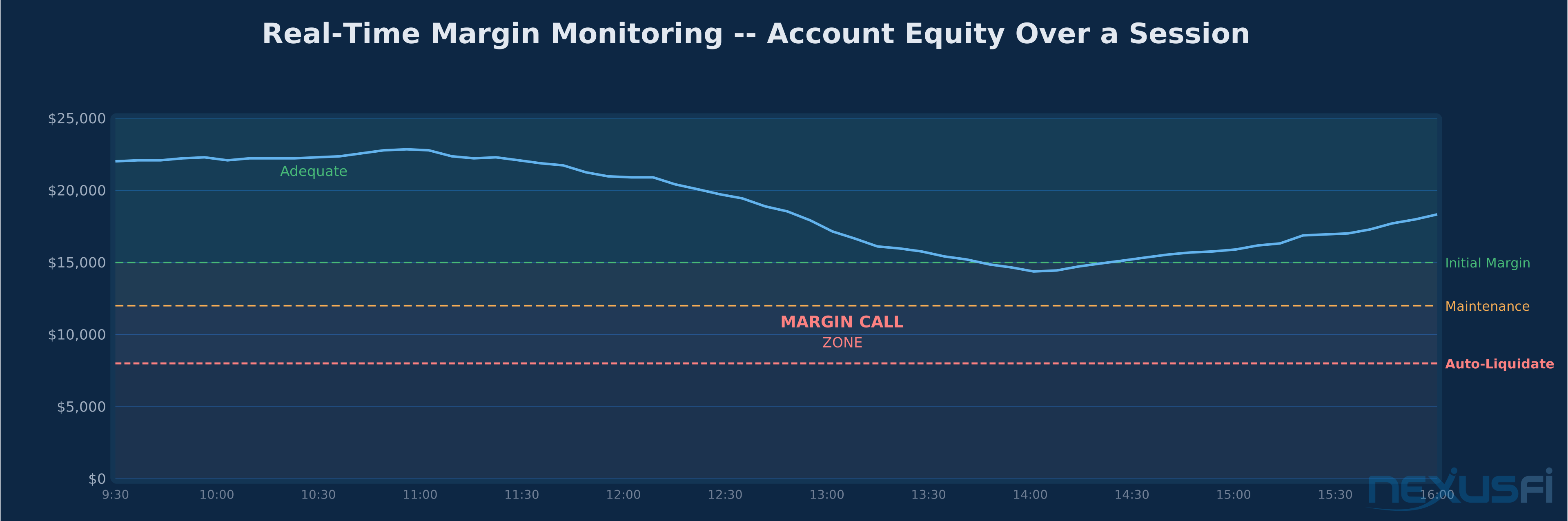
Initial margin is what you need to open a position. It's higher than maintenance because it provides a buffer — the assumption that positions won't move adversely by the full initial-minus-maintenance difference immediately after opening.
Maintenance margin is the floor for keeping a position open. If equity falls below maintenance margin for open positions, you are in a margin deficiency. The CFTC requires exchange-set maintenance margins as the minimum; brokers can set higher house requirements but not lower.
Variation margin is the intraday cash flow reflecting mark-to-market gains or losses. When the market moves against you, variation margin leaves your account continuously. A trader holding 10 ES contracts through a 20-point adverse move loses $10,000 in variation margin ($50 × 20 points × 10 contracts), and their account equity reflects this immediately — not at the end of day.
House Margin and Volatility Overlays #
Exchange-set SPAN margins are minimums. Most retail brokers apply house margin — requirements that exceed SPAN, often by 10-50% or more depending on market conditions.
More impactfully, many brokers apply dynamic intraday margin overlays during high-volatility periods. On major event days (FOMC, CPI, NFP), some FCMs temporarily increase intraday margin requirements, reduce position limits, or require positions to be closed before the announcement. Traders who rely on normal intraday margin rates may find their orders rejected during these windows. As @bobwest documented: brokers boost their intraday margins during times of high volatility, because of the higher risk of traders dropping below their required margin — and while the broker can set intraday margins freely, overnight requirements are set by the exchange.
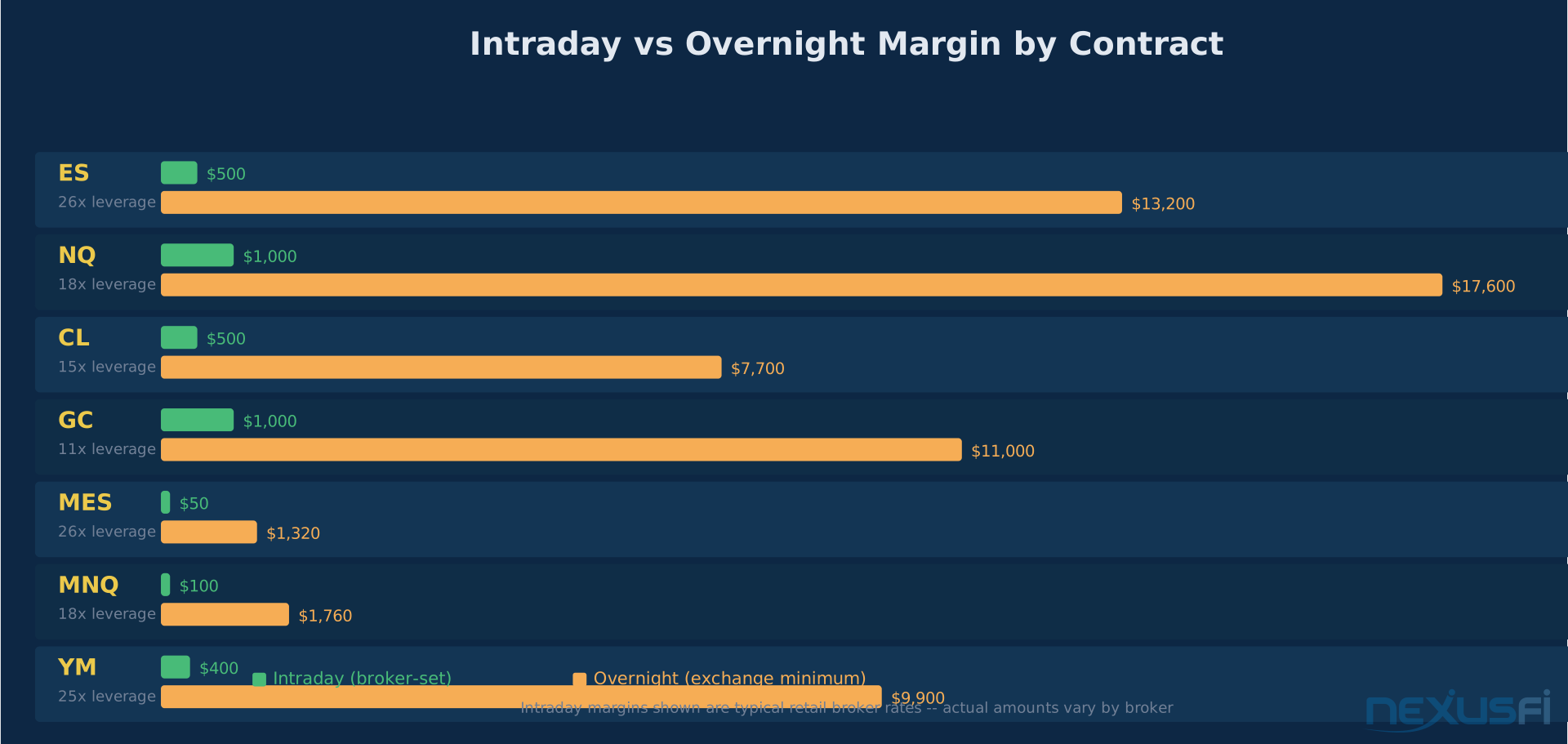
The theoretical 3-day remedy period has no practical utility at brokers with automated liquidation systems.
The IB vs. SPAN minimum gap is real and significant at scale. The community consensus — documented by @SMCJB — is that some brokers use SPAN minimums while others (notably Interactive Brokers) use much higher requirements and more aggressive liquidation. This is why experienced traders comparison-shop margin policies, not just commissions.
Margin Call Workflows #
When equity drops below maintenance margin, the broker's system generates a margin deficiency. What happens next depends on broker policy and deficiency severity.
Notification-first policies (increasingly rare for retail): The broker sends an email or in-platform alert and gives you a window — commonly 30 minutes to several hours — to deposit funds or reduce positions. Per community reports, Interactive Brokers sends liquidation notices at 3:40 PM ET and begins automated liquidation at 3:50 PM if no action is taken.
Immediate liquidation policies (increasingly common): The system automatically initiates liquidation without waiting for client response. This eliminates the risk of the account deteriorating further during a notification window.
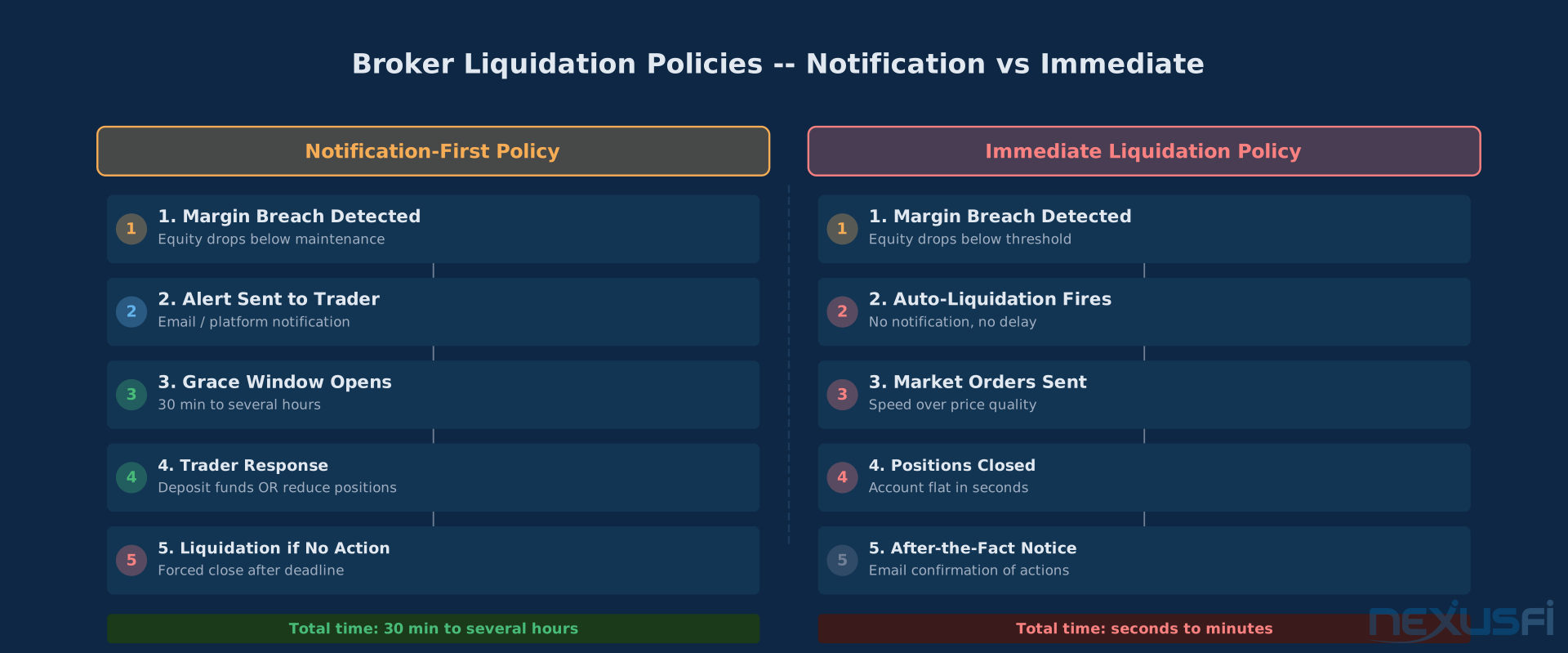
The practical difference between a "notification" broker and an "auto-liquidate" broker can be measured in thousands of dollars on a volatile session. If your account runs lean, the broker's liquidation policy is not a footnote — it is a core operating parameter. Know it before you need it.
Auto-Liquidation: When the Broker Takes Over #
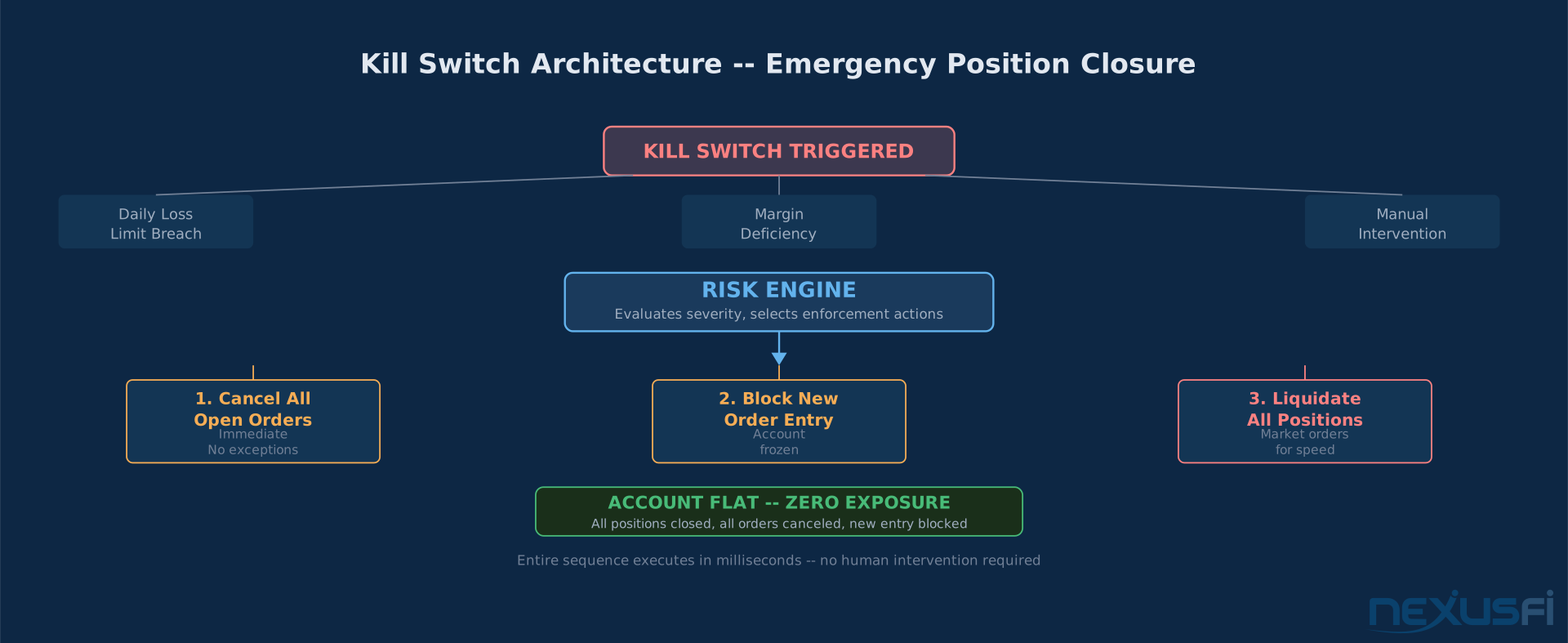
Auto-liquidation is the most consequential tool in the broker's risk control arsenal. When triggered, it overrides your intentions and removes positions at whatever price the market offers.
Trigger Hierarchy #
Most FCMs liquidate based on one or more of these conditions:
- Margin deficiency — equity below maintenance margin threshold
- Daily loss limit breach — realized + unrealized P&L below configured limit
- Position concentration breach — exposure in a single instrument or correlated group exceeding limits
- Session-end policy — positions detected as underfunded for overnight margin approaching close
- Extreme circumstances — broker-declared emergency (documented during historical market crises)
How Liquidation Orders Are Generated #
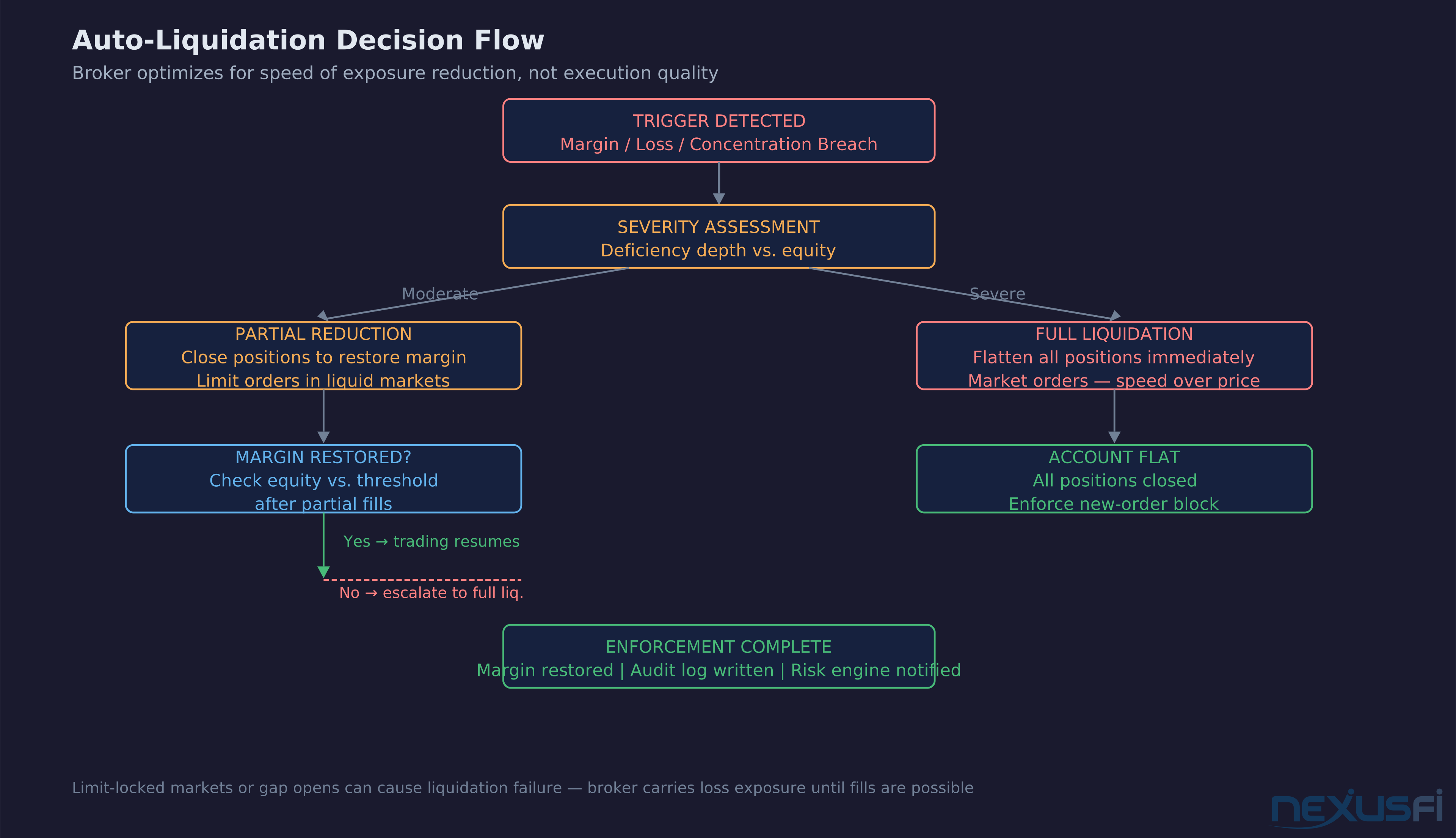
Liquidation orders reflect urgency — the broker's priority is eliminating exposure, not getting the best price.
Market orders are the typical instrument for severe deficiencies in liquid contracts. Speed of execution takes priority over price. For heavily liquid instruments like ES or NQ, fills typically happen within one tick of the bid/ask, but slippage is real and can be significant during fast markets.
Passive limit orders are sometimes used for moderate deficiencies in less liquid instruments. Posting a limit order avoids crossing the spread on potentially many contracts, but creates execution risk — if the market moves further against the account while the limit order is working, the deficiency deepens.
Liquidation during a fast market produces fills well away from last price. In a limit-locked market — where futures are trading at exchange-imposed price limits — liquidation orders may queue without filling for extended periods. A large adverse move in a thin or locked market can produce losses that exceed account equity before any liquidation executes. Traders in highly leveraged positions in illiquid contracts (agricultural and energy futures in particular) face this risk acutely.
What Gets Liquidated First #
Different brokers apply different liquidation ordering logic: most-liquid first (minimizes slippage), most-margined first (fastest route to compliance), or all-at-once (simplest to implement; most market impact for large positions). Most retail account agreements give the broker complete discretion over liquidation ordering. Traders holding multiple positions across different instruments face genuine uncertainty about which contracts will close first.
When Auto-Liquidation Fails #
Risk systems assume continuous, liquid markets. They fail in specific conditions:
Limit-locked markets: When price hits exchange-imposed limits, trading is restricted. A position needing liquidation by selling cannot execute market orders if the contract is limit-down. Liquidation orders queue and may sit for hours while losses mount.
Gap opens: Overnight gaps beyond normal ranges can create losses exceeding account equity before the market opens. If you hold a position overnight and the market gaps 5% against you at the open, your account may be deeply negative before any fill is possible. In this scenario, you owe the broker money — and the broker owes the clearinghouse.
System failures: Risk systems can fail. Connectivity losses, data feed outages, and software bugs have caused both under-enforcement (positions not liquidated when they should be) and over-enforcement (liquidations triggered incorrectly). @josh documented a real-world case where CQG's risk parameters blocked him from both entering and exiting positions, producing the error "Order is not within the risk parameters set for this firm" — and when he called the trade desk, he was put on hold for 9 minutes while his position swung through the hole and back positive. The clearing firm literally could not flatten his position.
The variation in risk monitoring sophistication across brokers is significant.
Two brokers, dramatically different enforcement models, same instruments, same market conditions.
Risk System Architecture #
The technology behind broker risk controls is a collection of interconnected real-time services.
The Order Management System (OMS) receives order requests from trading platforms, applies pre-trade checks, and routes accepted orders to the exchange. It maintains real-time state of pending orders and positions.
The Risk Engine is the decision-making core. It receives events from the OMS (fill reports, cancellations) and market data feed (live prices), continuously recalculating risk metrics for every account. Modern risk engines must process millions of events per second across thousands of accounts.
The Margin Calculator translates open positions into margin requirements using SPAN-style calculations, applying the relevant margin parameters for each instrument and producing continuous margin-adequacy assessments.
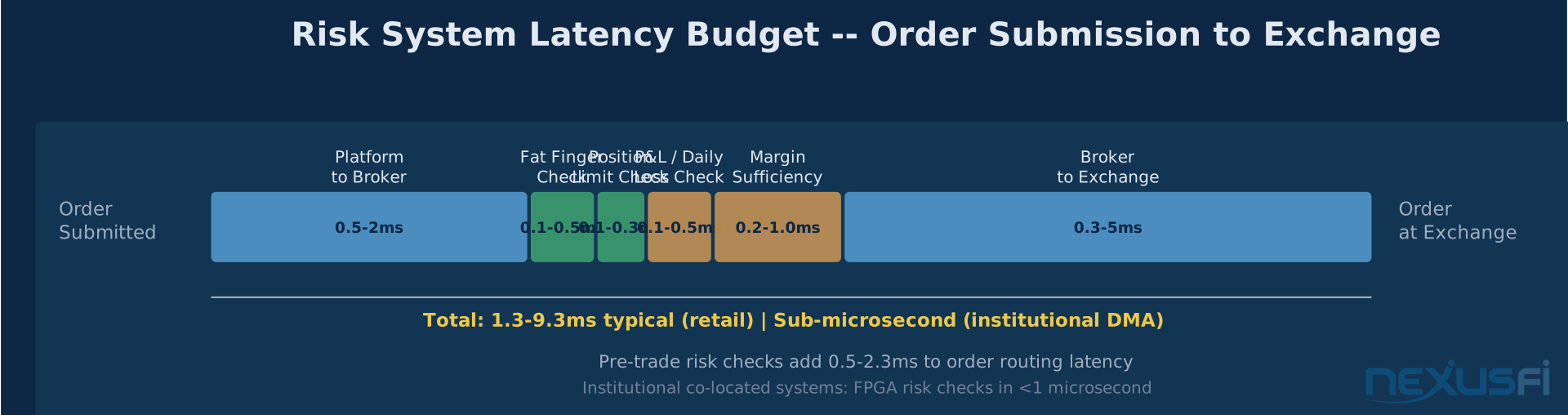
The Audit and Logging Layer records every risk event, decision, and enforcement action. This is both a regulatory requirement (CFTC mandates audit trails for FCM risk decisions) and a practical necessity for investigating disputes.
Failover and Redundancy: Production-grade risk systems are designed for high availability with automatic failover. A broker whose risk engine fails during a volatile session cannot simply pause trading — the exchange continues executing orders while the broker has lost visibility into account risk. FCMs typically run redundant risk engines and maintain manual override capabilities for supervisory staff.
Regulatory Framework #
Broker risk controls are mandated by a layered framework of federal regulations, industry rules, and exchange requirements.
CFTC Requirements #
The CFTC regulates FCMs under the Commodity Exchange Act. Key risk requirements include:
Capital adequacy: FCMs must maintain minimum adjusted net capital based on positions carried. The formula requires additional capital proportional to aggregate customer position values — creating a direct financial incentive to limit outsized customer positions.
Risk management program: NFA Compliance Rule 2-9 requires FCMs to maintain a written risk management program with controls appropriate to their business, reviewed regularly by senior management. This broad mandate shapes the implementation of pre-trade checks, margin monitoring, and liquidation protocols.
Customer fund segregation: CFTC Rule 4d requires customer funds to be kept separate from FCM proprietary funds, held in segregated accounts at approved depositories. This is the foundational capital structure within which all risk controls operate.
CME Group and Exchange Rules #
Clearing member obligations: FCMs that are clearing members of CME Group have financial commitments to the clearinghouse. If a customer's account goes negative, the FCM is obligated to fund the shortfall immediately. This obligation — which can be called intraday — is the primary commercial driver behind real-time margin monitoring.
SPAN margin methodology: CME Group uses SPAN (Standard Portfolio Analysis of Risk) to calculate initial margin requirements, using scenario analysis to estimate maximum potential loss over a one-day period. FCMs use SPAN output as the baseline for their own calculations, then apply house overlays.
NFA Self-Regulatory Requirements #
The NFA conducts annual audits of FCM operations and reviews risk management programs during examinations. NFA Bylaw 1101 and Compliance Rule 2-9 require members to maintain high standards of commercial integrity and adequate supervisory procedures.
Regulation creates the floor, not the ceiling. CFTC and NFA requirements establish minimum standards. Individual FCMs implement systems that meet or exceed those standards based on their own risk appetite and engineering resources. Two fully compliant FCMs can have dramatically different risk system sophistication.
What This Means for Your Trading #
Know Your Broker's Actual Policies #
Account agreements are often vague on specifics. The policies that matter most — at what equity percentage liquidation is automatic, whether you get notice, which positions are closed first — are frequently buried in supplementary documents or discoverable only by calling directly.
Questions worth asking your broker:
- At what equity percentage do automated liquidations begin?
- Is there a per-contract fee for broker-initiated liquidations?
- What is the end-of-day deadline for intraday positions?
- Does your risk system monitor continuously or batch at intervals?
Margin Policies Vary More Than Commissions #
Traders spend hours comparing commission rates and far less time comparing margin policies. The difference in margin requirements between brokers can mean carrying four contracts vs. six on the same capital — a 50% difference in potential P&L on winning days and a 50% difference in margin calls on losing days.
Layering Your Own Risk Controls #
Platform-level controls can supplement broker-level controls. Rithmic's per-account daily loss limits, NinjaTrader's risk management module, and TT's configurable P&L limits all provide trader-side controls that can trigger before the broker's own thresholds.
Configuring platform-side controls to trigger before broker-side controls gives you a managed decision window. If your platform halts trading when you hit 60% of your daily loss limit, you have the opportunity to evaluate before the broker's 80% limit triggers automatic liquidation — potentially with per-contract fees.
Layered risk controls work best when they escalate: platform warning at 50% daily loss → platform halt at 70% → broker-enforced liquidation at 80-100%. Configure platform controls to trigger before broker controls, giving yourself a managed decision window rather than a forced exit. Most brokers support this configuration even if they don't actively promote it.
Position Sizing and Margin Buffers #
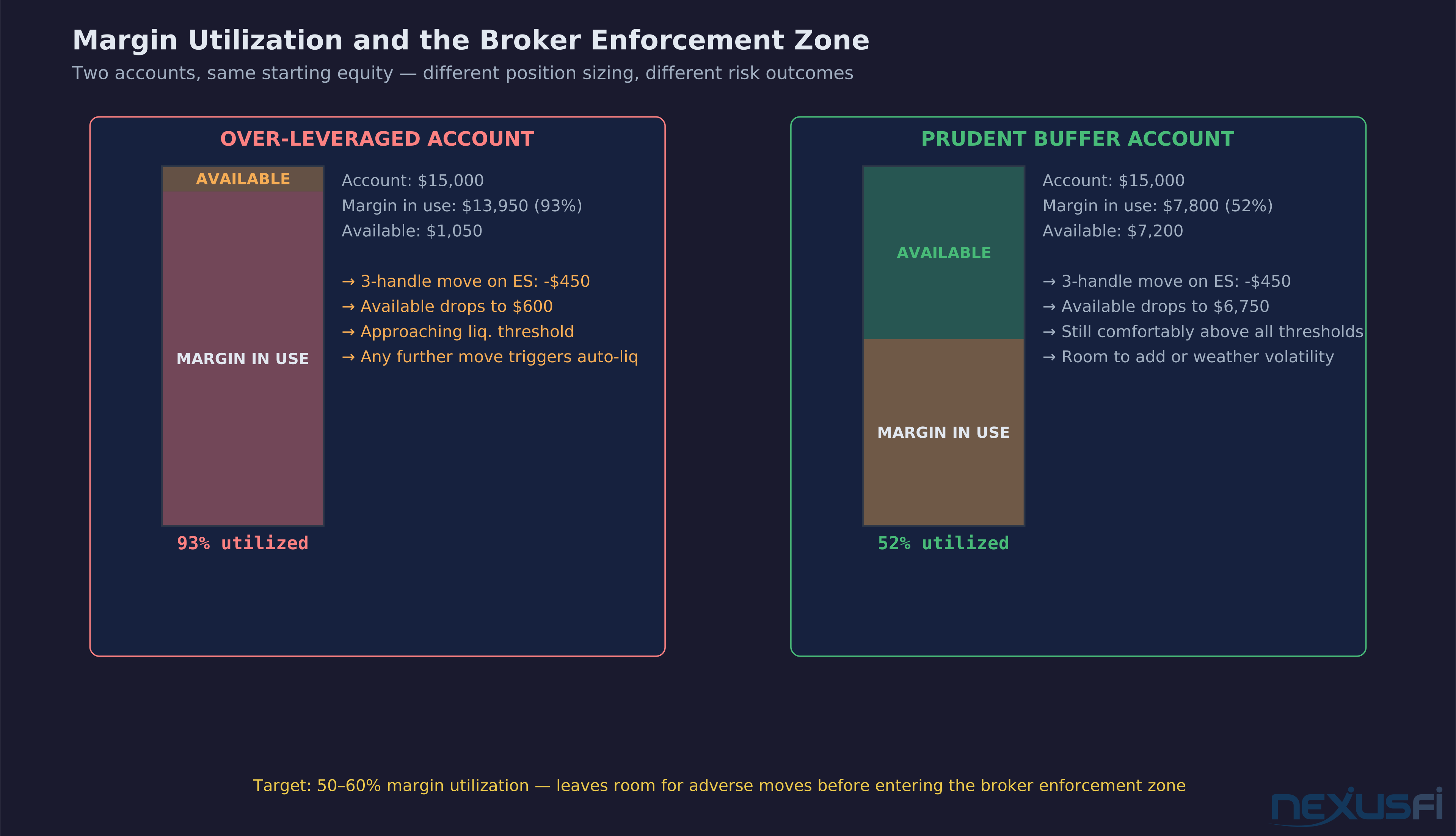
Never operate at the margin boundary. Accounts hovering at minimum margin are one adverse move away from automated liquidation — which typically happens at the worst possible moment, when you may want to be adding to a position rather than being forced out of one.
@josh's observation on the mechanics is precise: "In practice, most brokers will never let this happen and you will be automatically liquidated. For example, a broker gives $50 MES daytrade margin. You have a $1,000 account. You foolishly open 20 contracts — the max allowable. If the market moves 10 handles against you, you will have no money left and will be auto-liquidated. In practice, they will liquidate you before this, as they require a minimum buffer, probably around $500."
The maintenance buffer — the gap between maintenance margin and the equity level triggering liquidation — varies by broker and is often undisclosed. Running portfolio-level margin utilization of 50-60% leaves room for adverse moves, intraday margin changes, and volatility spikes without entering the broker's enforcement zone.
Knowledge Map
Prerequisites
Understand these firstReferences This Article
Articles that build on this topicCitations
- — Futures Margin Leniency (2023) 👍 3“The consensus opinion is that IB have some of the highest margin requirements and some of the most aggressive liquidation policies. You need one that uses SPAN minimums.”
- — Risk of trading micro futures (2020) 👍 3“In practice, most brokers will never let this happen and you will be automatically liquidated. They will liquidate you before this, as they require a minimum buffer, probably around $500.”
- — Making a Living with the Micros (2021) 👍 2“I asked my AMP broker about the auto liquidate feature. YES, they have one. At 80% loss on the day! They will charge you a liquidation fee for each contract.”
- — AMP Futures unable to set risk limits in TT Platform (2016) 👍 2“It is possible that these could conflict with their own risk management settings -- they might already be applying auto-liquidation to a trading account, based on their own daily limits.”
- — End of trading day Liquidation Notices from Major Brokers (2018) 👍 1“The broker won't be sitting there trying to get the best exit price for the client, they will just be exiting as quickly as possible. The trade risk has transferred from the client to the broker.”
- — Question about intraday margins (2021) 👍 4“Some brokers will just auto close your position, some might give you an hour to add funds. You should talk to your broker for details.”
- — New user, what do I need? It's craaazy. (2021) 👍 2“With my FCM, Rithmic seems to download the risk data once per 24 hours or at login. In the case of IBKR, risk does seem to be polled before every transaction.”
- Futures Industry Association (FIA) — Automated Trading Risk Controls White Paper (2024)
- CFTC — Risk Management Requirements for Derivatives Clearing Organizations (2015)
- — Margins for MES (2020) 👍 4“Brokers also boost their intraday margins during times of high volatility, because of the higher risk of traders dropping below their required margin. The broker can set the intraday margin, but if you are holding after that, it is up to the CME.”
- — The HSI Index Futures Scalping Experiment (2020) 👍 5“Trade Order Error - CQG order update. Status: REJECTED. Text: Order is not within the risk parameters set for this firm. When I called the trade desk, I was put on hold for 9 minutes while I went into the hole and then back positive on my position.”