



Kansas City Hard Red Winter Wheat (KE) Futures: The Complete Trading Guide
Overview #
Kansas City Hard Red Winter Wheat (KE) futures are the benchmark contract for the most widely grown wheat class in the United States. If you've eaten bread, tortillas, or pizza in America, you've eaten hard red winter wheat. KE futures trade on the CBOT (CME Group) and physically deliver into approved Kansas City-area warehouses — the geographic heart of the U.S. wheat belt.
The contract trades in 5,000-bushel increments at quarter-cent ticks ($12.50/tick), following a March/May/July/September/December expiration cycle. Chicago traders often use ZW as their wheat proxy, but KE is a at the core different market: different wheat class, different end-use industry, different export competitors, and different price drivers. Getting them confused is one of the most common — and most costly — mistakes in grain trading.
The one-sentence distinction: KE is Hard Red Winter wheat for bread flour; ZW is Soft Red Winter wheat for crackers and cakes — same grain family, completely different protein specifications, different growing regions, different customers, and a persistent price premium that fluctuates from 15 cents to 150+ cents per bushel.
Hard Red Winter Wheat: What It Is #
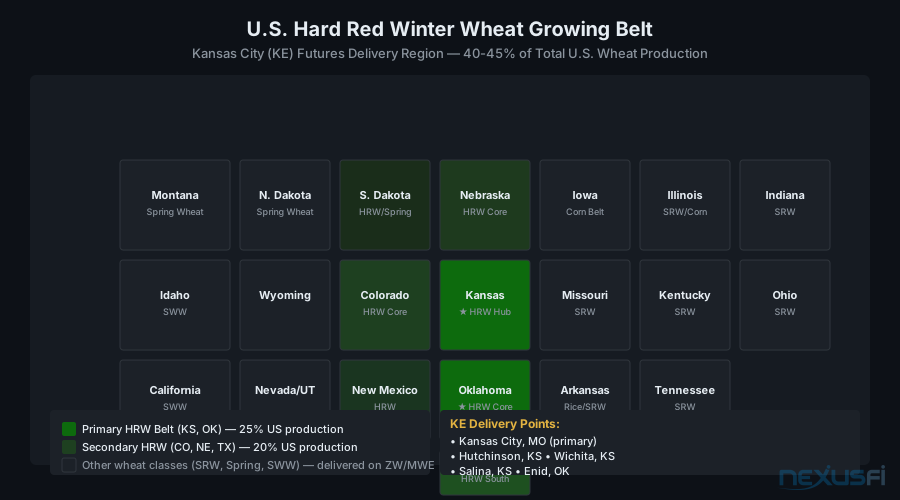
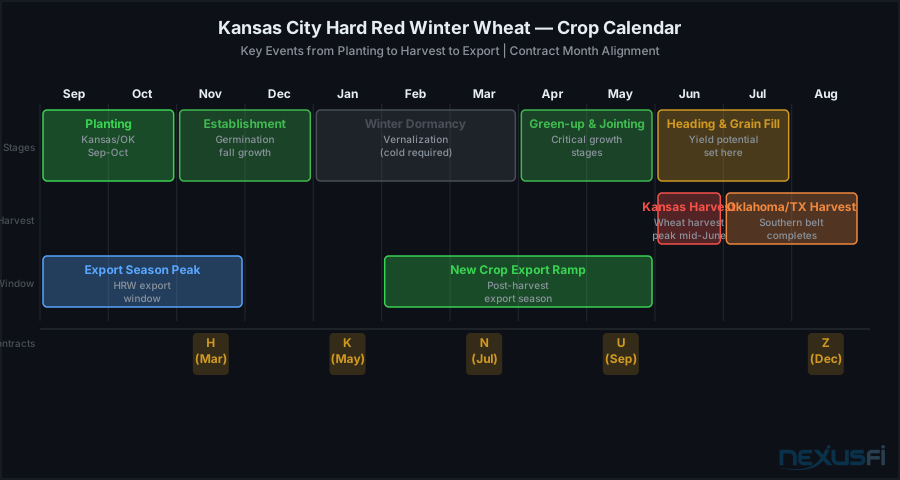
Hard Red Winter (HRW) wheat is planted in fall (September-October) across the Southern and Central Plains, survives winter dormancy through cold-induced vernalization, resumes growth in spring, and harvests in June. Kansas, Oklahoma, Texas, Nebraska, and Colorado collectively produce 40-45% of total U.S. wheat output — all Hard Red Winter class.
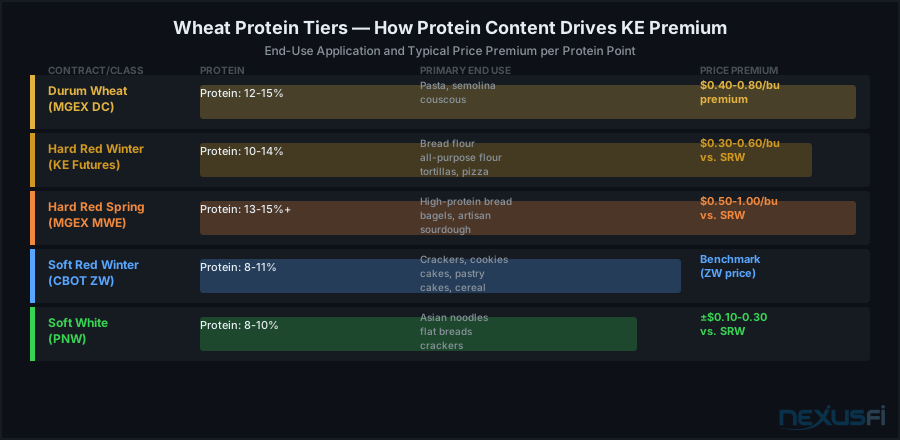
The "hard" designation means high protein content: typical HRW runs 10-14% protein, sometimes higher. Protein is the key characteristic that determines end use. High-protein flour forms strong gluten networks needed for bread that rises. The milling industry pays protein premiums — literally cents per bushel per protein point above base specification — which flows directly into the futures price through the basis relationship between local elevator prices and KE futures.
The major end uses of HRW wheat:
- Bread flour -- sandwich bread, artisan loaves, rolls
- All-purpose flour -- the most common household flour blend
- Tortillas and flatbreads -- HRW is the primary wheat for the large U.S. Hispanic market
- Pizza dough -- medium-protein HRW provides the right balance of chew and crispness
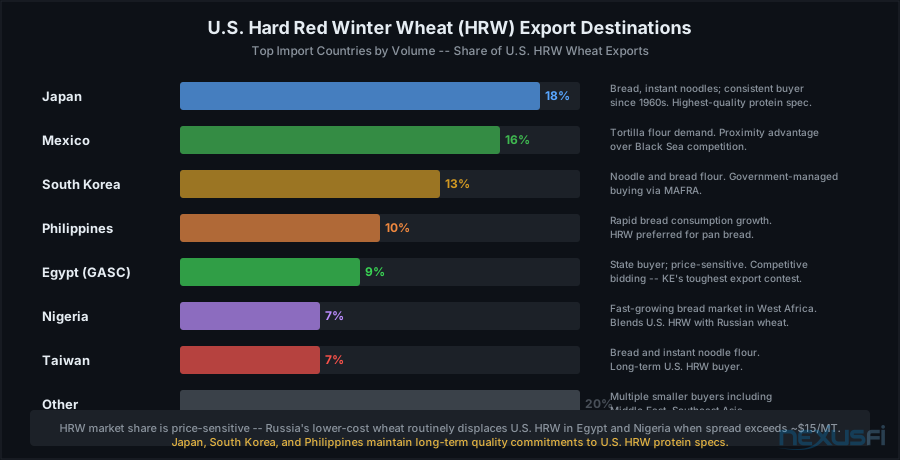
- Export markets -- Japan, Mexico, South Korea, Philippines, and Middle Eastern countries import U.S. HRW for domestic milling
The contrast with Chicago wheat (ZW, Soft Red Winter) is stark. SRW runs 8-11% protein and is milled into soft flour for crackers, cookies, cakes, and pastries — applications where gluten development would be a defect. Different industrial customers, different protein specs, different geographic production base, and different export competitors.
Contract Specifications #
Understanding the mechanics before you trade:
- Symbol: KE (formerly KC on legacy platforms)
- Exchange: CBOT, CME Group (moved from Kansas City Board of Trade in 2012)
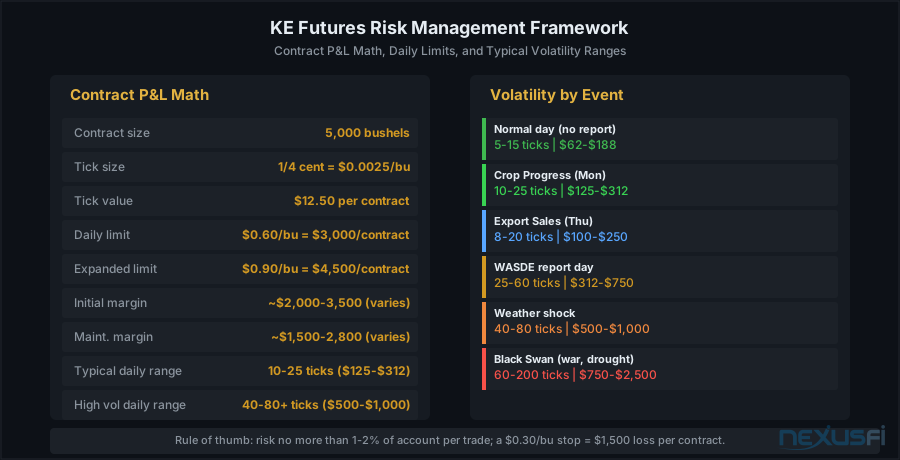
- Contract size: 5,000 bushels
- Price quotation: Cents and quarter-cents per bushel (e.g., 645.25c = $6.4525/bu)
- Minimum tick: 1/4 cent/bu = $12.50 per contract
- Trading months: March (H), May (K), July (N), September (U), December (Z)
- Daily limit: $0.60/bu above or below previous settlement = $3,000/contract
- Expanded limit: $0.90/bu = $4,500 if any contract settles at limit two consecutive days
- Settlement: Physical delivery
- Delivery grade: No. 2 Hard Red Winter, minimum 12% protein, or substitutions with premium/discount
- Delivery points: Approved warehouses in Kansas City MO, Hutchinson KS, Wichita KS, Salina KS, Enid OK
- Last trading day: Business day prior to the 15th calendar day of the contract month
The physical delivery mechanism is important: most traders close positions before first notice day, but the delivery structure connects KE futures prices to actual cash wheat prices in the Southern Plains, creating a reliable arbitrage relationship between futures and the physical market.
The KE-ZW Quality Spread #
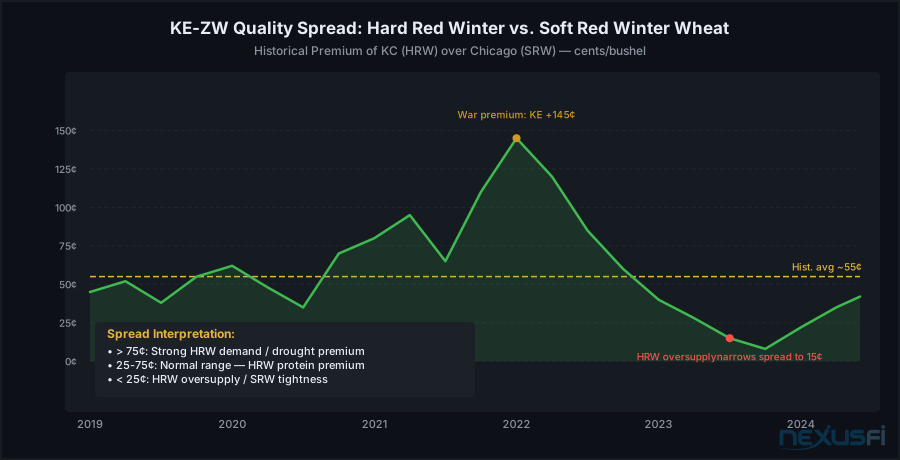
The spread between KE and ZW futures — consistently one of the most watched inter-commodity relationships in grain markets — directly prices the protein premium of HRW over SRW wheat. Historically this spread averages around 55 cents/bushel, though it has ranged from under 10 cents to over 145 cents during extreme supply-demand imbalances.
The spread widens when:
- Drought develops specifically in the Southern Plains (Kansas/Oklahoma) while Midwest conditions remain normal
- Export demand for HRW protein quality is elevated (strong Middle East/Asian buying)
- Black Sea HRW supply is disrupted (Russian quotas, sanctions, poor harvest)
- U.S. HRW crop quality concerns emerge during grain-fill (May-June)
The spread narrows when:
- Kansas and Oklahoma produce large HRW crops while Chicago-area SRW supplies tighten
- Russian/Australian HRW competes directly with U.S. in export markets, capping KE relative to ZW
- Protein premiums compress as global milling demand weakens
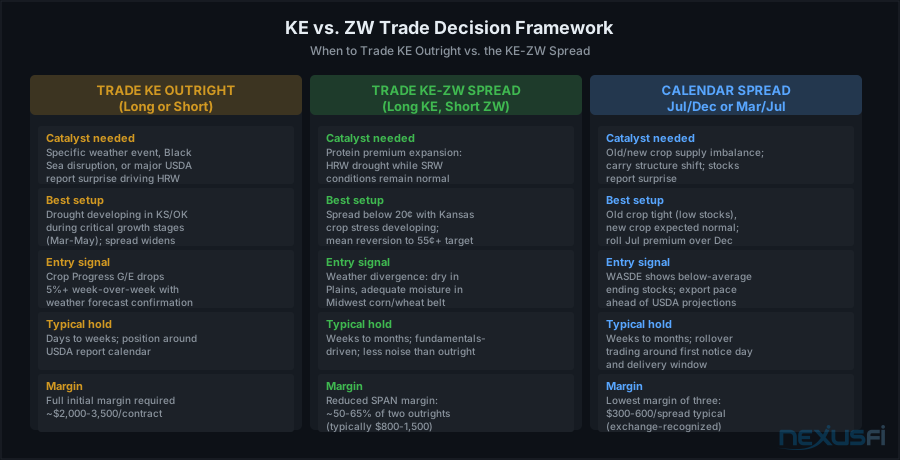
The KE-ZW spread benefits from this same exchange-listed efficiency — reduced SPAN margin (typically 50-65% of two outright margins) reflects the exchange's recognition that the contracts move together, just at different rates.
Spread reading practical example: When KE July is trading at 640c and ZW July is at 595c, the spread is +45c — below historical average. If the March WASDE showed tight U.S. HRW ending stocks while SRW stocks were ample, and Kansas crop conditions are deteriorating, that 45c spread would be a candidate for a long spread trade (buy KE, sell ZW) targeting a return to 60-70c. The position profits if KE outperforms ZW regardless of the outright wheat direction.
Key Price Drivers #
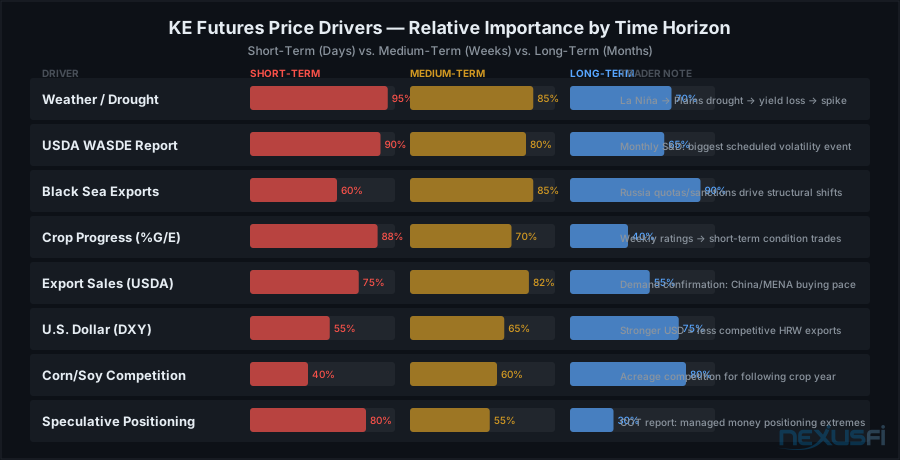
Weather -- The Primary Short-Term Trigger
No factor moves KE faster or more reliably than Plains weather during critical growth stages. The crop calendar runs from fall planting (September-October) through spring green-up (February-March), jointing and heading (April-May), and harvest (June). Each phase has distinct weather sensitivities:
- Fall establishment: Adequate soil moisture at planting determines stand establishment. Dry falls delay germination and reduce tiller counts heading into winter.
- Winter survival: HRW needs cold for vernalization but is vulnerable to extreme cold without snow cover. Polar vortex events without insulating snow can cause significant winterkill.
- Spring green-up: Wet or frozen conditions in February-March delay the critical tillering stage. Late freezes after green-up can destroy emerging head development.
- Grain fill (May-June): This is the most price-sensitive period. Hot, dry conditions during grain fill reduce both yield and protein percentage simultaneously -- the worst outcome for KE. A week of 100F temperatures in Kansas in May can cut yield by 20-30%.
The La Nina/El Nino cycle has strong predictive value for Southern Plains moisture. La Nina patterns (cooler Pacific) correlate with drought in Kansas and Oklahoma during winter and spring, historically one of the strongest macroclimatic indicators of KE price strength.
USDA WASDE Report
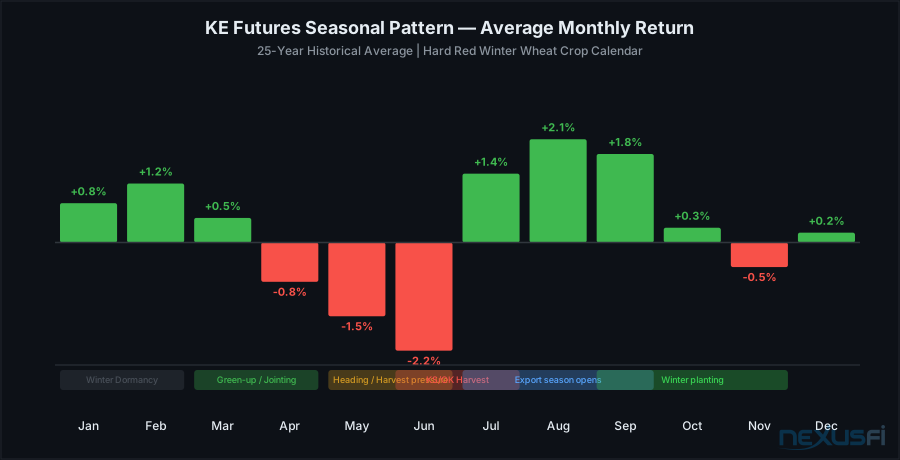
The World Agricultural Supply and Demand Estimates (WASDE), released monthly around the 11th by USDA, is the single most important scheduled event for grain traders. For KE specifically, the key WASDE numbers are:
- U.S. wheat production estimate: Yield times harvested acres; the headline output number
- U.S. HRW beginning stocks / ending stocks: Balance sheet tightness drives price level
- U.S. wheat exports: USDA forecast vs. actual export sales pace
- World wheat production and ending stocks: Global supply context caps or extends U.S. rallies
- Russia production estimate: The most important "foreign" number in any U.S. wheat WASDE
WASDE moves KE 25-60 ticks ($312-$750 per contract) on average when the numbers diverge much from the pre-report trade estimate. The key pre-report survey numbers — collected by Reuters, Bloomberg, and AgriVisor — set the market's implicit expectation. Trade the deviation from the average estimate, not the absolute number.
As @myrrdin laid out in the Grains and Beans thread (2020), the core fundamental framework for grain markets tracks: "Supply and Demand world-wide, Weather in the US, in South Americas and the former Soviet Union... prices of related grains (wheat, as it competes in the feed market; soybeans, as they compete for acreage), COT data." The WASDE synthesizes all of these inputs into a single monthly release.
Black Sea Export Competition
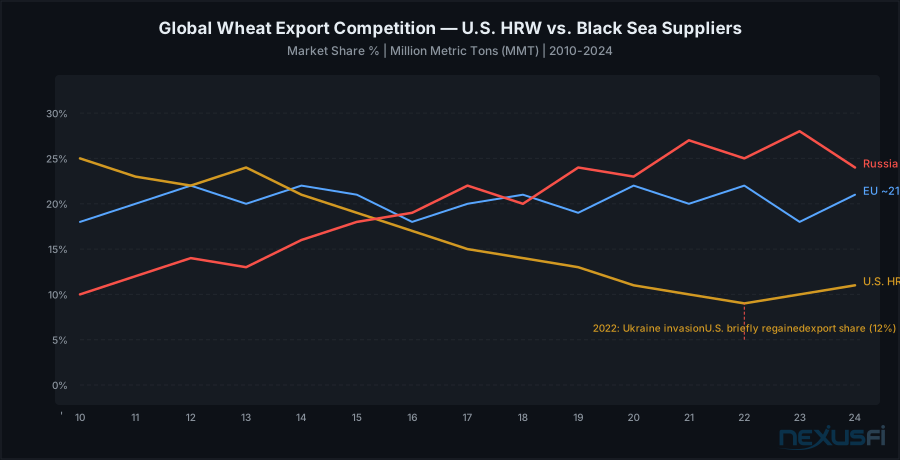
The structural story in KE over the past decade is U.S. market share erosion. From roughly 25% of global wheat exports in 2010, the U.S. has declined to approximately 11% by 2024 as Russia expanded from 10% to 25%+ market share. Russia, Ukraine, and the EU now collectively supply 60%+ of global wheat trade.
This matters for KE traders because:
- U.S. HRW only rallies sustainably when Black Sea supply is disrupted -- Russian export quotas, sanctions, geopolitical events, or poor harvest years.
- When Russia has a bumper crop, U.S. HRW faces stiff price competition in the Middle East and North African markets that are traditional U.S. customers.
- Russia frequently imposes export quotas in years when domestic prices rise -- these quotas are sharp price catalysts for KE.
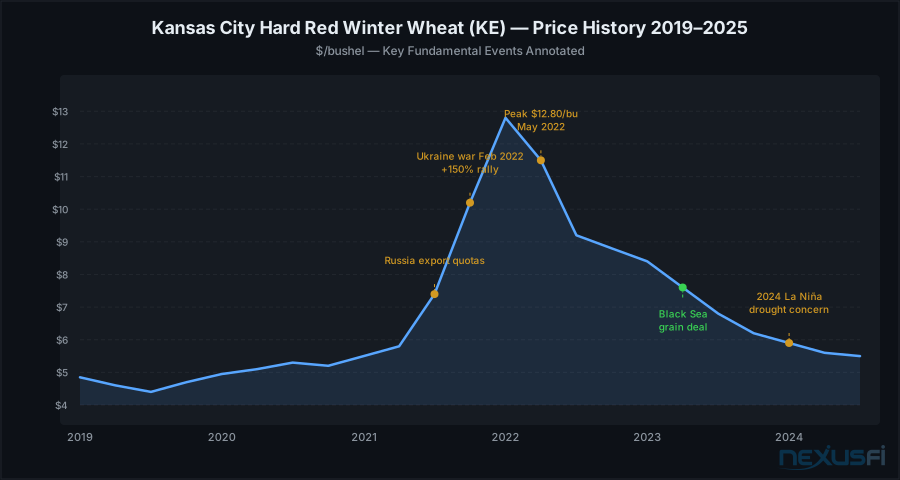
- The 2022 Ukraine war caused the most dramatic KE rally in decades (from $6/bu to $12.80/bu) precisely because both Russia and Ukraine are major suppliers, and both appeared simultaneously threatened.
Practical implication: before building a large long KE position based on U.S. weather concerns, check the IKAR (Russian grain consultancy) and SovEcon estimates for the Russian crop. A bullish U.S. story combined with a bearish Russian crop story creates the strongest sustained uptrends in KE.
Export Sales and Inspections
USDA releases weekly export data that together tell the story of actual HRW demand:
- Export Sales (Thursday, 8:30am ET): Net new export sales commitments for the week. The key question: is the sales pace running ahead or behind USDA's annual export forecast? If pace is running 15%+ above the USDA projection pace, upward revisions are likely in the next WASDE.
- Export Inspections (Monday, 11am ET): Physical grain inspected and weighed at port -- confirms that previous sales commitments are actually being shipped. A sustained gap between sales and inspections signals storage or transportation issues.
The destination matters as much as the total. Japan, South Korea, and the Philippines are committed quality buyers of U.S. HRW protein specs; Egypt's GASC tenders are price-sensitive and routinely switch to Russian wheat when the price spread exceeds around $15/MT. Large week-over-week sales to Egypt, Japan, Mexico, or South Korea — the primary HRW import markets — validate the demand thesis. Unexpected Chinese buying is the most bullish surprise possible for KE.
The U.S. Dollar
U.S. wheat competes in global commodity markets priced in dollars. When the DXY strengthens 1%, U.S. wheat becomes roughly 1% more expensive for foreign buyers, all else equal. This relationship is non-trivial over multi-week horizons: DXY rallies from 100 to 108 (8%) over three months create meaningful headwinds for U.S. export competitiveness that compress KE's price ceiling.
Practical implication: before establishing a bullish KE thesis based on weather or demand, check whether the dollar trend is working for or against the setup. Bullish KE fundamentals + weak dollar = high conviction setup. Bullish KE fundamentals + strong dollar = lower conviction, reduced position size.
USDA Crop Progress and Condition Reports #
Every Monday at 4:00pm ET during the growing season, USDA releases the Crop Progress report — the most actionable weekly indicator for short-term KE positioning. The report provides state-by-state ratings across five condition categories: Very Poor (VP), Poor (P), Fair (F), Good (G), and Excellent (E). Traders focus on the combined G+E percentage.
The historical relationship between G+E ratings and KE price:
- G+E consistently above 50%: crop developing normally, minimal weather premium in futures
- G+E falling from 55% to 40% over 3-4 weeks: early stress signal, initial weather premium emerges
- G+E below 35% with hot/dry forecast: active drought trade, significant premium pricing begins
- G+E below 25%: severe crop stress; KE carries major weather premium
A single week's reading is rarely actionable. The trend over three or more weeks, combined with the weather forecast for the following two weeks, determines whether a condition change is transient or developing into a structural yield threat. A 5-point drop in one week of good growing-season weather usually self-corrects; a 5-point drop with a two-week drought forecast does not.
Context matters: compare the current reading to the 5-year average for the same calendar week. A 52% G+E rating in mid-March that is 8 points below the 5-year average for that week is bearish; the same reading in a year when average is 47% is neutral.
Seasonal Patterns in KE Futures #
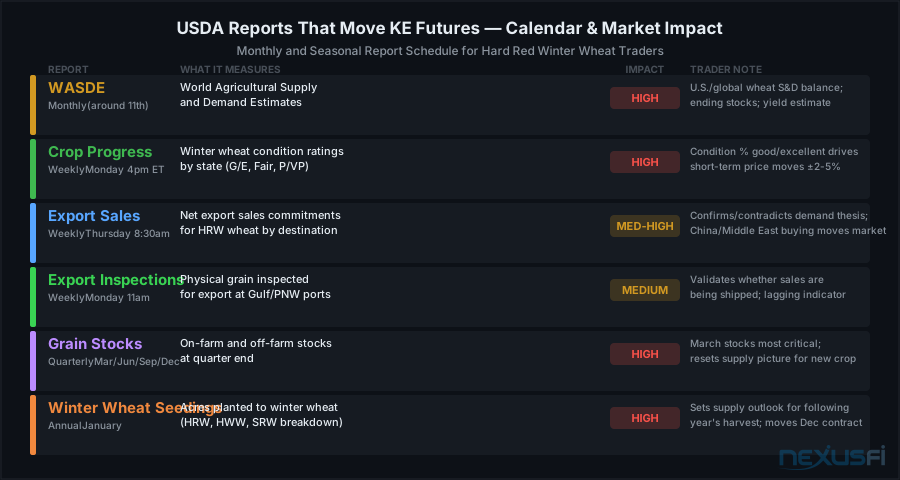
KE futures follow a recognizable seasonal calendar rooted in the crop cycle:
- September-October (planting): New-crop December contract reacts to fall moisture conditions and planting progress. Dry falls can create brief weather premium; wet falls are bearish.
- November-January (dormancy): Trading volume and volatility typically decline. Cold snaps without snow cover can temporarily spike March contracts.
- February-March (green-up): Volatility picks up as dormant crop breaks dormancy. Spring freeze events after green-up generate the sharpest short-covering rallies of the year.
- April-May (heading -- critical period): The most important fundamental window for KE. Crop Progress releases dominate price action. Every weather model run matters. Speculative position concentration peaks.
- June (harvest): Kansas harvest typically begins mid-to-late June. Harvest pressure often creates a seasonal low as supplies move to elevator. July futures go to delivery.
- July-August (post-harvest): Classic seasonal low-to-rally pattern as the market digests harvest results and turns attention to export pace. August historically shows the strongest positive seasonal bias.
- August-November (export season): U.S. HRW moves most actively to export customers during this window as Southern Hemisphere competition (Australian wheat) hasn't entered the market yet. Strong export sales lead to basis strengthening and KE futures support.
— and the historical data for KE confirms this. The pre-harvest pressure into June followed by the post-harvest rally into August has repeated with enough consistency to inform entry timing on fundamental setups.
How to Trade KE Futures #
Outright Directional Trades
The simplest approach is a directional long or short in KE based on a fundamental view. A drought developing in Kansas and Oklahoma in April-May is a bullish thesis. A large Russian wheat crop forecast combined with strong U.S. HRW production is bearish. The trade is as simple as it sounds, but requires:
- A trigger: Weather, USDA report, or export news that other traders aren't fully pricing
- A time frame: Is this a one-week weather trade or a three-month supply-demand trade?
- A stop: Most practitioners place stops at the prior week's support/resistance or at a specific weather/WASDE outcome that would invalidate the thesis
- A plan for WASDE day: WASDE releases within your holding period? Size down before release, or close and re-enter after
— (Reminiscences of a Bean Trader). This core-plus-tactical structure works well in KE: carry a fundamental position through the seasonal, scalp the weekly Crop Progress reaction.
Typical outright position sizing for a professional futures trader in grains: 1-5 contracts per $100,000 in trading capital for a short-term weather trade; 1-2 contracts for a fundamental position held through a WASDE cycle. Retail traders should start with one contract and understand that $0.30/bu stop = $1,500 loss per contract.
KE-ZW Quality Spread
The quality spread trade (long KE, short ZW) is the most structurally interesting trade in wheat markets. You're not betting on wheat going up or down; you're betting on the protein differential between HRW and SRW widening or narrowing. The thesis is almost always at the core driven:
- Long KE-ZW: Southern Plains drought developing while Midwest crops remain normal. HRW tightening while SRW remains adequate. Spread below historical average and reverting.
- Short KE-ZW: Large HRW crop expected, small SRW crop. Spread at historically wide levels. Black Sea supply returning after disruption.
The spread requires understanding both markets. A trader who understands HRW fundamentals but is unfamiliar with SRW dynamics can get caught in a situation where the spread moves against them because of SRW-specific developments (winter flooding in Ohio or Illinois, for example) that have nothing to do with their Kansas thesis.
— highlighting that spread-specific broker infrastructure makes a real difference in execution quality for inter-commodity positions.
Calendar Spreads
KE calendar spreads trade the supply-demand structure between contract months. The most common:
- Old crop/new crop (July/December): Trades the relationship between the crop being harvested and the crop being planted. When current HRW stocks are tight and harvest is going well, July premium narrows or inverts over December. Tight old-crop inventory shows up as July premium; ample stocks create carry (December discount to July).
- March/July: Trades winter condition risk against harvest outcomes. If the March contract is pricing drought damage but the crop recovers by July, the March-July spread collapses.
Calendar spreads carry the lowest margin of any wheat structure — often $300-600 per spread versus $2,000-3,500 for an outright. @truckertrader's experience in the Rob's Journal thread (2023) on trading ZW vs ZC intermarket spreads illustrates the practical reality: "I was not able to find or trade any exchange approved intermarket spreads unless I legged in individually, even with RJO's tech support helping." Verify your broker and platform before planning spread strategies — not all retail platforms handle exchange-approved spreads the same way.
Risk Management #
KE futures present several specific risk management considerations:
Daily limits create overnight gap risk: The $0.60/bu daily limit ($3,000/contract) protects against intraday moves but doesn't protect against overnight gaps. If the WASDE comes in dramatically bullish after settlement, the next session can open at the limit before any normal stop-loss executes. Pre-WASDE position reduction is the primary tool for managing this risk.
Weather risk is non-linear: KE often trades in quiet ranges for weeks, then gaps 20-40 ticks on a single Crop Progress release or weather model shift. This means that normal position sizing appropriate for trending markets may be too large for grain markets where the risk is concentrated in episodic events.
Liquidity concentration in front months: KE doesn't have the liquidity depth of ES or even CL. The front contract is reasonably liquid, but spread structure trades or multi-contract positions should be evaluated against the bid-ask in the second and third contract months. Illiquid back months amplify slippage on entries and exits.
Correlation to corn and soybeans: While KE is driven by its own fundamental factors, it maintains positive correlation to the grain complex broadly. A severe drought that damages both HRW wheat and corn will move KE and ZC in the same direction, creating synthetic concentration risk if a trader holds positions in multiple grains simultaneously. Portfolio heat across grains requires netting correlated exposures. Refer to portfolio heat principles when sizing across correlated grain positions.
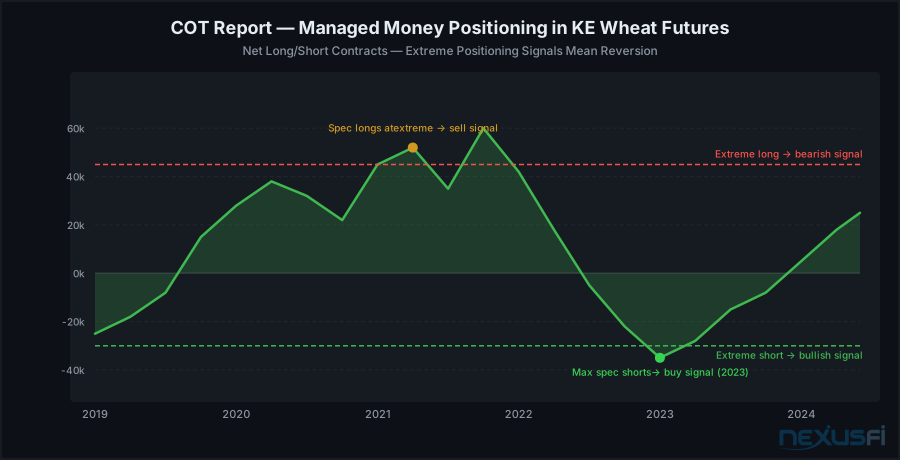
Correlation to the COT report: When managed money net longs in KE exceed 45,000 contracts, the market is crowded and historically vulnerable to sharp reversals. Tracking the COT weekly via the CFTC's Friday 3:30pm ET release provides a sentiment positioning overlay that complements fundamental analysis.
A practical framework: for a $100,000 trading account, maximum KE exposure at any time should not exceed $5,000-$10,000 of potential loss at normal stop-loss levels. For a $0.20/bu stop ($1,000/contract), that's 5-10 contracts maximum. Most traders start much smaller: 1-2 contracts until they understand the market's behavior through at least one complete crop season.
How to Read the USDA Crop Progress Report #
The USDA Crop Progress report is released every Monday at 4:00pm ET from approximately October through June. For KE traders, the key winter wheat section shows:
- Planted (%): Percent of winter wheat acreage planted by state and national average. Compared to the prior week and 5-year average.
- Emerged (%): Percent of seeded acreage that has broken through the soil surface.
- Condition (VP/P/F/G/E %): The most price-sensitive data. States listed: Kansas, Oklahoma, Texas, Nebraska, Colorado, others.
- Headed (%): During May-June, percent of the crop that has headed (flower stage). Faster heading pace during hot weather = accelerated stress.
- Harvested (%): During June-July, percent cut.
When reading the report, weight Kansas and Oklahoma most heavily — they account for roughly 40%+ of HRW production. The national average can look adequate while Kansas conditions are severely stressed if other states offset.
The most powerful signal: condition % G+E that diverges from the 5-year average by more than 10 percentage points, sustained over three or more consecutive weeks, during the critical April-May heading period. This combination — sustained, below-average, during the highest-sensitivity growth stage — generates the most reliable fundamental setups for KE longs.
For context, always compare G+E% against the same week's 5-year average — not the prior week in isolation. A reading of 52% that is 10 points below average is more bearish than a reading of 42% that is only 2 points below average. USDA publishes these 5-year averages in the same Crop Progress release.
Common Mistakes KE Traders Make #
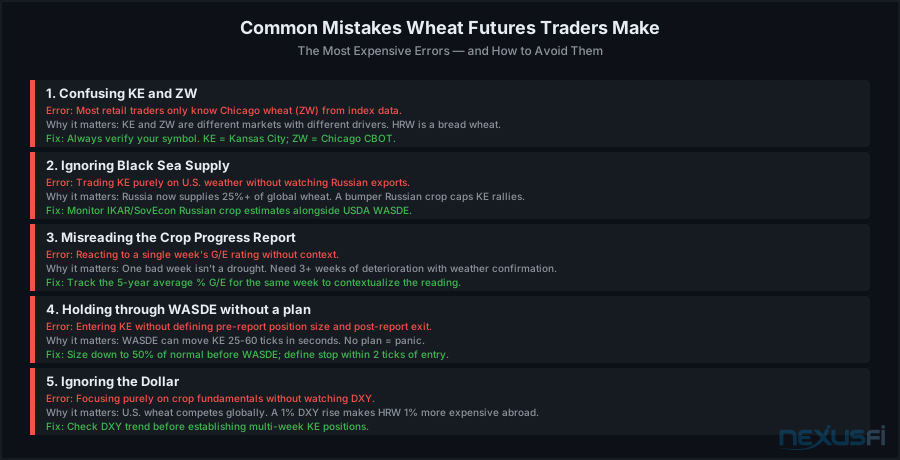
1. Confusing KE with ZW: The most foundational error. KE is Hard Red Winter; ZW is Soft Red Winter. Different growing regions, different protein specs, different end users, different export competitors. A ZW-specific frost in Ohio has basically zero relevance to Kansas wheat conditions. Always verify which contract you're analyzing before trading.
2. Trading KE without watching Russia: Many traders build a bullish KE thesis on U.S. weather or crop conditions while ignoring the fact that Russia now supplies 25%+ of global wheat. A massive Russian crop undercuts the U.S. weather story because global buyers have an alternative. The IKAR and SovEcon Russian crop estimates — published monthly, widely followed by grain traders — are required reading for any sustained KE position.
3. Misreading a single Crop Progress report: One bad week in the G+E ratings doesn't make a drought. Crops recover. KE often spikes on a single bad Crop Progress reading only to give back the move when weather normalizes the following week. The trade requires sustained deterioration over multiple weeks. @Aufidius's grain analysis approach — looking at fundamental value across multiple indicators before sizing up — is the right methodology: seasonality, COT positioning, and crop fundamentals together, not any one factor alone.
4. Holding full size into WASDE without a plan: WASDE can move KE 40-60 ticks in 30 seconds. A 50-tick move at full position size is $625/contract. A trader holding five contracts faces $3,125 of P&L impact before they can react. The professional approach: reduce position to 50% of normal heading into WASDE, define a re-entry strategy for the post-number reaction, and treat WASDE day as a different risk environment from normal trading days.
5. Ignoring the dollar's headwind: A 5-10% DXY rally over three months makes U.S. wheat 5-10% more expensive in foreign currency terms. In a market where Russia is competing aggressively on price, a strong dollar directly erodes U.S. export competitiveness and caps the price ceiling for KE rallies. Dollar-aware traders adjust their KE position size and profit targets when the DXY trend is against them.
KE vs. ZW: When to Trade Each #
The choice between KE and ZW (or trading them as a spread) should be driven by the nature of the fundamental thesis:
Trade KE when:
- The thesis is specifically about Southern Plains conditions (Kansas/Oklahoma drought, freeze damage)
- The trade involves U.S. HRW export demand (Middle East buying spree, Japanese tender)
- Black Sea HRW supply is the primary trigger (Russian quota, Ukraine conflict)
- HRW protein premiums are the specific angle (high-protein bread flour demand)
Trade ZW when:
- The thesis is about Midwest soft wheat conditions (Ohio, Indiana, Illinois flooding or drought)
- The trade involves European competition (EU wheat exports to Egypt, for example)
- Lower-protein flour demand is the story (cracker/cookie industry)
- CME settlement price contracts (many commodity-linked products reference ZW, not KE)
Trade KE-ZW spread when:
- The thesis is specifically about protein differential -- one wheat class stressed, the other adequate
- You want wheat exposure at reduced margin and reduced directional risk
- The spread is at an historically extreme level (above 90c or below 20c) and the reversion case is clear
Most retail traders who venture into wheat start with ZW because it has higher volume and tighter bid-ask spreads. That's a reasonable starting point, but experienced grain traders increasingly focus on KE because the protein story — and the export share dynamics — create more durable fundamental setups than ZW's broader, more index-like behavior. Understanding the carry structure and seasonal patterns of each contract helps identify when the KE premium is offering a genuine opportunity versus when it's simply reflecting permanent structural shifts in global wheat trade.
Brokerage and Platform Considerations #
Trading KE requires a futures-enabled account. Most major futures brokers provide access: NinjaTrader Brokerage, Tradovate, Interactive Brokers, Tradier Futures, and others active on NexusFi. Key considerations for wheat traders:
- Spread execution: If you plan to trade the KE-ZW quality spread or KE calendar spreads, verify your broker supports exchange-listed spreads with native quotes. @SMCJB's analysis of commodity spread execution applies directly: platforms vary widely in how they handle inter-commodity spread orders. CQG and Trading Technologies provide native spread functionality; retail platforms may require manual legging.
- SPAN margin recognition: For the KE-ZW spread, brokers that recognize CME SPAN margin calculations provide a meaningful margin discount. If your broker charges full outright margin on both legs, the capital efficiency advantage of the spread disappears.
- Data feed quality: Grain trading around USDA report releases requires fast data. DTN IQFeed is a widely-used data provider among NexusFi members for agricultural futures; the millisecond delay on report releases matters when 60-tick moves happen in 30 seconds.
- Position limits: CME imposes speculative position limits on KE (currently 600 contracts net per contract month for spot month, larger for non-spot). Not a concern for retail traders, but relevant as accounts grow.
The intermarket ZW vs. ZC spread that @truckertrader and others discuss on NexusFi — a classic feed-value versus food-value trade — works differently with KE than ZW. HRW wheat's bread applications don't compete directly with corn in the feed market, so the KE-ZC spread has different fundamental drivers than the ZW-ZC spread. Knowing which wheat contract anchors your spread matters for the fundamental logic to hold. Review the open interest analysis for both KE and ZW to understand where speculative and commercial positioning is concentrated before entering either market.
Knowledge Map
Go Deeper
Build on this knowledgeCitations
- — Elite Commodities Analysis (2016) 👍 12“Seasonality is always fairly strong in grains”
- — Grains & Beans (2020) 👍 4“Regarding fundamentals there are several important ones to watch: Supply & Demand world-wide, Weather in the US, in South Americas and the former Soviet Union, tendency to mix Ethanol to gasoline, number of animals fed, prices of related grains (wheat, as it competes in the feed market; soybeans, as they compete for acreage), COT data.”
- — Trading ratios long term (2020) 👍 4“Exchanges list many native spreads. So there is an actual May20/Jul20 spread for both ICE Sugar and for CME Wheat. The beauty of these spreads is that their bid-ask is normally tighter than trading an outright month, and that there is no legging risk in execution.”
- — Rob's Journal of trading shenanigans (2023) 👍 2“I noticed you trade intermarket spreads (your ZW vs ZC). I used CQG Desktop when I opened my RJO account and I was not able to find or trade any exchange approved intermarket spreads unless I legged in individually.”
- — Reminiscences of a Bean Trader or Why These Ain't Yo Daddy's Beans No-Mo (2014) 👍 8“my current style of trading has evolved into holding core positions for longer time-frames, while scalping around them intra-market, and dynamically hedging”
- — Spreads brokers? (2019) 👍 7“commodity spreads... Examples of these include CLM9-HOM9 (ie the heating oil crack spread), CLM9-BZM9 (Brent-WTI). I'm sure there are others in the meats and fixed income markets but I'm an energy trader so used to commodity spreads.”
- — KC HRW Wheat Futures Contract Specifications (2024)
- — Wheat Outlook and WASDE Background (2024)
- — Crop Progress Report -- Methodology and Archive (2024)
- — Commitments of Traders -- Weekly Report (Grains) (2024)
- — Grain: World Markets and Trade -- Wheat Global Supply/Demand (2024)
- — SPAN Margin Calculator -- KC HRW Wheat Spread Margin Requirements (2024)