



Open Interest Analysis for Futures Trading
Overview #
Open interest (OI) is the total number of outstanding futures contracts that haven't been closed, offset, or settled. Every open contract represents one long and one short — a pair of traders with opposing views who haven't yet exited their positions. While volume tells you how much traded during a session, open interest tells you how much stayed.
That distinction matters more than most traders realize. Volume is activity. OI is commitment. A market can churn through enormous volume with zero change in open interest — traders swapping positions back and forth all day. Or OI can grow steadily on modest volume as patient participants quietly build positions. The difference between these two scenarios is the difference between noise and signal.
OI is reported per contract month — ES June and ES September have separate OI figures. It typically updates once per day (end of day), which means this is a daily/weekly structural tool, not a tick-by-tick indicator. Think of it as the market's "balance sheet of exposure" rather than its "income statement of activity."
How Open Interest Changes #
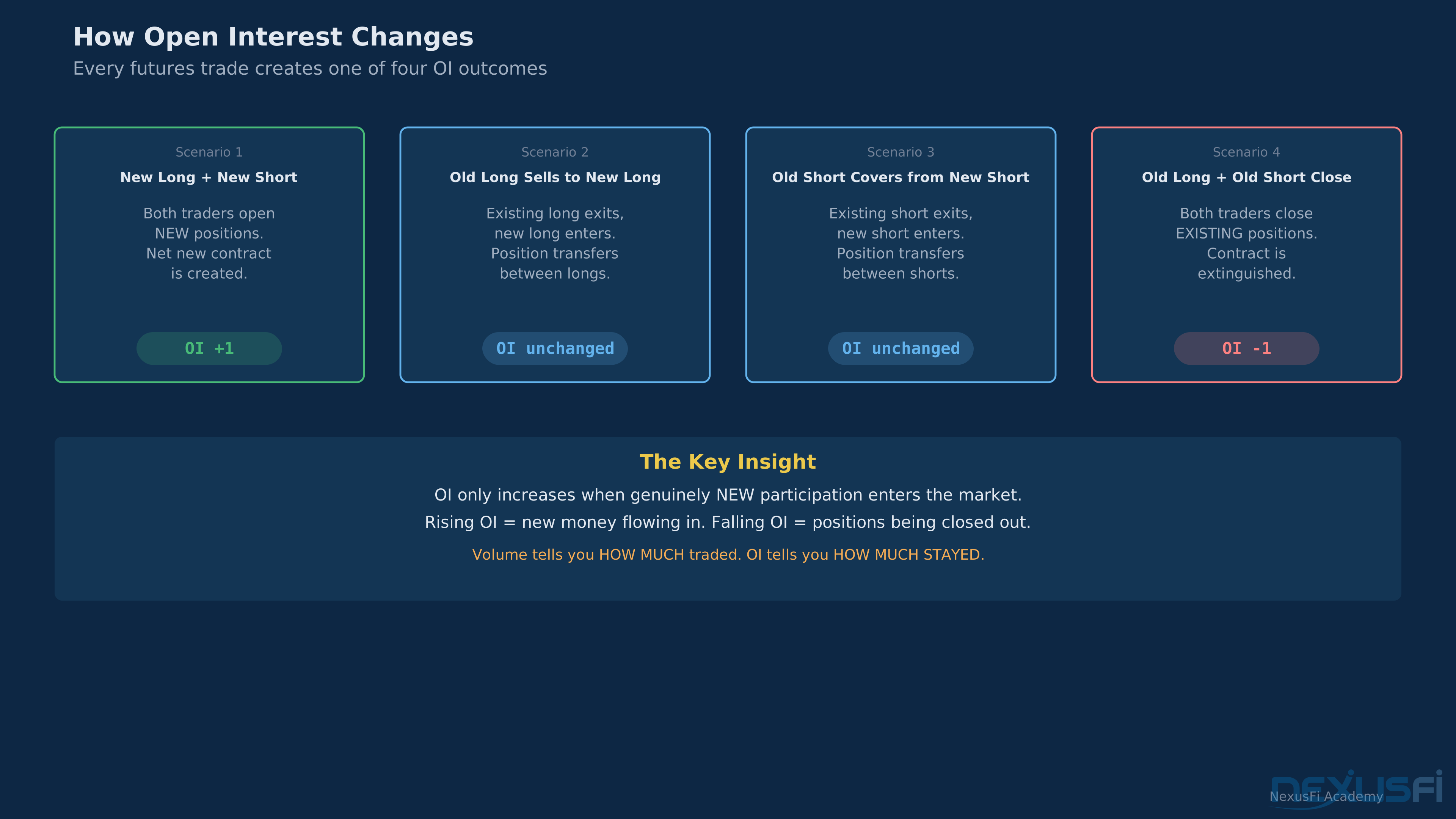
Every futures trade involves a buyer and a seller, but the effect on OI depends on whether those traders are opening new positions or closing existing ones. There are exactly four scenarios:
New long + new short = OI increases by 1. Both traders are initiating fresh positions. A genuinely new contract is created. This is the only scenario that adds to open interest.
Existing long exits + new long enters = OI unchanged. One long transfers the position to another long. The number of outstanding contracts stays the same — just different hands holding them.
Existing short exits + new short enters = OI unchanged. Same dynamic on the short side. Position transfer, no net change.
Existing long exits + existing short exits = OI decreases by 1. Both sides are closing out. The contract is extinguished. This is the only scenario that reduces open interest.
The critical takeaway: OI can only increase when genuinely new participation enters the market. Rising OI means new money is flowing in. Falling OI means positions are being unwound. As @Fat Tails explains on NexusFi, "a trade that occurred can either mean a new long and a new short opening a position (open interest +1), a new long taking over from an old long (open interest +0), an old short buying back from a new short (open interest -0), or an old short buying back from an old long (open interest -1)." [1]
OI vs Volume #
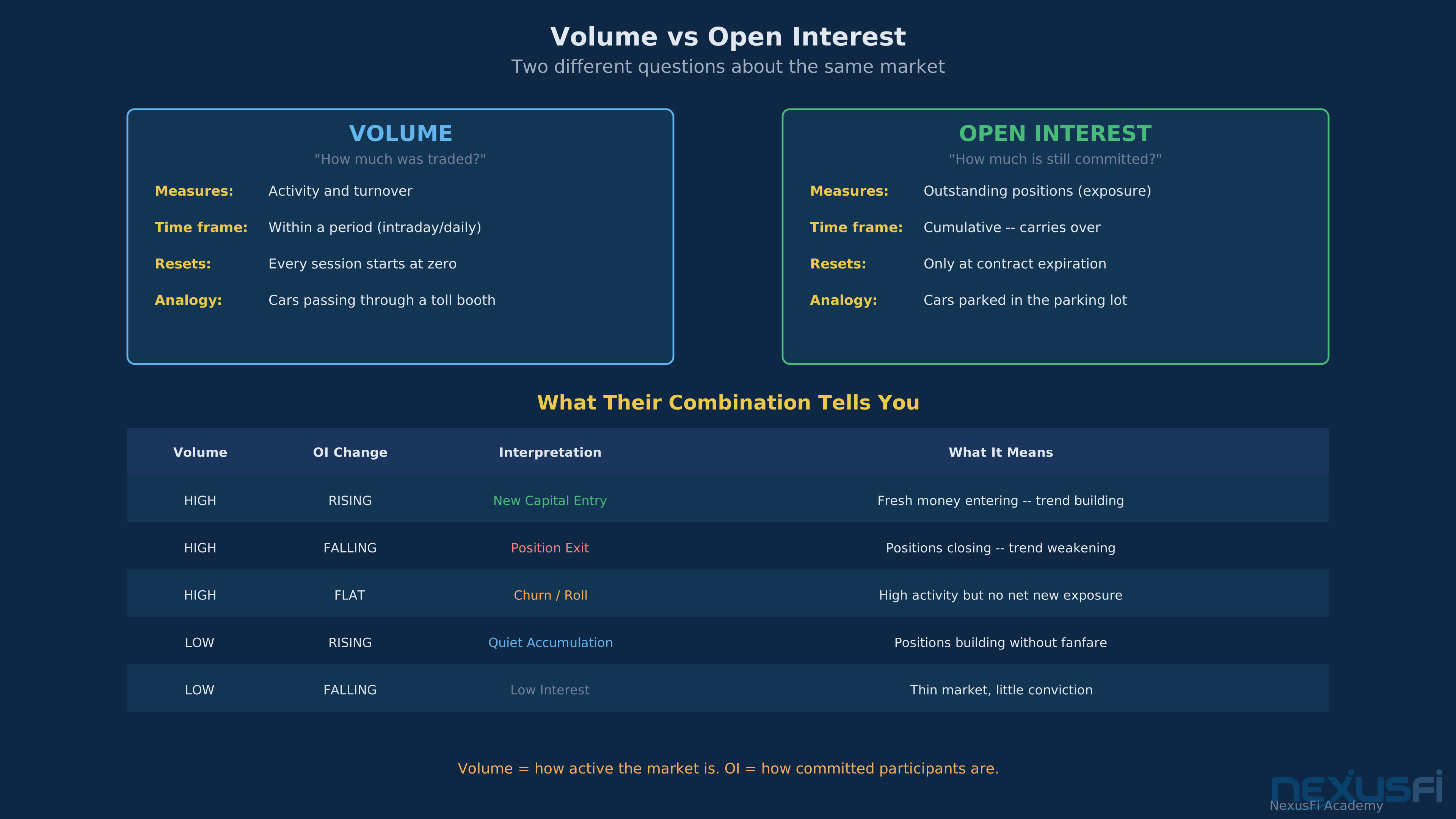
Volume and OI are complementary, not interchangeable. Volume measures contracts traded during a period — it resets every session. OI measures contracts remaining open after the period — it accumulates across sessions. The simplest analogy: volume is cars passing through a toll booth, OI is cars parked in the lot.
As @choke35 puts it in the Spoo-nalysis thread, "OI reports the number of ES contracts that are open per close — all intraday dabblers are netted out. The numbers especially comprise large reportables. On standard days volume is below OI. Volume above OI normally signals a lot of weak hands." [2]
When volume exceeds open interest, pay attention. That level of turnover relative to outstanding positions often signals stressed or forced trading — weak hands getting shaken out by stronger ones.
The key combinations: High volume + rising OI = new capital entering, trend building. High volume + falling OI = positions closing, trend potentially weakening. High volume + flat OI = churn or roll activity, lots of noise but no net new commitment. Low volume + rising OI = quiet accumulation, positions building without fanfare.
The Price + OI Interpretation Matrix #
The core framework for OI analysis is a four-quadrant matrix combining price direction with OI direction. This is the single most useful tool for reading open interest, and every futures trader should have it internalized.
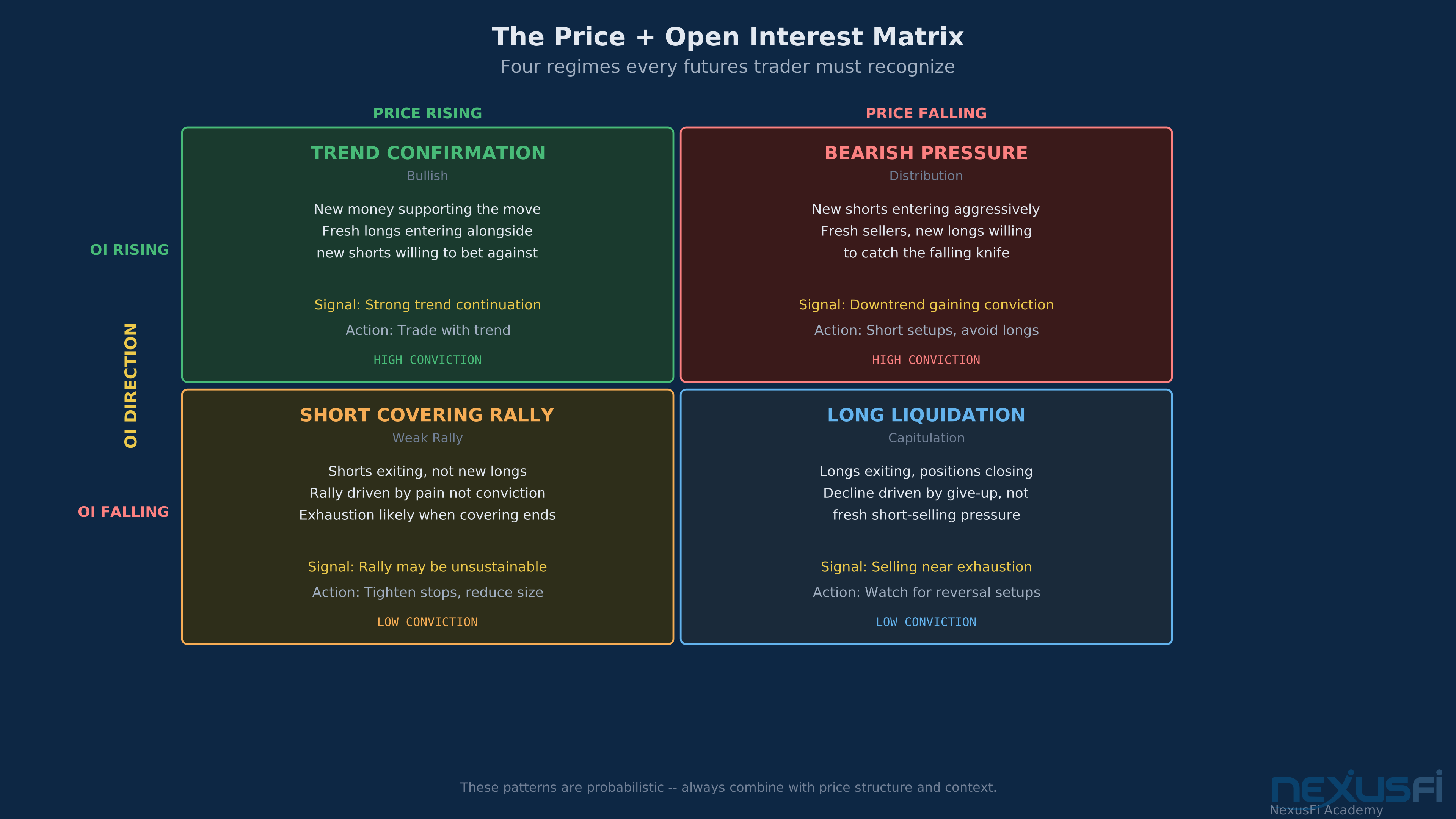
Rising price + rising OI = trend confirmation. New money is supporting the advance. Fresh longs are entering, and new shorts are willing to bet against momentum (and getting punished for it). This is the highest-conviction bullish signal from OI. Trade with the trend, trail stops, and let it run.
Falling price + rising OI = bearish pressure. New shorts are entering aggressively while new longs are catching the falling knife. Downtrend is gaining conviction. Look for short setups, avoid bottom-picking.
Rising price + falling OI = short covering rally. Price is going up, but OI is shrinking — shorts are exiting (covering), not new longs entering. The rally is driven by pain, not conviction. When the last short covers, the fuel runs out. Tighten stops and reduce position size on these rallies.
Falling price + falling OI = long liquidation. Longs are giving up and closing out. The decline is driven by capitulation, not fresh selling pressure from new shorts. This type of selloff can mark the final stages of a downmove. Watch for reversal setups once liquidation exhausts itself.
These patterns are probabilistic, not deterministic. A rising price with rising OI during a major news event has different implications than the same pattern during a quiet Tuesday. Seasonality, contract rolls, and volatility regimes all affect interpretation. Context matters — always.
Commitments of Traders (COT) Integration #
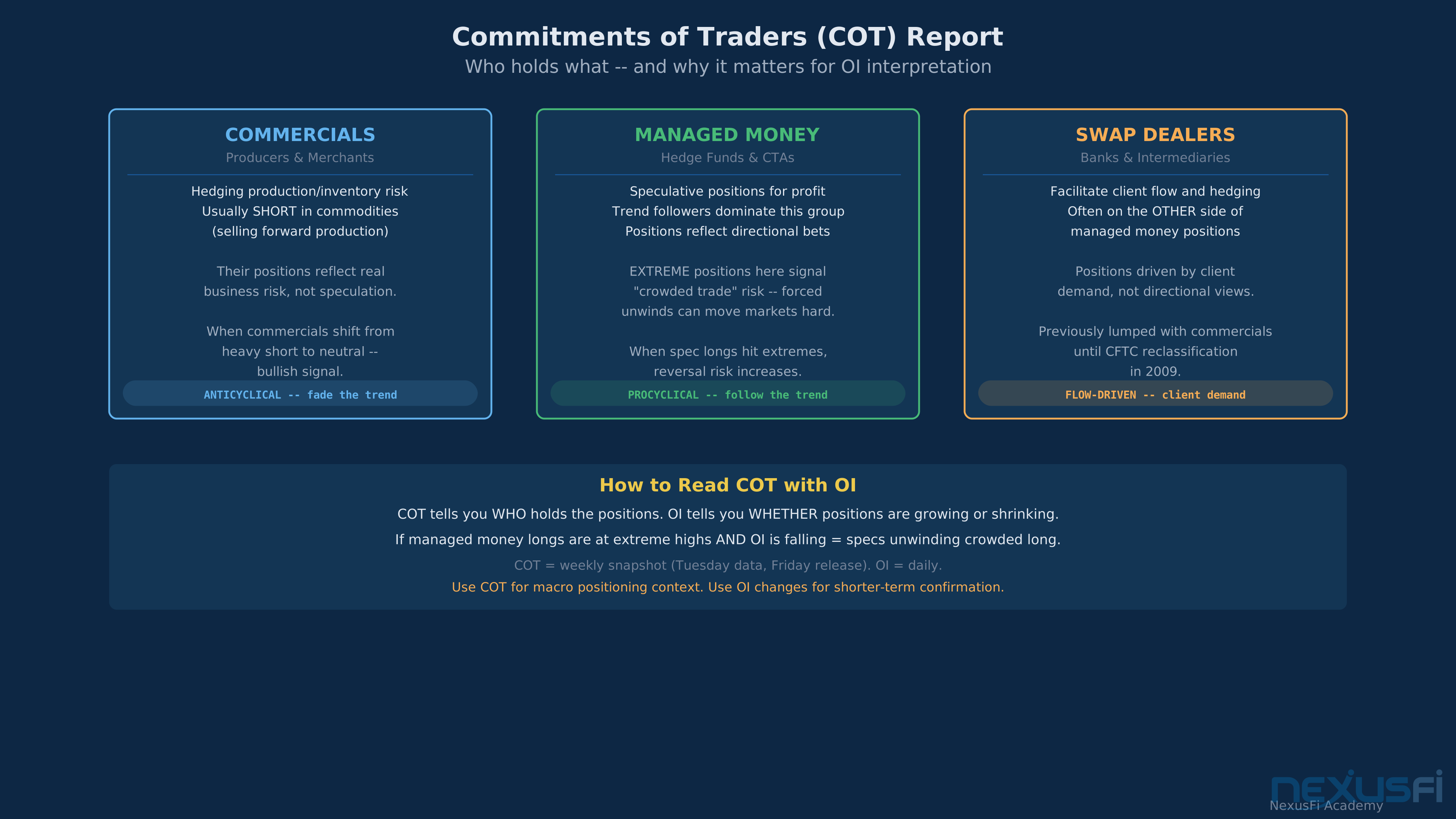
OI tells you whether positions are growing or shrinking. The Commitments of Traders (COT) report tells you who holds those positions. Published weekly by the CFTC (Tuesday data, released Friday), COT breaks down positioning by trader category.
As @Fat Tails notes, "Commitment of Traders is extremely useful, as it shows the market positions of different groups of traders. You want to know what the others are doing. Extreme readings of the COT figure can be used as a sentiment indicator for countertrades." [3] He adds that "the COT report appears on Friday and contains information on open interest on Tuesday. So the information is not fresh, and is more useful for investors and swing traders than day traders."
The three key categories in the disaggregated report: Commercials (producers, merchants) hedge real business risk and tend to be anticyclical — they fade the trend. Managed Money (hedge funds, CTAs) speculate for profit and tend to be procyclical — they follow the trend. Swap Dealers help client flow and are driven by demand, not directional views.
[4] The lesson: COT extremes are context, not signals. Combine them with price action and OI changes before trading.
Roll and Expiry Effects #
Futures contracts expire. As expiration approaches, traders "roll" — closing their position in the expiring month and opening it in the next. This creates volume without meaningful OI change across the market as a whole, but it distorts single-contract OI dramatically.
During roll periods (roughly 8 business days before expiration for ES, varies by contract), front-month OI collapses while back-month OI surges. If you're tracking OI on a single contract month, the roll looks like a mass exodus. It's not — it's just a migration.
To get a clean OI signal during rolls, track total OI across all contract months for the instrument. As @Cashish explains, "I use the TOTAL of all contract months when analyzing volume and open interest — this aids in seeing the continuation (or not) of the accumulation of contracts in OI during the expiration of one contract and the rollover into the next." [5]
For more on roll mechanics and timing, see Futures Contract Rollover and Expiration.
OI at Extremes and Crowded Positioning #
When OI reaches historically high levels, it signals crowding — a lot of traders committed to the same direction. Crowded positions create unwind risk. When the crowd is wrong and starts exiting, the forced liquidation can be violent.
Define "extreme" with discipline, not gut feel. Compare current OI to its historical distribution over 3-12 months. A reading above the 90th percentile or below the 10th percentile qualifies as extreme. Z-scores work too — anything beyond 2 standard deviations from the mean deserves attention.
But here's the nuance: extreme OI can persist for weeks in a strong trend. High OI alone is not a signal to fade the market. The turn happens when extreme OI starts declining while price stalls or reverses. That combination — extreme positioning plus liquidation — is where the real opportunity lives.
For ES, watch for OI extremes around FOMC meetings, quarterly expirations, and major macro events. For CL, inventory reports and OPEC meetings can create positioning extremes. For GC, rate decisions and geopolitical risk drive OI swings. The framework applies across instruments, but the catalysts differ.
Practical Applications #
ES (E-mini S&P 500): OI shifts in ES reflect macro positioning. During trending markets, watch for rising OI to confirm new institutional commitment. Around FOMC, CPI, and NFP, OI can spike as hedging activity increases — then unwind after the event. When volume exceeds OI (rare but notable), it typically signals forced activity from levered participants getting squeezed.
CL (WTI Crude Oil): Crude OI is heavily influenced by commercial hedging. Producers sell forward production, which keeps commercial positions structurally short. When commercial short positions shrink unusually (visible in COT), it often precedes rallies. OI spikes around EIA inventory reports are common — but the more useful signal is what happens to OI after the report: does the new level hold, or do positions unwind immediately?
GC (Gold): Gold OI functions as a positioning proxy for safe-haven demand. Rising OI during falling rates or geopolitical stress indicates genuine capital flow into gold. Falling OI during price rallies suggests short covering rather than fresh buying — weaker setup for continuation. COT data is especially useful for gold because the commercial/speculative divide is clear-cut.
Risk Management Integration #
OI is a confirmation tool, not an entry signal. Use it to adjust conviction and position sizing, not to generate trades in isolation. A breakout with rising OI deserves full position size. The same breakout with falling OI deserves a reduced position or tighter stop — the market isn't backing the move with new commitment.
When OI reaches extremes, reduce size regardless of your directional view. Crowded markets have fat-tail risk — the unwind can be faster and more violent than the buildup. Position sizing should reflect not just your edge, but the market's potential for forced liquidation around you.
Think of OI as a "conviction gauge" sitting next to your core analysis. It doesn't tell you what to trade — it tells you how much to trust the setup.
Data Sources #
CME Group publishes daily OI data for all listed contracts (typically available after 6:30 PM CT). The CFTC publishes the COT report every Friday at 3:30 PM ET with data from the previous Tuesday. For platform integration, most futures platforms (NinjaTrader, Sierra Chart, TradingView) can display OI as a chart overlay — check your data provider's documentation for availability.
Calculate delta-OI (today's OI minus yesterday's OI) to focus on changes rather than absolute levels. Apply a short-term moving average (5 or 10 day) to smooth out noise. Compare delta-OI against price direction daily to identify the four-quadrant regime you're currently in.
Limitations #
OI has real constraints. It updates once per day — useless for intraday timing decisions. It doesn't tell you direction directly — a rising OI could mean new longs or new shorts, and you can't tell which without COT data (which is weekly and lagged). Roll periods create noise that requires filtering. And in very liquid contracts like ES, OI changes can be driven by hedging and index rebalancing rather than directional conviction.
The biggest trap: treating OI as a standalone indicator. A trader who sees rising OI during a rally and goes long "because new money is entering" has missed half the analysis. New money enters on both sides — the question is whether the price structure supports the direction the new money is betting on. OI is context. Price structure is the trade.
Knowledge Map
References This Article
Articles that build on this topicCitations
- — Indicator to detect commitment of traders (2011) 👍 6“a trade that occurred can either mean a new long and a new short opening a position (open interest +1)...”
- — Spoo-nalysis ES e-mini futures S&P 500 (2016) 👍 11“OI reports the number of ES contracts that are open per close... Volume above OI normally signals a lot of weak hands.”
- — Commitment of traders (2010) 👍 5“Commitment of Trader is extremely useful, as it shows the market positions of different groups of traders.”
- — how do make use of COT to its best ability? (2025) 👍 4“He's looking for crowded trades where there are many speculative bets in the same direction...”
- — Trading the 6E Old School, With a Twist (2013) 👍 7“I use the TOTAL of all contract months when analyzing volume and open interest...”
- CFTC — Commitments of Traders Reports (2026)