



New Zealand Dollar (6N) Futures: The Complete Trading Guide
Overview #
The New Zealand Dollar (6N) futures contract is CME's vehicle for trading NZD/USD with regulated exchange clearing, transparent price discovery, and the capital efficiency of futures. Every contract represents 100,000 New Zealand dollars. At the current NZD/USD rate of roughly 0.6100, you're controlling $61,000 in notional exposure per contract--for an initial margin of around $1,800. That leverage cuts both ways, which is why understanding what drives this market before you put money on the line matters.
NZD is what traders call a commodity currency. New Zealand's economy runs on dairy exports, tourism, and agricultural commodities--sectors that tie the kiwi's fortunes directly to global commodity prices, Chinese demand, and risk appetite cycles. That makes 6N an interesting instrument: it behaves like a risk-on/risk-off barometer while also responding to NZ-specific data from the Reserve Bank of New Zealand (RBNZ) and Global Dairy Trade (GDT) auctions.
Compared to the Euro (6E), British Pound (6B), or Japanese Yen (6J), NZD futures are thinner. The order book is shallower, spreads widen more during off-peak hours, and stop-runs are more frequent around key technical levels. That thinness cuts both ways: momentum can travel further when a single institutional flow dominates, but mean reversions can be violent when liquidity refills. Size so.
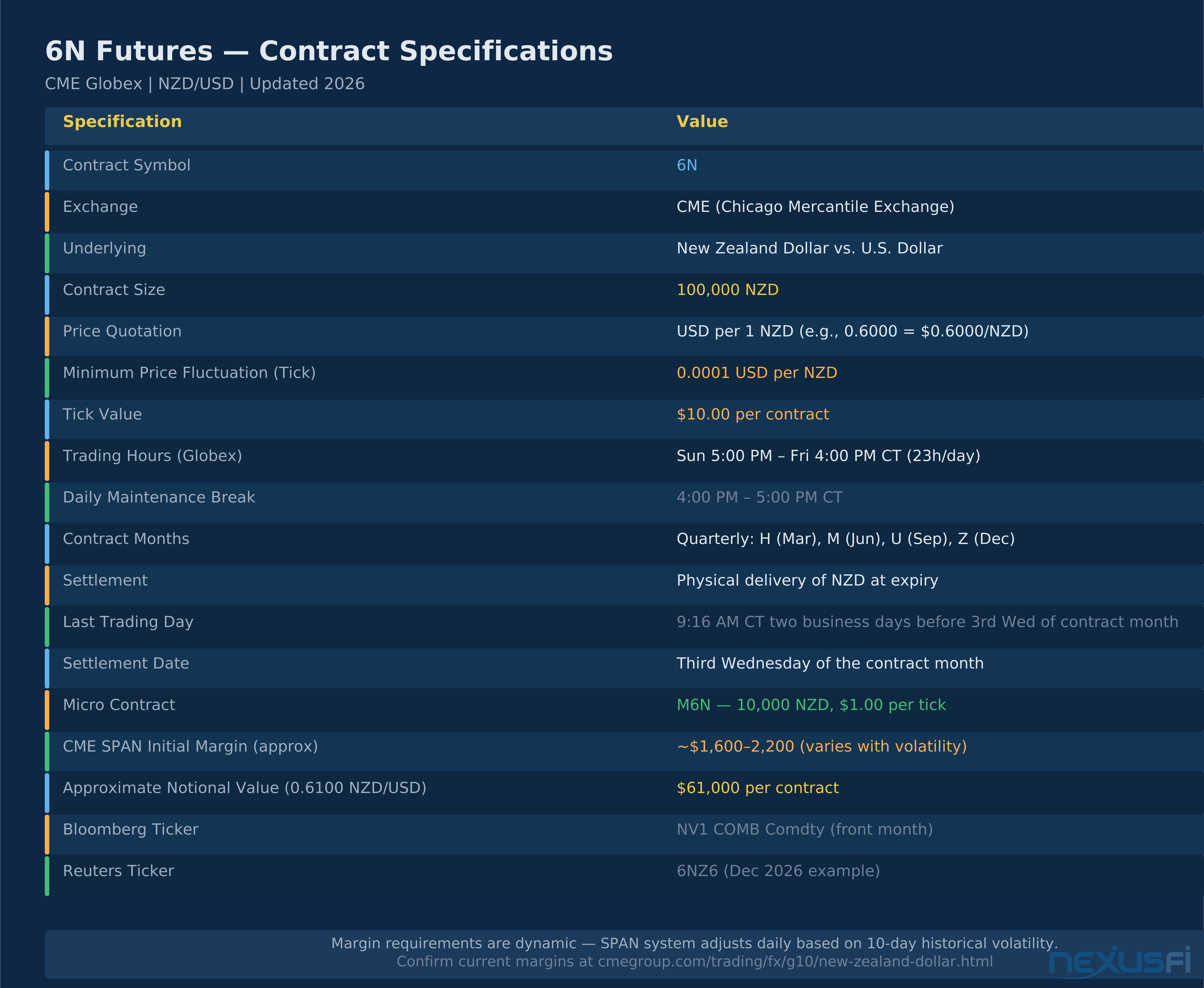
CME 6N futures contract specifications. Tick value of $10.00 per minimum move (0.0001). One contract = NZD 100,000 notional.
Contract Specifications #
The mechanics first. 6N trades on CME Globex almost 24 hours a day, Sunday through Friday, with a one-hour maintenance break at 4:00--5:00 PM CT. The underlying is NZD versus USD: when you buy 6N, you're long NZD and short USD. A rising price means NZD is strengthening against the dollar.
The contract trades in quarterly cycles: March (H), June (M), September (U), and December (Z). Unlike some commodity futures, NZD futures settle via physical delivery--meaning if you hold through the Last Trading Day, you receive or deliver NZD 100,000 through CME's settlement process. This isn't a retail-friendly outcome. Roll to the next contract 5--10 trading days before expiry, when back-month volume overtakes front-month open interest. The timing signal is straightforward: when back-month volume exceeds roughly 50% of front-month volume, the migration has started.
For traders who want NZD exposure without the full-sized margin and notional risk, CME offers the M6N micro contract: 1/10th the size at 10,000 NZD, with a tick value of $1.00. Use the micro contract to calibrate entry timing or to hold through high-impact events with reduced risk exposure.
Margin requirements aren't fixed. CME's SPAN system adjusts initial and maintenance margins based on recent 10-day historical volatility. During quiet periods, initial margin can drop to $1,400--1,600. During volatile periods--RBNZ surprises, Fed shock moves, China growth scares--margin can spike above $2,500 without warning. Check cmegroup.com for current rates before sizing positions overnight. For a detailed position sizing framework applicable across all futures, see Position Sizing Methods for Futures Trading.
What Moves NZD #
Five drivers shape NZD/USD, but they're not equal. Get the hierarchy wrong and you'll be shorting NZD because dairy prices fell while a dovish Fed is torching the dollar. You lose even when your dairy thesis is right.
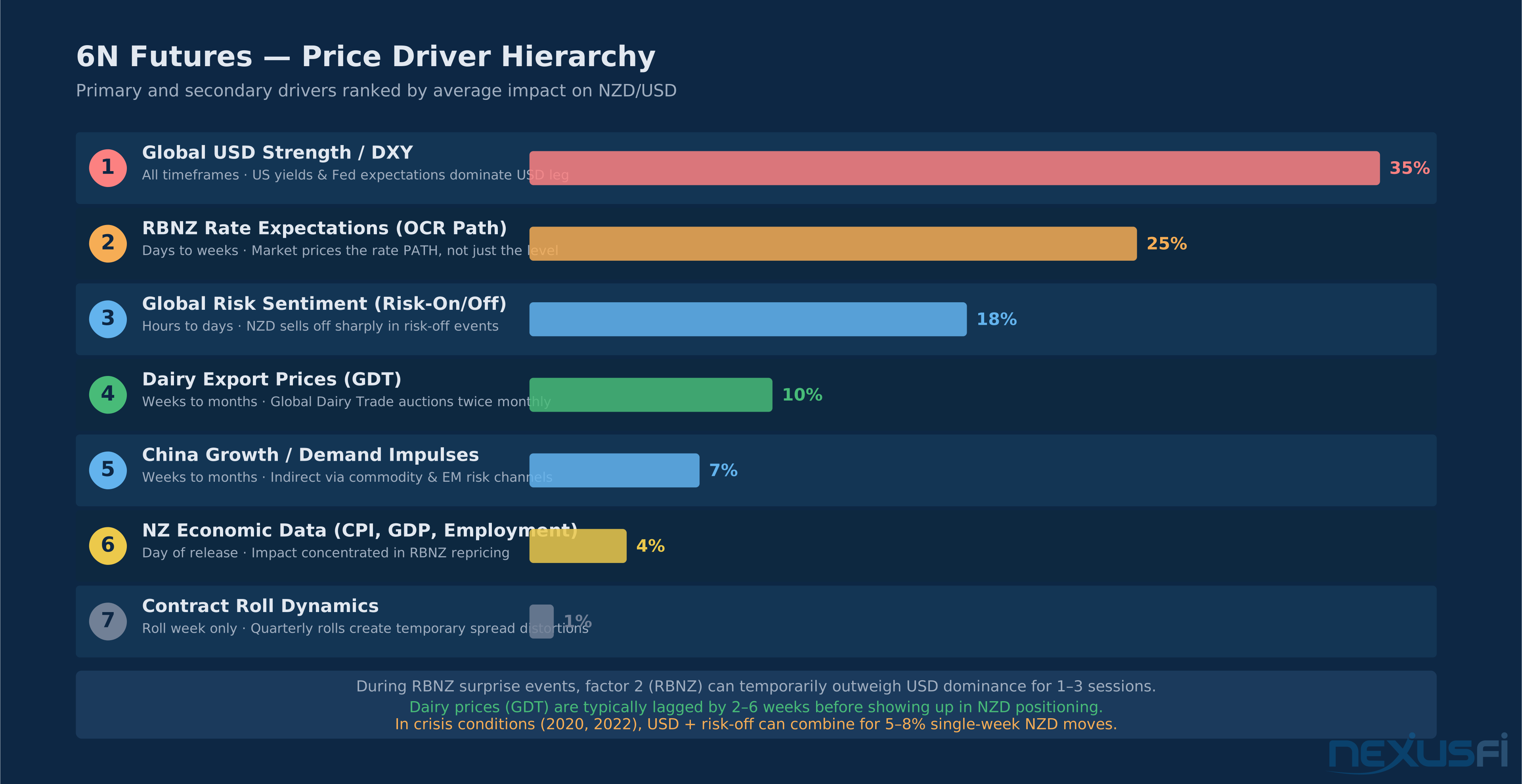
Driver hierarchy for 6N futures. USD direction (35%) dominates all timeframes. RBNZ policy expectations (25%) are the primary NZD-specific driver.
1. Global USD Strength (35% of directional moves)
The USD leg of NZD/USD is driven by US Treasury yields, Fed expectations, and broad risk sentiment. When the dollar rallies--whether because the Fed is hawkish, economic data is strong, or risk appetite collapses--NZD falls even if nothing changes in New Zealand. This driver affects all timeframes and is the background condition against which everything else operates.
Track DXY (US Dollar Index) and US 2-year Treasury yields as leading indicators. A DXY breakout above a key level predicts NZD weakness more reliably than almost any NZ-specific data point. During USD bull markets (2014-2015, 2022), NZD can trend down for months regardless of RBNZ policy.
2. RBNZ Rate Expectations (25%)
The Reserve Bank of New Zealand sets the Official Cash Rate (OCR) and issues quarterly Monetary Policy Statements. What matters isn't the rate level--it's how the actual decision and forward guidance compare to market pricing. A rate hold when the market expected a cut sends NZD higher. A cut when the market was pricing neutral sends NZD lower. The size of the surprise determines the magnitude of the move.
RBNZ meets eight times per year, with full Monetary Policy Statements four times. The two-day windows around MPS releases are the most volatile--NZD can move 0.5--1.8% within the first hour of an announcement. Build your event risk calendar around these dates. Forum member @Fat Tails covered the session template logic for CME currency futures at:
[cite:https://nexusfi.com/showthread.php?t=30964&p=395368#post395368]
3. Global Risk Sentiment (18%)
NZD is a "risk-on" currency. When equity markets rally, credit spreads tighten, and growth expectations improve, NZD typically strengthens--it acts as a proxy for global appetite for yield and growth exposure. When risk-off hits--VIX spikes, equity futures sell off, credit spreads blow out--NZD gets sold regardless of domestic conditions.
This characteristic makes NZD a useful indicator. It tends to lead risk-off moves because it's smaller and thinner than the Euro or yen--institutional de-risking shows up in NZD flows first. The correlation with equity futures (ES) runs about 0.71 over rolling 30-day windows.
4. Dairy Export Prices (10%)
New Zealand's dairy industry--primarily Fonterra's products--accounts for a significant portion of the country's export income. The Global Dairy Trade (GDT) platform holds electronic auctions every two weeks, and the resulting price index provides a transparent, real-time signal of dairy commodity demand.
The GDT doesn't move NZD immediately--there's typically a 2--6 week transmission lag as markets digest the implication for New Zealand's terms of trade and RBNZ inflation outlook. Three consecutive GDT declines of 3%+ are historically bearish for NZD over the following month. Three consecutive gains are bullish. Track the GDT at gdx.co.nz after each fortnightly auction. Use it as a medium-term filter, never a standalone trade signal.
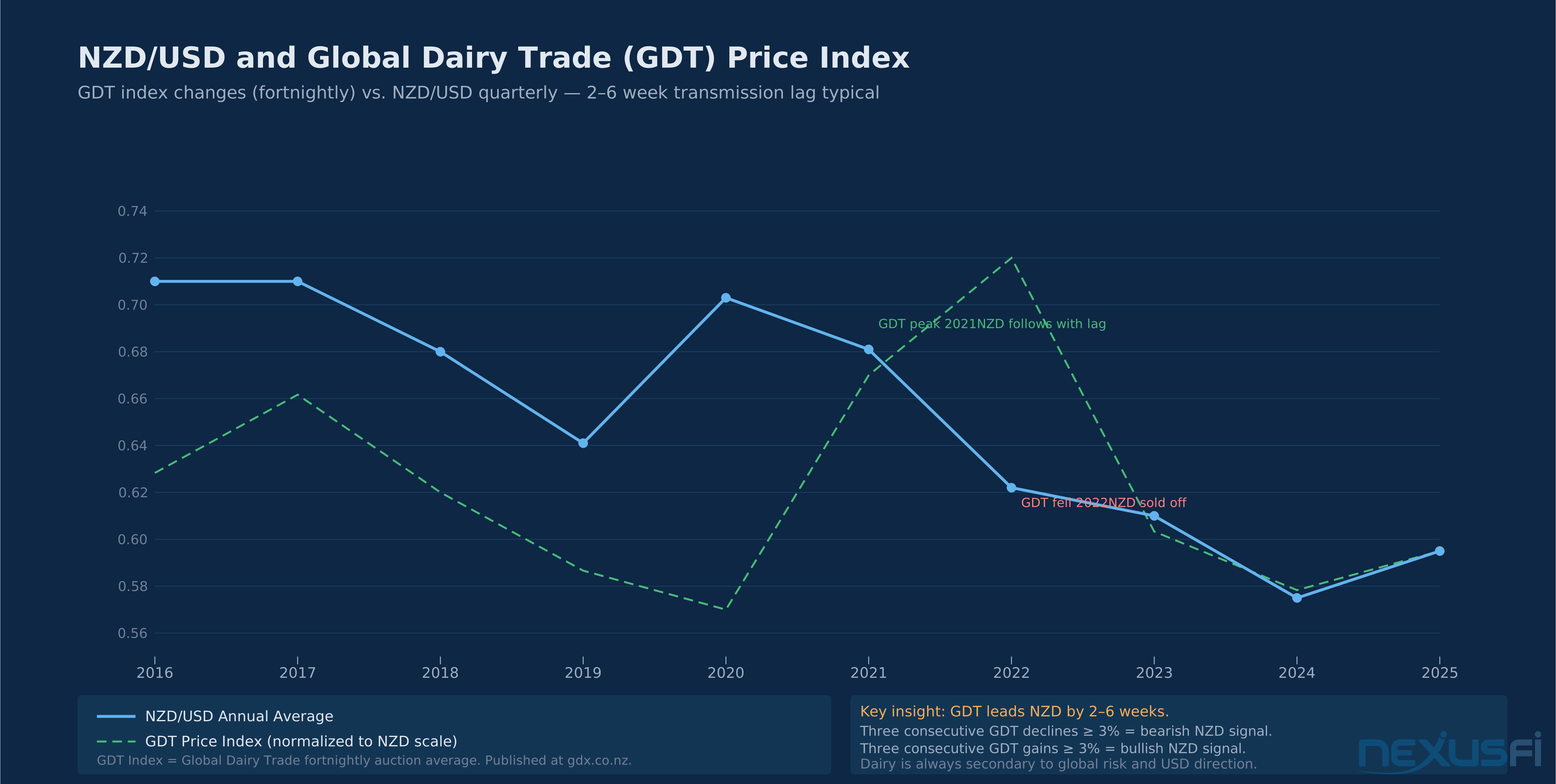
NZD/USD annual averages vs. GDT price index (normalized). The 2021 GDT peak preceded NZD strength, the 2022 GDT collapse contributed to the NZD selloff. Transmission lag: 2--6 weeks.
5. China Growth Impulses (7%)
China is New Zealand's largest trading partner. When Chinese economic data surprises to the upside--manufacturing PMI, retail sales, industrial production--commodity currencies including NZD and AUD benefit through improved trade expectations and broader risk appetite. When China slowdown fears grip markets, NZD sells off via both the commodity channel and the EM risk channel simultaneously.
This driver works through sentiment more than direct economic linkage. NZD doesn't respond directly to Chinese data with the immediacy of AUD, but sustained Chinese weakness or strength tends to shift the medium-term trend.
Price History and Key Regimes #
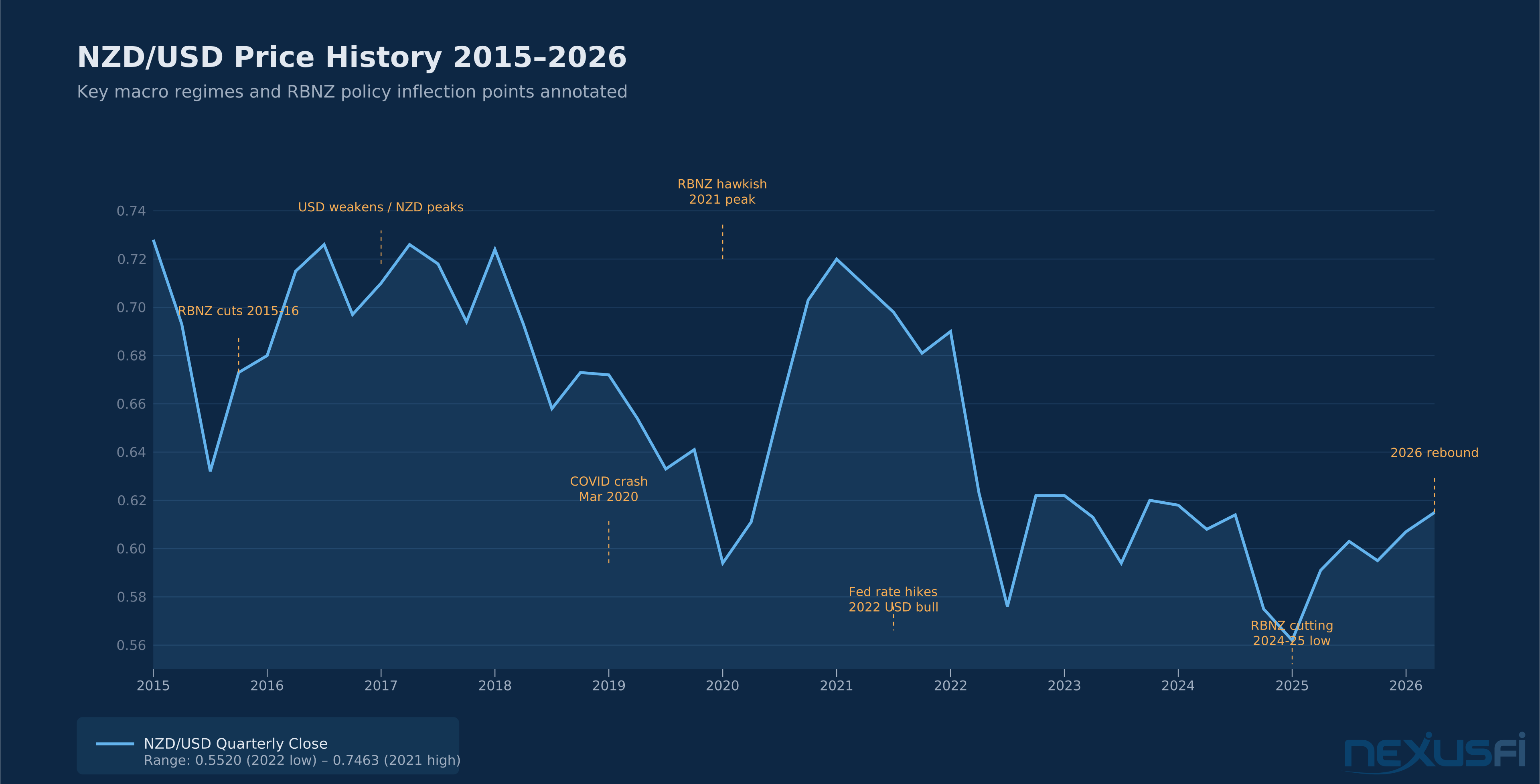
NZD/USD quarterly history 2015--2026. Range: 0.5520 (2022 low) to 0.7463 (2021 high). Macro regimes dominate over NZ-specific drivers.
NZD has traded in a wide range over the past decade, from a high of around 0.7463 in 2021 to a low near 0.5520 in late 2022. The primary driver of this range: US monetary policy. The 2022 selloff was almost entirely the Fed's doing--the RBNZ was actually one of the first central banks to hike rates, yet NZD fell over 20% from its peak because the dollar bull market overwhelmed everything else.
The 2020 COVID crash took NZD from 0.6700 to 0.5570 in three weeks--a 17% move in the most liquid trading conditions possible. That's what risk-off does to a high-beta commodity currency. The subsequent recovery, fueled by global stimulus and commodity demand, was equally rapid. Structural levels from major auction periods (prior week highs/lows, prior month's range extremes) provide the most durable support and resistance zones.
RBNZ Monetary Policy #
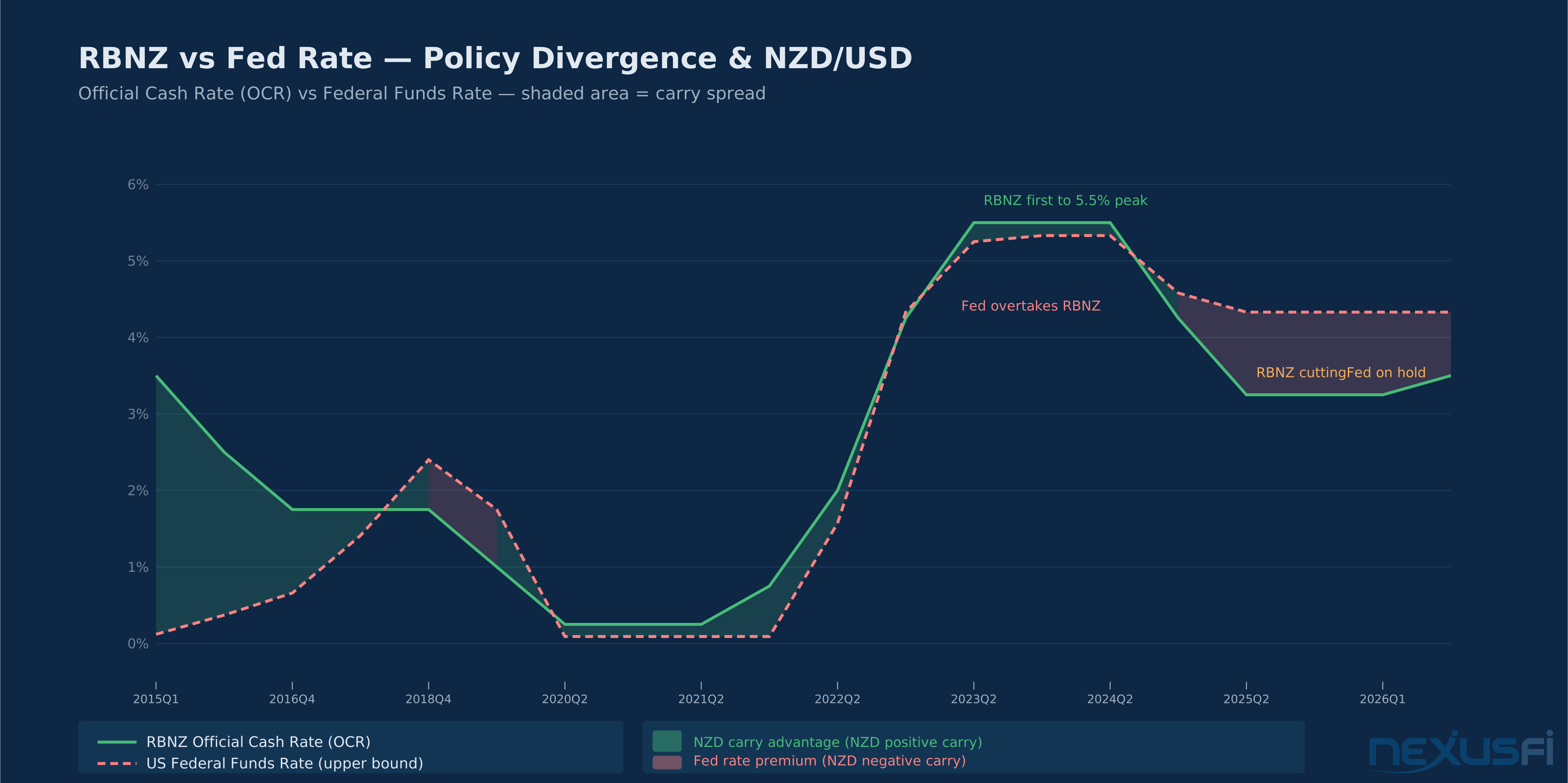
RBNZ Official Cash Rate vs Fed Funds Rate 2015--2026. Green shading = NZD positive carry. Red shading = Fed rate premium. The 2022-2024 period showed the Fed eventually overtaking RBNZ, cutting NZD's carry advantage.
The RBNZ was the first major central bank to hike rates in the post-COVID cycle, moving from 0.25% to 5.50% between October 2021 and May 2023. The RBNZ then began cutting in August 2024, one of the first major central banks to pivot back toward easing. As of mid-2026, the OCR sits at approximately 3.25--3.50% with the Fed still at 4.33%--meaning NZD currently trades with negative carry versus USD, a headwind for pure carry strategies.
The carry trade calculus changes with each RBNZ and Fed cycle. When the OCR exceeds the Fed Funds Rate, long NZD/JPY or long NZD/CHF positions earn positive carry (interest rate differential). When the situation reverses, as it has in 2025-2026, the carry trade operates in reverse--traders short NZD against higher-yielding currencies.
Forum member @SMCJB provided an excellent breakdown of currency futures carry mechanics in the Currencies subforum, which still applies today:
[cite:https://nexusfi.com/showthread.php?t=46801&p=715412#post715412]
Correlation and the AUD Connection #
NZD and AUD move together 88% of the time. When they diverge, that divergence is the signal. Use 6A as your real-time regime filter before entering 6N positions.
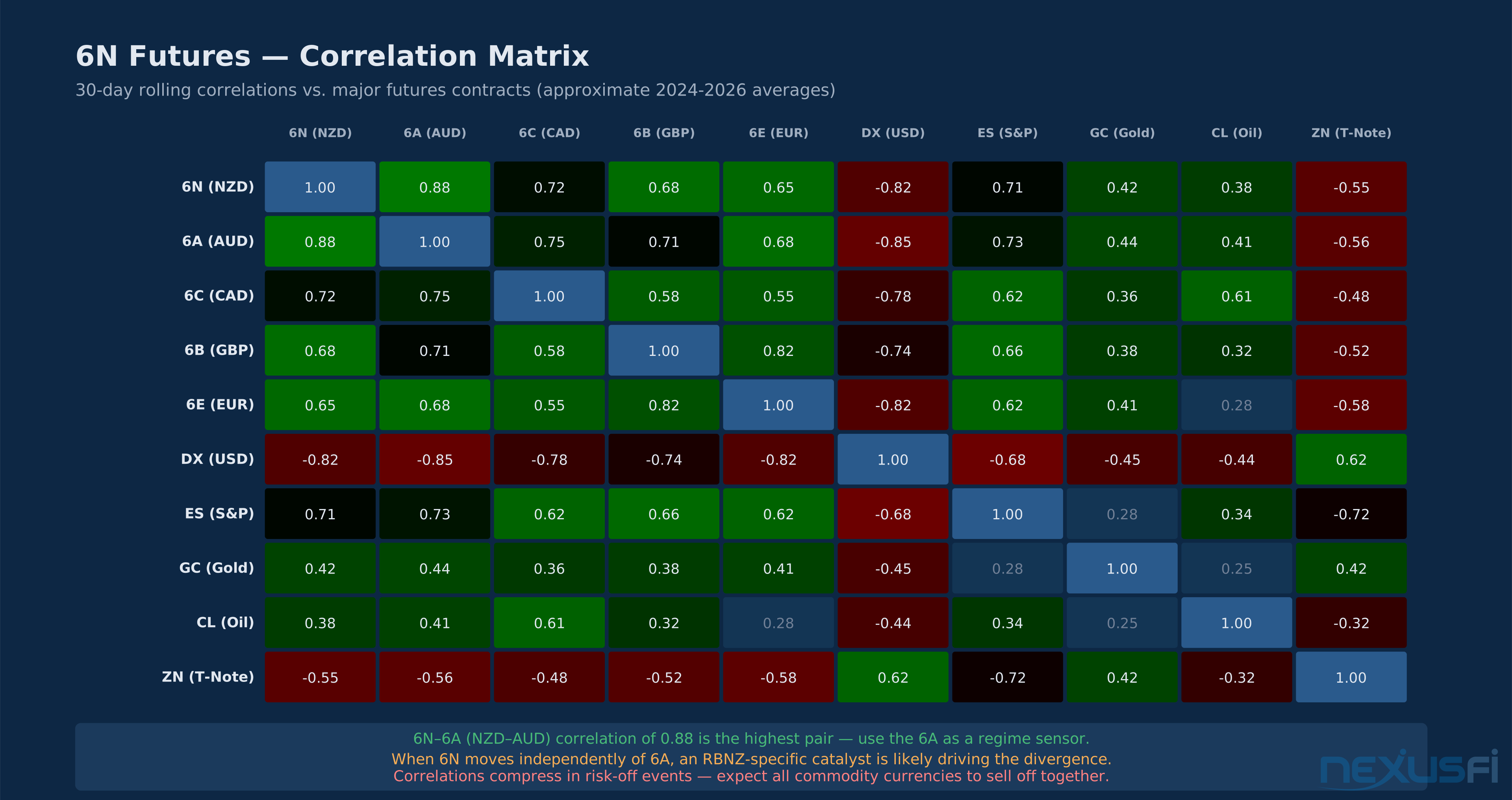
30-day rolling correlation matrix. NZD--AUD correlation of 0.88 is the critical relationship. DXY correlation of -0.82 confirms dollar as primary driver. ES correlation of 0.71 reflects risk-sentiment linkage.
The single most important relationship in 6N trading is the NZD-AUD correlation. These two currencies typically move together with a 30-day correlation of 0.88--nearly identical in most market conditions. Both are commodity currencies, both are risk-sensitive, and both respond similarly to Chinese demand signals and global growth expectations.
But they're not identical. When the RBNZ and RBA diverge in policy stance--one hiking while the other holds, or one cutting faster--the correlation breaks. That divergence creates a regime shift signal: if 6N moves more than 0.5% independently of 6A (AUD), an NZ-specific trigger is likely driving the move. This is when NZD/AUD spread trades become actionable.
Use the 6A (AUD/USD futures) as a regime sensor for 6N:
- Both moving in same direction, similar magnitude → global risk/commodity beta driving, trend is likely to continue
- 6N moving independently of 6A → NZ-specific driver (RBNZ, dairy, local data), look for the trigger
- 6A moves first, 6N follows → AUD leading as a thicker market, lag may offer entry opportunity in 6N
The correlation with ES (S&P 500 futures) at 0.71 confirms that NZD is a risk-on asset. The negative correlation with DXY (-0.82) and T-notes (-0.55) reflects the dollar-inverse and yield-sensitive nature of the pair. Gold and oil show moderate positive correlations (0.42, 0.38) through the commodity channel.
Trading Hours and Liquidity Windows #
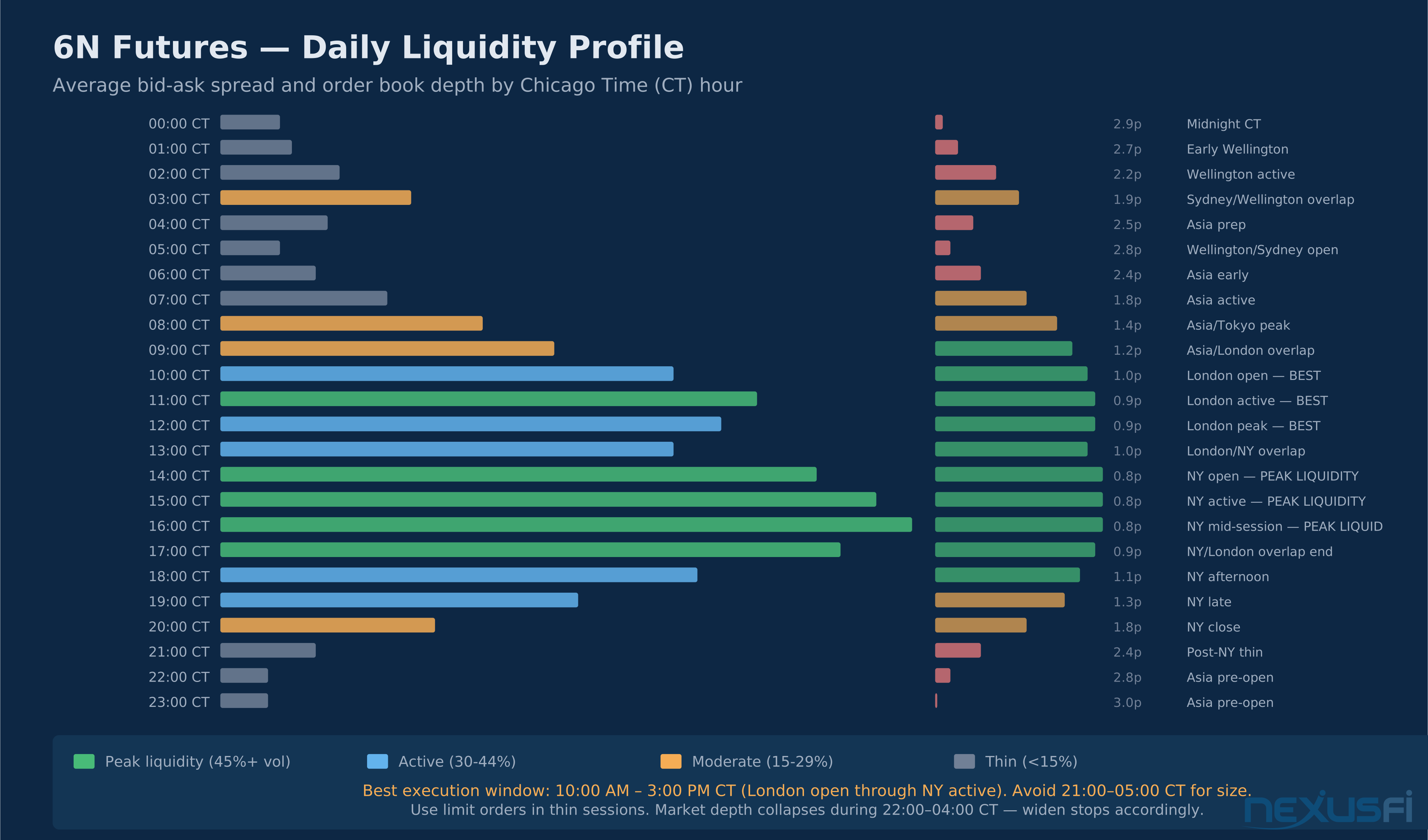
6N daily liquidity profile by CT hour. Peak window: 10:00 AM--3:00 PM CT (London open through NY active). Avoid significant entries during 21:00--05:00 CT thin period.
NZD futures trade 23 hours a day, but not all hours are equal. The order book depth and bid-ask spreads vary dramatically by session. Getting this wrong costs real money in slippage--especially in a thinner contract like 6N.
Best execution window (10:00 AM--3:00 PM CT): London open through New York active session. This is when most institutional players are active, bid-ask spreads are tightest (0.8--1.0 ticks), and the order book is deepest. Enter and exit meaningful positions during this window whenever possible.
Acceptable window (07:00--10:00 AM CT): Asia-London overlap. Tokyo/Sydney flow is active, NZD-specific activity from New Zealand participants. Spreads are moderate (1.0--1.4 ticks). Suitable for setup entries where overnight conditions created a clear technical level.
Thin window (21:00--05:00 CT): Post-NY through early Asia. This is when the 6N order book thins most dramatically. Spreads widen to 2.5--3.0+ ticks. Stop-runs are more common because less liquidity means each order has more price impact. If you hold positions through this window, widen stops so and size down.
Forum veteran @Andrea Unger discussed currency futures liquidity windows with useful observations still applicable to CME FX futures:
[cite:https://nexusfi.com/showthread.php?t=56620&p=833016#post833016]
@Rrrracer also confirmed AUD/NZD liquidity nuances in the context of micro FX contracts:
[cite:https://nexusfi.com/showthread.php?t=45752&p=699361#post699361]
Carry Trade Strategies #
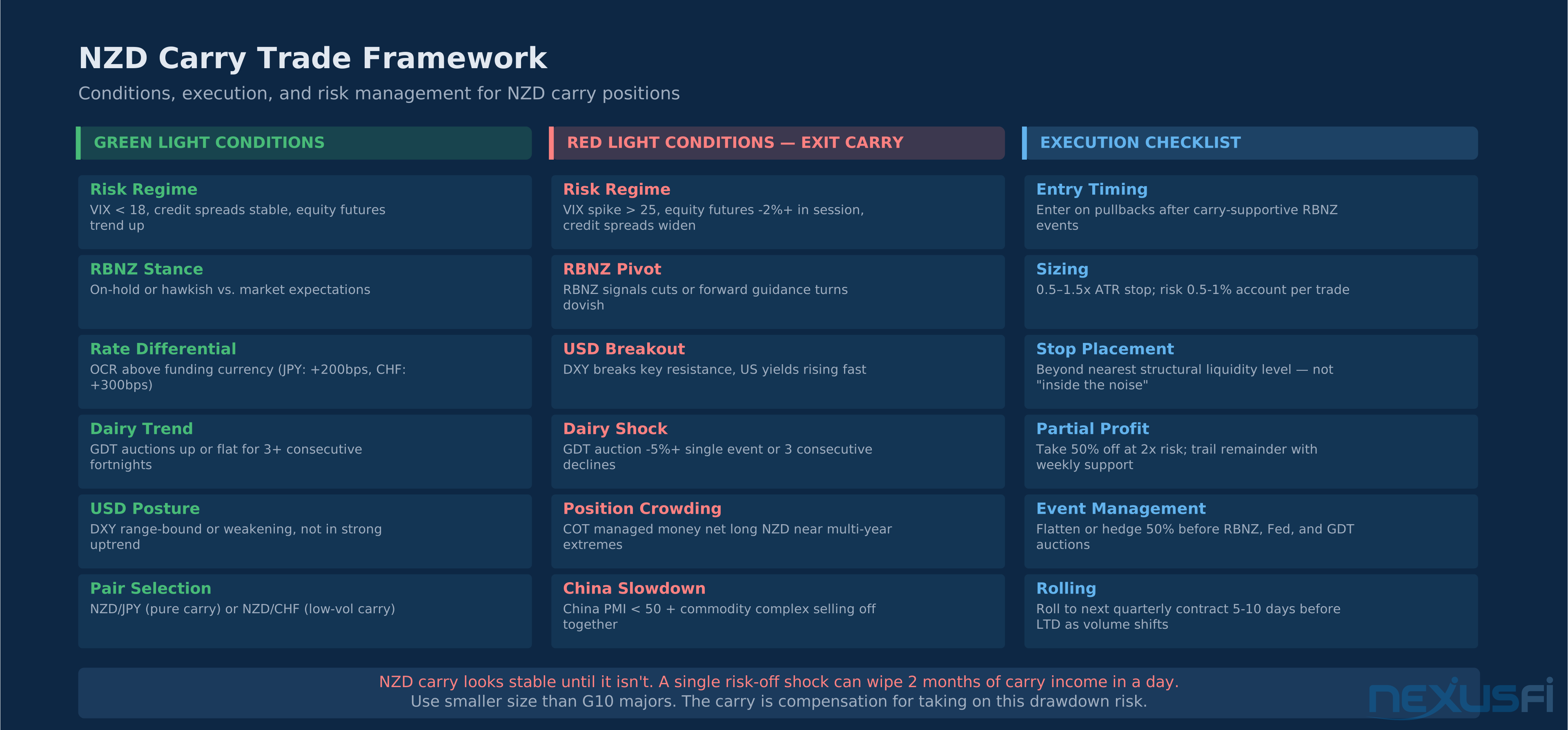
NZD carry trade framework in three columns: conditions to enter, conditions to exit, and execution checklist. All three sections must be evaluated before taking a carry position.
NZD has historically been used as a carry trade vehicle--borrowing in low-yielding currencies (JPY, CHF) and investing in higher-yielding NZD. The carry trade earns the interest rate differential and holds it as long as the currency doesn't depreciate to offset the yield advantage.
The carry trade has one fatal flaw: it's asymmetric. Carry accumulates slowly, over months of daily interest credits. Risk-off events erase it instantly, in hours or days. A 1.5% annualized carry advantage disappears in a week if NZD drops 1.5% in a risk-off shock. This asymmetry is why carry traders watch risk indicators obsessively--VIX, credit spreads, equity futures--and size positions conservatively relative to their total account.
Best carry conditions: VIX below 18, RBNZ hawkish relative to market pricing, dairy prices stable or rising, DXY range-bound. Worst carry conditions: VIX spiking above 25, RBNZ pivoting dovish, China growth scare, Fed more hawkish than expected.
@tigertrader's perspective on momentum vs. mean-reversion vs. carry trade architecture in futures is still one of the best frameworks for understanding why and when each approach works:
[cite:https://nexusfi.com/showthread.php?t=13452&p=427174#post427174]
Trading Strategies #
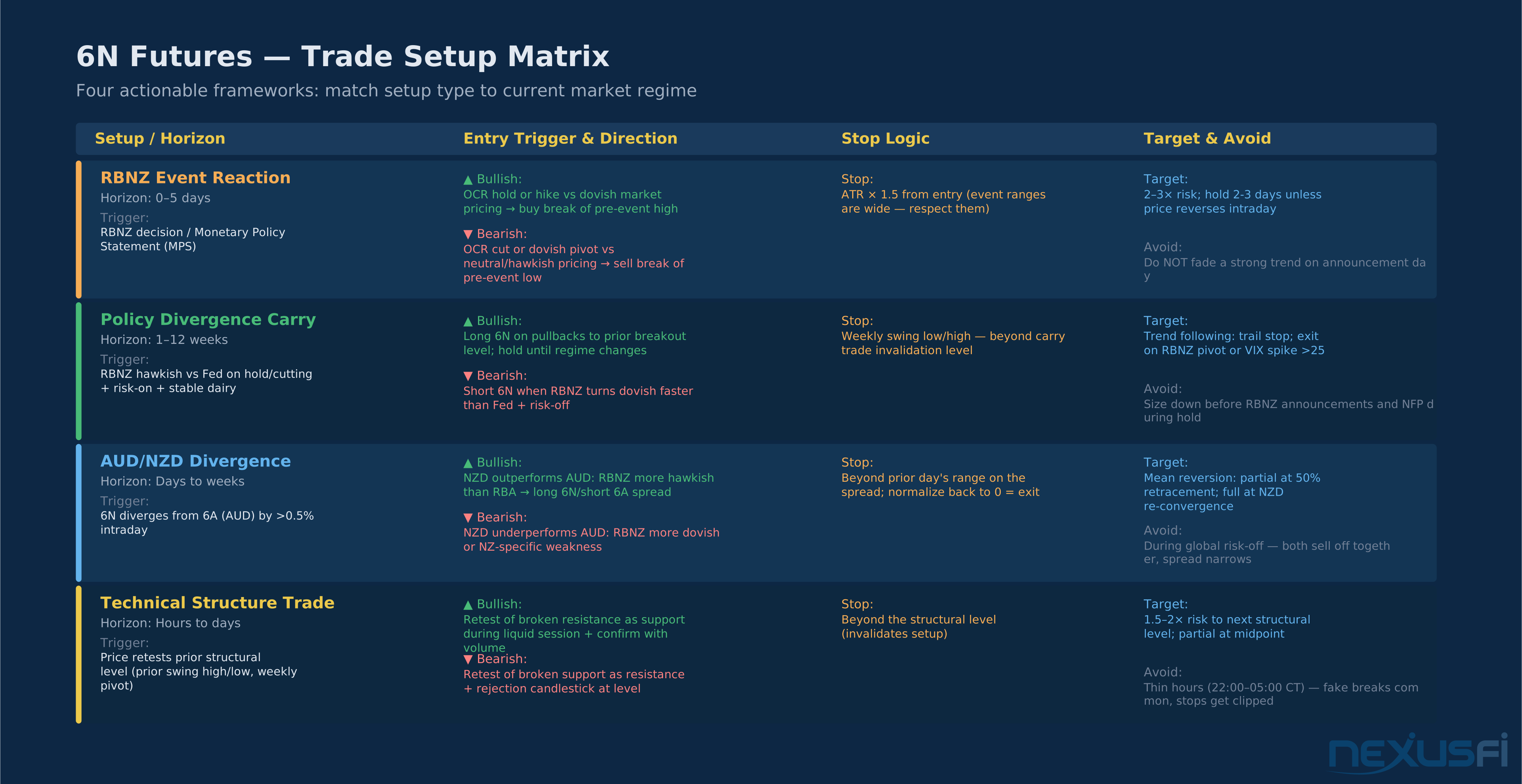
Four trade setup frameworks for 6N: RBNZ event reaction (0--5 days), policy divergence carry (1--12 weeks), AUD/NZD divergence (days to weeks), and technical structure trade (hours to days).
RBNZ Event Reaction
The highest-conviction short-term setup in 6N is the post-RBNZ reaction when the decision meaningfully surprises the market. A hawkish surprise--hold or hike when the market priced cuts--sends NZD 0.5--1.5% higher within hours. A dovish surprise does the inverse.
The key is distinguishing "in-line" decisions (no reaction expected) from "surprise" decisions (NZD moves decisively). Track overnight indexed swaps (OIS) or rate futures to establish what the market is pricing before the announcement. If the RBNZ delivers exactly what was priced, the initial move may reverse quickly as positioned traders close event risk. If the RBNZ surprises, the initial move tends to extend over 2--3 sessions.
Policy Divergence Swing Trade
The medium-term 6N trade involves positioning for RBNZ/Fed policy divergence over 1--12 week horizons. When the RBNZ is hawkish relative to the Fed--raising rates or cutting slower than expected while the Fed holds or cuts--NZD tends to outperform. The trade is directional, held through pullbacks, and exited when the divergence closes or risk conditions deteriorate.
This is a carry-adjacent trade. The interest differential provides a daily credit while you wait for the price trend to develop. Use weekly support/resistance for stop placement, and exit when either the RBNZ pivots or a risk-off event forces the exit.
Technical Structure Trades
NZD/USD is technically tradeable on all timeframes, but technical analysis works best when it aligns with macro context. A retest of a prior breakout level that also aligns with a support zone in risk-on conditions is a high-conviction entry. The same retest during a risk-off environment or on thin overnight hours is a trap.
The most reliable technical levels in 6N are: prior week's high and low, prior day's high and low (especially during RTH), and major round-number levels (0.5900, 0.6000, 0.6100, 0.6200 etc.). These levels cluster liquidity and tend to produce meaningful reactions when tested during liquid sessions.
@SMCJB's discussion of currency futures spread and carry dynamics provides excellent context for understanding where technical levels develop from fundamental flows:
[cite:https://nexusfi.com/showthread.php?t=12965&p=818082#post818082]
Position Sizing and Risk Management #
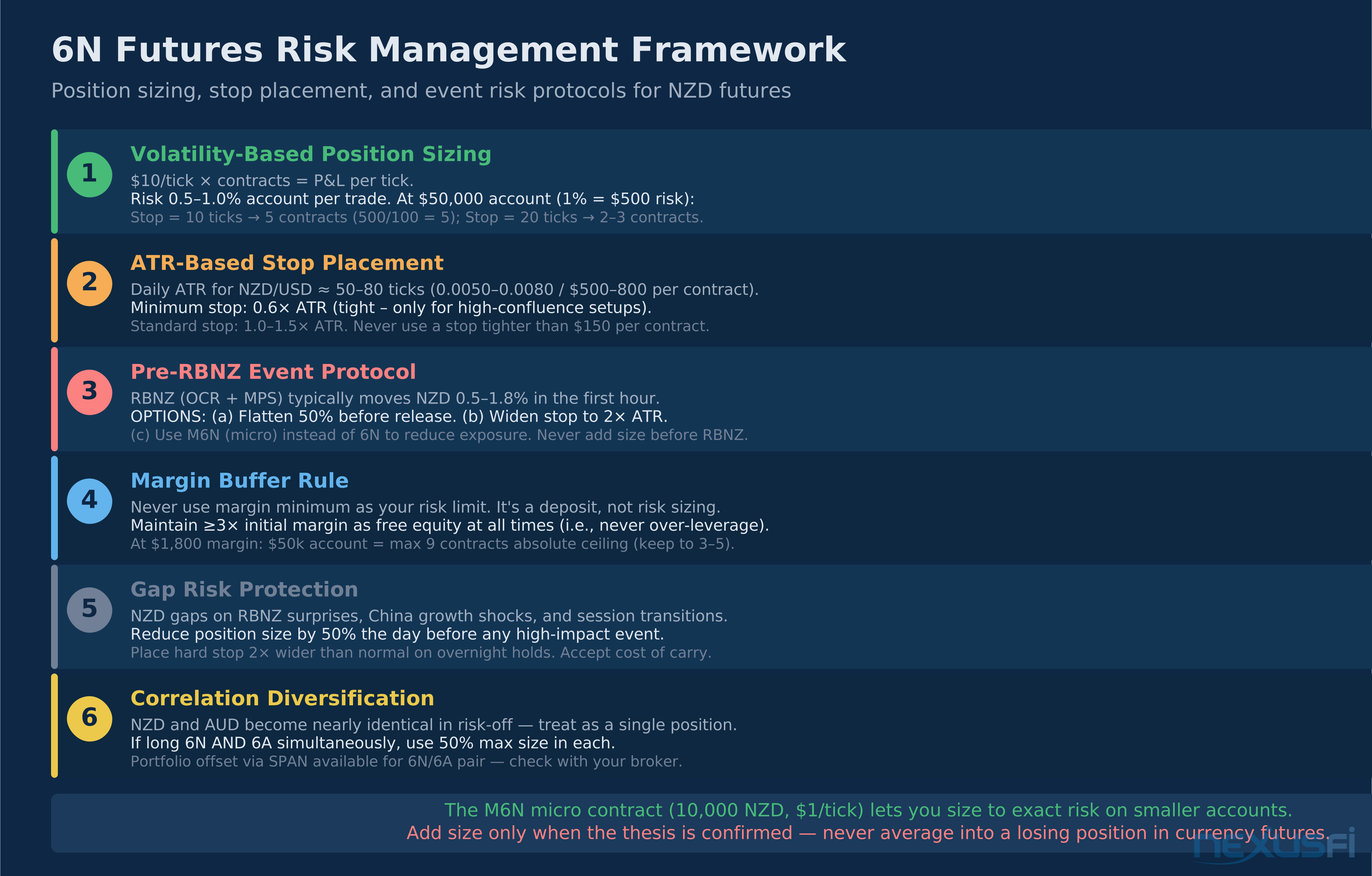
Six risk management rules for 6N futures. Rule 4 (margin buffer) and Rule 8 (correct risk math) are the most commonly violated by new futures traders.
Risk management in 6N starts with one non-negotiable concept: margin is not your risk limit. At current margin levels of roughly $1,800 per contract, a $50,000 account could theoretically hold 27 contracts--$1.65 million in NZD notional. That's not a strategy, it's a path to ruin. Size from how much you're willing to lose per trade, not from how many contracts the margin will allow.
The practical approach: decide your risk per trade (commonly 0.5--1.0% of account). Divide by your stop distance in ticks. At $10 per tick: $500 risk ÷ 10-tick stop = 5 contracts. $500 risk ÷ 20-tick stop = 2.5 (round to 2) contracts. This math keeps your position size automatically scaled to volatility.
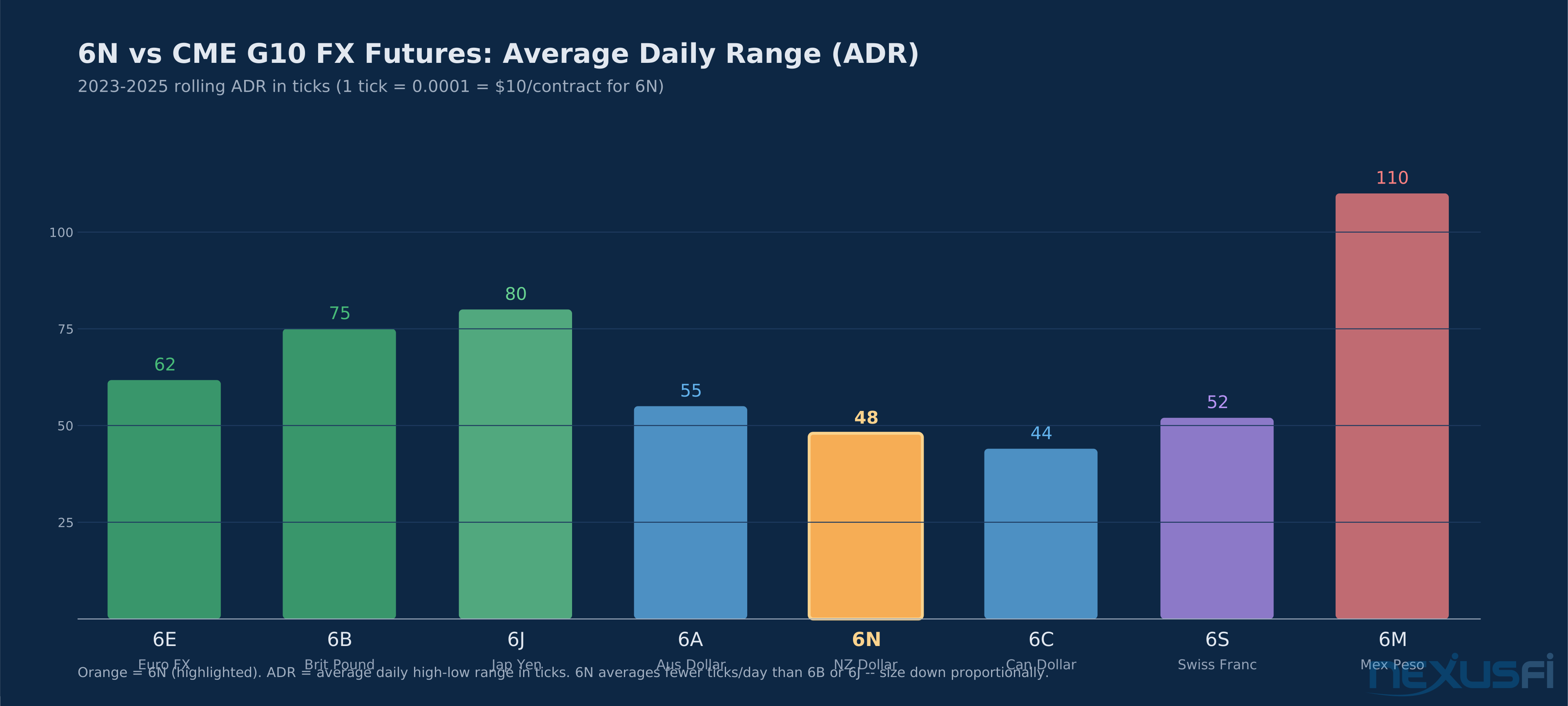
Daily ATR for NZD/USD runs 50--80 ticks (0.0050--0.0080) in normal conditions, wider during event risk. A standard stop of 1.0--1.5× ATR means 50--120 ticks per contract. At $10/tick, that's $500--$1,200 per contract in expected stop loss. Size your contracts to keep total dollar risk within your per-trade risk budget.
Forum member @tigertrader's ATR-based sizing framework from the Psychology and Money Management forum remains highly applicable:
[cite:https://nexusfi.com/showthread.php?t=17811&p=193226#post193226]
@grausch's dynamic trailing stop methodology with ATR is directly usable in 6N:
[cite:https://nexusfi.com/showthread.php?t=36966&p=519512#post519512]
Event Risk Protocol
Before RBNZ announcements, decide on your event risk plan before the release. Three options:
- Flatten 50%: Reduce position by half before the event, then re-enter if the reaction confirms your thesis
- Widen stop: Keep full size but expand the stop to 2× ATR to accommodate the event range
- Downsize to M6N: Temporarily convert full-sized 6N positions to micro M6N for the event window, then rebuild in 6N after
Holding full size through RBNZ with a tight stop is the single most common account-blowing mistake in NZD futures trading.
Contract Rolls #
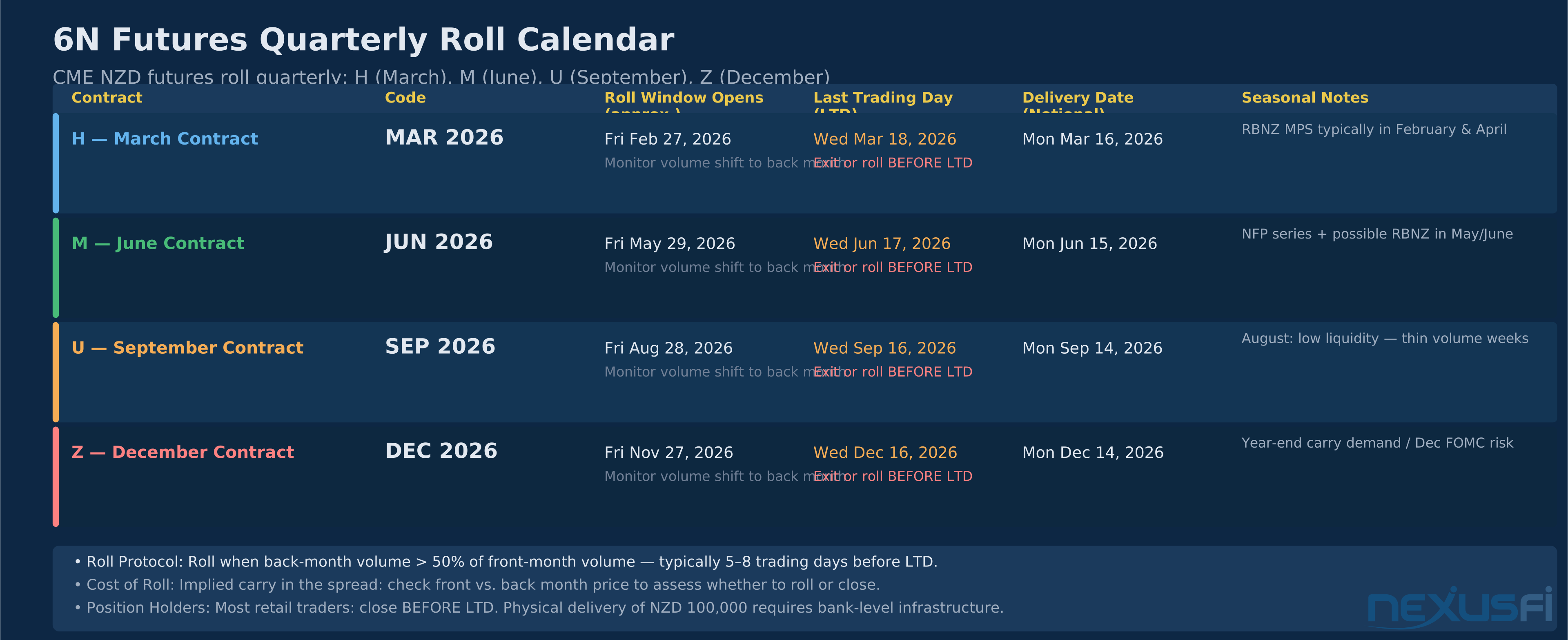
6N quarterly roll calendar. Roll when back-month volume exceeds 50% of front-month volume — typically 5--8 trading days before Last Trading Day.
NZD futures deliver physical NZD on the third Wednesday of each contract month. Retail traders do not take delivery. If you're holding a position and the Last Trading Day is approaching, roll to the next quarterly contract by selling your current contract and buying the deferred month.
The roll timing decision is straightforward: when the back-month contract's daily volume consistently exceeds 50% of front-month volume, the market has migrated. This migration typically starts 5--10 trading days before the Last Trading Day. Roll then, not two days before LTD when spreads widen and fills deteriorate.
The cost of rolling involves the bid-ask spread on two contracts (exit old, enter new) plus the implicit carry embedded in the spread between contract months. Check the price differential between the front and back month--if the back month is priced at a premium to fair value, rolling has a cost. If at a discount, rolling may have a credit. This is the implied carry of the roll.
@Fat Tails provided the clearest explainer of CME FX futures rollover mechanics in the Currencies subforum--the logic applies directly to 6N:
[cite:https://nexusfi.com/showthread.php?t=30964&p=395368#post395368]
Common Mistakes #
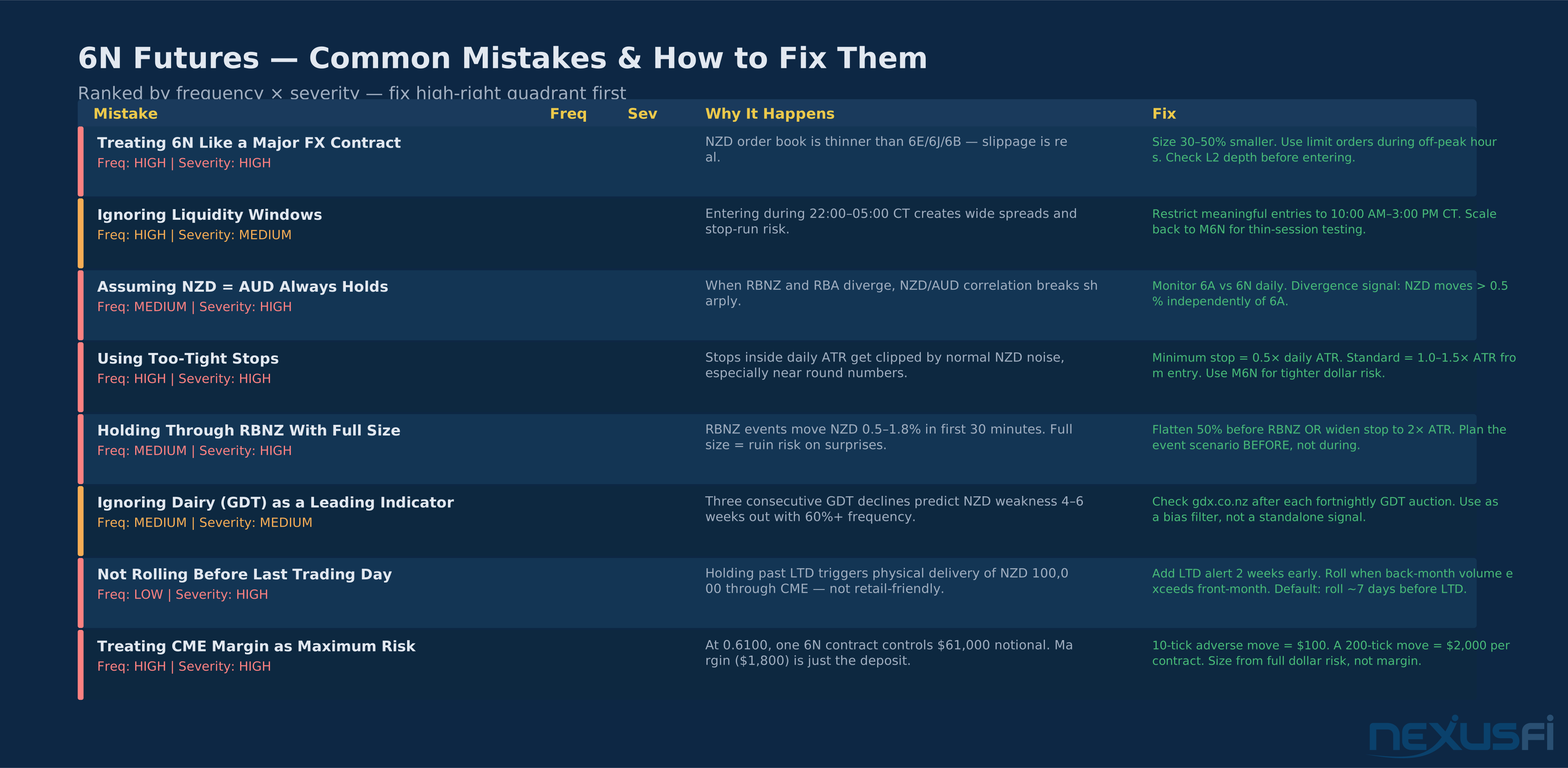
Common 6N mistakes ranked by frequency × severity. The top-right quadrant (high-frequency + high-severity) represents the most costly errors to fix first.
Treating 6N Like a Major FX Pair
NZD/USD is the fourth-most traded G10 FX pair in spot markets, but the 6N futures contract is much thinner than 6E, 6J, or 6B. Order book depth collapses during thin sessions, spreads widen meaningfully, and stop-runs are more frequent near obvious technical levels. Size 30--50% smaller than you would in a major pair, and use limit orders during non-peak hours.
Using Stops Inside the Daily ATR
New 6N traders frequently place stops at "obvious" technical levels that fall within normal daily price noise. A 20-tick stop gets clipped by normal intraday volatility. The minimum stop that has any probability of surviving intraday noise is 0.5× daily ATR (25--40 ticks). Standard is 1.0--1.5× ATR. Use the M6N micro contract if you need to limit absolute dollar risk while maintaining a technically valid stop distance.
Holding Full Size Through RBNZ
The RBNZ Monetary Policy Statement is not a normal news event. NZD can move 0.5--1.8% in the first 30 minutes after an announcement. At full 6N size, that's $500--$1,800 in 30 minutes per contract. Have a pre-defined event risk plan. Do not improvise it after the fact.
Assuming Dairy = NZD Direction
Dairy prices influence NZD with a 2--6 week lag and account for roughly 10% of directional moves. If you trade NZD based solely on GDT auction results, you're ignoring the 90% driven by USD direction, risk sentiment, and RBNZ policy. Use dairy as a confirmation filter, never a primary signal.
Ignoring the Roll Date
Physical delivery of NZD 100,000 through CME is not something retail traders handle. Set an alert two weeks before each Last Trading Day. Roll when volume has migrated. Missing this creates operational and delivery risk that no return expectation justifies.
6N Futures vs. Spot NZD/USD #
Most retail traders see NZD/USD in spot FX platforms. The 6N futures contract covers the same underlying but operates on different mechanics:
- Transparency: CME Globex provides a central limit order book with public price and volume data. Spot FX is traded OTC through bank networks with no consolidated tape.
- Financing: Spot FX positions held overnight pay/receive swap rates based on the interest differential. 6N futures embed the carry in the contract price--no overnight financing charges.
- Regulation: 6N futures are regulated by the CFTC. Spot FX retail has lighter oversight depending on jurisdiction.
- Tax (US): Section 1256 treatment applies to 6N futures: 60% long-term / 40% short-term capital gains regardless of holding period. This is much better than spot FX short-term treatment for active traders.
- Margin: CME margin is portfolio-based (SPAN). Spot FX margin is broker-defined, often considerably less conservative.
For traders on NinjaTrader or similar platforms, 6N integrates cleanly with DOM, footprint, volume profile, and all the institutional-grade analytics that spot FX typically lacks.
New Zealand Economy and the NZD #
Understanding why the kiwi behaves as it does requires a basic map of New Zealand's economy. NZ is a small, open economy (~5.2 million people) with a disproportionate role in global dairy supply. Fonterra, a farmer-owned cooperative, is one of the world's largest dairy companies and New Zealand's largest exporter. Dairy products represent roughly 25--30% of NZ's merchandise exports.
This concentration creates a structural relationship between global dairy prices, NZ terms of trade, and RBNZ inflation dynamics. When dairy prices are strong, NZ export income rises, GDP grows, inflation pressures build, and the RBNZ may tighten--all bullish for NZD. When dairy prices fall, the reverse unfolds over months.
New Zealand's trade exposure to China (roughly 30% of NZ exports go to China) adds another dimension. NZD is more sensitive to Chinese demand signals than most non-Asia-Pacific pairs. A Chinese economic contraction affects NZD through both the direct trade channel (dairy exports) and the indirect risk channel (commodity currencies sell off with EM when China slows).
The tourism sector (which was nearly 20% of NZ export earnings before COVID) has partially recovered but remains below pre-pandemic levels. Tourism income affects the current account balance but not the immediate market dynamics of 6N trading.
Event Calendar #
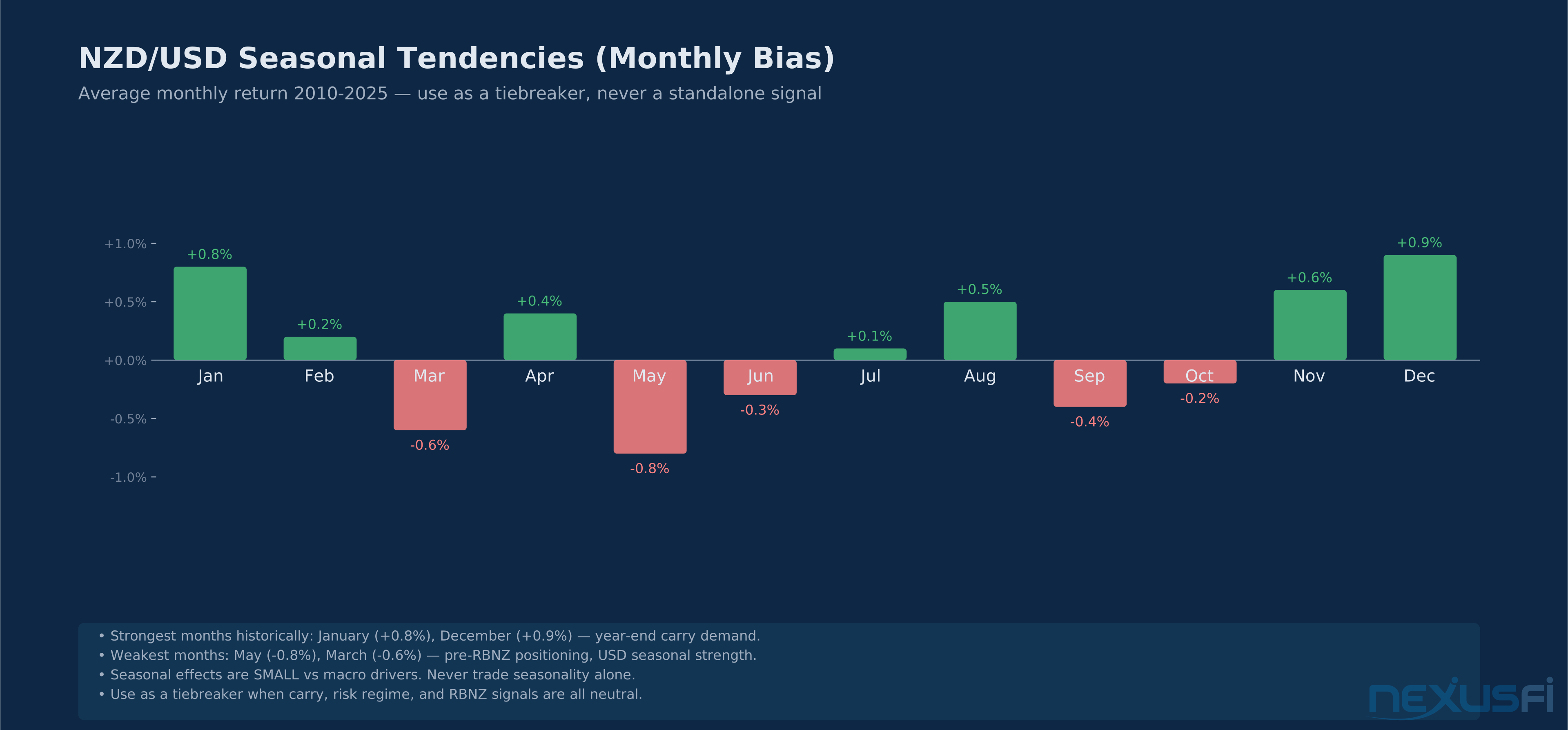
NZD/USD average monthly return 2010-2025. Use as a tiebreaker filter — strong negative months (Mar, Jun, Sep) reinforce short setups; positive months (Jan, Apr, Nov) reinforce long setups. Never trade seasonality alone.
Build a recurring calendar for these events. NZD volatility clusters around predictable dates:
- RBNZ Monetary Policy Decisions (8 per year, full MPS 4 times): Highest-impact events for 6N. Available at rbnz.govt.nz.
- Global Dairy Trade Auctions (every two weeks): Forward-looking indicator for NZD. gdx.co.nz publishes results.
- NZ CPI (quarterly): Core driver of RBNZ rate path expectations.
- NZ Employment / Labour Cost Index (quarterly): Secondary RBNZ input.
- FOMC Rate Decisions (8 per year): USD leg trigger. Dominates 6N when FOMC surprise conflicts with NZ-specific direction.
- US Non-Farm Payrolls (first Friday monthly): Broad risk and USD trigger.
- China PMI (monthly): Risk sentiment and commodity demand proxy.
- Contract Roll Dates: Quarterly. Track via CME product page.
The most dangerous combination: RBNZ and FOMC in the same week. NZD can gap in unexpected directions when two major policy events create conflicting signals within days of each other.
Practical Tips for 6N Traders #
Thinness is a feature, not a bug. 6N's lower liquidity means momentum runs further and reversals are sharper. Reduce size by 25-30% versus what you'd use in 6E or 6A, and let price travel. The same move in 6N delivers more ticks per dollar of risk than the heavier majors.
- Start with M6N: If you're new to NZD futures, the micro contract ($1/tick) lets you learn the contract mechanics without the full-sized exposure. Use it to practice rolling, to hold through events at reduced risk, or to calibrate your position size.
- Check GDT auction results: Log the GDT result every two weeks. You don't need to trade it immediately, but tracking the trend (3+ consecutive gains or declines) builds pattern recognition over time.
- Compare 6N to 6A before entering: If NZD is making a move that AUD isn't matching, something NZ-specific is happening. Know why before you trade it.
- Add the RBNZ calendar to your trading calendar: RBNZ dates are on rbnz.govt.nz months in advance. Block them out and plan your event risk protocol well ahead of the release.
- Use COT data for positioning extremes: The CFTC Commitment of Traders report (released weekly, data through prior Tuesday) shows how managed money is positioned in 6N. Extreme net longs or shorts often mark high-risk entry points for directional bias.
Summary #
The 6N New Zealand Dollar futures contract offers traders a regulated, efficient vehicle for NZD/USD exposure. The contract is thinner than major FX futures, which creates both risk (slippage, stop-runs) and opportunity (cleaner momentum when a single flow dominates). Successful 6N trading requires:
- Understanding the driver hierarchy: USD direction first, RBNZ expectations second, risk sentiment third, dairy and China as medium-term filters
- Using the 6A (AUD) as a regime sensor to distinguish NZ-specific moves from global factors
- Sizing for the liquidity window you're trading--full size during London-NY overlap, smaller during thin hours
- Building a pre-RBNZ event risk protocol and sticking to it
- Sizing from dollar risk math, not margin minimums
- Rolling before Last Trading Day, not into it
Get the regime identification right, and 6N becomes a tradeable, liquid vehicle for global macro expressions--with all the advantages of exchange-regulated futures infrastructure and none of the opacity of spot FX.
Knowledge Map
Prerequisites
Understand these firstGo Deeper
Build on this knowledgeCitations
- — Rollover date vs Expiration date (2014) 👍 6“You want to trade the most liquid contract, therefore if you hold a position you want to roll it to the new contract when the old and new contract have about the same liquidity. Many traders roll on the day when the volume of the new front month contract first exceeds the volume of the old front month contract.”
- — Currency Options & Currency Carry? (2019) 👍 5“With June worth 112.39 and September worth 113.24 there is 0.85 USD or 0.76% carry for the 3 months. Forward currency rates are very interest rate dependent. If you sell a high yielding currency to buy a low yielding one you can expect to lose 7%/year on the funding/interest spread.”
- — Are there any Currency Futures GBPAUD & GBPNZD? (2020) 👍 1“The Liquid CME Futures (AUD/6A, GBP/6B, CAD/6C, EUR/6E, JPY/6J, MXN/6M, NZD/6N) are all USD crosses. While they do list several other crosses (mostly vs EUR) many of these have little to no volume.”
- — The probability of market orders getting filled (2023)“EUR:USD or 6E is in contango because US rates are a lot higher than EUR rates. Currency Forwards are arbitrable versus the interest rates. So the forward rate is just the spot rate * (interest rate 1/interest rate 2). Since its arbitrable there's normally some algo keeping it in line.”
- — Is Volume data in Currency Futures Important? (2010) 👍 4“Due to lower liquidity, currency futures show larger spikes in times of excitement. The liquidity and flexibility of the FOREX spot and forward markets explains that only a small fraction of the volume is traded via currency futures. However, I have found volume in currency futures to be relevant -- it does give accurate signals.”
- — Big discrepancy 6E/@EU# vs EURUSD spot (2011) 👍 5“Friday is rollover day for 6E. IQ feed switches from the old front month contract to the new front month contract at the close of the session on Thursday. The large down bar is simply the rollover gap. It is obvious that the FOREX cash market does not show any rollover gaps.”
- — The probability of market orders getting filled (2023)“6E has exchange listed spread contracts. In almost every case the exchange listed spreads will give you better fills than legging the individual months. If you pull those up you will see that most are 1 or 2 ticks wide, hundreds of contracts up. When rolling, use the exchange-listed calendar spread rather than legging individually.”
- — Cmegroup.com (2024)
- — Rbnz.govt.nz (2026)
- — Gdt.co.nz (2024)
- — Cmegroup.com (2024)