



Mexican Peso (6M) Futures: The Complete Trading Guide
Overview #
The Mexican Peso--CME 6M futures contract--is a carry trade vehicle, EM risk proxy, U.S.-Mexico trade barometer, and live feed of Fed-Banxico policy divergence in one. If you can read those four layers, you can read 6M.
This isn't a niche contract. 6M is the most actively traded EM currency future globally, with OI exceeding 200,000 contracts during active periods and notional exposure of ~-30k per contract--compact enough for retail, meaningful enough for macro.
6M's layered driver structure is what makes it distinct: rate differential, trade flows, EM risk appetite, and politics all influence price simultaneously. That complexity is real--but so is the edge for traders who master it.
This guide covers everything: contract mechanics, what actually moves the peso, how to read sessions, when to trade and when to sit, and the practical setups that work.
Contract Specifications #
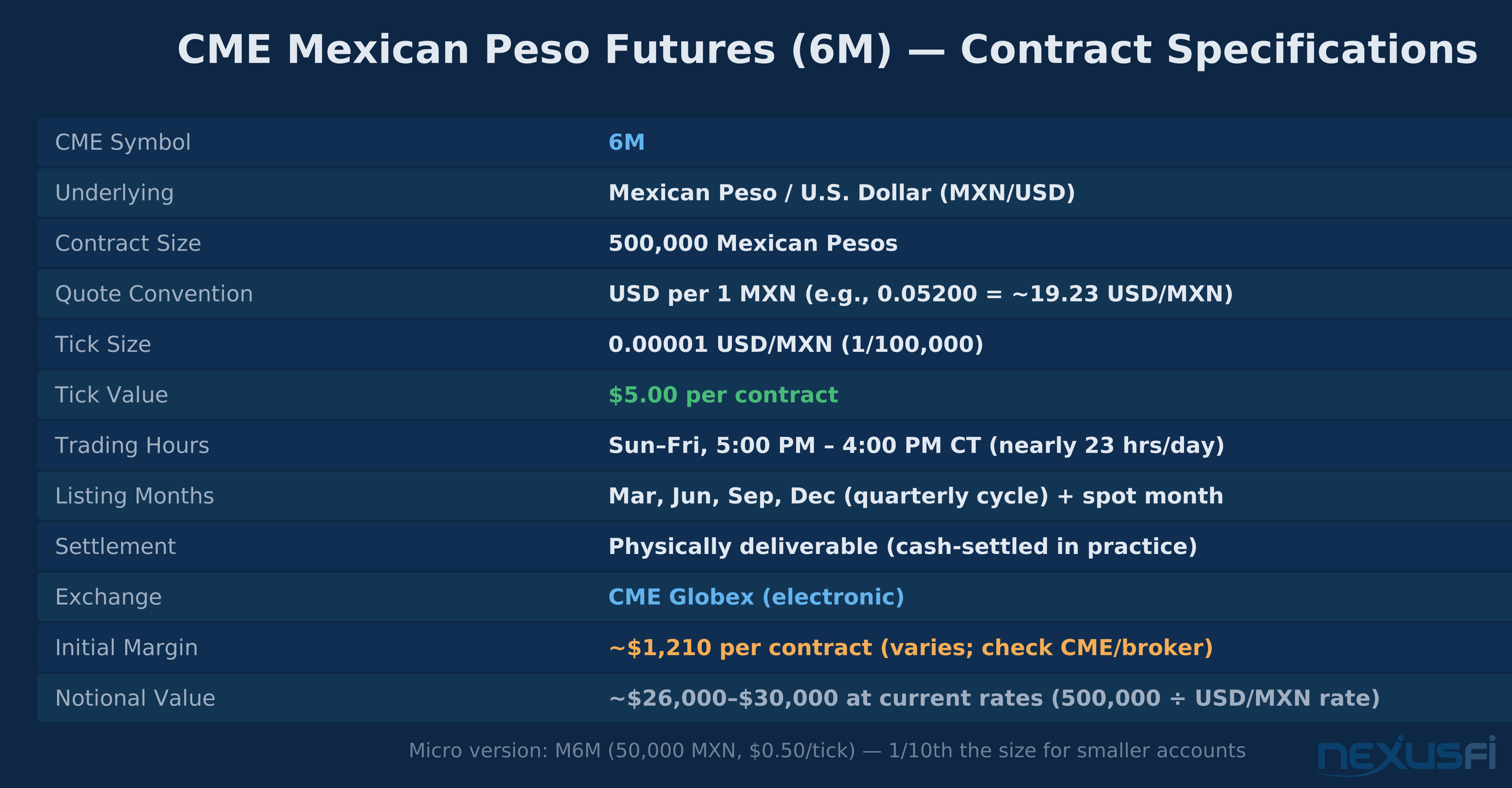
CME 6M futures contract specifications. Tick value of $5.00 per minimum move makes position sizing straightforward--verify current margin with your broker before trading.
The CME Mexican Peso futures contract (symbol: 6M) has been listed on CME Group since 1972--one of the original financial futures products. It standardizes peso exposure into a clean, exchange-traded format.
Core Specs
- Contract size: 500,000 Mexican Pesos per contract
- Quote convention: USD per 1 MXN (e.g., 0.052000 ≈ 19.23 USD/MXN spot)
- Tick size (Globex): 0.00001 USD/MXN
- Tick value: $5.00 per contract (0.00001 × 500,000)
- Trading hours: Sunday--Friday, 5:00 PM to 4:00 PM Central Time (nearly 23 hours/day)
- Listing months: March, June, September, December + spot month
- Settlement: Physically deliverable; most traders roll or close before expiry
- Margin: ~$1,210 initial / ~$1,100 maintenance (varies; check your broker)
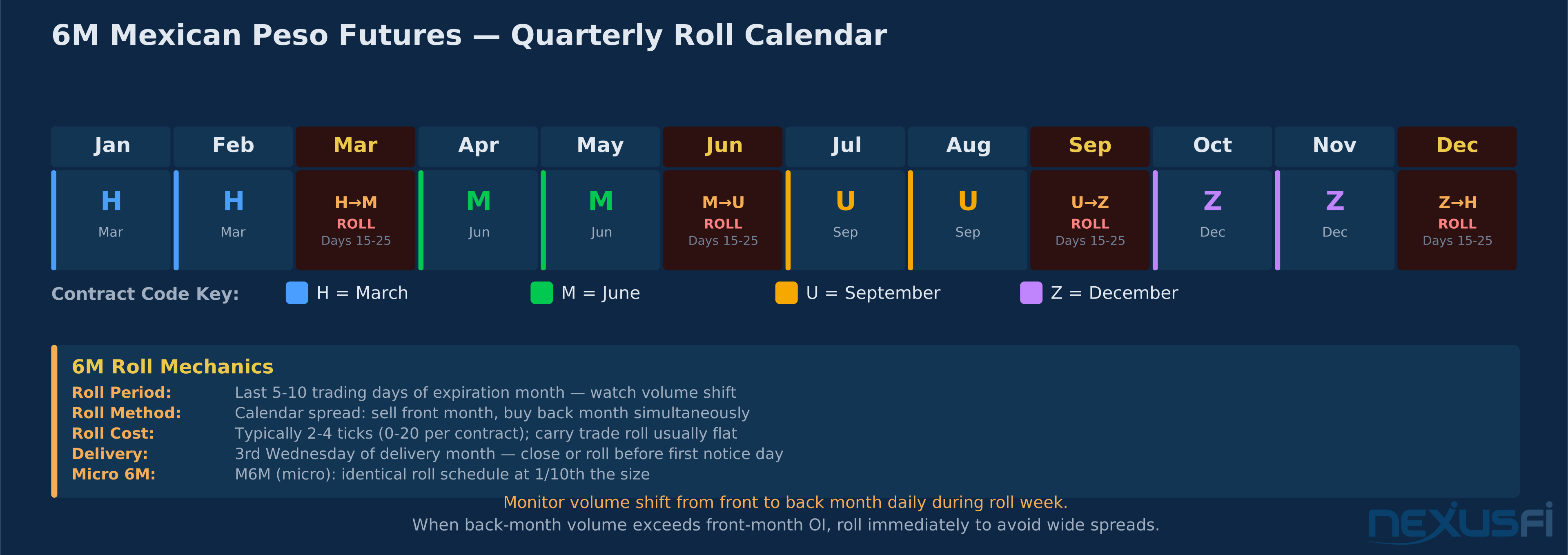
6M quarterly roll calendar: H (March), M (June), U (September), Z (December). Roll during the last 5-10 trading days when back-month volume overtakes front-month OI.
P&L Math
This compact tick value makes 6M efficient for retail traders. Compare it to the standard EUR/USD futures (6E), where each tick is $6.25--6M runs slightly cheaper per tick and at lower notional exposure, making it approachable without sacrificing meaningful macro exposure. For even smaller accounts, CME also lists the Micro Mexican Peso futures (M6M): 50,000 MXN contract size, $0.50/tick--exactly 1/10th the standard.
As NexusFi member @rambler noted when comparing micro currency futures to their standard counterparts, the micro series "gives you the same FX exposure at a fraction of the capital requirement," which holds true for M6M vs. 6M. See the Micro E-mini guide for the parallel logic applied to equity index contracts.
What Actually Moves 6M: The Four-Layer Framework #
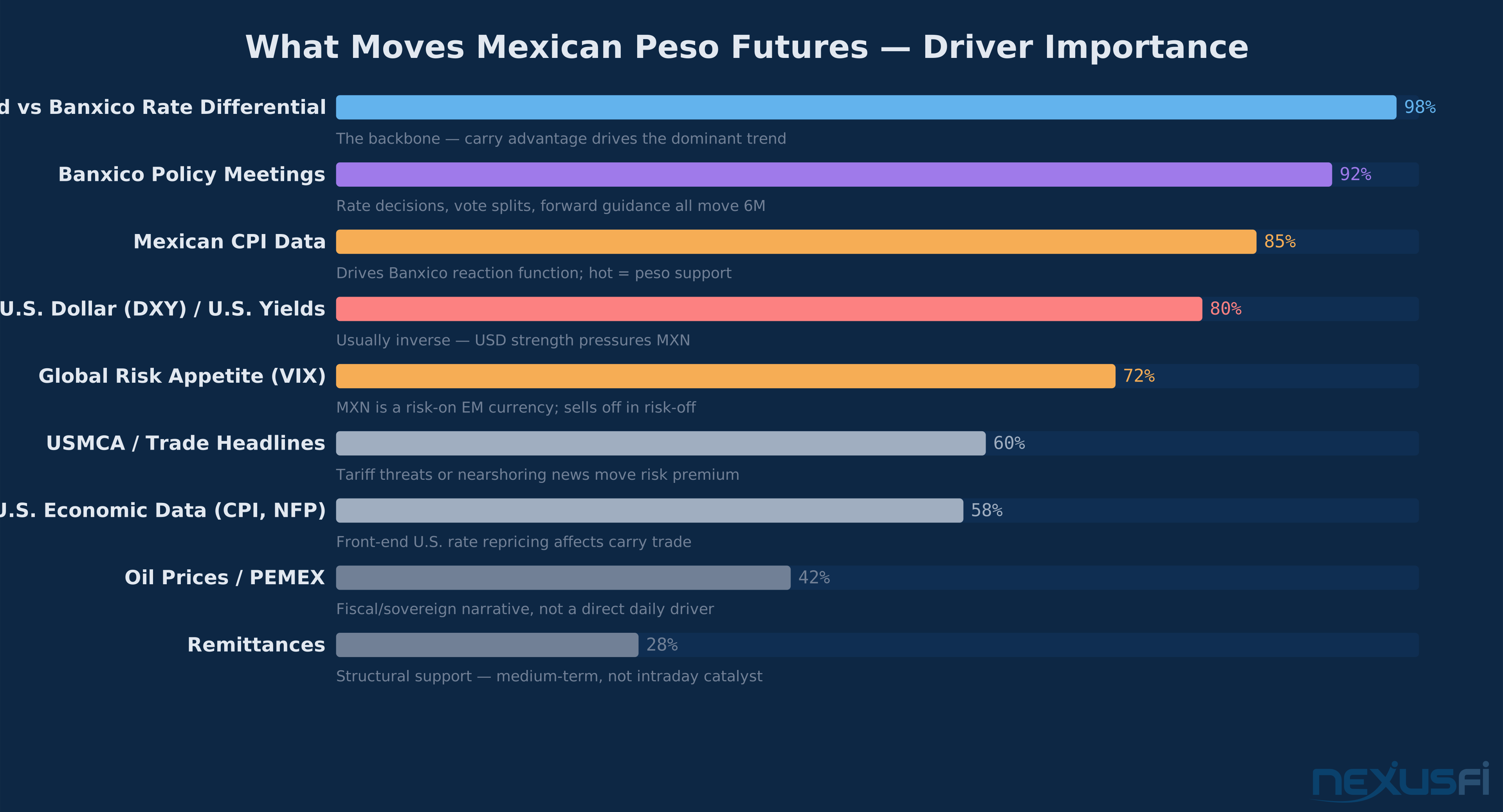
Driver importance for 6M futures. The Fed/Banxico rate differential is the backbone--everything else is secondary. If rates aren't supporting your directional view, the trade is weak.
6M doesn't move like equity futures. No earnings calendar, no COT structure like commodities, no single dominant data point like ZN. You need to hold four macro layers in mind simultaneously.
Layer 1: Fed vs. Banxico Rate Differential (The Backbone)
6M's dominant trend almost always follows the Banxico-Fed rate spread. When Mexico's rate premium widens, peso-denominated assets attract yield capital and 6M rises.
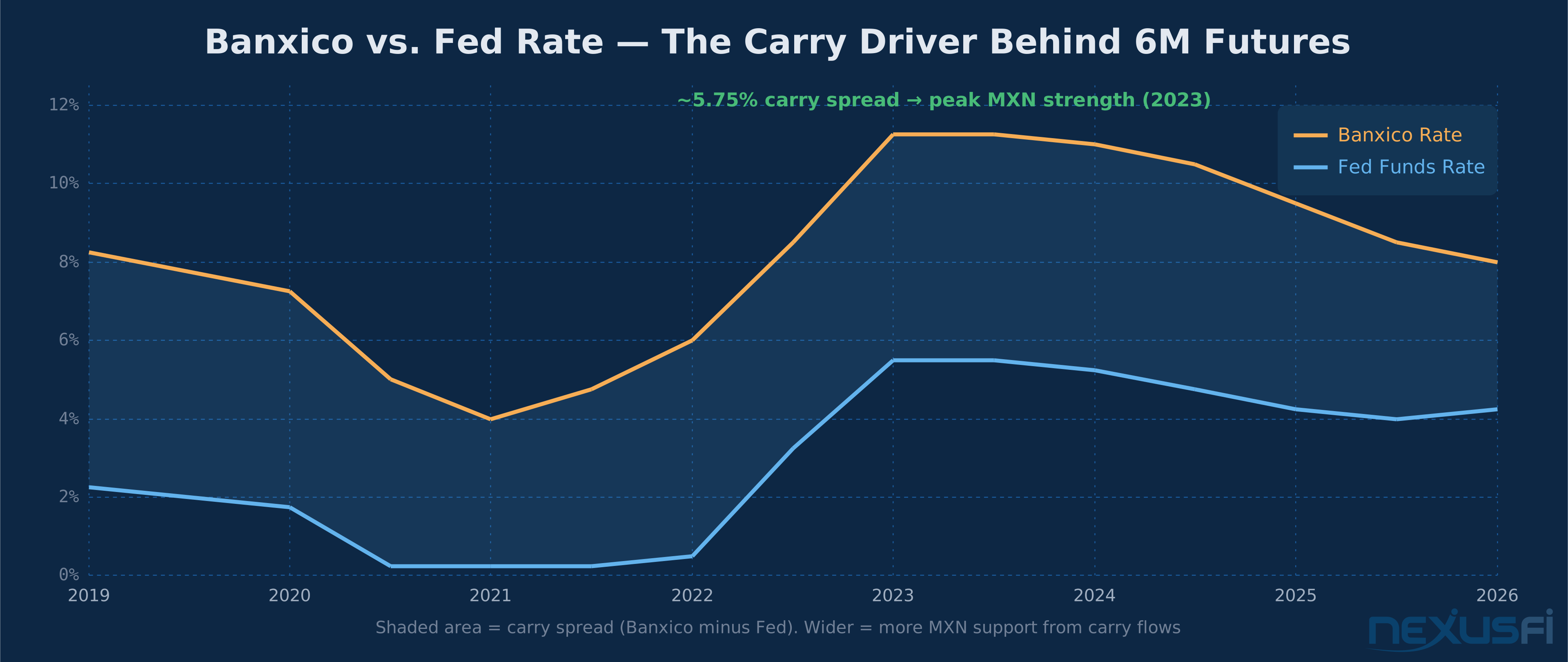
Banxico vs. Fed policy rate (2019--2026). The 2023 carry rally that sent USD/MXN to 16.50 was driven by a ~5.75% spread between Banxico (11.25%) and the Fed (5.50%). When the spread compresses--via Fed hikes or Banxico cuts--peso strength fades.
The math: in 2023, Banxico at 11.25% vs. Fed at 5.50% = 5.75% carry spread that drove USD/MXN from 20.00 to 16.50--one of the strongest EM rallies in recent memory. Spread compression reverses the move.
The FOMC thread on NexusFi captures this well: @tigertrader's observation that "markets that are heavily hedged have less of a chance of an outsized move" applies directly to 6M around Fed meetings--when the market is positioned for a specific rate path, the reaction is often in the direction that forces the most painful unwind, not the expected direction. Read how to trade economic data releases for the broader framework on event-driven positioning in futures.
Layer 2: Banxico Policy Meetings (The Single Most Important Event)
Holding 6M unhedged through a Banxico meeting means accepting binary risk on the rate decision plus the full statement and guidance. Experienced 6M traders either flatten before or size down to a trade they can hold through the whipsaw.
What the market prices is not just the rate change but the path signal. A Banxico that cuts 25bps but signals no further cuts is actually peso-bullish compared to a Banxico that holds but acknowledges deteriorating growth. The peso reacts to the second derivative of rate expectations, not the first.
Key things to watch on Banxico days:
- Vote split: A unanimous cut signals consensus for more; a split vote signals debate, which can be hawkish
- Core inflation framing: If Banxico emphasizes sticky core services inflation, that signals slower easing
- Growth language: Downbeat growth assessment = room to cut = peso risk
- Forward guidance: Explicit guidance about next meeting pace
Execution rule: skip the first minutes of any Banxico or FOMC release. Spreads widen, first moves are usually fakeouts. Wait for the second 30-min bar, confirm direction, enter with defined stop.
Layer 3: DXY and U.S. Yields (The Headwind/Tailwind)
The peso typically trades inversely to the U.S. Dollar Index (DX futures). When the dollar strengthens across the board--usually driven by rising U.S. Treasury yields or risk-off flows--6M comes under pressure regardless of Mexico-specific factors. This isn't perfect correlation, but the directional alignment is strong enough that you should always check DXY and the front-end of the U.S. yield curve before initiating a 6M position.
The 2-year Treasury note is the most useful yield reference for 6M traders. When front-end U.S. yields rise (higher Fed expectations), carry trade attractiveness compresses and EM FX including the peso weakens. When 2Y yields fall (Fed easing expectations), carry trades benefit and MXN strengthens. See ZT futures for the mechanics of 2-year note trading.
The correlation can break during Mexico-specific events — a Banxico surprise or domestic crisis creates divergence from the G10 rate-following pattern. This is where local news beats macro.
Layer 4: Global Risk Appetite
6M is a risk-on EM currency — it strengthens with equity rallies and VIX compression, weakens faster than G10 currencies during risk-off as EM investors reduce exposure rapidly.
March 2020 is the textbook example: USD/MXN 18.50 to 25.00+ as carry trades unwound globally. 6M fell harder due to oil exposure and U.S. border-trade sensitivity.
The COT report is worth watching for 6M positioning. When speculative long positioning becomes crowded--visible in the Managed Money net longs in the CFTC Commitments of Traders report--the peso becomes vulnerable to squeeze when risk sentiment shifts. Crowded carry trades unwind faster than the underlying fundamentals justify.
Secondary Drivers #
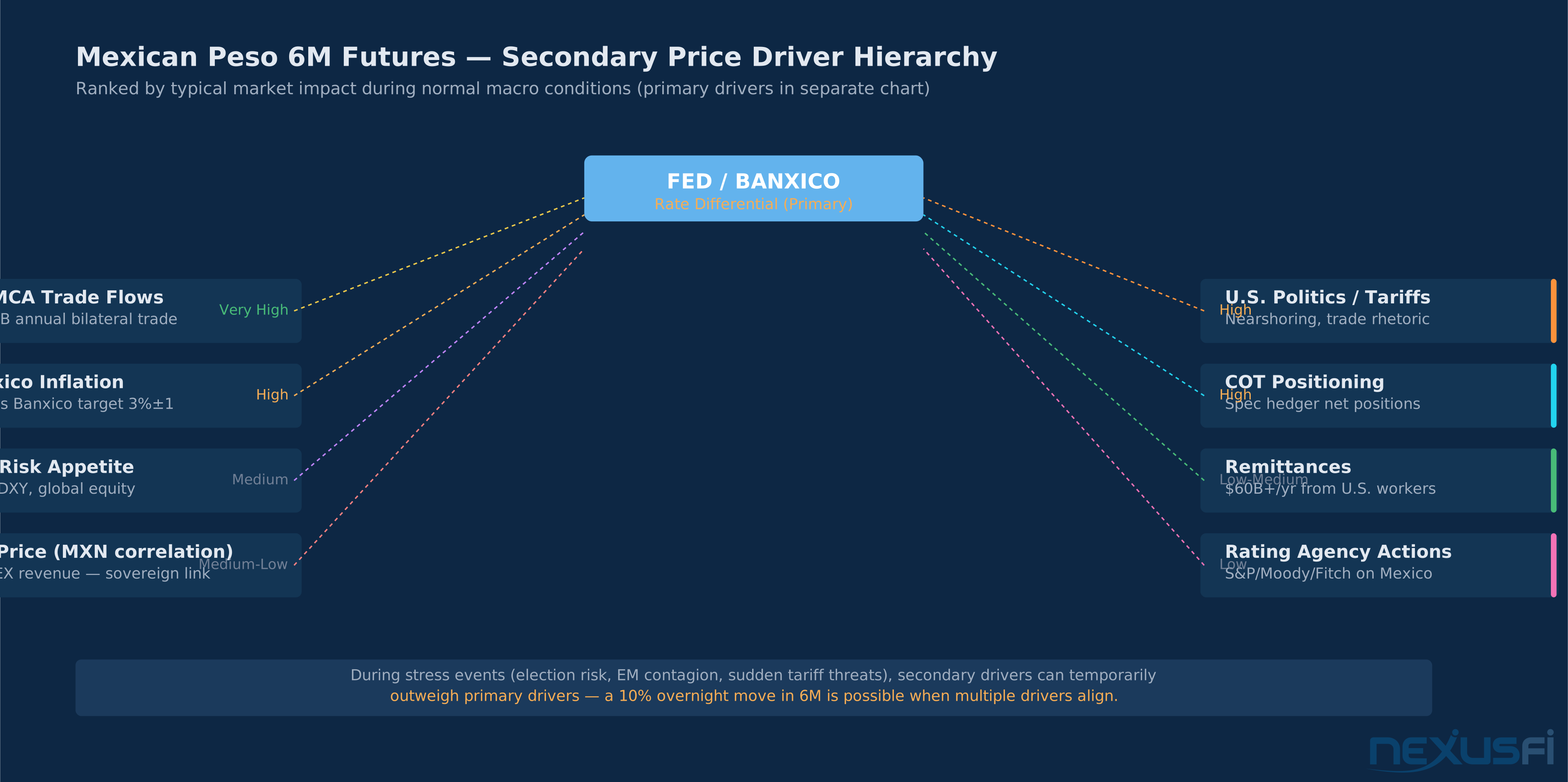
Secondary driver hierarchy for 6M futures. USMCA trade flows, Mexico CPI, EM risk appetite, and oil prices layer on top of the Fed-Banxico rate differential.
USMCA Trade and Nearshoring
Mexico's economy is deeply integrated with the U.S. via USMCA trade flows. The post-2022 nearshoring narrative — multinationals relocating supply chains from China closer to the U.S. border — has added a structural tailwind for Mexico and the peso.
Tariff and trade headline risk hits 6M fast. The 2019 immigration-tariff standoff moved USD/MXN sharply within hours on announcement — and retraced equally fast on de-escalation.
Oil Prices and PEMEX
Mexico's oil production (via PEMEX) affects fiscal revenues and the peso, but CL-MXN correlation is weaker than most traders expect. Sustained oil trends matter; single-session moves rarely translate to 6M.
That said, sharp crude oil moves can affect Mexico's sovereign credit narrative and broader EM risk appetite, both of which matter to 6M. CL is worth watching as a secondary indicator, especially when it's making large directional moves. See CL futures for the crude oil contract mechanics.
Remittances
Mexico receives $60B+ annually in remittances from U.S.-based workers — a structural peso bid that supports MXN even during broader EM weakness.
The Price History: Five Macro Regimes Every 6M Trader Should Know #
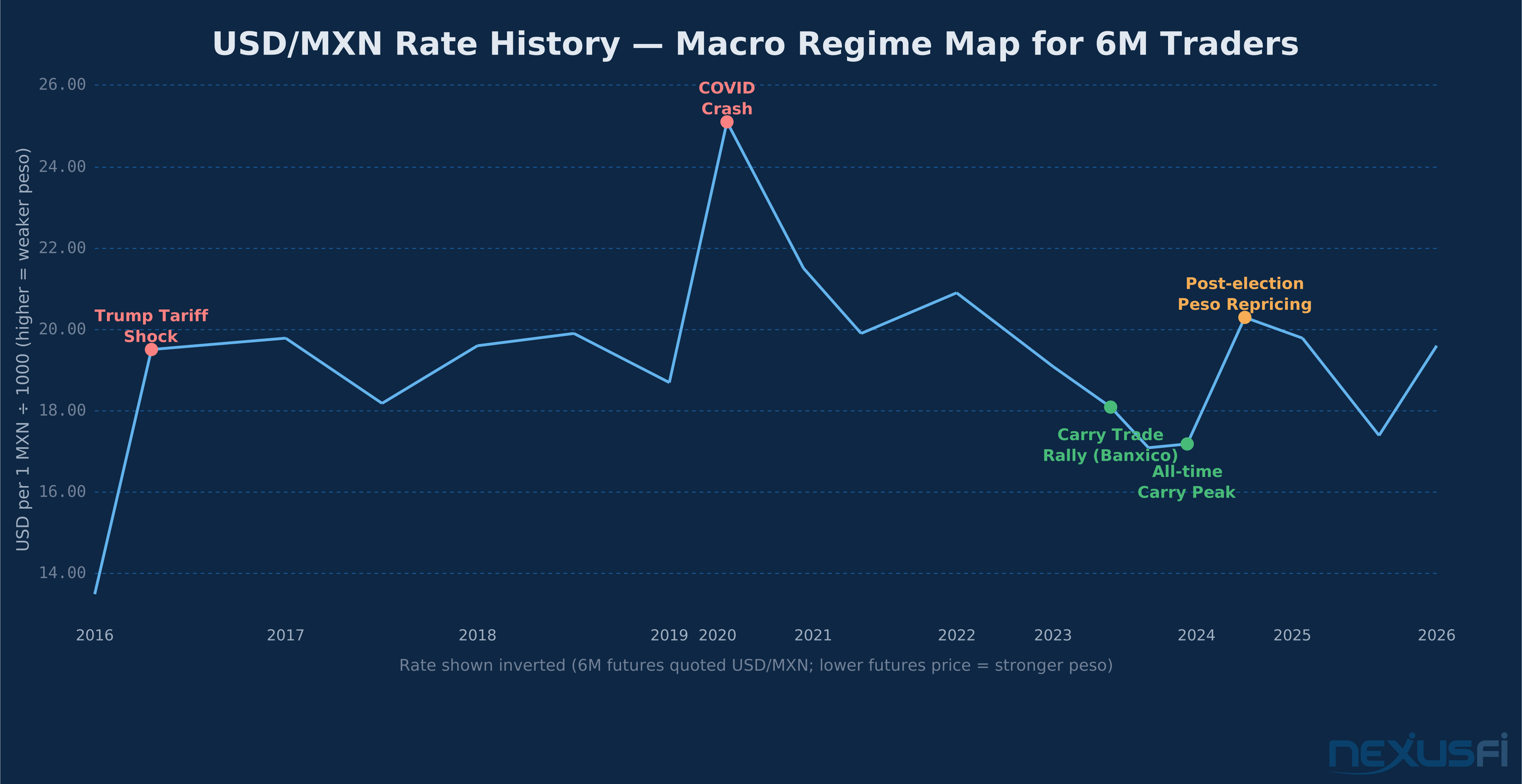
USD/MXN rate history 2016--2026 with key macro regime annotations. Higher on this chart = weaker peso. Six-month 6M futures invert this: a higher 6M price means a stronger peso (fewer dollars buy 1 peso). Understanding the inversion matters for directional positioning.
Reading the price history makes the driver framework concrete:
- 2016 Trump tariff shock: USD/MXN spiked from ~17.50 to over 22.00 on election/tariff fears, then partially recovered as trade negotiations stabilized
- 2019--2020 pre-COVID carry: Banxico held high rates; peso was a consistent carry recipient
- March 2020 COVID crash: USD/MXN hit 25.00+ as global carry unwound violently--the peso fell harder than DXY alone would explain, reflecting oil exposure and EM beta
- 2022--2023 carry rally: Banxico hiked aggressively (eventually to 11.25%) while maintaining credibility; combined with USD weakness and risk-on, USD/MXN fell from 21 to 16.50--an extraordinary peso rally
- Post-2024 election repricing: Policy uncertainty around election outcomes created a sharp MXN selloff, partially reversing the carry gains
The 2022--2023 carry rally is the best modern case study for 6M trading. The entry thesis was simple: Banxico credibility, wide carry spread, stable risk sentiment. But the exit was tricky--carry trades don't announce themselves before they unwind. Traders using key reference levels like prior week highs and VOC levels gave themselves better exit signals than pure fundamental positioning.
Liquidity Profile and Session Map #
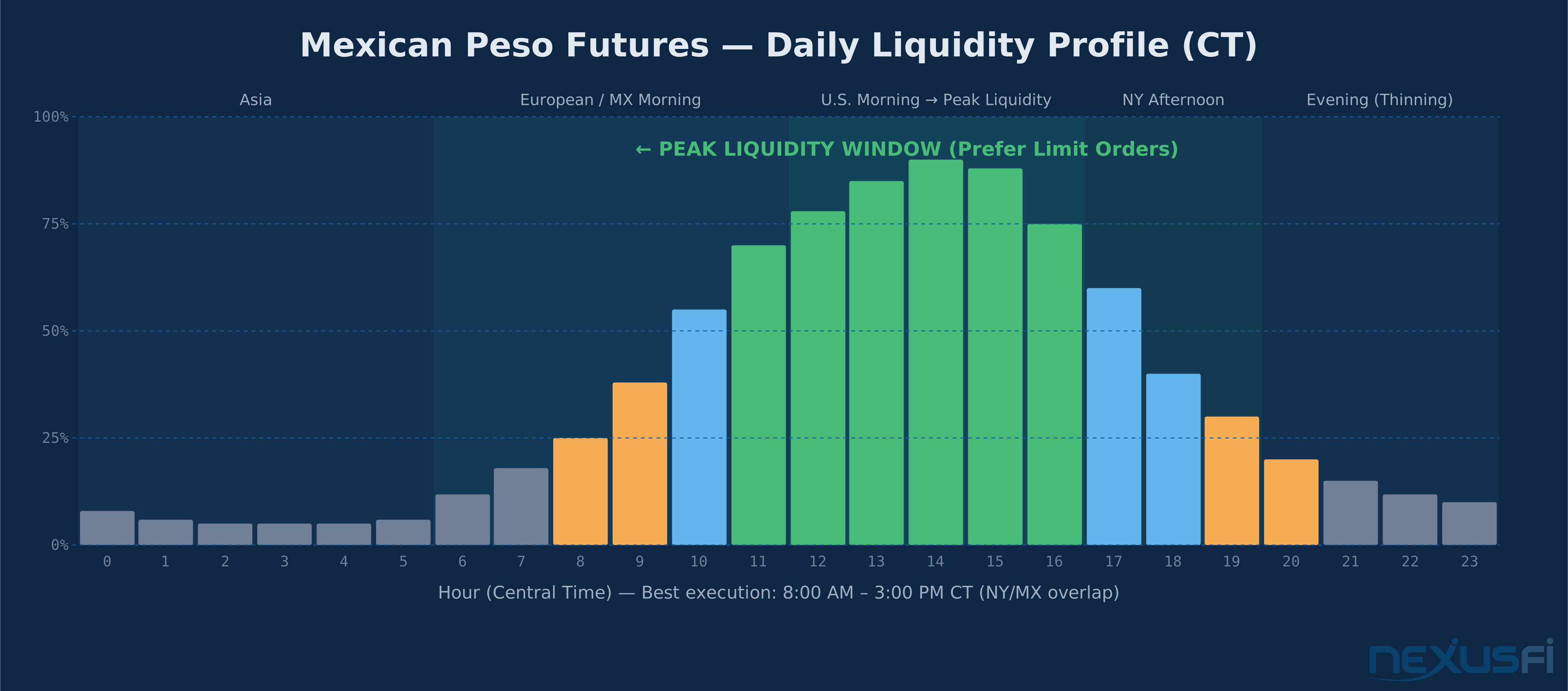
6M futures liquidity profile by Central Time hour. The blue bars show peak liquidity during the U.S. morning and NY/Mexico City overlap. Trade during green/blue windows--avoid aggressive sizing in amber/gray windows.
Six-month peso futures trade nearly 23 hours per day, but the market is not equally liquid throughout. Getting the timing wrong means wider spreads, worse fills, and higher slippage on a contract where $5/tick means every dollar counts.
Session Windows
Asia (Midnight--6:00 AM CT): Thin. Moves can be exaggerated relative to the actual new information, which makes technical levels unreliable. If you're running stops, be aware that thin-market conditions create false breakouts. Don't size up here unless a Mexico/U.S. headline is specifically driving the move.
European/London Open (6:00--9:00 AM CT): Liquidity improves. European banks and macro funds start engaging FX and EM positions. DXY direction often establishes here. Banxico announcements scheduled for this window (unusual but possible) would be high-impact in thin conditions.
Mexico City Morning + U.S. Market Open (9:00 AM--1:00 PM CT): Peak liquidity. This is the primary trading window for 6M. Both U.S. and Mexican institutional participants are active. U.S. economic data releases (CPI, NFP, FOMC) hit in this window and create the sharpest moves. Most technical setups work better here than at any other time.
NY Afternoon (1:00--4:00 PM CT): Activity typically reduces as U.S. session volumes ease. Still tradable, but watch for the bid-ask spread to widen in the absence of fresh catalysts. Carry trades can provide slow, grinding directional movement in this window.
Evening (4:00 PM CT onwards): Thinning. Roll activity around settlement can create brief spikes. Asia open can inject initial direction via risk sentiment from equity markets.
As @Fat Tails noted in a NexusFi thread on volume in currency futures: the volume distribution matters--it tells you when the professionals are present and when the book is thin enough to move on small orders. In 6M, the practical rule is: trade with the liquidity, not against it.
The peak liquidity window for 6M is 7:00-10:00 AM CT, when both CME Globex and Mexico City trading desks overlap with early U.S. session macro flow. This 3-hour window accounts for roughly 60% of daily 6M volume. Set your alarms: anything outside 6:00 AM - 12:00 PM CT requires wider stops and reduced size.
Event Calendar: What to Mark in Red #
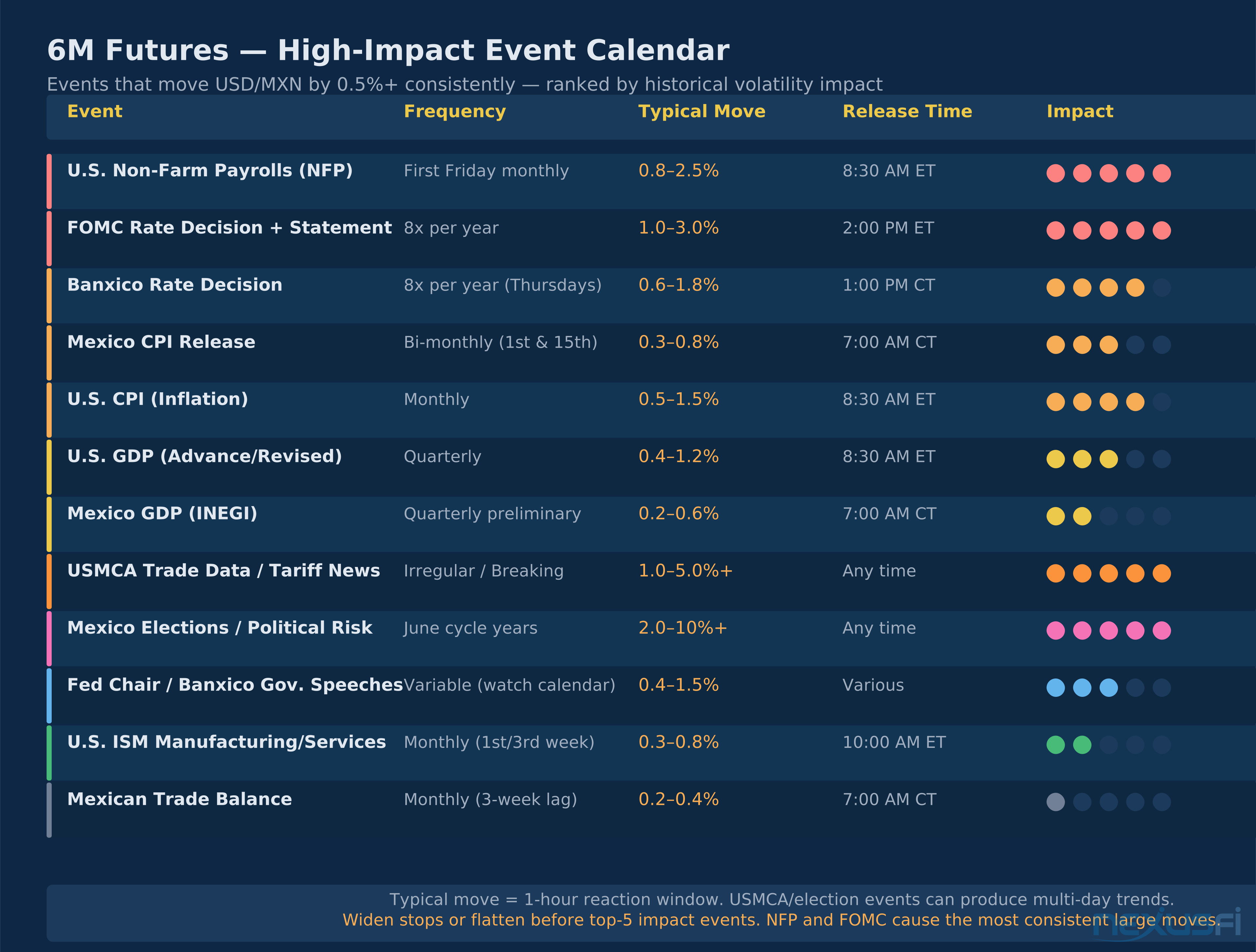
High-impact event calendar for 6M traders. NFP and FOMC produce the largest consistent moves; USMCA/election events can dwarf normal volatility.
Unlike equity index futures where earnings season creates scattered event risk, 6M has a more concentrated calendar. The following events consistently create the largest moves:
Tier 1 Events (Size Down or Stay Out)
- Banxico monetary policy decisions: ~8 per year; rate decision + statement usually at 1:00 PM CT. Market can gap 100+ ticks on surprises
- Mexico CPI (monthly): Usually released around the 7th or 8th of each month; core CPI is the primary read
- FOMC decisions: U.S. rate decisions directly impact the carry trade; statement + press conference creates a two-stage volatility event
Tier 2 Events (Be Aware, Size Appropriately)
- U.S. NFP (Non-Farm Payrolls): First Friday of each month; large USD moves spill directly into 6M
- U.S. CPI: Monthly; drives Fed expectations and carry trade dynamics
- Mexico GDP (quarterly): Growth narrative; influences Banxico's room to cut or hold
- Mexican trade balance and industrial production
- FOMC minutes and Fed speak
@Miesto's approach to FOMC events--using 30-min bar charts to identify post-release patterns--is the right model: study how 6M actually behaves after each event type before trading it live.
See trading economic data releases for the complete framework on event-driven futures trading that applies directly to Banxico and FOMC days in 6M.
Correlation Framework: Reading 6M in Context #
@bobwest highlighted a key pattern: post-FOMC price action in currency futures often exhibits false breakouts in the first 15 minutes before the genuine directional move establishes. This 'whipsaw window' is well-documented and directly relevant to 6M, which reacts sharply to Fed guidance.
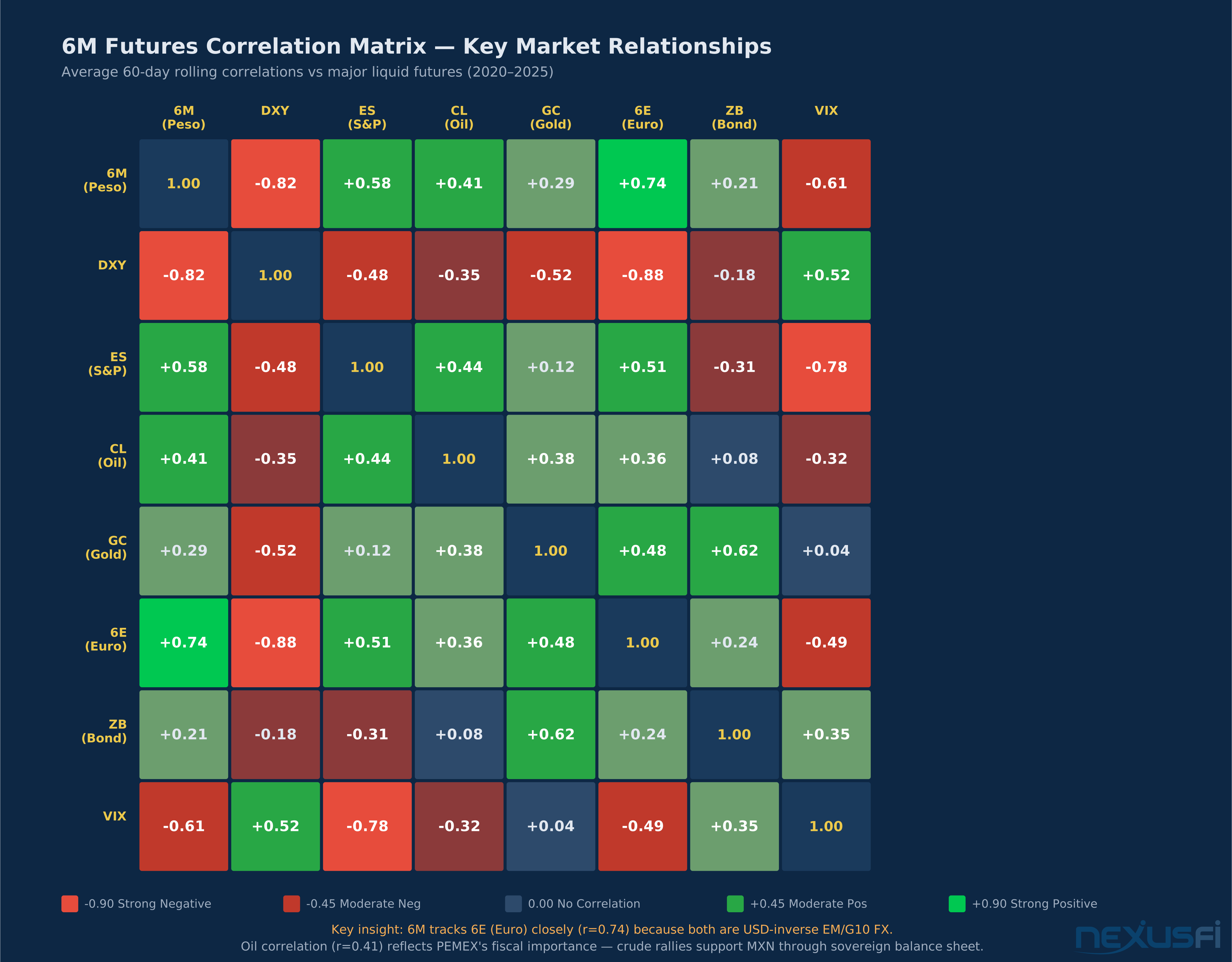
Correlation matrix: 6M tracks 6E (r=0.74) closely as both are USD-inverse. Oil correlation (r=0.41) reflects PEMEX fiscal linkage to MXN strength.
The peso doesn't move in isolation. These are the most useful cross-market references for 6M traders:
DXY (Inverse Relationship)
DXY direction is your primary filter. Strong DXY = headwind for 6M longs. Weak DXY = tailwind. A long 6M into a DXY breakout needs very strong rate/risk justification to work — most don't.
U.S. 2-Year Treasury Yields (Inverse)
Front-end U.S. yields directly affect carry math. Rising 2Y yields compress the Banxico-Fed spread and drag on peso longs. Watch 2Y and 10Y Treasury moves as 6M context filters.
EM FX Basket (Correlation)
During risk-off episodes, the peso trades with the EM basket. If BRL, ZAR, and other EM currencies are all selling off simultaneously, that's a global risk event--not Mexico-specific. In that context, a long 6M trade needs to be reconsidered regardless of the Mexican data calendar. The intermarket analysis framework shows how to systematically track these cross-market relationships.
When Correlations Break
The most actionable setups occur when 6M diverges from its normal correlations. If DXY is soft but 6M isn't rallying, something is wrong with the peso specifically--trade the divergence, not the correlation. If oil spikes but 6M doesn't follow, risk-off is likely overriding the carry bid.
> "The Liquid CME Futures (AUD/6A, GBP/6B, CAD/6C, EUR/6E, JPY/6J, MXN/6M, NZD/6N) are all USD crosses. While they do list several other crosses, many of these have little to no volume." — @SMCJB, discussing CME FX complex structure and liquidity
Technical Framework: What Works in 6M #
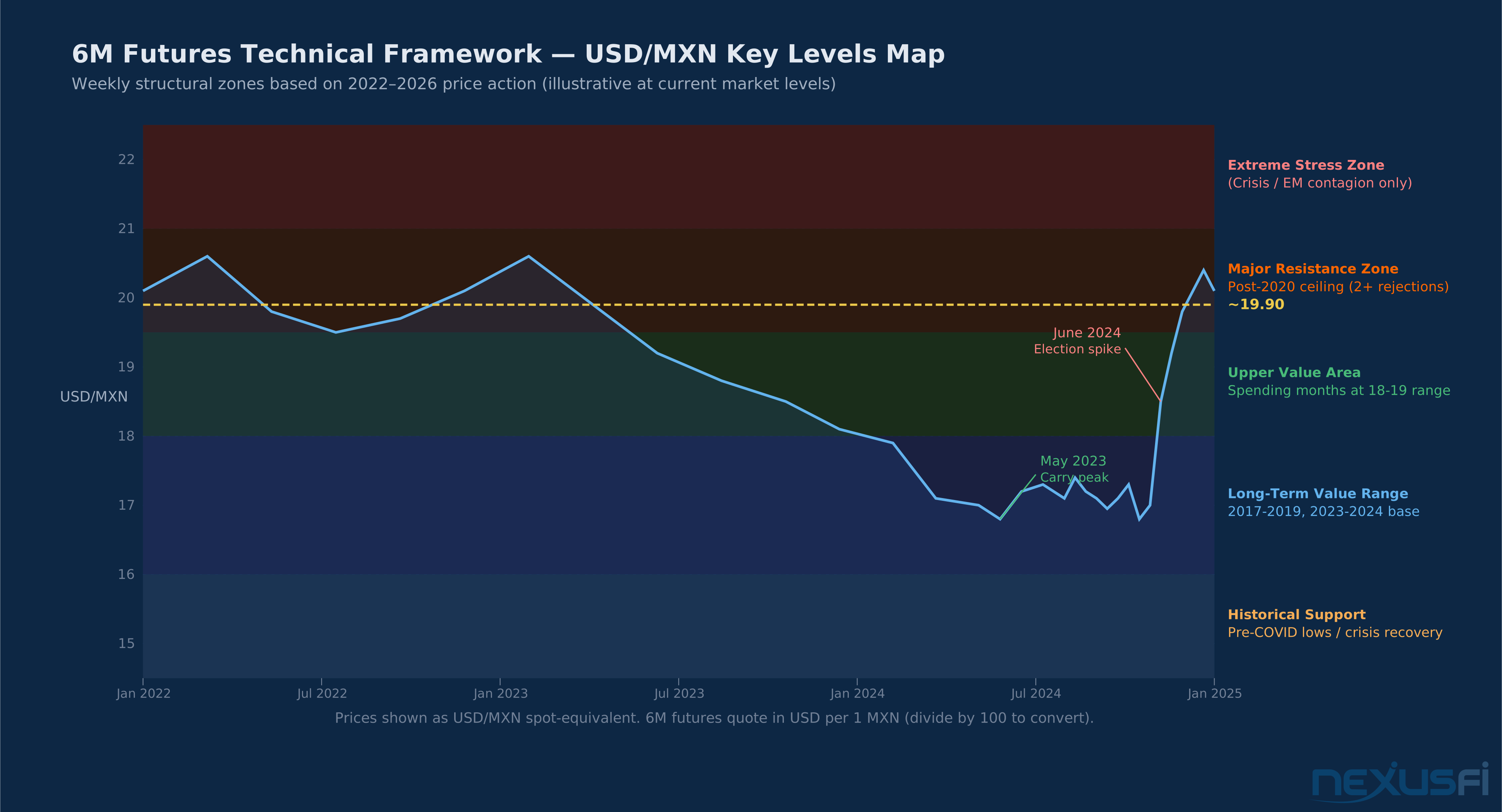
USD/MXN weekly structural zones based on 2022-2026 price action. The June 2024 election spike moved price from the value range into major resistance.
Technical analysis plays a secondary role in 6M — context filter more than primary signal generator. Levels work, but only in the direction of the macro trend.
Levels That Consistently Matter
- Prior session high and low: Clean, unambiguous levels that create natural stop zones
- Overnight range (Asia high/low): Defines the "accepted" range before the U.S. session takes over
- VWAP: In any trending session, price returns to VWAP are the highest-probability continuation entries
- Round numbers: Psychological levels at 0.0500, 0.0510 (approximately 20.00 and 19.60 USD/MXN) attract orders
- Weekly/monthly pivots: Useful for swing positioning around Banxico and CPI events
The initial balance concept from Market Profile applies well to 6M. The first hour of the U.S. session (9:00--10:00 AM CT) often establishes the directional bias for the day. A session that breaks above the initial balance high typically continues higher into the afternoon; a session that fails to exceed the prior day's high after testing it is sending a reversal signal.
What Doesn't Work
Pure chart patterns without macro context fail frequently in 6M. A textbook bearish pattern that doesn't align with the rate differential or risk-on environment will get steamrolled by macro flow.
Four Practical Strategies for 6M Traders #
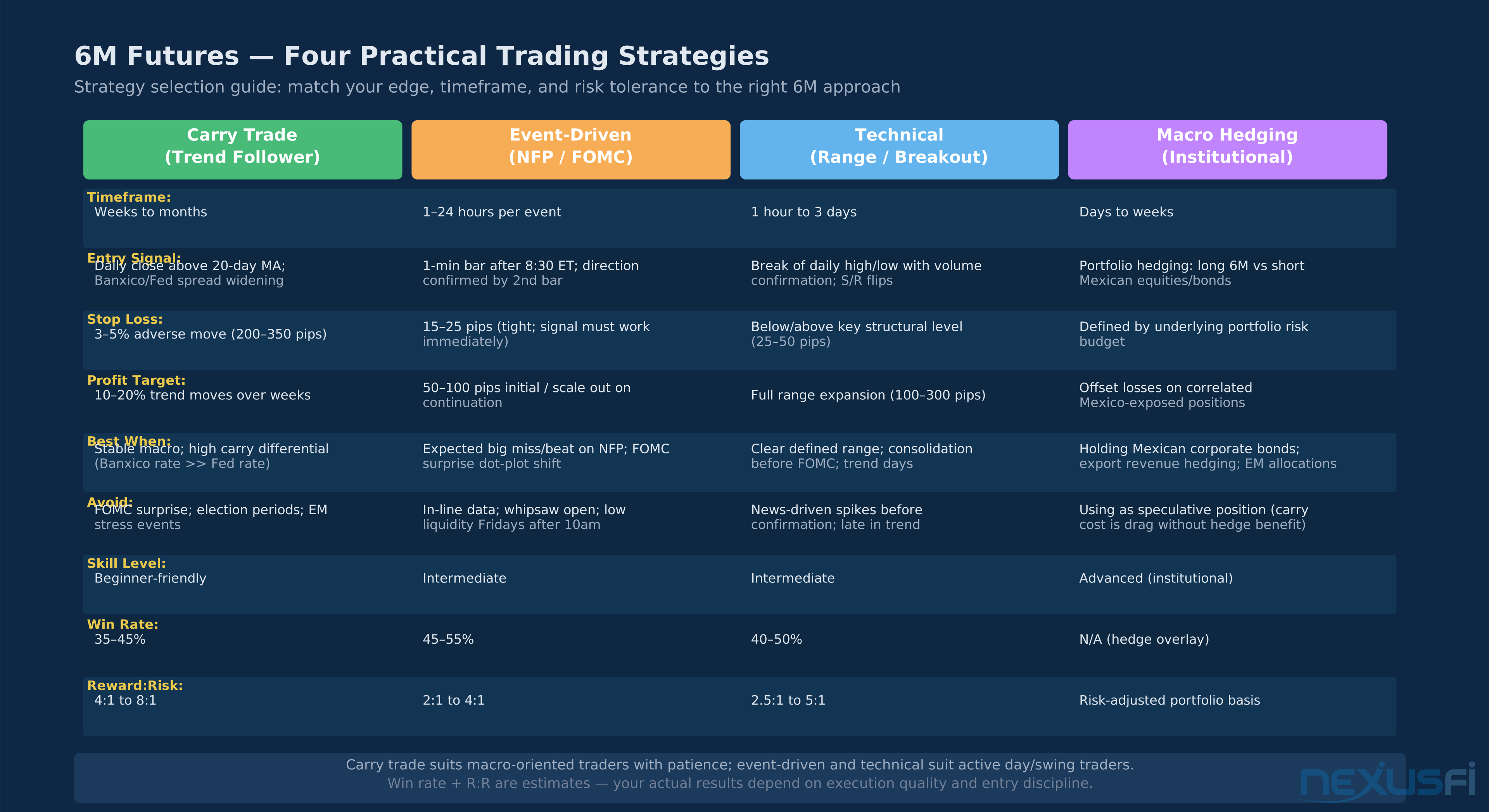
Four practical 6M strategies: carry trade, event-driven, technical breakout, and macro hedging. Match your edge and timeframe to the right approach.
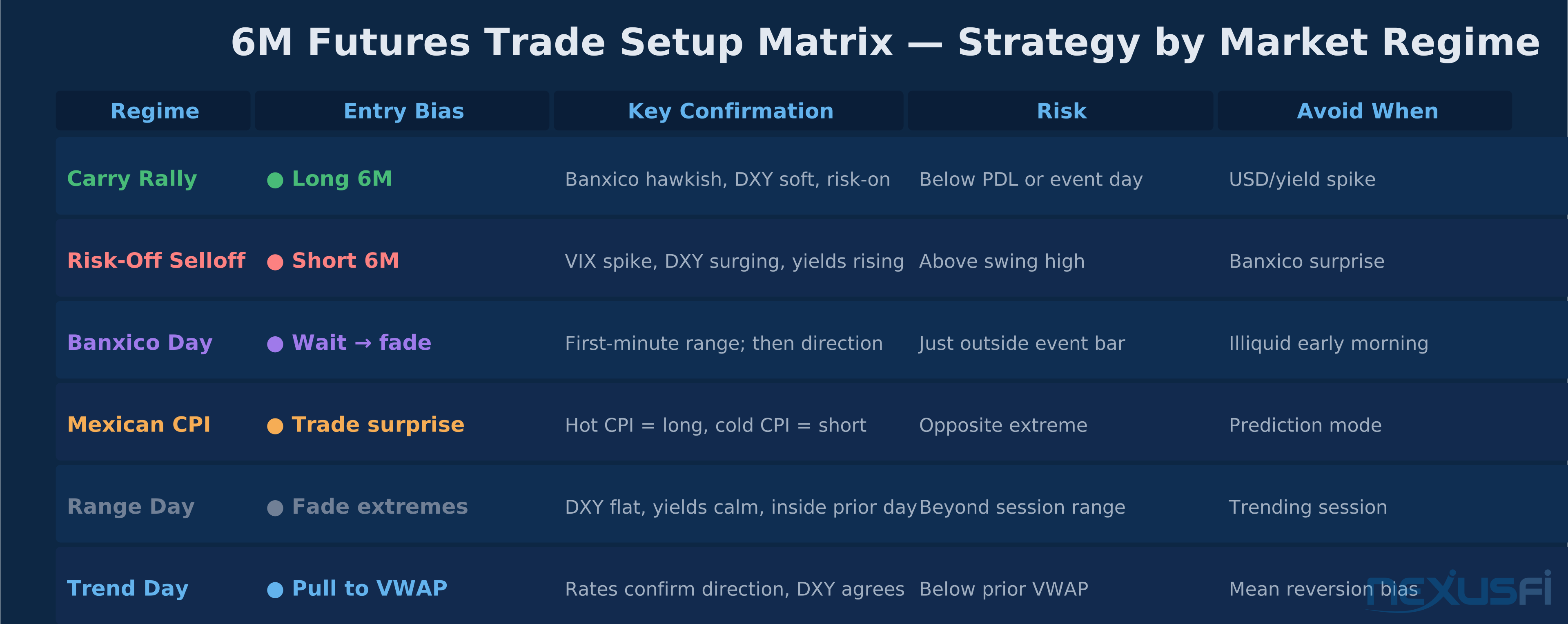
6M futures trade setup matrix across market regimes. Each regime requires different entry bias, confirmation criteria, and risk placement. Using the wrong strategy for the current regime is the most common mistake in 6M trading.
Strategy 1: Carry-Supported Trend Trade
When to use: Banxico maintaining hawkish policy, Fed on hold or cutting, DXY soft, risk sentiment stable.
The logic: When the rate differential is wide and risk appetite is supportive, the peso has structural tailwinds. The strategy is to buy dips toward support rather than chasing breakouts.
Entry: Pullbacks to VWAP, prior session low, or significant pivot level in the trend direction. Wait for the dip to stabilize--don't buy falling prices.
Stop: Below the prior session's significant low or the most recent swing low. Size the position so that the stop distance equals 1-2% of trading capital.
Exit: Scale out at resistance levels. If the rates backdrop changes (Banxico signals more dovishness or Fed signals hawkishness), exit fully rather than hoping the technical setup overrides the macro.
Strategy 2: Event-Driven Breakout
When to use: Around Banxico decisions, Mexican CPI, FOMC.
The logic: High-conviction events create directional moves that often follow through after the initial volatility settles. The mistake is trying to trade the first second; the opportunity is in the confirming move that follows.
Entry: After the event, wait for the first 5-minute bar to close. Define an "event range" based on the first bar. A break above the event range high (in a peso-bullish event) or below the low (in a peso-bearish event) with volume is the entry signal.
Stop: Back through the event range. If the move was real, price shouldn't return there.
Position sizing: Use smaller-than-normal size given the elevated volatility. A half-position with defined stop allows adding if the move confirms.
Strategy 3: Range Fade in Quiet Sessions
When to use: No scheduled catalysts, DXY flat, yields stable, 6M trading inside its prior session range.
The logic: In the absence of new information, the market tends to oscillate between reference levels. Fading the extremes provides a statistical edge that doesn't depend on directional prediction.
Entry: Near prior day highs/lows, VWAP ±2 standard deviations, or session extremes.
Targets: VWAP or the midpoint of the session range. Don't overstay--the quiet session can become trending in minutes when a headline hits.
Stop: Just beyond the range extreme. A true breakout will go beyond the prior reference level; if it does, respect it and exit.
Strategy 4: Relative Value vs. EM Peers
When to use: When 6M is misaligned with the broader EM FX basket based on known catalysts.
The logic: If Mexico-specific factors (Banxico, CPI) are positive but the peso is lagging EM peers, the peso is likely to catch up. If Mexico-specific factors are negative but the peso is holding with the basket, that beta may fade.
Implementation: Compare 6M performance against EUR/USD (6E), and use EM equity ETF moves as a risk sentiment reference. Significant divergence in the same direction for 2+ hours suggests mean reversion; sustained divergence for a full session suggests a real repricing.
Execution Checklist: Before Every 6M Trade #
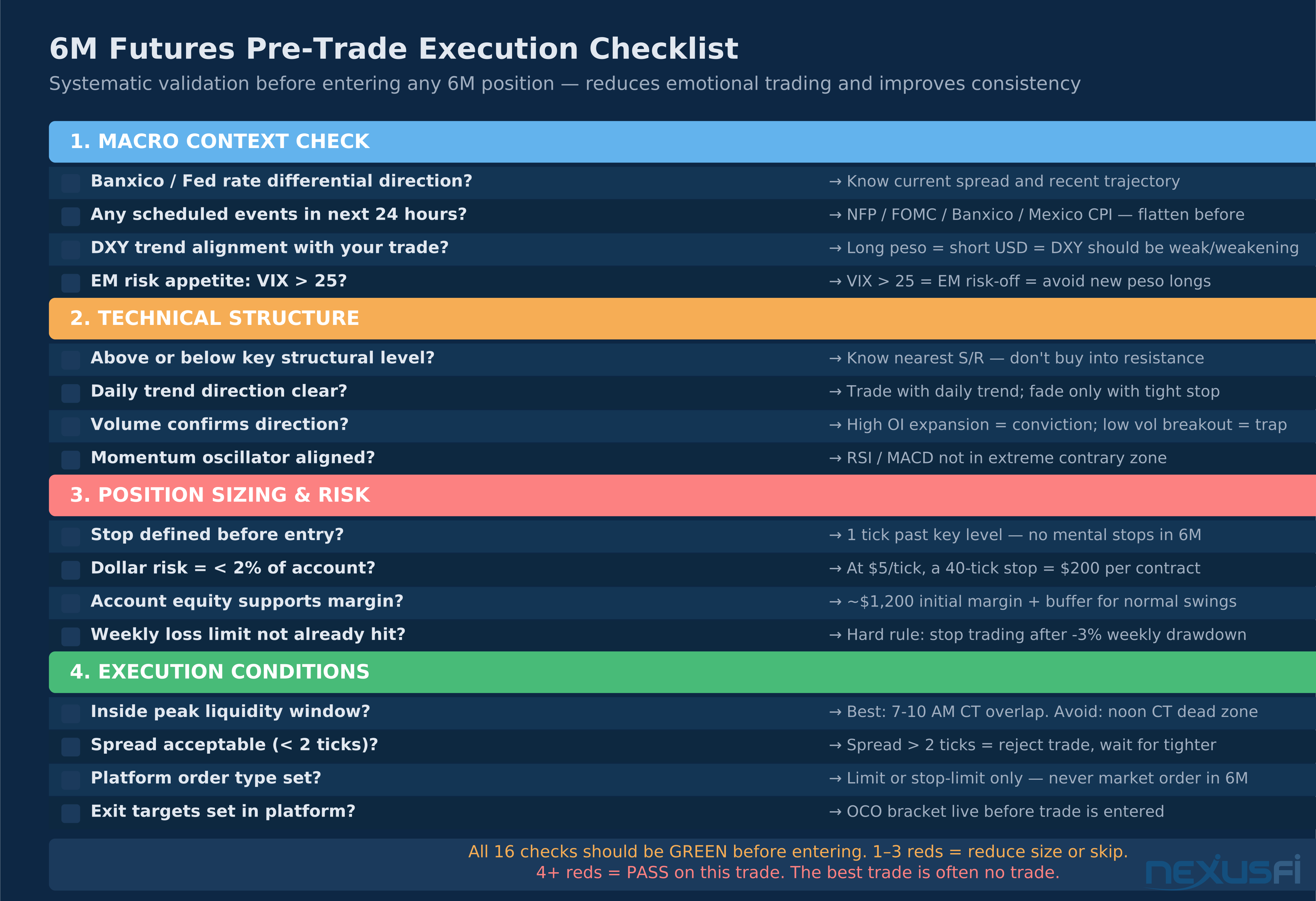
16-point pre-trade execution checklist across macro context, technical structure, position sizing, and execution conditions. All green before entering.
Before entering any 6M position, run through these filters:
- What is the rates backdrop? Is Banxico more or less hawkish than three months ago? Is the Fed?
- Where is DXY? Trending up = headwind for longs; trending down = tailwind.
- What is the risk environment? VIX elevated? EM peers selling off? Risk-off context kills carry trades.
- Is there a scheduled event in the next 4 hours? If yes, size down or wait.
- What session window am I in? Peak liquidity = normal size; thin session = smaller size or limit orders only.
- What's my stop? Must be specific (exact price), not conceptual ("below support").
- What's my trigger for exit? Time stop? Target level? Macro change signal?
Common Pitfalls for 6M Beginners #
Do not trade 6M during the 30-minute window immediately around major data releases (NFP, FOMC, Banxico) without a pre-defined stop and reduced position size. Slippage can be 5-10x normal during these windows. If you haven't planned your stop before the number hits, sit it out.
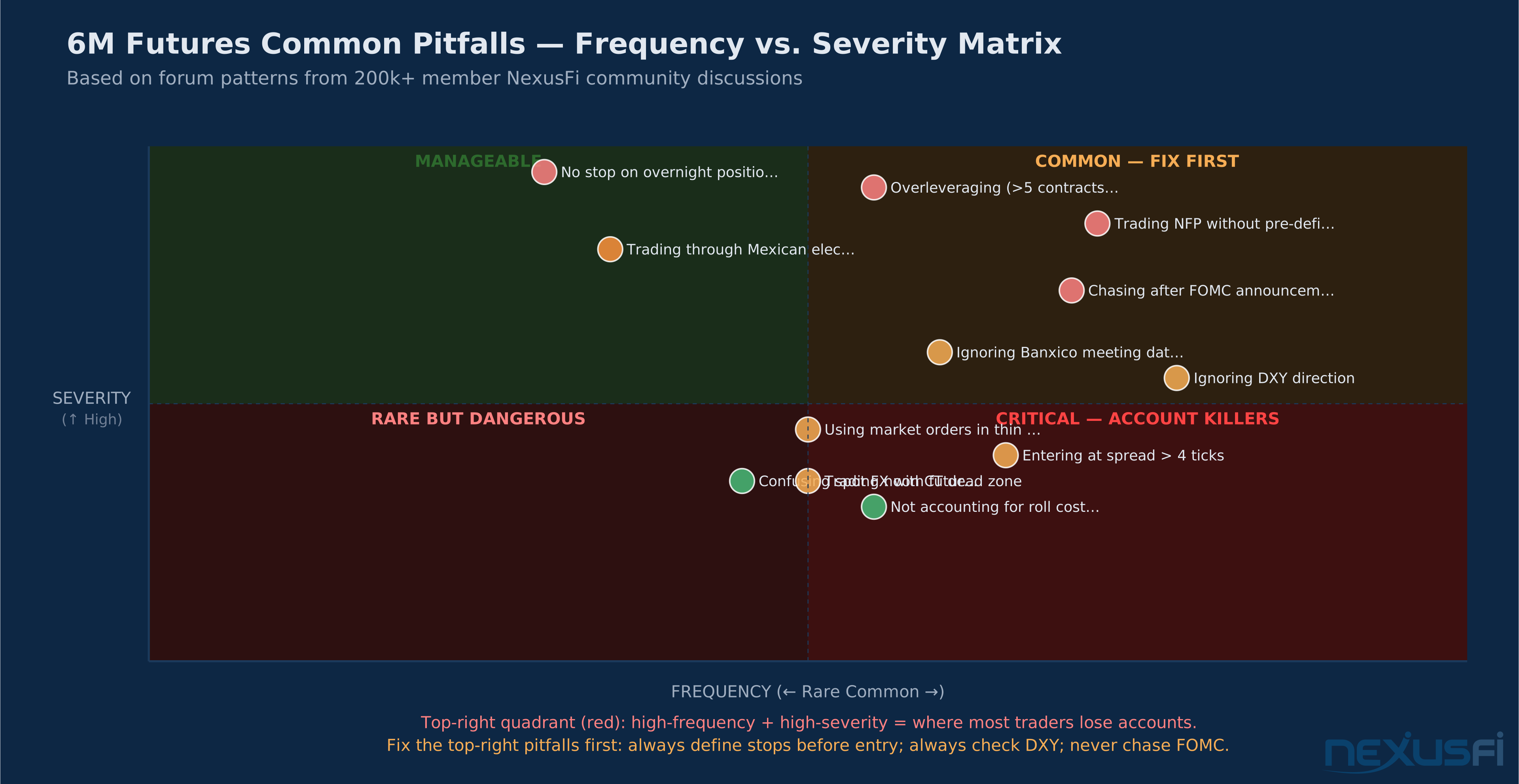
Common pitfall matrix: top-right quadrant (high-frequency + high-severity) is where most traders lose accounts. Fix these first before any other improvement.
Treating it as a pure risk-on/risk-off trade. The peso often holds better than EM peers during global risk events when carry is strong. Using simplistic "risk-off = sell MXN" framing misses nuance that experienced 6M traders exploit.
Ignoring Banxico relative to the Fed. The carry spread, not the absolute rate level, drives the peso. Banxico at 8% with Fed at 8% is neutral; Banxico at 8% with Fed at 4% is bullish for the peso.
Confusing carry with direction. High carry doesn't prevent drawdowns. During the August 2023 EM selloff, the peso fell 5% in two weeks despite a wide carry spread. Carry provides a return stream over time; it doesn't stop price from moving against you in the short term.
Trading thin sessions with normal size. Slippage in Asian hours can easily cost 10--20 ticks ($50--$100 per contract) on each side of a trade. That's 2--4% of the margin requirement--a significant drag before you've even started on the directional bet.
Holding through Banxico without a plan. Define your position before Banxico. Either hedge (reduce size, use options if available), exit entirely, or size down to a level where a 200-tick adverse move doesn't breach your risk limits. "Let's see what happens" is not a risk management strategy for binary events.
6M vs. the Spot FX Market #
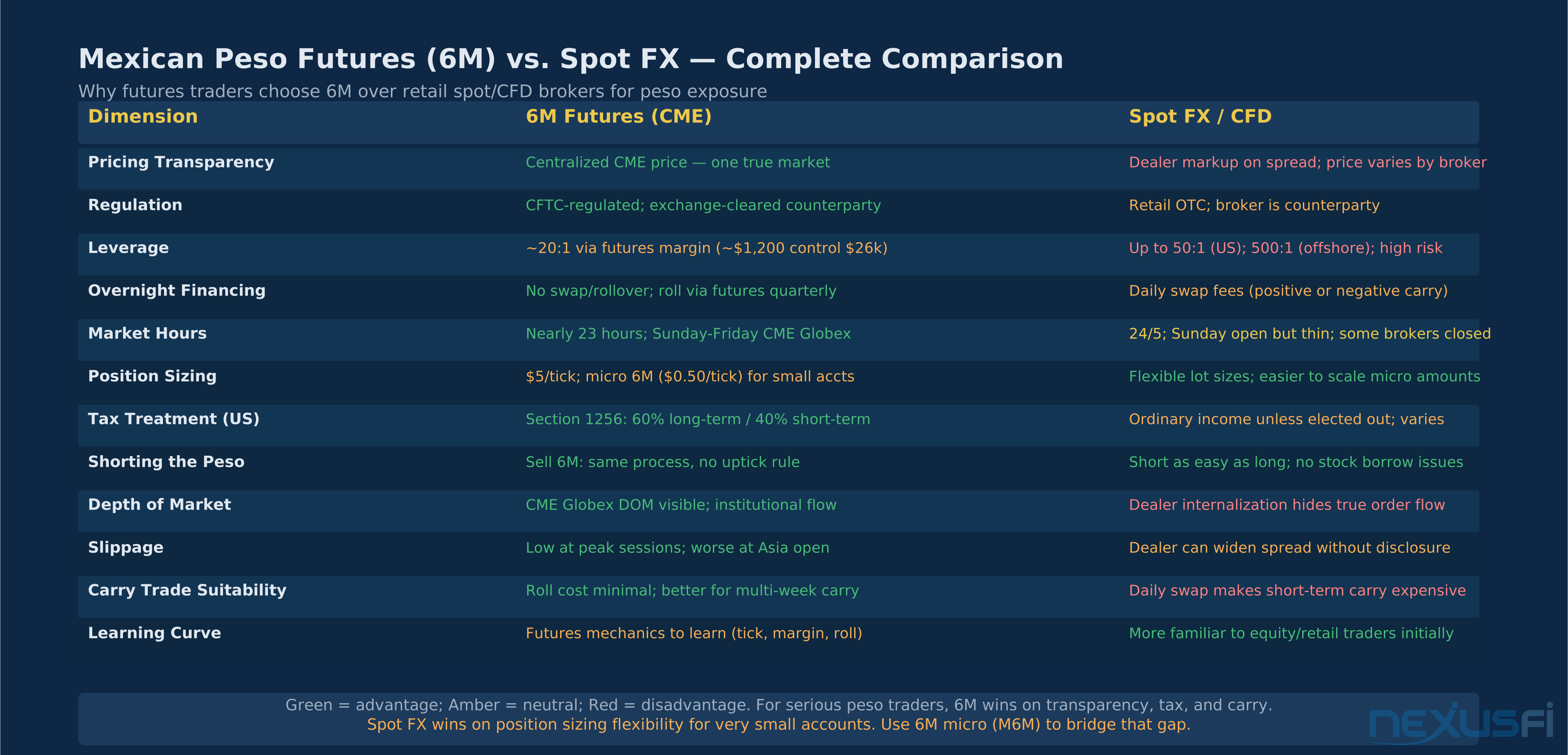
6M futures vs spot FX: futures win on transparency, tax treatment (Section 1256), and carry trade suitability. Use M6M micro to bridge the size gap.
Some traders wonder whether to trade the spot USD/MXN market through a forex broker versus 6M futures. The futures have several structural advantages for serious traders:
- Regulation and counterparty safety: CME-cleared futures have central counterparty clearing; spot forex has counterparty risk to the broker
- Tax efficiency: Section 1256 contracts (which include CME FX futures) receive 60/40 tax treatment--60% of gains taxed at long-term capital gains rates regardless of holding period. See Section 1256 and the 60/40 rule for the full tax framework
- Leverage limits: Regulated margin requirements on CME FX futures are lower leverage than retail forex brokers typically offer, which can actually reduce risk
- Institutional price discovery: CME 6M prices reflect institutional participation; retail forex prices can include broker markup
- Liquidity depth in the primary contract: Open interest in 6M reflects genuine hedger and speculator commitment, unlike some retail forex products
The one area where spot FX has an advantage is in exotic pairs and micro position sizing--you can trade very small notional amounts in spot FX that CME contracts don't accommodate even with micros.
Putting It Together: A Complete 6M Trade Example #
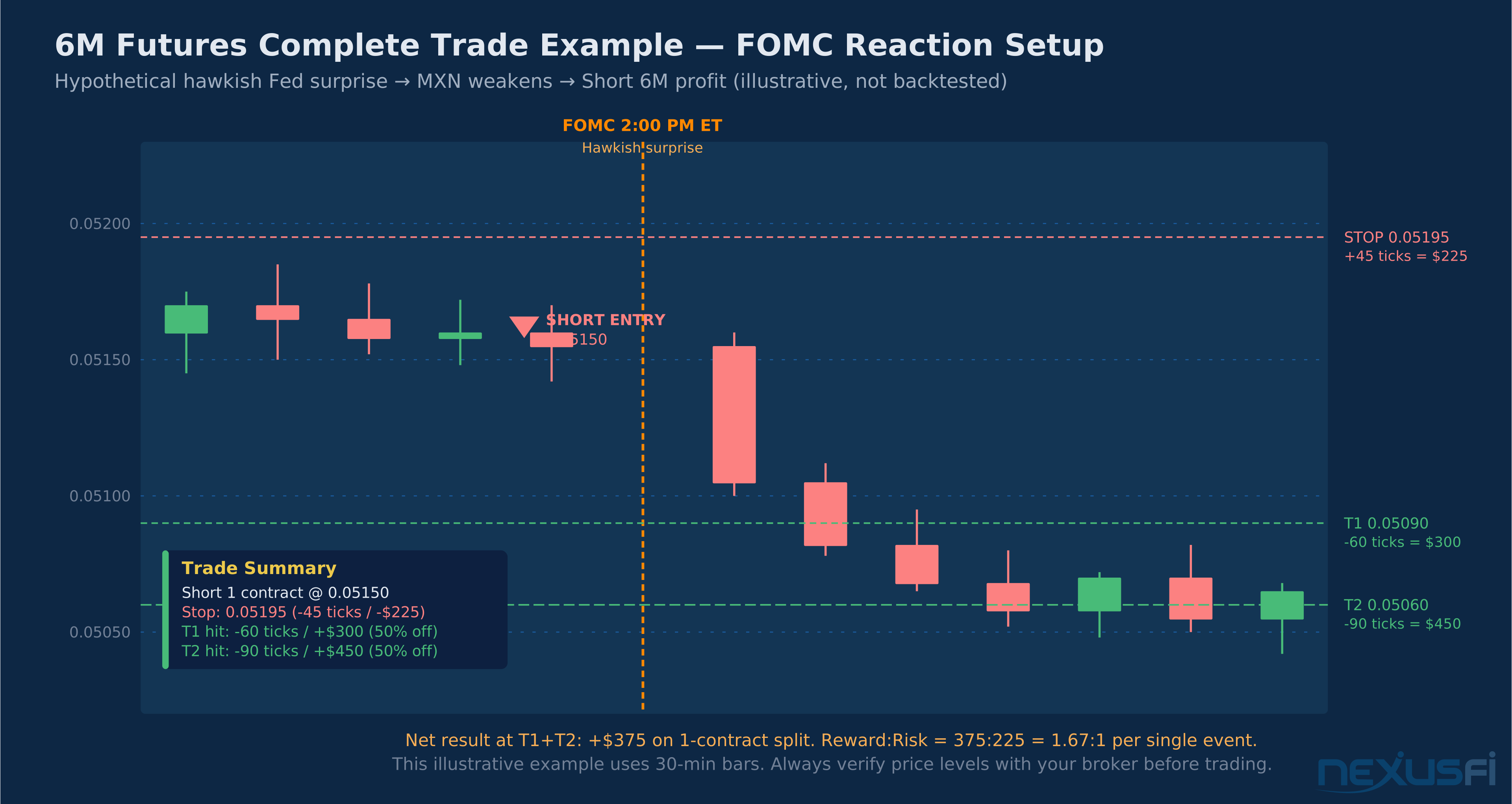
Complete trade example: short 6M on hawkish FOMC surprise. Entry at 0.05150, stop 0.05195, T1 at 0.05090, T2 at 0.05060. Net +5 on 1-contract split at 1.67:1 R:R.
Here's what a disciplined 6M setup looks like in practice:
Context (hypothetical): It's 9:15 AM CT on a Tuesday. Banxico released minutes yesterday showing no unanimous agreement on further cuts. Mexico CPI came in above expectations last week. DXY is slightly lower this morning. U.S. 2-year yields are flat. VIX is below 16. Risk sentiment is neutral-to-positive.
Rates check: Banxico is signaling slower easing than markets priced. Carry spread widening marginally in MXN's favor.
Macro filter: DXY soft, yields flat, risk neutral. All three are peso-neutral to slightly positive. Nothing fighting a long.
Technical setup: 6M is trading near yesterday's high (0.05300), which held as support in the Asian session after initially being rejected. This is a reclaim of a prior high--a bullish structure.
Entry: Buy 2 contracts at 0.05302 (market on the pullback to VWAP, confirmed with 3 consecutive higher-low bars on the 5-minute chart).
Stop: 0.05260, below the Asian session low. That's 42 ticks = $210 risk per contract, $420 total.
Target: 0.05380, the prior week high and a 2:1 risk/reward target. Exit 1 contract there, trail stop on the second.
Event check: No Banxico or major U.S. data scheduled today. Clean window.
The process is what makes this trade work: rates checked, macro assessed, liquidity window confirmed, technical setup aligned. Execute that process and 6M rewards consistency.
The Bottom Line on 6M Futures #
6M rewards traders who treat it as the hybrid macro instrument it is. Match your trade direction to the rate differential, filter your entries through the risk-on/risk-off regime, and trade inside the peak liquidity window. Do that, and the peso's complexity becomes your edge.
Three things to internalize before trading 6M:
- Know the carry spread. Banxico minus Fed, in real-time. If you don't know this number before every session, you're trading blind.
- Trade peak liquidity. The 9:00 AM--1:00 PM CT window exists for a reason. Don't give edge away to thin-market slippage.
- Define your Banxico/CPI plan before the event. The market won't give you time to think during the announcement. Your position size and stop should already be set.
The peso is one of the deepest macro stories in FX futures. For traders willing to learn its language, 6M offers a clean, efficient vehicle for expressing views on rates, risk, and the North American economic relationship--all in one product.
Knowledge Map
Prerequisites
Understand these firstGo Deeper
Build on this knowledgeReferences This Article
Articles that build on this topicCitations
- — Is Volume data in Currency Futures Important? (2010) 👍 4“Currency futures are just a subspecies of forward rate agreements. Using currency futures is the easiest and cheapest solution. I have found volume in currency futures to be relevant -- it does give accurate signals even without participation of large traders.”
- — Trading mini euro ( E7) or micro euro (M6E) currency futures ??? (2010) 👍 7“M6E - Euro to US Dollar, M6B - British Pound to US Dollar, M6S - US Dollar to Swiss Franc, M6A - Australian Dollar to US Dollar, M6J - US Dollar to Japanese Yen, M6C - US Dollar to Canadian Dollar, M6M - Mexican Peso to US Dollar. The micros are 1/10th the size of the standard contracts.”
- — Diary of a simple price action trader (2023) 👍 7“Trading the FOMC. I am not a big fan of using exotic charts with all kind of indicators disturbing the view on price action but I think it's important to use charts which represent price and volume because they provide the most objective view of what is happening.”
- — Diary of a simple price action trader (2024) 👍 2“Tracking the post-FOMC announcement behavior. The first 30 minutes after the FOMC announcement are often whipsaw; the real trend usually establishes in the second hour.”
- — Spoo-nalysis ES e-mini futures S&P 500 (2022) 👍 9“Was just thinking how odd it is that VIX is only at 25.88 with such a pivotal fed announcement tomorrow. Hedged vs unhedged market behavior diverges sharply when institutional flow doesn't confirm the price action -- that divergence is your tell.”
- — Advantage Futures (www.advantagefutures.com) (2020) 👍 6“Advantage Futures applies negative interest rates on EUR balances. Currency carry and interest rate dynamics: the spread between funding currencies and high-yield EM currencies like MXN drives positioning far more than technical levels.”
- — Spoo-nalysis ES e-mini futures S&P 500 (2014) 👍 21“There are 3 basic strategies or types of markets in trading: momentum, mean reversion, and carry trade. At any given point in time, price action may be driven by each or some combination of all three. The carry trade is the most misunderstood because it is a slow burn -- it compounds invisibly until it unwinds violently.”
- — Spoo-nalysis ES e-mini futures S&P 500 (2015) 👍 29“Think of yourself as the corporate treasurer of a midsized American company. You have your basic business activities in the United States, and you have several divisions in Europe. The currency exposure from international operations is exactly what peso futures hedgers are managing -- pure rate risk against USD.”
- — Are there any Currency Futures GBPAUD & GBPNZD ? (2020) 👍 1“The Liquid CME Futures (AUD/6A, GBP/6B, CAD/6C, EUR/6E, JPY/6J, MXN/6M, NZD/6N) are all USD crosses. While they do list several other crosses (mostly vs EUR), many of these have little to no volume. 6M is by far the most liquid emerging market currency future on CME.”
- — Comparing Index Futures (2010) 👍 68“Here comes an extension of the analysis to currency futures. It is an analysis of the impact of transaction costs and slippage on the profitability of a simple strategy. Currency futures with higher volatility and larger tick values demand more careful stop placement.”
- — Spoo-nalysis ES e-mini futures S&P 500 (2014) 👍 17“The market bounced last week resulting in some emerging buy signals -- but along with EM risk-off pressure, the peso always gets hit harder than G10 currencies when risk appetite deteriorates. Watch how emerging buy signals resolve before adding EM currency exposure.”