



Palladium Futures (PA): Trading the World's Most Supply-Concentrated Precious Metal
Overview #
Palladium doesn't get the attention that gold and silver do. There's no central bank buying it. No doomsday crowd stockpiling it. No retail investor products selling palladium rounds at your local coin shop. What palladium has instead is a two-country supply monopoly, an 85% demand dependency on a single industry, and a price history that makes crude oil look boring.
The CME palladium futures contract (PA) delivered a 150% rally from mid-2020 to nearly $3,000/oz in early 2022 — driven by Russian sanctions eliminating roughly 30% of global supply overnight. Then it crashed 70% to $940 by late 2024, as electric vehicle adoption and platinum substitution systematically dismantled the demand structure that had held the market tight for a decade.
Palladium is the most volatile metal in the CME complex, and for good reason. The 100-oz PA contract has a tick value of $5 — but it routinely moves 30-50 ticks on a normal day, and 200-tick sessions during geopolitical events aren't unusual. A single overnight gap can swing your margin requirement by thousands of dollars before you get a chance to adjust.
This article breaks down the contract mechanics, the price drivers, the seasonal patterns, and the trading strategies that give you an actual edge in PA — not the generic precious metals advice that doesn't apply to futures trading.
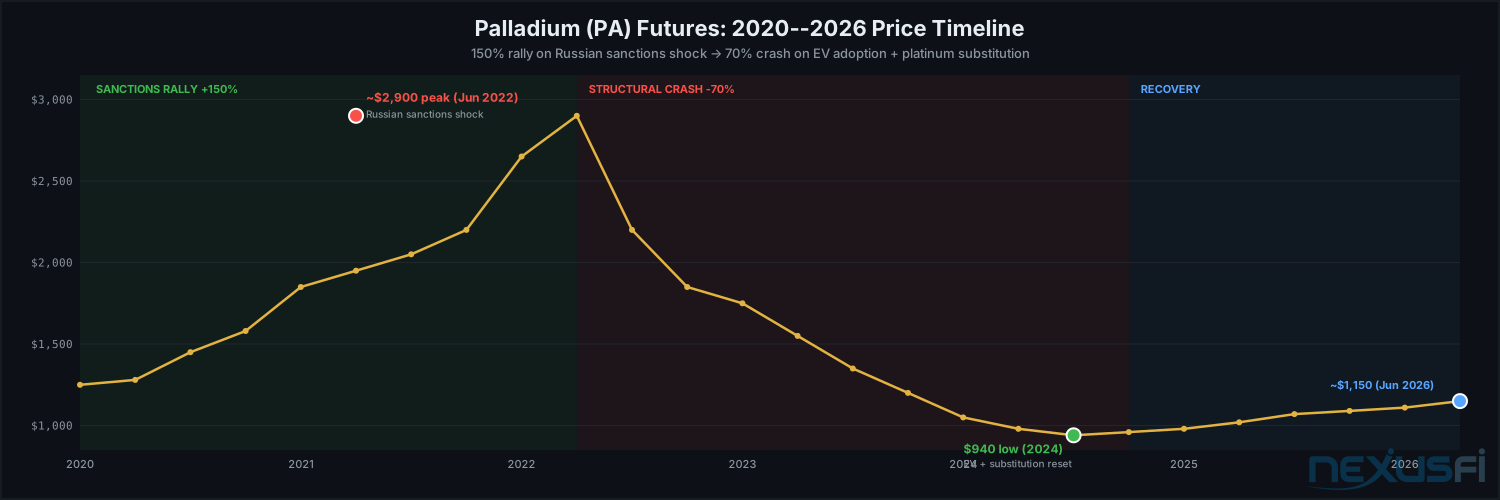 Palladium futures completed a 150% rally from $1,250 (2020) to ~$2,900 (2022) driven by Russian sanctions removing 30% of global supply — then crashed 70% to $940 as EV adoption and platinum substitution eroded structural demand. Understanding this cycle is foundational to trading PA.
Key Concepts #
Autocatalytic converter: The device in your car's exhaust system that uses precious metals as catalysts to clean emissions. Gasoline engines primarily use palladium — diesel engines primarily use platinum. This single distinction is the most important fact in palladium market analysis.
Pd/Pt spread: The price difference between palladium and platinum. When palladium trades much above platinum, automakers have economic incentive to reformulate catalysts. This spread is the single most important structural signal in palladium market analysis.
Contract Specifications #
| Specification | PA (Standard) |
|---|---|
| Exchange | CME Group (NYMEX division) |
| Contract size | 100 troy ounces |
| Price quotation | USD per troy ounce |
| Tick size | $0.05/oz |
| Tick value | $5.00 per contract |
| Trading hours | CME Globex: 5:00 PM — 4:00 PM CT (next day), 60-min break 4:00-5:00 PM CT |
| Settlement | Physical delivery (99.95% pure palladium) |
| Delivery | LPPM (London Platinum and Palladium Market) approved warehouses |
| Initial margin | ~$7,500 — $8,200 (dynamically adjusted — verify on CME website) |
| Maintenance margin | ~$6,500 (verify on CME website) |
| Position limit | 5,000 contracts net |
| Circuit breaker | 10% daily move triggers trading pause |
Always verify current margin requirements directly on CME Group's website before trading — margin is set by a volatility-based model and changes frequently. As @SMCJB noted when CME shifted to percentage-based precious metals margins in January 2026, the exchange moved to dynamic percentage-based requirements specifically because the old fixed margins couldn't keep pace with metals volatility at elevated price levels.
The tick math is critical. At $0.05/oz and 100 ounces per contract, each tick is $5. Palladium moves 30-50 ticks on a normal day — $150 to $250 per contract in daily P&L swings. During the 2022 sanctions shock, 200-tick days ($1,000 per contract) were routine for weeks.
At $1,150/oz (approximate mid-2026 price), a single PA contract controls $115,000 in notional value. With initial margin around $8,000, that's roughly 14:1 leverage. The volatility to go with it is not a feature — it's a structural characteristic of the market.
CME Circuit Breaker Expansion (PA)
The 10% circuit breaker means a $115/oz price move (at $1,150/oz) before a trading pause — real money per contract.
Margin volatility warning: PA margin requirements use a vol-based model. During the 2022 crisis, when 30-day realized volatility exceeded 40%, initial margin requirements nearly doubled from normal levels. A position sized appropriately on Tuesday can require an emergency margin injection by Thursday if Russia announces something unexpected.

The 2020-2025 Cycle: From $1,250 to $3,000 and Back #
Understanding palladium means understanding this cycle. The 2020-2025 arc is the defining period for modern PA futures trading — and the structural lessons from it explain everything about how this market behaves.
2020: COVID Disruption and Recovery ($1,200-$2,200)
COVID-19 hit palladium from both sides: South African refineries shut down, Russian logistics seized, and auto production collapsed — which should have been bearish. But the physical market was already running a structural deficit. Supply disruptions dominated. Price held $1,200-$1,300. Auto production recovered faster than supply in H2 2020. The deficit narrative crystallized. COT showed managed money building large net longs. Persistent backwardation confirmed genuine physical tightness. Price climbed toward $2,200 by late 2021.
2022 H1: The Sanctions Shock — Near $3,000 ($2,650-$2,900)
February 24, 2022: Russia invaded Ukraine, removing Norilsk Nickel's exports (~40% of global supply) from accessible markets overnight. The curve inverted violently — spot month $100-$200 above deferred. End users scrambled. Managed money added to longs aggressively. PA approached $3,000/oz by mid-2022, ~2.5x pre-COVID.
Key lesson: sanctions gapped the market before the physical shortage was confirmed. Traders using the backwardation signal caught the early move. Those waiting for fundamental confirmation bought the top.
2022 H2-2023: The Speculative Unwind ($1,200-$2,200)
Speculative excess unwound even as physical tightness remained real. Inventories built as end users optimized trigger loading and accelerated substitution research. Managed money reduced positions. The Pd/Pt ratio began narrowing — a leading indicator that substitution economics were working.
2024-2025: Structural Demand Erosion — The Crash ($900-$1,050)
The crash wasn't sentiment — it was structural. Three simultaneous drivers: (1) OEM design changes from 2022-23 hit production, dropping PA's autocatalyst share from ~85% to 65-70% permanently; (2) China's BEV penetration hit 35%+, eliminating ICE trigger demand per vehicle sold; (3) Russian palladium partially re-entered through adapted trade routes. The curve moved from backwardation to contango: no urgency to buy, structural demand picture changed.
What Drives Palladium Prices #
Autocatalyst Demand: The 82% Factor #
~82% of global palladium demand comes from gasoline-engine automotive catalytic converters — the highest single-application concentration of any major CME metal. This makes EV adoption and trigger reformulation primary price drivers, not peripheral risks.
Roughly 80-85% of annual global palladium demand comes from a single source: gasoline-powered automotive catalytic converters. Not jewelry. Not electronics. Not investment demand. Cars.
This concentration creates a market that trades more like an auto industry supply chain input than a traditional precious metal. When auto production is healthy and emissions standards tighten (requiring more trigger loading per vehicle), palladium demand is structurally strong. When EV adoption accelerates or trigger chemistries evolve, the demand picture shifts — and it shifts permanently.
Track these data points: global auto production (especially China/EU/NA), OEM earnings commentary on precious metals procurement, EU/China emissions regulation announcements, and regional BEV penetration rates. The EV shift doesn't eliminate demand overnight — hybrids still require catalytic converters — but the directional trend is structural.
Supply Concentration: Russia and South Africa #
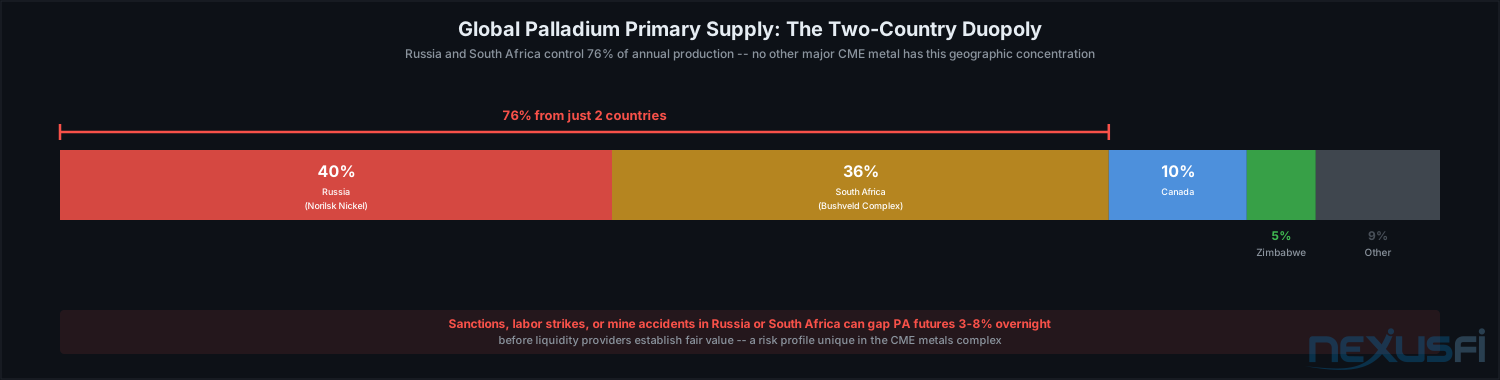
Russia (Norilsk Nickel) and South Africa together control ~76% of global primary palladium production. Russian sanctions in 2022 effectively removed ~40% of supply overnight, creating the supply shock that drove PA to $2,900. No other major CME metal faces this level of geographic supply concentration.
Palladium supply is the most geographically concentrated of any major CME metals contract. Two countries control over 76% of global primary production:
- Russia (Norilsk Nickel): ~40% of global supply, produced as a byproduct of nickel and copper mining in Siberia
- South Africa (Bushveld Complex): ~36% of global supply, from platinum group metal mines in the Highveld region
This duopoly creates extreme headline sensitivity. Any disruption — sanctions, labor strikes, power outages, mine accidents, export restrictions — can gap PA futures much in after-hours trading before liquidity providers establish fair value.
The 2022 sanctions shock was the extreme case, but South African load-shedding (power grid rationing) and labor disruptions create regular smaller volatility events that don't make front-page financial news but routinely move PA futures 2-3% on thin overnight sessions.
Secondary supply (recycled from end-of-life vehicles) now accounts for 25-30% of annual supply, partially dampening headline sensitivity.
The EV Transition: Palladium's Structural Bear Case #
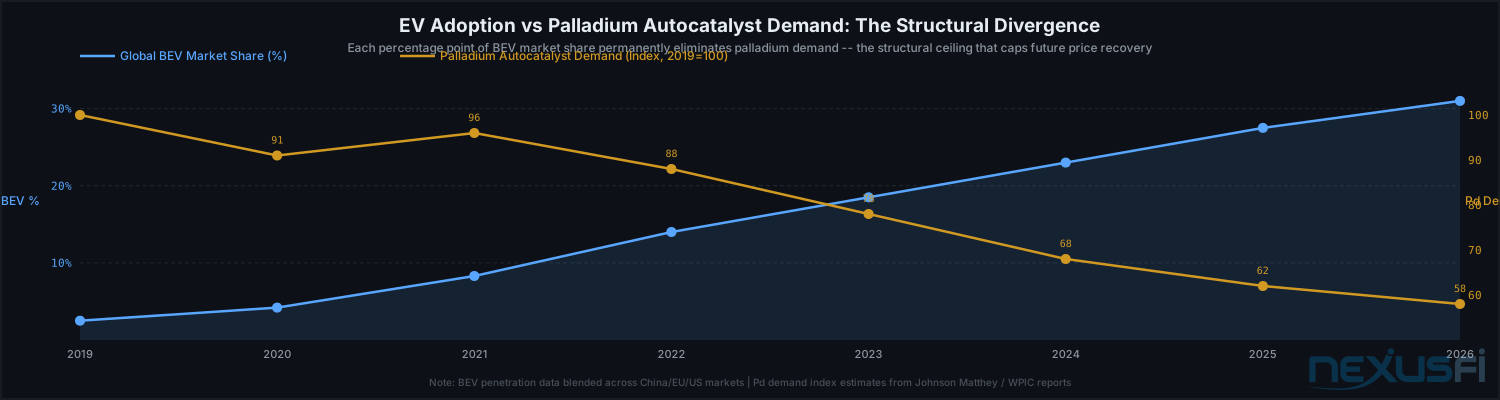 As global BEV market share climbed from 2.5% in 2019 to ~31% in 2026, palladium autocatalyst demand index fell from 100 to ~58 — a 42% demand reduction over seven years. Each percentage point of BEV adoption permanently removes palladium demand from vehicles sold, creating a structural ceiling on price recovery regardless of supply disruptions.
The long-term bear case for palladium is the cleanest structural narrative in the CME metals complex. Every BEV sold today is one less gasoline-powered vehicle that will ever need a palladium catalytic converter replacement.
BEV adoption data (2025-26): China 35%+, Europe ~25%+, US ~15-18%. The structural ceiling on PA recovery is clear: even with supply disruptions, the market prices in declining long-term demand. 3x rallies require simultaneous supply disruption AND demand recovery — a much higher bar than 2020.
Substitution Dynamics: The Pd/Pt Spread #
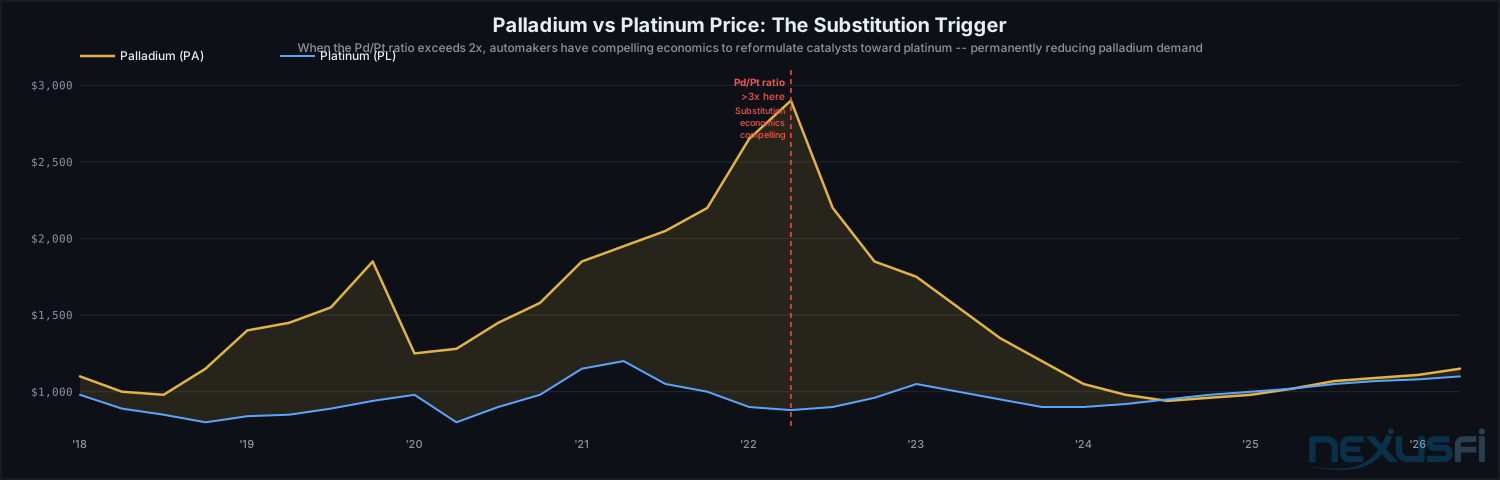
When palladium was trading at $3,000 and platinum at $800-$900, the Pd/Pt ratio hit 3.5:1. At that level, automotive procurement teams faced compelling economics to invest in trigger reformulation toward platinum.
The substitution process: (1) Pd/Pt >2x makes reformulation economics attractive; (2) OEM R&D begins — 18-24 months; (3) emissions compliance testing — 12-18 months; (4) production deployment — 3-4 years after incentive appeared.
The 2022 spike created substitution decisions that hit the market in 2024-25. Palladium's autocatalyst share fell from ~85% to 65-70% permanently. Substitution is sticky — OEMs don't switch back until palladium is dramatically cheaper than platinum for an extended period.
Monitor the Pd/Pt ratio: above 2.0 = substitution economics compelling (long-duration rallies face headwinds); below 1.0 = substitution pressure eases; converging ratio = relative value opportunity.
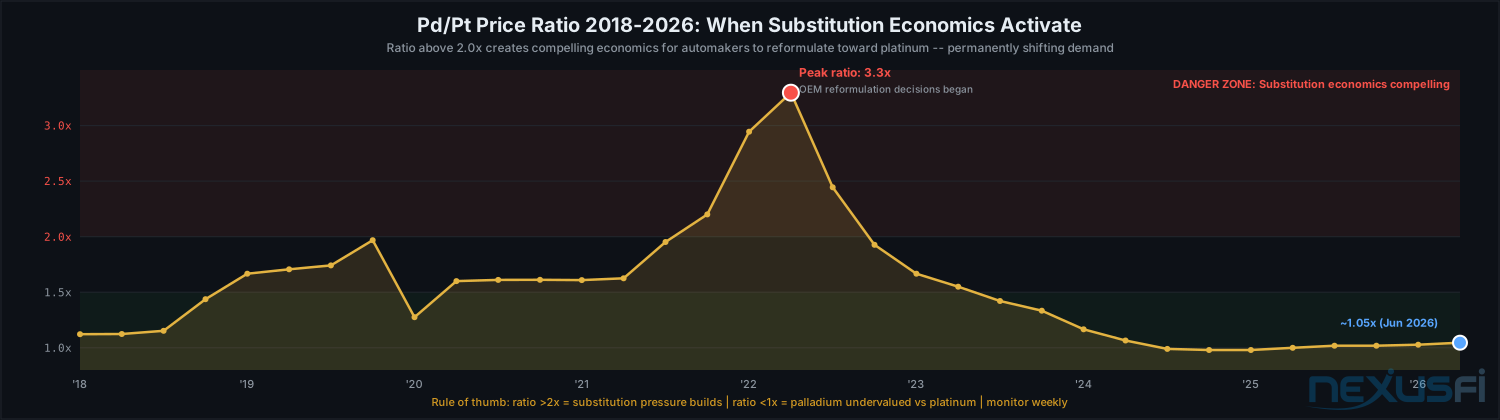 The Pd/Pt ratio reached 3.3x in Q2 2022 — far above the 2.0x substitution trigger level. At 3.3x, automakers had overwhelming economic incentive to reformulate catalysts. The resulting substitution decisions (made 2022-23) hit the market in 2024-25 as production-deployed platinum-rich formulations reduced palladium demand by 15-20% of autocatalyst volume.
Market Structure and the Term Structure Signal #
The futures curve shape is the most actionable piece of real-time information in PA trading. More useful than price levels. More useful than technical patterns. It tells you what the physical market is experiencing.
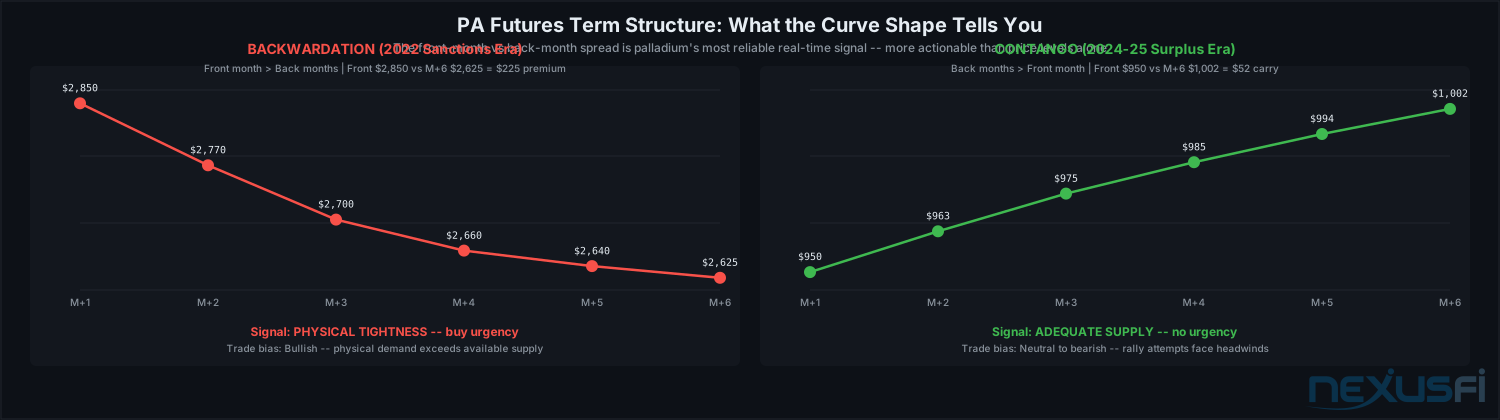
Backwardation (front month > deferred months): Physical tightness. End users paying a premium for immediate delivery. This was the dominant PA curve structure from 2020-2022 — and it provided persistent forward guidance that the supply deficit was real, not manufactured. In extreme backwardation (front month $100-$200 above 3-month deferred), the structural bull case is confirmed by the market itself.
Contango (deferred months > front month): Adequate supply, carrying costs embedded in the curve. The shift from backwardation to contango in 2023-24 was the first technical confirmation that the supply crisis had resolved — appearing months before price fully adjusted downward.
Monitor the front-month vs. second-month spread weekly: widening backwardation = bullish support; narrowing backwardation = caution adding longs; contango developing = rally headwinds; deepening contango = bearish structural support.
For palladium specifically, this manifests as the front-month carrying a scarcity premium during tight supply periods — a signal many traders miss because they focus on price levels rather than curve shape.
PA liquidity concentrates in the front two contract months. Delivery months see spread widening and reduced liquidity in the last 5-10 trading days. Holding into the delivery month adds real timing risk — the delivery mechanics are not theoretical.
Roll management: Roll when front-month volume drops below 30% of daily average relative to the next month. Don't wait until first notice day — you'll roll into thinning liquidity.
The PA curve is the primary market structure signal.
Seasonal Patterns in PA Futures #
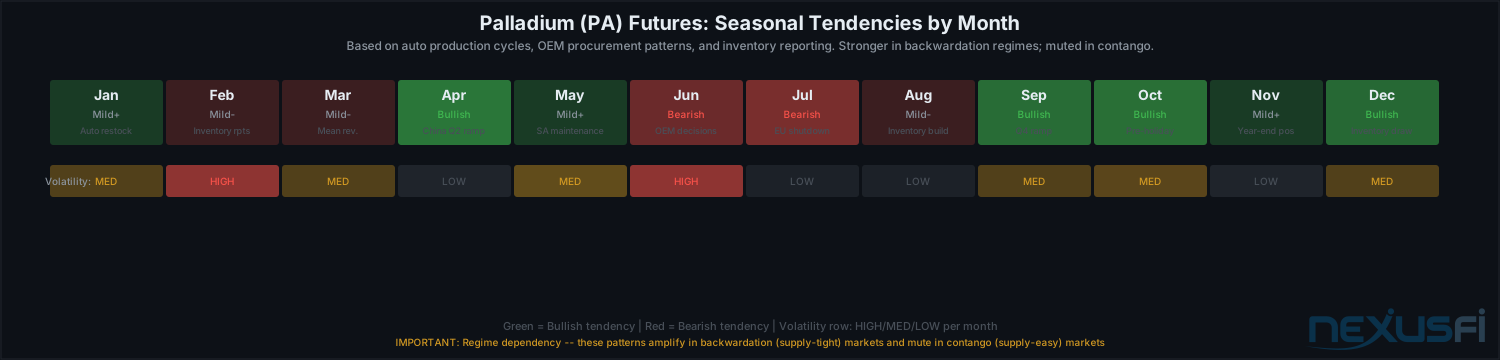
Palladium's seasonal patterns are real but regime-dependent. The same calendar month behaves very differently in a backwardation (supply-tight) regime versus a contango (inventory-easy) regime. Apply these as probability tilts, not trade triggers.
| Month | Tendency | Driver |
|---|---|---|
| Jan | Firm | Auto restocking, China re-entry post-New Year |
| Feb | Volatile | Inventory reports, geopolitical headlines |
| Mar | Mean reversion | Post-Feb spike digestion, positioning rebalance |
| Apr | Bullish +3-5% | China Q2 production ramp, rollover volume surge |
| May | Supply-shock risk | South African mine maintenance schedules |
| Jun | High vol / tops | OEM Q3 decisions, mid-year trigger pricing reviews |
| Jul | Pullback | European summer shutdown, reduced industrial demand |
| Aug | Consolidation | Inventory builds, thin institutional participation |
| Sep | Upward bias | Q4 ramp, breakout of Sep low often leads to Q4 rally |
| Oct | Bullish breakout | Pre-holiday demand, open interest spikes |
| Nov | Vol compression | Year-end hedger positioning |
| Dec | Late rally +4-6% | Year-end inventory draw, Chinese New Year preparation |
The regime caveat: These patterns are strongest in supply-deficit (backwardation) environments and weakest or reversed in surplus (contango) environments. The April seasonal strength that characterized 2020-2022 was largely absent in 2024 because the fundamental backdrop had shifted. Check the curve shape and supply-demand balance before applying any seasonal tilt.
Correlation with Other Metals #
Palladium's correlations are time-varying and regime-dependent. A static correlation coefficient tells you almost nothing — you need a rolling 60-day window.
Palladium vs Platinum (PL): Highest correlation in the PGM complex — both tied to automotive industrial demand and shared supply geographies. But when substitution dynamics shift relative demand between the two metals, they diverge sharply. The 2022-2023 period saw palladium outperform dramatically, then platinum outperform as substitution took hold. This divergence is tradeable via the Pd/Pt spread.
Palladium vs Gold (GC): Moderate and unstable. During broad risk-off events they move together; during supply-specific PA events they diverge. GC moving without PA = macro/monetary driver (likely short-lived). PA moving without GC = supply-specific (potentially sustained).
Palladium vs Silver (SI): Low and unstable — silver's monetary premium and diversified industrial demand (solar, electronics) make it structurally different. Don't use SI as a PA hedge.
Palladium vs Copper (HG): Useful as a cross-check. Copper is the broadest industrial demand proxy. When copper holds firm while palladium falls, the divergence points to palladium-specific factors (EV substitution, trigger chemistry shifts) rather than a general industrial slowdown — an important distinction for assessing trade thesis.
Palladium is an industrial logistics play, not a monetary metal. Trade it so.
COT Report Analysis for PA #
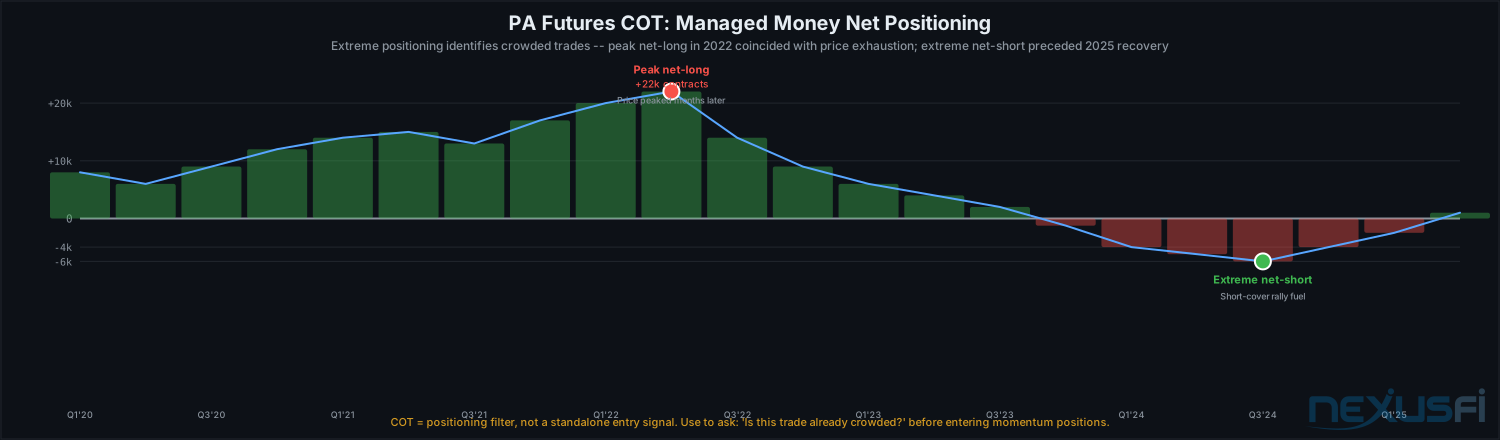
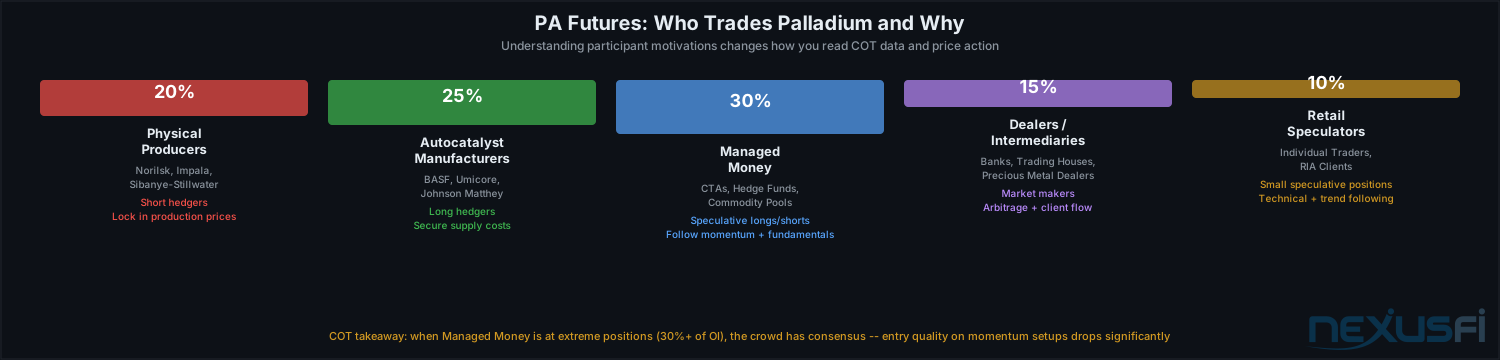 PA participants break down roughly as: autocatalyst manufacturers (~25%, long hedgers), managed money (~30%, specs), producers (~20%, short hedgers), dealers (~15%), retail (~10%). When managed money net positioning reaches extreme levels versus the 1-year range, entry quality on momentum setups drops because the crowd already has the trade. Producers and autocatalyst manufacturers understand physical market dynamics better than managed money — their shifts often lead price.
The Commitments of Traders (COT) report is genuinely useful for palladium — more so than for liquid markets like ES or GC, because PA is smaller and positioning extremes are more detectable relative to open interest.
Managed Money net longs peaked near +22,000 contracts in early-mid 2022 — months before the price peak. COT extremes identify crowded trades. When managed money is at historic extremes, further momentum entries carry significant crowding risk. Extreme net-short positions (2024) often precede short-covering rallies.
Commercial hedgers: Miners short (lock in prices), autocatalyst manufacturers long (secure supply costs). Aggressive commercial shifts often foreshadow fundamental changes before price moves.
Managed money: Speculators, CTAs, hedge funds. Net longs above 30% of OI historically precede positioning washouts.
@SMCJB has tracked the metals market through multiple backwardation cycles. His documentation of the backwardation mechanics in the NexusFi metals thread captures why the signal matters: "Spot prices will start trading at a premium to forward prices. Then short term forward prices will trade at a premium to medium term forward prices. This is what we call backwardation." When PA's curve entered this phase in 2020, it was the first confirmation that the supply deficit was structural.
How to read it practically:
- Net-long above 30% of OI: Reduce size on long entries — the trade is crowded, not a short signal.
- Net-short above 50%: Often precedes short-covering rallies; trapped shorts provide bounce fuel.
- Commercials reducing shorts while managed money goes more long: More reliable bull signal — commercials understand physical markets better.
- Both commercial and managed money net-long simultaneously: Rare, often corresponds to genuine supply-crisis phases.
Use COT as a positioning filter, not a standalone entry signal. Extreme positioning with price structure confirmation is the highest-quality setup.
Trading PA: Four Practical Strategies #
Strategy 1: Structure-Break Trend Following (Impulse Regimes) #
Best when PA is in a clear trending regime — supply shock conditions, major fundamental event, sustained demand shift. This is how you trade the 2022-type environments.
- Identify the higher-timeframe (weekly/daily) swing direction
- Wait for a break-and-close beyond a key structural level — avoid single-wick breaks
- Look for a retest of the broken level that holds
- Enter on the retest, targeting the next liquidity zone
- Stop: beyond the prior swing extreme or 1.0-1.5x ATR(14) on your trading timeframe
- Trail with breaks of minor swing structure as the trend develops
Example from 2022: PA broke above $2,200 in January, then retested $2,200 as support in early February. Clean entry with stop below $2,100, sanctions shock drove price to $2,900. Entry before the headline, not after.
Strategy 2: Mean Reversion After Impulse (Digestion Regimes) #
After a sharp directional move, PA often digests within a range before continuing or reversing. Thin liquidity creates genuine overshoots beyond statistical bands.
- Define a clear range from the most recent swing high and low
- Wait for price to reach the outer band with rejection signals: momentum divergence, failure to make new extremes on multiple attempts, visible absorption
- Enter opposite the spike, stop just beyond the range boundary
- Target the range midpoint first, opposite band as a runner
This strategy fails in sustained trend environments — regime filter is non-negotiable. Only apply when higher-timeframe structure is flat or turning. August consolidation periods historically favor this approach as thin summer liquidity creates exaggerated moves that snap back.
Strategy 3: Pd/Pt Relative Value Trade #
This captures substitution dynamics directly rather than speculating on outright palladium direction.
Long Pd / Short Pt when: supply risk specific to PA (Russian export disruption, SA mine accident), Pd/Pt below historical average, COT net-short PA while neutral PL.
Short Pd / Long Pt when: substitution pressure building (OEM reformulation announcements), Pd/Pt above 2.0 and narrowing, managed money at extreme net-long PA.
Trade the spread's own chart structure, not the legs blindly.
Strategy 4: COT + Technical Regime Filter (Positioning-Aware Entries) #
Lowest frequency, highest conviction approach for swing-timeframe traders.
- Pull the CFTC weekly COT data for PA every Friday evening
- Assess managed money net positioning relative to the past 6-month range
- If at historic extreme net-long: Avoid chasing long breakouts, only enter longs on confirmed pullback setups with structure support
- If at historic extreme net-short: Look for long setups with structure confirmation
- If positioning neutral: Standard technical analysis without the positioning discount
The best COT signals: positioning extreme AND technical picture disagrees. Managed money at max-long while price makes lower highs — both argue against the bull case. Rare but high-conviction.
Risk Management for PA Futures #
Palladium is not an ES trade. The risk management rules that work for index futures will get you destroyed in PA.
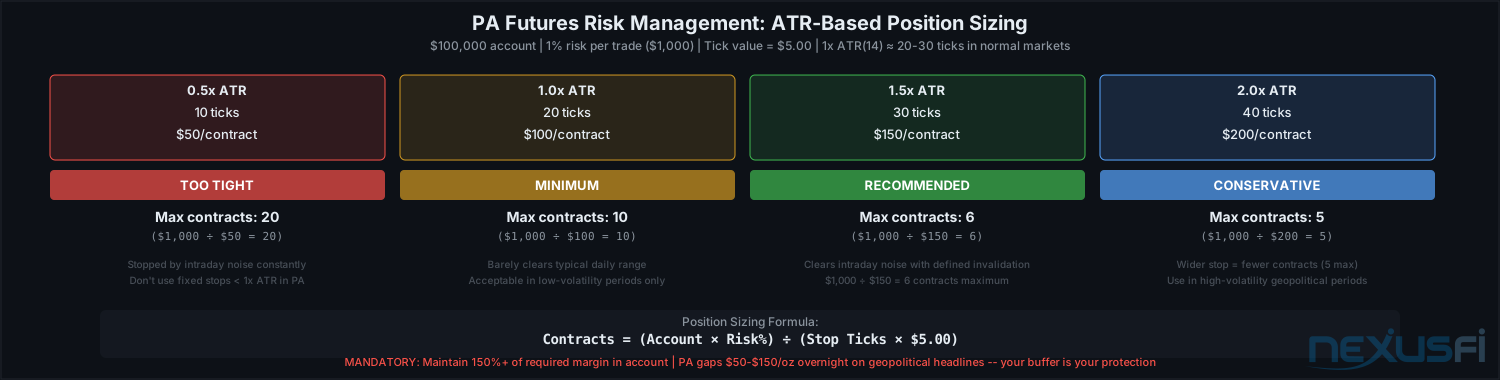
At 1.5x ATR stop distance (30 ticks, $150/contract), a $100,000 account risking 1% per trade can safely hold 6 contracts. Fixed-dollar stops smaller than 1x ATR(14) get hit by routine PA intraday noise. Always maintain 150%+ margin buffer — PA gaps $50-150/oz overnight during geopolitical events.
Position sizing: (Account × 1% risk) ÷ (Stop ticks × $5). Start with 1 contract until you've experienced a genuine PA volatility event.
ATR-based stops: Use 1.0-1.5x ATR(14) as minimum stop distance. PA's normal daily ATR is 20-40 ticks ($100-$200 per contract). Fixed-dollar stops smaller than 1x ATR get hit by routine noise.
Maximum daily loss: Hard rule at 2% of account equity per day. PA can trend violently on headline risk.
Margin buffer: Maintain 150%+ of required margin. The 10% circuit breaker is last-resort — your margin call arrives long before.
Overnight risk: Reduce position size 50% during geopolitical events. PA gaps $50-150/oz on overnight headlines.
The 2022 crisis: margin requirements doubled in two weeks, $200 intraday ranges were routine. Preparation is the position.
The Global Supply Balance: Reading the Structural Setup #
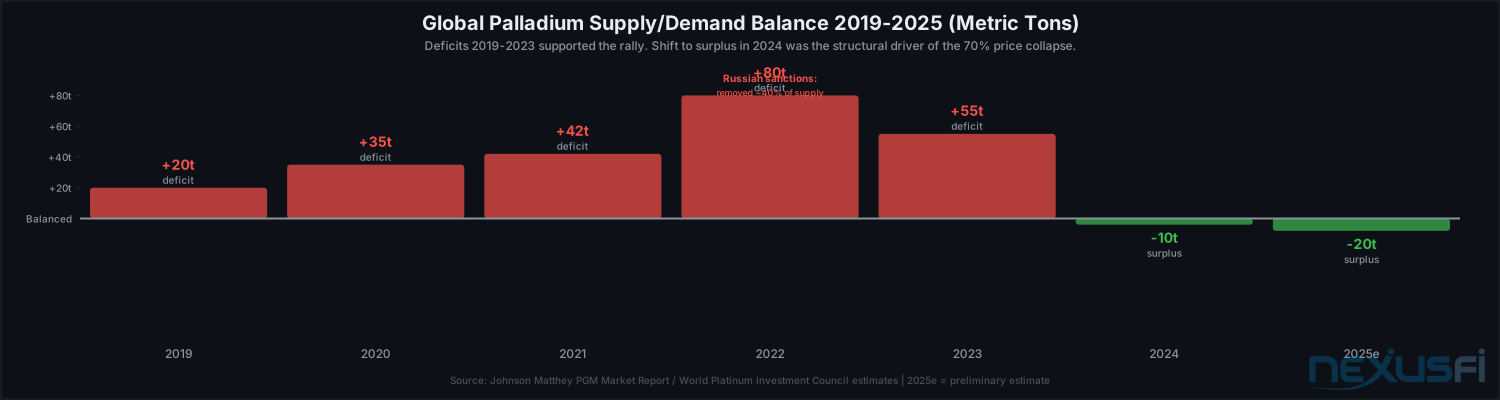
Global palladium supply deficits peaked at ~80 metric tons in 2022 as Russian sanctions removed 40% of annual production. Subsequent inventory normalization, partial Russian re-entry through adapted trade routes, and platinum substitution shifted the market to surplus by 2024 — the structural driver behind the 70% crash from $3,000 to $940.
Understanding where the supply-demand balance sits is the foundation of longer-timeframe PA trade analysis. The deficit years (2020-2022) supported the rally. The shift to surplus (2024-25) preceded and enabled the crash.
Future PA opportunities will likely emerge from: (1) supply disruption meeting rebuilding demand if EV adoption plateaus; (2) substitution reversal if platinum prices spike much; (3) recycling supply constraints as the 2020-2022 palladium-loaded vehicle fleet ages; or (4) a new primary supply disruption via Russian sanctions escalation or South African mining crisis.
Since that 2011 post, PA has become one of the most eventful contracts in the CME complex.
The PA Trader's Decision Framework #
Before entering any PA trade:
- Macro context: Risk-on or risk-off? PA can sell off with equities during broad commodity liquidations.
- Fundamental regime: Check curve shape first — backwardation signals tight supply, contango signals easy. Which direction is it shifting?
- Pd/Pt spread: Above 2.0 = substitution pressure (caps upside). Below 1.0 = palladium possibly undervalued.
- COT positioning: Extreme positioning reduces entry quality. Neutral is cleaner.
- Technical setup: Clean entry with defined stop and identifiable target, consistent with the regime.
- Size: 1.5x ATR stop, 150% margin buffer, 2% maximum daily loss.
Every consistently profitable PA trader starts with the supply-demand regime before looking at a chart. The chart tells you when to enter. The regime tells you which direction.
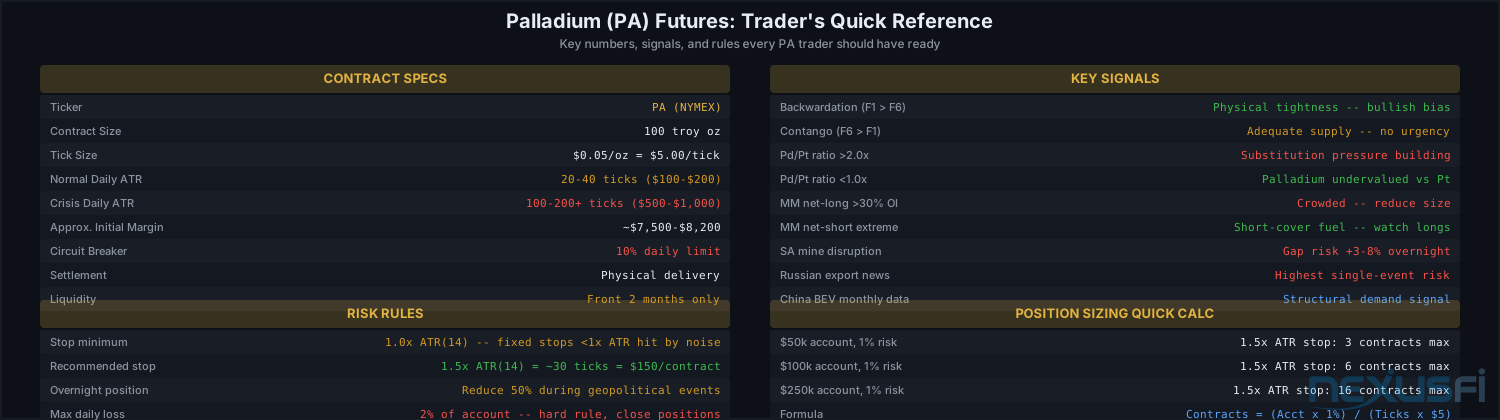 The PA quick reference covers everything a trader needs on-screen: contract specs, key market signals with directional interpretations, risk rules, and position sizing calculations at different account sizes. PA's 1.5x ATR stop recommendation (30 ticks/$150/contract) yields 6 contracts maximum for a $100k account at 1% risk — a sizing framework that survives routine intraday noise without being stopped out on normal volatility.
Related Articles #
For PA traders, the companion reading in NexusFi Academy includes Platinum Futures (PL) for the closely-related substitution dynamics and relative value context, Gold Futures (GC) for the broader precious metals framework and correlation context, and Futures Margin and Leverage for position sizing mechanics.
The market structure layer — specifically how backwardation and contango develop — is covered in depth in Contango and Backwardation. The COT report interpretation framework is in Commitment of Traders (COT) Report. For the broader commodity seasonal analysis framework, see Seasonality Trading Strategies for Futures.
Knowledge Map
Prerequisites
Understand these firstGo Deeper
Build on this knowledgeReferences This Article
Articles that build on this topicCitations
- — Precious Metals: Stocks and ETFs (2011) 👍 1“Palladium can be traded with either Futures at the CME or via ETFs. PA is the symbol at the CME for the futures prices.”
- — commodity spreads (2015) 👍 6“In a bull market the front often outperforms the back. Saying that when prices move they obviously do tend to effect prompt contracts more than deferred contracts.”
- — Gold Futures (GC) main discussion (2020) 👍 8“Gold is to hold. Silver is for trading. This is extremely important.”
- — Another new Micro - Platinum 3/13/2023 (2023) 👍 8“NYMEX will list the Micro Platinum Futures contract for trading on the CME Globex electronic trading platform.”
- — Trading natural gas futures (2025)“Unlike other commodities where supply/demand is more linear, seasonality dictates the forward curve shape almost entirely.”
- — CME Switches to Percentage-Based Precious Metals Margins After Record Gold Surge (2026)“CME shifted to dynamic percentage-based requirements -- Gold 5% maintenance, Palladium down 12% in the broader precious metals liquidation.”
- — CME Globex | Dynamic Circuit Breakers (2020) 👍 6“Due to the volatility experienced in Palladium (PA), RBOB Gasoline, and Heating Oil, CME Group increased the Dynamic Circuit Breaker Levels: Palladium Futures (PA) from 5% to 10%.”
- — Reminiscences of a Bean Trader or Why These Ain't Yo Daddy's Beans No-Mo (2014) 👍 15“Professional specs and hedgers are ever vigilant when it comes to scrutinizing term structure. If we are discussing commodities, we usually refer the shape of the curve as being in contango or backwardation.”
- — Metals (2021) 👍 1“Spot prices will start trading at a premium to forward prices. Then short term forward prices will trade at a premium to medium term forward prices. This is what we call backwardation.”