



British Pound (6B) Futures: The Complete Trading Guide
Overview #
British Pound futures — ticker 6B — are the third most actively traded FX futures contract on CME Globex, behind the euro (6E) and Japanese yen (6J). Each contract represents £62,500, making the pound the market where Bank of England policy, UK economic data, and the long tail of Brexit risk collide with US dollar dynamics in a single, centrally-cleared order book.
For futures traders, 6B offers something different from its FX peers: more volatility, sharper headline sensitivity, and a persistent political risk premium baked into every price since 2016. The pound isn't just another currency futures contract. It's a macro instrument with a memory.
Traders coming from spot forex find 6B immediately familiar as a GBP/USD instrument — same exchange rate, but the execution environment is at the core different. CME clears every trade. The order book shows real depth from thousands of global participants, not dealer-quoted bids and offers. And unlike the OTC forex market, no one on the other side of your 6B trade has access to your positions or order flow.
Key Specifications #
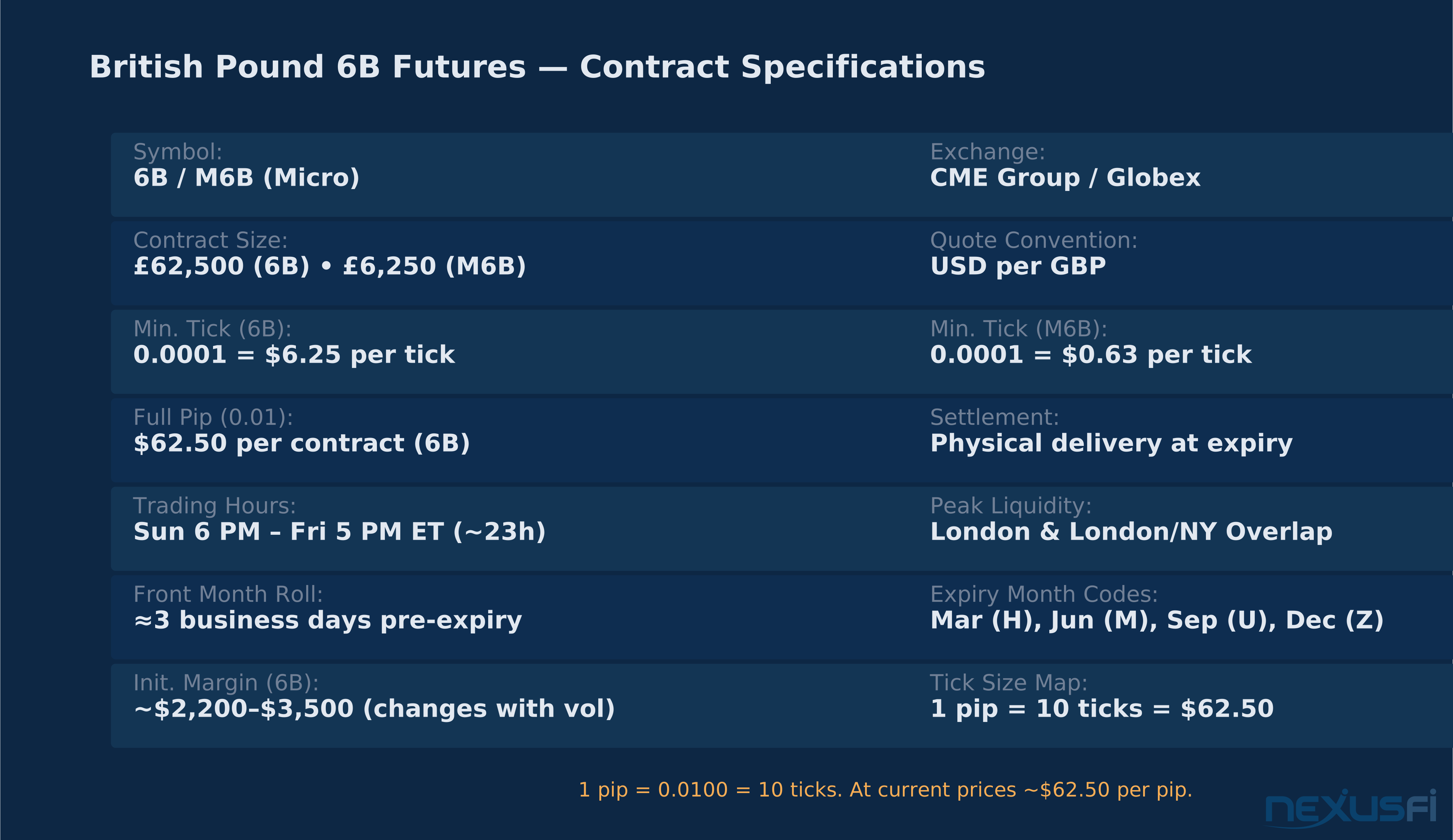
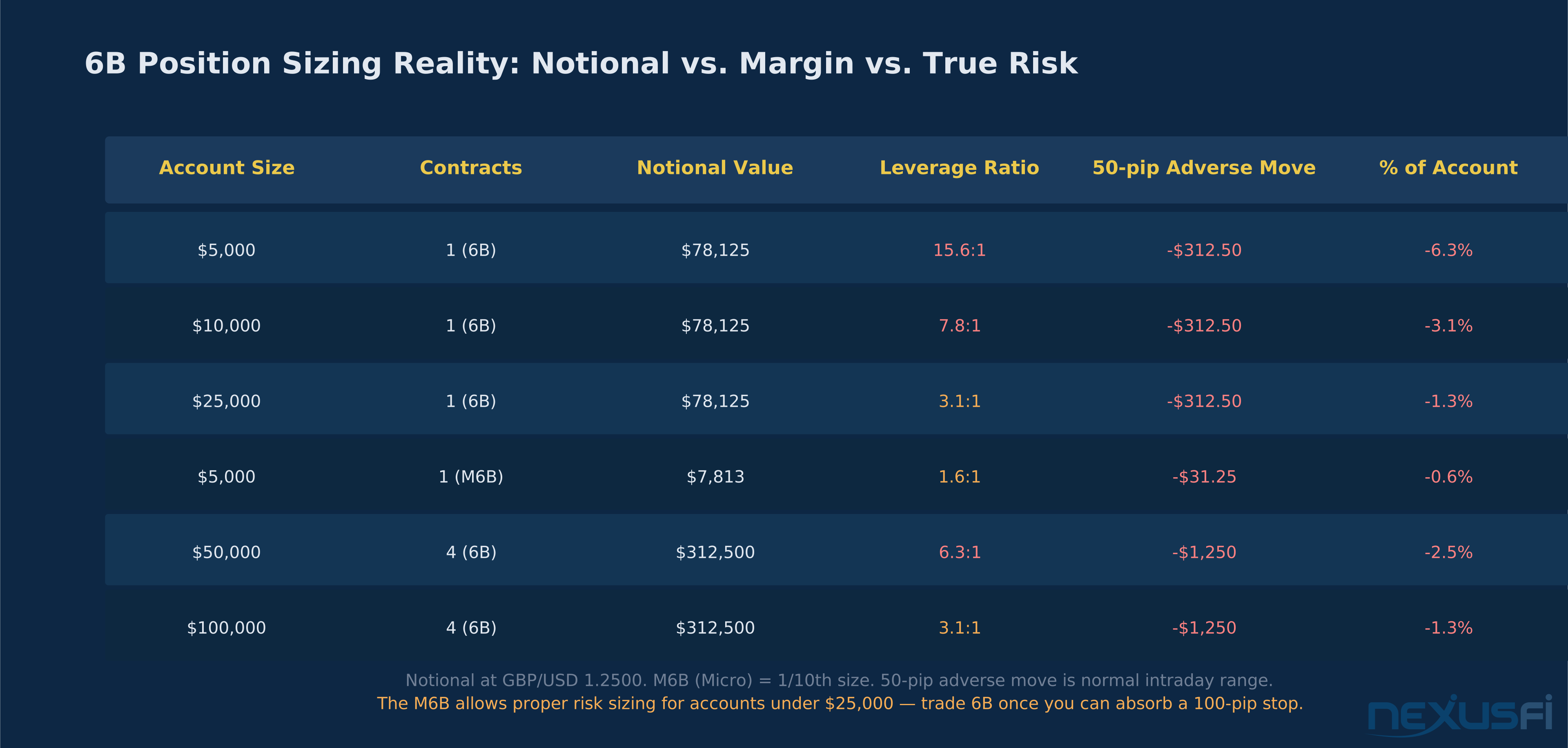
Contract Size — One 6B contract controls £62,500. At GBP/USD 1.2500, that's $78,125 in notional per contract. The minimum tick is 0.0001, worth $6.25. A full pip (0.0100 in spot forex terms) equals 10 ticks, or $62.50. A cent move (0.0100) is $62.50. A hundred-pip move is $625 per contract.
The Micro M6B — CME's Micro British Pound (M6B) is exactly 1/10th the size: £6,250 per contract, $0.63 per tick. The M6B is the right starting point for accounts under $25,000 and for testing strategies before scaling to full contracts.
[1] That daily range translates to just under $49 at current volatility — meaningful enough to build a strategy around, small enough to survive the learning curve.
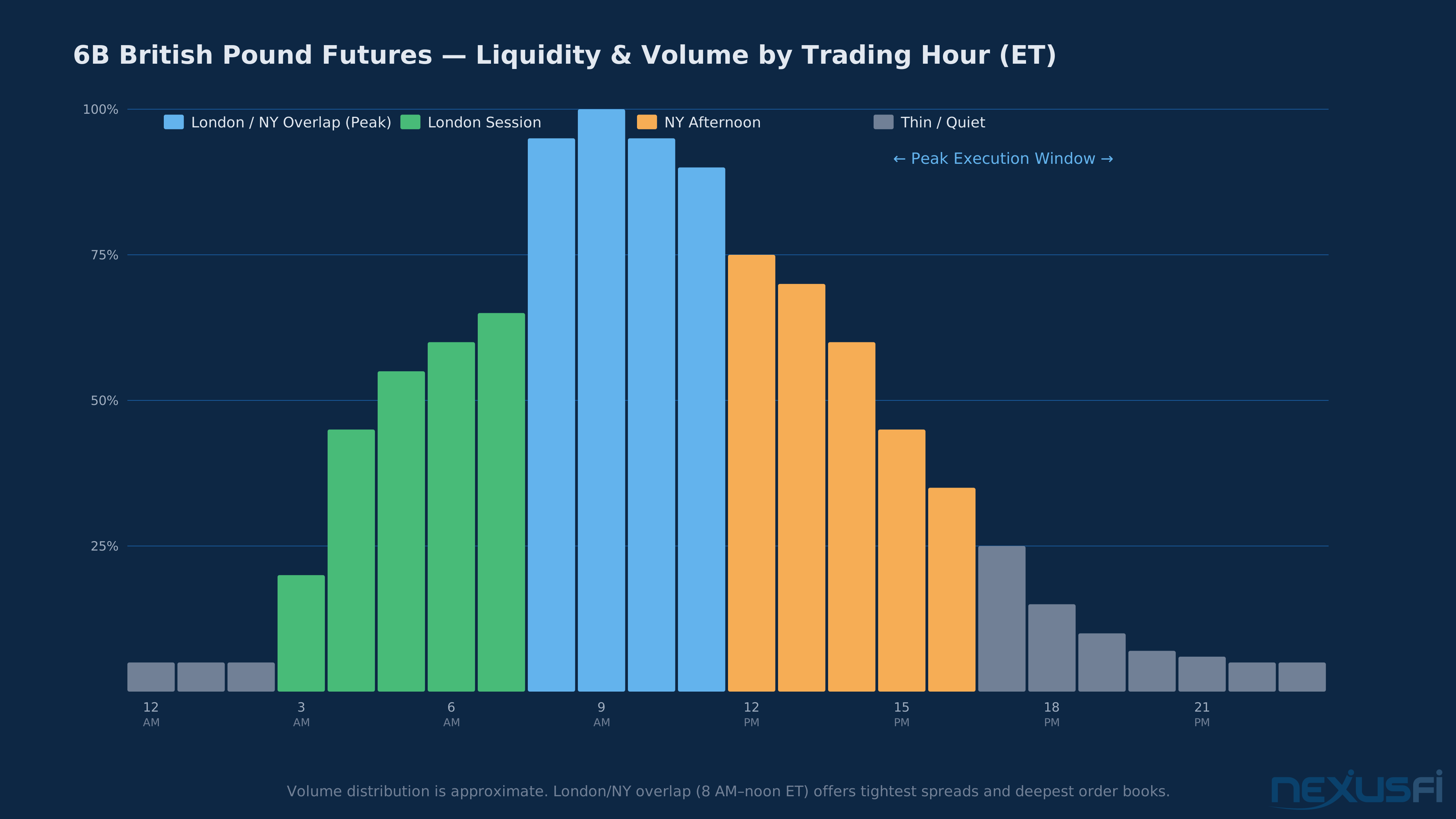
Trading Hours — 6B trades nearly 23 hours per day on CME Globex, Sunday 6:00 PM through Friday 5:00 PM ET with a one-hour daily maintenance break. But not all hours are created equal.
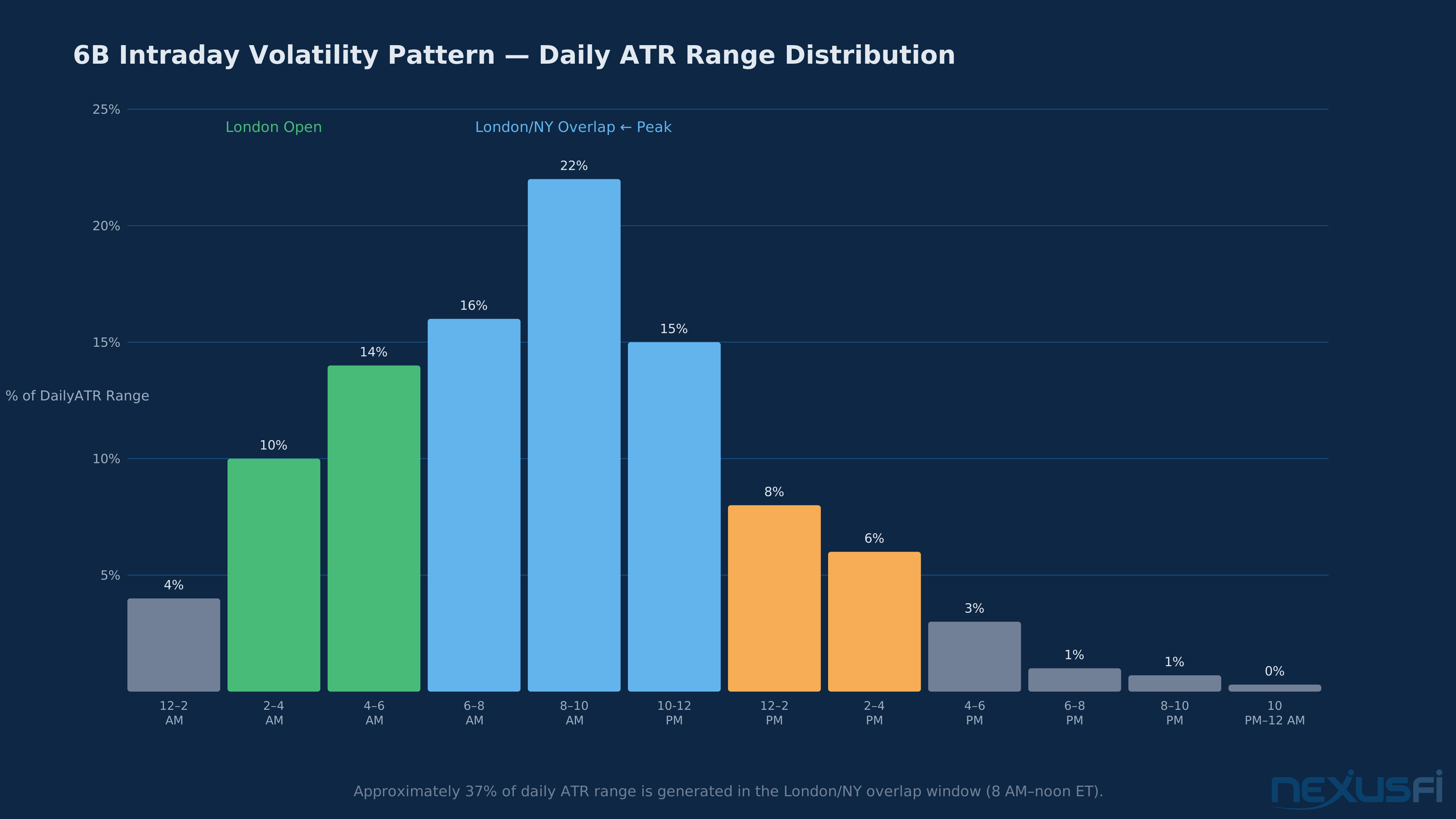
[2] The London/NY overlap — roughly 8:00 AM to noon ET — is when 6B shows the tightest spreads and deepest liquidity.
Contract Months — 6B lists quarterly contracts: March (H), June (M), September (U), December (Z). The front month carries 90%+ of volume and open interest. Rollover typically happens 3-5 business days before third-Wednesday expiration. Most traders roll by monitoring the volume shift from the front to the next month — when the back month starts trading more, it's time to roll.
Margins — CME initial margin runs approximately $2,200-$3,500 per 6B contract depending on volatility regimes. Brokers offer intraday margins that can be much lower — sometimes $500-$1,000 — but these are broker-provided leverage, not exchange protections. The difference matters when GBP gaps 50 pips on a Bank of England surprise and your "intraday" position hasn't closed.
How It Works #
Futures vs. Spot Forex for GBP Traders #
Traders who've followed GBP in the spot forex market have a head start — the price levels are identical, the rate drivers are the same, and chart patterns transfer directly. What changes is everything about the execution environment.
In 6B, every trade clears through CME. There's no counterparty who sees your stops, no dealer spread on top of the market price, and no requotes on fast markets. When GBP gaps 100 pips on a Bank of England announcement, you fill at the actual market price — wherever that is — not a manipulated bid/ask. As @SMCJB's analysis of FX futures parity showed: the relationship between futures and spot holds tightly until rates diverge sharply, making the futures price a clean, transparent expression of the GBP/USD exchange rate. [3] Retail traders transitioning from spot forex have noted the structural differences: @Pippi highlighted on NexusFi that since 6B contracts are half the size of some euro contracts, commission efficiency matters when trading it alongside other FX futures. [8]
The trade-off is position sizing rigidity. 6B comes in £62,500 increments. There's no "0.3 lot" in futures. For smaller accounts, the M6B solves this — £6,250 per contract means you can trade pound exposure without betting 6B's full notional.
The M6B for Learning and Scaling #
If you're new to GBP futures, start with M6B. Chart the 6B for analysis — it carries the real volume and order flow data. Execute on M6B. The liquidity behavior mirrors the standard contract during London and New York hours; expect wider spreads during Asian hours and in the hour around the daily maintenance break.
The practical size ladder: M6B for accounts under $25,000 and strategy development. One to three 6B contracts once your edge is proven and you can absorb a 100-pip adverse move without breaking position-sizing rules. Never use broker intraday margin as your risk calculator — use the full notional and a volatility-based stop to determine position size.
The Bank of England Effect #
No instrument better illustrates the price impact of central bank communication than 6B. When the Bank of England speaks, the pound listens. When the Bank of England surprises, the pound lunges.
What the BoE Moves #
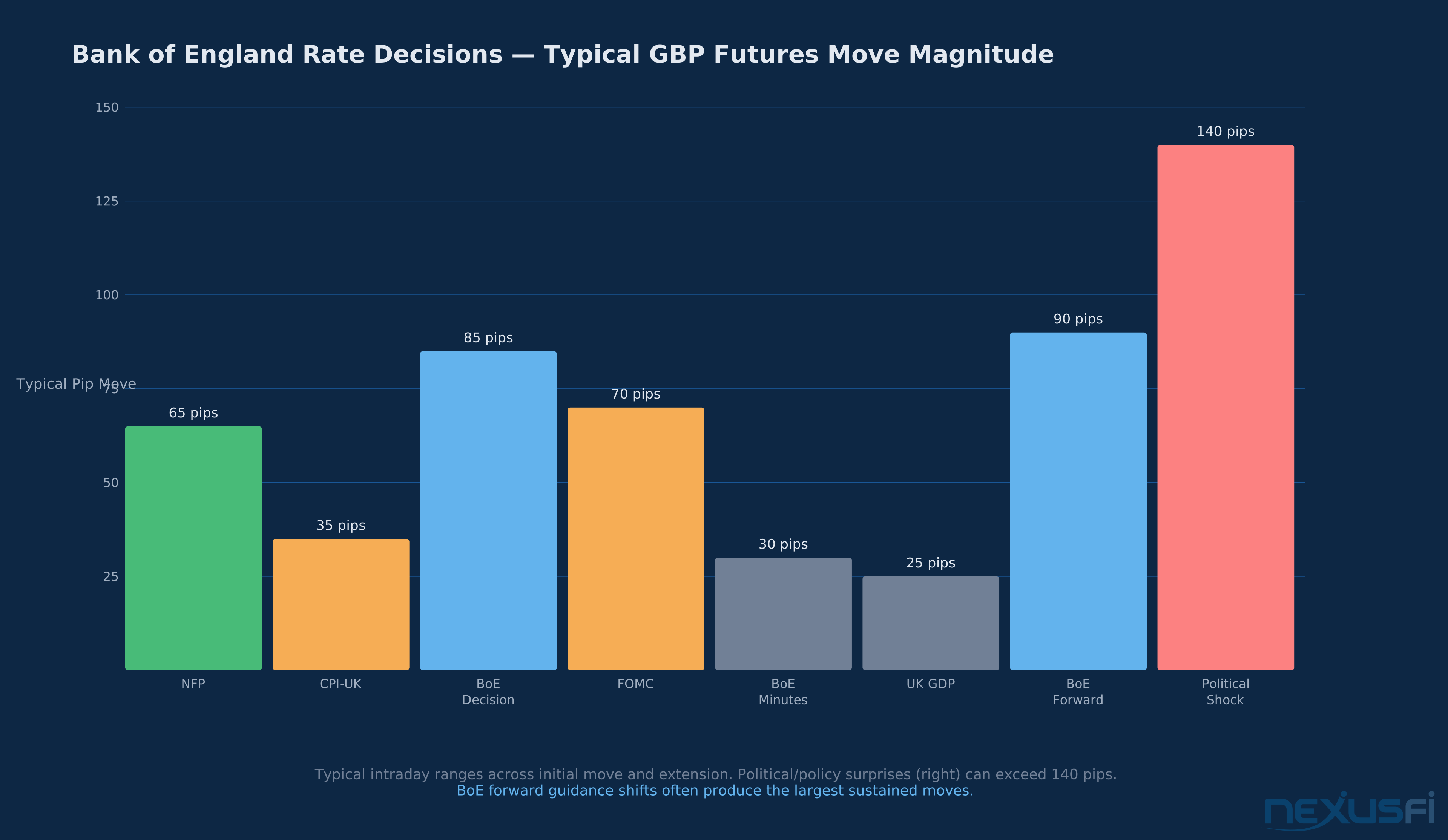
The Monetary Policy Committee (MPC) meets approximately eight times per year. Each meeting produces a rate decision, the Statement, and (quarterly) the Monetary Policy Report. The rate vote itself is the opening gun. What follows — the guidance language, the MPC voting split, the inflation forecast trajectory — determines whether the initial move holds or reverses.
The voting split matters more than traders realize. An 8-1 vote for a hold (with one member dissenting for a cut) reads differently than a 5-4 vote. The former signals consensus; the latter signals an MPC close to moving. That distinction can be worth 30-50 pips on its own.
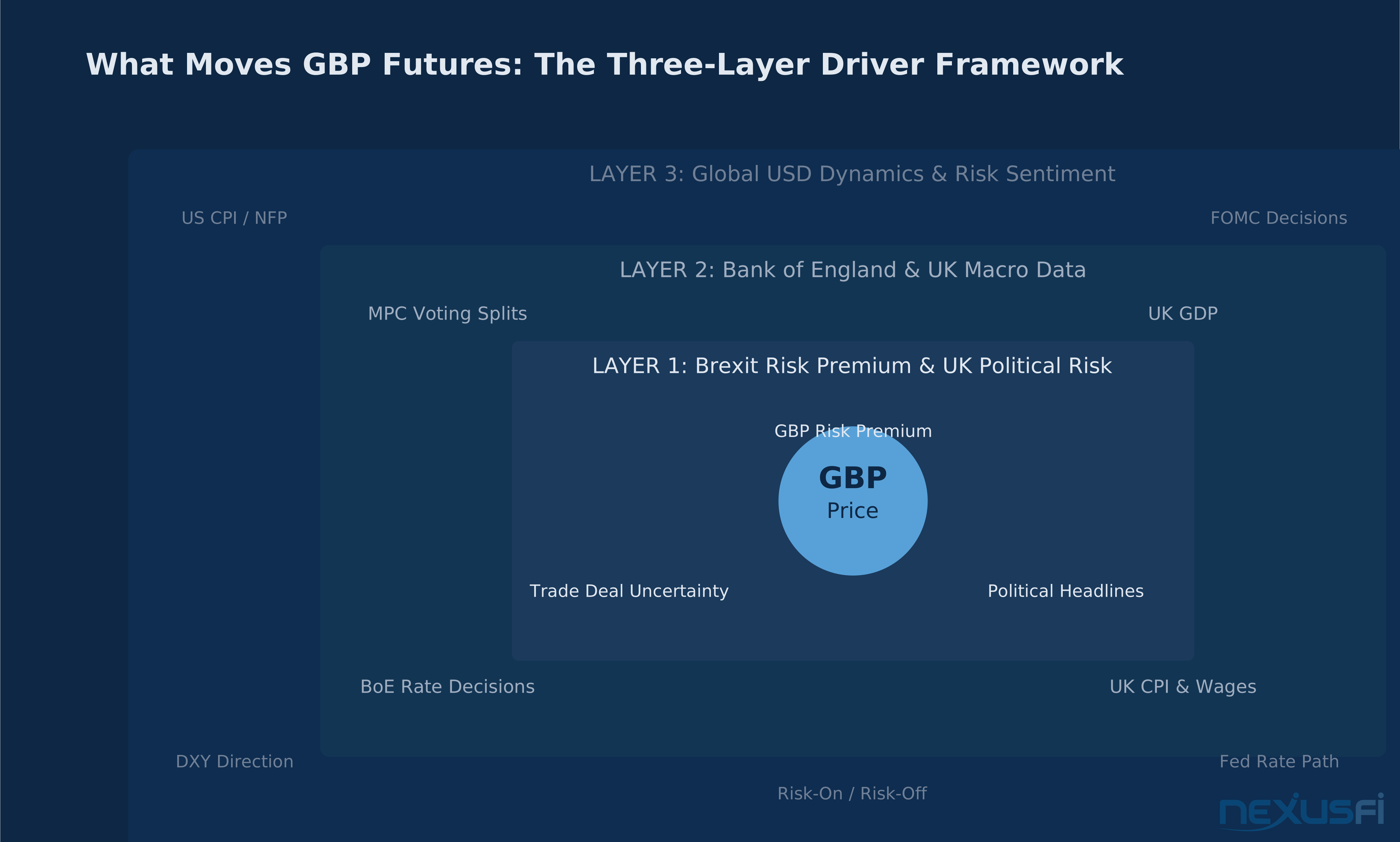
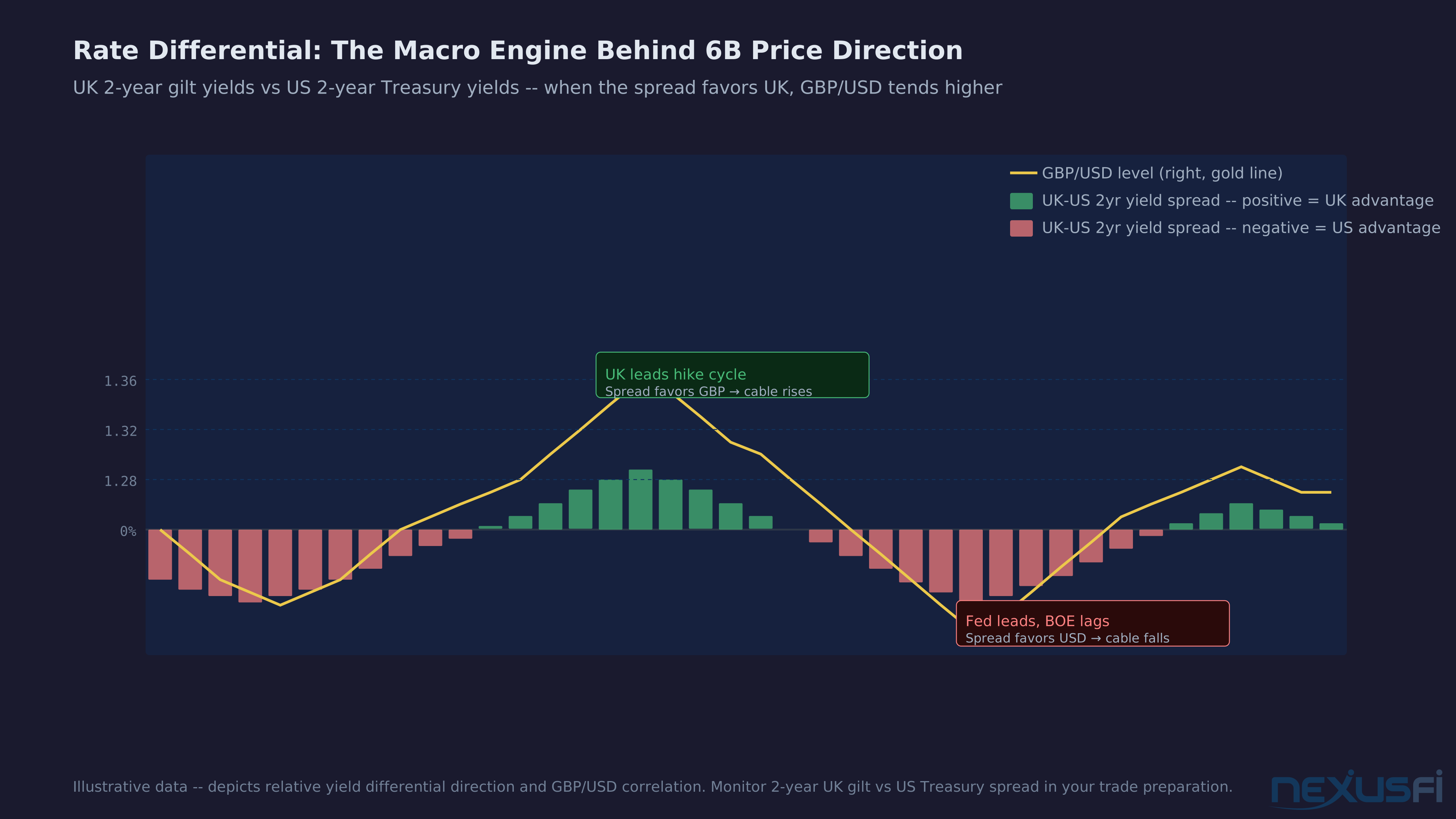
The rate differential mechanism: GBP's price in USD is, at its core, a reflection of expected interest rate differentials between the UK and the United States. When the market prices in a BoE path that's more hawkish than the Fed, capital flows toward sterling and 6B rises. When the BoE looks dovish relative to an aggressive Fed — as happened repeatedly in 2022-2023 — the rate differential works against the pound. The UK 2-year Gilt yield spread versus the US 2-year Treasury is the single best weekly directional signal for 6B direction.
Key BoE Releases That Move Price #
| Release | Typical Impact | Timing |
|---|---|---|
| MPC Rate Decision | 60-120 pips initial | 7:00 AM ET (or 8:00 AM during BST) |
| Monetary Policy Report | 30-80 pips extended | Same day as rate decision, quarterly |
| MPC Meeting Minutes | 20-60 pips | Two weeks post-meeting |
| BoE Inflation Report | 25-70 pips | Quarterly |
| Governor Speech | 15-50 pips | Varies |
Don't trade the initial rate tick — the first five seconds on a BoE decision day are dominated by algo responses to headline scanners. Let the market find direction, then look for re-entry on the pullback to session levels or VWAP. @MWG86 documented this pattern in extensive detail in their volatility analysis of 2018-2019 data, noting that initial news spikes frequently retraced much within 15-30 minutes before resuming the fundamental direction. [4]
Brexit Risk Premium: The Permanent Change to GBP #
Something changed about the pound in June 2016 that never fully reversed. When the UK voted to leave the European Union, GBP/USD fell approximately 10% in a single session — from around 1.50 to 1.32 — in one of the largest single-day moves in major FX history. The pound has never consistently reclaimed those levels.
Why the Premium Persists #
The Brexit risk premium exists because the UK's trade relationship with its largest trading partner remains structurally uncertain. Trade deals can be renegotiated, regulatory equivalence can be revoked, and political conditions change. Every UK general election, every change in the UK's posture toward the EU, and every trade dispute that resurfaces in headlines reprices the expected long-run cost of Brexit.
The practical effect for traders: GBP is more sensitive to political headlines than EUR, JPY, or AUD. A UK political shock — a Prime Minister resignation, a snap election, a significant budget blowup — can gap the pound 40-100 pips overnight with no warning and no data. These events don't follow economic calendars. They show up in news feeds at 9:00 PM ET on a Tuesday when liquidity is thin.
Position management implication: Holding unhedged 6B positions through UK general elections, referendums, or major parliamentary votes is a different risk profile than holding through a scheduled data release. The former can gap; the latter gives you a liquid opening to exit. Know which risk you're accepting.
The "Two Markets" Reality #
Pre- and post-Brexit GBP behaves as if there are two different instruments with the same ticker. Pre-2016 volatility expectations, range measurements, and breakout calculations no longer apply to current 6B behavior. Any backtest that uses GBP data spanning 2016 is mixing two different volatility regimes and will produce misleading risk statistics.
For strategy development, use post-2017 data as the relevant population. For risk sizing, acknowledge that political shocks can produce moves that exceed any ATR-based stop. Position sizing — not stop placement — is the ultimate protection against the fat tails in 6B.
Session Structure: When 6B Trades Well #
The London Session (3:00--7:00 AM ET) #
London is the home of GBP. When the UK financial market opens, sterling gets its most authoritative price discovery. Volume builds quickly from 3:00 AM ET as European dealers quote and UK institutional players begin executing. Range expansion starts in earnest.
This session is especially important because it incorporates any overnight news from Asia and prices in pre-market expectations for the UK data releasing that morning. If UK CPI or GDP releases at 2:00 AM ET, London opens with that information priced in (imperfectly) and spends the first two hours sorting out the new range.
[9] The London session generates the most directional price discovery; the NY session often continues that direction with significant range contribution during the overlap.
The London/NY Overlap (8:00 AM--12:00 PM ET) #
This is the best execution window for 6B traders by any metric: tightest spreads, deepest order book, most volume, and the most reliable technical setups. Both the UK and US markets are active simultaneously. Institutional players in both time zones are executing. The DOM shows genuine depth.
@TradeFlightPlan noted the general principle of session structure when discussing currency futures: the importance of knowing which traders are active and what their typical behavior is at each time of day, crediting veteran pit trader shopster with mapping the session dynamics that persist across currency markets. [5] That framework applies directly to 6B — the overlap is where educated participants set prices, and the hours before and after are the periods when you're exposed to thinner markets and less reliable setups.
NY Afternoon (12:00--4:00 PM ET) #
Once London closes (typically around 11:30 AM--noon ET), 6B loses its European institutional bid. Volume drops materially. The DOM thins. Breakouts are less reliable because the participants who would sustain them are no longer active. Mean reversion and range-bound behavior dominate.
This doesn't mean 6B is untradeable in the afternoon — it means your strategy should account for the reduced follow-through. Breakout traders scaling in on the afternoon session are often chasing the tail of a London-driven move, not starting a fresh one.
The Asian Session (7:00 PM--3:00 AM ET) #
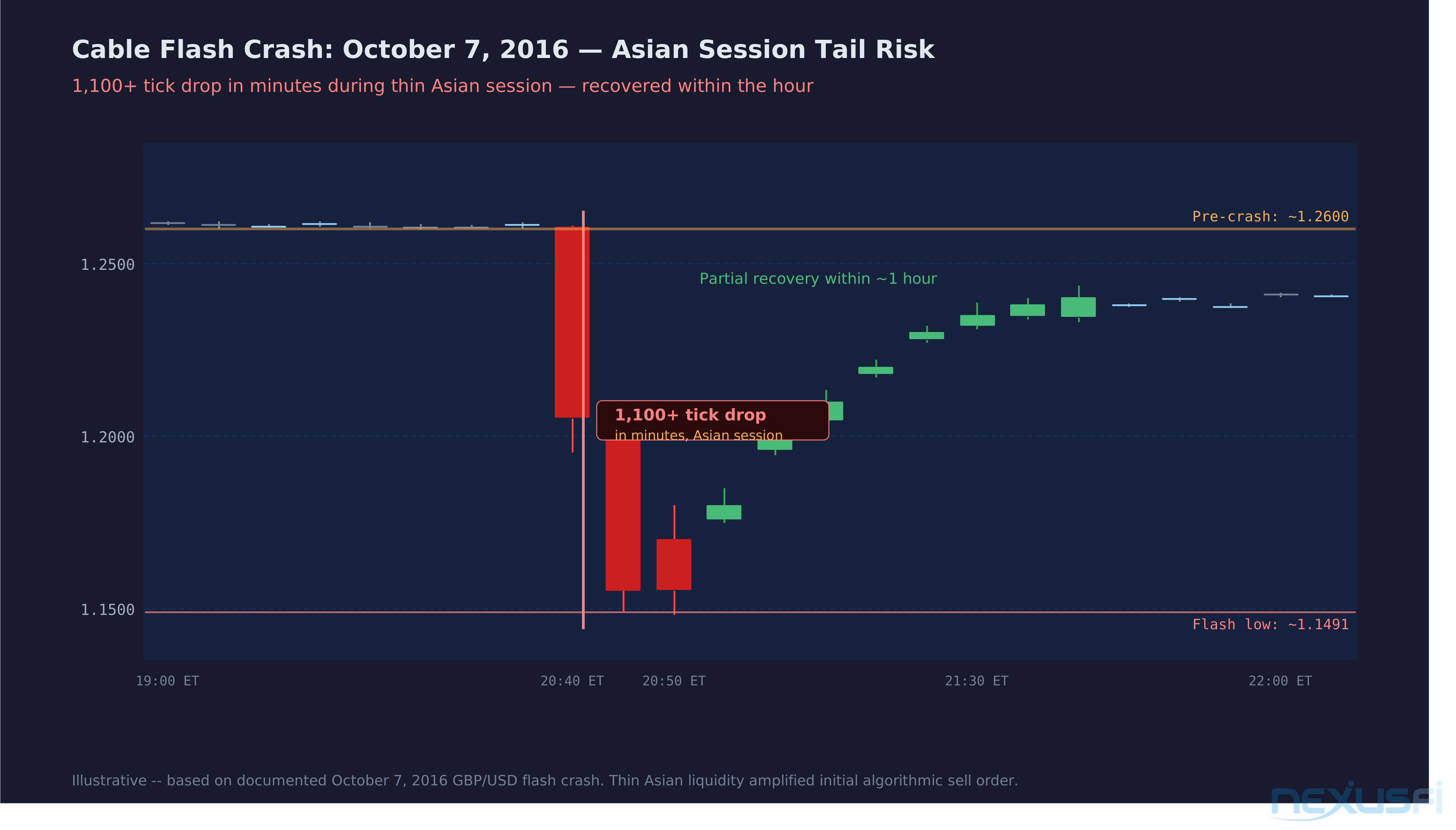
Thin. Wide spreads. GBP has limited institutional participation from Asia because the UK is not Asia's primary trading partner the way the euro or yen is. What liquidity exists is largely in the form of carry-trade flows, risk hedges, and algorithmic market makers widening their spreads to compensate for thin books.
Scalping and intraday breakout strategies do not work well in 6B during Asian hours. Longer-term swing positions and overnight holds are different — the Asian session may produce unreliable fills and wide spreads, but GBP's overnight direction is still driven by the fundamentals you've positioned for. Just don't interpret Asian session price action as authoritative technical signals.
Four Approaches to Trading 6B #
1. Macro Trend Following #
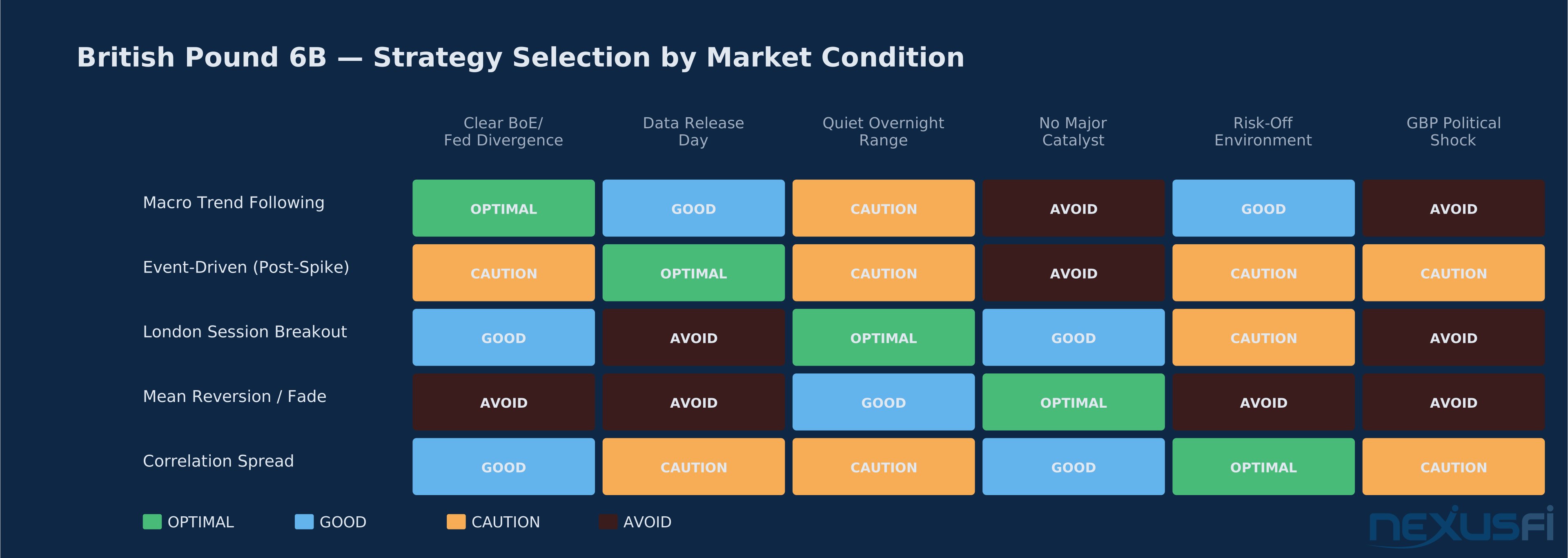
The best sustained moves in 6B come from rate differential repricing. When the BoE and Fed are heading in different directions — one hiking while the other holds, or one cutting while the other stays restrictive — GBP establishes a macro trend that can run for weeks or months.
Trading this well means treating every pullback as an opportunity rather than a signal to exit. Look for sessions where GBP corrects 15-30 pips into VWAP or a prior value area level, then watch for the DOM to absorb the pullback and rejoin the primary direction. The entry isn't on the first dip — it's on the dip that shows the market refusing to continue lower (or higher) despite selling pressure.
When macro fundamentals support GBP strength and the technical pullback gives you a well-defined stop level, this is the highest-probability approach in the 6B playbook.
2. Event-Driven Trading #
BoE days, UK CPI releases, US NFP and FOMC days — these are the events that can move 6B 50-150 pips in an hour. Trading them well is almost entirely about execution discipline, not prediction.
The pattern: markets set up a range ahead of the number (often compressing in the final 30 minutes). The release triggers an impulse move. That impulse frequently overshoots and partially reverses. The real trade is often on the re-test of the impulse point after the initial reaction settles.
Don't take the first move. The first 30-60 seconds on a major release are filled with algo noise, stop runs, and liquidity gaps. Wait for the move to establish direction, watch for a pullback to a logical level, and trade the continuation if the fundamentals support it. @FuturesTrader71 made the same point about all currency futures, noting that the micro contracts follow the main contract's behavior during the key sessions and that understanding the "why" behind price movement is more important than reacting to initial price action. [6]
3. London Session Breakout #
When GBP spends the Asian session in a tight range (less than 30 pips overnight), London's open often produces a directional breakout as institutional flow establishes the day's primary trend. The setup is straightforward: identify the overnight high and low, wait for London to confirm acceptance above or below that range, and trade in the direction of acceptance.
The traps: fake breakouts in the pre-London hour (1:00--3:00 AM ET) as thin market conditions allow price to move beyond range boundaries without institutional conviction. Wait for 30-minute acceptance beyond the overnight range — a close, not just a wick — before committing.
When you get a genuine London breakout with volume, the move often runs until the first major intraday support/resistance level — prior day's high/low, a round number, or the opening range of the prior NY session.
4. Mean Reversion and Range Fading #
GBP is a trending instrument when macro catalysts are present. It's a reasonable fading instrument when they're not. On days without scheduled data and without obvious macro drivers, 6B often oscillates around a mean — VWAP, prior day's close, or a structural value level — making range fades viable.
The conditions required:
- No major economic releases scheduled
- No pending BoE or Fed events within 24 hours
- No active political crisis or UK political risk
- Overnight range that shows balanced buying and selling (not a one-directional move)
When all four conditions are present, fade extreme moves back toward VWAP with tight stops. When any one of them is missing, the fade can turn into a trend and the stop gets run through. Mean reversion in 6B requires strict discipline about the conditions under which you'll apply it — the rate at which "quiet" sessions become "news-driven" sessions makes this the highest-risk approach in the toolkit.
Risk Management for 6B #
ATR-Based Stop Placement #
Fixed-tick stops don't work in 6B because its daily range varies dramatically by volatility regime. A 20-pip stop that gives you room in a quiet session will be run through in 30 seconds on an NFP day. Use the Average True Range (ATR) to calibrate your stop distance.
A 14-period daily ATR on 6B typically runs 70-120 pips in normal conditions, 150-250+ pips during high-volatility periods. For intraday trades, the 14-period ATR on the hourly chart gives you a better local volatility estimate. Set your stop at 0.5x to 1.0x ATR from entry, depending on the setup. If that stop distance exceeds what your position size can absorb within your account's daily loss limit, reduce the number of contracts rather than tighten the stop.
The Average True Range (ATR) article has the full methodology — the principle is to let the market's actual volatility, not a fixed number, determine where you give the trade room to breathe.
Sizing Down for Event Risk #
The rule is simple: before any scheduled BoE decision, UK CPI, US NFP, or FOMC announcement, reduce size to 50% or less of your normal trade size. If you'd normally trade two contracts, trade one. If you'd trade one, consider skipping or using M6B.
The reasoning: your stop can be technically valid and still get filled at a terrible price during news. The DOM thins dramatically in the seconds before a major release, spreads widen, and large orders move through multiple price levels with a single fill. Your 30-pip stop might become a 60-pip actual loss when the market gaps through your level. Smaller size makes those slippage events survivable.
Correlation Monitoring #
GBP doesn't move in a vacuum. When the US Dollar Index (DXY) is trending strongly — up or down — 6B tends to follow the inverse pattern. But this correlation weakens during UK-specific events. An BoE surprise can push 6B up 80 pips while every other dollar pair is unchanged. A UK political shock can crater the pound while EUR/USD holds steady.
Practical approach: before entering a 6B trade, check whether DXY and other major dollar pairs are confirming the same directional signal. If the euro, yen, and Australian dollar are all strengthening against the dollar and GBP is too, you're trading a broad dollar story and the trade has correlation confirmation. If only GBP is moving, you're trading a UK-specific story — and you need a UK-specific reason to justify the position.
See Intermarket Analysis for Futures Traders for the broader framework of how to evaluate correlation across FX and other asset classes before taking positions.
The Overnight Hold Calculus #
GBP futures trade overnight, but that doesn't mean every position should be held overnight. Political risk — UK cabinet reshuffles, parliamentary votes, surprise statements from 10 Downing Street — emerges outside of scheduled trading hours with no warning. A position that's technically profitable at 5:00 PM ET can gap against you by 60 pips by the time London opens.
The framework for overnight holds: size down (half your normal intraday size), widen your stop to accommodate overnight range expansion (1.5x your intraday ATR-based stop), and have a clear fundamental reason to expect continuation. "The chart looks good" is not a reason to hold GBP overnight through a period with elevated UK political risk.
6B in Context: Comparing the Major FX Futures #
6B sits in a distinctive position among the major FX futures. It offers more volatility than the Euro FX (6E) Futures, more sensitivity to political risk than most other majors, and a rate-driven core that resembles the Japanese Yen (6J) Futures while trading on at the core different drivers.
| Instrument | Contract Size | Daily Range (typical) | Key Driver | Risk Profile |
|---|---|---|---|---|
| 6B (British Pound) | £62,500 | 60-120 pips | BoE vs Fed + Brexit premium | High vol, political tail risk |
| 6E (Euro) | €125,000 | 50-90 pips | ECB vs Fed | Moderate, deep liquidity |
| 6J (Yen) | ¥12,500,000 | 60-100 pips | BoJ carry dynamics | High vol, carry unwind risk |
| M6B (Micro Pound) | £6,250 | Same rate, 1/10 $ | Same as 6B | Same rate risk, smaller $ |
For traders deciding between 6B and 6E as a starting FX futures instrument: 6E offers deeper liquidity and more predictable behavior around ECB events. 6B offers more daily range but less liquid behavior during thin periods and much higher tail risk around UK political events. Start with 6E if you're transitioning from equity index futures; consider 6B once you've developed an FX macro framework and can assess BoE risk specifically.
Knowledge Map
Go Deeper
Build on this knowledgeReferences This Article
Articles that build on this topicCitations
- — Could it be that currency futures are way easier to trade? (2024) 👍 3“M6B -- 21 period ATR is showing 0.0077, 0.0001 tick size, $0.63 tick value = $48.51 daily range”
- — A6 Australian $ CME Futures (2020) 👍 4“With all the currency futures, the peak hours line up with the opening hour of London, the opening hour in NY, and then sometimes the last hour of London when it overlaps with the NY session.”
- — FX spot future parity theorem correlation query (2016) 👍 3“The USDGBP rate drops to 1.298 but at the same time the Bank of England lowers interest rates to zero -- the futures and spot prices hold the parity relationship.”
- — MWG86's Price Action Journal (2019) 👍 3“I've put together an analysis on volatility around news from January 1, 2018 through to October 11, 2019”
- — Trading Futures with Context (2013) 👍 14“To give credit where it's due, I use session times provided by veteran pit trader shopster. He's been doing this for more than 30 years.”
- — AMA: FuturesTrader71 (FT71) / Morad Askar - Ask Me Anything (2016) 👍 4“The M6E follows the 6E futures contract (EURUSD) and is active for about the first 2 hours after opening of the European and US sessions.”
- — Brexit 101 (2016) 👍 1“The pound's 16 percent tumble against the dollar since Brexit may be part of a fundamental shift in the state of the UK economy that monetary policy alone can't tackle.”
- — currency future vs spot currency? (2013) 👍 4“Also, since the 6B future(gbp/usd) is half size, you are paying 2x the comms effectively on that one.”
- — Correct Session Template for 6B in NT7 (2011) 👍 3“If you look at the hourly ranges of the last 20 weeks, you will find that the volatility of the London session is equal to the volatility of the New York session.”