



Canadian Dollar (6C) Futures: The Complete Trading Guide
Overview #
The Loonie is an energy play, a rates story, and a risk-sentiment gauge — all in one contract.
Canada's currency trades like an energy company on a daily chart. The "Loonie" — named for the bird on the Canadian dollar coin — is a petro-currency in the truest sense. When crude oil rips, CAD follows. When oil craters, CAD craters. That +0.97 correlation with crude isn't theoretical; it's in the order flow every session. But the Canadian Dollar futures contract (6C) is more than a crude proxy. It's the BoC-vs-Fed rate story, the US-Canada trade relationship, and global risk appetite rolled into a single, highly liquid CME instrument.
The CME's Canadian Dollar futures give traders direct, exchange-traded exposure to the CAD/USD rate. No OTC dealer, no forex broker, no currency ETF offers the same combination of transparency, liquidity, capital efficiency, and regulatory protection. If you're going to trade the Loonie, 6C is the instrument.
This guide covers everything a futures trader needs: contract specs, how to read and calculate P&L, what drives the price, how to size positions, execution tactics, and where the traps are. By the end, you'll know not just what 6C is, but how to use it.
Key Specifications #
Experienced traders check specs before reading anything else. Here they are.
| Specification | Detail |
|---|---|
| CME Product Code | 6C |
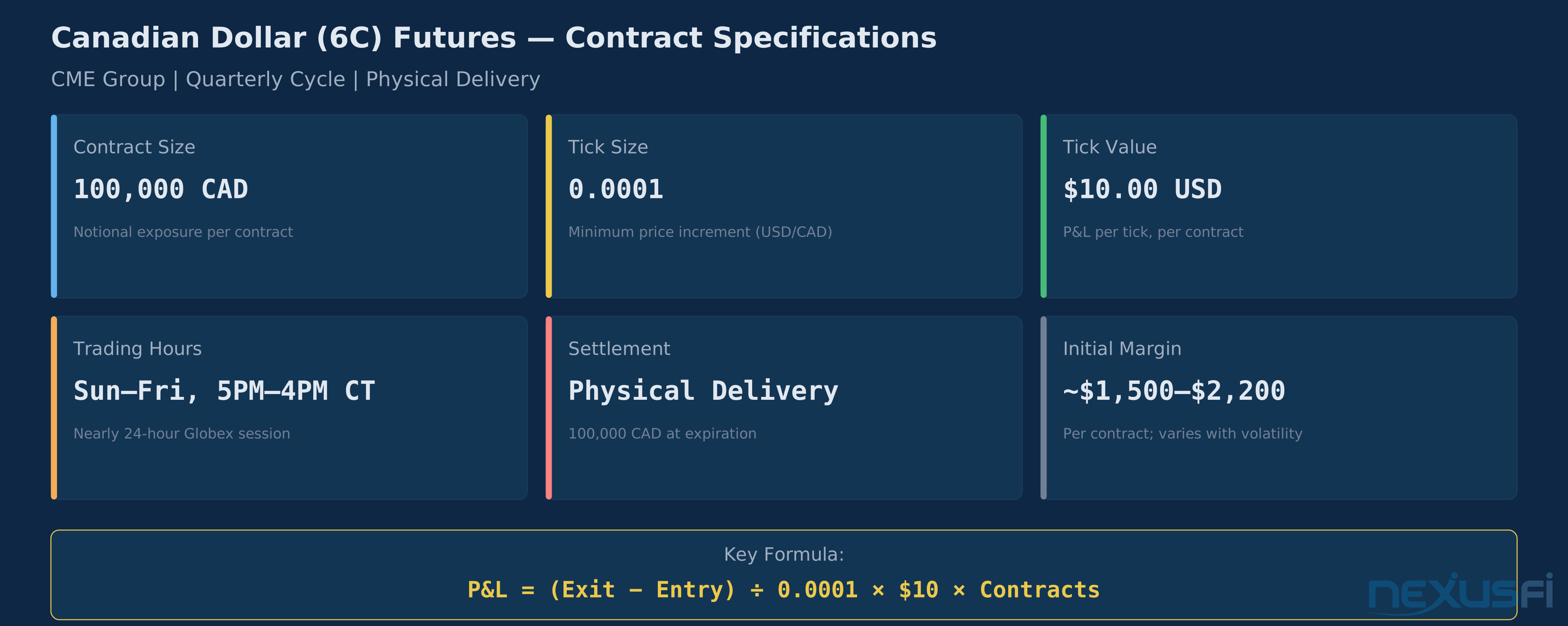
| Contract Size | 100,000 Canadian Dollars (CAD) |
| Price Quotation | U.S. dollars per Canadian Dollar (USD per CAD) |
| Tick Size | 0.0001 USD/CAD |
| Tick Value | $10.00 USD per contract |
| Expiration Cycle | Quarterly: March (H), June (M), September (U), December (Z) |
| Settlement | Physical delivery of 100,000 CAD |
| Last Trading Day | Third Wednesday of the contract month |
| Globex Trading Hours | Sunday--Friday, 5:00 PM--4:00 PM CT (23-hour session) |
| Core Liquidity Window | 8:00 AM--4:00 PM EST (New York / Toronto overlap) |
| Initial Margin | ~$1,500--$2,200 per contract (CME, subject to change by volatility regime) |
| Listed Contracts | 20 quarterly expirations forward |
Tick value derivation: 100,000 CAD × 0.0001 USD/CAD = $10.00 USD per tick, per contract. Every 0.0001 price move is $10. Anchor to this number. Every P&L calculation you ever run on 6C flows from it.
1 tick (0.0001) = $10.00 USD per contract
Notional value at 0.7300: 100,000 CAD × $0.73 = $73,000 USD
How It Works #
The Quote Convention — Get This Right First #
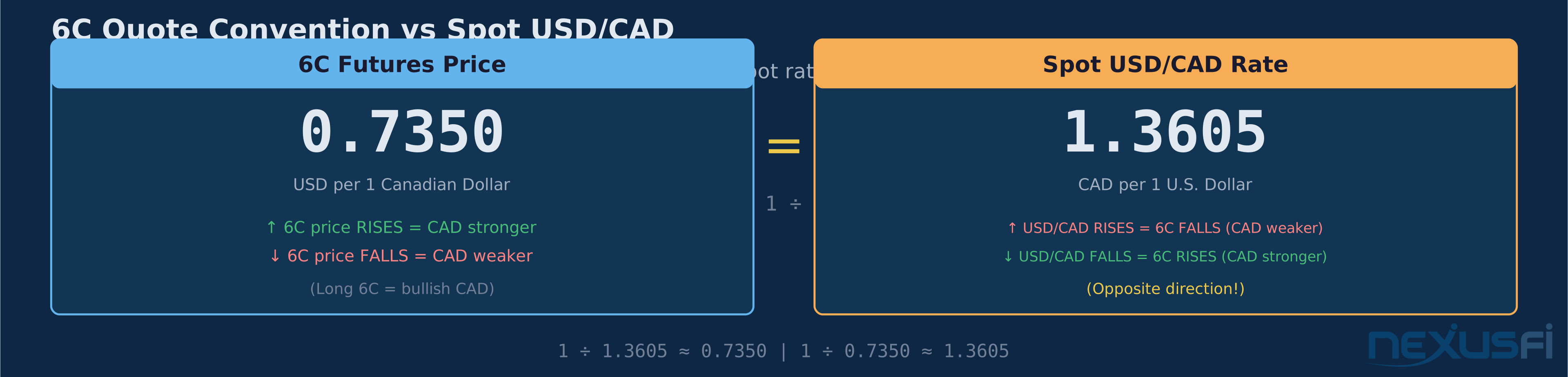
6C is quoted in U.S. dollars per Canadian Dollar. If the June 6C contract is trading at 0.7350, that means 1 Canadian Dollar = $0.7350 U.S. Dollars.
This is the inverse of the interbank spot convention most financial news sites use. When Bloomberg or CNBC reports "USD/CAD at 1.3605," they're saying it takes 1.3605 Canadian dollars to buy one U.S. dollar. The 6C futures price is the mathematical reciprocal: 1 ÷ 1.3605 ≈ 0.7350.
The practical rule: When the 6C price rises, CAD is strengthening against USD. When 6C falls, CAD is weakening.
This convention trips up traders who watch currencies in USD/CAD format. If you're long 6C and you see a headline saying "USD/CAD hits 6-month high," that is bad for your long position — the USD is strengthening, meaning CAD is weakening, meaning 6C is falling. Write this on a sticky note if you need to: 6C up = CAD gets stronger.
The "Loonie" nickname comes from the loon — the bird on the Canadian one-dollar coin. The nickname also fits the currency's character: the CAD follows crude oil with single-minded focus that can look almost irrational until you understand the structural link between Canada's energy-export economy and currency valuations.
Long and Short: What They Mean #
Long 6C = You expect CAD to strengthen against USD.
- You profit when the 6C price rises
- You're economically buying 100,000 CAD and selling equivalent USD
- This position benefits from BoC hawkishness, oil rallies, risk-on sentiment, or Canadian trade balance surprises
Short 6C = You expect CAD to weaken against USD.
- You profit when the 6C price falls
- You're economically selling 100,000 CAD and buying equivalent USD
- This position benefits from Fed hawkishness relative to BoC, oil selloffs, risk-off sentiment
P&L Calculation #
P&L in futures is always tick-based. Use this formula:
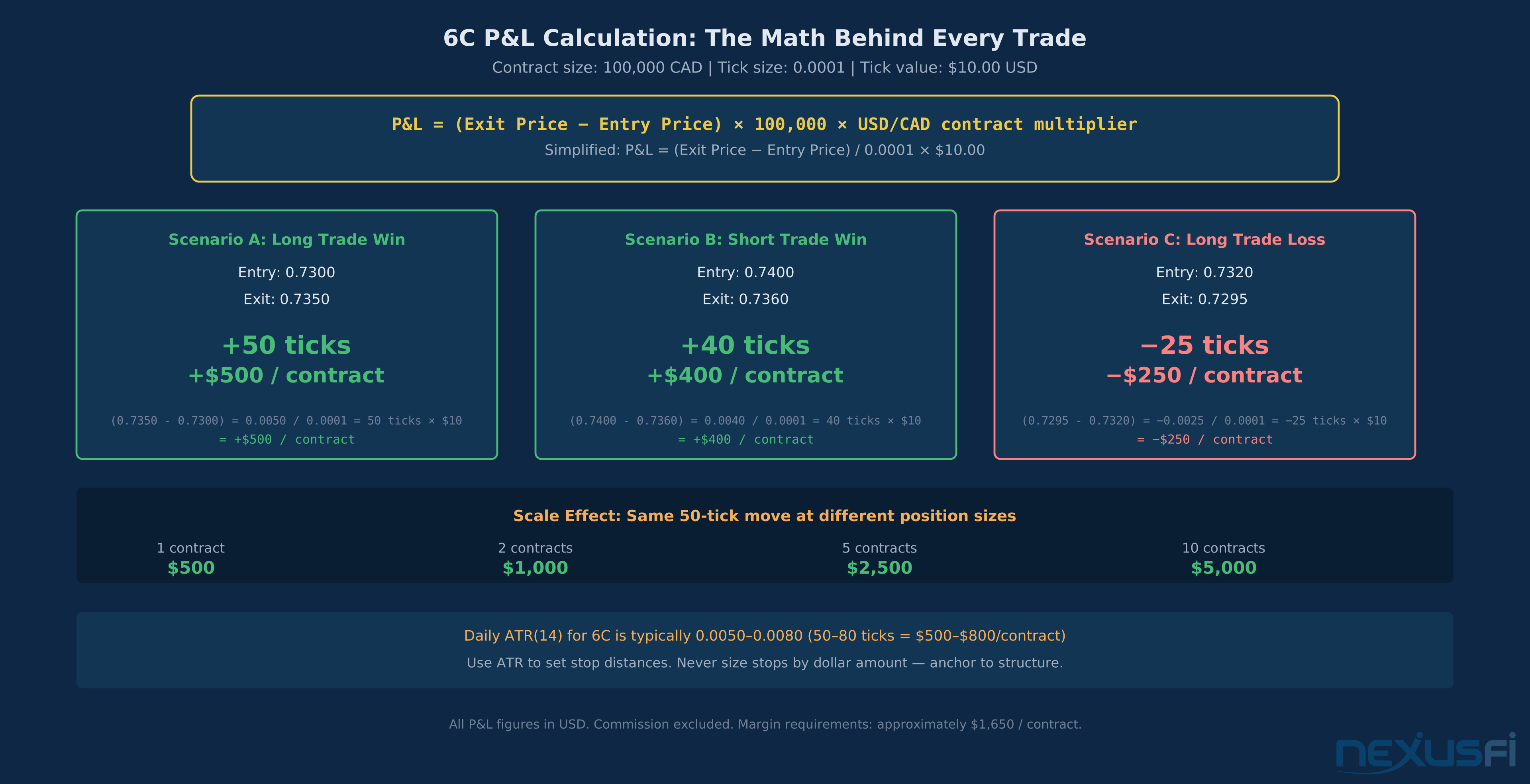
P&L = (Exit Price − Entry Price) ÷ 0.0001 × $10 × Number of Contracts
For short positions, reverse the numerator: (Entry Price − Exit Price)
Example 1 — Long position, profitable: Buy 2 contracts at 0.7300. Price moves to 0.7360.
- Price change: +0.0060
- Ticks: 60
- P&L: 60 × $10 × 2 = +$1,200
Example 2 — Short position, profitable: Short 1 contract at 0.7450. Price falls to 0.7400.
- Price change: 0.0050 in your favor
- Ticks: 50
- P&L: 50 × $10 × 1 = +$500
Example 3 — Long position, stopped out: Buy 1 contract at 0.7350. Stop hit at 0.7320.
- Price change: −0.0030
- Ticks: −30
- P&L: 30 × $10 = −$300
Think in ticks, not decimal price changes. When someone says "6C moved 50 pips," that's 50 ticks — $500 per contract. Once you anchor to $10 per tick, every P&L calculation becomes instant math. A 100-tick move is always $1,000 per contract. A 20-tick stop is always $200 at risk per contract.
Settlement and Delivery #
6C settles via physical delivery of 100,000 Canadian dollars on the last trading day. The seller delivers CAD to a CME-approved depository. The buyer receives 100,000 CAD.
In practice, fewer than 2% of retail futures positions reach physical delivery.
Traders roll or close positions before expiration. But the physical delivery mechanism matters because it keeps futures prices anchored to spot FX. If futures diverge much from spot, large institutional players arbitrage the spread, which pulls them back into alignment. This arbitrage relationship is what makes 6C a reliable hedging vehicle.
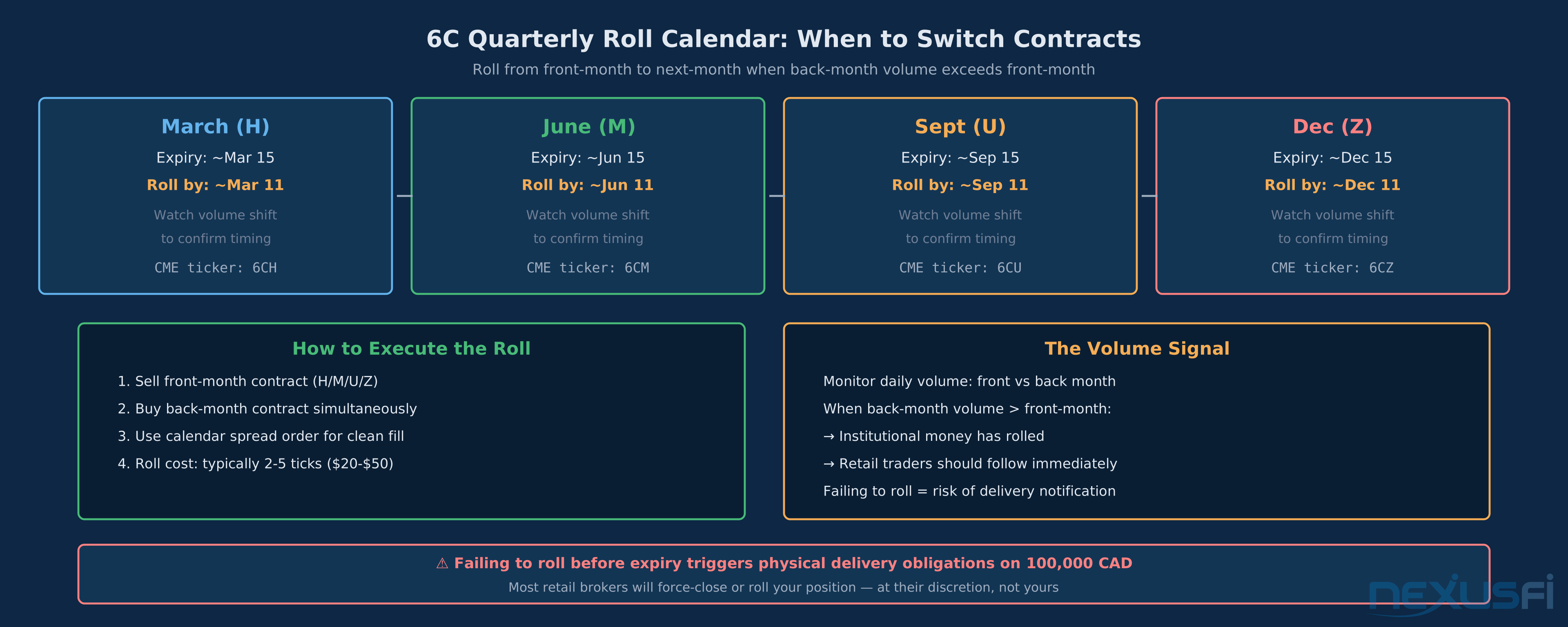
The roll: On or before the last trading day, you must either close your position or roll to the next contract month. Roll by selling your current contract (e.g., June 6C) and buying the next (e.g., September 6C) as a calendar spread order. Execute the roll when volume and open interest shift to the next contract — typically 5-7 business days before the last trading day.
The roll cost for 6C is typically minimal — a few ticks reflecting the interest rate differential between contract months. In most environments, this is negligible compared to the execution cost of two separate outright orders.
Margin Requirements and Volatility Regimes #
6C requires approximately $1,500--$2,200 in initial margin per contract under normal conditions. Maintenance margin is typically 70-75% of initial.
CME can raise margin requirements rapidly during elevated volatility events — BoC surprises, oil shocks, FOMC surprises. Size positions assuming margins could spike 20-30% in volatile regimes, because you may not have warning before the requirement changes.
Day trading margins from some brokers drop as low as $500/contract for intraday-only positions. Never use reduced day margins if there is any chance of holding through a major event. A 100-tick adverse move — common during BoC announcements — is $1,000 per contract. A day-margin-sized position in that scenario is a margin call.
What Moves 6C #
Understanding the CAD's drivers is where the edge lives. Unlike the Euro or Yen, 6C is not primarily a rates story in isolation. It's a multi-factor instrument, and the factors are highly correlated in ways that create strong, trending behavior when they align.
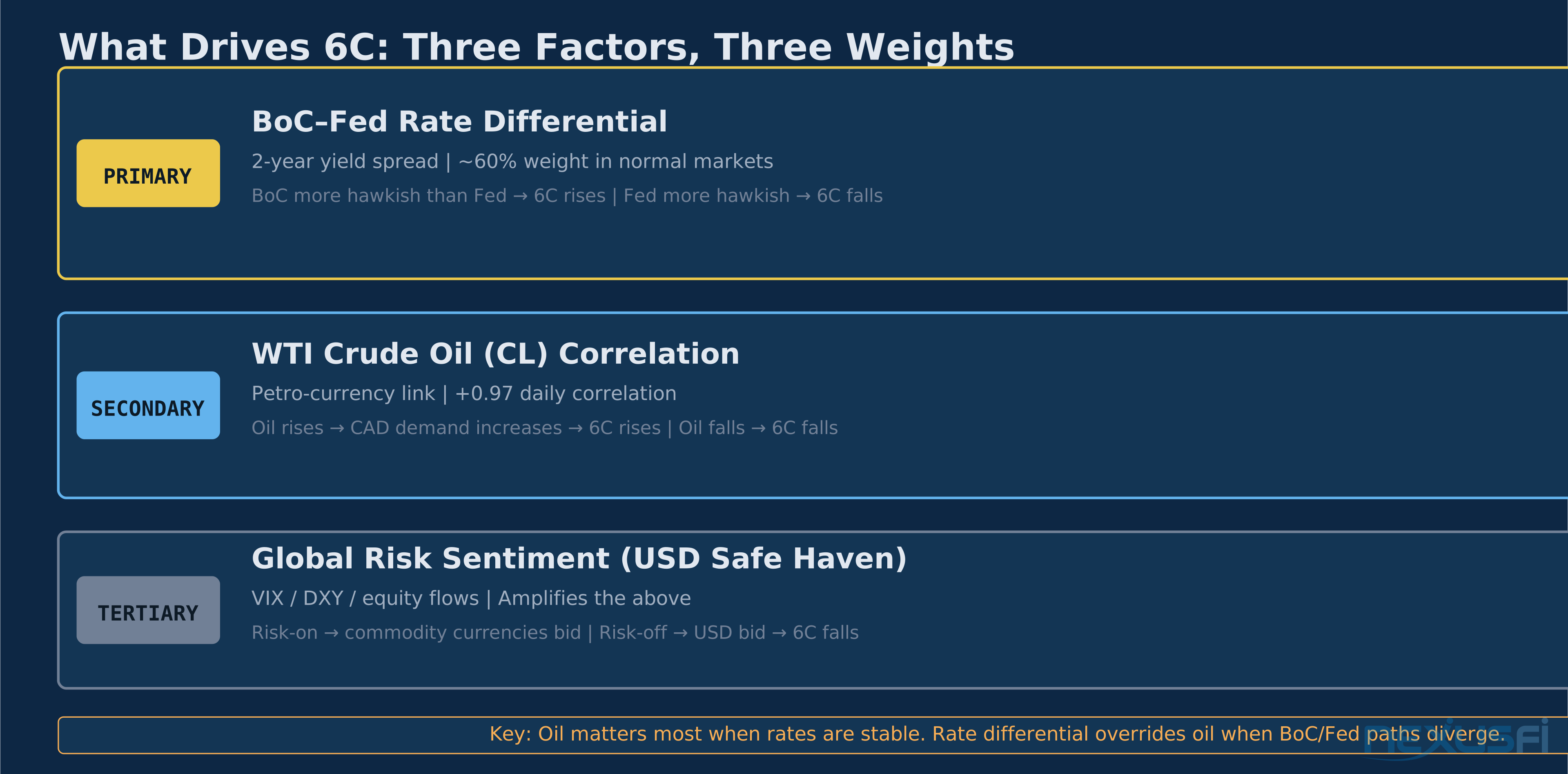
Primary Driver: BoC-Fed Rate Differential #
The Bank of Canada and the Federal Reserve are the two central banks that define 6C's long-term trend. The spread between their policy expectations — specifically the differential in 2-year government bond yields between Canada and the US — is the dominant force.
When the BoC turns more hawkish relative to the Fed:
- Canadian rates rise relative to US rates
- Capital flows into CAD-denominated assets seeking higher yield
- 6C price rises (CAD strengthens)
When the Fed turns more hawkish relative to the BoC:
- US rates rise relative to Canadian rates
- Capital flows into USD assets
- 6C price falls (CAD weakens)
The mechanism in practice: Interest rate differentials affect the carry return of holding a currency. A higher-yielding currency attracts capital flows, and futures buyers bid the price up to reflect that demand. When the Fed is in a hiking cycle and BoC is on hold, short 6C has macro wind at its back for extended periods. The 2022-2023 period was a live example: aggressive Fed hiking while BoC lagged pushed 6C from ~0.8000 to under 0.7200 — an 800-tick, $8,000/contract move over roughly 18 months.
How to use it operationally: Monitor the Canada 2-year yield vs the US 2-year yield spread. When the spread widens in Canada's favor (Canadian yields rise relative to US), the 6C trend bias is up. When it widens in the US's favor, the trend bias is down. This is not a day-trading indicator — it's a weekly or monthly context-setter for which side of the market you want to be on.
Secondary Driver: Crude Oil Correlation #
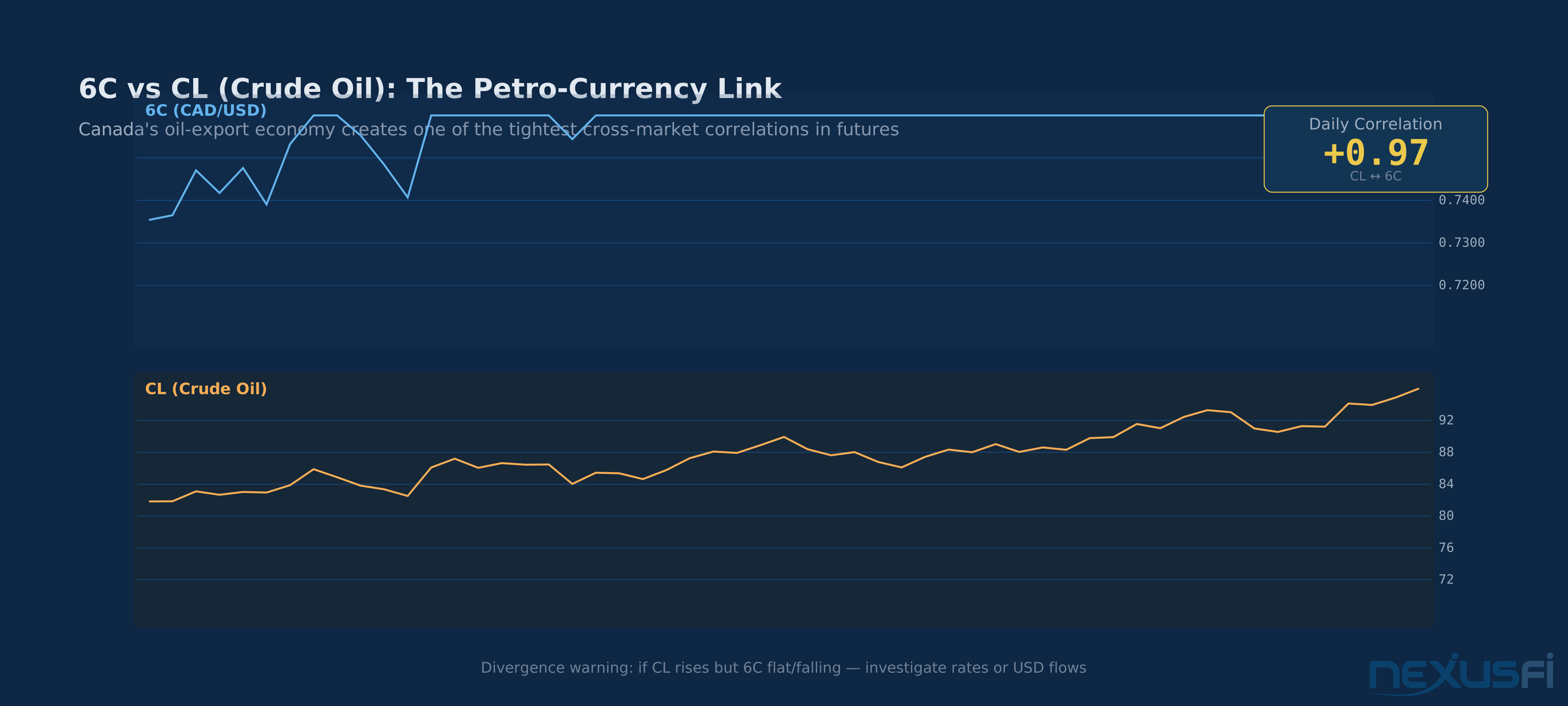
Canada is the world's fourth-largest oil producer. Energy exports dominate the country's trade balance and fiscal position. When crude oil prices rise, Canadian export revenues increase, the BoC gains room to maintain or raise rates, and capital flows into CAD. The correlation between 6C and CL (crude oil futures) is one of the tightest cross-market relationships in all of futures.
At +0.97 daily correlation on CL, crude oil is effectively a directional guide for 6C. But this correlation is not static.
The correlation trade: When crude oil is in a strong trend and rate differentials are neutral, 6C often follows CL with a slight lag. Traders watch for CL to make a new swing high or low, then use that as confirmation for a 6C entry in the same direction. When oil and rate differentials align — both pointing toward a stronger CAD — conviction for long 6C is highest.
When it breaks: The oil-CAD relationship fractures during CAD-specific events: BoC surprises, Canadian political shocks, or credit-related flows. If oil is rising but 6C is flat or declining, something Canadian-specific is overriding the commodity signal. That divergence is a warning, not a buying opportunity — wait for clarity before adding.
A rising crude oil market does not guarantee a rising 6C. During periods of aggressive Fed hiking, the USD dollar strength can overwhelm the oil-CAD positive correlation entirely. Always check the BoC-Fed rate differential before assuming oil direction will translate to 6C direction.
Tertiary Driver: Risk-On/Risk-Off Dynamics #
CAD is a risk-sensitive commodity currency. In global risk-off events — equity selloffs, credit crises, safe-haven flights to the USD — CAD weakens alongside other commodity currencies. In risk-on periods, commodity currencies tend to outperform safe havens.
This dynamic is weaker than the rates and oil drivers in isolation, but it amplifies the others. When oil is falling AND rates are moving against CAD AND global risk sentiment is deteriorating, 6C can trend hard and fast. When all three align bullishly, 6C produces some of the strongest, cleanest trends in the FX futures complex — the kind that currency futures trend followers live for.
Research across major futures markets has shown that currency futures, including CAD, exhibit substantially stronger trending characteristics than stock index futures over multi-month periods. The Euro currency futures show the clearest trend behavior, with other major currencies including CAD close behind.
The CAD Event Calendar #
These scheduled events move 6C most consistently:
| Event | Impact Level | Typical Time (EST) |
|---|---|---|
| Bank of Canada Rate Decision | High — primary domestic driver | 8 meetings/year, ~10:00 AM |
| BoC Monetary Policy Report | High — quarterly forward guidance | 4x/year with rate meetings |
| FOMC Rate Decision | High — counterpart bank | 8 meetings/year, 2:00 PM |
| Canadian CPI | Moderate-High | Monthly, ~9:00 AM mid-month |
| Canadian Employment | Moderate-High | First Friday of month, 8:30 AM |
| US Non-Farm Payrolls | Moderate (affects Fed outlook) | First Friday of month, 8:30 AM |
| US CPI | Moderate-High | Monthly, 8:30 AM |
| EIA Crude Inventory Report | Moderate (via oil-CAD link) | Weekly, Wednesday 10:30 AM |
BoC meeting behavior: When the BoC surprises markets — hiking when no hike was priced, or pausing when a hike was expected — 6C can move 100-200+ ticks in minutes. The pre-announcement period features a predictable liquidity drop as market makers pull bids and offers to avoid being caught on the wrong side. The normal 2-4 tick spread can expand to 10-20 ticks in the 30 minutes before the announcement.
The 8:30 AM Canadian data window: Canadian employment and CPI releases at 8:30 AM EST frequently produce sharp directional moves. The pattern: a quick spike in the direction of the surprise, a brief consolidation, then either continuation or mean-reversion depending on whether the data changes the BoC policy path. Watch whether the number actually changes the rate differential story — if not, the spike tends to fade.
Seasonal Tendencies #
6C shows weak seasonal patterns related to energy sector dynamics:
- Q4 (October--December): Canadian energy companies tend to repatriate USD proceeds from oil sales, creating structural CAD demand that can support 6C in years when energy prices are stable or rising.
- Year-end: Some repatriation and tax-loss harvesting flows create idiosyncratic moves in December.
These seasonal tendencies are context, not signals. They can be overwhelmed by any macro shift. Use them as minor tie-breakers when other factors are neutral.
Trade Setups and Execution #
Sizing Positions Using ATR #
ATR-based sizing is the standard approach for 6C. Convert ATR to dollar risk per contract, then divide by your account risk budget per trade.
ATR in ticks = ATR(14) daily price ÷ 0.0001
Dollar risk per contract = ATR ticks × $10
Max contracts = Account risk budget ÷ Dollar risk per contract
Example — Moderate volatility:
- 6C ATR(14) = 0.0060 (60 ticks = $600 per contract at 1× ATR stop)
- Account risk budget per trade: $1,500
- Max contracts: $1,500 ÷ $600 = 2.5 → 2 contracts (round down)
Example — Low volatility:
- 6C ATR(14) = 0.0040 (40 ticks = $400 per contract at 1× ATR stop)
- Account risk budget per trade: $500
- Max contracts: $500 ÷ $400 = 1.25 → 1 contract
Event-day adjustment: On BoC/FOMC days, ATR can spike to 2-3× its recent average. If an event is scheduled during your intended holding period, use 1.5-2× your normal stop distance and reduce contract count proportionally. This is not optional — it's the difference between a managed loss and a blown account.
Strategy A: Trend Following the Rate Differential #
Currency futures trend. This is one of the most consistently documented empirical facts in systematic trading research. CAD in particular shows strong trending characteristics when BoC and Fed are moving in diverging directions.
When it works: Rate differential is expanding in one direction. Oil is confirmatory or neutral. Risk sentiment is aligned. These three factors together create the highest-conviction trend trades in 6C.
Entry mechanics:
- Set the weekly macro bias based on rate differential direction (Canada 2yr minus US 2yr)
- On the daily chart, wait for a pullback to the 20-period EMA within the macro trend
- On the 1-hour chart, confirm the pullback is ending (volume decline, decreasing momentum)
- Enter on the uptick (long) or downtick (short) with a confirmation candle close
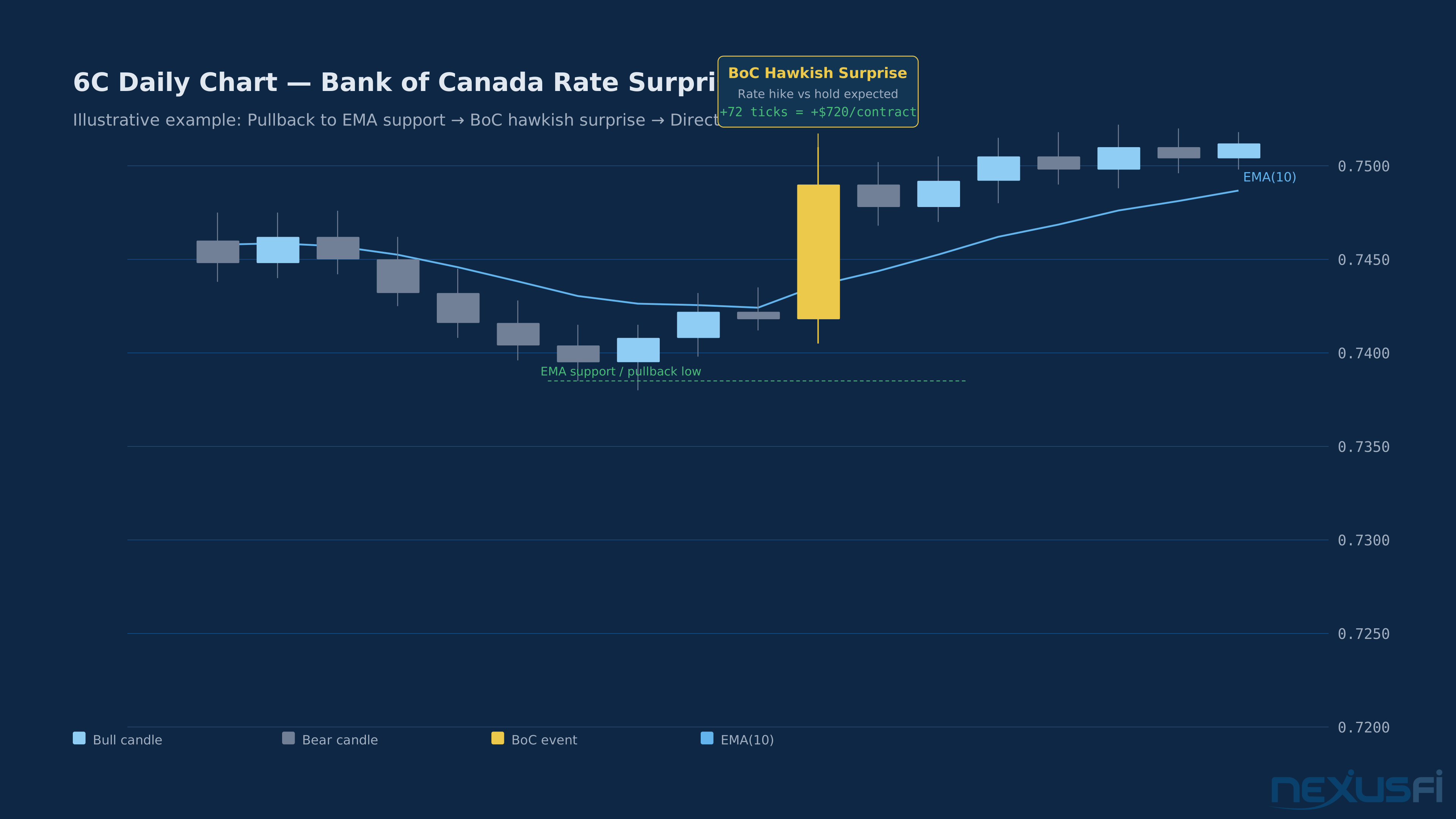
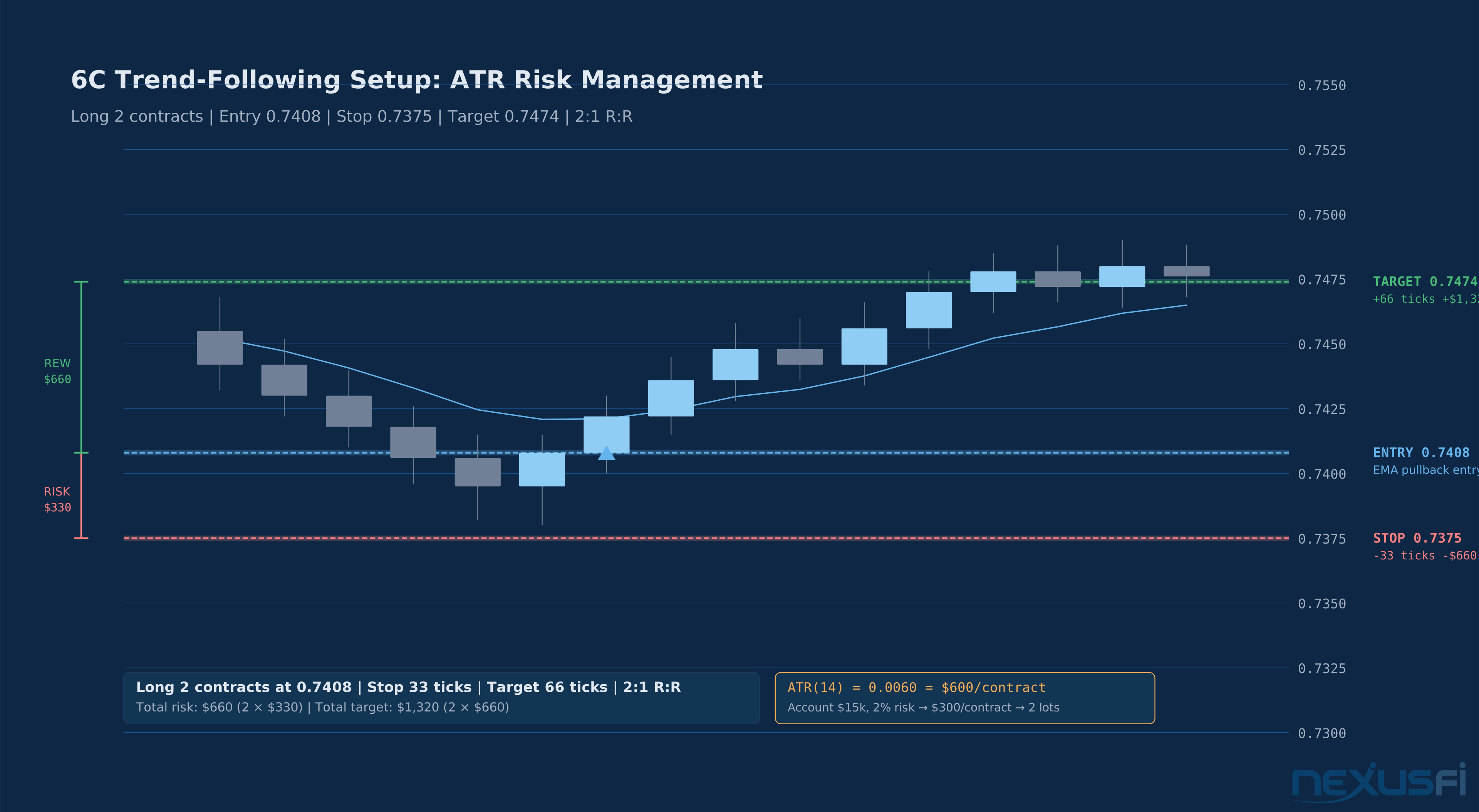
Example setup (bullish 6C):
- Rate differential has been widening in Canada's favor for 6 weeks
- CL (crude oil) is in a confirmed uptrend
- 6C pulls back from 0.7450 to 0.7405 on declining volume (EMA retest on daily)
- Entry: 0.7408 on hourly confirmation
- Stop: 0.7375 (33 ticks below entry, below the pullback low)
- Target: 0.7474 (66 ticks above entry, 2:1 risk-reward)
- Dollar risk: 33 × $10 = $330/contract
When it fails: The rate differential reversal is already priced before you enter. You're buying the last leg of a trend that is already exhausted. Watch for 6C diverging from CL, or for 6C failing to make new highs while rates continue to favor CAD — these are the early warning signs of a trend that is running on fumes.
Trend following in 6C works best when at least two of the three macro drivers align: rate differential, oil direction, and risk sentiment. One driver alone creates opportunities. Two or three aligned creates conviction.
Strategy B: Mean Reversion in Defined Ranges #
When the BoC and Fed are both on hold and oil is consolidating, 6C can range for weeks at a time. The range boundaries are defined by institutional hedging flows and market structure, and they tend to hold until a macro trigger breaks them.
When it works: 6C is oscillating within a defined range on the daily chart for at least 2-3 weeks. Rate differentials are stable (neither expanding nor contracting). No major BoC or FOMC meetings within 5 trading days.
Entry mechanics:
- Identify range boundaries (swing highs and lows on the daily chart)
- Wait for price to test a boundary with decreasing momentum
- Enter with stop just outside the boundary
- Target the range midpoint or opposite boundary
Example setup (range trade):
- 6C oscillating between 0.7250 (support) and 0.7350 (resistance) for 3 weeks
- Price reaches 0.7344 with declining volume and momentum divergence on hourly RSI
- Entry: short at 0.7342
- Stop: 0.7365 (23 ticks above entry, above range resistance with buffer)
- Target: 0.7304 (38 ticks below entry, just above range midpoint)
- Risk-reward: 38:23 = 1.65:1
When it fails: Mean reversion turns into the most dangerous strategy in a breakout session. Exit any range-fade position immediately if:
- Price closes outside the range with above-average volume
- A BoC or FOMC announcement surprise breaks the range
- Oil makes a significant move in either direction
The loss from a stopped-out mean-reversion trade is manageable if you're sizing correctly. The danger is holding a mean-reversion setup through a macro trigger that breaks the range — at that point, you're fighting a new trend from the wrong side.
Strategy C: Event-Driven Around BoC and FOMC #
Surprise BoC or FOMC decisions create some of the highest-conviction setups in 6C. The challenge is not the direction — surprises are generally predictable in hindsight — it's the execution. The initial reaction spike is often the wrong direction, and spread widening makes immediate entries at the announcement time costly.
The wait-and-confirm approach (recommended):
- Before the announcement, identify the market's expected outcome from options pricing or overnight implied volatility
- At announcement time, stay out of the market for at least 60-120 seconds
- Watch for the initial spike to complete and potentially partially retrace
- Enter only when price holds for 2-3 minutes above/below a confirmation level
- Stop beyond the announcement spike extreme
- Target a measured move based on the prior consolidation range
Example — BoC hawkish surprise:
- Market pricing 25% probability of a hike; BoC hikes 25bps unexpectedly
- 6C spikes from 0.7320 to 0.7360 in first 90 seconds
- Pulls back to 0.7341 over next 2 minutes
- Holds 0.7338 for 3 candles on the 1-minute chart
- Entry: long 0.7341 on confirmation of the hold
- Stop: 0.7318 (23 ticks below confirmation level, below the announcement spike low)
- Target: 0.7387 (46 ticks above entry, 2:1 reward)
- This approach gives up 15-20 ticks from the first spike but dramatically improves fill quality
Never enter 6C immediately at the announcement time during BoC or FOMC decisions. The first 60-90 seconds involve market makers repricing spreads, stop-hunting runs, and initial price discovery that often overshoots the true repricing. The first candle after an announcement is noise. The second and third candles begin to tell you the actual story.
Practical Considerations #
The Quote Confusion Trap #
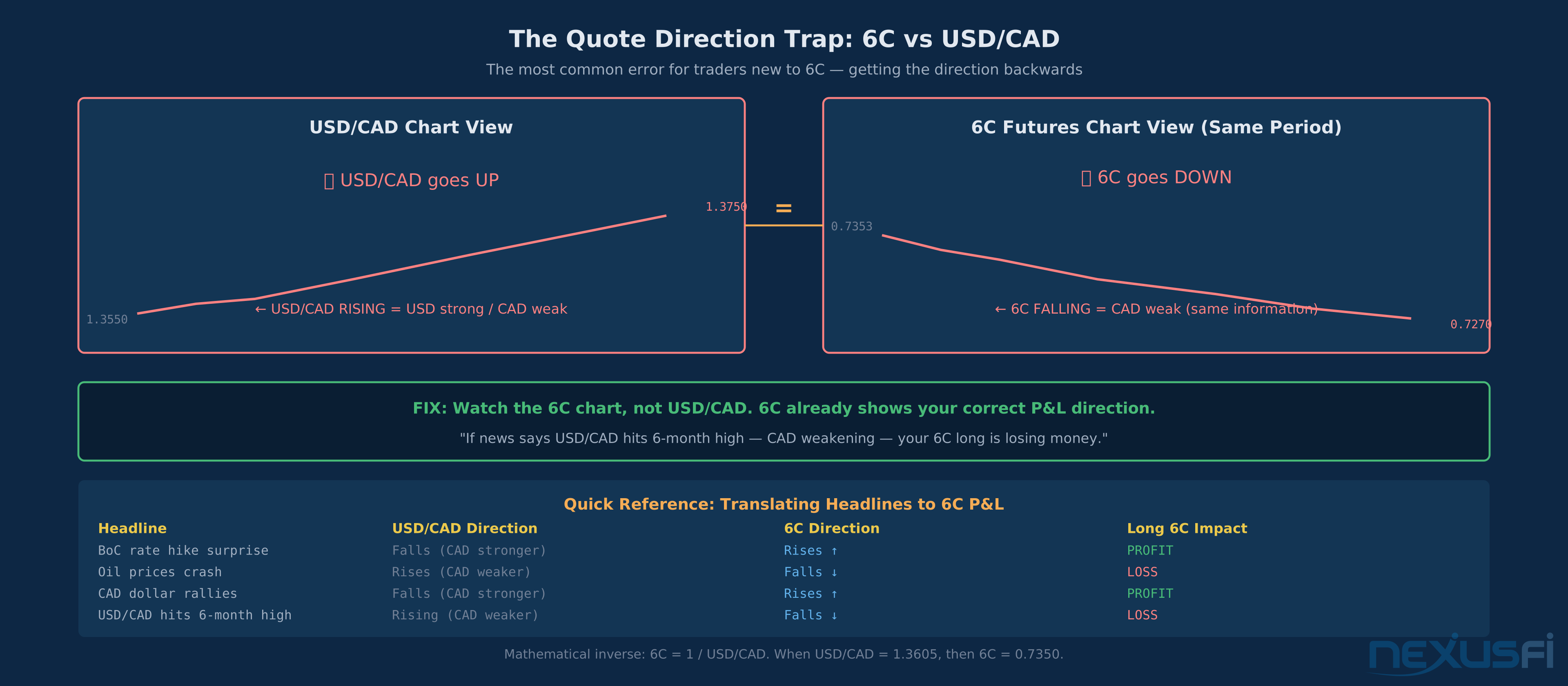
The single most common error for traders new to 6C is confusing directionality. If you come from an FX background where you watch USD/CAD, everything about 6C runs opposite on the screen.
USD/CAD at 1.3699 going to 1.3600 means CAD got stronger (you need fewer CAD to buy a USD). The 6C futures price for that same move would go from ~0.7300 to ~0.7353. So 6C moved up.
If you're long 6C and a news headline says "Canadian dollar rallies," that's a good day for your position. If it says "USD/CAD hits 6-month high," that's a bad day — USD strengthening means CAD weakening means 6C is falling.
Operational fix: Run a 6C chart, not a USD/CAD chart. The 6C chart already shows you the correct direction for your position, with no conversion required.
Roll Timing and Calendar Spread Execution #
6C has quarterly expirations. The roll from front-month to next-month is a routine operation that must be executed cleanly to avoid delivery obligations.
Signs that the roll has happened: When the back-month contract starts trading more volume than the front-month, the institutional money has rolled. For retail traders, this is the signal to follow. Check the open interest and volume figures daily in the week before expiration.
Execute as a calendar spread: Sell the front month and buy the back month simultaneously as a single spread order rather than two separate outright orders. This eliminates one-legged execution risk (getting filled on one side but not the other) and typically prices tighter than two individual orders.
Roll cost: 6C calendar spreads typically trade at a few ticks reflecting the interest rate differential between contract months. At current US-Canada rate levels, this cost is usually $10-$30 per contract — negligible compared to a typical intraday range.
Globex Hours and Overnight Risk #
6C trades nearly 24 hours on Globex. Significant moves can occur overnight during the Asian and European sessions — different from equity index futures where overnight risk is mostly gap risk at the open.
Canadian data, BoC comments, and oil market moves can all shift 6C during non-US hours. If you're holding a 6C position overnight:
- Know whether any Canadian or US economic data is scheduled for early morning
- Know whether OPEC or oil-related news is pending (EIA report Wednesdays, OPEC meetings)
- Size positions with this overnight volatility in mind, not just the typical NY session range
Microstructure During Canadian Data Releases #
The same pre-event spread widening that happens before BoC meetings also occurs before major Canadian economic data at 8:30 AM EST. Normal 2-4 tick spreads can expand to 10-15 ticks in the minute before the release.
If you're already in a position before a data release, have your exit plan ready before the number prints. If you're planning to enter on the data reaction, the wait-and-confirm approach is even more important here — Canadian employment surprises can create 50-100 tick moves in the first 30 seconds, making the initial spike untradeble at acceptable prices.
Using CL as a Confirmation Tool #
The tight correlation between 6C and CL is one of the most practical cross-market tools available to futures traders. Use it systematically:
- Before entering a 6C trade based on rate differential signals: Check CL direction. If oil is confirming, conviction is higher. If oil is diverging, wait.
- While holding a 6C position: Monitor CL. If oil starts breaking down hard against your 6C long, that's an early warning to tighten stops or reduce size, even before price action in 6C confirms the risk.
- When 6C and CL diverge much: This is a warning, not an opportunity. One of the signals is being overridden by a market-specific factor. Wait for clarity before adding size.
Micro Contract Gap #
Unlike ES (Micro E-mini S&P, MES) or GC (Micro Gold, MGC), there is currently no Micro Canadian Dollar futures contract on CME. The minimum unit of 6C exposure is one full contract controlling 100,000 CAD — roughly $72,000-$77,000 notional at typical current rates.
For traders who want smaller CAD exposure, options include:
- Currency ETFs (FXC) for non-leveraged exposure, though these miss the overnight and intraday flexibility of futures
- OTC forex through a regulated broker, which provides fractional sizing but loses exchange transparency
- Waiting until account size justifies trading 6C within proper risk management parameters
There is no shame in acknowledging 6C is too large for your current account. An undercapitalized 6C trade with oversized stop distances is more dangerous than simply not trading the instrument yet.
6C requires roughly $1,500-$2,200 in margin per contract, but the actual risk capital requirement for proper ATR-based sizing is typically $3,000-$6,000 per contract during normal volatility. Account size matters for 6C. Don't force the trade if the math doesn't work.
Open Interest as a Trend Confirmation Signal #
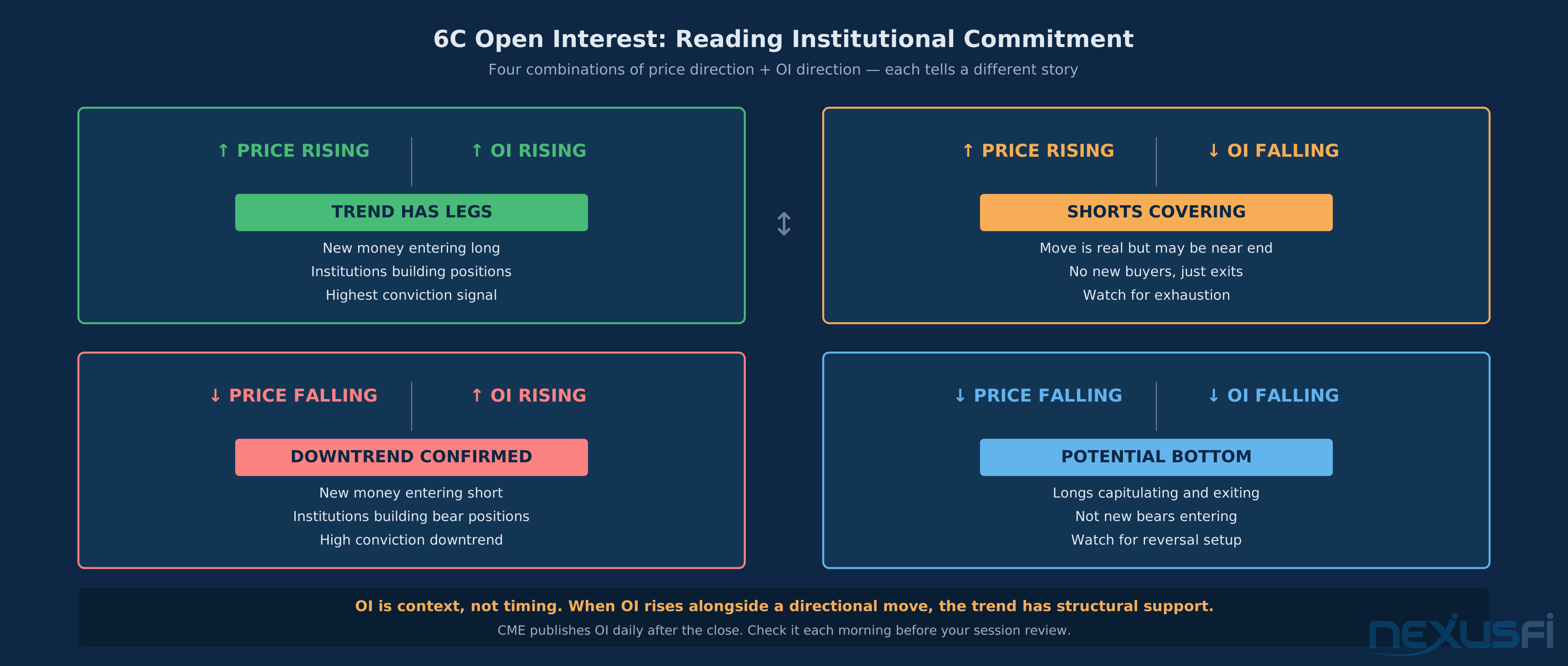
6C open interest patterns provide useful context for trend longevity:
- Rising price + rising open interest = new money entering the trend (bullish)
- Rising price + falling open interest = shorts covering (trend is real but may be near completion)
- Falling price + rising open interest = new money entering the downtrend (bearish)
- Falling price + falling open interest = longs exiting (potential bottoming, watch for reversal)
This isn't a timing signal — it's context. When open interest is rising alongside a directional move, the trend has structural support from institutional positioning. When open interest is falling into a move, the move is likely more fragile.
When 6C Isn't the Right Choice #
Knowing when not to trade an instrument is as important as knowing how to trade it.
6C is wrong when:
- Your account can't support the risk: One contract controls 100,000 CAD. At a 1×ATR stop with ATR of 0.0060, that's $600/contract at minimum risk. Proper sizing for a $10,000 account risking 2% per trade allows exactly one contract. Most traders need $15,000-25,000+ to trade 6C with proper risk management. Forcing the trade on an undercapitalized account is a bankroll-destruction strategy.
- You're trading sub-5-minute timeframes: The tick size and spread structure make ultra-short-term scalping in 6C difficult. The EUR/USD spot market with its fractional pip pricing and massively deeper book is better suited for sub-1-minute scalping. 6C is a 5-minute and higher chart instrument.
- You need round-the-clock execution certainty: Globex runs 23 hours, but outside the 8am-4pm EST window, liquidity is thin. Orders requiring precise fills may not execute at acceptable prices in off-hours. If your strategy requires consistent fills at any hour, 6C outside NY hours is not reliable.
- You're trying to hedge a TSX equity portfolio: The correlation between 6C and TSX equity FX exposure is imperfect. The basis between your specific equity holdings and 6C can be significant, especially if your TSX positions are concentrated in sectors that diverge from the CAD macro story. Options on FXC or OTC forward contracts may provide more precise hedges.
Knowledge Map
Prerequisites
Understand these firstGo Deeper
Build on this knowledgeReferences This Article
Articles that build on this topicCitations
- — The CL Crude-analysis Thread (2015) 👍 8“Commodity sector ETF, Canadian dollar and gasoline are currently the 2 highest correlated instruments to crude.”
- — From USDCAD to 6C (2016) 👍 3“If you're already proficient in reading USDCAD, then maybe just do the mental switch, see the trade on USDCAD, but take the opposite trade in 6C.”
- — From USDCAD to 6C (2016) 👍 2“I have been trading USDCAD for a while. Since IB no longer allows leveraged forex trading, I'm thinking about switching to 6C.”
- — A6 Australian $ CME Futures (2020) 👍 4“With all the currency futures, the peak hours line up with the opening hour of London, the opening hour in NY, and then sometimes the last hour of London when it overlaps with the NY session.”
- — Could it be that currency futures are way easier to trade? (2024) 👍 3“Currency futures give you exchange transparency and capital efficiency compared to spot forex. ATR data shows typical daily ranges for CME currency futures.”
- — Rollover Days - some Quick Facts about (2009) 👍 22“Rollover is 8 days before expiration. Expiration is the third Friday of each quarter month (March, June, September, December). Volume shifts to the new contract at market open on Rollover day.”
- — DX Rollover Day? (2012) 👍 8“CME Currency Futures expire on the second business preceding the third Wednesday of the contract month. The volume crossover for currency futures happens 3 to 4 days after the official roll date.”
- — Want to get into micro currency futures but have a few questions (2024) 👍 1“With currency futures you are trading on a regulated exchange with other traders from all over the world. With currency spot market you are likely trading directly with your broker.”
- — Concerning risk per trade sizing (2012) 👍 4“stops are still placed within the context of a volatility-based, position sizing algorithm, which is quite simply, 2% of equity risk, based on a 1.5 ATR stop.”
- — Spoo-nalysis ES e-mini futures S&P 500 (2014) 👍 21“there are 3 basic strategies or types of markets in trading; momentum, mean reversion, and carry trade. employing a mean reversion strategy in a momentum driven trending market is as foolish as not taking into consideration interest rate differentials.”