



Multi-Timeframe Market Structure for Futures Traders: The Top-Down Framework That Filters Winners from Noise
Overview #
Multi-timeframe market structure analysis is the practice of using higher timeframes — weekly and daily — to filter, contextualize, and constrain intraday trading decisions in futures markets. The core idea is simple: a trade that makes sense on a 5-minute chart can look very different when you zoom out. A bullish intraday signal against a bearish daily trend is a counter-trend trade, whether you know it or not. Multi-timeframe structure makes that context explicit.
The framework matters because futures markets are simultaneously driven by multiple participant types operating on different time horizons. Institutional position builders work off weekly and monthly charts. Swing traders work off daily and 4-hour charts. Day traders work off 15-minute and 5-minute charts. When these participant groups agree — when the weekly, daily, and intraday structure all point the same direction — trade probability improves much. When they diverge, you're basically betting that shorter-term noise overcomes longer-term institutional positioning.
This article covers the full top-down methodology: how to read weekly structure for regime context, how to map daily levels as actionable zones, how to use intraday structure as the actual execution trigger, and how to apply this framework specifically to ES, NQ, and YM futures. Every section is grounded in practical application, not theory.
Why Multi-Timeframe Structure Works #
The argument for multi-timeframe analysis is at the core an argument about where liquidity sits. In futures markets, liquidity pools concentrate at swing highs and lows from higher timeframes. A weekly swing high from two months ago holds more significance than an intraday high from yesterday because more participants placed decisions around it — more orders were triggered there, more stops were set there, more position entries and exits occurred at that level.
When intraday price approaches a weekly or daily level, something changes in the order flow. Larger participants — who care about those levels — become active. You see absorption, sweeps, or genuine acceptance/rejection. Intraday setups that occur at HTF levels have a structural reason to work. Setups that occur mid-range, away from any meaningful HTF reference, are basically noise trading.
This division of labor — higher timeframes for context and direction, lower timeframes for timing — is the foundation of effective multi-timeframe analysis.
The Three-Tier Framework #
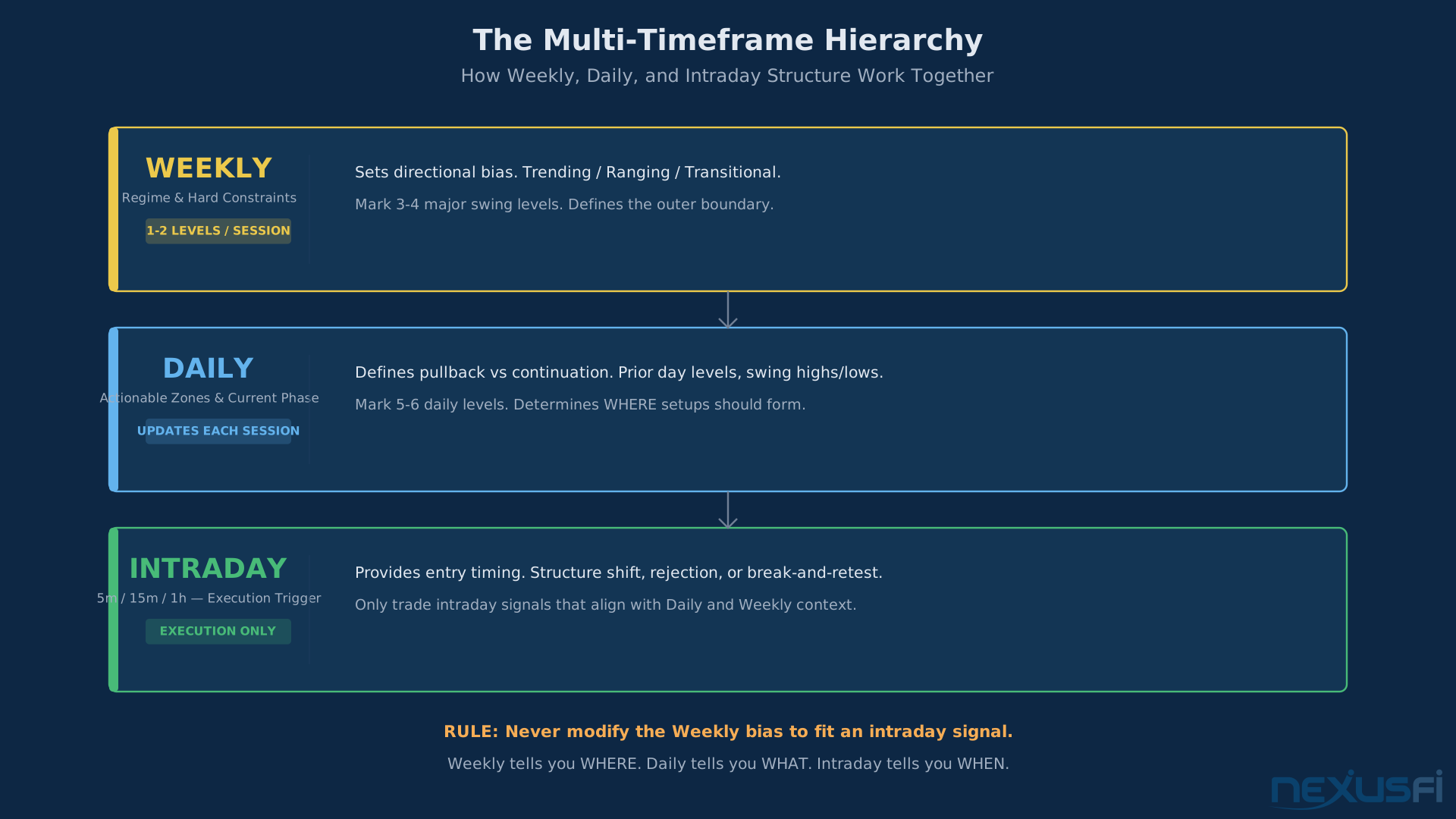
Every multi-timeframe approach for futures day trading involves the same three layers:
Weekly: Regime and hard constraints. The weekly chart tells you whether you're in a trending or ranging market, where the major inflection levels sit, and what the default directional bias is. Weekly structure changes slowly. It sets the outermost constraint.
Daily: Actionable zones and current phase. The daily chart tells you where price is within the weekly trend, where the nearest meaningful support and resistance sits, and whether the current move is likely a continuation or a pullback. Daily structure updates each session.
Intraday (15-minute / 5-minute): Execution trigger. The intraday chart provides the actual trade signal — but only when intraday structure aligns with the daily and weekly context. Without HTF alignment, an intraday signal is just noise.
The hierarchy is non-negotiable. You don't modify the weekly bias to accommodate an intraday setup. You find intraday setups that fit the weekly and daily context.
Weekly Structure: Setting the Regime #
The weekly chart answers one primary question: what direction is the dominant flow, and are we in a trending or ranging environment?
Identifying Weekly Structure State #
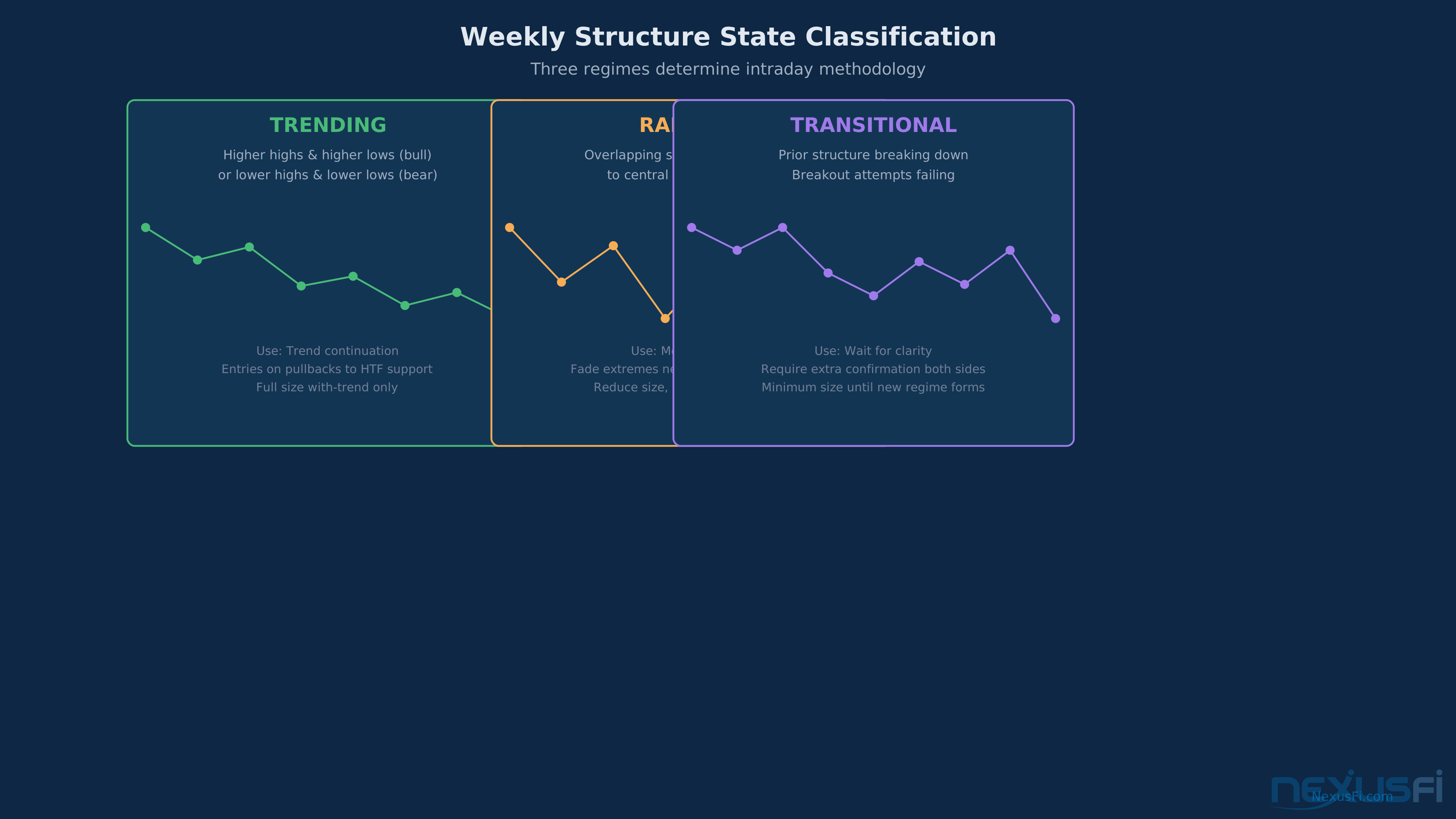
Classify the weekly chart into one of three states:
Trending (directional): Price is making higher highs and higher lows (bullish) or lower highs and lower lows (bearish). Displacement legs — impulsive, one-directional moves — dominate. Pullbacks are relatively contained. In this environment, prefer continuation entries in the direction of the trend on intraday timeframes.
Range-bound (balanced): Swings overlap. Price frequently returns to a central zone. Breakout attempts fail more often than not. In this environment, mean reversion is more reliable than trend continuation. Intraday setups that fade extended moves near weekly range extremes are more viable than breakout chases.
Transitional (regime change): Prior structure is breaking down. A bullish weekly trend printing a lower low, for example, or a range contracting before a breakout. Avoid aggressive intraday trends until the new weekly regime is established. Require extra confirmation on both directions.
What Levels to Mark on Weekly #
More is not better. Mark three to four weekly levels maximum:
- The most recent weekly swing high and swing low
- Prior significant swing points where structure broke or failed (3-6 months back)
- Previous week's high and low (these become intraday reference points)
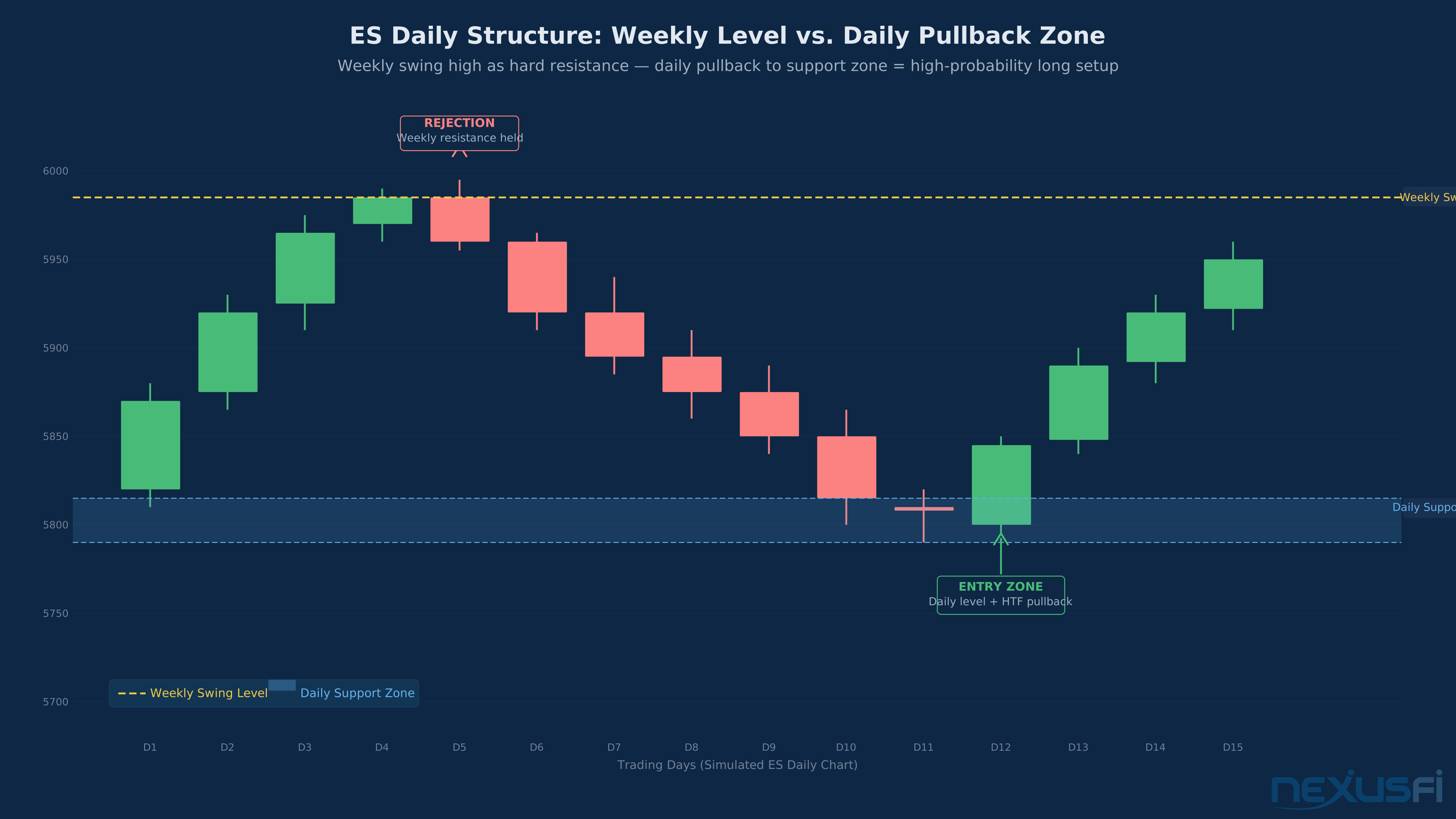
These weekly levels function as hard constraints for intraday trading. A long setup approaching a major weekly swing high — especially in a weekly range environment — needs clear evidence of acceptance through that level before committing. Absent that evidence, the weekly level is a potential reversal zone, not a continuation point.
Weekly Structure in ES/NQ/YM Context #
For ES (S&P 500 E-mini), weekly structure aligns strongly with equity market cycles — Fed decisions, earnings seasons, macro event clusters. Weekly swing levels that coincide with prior reaction highs or lows from major events carry extra weight.
NQ (Nasdaq 100 E-mini) runs wider weekly ranges and can gap aggressively around tech earnings and macro events. Weekly levels matter, but wider zones are required — NQ doesn't respect exact prices the way ES tends to.
YM (Dow Jones E-mini) is the slowest of the three, with smaller weekly swings and more consistent mean-reversion behavior. YM often retests weekly levels before continuing, making patience around HTF levels especially important.
Daily Structure: Mapping Actionable Zones #
The daily chart is where the real work of multi-timeframe analysis happens for futures day traders. The weekly tells you where you are in the macro picture; the daily tells you where your trades should be looking for setups today.
Reading Daily Structure Phase #
Within the weekly trend, the daily chart is always in one of three phases:
Pullback: Price is retracing within a weekly trend. A bullish weekly trend with a daily down-leg is in pullback phase. This is when continuation setups are highest probability — buy the dip toward daily support, with weekly context confirming the bullish bias.
Continuation leg: The pullback has found support and daily structure has shifted bullish (the most recent daily swing low was broken to the upside). Breakout-from-consolidation or trend-continuation setups have the HTF tailwind.
Balance/Transition: Daily structure overlaps. Neither a clean trend nor a clear reversal. Lower probability for directional setups. Either wait for clarity or reduce size much.
Daily Levels to Mark #
The levels that matter for intraday trading:
- Prior day high and low: These are first-tier reference points every ES/NQ/YM day trader uses. They define the previous session's range and function as initial magnets. @Jigsaw Trading's pre-market prep work in their "DTs Pre Market Prep" journal shows this in action — each session starts with weekly range, daily range, and globex levels marked before a single trade is placed. @Jigsaw Trading's pre-market prep work in their "DTs Pre Market Prep" journal illustrates this precisely — each session starts with weekly range, daily range, and globex levels marked before a single trade is placed.
- Recent daily swing high/low: The last significant swing point in the current daily leg. A break above the most recent daily swing high in a bullish weekly trend is structural confirmation of continuation.
- Daily breakout/breakdown levels: Where the daily chart broke out of its prior range or structure. These become support/resistance on retests.
- Daily value area (if you use Market Profile): The daily value area high and low frame the previous session's fair value zone. Price outside value tends to return; acceptance outside value signals a potential range shift.
Avoid marking more than five or six daily levels. More than that creates paralysis — you end up with levels everywhere and no clear structure.
The Daily Level Filter in Practice #
This is the daily filter operating correctly. The 4-hour level provides the zone; the 1-hour structure provides the evidence; the HTF context provides the directional permission.
Intraday Execution: The Trigger Layer #
Once weekly and daily structure are mapped, the intraday chart becomes the trigger mechanism. The job of the intraday timeframe is narrow: identify when price is at an HTF zone and whether structure is confirming the anticipated move.
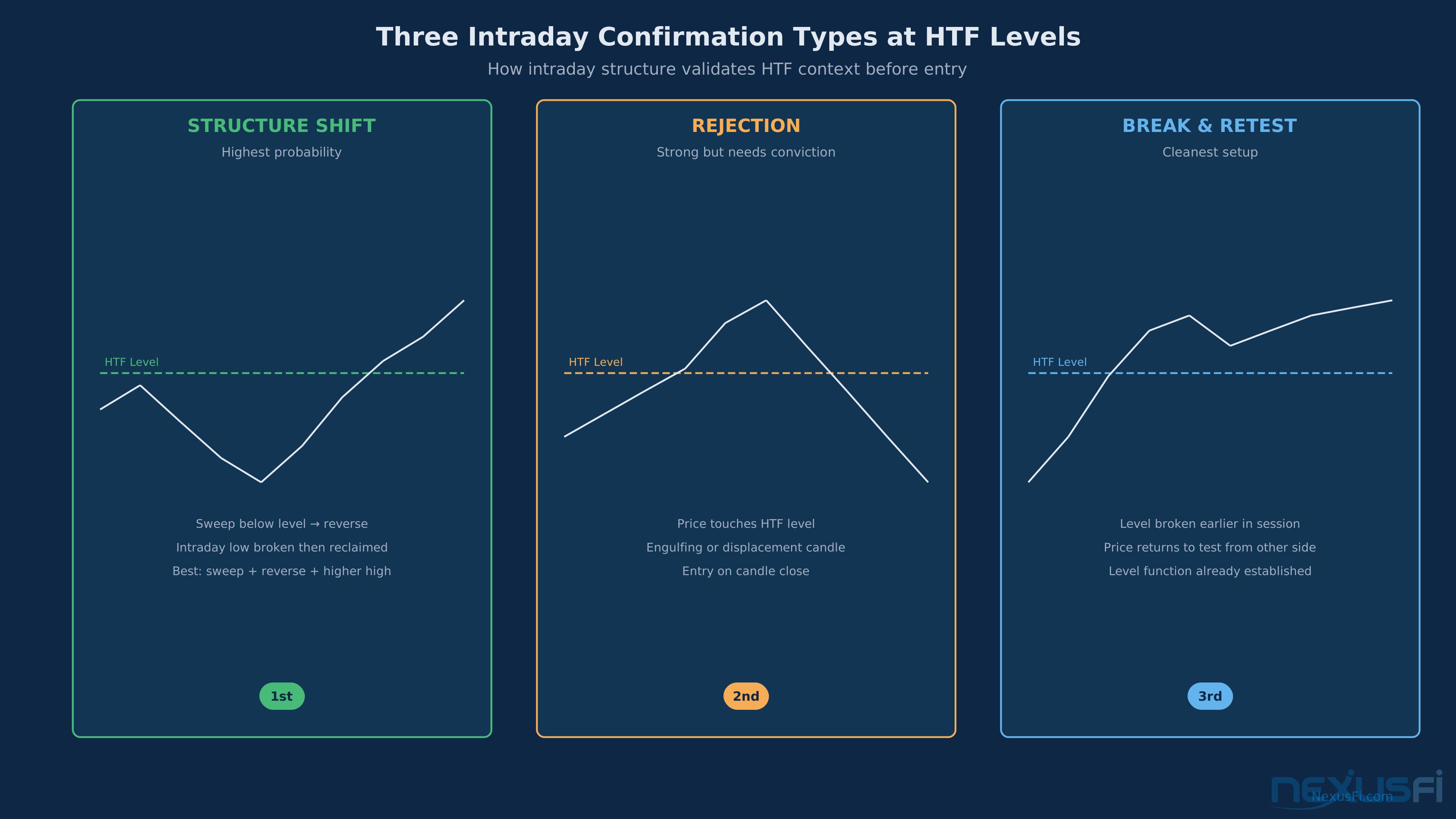
Three Intraday Confirmation Types #
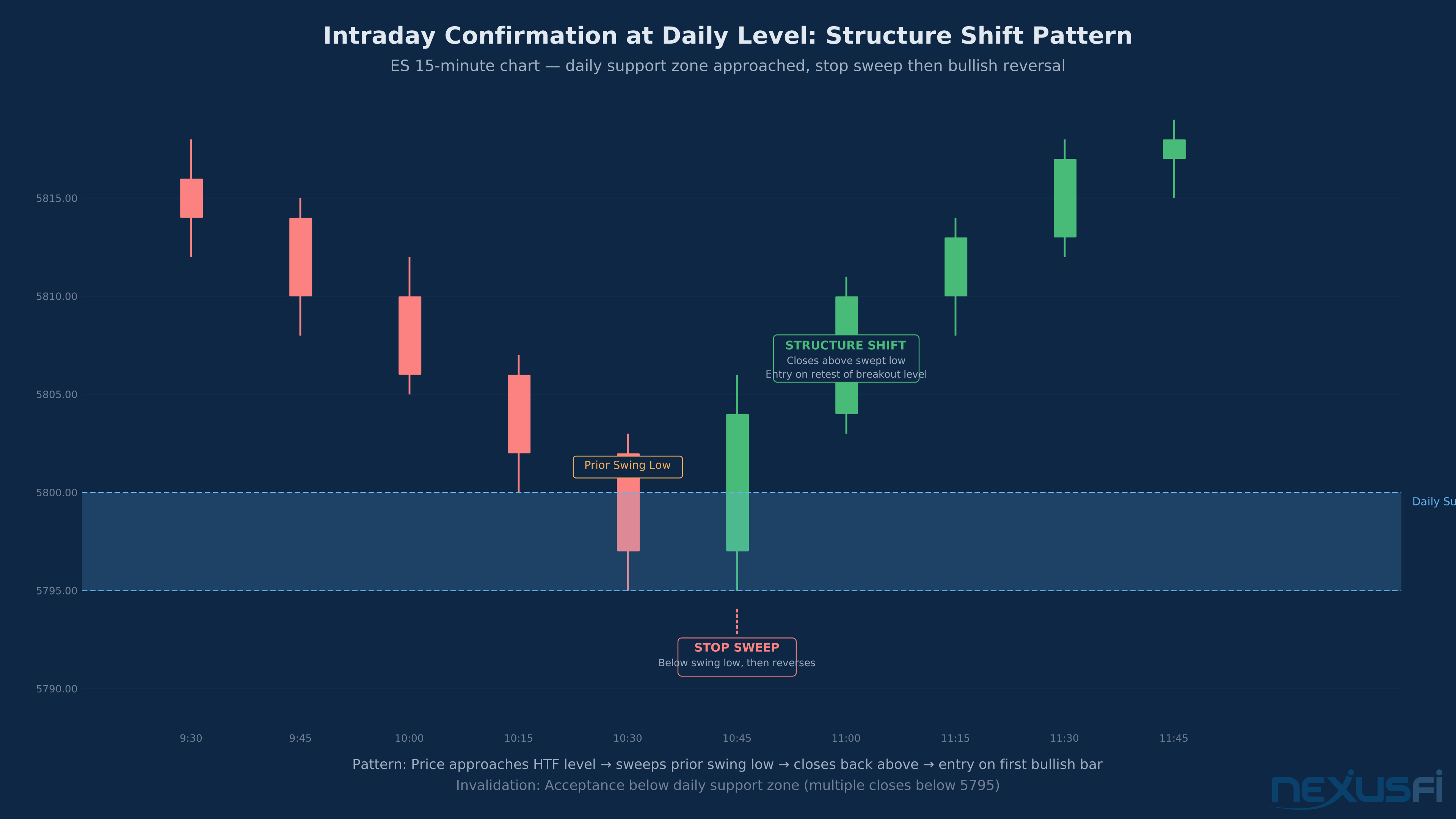
Structure shift: Price approaches a daily support level, breaks below a minor intraday swing low (sweeping stops), then reverses and reclaims that swing low with directional follow-through. The sweep-and-reverse at the daily level is the signal. This is the highest-probability pattern in multi-timeframe analysis because it combines HTF location, stop liquidation, and structural confirmation.
Rejection pattern: Price touches or slightly penetrates the HTF level and prints a strong rejection candle — engulfing or displacement — without breaking intraday structure. The rejection itself is the signal, but it requires more conviction on the entry because you're acting on price behavior without structural confirmation.
Break-and-retest: The daily level was broken earlier in the session (or prior session). Price has now returned to retest that level from the other side, and intraday structure shows acceptance. The break-and-retest is often the cleanest setup because the level's function has already been established by the initial break.
What the Intraday Chart Cannot Do #
The intraday chart cannot override HTF context. If the daily is bearish and you're looking at a bullish intraday setup, you're counter-trend. That setup requires:
- Extra structural confirmation (not just a reversal signal)
- Tighter stops (less room to be wrong)
- Reduced position size (acknowledge the lower probability)
- A clear reason the HTF context is changing, not just stalling
Most intraday losses in futures come from taking setups that look valid in isolation but exist against HTF structure. The intraday chart generates signal. The higher timeframes determine whether that signal is worth acting on.
Time-of-Day Grading #
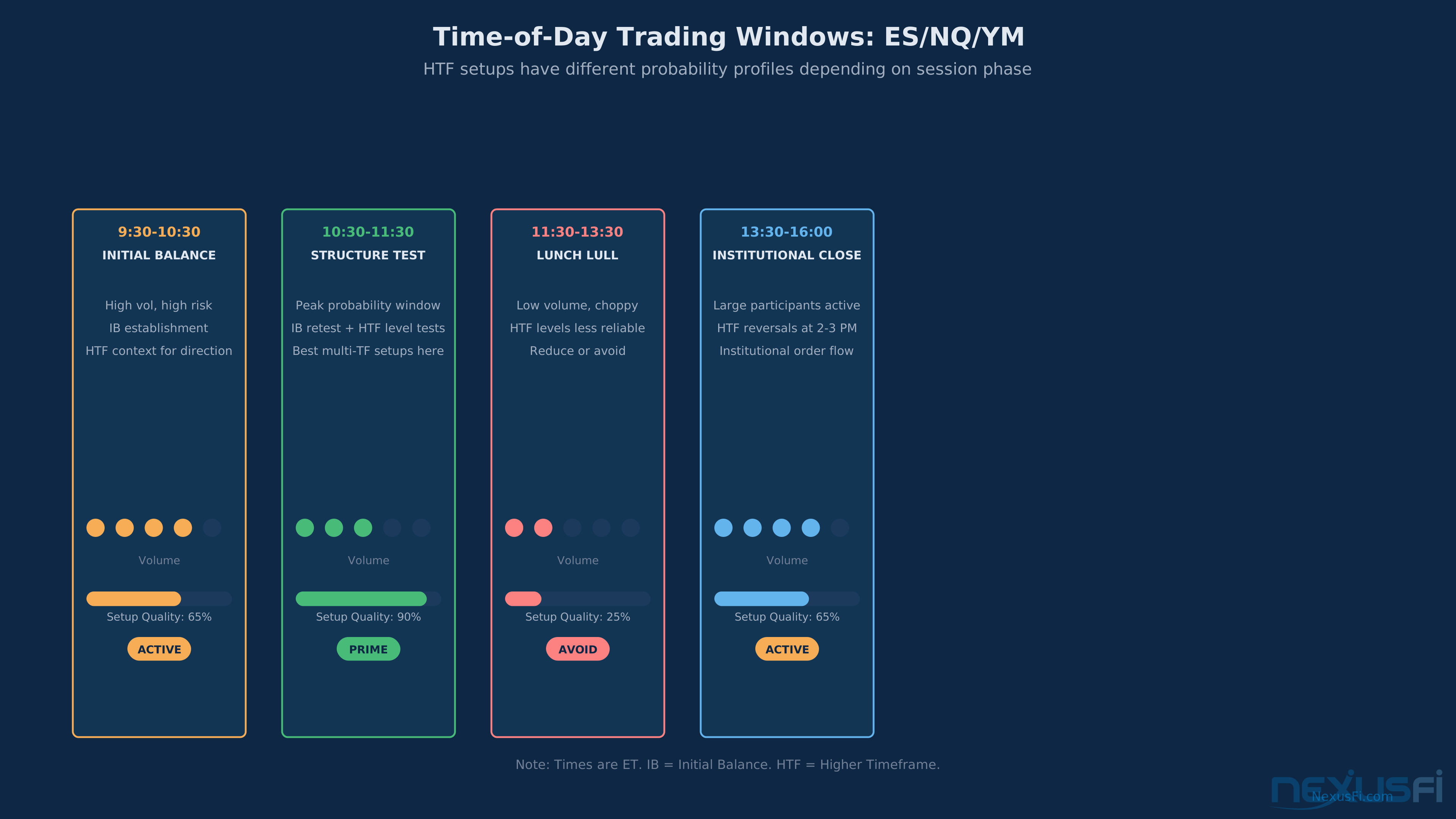
Even with perfect multi-timeframe alignment, time-of-day affects setup quality:
9:30-10:30 ET (Initial Balance): Price is establishing the day's range. HTF levels provide context for whether the open drive is likely to extend or reverse. High volatility, higher execution risk.
10:30-11:30 ET (Structure Test Phase): The initial move has happened. The market often retests the opening range or HTF levels. Highest probability window for multi-timeframe setups in the ES and NQ.
11:30-1:30 ET (Lunch): Low volume, choppy price action. HTF levels matter less here because there's less institutional participation driving structure. Reduce or avoid.
2:00-4:00 ET (Institutional Positioning): Larger participants are actively managing positions ahead of the close. HTF levels matter most in this window — reversals and breakdowns near daily levels at 2-3 PM EST are often institutional, not retail-driven.
The Alignment Stack: What High-Probability Looks Like #
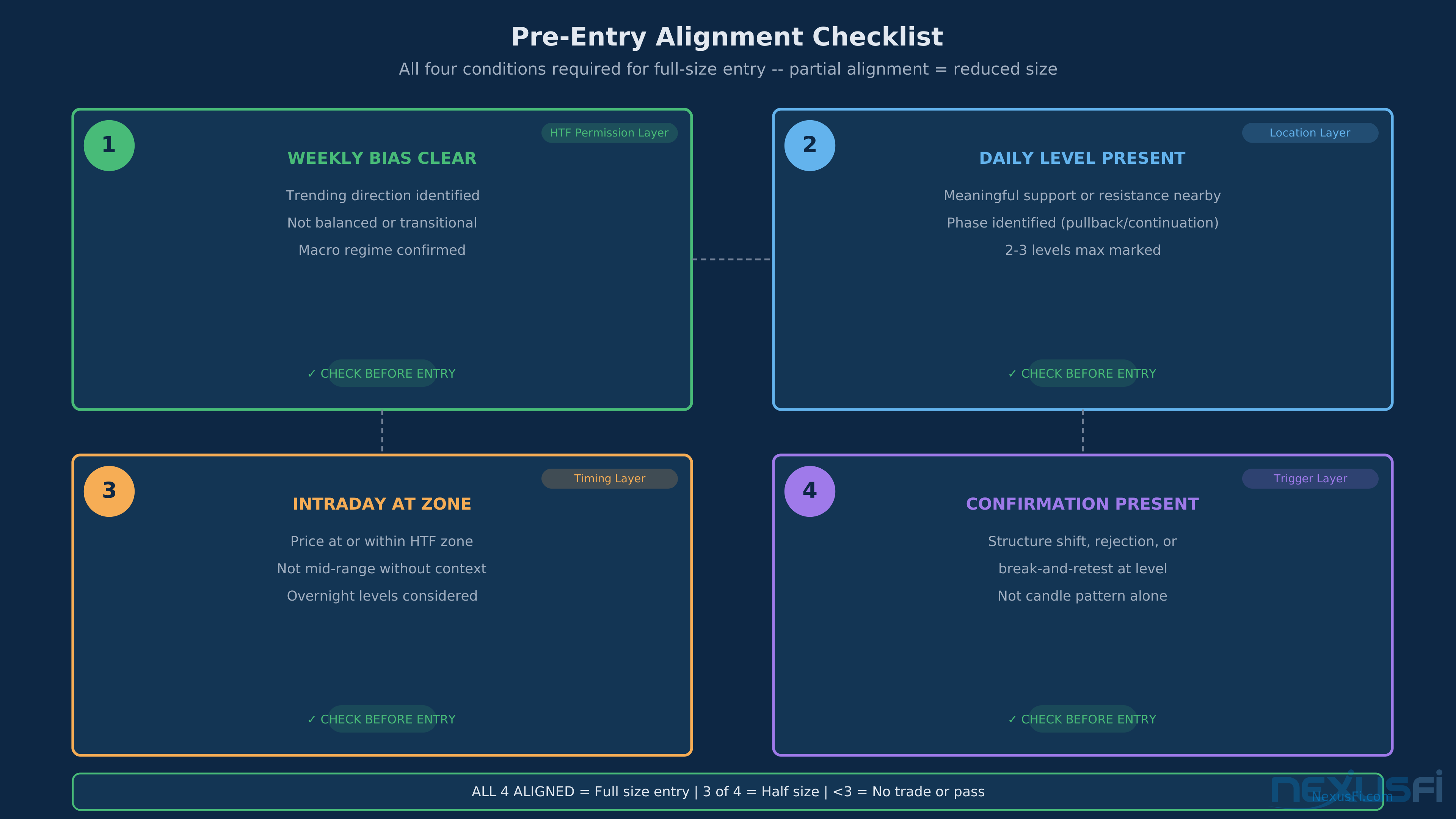
The highest-probability multi-timeframe setup combines four elements:
- Weekly bias is clear — trending in one direction, not balanced
- Daily structure is at a meaningful level — pullback to support in bullish weekly, or rally to resistance in bearish weekly
- Intraday location is at or within a reasonable distance of the daily level
- Intraday confirmation shows structure shift, rejection, or break-and-retest at the level
When all four align, you have a trade with institutional-level context supporting it. The weekly trend provides fundamental demand/supply imbalance. The daily level is where participants have historically shown interest. The intraday confirmation shows that current order flow is acting on that interest.
The 'HTF Half' Rule #
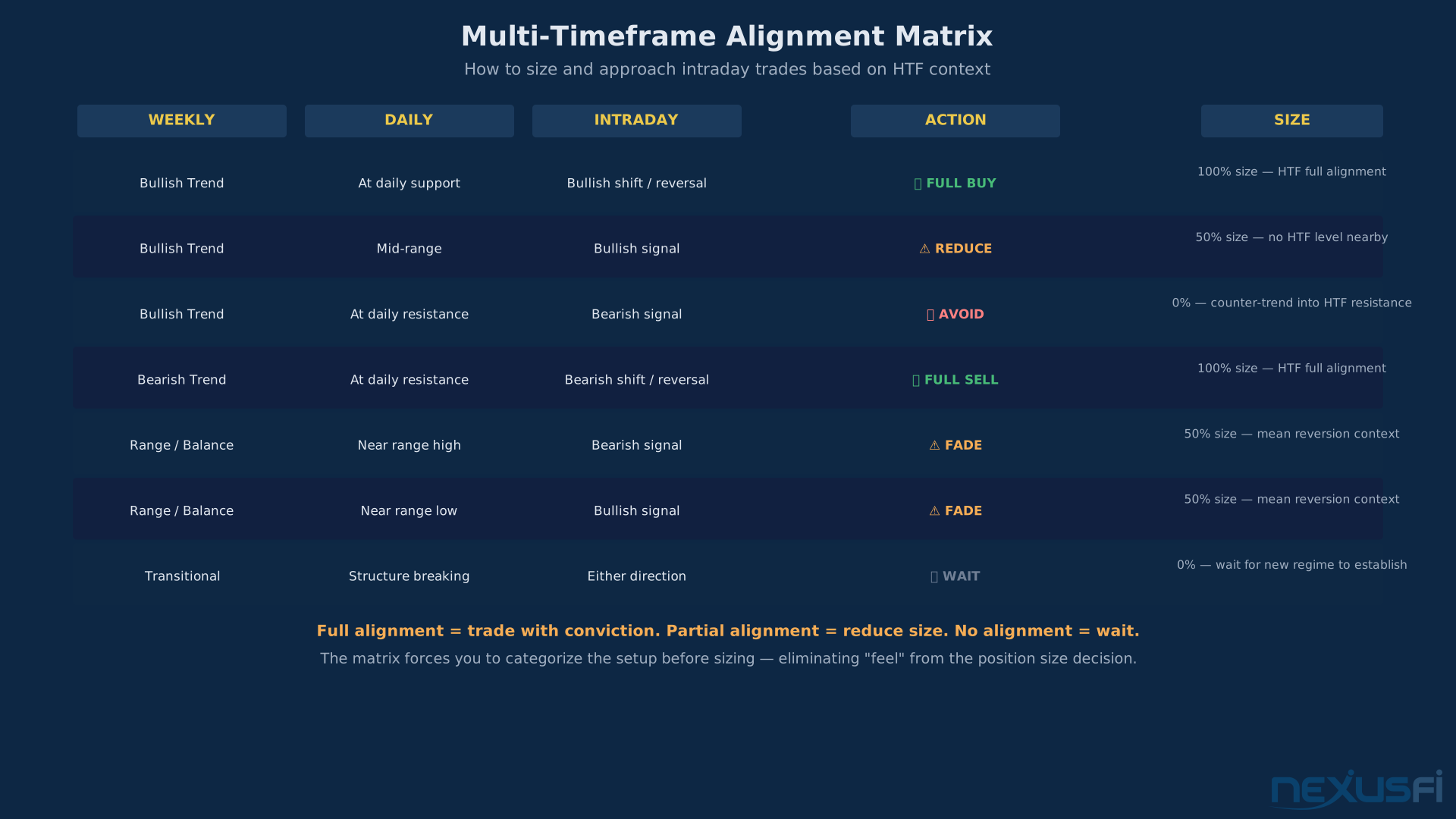
A practical filter used by experienced traders: if price is above the key daily decision level and the daily bias is bullish, only look for longs. Below it, only shorts. In the middle of a daily range, reduce size or pass.
This rule forces you to trade with structure rather than predicting which side will win. It eliminates the worst intraday setups — the ones that require price to travel through an opposing HTF level to work.
ES/NQ/YM: Instrument-Specific Structural Behavior #
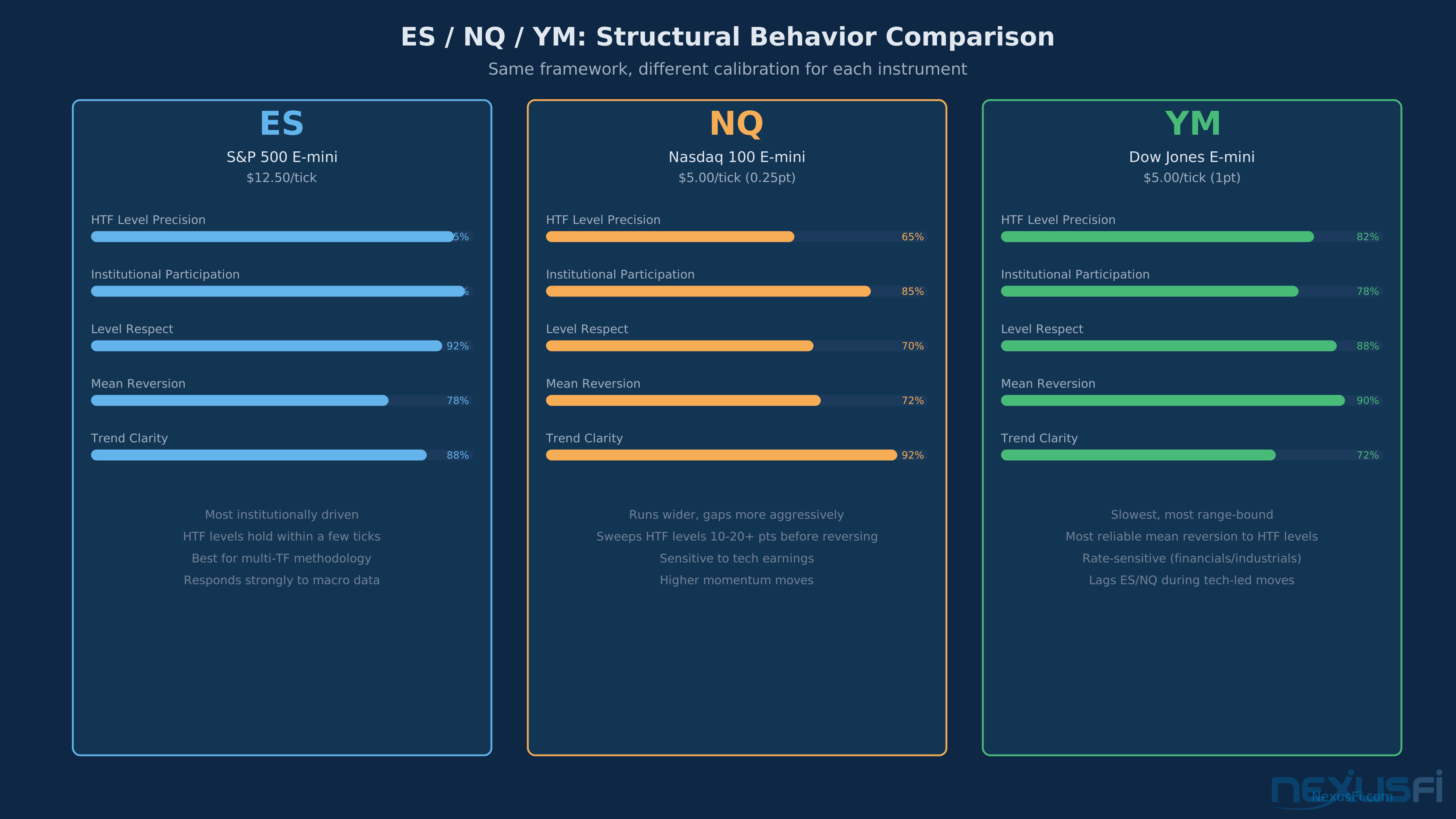
The three major index futures have different structural characteristics that affect how multi-timeframe analysis applies:
ES (S&P 500 E-mini) #
ES is the most liquid and institutionally driven of the three. Multi-timeframe levels hold with more consistency because more participants are watching and acting on them. ES respects daily levels tightly — within a few ticks in most market conditions. It's the textbook instrument for multi-timeframe analysis because the institutional participation is so high that HTF levels function reliably as decision points.
$12.50 per tick. A 10-point daily level retest could mean a 40-tick move. The dollar magnitude means participants act quickly at daily levels.
NQ (Nasdaq 100 E-mini) #
NQ runs wider. It moves faster, gaps larger, and sweeps further beyond HTF levels before reversing. This has two implications: first, entry zones at HTF levels need to be wider (NQ may sweep 10-20+ points below a level before reversing); second, if NQ is moving with strong momentum, HTF levels can fail to hold while ES levels hold — the instruments diverge at extremes.
NQ is more sensitive to tech earnings and macro data. Weekly structure in NQ can be disrupted by a single large-cap earnings report. Factor this into the weekly level assessment.
$5.00 per tick, but ticks are 0.25 points, making the nominal tick value misleading. NQ moves in larger dollar swings than ES per contract despite lower tick value.
YM (Dow Jones E-mini) #
YM is the slowest and most range-bound of the three on a daily basis. It tends to mean-revert to daily levels more reliably than ES or NQ. YM also responds more to interest-rate-sensitive sectors (financials, industrials) than tech. During periods of tech-led market movement, YM may lag ES and NQ much — the daily structure divergence is itself information.
$5.00 per tick, moving in 1-point increments. Position sizing against daily levels in YM requires thinking in dollar risk per level, not just ticks.
When Instruments Diverge #
Divergence between ES and NQ — when one is making a new daily high and the other isn't — is itself a structural signal. It often precedes short-term reversals or consolidation. @rahulgopi described this precisely in their "RG's Emini Journal": "Once you start noticing divergence, and plugin with the bigger timeframe levels, I turn cautious." Traders watching multi-timeframe structure on one instrument benefit from checking the alignment (or divergence) with the others.
Common Failure Modes #
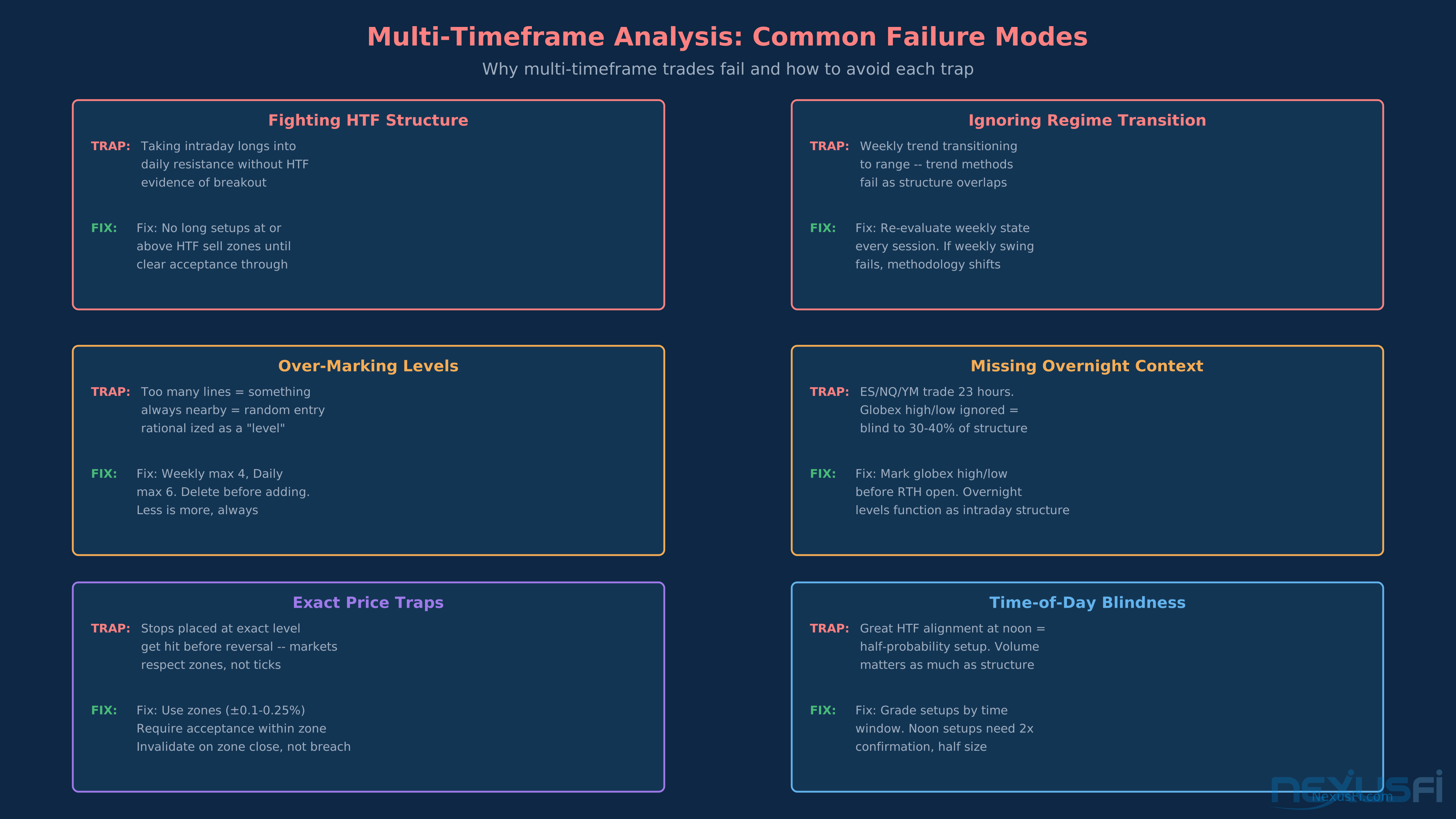
Fighting HTF Structure #
"In an uptrend" is not the same as "at a valid long entry zone." Multi-timeframe analysis requires both direction AND location. One without the other is incomplete.
The most common mistake: taking intraday longs into a daily sell zone without evidence the zone is failing. Price approaches a daily supply area. The intraday chart shows a bullish candle pattern. The trader takes the long. Price reverses at the daily level and takes out the stop.
The failure was taking an intraday setup without checking whether daily structure warranted it. The intraday signal looked valid. The HTF context made it a low-probability trade.
Over-Marking Levels #
Too many lines on a chart means something is always nearby. Traders rationalize entries near any line as "trading a level." The result is random entry, not structure-based entry. The discipline is in removing levels, not adding them.
Weekly: three to four levels. Daily: five to six levels. Intraday: what you need for execution context. No more.
Treating Levels as Exact Prices #
Markets don't respect tick-level precision on HTF levels. A daily support level at 5840 in ES means an area — perhaps 5836 to 5844 — not exactly 5840.00. Stops placed exactly at the level consistently get hit before the reversal happens. Use zones, require confirmation within the zone, and invalidate based on acceptance through the zone (not just a brief penetration).
Ignoring Regime Transitions #
A weekly trend can transition into a range over two to four weeks while appearing to continue on the daily chart. Intraday setups that worked perfectly in the weekly trend phase start failing — the market is balancing, not trending, but the trader is still using trend methodology. Regularly re-evaluate the weekly structure state to catch these transitions.
Missing the Overnight Context #
ES, NQ, and YM trade globally. The overnight Globex session creates levels that function as intraday structure during the regular session. Globex high and low, Asian session range, and any significant overnight reaction levels belong in your intraday analysis. Ignoring overnight context means walking into the RTH session blind to a significant portion of relevant structure.
Pre-Entry Checklist #
Run through this checklist during the 30 minutes before the open, not while price is moving. Pre-session clarity beats real-time scrambling every time.
Before committing to any intraday trade:
- Weekly state identified. Is the market trending, ranging, or transitioning? What's the directional bias?
- Nearest weekly levels marked. Maximum three to four. Do any fall near today's anticipated trading zone?
- Daily structure mapped. What phase are we in — pullback, continuation, or balance? Where are the two or three most relevant daily levels?
- Price location confirmed. Is price at or near an HTF level, or mid-range? Mid-range setups without HTF context require stronger justification.
- Intraday confirmation present. Does the intraday structure show a shift, rejection, or break-and-retest at the level? Or just a candle pattern with no structural backing?
- Invalidation defined. Where does the HTF thesis break? Not just where your dollar stop is — where does structure say the trade is wrong?
- Time-of-day factored in. Is this the right window for the setup type? High-probability setups at 9:45 AM EST trade differently than the same setup at noon.
- Position size appropriate. With-trend HTF alignment: full size. Counter-trend or balanced market: half size or less.
Validating the Approach #
If you want to test whether multi-timeframe structure is actually improving your trading, measure it directly:
Win rate conditioned on HTF alignment: Compare trades taken with weekly/daily alignment to trades taken without. If HTF alignment isn't improving your win rate, your level identification needs work.
Profit factor by regime: Compare trending-week results versus range-week results. If your system is profitable in trending regimes but negative in ranges, that's information — either trade smaller in ranges or filter out trades during range weeks.
Average adverse excursion: Does restricting entries to HTF zones reduce the average negative excursion before you hit your target? Tighter setups mean less heat, which enables better position sizing.
Time-to-target by HTF state: Trades taken with full multi-timeframe alignment often reach targets faster because they have the institutional demand/supply imbalance working with them, not against them.
These are measurable, trader-verified metrics. Not theoretical edge claims. The data from your own trade journal will tell you whether multi-timeframe structure is working for your specific trading style and instruments.
The Core Discipline #
Multi-timeframe analysis doesn't make entries easier to find. It makes them harder — which is exactly the point. The discipline is in waiting for the full alignment: weekly regime set, daily level present, intraday trigger confirmed. Most sessions, that alignment only fully forms two or three times at most.
That's by design. The top-down framework filters out the setups where shorter-term noise happens to look like a signal. When everything lines up, you have a trade with institutional context behind it. When it doesn't line up, you have noise dressed as opportunity.
The traders who use this framework consistently don't take more trades. They take better ones.
Knowledge Map
Prerequisites
Understand these firstGo Deeper
Build on this knowledgeCitations
- — Trading Futures with Context (2014) 👍 7“Fantastic structure today in the NQ. Level to level with pullbacks and re-entry possibilities all the way down today.”
- — Signals from multiple time frame charts (2012) 👍 3“Your entry chart should be one chart and one chart only. Timing the entry should be from this entry chart, no others.”
- — Trailer Park Capitol (2022) 👍 4“The trade I'm now looking for is an intraday swing trade, based on 1- and 4-hour levels, higher timeframe continuity.”
- — Spoo-nalysis ES e-mini futures S&P 500 (2023) 👍 6“We finally have stopped one-timeframing higher after 4 days and 200 handles.”
- — Tao te Trade: way of the WLD (2019) 👍 6“Do not trade against higher time frames without wicked tight stops.”
- — Just another trading journal: PA, Wyckoff & Trends (2019) 👍 4“Volume bars on the higher timeframe gives me a good heads up on volume and spread (effort VS result).”
- — DTs Pre Market Prep (2017) 👍 9“Look for action at the usual day trader levels but with no real directional bias until price reaches the weekly range extremes.”
- — RG's Emini Journal (2015) 👍 6“Once you start noticing divergence, and plugin with the bigger timeframe levels, I turn cautious and when eventually a trade forms I take it.”