



Session Types & Composite Profiles
How your session definition changes your entire VP analysis — and how to build composites that work
Overview #
Session definition and composite construction are the invisible infrastructure beneath every volume profile analysis. Get them wrong and your POC, value area, and node structure tell a story that doesn't match reality. This guide covers the critical choices — RTH vs Globex sessions, developing vs composite profiles, VP vs TPO, contract roll data hygiene — and provides instrument-specific configuration guidelines so your VP maps reflect actual market structure.
Session Segmentation: RTH vs Globex #
⚠️ Critical: Your VP conclusions are only as good as your session definition. This isn't a minor settings detail — it's the single biggest source of conflicting VP analysis between traders.
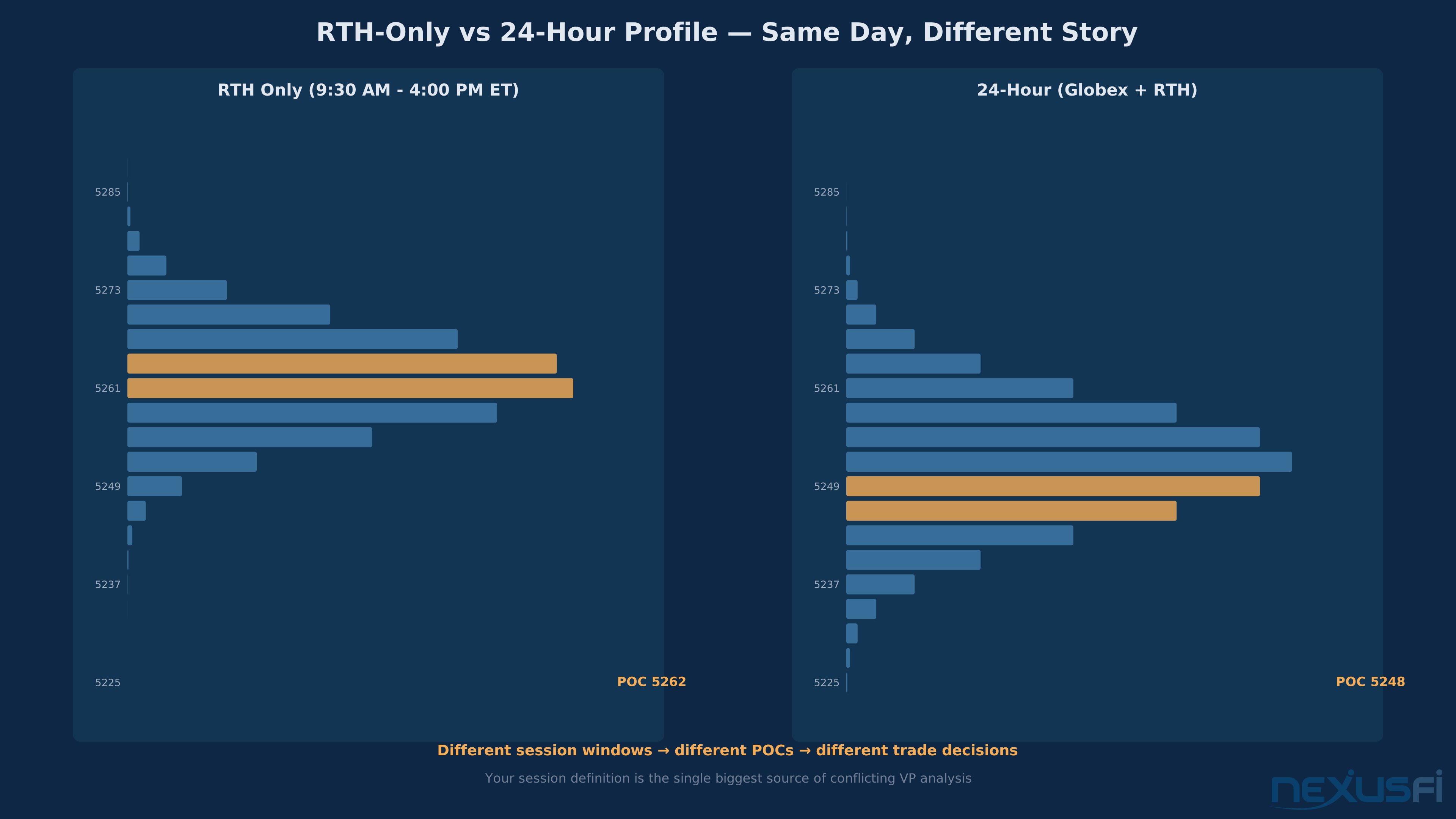
RTH-only profiles, ETH-only profiles, and 24-hour profiles produce different POCs, different value areas, and different node structures from identical data. Two traders comparing "the weekly composite" might be looking at completely different maps if their session definitions don't match. Always specify your session window when discussing composite levels.
Two traders, one market, completely different maps. Session definition is the invisible variable behind most VP disagreements. Before concluding that someone else's analysis is wrong, confirm you're both using the same session boundaries — "the weekly composite" means nothing without matching session settings.
Futures trade around the clock, but not all hours are equal. CME E-mini S&P 500 futures (ES), for example, trade Sunday through Friday from 5:00 PM to 4:00 PM Central Time — nearly 23 hours per day [7]. RTH (Regular Trading Hours) is where the heaviest participation concentrates. Globex/ETH (Extended Trading Hours) carries overnight flow, hedging activity, and global macro reactions.
Build separate profiles for each. The overnight high/low, overnight POC, and prior RTH value area are your pre-market reference set. A move in ETH above prior value that RTH can't hold is a failed probe. A move in ETH that RTH accepts and builds upon is continuation.
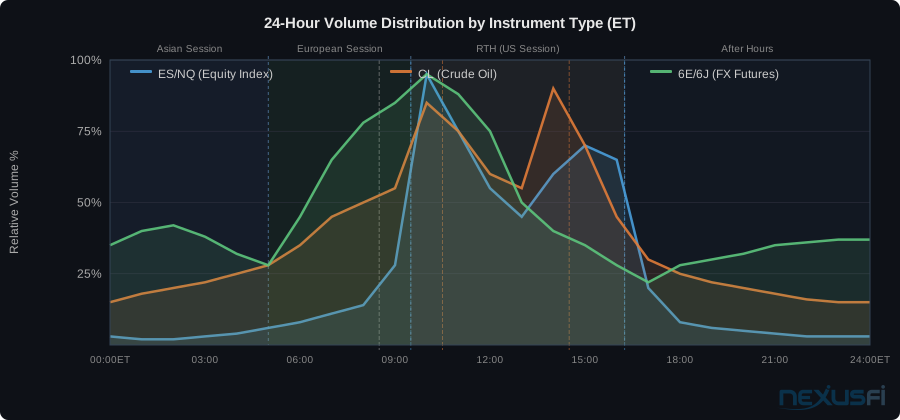
Most institutional VP traders use RTH-only profiles for their primary analysis because that's where the volume concentration lives. Understanding why requires stepping back to see the full 24-hour day for what it is: three distinct participation windows — an Asian session (roughly 6:00 PM to 2:00 AM ET) where US equity volume is minimal, a European session (2:00 AM to the 9:30 AM ET open) where volume builds as European traders enter, and the US/NY session (9:30 AM to 4:00 PM ET) where the major volume spike hits.
These three trader populations hold different positions and trade different sizes — which is exactly why the volume distribution looks so different across the full 24-hour session versus RTH-only. [9] But that approach isn't universally accepted. @josh raises a sharp challenge to RTH-only profiles: over a multi-month bull run, the overnight session contributed 77% as much positive movement as RTH while carrying only 22% of the volume. As he puts it, "Are these price levels overnight less valid simply because little ES volume traded there? Isn't it more logical to conclude that rather, the prices themselves reflect the real supply and demand?" [5] It's a fair question — and the answer depends on what you trade. ES traders can safely anchor on RTH. CL traders need to weight the overnight session more heavily — crude responds to inventory data, geopolitical events, and Asian/European energy flow. @Private Banker notes: "I'm not a fan of using a 24-hour session value area and POC. The volume changes so drastically from the ON session into the RTH session." [2]
Whatever you choose, be consistent. And when comparing notes with other traders, confirm you're using the same session boundaries — otherwise you're comparing different maps of the same territory.
Developing vs Composite Profiles #
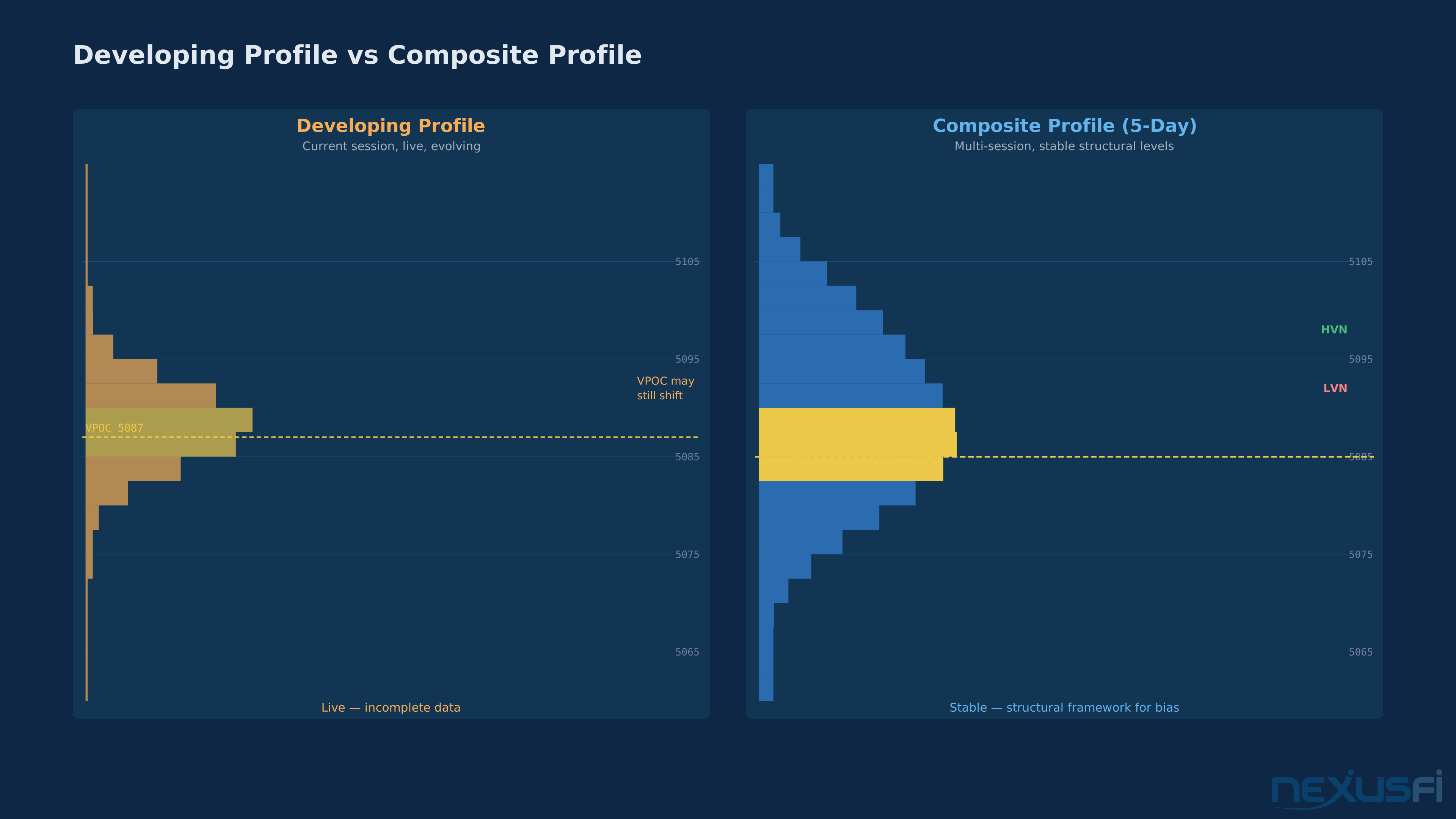
A developing profile is the current session's VP being built in real time. It's live, incomplete, and evolving. Every new print changes the distribution. Early in the session, the developing profile is unreliable — at 10:00 ET it might look balanced, but by 14:00 a trend day has completely reshaped it. Wait for the VPOC to stabilize through at least one full rotational cycle before anchoring any VP-based thesis.
A composite profile merges multiple sessions to reveal longer-term structural acceptance.
Building Composites That Work #
The anchor point matters more than the timeframe label. "Weekly composite" is meaningless if the market regime changed on Wednesday. Anchor your composite to the last major structural shift — a breakout from balance, a trend reversal, a key news event. Run the composite from that anchor forward.
Refresh cadence: for ES intraday traders, a rolling 3-5 day composite captures the current micro-structure. A 20-day composite captures the monthly auction. Beyond 20 days, check whether the data is stale — if price has moved 100+ points since the composite's anchor, the old volume levels may be irrelevant.
The practical split: use the developing profile for execution timing and intraday trade location. Use the composite for directional bias and structural context. When today's developing POC conflicts with a weekly composite HVN, expect friction.
Developing profile = execution. Composite profile = direction. These tools answer different questions. The developing profile tells you where to act within today's session. The composite tells you which way to lean. A composite HVN is context and structural reference — it's not a trade signal until the developing profile engages it.
Volume Profile vs Market Profile (TPO) #
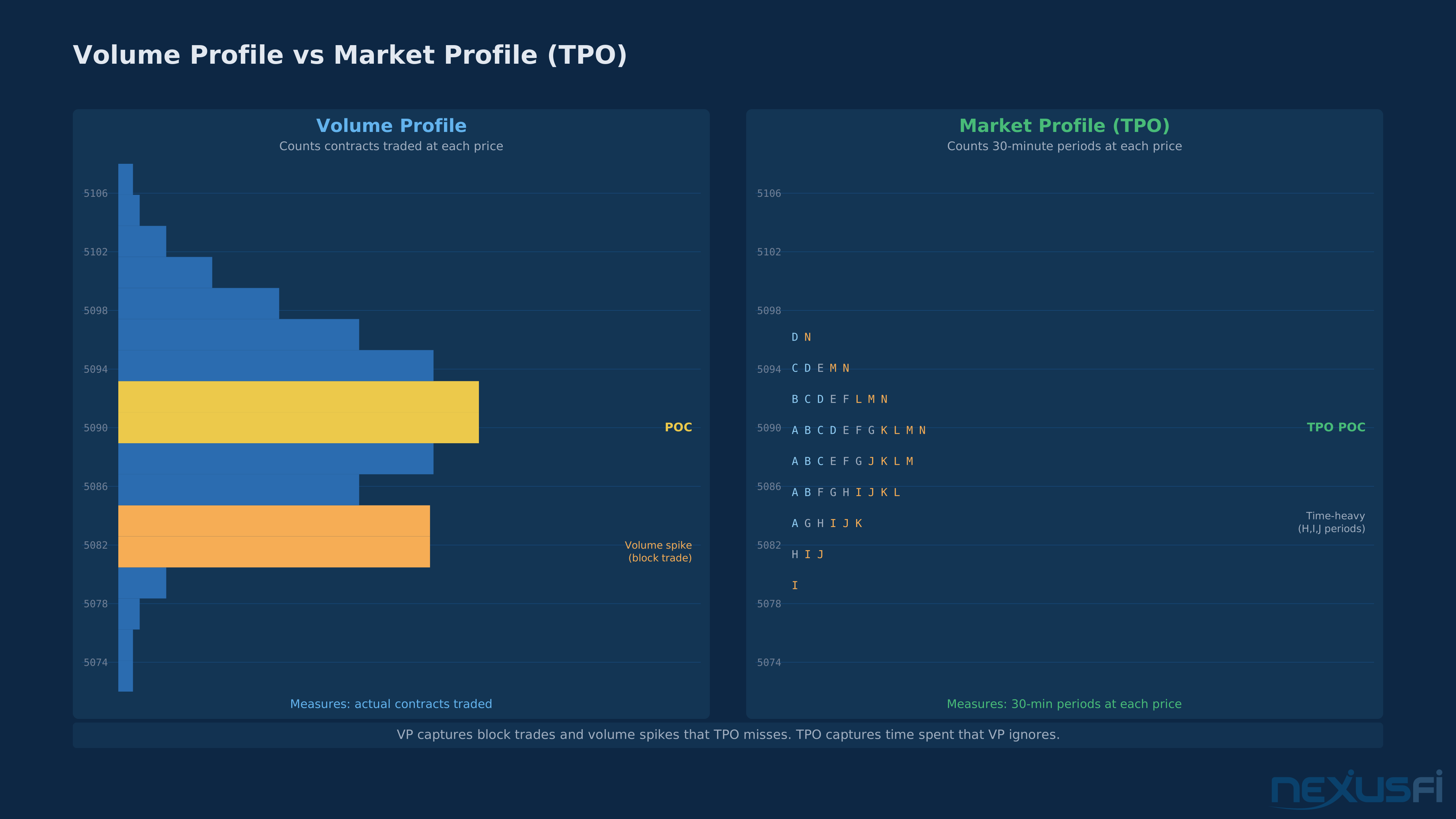
VP and Market Profile (TPO charts) are cousins, not twins. Both map the auction, but they measure different things:
Market Profile uses Time Price Opportunities — it counts how many 30-minute periods traded at each price. The result shows where the market spent time. A TPO-heavy zone means the market lingered there.
Volume Profile counts actual contracts traded at each price. The result shows where the market did business. A high-volume zone means transactions happened there.
Usually they agree — the market spends time where it transacts. But they diverge in important situations:
- Thin, time-heavy zone: Price sat at a level for hours but on low volume. TPO shows acceptance, VP shows disinterest. This happens during holiday sessions, lunch hours, or pre-announcement waits. VP is telling you the truth — nobody actually wanted to trade there.
- Thick, time-light zone: A massive volume spike at a price level that lasted only minutes. VP shows a major node, TPO barely registers it. This happens around data releases, stop cascades, or institutional block trades. Again, VP captures the real activity.
Many experienced traders use both — and tailor which tool to which session type.
His reasoning is that TPO doesn't weight by volume, so low-volume Asian and European sessions get equal treatment as RTH — distorting the POC and single prints. By running RTH-only TPO alongside a 24-hour VP, you get the best of both: TPO for session structure, VP for actual liquidity. [6]
Contract Roll and Continuous Data #
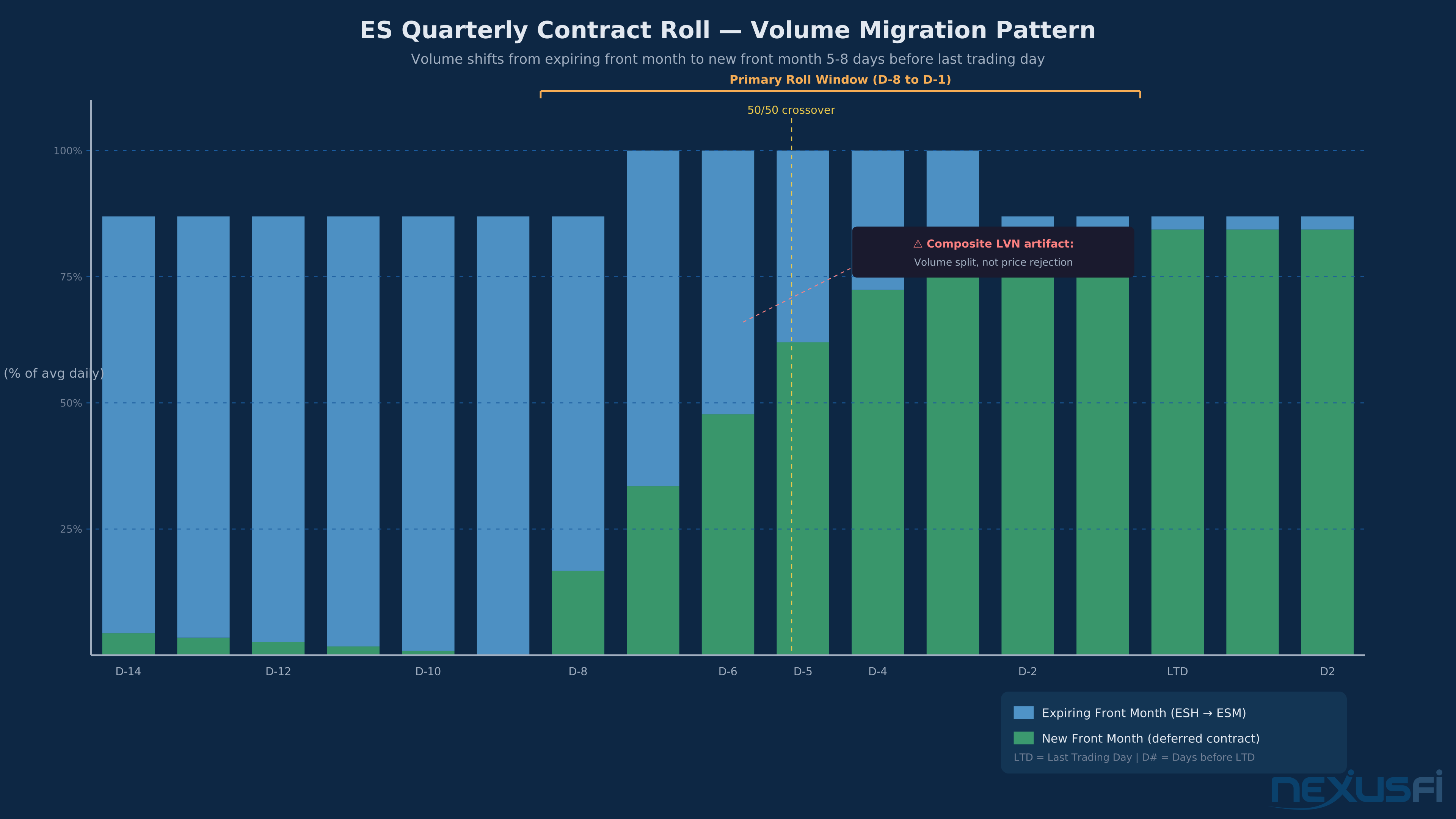
Volume profile data gets messy around contract roll periods. When front-month ES is rolling to the next quarterly expiry, volume splits between the expiring and the new contract. Your composite profile spanning a roll period will show an artificial LVN at the roll date — not because the market rejected that price, but because liquidity was divided across two contracts. CME Group's Equity Quarterly Roll Analyzer tracks this migration daily, showing how open interest shifts from the expiring front month to the deferred month [8]. For equity index futures like ES, NQ, YM, and RTY, this quarterly roll typically sees volume migrate to the new front month 5-8 trading days before the last trading day.
@josh highlights a detail most traders miss: the intraday volume data around roll dates diverges from daily bar volume by 20-30%, because daily bars often include new front-month volume while the expiring contract is still actively traded. As he puts it, "Many people are trading the new front month contract, but it's evident from these numbers that many are actually still trading the old contract up until expiry. This skews the volume stats quite a bit for those 8 to 10 days." [5]
If your platform uses continuous contracts (back-adjusted or ratio-adjusted), understand how that adjustment affects volume levels. Back-adjusted data shifts price levels to eliminate the roll gap, but the volume from the old contract was transacted at the original price, not the adjusted one. This makes composite profiles spanning multiple rolls less reliable.
Best practice: when running composites, avoid spanning roll dates. Reset your composite anchor after each quarterly roll. For intraday work on the current contract, this isn't an issue. For longer-term structural analysis, it's the kind of data hygiene that separates noise from signal.
Practical Session Selection by Instrument #
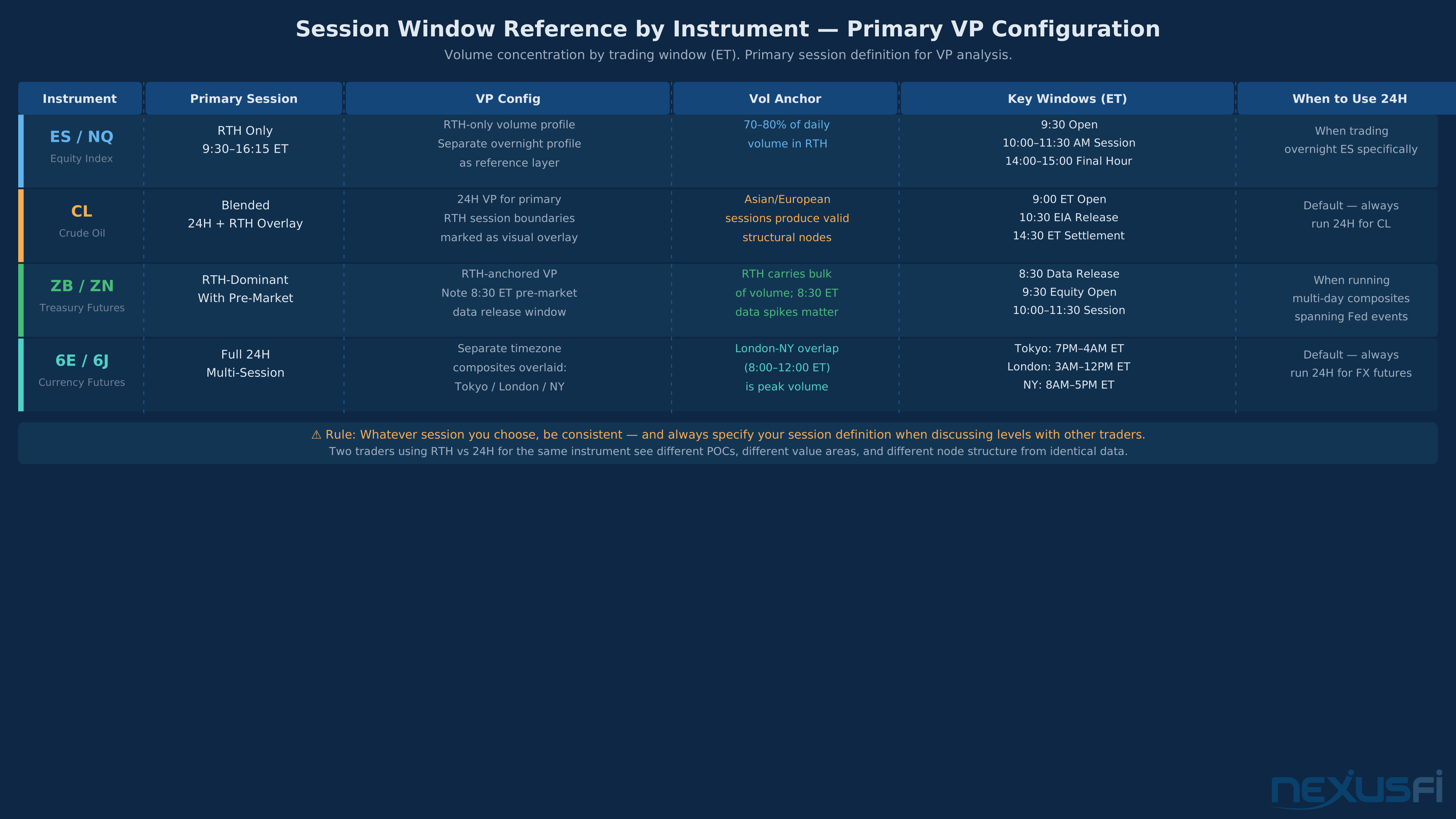
Not every instrument demands the same session treatment. Here's how experienced traders typically configure their VP session windows:
| Instrument | Primary Session Window | Key Timing Events | Configuration Notes |
|---|---|---|---|
| ES / NQ (Equity Index) | RTH-only (9:30--16:15 ET) | 9:30 ET open | 70-80% of daily volume in RTH. Keep overnight profile as a separate reference layer — overnight high/low and POC are pre-open context only. Don't merge into primary unless you actively trade the overnight session. |
| CL (Crude Oil) | Blended 24H + RTH overlay | 9:00 ET open, 14:30 ET settlement | CL responds to global events around the clock. Run a 24H VP with a visual RTH overlay to separate domestic from international flow. The 9:00 ET open and 14:30 ET settlement are the critical RTH structural anchors. |
| ZB / ZN (Treasury) | RTH-dominant | 8:30 ET data releases | Treasury volume concentrates heavily in RTH, but ETH data releases at 8:30 ET create structural levels that persist into the regular session — treat those ETH prints as live context. |
| 6E / 6J (Currencies) | Full 24H + multi-session composites | London-NY overlap (8:00--12:00 ET) | Run separate composites per major timezone (Tokyo, London, NY) and overlay them. Where multiple sessions agree on value is where levels are most reliable. The London-NY overlap (8:00-12:00 ET) is the highest-volume window. |
Trading Against Composite Levels #
Knowing where composite HVNs sit is only half the job. The other half is knowing what a valid test looks like — and when the level is failing.
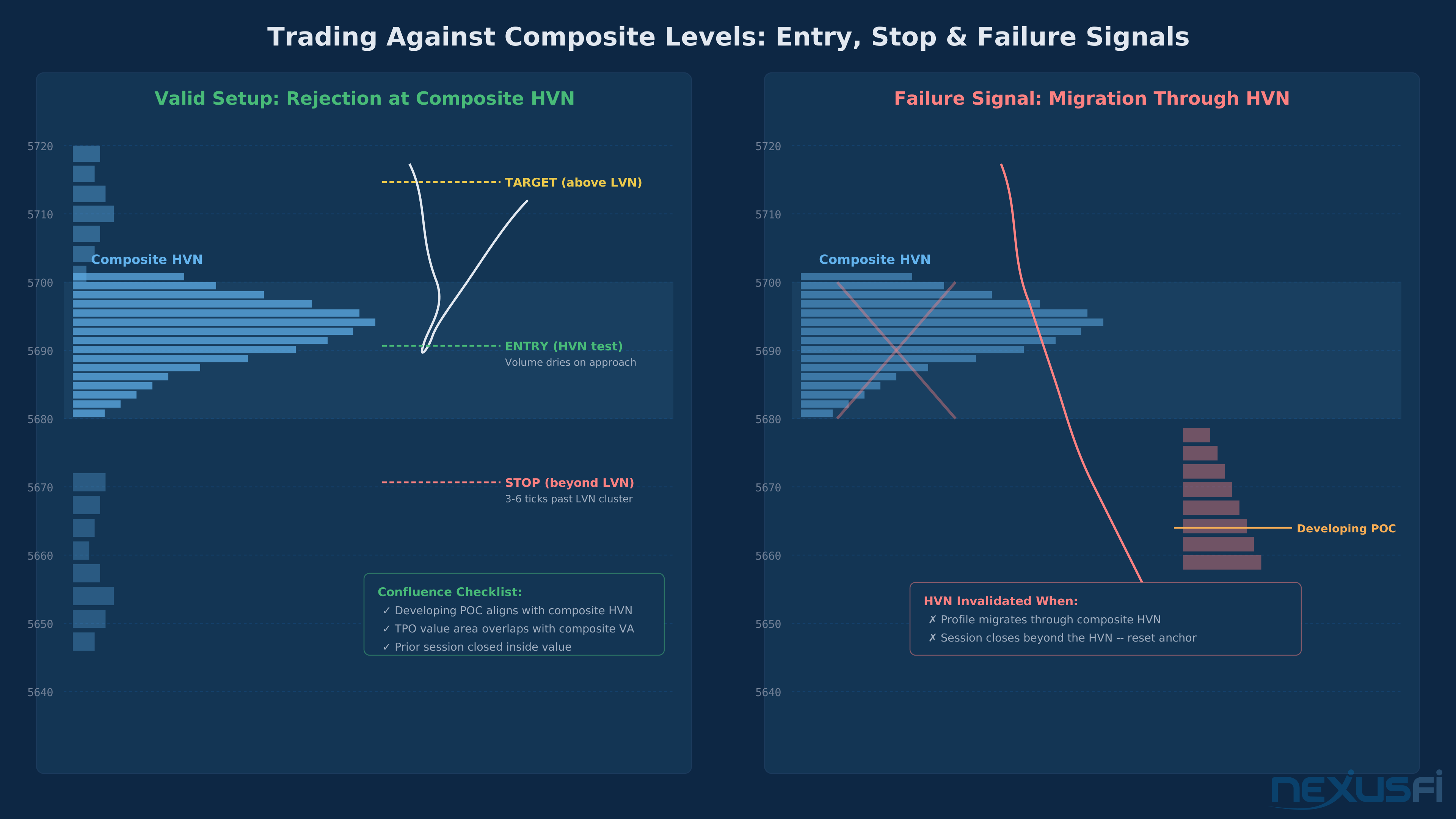
Entry trigger. A valid test of a composite HVN requires three conditions: the developing profile rotates into the HVN zone during the session, volume tapers on the approach (the footprint shows absorption without aggressive bidding pressure), and the prior session closed inside or above value. All three together means the composite level is engaged. One or two out of three means wait for confirmation on the next rotation.
Stop placement. Place your stop beyond the next LVN cluster below your entry. On ES, that's typically 3-6 ticks past the LVN depending on how tight the node clusters are. A wider LVN gap — 10+ ticks of thin-volume territory — warrants the full 6-tick buffer. Compressed nodes sitting close to entry can be as tight as 3 ticks. The LVN is the structural void. If price migrates through it cleanly, the composite level has lost its defense.
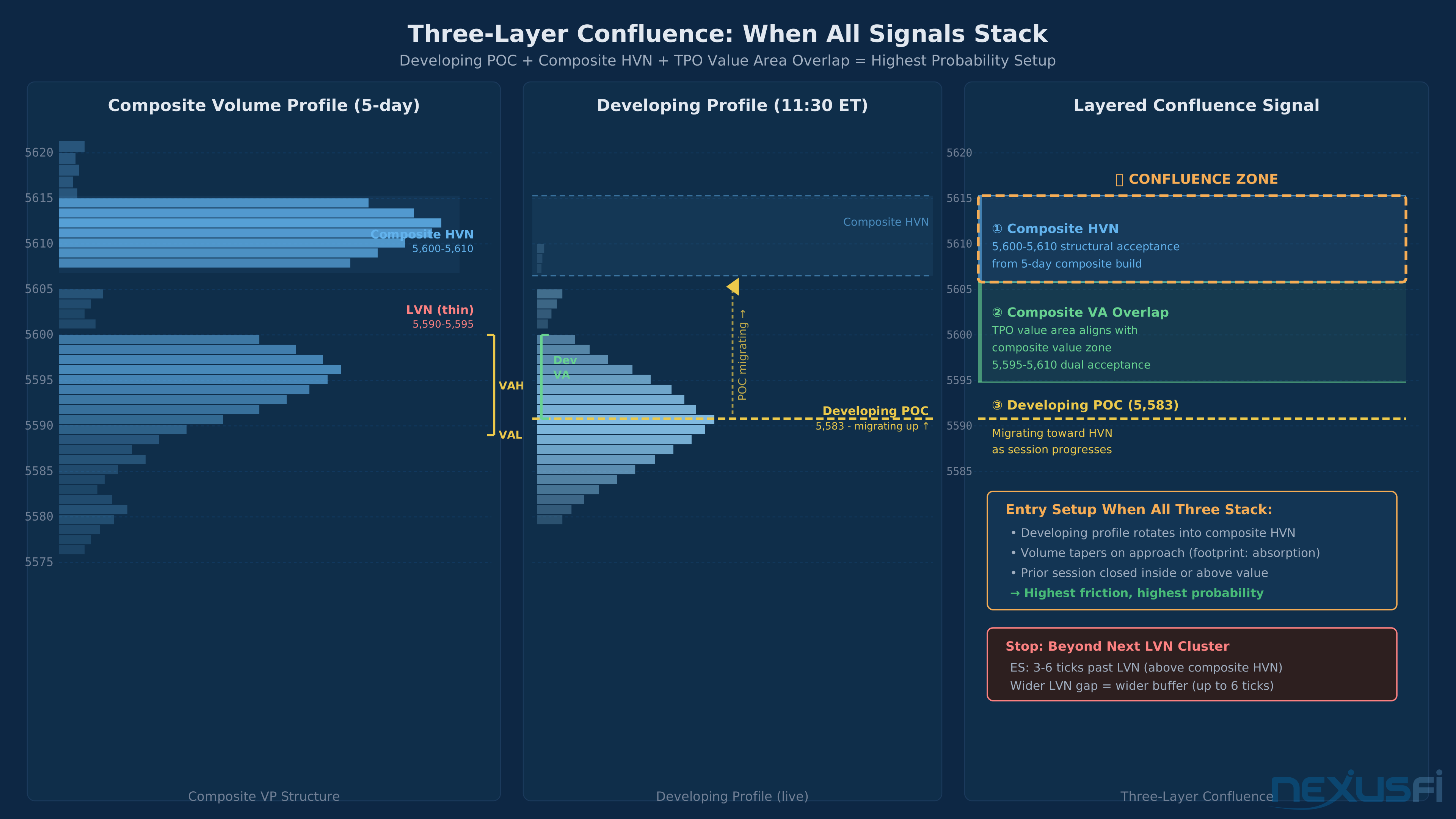
Confluence signals. The highest-probability setups stack three layers: the developing POC is migrating toward or aligning with the composite HVN, and the developing TPO value area overlaps with the composite value area. When developing POC, composite HVN, and overlapping TPO value all anchor at the same reference, institutional positioning is concentrated there. That's where friction is most reliable.
Failure signal. If the developing profile migrates through the composite HVN and closes beyond it — building TPO acceptance at what was resistance rather than rejection — the composite level is invalidated. Reset the anchor from the new acceptance zone. Don't fight the migration. A former HVN resistance that the market accepts becomes structural support on the next test.
ES example: composite HVN at 5,600-5,605, developing profile approaching from below at 11:30 ET with volume tapering, prior RTH close inside value, developing POC migrating up from 5,592. Valid short trigger against the HVN, stop at 5,610-5,612 (beyond the LVN cluster at 5,607). By 14:00, if the developing profile closes above 5,607 with building TPO count — reset the anchor, the composite level is stale.
Multi-Timeframe Composite Guidelines #
Composites work best when you match the timeframe to the question you are asking:
1-3 day composite: What is the current micro-structure? Where has immediate value formed? Useful for intraday traders setting directional bias and identifying the nearest HVN support/resistance.
5-10 day composite: Where is the weekly auction centered? This shows whether the market is in balance or trending. When the developing profile's POC diverges from the weekly composite POC, directional conviction is building.
20+ day composite: Where is monthly structural value? These levels act as magnets during mean-reversion phases and as launch points during breakouts. High-volume nodes on a 20-day composite rarely form by accident — they represent genuine institutional acceptance.
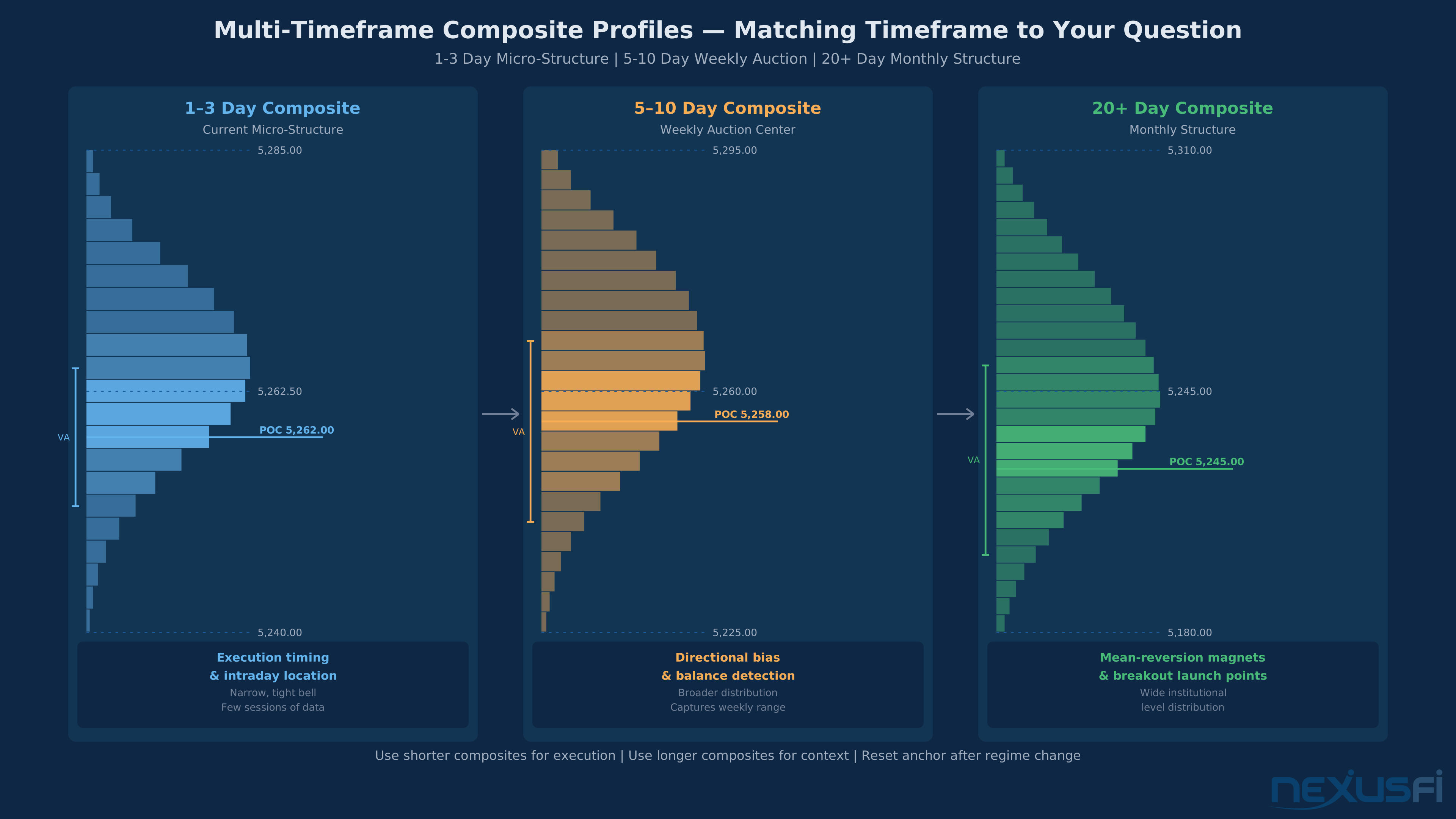
The key mistake traders make with composites is running them on autopilot. A "rolling 5-day" composite is meaningless if Monday brought a regime change. Always ask: has the context that produced this composite changed? If yes, reset the anchor.
Session Configuration: Quick Reference
- Confirm session boundaries before comparing levels — two traders looking at "the same level" are often on different maps
- ES/NQ: RTH-only primary profile (9:30-16:15 ET); keep overnight profile as a separate pre-open reference, don't merge
- CL: Blended 24H with visual RTH overlay; anchor on 9:00 ET open and 14:30 ET settlement window
- ZB/ZN: RTH-dominant; treat 8:30 ET data-release ETH levels as live structural context for the session ahead
- 6E/6J: Full 24H with separate timezone composites; the most reliable levels are where Tokyo, London, and NY sessions all agree on value
- Developing profile = execution timing. Composite = directional bias. Conflating them creates confusion — they answer different questions.
- Anchor composites to structural shifts, not calendar windows — a "rolling 5-day" composite that spans a regime change is misleading noise
Component of Volume Profile Trading
Knowledge Map
Prerequisites
Understand these firstGo Deeper
Build on this knowledgeReferences This Article
Articles that build on this topicCitations
- — Volume Profile and Footprint discussion (2012) 👍 118“A composite profile is made up of long periods of data, usually from the last major swing. Within the composite profile are High Volume Nodes and Low Volume Nodes. These refer to the distribution of the profile -- the peaks and valleys.”
- — Volume Profile and Footprint discussion (2012) 👍 9“I'm not a fan of using a 24 hr session value area and POC. The volume changes so drastically from the ON session into the RTH session.”
- — Do you use Market Profile or Volume Profile? (2012) 👍 9“The two are very similar in use with typically slightly different price levels of importance but both equally as useful. A TPO profile can offer different ideas vs. a volume profile and vice versa.”
- — ES vs S&P Cash with Market Profile (2013) 👍 13“The continuous contract like a stock split before a split no longer offers levels that reflect what positions are being measured against.”
- — Webinar: FuturesTrader71 (FT71) on Volume Profile (2012) 👍 7“Are these price levels overnight less valid simply because little ES volume traded there? Isn't it more logical to conclude that rather, the prices themselves reflect the real supply and demand?”
- — Market profile vs Volume profile (2021) 👍 4“For Market Profile I would only chart those regional hours. Whereas if charting the whole ETH 23hrs session I would use volume profile and not Market Profile.”
- — E-mini S&P 500 Futures Contract Specifications
- — Equity Quarterly Roll Analyzer
- — Does @ES daily chart include also overnight data? (2019) 👍 3“Roughly, you can break up the full 24-hour day into three sessions -- the Asian session (until about 2:00-3:00 AM ET), the European session (beginning about 3:00 AM ET), and the US/NY session (9:30 AM-4:00 PM ET). These sessions correspond to the different groups of investors/traders active during these times. There is a huge volume spike at the NY open.”