



Order Blocks in Futures Trading: How Institutional Price Memory Shapes Market Structure
Overview #
Order blocks are where futures markets store institutional price memory. The concept is straightforward but misapplied constantly: an order block (OB) is the last opposing candle before a significant directional move. If price surges up, the last down candle before that surge is the bullish order block. If price dumps hard, the last up candle before that drop is the bearish order block.
The reason order blocks matter is not mystical — it's mechanical. Large institutions cannot execute their full position in a single transaction without moving price against themselves. They accumulate over time, often in a specific price range. When price moves away from that range, their remaining resting orders sit there, waiting. When price returns, those orders fill — and price reverses. That's the mitigation.
What makes this worth learning: in ES and NQ futures, the highest-probability setups of the week consistently originate from order blocks formed during the London session and mitigated during New York RTH. The pattern repeats because the session structure repeats. The institutions involved don't change. Their order logic doesn't change. The price levels change, but the structure doesn't.
This article covers how to identify order blocks, filter for quality, combine them with fair value gaps for maximum edge, apply multi-timeframe alignment, and know when an OB has been invalidated. By the end, you'll have a systematic framework — not a loose concept.
What Is an Order Block? The Institutional Footprint Explained #
The term "order block" comes from the ICT (Inner Circle Trader) methodology, popularized by Michael Huddleston. The underlying logic, however, predates ICT — Wyckoff called it the "cause" that creates the subsequent "effect," and supply/demand traders have tracked similar zones for decades.
The key insight is institutional order size. When a major bank, hedge fund, or algorithmic trading desk wants to buy 5,000 contracts of ES, they can't put all 5,000 into the market at once. The act of buying that many contracts would immediately push price higher, costing them slippage on every lot. Instead, they:
- Accumulate quietly over time at specific price levels
- Push price away from those levels once their position is filled
- Return later (or let price return naturally) to fill any remaining orders
The accumulation zone — where they positioned before the impulsive move — is what we call the order block. The "last opposing candle before the impulse" is the best approximation of where institutional activity was concentrated.
Why specifically the last opposing candle?
Think about what's happening in the bars leading into an impulse move. In a bullish scenario, you see a series of red (bearish) candles as price consolidates or pulls back. Then, suddenly, a large green candle appears — price surges. The last red candle in that sequence represents the final area where sellers were in control and where buyers were accumulating below the surface. The transition from that candle to the impulse is the institutional footprint.
As the NexusFi thread "The S&P Chronicles — An Amalgamation of Wyckoff, VSA and Price Action" noted when discussing similar dynamics: "They need supply so they can make their buys into the market — when price re-approaches that zone, there's too much old trading activity to work through without a reaction."
This is the order block thesis in plain language: old trading activity creates structural memory.
Mitigation vs. Revisit
When price returns to an order block, it's called mitigation — the institutional orders that couldn't be filled on the first pass are now being filled at the same price level. This creates the bounce. Once those remaining orders are filled, the zone is "mitigated" — it loses its structural significance for future trades.
This is why order blocks, unlike horizontal support/resistance levels, are one-use tools. The first retest carries the full institutional order bank. The second visit has fewer orders. By the third or fourth visit, the zone is basically depleted and price tends to trade through without reaction.
The Mechanics: Bullish Order Blocks #
A bullish order block forms during a bearish sequence — a series of red candles preceding an aggressive upward move. The specific candle that qualifies is the last bearish candle (or sometimes the last two) before the impulsive move upward.
How to identify it:
- Find a strong bullish impulse — a candle or sequence of candles that aggressively moves price higher
- Look left — find the last bearish candle immediately before that impulse begins
- Mark the full candle body (from open to close) as your order block zone
- The body, not the wick, defines the zone
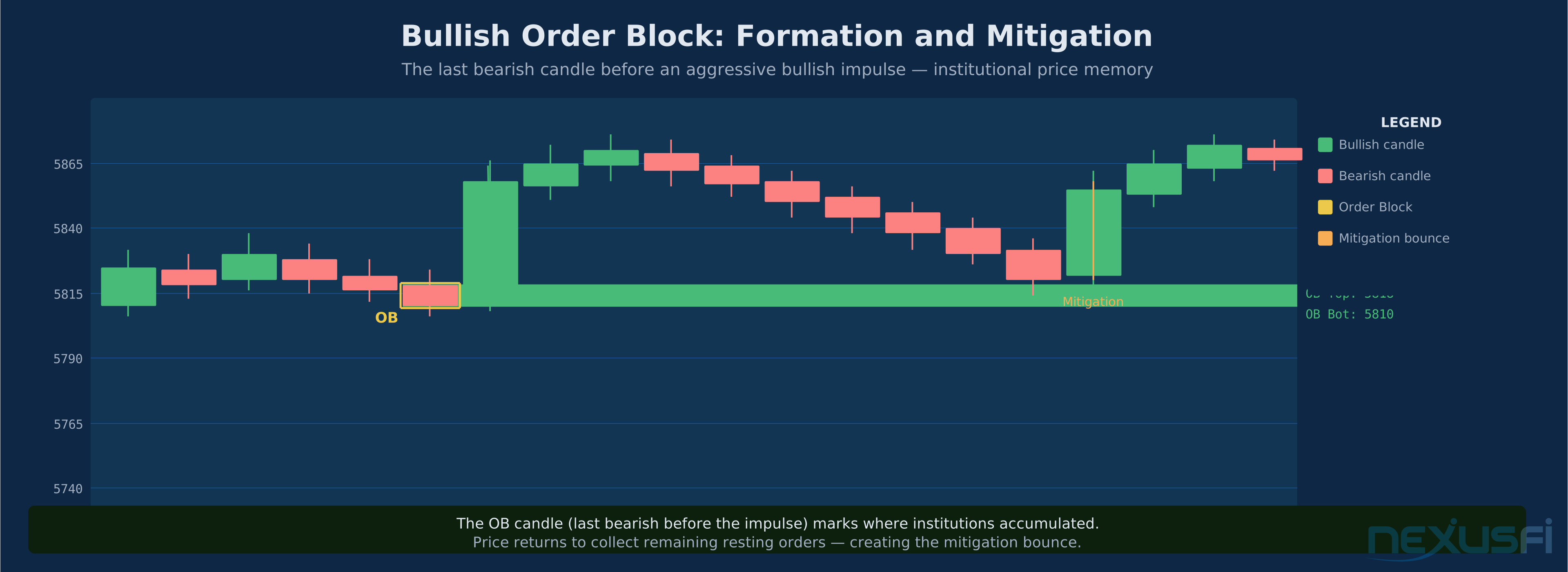
The image above shows the structure clearly. The bullish OB (highlighted with gold borders) is the last red candle before the large green impulse candle. The green zone then spans the remainder of the chart — institutional orders sit in that range. When price returns during the pullback sequence (the "mitigation" move), it enters the OB zone and bounces.
What happens at the OB during mitigation: When price returns to a bullish OB, you're watching the institutional buy orders that weren't filled on the initial push finally getting executed. The demand absorbs the selling pressure, stops the pullback, and reverses price back upward. If the OB zone is valid and unmitigated, the bounce is typically clean — often leaving a clear reversal candle pattern (pin bar, engulfing, or displacement) at the OB level.
The zone boundaries:
- Upper boundary: The open of the bearish OB candle (or the higher of open/close)
- Lower boundary: The close of the bearish OB candle (or the lower of open/close)
Some practitioners include the entire candle body including wicks for a "wider" OB zone, but the body definition provides better precision and tighter stops. Stick with bodies unless you're trading on a very high timeframe where wick inclusion makes structural sense.
Session relevance in ES/NQ: Bullish OBs formed during the London session (02:00--09:30 EST) carry the most weight for New York RTH trades. This is because London institutional flow creates the OB with real order size behind it. The NY morning session (09:30--11:00 EST) then provides the mitigation when retail stops are hunted and the institutional bid absorbs the selling.
Bearish Order Blocks: The Mirror Setup #
A bearish order block forms during a bullish sequence — the last green candle before an aggressive downward move.
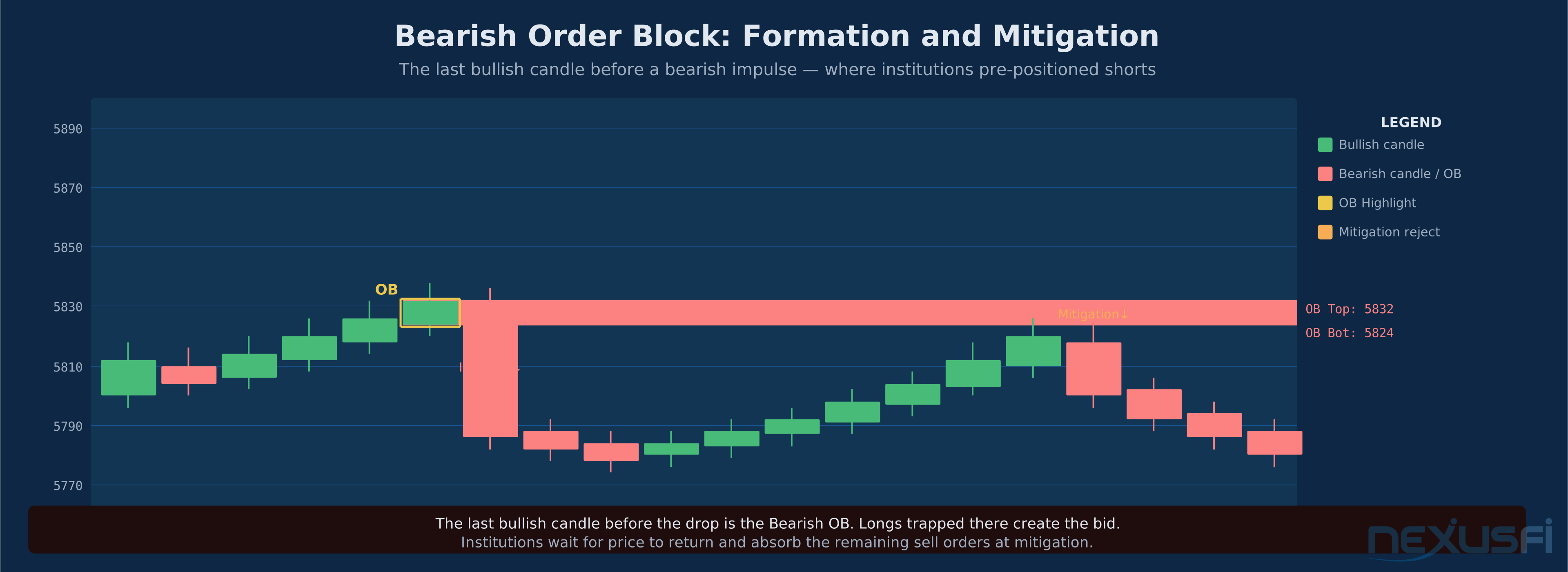
The logic is identical but inverted. Before a major drop, institutions were pre-positioning shorts in a specific range. The last bullish candle before the impulse represents where sellers were concentrated. When price rallies back into that zone, institutional sell orders are triggered, and price reverses lower.
Critical distinction: the bearish OB is a supply zone where institutions placed their short positions. The trapped longs from that candle also create mechanical selling pressure when price returns — their stop-losses trigger as the market visits that area again, adding fuel to the rejection.
NexusFi forum member @Miesto, in the "Trade Breakdowns and Other Musings" thread, described this dynamic directly: "Liquidity is provided by resting stop orders. Buy stop orders above the market from the short." When price sweeps through an OB zone from the bearish side, the stops of trapped buyers provide the fuel for continued downside.
Where bearish OBs are most significant:
- At the top of a range after a strong rally
- After a Break of Structure to the downside (price takes out a significant swing high and then forms a bearish OB on the pullback)
- During the London session before NY opens with a red day
- At psychological price levels (round numbers, previous day highs, weekly highs)
Order Block Quality: The 7-Point Filter #
Not all order blocks deserve your attention. Trading every OB you can draw on a chart is a reliable way to blow up an account. The institutional significance varies dramatically based on context — a mid-range OB in a consolidation is functionally meaningless, while an OB at the high of a key swing after a Break of Structure is exactly where the edge lives.
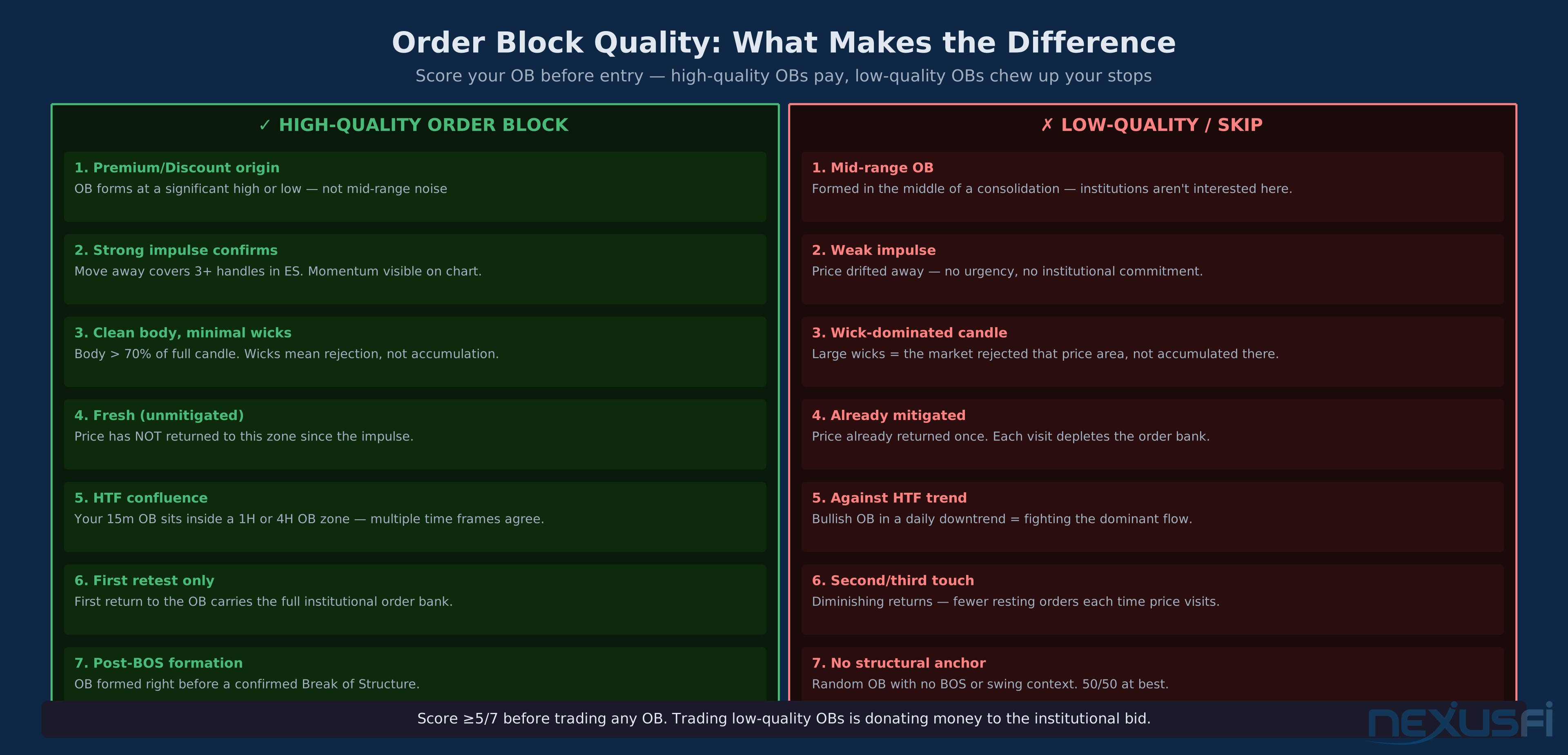
Quick OB Pre-Screen (3-5-7 Rule): Does the impulse move at least 3x the OB body height? Is the OB fresh (5+ bars unmitigated)? Is the body 70%+ of the candle's range? If yes to all three, run the full 7-point filter. This fast screen eliminates noise when time is short.
The 7-point quality filter:
1. Premium/Discount zone origin The OB should form when price is at an extreme — near a significant swing high (for bearish OBs) or swing low (for bullish OBs). An OB forming in the middle of a range has no structural anchor. Institutions don't randomly accumulate at mid-range — they accumulate when price is at an extreme they believe is favorable. In ICT terms: bullish OBs form in discount zones (below equilibrium), bearish OBs form in premium zones (above equilibrium).
2. Significant impulse follows The move away from the OB must be aggressive. In ES terms: a minimum of 8-10 points in the impulse candle, with volume confirmation if you're using volume data. Weak drifts away from a candle don't indicate institutional conviction — they indicate a random market structure move. The impulse needs to look like someone had to go somewhere in a hurry.
3. Clean body, minimal wicks The OB candle itself should have a body that dominates the full range. If the candle is wick-heavy (more than 40% of total range in wicks), it indicates rejection at those levels rather than accumulation. Rejection zones and accumulation zones look different on a chart — bodies = accumulation, wicks = rejection.
4. Fresh (unmitigated) If price has already returned to the OB zone once, the institutional order bank has been at least partially depleted. A mitigated OB is not the same as a fresh OB. Some traders take second entries into OBs, but the statistical edge is much lower. First retest only for maximum probability.
5. Higher timeframe confluence A 15-minute OB sitting inside a 4-hour OB zone, which is sitting inside a daily OB, is a stacked confluence trade. The institutional interest at multiple timeframe levels creates a layered demand or supply concentration. This is where the truly clean trades come from. A 15m OB with no higher-timeframe context is just a noise trade.
6. First retest Institutional orders deplete with each visit to the zone. First visit = full order bank. Second visit = partial depletion. Third visit = minimal orders remaining. The count resets when a significant structural shift occurs, but in general, you want the first retest only.
7. Structural context: Post-BOS formation The most powerful OBs form immediately after a Break of Structure — when price has just violated a significant swing, created a structural shift, and is now forming the accumulation zone that will fuel the continuation move. The combination of BOS + OB on the same timeframe with HTF confluence is as close to high-probability as futures trading gets. See the companion article Market Structure Shifts and Break of Structure (BOS) in Futures Trading for the full BOS framework.
The Confluence Edge: Order Blocks and Fair Value Gaps #
Here's where order blocks go from good to great: when an OB body overlaps with a Fair Value Gap (FVG).
A Fair Value Gap is a three-candle pattern where the middle candle moves so aggressively that there's no overlap between candle 1's high and candle 3's low (for bullish FVGs) or candle 1's low and candle 3's high (for bearish FVGs). The gap represents an imbalance — price moved so fast that orders couldn't fill at every level. These unfilled zones act as magnets: price is statistically drawn back to fill them.
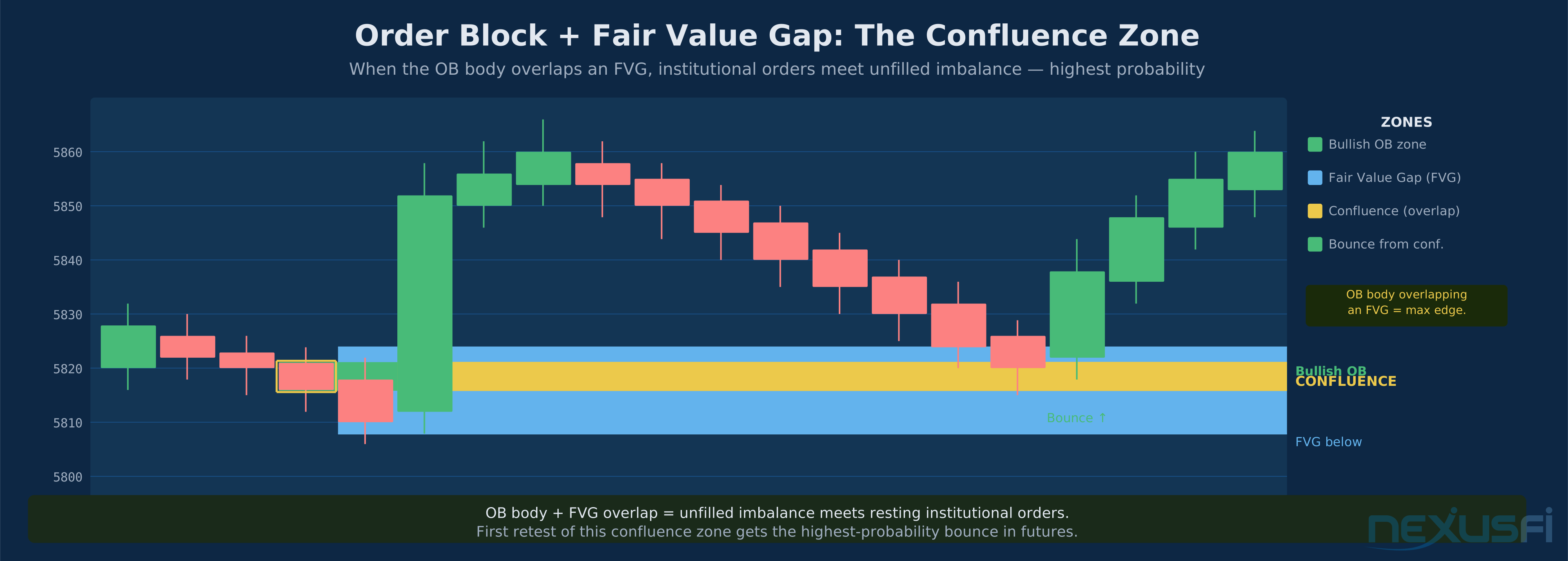
When the body of an OB overlaps with an FVG, you have two independent structural phenomena pointing to the same price zone:
- The OB says: "institutional orders are resting here"
- The FVG says: "price needs to return here to fill the imbalance"
Both pull price toward the same area from different mechanisms. The result is a high-conviction setup that tends to produce cleaner entries and stronger bounces than either structure alone.
Identifying the OB + FVG confluence:
- Find the bullish OB (last bearish candle before impulse)
- Look at the impulse candle sequence — does the impulse create a three-candle FVG pattern?
- Identify where the FVG sits relative to the OB body
- Mark the overlap zone — this is your highest-probability entry area
- Enter on the first retest of the overlap zone
In ES/NQ terms: This pattern appears most frequently when London creates a significant displacement — a large impulsive move that creates both the OB and an FVG in a single sequence. The NY morning session's pullback then mitigates both simultaneously. If you catch the first retest of the OB + FVG confluence zone during the 09:30--11:00 EST window, you're looking at one of the cleanest structural setups in futures trading.
The math: As NexusFi member @llmflyfisher noted in the "Is anything better than order flow?" thread: "I like to keep an eye on the volume profile for clues relative to where price is in each individual auction." Combining volume profile with OB + FVG zones adds a third confirmation layer — when the OB, FVG, and a low-volume node (LVN) all stack at the same price, the edge compounds further.
Multi-Timeframe Alignment: The Three-Stack Rule #
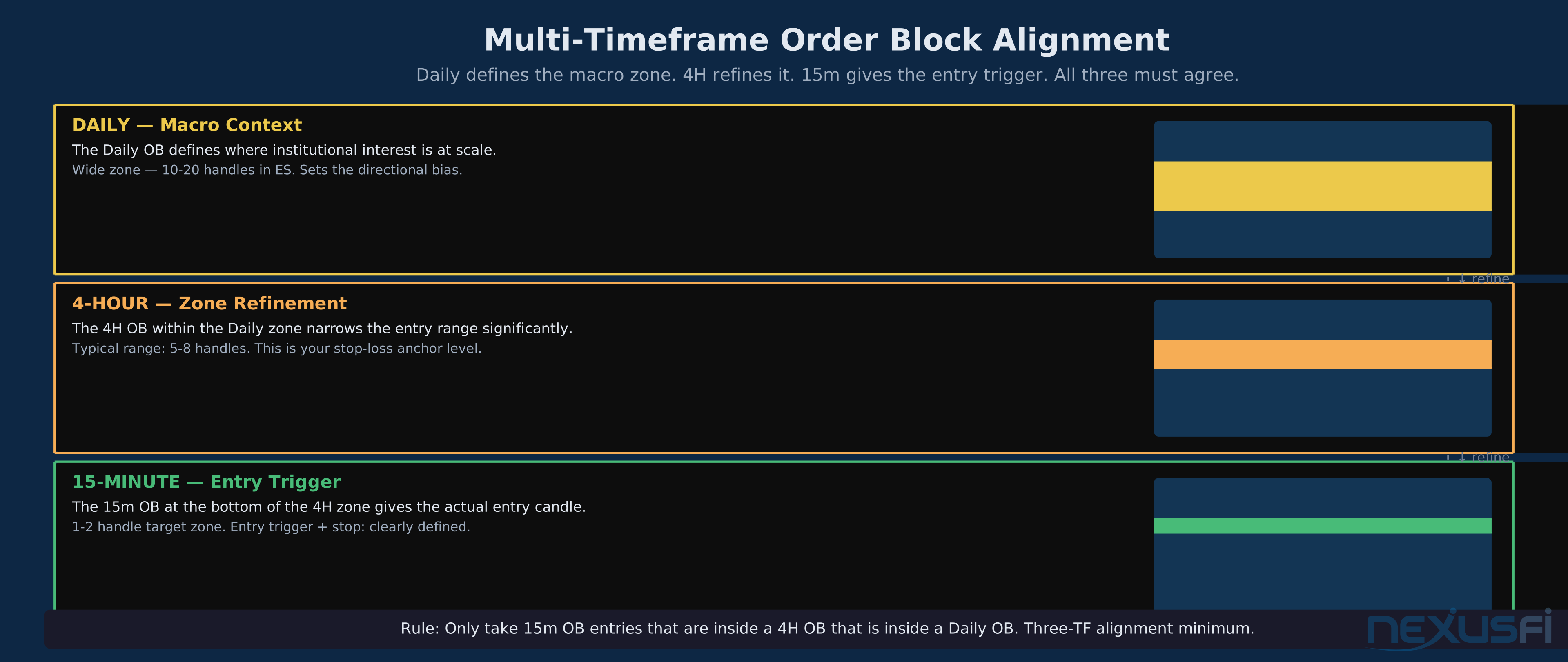
Trading order blocks on a single timeframe in isolation is how traders lose money to random noise. The structural significance of any OB is only as strong as its higher-timeframe context. The professional workflow is a top-down cascade:
Step 1: Daily — Set the Macro Bias Start on the daily chart. Identify the prevailing trend direction (higher highs/higher lows or lower highs/lower lows). Find the most significant unmitigated daily OBs — these define where institutional interest exists at the macro level. A daily bullish OB below current price defines the downside target for major pullbacks. A daily bearish OB above current price defines where rallies will likely stall.
Step 2: 4-Hour — Refine the Zone Within the daily OB, look for a 4-hour OB that sits inside the daily zone. This narrows your active entry range from 10-20 handles to 5-8 handles. The 4H OB is your structural anchor for stop placement — invalidation of the 4H OB means your trade thesis is dead regardless of what the daily says.
Step 3: 15-Minute — Entry Trigger Within the 4H OB zone, look for a 15-minute OB at the bottom of the zone (for bullish trades) or at the top of the zone (for bearish trades). This is your actual entry candle — the precise level at which you enter, set your stop, and target the next higher-timeframe liquidity pool.
The three-stack rule: Only take trades where all three timeframes agree. Daily bias + 4H zone + 15m trigger. If any of the three is missing or contradictory, pass. There will be another setup.
Practical implementation in ES:
- Set your daily bias at the weekly open (Sunday 18:00 EST)
- Mark daily OBs visible on the weekly lookback
- On the 4H chart, identify which daily OB is the active target zone
- On the 15m chart during RTH, wait for price to enter the 4H zone and show a 15m OB formation
- Enter on the first candle body that closes in the 15m OB direction after mitigation begins
Time required: Getting to the point where you're reading the three-stack in real time takes deliberate practice. Most traders spend 6-12 months reading chart histories before the pattern recognition becomes automatic. The structure is consistent enough that with enough repetitions, your eye learns to identify the stack in seconds.
Order Block Invalidation: When the Bid Is Gone #
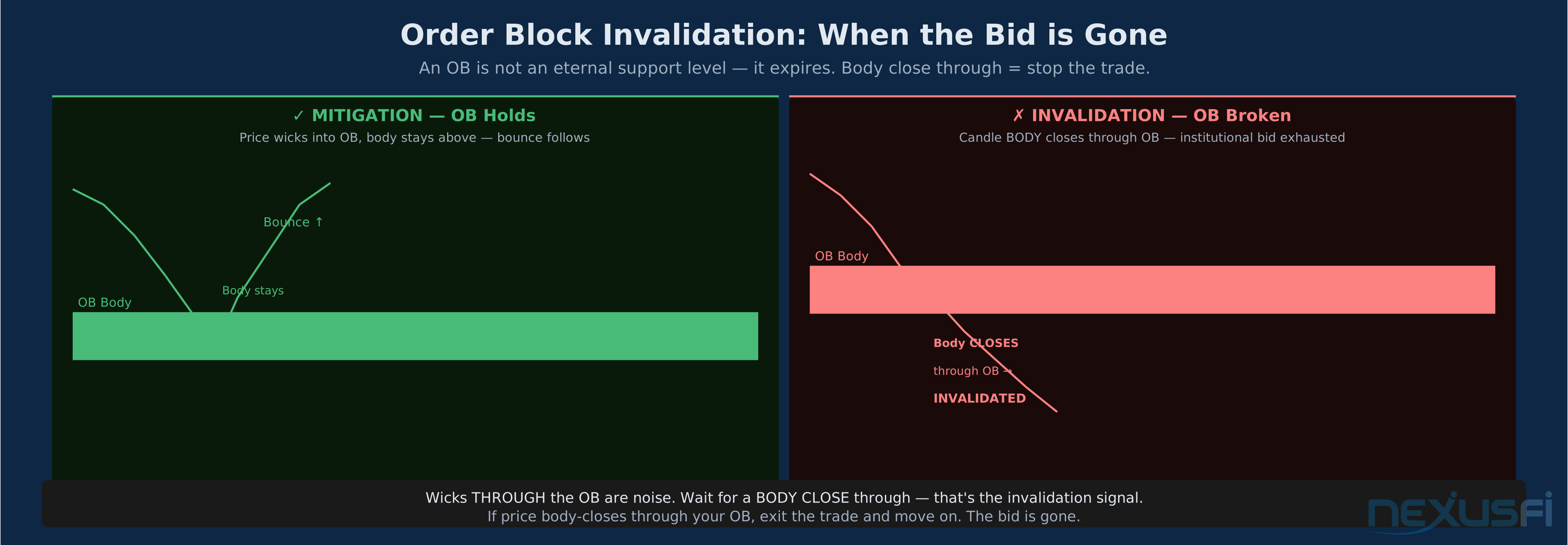
Understanding when an OB is no longer valid is as important as identifying the OB in the first place. Trading an invalidated OB is how clean setups turn into blown stops.
The invalidation rule: An order block is invalidated when a candle body closes through the OB body on the formation timeframe. Wick penetrations are not invalidations. Only body closes matter.
Why wicks don't count: Wicks represent the range of price exploration during a candle — the tentative probing of liquidity at a level. The wick closing back inside or above the OB means price tried to break through and failed. That's actually a confirmation of the OB's strength, not a sign of failure. It's the body that tells you where the market committed: where buyers and sellers agreed to transact at the end of that candle's period.
When a candle body closes through the OB — especially if the close is below the OB low for a bullish OB, or above the OB high for a bearish OB — the institutional bid at that level has been exhausted. The buyers who were defending that zone have been overwhelmed by selling pressure. Price will not be returning to that level looking for the institutional bid, because the institutional bid is no longer there.
Secondary invalidation criteria:
- Time-based decay: An OB that has been "alive" for more than 5 trading days without being mitigated loses significance. Institutional positioning shifts; the original orders may have been moved elsewhere. Treat old OBs with skepticism.
- Structural re-labeling: If the market creates a new significant low below a bullish OB's reference swing, the OB's structural anchor is gone. Relabel based on the new structure.
- Multiple wicks without rejection: If price wicks through the OB zone 3+ times without a clean bounce, the institutional bid at that level is being depleted gradually. The "exhaustion by attrition" pattern often precedes a clean break through the zone.
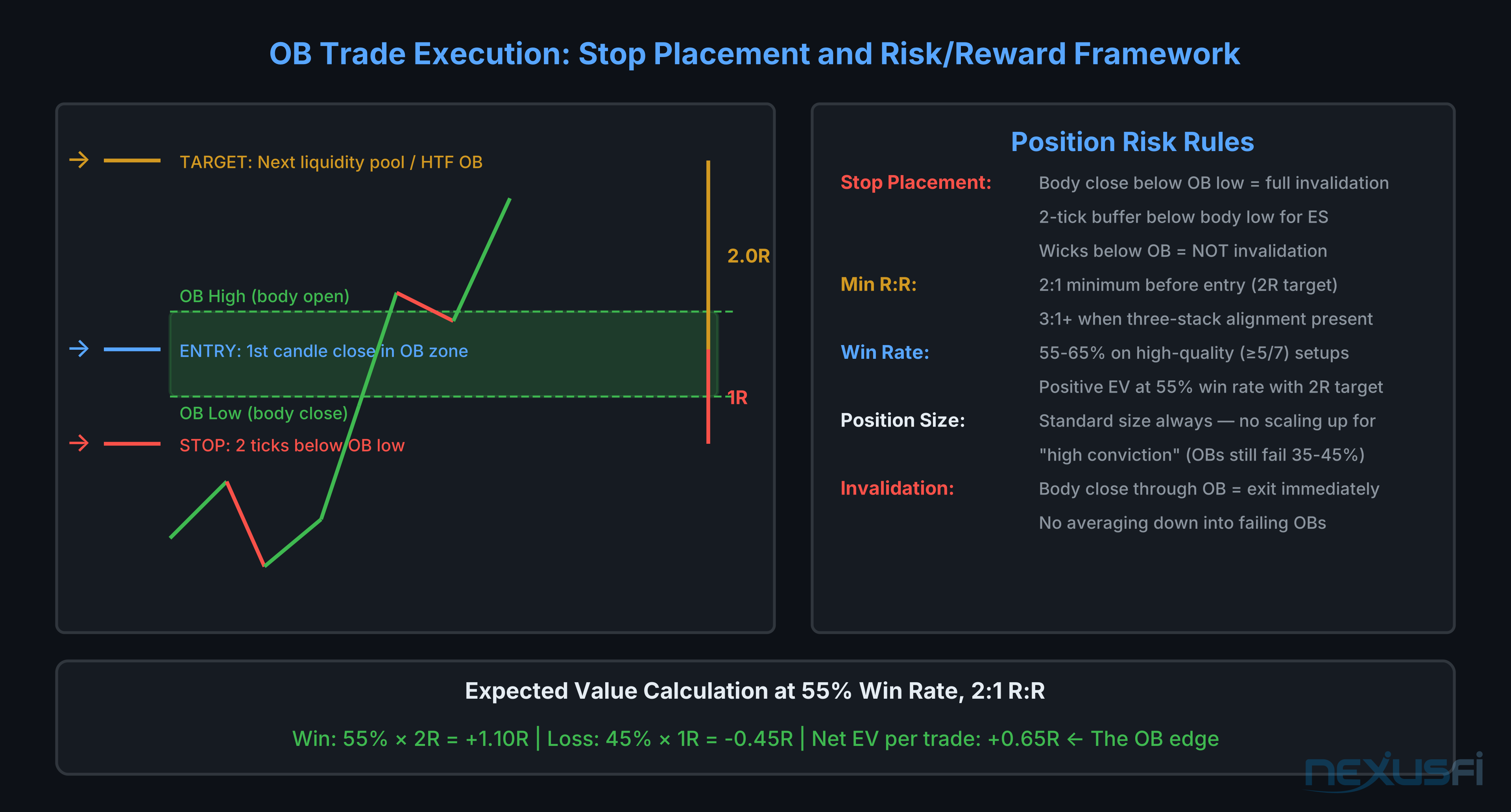
Risk management implication: For futures traders using OBs as entry triggers, stop placement is straightforward: put your stop a few ticks below the OB low (for bullish OBs) or above the OB high (for bearish OBs). If the body closes through your stop, you're out of the trade. The OB is gone. This produces stops that are meaningful (not so tight that random noise stops you out) and precise (not so wide that the trade is dead before you can get out).
Session Timing and ES/NQ Practical Application #
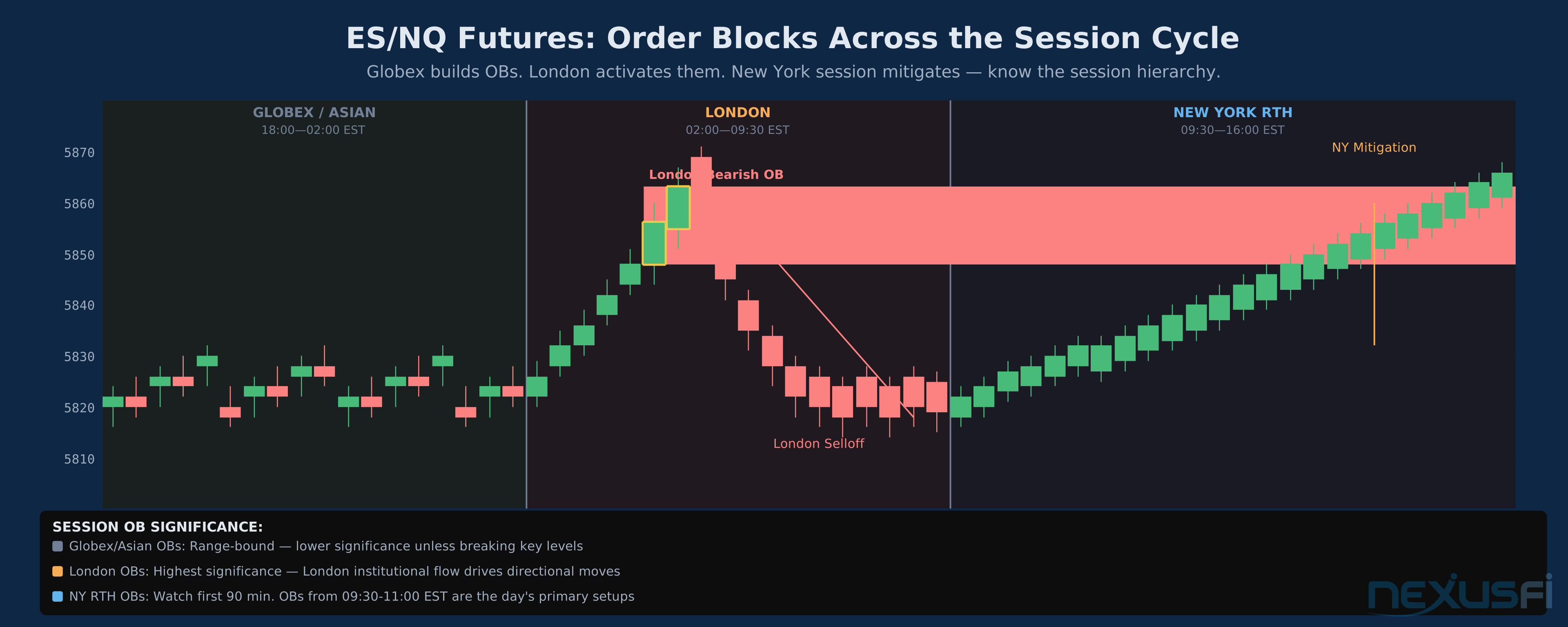
Order blocks in ES and NQ futures operate within the session cycle. Understanding which session creates the most significant OBs — and which session provides the mitigation — dramatically improves trade selection.
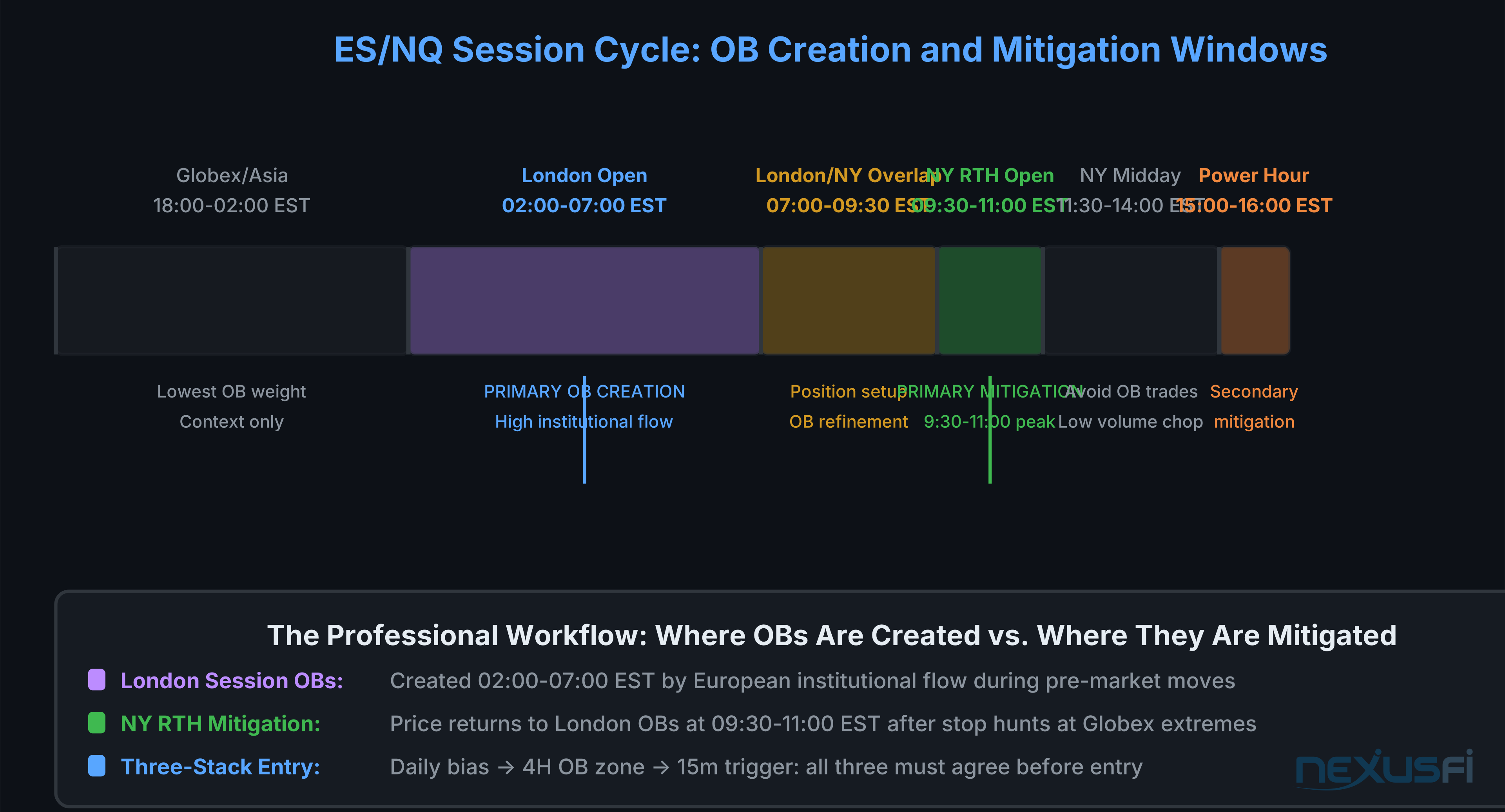
London (02:00--09:30 EST) — Primary OB generator London is the highest-volume session for creating structurally significant OBs. The "London run" — the aggressive directional move that often occurs between 02:00 and 07:00 EST — creates the impulse that defines the day's key OBs. If London creates a bullish OB on a sweep of Asian lows, that OB is the primary target for the NY session.
As the Jigsaw Trading discussion thread on NexusFi observed: "Someone using order flow would not... use order flow are not just switching on a DOM at the start of the day and just trading off the bids and offers. You need to know where you are in the grand scheme of things." The London OB is "the grand scheme of things" for the subsequent NY session.
New York RTH (09:30--11:00 EST) — Primary mitigation window The first 90 minutes of RTH are the highest-probability mitigation window. The gap between the London close and NY open creates the conditions for price to return and fill the morning's OBs. The NY open often triggers a sweep of Globex lows/highs (hunting retail stops) before reversing into the London OB zone.
The Globex/Asian session (18:00--02:00 EST) — Context only Asian session OBs have the lowest structural weight in ES and NQ. The volume is thin, institutional positioning is limited, and the moves are often random noise relative to the macro picture. Track Asian range highs/lows as liquidity pools, but don't build your primary trading around Asian OBs unless they align with strong HTF context.
The first 90-minute rotation (09:30--11:00 EST) setup: This is the bread-and-butter setup for ES/NQ order block trading:
- London creates a bearish impulse and forms a bearish OB at the high
- The early NY session sweeps the previous day's high (clearing buy stops)
- Price enters the London bearish OB zone
- A 15m OB forms within the London OB zone during this sweep
- Price reverses from the confluence zone and sells off for the rest of the morning
The mirror setup (London bullish OB, NY morning sweep of lows, mitigation bounce) occurs with similar frequency on bullish days.
Avoiding the midday chop (11:30--14:00 EST): Order blocks formed during NY midday have the lowest statistical follow-through of any session window. Volume drops much, and algorithmic activity creates choppy, two-sided action that invalidates OBs almost as fast as they're created. Pass on midday OBs unless they're at extreme levels (previous day high/low, weekly pivots, daily OBs).
The power hour (15:00--16:00 EST): End-of-day order flow creates another high-probability OB mitigation window. Institutions balance their books before close, which creates final directional moves that often revisit morning OBs. The 14:30--15:00 EST setup (positioning before the final hour) is a reliable entry point if a morning OB remains unmitigated.
Order Blocks vs. Other Structural Concepts #
Traders new to order blocks often conflate them with supply/demand zones, support/resistance levels, and Wyckoff spring/upthrust patterns. Here's how they differ:
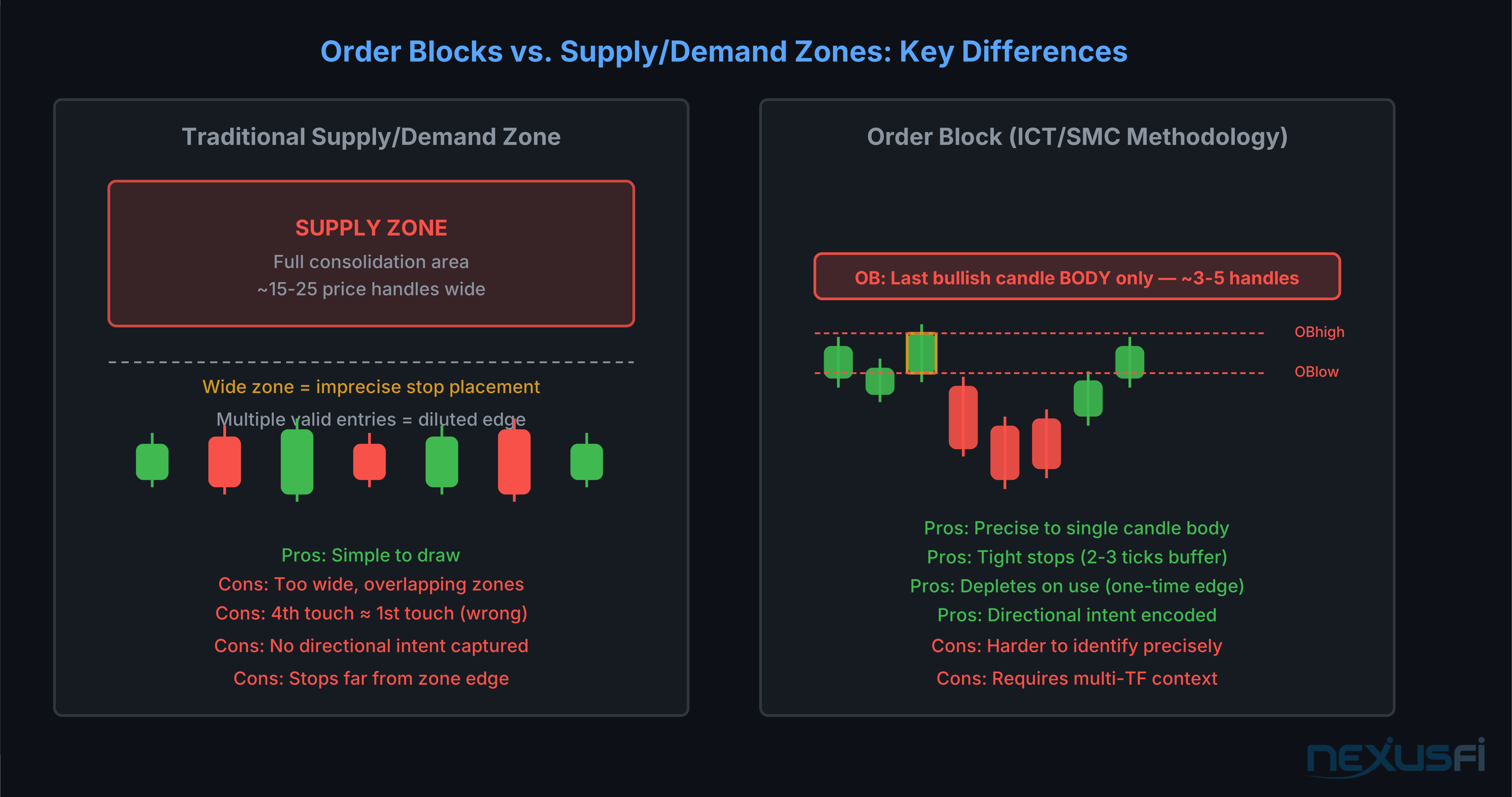
Order Blocks vs. Traditional Support/Resistance Traditional S/R draws horizontal lines at previous highs and lows. OBs are defined by candle bodies, not just price levels. The candle body definition incorporates the open-close relationship — the commitment zone — rather than just the extreme prices touched. This makes OBs more dynamically relevant than static horizontal lines that don't account for the directional intent of the candles at those levels.
Order Blocks vs. Wyckoff Spring/Upthrust The Wyckoff Spring is a fake break of support in a Wyckoff accumulation phase — conceptually adjacent to a bullish OB mitigation. The "spring" occurs when price dips below support, shaking out weak longs, then reverses. An OB mitigation often looks like a Wyckoff spring in real time. The key distinction: Wyckoff uses a broader accumulation phase analysis, while OBs are specifically identified by single-candle patterns. They're complementary, not competing.
The NexusFi post from @DbPhoenix in the "Wyckoff In The Original" thread captures the conceptual overlap: "Some of these people are going to try to sell if and when price re-approaches that zone. This is the basis of resistance. There's just too much old trading activity to work through." This applies equally to OB theory — the "old trading activity" IS the order block.
Common Mistakes and How to Avoid Them #
Mistake 1: Drawing OBs mechanically without context Traders run through charts marking every "last opposing candle before a move" regardless of whether the move was significant. Not every candle sequence qualifies. The impulse following the OB candle must be meaningful — aggressive, large range, ideally on high volume. Weak drifts away don't create real OBs.
Fix: Set a minimum impulse threshold. In ES: 8 points minimum single-candle impulse on the 15m chart. In NQ: 30 points. Below these thresholds, pass on the OB.
Mistake 2: Trading mitigated OBs as if they're fresh Once price has returned to an OB zone, that zone is no longer fresh. Many traders continue to trade OBs that have already been visited, treating them as standard support/resistance. The institutional order bank depletes with each visit.
Fix: Mark each OB visit. After the first retest, downgrade the OB to a "structural reference" level — aware of it, but not actively trading it. After two retests, remove it from your active watchlist.
Mistake 3: Stop placement too tight Setting stops inside the OB body (rather than below the OB low) results in getting stopped out by wick penetration before the real move starts.
Fix: Stop goes below the OB low (for bullish OBs) with a 1-2 tick buffer. In ES, that means at minimum a 4-6 tick stop below the OB low. This accommodates the normal wick penetration without triggering on noise.
Mistake 4: Ignoring higher timeframe context Trading every 15m OB regardless of daily bias or 4H structure is the fastest way to take trades against institutional flow.
Fix: Enforce the three-stack rule. No 15m OB trade without 4H alignment. No 4H OB trade without daily alignment. If the stack isn't complete, pass.
Mistake 5: Trading OBs against the session Bullish OBs during London's bearish morning run are fighting the session flow. Even valid OBs work against you when session dynamics are opposed to your direction.
Fix: Know the daily and session bias before every trade. A bullish OB setup during a clearly bearish London session requires additional confirmation — liquidity sweep completion, BOS on the 5m, and HTF alignment — before it's worth taking.
Mistake 6: Confusing wicks and bodies Using the candle wick as the OB definition instead of the body produces imprecise zones that overlap each other and generate unclear signals.
Fix: Body only. Mark from candle open to candle close. If you want a wider zone to account for wick liquidity, add a "wick zone" as a secondary reference — but enter on the body zone, not the extended wick level.
Trade Execution Checklist #
A systematic approach produces consistent results. Before executing any order block trade, run through this sequence:
- [ ] Daily bias established (bullish or bearish structure)
- [ ] Significant daily OBs identified and labeled (fresh vs. mitigated)
- [ ] Key liquidity pools marked (previous day high/low, weekly extremes, equal highs/lows)
- [ ] Session timing noted (what time does London open, what time is NY RTH)
Setup identification (per trade):
- [ ] Significant impulse identified (minimum threshold met)
- [ ] Last opposing candle located — this is the OB
- [ ] OB body boundaries marked (body high and body low, no wicks)
- [ ] OB status: fresh (not previously visited)
- [ ] Higher TF alignment confirmed: 4H and daily agree with direction
- [ ] FVG check: does the OB overlap with an FVG? (add to confluence if yes)
- [ ] OB quality score: ≥5/7 on the quality filter
Entry and risk:
- [ ] Entry: First candle close inside OB zone after price has entered from outside
- [ ] Stop: Below OB low (bullish) or above OB high (bearish), plus 1-2 tick buffer
- [ ] Target: Next significant liquidity pool or HTF OB on the opposing side
- [ ] Risk/Reward: Minimum 2:1 before taking the trade
- [ ] Position size: Standard position (no scaling up for "high conviction" trades)
Post-trade:
- [ ] Record the OB ID and timeframe
- [ ] Mark the OB as "mitigated" after price visits
- [ ] Track outcome (bounce vs. break-through) for personal statistics
Most professional OB traders find, over hundreds of samples, a 55-65% win rate on high-quality (≥5/7 filter score) first-touch setups. The 2:1+ risk/reward means even at 55% wins, the system is much positive expectancy. The edge is real — but only with disciplined filtering.
Connecting Order Blocks to the Broader ICT/SMC Framework #
Order blocks are one component of a larger analytical framework often called ICT (Inner Circle Trader) or Smart Money Concepts (SMC). To understand where OBs fit in the full picture:
The framework sequence:
- Liquidity sweeps — Price takes out obvious stop clusters (above equal highs, below equal lows) to fuel the institutional position
- Displacement — The aggressive impulsive move that follows the sweep, creating the OB and often an FVG
- Order block formation — The last opposing candle in the sequence becomes the OB
- Retracement into OB — Price pulls back to the OB zone during the "mitigation" phase
- Continuation — Price resumes in the original impulse direction after filling the institutional orders
When you see this full sequence in real time — sweep, displacement, OB formation, retracement, continuation — you're watching the complete institutional playbook. The setup identification in this article targets step 4 (the OB retracement), but understanding steps 1-3 is essential for context.
Related reading:
- Market Structure Shifts and Break of Structure (BOS) in Futures Trading — the structural prerequisite for high-quality OBs
- Fair Value Gaps and Price Imbalances — the FVG confluence layer
- Overnight Inventory and Globex Sessions — session context for OB formation and mitigation timing
- Footprint Charts: Reading the Bid-Ask Volume — volume confirmation for OB quality assessment
The complete framework ties these concepts into a coherent system. Order blocks without structural context are just pattern-matching. Order blocks within the full sequence — with session timing, liquidity sweep confirmation, FVG confluence, and multi-timeframe alignment — are the high-probability trades that professional futures traders execute daily.
Knowledge Map
Go Deeper
Build on this knowledgeReferences This Article
Articles that build on this topicCitations
- — The S&P Chronicles - An Amalgamation of Wyckoff, VSA and Price Action (2017) 👍 9“They need supply so they can match their orders. If for example they had an inventory of 50k contracts to fill, they need sellers to emerge to fulfil their quota.”
- — Day Trading Support/Resistance Levels on the E-Mini S&P500 Futures (2012) 👍 17“Smart money. Fancy that. They buy all the way up. Large players moving the 'line in the sand' up as a move is under way. They don't just buy at the bottom where the wholesale price is.”
- — Wyckoff In The Original (2013) 👍 16“Some of these people are going to try to sell if and when price re-approaches that zone. This is the basis of resistance. There's just too much old trading activity to work through.”
- — Trade Breakdowns and Other Musings (2023) 👍 6“Liquidity ($$) is provided by resting stop orders. Buy stop orders above the market from the short sellers and sell stop orders from the buyers below the market.”
- — Is anything better than order flow? (2022) 👍 2“I like to keep an eye on the volume profile for clues relative to where price is in each individual auction. Bar end testing on 30 min and 15 min bars can really tell a trader a lot about supply and demand zones.”
- — Day Trading Support/Resistance Levels on the E-Mini S&P500 Futures (2012) 👍 37“People that use order flow are not just switching on a DOM at the start of the day and just trading off the bids and offers. You need to know where you are in the grand scheme of things.”
- — Day Trading Support/Resistance Levels on the E-Mini S&P500 Futures (2012) 👍 70“The most commonly played areas to trade off also tend to be those that are the most visually appealing. These are the areas with the highest participation of inexperienced traders.”
- — Day Trading Support/Resistance Levels on the E-Mini S&P500 Futures (2012) 👍 41“The more often it bounces off a level, the more stops build up the other side of the range and the more confident the inexperienced traders are to take a bounce off the level.”
- — Stop Hunts - Are they really what the name entails? Or is there more to them? (2019) 👍 7“The best way to think about a stop hunt is to call them liquidity sweeps. Large traders, who are loaded with profitable longs or shorts opened a while back, need large areas of liquidity to exit their positions.”
- — Stop Hunts - Are they really what the name entails? Or is there more to them? (2019) 👍 10“Stop hunting is caused by different types of activity. One type of activity is when the liquidity provider can take advantage of retail order flow by triggering stops and profiting from the move.”