



Supply and Demand Zones in Futures Trading: The Institutional Methodology
Overview #
Most traders draw supply and demand zones the same way: find a swing high, shade a box, wait for price to return, buy or sell. It feels right. The zones look clean on a chart. And then price slices through them like they don't exist.
The problem isn't the concept. Supply and demand zones are real. Institutions do leave resting orders at specific price levels. Price does return to those levels and react. The problem is almost always the execution — drawing zones too wide, entering too early, ignoring whether the zone is fresh or exhausted, and skipping the one step that turns a pretty rectangle into an actual edge: order flow confirmation.
This article covers the complete methodology for supply and demand zones in futures trading — how they form, how to identify high-probability ones, how to validate them with volume profile, when to actually enter, and the specific differences between trading zones on ES, NQ, and crude oil. The approach here is the institutional-style workflow that treats zones as dynamic liquidity bands, not static lines.
Key Concepts #
Supply Zone — A price area where sellers have historically been aggressive enough to push price lower. In structural terms, it's where an institution distributed (sold) inventory. The zone marks where resting sell orders may remain.
Demand Zone — A price area where buyers have historically been aggressive enough to push price higher. Where an institution accumulated (bought) inventory. Resting buy orders may defend this area.
Rally-Base-Drop (RBD) — The three-phase pattern that creates a supply zone: price rallies to an area, consolidates in a "base," then drops aggressively. The base becomes the supply zone because that's where the distribution happened.
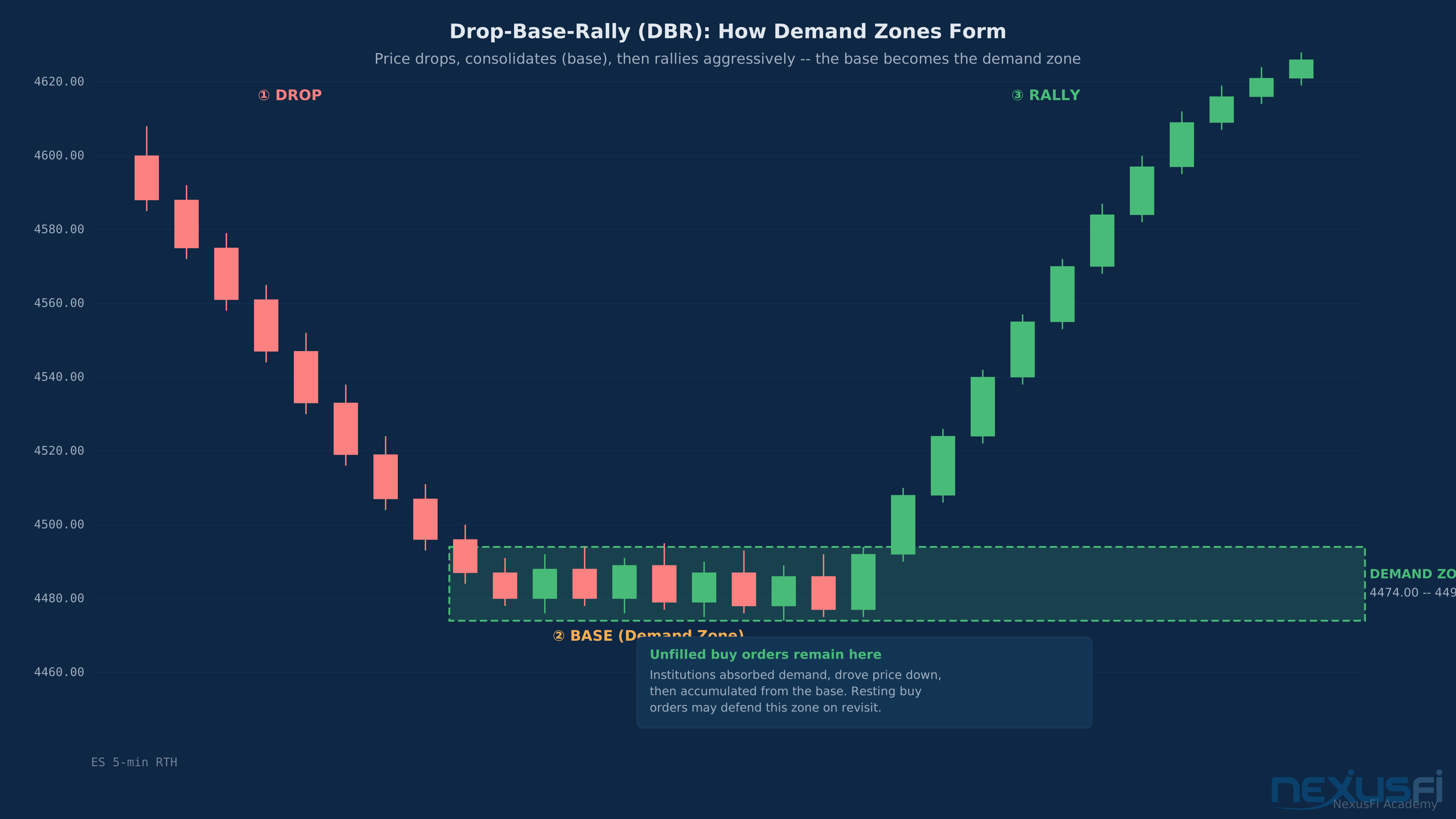
Drop-Base-Rally (DBR) — The opposite pattern creating a demand zone: price drops to an area, consolidates, then rallies sharply. The base marks where accumulation occurred.
Fresh Zone — A supply or demand zone that has never been revisited since forming. The resting orders have not been "tested" yet. Fresh zones carry the highest probability.
Tested Zone — A zone price has returned to at least once. Each revisit depletes some of the resting order inventory. By the third test, most of the institutional interest has been satisfied and the zone often fails.
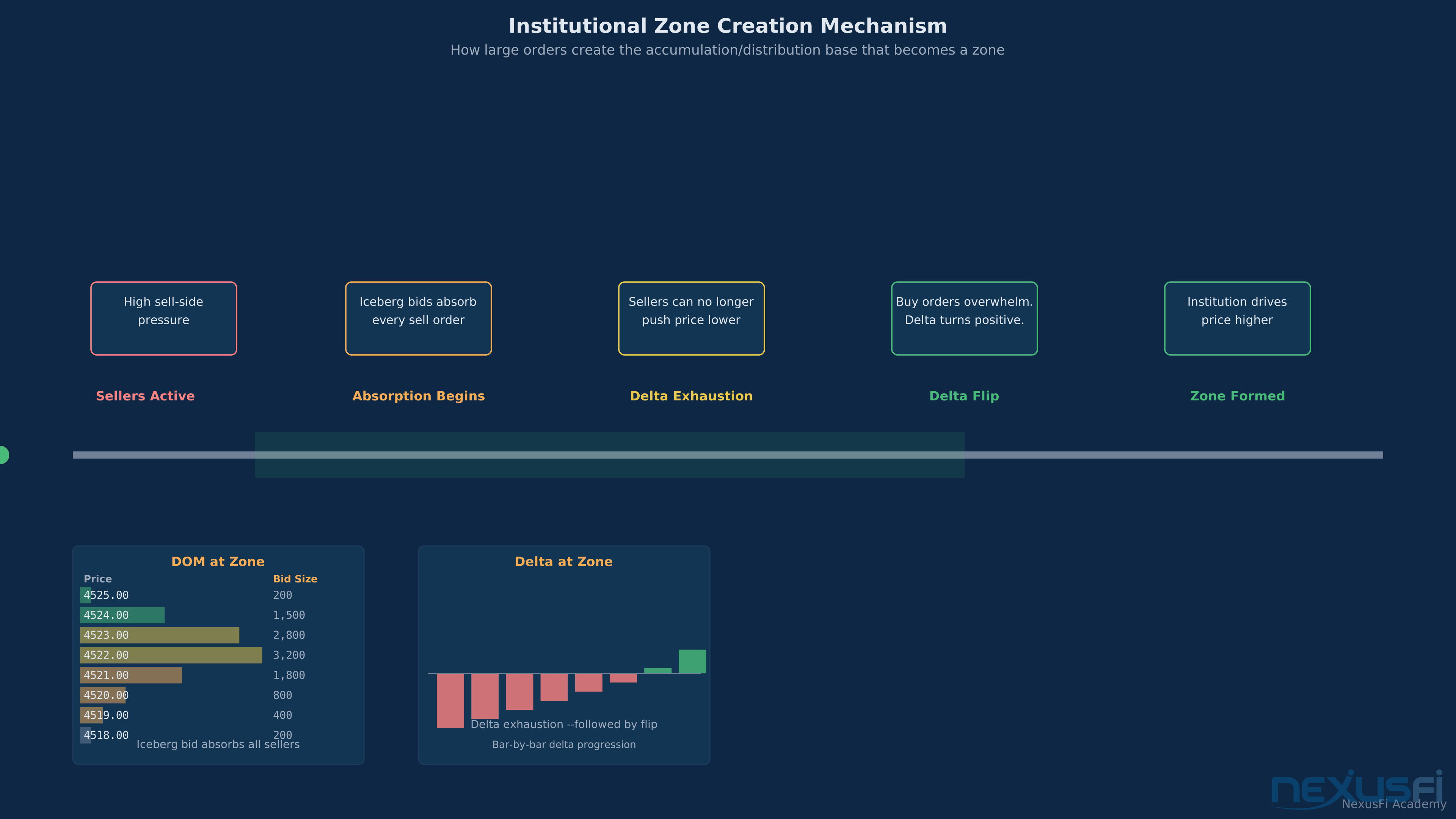
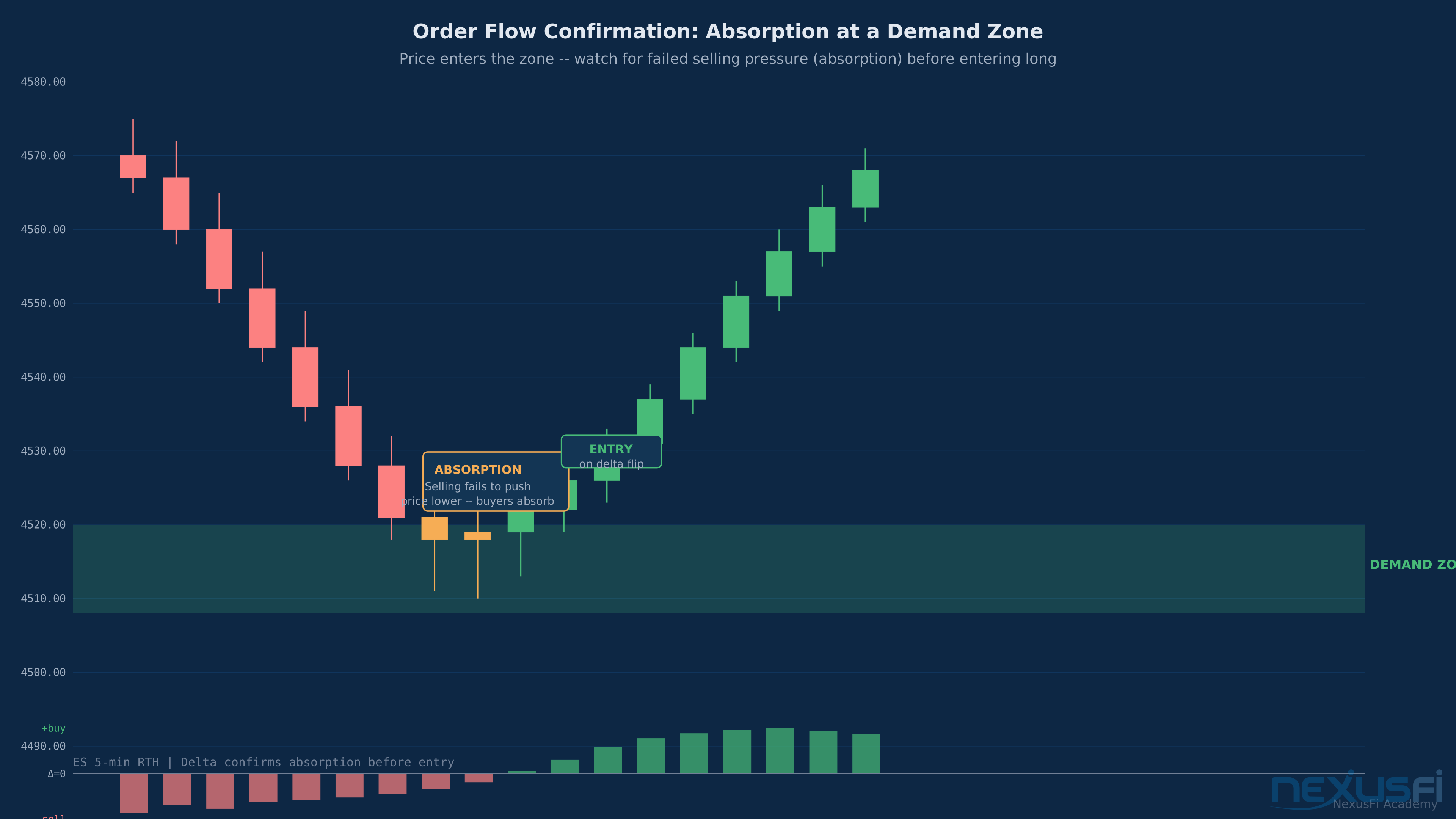
Absorption — The microstructure signature you're looking for at a zone. Selling into a demand zone continues (negative delta), but price stops falling — buyers are absorbing every seller. This is the confirmation signal that the zone is being defended. As @Jigsaw Trading explains on NexusFi, "Someone steps up and starts absorbing market orders. Sell market orders may continue to hit into the market but bidders just absorb all the selling. This is often done in the form of an iceberg order." (NexusFi, Jigsaw Trading AMA thread)
Zone Invalidation — A zone is invalidated when price doesn't just wick through it but accepts beyond it — meaning price holds outside the zone for multiple bars or breaks structural support/resistance at the zone level. Wicks don't invalidate. Acceptance does.
High Volume Node (HVN) — A price level where a disproportionate share of volume traded. On a volume profile, it appears as a wide bar. HVNs at zone boundaries much elevate zone quality because they confirm institutional participation.
Low Volume Node (LVN) — A price level where minimal volume traded. Price typically passes through LVNs quickly. A supply or demand zone situated at an LVN can be a strong setup because there's no institutional "memory" supporting the other side.
How Supply and Demand Zones Form #
Start with the mechanism, because retail traders get this wrong in a way that costs them money for years.
Zones aren't formed by "price being at that level before." They're formed by a specific sequence of institutional order flow. An institution needs to execute a large order — say, 5,000 ES contracts. They can't just slam the market with a single market order. That would move price 5-10 points against them and create massive slippage. Instead, they execute in layers, often using iceberg orders that hide the true size. They place a large limit order, absorb incoming market orders, and accumulate (or distribute) over a period of several minutes to hours.
When they're finished accumulating at that price band, they push price away aggressively. In the DBR pattern (demand zone), they've bought enough that they can drive price higher. In the RBD pattern (supply zone), they've sold enough that they can drive price lower. The move is sharp and impulsive because there's no opposing order flow — the institution has cleared the other side.
Here's the critical part: when price moves away, the institution often hasn't finished executing. They may have filled 60-70% of their desired position. The remaining unfilled limit orders stay at that price level. When price returns, those orders activate again, providing the same defensive response. That's why zones work — not because of "price memory" in some abstract sense, but because there are literally resting orders sitting there.
The practical implication: a zone is only valuable if the institution hasn't already filled all their orders. A fresh zone that hasn't been revisited is much more likely to still have that institutional backing. A zone that's been tested three times has almost certainly been fully filled — there's nothing left to defend it.
RBD: Identifying a Supply Zone
The Rally-Base-Drop pattern requires all three phases to be present:
The rally — A sustained, directional move up to the base area. The faster the move, the stronger the institutional buying (or short covering) that drove it. Multiple overlapping candles, choppy movement, or reversal patterns during the "rally" phase weaken the setup.
The base — A tight consolidation after the rally. This is where the institution transitions from buying to selling. Candles get narrow, volume compresses, and price oscillates within a tight range. The narrower and shorter this base is, the better. If price spends too long in the base, the resting sell orders have likely been depleted.
The drop — A sharp, impulsive move down from the base. This is the institution driving price lower after they've distributed their inventory. Big red candles, minimal overlap, minimal retracement. The more aggressive the drop, the more institutional conviction it reflects.
The supply zone itself is defined by the base — the high and low of the consolidation before the drop. Keep it tight. The common mistake is drawing the zone too wide, including the wicks of the pre-rally or post-drop candles. That adds noise and reduces edge.
DBR: Identifying a Demand Zone
Same logic, inverted. Drop-Base-Rally:
The drop — A sustained move down to the base area. Consistent selling pressure, minimal retracement.
The base — Tight consolidation at the low. The institution accumulates here while price oscillates in a narrow range.
The rally — Sharp, impulsive move up from the base. Large green candles, minimal overlap. The institution has finished accumulating and is driving price higher.
The demand zone is the base — the narrow consolidation range before the rally. Tight is better, fresh is better, sharp departure is better.

Zone Identification Workflow #
The systematic process for building a quality zone map before the trading session:
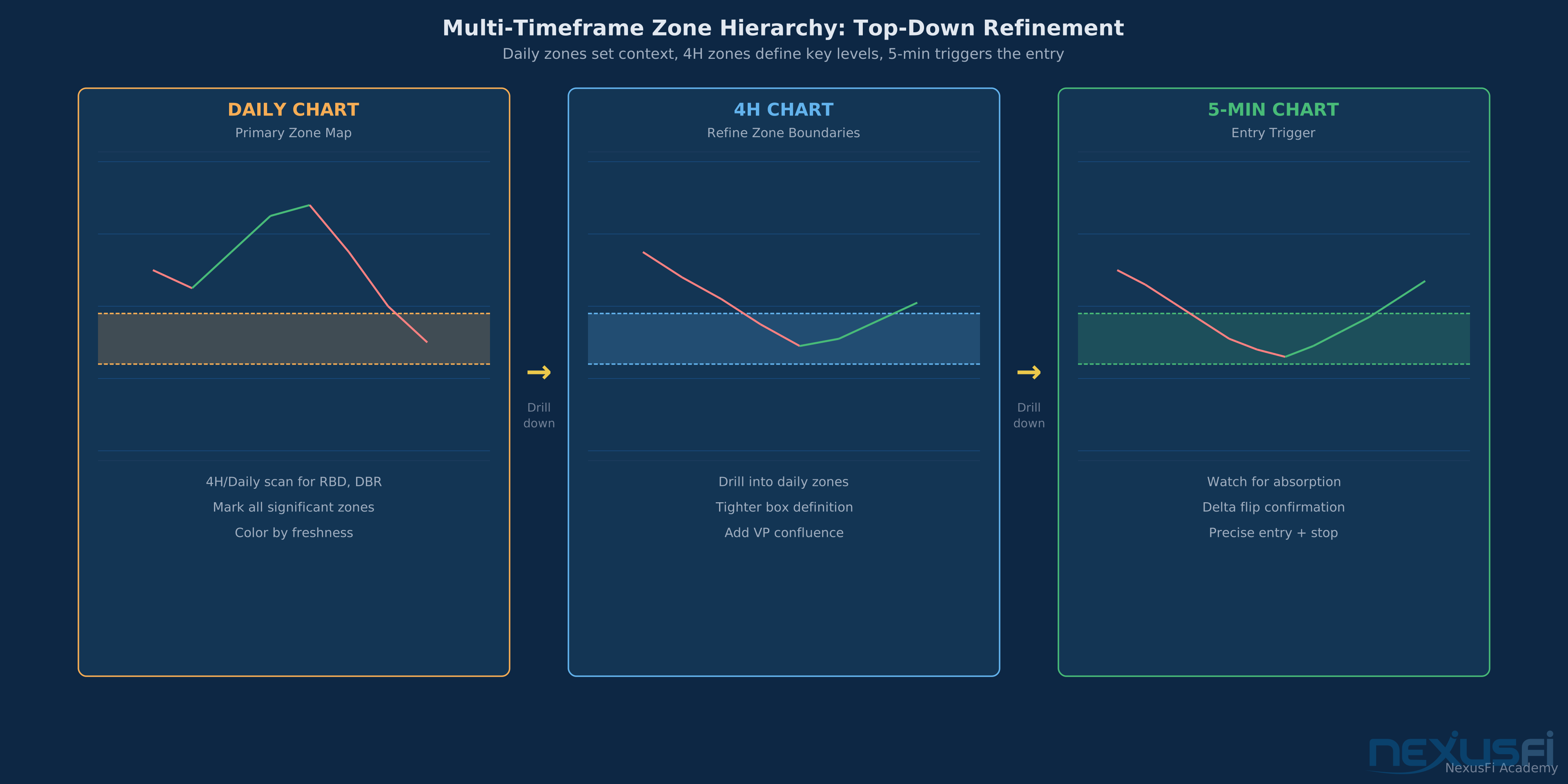
Step 1: Higher timeframe scan. Start on the 4H or daily chart for ES and NQ. For crude oil, use 1H or 4H. Mark every significant RBD and DBR pattern visible on that timeframe. These are your primary zones — the ones with the most institutional weight because they're visible to the most market participants.
Step 2: Quality filter. For each zone, ask three questions: Is it fresh? Has price returned to this zone since it formed? How sharp was the departure? A 10-point move in 3 bars beats a 10-point move in 15 bars. How long was the base? Less than 10 bars at high timeframes is better than 30+ bars — more time in the base means more orders were filled, less remains.
Step 3: Multi-timeframe drill-down. Once you identify a high-quality zone on 4H/daily, drill to 15-min or 5-min to refine the exact boundaries. The base on the higher timeframe often reveals a more precise structure on the lower timeframe. This refinement gets you a tighter zone and a better entry.
Step 4: Session filter. For ES and NQ, only trade zones established during RTH (6:30 AM - 3:00 PM CT for ES). Globex zones form in much lower liquidity and are routinely blown through at the RTH open. The exception is the Globex high/low, which becomes a reference level but not a zone to trade.
That discipline — keeping zones tight — is the real distinction between traders who use zones profitably and those who draw 10-point boxes and wonder why everything "touches" the zone.
Volume Profile Confluence #
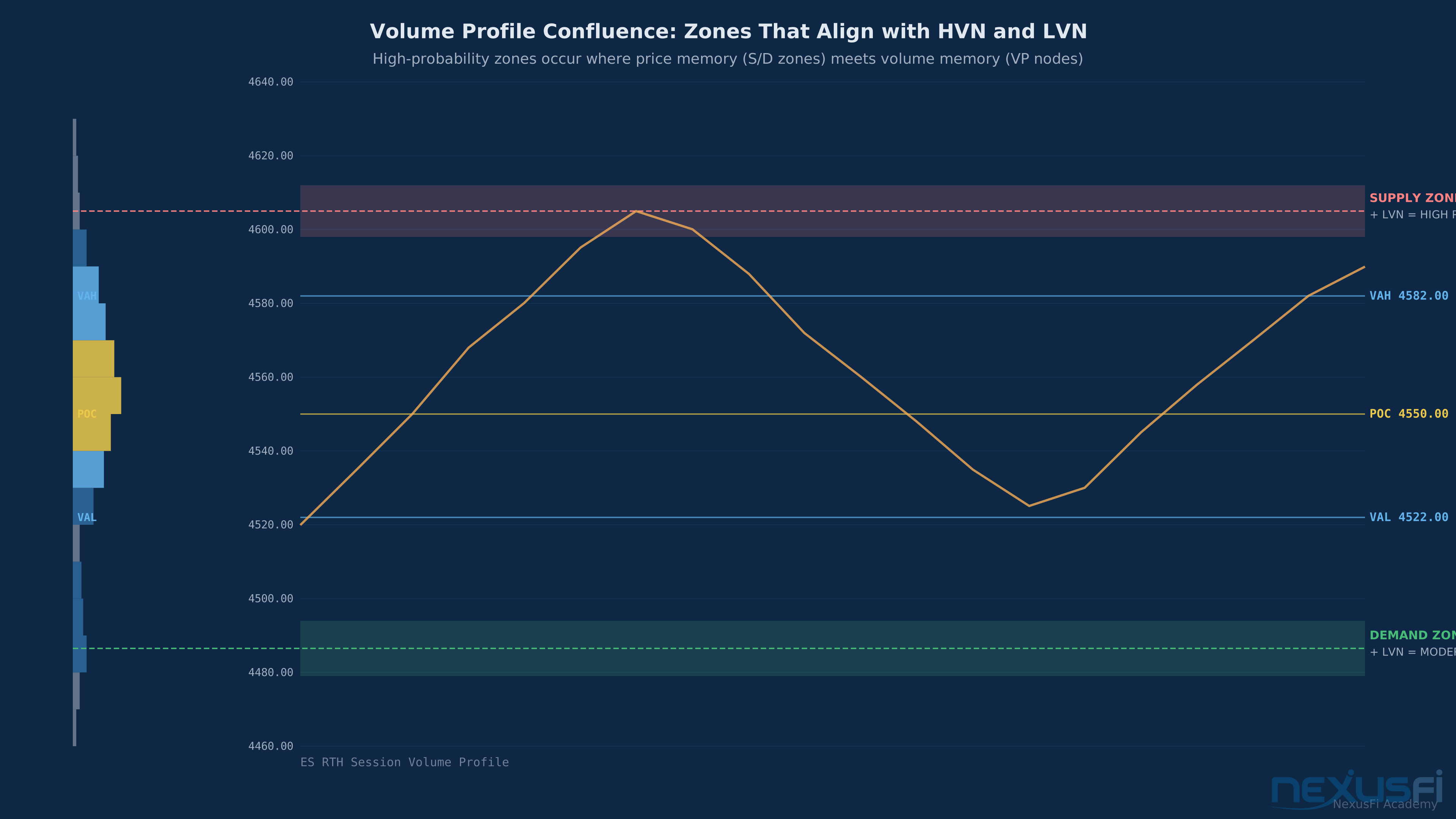
A supply or demand zone by itself is speculation. A zone aligned with a volume profile node is a hypothesis with evidence. Volume profile shows where actual transactions occurred — where money changed hands. When a zone sits at a volume node, you have two independent data sources pointing to the same price area as significant.
Zone at HVN (High Volume Node)
When a supply or demand zone sits at or near an HVN, you're getting two signals: (1) resting orders from the zone formation, and (2) passive participants defending the level because it represents fair value from a volume perspective. HVNs at zone boundaries confirm that a real transaction history supports the level.
The caveat: HVNs can be supportive or resistive depending on context. An HVN in the middle of a balanced range is a rotation area — price will move through it. An HVN at the extreme of a prior distribution, aligned with a well-formed demand zone, is high-probability because it represents where the market previously established value and rejected downside.
Zone at LVN (Low Volume Node)
Demand zones at LVNs have a different edge. Where volume is thin, price passes through quickly. A demand zone at an LVN means there's little structural support between the zone and the next HVN below it — when the zone fails, it fails fast. But when it holds, price rips through the LVN above it with similar speed. Higher variance, but cleaner moves.
Value Area boundaries (VAH and VAL) are the most reliable volume profile levels for zone confluence on ES and NQ. The 70% rule means price spends 70% of time inside the Value Area — the edges create natural supply and demand. A demand zone aligned with the VAL from the prior session or a composite profile is among the highest-probability setups in ES day trading.
When volume profile and structural zones align, the edge multiplies.
That structured approach — with volume profile as the backbone — is what makes zone trading systematic rather than subjective.
Order Flow Confirmation #
This is where most retail traders lose. They draw the zone, price enters the zone, they enter immediately. No confirmation. Basically placing a limit order at a visually appealing level and hoping it holds.
Professional zone trading requires confirmation that the zone is actually doing what it's supposed to do — defending against incoming order flow. The confirmation you're looking for is absorption.
What Absorption Looks Like
When price enters a demand zone, sellers are still in control — that's why price is falling into the zone. You're waiting for the moment when sellers can no longer push price lower, not because there aren't sellers, but because buyers are absorbing every selling order that hits.
On the footprint chart or delta indicator: negative delta at the zone means sellers are still hitting the market but price stalls or moves sideways. Volume spikes with no movement signal the iceberg bid absorbing everything. Delta exhaustion — delta goes from -800 to -400 to -100 on successive bars while price makes shallower lows. Delta flip — delta turns positive. Buyers have overwhelmed sellers. This is the entry trigger.
When a large bid starts absorbing sell market orders at a demand zone, every attempt to push price lower fails.
For traders without footprint data, DOM provides similar information. Watch for iceberg orders appearing at the zone boundary — large passive bids that absorb everything without moving.
Entry Techniques
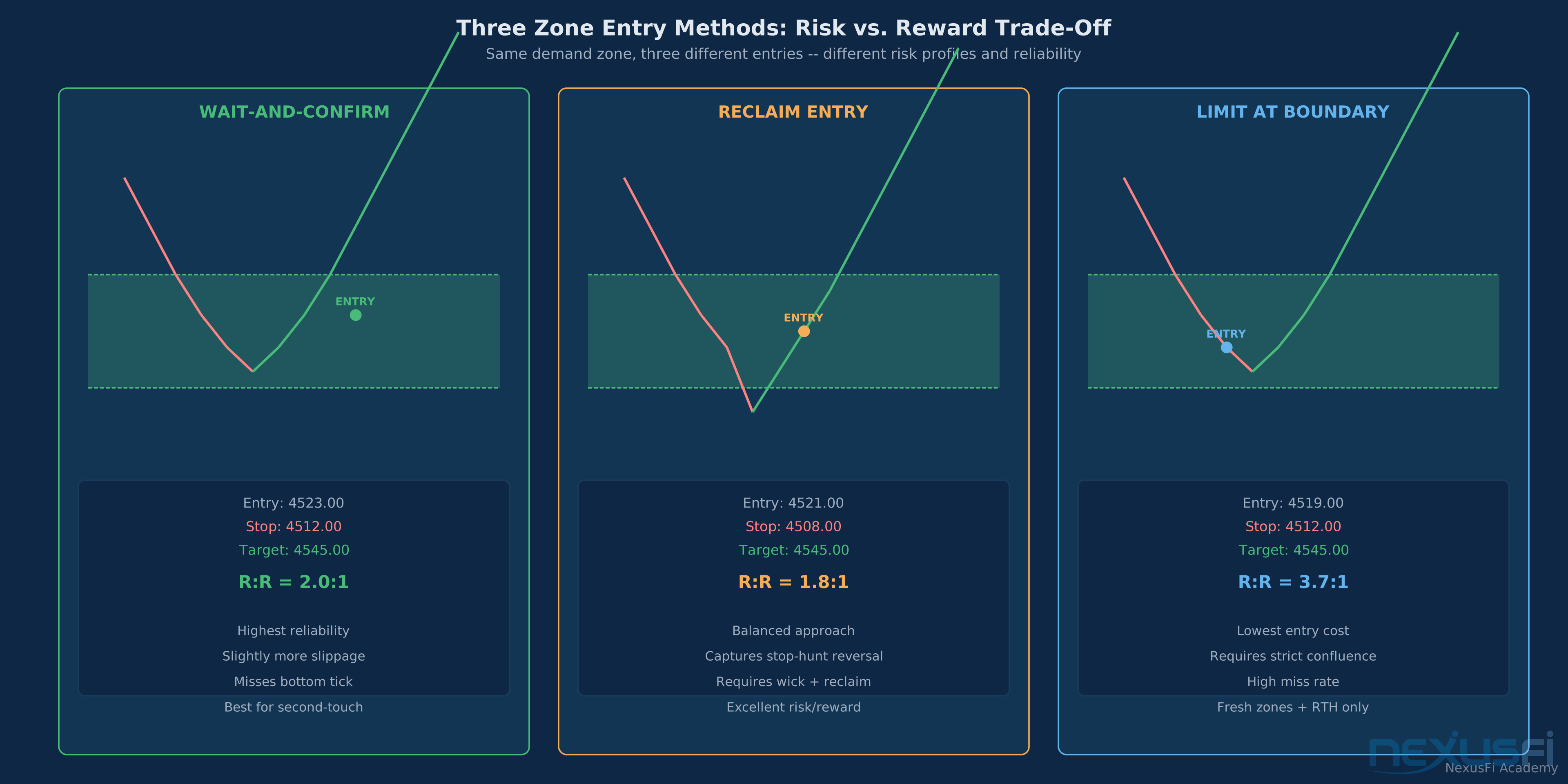
Three approaches, ranked by reliability:
1. Wait-and-Confirm (highest reliability)
Price enters zone, watch for absorption (delta exhaustion, footprint stalling), wait for the first aggressive buy bar that closes near its high, enter on the next open or with a limit at the close of the confirmation bar. Stop just below the zone low. Misses the absolute bottom tick but confirms the zone is holding.
2. Reclaim Entry (balanced approach)
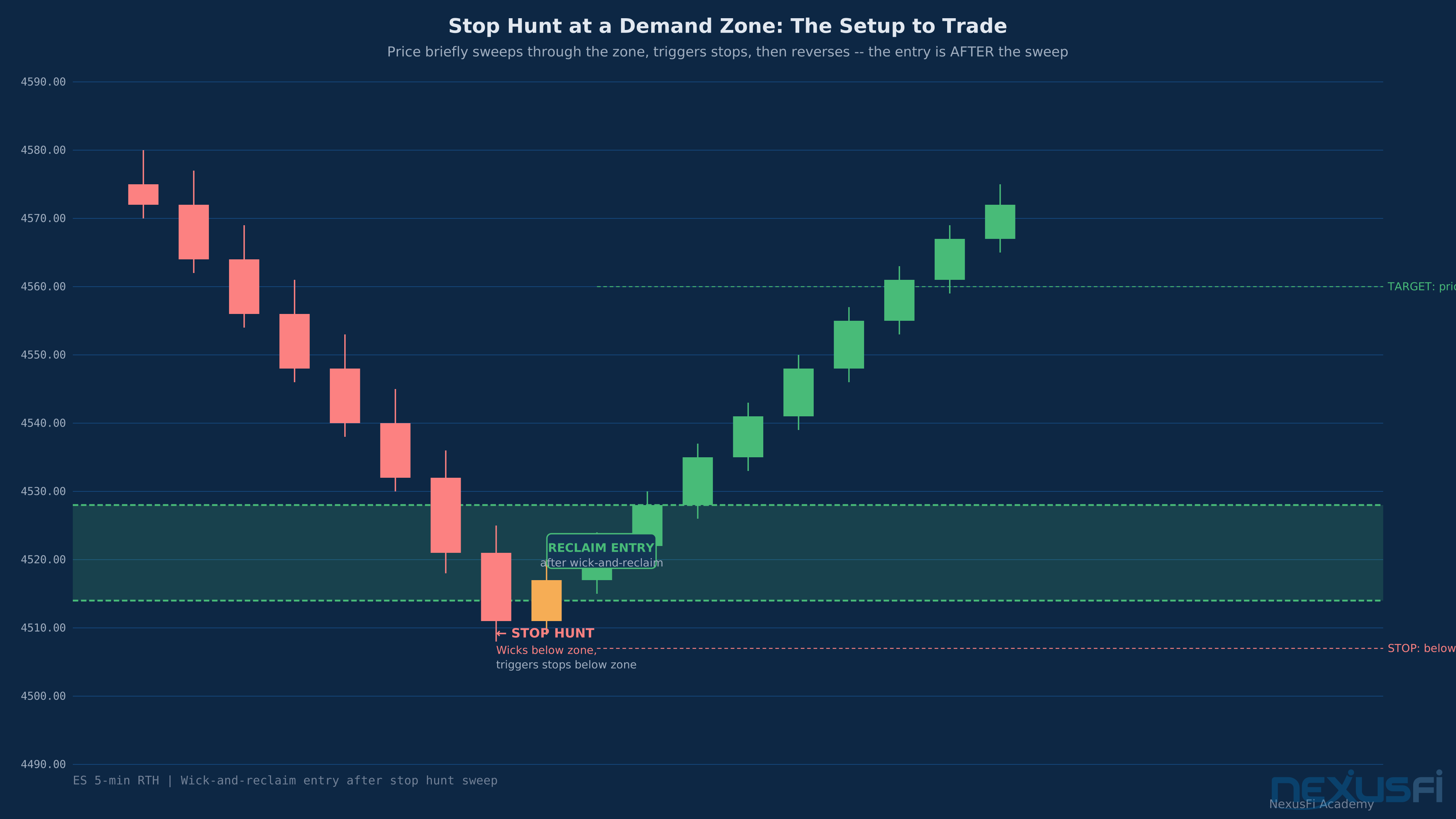
If price wicks below the demand zone boundary but immediately reclaims it (closes back inside the zone), that reclaim bar is the entry trigger. The wick-and-reclaim pattern is especially reliable because the brief break triggered stops, absorbed sell orders, and attracted institutional buyers. Stop below the wick low.
3. Limit at Zone Boundary (lowest entry cost, requires strictest confluence)
Pre-place a limit order at the upper boundary of the demand zone. Only use this when the zone is fresh, has strong VP confluence, and you're trading during peak liquidity. Without confirmation, hit rate drops much. Many traders use this for RTH ES trades at VAL zones where the mean-reversion edge is strong enough.
Zone Testing and Validation #
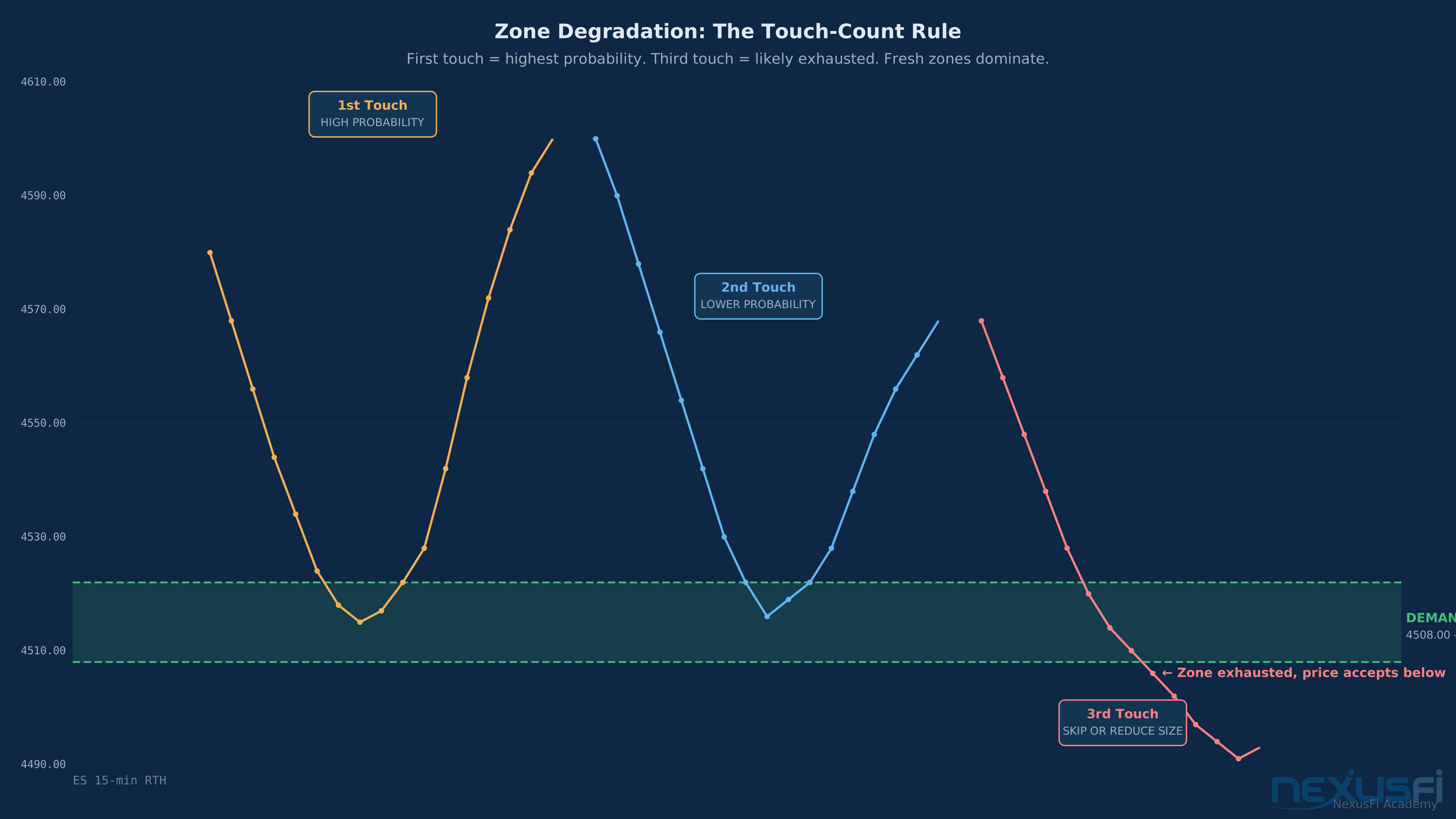
The touch-count rule is the most underappreciated concept in zone trading.
First touch: Highest probability. The zone is fresh, institutional orders are intact, absorption is likely. Historical data on well-formed demand zones suggests first-touch reversal rates around 65-75% when proper confluence is present.
Second touch: Probability drops much — roughly to 40-50%. A portion of the resting orders was filled on the first visit. The zone can still hold, but require the same order flow confirmation as the first touch. Never enter blindly on a second test.
Third touch: Skip it, or trade with meaningfully reduced size. By the third touch, most of the institutional order inventory has been filled. The zone is used up. Price has also been in that area enough times that other participants are aware of it and will fade the expected bounce, adding pressure to the zone's failure.
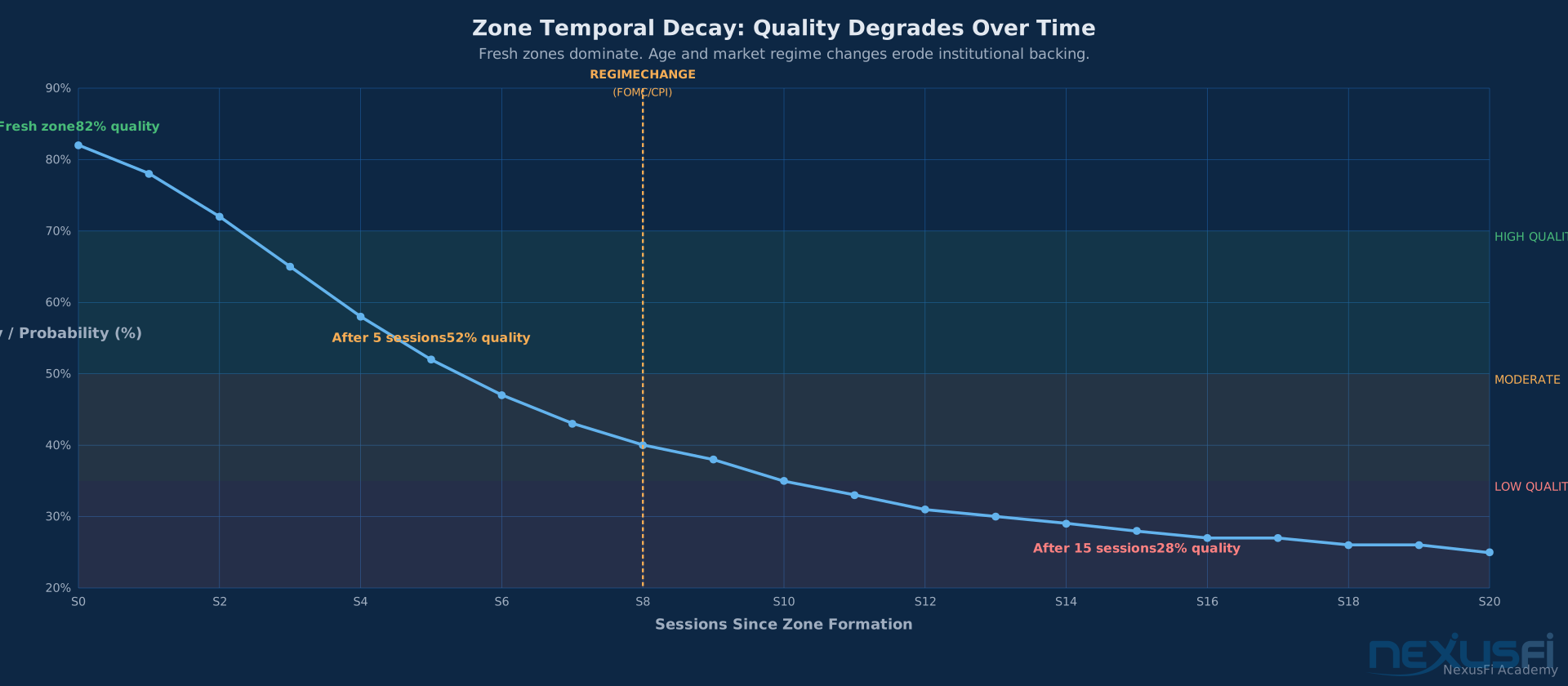
Zone quality degrades over time and across regime changes. A demand zone formed 3 sessions ago during a trending market is more relevant than one formed 3 weeks ago. Reset your zone map after major macro events (FOMC, CPI) — those events shift value areas and invalidate many prior structural levels.
The half-life rule: each session that passes without a zone being tested reduces its quality by roughly 10-15%. After 5 sessions, a once-fresh zone may be operating at 50% of its original probability. After a major macro event, reset the zone map entirely — the value areas have shifted.
Acceptance vs. rejection: A zone isn't invalidated by a wick through it. It's invalidated when price accepts beyond it — meaning price holds outside the zone for multiple bars, forms new balance structure outside the zone, or breaks the structural swing point that defined the zone boundary. Single-bar penetrations that immediately reverse are standard zone tests. Multi-bar acceptance beyond the boundary is invalidation.
Application: ES, NQ, and CL #
ES -- The Mean Reversion Machine
ES is the highest-liquidity equity futures market in the world. Over 1 million contracts trade daily during RTH. That liquidity creates strong mean-reversion tendencies -- price repeatedly returns to fair value after excursions to extremes.
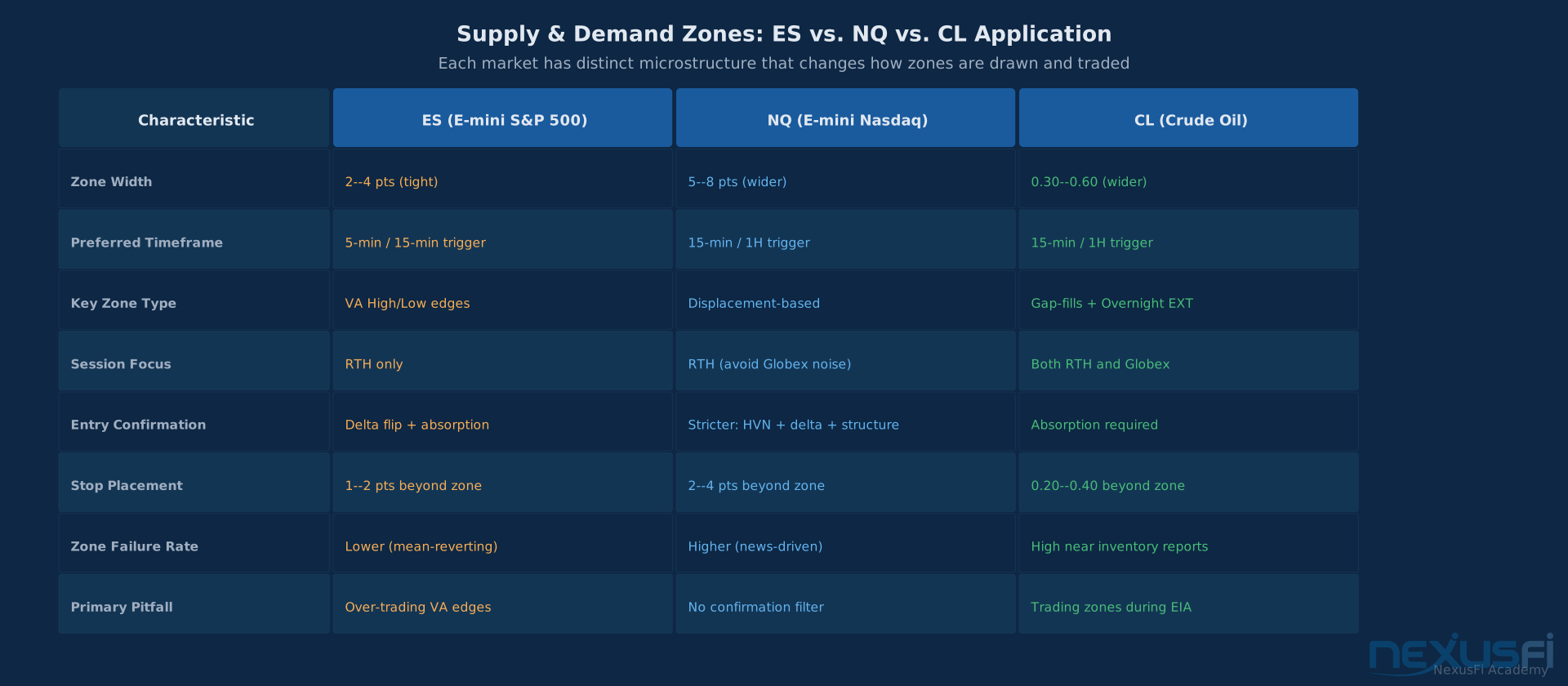
Zone width: Keep it tight -- 2 to 4 points is standard. Primary zones: Value Area High and Value Area Low edges from prior sessions are the most reliable demand and supply zones on ES. Session priority: RTH only. Confirmation: delta flip and footprint absorption. Watch for: quarterly expirations shift the roll-adjusted fair value and change zone behavior.
That is the institutional-style zone analysis — finding where volume concentrated and treating that level as zone context.
NQ — The Volatile Twin
NQ runs roughly 4-5x the dollar volatility of ES per contract. It trends harder, it reverses faster, and HFT algorithms chop it up more aggressively around key levels.
Zone width: 5 to 8 points minimum — NQ will wick through 2-4 point zones regularly without actually rejecting them. Higher timeframe bias: use 15-min or 1H zones as the primary map. Stricter confluence: require HVN alignment AND delta confirmation AND structural confirmation before entering. News sensitivity: NQ is the most sensitive of the three markets. Avoid zone trades within 30 minutes of major releases unless you have a news-specific edge.
CL — The Macro-Sensitive Outlier
Crude oil responds to physical supply and demand — OPEC production decisions, EIA inventory reports, geopolitical risk, dollar strength. Technical zones work, but they're more easily overwhelmed by fundamental data.
Zone width: 0.30 to 0.60. Key zone types: gap-fill zones (from overnight Globex gaps), overnight session highs/lows, and psychological round numbers ($5 increments) are the most reliable. Session flexibility: unlike ES, CL is worth trading outside RTH. EIA report avoidance: the weekly EIA crude oil inventory report (Wednesday 10:30 AM ET) moves CL 1-3 handles routinely — even valid zones get obliterated. Absorption requirement: CL will sweep thin areas aggressively. Never enter on the first touch of a CL demand zone without explicit absorption evidence.
Simplicity combined with VP context applies especially well to CL where over-engineering creates more problems.
Entry, Exit, and Risk Management #
Stop Placement
The stop goes just beyond the zone boundary. Not at the boundary -- beyond it. ES: 1.25 to 2.00 points beyond the zone's far boundary. NQ: 4 to 6 points beyond. CL: 0.20 to 0.35 beyond.
The logic: a zone is invalid when price accepts beyond it, which requires at least a candle body close beyond the boundary. Placing the stop just past the boundary allows the zone room to wick through without stopping you out. Placing the stop at the boundary means you get stopped on every normal test wick.
Profit Targets
First target is always the nearest liquidity pool. For a long from a demand zone, that means the nearest swing high, prior VAH, HVN, or supply zone. This is where retail stop losses cluster -- where the market gravitates to "run stops" before potentially reversing.
Scale out: take 50-75% of the position at the first target, move stop to breakeven, let the remainder run toward the next structural level. Risk/reward minimums: fresh zone + VP confluence + strong absorption = 2.5:1 minimum workable. Second touch + modest confluence = 3.5:1 or better required. Third touch = 4:1 minimum, reduced size.
Common Mistakes #
Over-drawing zones. Every bump in price becomes a "zone." When everything is a zone, nothing is a zone. Limit yourself to 2-3 active zones per side per session. Higher timeframe zones only — no 1-min zone trading.
Treating a touch as an entry. Price touched the zone, so it's time to buy. This ignores the entire confirmation process. The zone tells you where to watch. Order flow tells you when to act.
Chasing zones that have been touched 3+ times. The zone worked twice, so surely it'll work again. The third test is the statistical exhaustion point. Fade the expected bounce rather than trading with it.
Not adjusting for session context. A demand zone from last Tuesday's RTH session behaves differently on a Friday afternoon with thin liquidity. Context degrades or elevates zone reliability.
Trading zones during macro events. CPI, NFP, FOMC are not zone-trading events. Even perfect zones with strong confluence get blown through when the data is much off consensus. Step aside during major releases.
Forgetting temporal decay. Zones formed 2 weeks ago under different market conditions are not equivalent to zones formed 2 sessions ago. Apply a mental half-life: the older they are, the more confirmation required.
Practical Application #
Pre-market workflow for ES supply and demand zone trading:
Night before: Open a 4H chart of ES. Mark every clear RBD and DBR pattern visible in the last 20-40 sessions. Overlay the prior session's RTH volume profile. Mark VAH, VAL, POC, and significant HVNs/LVNs. Identify where zones align with VP levels — those are your A-tier setups. Note the prior session's close relative to the zones.
At the open: Let the first 15 minutes develop. Note the developing session VWAP. If price is above VWAP approaching a supply zone, that's alignment. Below VWAP approaching demand is alignment. When price approaches a zone, switch to the 5-min chart with footprint or delta and begin watching for absorption signals.
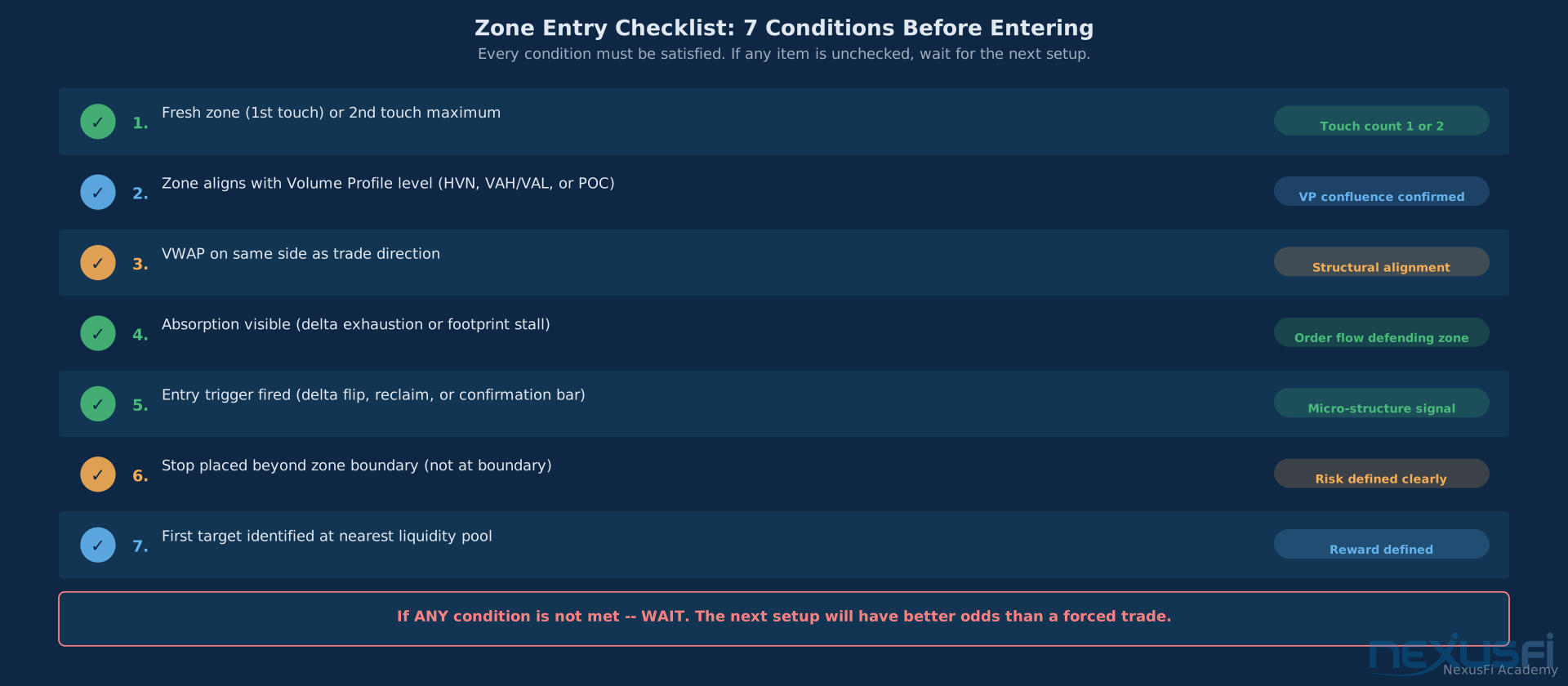
Zone entry checklist: Zone is fresh or second-touch at most. Zone aligns with VP level (HVN, VAH/VAL, POC). VWAP on the same side as the trade direction. Absorption visible (delta exhaustion or footprint stall). Entry trigger fired (delta flip, confirmation bar, or reclaim). Stop placed beyond zone boundary. First target defined at nearest liquidity pool.
If you can't check all seven, wait. Insisting on VP alignment before committing is what makes this approach sustainable over hundreds of trades.
The Stop Hunt Consideration #
Institutions don't only defend zones. They also exploit them.
A widely-known demand zone with clusters of retail stop-losses sitting just below it is a target. When price approaches, an institution may push through the zone aggressively, trigger all those stops (adding sell-side liquidity), and then reverse. You think the zone failed. In reality, the institution used the zone as a liquidity pool to fill their buy orders at even better prices.
This is why the wicks-don't-invalidate rule is so important. And it's why "wait-and-confirm" entries outperform limit orders placed at the zone boundary. The wait-and-confirm approach specifically captures the pattern after a stop hunt: price sweeps through the zone, triggers retail stops, institutional buyers absorb everything, price reverses. Your entry is on the reversion, not the original test.
Key distinction: a wick through the zone with no initiative follow-through is a stop hunt — the zone likely still holds. A zone break with continued initiative selling and multiple closes beyond the boundary is invalidation. This distinction determines whether to re-enter with a tighter stop or walk away entirely.
Knowledge Map
Prerequisites
Understand these firstGo Deeper
Build on this knowledgeCitations
- — Jigsaw Trading AMA (2013) 👍 10“Someone steps up and starts absorbing market orders. Sell market orders may continue to hit into the market but bidders just absorb all the selling. This is often done in the form of an iceberg order.”
- — Trading With Supply and Demand (2014) 👍 1“I make my zones one point wide on ES and TF and 2 Points wide on NQ to limit my risk.”
- — Volume Profile and Footprint (2013) 👍 11“Some of the most useful trading tools in my opinion are those that enable the trader to analyze and exploit demand and supply.”
- — Zach's Trading Log (2019) 👍 9“Volume Profile: the VPOC, VAH, and VAL of relevant and imposing daily session(s). ETH and/or RTH. Daily LVNs and HVNs.”
- — Volume Profile and Footprint (2012) 👍 21“The way I look at absorption is when you see either buyers or sellers cutting off the opposing traders.”
- — Jigsaw Trading AMA (2013) 👍 13“There is an iceberg on the bid (also 4/5 ticks off a range high). Look for icebergs on the bid in the pullback on an uptrend.”
- — Spoo-nalysis (2012) 👍 2“volume is slowly building a base centered around the 1309.00 high volume node.”
- — Is anything better than order flow? (2022) 👍 2“bar end testing on 30 min and 15 min bars can really tell a trader a lot about supply and demand zones. Combine that with a good volume profile set to session start and end.”
- — Jigsaw Trading AMA (2013) 👍 5“Price will typically retest where the supply drops off after a volume spike or cliff... I will never trade without Volume Profile.”
- — Volume Pace (2023) 👍 1“The High Speed orders were actual Hidden Icebergs refreshing in milliseconds and absorbing all the Volume at that Price Level which breaks the Auction.”