



Time and Sales for Futures Trading: Reading the Tape in the Age of Algorithmic Reporting
Overview #
The Time and Sales window is the raw transaction feed of the futures market — every contract that changes hands, at what price, on which side, in real time. It's the closest thing to watching the actual auction happen tick by tick. Most traders glance at it. Serious traders read it. And a small subset of professionals have made careers out of knowing exactly what the tape is telling them versus what it merely appears to say.
Here's the thing: the tape you're looking at today is at the core different from the tape traders used in the 1990s, and even from what was displayed in 2008. The CME changed its tick reporting methodology in 2009, and most traders still haven't adjusted. Understanding that change — and what it means for reading the tape — separates traders who use T&S as a primary tool from those who glance at it and see noise.
This is a tool that rewards patience and precision. You can't skim the tape. You read it.
How Time and Sales Works #
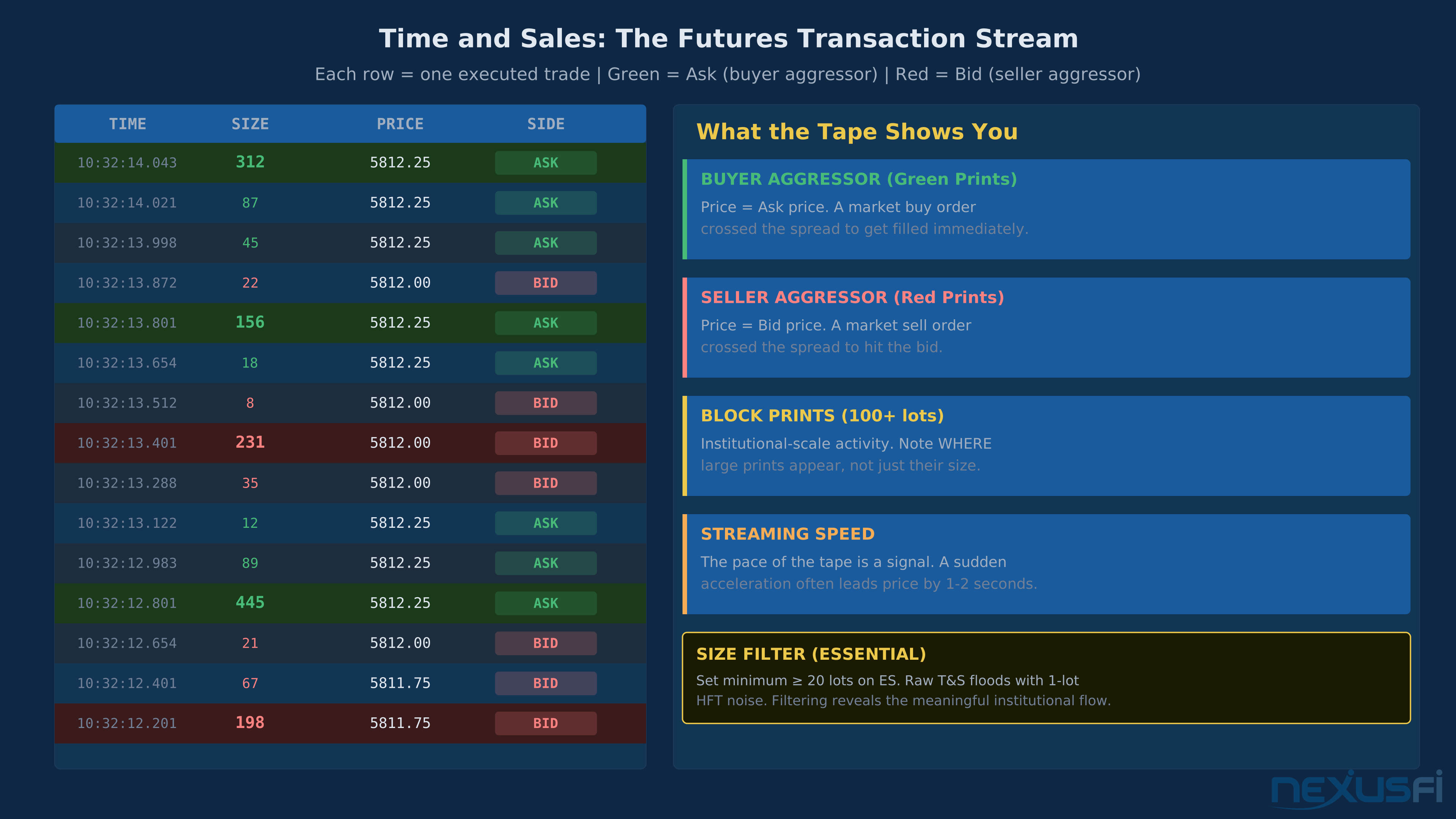
Time and Sales is a real-time log of every executed trade in a futures market. Each row shows the timestamp of the transaction, the price at which the trade executed, the number of contracts in the print, and which side was the aggressor.
The color coding is standard across most platforms: green prints are trades at the ask (buyer aggressor), red prints are trades at the bid (seller aggressor). The aggressor is whoever crossed the spread to get filled. A 50-lot green print means someone placed a market buy order and got filled at the offer price — they were willing to pay the ask to get in immediately.
This tells you the direction of aggression, not the direction of intent. A trader can be building a large short position by selling at the bid aggressively — those show as red prints. Or they can be building a long position by passively posting limit buys at the bid and waiting to get hit — those trades also show as red prints, because the seller who hit their bid was the aggressor. This distinction matters enormously when you try to interpret what large participants are actually doing.
The color of a print tells you who was the aggressor — who crossed the spread. It does NOT tell you whether the underlying position being built is long or short. A big player accumulating a massive long can show as a mix of green and red prints depending on their execution strategy.
Understanding T&S requires understanding what it's actually measuring. When a buyer places a market order and gets filled, the exchange reports: price, size, and which resting order it was filled against. The T&S shows you that resting order's side — not the market order's size. This matters because of how the CME changed its reporting in 2009.
The 2009 CME Change That Broke Traditional Tape Reading #
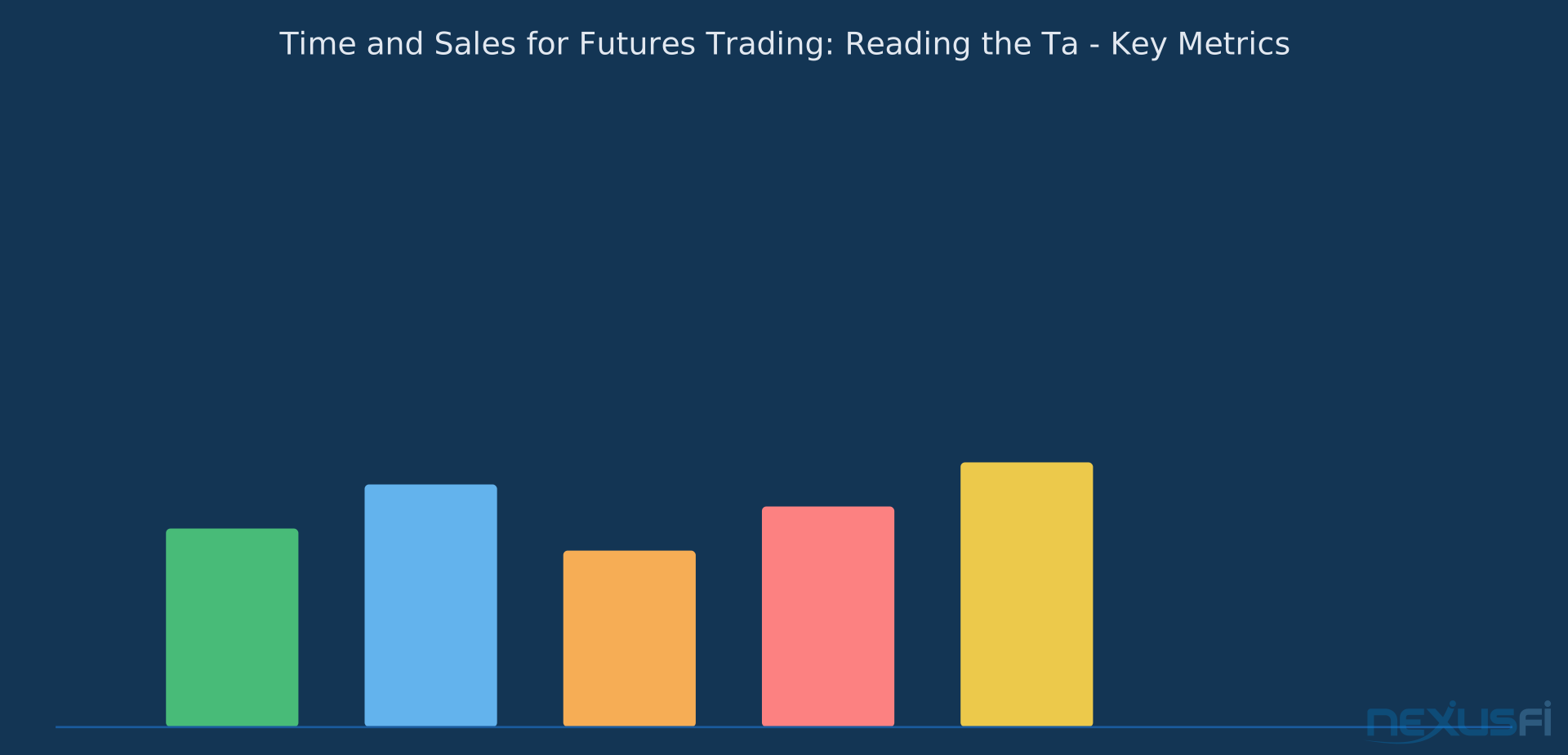
Before October 4, 2009, the CME reported trades on what's called an "intention" basis. If a 1000-lot market buy order hit the book and got filled against multiple limit sell orders, the T&S showed a single print of 1000 contracts. Simple, direct, unambiguous.
After October 4, 2009, the CME switched to "all executions" reporting. Now that same 1000-lot order shows as dozens or hundreds of separate prints — one for each limit order it was filled against.
As @Jigsaw Trading explains in the NexusFi thread "Tape is my shape":
This means the large single prints that used to signal institutional participation are now mostly meaningless on their own. A 500-lot green print isn't a hedge fund putting on a massive buy — it's a limit sell order that happened to be 500 contracts sitting on the offer. The actual market buy order that triggered it could have been much larger, or much smaller.
@Jigsaw Trading makes this concrete: "Scenario 1. Low of the day. Large player puts in a 1000 lot market buy order. He gets filled against fifty 20 lot limit sell orders. The time and sales shows: 20,20,20,20,...(50 times). Scenario 2. Low of the day. Large player puts in a 1000 lot market buy order. He gets filled against a 2000 lot sell limit order. The time and sales shows: 1000 At Ask. Now — in scenario 1, you do not have a large player putting limit orders on the offer. This is a lot more bullish than scenario 2."
The CME reporting change inverted the signal: what looks like a huge aggressive buyer (Scenario 2's 1000-lot print) is actually a massive passive seller absorbing a small market order. What looks like many small buyers (Scenario 1's stream of 20-lots) is actually one large market order.
Many trading courses still teach tape reading based on pre-2009 methodologies. "Large print = institutional order" is no longer reliably true on CME markets. Traders applying 1990s tape reading logic to modern ES or NQ T&S are working from a broken model. This mistake shows up constantly in discussions of tape reading where traders mention 2009 as the year when their approach "stopped working."
Print Types: Standard, Block, and Aggregated #
Because raw T&S is now fragmented, the industry developed solutions. Understanding these print types is essential before configuring your platform.
Standard Prints (Raw) #
What your platform shows by default. One row per execution. On an active ES session, this streams hundreds to thousands of prints per minute during volatile periods. Impossible to process manually. Useful for observing streaming speed and direction, but not for reading individual orders.
Block Prints #
A "block print" in the modern context is a single large print on the raw T&S — one limit order of significant size that got hit.
Lot Print — "An aggregate of smaller trades that when added together, become a big order. The CME reports the limit orders that a market order was filled against, instead of the market order."
These are meaningful because they indicate large standing limit orders — someone had a significant passive order at that price. Whether a 200-lot limit buy at a key level holds or breaks is signal. When large limit orders absorb aggressive selling without price moving, that's absorption. When they get blown through, that's a thin book with momentum.
Aggregated (Reconstructed) Tape #
Aggregated T&S tools attempt to solve the fragmentation problem by grouping prints that occurred within a very short time window (typically 10-50 milliseconds) and likely originated from the same market order.
The aggregation reconstructs an approximation of the original market order. A 1000-lot order that fragmented into 47 prints between 10:32:14.001 and 10:32:14.043 would appear as a single 1000-lot aggregated print. This is an approximation — it won't perfectly rebuild every order because algorithmic execution deliberately fragments orders across time — but it's far more readable than raw data.
@vvhg's Aggregated T&S indicator for NinjaTrader (629-reply thread in The Elite Circle) was one of the first community-built solutions to this problem, introducing three print size tiers: normal prints above the minimum volume set by the user, block prints (size set by user), and lot prints (size set by user). The indicator also added a "Dominant Limit" concept to identify the most influential single tick volume in each aggregation. @rounder8's Custom T&S for NinjaTrader introduced the foundational aggregation logic and first popularized the concept in the NexusFi community.
Configure your T&S with a size filter. On ES, filtering for prints of 25+ contracts removes most HFT noise while preserving meaningful activity. Use a secondary "block" size setting (100+ contracts) to visually highlight institutional-scale orders. Most platforms support color tiers by size.
Platform Configuration: Getting T&S Right #
Most platforms display T&S by default in a way that's nearly unreadable for practical use. Here's how to configure it properly.
Size Filter (Most Critical) #
Set a minimum size threshold below which prints don't appear. Recommended starting points:
- ES (S&P 500 futures): Filter at 20-25 contracts minimum, block highlight at 100+
- NQ (Nasdaq futures): Filter at 10-15 contracts (lower liquidity, smaller average size)
- CL (crude oil futures): Filter at 5-10 contracts
- ZB/ZN (Treasury futures): Filter at 500-1000 contracts (highly liquid with large institutional presence)
The right filter removes 80-90% of retail noise while preserving meaningful institutional activity. The exact cutoff is personal — traders focused on 1-lot scalping might lower the filter; macro swing traders might raise it.
Color Coding #
Standard is green for ask-side trades, red for bid-side. Some traders add a third color for large block prints to make them visually distinct. Size-based color gradients (muted green for small ask prints, bright green for large ones) can help at a glance without requiring you to read every number.
Aggregation Window #
If your platform supports trade aggregation (NinjaTrader with custom indicators, Sierra Chart, Jigsaw Daytradr), set the aggregation window to 10-50ms for fast markets like ES. Longer windows in slower instruments. Tighter windows catch the intention bursts. Wider windows are necessary in thinly traded markets where fills can arrive slowly.
Window Layout #
T&S works best as a floating window positioned next to your chart, not buried in a tab. You need to see it in peripheral vision while watching price action. Many traders run two T&S windows simultaneously: one with a 25-lot filter for the overall flow, one with a 100-lot filter for block activity only.
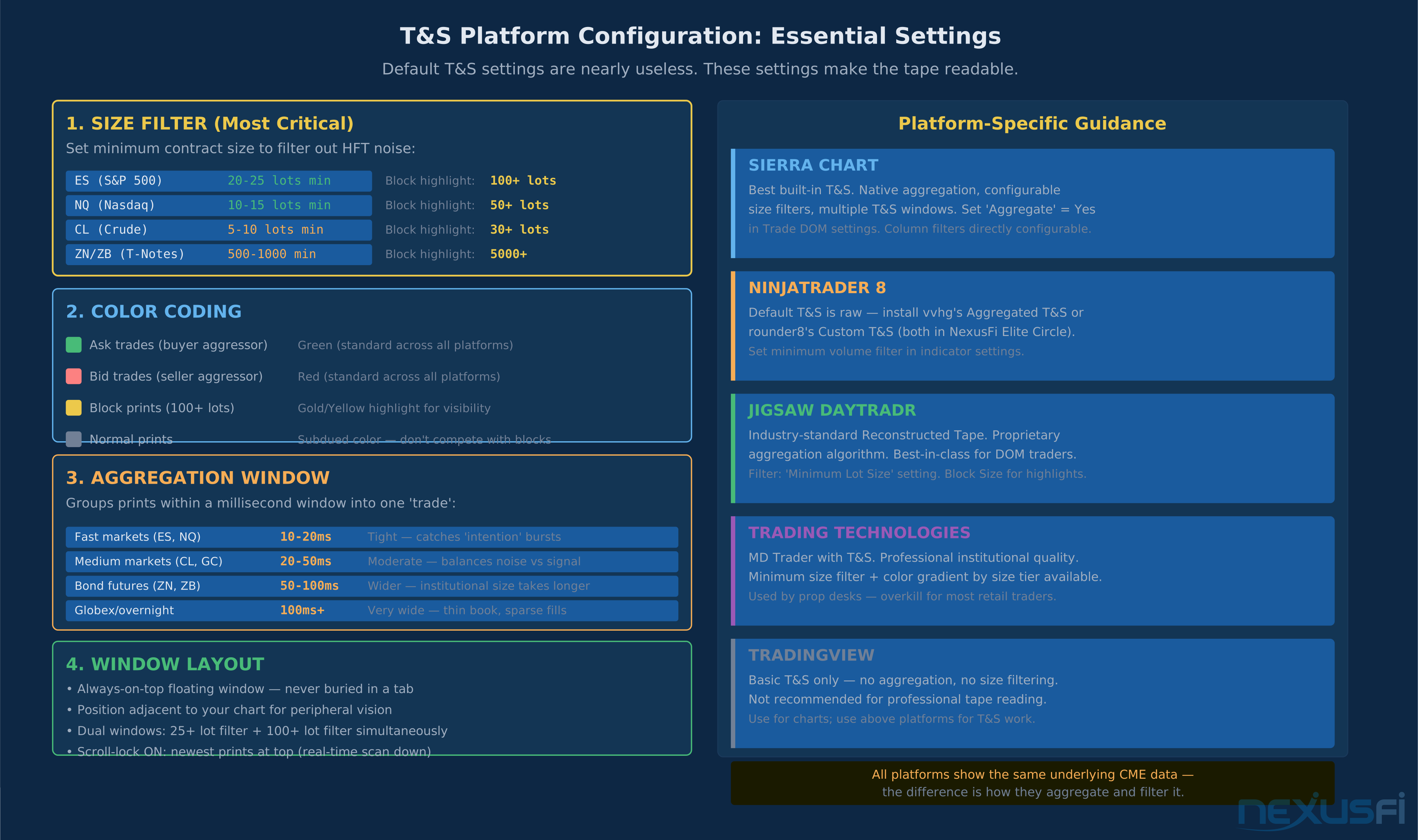
Jigsaw Daytradr's Reconstructed Tape is the industry standard for aggregated T&S, especially for DOM-based traders. Sierra Chart has excellent built-in T&S with native aggregation support. NinjaTrader requires community-built indicators like @vvhg's Aggregated T&S or @rounder8's Custom T&S (both in NexusFi Elite Circle) for proper reconstruction.
Reading the Tape: Core Patterns #
With proper configuration, certain patterns become readable in the T&S stream. These work because they reflect the underlying order flow logic — who is aggressive, where passive orders are standing, and whether momentum is building or stalling.
Absorption #
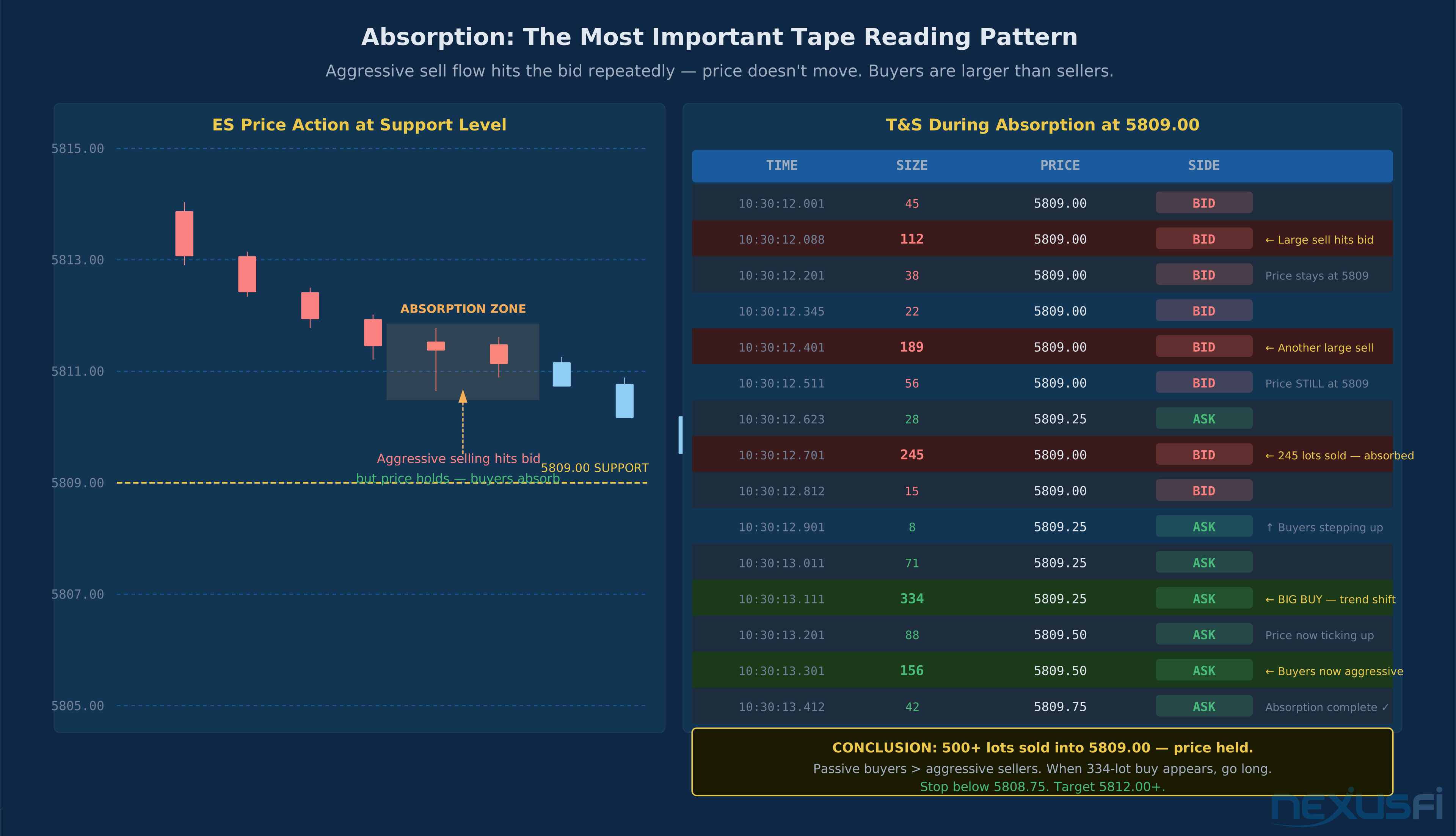
Absorption is the most important pattern in the tape. It happens when aggressive market orders (shown as streaming green or red prints) fail to move price despite significant volume. You're watching size hitting one side and price not responding.
The classic setup: ES approaches a key level. 200 lots, 150 lots, 350 lots, 80 lots — all red, all at the bid, all at 5785.25. And price doesn't budge. That means someone is sitting with a large limit buy at 5785.25 absorbing every market sell order. The passive player is larger than the aggressive player. When absorption occurs at a significant technical level and the aggressive side eventually exhausts, the reversal is often sharp.
Absorption failing is equally important. If 5000 contracts sell into the bid at a level and price drops through anyway, the limit orders weren't large enough to hold. That level is broken, not supported.
Absorption requires three elements: aggressive flow hitting one side, significant size at a specific price, and price NOT moving despite the volume. If all three are present, the passive player is winning. When the aggressor exhausts, the reversal is the trade. If price moves anyway, the level isn't holding — no entry.
Pace Change #
The streaming speed of T&S is itself a signal. A slow, steady stream suddenly accelerating — prints flying faster, sizes increasing — indicates an order or series of orders entering with urgency. This often precedes price movement by a second or two.
Conversely, a market that was moving with momentum (fast tape, directional prints) that suddenly slows (tape decelerating, prints becoming sporadic) indicates the momentum participants are stepping back. The bid or offer is no longer being hit aggressively. This is often the first signal of a momentum fade.
@vvhg's "pressure bar" concept formalizes this: "The concept behind the pressure bar is to look at trades executed @bid versus trades executed @ask over a period of the last n ticks or seconds." This gives a real-time visual of who's winning the aggressive order flow battle without requiring you to parse individual prints.
Directional Conviction #
When prints stream heavily in one direction without counter-pressure, the tape is showing directional conviction. On a strong trend day, the tape during impulsive moves looks like: green, green, green, 50-lot green, 80-lot green, small red, green, green, green. The occasional red print is either profit-taking by longs or small counter-participants who immediately get overwhelmed.
When conviction is absent — the market is in balance — the tape looks mixed: red, green, red, red, green, 20-lot green, 15-lot red. No dominant side. This is what a consolidation range looks like in T&S.
Where Size Shows Up at Key Levels #
@Orion's thesis on reading the ES tape distills to context plus size: "To me, it's all about where large size steps up to buy or sell the market, and the context of what has happened preceding it." Large prints at key technical levels (prior day's high/low, value area boundaries, initial balance edges) carry much more weight than the same size in the middle of a range.
A 500-lot buy print at 9 AM as the market opens means nothing — everyone's positioning at the open. The same 500-lot buy print at a prior session low during a pullback in an established trend is a significant tell.
@Orion continues: "To viably incorporate tape reading into your trading, you need to not only understand where, but understand WHY. If I'm Goldman Sachs and I just sold 10 thousand contracts to push the low and it's bounced off four ticks, am I going to let it reverse on me? No. I'm going to sell 20 thousand more and push it lower." Context first, size second.
Behavior Change #
A key tell in the tape is a shift from aggressive to passive behavior at a level.
Example: Price has been selling off and large red prints dominate. Then, at a support level, the red prints shift character — they're getting smaller, more sporadic, interspersed with increasing green prints. The selling is drying up. The aggressors are stepping back. Passive buyers at the level are absorbing. That behavior change in the tape often precedes a bounce by several seconds.
@bloom makes the diagnostic precise: "To stay in short you must see large prints on the BID and prints on the ASK too. If you see only BIDs printing — who from the big guys is selling on ask? Answer: no one. Because you do not see large prints on ask. This means all big players are already on bid limits taking profits. They do not want to move price lower. Behavior has changed."
Integration with Order Flow Tools #
T&S is most powerful correlated with other tools.
DOM (Depth of Market) #
The DOM shows what orders are sitting at each price level. T&S shows what's actually getting filled. The combination tells the complete story. When you see a large limit order on the DOM getting absorbed (size at a price level that isn't decreasing despite heavy order flow into it), the T&S should confirm: prints are hitting that level without moving price. If the DOM shows size disappearing faster than prints are hitting it (the order is pulling, not getting filled), that's a different story — potential spoofing or algorithm behavior.
Footprint Charts #
Where T&S gives you a streaming real-time view, footprint charts give you a structured historical view of the same bid/ask volume data, organized by price and time. T&S tells you what's happening NOW. Footprint tells you what happened during this candle period at each price level. They complement each other: T&S for real-time context, footprint for reviewing how a move developed.
See Footprint Charts for Futures Trading for the full mechanics of footprint interpretation.
Delta (Cumulative Volume Delta) #
Delta tracks the running difference between buy volume and sell volume. T&S and delta are looking at the same underlying data, but delta gives you the net result over time. A rising market with negative delta (more sell volume than buy volume) is a divergence that often precedes a reversal. T&S lets you watch the prints building that negative delta in real time. Delta gives you the summary statistic. T&S gives you the granular flow that explains why the delta is what it is.
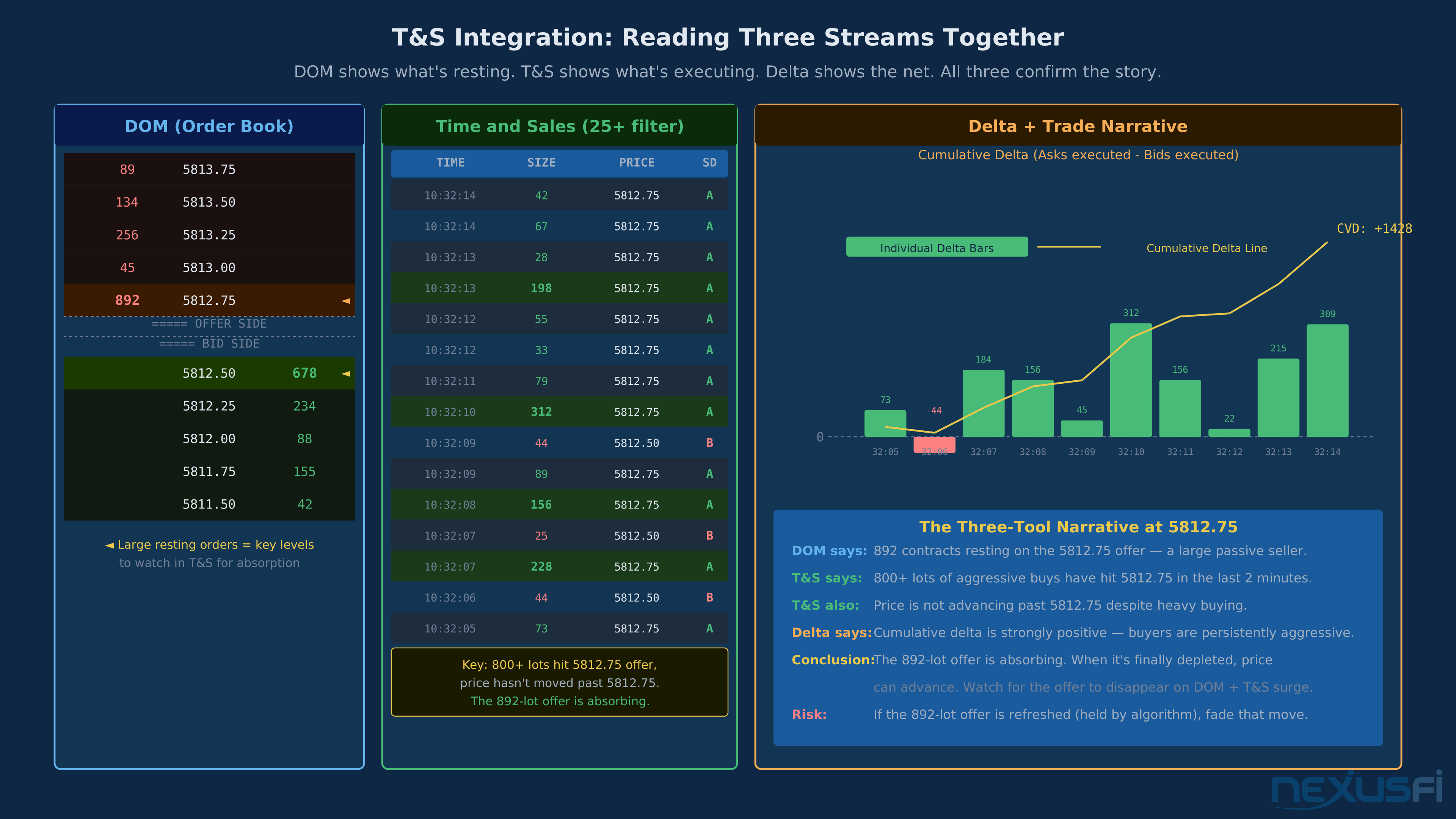
T&S is most powerful in combination with DOM (who's standing at this price?), footprint (how did this price develop?), and volume profile (is this price significant historically?). Watching T&S in isolation produces noise. Correlating it with these tools produces signal.
When T&S Fails: Limitations and Traps #
High-Frequency Trading Noise #
HFT algorithms generate enormous T&S activity with no directional information. Quote stuffing, fleeting orders, rapid cancellations, and layering create prints that appear meaningful but are artifact. During periods of heavy algo activity — first 30 minutes of RTH, around economic releases — T&S volume is substantially polluted.
This is why size filters are essential. The 1-lot, 2-lot, 5-lot prints are predominantly HFT/algorithmic. The larger prints (25+ lots) have a higher concentration of actual position-building. Even then, @hyperscalper notes the distinction between "Order Flow Analysis" (the full limit order book) and "Trade Flow Analysis" (what actually executed): "Trade Flow Analysis represents Orders which have resulted in Retail Trade Executions. The goal is to find the imbalances which occur in inventory which changes hands between Retail players and Market Makers." The tape shows you the execution layer, not the full order book.
Fragmented Algorithmic Execution #
Sophisticated participants deliberately fragment large orders into many small executions across time to minimize market impact. A hedge fund putting on 5000 ES contracts might execute over 10 minutes in pieces of 5-20 lots each. This means massive institutional positioning can happen in the tape without any single large print to signal it.
Aggregated tape tools help but they're approximations. An algo that spaces fills out by 500ms instead of 50ms will look like separate small orders in even the best aggregation window.
Trending vs. Balanced Day #
On a strong trend day, T&S reading calibrated for balanced markets becomes actively harmful. @Anagami's order flow journal captures the distinction: reading T&S during an established trend requires watching for "green surge" confirmation rather than absorption signals at levels. During discovery sessions, the tape shows constant aggressive prints in one direction. The correct read is "continuation" — but traders conditioned to look for absorption at levels will see "potential reversal" every time large selling hits the bid during a sell-off.
On trend days, absorption patterns at intraday levels have much lower predictive value. The market is discovering price, not returning to equilibrium.
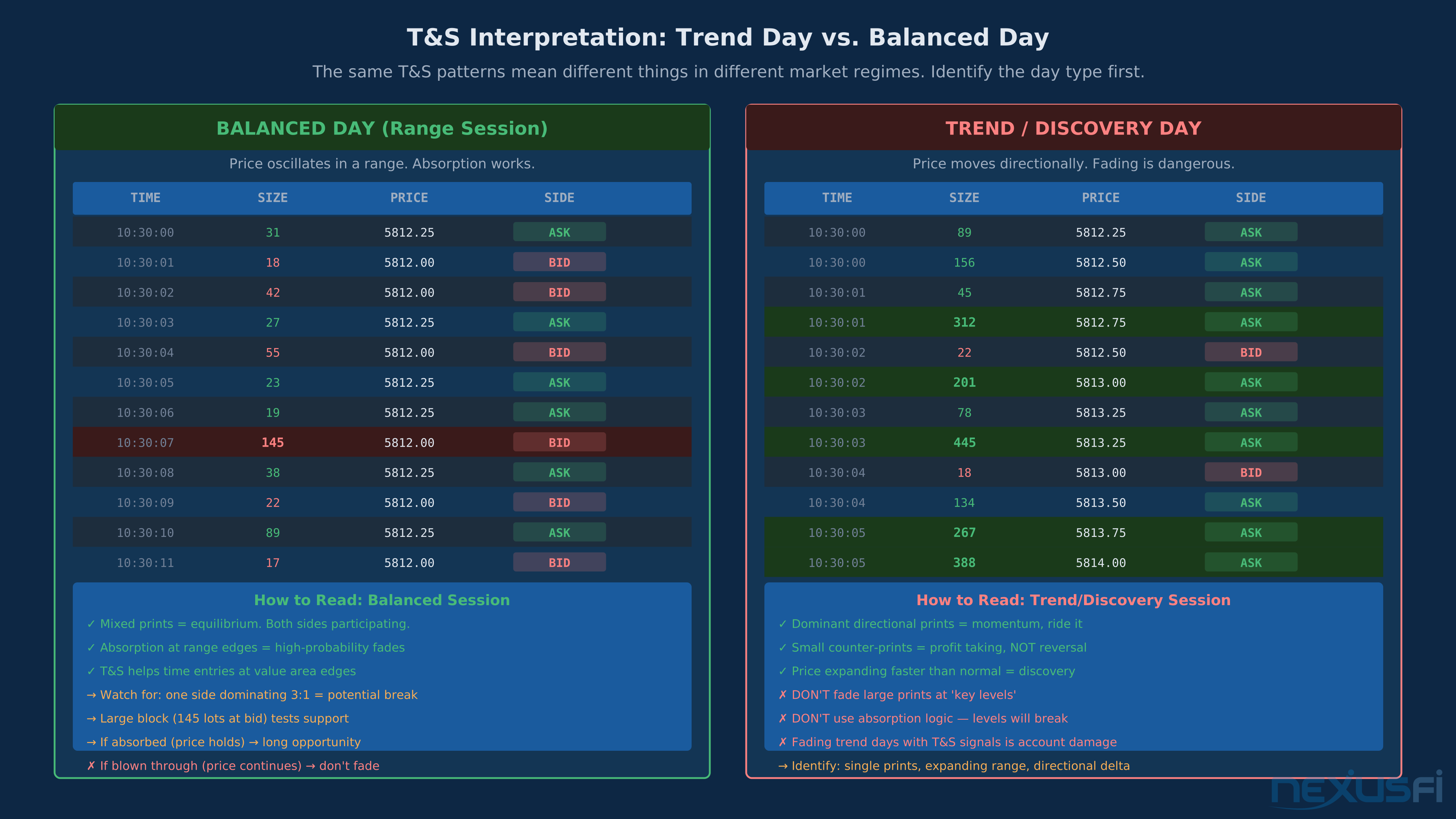
Tape reading works best in balanced, mean-reverting conditions. On trend/discovery days, large prints at levels often signal continuation, not reversal. Identify the day type before deploying T&S-based entries. Rangy, balanced RTH sessions give absorption setups the highest hit rate — roughly 65-70% based on community observation. Discovery days can drop that to coin-flip territory or worse.
Platform Reporting Differences #
Not all platforms show the same T&S data. Platform A might show aggregated data with a 10ms window. Platform B shows raw executions. Platform C shows the "dominant limit" side. You can look at three completely different presentations of the same market. Before trusting your T&S interpretation, understand what your platform is actually showing and what aggregation (if any) it applies by default.
The Information Gap #
What T&S cannot show: the full iceberg order book (hidden limit orders), the intent behind any trade (accumulation vs. distribution looks similar in the tape), and the algo complexity driving much modern execution. The tape is a partial picture — a useful partial picture, but not a complete one. Treating it as complete is the most common trap.
Practical Application #
Pre-Market Setup #
Before the open, identify the key levels for the session: prior day high/low, overnight high/low, volume profile levels, initial balance range (once established). These are the prices where T&S will be most informative. When the market approaches these prices during RTH, watch the tape actively.
Between key levels, reading T&S in real time is low-value. The market is trading at equilibrium prices and the tape reflects the background noise of retail activity. Save your attention for when price approaches the boundaries.
Entry Confirmation Protocol #
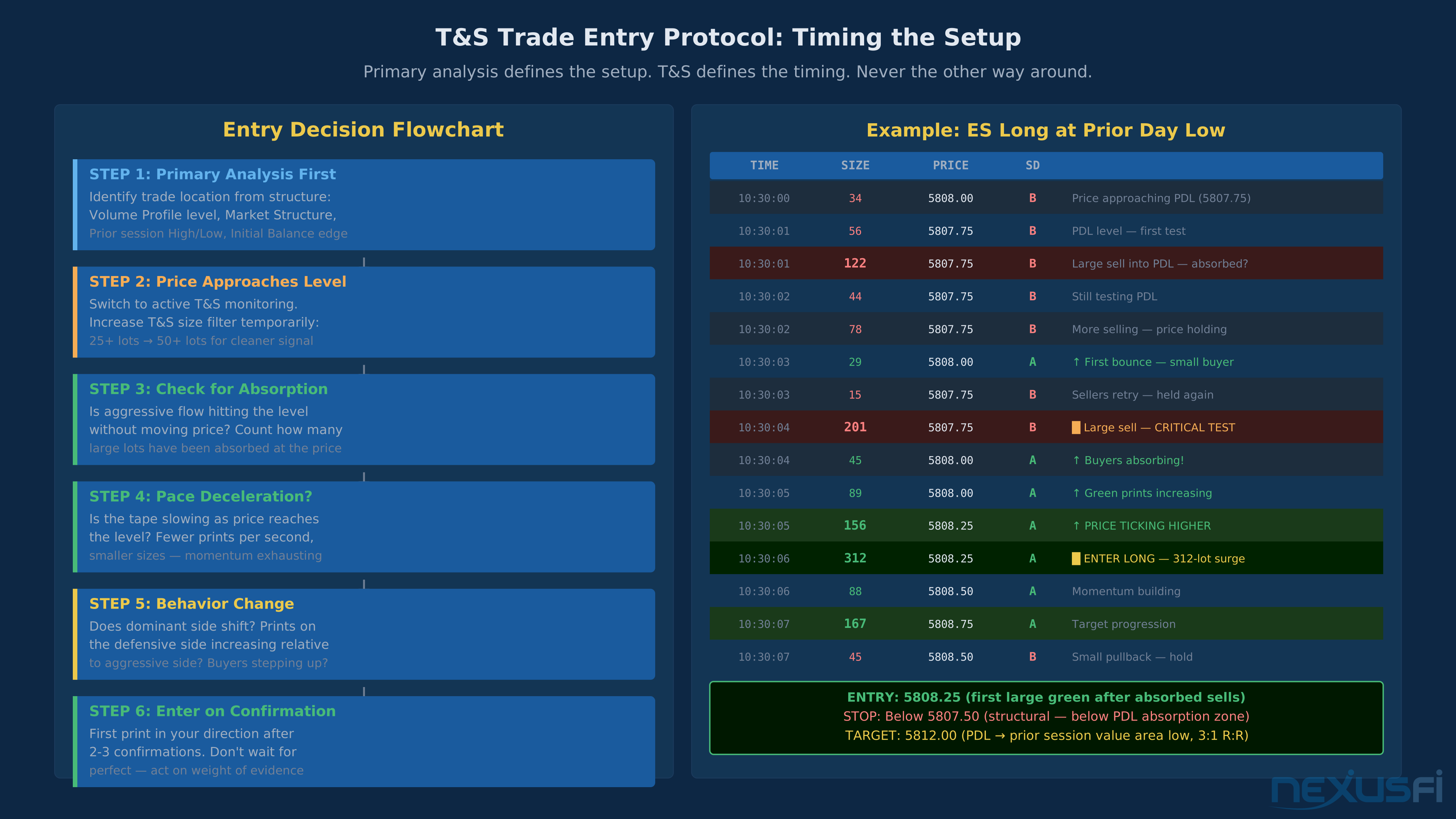
Trade off your primary analysis (volume profile, market structure, order flow, technical levels), but use T&S to time the entry:
- Price approaches a key level where you're looking to enter
- Watch for absorption: is aggressive order flow being absorbed at the level?
- Watch for pace: does the tape decelerate as it approaches the level?
- Watch for behavior change: does the dominant print side shift as the market tests the price?
- If 2-3 of these confirm, enter on the next print in your direction
- If the tape shows continuation (aggressive prints in one direction with no absorption), stay out
Stop Placement and T&S #
Your stop belongs behind a structural level, not based on T&S signals alone. But T&S can tell you when to exit early. If you're long and the tape suddenly floods with large aggressive sells at your entry price with no absorption, that's your position being wrong. You don't need to wait for price to take out your structural stop.
Conversely, if you're long and the tape at key resistance shows heavy selling getting fully absorbed — price not moving despite the volume — the buyers are larger than the sellers. Hold the position. The absorption at resistance tells you the market wants to go higher, not reverse.
Session-Specific Patterns #
Opening Range (9:30-9:45 AM ET): Most noisy period. Massive institutional order flow, peak HFT activity, tape frequently misleads because everyone is simultaneously positioning. Raise the size filter (50+ lots instead of 25+). Focus on pace (is the market auctioning aggressively in one direction?) rather than individual print analysis.
Mid-Morning (10:00-11:30 AM ET): Best tape-reading conditions. Institutions have positioned, HFT has settled into ranges, and the tape reflects actual directional conviction. This is where absorption setups at key levels have the highest hit rate.
Pre-Close (2:30-3:45 PM ET): Similar to the open — institutional re-positioning, index rebalancing, position squaring. Tape can mislead. Reduce position sizing during this window and wait for clear conviction.
Overnight/Globex: T&S thins dramatically. Prints that look large during RTH are genuinely massive during Globex. The tape during overnight sessions is more readable precisely because there are fewer participants, but the Globex activity may be less relevant to the RTH session to come.
Start with a single, properly filtered T&S window before adding complexity. A 25-lot minimum filter on ES, displayed next to your primary chart, gives you 80% of what's useful. Add the block-size second window after you're comfortable reading the primary stream. Complexity before comprehension produces confusion, not edge.
Knowledge Map
Prerequisites
Understand these firstGo Deeper
Build on this knowledgeReferences This Article
Articles that build on this topicCitations
- — Tape is my shape (tape reading, time and sales) (2011) 👍 9“Since 2009, large prints are no longer relevant on the T&S of any CME market. After 2009, you see 1 print for every limit order that 1000 contract market order was filled against.”
- — Tape is my shape (tape reading, time and sales) (2011) 👍 34“Depending on the context of prints will mean different things in different situations. Important information: location and price on which there are large prints.”
- — My Thesis on Tape Reading (2013) 👍 26“To me, it's all about where large size steps up to buy or sell the market, and the context of what has happened preceding it.”
- — Custom T & S Aggregation Indicator for Ninjatrader (2012) 👍 24“After October 4, 2009 reporting methodology of some instruments in CME was changed from intention basis to all executions basis. This easily fills T&S window with ones or other small orders hiding the big market order in noise.”
- — Aggregated Time & Sales (2012) 👍 114“The indicator shows 3 different size levels of prints: Normal prints above the minimum volume (set by user), Block prints (size set by user), Lot prints (size set by user).”
- — Aggregated Time & Sales (2012) 👍 30“The concept behind the pressure bar is to look at trades executed at bid versus trades executed at ask over a period of the last n ticks or seconds.”
- — Order Flow Journal (2012) 👍 9“600+ prints at 52.50 (BLOCK). This doesn't seem like aggressive shorting here, more like profit taking at a good spot.”
- — Aggregated Time & Sales (2012) 👍 8“Block Print - A big market order filled against a big limit order. Lot Print - An aggregate of smaller trades that when added together, become a big order.”
- — Tape is my shape (tape reading, time and sales) (2011) 👍 6“Scenario 1: 1000-lot market buy fills against fifty 20-lot limit sells. Scenario 2: 1000-lot fills against a 2000-lot sell limit. Scenario 1 is more bullish. Large prints indicate large PASSIVE sellers, not large ACTIVE buyers.”
- — Tape is my shape (tape reading, time and sales) (2011) 👍 7“What we care for is the type of behavior. Aggressive or passive and how market reacts to big limit orders.”
- — Design a DayTrader Scalping Order Flow Indicator (2021) 👍 11“Trade Flow Analysis represents Orders which have resulted in Retail Trade Executions. The goal is to find the imbalances which occur in inventory which changes hands between Retail players and Market Makers.”