



Footprint Charts for Futures Trading: Reading Bid/Ask Volume at Every Price Level
Overview #
Candlestick charts tell you where price closed. They don't tell you who drove it there.
A 5-minute ES bar that rallied 10 points — was that aggressive buyers lifting offers? Or passive sellers pulling their orders? The candlestick looks identical either way. The footprint chart shows you the difference, and the difference matters enormously for what comes next.
Footprint charts display the actual bid volume vs ask volume transacted at each price level within a candle. Where a standard chart shows you OHLC, a footprint shows you the full auction structure inside each bar — every price where contracts traded, how many hit the bid vs lift the ask, and what the delta was at each level.
This is the closest a discretionary trader can get to reading the tape within a chart. Institutions, spoofing, stop runs, absorption — they all leave fingerprints in the footprint data. Learning to read those fingerprints is what separates execution-aware traders from traders who react to price after the fact.
The platforms that do this well — Sierra Chart, NinjaTrader 8, ATAS, and Jigsaw — are covered in this guide. The platforms that don't (most of them) are also identified. Data quality matters as much as platform features, and getting the wrong feed produces footprints that lie.
How Footprint Charts Work #
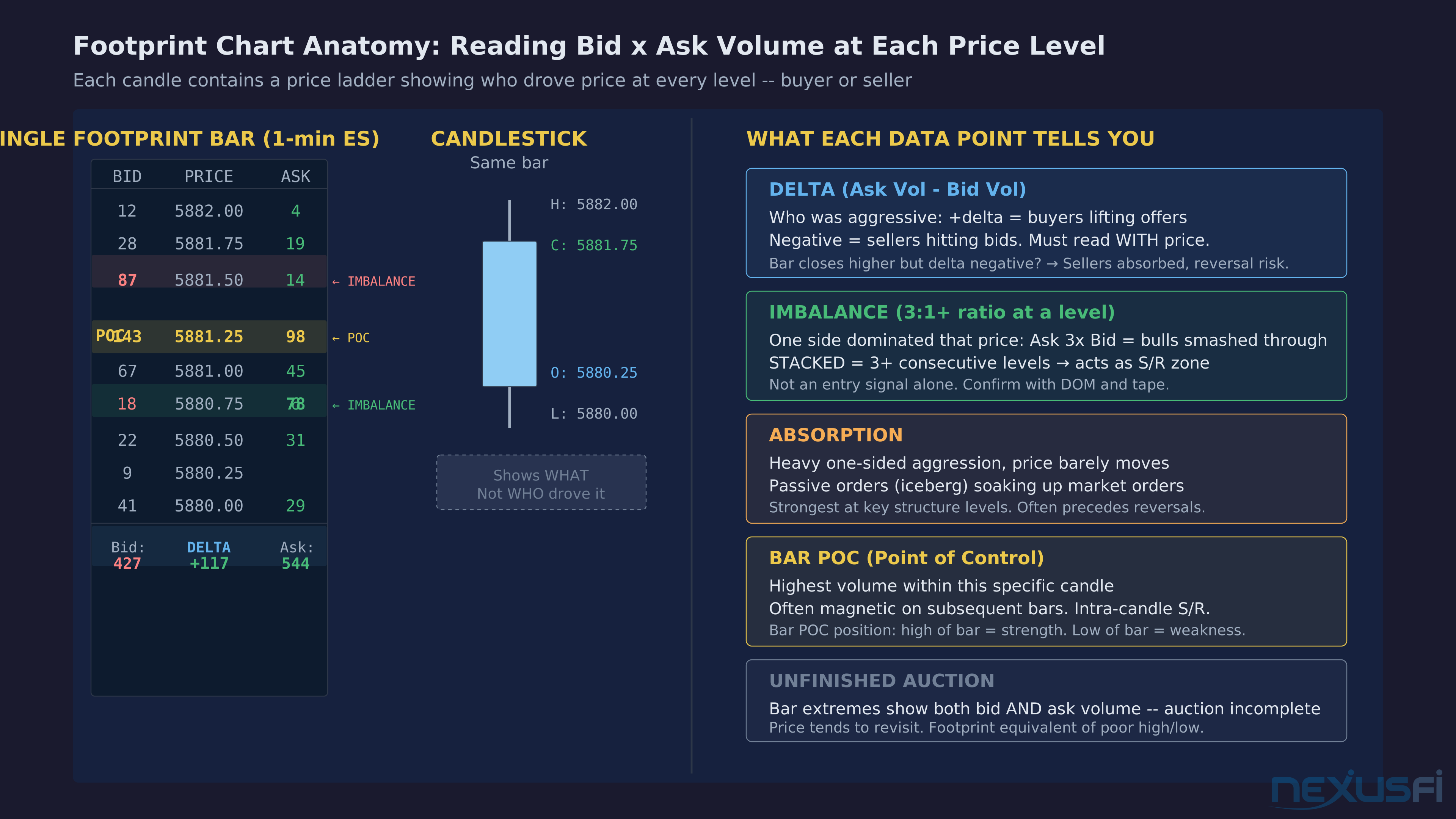
Each footprint candle contains a price ladder showing every level traded during the bar's time period. At each price, you see two numbers: bid volume (left) and ask volume (right).
When a market order to buy executes, it hits the ask — the ask volume count goes up. When a market order to sell executes, it hits the bid — the bid volume count goes up. The difference between ask and bid volume at each level is the local delta. The sum of all local deltas is the bar delta.
This matters because market orders are aggressive orders — they're the orders that move price. Limit orders provide passive liquidity, market orders consume it. Footprint charts show you the aggressive side of every transaction at every price.
Footprint accuracy depends entirely on data feed quality — specifically, whether the feed provides timely bid/offer updates alongside trade prints. The critical feeds for footprint accuracy are CQG, Rithmic (via IQFeed/Kinetick), and exchange direct. Feeds that don't provide accurate bid/offer updates produce footprints with misclassified trades. An aggressive buyer classified as a seller means your delta reads wrong at every level. This isn't a minor inaccuracy — it's a chart that actively misleads you.
Footprint data feeds classified as "accurate" for footprint construction (per NexusFi community testing): CQG, Kinetick (IQFeed-based), and Sierra Chart's Denali feed. TT (Trading Technologies) and some Rithmic sub-feeds have documented misclassification issues. Test in replay before trading footprint setups with any new feed.
Key Concepts: The Five Data Points #
Delta is the core metric. Bar delta = ask volume minus bid volume for the entire candle. Positive delta means more contracts were bought aggressively (market orders hitting the ask) than sold. Negative delta means the opposite.
But delta alone is just context — price action tells the story. A bar with high positive delta that closes at its high confirms aggressive buying. A bar with high positive delta that closes at its low is showing you something different: buyers were aggressive but lost the auction. The sellers absorbed them.
Imbalances highlight price levels within a bar where the bid/ask volume ratio is extreme — typically 3:1 or higher (varies by platform setting). When ask volume at a price is 3x or more than bid volume, that level is highlighted as a bullish imbalance. The reverse creates a bearish imbalance.
Stacked imbalances — where three or more consecutive price levels show the same directional extreme — act as potential support/resistance zones.
Absorption is the footprint's signature signal. It shows passive limit orders overpowering aggressive market orders — the hallmark of institutional buying at support or institutional selling at resistance.
Absorption looks like this: aggressive sellers are hammering the bid, delta is deeply negative, but price isn't moving down. Or moves only minimally. The negative delta is being absorbed by large passive buyers who keep refreshing limit orders at the same price. When absorption ends and sellers exhaust themselves, price reverses — not because buying came in, but because selling stopped.
[2] Iceberg orders at key levels produce exactly this absorption pattern.
Bar POC (Point of Control within a candle) is the price where the most volume traded inside that specific bar. The bar POC often becomes a short-term magnet for price on subsequent bars — a mini-version of the session POC from volume profile. When the bar POC sits near the candle's high, it signals sustained buying interest through the bar's range. Near the low, it signals sustained selling pressure.
Unfinished Auction (also called unfinished business) occurs when a bar terminates with both bids and offers at its extreme — meaning the auction wasn't complete. The market didn't find a one-sided answer at that level. Price tends to revisit unfinished auctions because the market still has business there. This is the footprint equivalent of a poor high or poor low.
[1] These four delta relationships — within bar, bar vs price, bar-over-bar, and price level — give a complete picture of who's winning the current auction.
Reading Footprint Setups #
Four setups form the core of footprint trading. None of them work in isolation — they require confluence with higher-timeframe context, key levels, and market regime identification.
Delta Divergence #
The most-discussed footprint setup. Delta divergence occurs when price makes a new high (or low) that isn't supported by the underlying delta direction.
Bullish divergence: price makes a new low on the current bar, but the bar closes higher than it opened AND the bar's delta is positive or less negative than expected. Sellers drove price to a new low but couldn't sustain it — aggressive buyers appeared and closed the bar in their favor.
Bearish divergence: price makes a new high, but the bar closes lower AND delta is negative or far less positive than the price move suggests. Buyers drove price higher but absorbed all the available sellers — and then some.
[5] A bar where selling pressure dominated the entire formation but price closed higher is showing trapped sellers — their covers become the next leg up.
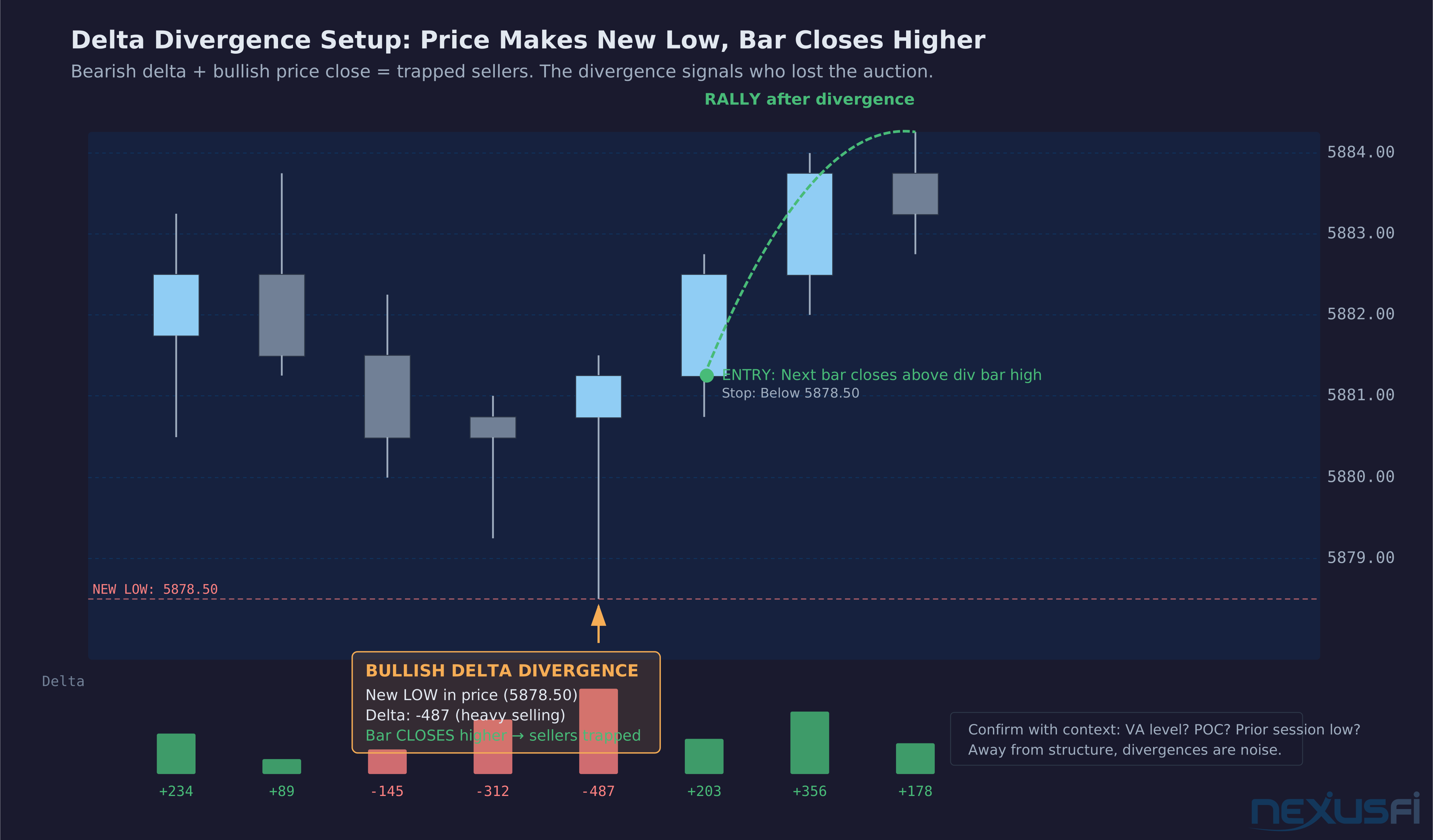
Delta divergence away from key structure levels is noise. The setup appears on almost every trending chart if you look hard enough. Reserve it for moments when price is testing a major level — Value Area edge, prior session POC, significant HVN, or overnight high/low. A divergence at 5882.25 on a random pullback means nothing. The same divergence at the Value Area Low after 3 failed tests is a setup worth taking.
Entry and stop: Wait for the next bar to confirm direction. The divergence bar is the signal — not the entry. Enter when the next bar closes in the direction of the divergence. Stop below the divergence bar low (bullish) or above the high (bearish). If the level fails, the divergence was wrong.
Silvester17's additional refinement: "all the above mentioned setups should NEVER be taken blindly. There are days you'll get countless delta divergences. And many of them will result in a loss. Without considering other factors, those divergences become unreliable." [5]
Absorption at Key Levels #
This is the footprint's most powerful signal when it appears at the right location. Absorption at a major support level often precedes the most explosive reversals because the sellers who've been hammering the bid start covering simultaneously when they realize they're trapped.
What it looks like: Multiple consecutive bars with deeply negative delta (aggressive selling) while price barely moves or makes very small increments lower. The bid volume at each price level is enormous — representing the iceberg buyers soaking up sell pressure.
Key tell: If bid volume at a single price exceeds any individual print you've seen on recent bars by a significant multiple, you're likely watching a large passive participant refresh their order. They want price, not market impact.
When absorption ends: Watch for a sudden shift. The next bar's delta often goes strongly positive as sellers cover and new buyers step in. The first bar that breaks structure to the upside after absorption often travels quickly — those who absorbed are now riding the position higher.
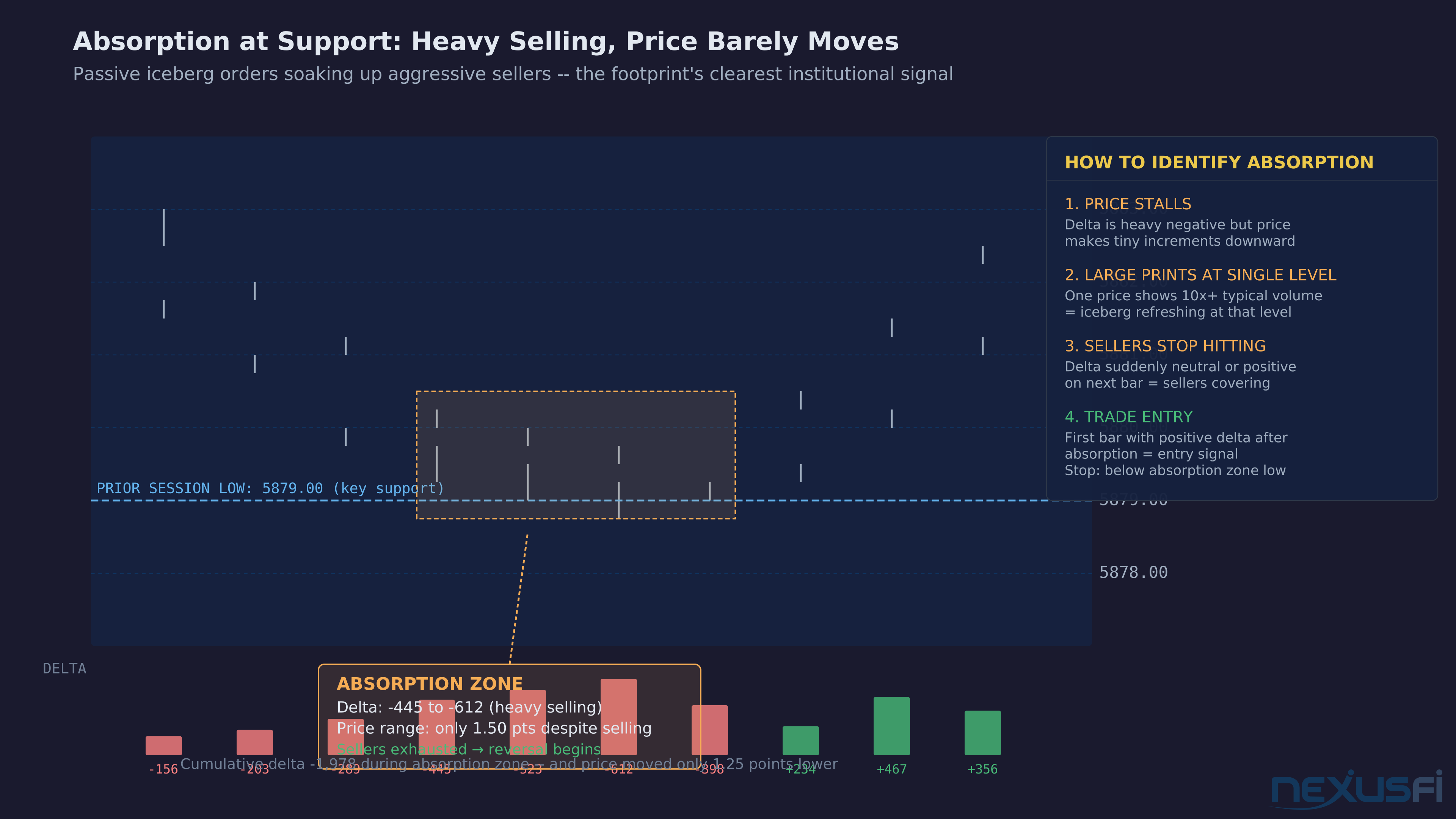
Position management using absorption: If you're already long and see absorption building below your entry, tighten nothing — the absorption is confirming your position. If absorption fails (price breaks cleanly below the zone with expanding volume), exit without hesitation. The iceberg that was supporting price is gone.
Stacked Imbalances as Support and Resistance #
When three or more consecutive price levels inside a bar show extreme directional imbalance, the cluster often acts as short-term support or resistance on subsequent bars. Think of it as the footprint's version of a High Volume Node — price was transacted heavily in one direction through this zone, leaving behind a reference point.
Set your imbalance threshold at 300% (3:1 ratio) as the starting default. Lowering to 200% floods your chart with weak signals. Raising to 500% makes valid imbalances invisible. After 2-3 weeks of observation, adjust based on the specific instrument and timeframe you trade — ES imbalances behave differently than CL or NQ.
For trade management: if you're long and price pulls back into a bullish stacked imbalance zone, it's typically a zone to hold through. If price breaks cleanly below the zone with heavy negative delta on the pullback, the setup is invalidating.
Zeros and One-Sided Bars #
Perhaps the most unambiguous footprint signal: a bar where entire price levels show zero volume on one side.
When you see zeros on the bidside during an up move, no market sell orders hit those levels — price moved through them exclusively via buy aggression. This is often a stop run — a price move that exists specifically to trigger stop orders stacked above/below a key level. Stop runs often reverse sharply once the stop pool is exhausted.
How to trade it: Don't chase a zero-bid run. Wait for the run to show slowing delta (ask volume drops off as the run completes) and look for the first bar with meaningful selling returning. That's the potential reversal setup — the shorts who got stopped out are now gone, and the remaining sellers can defend.
The four footprint setups — delta divergence, absorption, stacked imbalances, and zero-volume levels — all work the same fundamental way: they reveal who lost the auction. Delta divergence shows sellers who couldn't close the bar. Absorption shows sellers who got swallowed. Stacked imbalances show where aggression dominated. Zeros show where one side had complete control. Context determines which signal matters.
Platform Implementations #
Footprint chart quality varies dramatically across platforms. Here's the honest comparison based on community usage patterns.
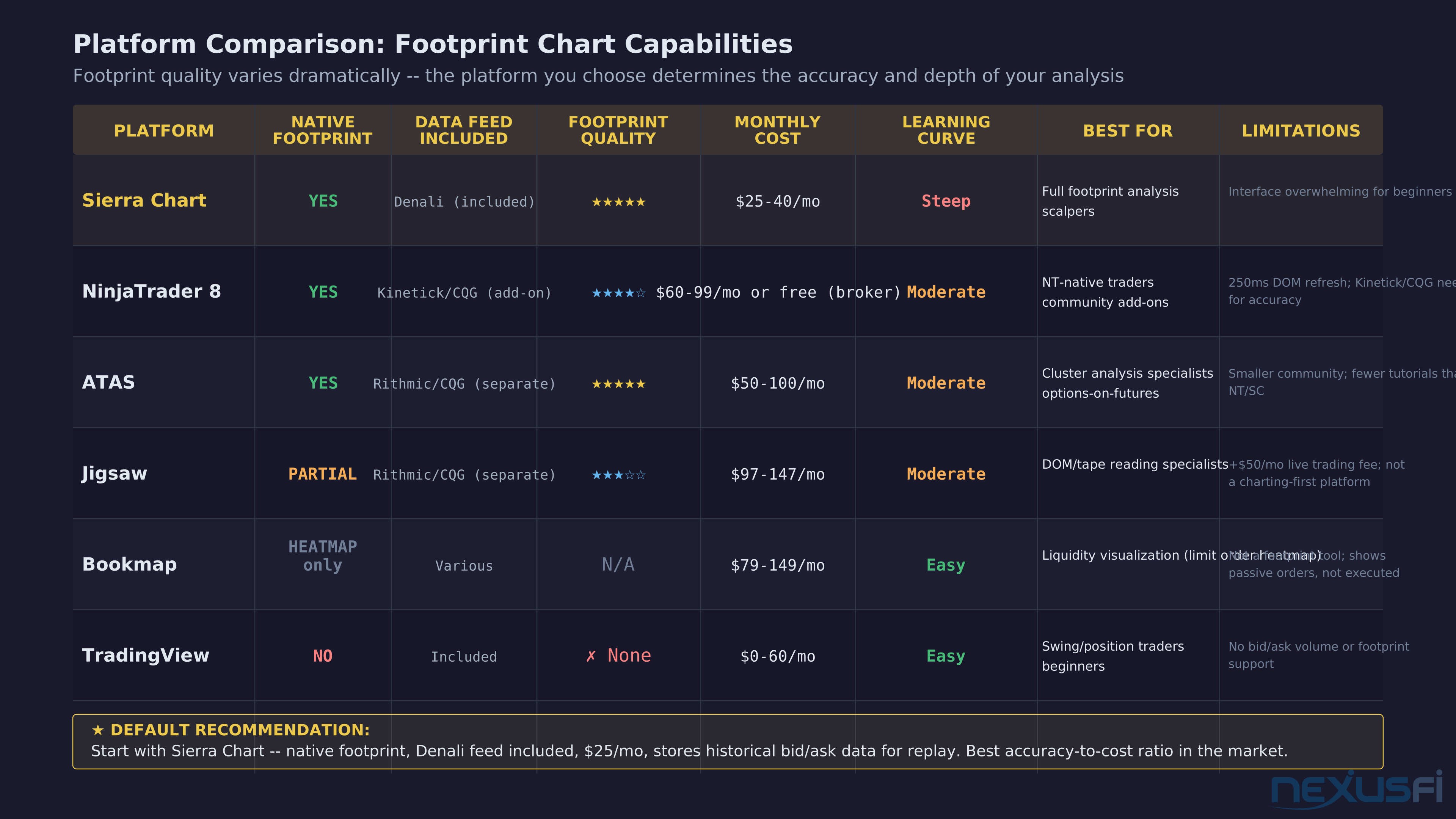
Sierra Chart — The gold standard for footprint accuracy, included with subscription (~$25-40/month with Denali data feed). Numbers bars in Sierra Chart support complete configuration: bid x ask display, delta coloring, imbalance highlighting, bar POC markers, and unfinished auction identification. Sierra stores historical bid/ask data, enabling replay analysis with full footprint reconstruction — a rare capability. The learning curve is steep. Sierra Chart is a science project with extensive customization requirements.
[9] The combination of native footprint support and historical bid/ask storage makes Sierra the default recommendation for footprint-focused analysis.
NinjaTrader 8 — Volumetric bars (NT's footprint implementation) are solid and have improved much across versions. The platform's order flow suite includes bid/ask volume, delta, and imbalance highlighting. Community add-ons like FootPrintV2 extend native capabilities. NT's 250ms minimum DOM refresh rate is a limitation for pure scalpers but doesn't materially affect footprint analysis at 1-minute or higher timeframes. Important: footprint accuracy requires Kinetick or CQG data — not all NT-compatible feeds produce accurate bid/offer classification.
ATAS — Purpose-built for footprint and cluster analysis. Strong imbalance and absorption detection. Works well with Rithmic and CQG feeds via AMP Futures or similar. Less common on NexusFi than Sierra or NT, but serious footprint traders often consider it.
Jigsaw Trading — Purpose-built for tape reading and DOM analysis, not footprint charting. Jigsaw's strength is the DOM and integrated heatmap — it does those things better than anyone. For footprint chart analysis with multiple candles and historical reference, Sierra or ATAS are more capable.
Bookmap — Specializes in liquidity visualization (heatmap of limit orders) rather than footprint charts. Different signal entirely: Bookmap shows where passive orders are sitting, footprints show where market orders have already traded. They complement each other but aren't substitutes. Don't choose Bookmap expecting footprint analysis.
TradingView — No bid/ask volume or footprint support. Its data architecture doesn't support the level 1 feed requirements for footprint construction. Swing and position traders using TradingView for chart analysis who want footprint capability need a separate platform.
When Footprint Fails #
The community is divided on footprint charts.
[10] This is a real critique. The footprint changes based on the time aggregation you choose. A bullish imbalance on a 5-minute footprint may be undetectable on a 1-minute footprint of the same period.
There's also no backtesting framework. You can't systematically test footprint setups across 10,000 bars the way you can test a moving average crossover. Every footprint trade requires discretionary judgment. That's neither a feature nor a bug — it's the nature of the tool.
Trend days destroy footprint reversal setups. When market internals are running hard — NYSE TICK above +1,000, ADD consistently positive, ES breaking from session low straight to high — delta divergences appear constantly and mean nothing. On a trend day, every pullback has some delta divergence, some absorption, some imbalance. The market doesn't care. It's going higher regardless. Applying footprint reversal logic on trend days is a reliable way to get short into a face-ripping move.
Identify the day type BEFORE applying footprint signals. On a balanced day (opening print inside prior session range, early range establishment), footprint signals at structure levels carry real predictive weight. On a directional day, footprint confirms trend entries but reversal signals are noise.
News events invalidate footprint analysis. During CPI prints, FOMC decisions, or NFP releases, the order flow becomes algorithmic chaos. Large market orders clear through multiple price levels in milliseconds. The footprint that builds during these events reflects machine execution patterns, not the human market participant behavior the signals are calibrated to read. Stay out of footprint setups in the 1-3 minutes surrounding major events.
On trend days, don't use footprint divergence and absorption signals for reversal entries. The footprint confirms trend continuation on trend days — delta thrusting higher with minimal pullback, imbalances stacking in the trend direction. Use these signals to enter WITH the trend, not against it.
Data quality creates false footprints. If you see patterns that "don't make sense" — aggressive buying coinciding with sharp price falls — your feed may be misclassifying trades. This isn't a subtle error. It inverts the signal completely. Test before trusting.
High imbalance threshold reduces signals, low threshold adds noise. The 3:1 default is the community consensus starting point. Trader experience on NexusFi suggests staying at 300% for at least the first month before adjusting — the initial instinct is always to lower it and see more signals. More signals mean more noise at low thresholds.
Getting Started #
The entry path for footprint trading is more deliberate than most charting approaches because data quality and platform setup directly determine what you're seeing.
Step 1 — Choose your platform. Sierra Chart with Denali feed ($25-40/month) is the best cost-to-capability ratio and the default recommendation from NexusFi's order flow community. If you're already in NinjaTrader 8, Kinetick data will give you accurate footprints on NT's Volumetric bars without a platform switch.
Step 2 — Learn replay before live. Sierra Chart's historical bid/ask data storage means you can replay any session with full footprint reconstruction. Before trading footprint setups live, spend 2-3 weeks in replay identifying the four setups at real structure levels on the instrument you'll actually trade. The setups look obvious in hindsight. They're much harder in real time.
Step 3 — Start with one instrument and one timeframe. ES on a 5-minute footprint at key session levels is the most studied setup in NexusFi's order flow community. The ES has sufficient volume for footprint signals to be meaningful — low-volume instruments produce noisy, unreliable footprint data because individual large orders create outsized delta swings.
Step 4 — Use context from higher timeframes. The footprint shows you the microstructure. Volume profile shows you where value is. VWAP shows you where the session average is. These three together create the context in which footprint signals have predictive value. A delta divergence at the VWAP from a session with balanced internals is a much higher probability setup than the same divergence floating in the middle of a range.
Step 5 — Log every footprint trade. Footprint trading is naturally subjective. Without a trade log showing the setup, context, and outcome, you can't identify your actual edge (or lack of it). After 50 trades, review the setup types — which setups are working, at which levels, in which market regimes. That review is where footprint skill actually develops.
Start your footprint education with the ES or MES during the 9:30-11:00 ET window. Volume is high, the footprint prints cleanly, and the structure levels (prior session POC, VWAP, Value Area) are well-defined. Evening sessions and low-volume periods produce footprints that look meaningful but often aren't.
Knowledge Map
Prerequisites
Understand these firstGo Deeper
Build on this knowledgeReferences This Article
Articles that build on this topicCitations
- — Understanding Footprint Charts / Number bars (2020) 👍 21“Things you should look for on a footprint bar: What delta means in each bar. What delta means in relation to price. What delta means between bars. What delta means at each price level. What absorption looks like.”
- — Volume Profile and Footprint discussion (2012) 👍 21“Just imagine trading in the pit and the orders coming through are aggressive sellers pushing the market down. Price then hits a level that a buyer steps in aggressively and buys/absorbs every order coming in until the sellers back off.”
- — FootPrintV2 Chart for NT8 (2022) 👍 31“Delta: Do we have more aggressive buyers or sellers? Absorption: Even if the market is moved by aggressive buyers or sellers, there is always a buyer and a seller for each transaction. Passive orders can stop and even reverse a move.”
- — Foot print question (2016) 👍 4“What I like to see is stacked imbalance (imbalance over two or three price levels). When in a trade it is nice to see stacked imbalances in the direction of your trade.”
- — GOMI all NT7/8 & SC; MP & Orderflow (2016) 👍 24“if the market goes down and you have a price bar with aggressive selling, but the bar closes higher, that would be a bullish divergence. all the above mentioned setups should NEVER be taken blindly. without considering other factors, those divergences become unreliable.”
- — Zenfire no more? (2014) 👍 5“It is only by having an accurate, up to date view of the inside bid & offer that you are able to build an accurate footprint chart. Trades come in on the level 1 feed with 3 pieces of information -- time, price, volume -- there is no 'side' on the level 1 feed.”
- — PA Dax CL, ES and Bund Price Action Trading Log (2022) 👍 6“All those zeros on the bidside from 3856.25 up to 3860 indicate that that was a straight one-way move higher fueled by market order buys. Pretty safe to assume these were stops.”
- — Sierra vs jigsaw (2023) 👍 7“Sierra Chart is the Swiss army knife of trading platforms with extensive, highly developed charting capabilities; Jigsaw has a deep focus on the DOM and tape. If order flow is your thing, Jigsaw is the way to go; for superior charting, it's Sierra Chart.”
- — Sierra vs. Ninja : why I chose ..... (2014) 👍 15“I am switching to Sierra Charts for the following reasons: Included Volume and Market Profile Charts, Included Volume Footprint Charts, SC Stores historical bid/ask data.”
- — Has anyone tested the new order flow tools from Ninja? (2018) 👍 5“Volume imbalances for example across price levels have so much variability. Depending on what data series you use, trade size filter etc. the footprint of the market will vary greatly from one time frame to another. So one trader's bullish imbalance is another trader's bearish absorption.”