



Time and Sales for Futures Trading: Reading the Tape in Real-Time
Overview #
The time and sales window is the oldest tool in electronic trading — the raw, unfiltered record of every executed transaction in real-time. Every print shows the timestamp, price, and size of a matched trade. Professional tape readers use it to answer one question that no chart can: is this price level actually holding, or is it about to break?
The tape doesn't predict. That distinction matters more than almost anything else in how you use it. Charts show you what already happened, aggregated into bars. The tape shows you what's happening right now, print by print, and whether buyers or sellers are the aggressors. Done right, tape reading is the closest thing to watching the actual fight between buyers and sellers in real-time — before the chart catches up.
Most traders ignore it. The traders who do it well have spent months calibrating their eye for one specific instrument. They're not looking for magic patterns, they're reading execution evidence and building a contextual picture of who's in control and where the real levels are.
This article covers the mechanics of the T&S window, how to read prints in context, the four core patterns professional tape readers use, how to filter for signal vs. noise, and where the tape ends and adjacent tools like the DOM and footprint charts begin.
Anatomy of the Time and Sales Window #
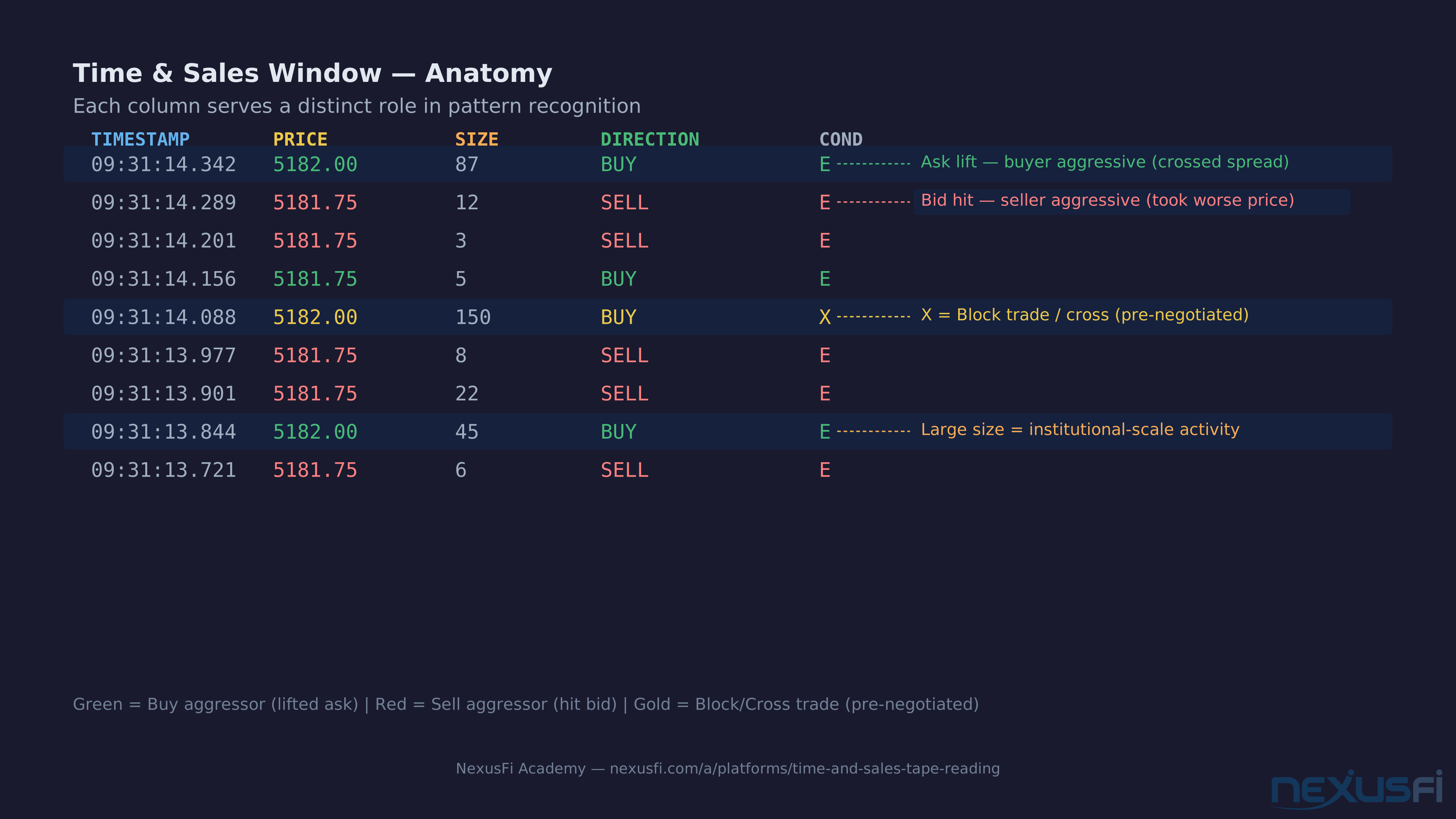
The standard time and sales window has five columns: timestamp, price, size, direction (bid/ask), and often condition codes. The basics are consistent across platforms, but implementation details vary enough to matter.
Timestamp — Exchange time vs. local system time. On professional feeds (CQG, Rithmic), the timestamp reflects when the exchange processed the trade, not when your platform received it. That matters when you're watching rapid prints at a key level — the sequence is what's relevant, not the exact milliseconds.
Price — Where the trade executed. Context is everything. A print at 5180.25 on ES means something completely different depending on whether that's the high of the morning session, a reclaimed level from yesterday, or random mid-range noise.
Size — How many contracts traded in that print. On ES, one print might show "2" — two contracts, retail noise. Another shows "87" — institutional-scale activity. The number alone tells you little, the context and sequencing of size is what matters.
Direction (bid/ask coloring) — Whether the trade hit the bid (sell aggressor) or lifted the ask (buy aggressor). Green typically means the trade happened at the ask — a buyer was aggressive enough to cross the spread. Red means the bid was hit — a seller wanted out fast enough to take the worse price. This is the most important column on the tape.
Condition codes — Flags for non-standard prints. Common ones: E (regular, standard execution), O (odd-lot, below standard round lot), T (trade-through, executed outside the NBBO), X (cross, pre-negotiated block trade). For most intraday futures traders you'll see mostly E prints. The X code matters most when institutional block activity is relevant to your read.
Refresh and scrolling behavior — Count-based windows show the last N prints. Time-based windows show everything in the last X seconds. Serious tape traders typically use count-based windows (100-200 prints) and watch the scroll speed as much as individual prints. When the tape scrolls fast, the market is active. When it crawls, it's dead. That rhythm tells you as much as any individual print.
The tape is a scrolling list that shows what's already done, but the speed of the scroll tells you what's happening right now. Most traders focus on individual prints and miss the rhythm entirely. Professional tape readers watch the scroll rate as much as the individual lines — the pace is the first signal.
Reading Prints: Price, Size, and the Aggressor Side #
Three things every print tells you: price location, size, and who was aggressive. The interaction of those three creates the patterns that matter.
Price Location Matters More Than the Print Itself #
Price location is everything. A 50-lot print at a random mid-range price means almost nothing. The same 50-lot print at the high of the session, the VWAP, or a key resistance from yesterday's close — that's worth watching carefully. The tape gives you execution evidence, the chart context tells you whether that evidence matters.
Professional tape readers maintain a mental map of key levels before the session opens. Yesterday's close, the overnight high/low, the developing VWAP — when price approaches those levels, they switch attention to the tape. Away from key levels, the tape is mostly background noise.
Size Interpretation: Relative, Not Absolute #
The biggest mistake newer tape readers make is hardcoding a size threshold and treating everything above it as "institutional." On ES, 50 contracts might be meaningful. On CL (crude oil), 10 contracts at pace can be more significant than 50 on ES — CL has a thinner book. On ZB (30-year bond), even 5 contracts in a single print can move the market during quiet periods.
@chasepatrol on the NexusFi Emini forum has a practical approach: "I have a strict filter on the T&S for ES contracts. It only shows me orders of >= 100 contracts on the T&S tape and gives me an acoustic ping on >=500 contract orders. I am only interested in market action that really matters."
The specific numbers don't transfer to other instruments or other traders' styles — but the philosophy does. Calibrate to what matters for your instrument in your session.
The Aggressor Side: Who's Doing the Work #
Bid/ask coloring is simple to read and endlessly useful. Green (ask hits) means buyers are paying up to get filled. Red (bid hits) means sellers are willing to take the worse price to get out. Persistent one-sided prints at a level — especially when accompanied by no price movement — is one of the cleanest signals the tape produces.
Bid/ask classification varies by platform. Some use exchange trade direction flags, others infer from midpoint comparison. For borderline prints near the spread, classification can flip depending on your feed. Treat bid/ask coloring as a strong signal, not a guarantee.
During economic releases (NFP, FOMC, CPI), bid/ask classification can break down. Prices move faster than classification algorithms can accurately assign direction. In the first 30-60 seconds after a major number, the tape can show contradictory color patterns that are artifacts of the data feed, not actual market behavior. Don't trade off tape signals during that window.
@josh from the Traders Hideout thread has the right framing: "Tape reading and interpreting volume is not as simple as 'follow the big orders.' If it were, then it would be too easy to make money. Price can move up or down, and for a much longer time than one might expect, on low volume."
The tape is execution evidence. It's not a prediction engine. Size and direction tell you what happened, not what's about to happen. Context — where you are in the session, the market structure, the day type — converts execution evidence into a trading signal.
The Four Core Patterns Every Tape Reader Uses #
After mechanics come the patterns. These four are the foundation of tape reading in futures — everything else builds from here.
Pattern 1: Absorption #
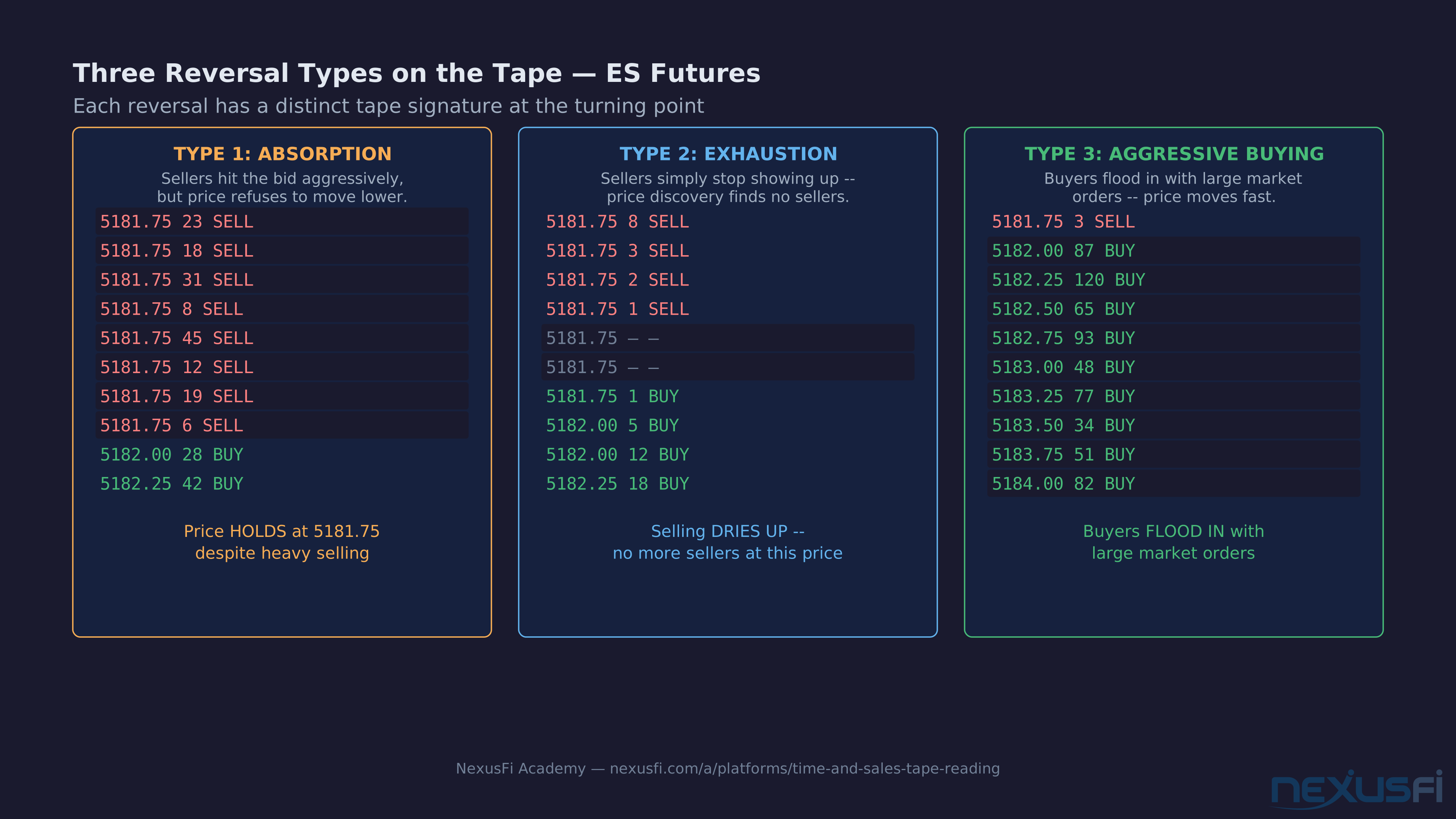
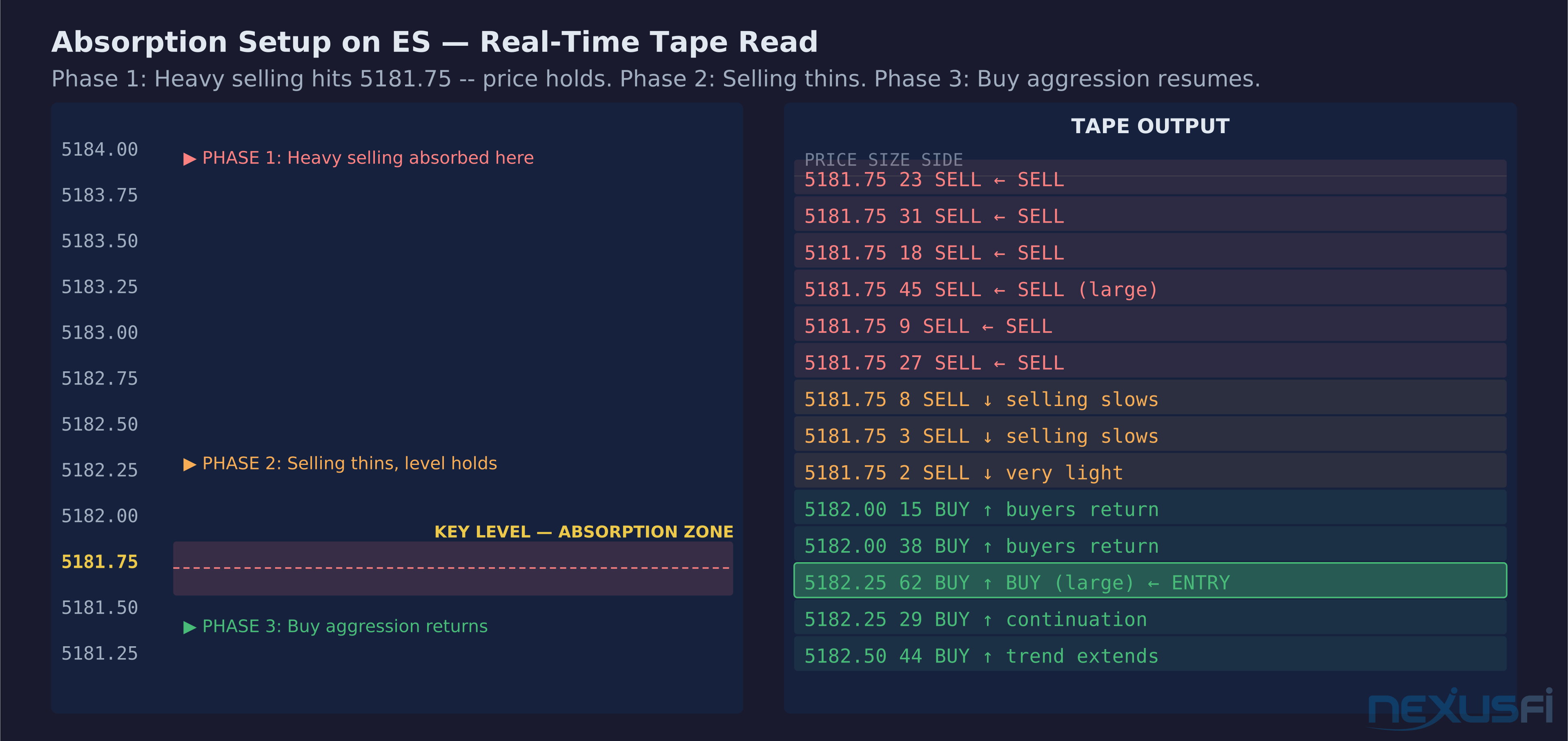
Absorption is the single most useful tape pattern. It looks like this: aggressive selling (red prints) hitting a price level repeatedly, but the price doesn't move down. The sellers are being absorbed by resting limit buy orders. Those limit buyers are willing to take the other side of every incoming sell market order.
Absorption is the market equivalent of a dam holding water. Aggressive sellers are the water, limit buyers are the dam. As long as the dam holds, the price level holds. When the dam breaks — when the limit buyers finally cancel and walk away — price drops fast because there's nothing absorbing the selling.
Trading absorption: You're watching a fight in real-time. You don't know who wins until one side quits. The trade comes when sellers start weakening — the red prints thin out or stop — while the price level holds. That's the setup. Entry comes when buyers reassert (green prints start returning), stop goes below the absorption level. If the level breaks anyway, that's your stop — clean and logical.
Where absorption fails: On trend days, absorption at a level looks identical to absorption during a range day, but the outcome is opposite. Trend-day absorption gets overwhelmed by continuation selling. Fading absorption during a trend day is how retail tape readers blow accounts. Identify trend days early before deploying absorption fade setups.
Pattern 2: Breakout Validation #
When price pushes through a level, the tape tells you whether the breakout is real or a sweep that's about to snap back.
Real breakout: Clean green prints as price pushes through the level, no immediate pullback, pace stays elevated as price moves away. Buyers are crossing the spread to get long above the level — they're not waiting for a better price.
Fake breakout (liquidity sweep): Rapid green prints at and above the level, followed immediately by reversal. The market ran stops above the level, triggered shorts to cover, and then original selling pressure reasserted. The tell is the immediacy of the reversal: if price can't hold above the level within 2-3 prints, the breakout is suspect.
@Orion from the Emini and Emicro Index forum puts the practical application clearly: "The simplest and most logical rule to follow when playing the breakout is: if it doesn't break, get out. If price approaches the high at a rapid enough pace and there is large size stepping up to buy on the tape a couple ticks off, I would be more likely to try and play the breakout — and if it doesn't break and push through, I will scratch the trade."
Pattern 3: Pace Shift (Regime Detection) #
The tape's scroll speed is information before price movement. When the tape goes from 3-5 prints per second to 20+ prints per second, something changed. That acceleration means different things in different contexts:
- Acceleration toward a level with directional follow-through: Trend attempt in progress
- Acceleration at a level with rapid price reversals: Stop-running and churn
- Acceleration followed by sudden deceleration: Exhaustion move, potential reversal
The pace shift pattern is especially useful around the open and around key levels. At the ES open, the first 2-3 minutes often feature high tape speed regardless of direction — that's initial order flow clearing from overnight positioning. Once pace settles into a rhythm, the tape becomes readable. Traders who try to tape-read the first 30 seconds of the open routinely get chopped by the noise.
"Time compression" — rapid acceleration in print rate — often precedes volatility expansion. The market telegraphs that something's happening before the chart shows a clear breakout. Watching the tape during a slow consolidation near a key level and seeing it suddenly accelerate is often the first signal that a breakout attempt is underway — before the candle confirms it.
Pattern 4: Liquidity Vacuum #
Rapid directional price moves with increasing speed but small, scattered print sizes can signal a liquidity vacuum — the market is moving fast because there's nothing in the way, not because of overwhelming buying or selling pressure. Vacuums often resolve with sharp reversals.
A fast tape during a rapid directional move is tempting to chase. Inexperienced traders see the speed and think they're missing a strong move. But a vacuum move — rapid price action on scattered small prints — is often a fade setup, not a follow setup. Check participation: are prints large and consistent, or small and scattered? Scattered small prints during a fast move often mean the market is running stops through thin air. That's a fade, not a follow.
The four core patterns: absorption (level holds against selling/buying pressure), breakout validation (real vs. liquidity sweep), pace shift (regime change detection), and liquidity vacuum (move on thin participation). Each pattern has an opposite interpretation depending on context. The tape gives you the data, but you supply the context — day type, market structure, VWAP, session phase. Without context, the tape is just numbers scrolling.
Filtering the Tape: Signal vs. Noise #
Raw tape is overwhelming. On ES during the open, you'll see 15-20 prints per second. Filtering is mandatory — but filtering changes what you're seeing, and that matters.
Size Filters #
The most common filter shows only prints above a threshold. Set too low and you still see noise. Set too high and you miss context — a level can be absorbed by many small prints rather than a few large ones, and a high size filter misses that pattern entirely.
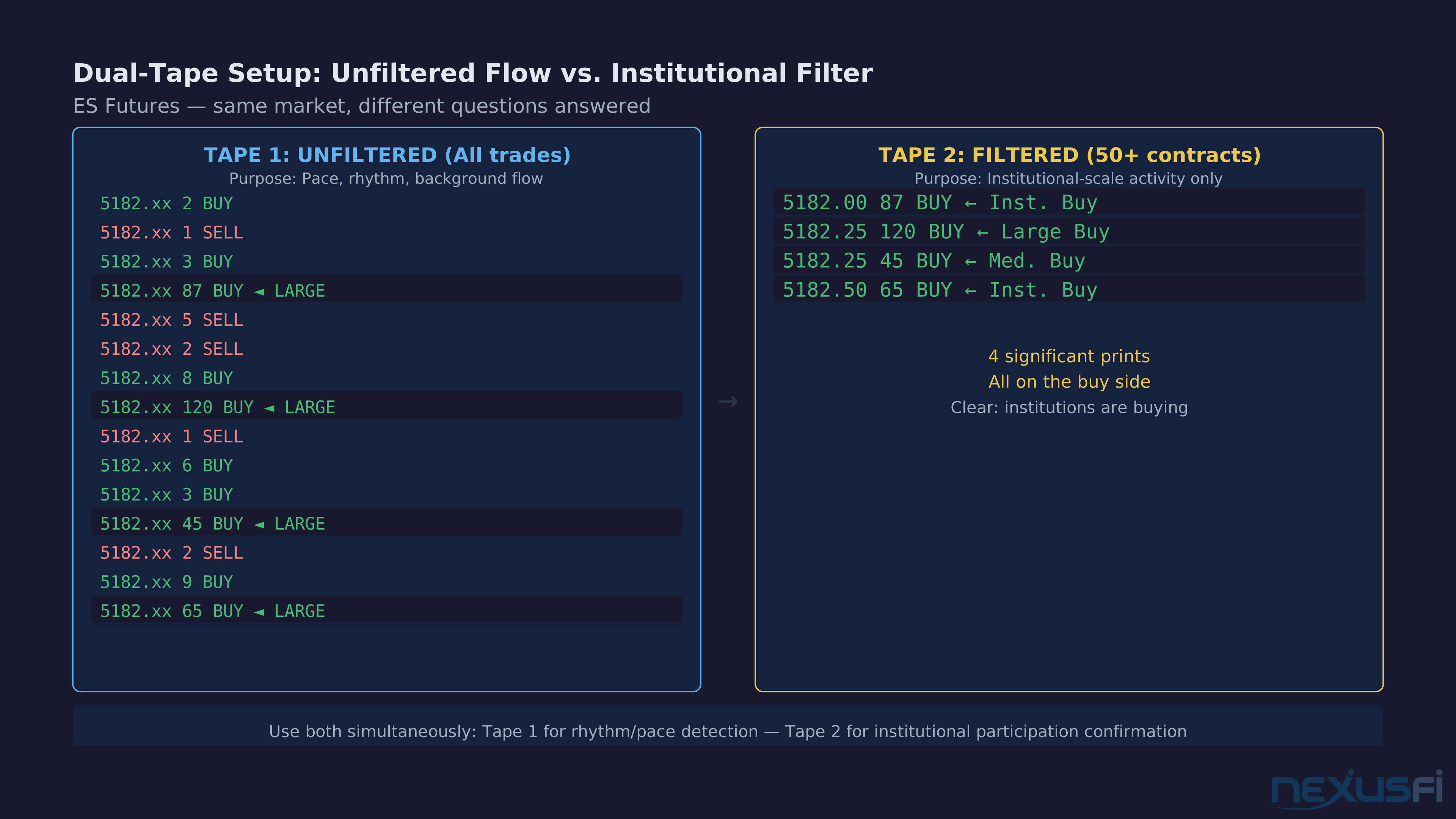
The professional approach: use two tape windows simultaneously. A filtered tape (above your calibrated threshold) for watching institutional-scale activity, and a raw or lightly filtered tape for watching pace and rhythm. The filtered tape tells you when big players move. The raw tape tells you when the market is active vs. dead, and catches absorption patterns that happen through many small-lot prints.
Calibration starting points by instrument:
- ES: Filter at 20-50 contracts for first pass, serious institutional activity at 100+ lots
- NQ: Similar to ES but slightly lower absolute thresholds due to higher per-contract notional value
- CL: 10-20 contracts at pace is meaningful, thin book means smaller lots matter more
- ZB/ZN: 5-10 contracts can be relevant depending on session liquidity, major data events require recalibration
These are starting points. Your calibration should come from observation of your specific instrument, not copied from someone trading a different size in different conditions.
@chasepatrol on NexusFi runs a >=100 lot filter on ES with an acoustic alert for >=500 lot orders. That's a valid approach for traders focused on institutional-scale activity. For traders who also need to read rhythm and pace, a second unfiltered tape runs alongside. The question isn't which filter is "right" — it's what question you're trying to answer with the tape at that moment.
Session and Time Filters #
Many platforms allow filtering by time-of-day or session type. For most futures traders, separating RTH from globex (extended hours) makes sense because overnight prints come from a completely different liquidity regime. A 50-lot print at 2 AM on ES is not the same market signal as a 50-lot print at 9:40 AM ET. Mixing print contexts leads to misreads.
Aggressor-Only Views #
Some platforms allow showing only bid-hitting trades or only ask-lifting trades. This is useful as a focused view during a specific setup — watching only selling pressure at a resistance level, for example — but it removes context about the other side's behavior. Use it as a directed lens, not your primary tape.
The key point about filtering: filters change your perception of what's happening. A tape with a 50-lot size filter looks like the market is quiet when the same market, unfiltered, shows continuous small-lot aggression building toward a level. Both pictures are accurate, but they tell different stories. Know what you're looking at before drawing conclusions.
Platform-specific filter persistence matters practically. If your platform resets filters on restart, you're one crash away from watching raw unfiltered tape at the worst possible moment. Configure your size and session filters in a saved layout that loads automatically on startup. Losing money because your filter reset during a fast market is genuinely avoidable.
What the Tape Doesn't Show (and What To Do About It) #
The tape shows executed trades. It does not show resting orders. That's a fundamental limitation that shapes everything about how you use it.
The 10,000 contracts sitting on the bid at a key level, waiting to absorb selling? Not visible on the tape until trades print into them. The 500-lot iceberg refreshing at the offer? Not on the tape until it starts getting hit. You're seeing results, not intentions.
Icebergs #
An iceberg order shows only a fraction of its true size at any moment. When the visible portion fills, the algorithm immediately refreshes the same size. What you see on the tape: repeated prints of identical or similar size at the same price level, over and over, while the price holds. What's actually happening: a single large order absorbing everything that hits it.
@ZTR from the Traders Hideout described the practical approach: "When I am ready to make a trade I put most of my concentration on watching the T&S window, to make sure the price action is appropriate for entering a position." The repetitive pattern at a level is the iceberg signature — the tape is showing you the tip of the order.
Block Trades #
Institutional block trades often clear through special mechanisms (CME block trade facility, Exchange for Physical agreements) that may show on the tape with condition codes (X for cross) at different timestamps and prices than the prevailing market. These can look like anomalous prints that don't fit the current market context — because they don't. They reflect negotiated transactions, not real-time auction prices.
The DOM Fills the Gap #
What the tape doesn't show, the DOM partly reveals. The DOM displays resting limit orders at each price level — the 10,000-lot bid is visible there even though it doesn't appear on the tape until trades print into it. Professional traders use tape and DOM together, not one or the other.
The tape answers: what happened? The DOM answers: what's available? When a tape absorption pattern is confirmed by visible limit buying on the DOM at that exact level, the probability of a genuine support level is substantially higher than the tape signal alone.
The tape and DOM are complementary data streams, not alternatives. Tape absorption (red prints at a level, price holds) is a higher-probability signal when the DOM shows a visible large bid at that level. Tape absorption without DOM confirmation is more ambiguous — the resting buyer could be an iceberg hidden from the DOM, or you could be misreading the pattern. Confirmation improves the odds much.
Footprint chart tools for futures trading — what each shows and when to use each tool" loading="lazy" width="800" height="450"> 
Instrument-Specific Calibration #
The tape behaves differently depending on the instrument. Size thresholds, pace expectations, and pattern reliability all vary. Using ES calibration on CL is a reliable way to misread both markets.
ES (S&P 500 E-mini) #
The deepest, most liquid futures market. Tick size is 0.25 points ($12.50/tick). Individual prints of 100+ contracts are common during busy sessions. Meaningful "big" prints during RTH typically start around 50-100 contracts depending on session phase. The open (first 30 minutes) has an entirely different pace than the late-morning doldrums or the final hour.
ES tape patterns are the most studied and so the most arbitraged. The absorption pattern still works, but setup-to-payoff is tighter than it used to be. High-frequency algorithms are frequently on the other side.
NQ (Nasdaq E-mini) #
Similar mechanics to ES but with higher volatility and slightly thinner book depth. The NQ tick value ($5.00/tick) means institutional players achieve the same dollar exposure with fewer contracts. Print sizes that matter on NQ tend to be smaller in absolute terms than ES, but the per-contract price impact is higher. NQ reacts more sharply to tech earnings and FOMC — tape patterns during those events are less reliable than on normal days.
CL (Crude Oil) #
Energy futures at 1,000 barrels per contract, tick size $0.01 ($10/tick). CL is much thinner than ES — 50-lot prints have an outsized market impact. The tape on CL shows cleaner patterns around inventory report times (Wednesday 10:30 AM ET), but those windows are also the most treacherous. The move often happens faster than you can process the tape prints. Trade the pre-report setup using the tape, then stand aside for the actual report.
ZB/ZN (Treasury Bonds and Notes) #
Fixed income futures have unique tape dynamics. ZB (30-year) is thin — even 10-20 contract prints can be significant. ZN (10-year) has much better liquidity. Fixed income responds strongly to economic data. During FOMC and NFP, the ZB tape becomes basically unreadable — speed overwhelms any pattern recognition. Trade fixed income tape reading outside of major data windows.
When first learning tape reading, pick ONE instrument and stick to it for at least three months. The calibration required to read ES tape is completely different from CL calibration. Jumping between instruments resets your baseline constantly and extends the learning curve much. Master one market's tape before adding another.
When the Tape Fails You #
Knowing when NOT to use it matters as much as knowing how to read it.
Trend Days #
On a strong trend day — single-directional price movement with an expanding range — the tape runs continuously in one direction. Absorption patterns that normally signal support get overwhelmed by trend continuation. Fading absorption on trend days is how retail tape readers blow accounts. The pattern looks textbook, the market doesn't care.
Identify trend days early: strong directional open, expanding range with few meaningful pullbacks, VWAP acting as a magnet rather than a mean-reversion target. Once you identify a trend day, flip the tape reading approach — look for brief pauses in the tape (temporary absorption exhaustion) as entry points to join the trend, not fade it.
Economic Data Releases #
In the 30-60 seconds immediately following major economic data (NFP, FOMC, CPI), the tape is basically unreadable. Algorithmic responses fill prices in microseconds before human tape readers can process what they're seeing. Patterns in this window are often artifacts of the algorithmic response, not tradeable signals. Wait 60-90 seconds after the number before the tape becomes useful again.
Low Liquidity Periods #
Overnight futures trading (2-5 AM CT for US markets) has thin liquidity. The same print size that's noise during RTH can move the market much during globex. Patterns from overnight sessions don't generalize to RTH behavior. If you trade overnight, recalibrate size thresholds and pattern expectations entirely.
High-Correlation Volatility Regimes #
When the VIX is above 30, correlation between equity index futures rises and individual tape patterns become less reliable because the market is moving on macro fear rather than specific price-level dynamics. The tape still shows execution evidence, but behavioral patterns (absorption, breakout validation) become less predictable.
One of the more dangerous tape reading failure modes is pattern matching during high-correlation fear environments. A perfect-looking absorption setup during a VIX 40 selloff looks identical to absorption on a normal day. But during the selloff, the "absorption" you're watching may simply be a pause before another wave of institutional selling. Context always trumps pattern. During fear-driven markets, reduce tape-based fade setups and tighten stops aggressively.
Tape vs. DOM vs. Footprint: When to Switch Tools #
The tape, DOM, and footprint charts each show different aspects of the same market activity.
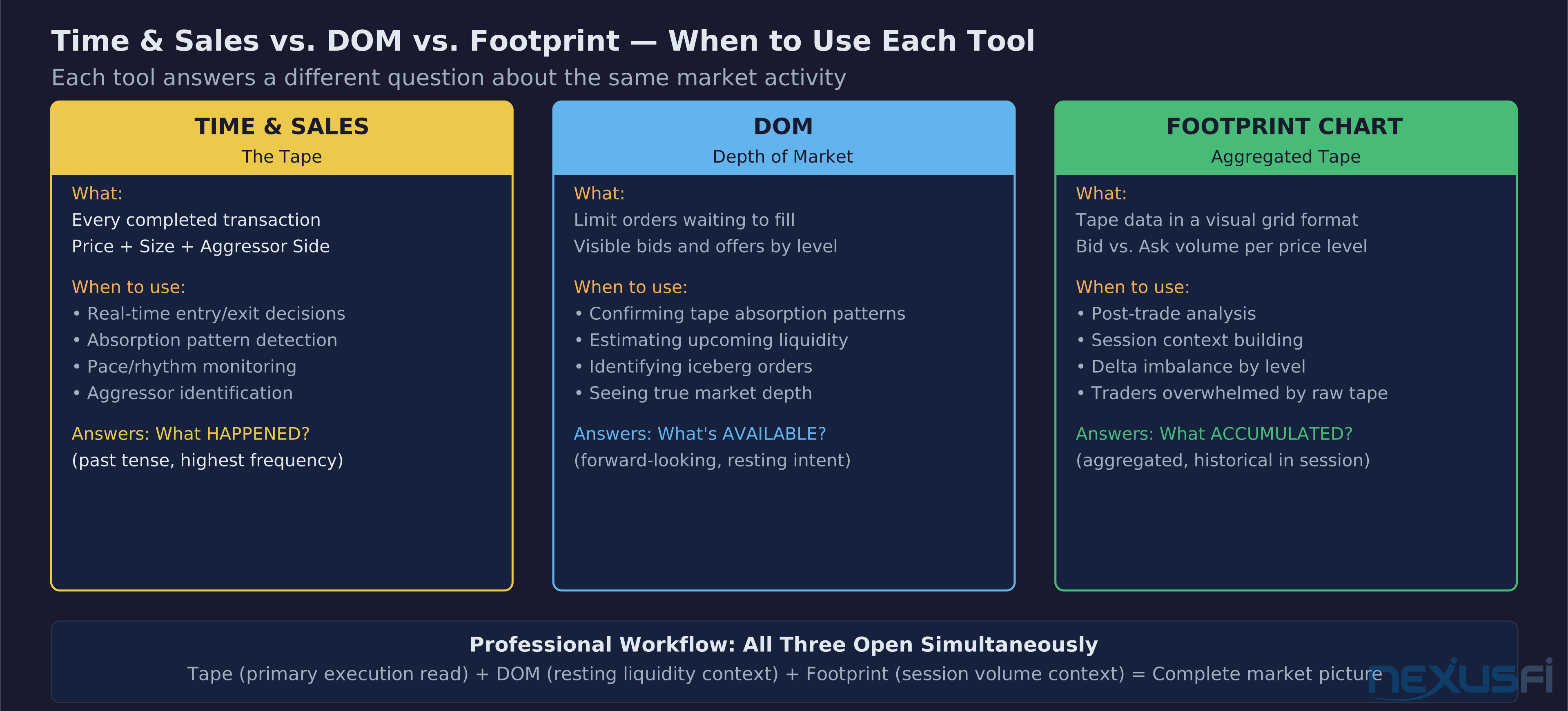
Use the tape for: Real-time execution evidence, rhythm and pace assessment, print-level absorption detection, aggressor identification in the moment. The tape is the highest-frequency view of market activity — right tool when you need to know what's happening right now, print by print.
Switch to the DOM when: You want to see resting liquidity — what's waiting at each price level, not what's already transacted. The DOM complements tape absorption patterns by showing whether the resting bids absorbing selling are actually there and how large they are.
Switch to footprint charts when: You want tape data in aggregate, organized by price level. Footprint charts take time and sales data and display the bid/ask volume at each price — the aggregated version of what you'd piece together manually watching the raw tape. Footprints are better for post-trade analysis and for traders who find raw tape too overwhelming to process in real-time.
The professional workflow: Most serious tape readers have all three tools open simultaneously. Tape is the primary real-time feed. DOM is open adjacent, providing resting order context. Footprint is in the background for broader context on where volume accumulated.
Each tool answers a different question: tape = "what executed?" (real-time), DOM = "what's waiting?" (resting liquidity), footprint = "what accumulated where?" (aggregated within session). Professional traders use all three as layers, not alternatives.
The Learning Curve (and Why It Takes So Long) #
Tape reading has a reputation for taking months to develop into a reliable skill. That's accurate, and the reason is simple: you're calibrating an instrument-specific pattern recognition system with no mathematical shortcut.
Charts have indicators that encode historical patterns programmatically. The tape has no equivalent. Everything you learn is specific to the instrument, session type, and market regime. An absorption pattern at ES key levels during RTH looks and behaves differently than the same pattern during globex, which looks different from CL, which looks different from ZB.
The calibration timeline most practitioners report: 2-3 months of observation before reliable pattern recognition starts to develop. Another 2-3 months before you can act on what you see without second-guessing.
During the learning period, use Market Replay (NinjaTrader) or recorded sessions to review tape behavior at key levels. Pick one pattern (absorption), pick one instrument (ES), and review every instance across 30 days of recordings. What did it look like when it worked? What did it look like when it failed? That deliberate failure-mode database accelerates the learning curve far more than passive real-time observation.
Knowledge Map
Prerequisites
Understand these firstGo Deeper
Build on this knowledgeReferences This Article
Articles that build on this topicCitations
- — My Thesis on Tape Reading (2013) 👍 26“To me, it's all about where large size steps up to buy or sell the market, and the context of what has happened preceding it.”
- — Tape is my shape (tape reading, time and sales) (2012) 👍 10“Price moves down to a point. Sellers keep selling. Price however, is no longer moving down. This is absorption on the bid.”
- — Tape is my shape (tape reading, time and sales) (2011) 👍 14“Tape reading and interpreting volume is not as simple as follow the big orders. If it were, then it would be too easy to make money.”
- — Time & Sales parameters, newbie requesting advice. (2018) 👍 1“I think you have 2 main uses for the tape. Get a feel for the overall flow of the market with an unfiltered tape. Get an idea which side the size is on with a filtered tape.”
- — Help re: ES time and sales filter. (2023) 👍 2“I have a strict filter on the T&S for ES contracts. It only shows me orders of >= 100 contracts on the T&S tape.”
- — What is tape reading? (2010) 👍 5“Modern tape reading is watching the T&S window. When I am ready to make a trade I put most of my concentration on watching the T&S window.”
- — Official tick data sharing thread for raw data, GomRecorder and QCollector (2019) 👍 159“I keep getting requests for people to share their GomRecorder data. A few threads have been started on the subject but not many are following thru it would seem. I am collecting data from IQFeed via QCollector. All data contains bid/ask and is tick level data. It is all 100% complete. I will”
- — Comparing Index Futures (2019) 👍 132“I am trading ES, YM, TF and sometimes FDAX. Often I question myself, which of these is the appropriate instrument to trade. Each of them has a different character. In my opinion FDAX is very volatile, a bit like crude oil, maybe due to lower liquidity. TF is trending nicely and I am gradually develo”
- — Confessions - Stories of defeat and lessons learned (2019) 👍 127“[B]Trading is arguably one of the toughest business out there, and I doubt any trader has made it to consistent profitability without [U]many[/U] setbacks. I wanted to see if I could entice other traders to share stories of what they believe are their greatest screw-ups, and if there are lessons to”
- — Time to Give Up (2019) 👍 122“Threads like this really get to the heart and soul of who we really are as people IMHO. Thank you everyone for being vulnerable and expressing your stories, feelings, and journey on here. I apologize about the length of this but I hope it reaches some traders and perhaps opens some eyes. In m”
- — Intraday Seasonality Volatility - When to Trade and When Not to Trade (2019) 👍 108“[B]Specific Trading Times[/B] Each instrument has its specific times, when it can be traded, and also has its times, when trading does not pay off. The question is. how to determine the optimal trading times? The main criterion is volatility. If volatility settles down, the trade goes nowhere, a”