



Polymarket UMA Oracle Deep Dive: How Decentralized Markets Resolve and What Traders Need to Know
Overview #
Here's the uncomfortable truth about prediction markets: your winning trade is only as reliable as the system that decides whether you actually won. On Polymarket — the largest decentralized prediction market by volume — that system is UMA's Optimistic Oracle, and understanding it isn't optional if you're trading with real money.
The Optimistic Oracle is elegantly simple in concept. Someone proposes an outcome ("YES won"), posts a bond (typically $750 in pUSD), and the market accepts it as correct unless someone disagrees within a 2-hour window. No dispute? Market settles. Done. That's the "optimistic" part — the system assumes honesty until proven otherwise.
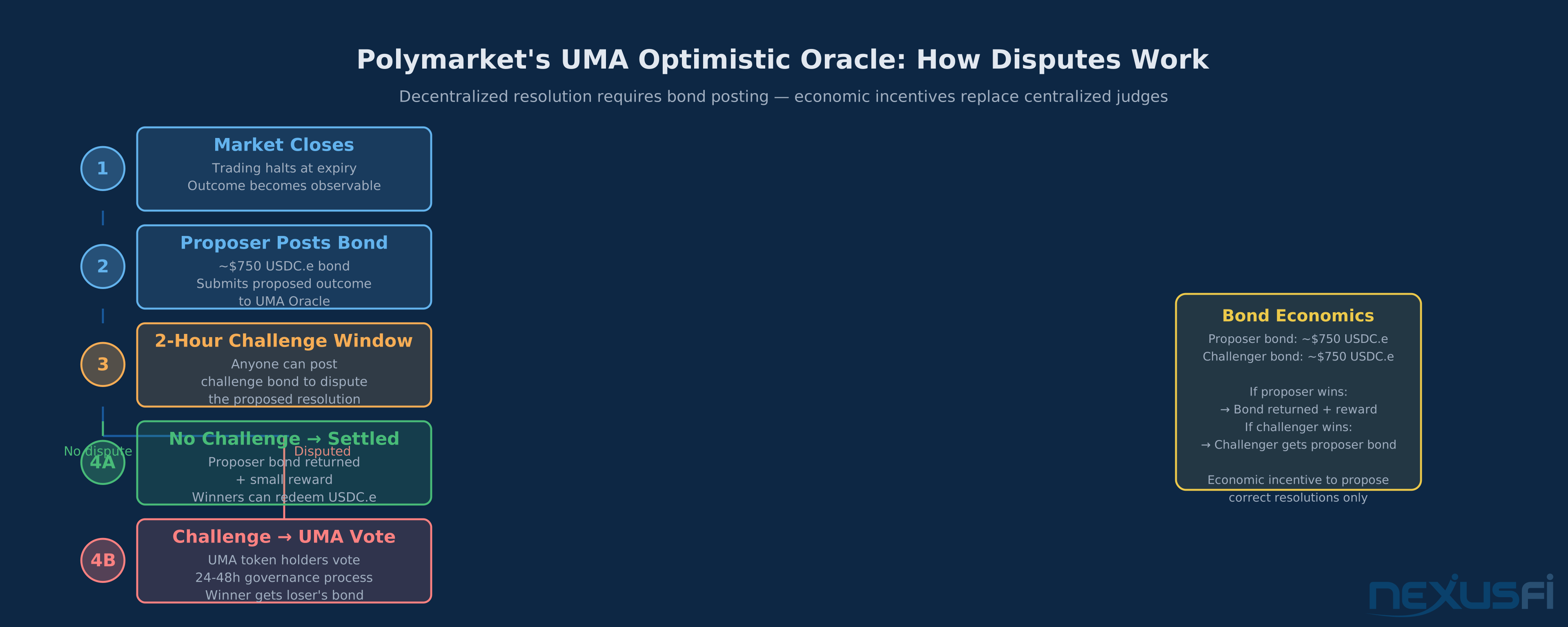
UMA dispute mechanism overview: the Optimistic Oracle assumes answers are correct unless challenged. When disputes arise, UMA token holders vote on the outcome through the Data Verification Mechanism, with economic incentives aligning voters toward truth.
But when someone does dispute? That's where things get interesting — and where most traders have no idea what happens to their money. The dispute escalates through a structured process that can lock your capital for days and introduce settlement uncertainty that doesn't exist on centralized platforms like Kalshi.
This article breaks down every phase of Polymarket's resolution mechanism — from the 2-hour optimistic window to the full DVM voting process — with specific numbers, real risk calculations, and practical strategies for protecting your positions. Whether you're trading $100 or $100,000 in event contracts, the resolution mechanism is the single most important piece of infrastructure sitting between you and your payout.
Why "Optimistic"? The Foundation of UMA's Design #
Traditional oracles work like referees — a trusted party watches the game and reports what happened. Chainlink feeds a price. The CFTC certifies an outcome. A centralized authority says "this is what happened" and everyone trusts them because there's a legal framework backing it up.
UMA flipped this model completely. Instead of asking "who do we trust to report the truth?" they asked "what if we assume everyone is honest and only intervene when someone proves otherwise?" That's the optimistic assumption, and it solves a fundamental scaling problem in decentralized systems.
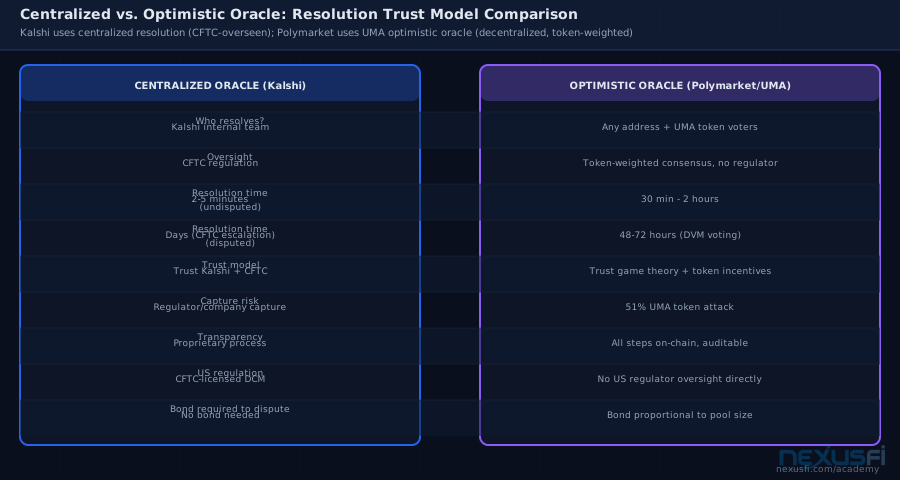
Oracle model comparison: Kalshi resolves in 2-5 minutes with CFTC oversight; Polymarket resolves in 30min-2hr optimistically but 48-72hr if disputed. Different trust models suit different trader risk tolerances.
Consider the alternative: running a full DVM vote for every single market resolution would cost gas, take days, and create massive bottlenecks. With thousands of markets resolving daily, that's unworkable. The optimistic design means the expensive dispute mechanism only activates when it's actually needed — and the data shows it's needed rarely. The vast majority of Polymarket markets settle through the optimistic path without any dispute at all.
The economic logic is sound. If you post a $750 bond to propose a correct answer, you get it back plus a small reward. If you propose incorrectly, you lose the entire $750. If you dispute a correct answer, you lose your $750 counter-bond. This asymmetry creates a natural equilibrium where honest proposals are the dominant strategy — lying is expensive, and disputing truthful proposals is equally costly.
The tradeoff? When disputes DO happen, settlement takes dramatically longer than centralized alternatives. A Kalshi market resolves in minutes with CFTC oversight. A disputed Polymarket market can take 4-6 days through the full DVM process. For most traders, that's an acceptable tradeoff for the benefits of decentralization. For others — especially those running capital-intensive strategies — it's a risk that needs to be priced in.
The Resolution Lifecycle: Step by Step #
Every Polymarket resolution follows a deterministic state machine with known deadlines and clear transition rules. Understanding each phase is the difference between trading informed and trading blind.
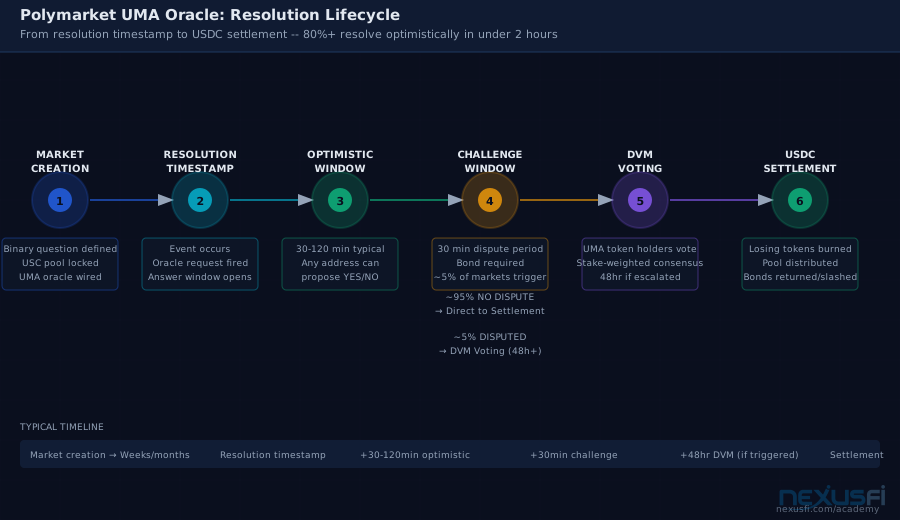
Resolution lifecycle: the majority of markets settle in under 2 hours through the optimistic path. The DVM voting path represents the most significant source of settlement risk for active traders.
Phase 1: Market Creation. When Polymarket deploys a market, it creates a conditional token contract that references a UMA Optimistic Oracle request. The contract specifies the resolution question, acceptable data sources, the event timestamp, and edge-case handling rules. These resolution rules are locked at creation — they can't be changed later, and they're the canonical reference for how the market should settle.
Phase 2: Resolution Trigger. Once the event occurs (election called, game ends, deadline passes), anyone can propose an outcome. The proposer selects YES or NO, posts a bond (currently $750 pUSD on most Polymarket markets), and submits the proposal to UMA's Optimistic Oracle. This is permissionless — you don't need special access or credentials. If you're confident in the outcome and understand the resolution rules, you can be the proposer.
Phase 3: Challenge Window (2 Hours). This is the critical window. For 2 hours after the proposal, anyone can dispute the outcome by posting their own $750 counter-bond. If nobody disputes, the clock runs out and the proposal is accepted as final. The market settles, winning tokens redeem at $1 each, and losing tokens become worthless.
Phase 4: First Dispute (Reset). Here's where Polymarket's implementation gets clever. If someone disputes the first proposal, the market doesn't immediately go to a full DVM vote. Instead, it resets — a new proposal round begins with a fresh 2-hour challenge window. This design choice, documented in the Polymarket UMA CTF adapter, ensures that obviously incorrect disputes don't slow down resolution. If the first proposer was wrong, a correct proposer can step in during the reset. If the first proposer was right and the dispute was frivolous, the same answer gets re-proposed and accepted.
Phase 5: Second Dispute (DVM Escalation). If the second proposal is also disputed, the system recognizes a fundamental disagreement that can't be resolved optimistically. The dispute escalates to UMA's Data Verification Mechanism — the decentralized arbitration layer where UMA token holders vote on the correct outcome. This phase takes 48-72 hours.
Phase 6: Settlement. Whether the market resolved optimistically (Phase 3) or through DVM voting (Phase 5), the final answer is now binding. The conditional token contract settles, winning positions redeem at $1 per share in USDC, and bond distributions occur based on who was right.
Three distinct resolution paths emerge from this lifecycle:
- Fast path (no dispute): Propose → 2hr wait → Resolve. Total time: ~2 hours.
- Reset path (one dispute): Propose → Dispute → Reset → Re-propose → 2hr wait → Resolve. Total time: ~4 hours.
- DVM path (two disputes): Propose → Dispute → Reset → Re-propose → Second dispute → 24-48hr debate → 48hr DVM vote → Resolve. Total time: 4-6 days.
Inside the DVM: How Disputes Actually Get Decided #
The Data Verification Mechanism is UMA's decentralized arbitration layer — the "supreme court" of the oracle system. When optimistic resolution fails, the DVM assembles a jury of UMA token holders who stake their tokens and vote on the correct outcome. Getting this wrong costs them real money.
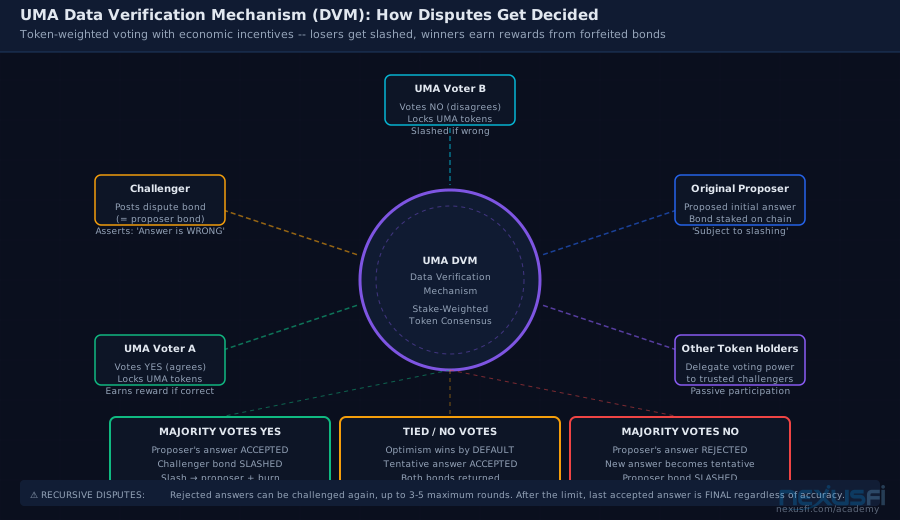
DVM anatomy: Three participant types interact with the Data Verification Mechanism. The commit-reveal voting scheme prevents voters from copying each other's answers.
The Commit-Reveal Voting Scheme. DVM voting uses a two-phase cryptographic process specifically designed to prevent voters from copying each other. In the commit phase (approximately 24-48 hours), each voter submits a cryptographic hash of their answer combined with a secret salt. Nobody can see what anyone else voted — the answers are sealed. In the reveal phase (approximately 24 hours), voters reveal their actual answers plus the salt that proves their hash matches. If a voter's reveal doesn't match their commit, their vote is invalidated.
This isn't theoretical security theater. Without commit-reveal, rational voters would simply copy the emerging majority — destroying the Schelling point mechanism that makes the system work. The sealed-bid design forces each voter to independently research the correct answer rather than free-ride on others.
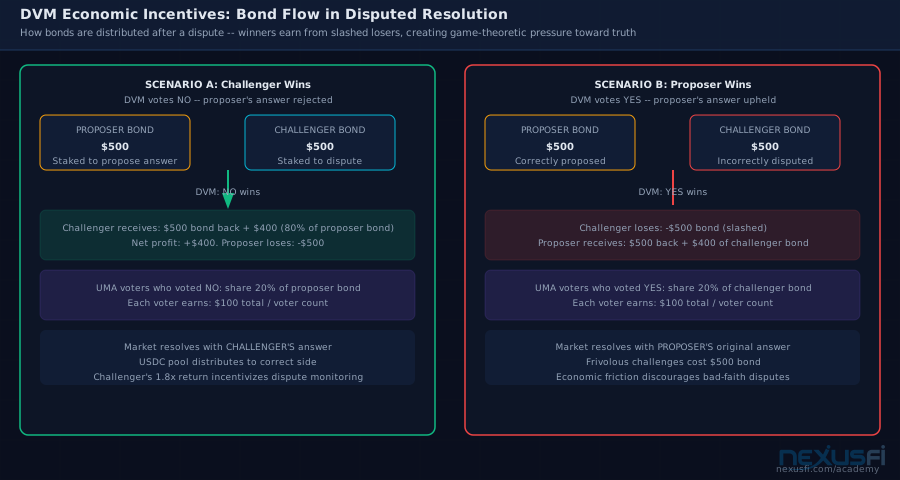
DVM bond incentives: a winning challenger earns their bond back plus half of the proposer's bond, creating a meaningful return that motivates professional dispute monitoring.
Staking, Slashing, and Voter Incentives. DVM 2.0 (launched Q1 2023) introduced a staking-and-slashing model that dramatically improved voter alignment. Voters must stake UMA tokens in the DVM to participate. They earn a pro-rata share of UMA emissions (the emission rate is currently 0.155 UMA/second, set by governance) simply for staking. But here's the teeth: voters who vote incorrectly or don't vote at all get slashed — their staked tokens are redistributed to correct voters.
The math creates a clear incentive structure. According to UMA's FAQ, with approximately 18-20 million UMA typically staked for voting, average voter APY runs 28-32%. That's significant yield — and losing it to slashing penalties for lazy or incorrect voting is a meaningful deterrent. The 7-day unstake timer further hardens the system against manipulation by preventing attackers from voting and immediately dumping their tokens.
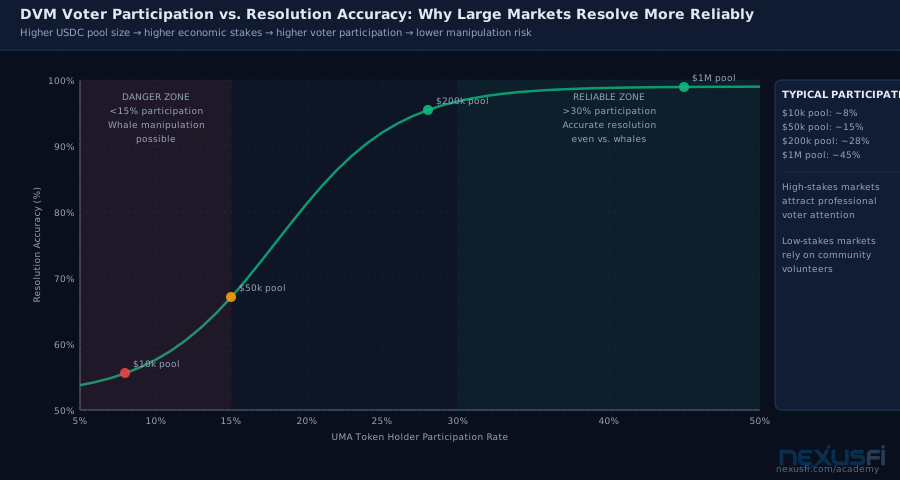
Voter participation drives accuracy: below 15% participation, individual large holders can swing outcomes. Above 30% participation, coordinated manipulation becomes economically infeasible.
Bond Distribution After the Vote. The DVM vote produces one of several outcomes that determine how bonds are distributed:
| Outcome | Result | Bond Distribution |
|---|---|---|
| Proposer wins | Original proposal accepted | Proposer gets bond back + half of disputer's bond |
| Disputer wins | Proposal rejected, new proposal needed | Disputer gets bond back + half of proposer's bond |
| Too Early | Event hasn't concluded yet | Disputer gets bond back + half of proposer's bond |
| Unknown/50-50 | Ambiguous, cannot resolve | Both parties receive their bonds back |
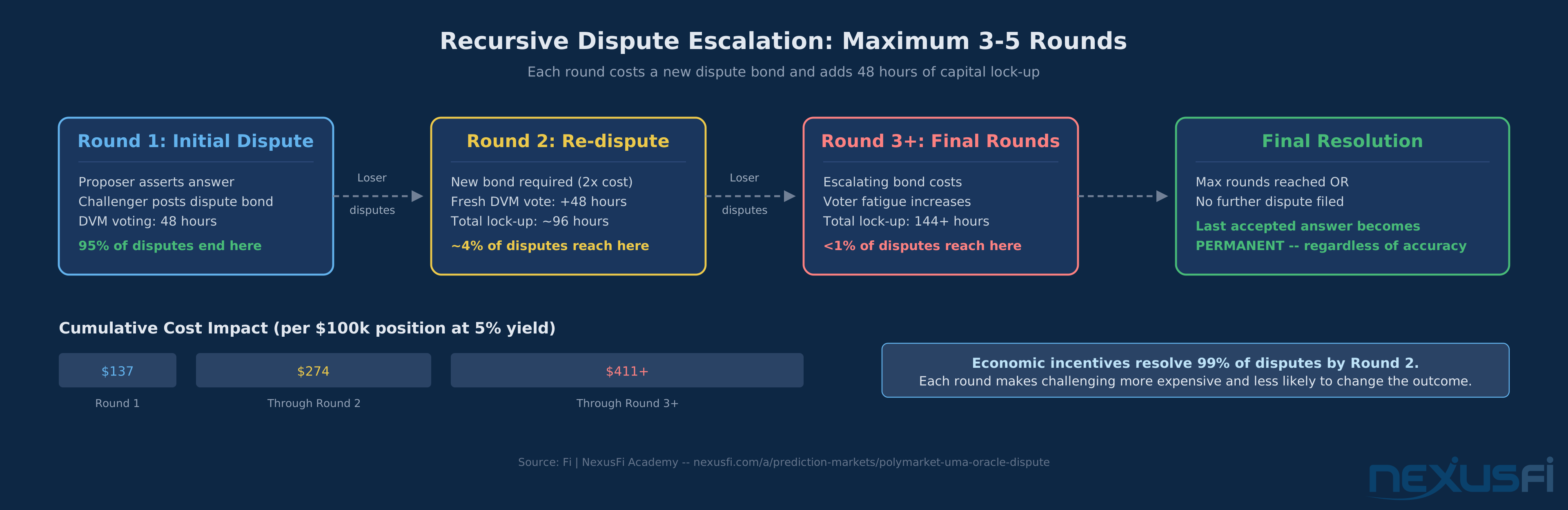
Recursive dispute escalation: each additional round doubles the cumulative bond cost and adds 48 hours of capital lock-up. Economic incentives resolve the vast majority of disputes early.
The "Too Early" outcome is worth noting — if a proposer tries to resolve a market before the event has actually concluded, the disputer wins by default. This prevents front-running and premature settlement. The "Unknown/50-50" outcome handles genuinely ambiguous cases where neither side can demonstrate a clear answer based on the resolution rules.
Settlement Risk: How Disputes Affect Your Trading #
Settlement risk is the most underpriced risk in prediction market trading. Every dollar sitting in a disputed market is a dollar not earning yield elsewhere — and for capital-intensive strategies, that opportunity cost adds up fast.
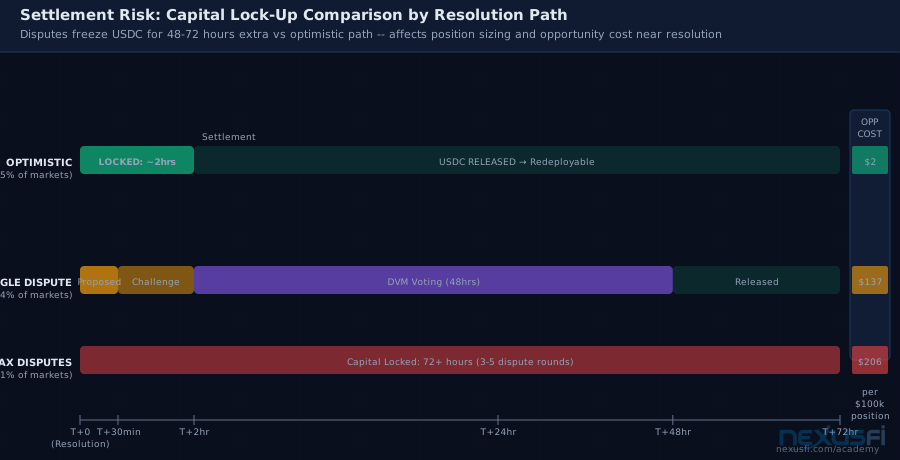
Settlement risk timelines: optimistic resolution costs minimal opportunity cost; disputes extend capital lock-up dramatically with compounding opportunity costs at scale.
Opportunity Cost by Resolution Path. The math is straightforward. At a 5% annual stablecoin yield (conservative for USDC in DeFi), every day your capital is locked in settlement costs roughly $137 per $100,000. The optimistic path (2 hours) is negligible — about $1.14 per $100k. A single dispute extending settlement by 4 hours doubles that to roughly $2.28. But the full DVM path? At 4-6 days, you're looking at $548-$822 per $100,000 in pure opportunity cost.
For retail traders with $1,000-$10,000 positions, these numbers are rounding errors. But for market makers and institutional participants running seven-figure books, dispute settlement risk is a material line item that needs to be modeled and hedged.
Liquidity Risk During Disputes. When a market enters dispute, liquidity dynamics shift dramatically. Spreads widen as market makers reprice settlement uncertainty. The order book thins out because sophisticated participants reduce exposure during the ambiguous phase. If you need to exit a position during a dispute, you'll likely pay significant slippage — exactly when you least want to.
Pricing Dispute Probability Into Positions. Smart traders don't just ask "will this event happen?" — they also ask "will this market resolve cleanly?" Markets with ambiguous resolution criteria, subjective judgment calls, or politically charged outcomes carry structurally higher dispute risk. The research on prediction market disputes consistently shows that resolution criteria ambiguity is the number one predictor of disputes. Before sizing a position, read the resolution rules and ask: "Could a reasonable person disagree about what the right answer is?" If yes, you're holding dispute risk whether you've priced it in or not.
The Economics of Disputing: When the Math Works #
Filing a dispute isn't free — it requires posting a counter-bond equal to the proposer's bond (typically $750). So when does the economics of disputing actually make sense?
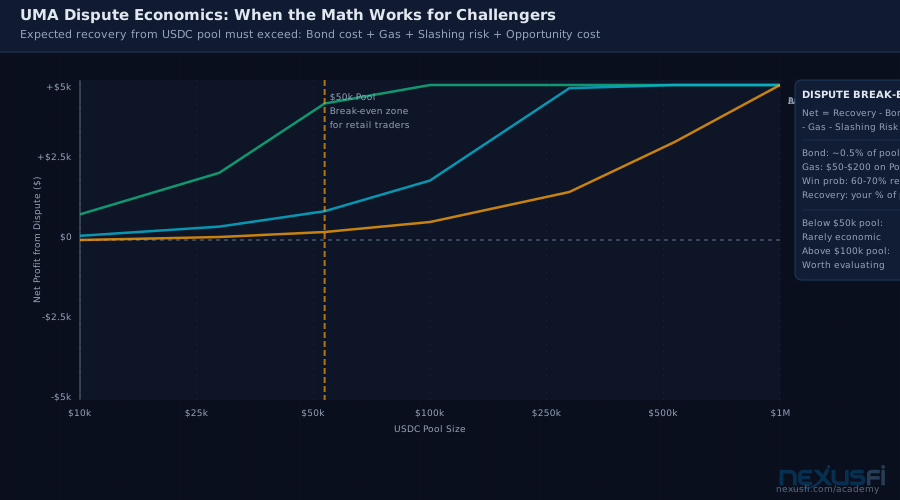
Dispute economics: the break-even analysis depends on your position size relative to the market pool. Larger positions make the economics of disputing more favorable.
The Challenger's Calculus. If you dispute a proposal and win the DVM vote, you recover your $750 bond plus half of the proposer's $750 bond — a $375 profit on the dispute itself. But that's not the real money. The real economic value comes from correcting a wrong resolution on a market where you hold a position. If you hold $50,000 in YES shares and the proposer incorrectly proposed NO, a successful dispute protects $50,000 in position value for a $750 bond — that's a 66:1 risk-reward ratio.
Frivolous Dispute Deterrence. The economics work equally well in the other direction. Filing a frivolous dispute to delay settlement costs you $750 if you lose the DVM vote (you forfeit your bond and the proposer receives half). For markets with low liquidity, this creates a meaningful deterrent — $750 is a significant percentage of the total pool value. For high-liquidity markets, the deterrent is weaker in relative terms, which is why larger markets occasionally see more disputes.
Professional Dispute Monitoring. The bond economics have created a small ecosystem of professional dispute monitors — automated systems that watch for incorrect proposals and file disputes for profit. These bots serve as an important security layer for the Polymarket ecosystem, catching errors that casual participants might miss. The economics work because the monitoring cost is fixed (server infrastructure) while the potential reward ($375+ per successful dispute plus position protection) scales with the number of markets monitored.
UMA's Cost of Corruption. At a system level, UMA's design ensures that corrupting the oracle is always more expensive than the value at stake. This is the "cost of corruption" framework — if an attacker needs to bribe more UMA voters than the value they'd extract from a manipulated resolution, the attack is economically irrational. The 7-day unstake timer in DVM 2.0 strengthens this by preventing attackers from exiting their UMA positions before the market reacts to their manipulation.
Practical Guide: How to Challenge an Incorrect Resolution #
You're watching a market you hold a position in, the proposer submits what you believe is the wrong answer, and the 2-hour challenge window is ticking. What do you actually do?
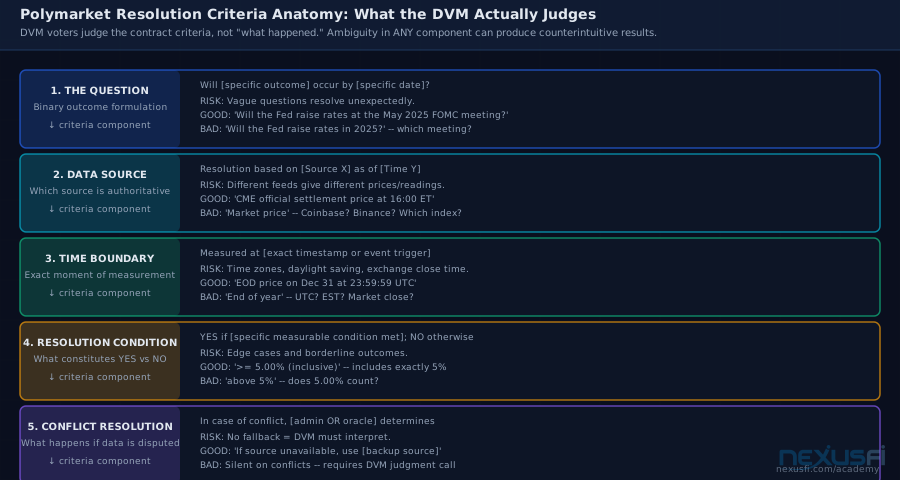
Resolution criteria anatomy: ambiguity in any of the 5 components — question, data source, time boundary, condition, or conflict resolution — is enough to produce a counterintuitive DVM ruling.
Step 1: Verify Against Resolution Rules. Before spending $750 on a dispute bond, verify that the proposal actually contradicts the market's resolution rules — not just your interpretation of the event. Prediction markets have a long history of "counterintuitive" resolutions that follow the letter of the rules even when they seem to defy common sense. Read the resolution source, time boundary, and edge case handling. If the proposer's answer is technically correct per the rules, disputing will cost you $750.
Step 2: Gather Evidence. If you're confident the proposal is wrong, document your evidence before filing the dispute. Screenshot the resolution source, note timestamps, and prepare to present your case. If the dispute escalates to DVM voting, evidence submitted in UMA's Discord channels (#evidence-rationale and #voting-discussion) during the 24-48 hour debate period can influence voter decisions.
Step 3: File the Dispute. Post a counter-bond equal to the proposer's bond ($750 pUSD on most Polymarket markets) through the dispute interface. The first dispute triggers a reset — a new proposal round with a fresh 2-hour window. If you believe the original proposer was wrong, someone (possibly you) should propose the correct answer during the reset.
Step 4: Monitor the Reset. During the reset round, watch whether the re-proposal matches what you believe is correct. If it does, let the 2-hour window expire and the market settles with the corrected answer. If the incorrect answer is re-proposed and no one disputes it, the wrong answer will finalize.
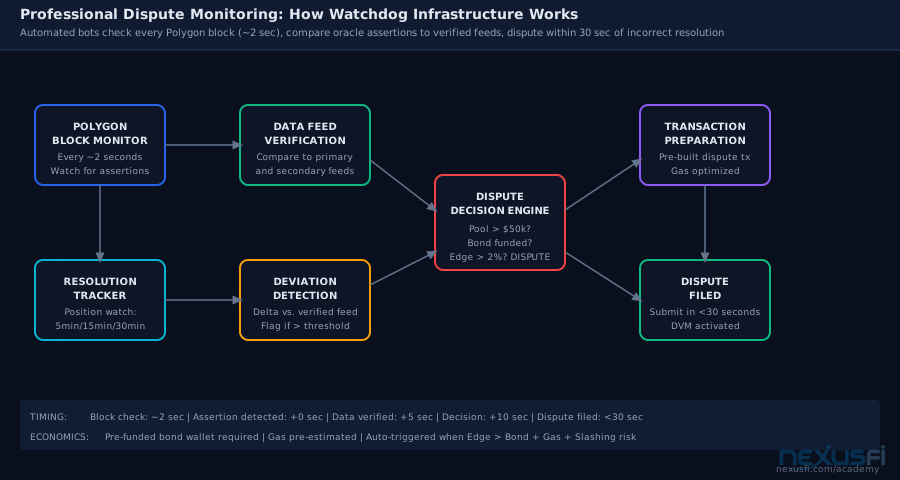
Professional monitoring architecture: watchdog bots check every Polygon block (~2 seconds), verify against data feeds, and can file disputes within 30 seconds — well within the 2-hour challenge window.
Step 5: DVM Escalation (If Needed). If the second proposal is also disputed, the market enters DVM voting. At this point, your best move is to present clear evidence in UMA's Discord during the debate period. The 48-hour vote that follows is out of your hands — UMA token holders will determine the outcome based on the resolution rules and evidence presented. Your $750 bond is locked until the vote concludes.
Common Dispute Scenarios and What To Do:
- "Too Early" disputes: Someone proposed before the event actually concluded. These almost always favor the disputer in DVM votes.
- Source disagreement: The resolution source says one thing, but a more authoritative source says another. Check which source the resolution rules specify -- only the specified source matters.
- Ambiguous outcomes: The event happened but the resolution criteria don't clearly map to YES or NO. These are the hardest disputes and often resolve as "Unknown/50-50" in DVM votes, returning both bonds.
What This Means for Active Polymarket Traders #
Understanding the oracle mechanism isn't academic — it directly affects how you should size positions, manage risk, and time your entries and exits around market resolution.
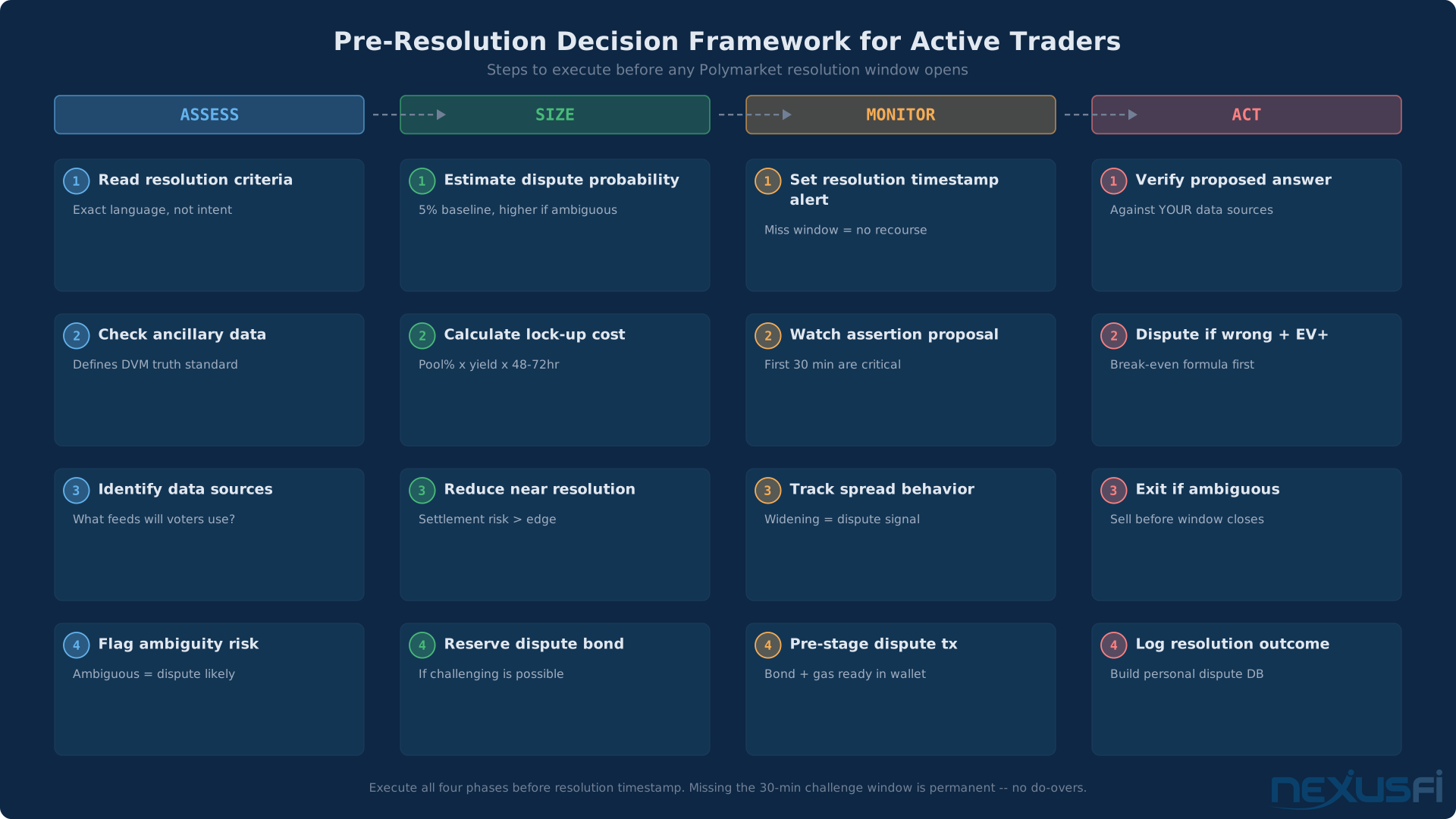
Pre-resolution checklist: execute all four phases before the resolution timestamp. The 2-hour challenge window is the only opportunity to dispute an incorrect answer — missing it means accepting the result.
Pre-Resolution Checklist. Before any market you're actively trading approaches resolution:
- Read the resolution rules. Not the market title -- the actual rules. Know the specified data source, time boundary, and edge case handling. This takes 2 minutes and can save thousands.
- Assess dispute probability. Is the outcome clear-cut with objective data? Low dispute risk. Is it subjective, politically charged, or dependent on interpretation? Higher dispute risk -- size so.
- Set calendar alerts. Know when the resolution window opens so you can monitor proposals in real-time. The 2-hour challenge window is your only opportunity to catch errors.
- Keep counter-bond capital available. If you hold a meaningful position, having $750 in pUSD ready to dispute is cheap insurance against an incorrect resolution.
Settlement Risk Warning: The 2-hour challenge window is your ONLY opportunity to dispute an incorrect resolution. If you miss it and no one else disputes, the wrong answer becomes final — and your position settles at the wrong price. Set alerts for every market you hold approaching resolution.
Position Sizing for Settlement Risk. The standard risk management framework applies with one adjustment: factor in maximum settlement delay. If you're running a capital-constrained strategy, don't commit 100% of your bankroll to markets approaching resolution simultaneously. Stagger your exposure so that even if multiple markets enter dispute, you maintain enough liquidity to operate.
Trading Around the Challenge Window. The 2-hour challenge window creates a unique microstructure dynamic. As the window approaches expiration without a dispute, the market converges toward the proposed outcome with increasing confidence. This is analogous to options theta decay near expiration — the "dispute premium" bleeds out as the window closes. Traders who understand this dynamic can time their entries and exits more precisely.
When Disputes Create Opportunity. Disputes aren't always bad for traders — they can create opportunities. When a dispute is filed, spreads widen and prices become volatile as the market reprices settlement uncertainty. If you can accurately estimate the probability of the challenger winning the DVM vote, you can trade the mispricing. The key insight: most P&L from dispute trading comes from being early in recognizing the regime change, not from predicting the final DVM outcome at the last moment.
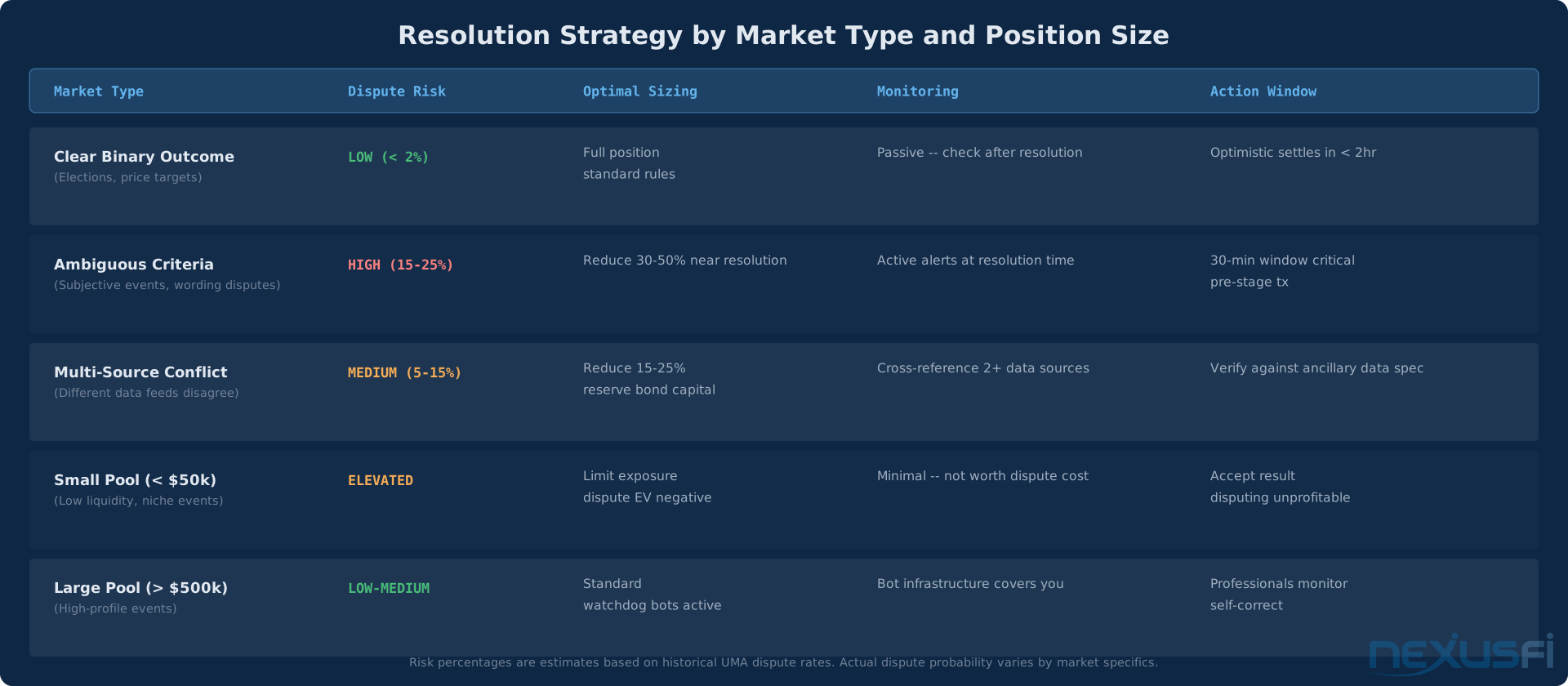
Resolution strategy matrix: match your monitoring intensity and position size to the market type. Objective data markets rarely dispute; subjective judgment markets warrant tighter position limits and active monitoring during the challenge window.
Centralized vs. Decentralized: Know Your Tradeoffs. If you need fast, guaranteed settlement with regulatory backing, Kalshi and CME event contracts offer 2-5 minute resolution with CFTC oversight. If you value permissionless access, global availability, and are comfortable with the occasionally extended settlement timeline, Polymarket's UMA-based system provides a strong decentralized alternative. Many active prediction market traders use both — centralized platforms for time-sensitive strategies and Polymarket for markets that aren't available elsewhere.
Resolution timing is a hidden trading cost. Every disputed Polymarket market locks your capital for 4-6 days. On a $50,000 position at 5% USDC yield, that's $34-$41 in opportunity cost per dispute. Factor this into position sizing on markets with ambiguous resolution criteria — the more subjective the market question, the wider your settlement risk buffer should be.
Further Reading #
Citations #
- Polymarket Documentation: Resolution -- How markets are resolved and winning positions redeemed
- UMA Documentation: How does UMA's Oracle work?
- UMA Documentation: DVM 2.0 -- The next iteration of the UMA Data Verification Mechanism
- Polymarket/uma-ctf-adapter -- Adapter contract to resolve Polymarket prediction markets via UMA's Optimistic Oracle (GitHub)
- UMA Documentation: DVM 2.0 FAQ -- Staking APY, slashing mechanics, and voter incentives
- @Fi: "Kalshi Hits $1 Billion in Super Bowl Trading Volume," NexusFi, February 2026
- @Fi, @SMCJB: "Kalshi, Polymarket, Prediction Markets etc" thread, NexusFi, December 2025
- @Fi: "CFTC Withdraws Prediction Market Ban, Signals New Rulemaking Under Chairman Selig," NexusFi, February 2026
- @Fi: "Kalshi Raises $1B Series E -- $11B Valuation," NexusFi, December 2025
Knowledge Map
Go Deeper
Build on this knowledgeReferences This Article
Articles that build on this topicCitations
- UMA Protocol Documentation — How does UMA's Oracle work?
- Polymarket Documentation — Resolution - How markets are resolved and winning positions redeemed
- UMA Protocol Documentation — DVM 2.0 - Staking, Slashing, and Vote Delegation
- — CME Group Launches 24/7 Futures Trading (2025) 👍 3“Event contracts allow market participants to take simple yes/no event/outcome positions”
- — Event Contracts - New Way to trade the CME Futures markets (2022) 👍 6“Binary options background and how they compare to traditional futures instruments”
- — Kalshi, Polymarket, Prediction Markets etc (2025)“The regulatory and resolution mechanics create real operational differences from traditional futures settlement”
- — Kalshi Hits $1 Billion in Super Bowl Trading Volume (2025)“A billion-dollar trading day puts Kalshi in the same conversation as established futures markets”
- — Polymarket Returns to US with CFTC Approval (2025)“Professional market monitoring is a key infrastructure requirement for decentralized prediction markets to function reliably at scale”
- — CME Group Event Contracts Blast Past 100 Million Traded (2025)“More sophisticated participants are entering prediction markets with institutional-grade monitoring and dispute infrastructure”
- — Cboe Eyes Prediction Markets With Regulated All-or-Nothing Binary Options (2025)“When Wall Street starts copying the disruptors, the game just changed”