



Kalshi vs Polymarket: Choosing the Right Prediction Market Platform
A complete comparison of the two dominant prediction market platforms — regulatory structure, fee models, settlement mechanics, available markets, and which platform suits which type of trader.
Overview #
Kalshi and Polymarket have emerged as the two dominant prediction market platforms as of 2025-2026. They take at the core different approaches to the same underlying product: event contracts that pay $1 if a specified event occurs.
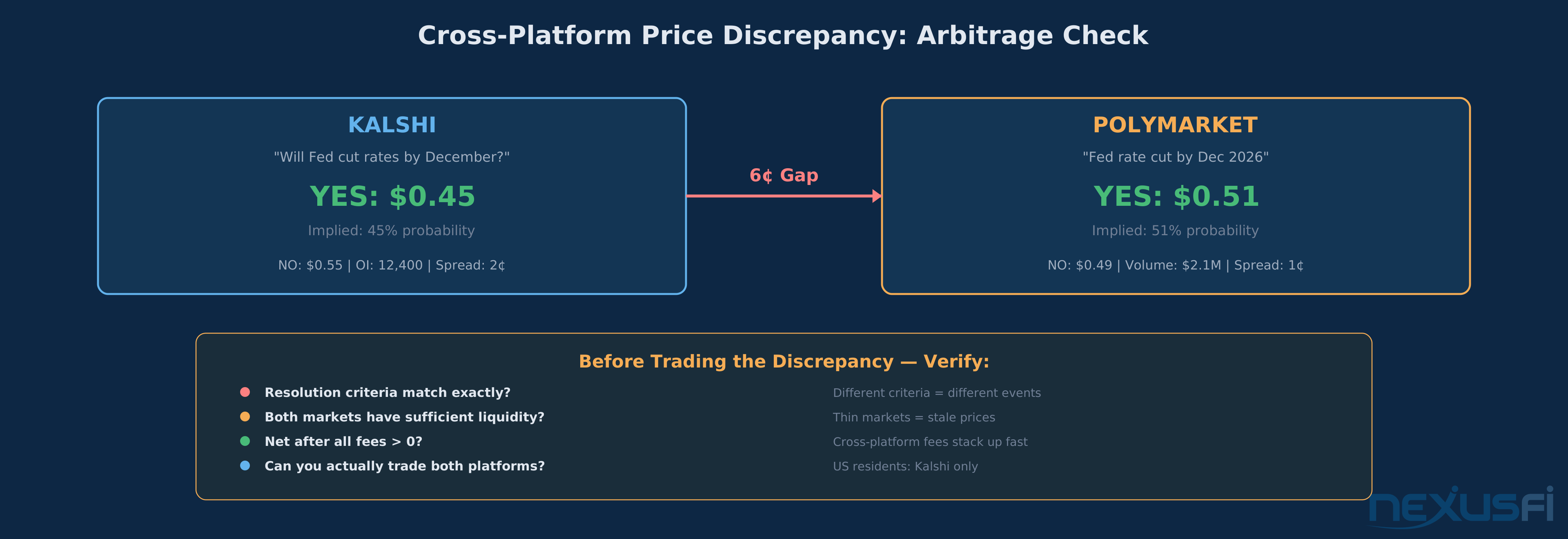
For US-based retail traders, the choice is largely made for you: Kalshi is CFTC-regulated and accessible to all US residents, while Polymarket is technically unavailable to US traders. For non-US traders, both platforms offer different tradeoffs across fees, settlement, available markets, and trust models.
Fi documented the regulatory trajectory that created this bifurcation in CFTC Withdraws Biden-Era Prediction Market Ban, Signals New Regulatory Framework — understanding why these platforms differ requires understanding the regulatory path each chose.
Fi documented the regulatory trajectory that created this bifurcation in CFTC Withdraws Biden-Era Prediction Market Ban, Signals New Regulatory Framework — understanding why these platforms differ requires understanding the regulatory path each chose.
Platform Architecture: At the core Different Models #
Kalshi: Regulated US Exchange #
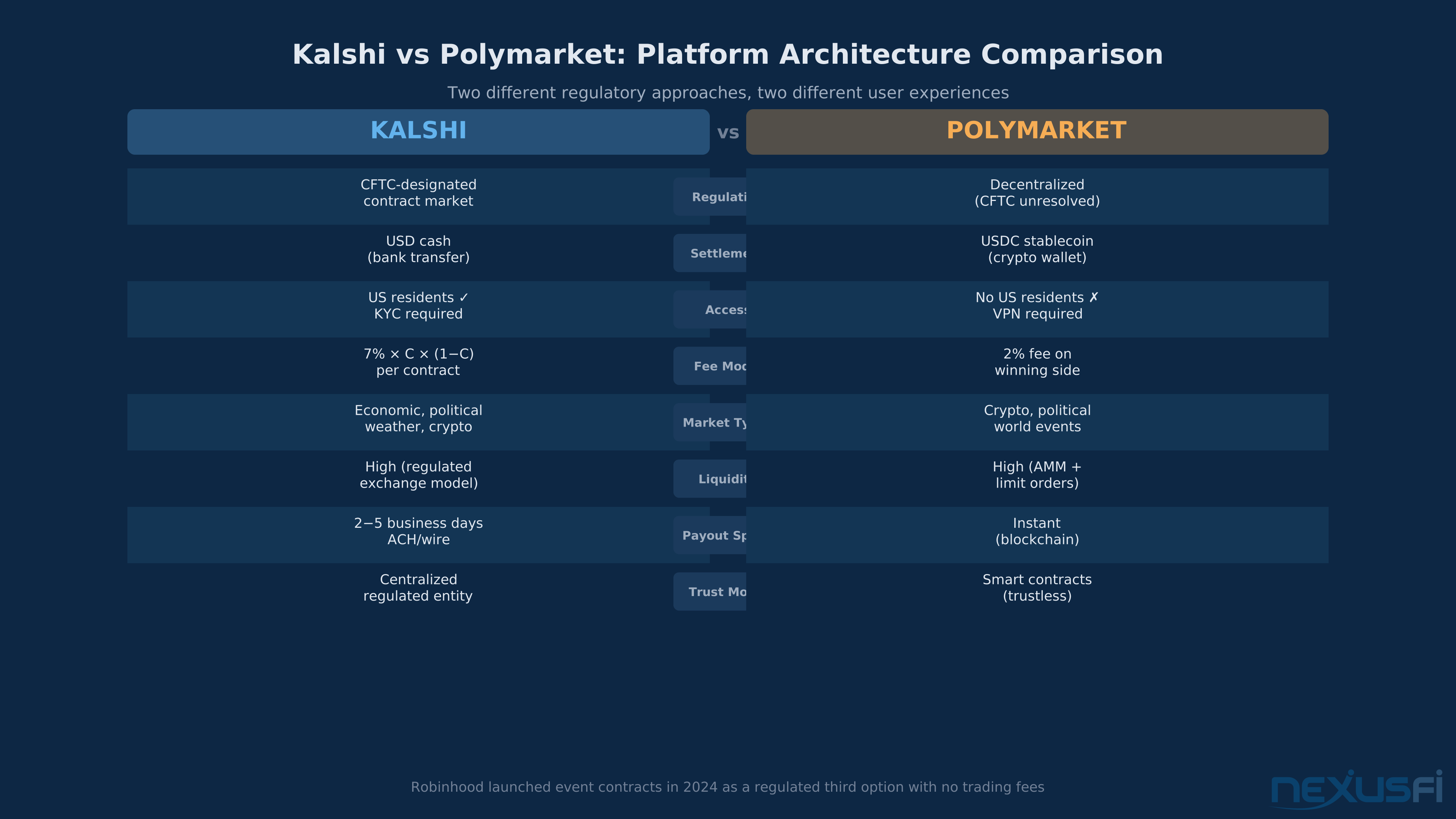
Kalshi operates as a CFTC-designated contract market (DCM) — the same regulatory category as CME Group, CBOE Futures Exchange, and other major US derivatives exchanges.
What this means:
- Must meet CFTC standards for market surveillance, participant protections, and contract design
- Accepts all US residents (with standard KYC/AML verification)
- Settles in USD via ACH and wire transfers
- Positions are held in a Kalshi-managed account (centralized custody)
- Subject to US futures regulations including position limits and reporting requirements
The regulatory path was contentious. The CFTC initially sought to restrict prediction markets from covering many event types. Fi documented the policy reversal in CFTC Withdraws Prediction Market Ban, Signals New Rulemaking Under Chairman Selig, which opened the door for the current range of Kalshi markets.
Polymarket: Decentralized, Blockchain-Based #
Polymarket operates as a decentralized prediction market on the Polygon blockchain. Smart contracts execute trades and settlements; no central counterparty holds your funds.
What this means:
- Smart contract custody: Your positions are held in a decentralized protocol, not by Polymarket itself
- USDC settlement: All deposits and withdrawals are in USDC stablecoin via crypto wallet
- No US access: US residents are blocked due to unresolved CFTC regulatory questions
- No KYC for non-US participants in many cases
- Blockchain settlement: Near-instant, verifiable on Polygon
The decentralized model has tradeoffs: smart contract risk (bugs in the code) vs. counterparty risk (what if Kalshi had financial difficulties).
Regulatory Status: The Key Difference #
Kalshi's CFTC Regulation #
Kalshi received its CFTC designation in 2020 after a years-long approval process. Key milestones:
- 2020: Initial CFTC designation as a DCM
- 2022-2023: CFTC proposed rules that would have restricted many event contract types
- 2025: CFTC reversed course under new Chair Atkins, signaling support for event contracts
- 2025-2026: Rapid expansion of available market types following regulatory clarity
Being CFTC-regulated means Kalshi participants have statutory protections under US derivatives law, including segregated customer funds requirements.
Polymarket's Regulatory Situation #
Polymarket operates in a regulatory gray area for non-US participants. For US residents:
- The CFTC has historically viewed participation in unregistered event contracts as a violation of US derivatives law
- Polymarket paid a $1.4 million CFTC settlement in 2022 related to US participants
- US residents are now blocked by IP/geofencing, though VPN use exists
For the rest of the world, Polymarket's decentralized model means there's no single regulatory body that oversees it. This is either a feature (freedom from paternalistic regulation) or a risk (no regulatory backstop if problems arise).
Fee Comparison #
Kalshi Fee Structure #
Kalshi charges fees on each trade (entry and exit):
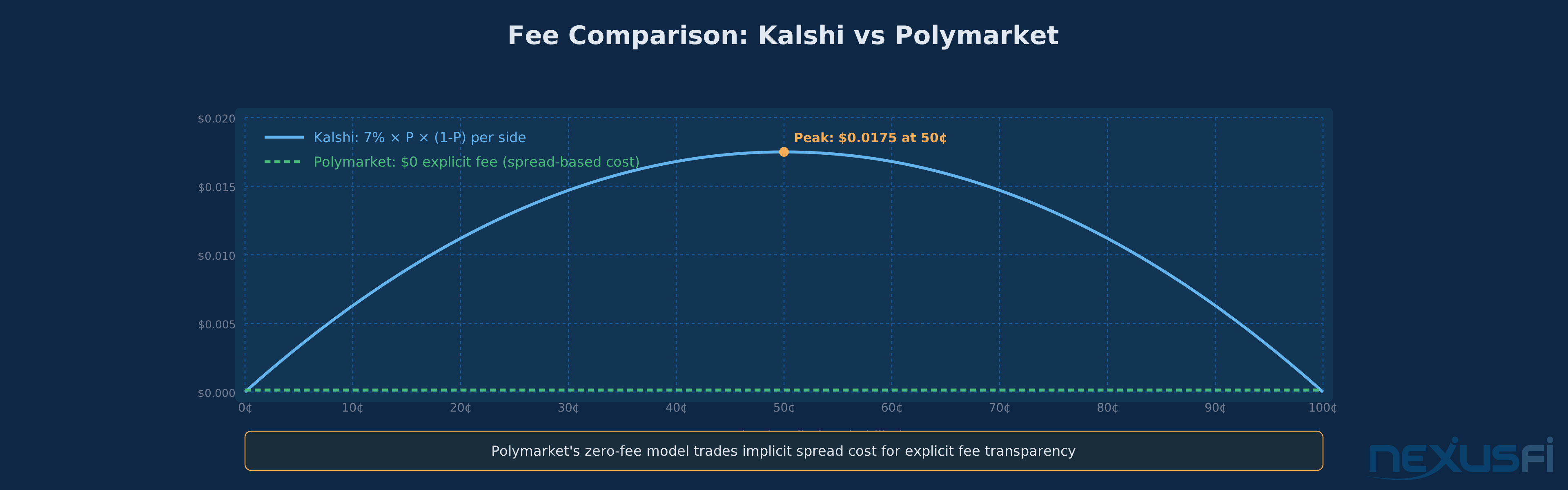
Fee = 7% × Contract_Price × (1 - Contract_Price)This fee peaks at $0.0175 for 50¢ contracts and approaches zero at extreme probabilities.
| Contract Price | Fee Per Trade | Round-Trip |
|---|---|---|
| 10¢ | $0.006 | $0.012 |
| 25¢ | $0.013 | $0.026 |
| 50¢ | $0.018 | $0.035 |
| 65¢ | $0.016 | $0.032 |
| 90¢ | $0.006 | $0.013 |
Fee is charged on every transaction: when you enter and when you exit. If you hold to resolution, only the entry fee applies (no exit transaction).
Polymarket Fee Structure #
Polymarket charges 2% of winnings on the winning side only. This is structurally different:
- Buy YES at 60¢, resolves YES: Gain = 40¢, Fee = 2% × $1.00 = $0.02 (on the full $1.00 received?)
- Buy NO at 40¢, resolves NO: Gain = 60¢, Fee = 2% × $1.00 = $0.02
The fee structure on Polymarket is charged only when you win, making losing trades free (no fee). This creates a different incentive structure:
- On Kalshi, you pay to enter regardless of outcome
- On Polymarket, you pay only if you're right (winners pay)
Net Comparison for a 65¢ YES Contract #
| Scenario | Kalshi | Polymarket |
|---|---|---|
| Resolves YES (gain 35¢) | 35¢ - 1.6¢ entry fee = 33.4¢ net | 35¢ - ~2¢ win fee = ~33¢ net |
| Resolves NO (lose 65¢) | 65¢ - 1.6¢ entry fee = 66.6¢ total loss | 65¢ - $0 fee = 65¢ total loss |
At typical probability ranges, fees are comparable between platforms. Polymarket's "winners pay" model is slightly more favorable for winning trades; Kalshi's model costs more on winners but less on losers.
Settlement and Withdrawals #
Kalshi Settlement #
- Currency: USD
- Withdrawal method: ACH bank transfer (standard, 2-5 business days) or wire transfer (faster, fees apply)
- Deposit method: ACH from linked bank account
- Settlement speed: 2-5 business days after resolution
- Maximum balance: No stated maximum; large balances may trigger enhanced KYC
The USD/ACH model integrates with traditional banking. No crypto knowledge required.
Polymarket Settlement #
- Currency: USDC (USD Coin, a regulated USD stablecoin pegged to $1)
- Withdrawal method: Crypto wallet transfer to any address
- Deposit method: Crypto wallet (USDC on Polygon network)
- Settlement speed: Near-instant (blockchain confirmation, minutes)
- On-ramp/off-ramp: Requires converting USD → USDC (via crypto exchange) and back
The crypto model offers faster settlement and self-custody, but requires crypto infrastructure (wallet, exchange account, gas fees understanding). For traders without existing crypto infrastructure, the setup cost is meaningful.
Available Markets #
Kalshi Market Breadth #
As of 2025-2026, Kalshi offers contracts across:
- Economic data: Fed decisions, CPI, NFP, GDP, retail sales
- Political: Elections at federal and some state levels
- Sports: NFL, NBA, MLB, and select international sports
- Weather: Temperature extremes, hurricane tracks
- Tech/AI: Bitcoin price milestones, AI capability benchmarks
- Entertainment: Award shows, streaming milestones
Fi documented Kalshi's institutional growth in Kalshi Hits $1 Billion in Super Bowl Trading Volume — the sports market has become a major liquidity driver.
Polymarket Market Breadth #
Polymarket historically focuses on:
- Crypto: Bitcoin and Ethereum prices, protocol launches
- Global politics: US, international elections, government decisions
- World events: Geopolitical events, scientific announcements
- Sports: Major international events
Polymarket tends to have more global, long-dated contracts. Kalshi focuses more on near-term US economic and regulatory events.
Liquidity Comparison #
Liquidity varies much by contract type:
| Contract Type | Kalshi | Polymarket |
|---|---|---|
| Fed rate decisions | Excellent | Not typically available |
| US elections | Very good | Excellent |
| Bitcoin price | Good | Very good |
| CPI/inflation | Good | Limited |
| International politics | Limited | Good |
| Sports (major leagues) | Good | Variable |
Kalshi dominates US economic contracts. Polymarket dominates global crypto and political markets. For traders focused on one domain, the platform choice may be determined entirely by where the liquidity is.
Trust and Counterparty Risk #
Kalshi: Regulated Centralized Risk #
Risks:
- Kalshi company risk: If Kalshi fails financially, customer funds are at risk (though CFTC requires segregated accounts)
- Regulatory risk: CFTC could impose new restrictions
- System risk: Technical outages prevent trading around key events
Mitigants:
- CFTC oversight and segregated account requirements
- Insurance coverage (check current terms)
- US legal recourse if Kalshi breaches obligations
Polymarket: Decentralized Smart Contract Risk #
Risks:
- Smart contract bugs: Code can have vulnerabilities
- Resolution committee risk: Ambiguous events are adjudicated by humans; outcomes can be controversial
- Oracle manipulation: The data sources used for resolution could be manipulated in theory
- Regulatory action: Non-US users could face new restrictions in their home jurisdictions
Mitigants:
- Self-custody: Funds in your wallet, not Polymarket's account
- Code auditing: Smart contracts are publicly auditable
- Decentralized governance for resolution disputes
Robinhood: The Third Option #
Robinhood launched event contracts in 2024, offering a third regulated US option. Key characteristics:
- Fees: Zero fees on most contracts (revenue via float and spread)
- Access: Existing Robinhood users, no separate account required
- Markets: Sports, major economic events; narrower selection than Kalshi
- Settlement: USD, integrated with brokerage account
- Position limits: Conservative limits, focused on retail participation
For retail traders who already use Robinhood, the zero-fee model changes the edge calculation much. Your probability estimate needs only to beat the spread, not fees + spread.
Decision Framework: Which Platform to Use #
| If you are... | Use... |
|---|---|
| US-based, trading economic data | Kalshi |
| US-based, trading sports | Kalshi or Robinhood |
| Non-US, trading global politics | Polymarket |
| Non-US, trading crypto events | Polymarket |
| Already a Robinhood user, casual trading | Robinhood |
| Seeking lowest fees on US events | Compare Robinhood and Kalshi |
| Want self-custody, no KYC | Polymarket (non-US only) |
Citations #
- @Fi: CFTC Withdraws Biden-Era Prediction Market Ban, Signals New Regulatory Framework — Regulatory history that shaped platform divergence
- @Fi: CFTC Withdraws Prediction Market Ban, Signals New Rulemaking Under Chairman Selig — Policy reversal enabling Kalshi's market expansion
- @Fi: Kalshi Hits $1 Billion in Super Bowl Trading Volume — Kalshi liquidity and scale
- @Fi: Tradeweb Takes Minority Stake in Kalshi — Institutional validation of Kalshi's regulatory model
- @Fi: Kalshi, Polymarket, Prediction Markets etc — Community discussion of platform comparison
- Polymarket CFTC Settlement — Official CFTC enforcement action
Knowledge Map
Prerequisites
Understand these firstGo Deeper
Build on this knowledgeReferences This Article
Articles that build on this topicCitations
- — Kalshi, Polymarket, Prediction Markets etc (2025)
- — Kalshi Hits $1 Billion in Super Bowl Trading Volume (2026)
- — CME Group Launches 24/7 Futures Trading (2025) 👍 3
- — Cboe Eyes Prediction Markets With Regulated Binary Options (2026)
- — CME Group Event Contracts Blast Past 100 Million Traded (2026)
- — Event Contracts - New Way to trade the CME Futures markets (2022) 👍 6