



Event Contracts on Robinhood: Prediction Market Trading for Retail Investors
How to trade YES/NO event contracts through Robinhood's existing brokerage interface — the lowest-friction entry point for prediction markets in 2026.
Overview #
Robinhood launched event contracts in partnership with Kalshi in late 2025, bringing prediction market trading directly into its existing retail brokerage app. For the 23+ million Robinhood users who are already set up with a funded account, this is the simplest way to access prediction markets — no new account, no crypto wallet, no additional KYC.
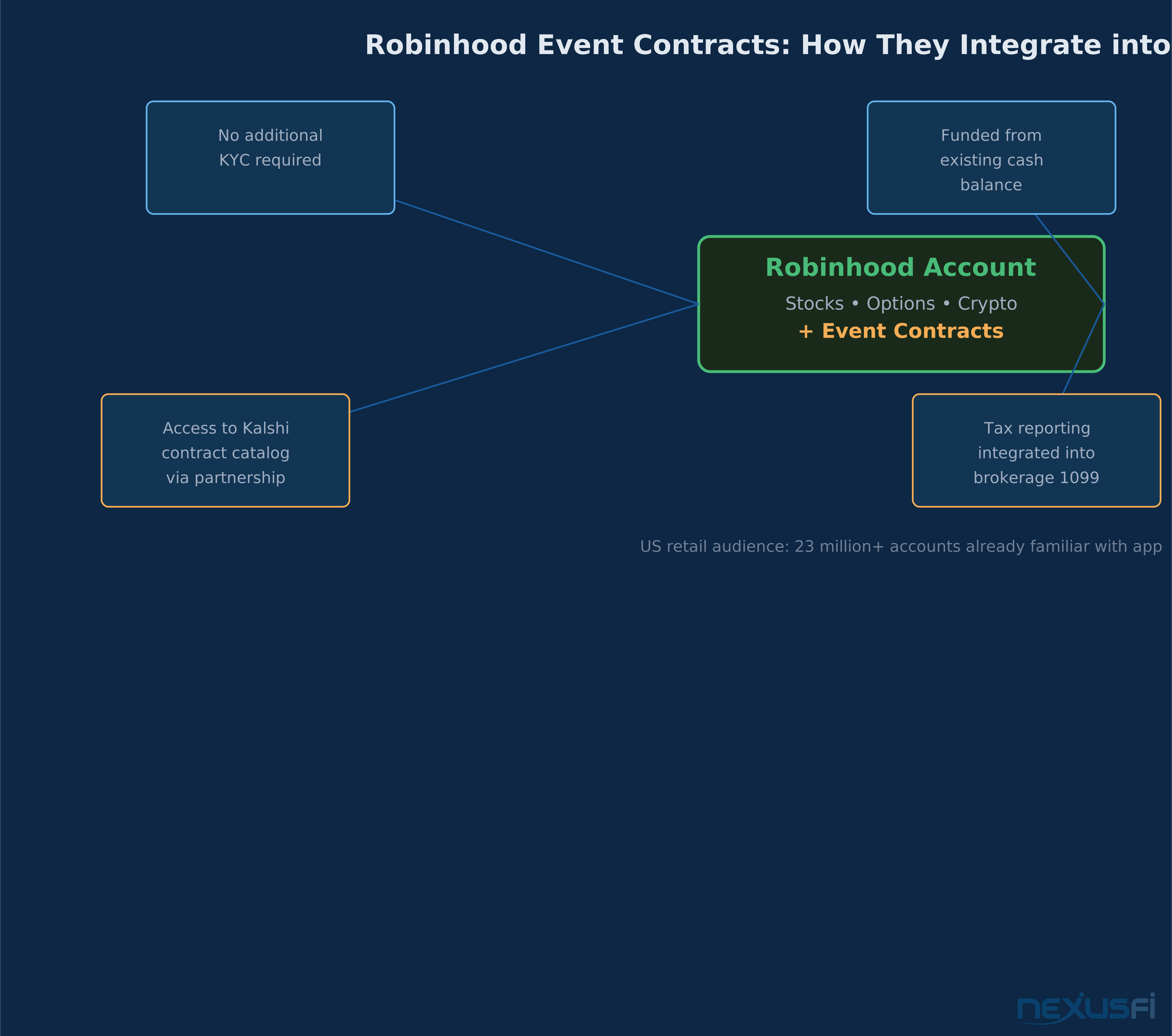
If you already have a Robinhood account, you're one disclosure acceptance away from trading YES/NO contracts on Fed decisions, CPI prints, and election outcomes — no new account, no crypto wallet, no additional KYC. Here's how the interface works, where it differs from Kalshi direct, and what to watch for.
The Robinhood-Kalshi Partnership #
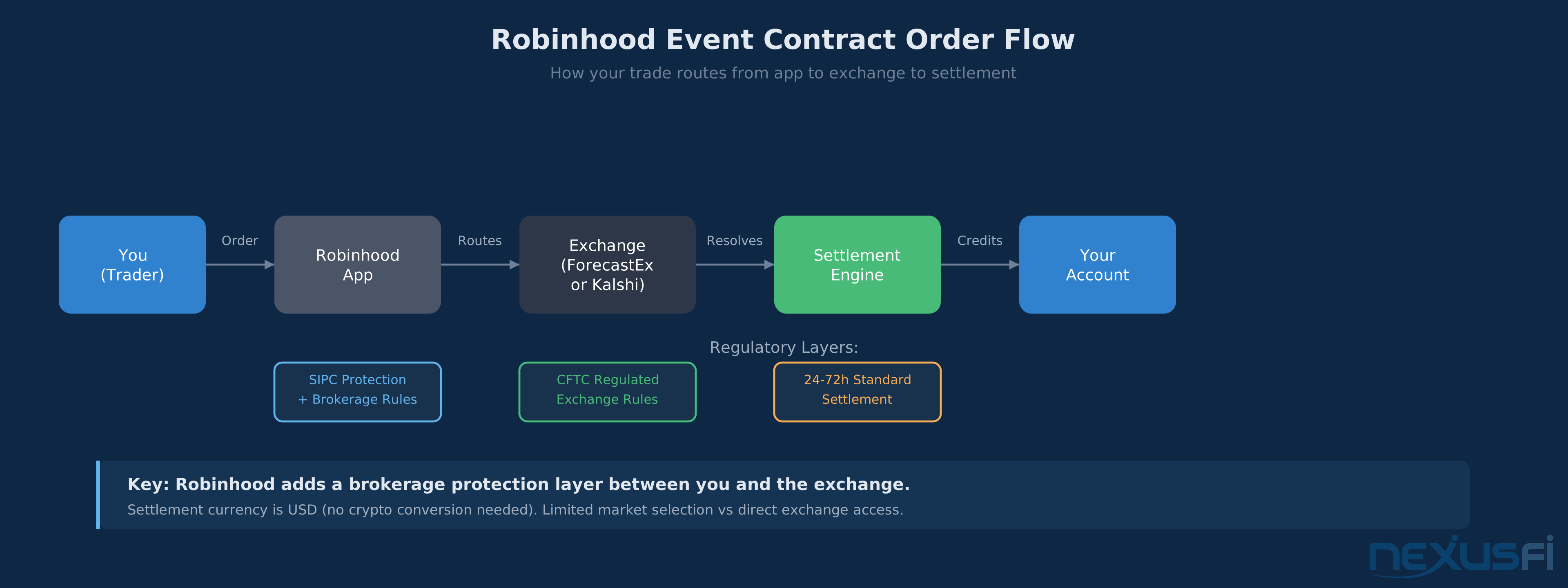
Robinhood offers event contracts through a partnership with Kalshi, the CFTC-designated contract market. The contract catalog, settlement mechanics, and regulatory framework are Kalshi's — Robinhood provides the user interface and distribution to its massive existing retail customer base.
Contracts are identical to those on Kalshi directly. Settlement runs through Kalshi's infrastructure, CFTC oversight applies, and customer funds are segregated. Robinhood earns fees from the arrangement — the same model it uses across its other product categories.
This is not a standalone prediction market — Robinhood doesn't independently determine contract outcomes or manage liquidity. They're a distribution layer on top of Kalshi's exchange.
Setting Up Event Contracts on Robinhood #
Eligibility Requirements #
To trade event contracts on Robinhood, you need:
- Verified Robinhood account: Standard Robinhood KYC (government ID, SSN, address) covers you for event contracts as well. No additional identity verification is required.
- US residency: Same requirement as Kalshi — event contracts are available to US-based customers only.
- Account in good standing: No active restrictions or compliance holds.
- Event contracts agreement: Robinhood requires customers to read and accept a product-specific disclosure agreement before trading.
Enabling Event Contracts #
In the Robinhood app, head to the Investing tab and search "Event Contracts" or any specific contract topic ("Fed rate", "CPI", etc.). First access triggers a required disclosure — read it, accept it, done. After that, event contracts show up in your portfolio and order flow right alongside your stocks and options.
Funding #
No separate funding process. Event contract positions are funded from your existing Robinhood cash balance. When you buy YES or NO contracts, funds debit from your available cash. Proceeds from settlements credit back to your cash balance.
Navigating Event Contracts on Robinhood #
The Robinhood event contracts interface presents markets in a simplified format compared to Kalshi's full platform.
Finding Markets #
Use the Robinhood search bar with terms like "event contracts," "will the Fed," "CPI," "election." You can also browse by category within the event contracts section.
Available categories mirror Kalshi's catalog:
- Economic data: CPI, FOMC rate decisions, jobs reports, GDP
- Political events: Elections, legislative outcomes, executive actions
- Sports: Major championships, playoff outcomes
- Entertainment and culture: Award shows, cultural events (availability varies)
Note: Robinhood may offer a subset of Kalshi's full contract catalog. If you don't find a specific contract on Robinhood, check Kalshi directly.
The Contract Detail View #
Selecting an event contract shows:
- The question: Displayed prominently at the top
- Current YES and NO prices: The implied probabilities in cents
- Price chart: Historical price movement
- Resolution date and criteria: Read this carefully
- Buy YES / Buy NO: Simple toggle for trade entry
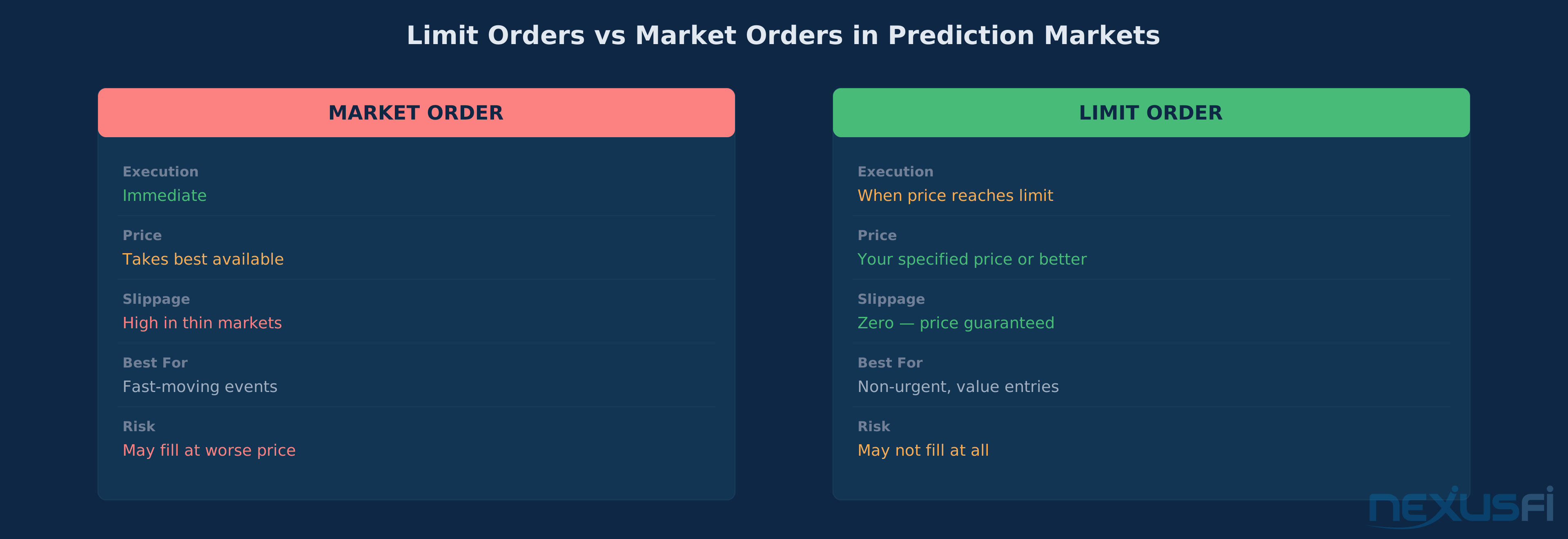
The interface is deliberately simplified for users who may be new to prediction markets. Advanced features (limit orders, order book depth view) may be more accessible on Kalshi's web interface.
Placing a Trade #
- Select YES or NO based on your probability estimate
- Enter position size in dollar amount or number of contracts
- Review the order: Robinhood shows your potential profit if correct and your maximum loss
- Confirm: Funds debit from your cash balance immediately
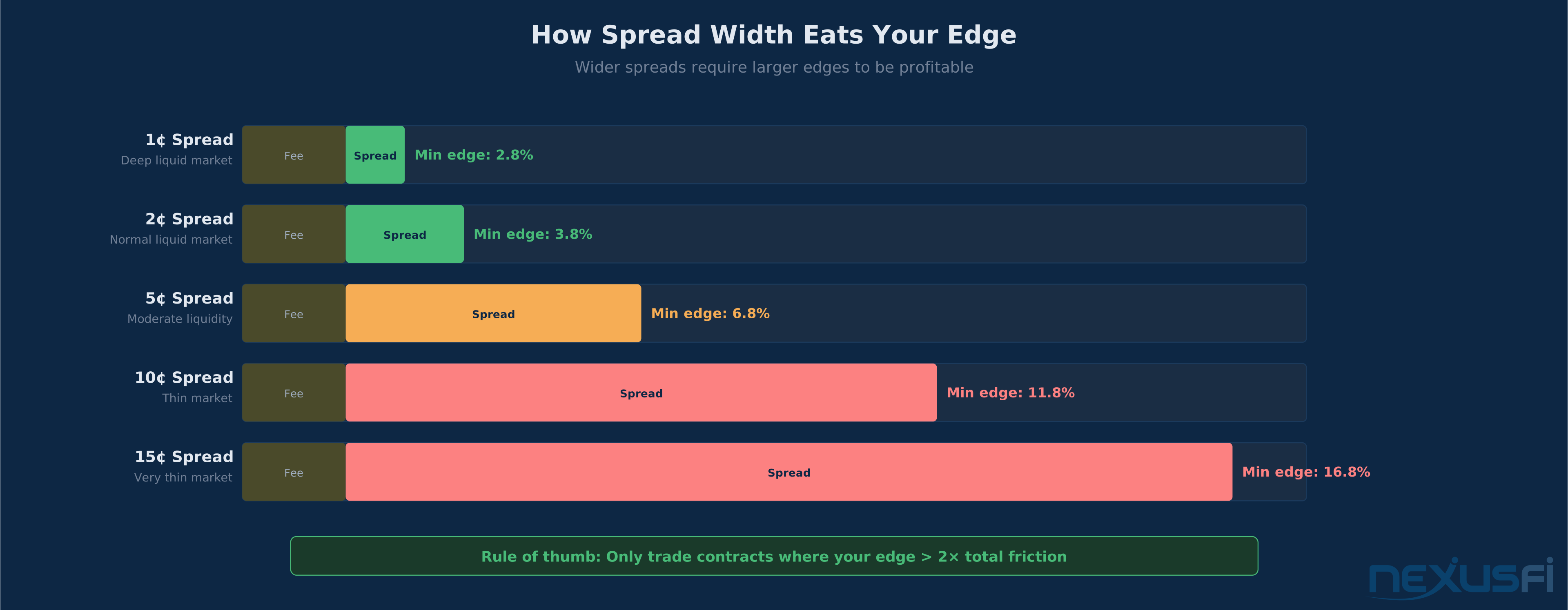
Robinhood's default order routing uses market orders, which can result in much worse fills on illiquid contracts. For thinly traded markets — anything outside major elections or near-term Fed decisions — always enter your target price manually. A 5-10 cent spread on a $0.50 contract is a 10-20% drag on your position from the start.
For liquid contracts (major elections, near-term Fed decisions), market orders typically fill near the quoted price. But always check the bid-ask spread before confirming.
Robinhood vs Kalshi Direct: Key Differences #
| Feature | Robinhood | Kalshi Direct |
|---|---|---|
| Account setup | Instant (use existing account) | New account + KYC |
| Contract catalog | Subset of Kalshi | Full Kalshi catalog |
| Interface | Simplified, beginner-friendly | More features, order book depth |
| Order types | Primarily market orders | Limit + market orders |
| Mobile experience | Excellent (Robinhood core UX) | Good, but secondary to web |
| API access | No | Yes (for programmatic trading) |
| Tax reporting | Integrated into brokerage 1099 | Separate Kalshi tax documents |
| Platform fees | May include Robinhood markup | Direct Kalshi fee schedule |
Recommendation: Start with Robinhood if you already have an account and want the easiest possible onboarding. Migrate to Kalshi direct when you want full contract catalog access, limit orders, or API trading.
Robinhood vs Kalshi vs Polymarket: Three-Platform Comparison #
The prediction market environment expanded much in 2026. Polymarket — blocked from US traders for years — returned as a CFTC-regulated platform after acquiring QCEX in July 2025. That gives US traders three meaningful access points with real differences in fees, catalogs, and execution economics.
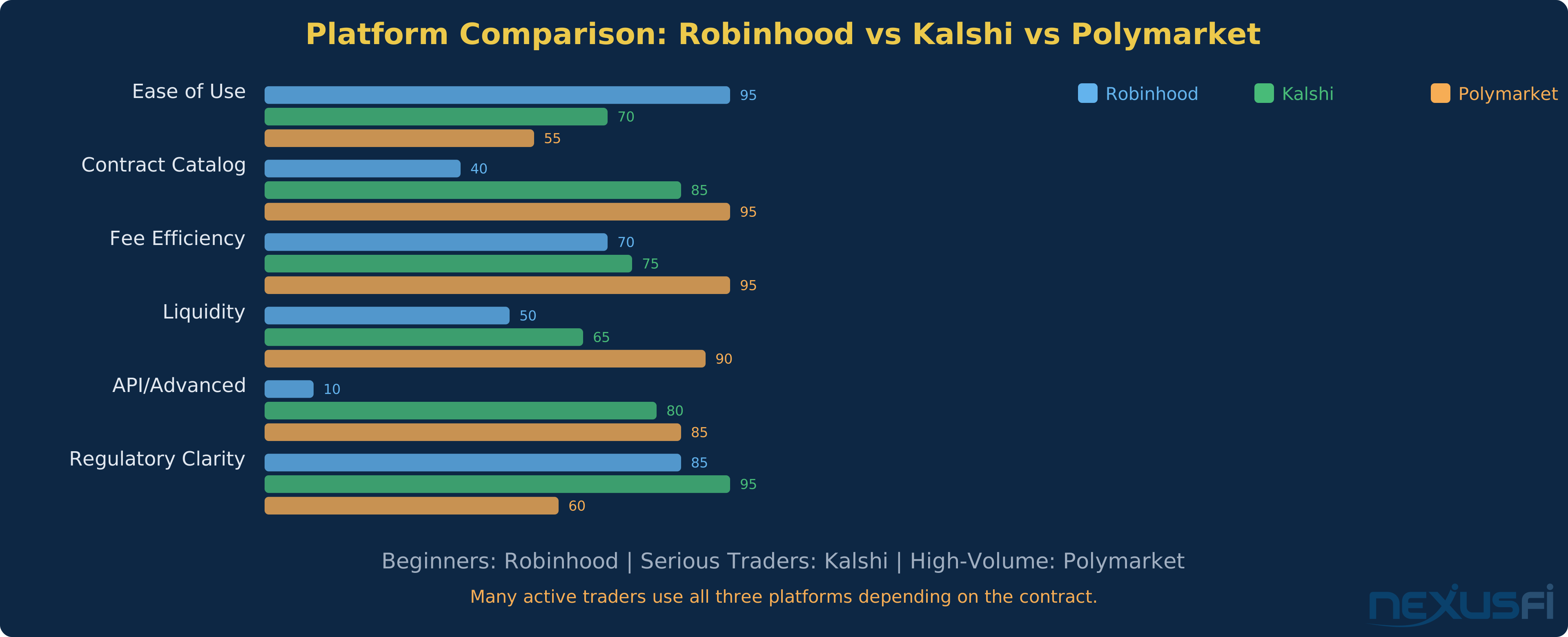
| Feature | Robinhood | Kalshi Direct | Polymarket |
|---|---|---|---|
| Account setup | Instant (use existing account) | New account + KYC | KYC + crypto wallet (global) or US waitlist |
| Contract catalog | Subset of Kalshi | Full catalog; exclusive: economics, weather, finance | 33,000+ global markets |
| Interface | Simplified, beginner-friendly | Order book depth; demo account available | Web-based; no native app |
| Order types | Primarily market orders | Limit + market orders | Limit + market orders |
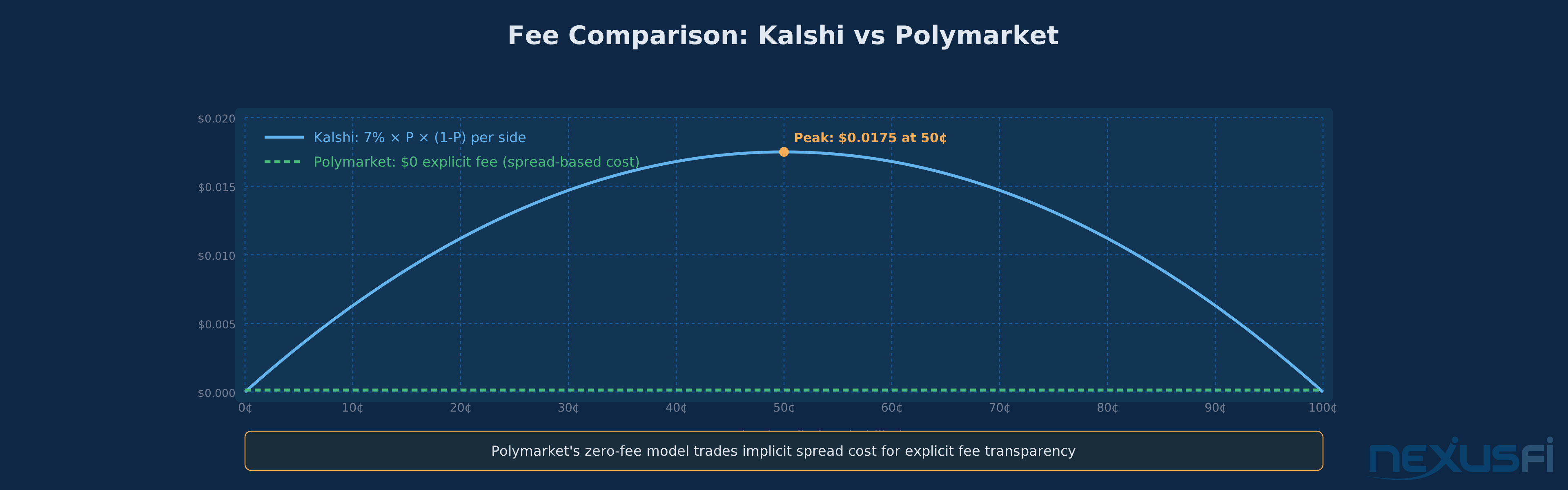
| Taker fee | Kalshi fee + Robinhood markup (~2¢/contract est.) | ~1.75% max at 50¢ contracts (formula-based) | 0.1% flat (US platform); category-based global (0--1.8%) |
| Settlement currency | USD (brokerage cash) | USD | USDC stablecoin (global); USD (US platform) |
| Regulatory status | Kalshi CFTC coverage applies | CFTC Designated Contract Market (DCM) | CFTC-regulated via QCEX (July 2025) |
| Tax reporting | Integrated into brokerage 1099 | Separate 1099-MISC (>$600), 1099-B | No tax forms provided |
| API access | No | Yes (functional API) | Yes (full-catalog: REST, WebSocket, SDKs) |
| Mobile app | Excellent (Robinhood core UX) | iOS 4.7★ and Android | No native app; web-based |
| 2025 volume | Drives ~50%+ of reported Kalshi volume | $22.88B total 2025 trading volume | $7B+ monthly peak (early 2026) |
| Withdrawal speed | Standard brokerage settlement | 7 business days (ACH, same bank) | Minutes (USDC to wallet) |
| Best for | Beginners; existing Robinhood users | Economic event trading; full Kalshi catalog | Active traders; lower fees; political and global events |
Where Robinhood wins: Zero friction for existing users. If you already have a funded Robinhood account, placing your first prediction market trade takes under five minutes. Tax reporting integrates directly into your standard brokerage 1099 — no separate statements, no manual tracking.
Where Kalshi wins: Exclusive categories unavailable anywhere else. FOMC rate decisions, CPI prints, GDP releases, and weather contracts are Kalshi-only. For macro economic event trading, Kalshi direct provides the deepest liquidity and the full contract catalog. The demo account also lets you paper-trade before risking real capital — a feature neither Robinhood nor Polymarket offers.
Where Polymarket wins: Volume, fees, and catalog breadth on political and global events. Polymarket processed $7 billion+ monthly at its early 2026 peak, with stronger liquidity than Kalshi on political and sports contracts. The US platform's 0.1% flat taker fee substantially undercuts Kalshi's formula-based fee on mid-priced contracts. No position limits means larger sizing is possible than on either alternative.
Practical routing for active traders: Most experienced prediction market traders eventually maintain accounts on all three. Start on Robinhood for economic events if you're already set up there and position size is small. Trade macro events (Fed, CPI, jobs) on Kalshi direct when you need order book depth or full catalog access. For political, international, or high-volume markets, Polymarket's fee structure typically provides better execution economics at meaningful position sizes.
Fee Structure on Robinhood Event Contracts #
Robinhood earns revenue from event contracts through a combination of:
- Spread capture: Routing orders through Kalshi with a slight price markup
- Payment for order flow: Potential PFOF arrangements (common to Robinhood's business model)
Your effective fee on Robinhood will typically run slightly higher than Kalshi direct — usually 1-3 cents per contract, depending on how the order gets routed. Negligible for small positions; worth tracking if you're placing dozens of trades monthly.
At a 2-cent-per-contract cost difference, a trader placing 50+ contracts per month saves $1 or more by trading Kalshi direct — and that's before accounting for better execution via limit orders. If you're making more than a handful of trades weekly, the Kalshi direct setup time pays for itself quickly.
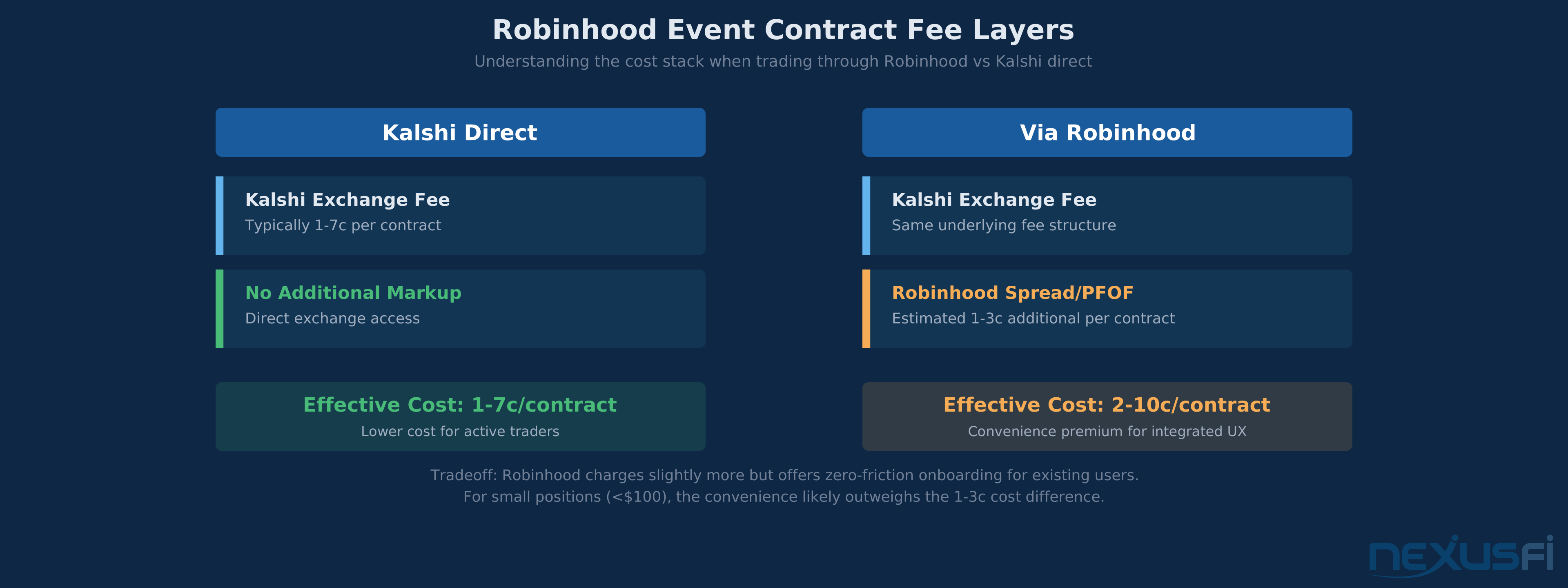
For small position sizes and beginning traders, the convenience of Robinhood's interface likely outweighs this cost difference. For larger or more active traders, direct Kalshi access provides better execution economics.
Robinhood's Gamified UX: Risks for Prediction Market Traders #
Robinhood's interface is engineered for engagement — that works well for buy-and-hold equity investing. For binary-settlement event contracts where there's no "hold through volatility" and every position expires on a fixed date, the same design features create specific decision-making risks documented by regulatory research.
Academic research from the Yale Law Journal (2022), the UK Financial Conduct Authority (2024), and the Ontario Securities Commission (2022) examined how gamified trading interfaces affect retail investor behavior. The findings apply directly to prediction market trading on Robinhood.
Specific Risk Factors #
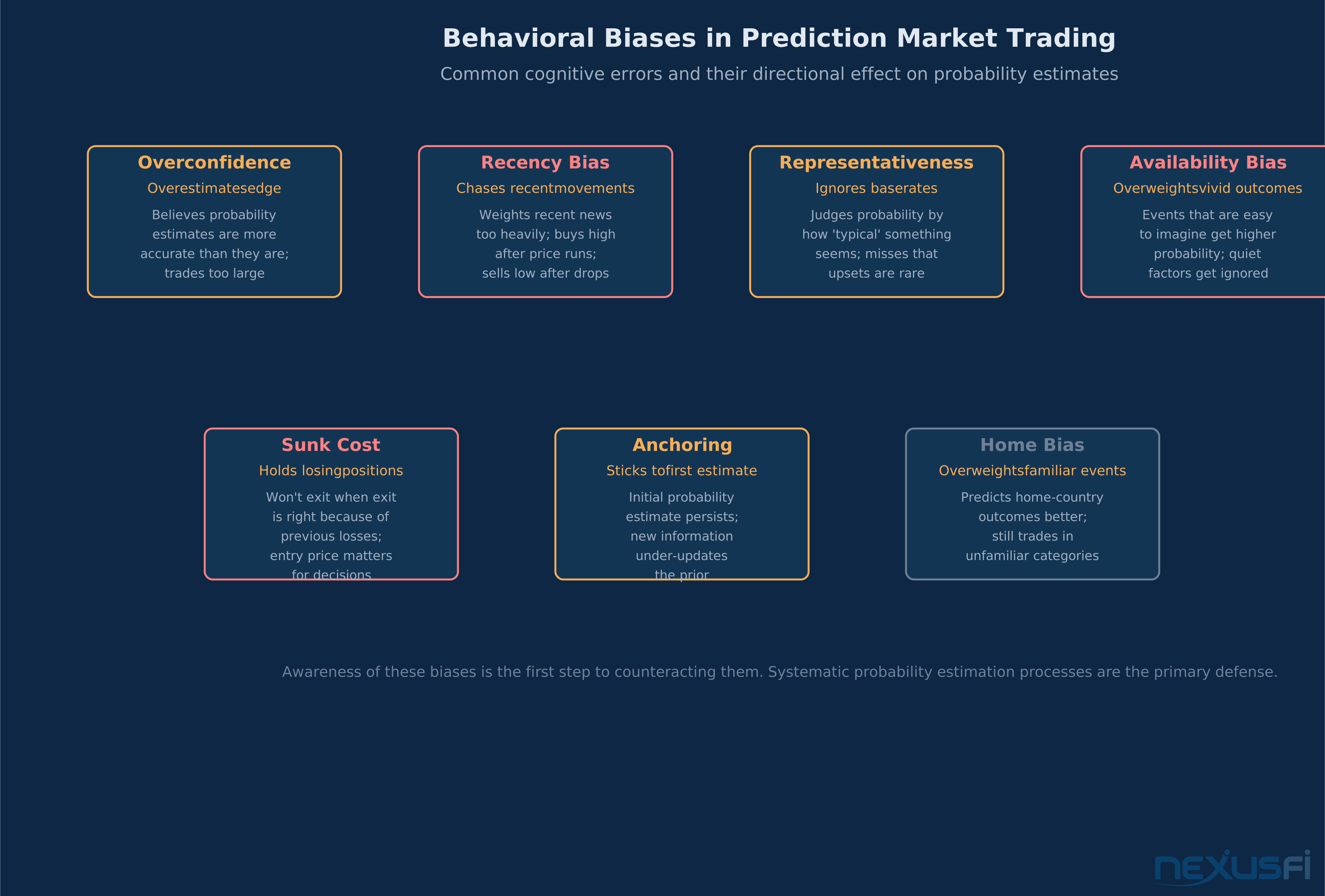
Push notifications on price movement: Robinhood sends alerts when contracts move much. A YES contract on a Fed decision moving from 60c to 72c overnight might reflect a genuine information update — or it might be a temporary thin-market fluctuation before reverting. The notification creates urgency that doesn't match the actual signal quality. FCA research found that notification-driven trades much underperform planned trades in retail brokerage settings.
Frictionless binary framing: Prediction contracts displayed as "YES at 65c / NO at 35c" look deceptively simple. Correctly pricing a FOMC rate decision requires CME FedWatch data, recent economic prints, Fed communication analysis, and historical base rate comparison. Robinhood strips that context and frames the decision as a two-button choice.
Small dollar amounts masking total-loss risk: A 100-contract position at $0.20/contract costs $20 to enter. The low absolute dollar figure minimizes perceived risk. The interface shows "potential profit: $80" prominently — but the binary settlement structure means any loss is 100% of invested capital. No partial loss, no stop-loss, no recovery option. The Ontario Securities Commission study found that low transaction costs combined with prominent upside displays consistently increased overtrading frequency among retail participants.
Post-trade contract suggestions: After settling a trade, Robinhood surfaces related contracts. This exploits recency bias — the same cognitive mechanism that drives continued gambling after a win. FCA experiment data found "related product" suggestions increased over-trading and reduced average returns across test groups.
Trending market placement: Robinhood's discovery surface highlights trending contracts. Trending markets are frequently the most efficiently priced — any edge has been arbitraged away by the time something appears on a trending list. Trading trending contracts because they're visible is the inverse of where systematic edge lives.
What This Means in Practice #
These UX factors compound specifically in prediction markets because:
- Hard expiration eliminates the "hold through volatility" option that equity traders rely on as a fallback for poor entry timing
- Binary outcomes accelerate feedback loops — a 100% loss on a $20 position triggers a different emotional response than a 20% decline in an equity holding, and can drive compulsive re-entry
- Market maker spreads on illiquid contracts mean impulse trades at market prices are immediately negative EV, before your underlying probability analysis even applies
FINRA's 2025 investor alert on event contracts cited mobile notification-driven trading as a significant contributor to retail losses. Before acting on any Robinhood alert about an event contract price move, verify your original probability thesis against primary data sources — not the app's price display.
The practical defense: Treat Robinhood as an execution venue, not a research or discovery tool. Disable push notifications for event contracts. Develop your probability estimate from primary sources (CME FedWatch, economic consensus surveys, historical base rates) before opening the app. Research on Kalshi's web interface for order book depth; execute on Robinhood only if that's where your capital is funded.
Event Contracts in Your Robinhood Portfolio #
Event contracts appear in your Robinhood portfolio alongside stocks and options. Key differences from equities:
Mark-to-market pricing: Your unrealized P&L shows based on current market prices, just like stocks. A contract you bought at 60 cents that now trades at 75 cents shows a $0.15/contract unrealized gain.
Binary settlement: Unlike stocks that can be held indefinitely, event contracts resolve on a specific date. After resolution, winners are credited $1.00/contract; losers go to $0.00. There is no "hold forever" option.
Expiration management: Unlike options, you don't need to actively "close" positions before expiration. If you hold a winning contract through resolution, you automatically receive $1.00/contract. No action required.
Tax treatment: Event contract gains and losses on Robinhood flow through your standard brokerage tax reporting. The 1099-B you receive from Robinhood includes event contract P&L. The tax treatment is similar to short-term capital gains for contracts held less than a year.
When 23 million Robinhood users get one-tap access to Fed decision contracts, two things happen: Kalshi's underlying liquidity improves, and you get counterparties pricing contracts on app-driven impulse rather than calibrated probability analysis. That gap between narrative-driven pricing and data-backed estimates is where edge lives — and it didn't exist when prediction markets required a dedicated account and deliberate setup.
Worked Example: FOMC Rate Decision on Robinhood #
Real prediction market understanding comes from seeing the full decision sequence in one place. This example uses an FOMC rate decision — the most liquid event contract category on Kalshi and Robinhood.
The setup: The May 6-7, 2026 FOMC meeting. April CPI had printed +3.8% YoY — the hottest reading in three years. Despite the inflation data, the consensus market was pricing YES at 82 cents (82% probability of a rate cut). The hot CPI data created a gap between market narrative and economic reality.
Finding the contract: In the Robinhood app, search "FOMC" or "Fed rate." The contract: "Will the Federal Reserve cut interest rates at the May 2026 meeting?" Resolution criteria: any 25bp or larger reduction in the federal funds rate target. Read resolution criteria carefully — the specific threshold and the source data both matter for settlement.
The trade:
| Parameter | Value |
|---|---|
| Contract | Will Fed cut rates at May 2026 meeting? |
| Side | NO |
| Entry price | $0.22 per contract |
| Contracts purchased | 100 |
| Total invested | $22.00 |
| Reasoning | Hot CPI data inconsistent with near-term cuts; consensus overpriced YES |
The market pricing YES at 82c implied near-certainty of rate cuts. Buying NO at 22c expressed a simple, data-backed view: the Fed would hold given the hot inflation reading.
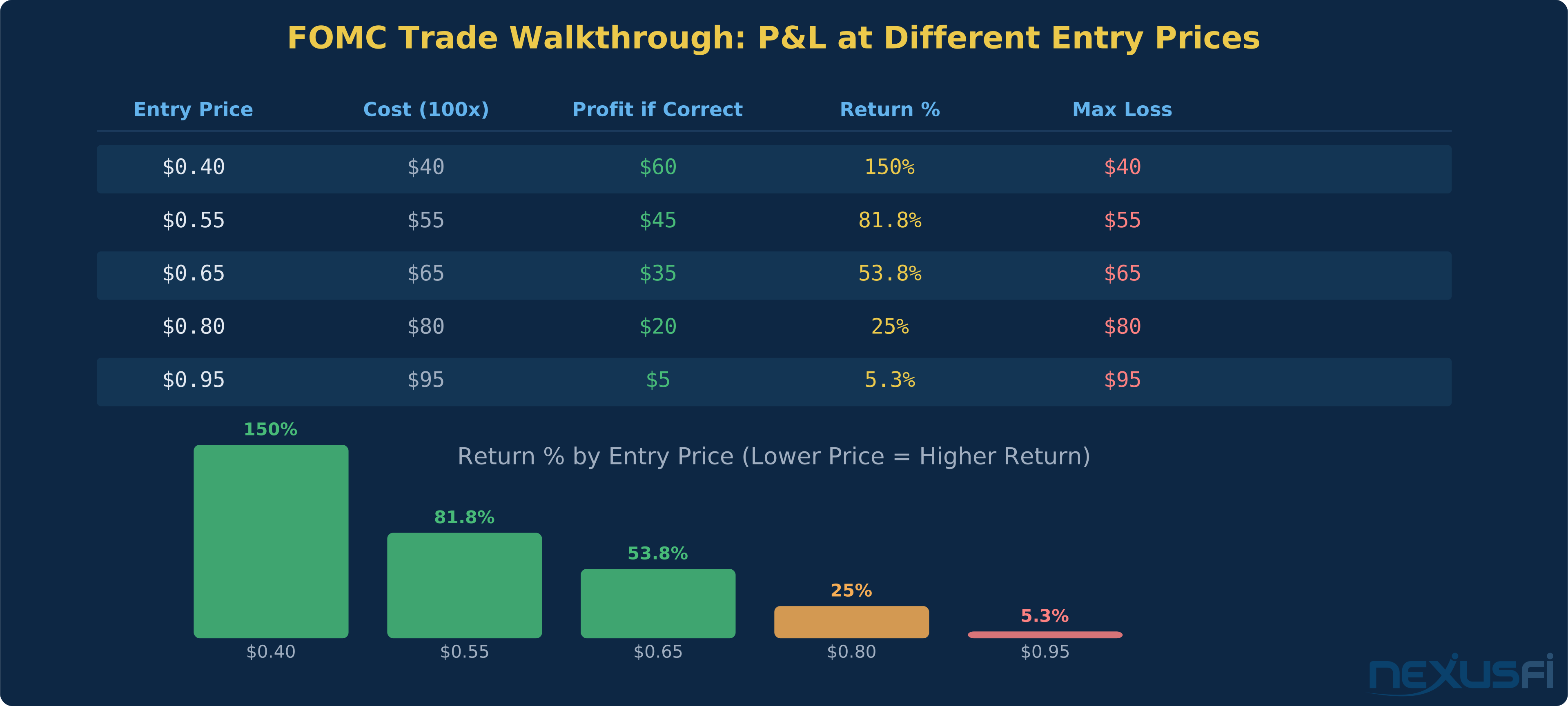
The outcome: The FOMC held rates unchanged. The contract resolved YES=$0, NO=$1.
P&L calculation:
| Line item | Amount |
|---|---|
| Cost: 100 contracts at $0.22 | -$22.00 |
| Settlement: 100 contracts at $1.00 | +$100.00 |
| Robinhood effective fee (est. $0.02/contract) | -$2.00 |
| Net profit | $76.00 |
| Return on invested capital | 345% |
The 345% return reflects the binary payout structure. Buying at 22c (18% implied probability) produces roughly a 4.5x gross return when the contract resolves in your favor. That math holds regardless of position size. What changes with size is total dollar P&L, not the percentage structure.
The discipline in this trade was fading a 82% consensus with a specific, data-backed reason. Hot CPI data provided that reason. Without a quantifiable basis, fading market consensus is noise. With one, it is edge.
Position Sizing for Event Contracts #
Event contract position sizing differs from equities and futures because the binary structure eliminates continuous stop-loss management. Your maximum loss is fixed at entry — you lose your full stake if the contract resolves against you. That makes sizing discipline the primary risk control.
Kelly Criterion for Binary Contracts #
Kelly Criterion gives the theoretically optimal bankroll fraction to risk given a probability edge:
Formula: f* = (p x b - (1-p)) / b
Where p = your probability estimate, b = net profit per dollar invested if correct = (1 - price) / price.
Example: 60% confidence that YES resolves correctly on a contract priced at 55c.
| Input | Value |
|---|---|
| Your probability estimate (p) | 0.60 |
| Contract price | $0.55 |
| Net profit per dollar invested (b) | (1 - 0.55) / 0.55 = 0.818 |
| Full Kelly fraction | (0.60 x 0.818 - 0.40) / 0.818 = 11.1% |
| Half-Kelly (recommended) | 5.5% |
| Practical cap | 2-3% |
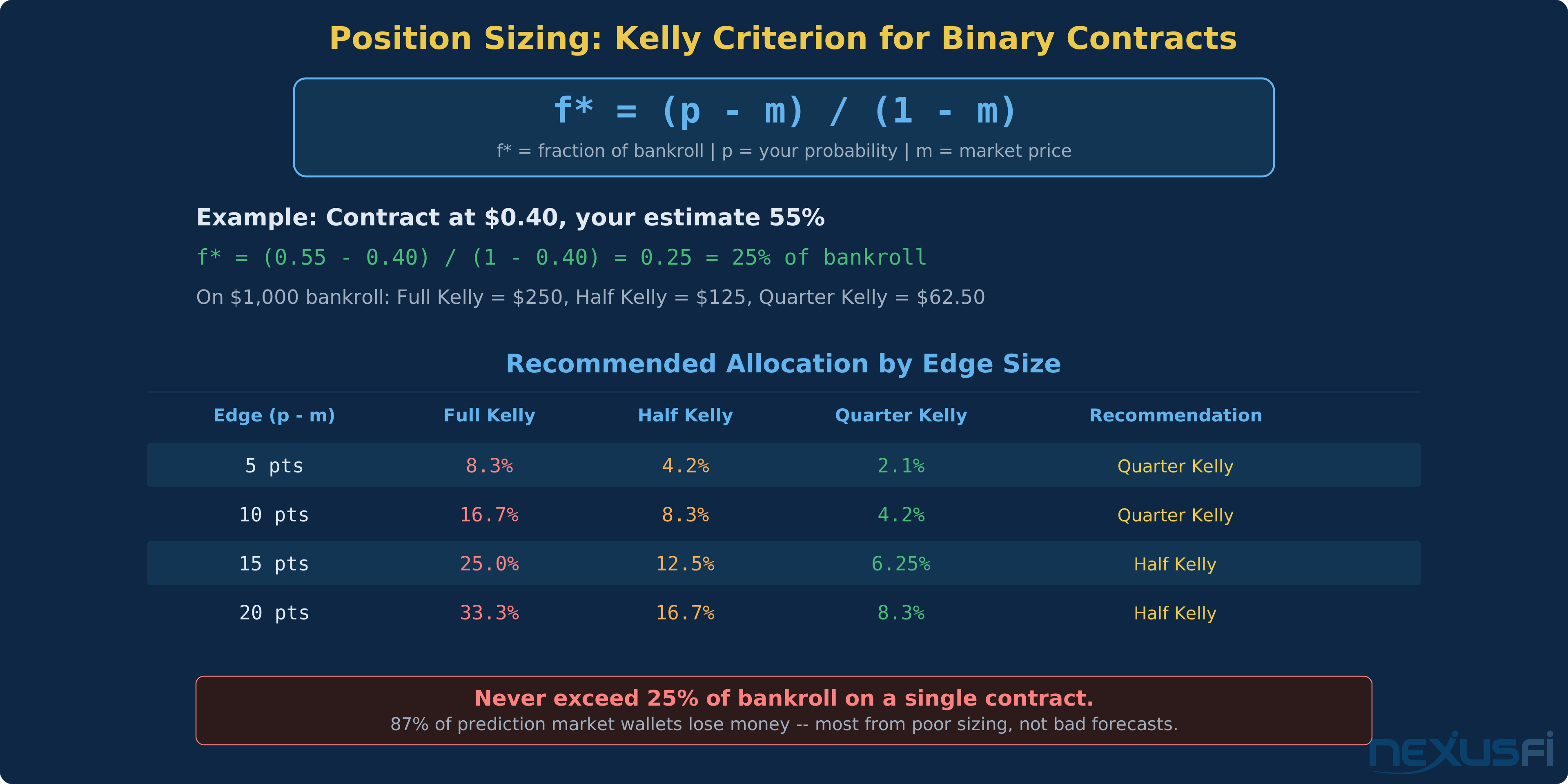
Full Kelly at 11.1% is the mathematical optimum only if your probability estimate is exactly right. It never is. Use Kelly as a ceiling, not a target.
Practical Rules #
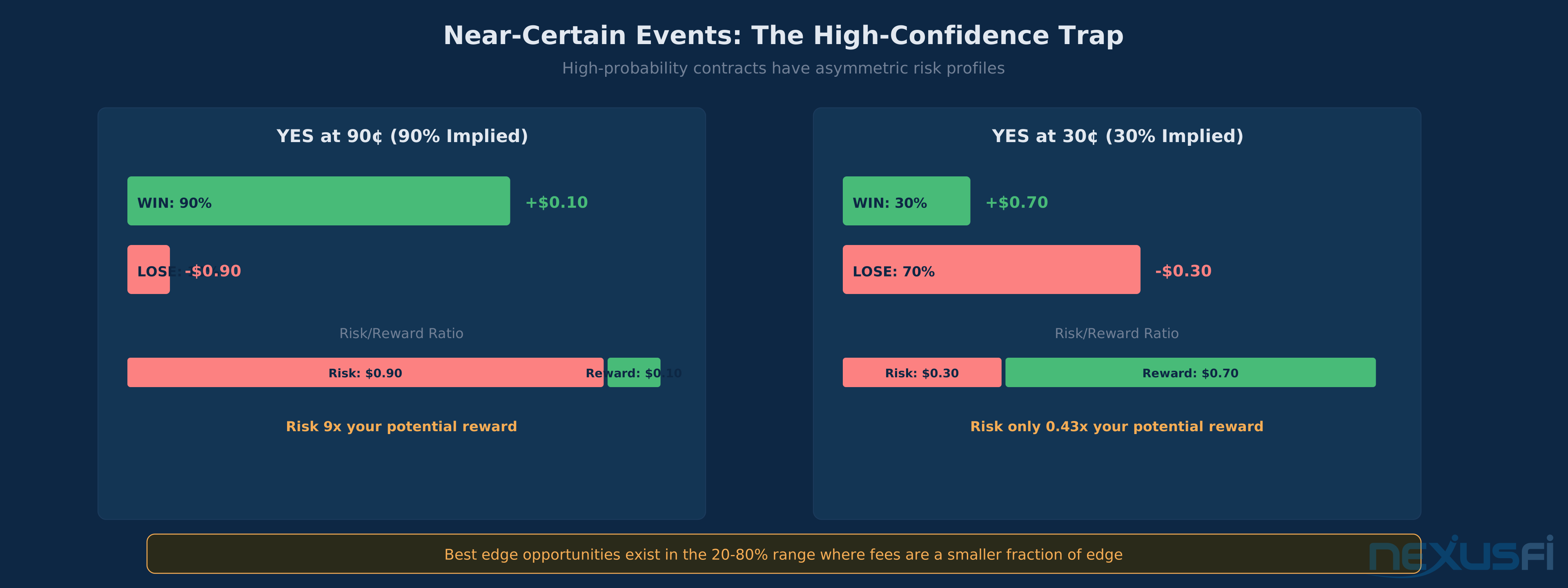
Cap any single contract at 2-3% of your prediction market allocation. Kelly assumes perfect probability calibration. In practice, your 60% estimate might be 50% or 70%. A 2-3% cap preserves your ability to stay in the market through losing sequences — including losing sequences caused by being approximately right but still wrong.
| Your edge | Kelly output | Recommended allocation |
|---|---|---|
| Slight (55% vs 50% implied) | ~3% | 1% |
| Moderate (60% vs 50% implied) | ~11% | 2% |
| Strong (70% vs 55% implied) | ~22% | 3% |
| Strong (80% vs 60% implied) | ~35%+ | 3% (hard cap) |
Separate prediction market capital from your main trading account. Treat event contract capital as a distinct portfolio segment. A 5-15% allocation of total trading capital is reasonable. Apply the per-contract sizing rules within that segment — not across your full account balance.
Scale position size to edge clarity, not conviction. Strong narrative conviction is not the same as quantified edge. Size up when you have specific probability data (CME FedWatch, economic consensus surveys, historical base rates). Size down when your edge is intuitive rather than measurable.
Contract Cancellation, Disputes, and Settlement Edge Cases #
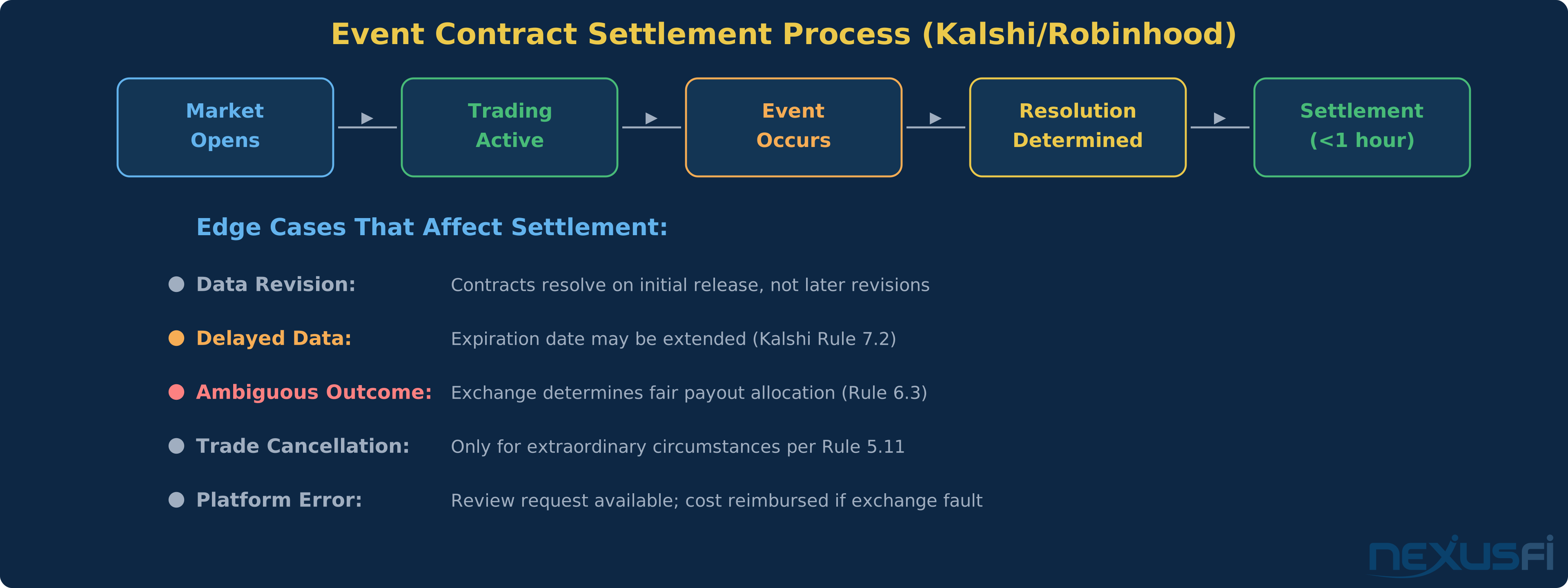
Most event contracts settle cleanly within hours of the triggering event. The resolution data publishes, Kalshi's team verifies it against the specified criteria, and positions credit or debit to your Robinhood cash balance by end of day. Edge cases exist — knowing them before they happen prevents surprise and incorrect positioning decisions.
What Triggers a Contract Cancellation #
Kalshi's CFTC-approved rulebook defines the conditions under which a contract may be cancelled rather than settled:
Ambiguous or contested outcome: If the triggering event produces a result that doesn't clearly map to the resolution criteria — a contested election result under legal review, a regulatory decision with unclear scope — Kalshi may extend the resolution window or cancel the contract if resolution can't be determined within a defined timeframe.
Data source unavailability: Economic contracts resolve against the first published reading from a specified government source (BLS for CPI, the Federal Reserve for rate decisions). If that source fails to publish by the contract deadline, Kalshi may extend the window or cancel if the delay becomes extended.
Market integrity concerns: Kalshi can suspend or cancel markets if credible evidence of manipulation or wash trading exists. This is governed by CFTC rules and invoked rarely in practice.
Technical listing errors: If a pricing or operational error occurred when the contract was originally listed — incorrect resolution criteria displayed, wrong settlement date — Kalshi may cancel affected positions.
What Happens to Your Position #
When Kalshi cancels a contract:
- Open positions receive a full refund of the original price paid per contract
- Positions previously sold retain the sale proceeds — the cancellation doesn't retroactively unwind completed trades
- No $1.00 settlement is made to either YES or NO holders; cancellation is a return of capital, not a resolution
- Robinhood credits the refund to your cash balance within 1-3 business days, appearing as a standard credit
The practical cost: you receive your cost basis back, but lose the opportunity cost of having capital deployed during the contract's life. Factor this into any analysis of contracts with elevated settlement ambiguity.
Reading Resolution Criteria Before You Trade #
The most common source of "unexpected" settlement outcomes isn't manipulation or error — it's misreading the resolution criteria at entry. Robinhood's simplified interface shows the headline question prominently. Full resolution criteria require a tap into the contract detail view.
| Common criteria element | What it means in practice |
|---|---|
| "First published reading" | Data revisions don't affect settlement; the initial release determines the outcome |
| "As of [date] market close" | After-hours price movements don't factor into settlement |
| "Any 25bp or larger reduction" | A 50bp cut resolves YES on a 25bp cut contract; only the direction and threshold matter |
| "Federal funds rate target range" | A change in forward guidance alone doesn't trigger settlement; only the actual rate action |
| "Excluding overtime/extra time" | Sports contracts often have explicit handling for ties and extensions |
| "Preliminary count, not certified results" | Political contracts may resolve on projected winners, not certified vote totals |
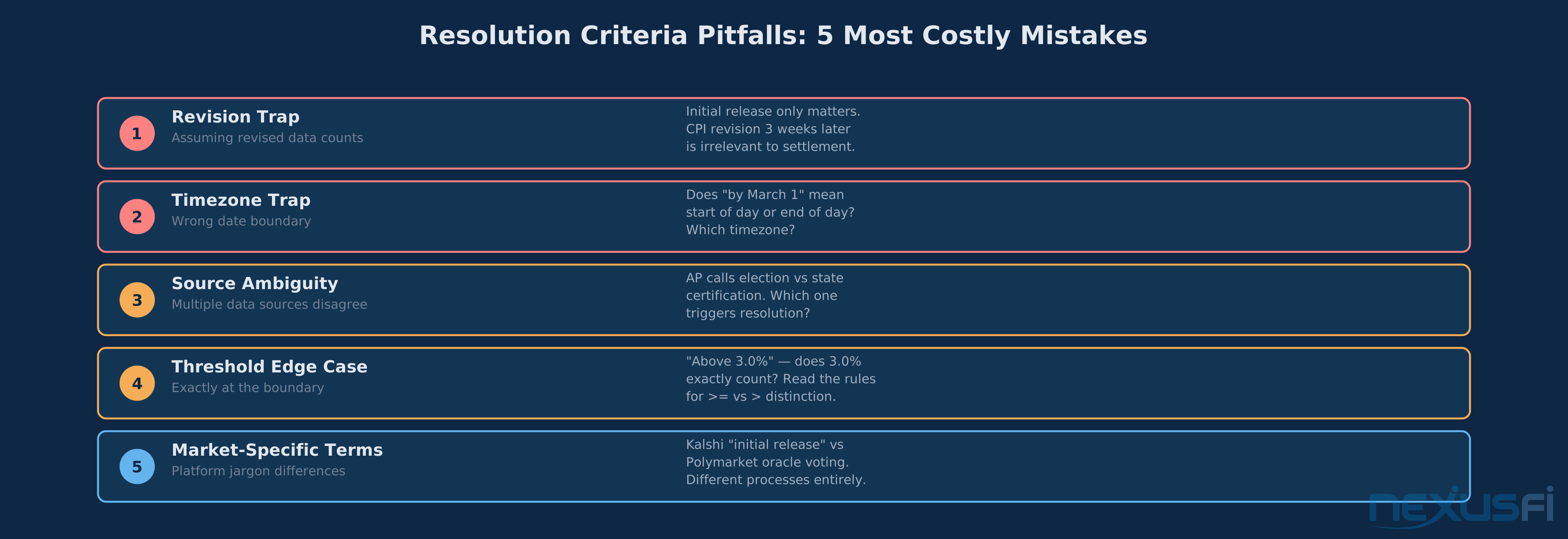
Read the full criteria before entering any position. The headline question is always simpler than the actual resolution mechanics.
The Dispute Process #
If you believe a contract resolved incorrectly — Kalshi applied a different data reading than the specified source, or misinterpreted the criteria — Kalshi maintains a formal dispute process:
- File within 24 hours of the resolution announcement, directly with Kalshi's support (not Robinhood's support — resolution disputes go to the exchange, not the distribution layer)
- Cite the specific criteria element you believe was incorrectly applied, with reference to the public data source versus what Kalshi's resolution team used
- Kalshi's team reviews the dispute; complex cases may take 48-72 hours
- CFTC escalation: As a CFTC-regulated exchange, Kalshi's resolution decisions carry regulatory oversight; the CFTC complaint process exists for genuine rulebook misapplication
Disputes about clear-cut economic data contracts resolve quickly because the evidence is public and objective. Disputes about ambiguous political or legal outcomes have less predictable timelines and outcomes.
For contracts where settlement ambiguity is a realistic possibility — contested political outcomes, decisions under legal appeal, complex multi-step qualifying conditions — factor the cancellation probability into your entry analysis. A cancelled contract returns capital but burns the opportunity cost of having that capital deployed elsewhere; price that risk the same way you price the YES/NO probability.
Getting the Most from Robinhood Event Contracts #
Start with economic data contracts: Fed rate decisions, CPI releases, and jobs reports are Kalshi's most liquid markets. Spreads are tight, the resolution criteria are unambiguous (the number comes out, contract resolves immediately), and the contracts have well-developed forecasting ecosystems you can tap for probability estimation.
Read the resolution criteria: Robinhood's simplified interface can make it easy to skip this step. Don't. The resolution criteria determine exactly what "YES" means. In economic contracts, the specific index, revision date, and threshold matter enormously.
Trade with limit orders when possible: If Robinhood's interface offers limit order entry, use it. For contracts with spreads above 3 cents, limit orders protect you from unfavorable fills.
Use Kalshi's website for research: Even if you execute on Robinhood, Kalshi's website shows more detail about each contract — including the full order book, historical price chart, and open interest. Research on Kalshi, execute on Robinhood.
Citations #
- @bobwest: Event Contracts - New Way to trade the CME Futures markets: Trade your opinion — Binary structure and retail accessibility perspective on event contracts
- @SMCJB: Kalshi, Polymarket, Prediction Markets etc — Retail impact and market scale discussion for prediction market platforms
- @SMCJB: NYTimes Robinhood Article — Robinhood's PFOF business model and per-account revenue analysis
- @SMCJB: CME Launching Binary Option Trading — Breakeven edge analysis for binary-style contracts: "You need to win 62.02% of the time to breakeven on a 50:50 bet"
- @artemiso: Startup found a way to give $0 Commission to trade equities — Order flow economics: how Robinhood monetizes trades through payment for order flow arrangements
- @Symple: CME Group Launches 24/7 Futures Trading - December 5, 2025 — Event contracts market expansion: CME's entry with $1 minimum position sizes
- @Silver Dragon: NADEX Trading — Practical binary contract trading experience: asymmetric risk structure and position sizing discipline
- How Kalshi Works: Contracts, Odds & Settlement Explained — pm.wiki
- Event Contracts: What They Are & How to Trade Them — PredScope
- Kalshi vs Polymarket 2026: Fees & Features Compared — Market Math
- Digital Engagement Practices: A Trading Apps Experiment — UK Financial Conduct Authority, June 2024
This article is part of the NexusFi Academy Prediction Markets series. Full series at /a/prediction-markets/.
Knowledge Map
Prerequisites
Understand these firstCitations
- — Event Contracts - New Way to trade the CME Futures markets: Trade your opinion (2022) 👍 6“This seems to me to be similar, if not the same, as binary options: you bet that x instrument will be higher/lower than some level, and it's 100% win or lose.”
- — Kalshi, Polymarket, Prediction Markets etc (2025) 👍 4“I do think this is just enabling (degenerate) gambling and violating gambling laws. The amount of money these companies are making, mostly from people who can't afford to lose the money is crazy.”
- — NYTimes Robinhood Article (2020) 👍 2“In total, Robinhood got $18,955 from the trading firms for every dollar in the average customer account, while Schwab made $195.”
- — CME Launching Binary Option Trading (2022) 👍 1“So you need to win 62.02% of the time to breakeven on a 50:50 bet! In these two scenarios I definitely want to be the house. I want the other side of those bets. Unfortunately the other side of those bets isn't the seller it's the CME!”
- — Startup found a way to give $0 Commission to trade equities (2014) 👍 3“Robinhood makes money by selling their order flow to sophisticated firms such as Citadel, who thereafter skim those trades for their own book. The expected hidden cost could conceivably be much higher than a fixed commission.”
- — CME Group Launches 24/7 Futures Trading - December 5, 2025 (2025) 👍 3“CME Group is launching a new market segment in which swap-based event contracts will trade 24/7 on CME Globex. These contracts allow simple yes/no or event/outcome positions with defined risk. Minimum position size starts at just USD 1.”
- — Robert's Market Journal (2019) 👍 5“The most you can make with a Binary Option is $100. The max profit for the At the Money BO are generally around the $45 to $50 range. The downside risk is much higher. To determine this take your max profit and subtract it from 100.”
- — How Kalshi Works: Contracts, Odds & Settlement Explained (2025)
- — Event Contracts: What They Are & How to Trade Them (2025)
- — Digital Engagement Practices: A Trading Apps Experiment (2024)