



Prop Firm Payout Timing and Withdrawal Mechanics: From Request to Receipt, Everything That Happens Between
Overview #
Prop Firm Payout Timing and Withdrawal Mechanics: From Request to Receipt, Everything That Happens Between
Most traders who pass their evaluations spend weeks thinking about strategy, drawdown rules, and consistency thresholds. Very few spend enough time thinking about what happens after they hit their profit target — specifically, the mechanical process of converting trading gains into actual money in a bank account.
The payout process in prop trading is not like withdrawing from a retail brokerage. There is no "transfer to bank" button that processes in seconds. What you're navigating is a multi-stage administrative, compliance, and payment-processing pipeline that can take anywhere from three business days to six or more weeks, depending on factors most traders don't consider until they're waiting for money that hasn't arrived.
This article covers everything that happens between the moment you submit a payout request and the moment funds land in your account: the technical stages, the common delay points, what each major firm does differently, and how to structure your own workflow to minimize friction. Before reading further, you may want to review Prop Firm Payout Structures and Profit Splits to understand how the profit split calculation affects your withdrawable amount.
The Core Reality: Payout Is a Compliance Process #
Before anything else, understand this: prop firm payouts are not designed for convenience. They're designed for risk control and regulatory compliance. That's not a complaint — it's a structural reality that shapes everything downstream.
When you request a payout from a prop firm, you're triggering a sequence that involves at minimum:
- Trade audit and profit verification
- Consistency rule validation
- KYC/AML (identity and anti-money laundering) checks
- Finance team processing
- External payment rail settlement
None of these happen simultaneously, and any one of them can stall the chain. The firms processing the most payouts — Apex, TopstepTrader, Bulenox — handle thousands of requests per month. They're running batch systems, not instant transfers.
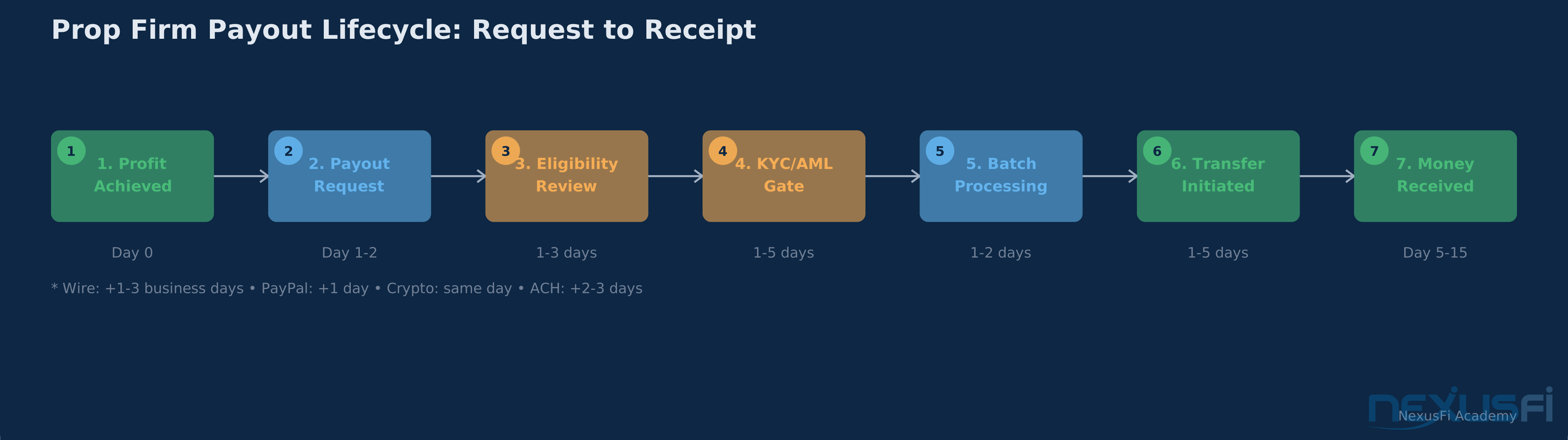
The Five-Stage Payout Pipeline #
Every prop firm payout, regardless of the firm, goes through some version of this sequence:
Stage 1: Trade Review and Profit Lock
After you submit a payout request, the firm's systems run an automated audit of your trading activity. This typically includes:
- Order-book matching to verify executions were legitimate
- Slippage and fill quality checks
- "Cheat detection" algorithms looking for patterns inconsistent with live market conditions (relevant for SIM-account firms)
- Verification that profits are "realized" — closed positions, not floating P&L
Most firms also enforce a profit-lock period — a mandatory waiting period of 24 to 48 hours after the profit target is reached before a payout request is even eligible. The clock starts when your account crosses the threshold, not when you submit the request.
This stage typically adds 0-2 business days if everything is clean. Large profit spikes or unusual trading patterns trigger manual review, which can extend this to a week or more.
Stage 2: Consistency and Rule Verification
The system verifies that your trading record across the payout period satisfies the firm's consistency requirements. Common checks include:
- Did you exceed the maximum daily drawdown at any point?
- Did you maintain the required profit streak (often 30 days for futures firms)?
- Did you violate any restricted trading rules (news trading, overnight holds, position limits)?
If a violation is detected after the payout request is submitted, the payment is paused pending clarification. This is one of the most frustrating delay scenarios because the trader has already been told their request was accepted, then gets a hold notification days later. Understanding trailing drawdown vs static drawdown is essential for knowing when you're actually in compliance.
This stage adds 0-1 business days under normal conditions.
Stage 3: KYC/AML Validation
This is the biggest variable in the entire process, and the one most traders underestimate until they experience it firsthand.
KYC (Know Your Customer) compliance requires the firm to verify your identity before processing any financial transaction. AML (Anti-Money Laundering) rules require them to screen you against sanctions lists and, for larger payouts, to document the source of funds.
Required documentation typically includes:
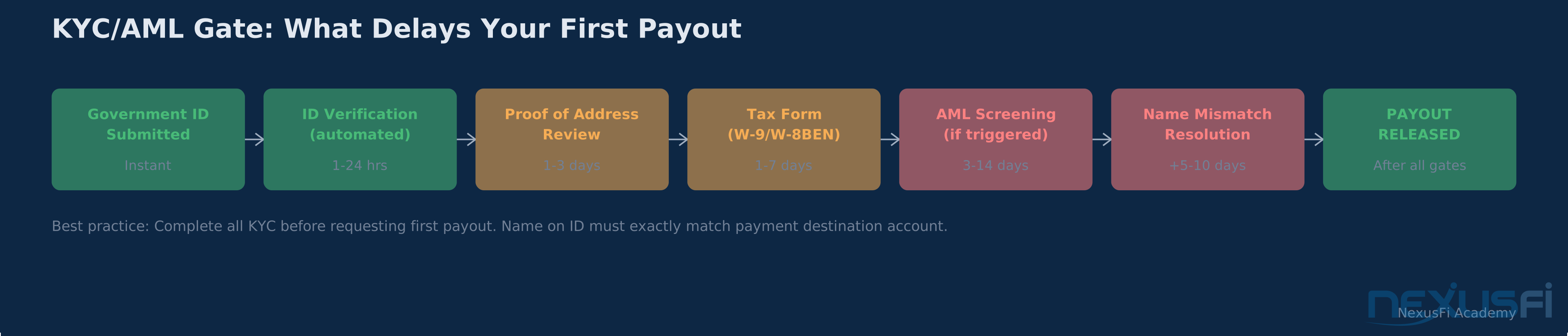
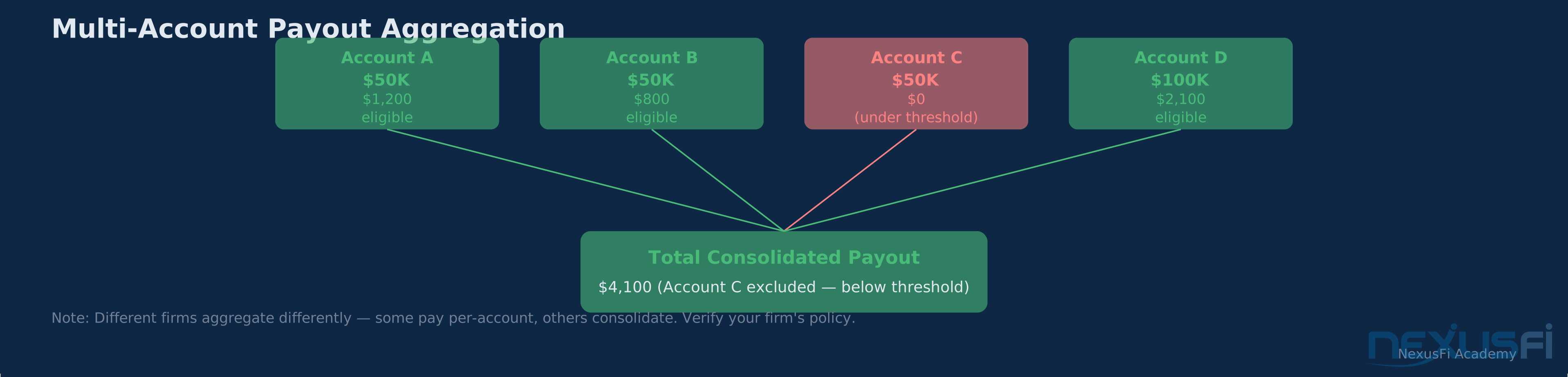
- Government-issued photo ID (passport, driver's license)
- Proof of address (utility bill, bank statement dated within 90 days)
- Selfie verification (some firms require video liveness check)
- Tax forms: W-9 for US residents, W-8BEN for non-US persons
- Source-of-funds statement for payouts exceeding $10,000
If your KYC is fully approved before you request your first payout: This stage adds zero days. You sail through to Stage 4.
If your KYC is incomplete or documents are pending: This stage adds 1 to 3 weeks. There is no workaround. No firm is legally permitted to send money to an unverified recipient, regardless of your trading performance.
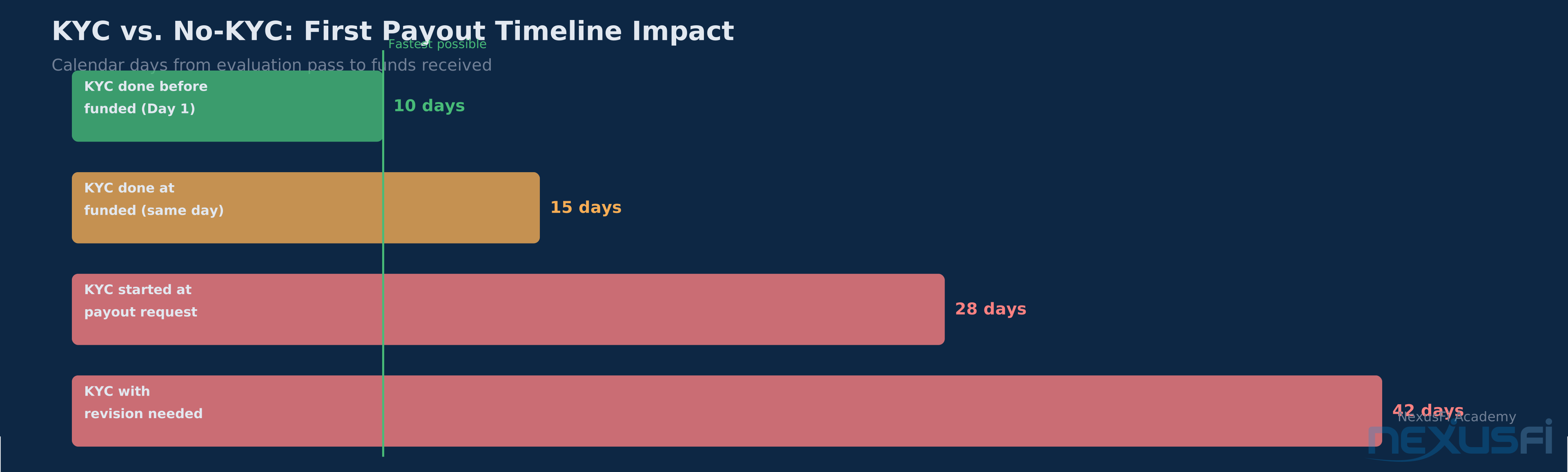
The single most impactful thing any funded trader can do to reduce their first payout timeline is complete KYC immediately after being funded — weeks before hitting any profit target.
Complete KYC the day you receive funded account access. Not the week before you expect to request a payout. Not after you hit your target. Day one. KYC review can take 3-14 business days depending on document quality and compliance queue volume. Waiting until you need the money adds weeks to your timeline at the worst possible moment.
Stage 4: Payment Method Routing
Once cleared by compliance, the payout request moves to the firm's finance team for payment initiation. They validate your bank or payment account details against what's on file, apply any regulatory limits (ACH has per-transaction caps in some configurations), and route the payment.
Bank account detail mismatches — where the account holder name doesn't match your government ID exactly — trigger a manual name verification process. This is one of the most common second-time delays (after KYC), adding 3-5 days while the compliance team resolves the discrepancy.
This stage typically adds 0-1 business days.
Stage 5: External Settlement
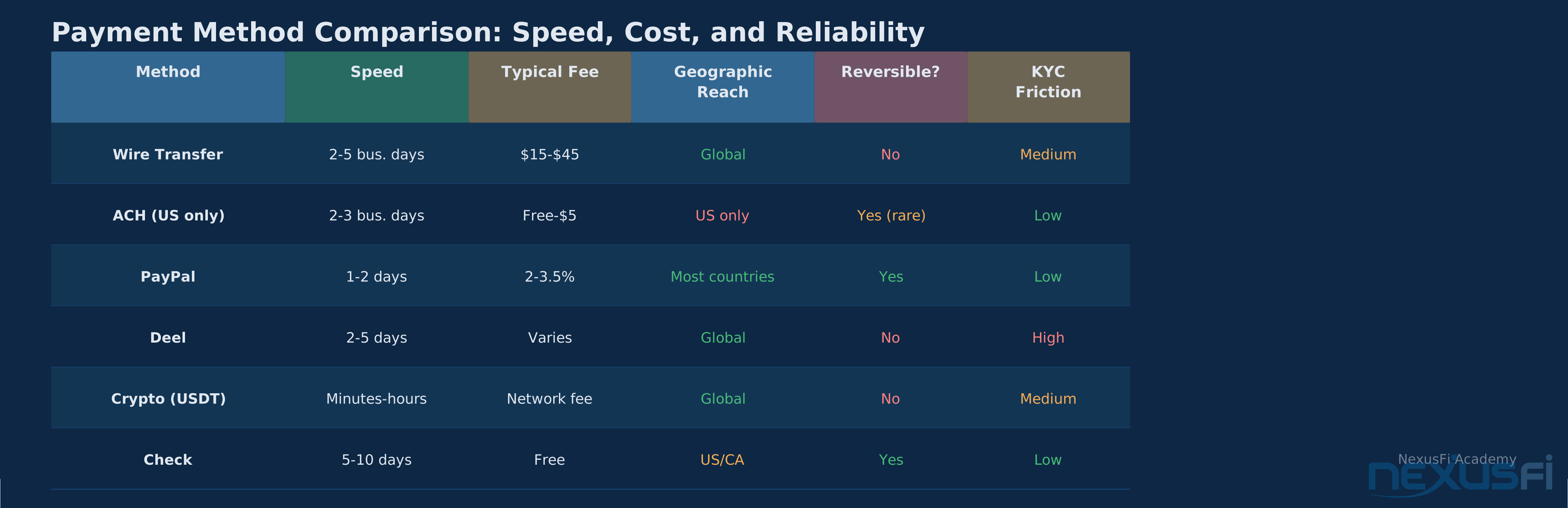
Once the payment is initiated by the firm, it enters the external payment network. This is where the payment method you selected actually determines the timeline:
- ACH (Automated Clearing House): 2-5 business days in the ACH network, on top of whatever the firm's internal processing took. ACH has cut-off times (typically around 4:00 PM ET for same-day processing). Requests submitted Friday afternoon don't begin processing until Monday.
- Wire Transfer: 1-2 business days domestic, 3-7 business days international (SWIFT involves intermediary banks, each of which applies their own compliance and processing rules).
- PayPal/Skrill: Near-instant after the firm initiates the transfer. The firm's internal processing time still applies, but settlement to your account is basically immediate once dispatched.
- Rise/Crypto (USDT): Near-instant settlement after firm dispatch. The catch: firm approval time is still the real bottleneck, and you're adding crypto volatility risk and tax complexity to an already complicated transaction.
How Long Does It Actually Take? #
The realistic range, based on what traders report across the major firms:
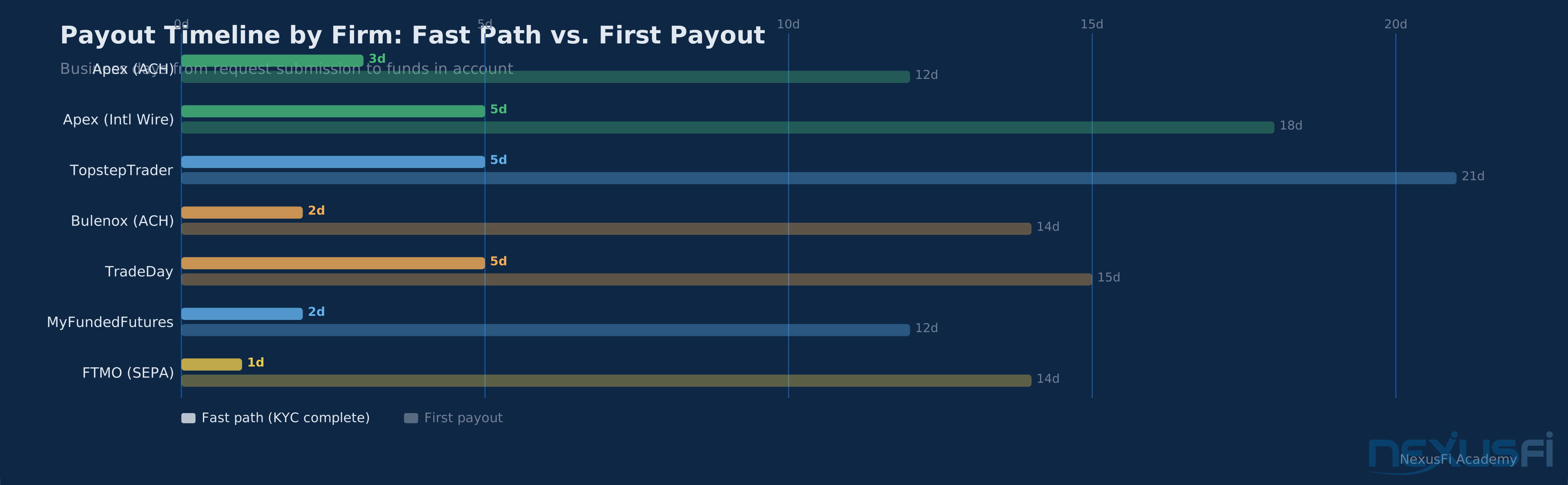
Fast path (KYC fully approved, subsequent payout): Total: 3-10 business days
First payout (KYC complete before requesting): Total: 10-15 business days
First payout (KYC incomplete at time of request): Total: 2-6+ weeks
That range between "3 business days" and "6 weeks" is almost entirely explained by the state of your KYC at the time of the request. Get KYC done early. This is the one lever you fully control.
Firm-by-Firm: What Traders Actually Experience #
Apex Trader Funding #
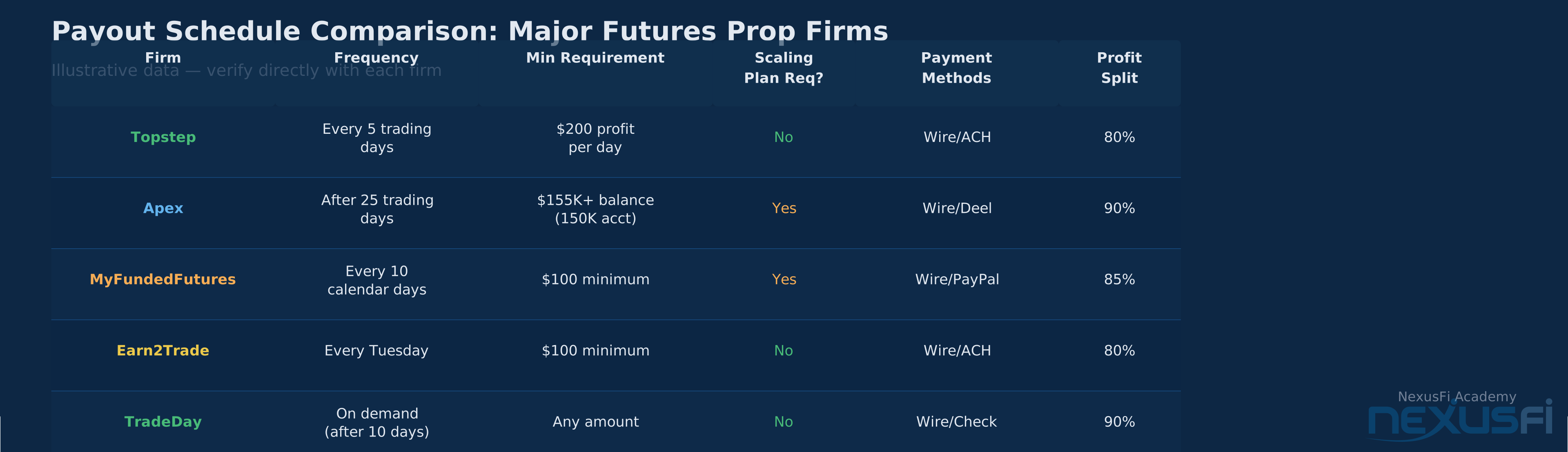
Apex operates on a bi-monthly payout schedule — request windows open on the 1st-5th and 16th-20th of each month. If you miss a window, you wait two weeks for the next one.
For US traders using ACH, typical total time from request to receipt runs 3-7 business days for subsequent payouts. First payout adds the KYC layer; plan for 10-15 business days.
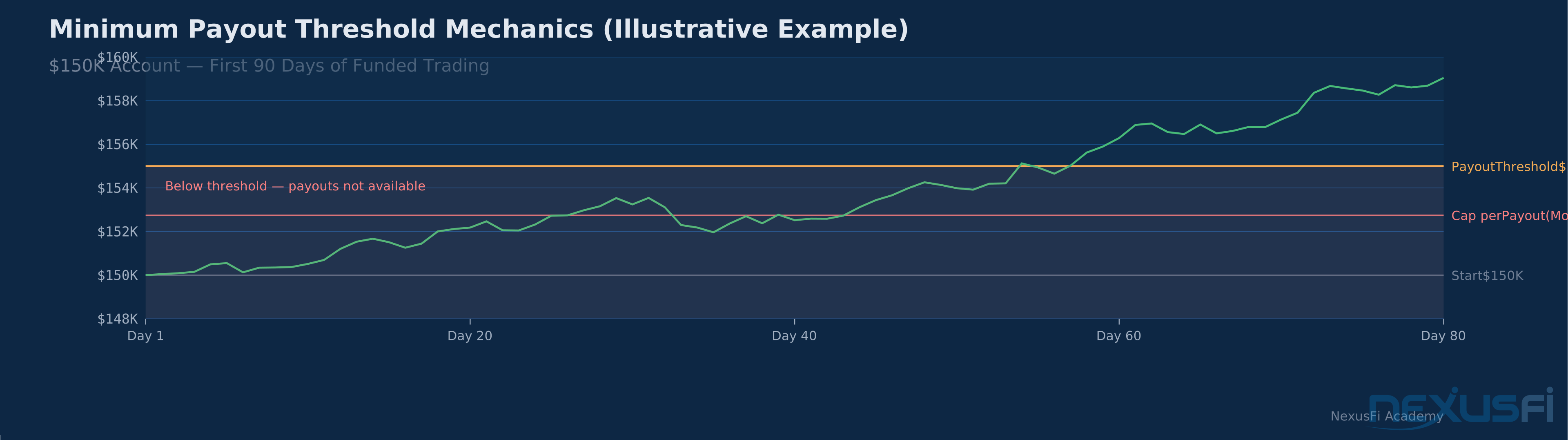
The minimum payout is $500 (or 50% of net profit, whichever is higher), and a 48-hour profit-lock period applies after the profit target is reached. Apex offers both ACH and Rise (crypto USDT) for US traders, plus wire for international.
A noteworthy structural requirement at Apex: the account must first trade up to a minimum balance before any profits above that level become withdrawable. As one NexusFi member documented from direct experience:
When a payout is flagged pending compliance review, recovery isn't instant. As Elite member @shokunin documented after a denied Apex payout:
A separate quirk: Apex's systems have historically flagged payment details as needing re-verification even when previously active. Keep your payment method settings current and verify them before each request window.
TopstepTrader #
TopstepTrader runs a more rigorous compliance check than most, routing each payout through what they call the "Performance Desk" — a manual review layer before the finance team touches it. This adds time but much reduces the downstream error rate.
Typical total time: 5-12 business days for subsequent payouts. First payouts, especially for non-US traders, routinely take 3+ weeks.
The minimum payout is $100 for ACH, $500 for wire. Topstep's consistency rule requires maintaining profit above target for two consecutive days before cash-out eligibility — not just one. Their official withdrawal policy makes the rule violation consequences explicit:
Traders who hit the target on Friday may not be eligible to request until the following Wednesday.
As long-standing community member bobwest explained from direct experience with the TopstepTrader AMA thread: "Since the trader is treated and considered an independent contractor, they are taxed on the money they receive from their equity partner." This structure affects both payout timing strategy and tax planning.
Bulenox #
Bulenox processes payouts in batch windows rather than a strict calendar schedule. The advertised 2-4 business day timeline for ACH applies once the batch is processed; if your request falls outside a processing window, add a cycle.
Minimum payout is $25 for ACH or Rise, $250 for wire. The 24-hour profit-lock kicks in after the drawdown check clears, which itself runs overnight. In practice, the fastest path from "I hit my target" to "request eligible" is about 36-48 hours.
Bulenox is one of the more aggressive promoters of Rise (crypto) payouts, and the settlement speed post-dispatch is genuinely faster. The firm's internal processing time is still the rate-limiting factor.
TradeDay #
TradeDay enforces a 48-hour profit lock and a 30-day consistency rule. Their payout calendar is monthly, with request windows at the end of each trading month.
Minimum payout is $200. For US ACH, traders report 5-8 business days from request submission to receipt. TradeDay is one of the few firms now offering live-funded accounts, where the payout mechanics differ from SIM-account funded programs — there are no arbitrary "maximum daily gain" resets between payout periods on the live side.
MyFundedFutures #
MyFundedFutures offers what they call "always-on" payouts — requests can be submitted any business day after a 3-day holding period on earned profits, rather than waiting for a fixed calendar window. This is a genuine differentiator for traders who want more control over their cash flow timing.
Minimum payout is $150, but a $500 net profit threshold applies before any payout can be requested. ACH processing runs 2-5 business days from submission.
FTMO #
FTMO is primarily a forex/CFD firm, but their payout mechanics are frequently cited as best-in-class across the funded trading industry. They process via PayPal, Skrill, and bank transfer; EU traders using SEPA typically receive payouts in 1-3 business days after internal approval. Their 10-consecutive-trading-day consistency requirement at target is longer than most futures firms, but once that's satisfied, the payout process is fast.
For any futures trader who has experienced delays at US-based firms, FTMO's processing speed is instructive about what's achievable when the compliance and payment infrastructure is built thoughtfully.
The Ten Most Common Delay Causes (Ranked) #
- Incomplete KYC (~40% of delays) — Missing documents, expired IDs, unclear photo quality, pending selfie verification, or tax forms not submitted. There is no workaround. The compliance check will not clear until documents are fully approved.
- Bank account name mismatch (~20%) — The name on your bank account must match your government ID exactly, including middle name formatting, hyphens, and legal name versus nickname conventions. A mismatch triggers a manual name verification step: 3-5 additional days.
- Profit-lock period not satisfied (~15%) — Many traders submit payout requests immediately after hitting profit targets, before the 24-48 hour lock period expires. These requests get denied automatically and restart the clock.
- Tax form issues (~10%) — W-9 (US) or W-8BEN (non-US) not submitted, submitted with errors, or signed with an incorrect date. Required before any payout at US-based firms.
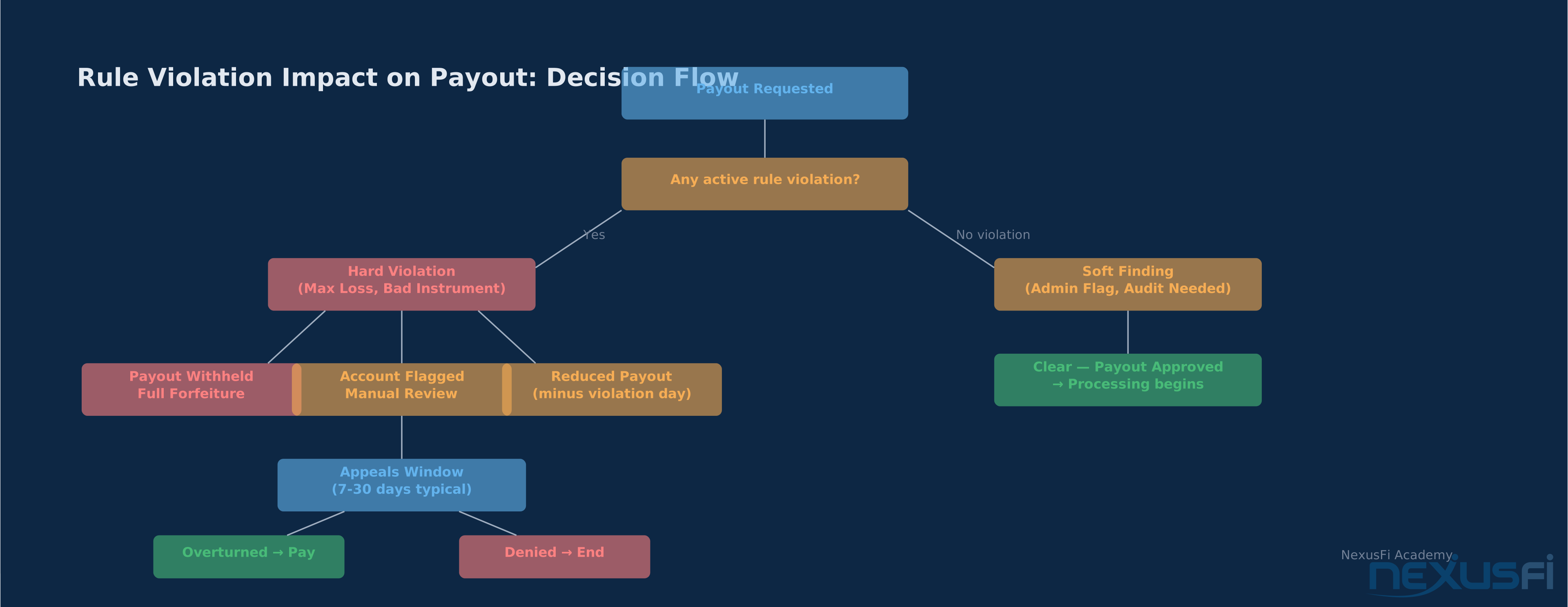
- Rule violation under review (~5%) — A drawdown exceedance, a news trading restriction violation, or a position limit breach that occurred near the end of the payout period triggers compliance review. The payout is held until the review concludes.
- Weekend/holiday cutoff timing (~3%) — ACH has cut-off times. Requests submitted Friday afternoon effectively don't begin processing until Monday morning. US federal holidays add additional delays.
- Below minimum threshold (~2%) — Profit share rounding or a split calculation results in a payout amount below the firm's minimum. The system rejects the request automatically.
- End-of-month processing congestion (~2%) — Most traders on calendar-based payout schedules submit at the same time. Finance teams processing high volume add 1-3 days.
- Source-of-funds review (~2%) — Triggered by payouts exceeding $10,000. The firm's compliance team may request documentation explaining the source of the trading capital.
- PayPal or crypto holds (~1%) — New PayPal recipient verification, crypto volatility-related pauses, or Rise account issues on the trader's end.
Rule violations don't pause your payout — they invalidate it. If a consistency rule breach is discovered during the compliance review after your request was accepted, the payout doesn't simply wait for clarification. In most cases, the payout period resets and you must re-establish eligibility from scratch. This is why maintaining strict compliance during the final days before a payout request is critical.
Understanding Payment Methods: What They Actually Do and Don't Do #
The misconception most traders have is that choosing a "fast" payment method means the payout arrives faster. That's only partially true.
Payment method speed only applies to Stage 5 — external settlement. The firm's internal processing (Stages 1-4) is constant regardless of which payment method you select. If internal processing takes 4 business days, a 4-day ACH payout gives you 8 business days total. A "near-instant" Rise payout gives you 4+ business days total — faster, but not dramatically so.
The actual choice framework:
ACH (US Bank Transfer): Best for routine, non-urgent payouts. Zero-to-low fees. 2-5 days settlement. Standard for most US traders.
Wire Transfer: Pay the $15-$50 fee when you need the money quickly or the payout is large enough that 1-2 days faster delivery is worth the cost. Required for most international payouts. As Earn2Trade documented, domestic wires typically cost $15-$35 less than international — worth checking your specific firm's fee schedule.
PayPal: Best for international traders where bank wires are expensive or slow. Near-instant settlement post-dispatch. Watch for currency conversion fees (typically 2.5-3.5%) and account hold policies for new recipient relationships.
Rise/Crypto (USDT): Fastest external settlement. Adds crypto volatility risk (even USDT has had brief de-pegs) and creates additional tax complexity (each crypto transaction may be a taxable event). The speed advantage over wire is meaningful only for international traders; for US ACH, the difference is often marginal.
The Scheduling Problem: Calendar Payout Windows vs. Always-On #
This is an underappreciated operational distinction that much affects how traders should manage their cash flow.
Calendar-based payout windows (Apex's 1st/16th, Topstep's end-of-month, TradeDay's monthly) create two-week gaps between opportunities. If you hit your profit target on the 17th of the month at Apex, you wait until the 1st-5th of the following month for the next window — nearly three weeks.
Always-on payouts (MyFundedFutures, some TradeDay live account configurations) allow requests any business day after the minimum hold period, giving you continuous access to earned capital.
For traders with predictable income needs — quarterly tax payments, business expenses, personal obligations — the difference between a 2-week forced wait and a 3-day hold period is material. Factor payout window scheduling into your firm selection if cash flow timing matters to you.
Multi-Account Aggregation: When the Math Gets Complex #
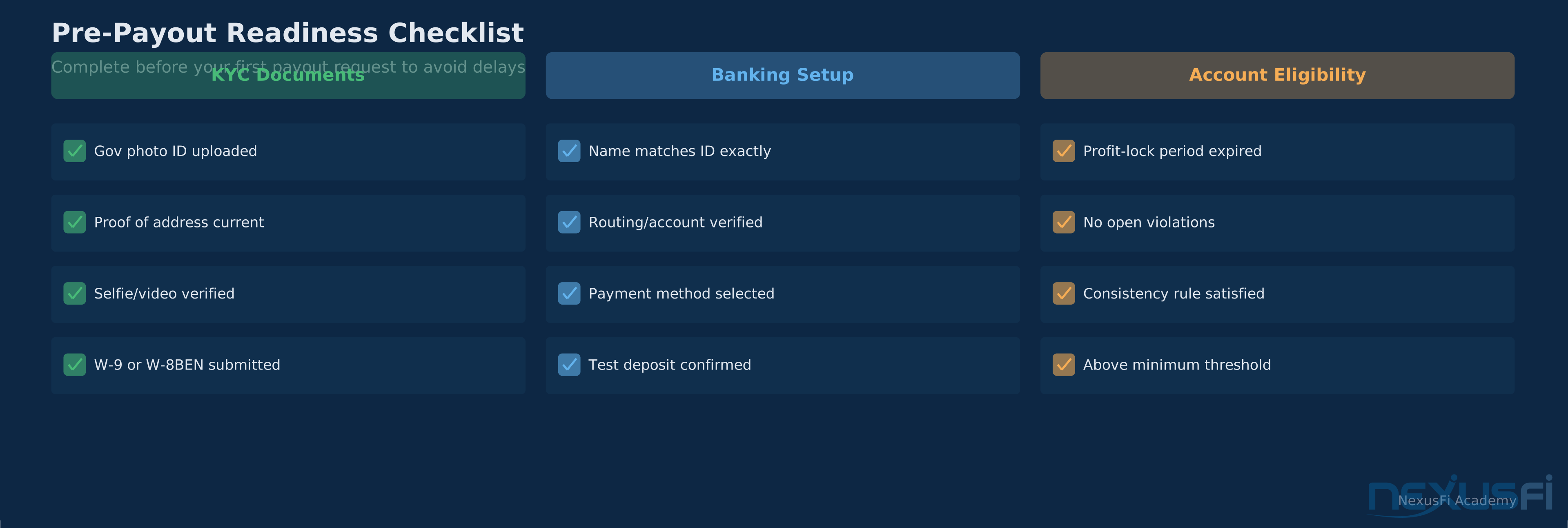
Many funded traders hold multiple accounts simultaneously — either across different firms or multiple accounts at the same firm. The payout mechanics for multi-account scenarios add a layer of complexity that's worth understanding before you're in the middle of it.
Most firms that allow multiple accounts handle payouts on a per-account basis: each funded account has its own profit tracking, its own drawdown limits, and its own independent payout eligibility. You cannot combine a $2,000 profit on Account A with a $1,500 profit on Account B to produce a single $3,500 payout request.
Some firms do allow consolidation — verified by their specific policies, not assumed. Apex, for example, has historically allowed traders to manage multiple PA (Performance Accounts) under one user profile, with separate payout mechanics per account.
The practical implications:
- Each account needs independent KYC documentation (in most cases)
- Each payout request is independent, each goes through the full 5-stage pipeline
- If you have five accounts with four of them in violation review, each of those four payout requests is delayed independently
If you're managing multiple accounts, build in buffer time and submit requests with enough lead time to allow for the inevitable delays on some percentage of accounts. The evaluation to funded transition process often determines how many accounts you're managing simultaneously.
The "always have something in the pipeline" strategy: Experienced funded traders on multi-account setups often stagger their payout periods deliberately — initiating one account's payout request while another is still building toward eligibility. This creates a more consistent cash flow cadence than waiting for all accounts to reach threshold simultaneously and hitting the same payout window.
What to Do When Your Payout Is Delayed #
The worst response to a delayed payout is vague frustration. The best response is diagnostic specificity.
When contacting firm support about a delayed payout, ask three specific questions:
- "Is my KYC fully approved?" — A yes/no answer that immediately tells you whether you're waiting on compliance or on finance.
- "Is the payout in review, approved, or sent?" — These are three distinct pipeline stages. "In review" means Stage 2 or 3. "Approved" means Stage 4. "Sent" means Stage 5 and the delay is with the bank, not the firm.
- "Which processing batch or cycle is it in?" — For calendar-based systems, this tells you whether you're waiting for the current cycle to close or the next one to open.
These questions convert a vague "it's being processed" response into a measurable position in the pipeline. They also signal to the support team that you understand the process, which tends to produce more useful answers.
Building a Payout Optimization Workflow #
The traders who consistently receive payouts on the fast end of the timeline have internalized these habits:
Submit KYC the day you're funded. Not the day you hit your target. Not the week before you think you'll request a payout. The day you receive funded account access. KYC approval takes time, and waiting until you need the money to initiate it is the most expensive mistake in terms of calendar days.
Verify your bank details match your ID exactly. Do this once, carefully, and then periodically confirm the details haven't been altered or flagged by the platform.
Mark payout windows in your calendar. For calendar-based firms, missing a window adds two weeks. Set a reminder 3 days before each window opens so you can verify your eligibility and submit promptly.
Submit requests mid-week. Monday requests catch end-of-weekend backlogs. Friday requests often miss the ACH processing cutoff. Tuesday through Thursday is the sweet spot.
Don't request immediately after hitting the target. Respect the profit-lock period. Submitting before the lock expires results in an automatic rejection that restarts your eligibility clock at some firms — meaning the premature request cost you time, not saved it.
Keep tax forms current. W-9s don't expire, but if you've had a name change, address change, or entity change, update your tax documentation before it becomes the reason your payout is held.
For large payouts (>$10k), give extra time. Source-of-funds reviews are rare but not unusual for large payouts, especially first-time large payouts. Submitting these requests a few extra days before your cash flow deadline is good practice.
The Tax Reality of Prop Firm Payouts #
This warrants mention because it affects when and how much you should request.
At most US-based prop firms, you're classified as an independent contractor. The money you receive in payouts is reported on a 1099, not a W-2. This means:
- No tax is withheld at source
- You're responsible for estimated quarterly tax payments
- Self-employment tax applies (both employer and employee portions of Social Security/Medicare, totaling approximately 15.3% on net self-employment income)
This affects payout timing strategy for profitable traders: requesting payouts quarterly (close to quarterly tax payment deadlines) rather than monthly or bi-weekly can simplify tax payment logistics. It also means holding capital in the funded account for tax purposes is not the same as holding it in your own account — that money is not legally yours until it's paid to you.
Consult a tax professional who works with traders. The specific tax treatment can vary much based on your structure (individual, sole proprietor, LLC, S-corp) and jurisdiction.
Payout Mechanics as a Firm Evaluation Criterion #
When evaluating prop firms to apply for, payout mechanics deserve the same analytical rigor you'd apply to drawdown rules or profit targets. See Funded Trading Evaluations for a full guide to the evaluation selection process.
Questions worth asking before committing to an evaluation fee:
- What are the exact payout windows? Calendar-based or always-on?
- What's the profit-lock period? 24 hours vs. 48 hours is a meaningful difference.
- What's the minimum payout? And is it calculated on gross profit or net-of-split?
- What payment methods are available in your country? ACH is US-only; international traders need SEPA, SWIFT, PayPal, or crypto options.
- What are the consistency requirements? 30-day rules add significant time before you're even eligible.
- What's the KYC process? Can you complete it before the evaluation phase, or does funding require starting from scratch?
Firms with transparent, clearly documented payout processes consistently show better trader retention. The opacity of payout timing is a genuine pain point in the funded trading industry — firms that reduce it earn loyalty proportional to that reduction.
Summary: The Timeline That Actually Matters #
The distance between "I made money" and "I have money" in prop trading runs through a compliance and administrative pipeline that most evaluations don't mention and most evaluation marketing glosses over.
What you control:
- KYC completion timing — the biggest lever you have on your first payout
- Payout request timing — respect profit-lock periods, respect payout windows, submit mid-week
- Bank detail accuracy — match your ID exactly, verify before each request
- Tax form currency — keep documents updated so they're not the reason a request stalls
What you cannot control but can plan around:
- Firm processing batch schedules
- Bank network settlement times
- End-of-month processing congestion
- Compliance review timelines for unusual activity
Treat your first payout as a 15-business-day process. Treat subsequent payouts, once you're established and KYC-cleared, as a 5-7 business day process. Any timeline faster than that is a pleasant surprise. Any timeline slower than that usually has a specific, identifiable cause — and now you have the framework to diagnose it.
The prop trading industry's payout mechanics are genuinely improving. Firms that started with opaque, monthly-only processes have moved toward biweekly and always-on models over the past two years. Knowing the mechanics puts you in a position to ask better questions, choose better firms, and get paid on a timeline that works for your actual financial life.
Knowledge Map
Go Deeper
Build on this knowledgeReferences This Article
Articles that build on this topicCitations
- — ApexTraderFunding.com experience and review (2024) 👍 5“The PA payment you requested between February 1-5 2024 has been delayed due to incomplete or wrong bank account and payout type information.”
- — Earn2Trade (Helios) - The Gauntlet (2018) 👍 5“Wire transfers are $15-35, depending on domestic or international. You can also elect for a direct bank payment (ACH), which is free.”
- — Topstep's Nick Dolby - Ask me Anything (AMA) (2014) 👍 3“Since the trader is treated and considered an independent contractor, they are taxed on the money they receive from their equity partner.”
- — ApexTraderFunding.com experience and review (2024) 👍 3“Minimum days to payout, consistency rules etc. They basically don't want us dumping max contracts onto the market and making a small fortune.”
- — ApexTraderFunding.com experience and review (2022) 👍 17“You need to trade up to a minimum account balance -- you can only pay out the amount that surpasses this threshold. So this generated profits permanently needs to stay in the account.”
- — Topstep didn't pay (2021) 👍 11“These companies have zero interest in actually funding, backing and eventually paying out a trader. It is definitely possible to pass the evaluation and take money out -- but there is a structural conflict of interest: YOU WIN => THEY LOSE.”
- — ApexTraderFunding.com experience and review (2021) 👍 2“If I make $10K in October, I won't be eligible for the first payout of $2750 until end of November at best -- need to have 25 trading days first. The next $2750 at end of December. The next at end of January. The next at end of February.”
- — ApexTraderFunding.com experience and review (2024) 👍 3“If there are no rule breaks for the next 10 trading days, the trader is allowed to withdraw the standard capped amount only for the subsequent period. Any profits from the denied period have to remain in the account as buffer and cannot be withdrawn until month 4.”
- — Topstep Nick Dolby Ask me Anything AMA (2022) 👍 1“If a rule is broken in the account, the trader will receive their profits greater than the starting balance. If a rule is broken in the Premium Funded Account and the balance is below starting balance, the remaining funds will be forfeited back to Topstep.”
- — Topstep Nick Dolby Ask me Anything AMA (2013) 👍 4“Once you establish a cushion in your account (either $5,000 or $10,000), you may then request a withdraw. When a withdraw request is made the profit split will then be taken out.”